

Short Sleep Duration Is Associated with Reduced Leptin, Elevated Ghrelin, and Increased Body Mass Index
Open accessThe DOI matches its Crossref record; 42 of the 42 references it cites were found in a registry or an index.
Abstract
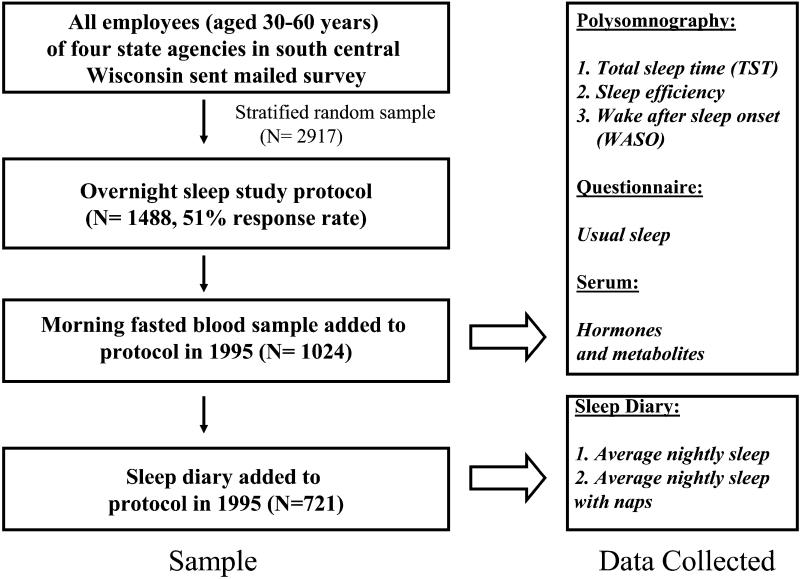
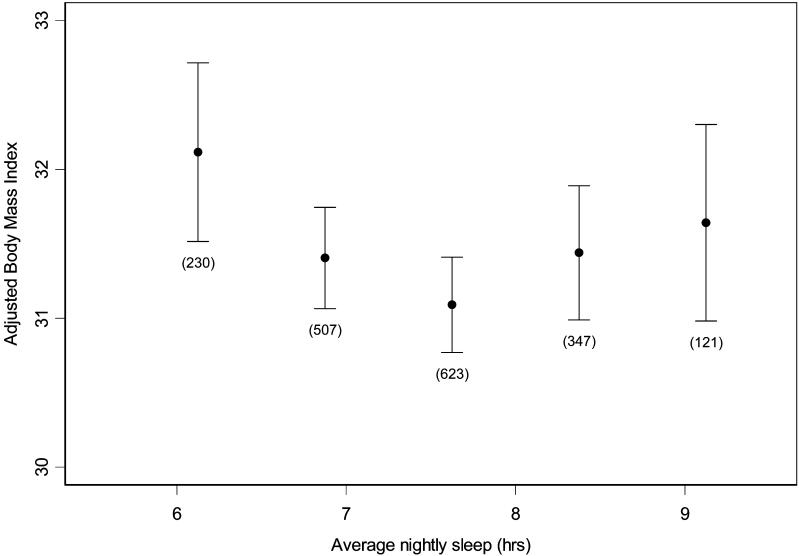
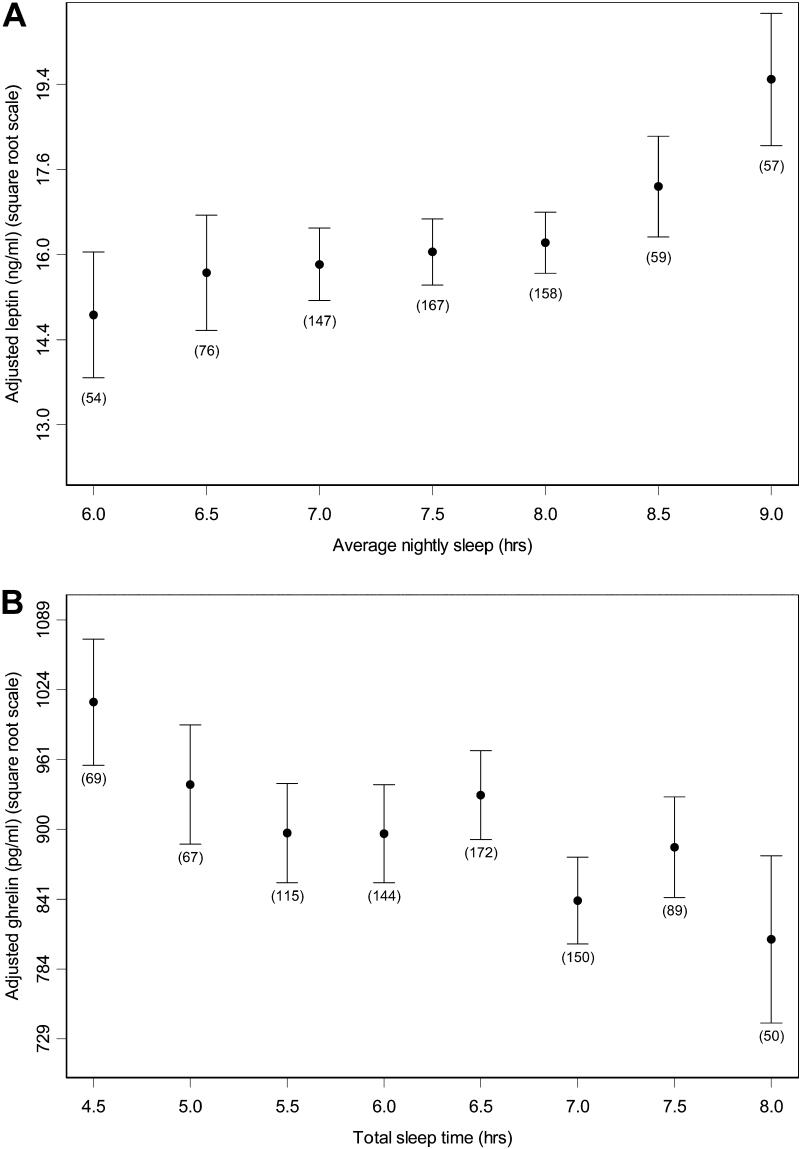
BACKGROUND: Sleep duration may be an important regulator of body weight and metabolism. An association between short habitual sleep time and increased body mass index (BMI) has been reported in large population samples. The potential role of metabolic hormones in this association is unknown. METHODS AND FINDINGS: Study participants were 1,024 volunteers from the Wisconsin Sleep Cohort Study, a population-based longitudinal study of sleep disorders. Participants underwent nocturnal polysomnography and reported on their sleep habits through questionnaires and sleep diaries. Following polysomnography, morning, fasted blood samples were evaluated for serum leptin and ghrelin (two key opposing hormones in appetite regulation), adiponectin, insulin, glucose, and lipid profile. Relationships among these measures, BMI, and sleep duration (habitual and immediately prior to blood sampling) were examined using multiple variable regressions with control for confounding factors. A U-shaped curvilinear association between sleep duration and BMI was observed. In persons sleeping less than 8 h (74.4% of the sample), increased BMI was proportional to decreased sleep. Short sleep was associated with low leptin (p for slope = 0.01), with a predicted 15.5% lower leptin for habitual sleep of 5 h versus 8 h, and high ghrelin (p for slope = 0.008), with a predicted 14.9% higher ghrelin for nocturnal (polysomnographic) sleep of 5 h versus 8 h, independent of BMI. CONCLUSION: Participants with short sleep had reduced leptin and elevated ghrelin. These differences in leptin and ghrelin are likely to increase appetite, possibly explaining the increased BMI observed with short sleep duration. In Western societies, where chronic sleep restriction is common and food is widely available, changes in appetite regulatory hormones with sleep curtailment may contribute to obesity.
Overview
The claims and statistics of this paper haven’t been checked yet.
Free: it reads the open-access text and checks the first 5 claims that cite a source we can check. Create a free account to check every claim.
Integrity signals
Registry
Cites
Statistics
Figures
Verification
Claims the paper makes
The claims and statistics of this paper haven’t been checked yet.
Free: it reads the open-access text and checks the first 5 claims that cite a source we can check. Create a free account to check every claim.
Claims other papers make about this one
Each is checked against this paper’s own text: does it say what the citing paper says it does?
The source backs part of the claim, not all of it — or backs it for a different population, condition or comparison.
In the citing paper
“Chronic sleep deprivation, defined as less than seven hours per night, disrupts appetite regulation by increasing ghrelin and decreasing leptin, leading to greater caloric intake and weight gain [108].”
From Obesity: Clinical Impact, Pathophysiology, Complications, and Modern Innovations in Therapeutic Strategies (2025) · cites this paper as [108]
Experimental — accuracy not yet measuredThe source backs part of the claim, not all of it — or backs it for a different population, condition or comparison.
In the citing paper
“and leptin concentrations were positively associated with average sleep duration (β = 0.11, p = 0.01).”
From The effects of sleep disruption on metabolism, hunger, and satiety, and the influence of psychosocial stress and exercise: A narrative review (2024) · cites this paper as [64]
Experimental — accuracy not yet measuredThe cited source says what the claim attributes to it.
In the citing paper
“Sleep deprivation is associated with various hormonal responses which may lead to appetite dysregulation, affecting both hunger and satiety.”
From Sleep duration and incidence of obesity in infants, children, and adolescents: a systematic review and meta-analysis of prospective studies (2018) · cites this paper as [67]
The cited source says what the claim attributes to it.
In the citing paper
“Furthermore, cross-sectional observations of lower leptin and higher ghrelin concentrations in people with short sleep, independent of BMI, have led to the hypothesis that such hormonal changes promote over-eating and lead to increased risk of obesity [14], [15].”
From Metabolic effects of sleep disruption, links to obesity and diabetes (2014) · cites this paper as [14]
In the citing paper
“Although there is preclinical 70 and crosssectional evidence 64 suggesting that low sleep quality (i.e., high sleep fragmentation) may be associated with impaired leptin metabolism, it appears that these associations may be weaker than for sleep duration.”
From The effects of sleep disruption on metabolism, hunger, and satiety, and the influence of psychosocial stress and exercise: A narrative review (2024) · cites this paper as [64]
8 more claims about this paper
Create a free account to see every claim other papers make about this one.
Self-check
Percentages, sums and reported differences re-computed from the paper’s own numbers.
The self-check needs the paper’s full text.
Citations
Cites
The Occurrence of Sleep-Disordered Breathing among Middle-Aged Adults
Young, T., Palta, M., Dempsey, J., Skatrud, J., Weber, S., & Badr, S. (1993) · New England Journal of Medicine · doi:10.1056/nejm199304293281704 · Cited by 10,183 · cited 13×
“Abbreviations: AHI, apnea-hypopnea index; BMI, body mass index; BUN, blood urea nitrogen; HDL, high-density lipoprotein; QUICKI, quantitative insulin sensitivity check index; SDB, sleepdisordered breathing; WASO, wake after sleep onset *To whom correspondence should be addressed.”
InfluentialSelf-citationCentral nervous system control of food intake
Schwartz, M. W., Woods, S. C., Porte, D., Seeley, R. J., & Baskin, D. G. (2000) · Nature · doi:10.1038/35007534 · Cited by 6,451 · cited 1×
“Leptin administration suppresses food intake and reduces energy expenditure [21,22].”
Katz, A., Nambi, S. S., Mather, K., Baron, A. D., Follmann, D. A., Sullivan, G., & Quon, M. J. (2000) · The Journal of Clinical Endocrinology & Metabolism · doi:10.1210/jcem.85.7.6661 · Cited by 3,931 · cited 1×
“The quantitative insulin sensitivity check index (QUICKI) was 1/(log (I)þ log (G)), where I is fasting insulin and G is fasting glucose [15,16].”
Impact of sleep debt on metabolic and endocrine function
Spiegel, K., Leproult, R., & Van Cauter, E. (1999) · The Lancet · doi:10.1016/s0140-6736(99)01376-8 · Cited by 3,668 · cited 1×
“Insulin resistance with sleep deprivation has been reported in a laboratory study of young, healthy volunteers [”
The Triad of Sleep Apnea, Hypertension, and Chronic Kidney Disease: A Spectrum of Common Pathology
Aziz, F., & Chaudhary, K. (2017) · Cardiorenal Medicine · doi:10.1159/000450796 · Cited by 3,267
A preprandial rise in plasma ghrelin levels suggests a role in meal initiation in humans
Cummings, D. E., Purnell, J. Q., Frayo, R. S., Schmidova, K., Wisse, B. E., & Weigle, D. S. (2001) · Diabetes · doi:10.2337/diabetes.50.8.1714 · Cited by 2,940 · cited 2×
“Additionally, studies have shown a high correlation between morning, fasting leptin and ghrelin levels and 24-h mean profile [29,30].”
Ghrelin enhances appetite and increases food intake in humans
Wren, A. M., Seal, L. J., Cohen, M. A., Brynes, A. E., Frost, G. S., Murphy, K. G., Dhillo, W. S., Ghatei, M. A., & Bloom, S. R. (2001) · The Journal of Clinical Endocrinology & Metabolism · doi:10.1210/jcem.86.12.8111 · Cited by 2,494 · cited 1×
“Levels of ghrelin, a potent stimulator of appetite [23,24,25], were higher in those with shorter sleep.”
Spiegel, K., Tasali, E., Penev, P., & Cauter, E. V. (2004) · Annals of Internal Medicine · doi:10.7326/0003-4819-141-11-200412070-00008 · Cited by 2,459
Mortality Associated With Sleep Duration and Insomnia
Kripke, D. F., Garfinkel, L., Wingard, D. L., Klauber, M. R., & Marler, M. R. (2002) · Archives of General Psychiatry · doi:10.1001/archpsyc.59.2.131 · Cited by 1,614 · cited 1×
“In the largest studied sample, elevated BMI occurred for habitual sleep amounts below 7–8 h [2].”
Inhibition of Food Intake in Obese Subjects by Peptide YY 3–36
Batterham, R. L., Cohen, M. A., Ellis, S. M., Le Roux, C. W., Withers, D. J., Frost, G. S., Ghatei, M. A., & Bloom, S. R. (2003) · New England Journal of Medicine · doi:10.1056/nejmoa030204 · Cited by 1,604 · cited 1×
“appetite regulatory hormones, such as PYY 3–36 [28], were not measured.”
Cited by
Items 901–1,000 of 1,012
Murase, K., Tabara, Y., Ito, H., Kobayashi, M., Takahashi, Y., Setoh, K., Kawaguchi, T., Muro, S., Kadotani, H., Kosugi, S., et al. (2015) · PLoS ONE · doi:10.1371/journal.pone.0140058 · Cited by 37
Association between duration of the sleep and body weight
Adámková, V., Hubacek, J. A., Lánská, V., Vrablík, M., Lesná, I. K., Suchánek, P., Zimmelová, P., & Velemínský, M. (2009) · Physiological Research · doi:10.33549/physiolres.931853 · Cited by 34
Endocrine Rhythms, the Sleep-Wake Cycle, and Biological Clocks
Copinschi, G., & Challet, É. (2015) · Elsevier eBooks · doi:10.1016/b978-0-323-18907-1.00009-3 · Cited by 39
Grigg-Damberger, M. M. (2006) · Journal of Clinical Neurophysiology · doi:10.1097/01.wnp.0000201077.44102.80 · Cited by 34
“They found that circulating leptin levels correlated with BMI, VFA, AHI, mean SaO2 level while asleep, and lowest SaO2 level.”
BackgroundInfluentialBrianza-Padilla, M., Bonilla‐Jaime, H., Almanza-Pérez, J. C., López-López, A. L., Sánchez‐Muñoz, F., & Vázquez-Palacios, G. (2015) · Applied Physiology, Nutrition, and Metabolism · doi:10.1139/apnm-2015-0337 · Cited by 33
“We also know that during sleep restriction, leptin concentrations decrease, thus stimulating appetite (Guilleminault et al. 2003; Taheri et al. 2004).”
BackgroundAparicio, A., Rodríguez‐Rodríguez, E., Bartrina, J. A., Gil, Á., González‐Gross, M., Serra‐Majem, L., Varela‐Moreiras, G., & Anta, R. M. O. (2017) · Public Health Nutrition · doi:10.1017/s1368980017000635 · Cited by 42
“Some of the proposed mechanisms to explain the relationship between sleep and obesity suggest that lower leptin and elevated ghrelin levels associated with shorter sleep((75)) can stimulate appetite and cause weight gain((76)).”
Sleep Deprivation Detection for Real-Time Driver Monitoring Using Deep Learning
García-García, M., Caplier, A., & Rombaut, M. (2018) · Lecture notes in computer science · doi:10.1007/978-3-319-93000-8_49 · Cited by 31
“Its physical impact have been studied [1], as well as its effects on cognitive [2] and driving performance [3].”
BackgroundChronobiological aspects of obesity and metabolic syndrome
Gómez-Abellán, P., Madrid, J. A., Ordovás, J. M., & Garaulet, M. (2012) · Endocrinología y Nutrición (English Edition) · doi:10.1016/j.endoen.2011.08.002 · Cited by 41
A link between sleep loss, glucose metabolism and adipokines
Padilha, H. G., Crispim, C. A., Zimberg, I. Z., De-Souza, D. A., Waterhouse, J. M., Tufik, S., & de-Mello, M. T. (2011) · Brazilian Journal of Medical and Biological Research · doi:10.1590/s0100-879x2011007500113 · Cited by 37
“(55) also observed that short sleep was associated with low leptin levels, with a decrease of 15.”
BackgroundTan, X. W., Saarinen, A. J., Mikkola, T. M., Tenhunen, J., Martinmäki, S., Rahikainen, A., Cheng, S., Eklund, N., Pekkala, S., Wiklund, P., et al. (2013) · Trials · doi:10.1186/1745-6215-14-235 · Cited by 39
“Obesity reflected by body weight and body mass index (BMI) is also related to poor subjective quality of sleep [13] and short sleep duration [14-18] among adults.”
Orchestration of gene expression and physiology by the circadian clock
Albrecht, U. (2006) · Journal of Physiology-Paris · doi:10.1016/j.jphysparis.2007.05.004 · Cited by 41
“Indeed, studies with human volunteers indicate that short sleep duration is associated with reduced leptin levels, elevated ghrelin and an increased body mass index (Taheri et al., 2004).”
BackgroundInsomnia and Physical Activity in Adults With Prediabetes
Chasens, E. R., & Yang, K. (2011) · Clinical Nursing Research · doi:10.1177/1054773811411295 · Cited by 36
Plasma levels of neuropeptides and metabolic hormones, and sleepiness in obstructive sleep apnea
Sánchez‐de‐la‐Torre, M., Barceló, A., Piérola, J., Esquinas, C., de la Peña, M., Durán‐Cantolla, J., Capote, F., Masa, J. F., Marín, J. M., Vilá, M., et al. (2011) · Respiratory Medicine · doi:10.1016/j.rmed.2011.08.014 · Cited by 31
Objective Sleep Duration Is Prospectively Associated With Endothelial Health
Hall, M. H., Mulukutla, S. R., Kline, C. E., Samuelsson, L. B., Taylor, B. J., Thayer, J. F., Krafty, R. T., Frank, E., & Kupfer, D. J. (2017) · SLEEP · doi:10.1093/sleep/zsw003 · Cited by 32
Seixas, A. A., Vallon, J., Grant, A. B., Butler, M. J., Langford, A. T., Grandner, M. A., Schneeberger, A. R., Huthchinson, J., Zizi, F., & Jean‐Louis, G. (2018) · Medicine · doi:10.1097/md.0000000000011939 · Cited by 36
Role of the clock gene Rev‐erbα in metabolism and in the endocrine pancreas
Vieira, E. C., Merino, B., & Quesada, I. (2015) · Diabetes Obesity and Metabolism · doi:10.1111/dom.12522 · Cited by 34
Relationship between sleep duration and clustering of metabolic syndrome diagnostic components
Nakamura, Y., Katano, Nakamura, Murakami, Y., Tanaka, T., Takebayashi, T., Okayama, A., Miura, K., Okamura, & Ueshima, H. (2011) · Diabetes, Metabolic Syndrome and Obesity: Targets and Therapy · doi:10.2147/dmso.s16147 · Cited by 30
Liu, C., Zhong, R., Lou, J., Pan, A., Tang, Y., Chang, J., Ke, J., Li, J., Yuan, J., Wang, Y., et al. (2016) · Annals of Medicine · doi:10.1080/07853890.2016.1193787 · Cited by 31
Association Between a Social-Business Eating Pattern and Early Asymptomatic Atherosclerosis
Peñalvo, J. L., Fernández‐Friera, L., López‐Melgar, B., Uzhova, I., Oliva, B., Fernández-Alvira, J. M., Laclaustra, M., Pocock, S., Mocoroa, A., Mendiguren, J. M., et al. (2016) · Journal of the American College of Cardiology · doi:10.1016/j.jacc.2016.05.080 · Cited by 32
“Cluster 3 participants reported shorter sleeping times, which has been associated with increased BMI in some studies (19).”
BackgroundAssociation of Sleep Duration and Overweight/Obesity among Children in China
Fan, J., Ding, C., Gong, W., Yuan, F., Zhang, Y., Feng, G., Song, C., & Liu, A. (2020) · International Journal of Environmental Research and Public Health · doi:10.3390/ijerph17061962 · Cited by 39
“In fact, a negative relationship between sleep duration and BMI was found in a number of pediatric cross-sectional and longitudinal studies [38–42], and U-shaped curves were often pointed out in adults [43,44].”
BackgroundRestfulness from sleep and subsequent cardiovascular disease in the general population
Kaneko, H., Itoh, H., Kiriyama, H., Kamon, T., Fujiu, K., Morita, K., Michihata, N., Jo, T., Takeda, N., Morita, H., et al. (2020) · Scientific Reports · doi:10.1038/s41598-020-76669-z · Cited by 31
Pikovsky, O., Oron, M., Shiyovich, A., Perry, Z. H., & Nesher, L. (2013) · PubMed · Cited by 39
Gender Difference in Sleep Problems: Focused on Time Use in Daily Life of Korea
Cha, S.-E., & Eun, K.-S. (2013) · Social Indicators Research · doi:10.1007/s11205-013-0550-1 · Cited by 32
Brown, M. A., Goodwin, J. L., Silva, G. E., Behari, A., Newman, A. B., Punjabi, N. M., Resnick, H. E., Robbins, J. A., & Quan, S. F. (2011) · PubMed · Cited by 43
Garaulet, M., & Gómez-Abellán, P. (2013) · PubMed · doi:10.3305/nh.2013.28.sup5.6926 · Cited by 55
“Studies with adults have shown associations between inadequate sleep and alterations in leptin and/or ghrelin indicative of increased appetite.(18,19) Mo reo ver, short sleep duration could lead to weight gain and obesity by increasing the time available to eat and has also been theorized to decrease energy expenditur…”
BackgroundHagen, E. W., Starke, S. J., & Peppard, P. E. (2015) · Current Sleep Medicine Reports · doi:10.1007/s40675-015-0025-9 · Cited by 31
“Experimental [12] and observational studies [13] carried out in adult populations have shown that both acute and chronic sleep curtailment lead to lower levels of leptin and higher levels of ghrelin.”
BackgroundWang, J., Adab, P., Liu, W., Chen, Y., Bai, L., Lin, R., Liu, W., Cheng, K. K., & Pallan, M. J. (2017) · Journal of Epidemiology · doi:10.1016/j.je.2016.11.003 · Cited by 35
Sleep deprivation-induced gnawing—relationship to changes in feeding behavior in rats
Martins, P. J. F., Nóbrega, J. N., Tufik, S., & D’Almeida, V. (2007) · Physiology & Behavior · doi:10.1016/j.physbeh.2007.08.026 · Cited by 40
“Thus, while in humans sleep debt has been associated with increases in obesity risk [31,32], a hyperphagia/weight loss paradox has been found in animal models [1–6].”
Resulton behalf of the Nagahama Study Group, Murase, K., Tabara, Y., Takahashi, Y., Muro, S., Yamada, R., Setoh, K., Kawaguchi, T., Kadotani, H., Kosugi, S., et al. (2014) · Sleep · doi:10.5665/sleep.4176 · Cited by 29
Optimal Sleep Duration in the Subarctic with Respect to Obesity Risk Is 8–9 Hours
Johnsen, M. T., Wynn, R., & Bratlid, T. (2013) · PLoS ONE · doi:10.1371/journal.pone.0056756 · Cited by 29
“Short sleep (,5 h) has been associated with reduced levels of leptin (‘‘anorexigenic hormone’’) and elevated levels of ghrelin (‘‘hunger hormone’’), which could increase appetite and also BMI [41].”
BackgroundMcDonald, S. D., Park, C. K., Timm, V., Schmidt, L. A., Neupane, B., & Beyene, J. (2013) · Journal of Obstetrics and Gynaecology Canada · doi:10.1016/s1701-2163(15)30757-x · Cited by 40
Bos, M. M., Noordam, R., van den Berg, R., de Mutsert, R., Rosendaal, F. R., Blauw, G. J., Rensen, P. C. N., Biermasz, N. R., & van Heemst, D. (2018) · Journal of Sleep Research · doi:10.1111/jsr.12776 · Cited by 31
“…the development of CVD (Aggarwal, Loomba, Arora, & Molnar, 2013; Cappuccio et al., 2008; Cappuccio, Cooper, & D'elia, L., Strazzullo, P. and Miller, M. A., 2011; Ford, 2014; Lee & Park, 2014; Petrov et al., 2013; van den Berg et al., 2008; Wu, Zhai, & Zhang, 2014; Xi, He, Zhang, Xue, & Zhou, 2014).”
BackgroundInfluentialSleep Duration and Mortality in Patients With Coronary Artery Disease
Kim, J. H., Hayek, S. S., Ko, Y., Liu, C., Tahhan, A. S., Ali, S., Alkhoder, A. A., Gafeer, M. M., Choudhary, F., Bhimani, R., et al. (2018) · The American Journal of Cardiology · doi:10.1016/j.amjcard.2018.11.057 · Cited by 34
Moreno-Frías, C., Figueroa‐Vega, N., & Malacara, J. M. (2020) · Journal of Adolescent Health · doi:10.1016/j.jadohealth.2019.11.301 · Cited by 34
Yang, N., Ginsburg, G. S., & Simmons, L. A. (2012) · Obesity Reviews · doi:10.1111/j.1467-789x.2012.01048.x · Cited by 34
“Research on the sleep–obesity link shows that weight gain results from two primary factors: (i) increased fatigue from lack of sleep leads to decreased engagement in physical activity; and (ii) lack of sleep leads to decreased leptin production and increased ghrelin production, the combination of which results in incr…”
Backgroundde Moraes, D. A., Venâncio, D. P., & Suchecki, D. (2014) · Hormones and Behavior · doi:10.1016/j.yhbeh.2014.08.015 · Cited by 32
Gruber, R. (2013) · Canadian Psychology/Psychologie canadienne · doi:10.1037/a0030936 · Cited by 49
Percentage of REM sleep is associated with overnight change in leptin
Olson, C. A., Hamilton, N. A., & Somers, V. K. (2016) · Journal of Sleep Research · doi:10.1111/jsr.12394 · Cited by 33
“Epidemiological studies document that shorter sleep times are correlated with a higher BMI (Rontoyanni et al., 2007; Taheri et al., 2004).”
BackgroundResultInfluentialSleep and metabolism: Bringing pieces of the jigsaw together
Taheri, S. (2007) · Sleep Medicine Reviews · doi:10.1016/j.smrv.2007.03.005 · Cited by 36
Self-citationSerum adiponectin levels and lifestyle factors in Japanese men
Kotani, K., Sakane, N., Saiga, K., Kato, M., Ishida, K., Kato, Y., & Kurozawa, Y. (2007) · Heart and Vessels · doi:10.1007/s00380-006-0969-2 · Cited by 28
“Further, it has been suggested that sleep duration is a contributor to body weight and metabolism.(35) Sleeplessness can cause cardiovascular diseases.”
BackgroundOccupational Electromagnetic Field Exposures Associated with Sleep Quality: A Cross-Sectional Study
Liu, H., Chen, G., Pan, Y., Chen, Z., Jin, W., Sun, C. M., Chen, C., Dong, X., Chen, K., Xu, Z., et al. (2014) · PLoS ONE · doi:10.1371/journal.pone.0110825 · Cited by 38
“Previous epidemiologic studies have suggested that sleep disorder plays an important role in overall human health and diseases including depression and anxiety [1], obesity [2], metabolic syndrome [3–5], diabetes [6], and immune function [7].”
BackgroundThind, H. K., Davies, S. L., Lewis, T. H., Pekmezi, D., Evans, R. R., & Baskin, M. L. (2014) · American Journal of Lifestyle Medicine · doi:10.1177/1559827614533911 · Cited by 30
Ishida, Y., Yoshida, D., Honda, T., Hirakawa, Y., Shibata, M., Sakata, S., Furuta, Y., Oishi, E., Hata, J., Kitazono, T., et al. (2020) · Nutrients · doi:10.3390/nu12103160 · Cited by 39
“Insufficient sleep leads to elevated ghrelin, which is an orexigenic peptide that may increase appetite [30].”
BackgroundTianwang Buxin Granules Influence the Intestinal Flora in Perimenopausal Insomnia
Yang, X., Xiao, H., Zeng, Y., Huang, L., Ji, K., Deng, D., Yang, W., & Liu, L. (2021) · BioMed Research International · doi:10.1155/2021/9979511 · Cited by 32
Screening for obstructive sleep apnoea in obesity and diabetes – potential for future approaches
Seetho, I. W., & Wilding, J. P. H. (2013) · European Journal of Clinical Investigation · doi:10.1111/eci.12083 · Cited by 30
Day type and the relationship between weight status and sleep duration in children and adolescents
Olds, T., Blunden, S. L., Dollman, J., & Maher, C. A. (2010) · Australian and New Zealand Journal of Public Health · doi:10.1111/j.1753-6405.2010.00502.x · Cited by 31
“Increases in ghrelin secretion have also been reported.(17) These hormonal disturbances can effect weight status in a number of ways.”
BackgroundHu, J., Zhu, X., Yuan, D., Ji, D., Guo, H., Li, Y., He, Z., Bai, H., Zhu, Q., Shen, C., et al. (2022) · Endokrynologia Polska · doi:10.5603/ep.a2022.0058 · Cited by 38
Fiore, G., Scapaticci, S., Neri, C. R., Azaryah, H., Escudero-Marín, M., Pascuzzi, M. C., Mendola, A. L., Mameli, C., Chiarelli, F., Campoy, C., et al. (2023) · Nutrition Reviews · doi:10.1093/nutrit/nuad122 · Cited by 31
Sleep duration and cardiometabolic risk factors among individuals with type 2 diabetes
Cooper, A., Westgate, K. L., Brage, S., Prevost, A. T., Griffin, S. J., & Simmons, R. K. (2014) · Sleep Medicine · doi:10.1016/j.sleep.2014.10.006 · Cited by 29
Explorations on risk profiles for overweight and obesity in 9501 preschool-aged children
Wang, Q., Yang, M. S., Deng, X., Wang, S., Zhou, B., Li, X., Shi, J., Zhang, Z., & Niu, W. (2022) · Obesity Research & Clinical Practice · doi:10.1016/j.orcp.2022.02.007 · Cited by 27
Relationship between body mass index and masticatory factors evaluated with a wearable device
Yoshimura, S., Hori, K., Uehara, F., Hori, S., Yamaga, Y., Hasegawa, Y., Akazawa, K., & Ono, T. (2022) · Scientific Reports · doi:10.1038/s41598-022-08084-5 · Cited by 35
Nehme, P., Marqueze, E. C., Ulhôa, M. A., Moulatlet, E. M., Codarin, M. A. F., & Moreno, C. R. D. C. (2014) · Chronobiology International · doi:10.3109/07420528.2013.821478 · Cited by 32
“Most notable among these changes are a decrease in the anorexigenic hormone leptin and an increase in the orexigenic hormone ghrelin, which together promote increased hunger triggering the change in weight that can lead to obesity (Bodosi et al., 2004; Friedman & Halaas, 1998; Taheri et al., 2004).”
BackgroundSleep loss as a risk factor for obesity and diabetes
Spiegel, K. (2008) · International Journal of Pediatric Obesity · doi:10.1080/17477160802404681 · Cited by 27
Obesity, diabetes and OSAS induce of sleep disorders: Exercise as therapy
Alves, E. S., Lira, F. S., Santos, R. V., Tufik, S., & de Mello, M. T. (2011) · Lipids in Health and Disease · doi:10.1186/1476-511x-10-148 · Cited by 26
“This is relevant because epidemiological studies report a positive correlation between decreased sleep time and increases in body mass index and diabetes prevalence [4,5].”
BackgroundNight Shift Work, Sleep Quality, and Obesity.
Ko, S. B. (2013) · PubMed Central · Cited by 34
Infant sleep problems and childhood overweight: Effects of three definitions of sleep problems
Alamian, A., Wang, L., Hall, A. M., Pitts, M., & Ikekwere, J. C. (2016) · Preventive Medicine Reports · doi:10.1016/j.pmedr.2016.08.017 · Cited by 36
“Shorter sleep duration has been also associated with less physical activity (Taheri et al., 2004) and increased consumption of high-calorie foods (Fleig & Randler, 2009).”
BackgroundCauter, E. V. (2005) · Elsevier eBooks · doi:10.1016/b0-72-160797-7/50029-x · Cited by 50
Hemati, Z., Mozafarian, N., Heshmat, R., Ahadi, Z., Motlagh, M. E., Ziaodini, H., Taheri, M., Aminaee, T., Qorbani, M., & Kelishadi, R. (2018) · Diabetology & Metabolic Syndrome · doi:10.1186/s13098-018-0381-y · Cited by 26
A Population‐Based Twin Study on Sleep Duration and Body Composition
Liu, R., Liu, X., Arguelles, L. M., Patwari, P. P., Zee, P. C., Chervin, R. D., Ouyang, F., Christoffel, K. K., Zhang, S., Hong, X., et al. (2012) · Obesity · doi:10.1038/oby.2011.274 · Cited by 26
“Two population-based studies in adults, the Wisconsin Sleep Cohort Study (3) and the Quebec Family Study (2), also observed an association between short-sleep duration and changes in leptin and/or ghrelin consistent with an up-regulation of appetite.”
BackgroundImpact of Body Composition on Sleep and Its Relationship with Sleep Disorders: Current Insights
Kawasaki, Y., Kitamura, E., & Kasai, T. (2023) · Nature and Science of Sleep · doi:10.2147/nss.s340946 · Cited by 30
“Lack of sleep causes a decrease in leptin, an appetite inhibitor secreted by fat cells, and an increase in ghrelin, an appetite stimulant secreted primarily by gastric wall cells.(62,63) Additionally, a 30% increase in carbohydrate-rich snack intake was reported in subjects with restricted sleep duration.”
BackgroundReport on childhood obesity in China (10): association of sleep duration with obesity.
Meng, L. P., Liu, A. L., Hu, X., Zhang, Q., Du, S. M., Fang, H. Y., Ma, J., Xu, G. F., Li, Y., Guo, H. W., et al. (2012) · PubMed · doi:10.3967/0895-3988.2012.02.002 · Cited by 30
Sallinen, B. J., Hassan, F., Olszewski, A. K., Maupin, A. N., Hoban, T. F., Chervin, R. D., & Woolford, S. J. (2013) · Obesity Facts · doi:10.1159/000351819 · Cited by 27
Road traffic noise and markers of adiposity in the Danish Nurse Cohort: A cross-sectional study
Cramer, J., Jørgensen, J. T., Sørensen, M., Backalarz, C., Laursen, J. E., Ketzel, M., Hertel, O., Jensen, S. S., Simonsen, M. K., Bräuner, E. V., et al. (2019) · Environmental Research · doi:10.1016/j.envres.2019.03.001 · Cited by 27
Effects of sleep intervention on glucose control: A narrative review of clinical evidence
Tiwari, R., Tam, D. N. H., Shah, J., Moriyama, M., Varney, J., & Huy, N. T. (2021) · Primary care diabetes · doi:10.1016/j.pcd.2021.04.003 · Cited by 29
Song, E., Kim, J. A., Roh, E., Yu, J. H., Kim, N. H., Yoo, H. J., Seo, J. A., Kim, S. G., Kim, N. H., Baik, S. H., et al. (2021) · Frontiers in Endocrinology · doi:10.3389/fendo.2021.647459 · Cited by 31
“In addition, work-related sleep deprivation or chronic stress may be other underlying mechanisms contributing to the development of NAFLD by causing weight gain via alteration in hormones or energy homeostasis (25).”
BackgroundPhenotypes of obstructive sleep apnea in the Hispanic Community Health Study/Study of Latinos
González, K. A., Tarraf, W., Wallace, D. M., Stickel, A. M., Schneiderman, N., Redline, S. S., Patel, S. R., Gallo, L. C., Mossavar‐Rahmani, Y., Daviglus, M. L., et al. (2021) · SLEEP · doi:10.1093/sleep/zsab181 · Cited by 27
Does Modern Lifestyle Favor Neuroimmunometabolic Changes? A Path to Obesity
Marques, C. G., Quaresma, M. V. L. D. S., Nakamoto, F. P., Magalhães, A. C. O., Lucin, G. A., & dos Santos, R. V. T. (2021) · Frontiers in Nutrition · doi:10.3389/fnut.2021.705545 · Cited by 31
“The most consolidated theoretical assumption is based on the effect of sleep debt on the imbalance between leptin and ghrelin (homeostatic regulation of food control) (114, 115) and the deregulation of the hedonic system (non-homeostatic food control) (116).”
BackgroundBreakfast skipping and cardiometabolic risk factors in adolescents: Systematic review
de Souza, M. R., Neves, M. E. A., Gorgulho, B. M., Souza, A. D. M., Nogueira, P. S., Ferreira, M. G., & Rodrigues, P. R. M. (2021) · Revista de Saúde Pública · doi:10.11606/s1518-8787.2021055003077 · Cited by 41
Mollah, S., Biswas, S., & Khajanchi, S. (2022) · Ricerche di Matematica · doi:10.1007/s11587-022-00707-3 · Cited by 27
Abdulla, N. K., Obaid, R. S., Qureshi, M. N., Asraiti, A. A., Janahi, M. A., Qiyas, S. A., & Faris, M. E. (2023) · Heliyon · doi:10.1016/j.heliyon.2023.e14987 · Cited by 33
Russell, K. L., Rodman, H. R., & Pak, V. M. (2023) · Sleep And Breathing · doi:10.1007/s11325-023-02828-x · Cited by 31
“Additionally, studies show that restricting sleep leads to elevated glucose and ghrelin levels, decreased leptin levels, and increased self-reported appetite [12–14].”
BackgroundBeyond fast food and slow motion: weighty contributors to the obesity epidemic.
Cizza, G., & Rother, K. I. (2012) · PubMed · doi:10.3275/8182 · Cited by 26
“Finally, starting with the first reports in 2004 (63, 64), at least 50 mostly cross-sectional studies confirmed an association between short sleep and obesity (65).”
Room for improvement: noise on a maternity ward
Adatia, S., Law, S., & Haggerty, J. L. (2014) · BMC Health Services Research · doi:10.1186/s12913-014-0604-3 · Cited by 26
“Shorter sleep duration has also been found to have an association with increased appetite [26], which may result in a higher body mass index (BMI).”
BackgroundBrand, S., Kalak, N., Beck, J., Wollmer, M. A., & Holsboer‐Trachsler, E. (2015) · Neuropsychiatric Disease and Treatment · doi:10.2147/ndt.s74829 · Cited by 28
“First, following Taheri et al 63 there is evidence that shorter sleep increases the secretion of ghrelin, an appetite-inducing hormone, and decreases secretion of leptin, a satiety-inducing hormone.”
Cleator, J., Abbott, J., Judd, P. A., Wilding, J. P. H., & Sutton, C. (2013) · Sleep Medicine · doi:10.1016/j.sleep.2013.04.026 · Cited by 34
“The relationship between impaired sleep and obesity has attracted particular interest, with several large population studies reporting a dose–response relationship between short sleep duration and excess body weight [1,4,5].”
BackgroundInsufficient Sleep Duration and Overweight/Obesity among Adolescents in a Chinese Population
Gong, Q., Li, S.-X., Li, H., Cui, J., & Xu, G. (2018) · International Journal of Environmental Research and Public Health · doi:10.3390/ijerph15050997 · Cited by 33
Sleep duration and C-reactive protein: Associations among pregnant and non-pregnant women
Holingue, C., Owusu, J. T., Feder, K. A., & Spira, A. P. (2018) · Journal of Reproductive Immunology · doi:10.1016/j.jri.2018.05.003 · Cited by 27
Chronodisruption, Metabolic Homeostasis, and the Regulation of Inflammation in Adipose Tissues.
Kolbe, I., & Oster, H. (2019) · PubMed Central · Cited by 54
Polysomnographic Sleep, Growth Hormone Insulin‐like Growth Factor‐I Axis, Leptin, and Weight Loss
Rasmussen, M. H., Wildschiødtz, G., Juul, A., & Hilsted, J. (2008) · Obesity · doi:10.1038/oby.2008.249 · Cited by 25
“Studies in healthy subjects have shown an association between shorter sleep duration and reduced leptin levels (5,17).”
BackgroundPotential biochemical pathways for the relationship between sleep duration and mortality
Li, Y., Sato, Y., & Yamaguchi, N. (2012) · Sleep Medicine · doi:10.1016/j.sleep.2012.08.020 · Cited by 27
de Castro, M. A., Garcez, M. R., Pereira, J. L., & Fisberg, R. M. (2019) · Appetite · doi:10.1016/j.appet.2019.02.020 · Cited by 29
Frau, R., Traccis, F., & Bortolato, M. (2019) · Journal of Neuroendocrinology · doi:10.1111/jne.12792 · Cited by 31
Effects of Sleep Duration on Cardiovascular Events
Ahmad, A. N., & Didia, S. C. (2020) · Current Cardiology Reports · doi:10.1007/s11886-020-1271-0 · Cited by 30
Obesity: novel and unusual predisposing factors
Hanson, P., Weickert, M. O., & Barber, T. M. (2020) · Therapeutic Advances in Endocrinology and Metabolism · doi:10.1177/2042018820922018 · Cited by 33
The Role of Race, Sex, and Age in Circadian Disruption and Metabolic Disorders
Zhang, C., Tait, C., Minacapelli, C. D., Bhurwal, A., Gupta, K., Amin, R. N., & Rustgi, V. K. (2022) · Gastro Hep Advances · doi:10.1016/j.gastha.2022.02.015 · Cited by 28
“46 The daily cortisol rhythm can be reversed with shift work, leading to increased insulin resistance.”
BackgroundCorrelations of sleep disturbance with the immune system in type 2 diabetes mellitus
Tsujimura, T., Matsuo, Y., Keyaki, T., Sakurada, K., & Imanishi, J. (2009) · Diabetes Research and Clinical Practice · doi:10.1016/j.diabres.2009.07.001 · Cited by 27
Obeying the clock yields benefits for metabolism
Ramsey, K. M., & Bass, J. T. (2009) · Proceedings of the National Academy of Sciences · doi:10.1073/pnas.0901304106 · Cited by 29
“Indeed, the observation that leptin is suppressed across the entire behavioral cycle resonates with previous findings of leptin deficiency during sleep deprivation (10, 11).”
BackgroundLeptin Replacement Restores Supraspinal Cholinergic Antinociception in Leptin-Deficient Obese Mice
Wang, W., Baghdoyan, H. A., & Lydic, R. (2009) · Journal of Pain · doi:10.1016/j.jpain.2009.02.003 · Cited by 27
Obstructive sleep apnea and the metabolic syndrome
Lam, J., & Ip, M. (2009) · Expert Review of Respiratory Medicine · doi:10.1586/ers.09.10 · Cited by 27
Silva, A. A. S. C., Lopes, T. D. V. C., Teixeira, K. R., Mendes, J. A., Borba, M. E. D. S., Mota, M. C., Waterhouse, J. M., & Crispim, C. A. (2016) · Appetite · doi:10.1016/j.appet.2016.10.005 · Cited by 53
Long-term exposure to wind turbine noise at night and risk for diabetes: A nationwide cohort study
Poulsen, A. H., Raaschou‐Nielsen, O., Peña, A., Hahmann, A. N., Nordsborg, R. B., Ketzel, M., Brandt, J. G., & Sørensen, M. (2018) · Environmental Research · doi:10.1016/j.envres.2018.03.040 · Cited by 27
“The believed pathophysiologic pathways behind noise as a metabolic risk factor are activation of a general stress response and disturbance of sleep, which may lead to reduced insulin secretion and sensitivity, reduced glucose tolerance and altered levels of appetite-regulating hormones (Spiegel et al., 2004; Taheri et…”
BackgroundPapaconstantinou, E. A., Quick, V., Vogel, E., Coffey, S., Miller, A., & Zitzelsberger, H. (2020) · Clocks & Sleep · doi:10.3390/clockssleep2020016 · Cited by 35
“Previous work has suggested sleep deprivation can cause dysregulation of the metabolic hormones leptin and ghrelin which are key regulators of hunger and satiety [22,23], as well as executive function involved with the internal regulation of food [24,25], thereby leading to an increase in energy intake.”
BackgroundSleep Extension: A Potential Target for Obesity Treatment
Hoddy, K. K., Potts, K. S., Bazzano, L., & Kirwan, J. P. (2020) · Current Diabetes Reports · doi:10.1007/s11892-020-01360-6 · Cited by 28
Western Diseases: An Evolutionary Perspective
Pollard, T. M. (2001) · Cambridge University Press eBooks · doi:10.1017/cbo9780511841118 · Cited by 45
Biological clocks and the practice of psychiatry
Schulz, P. (2007) · Dialogues in Clinical Neuroscience · doi:10.31887/dcns.2007.9.3/pschulz · Cited by 31
“In a cohort of more than 1000 persons, it was found that short sleepers had higher blood levels of ghrelin and lower levels of leptin, as well as a higher body mass index.(92) Similar changes were found in an experiment in which volunteers were studied under a condition of sleep curtailment.”
BackgroundThe Bidirectional Relationship Between Sleep and Health
Stewart, E. M., Landry, S. A., Edwards, B. A., & Drummond, S. P. A. (2020) · Wiley eBooks · doi:10.1002/9781119057840.ch200 · Cited by 32
Regulations to promote healthy sleep practices in child care
Benjamin Neelon, S. E., Duffey, K., & Slining, M. M. (2014) · Pediatrics · doi:10.1542/peds.2014-0578 · Cited by 24
Screen time and obesity prevalence in adolescents: an isotemporal substitution analysis
Byun, D., Kim, Y., Jang, H., & Oh, H. (2024) · BMC Public Health · doi:10.1186/s12889-024-20639-x · Cited by 40
Mendelson, M., Tamisier, R., Laplaud, D., Dias-Domingos, S., Baguet, J.-P., Moreau, L., Koltes, C., Chavez, L., Lamberterie, G. D., Hérengt, F., et al. (2014) · Respiratory Care · doi:10.4187/respcare.02948 · Cited by 31
Metabolism as an integral cog in the mammalian circadian clockwork
Gamble, K. L., & Young, M. E. (2013) · Critical Reviews in Biochemistry and Molecular Biology · doi:10.3109/10409238.2013.786672 · Cited by 18
“The satiety hormone leptin is an attractive candidate to explain this relationship between sleep and metabolism because peak leptin levels normally reached during the night are blunted in a dosedependent manner to the amount of sleep restriction (Taheri et al., 2004).”
Background
Metadata
- Authors
- Taheri, S., Lin, L., Austin, D., Young, T., & Mignot, E.
- Affiliations
- Howard Hughes Medical Institute (US)
- University of Wisconsin–Madison (US)
- Corresponding author
- Mignot, Emmanuel
- Venue
- PLoS Medicine
- Publisher
- Public Library of Science (PLoS)
- Published
- 2004-12-07
- Volume
- 1
- Issue
- 3
- Pages
- e62
- ISSN
- 1549-1277 (ISSN-L)
- 1549-1676
- PMC
- PMC535701
- OpenAlex
- W2130357926
- Cited by
- 2,477
- References
- 42
- Citations by year
- 2026: 88 · 2025: 119 · 2024: 110 · 2023: 127 · 2022: 142 · 2021: 141 · 2020: 142 · 2019: 116 · 2018: 125 · 2017: 133 · 2016: 123 · 2015: 127 · 2014: 142 · 2013: 144 · 2012: 130
- FWCI
- 16.15
- Type
- journal article
- Language
- en
- Open access
- gold
- doi.org
- Locations
- PLoS Medicine (publishedVersion, cc-by)
- Europe PMC (PubMed Central) (publishedVersion, cc-by)
- PubMed Central (publishedVersion, cc-by)
- PubMed (publishedVersion)
- DOAJ (DOAJ: Directory of Open Access Journals) (submittedVersion, cc-by-sa)
- University of Birmingham Research Portal (University of Birmingham) (submittedVersion, other-oa)
- Funders
- Howard Hughes Medical Institute
- National Institutes of Health (RR 03186)
- National Institute on Aging (AG14124, R01AG014124)
- National Heart, Lung, and Blood Institute (R01HL062252, HL 071515, R01HL071515, HL62252)
- National Institute of Mental Health (MH-073435, R01MH073435)
- National Center for Research Resources (M01RR003186, RR03186)
- Topics
- Life Sciences › Neuroscience › Endocrine and Autonomic Systems › Regulation of Appetite and Obesity
- Life Sciences › Neuroscience › Cognitive Neuroscience › Sleep and Wakefulness Research
- Social Sciences › Psychology › Experimental and Cognitive Psychology › Sleep and related disorders
- Keywords
- short sleep duration, sleep restriction, leptin, ghrelin, body mass index, obesity, appetite regulation, adiponectin, insulin, lipid profile, Wisconsin Sleep Cohort Study
- MeSH terms
- Adult, Appetite, Body Weight, Female, Humans, Longitudinal Studies, Male, Middle Aged, Obesity, Sleep, Sleep Wake Disorders, Body Mass Index, Leptin, Peptide Hormones, Ghrelin
About these checks
Registry, retraction, Cites and statistics results are computed, not judged, with one exception: a printed reference that no index lists is read once by a model before it counts as a citation error. Claims are extracted by a model and kept only when their quote appears verbatim in the text; each cited source is then checked, with a model’s help, for whether it says what the claim relies on. Those verdicts can be wrong — read the claim’s quote and the cited source before relying on one.
Statistics and arithmetic are recomputed, not judged.
Confidence bands are shown only for fields calibrated on our annotated test set. None is calibrated yet, so no band is shown.
What counts as a claim ›How we measure confidence ›How we check this ›
Are you an author, or do you see a problem with this page? Request a review
Data sources
Bibliographic data: Semantic Scholar, OpenAlex, Crossref.
Contains information from the Semantic Scholar Academic Graph Datasets, made available under the ODC Attribution License (ODC-BY 1.0).
Semantic Scholar’s data is described in: Kinney, R., et al. (2023). The Semantic Scholar Open Data Platform. arXiv:2301.10140.
