

The DOI matches its Crossref record; 35 of the 35 references it cites were found in a registry or an index.
Oncogenic Transformation by Inhibitor-Sensitive and -Resistant EGFR Mutants
Open accessAbstract
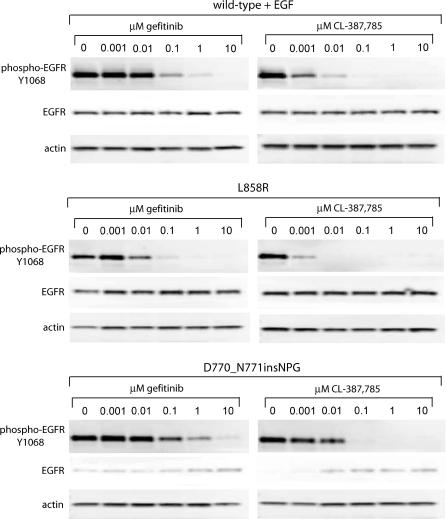
BACKGROUND: Somatic mutations in the kinase domain of the epidermal growth factor receptor tyrosine kinase gene EGFR are common in lung adenocarcinoma. The presence of mutations correlates with tumor sensitivity to the EGFR inhibitors erlotinib and gefitinib, but the transforming potential of specific mutations and their relationship to drug sensitivity have not been described. METHODS AND FINDINGS: Here, we demonstrate that EGFR active site mutants are oncogenic. Mutant EGFR can transform both fibroblasts and lung epithelial cells in the absence of exogenous epidermal growth factor, as evidenced by anchorage-independent growth, focus formation, and tumor formation in immunocompromised mice. Transformation is associated with constitutive autophosphorylation of EGFR, Shc phosphorylation, and STAT pathway activation. Whereas transformation by most EGFR mutants confers on cells sensitivity to erlotinib and gefitinib, transformation by an exon 20 insertion makes cells resistant to these inhibitors but more sensitive to the irreversible inhibitor CL-387,785. CONCLUSION: Oncogenic transformation of cells by different EGFR mutants causes differential sensitivity to gefitinib and erlotinib. Treatment of lung cancers harboring EGFR exon 20 insertions may therefore require the development of alternative kinase inhibition strategies.
Overview
The claims and statistics of this paper haven’t been checked yet.
Run the check — free, no account needed. It reads the open-access text and checks the sources it cites.
Integrity signals
Registry
Cites
Statistics
Figures
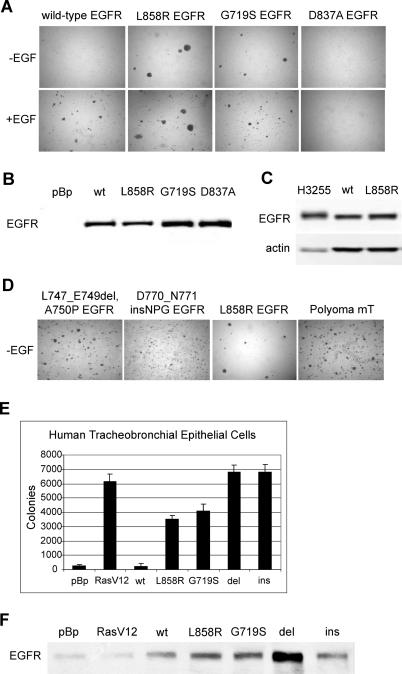
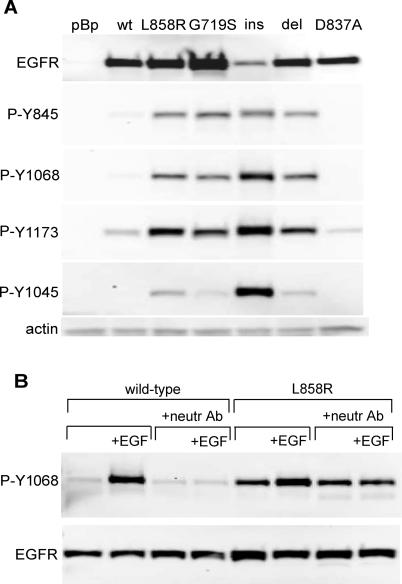
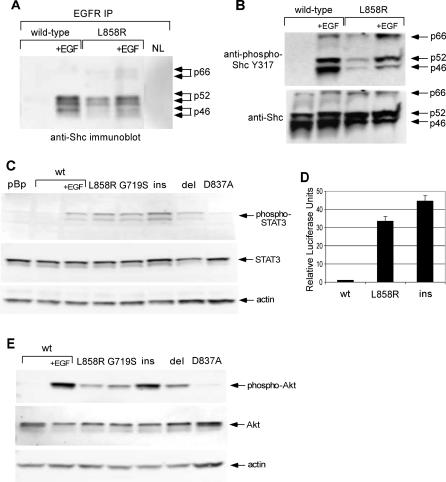
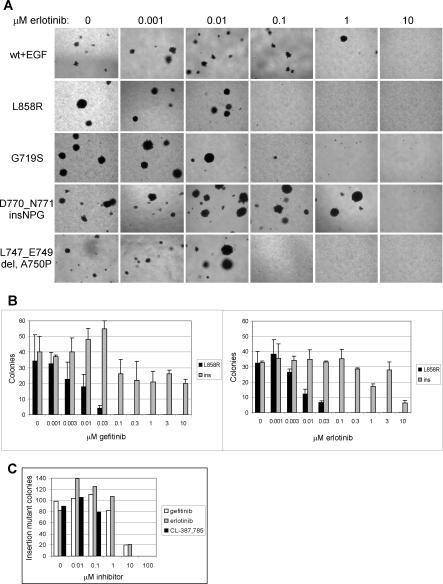
Verification
Claims the paper makes
The claims and statistics of this paper haven’t been checked yet.
Run the check — free, no account needed. It reads the open-access text and checks the sources it cites.
Claims other papers make about this one
Each is checked against this paper’s own text: does it say what the citing paper says it does?
In the citing paper
“CL-387785 has also shown potential to overcome T790M mutation-related resistance at the functional level, possibly by effectively inhibiting downstream signaling pathways.”
From Recent advances in targeting the “undruggable” proteins: from drug discovery to clinical trials (2023) · cites this paper as [201]
In the citing paper
“These mutant kinases present a reduced affinity for the ATP, accounting for the increased sensitivity to EGFR TKIs compared with the wild type counterparts, since these inhibitors compete with ATP for binding to the catalytic site [10–12].”
From A decade of EGFR inhibition in EGFR-mutated non small cell lung cancer (NSCLC): Old successes and future perspectives (2015) · cites this paper as [10]
In the citing paper
“Most EGFR exon 20 insertion mutations are 1st generation EGFR-TKIs resistant mutations [15, 18, 19].”
In the citing paper
“Cell culture and transgenic mouse model studies have shown that mutant EGFR has transforming activity (Greulich et al., 2005; Ji et al., 2006; Politi et al., 2006).”
From ERBB Receptors: From Oncogene Discovery to Basic Science to Mechanism-Based Cancer Therapeutics (2014) · cites this paper as Greulich et al., 2005
Self-check
Percentages, sums and reported differences re-computed from the paper’s own numbers.
The self-check needs the paper’s full text.
Citations
Cites
Lynch, T. J., Bell, D. W., Sordella, R., Gurubhagavatula, S., Okimoto, R. A., Brannigan, B. W., Harris, P. L., Haserlat, S. M., Supko, J. G., Haluska, F. G., et al. (2004) · New England Journal of Medicine · doi:10.1056/nejmoa040938 · Cited by 11,486
EGFR Mutations in Lung Cancer: Correlation with Clinical Response to Gefitinib Therapy
Paez, J. G., Jänne, P. A., Lee, J. C., Tracy, S., Greulich, H., Gabriel, S., Herman, P., Kaye, F. J., Lindeman, N., Boggon, T. J., et al. (2004) · Science · doi:10.1126/science.1099314 · Cited by 9,368
Self-citationPao, W., Miller, V., Zakowski, M., Doherty, J., Politi, K., Sarkaria, I., Singh, B., Heelan, R., Rusch, V., Fulton, L., et al. (2004) · Proceedings of the National Academy of Sciences · doi:10.1073/pnas.0405220101 · Cited by 4,338
EGFR Mutation and Resistance of Non–Small-Cell Lung Cancer to Gefitinib
Kobayashi, S., Boggon, T. J., Dayaram, T., Jänne, P. A., Kocher, O., Meyerson, M., Johnson, B. E., Eck, M. J., Tenen, D. G., & Halmos, B. (2005) · New England Journal of Medicine · doi:10.1056/nejmoa044238 · Cited by 3,964
Self-citationPao, W., Miller, V. A., Politi, K. A., Riely, G. J., Somwar, R., Zakowski, M. F., Kris, M. G., & Varmus, H. (2005) · PLoS Medicine · doi:10.1371/journal.pmed.0020073 · Cited by 3,527 · cited 1×
“Patients who responded to gefitinib and subsequently relapsed were found to have T790M secondary mutations, also in exon 20 [19,20].”
BackgroundThe ErbB signaling network: receptor heterodimerization in development and cancer
Olayioye, M. A., Neve, R. M., Lane, H. A., & Hynes, N. E. (2000) · The EMBO Journal · doi:10.1093/emboj/19.13.3159 · Cited by 2,489
Shigematsu, H., Lin, L., Takahashi, T., Nomura, M., Suzuki, M., Wistuba, I. I., Fong, K. M., Lee, H., Toyooka, S., Shimizu, N., et al. (2005) · JNCI Journal of the National Cancer Institute · doi:10.1093/jnci/dji055 · Cited by 2,377
Creation of human tumour cells with defined genetic elements
Hahn, W. C., Counter, C. M., Lundberg, A. S., Beijersbergen, R. L., Brooks, M. W., & Weinberg, R. A. (1999) · Nature · doi:10.1038/22780 · Cited by 2,345
Self-citationZhong, Z., Wen, Z., & Darnell, J. E. (1994) · Science · doi:10.1126/science.8140422 · Cited by 2,070
Gefitinib-Sensitizing EGFR Mutations in Lung Cancer Activate Anti-Apoptotic Pathways
Sordella, R., Bell, D. W., Haber, D. A., & Settleman, J. E. (2004) · Science · doi:10.1126/science.1101637 · Cited by 1,605
Research works printed but not linked: 2
- Garcia de Palazzo, 1993, Cancer Res, 53, 3217
- Moscatello, 1995, Cancer Res, 55, 5536
Cited by
Sorted by citations
Epidermal growth factor receptor mutations in lung cancer
Sharma, S. V., Bell, D. W., Settleman, J., & Haber, D. A. (2007) · Nature Reviews Cancer · doi:10.1038/nrc2088 · Cited by 3,170
Herbst, R. S., Heymach, J. V., & Lippman, S. M. (2008) · New England Journal of Medicine · doi:10.1056/nejmra0802714 · Cited by 2,435
Shigematsu, H., Lin, L., Takahashi, T., Nomura, M., Suzuki, M., Wistuba, I. I., Fong, K. M., Lee, H., Toyooka, S., Shimizu, N., et al. (2005) · JNCI Journal of the National Cancer Institute · doi:10.1093/jnci/dji055 · Cited by 2,377
Screening for Epidermal Growth Factor Receptor Mutations in Lung Cancer
Rosell, R., Moran, T., Queralt, C., Porta, R., Cardenal, F., Camps, C., Majem, M., Lopez-Vivanco, G., Isla, D., Provencio, M., et al. (2009) · New England Journal of Medicine · doi:10.1056/nejmoa0904554 · Cited by 2,373
The T790M mutation in EGFR kinase causes drug resistance by increasing the affinity for ATP
Yun, C.-H., Mengwasser, K. E., Toms, A. V., Woo, M. S., Greulich, H., Wong, K.-K., Meyerson, M., & Eck, M. J. (2008) · Proceedings of the National Academy of Sciences · doi:10.1073/pnas.0709662105 · Cited by 2,118
Self-citationAZD9291 in EGFR Inhibitor–Resistant Non–Small-Cell Lung Cancer
Jänne, P. A., Yang, J. C.-H., Kim, D.-W., Planchard, D., Ohe, Y., Ramalingam, S. S., Ahn, M.-J., Kim, S.-W., Su, W.-C., Horn, L., et al. (2015) · New England Journal of Medicine · doi:10.1056/nejmoa1411817 · Cited by 2,116
Mapping the Hallmarks of Lung Adenocarcinoma with Massively Parallel Sequencing
Imielinski, M., Berger, A. H., Hammerman, P. S., Hernandez, B., Pugh, T. J., Hodis, E., Cho, J., Suh, J., Capelletti, M., Sivachenko, A., et al. (2012) · Cell · doi:10.1016/j.cell.2012.08.029 · Cited by 1,789
Self-citationDetection of Mutations in EGFR in Circulating Lung-Cancer Cells
Maheswaran, S., Sequist, L. V., Nagrath, S., Ulkus, L., Brannigan, B., Collura, C. V., Inserra, E., Diederichs, S., Iafrate, A. J., Bell, D. W., et al. (2008) · New England Journal of Medicine · doi:10.1056/nejmoa0800668 · Cited by 1,617
BIBW2992, an irreversible EGFR/HER2 inhibitor highly effective in preclinical lung cancer models
Li, D., Ambrogio, L., Shimamura, T., Kubo, S., Takahashi, M., Chirieac, L. R., Padera, R. F., Shapiro, G. I., Baum, A., Himmelsbach, F., et al. (2008) · Oncogene · doi:10.1038/onc.2008.109 · Cited by 1,447
Self-citationYun, C.-H., Boggon, T. J., Li, Y., Woo, M. S., Greulich, H., Meyerson, M., & Eck, M. J. (2007) · Cancer Cell · doi:10.1016/j.ccr.2006.12.017 · Cited by 1,192
Self-citationRational, biologically based treatment of EGFR-mutant non-small-cell lung cancer
Pao, W., & Chmielecki, J. (2010) · Nature Reviews Cancer · doi:10.1038/nrc2947 · Cited by 1,083
“In vitro studies have shown that such mutations are less sensitive to EGFR TKIs than the exon 19 deletion and L858R mutant”
BackgroundThe quest to overcome resistance to EGFR-targeted therapies in cancer
Chong, C. R., & Janne, P. A. (2013) · Nature Medicine · doi:10.1038/nm.3388 · Cited by 1,076
Beroukhim, R., Getz, G. A., Nghiemphu, L., Barretina, J., Hsueh, T., Linhart, D., Vivanco, I., Lee, J. C., Huang, J. H. Y., Alexander, S., et al. (2007) · Proceedings of the National Academy of Sciences · doi:10.1073/pnas.0710052104 · Cited by 1,076
Self-citationERBB Receptors: From Oncogene Discovery to Basic Science to Mechanism-Based Cancer Therapeutics
Arteaga, C. L., & Engelman, J. A. (2014) · Cancer Cell · doi:10.1016/j.ccr.2014.02.025 · Cited by 1,048
Yang, J. C.-H., Sequist, L. V., Geater, S. L., Tsai, C.-M., Mok, T. S. K., Schuler, M., Yamamoto, N., Yu, C.-J., Ou, S.-H. I., Zhou, C., et al. (2015) · The Lancet Oncology · doi:10.1016/s1470-2045(15)00026-1 · Cited by 1,002
Gazdar, A. F. (2009) · Oncogene · doi:10.1038/onc.2009.198 · Cited by 991
ErbB receptors and signaling pathways in cancer
Hynes, N. E., & MacDonald, G. (2009) · Current Opinion in Cell Biology · doi:10.1016/j.ceb.2008.12.010 · Cited by 956
EGFR Mutations and Lung Cancer
Santos, G. D. C., Shepherd, F. A., & Tsao, M. (2011) · Annual Review of Pathology Mechanisms of Disease · doi:10.1146/annurev-pathol-011110-130206 · Cited by 964
Activating mutations in ALK provide a therapeutic target in neuroblastoma
George, R. E., Sanda, T., Hanna, M., Fröhling, S., II, W. L., Zhang, J., Ahn, Y., Zhou, W., London, W. B., McGrady, P., et al. (2008) · Nature · doi:10.1038/nature07397 · Cited by 893
Self-citationSequist, L. V., Martins, R. G., Spigel, D., Grunberg, S. M., Spira, A., Jänne, P. A., Joshi, V. A., McCollum, D., Evans, T. L., Muzikansky, A., et al. (2008) · Journal of Clinical Oncology · doi:10.1200/jco.2007.14.8494 · Cited by 820
Engelman, J. A., Zejnullahu, K., Gale, C.-M., Lifshits, E., Gonzales, A. J., Shimamura, T., Zhao, F., Vincent, P. W., Naumov, G. N., Bradner, J. E., et al. (2007) · Cancer Research · doi:10.1158/0008-5472.can-07-1885 · Cited by 730
Self-citationProgress in research on paclitaxel and tumor immunotherapy
Zhu, L., & Chen, L. (2019) · Cellular & Molecular Biology Letters · doi:10.1186/s11658-019-0164-y · Cited by 628
Sequist, L. V. D., Bell, D. W., Lynch, T. J., & Haber, D. A. (2007) · Journal of Clinical Oncology · doi:10.1200/jco.2006.07.3585 · Cited by 625
Yasuda, H., Kobayashi, S., & Costa, D. B. (2012) · The Lancet Oncology · doi:10.1016/s1470-2045(11)70129-2 · Cited by 610
Mechanism for Activation of the EGF Receptor Catalytic Domain by the Juxtamembrane Segment
Jura, N., Endres, N., Engel, K., Deindl, S., Das, R., Lamers, M. H., Wemmer, D. E., Zhang, X., & Kuriyan, J. (2009) · Cell · doi:10.1016/j.cell.2009.04.025 · Cited by 609
Mitsudomi, T., & Yatabe, Y. (2007) · Cancer Science · doi:10.1111/j.1349-7006.2007.00607.x · Cited by 606
EGFR in Cancer: Signaling Mechanisms, Drugs, and Acquired Resistance
Uribe, M. L., Marrocco, I., & Yarden, Y. (2021) · Cancers · doi:10.3390/cancers13112748 · Cited by 604
Jackman, D. M., Yeap, B. Y., Sequist, L. V., Lindeman, N., Holmes, A. J., Joshi, V. A., Bell, D. W., Huberman, M. S., Halmos, B., Rabin, M. S., et al. (2006) · Clinical Cancer Research · doi:10.1158/1078-0432.ccr-06-0462 · Cited by 584
Self-citationEpidermal growth factor receptor in relation to tumor development: EGFR gene and cancer
Mitsudomi, T., & Yatabe, Y. (2009) · FEBS Journal · doi:10.1111/j.1742-4658.2009.07448.x · Cited by 560
Wei, Y., Zou, Z., Becker, N., Anderson, M., Sumpter, R., Xiao, G., Kinch, L., Koduru, P., Christudass, C. S., Veltri, R. W., et al. (2013) · Cell · doi:10.1016/j.cell.2013.08.015 · Cited by 505
STAT3 as a target for inducing apoptosis in solid and hematological tumors
Siddiquee, K., & Turkson, J. (2008) · Cell Research · doi:10.1038/cr.2008.18 · Cited by 496
Politi, K., Zakowski, M. F., Fan, P.-D., Schonfeld, E. A., Pao, W., & Varmus, H. E. (2006) · Genes & Development · doi:10.1101/gad.1417406 · Cited by 478
Wang, S. E., Narasanna, A., Pérez-Torres, M., Xiang, B., Wu, F. Y., Yang, S., Carpenter, G. F., Gazdar, A. F., Muthuswamy, S. K., & Arteaga, C. L. (2006) · Cancer Cell · doi:10.1016/j.ccr.2006.05.023 · Cited by 479
Arcila, M. E., Nafa, K., Chaft, J. E., Rekhtman, N., Lau, C., Reva, B. A., Zakowski, M. F., Kris, M. G., & Ladanyi, M. (2013) · Molecular Cancer Therapeutics · doi:10.1158/1535-7163.mct-12-0620 · Cited by 473
Epidermal Growth Factor Receptor Tyrosine Kinase Inhibitor–Resistant Disease
Ohashi, K., Maruvka, Y. E., Michor, F., & Pao, W. (2013) · Journal of Clinical Oncology · doi:10.1200/jco.2012.43.3912 · Cited by 467
Wu, J.-Y., Yu, C.-J., Chang, Y.-C., Yang, C.-H., Shih, J.-Y., & Yang, P.-C. (2011) · Clinical Cancer Research · doi:10.1158/1078-0432.ccr-10-3408 · Cited by 463
Ji, H., Li, D., Chen, L., Shimamura, T., Kobayashi, S., McNamara, K., Mahmood, U., Mitchell, A., Sun, Y., Al-Hashem, R., et al. (2006) · Cancer Cell · doi:10.1016/j.ccr.2006.04.022 · Cited by 462
Engelman, J. A., Mukohara, T., Zejnullahu, K., Lifshits, E., Borras, A. M., Gale, C.-M., Naumov, G. N., Yeap, B. Y., Jarrell, E., Sun, J., et al. (2006) · Journal of Clinical Investigation · doi:10.1172/jci28656 · Cited by 457
Recent advances in targeting the “undruggable” proteins: from drug discovery to clinical trials
Xie, X., Yu, T., Li, X., Zhang, N., Foster, L. J., Peng, C., Huang, W., & He, G. (2023) · Signal Transduction and Targeted Therapy · doi:10.1038/s41392-023-01589-z · Cited by 396
Cardarella, S., Ogino, A., Nishino, M., Butaney, M., Shen, J., Lydon, C., Yeap, B. Y., Sholl, L. M., Johnson, B. E., & Janne, P. A. (2013) · Clinical Cancer Research · doi:10.1158/1078-0432.ccr-13-0657 · Cited by 382
EGFR signaling pathway as therapeutic target in human cancers
Levantini, E., Maroni, G., Re, M. D., & Tenen, D. G. (2022) · Seminars in Cancer Biology · doi:10.1016/j.semcancer.2022.04.002 · Cited by 390
Regales, L., Gong, Y., Shen, R., de Stanchina, E., Vivanco, I., Goel, A. J., Koutcher, J. A., Spassova, M. K., Ouerfelli, O., Mellinghoff, I. K., et al. (2009) · Journal of Clinical Investigation · doi:10.1172/jci38746 · Cited by 376
Lee, J. C., Vivanco, I., Beroukhim, R., Huang, J. H. Y., Feng, W., Debiasi, R. M., Yoshimoto, K., King, J. C., Nghiemphu, P. L., Yuza, Y., et al. (2006) · PLoS Medicine · doi:10.1371/journal.pmed.0030485 · Cited by 378
Self-citationMolecular biology of lung cancer.
Cooper, W. A., Lam, D. C.-L., O'Toole, S. A., & Minna, J. D. (2013) · Europe PMC (PubMed Central) · doi:10.3978/j.issn.2072-1439.2013.08.03 · Cited by 378
Natural History and Molecular Characteristics of Lung Cancers Harboring EGFR Exon 20 Insertions
Oxnard, G. R., Lo, P. C., Nishino, M., Dahlberg, S. E., Lindeman, N. I., Butaney, M., Jackman, D. M., Johnson, B. E., & Jänne, P. A. (2013) · Journal of Thoracic Oncology · doi:10.1097/jto.0b013e3182779d18 · Cited by 360
Thomas, R. K., Nickerson, E., Simons, J. F., Janne, P. A., Tengs, T., Yuza, Y., Garraway, L. A., LaFramboise, T., Lee, J. C., Shah, K., et al. (2006) · Nature Medicine · doi:10.1038/nm1437 · Cited by 360
Self-citationSchoeberl, B., Pace, E. A., Fitzgerald, J. B., Harms, B. D., Xu, L., Nie, L., Linggi, B. E., Kalra, A. V., Paragas, V. B., Bukhalid, R. A., et al. (2009) · Science Signaling · doi:10.1126/scisignal.2000352 · Cited by 363
Update on Epidermal Growth Factor Receptor Mutations in Non–Small Cell Lung Cancer
Riely, G. J., Politi, K. A., Miller, V. A., & Pao, W. J. (2006) · Clinical Cancer Research · doi:10.1158/1078-0432.ccr-06-0658 · Cited by 363
Emerging Paradigms in the Development of Resistance to Tyrosine Kinase Inhibitors in Lung Cancer
Gainor, J. F., & Shaw, A. T. (2013) · Journal of Clinical Oncology · doi:10.1200/jco.2012.45.2029 · Cited by 358
The Role of Src in Solid Tumors
Wheeler, D. L., Iida, M., & Dunn, E. F. (2009) · The Oncologist · doi:10.1634/theoncologist.2009-0009 · Cited by 346
Vivanco, I., Robins, H. I., Rohle, D., Campos, C., Grommes, C., Nghiemphu, P. L., Kubek, S., Oldrini, B., Chheda, M. G., Yannuzzi, N. A., et al. (2012) · Cancer Discovery · doi:10.1158/2159-8290.cd-11-0284 · Cited by 350
Focal adhesion signaling and therapy resistance in cancer
Eke, I., & Cordes, N. (2014) · Seminars in Cancer Biology · doi:10.1016/j.semcancer.2014.07.009 · Cited by 339
Gong, Y., Somwar, R., Politi, K. A., Balak, M. N., Chmielecki, J., Jiang, X., & Pao, W. J. (2007) · PLoS Medicine · doi:10.1371/journal.pmed.0040294 · Cited by 330
Time-dependent spectral analysis of epidemiological time-series with wavelets
Cazelles, B., Chávez, M., de Magny, G. C., Guégan, J., & Hales, S. (2007) · Journal of The Royal Society Interface · doi:10.1098/rsif.2007.0212 · Cited by 321
Wu, J.-Y., Wu, S.-G., Yang, C.-H., Gow, C.-H., Chang, Y.-L., Yu, C.-J., Shih, J.-Y., & Yang, P.-C. (2008) · Clinical Cancer Research · doi:10.1158/1078-0432.ccr-07-5123 · Cited by 319
Stewart, E., Tan, S. Z., Liu, G., & Tsao, M. (2015) · Europe PMC (PubMed Central) · doi:10.3978/j.issn.2218-6751.2014.11.06 · Cited by 314
Structure and Clinical Relevance of the Epidermal Growth Factor Receptor in Human Cancer
Kumar, A., Petri, E. T., Halmos, B., & Boggon, T. J. (2008) · Journal of Clinical Oncology · doi:10.1200/jco.2007.12.1178 · Cited by 308
Acquired resistance to tyrosine kinase inhibitors during cancer therapy
Engelman, J. A., & Settleman, J. E. (2008) · Current Opinion in Genetics & Development · doi:10.1016/j.gde.2008.01.004 · Cited by 292
Annotating Cancer Variants and Anti-Cancer Therapeutics in Reactome
Orlic-Milacic, M., Haw, R., Rothfels, K., Wu, G., Croft, D. W., Hermjakob, H., D’Eustachio, P., & Stein, L. D. (2012) · Cancers · doi:10.3390/cancers4041180 · Cited by 281
Regulation of Hippo Signaling by EGFR-MAPK Signaling through Ajuba Family Proteins
Reddy, B. V. V. G., & Irvine, K. D. (2013) · Developmental Cell · doi:10.1016/j.devcel.2013.01.020 · Cited by 271
Global drivers of human pathogen richness and prevalence
Dunn, R. R., Davies, T. J., Harris, N. C., & Gavin, M. C. (2010) · Proceedings of the Royal Society B: Biological Sciences · doi:10.1098/rspb.2010.0340 · Cited by 267
Kim, K., Lee, H. W., Lee, H., Kim, S. C., Seo, Y. J., Chung, W., Eum, H. H., Nam, D., Kim, J., Joo, K. M., et al. (2015) · Genome biology · doi:10.1186/s13059-015-0692-3 · Cited by 269
The complexity of targeting EGFR signalling in cancer: From expression to turnover
Sebastian, S., Settleman, J. E., Reshkin, S. J., Azzariti, A., Bellizzi, A., & Paradiso, A. (2006) · Biochimica et Biophysica Acta (BBA) - Reviews on Cancer · doi:10.1016/j.bbcan.2006.06.001 · Cited by 266
Differential Protein Stability and ALK Inhibitor Sensitivity of EML4-ALK Fusion Variants
Heuckmann, J. M., Balke‐Want, H., Malchers, F., Peifer, M., Sos, M. L., Koker, M., Meder, L., Lovly, C. M., Heukamp, L. C., Pao, W. J., et al. (2012) · Clinical Cancer Research · doi:10.1158/1078-0432.ccr-11-3260 · Cited by 261
Nagano, T., TACHIHARA, M. Y., & Nishimura, Y. (2018) · Cells · doi:10.3390/cells7110212 · Cited by 259
Han, S., Kim, T., Jeon, Y. K., Hwang, P. G., Im, S., Lee, K.-H., Kim, J. H., Kim, D., Heo, D. S., Kim, N. K., et al. (2006) · Clinical Cancer Research · doi:10.1158/1078-0432.ccr-05-2845 · Cited by 250
Molecular pathology of lung cancer: key to personalized medicine
Liang Cheng, C., Alexander, R. E., MacLennan, G. T., Cummings, O. W., Montironi, R., Antonio Lopez-beltran, B., Cramer, H. M., Davidson, D. D., & Zhang, S. (2012) · Modern Pathology · doi:10.1038/modpathol.2011.215 · Cited by 249
Alvarez, J. V., Greulich, H. E., Sellers, W. R., Meyerson, M. M., & Frank, D. A. (2006) · Cancer Research · doi:10.1158/0008-5472.can-05-3757 · Cited by 243
Self-citationSomatic EGFR mutations and efficacy of tyrosine kinase inhibitors in NSCLC
Linardou, H., Dahabreh, I. J., Bafaloukos, D. I., Kosmidis, P., & Murray, S. J. (2009) · Nature Reviews Clinical Oncology · doi:10.1038/nrclinonc.2009.62 · Cited by 236
Epidermal growth factor receptor mutations in lung adenocarcinoma
Siegelin, M. D., & Borczuk, A. (2013) · Laboratory Investigation · doi:10.1038/labinvest.2013.147 · Cited by 234
Eck, M. J., & Yun, C.-H. (2010) · Biochimica et Biophysica Acta (BBA) - Proteins and Proteomics · doi:10.1016/j.bbapap.2009.12.010 · Cited by 225
Molecular pathways and therapeutic targets in lung cancer
Shtivelman, E., Hensing, T., Simon, G. R., Dennis, P. A., Otterson, G. A., Bueno, R., & Salgia, R. (2014) · Oncotarget · doi:10.18632/oncotarget.1891 · Cited by 220
Biological and clinical implications of EGFR mutations in lung cancer
Mitsudomi, T., Kosaka, T., & Yatabe, Y. (2006) · International Journal of Clinical Oncology · doi:10.1007/s10147-006-0583-4 · Cited by 218
Schnidar, H., Eberl, M., Klingler, S., Mangelberger, D., Kasper, M., Hauser‐Kronberger, C., Regl, G., Kroismayr, R., Moriggl, R., Sibilia, M. C., et al. (2009) · Cancer Research · doi:10.1158/0008-5472.can-08-2331 · Cited by 212
High-throughput phenotyping of lung cancer somatic mutations
Berger, A. H., Brooks, A. N., Wu, X., Shrestha, Y., Chouinard, C., Piccioni, F., Bagul, M., Kamburov, A., Imielinski, M., Hogstrom, L., et al. (2016) · Cancer Cell · doi:10.1016/j.ccell.2016.06.022 · Cited by 192
Self-citationDo, H., Krypuy, M., Mitchell, P. L. R., Fox, S. B., & Dobrovic, A. (2008) · BMC Cancer · doi:10.1186/1471-2407-8-142 · Cited by 206
Tanabe, K. K., Lemoine, A., Finkelstein, D. M., Kawasaki, H., Fujii, T., Chung, R. T., Lauwers, G. Y., Kulu, Y., Muzikansky, A., Kuruppu, D., et al. (2008) · JAMA · doi:10.1001/jama.2007.65 · Cited by 204
Rethink of EGFR in Cancer With Its Kinase Independent Function on Board
Thomas, R., & Weihua, Z. (2019) · Frontiers in Oncology · doi:10.3389/fonc.2019.00800 · Cited by 215
Kobayashi, Y., Togashi, Y., Yatabe, Y., Mizuuchi, H., Jangchul, P., Kondo, C., Shimoji, M., Sato, K., Suda, K., Tomizawa, K., et al. (2015) · Clinical Cancer Research · doi:10.1158/1078-0432.ccr-15-1046 · Cited by 203
Activation of the EGF Receptor by Ligand Binding and Oncogenic Mutations: The “Rotation Model”
Purba, E. R., Saita, E., & MARUYAMA, I. N. (2017) · Cells · doi:10.3390/cells6020013 · Cited by 218
Ligand-Independent EGFR Signaling
Guo, G., Gong, K., Wohlfeld, B., Hatanpaa, K. J., Zhao, D., & Habib, A. A. (2015) · Cancer Research · doi:10.1158/0008-5472.can-15-0989 · Cited by 205
EGFR-mutated lung cancer: a paradigm of molecular oncology
Zhang, Z., Stiegler, A. L., Boggon, T. J., Kobayashi, S., & Halmos, B. (2010) · Oncotarget · doi:10.18632/oncotarget.186 · Cited by 197
Ogino, A., Kitao, H., Hirano, S., Uchida, A., Ishiai, M., Kozuki, T., Takigawa, N., Takata, M., Kiura, K., & Tanimoto, M. (2007) · Cancer Research · doi:10.1158/0008-5472.can-07-0681 · Cited by 194
Mulloy, R., Ferrand, A., Kim, Y., Sordella, R., Bell, D. W., Haber, D. A., Anderson, K. S., & Settleman, J. (2007) · Cancer Research · doi:10.1158/0008-5472.can-06-4293 · Cited by 192
The Role of STAT3 in Non-Small Cell Lung Cancer
Harada, D., Takigawa, N., & Kiura, K. (2014) · Cancers · doi:10.3390/cancers6020708 · Cited by 195
Oncogenic mutant forms of EGFR: Lessons in signal transduction and targets for cancer therapy
Pines, G., Köstler, W. J., & Yarden, Y. (2010) · FEBS Letters · doi:10.1016/j.febslet.2010.04.019 · Cited by 199
A Rapid, Sensitive Assay to Detect EGFR Mutation in Small Biopsy Specimens from Lung Cancer
Yatabe, Y., Hida, T., Horio, Y., Kosaka, T., Takahashi, T., & Mitsudomi, T. (2006) · Journal of Molecular Diagnostics · doi:10.2353/jmoldx.2006.050104 · Cited by 186
Okabe, T., Okamoto, I., Tamura, K., Terashima, M., Yoshida, T., Satoh, T., Takada, M., Fukuoka, M., & Nakagawa, K. (2007) · Cancer Research · doi:10.1158/0008-5472.can-06-3339 · Cited by 186
Unni, A. M., Lockwood, W. W., Zejnullahu, K., Lee-Lin, S.-Q., & VARMUS, H. E. (2015) · eLife · doi:10.7554/elife.06907 · Cited by 188
Song, L., Rawal, B., Nemeth, J. A., & Haura, E. B. (2011) · Molecular Cancer Therapeutics · doi:10.1158/1535-7163.mct-10-0502 · Cited by 184
Sawai, A., Chandarlapaty, S., Greulich, H. E., Gönen, M., Ye, Q., Arteaga, C. L., Sellers, W. R., Rosen, N. X., & Solit, D. B. (2008) · Cancer Research · doi:10.1158/0008-5472.can-07-1570 · Cited by 179
Self-citationRusso, A., Franchina, T., Rita Ricciardi, G. R., Picone, A., Ferraro, G., Zanghì, M., Toscano, G., Giordano, A., & Adamo, V. (2015) · Oncotarget · doi:10.18632/oncotarget.4254 · Cited by 173
New insights into designing hybrid nanoparticles for lung cancer: Diagnosis and treatment
Mottaghitalab, F., Farokhi, M., Fatahi, Y., Atyabi, F., & Dinarvand, R. (2019) · Journal of Controlled Release · doi:10.1016/j.jconrel.2019.01.009 · Cited by 172
Kancha, R. K., von Bubnoff, N., Peschel, C., & Duyster, J. (2009) · Clinical Cancer Research · doi:10.1158/1078-0432.ccr-08-1757 · Cited by 168
Hirano, T., Yasuda, H., Tani, T., Hamamoto, J., Oashi, A., Ishioka, K., Arai, D., Nukaga, S., Miyawaki, M., Kawada, I., et al. (2015) · Oncotarget · doi:10.18632/oncotarget.5887 · Cited by 165
Yoshida, K., Yatabe, Y., Park, J. Y., Shimizu, J., Horio, Y., Matsuo, K., Kosaka, T., Mitsudomi, T., & Hida, T. (2007) · Journal of Thoracic Oncology · doi:10.1016/s1556-0864(15)30013-7 · Cited by 165
Sequist, L. V. D., Joshi, V. A., Janne, P. A., Muzikansky, A., Fidias, P. M., Meyerson, M. M., Haber, D. A., Kucherlapati, R., Johnson, B. E., & Lynch, T. J. (2007) · The Oncologist · doi:10.1634/theoncologist.12-1-90 · Cited by 161
Self-citationPreclinical development of molecular-targeted agents for cancer
Ocaña, A., Pandiella, A., Siu, L. L., & Tannock, I. F. (2010) · Nature Reviews Clinical Oncology · doi:10.1038/nrclinonc.2010.194 · Cited by 161
Treatment of uncommon EGFR mutations in non-small cell lung cancer: new evidence and treatment
Zhang, T., Wan, B., Zhao, Y., Li, C., Liu, H., Lv, T., Zhan, P., & Song, Y. (2019) · Translational Lung Cancer Research · doi:10.21037/tlcr.2019.04.12 · Cited by 163
Chen, F., & LoTurco, J. J. (2012) · Journal of Neuroscience Methods · doi:10.1016/j.jneumeth.2012.03.016 · Cited by 157
Metadata
- Authors
- Greulich, H., Chen, T.-H., Feng, W., Jänne, P. A., Alvarez, J. V., Zappaterra, M., Bulmer, S. E., Frank, D. A., Hahn, W. C., Sellers, W. R., & Meyerson, M.
- Affiliations
- Broad Institute (US)
- Brigham and Women's Hospital (US)
- Dana-Farber Cancer Institute (US)
- Corresponding author
- Greulich, Heidi
- Sellers, William R
- Meyerson, Matthew
- ORCID
- Venue
- PLoS Medicine
- Publisher
- Public Library of Science (PLoS)
- Published
- 2005-10-04
- Volume
- 2
- Issue
- 11
- Pages
- e313
- ISSN
- 1549-1277 (ISSN-L)
- 1549-1676
- PMC
- PMC1240052
- OpenAlex
- W2037873277
- Cited by
- 677
- References
- 35
- Citations by year
- 2026: 9 · 2025: 10 · 2024: 10 · 2023: 22 · 2022: 23 · 2021: 23 · 2020: 16 · 2019: 29 · 2018: 20 · 2017: 27 · 2016: 26 · 2015: 47 · 2014: 27 · 2013: 54 · 2012: 46
- FWCI
- 45.72
- Type
- journal article
- Language
- en
- Update notices
- correction (2024-09-16)
- Open access
- gold
- doi.org
- Locations
- PLoS Medicine (publishedVersion, cc-by)
- Europe PMC (PubMed Central) (publishedVersion, cc-by)
- PubMed Central (publishedVersion, cc-by)
- PubMed (publishedVersion)
- Digital Access to Scholarship at Harvard (DASH) (Harvard University) (submittedVersion, cc-by)
- DOAJ (DOAJ: Directory of Open Access Journals) (submittedVersion, cc-by-sa)
- Funders
- American Cancer Society
- Doris Duke Charitable Foundation
- Flight Attendant Medical Research Institute
- Barr Foundation
- National Institutes of Health
- National Cancer Institute
- Topics
- Health Sciences › Medicine › Pulmonary and Respiratory Medicine › Lung Cancer Treatments and Mutations
- Health Sciences › Medicine › Oncology › HER2/EGFR in Cancer Research
- Life Sciences › Biochemistry, Genetics and Molecular Biology › Cancer Research › Cancer Genomics and Diagnostics
- Keywords
- EGFR mutation, oncogenic transformation, lung adenocarcinoma, erlotinib, gefitinib, EGFR inhibitors, exon 20 insertion, autophosphorylation, Shc phosphorylation, STAT pathway, drug resistance, kinase inhibitors
- MeSH terms
- Erlotinib Hydrochloride, Src Homology 2 Domain-Containing, Transforming Protein 1, Gefitinib, Animals, Antineoplastic Agents, Cell Transformation, Neoplastic, Exons, Humans, Mice, Nude, Mutation, Neoplasms, Experimental, Quinazolines, Transfection, Tumor Stem Cell Assay, Genetic Therapy, Drug Resistance, Neoplasm, NIH 3T3 Cells, Protein Kinase Inhibitors, Adaptor Proteins, Signal Transducing, STAT3 Transcription Factor, Proto-Oncogene Proteins c-akt, Mice, Shc Signaling Adaptor Proteins, ErbB Receptors
About these checks
Registry, retraction, Cites and statistics results are computed, not judged, with one exception: a printed reference that no index lists is read once by a model before it counts as a citation error. Claims are extracted by a model and kept only when their quote appears verbatim in the text; each cited source is then checked, with a model’s help, for whether it says what the claim relies on. Those verdicts can be wrong — read the claim’s quote and the cited source before relying on one.
Statistics and arithmetic are recomputed, not judged.
Confidence bands are shown only for fields calibrated on our annotated test set. None is calibrated yet, so no band is shown.
What counts as a claim ›How we measure confidence ›How we check this ›
Are you an author, or do you see a problem with this page? Request a review
