

SARS: Systematic Review of Treatment Effects
Open accessThe DOI matches its Crossref record; 31 of the 31 references it cites were found in a registry or an index.
Abstract
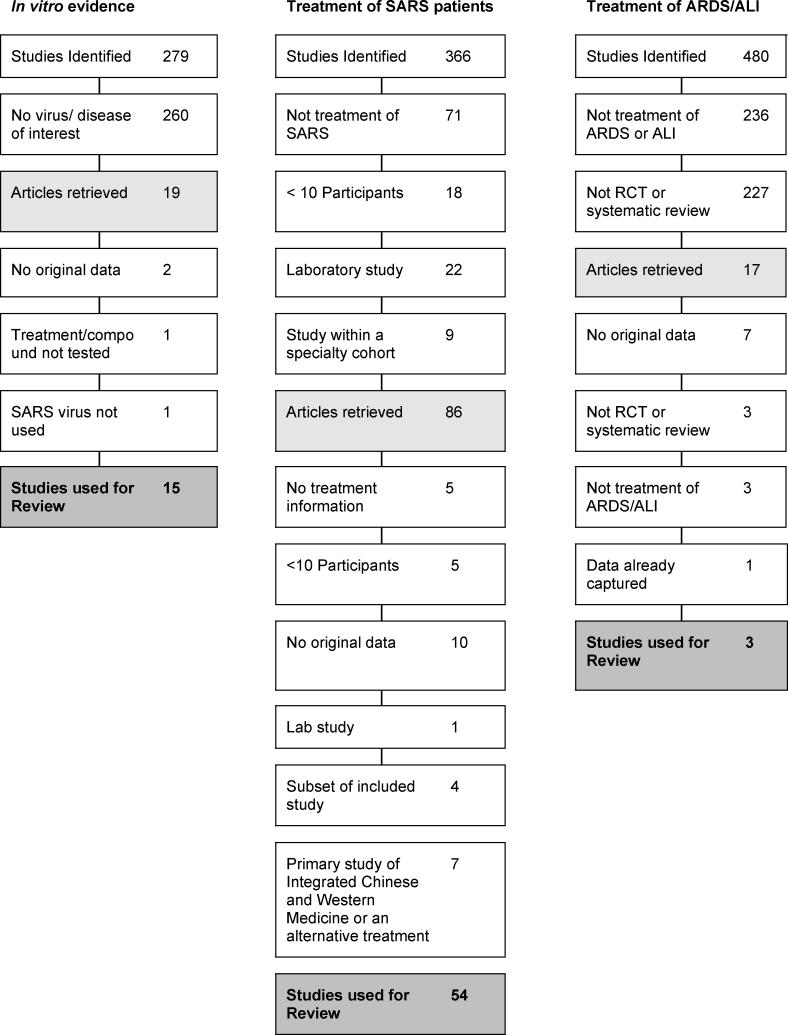
BACKGROUND: The SARS outbreak of 2002-2003 presented clinicians with a new, life-threatening disease for which they had no experience in treating and no research on the effectiveness of treatment options. The World Health Organization (WHO) expert panel on SARS treatment requested a systematic review and comprehensive summary of treatments used for SARS-infected patients in order to guide future treatment and identify priorities for research. METHODS AND FINDINGS: In response to the WHO request we conducted a systematic review of the published literature on ribavirin, corticosteroids, lopinavir and ritonavir (LPV/r), type I interferon (IFN), intravenous immunoglobulin (IVIG), and SARS convalescent plasma from both in vitro studies and in SARS patients. We also searched for clinical trial evidence of treatment for acute respiratory distress syndrome. Sources of data were the literature databases MEDLINE, EMBASE, BIOSIS, and the Cochrane Central Register of Controlled Trials (CENTRAL) up to February 2005. Data from publications were extracted and evidence within studies was classified using predefined criteria. In total, 54 SARS treatment studies, 15 in vitro studies, and three acute respiratory distress syndrome studies met our inclusion criteria. Within in vitro studies, ribavirin, lopinavir, and type I IFN showed inhibition of SARS-CoV in tissue culture. In SARS-infected patient reports on ribavirin, 26 studies were classified as inconclusive, and four showed possible harm. Seven studies of convalescent plasma or IVIG, three of IFN type I, and two of LPV/r were inconclusive. In 29 studies of steroid use, 25 were inconclusive and four were classified as causing possible harm. CONCLUSIONS: Despite an extensive literature reporting on SARS treatments, it was not possible to determine whether treatments benefited patients during the SARS outbreak. Some may have been harmful. Clinical trials should be designed to validate a standard protocol for dosage and timing, and to accrue data in real time during future outbreaks to monitor specific adverse effects and help inform treatment.
Overview
The claims and statistics of this paper haven’t been checked yet.
Free: it reads the open-access text and checks the first 5 claims that cite a source we can check. Create a free account to check every claim.
Integrity signals
Registry
Cites
Statistics
Figures
Verification
Claims the paper makes
The claims and statistics of this paper haven’t been checked yet.
Free: it reads the open-access text and checks the first 5 claims that cite a source we can check. Create a free account to check every claim.
Claims other papers make about this one
Each is checked against this paper’s own text: does it say what the citing paper says it does?
The cited source says what the claim attributes to it.
In the citing paper
“There is no effective treatment to date, 17 and despite promising advances, 18,19 no vaccine has been approved.”
From Severe acute respiratory syndrome (SARS) mathematical models and disease parameters: a systematic review (2025) · cites this paper as [17]
Self-check
Percentages, sums and reported differences re-computed from the paper’s own numbers.
The self-check needs the paper’s full text.
Citations
Cites
Identification of a novel coronavirus in patients with severe acute respiratory syndrome
Drosten, C., Günther, S., Preiser, W., van der Werf, S., Brodt, H.-R., Becker, S., Rabenau, H., Panning, M., Kolesnikova, L., Fouchier, R. A. M., et al. (2003) · New England Journal of Medicine · doi:10.1056/nejmoa030747 · Cited by 4,574 · cited 1×
“The causative organism has been identified as a novel coronavirus (SARS-CoV) [2] [3] [4] .”
BackgroundA Novel Coronavirus Associated with Severe Acute Respiratory Syndrome
Ksiazek, T. G., Erdman, D., Goldsmith, C. S., Zaki, S. R., Peret, T., Emery, S., Tong, S., Urbani, C., Comer, J. A., Lim, W., et al. (2003) · New England Journal of Medicine · doi:10.1056/nejmoa030781 · Cited by 4,344 · cited 2×
“The causative organism has been identified as a novel coronavirus (SARS-CoV) [2] [3] [4] .”
BackgroundMethodCoronavirus as a possible cause of severe acute respiratory syndrome
Peiris, J., Lai, S., Poon, L., Guan, Y., Yam, L., Lim, W., Nicholls, J., Yee, W., Yan, W., Cheung, M., et al. (2003) · The Lancet · doi:10.1016/s0140-6736(03)13077-2 · Cited by 2,915 · cited 1×
“The causative organism has been identified as a novel coronavirus (SARS-CoV) [2] [3] [4] .”
BackgroundA Major Outbreak of Severe Acute Respiratory Syndrome in Hong Kong
Lee, N., Hui, D., Wu, A., Chan, P., Cameron, P., Joynt, G. M., Ahuja, A., Yung, M. Y., Leung, C. B., To, K. F., et al. (2003) · New England Journal of Medicine · doi:10.1056/nejmoa030685 · Cited by 2,628 · cited 1×
“Because the urgency of the international outbreak did not allow time for efficacy studies, physicians in Canada and Hong Kong treated the earliest patients with intravenous ribavirin, based on its broad-spectrum antiviral activity [9,10].”
BackgroundRole of lopinavir/ritonavir in the treatment of SARS: initial virological and clinical findings
Chu, C. M. (2004) · Thorax · doi:10.1136/thorax.2003.012658 · Cited by 1,645 · cited 1×
“When LPV/r was added as an initial treatment to ribavirin and corticosteroid therapy, the death rate was lower than among those who received ribavirin and corticosteroids (1/ [20] .”
BackgroundClinical Features and Short-term Outcomes of 144 Patients With SARS in the Greater Toronto Area
Booth, C. M. (2003) · JAMA · doi:10.1001/jama.289.21.joc30885 · Cited by 1,406 · cited 2×
“Four publications presented evidence of possible harm (14) (15) (16) (17) .”
BackgroundResultThe Severe Acute Respiratory Syndrome
Peiris, J. S. M., Yuen, K. Y., Osterhaus, A. D. M. E., & Stöhr, K. (2003) · New England Journal of Medicine · doi:10.1056/nejmra032498 · Cited by 1,346
Identification of Severe Acute Respiratory Syndrome in Canada
Poutanen, S. M., Low, D. E., Henry, B., Finkelstein, S., Rose, D., Green, K., Tellier, R., Draker, R., Adachi, D., Ayers, M., et al. (2003) · New England Journal of Medicine · doi:10.1056/nejmoa030634 · Cited by 1,132 · cited 1×
“Because the urgency of the international outbreak did not allow time for efficacy studies, physicians in Canada and Hong Kong treated the earliest patients with intravenous ribavirin, based on its broad-spectrum antiviral activity [9,10].”
BackgroundMeduri, G. U., Headley, A. S., Golden, E., Carson, S. J., Umberger, R. A., Kelso, T., & Tolley, E. A. (1998) · JAMA · doi:10.1001/jama.280.2.159 · Cited by 1,008 · cited 2×
“Table S11.”
BackgroundHigh-Dose Corticosteroids in Patients with the Adult Respiratory Distress Syndrome
Bernard, G. R., Luce, J. M., Sprung, C. L., Rinaldo, J. E., Tate, R. M., Sibbald, W. J., Kariman, K., Higgins, S., Bradley, R., Metz, C. A., et al. (1987) · New England Journal of Medicine · doi:10.1056/nejm198712173172504 · Cited by 935 · cited 1×
“In two trials, high-dose methylprednisolone given for approximately 2 d was not effective for early ARDS [ 25 ,26].”
Method
Research works printed but not linked: 30
- Ksiazek, 2003, N Engl J Med, 348, 1953
- Peiris, 2003, Lancet, 361, 1319
- Drosten, 2003, N Engl J Med, 348, 1967
- Peiris, 2003, N Engl J Med, 2003, 2431
- Leung, 2004, Ann Intern Med, 141, 662
- Fowler, 2003, JAMA, 290, 367
- Poutanen, 2003, N Engl J Med, 348, 1995
- Lee, 2003, N Engl J Med, 348, 1986
- Morgenstern, 2005, Biochem Biophys Res Commun, 326, 905
- Chen, 2004, J Clin Virol, 31, 69
- Knowles, 2003, Clin Infect Dis, 37, 1139
- Booth, 2003, JAMA, 289, 2801
- Sung, 2004, Thorax, 59, 414
- Wong, 2003, JAMA, 290, 2663
- Yamamoto, 2004, Biochem Biophys Res Commun, 318, 719
- Chan, 2003, Hong Kong Med J, 9, 399
- Chu, 2004, Thorax, 59, 252
- Lee, 2004, J Clin Virol, 31, 304
- Lee, 2004, Clin Infect Dis, 39, 1247
- Xiao, 2004, Zhonghua Nei Ke Za Zhi, 43, 179
- Li, 2004, Zhonghua Yi Xue Za Zhi, 84, 1348
- Bernard, 1987, N Engl J Med, 317, 1565
- Weigelt, 1985, Arch Surg, 120, 536
- Meduri, 1998, JAMA, 280, 159
- Scagnolari, 2004, Antivir Ther, 9, 1003
- Sainz, 2004, Virology, 329, 11
- Wu, 2003, Zhonghua Nei Ke Za Zhi, 42, 453
- Li, 2003, Zhonghua Er Ke Za Zhi, 41, 574
- Hwang, 2005, Mod Pathol, 18, 1
- Wang, 2003, N Engl J Med, 349, 507
Cited by
Items 501–600 of 1,001
Li, H., Huang, J., Pan, W., Zhang, C.-T., Chang, X.-Y., & Yang, B. (2020) · Research Square · doi:10.21203/rs.3.rs-30701/v1 · Cited by 27
Effectiveness of Ribavirin and Corticosteroids for Severe Acute Respiratory Syndrome
Lau, E. H. Y., Cowling, B. J., Muller, M. P., Ho, L., Tsang, T., Lo, S., Louie, M., & Leung, G. M. (2009) · The American Journal of Medicine · doi:10.1016/j.amjmed.2009.07.018 · Cited by 24
“11 Although randomized controlled trials would provide more conclusive evidence, they cannot be conducted unless large future out-breaks occur, 12 and in the meantime it is critical that current recommendations, both for the treatment of patients and for the identification of those agents that should be prioritized fo…”
Management of COVID-19: A brief overview of the various treatment strategies
Chaturvedi, P., Qayyumi, B. N., Sharin, F., Singh, A. G., & Tuljapurkar, V. (2020) · Cancer Research Statistics and Treatment · doi:10.4103/crst.crst_187_20 · Cited by 23
Antibodies at work in the time of severe acute respiratory syndrome coronavirus 2
Sajna, K. V., & Kamat, S. (2020) · Cytotherapy · doi:10.1016/j.jcyt.2020.08.009 · Cited by 23
“CP therapy is a typical adaptive immunotherapy that has been applied successfully to stem outbreaks of SARS, MERS, the H1N1 pandemic of 2009, poliomyelitis, measles and mumps [37,38,39].”
Safari, S., Salimi, A., Zali, A., Jahangirifard, A., Bastanhagh, E., Aminnejad, R., Dabbagh, A., Lotfi, A. H., & Saeidi, M. (2020) · Archives of Academic Emergency Medicine · Cited by 27
Immunology of COVID‐19 and disease‐modifying therapies: The good, the bad and the unknown
Zrzavy, T., Wimmer, I., Rommer, P. S., & Berger, T. (2020) · European Journal of Neurology · doi:10.1111/ene.14578 · Cited by 24
“therapies and heterogeneous patient cohorts, and do not permit a final conclusion on IFN-b efficacy [47-49].”
BackgroundAyurveda and Allopathic Therapeutic Strategies in Coronavirus Pandemic Treatment 2020
Talwar, S., Sood, S., Kumar, J., Chauhan, R., Sharma, M., & Tuli, H. S. (2020) · Current Pharmacology Reports · doi:10.1007/s40495-020-00245-2 · Cited by 27
Huang, C., Fei, L., Li, W., Xu, W., Xie, X., Li, Q., & Chen, L. (2021) · International Journal of Infectious Diseases · doi:10.1016/j.ijid.2021.01.009 · Cited by 27
“performed a review of treatment ptions in severe acute respiratory syndrome (SARS) patients, ncluding IVIG (Stockman et al., 2006).”
Detecting Novel Ototoxins and Potentiation of Ototoxicity by Disease Settings
Coffin, A. B., Boney, R., Hill, J., Tian, C., & Steyger, P. S. (2021) · Frontiers in Neurology · doi:10.3389/fneur.2021.725566 · Cited by 26
“Interferon therapy for COVID-19 was tested due to the effectiveness of IFN-α and IFNβ against SARS-CoV-1 in vitro (67).”
MethodBarghash, R. F., Gemmati, D., Awad, A. M., Elbakry, M. M. M., Tisato, V., Awad, K., & Singh, A. V. (2024) · Molecules · doi:10.3390/molecules29235564 · Cited by 27
Zhang, Y., Zeng, T., Chen, L., Ding, S., Huang, T., & Cai, Y. (2020) · BioMed Research International · doi:10.1155/2020/4256301 · Cited by 25
“In 2003, the SARS outbreak occurred; it spread to more than 20 countries and regions in the Eurasian continent and resulted in the deaths of 774 people [5, 6].”
BackgroundAshraf, O., Virani, A., & Cheema, T. J. (2020) · Critical Care Nursing Quarterly · doi:10.1097/cnq.0000000000000346 · Cited by 27
Sumon, T. A., Hussain, M. A., Hasan, M. T., Hasan, M., Jang, W. J., Bhuiya, E. H., Chowdhury, A. A. M., Sharifuzzaman, S. M., Brown, C. L., Kwon, H., et al. (2021) · Frontiers in Molecular Biosciences · doi:10.3389/fmolb.2020.585899 · Cited by 25
Liu, L., Shi, F., Tu, P., Chen, C., Zhang, M., Li, X., & Chang, L. (2021) · Medicine · doi:10.1097/md.0000000000024475 · Cited by 22
“Previous studies have reported that glucocorticoid could increase the risk of ICU admission and mortality for patients with hormone therapy.([25,26]) The physical and biochemical examination of main organs and systems did not reveal any significant differences between arbidol treated and control groups, indicating goo…”
BackgroundHe, X., Zhou, Y., Fu, W., Xue, Y., Liang, M., Yang, B., Ma, W., Zhou, Q., Chen, L., Zhang, J., et al. (2021) · Current Medical Science · doi:10.1007/s11596-021-2434-y · Cited by 26
Miyara, M., Saichi, M., Sterlin, D., Anna, F., Marot, S., Mathian, A., Atif, M., Quentric, P., Mohr, A., Claër, L., et al. (2022) · Frontiers in Immunology · doi:10.3389/fimmu.2022.790334 · Cited by 26
Lee, N. L. S., & Qureshi, S. T. (2013) · Critical Care Clinics · doi:10.1016/j.ccc.2013.07.003 · Cited by 26
“Metabolic side effects, bacterial and fungal superinfections, avascular osteonecrosis, and even acute psychosis had been reported.(22,24,26,42) A systematic review concluded that corticosteroid treatment is not associated with definite benefits and is potentially harmful.”
InfluentialBiomaterials-Based Opportunities to Engineer the Pulmonary Host Immune Response in COVID-19
Jarai, B. M., Stillman, Z. S., Bomb, K., Kloxin, A. M., & Fromen, C. A. (2020) · ACS Biomaterials Science & Engineering · doi:10.1021/acsbiomaterials.0c01287 · Cited by 23
Label-Free Screening of SARS-CoV-2 NSP14 Exonuclease Activity Using SAMDI Mass Spectrometry
Scholle, M. D., Liu, C., Deval, J., & Gurard‐Levin, Z. A. (2021) · SLAS DISCOVERY · doi:10.1177/24725552211008854 · Cited by 22
COVID-19, circadian rhythms and sleep: from virology to chronobiology
Liu, Z., Ting, S., & Zhuang, X. (2021) · Interface Focus · doi:10.1098/rsfs.2021.0043 · Cited by 24
Krauer, F., Riesen, M., Revéiz, L., Oladapo, O. T., Martínez-Vega, R. A., Porgo, T. V., Haefliger, A., Broutet, N. J. N., Low, N. N., & for the WHO Zika Causality Working Group (2016) · bioRxiv (Cold Spring Harbor Laboratory) · doi:10.1101/073098 · Cited by 23
Pharmacotherapy of Lower Respiratory Tract Infections in Elderly—Focused on Antibiotics
Liu, Y., Zhang, Y., Zhao, W., Liu, X., Hu, F., & Dong, B. (2019) · Frontiers in Pharmacology · doi:10.3389/fphar.2019.01237 · Cited by 22
“Lopinavir and ritonavir are protease inhibitors that may inhibit the 3C-like protease of MERS, they improve clinical outcome compared with ribavirin alone in SARS patients (Chan et al., 2006; Stockman et al., 2006).”
BackgroundKheirabadi, D., Haddad, F., Mousavi‐Roknabadi, R. S., Rezaeisadrabadi, M., Dehghan, H., & Fazlzadeh, A. (2021) · Journal of Medical Virology · doi:10.1002/jmv.26811 · Cited by 19
“There is lack of knowledge of the long‐term effects of COVID‐ 19 infections and the role of possible reinfection and relapses that are recently reported.(8,9) Coronavirus is an enveloped, nonsegmented, positive‐sense single‐stranded RNA virus with genome size ranging from 26 to 32 kilobases (the largest known viral RN…”
BackgroundManagement of inflammatory bowel disease in the COVID-19 era
Kim, K. O., & Jang, B. I. (2021) · Intestinal Research · doi:10.5217/ir.2020.00156 · Cited by 22
“However, previous studies on their effect in MERS, SARS, and influenza showed a delayed clearance of the virus and poor clinical outcomes in patients continuing corticosteroids.(32,33) Based on these findings, routine corticosteroid use is not recommended in patients with COVID-19 unless in the presence of complicatio…”
ResultJha, N. K., Jeyaraman, M., Rachamalla, M., Ojha, S. K., Dua, K., Chellappan, D. K., Muthu, S., Sharma, A., Jha, S. K., Jain, R., et al. (2021) · Immuno · doi:10.3390/immuno1010004 · Cited by 26
The Heterogeneous Economic Impact of COVID-19 Among Euro Area Regions and Countries
Ngugi, W. R., Wainaina, G., Kisaka, S. E., & Ganesh, P. (2008) · Cited by 21
Art of prevention: Life in the time of coronavirus
Baghchechi, M., Dunn, J., Jaipaul, N., & Jacob, S. E. (2020) · International Journal of Women’s Dermatology · doi:10.1016/j.ijwd.2020.03.046 · Cited by 22
“Previous trials of corticosteroids to address the high cytokine load did not improve mortality and instead caused a delay in viral clear-ance (Arabi et al., 2018; Stockman et al., 2006) .”
BackgroundCoronavirus in Continuous Flux: From SARS‐CoV to SARS‐CoV‐2
Dong, Y., Dai, T., Liu, J., Zhang, L., & Zhou, F. (2020) · Advanced Science · doi:10.1002/advs.202001474 · Cited by 20
Venu, L. N., & Austin, A. (2020) · The Journal of Phytopharmacology · doi:10.31254/phyto.2020.9412 · Cited by 30
“which were effective against SARS, like Ribavirin, LopinavirRitonavir, and Oseltamivir, were not showing any progressive proof against Covid 19 [130] provided the general strategies which are advocated include bed rest and supportive treatment, including antiviral therapy ([131]), antibiotics, immunomodulating therapy…”
MethodMoynelo, I. E., Perez-Escribano, J., Duncan-Roberts, Y., Dania, V.-B. D., Béquet‐Romero, M., Baez-Rodriguez, L., Castro-Rios, J., Cobas Cervantes, L., Page-Calvet, E., Travieso-Perez, S., et al. (2020) · medRxiv · doi:10.1101/2020.07.29.20164251 · Cited by 25
Development of Medical Countermeasures to Middle East Respiratory Syndrome Coronavirus
Uyeki, T. M., Erlandson, K. J., Korch, G. W., O’Hara, M., Wathen, M. W., Hu‐Primmer, J., Hojvat, S. A., Stemmy, E. J., & Donabedian, A. M. (2016) · Emerging infectious diseases · doi:10.3201/eid2207.160022 · Cited by 21
“Hemispherix Biopharma, Philadelphia, PA, USA Alferon N Immunomodulator Active in cell culture Approved for human papillomavirus, orphan drug designation granted by the European Medicines Agency (39) Romark Laboratories, Tampa, FL, USA Nitazoxanide Host functions, glycosylation Active in cell culture Approved for crypt…”
BackgroundLung tissue distribution of drugs as a key factor for COVID‐19 treatment
Wang, Y., & Chen, L. (2020) · British Journal of Pharmacology · doi:10.1111/bph.15102 · Cited by 20
“In clinical trials, the combination of lopinavir and ritonavir benefited the patients with SARS by reducing the viral loads(Stockman et al., 2006).”
BackgroundAre we fully exploiting type I Interferons in today's fight against COVID-19 pandemic?
Aricò, E., Bracci, L., Castiello, L., Gessani, S., & Belardelli, F. (2020) · Cytokine & Growth Factor Reviews · doi:10.1016/j.cytogfr.2020.07.010 · Cited by 22
Therapeutic and Vaccine Strategies Against SARS-CoV-2: past, Present and Future
Rehman, M., Tauseef, I., Aalia, B., Shah, S. H., Junaid, M., & Haleem, K. S. (2020) · Future Virology · doi:10.2217/fvl-2020-0137 · Cited by 23
Endothelial Cell Contributions to COVID-19
Oxford, A. E., Halla, F., Robertson, E. B., & Morrison, B. E. (2020) · Pathogens · doi:10.3390/pathogens9100785 · Cited by 21
Solanich, X., Antolí, A., Zamora, N. P., Fanlo‐Maresma, M., Iriarte, A., Mitjavila, F., Capdevila, O., Molina, M., Sabater‐Riera, J., Bas, J., et al. (2021) · Contemporary Clinical Trials Communications · doi:10.1016/j.conctc.2021.100716 · Cited by 23
“On the one hand, intravenous steroid use has been associated with delayed elimination of coronaviruses in the blood and lungs of patients with MERS-CoV [23] and SARS-CoV [24], and steroids associated with an increased risk of mortality and adverse events in influenza patients [25 – 27].”
Mehta, Y. B., Dixit, S., Zirpe, K. G., Sud, R., Gopal, P. B. N., Koul, P. A., Mishra, V. K., Ansari, A. S., & Chamle, V. S. (2021) · Cureus · doi:10.7759/cureus.18393 · Cited by 24
“However, this strategy needs further evaluation in prospective RCTs. Convalescent plasma (CP) use has been suggested in various viral infections, including MERS and H1N1 [82].”
BackgroundCOVID-19-Associated Hyper-Fibrinolysis: Mechanism and Implementations
Jacob, G., Aharon, A., & Brenner, B. (2020) · Frontiers in Physiology · doi:10.3389/fphys.2020.596057 · Cited by 23
SARS-CoV-2 (COVID-19) en pacientes con algún grado de inmunosupresión
Cajamarca-Barón, J., Guavita-Navarro, D., Buitrago-Bohórquez, J., Gallego-Cardona, L., Navas, Á., Cubides, H. H., Arredondo, A. M., Escobar, A., & Rojas‐Villarraga, A. (2020) · Reumatología Clínica · doi:10.1016/j.reuma.2020.08.004 · Cited by 29
“UCI ND ND 17,8 (6,56-48,2) 8,30 (1,26-54,43) ND”
Temporal evolution, most influential studies and sleeping beauties of the coronavirus literature
Haghani, M., & Varamini, P. (2021) · Scientometrics · doi:10.1007/s11192-021-04036-4 · Cited by 20
Antiviral therapy for respiratory tract infections
Wong, S. S. Y., & Yuen, K. (2008) · Respirology · doi:10.1111/j.1440-1843.2008.01404.x · Cited by 27
“117, [119] [120] [121] [122] [123] Two other groups of compounds are more promising for the treatment of SARS.”
BackgroundMcIntosh, K., & Peiris, M. J. S. (2009) · Wiley eBooks · doi:10.1128/9781555815981.ch51 · Cited by 39
Brzoska, J., von Eick, H., & Hündgen, M. (2020) · Drug Research · doi:10.1055/a-1170-4395 · Cited by 22
Critically ill patients with COVID-19 with ECMO and artificial liver plasma exchange
Liu, J., Dong, Y., Yin, J., He, G., Wu, X., Li, J., Qiu, Y., & He, X. (2020) · Medicine · doi:10.1097/md.0000000000021012 · Cited by 19
“Some authors reported a positive role of steroids on survival,([24,25]) whereas some revealed inconclusive or even possible harmful impacts on survival.([26,27]) The most severe illness in our case series received short-term glucocorticoid therapy.”
BackgroundAnjum, F. R., Anam, S., Abbas, G., Mahmood, M. S., Rahman, S. U., Goraya, M. U., Abdullah, R. M., Luqman, M., Ali, A., Kamran, M., et al. (2020) · Viral Immunology · doi:10.1089/vim.2020.0085 · Cited by 24
“Based on our previous knowledge regarding type I IFNs therapy against MERS-CoV and SARS-CoV, it is proposed that IFN-b could be a potential treatment option against SARS-CoV-2 infection in early phase of the disease, especially when used in combination with antiviral drugs such as lopinavir/ritonavir, remdesivir, or r…”
InfluentialWils, J., Saegeman, V., & Schuermans, A. (2021) · European Journal of Clinical Microbiology & Infectious Diseases · doi:10.1007/s10096-021-04375-3 · Cited by 19
“This is also applicable for severe acute respiratory syndrome coronavirus (SARS-CoV), since severely ill ARDS-patients treated with ribavirin appear to benefit little from antiviral therapy [60].”
BackgroundCaiazzo, E., Rezig, A. O. M., Bruzzese, D., Ialenti, A., Cicala, C., Cleland, J. G. F., Guzik, T. J., Maffia, P., & Pellicori, P. (2021) · Pharmacological Research · doi:10.1016/j.phrs.2021.106053 · Cited by 19
“…drugs that have been used, without much supporting evidence, as adjuvant therapy for viral pneumonias, including severe acute respiratory syndrome (SARS) [1], Middle East respiratory syndrome (MERS) [2] and influenza [3], but have now been more widely studied in patients with COVID-19.”
Glucocorticosteroid in Treatment of Severe Pneumonia
Ariani, F., Liu, K., Jing, Z., & Qu, J. (2013) · Mediators of Inflammation · doi:10.1155/2013/865635 · Cited by 20
“This systematic review reported summary effects of ribavirin, lopinavir, ritonavir (LPV/r), GCs, type I IFN, intravenous immunoglobulin (IVIG), or convalescent plasma in relation to (1) SARS-CoV replication inhibition in vitro, (2) mortality or morbidity in SARS patients, and (3) effects on ARDS in adult patients [81].”
MethodHejaz, H. A. (2020) · Avicenna Journal of Medicine · doi:10.4103/ajm.ajm_171_20 · Cited by 25
“International travel should be avoided and people should stop spreading myths and false information about the disease and try to allay panic and anxiety of the public.[27,108,110,111] Physicians notice a septic shock in some adults when infected with COVID-19, the treatment goal is to maintain MAP ≥ 65 mmHg, lactate ≥…”
BackgroundSARS-CoV-2 and Coronavirus Disease Mitigation: Treatment Options, Vaccinations and Variants
Khamees, A., Bani-Issa, J., Zoubi, M. S. A., Qasem, T., Alarjah, M. I. A., Alawadin, S. A., Al‐Shami, K., Hussein, F. H., Hussein, E. I., Bashayreh, I. H., et al. (2022) · Pathogens · doi:10.3390/pathogens11020275 · Cited by 20
Taylor, M. W. (2014) · Springer eBooks · doi:10.1007/978-3-319-07758-1_7 · Cited by 23
Wang, D., Wang, J., Jiang, Q., Yang, J., Li, J., Gao, C., Jiang, H., Ge, L., & Liu, Y. (2020) · medRxiv · doi:10.1101/2020.04.21.20066258 · Cited by 19
“During the outbreaks of Severe Acute Respiratory Syndrome (SARS)CoV and Middle East Respiratory Syndrome (MERS)-CoV, corticosteroids were widely used [3].”
BackgroundManagement of Pemphigus in COVID-19 Pandemic Era; a Review Article.
Abdollahimajd, F., Shahidi‐Dadras, M., ROBATI, R. M., & Dadkhahfar, S. (2020) · Archives of Academic Emergency Medicine · doi:10.22037/aaem.v8i1.663 · Cited by 22
“diabetes, avascular necrosis, and steroidinduced psychosis) in survivors (13, 14).”
BackgroundYousefifard, M., Ali, K. M., Aghaei, A., Zali, A., Neishaboori, A. M., Zarghi, A., Safari, S., Hashemi, B., Forouzanfar, M. M., & Hosseini, M. (2020) · Iranian Journal of Public Health · doi:10.18502/ijph.v49i8.3863 · Cited by 18
Ong, K. Y., Tan, T. L., Chan, A., Tan, K. L. L., & Koh, M. S. (2020) · Journal of Asthma · doi:10.1080/02770903.2020.1804578 · Cited by 18
Yao, T., Gao, Y., Cui, Q., Peng, B., Chen, Y., Li, J., Huang, C., He, C., Pu, J., Wei, J., et al. (2020) · BMC Infectious Diseases · doi:10.1186/s12879-020-05423-7 · Cited by 19
Pathophysiology and Potential Therapeutic Candidates for COVID-19: A Poorly Understood Arena
Samaddar, A., Grover, M., & Nag, V. L. (2020) · Frontiers in Pharmacology · doi:10.3389/fphar.2020.585888 · Cited by 20
Al‐Janabi, A. S., Saleh, A. M., & Hatshan, M. R. (2021) · Journal of the Chinese Chemical Society · doi:10.1002/jccs.202000504 · Cited by 18
Identification and Development of Therapeutics for COVID-19
Rando, H. M., Wellhausen, N., Ghosh, S., Lee, A. J., Dattoli, A. A., Hu, F., Byrd, J. B., Rafizadeh, D. N., Lordan, R., Qi, Y., et al. (2021) · mSystems · doi:10.1128/msystems.00233-21 · Cited by 29
“Most of the supportive treatments for SARS were found inconclusive in meta-analysis (32), and a 2004 review reported that not enough evidence was available to make conclusions about most treatments (33).”
An Overview of Current Knowledge of Deadly CoVs and Their Interface with Innate Immunity
Zhang, Y., Gargan, S., Lu, Y., & Stevenson, N. J. (2021) · Viruses · doi:10.3390/v13040560 · Cited by 24
“Several therapies were used to treat patients infected with SARS‐CoV‐1, including ribavirin, corticosteroids and type I Inter‐ feron, however, there was no convincing evidence that they helped recovery [10].”
BackgroundMethodBarros, C. M. S. S., Freire, R. S., Frota, E. D. F. P., dos Santos, A. G. R., de Farias, M. E. L., Rodrigues, M., da Silva, B. M., Jerônimo, C. M. P., Netto, R. L. A., Borba, M. G. S., et al. (2021) · Frontiers in Medicine · doi:10.3389/fmed.2021.758405 · Cited by 21
A review of immune modulators and immunotherapy in infectious diseases
Vijayan, P. S., Xavier, J., & Valappil, M. P. (2023) · Molecular and Cellular Biochemistry · doi:10.1007/s11010-023-04825-w · Cited by 23
“They are also utilized in the treatment of severe acute respiratory syndrome (SARS) [37], Middle East respiratory syndrome (MERS) [38], and influenza [39].”
Zheng, Y., Li, Y., Mao, L., Wang, R., Jiang, Y., Zhao, M., Lu, J. L., Li, R., Li, X., & Shi, S. (2023) · Medicinal Research Reviews · doi:10.1002/med.21997 · Cited by 19
Inhibition of SARS Coronavirus Helicase by Baicalein
Keum, Y.-S., Lee, J. M., Yu, M.-S., Chin, Y., & Jeong, Y. (2013) · Bulletin of the Korean Chemical Society · doi:10.5012/bkcs.2013.34.11.3187 · Cited by 18
Senanayake, S. L. (2020) · Future Drug Discovery · doi:10.4155/fdd-2020-0012 · Cited by 18
Potential drug development and therapeutic approaches for clinical intervention in COVID-19
Dowarah, J., Marak, B. N., Yadav, U. C. S., & Singh, V. P. (2021) · Bioorganic Chemistry · doi:10.1016/j.bioorg.2021.105016 · Cited by 20
COVID 19 and acute kidney injury
Prasad, N., & Agrawal, S. K. (2020) · Indian Journal of Nephrology · doi:10.4103/ijn.ijn_120_20 · Cited by 21
“use in patients with SARS, four studies showed harm with higher psychosis, diabetes, avascular necrosis, and delayed viral clearance.[36] WHO does not recommend the use of steroid expecting potential inhibition of viral clearance and prolongation of the duration of viremia.”
MethodFármacos prometedores y potenciales para el tratamiento de COVID-19
Moneriz, C., & Castro-Salguedo, C. (2020) · Revista chilena de infectología · doi:10.4067/s0716-10182020000300205 · Cited by 23
Baghaei, P., Dastan, F., Marjani, M., Moniri, A., Abtahian, Z., Ghadimi, S., Valizadeh, M., Heshmatnia, J., Mirenayat, M. S., Abedini, A., et al. (2020) · International Immunopharmacology · doi:10.1016/j.intimp.2020.107329 · Cited by 18
“In general IFNβ is a more powerful inhibitor of coronavirus than IFNα [10,11].”
Ren, M., Wang, Y., Luo, Y., Yao, X., Yang, Z., Zhang, P., Zhao, W., & Jiang, D. (2021) · Frontiers in Microbiology · doi:10.3389/fmicb.2021.767104 · Cited by 17
“Its antiviral efficacy to inhibit viral replication needs high-dose and combination treatment, let alone its hematologic toxicity (Stockman et al., 2006).”
BackgroundDetection, prevention and treatment of COVID‐19 and opportunities for nanobiotechnology
Bao, Q., Yang, T., Yang, M., & Mao, C. (2022) · View · doi:10.1002/viw.20200181 · Cited by 16
COVID-19 in Elderly Adults: Clinical Features, Molecular Mechanisms, and Proposed Strategies
Yang, Y., Zhao, Y., Zhang, F., Zhang, L., & Li, L. (2020) · Aging and Disease · doi:10.14336/ad.2020.0903 · Cited by 22
“However, clinical management of severe SARS and MERS patients revealed that corticosteroid therapy did not decrease mortality; in contrast, it caused delayed viral shedding [140].”
BackgroundThe Artificial-Liver Blood-Purification System Can Effectively Improve Hypercytokinemia for COVID-19
Guo, J., He, X., Wang, S., Yu, L., Zhang, H., Chen, J., Shi, D., Chen, Y., Zhang, Y., Xu, K., et al. (2020) · Frontiers in Immunology · doi:10.3389/fimmu.2020.586073 · Cited by 20
COVID-19 versus SARS: A comparative review
Keshta, A. S., Mallah, S. I., Zubaidi, K. A., Ghorab, O. K. H. A., Keshta, M. S., Alarabi, D., Abousaleh, M. A., Salman, M. T., Taha, O. E., Zeidan, A. A., et al. (2021) · Journal of Infection and Public Health · doi:10.1016/j.jiph.2021.04.007 · Cited by 33
Vecchié, A., Batticciotto, A., Tangianu, F., Bonaventura, A., Pennella, B., Abenante, A., Corso, R., Grazioli, S., Mumoli, N., Para, O., et al. (2021) · Internal and Emergency Medicine · doi:10.1007/s11739-021-02800-1 · Cited by 22
Gangopadhyay, K. K., Mukherjee, J. J., Sinha, B., & Ghosal, S. (2020) · medRxiv · doi:10.1101/2020.04.17.20069773 · Cited by 17
“[1-9] Depending on the degree of heterogeneity (<45% low, 45–75% moderate and > 75% high) and study characteristics, a fixed or random effect model to assess the effect size was selected.”
Jiang, R., Han, B., Song, M., Xue, B., Zhang, Y., Ding, Y., Jin, C., Zhu, J., Liu, J., Nie, Q., et al. (2020) · Journal of Inflammation · doi:10.1186/s12950-020-00249-1 · Cited by 16
Giovane, R., Rezai, S., Cleland, E., & Henderson, C. E. (2020) · Reviews in Medical Virology · doi:10.1002/rmv.2136 · Cited by 16
“rin against SARS-CoV-2 as many of the studies done have been inconclusive as researchers could not distinguish benefit of Ribavirin from that of standard therapy.(18) More importantly, patients that received”
BackgroundResultEpidemiology, control, and prevention of emerging zoonotic viruses
Santos, R., & Monteiro, S. (2013) · Elsevier eBooks · doi:10.1533/9780857098870.4.442 · Cited by 18
“Severe acute respiratory syndrome (SARS) is a febrile respiratory illness primarily transmitted by respiratory droplets or close personal contact, and is caused by the SARS-Coronavirus (S → ARS-CoV) (Stockman et al ., 2006 ) .”
BackgroundInfluentialCorticosteroid use for 2019-nCoV infection: A double-edged sword
Nasim, S., Kumar, S., Azim, D., Ashraf, Z., & Azeem, Q. (2020) · Infection Control and Hospital Epidemiology · doi:10.1017/ice.2020.165 · Cited by 16
“10 Russell et al 11 summarized the results of various case-control studies of SARS patients; they showed a higher incidence of psychosis with high-doses of corticosteroid administration, as well as diabetes, delayed viral clearance, and avascular necrosis.”
BackgroundMANAGEMENT OF DIABETES WITH COVID-19: A REVIEW
Kumari, R., Kaur, J., & Hussain, M. S. (2020) · International Journal of Pharmacy and Pharmaceutical Sciences · doi:10.22159/ijpps.2020v12i12.39968 · Cited by 16
“INF-alpha is an inclusive range antiviral agent that is mainly applied in the treatment of hepatitis however, it revealed to retard SARS-CoV breeding in vitro [38].”
BackgroundBadr, M., Oliveira, B. D., Abdallah, K., Nadeem, A., Varghese, Y., Munde, D., Salam, S., Abduljawad, B. M., Saleh, K. M. M., Elkambergy, H., et al. (2021) · Journal of Clinical Medicine · doi:10.3390/jcm10040760 · Cited by 17
“Several observational trials assessed corticosteroids' role for non-COVID-19 viral ARDS with conflicting results regarding their benefit and safety [22-25].”
BackgroundNanotechnology-based Approaches and Investigational Therapeutics against COVID-19
Rahman, M. M., Ahmed, M., Islam, M. T., Khan, M. R., Sultana, S., Maeesa, S. K., Hasan, S., Hossain, M. A., Ferdous, K. S., Mathew, B., et al. (2021) · Current Pharmaceutical Design · doi:10.2174/1381612827666210701150315 · Cited by 18
Viral pneumonia: a new look at an old problem (review)
Анатольевич, Х. М., Салухов, В. В., Kryukov, E. V., Борисович, П. М., Rudakov, Y. V., Bogomolov, А. B., Ivanov, V. V., & Minakov, A. A. (2021) · Meditsinskiy sovet = Medical Council · doi:10.21518/2079-701x-2021-16-60-77 · Cited by 17
Vassiliadi, D. A., Vassiliou, A. G., Ilias, Ι., Tsagarakis, S., Kotanidou, Α., & Dimopoulou, I. (2021) · International Journal of Molecular Sciences · doi:10.3390/ijms222111473 · Cited by 19
“Although in the beginning of the COVID-19 pandemic the pharmacological use of steroids was avoided based on previous negative experience from other sever respiratory infections, such as SARS [48] and Middle East Respiratory Syndrome (MERS) [49], it soon became evident that it may offer a survival benefit, especially w…”
BackgroundImmune Signature of COVID-19: In-Depth Reasons and Consequences of the Cytokine Storm
Niedźwiedzka‐Rystwej, P., Majchrzak, A., Kurkowska, S., Małkowska, P., Sierawska, O., Hrynkiewicz, R., & Parczewski, M. (2022) · International Journal of Molecular Sciences · doi:10.3390/ijms23094545 · Cited by 19
Xie, X., Hu, L., Xue, H., Xiong, Y., Panayi, A. C., Lin, Z., Chen, L., Yan, C., Zhou, W., Mi, B., et al. (2022) · Acta Materia Medica · doi:10.15212/amm-2022-0002 · Cited by 19
Sun, Y., Miller, D. C., Akpandak, I., Chen, E. M., Arnold, B. F., & Acharya, N. R. (2022) · Ophthalmology · doi:10.1016/j.ophtha.2022.05.008 · Cited by 17
Surya, W., Samsó, M., & Torres, J. (2013) · InTech eBooks · doi:10.5772/53957 · Cited by 16
“Rib‐ avirin [79], interferons [80], unconventional agents [81-83] and non-steroidal anti-inflamma‐ tory agents [84] have shown activity against SARS-CoV and HCoV-229E, but there is no data from animal studies or clinical trials [85].”
BackgroundCalming the Cytokine Storm in Pneumonia by Biomimetic Nanoparticles
Xia, Y., Ning, P., Wang, Z., & Chen, X. S. (2020) · Matter · doi:10.1016/j.matt.2020.06.006 · Cited by 16
“published in Cell Reports Physical Science now reports on a new portable-energy concept that relies on traditional fuel combustion paired with pyroelectric energy conversion that could provide high-energy-density portable power.(4)”
BackgroundInfluentialMiyara, M., Sterlin, D., Anna, F., Marot, S., Mathian, A., Atif, M., Quentric, P., Mohr, A., Claër, L., Parizot, C., et al. (2020) · medRxiv · doi:10.1101/2020.08.14.20173393 · Cited by 18
Arabi, Y. M., Alenezi, F. Z., Longuere, K.-S., Balkhy, H. H., Al-Sultan, M., Al‐Omari, A., Al-Hameed, F. M., Carson, G., Shindo, N., & Fowler, R. (2015) · BMC Anesthesiology · doi:10.1186/s12871-016-0198-x · Cited by 15
“Convalescent plasma has been used to treat several other viral infections, including the Severe Acute Respiratory Syndrome (SARS) SARS coronavirus (SARS-CoV), Spanish influenza A (H1N1), avian influenza A (H5N1), and 2009 pandemic influenza A (H1N1 pdm09) [4] [5] [6] [7] [8] [9] [10] .”
BackgroundShi, Q., Zhou, Q. X., Wang, X., Liao, J., Yang, Y. P., Wang, Z., Lu, S., Ma, Y., Xun, Y., Luo, X., et al. (2020) · Annals of Translational Medicine · doi:10.21037/atm-20-3301 · Cited by 15
“These results were also observed by recent and previous systematic reviews (15,66,67).”
ResultKim, I., Kim, H. A., Park, J. S., & Nam, C. (2020) · Korean Circulation Journal · doi:10.4070/kcj.2020.0205 · Cited by 17
COVID-19, steroids and other immunomodulators: The jigsaw is not complete
Rello, J., WATERER, G. W., Bourdiol, A., & Roquilly, A. (2020) · Anaesthesia Critical Care & Pain Medicine · doi:10.1016/j.accpm.2020.10.011 · Cited by 15
“Among possible candidates, corticosteroids were one of the first tested immunomodulatory agents, although research in previous viral outbreaks (influenzae [2], MERS [3] or SRAS [4]) did not advocate for their use in those indications.”
Understanding and Dealing the SARS-CoV-2 Infection: An Updated Concise Review
Hossain, M. J., Kuddus, M. R., Rashid, M. A., & Sultan, M. Z. (2021) · Bangladesh Pharmaceutical Journal · doi:10.3329/bpj.v24i1.51637 · Cited by 16
“Dexamethasone (Corticosteroid) is an immunemodulating agent that contributes significantly to immune homeostasis (Stockman et al., 2006).”
BackgroundDo COVID-19 Infections Result in a Different Form of Secondary Hemophagocytic Lymphohistiocytosis
Chu, R., van Eeden, C., Suresh, S., Sligl, W., Osman, M. S., & Tervaert, J. W. C. (2021) · International Journal of Molecular Sciences · doi:10.3390/ijms22062967 · Cited by 18
“Studies analyzing these treatments were later shown to be inconclusive and even had possibly harmful effects [148].”
BackgroundRisk factors for the delayed viral clearance in COVID‐19 patients
Chen, X., Hu, W., Yang, M., Ling, J., Zhang, Y., Deng, L., Li, J., Lundkvist, Å., Lindahl, J. F., & Xiong, Y. (2021) · Journal of Clinical Hypertension · doi:10.1111/jch.14308 · Cited by 19
Aggarwal, R., Dewan, A., Pandey, A., Trehan, N., & Majid, M. A. (2021) · International Immunopharmacology · doi:10.1016/j.intimp.2022.108615 · Cited by 16
Current and future therapeutical approaches for COVID-19
Duan, Y., Yao, Y., Kumar, S. A., Zhu, H., & Chang, J. (2020) · Drug Discovery Today · doi:10.1016/j.drudis.2020.06.018 · Cited by 15
Metadata
- Authors
- Stockman, L. J., Bellamy, R., & Garner, P.
- Affiliations
- Centers for Disease Control and Prevention (US)
- James Cook University Hospital (GB)
- Liverpool School of Tropical Medicine (GB)
- Corresponding author
- Stockman, Lauren J
- ORCID
- Garner, Paul
- Venue
- PLoS Medicine
- Publisher
- Public Library of Science (PLoS)
- Published
- 2006-09-12
- Volume
- 3
- Issue
- 9
- Pages
- e343
- ISSN
- 1549-1277 (ISSN-L)
- 1549-1676
- PMC
- PMC1564166
- OpenAlex
- W2054076340
- Semantic Scholar
- 1fabf8b5ddd4560d1ce7431b19642ab0e29847cc
- Cited by
- 1,217
- References
- 31
- Citations by year
- 2026: 3 · 2025: 9 · 2024: 34 · 2023: 58 · 2022: 92 · 2021: 254 · 2020: 579 · 2019: 10 · 2018: 3 · 2017: 9 · 2016: 28 · 2015: 16 · 2014: 20 · 2013: 19 · 2012: 8
- FWCI
- 1.94
- Type
- journal article
- Language
- en
- Open access
- gold
- doi.org
- Licence
- Locations
- PLoS Medicine (publishedVersion, public-domain)
- Europe PMC (PubMed Central) (publishedVersion, public-domain)
- PubMed (publishedVersion)
- RePEc: Research Papers in Economics (publishedVersion)
- LSTM Online Archive (Liverpool School of Tropical Medicine) (acceptedVersion)
- DOAJ (DOAJ: Directory of Open Access Journals) (submittedVersion, cc-by-sa)
- Figshare (submittedVersion, cc-by)
- Funders
- Department for International Development
- Centers for Disease Control and Prevention
- Topics
- Health Sciences › Medicine › Infectious Diseases › SARS-CoV-2 and COVID-19 Research
- Health Sciences › Medicine › Infectious Diseases › COVID-19 Clinical Research Studies
- Health Sciences › Medicine › Infectious Diseases › Viral Infections and Outbreaks Research
- Keywords
- SARS, SARS-CoV, antiviral therapy, ribavirin, corticosteroids, type I interferon, intravenous immunoglobulin, convalescent plasma, acute respiratory distress syndrome, treatment efficacy, adverse effects, clinical trial design
- MeSH terms
- Disease Outbreaks, Humans, Severe Acute Respiratory Syndrome, Severe acute respiratory syndrome-related coronavirus
About these checks
Registry, retraction, Cites and statistics results are computed, not judged, with one exception: a printed reference that no index lists is read once by a model before it counts as a citation error. Claims are extracted by a model and kept only when their quote appears verbatim in the text; each cited source is then checked, with a model’s help, for whether it says what the claim relies on. Those verdicts can be wrong — read the claim’s quote and the cited source before relying on one.
Statistics and arithmetic are recomputed, not judged.
Confidence bands are shown only for fields calibrated on our annotated test set. None is calibrated yet, so no band is shown.
What counts as a claim ›How we measure confidence ›How we check this ›
Are you an author, or do you see a problem with this page? Request a review
Data sources
Bibliographic data: Semantic Scholar, OpenAlex, Crossref.
Contains information from the Semantic Scholar Academic Graph Datasets, made available under the ODC Attribution License (ODC-BY 1.0).
Semantic Scholar’s data is described in: Kinney, R., et al. (2023). The Semantic Scholar Open Data Platform. arXiv:2301.10140.
