

SARS: Systematic Review of Treatment Effects
Open accessThe DOI matches its Crossref record; 31 of the 31 references it cites were found in a registry or an index.
Abstract
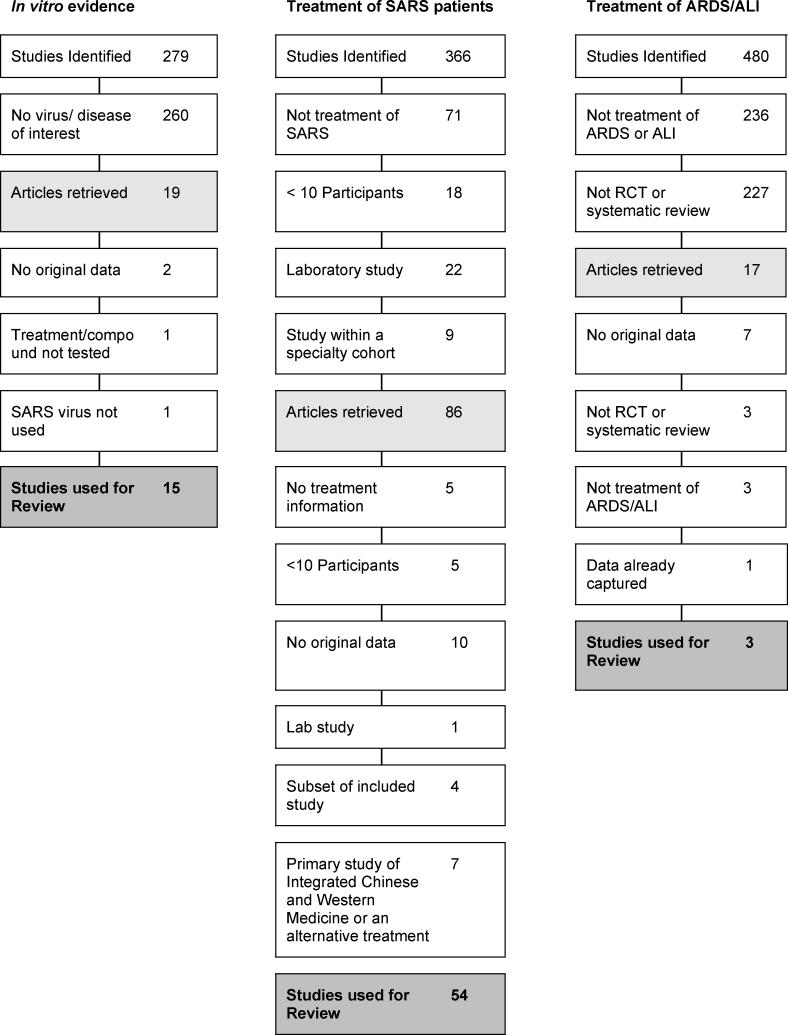
BACKGROUND: The SARS outbreak of 2002-2003 presented clinicians with a new, life-threatening disease for which they had no experience in treating and no research on the effectiveness of treatment options. The World Health Organization (WHO) expert panel on SARS treatment requested a systematic review and comprehensive summary of treatments used for SARS-infected patients in order to guide future treatment and identify priorities for research. METHODS AND FINDINGS: In response to the WHO request we conducted a systematic review of the published literature on ribavirin, corticosteroids, lopinavir and ritonavir (LPV/r), type I interferon (IFN), intravenous immunoglobulin (IVIG), and SARS convalescent plasma from both in vitro studies and in SARS patients. We also searched for clinical trial evidence of treatment for acute respiratory distress syndrome. Sources of data were the literature databases MEDLINE, EMBASE, BIOSIS, and the Cochrane Central Register of Controlled Trials (CENTRAL) up to February 2005. Data from publications were extracted and evidence within studies was classified using predefined criteria. In total, 54 SARS treatment studies, 15 in vitro studies, and three acute respiratory distress syndrome studies met our inclusion criteria. Within in vitro studies, ribavirin, lopinavir, and type I IFN showed inhibition of SARS-CoV in tissue culture. In SARS-infected patient reports on ribavirin, 26 studies were classified as inconclusive, and four showed possible harm. Seven studies of convalescent plasma or IVIG, three of IFN type I, and two of LPV/r were inconclusive. In 29 studies of steroid use, 25 were inconclusive and four were classified as causing possible harm. CONCLUSIONS: Despite an extensive literature reporting on SARS treatments, it was not possible to determine whether treatments benefited patients during the SARS outbreak. Some may have been harmful. Clinical trials should be designed to validate a standard protocol for dosage and timing, and to accrue data in real time during future outbreaks to monitor specific adverse effects and help inform treatment.
Overview
The claims and statistics of this paper haven’t been checked yet.
Free: it reads the open-access text and checks the first 5 claims that cite a source we can check. Create a free account to check every claim.
Integrity signals
Registry
Cites
Statistics
Figures
Verification
Claims the paper makes
The claims and statistics of this paper haven’t been checked yet.
Free: it reads the open-access text and checks the first 5 claims that cite a source we can check. Create a free account to check every claim.
Claims other papers make about this one
Each is checked against this paper’s own text: does it say what the citing paper says it does?
The cited source says what the claim attributes to it.
In the citing paper
“There is no effective treatment to date, 17 and despite promising advances, 18,19 no vaccine has been approved.”
From Severe acute respiratory syndrome (SARS) mathematical models and disease parameters: a systematic review (2025) · cites this paper as [17]
Self-check
Percentages, sums and reported differences re-computed from the paper’s own numbers.
The self-check needs the paper’s full text.
Citations
Cites
Identification of a novel coronavirus in patients with severe acute respiratory syndrome
Drosten, C., Günther, S., Preiser, W., van der Werf, S., Brodt, H.-R., Becker, S., Rabenau, H., Panning, M., Kolesnikova, L., Fouchier, R. A. M., et al. (2003) · New England Journal of Medicine · doi:10.1056/nejmoa030747 · Cited by 4,574 · cited 1×
“The causative organism has been identified as a novel coronavirus (SARS-CoV) [2] [3] [4] .”
BackgroundA Novel Coronavirus Associated with Severe Acute Respiratory Syndrome
Ksiazek, T. G., Erdman, D., Goldsmith, C. S., Zaki, S. R., Peret, T., Emery, S., Tong, S., Urbani, C., Comer, J. A., Lim, W., et al. (2003) · New England Journal of Medicine · doi:10.1056/nejmoa030781 · Cited by 4,344 · cited 2×
“The causative organism has been identified as a novel coronavirus (SARS-CoV) [2] [3] [4] .”
BackgroundMethodCoronavirus as a possible cause of severe acute respiratory syndrome
Peiris, J., Lai, S., Poon, L., Guan, Y., Yam, L., Lim, W., Nicholls, J., Yee, W., Yan, W., Cheung, M., et al. (2003) · The Lancet · doi:10.1016/s0140-6736(03)13077-2 · Cited by 2,915 · cited 1×
“The causative organism has been identified as a novel coronavirus (SARS-CoV) [2] [3] [4] .”
BackgroundA Major Outbreak of Severe Acute Respiratory Syndrome in Hong Kong
Lee, N., Hui, D., Wu, A., Chan, P., Cameron, P., Joynt, G. M., Ahuja, A., Yung, M. Y., Leung, C. B., To, K. F., et al. (2003) · New England Journal of Medicine · doi:10.1056/nejmoa030685 · Cited by 2,628 · cited 1×
“Because the urgency of the international outbreak did not allow time for efficacy studies, physicians in Canada and Hong Kong treated the earliest patients with intravenous ribavirin, based on its broad-spectrum antiviral activity [9,10].”
BackgroundRole of lopinavir/ritonavir in the treatment of SARS: initial virological and clinical findings
Chu, C. M. (2004) · Thorax · doi:10.1136/thorax.2003.012658 · Cited by 1,645 · cited 1×
“When LPV/r was added as an initial treatment to ribavirin and corticosteroid therapy, the death rate was lower than among those who received ribavirin and corticosteroids (1/ [20] .”
BackgroundClinical Features and Short-term Outcomes of 144 Patients With SARS in the Greater Toronto Area
Booth, C. M. (2003) · JAMA · doi:10.1001/jama.289.21.joc30885 · Cited by 1,406 · cited 2×
“Four publications presented evidence of possible harm (14) (15) (16) (17) .”
BackgroundResultThe Severe Acute Respiratory Syndrome
Peiris, J. S. M., Yuen, K. Y., Osterhaus, A. D. M. E., & Stöhr, K. (2003) · New England Journal of Medicine · doi:10.1056/nejmra032498 · Cited by 1,346
Identification of Severe Acute Respiratory Syndrome in Canada
Poutanen, S. M., Low, D. E., Henry, B., Finkelstein, S., Rose, D., Green, K., Tellier, R., Draker, R., Adachi, D., Ayers, M., et al. (2003) · New England Journal of Medicine · doi:10.1056/nejmoa030634 · Cited by 1,132 · cited 1×
“Because the urgency of the international outbreak did not allow time for efficacy studies, physicians in Canada and Hong Kong treated the earliest patients with intravenous ribavirin, based on its broad-spectrum antiviral activity [9,10].”
BackgroundMeduri, G. U., Headley, A. S., Golden, E., Carson, S. J., Umberger, R. A., Kelso, T., & Tolley, E. A. (1998) · JAMA · doi:10.1001/jama.280.2.159 · Cited by 1,008 · cited 2×
“Table S11.”
BackgroundHigh-Dose Corticosteroids in Patients with the Adult Respiratory Distress Syndrome
Bernard, G. R., Luce, J. M., Sprung, C. L., Rinaldo, J. E., Tate, R. M., Sibbald, W. J., Kariman, K., Higgins, S., Bradley, R., Metz, C. A., et al. (1987) · New England Journal of Medicine · doi:10.1056/nejm198712173172504 · Cited by 935 · cited 1×
“In two trials, high-dose methylprednisolone given for approximately 2 d was not effective for early ARDS [ 25 ,26].”
Method
Research works printed but not linked: 30
- Ksiazek, 2003, N Engl J Med, 348, 1953
- Peiris, 2003, Lancet, 361, 1319
- Drosten, 2003, N Engl J Med, 348, 1967
- Peiris, 2003, N Engl J Med, 2003, 2431
- Leung, 2004, Ann Intern Med, 141, 662
- Fowler, 2003, JAMA, 290, 367
- Poutanen, 2003, N Engl J Med, 348, 1995
- Lee, 2003, N Engl J Med, 348, 1986
- Morgenstern, 2005, Biochem Biophys Res Commun, 326, 905
- Chen, 2004, J Clin Virol, 31, 69
- Knowles, 2003, Clin Infect Dis, 37, 1139
- Booth, 2003, JAMA, 289, 2801
- Sung, 2004, Thorax, 59, 414
- Wong, 2003, JAMA, 290, 2663
- Yamamoto, 2004, Biochem Biophys Res Commun, 318, 719
- Chan, 2003, Hong Kong Med J, 9, 399
- Chu, 2004, Thorax, 59, 252
- Lee, 2004, J Clin Virol, 31, 304
- Lee, 2004, Clin Infect Dis, 39, 1247
- Xiao, 2004, Zhonghua Nei Ke Za Zhi, 43, 179
- Li, 2004, Zhonghua Yi Xue Za Zhi, 84, 1348
- Bernard, 1987, N Engl J Med, 317, 1565
- Weigelt, 1985, Arch Surg, 120, 536
- Meduri, 1998, JAMA, 280, 159
- Scagnolari, 2004, Antivir Ther, 9, 1003
- Sainz, 2004, Virology, 329, 11
- Wu, 2003, Zhonghua Nei Ke Za Zhi, 42, 453
- Li, 2003, Zhonghua Er Ke Za Zhi, 41, 574
- Hwang, 2005, Mod Pathol, 18, 1
- Wang, 2003, N Engl J Med, 349, 507
Cited by
Items 701–800 of 1,001
Jin, Z., Sheng, H., Wang, S., Wáng, Y., & Cheng, Y. (2022) · Journal of Ethnopharmacology · doi:10.1016/j.jep.2022.115513 · Cited by 9
Koronavirüs Hastalığı (COVID-19) Tedavisinde Kullanılan İlaçlar
Mutlu, O., Uygun, İ., & Erden, F. (2020) · Kocaeli Üniversitesi Sağlık Bilimleri Dergisi · doi:10.30934/kusbed.761170 · Cited by 14
COVID-19 Antiviral and Treatment Candidates: Current Status
Españo, E., Kim, D., Kim, J., Park, S., & Kim, J.-K. (2021) · Immune Network · doi:10.4110/in.2021.21.e7 · Cited by 9
“One potential drawback to the use of JAK1/2 inhibitors against COVID-19 is their ability to target several types of cytokines, some of which (i.e., IFNs) are needed for viral clearance.”
BackgroundInfluentialCorticosteroids for H1N1 associated acute lung injury: is it just wishful thinking?
Salluh, J. I., & Póvoa, P. M. S. R. (2010) · Intensive Care Medicine · doi:10.1007/s00134-010-1815-7 · Cited by 9
“A review evaluating the effects of adjunctive therapies in SARS patients concluded that among 29 trials of systemic corticosteroids, 25 were inconclusive and four were associated with harm [3].”
BackgroundSharing Insights and H7N9 Patient Clinical Data
Wang, Y., Zhang, Y., Wang, H., Zhou, Z., Zhou, Z., Gu, Q., Wu, C., & Zhu, B. (2013) · American Journal of Respiratory and Critical Care Medicine · doi:10.1164/rccm.201305-0936le · Cited by 8
Human Coronaviruses: Counteracting the Damage by Storm
Schoeman, D., & Fielding, B. C. (2021) · Viruses · doi:10.3390/v13081457 · Cited by 8
“For SARS-CoV infections, treatment attempts have included ribavirin, lopinavir in combination with ritonavir, type I IFNs (IFN-α and IFN-β), convalescent plasma or intravenous immunoglobulin (IVIG), and corticosteroids, but these have largely proven ineffective or, in some cases, even harmful [202,203].”
BackgroundMeng, M., Chu, Y., Zhang, S., Li, X., Sha, J., Wang, P., Cui, Y., Han, M., Dong, X., Sun, W., et al. (2022) · BMC Infectious Diseases · doi:10.1186/s12879-022-07882-6 · Cited by 8
“Similarly, observational studies in patients with SARS and MERS suggested that corticosteroid therapy was associated with delayed viral clearance from blood and respiratory tract and increased risk of secondary infection [22, 23].”
ResultAntiviral therapy for COVID-19 virus: A narrative review and bibliometric analysis
Mawazi, S. M., Fathima, N., Mahmood, S., & Al-Mahmood, S. M. A. (2024) · The American Journal of Emergency Medicine · doi:10.1016/j.ajem.2024.09.001 · Cited by 13
Middle East respiratory syndrome coronavirus
Al‐Dorzi, H. M., Kerkhove, M. D. V., Peiris, M. J. S., & Arabi, Y. M. (2016) · European Respiratory Society eBooks · doi:10.1183/2312508x.10010015 · Cited by 9
Noninfluenza Respiratory Viruses
Ison, M. G., & Lee, N. L. S. (2016) · Elsevier eBooks · doi:10.1016/b978-0-7020-6285-8.00173-8 · Cited by 7
“While favorable clinical and radiological responses have been reported, controlled data are lacking.(102,106,111) In the only randomized, placebocontrolled study performed during the SARS outbreak, early corticosteroid treatment within the first few days delayed viral clearance.”
BackgroundClinical trial protocols of repurposed prophylaxis for COVID-19: A review
Sallard, E., Lescure, F., Burdet, C., Guedj, J., Yazdanpanah, Y., & Peiffer-Smadja, N. (2020) · Infectious Diseases Now · doi:10.1016/j.medmal.2020.09.013 · Cited by 8
Can NLRP3 inhibitors improve on dexamethasone for the treatment of COVID-19?
Hooftman, A., & O'Neill, L. A. J. (2021) · Current Research in Pharmacology and Drug Discovery · doi:10.1016/j.crphar.2021.100048 · Cited by 8
“…treatment reduced mortality during the fi rst SARS epidemic (Yam et al., 2007), but subsequent meta-analyses have again highlighted the importance of timing when considering cortico-steroid administration, as corticosteroid use was associated with increased viral load (Stockman et al., 2006).”
The Association of an Alpha-2 Adrenergic Receptor Agonist and Mortality in Patients With COVID-19
Hamilton, J. L., Vashi, M., Kishen, E., Fogg, L., Wimmer, M. A., & BALK, R. A. (2022) · Frontiers in Medicine · doi:10.3389/fmed.2021.797647 · Cited by 12
Negi, K., Agarwal, M., Pahuja, I., Bhardwaj, B., Rawat, M., Bhaskar, A., & Dwivedi, V. P. (2023) · Oxford Open Immunology · doi:10.1093/oxfimm/iqad001 · Cited by 9
“Although they can prolong viral clearance [128, 129], yet usage of anti-inflammatory and immunosuppressive corticosteroids is preferred to alleviate systemic inflammation associated with severe COVID-19.”
Cancer management during the COVID-19 world pandemic
Sobhani, N., Mondani, G., Roviello, G., Catalano, M., Sirico, M., D’Angelo, A., Scaggiante, B., & Generali, D. (2023) · Cancer Immunology Immunotherapy · doi:10.1007/s00262-023-03524-1 · Cited by 9
“…and Middle East respiratory syndrome coronavirus outbreaks and, in addition to other therapeutics, are being used in patients with COVID-19 [12, 23, 24], although administering corticosteroids to patients with cancer and COVID-19 to control excessive cytokine production and immune cell…”
Life-Threatening Viral Diseases and Their Treatment
Tobin, N. H., Campbell, A. J. P., Zerr, D. M., & Melvin, A. J. (2011) · Elsevier eBooks · doi:10.1016/b978-0-323-07307-3.10095-3 · Cited by 9
Hoang, T., & Tran, T. T. A. (2020) · Infection and Chemotherapy · doi:10.3947/ic.2020.52.3.317 · Cited by 9
“systematically reviewed the effect of anti-viral agents, corticosteroids, interferon (IFN) type I, and convalescent plasma or immunoglobulin [25].”
BackgroundTreatment Options for Coronavirus Disease 2019 in Patients With Reduced or Absent Kidney Function
Miller‐Handley, H., Luckett, K. M., & Govil, A. (2020) · Advances in Chronic Kidney Disease · doi:10.1053/j.ackd.2020.09.001 · Cited by 8
“Studies on SARS-CoV showed some improvement of outcomes compared with historical outcomes when treated with ribavirin and lopinavir/ritonavir.39 Another systemic review of 26 studies was inconclusive for the benefit of ribavirin for SARSCoV.40 High concentrations of ribavirin however were needed for viral suppression.…”
InfluentialXiong, B., He, L.-M., Qin, Y., Du, H., Zhan, Z., Zhou, Y., Chen, Y., & Zhang, A. (2021) · World Journal of Clinical Cases · doi:10.12998/wjcc.v9.i15.3546 · Cited by 8
Lipworth, S., Rigby, I., Cheng, V., Bannister, P. G., Harriss, E., Cook, K. A., Cai, E., Tattan, M., Epie, T., Manoharan, L., et al. (2021) · Wellcome Open Research · doi:10.12688/wellcomeopenres.16735.1 · Cited by 6
Current therapies under investigation for COVID-19: potential COVID-19 treatments
Weisberg, E., Sattler, M., Yang, P. L., Parent, A., Gray, N. S., & Griffin, J. D. (2020) · Canadian Journal of Physiology and Pharmacology · doi:10.1139/cjpp-2020-0286 · Cited by 9
Ahmed, J. U., Rahim, M. A., & Uddin, K. N. (2017) · BIRDEM Medical Journal · doi:10.3329/birdem.v7i3.33785 · Cited by 8
Marotta, L., Pesce, A., & Guazzini, A. (2020) · SSRN Electronic Journal · doi:10.2139/ssrn.3664835 · Cited by 8
“Some stud ies reported that receiving corticosteroids treatment delayed viral clearance [9] [10] [11] .”
BackgroundCOPD Management during the COVID-19 pandemic
Salvi, S. S., Dhar, R., Mahesh, P. A., Udwadia, Z., & Behra, D. (2020) · Lung India · doi:10.4103/lungindia.lungindia_685_20 · Cited by 7
“Systemic corticosteroids were widely used during the outbreaks of severe acute respiratory syndrome (SARS)-CoV and Middle East respiratory syndrome (MERS)-CoV.[23,24] However, current interim guidance from WHO on clinical management of severe acute respiratory infection when novel coronavirus (2019-nCoV) infection is…”
BackgroundEffectiveness of corticosteroids to treat coronavirus disease 2019 symptoms: A meta-analysis
Zeng, Y., Zeng, W., Yang, B., & Liu, Z. (2022) · Medicina Clínica · doi:10.1016/j.medcli.2022.03.013 · Cited by 7
Galmés, S., Palou, A., & Serra, F. A. (2022) · Nutrients · doi:10.3390/nu14112254 · Cited by 8
Utility and risk of dermatologic medications during the COVID ‐19 pandemic
Goldust, M., Hartmann, K., Abdelmaksoud, A., & Navarini, A. A. (2020) · Dermatologic Therapy · doi:10.1111/dth.13833 · Cited by 6
(2020) · International Journal of Biology Pharmacy and Allied Sciences · doi:10.31032/ijbpas/2020/9.5.5126 · Cited by 7
Macauley, P., Martín, Á. Y., & Epelbaum, O. (2020) · International Journal of Infectious Diseases · doi:10.1016/j.ijid.2020.08.051 · Cited by 8
“From the early days of the pandemic to the present, skeptic have referred to existing corticosteroid studies in SARS-CoV an MERS cohorts (Stockman et al., 2006), citing their inconclusiv nature and the harm some of them have demonstrated.”
Phytochemicals as Potential Curative Agents against Viral Infection: A Review
Kumar, A., Singh, A. K., & Tripathi, G. (2020) · Current Organic Chemistry · doi:10.2174/138527282499920091009352 · Cited by 7
Wang, S., Zhang, Q., Wang, P., wang, P., ye, H. H., jing, X. Q., Zhang, J. H., fan, D. Y., jia, P., Zhang, Z. D., et al. (2021) · Open Medicine · doi:10.1515/med-2021-0225 · Cited by 10
“However, the evidence from SARS and MERS indicated that the use of glucocorticoids did not improve mortality, but rather delayed viral clearance [28, 29], so use of glucocorticoids is still controversial.”
BackgroundLiatsos, G. D. (2021) · World Journal of Clinical Cases · doi:10.12998/wjcc.v9.i19.5135 · Cited by 8
Temporal variations in COVID-19: an epidemiological discussion with a practical application
Derakhshan, M., Ansarian, H. R., & Ghomshei, M. M. (2021) · Journal of International Medical Research · doi:10.1177/03000605211033208 · Cited by 9
“However, meta-analyses of SARS and MERS treatment studies have found no clear benefit with any specific regimen.(6,7) These agents include chloroquine, hydroxychloroquine, interferons, and antivirals like ribavirin, lopinavir/ritonavir (Kaletra), oseltamivir, and umifenovir.”
BackgroundFallahzadeh, M., Pourhoseingholi, M. A., Boroujeni, M. G., Besharati, S., Mardani, M., Shabani, M., Shokouhi, S., Amirdosara, M., Hajiesmaeili, M., Gachkar, L., et al. (2021) · Journal of Medical Virology · doi:10.1002/jmv.27475 · Cited by 7
“Previous in vitro investigations showed the antiviral effect of interferon‐β against the SARS virus.(18) In this retrospective study, we assessed the clinical results of IFN‐β1a in severe cases of COVID‐19.”
ResultRusso, A., Davoli, C., Borrazzo, C., Olivadese, V., Ceccarelli, G., Fusco, P., Lazzaro, A., Lionello, R., Ricchio, M., Serapide, F., et al. (2022) · Biomedicines · doi:10.3390/biomedicines10071548 · Cited by 7
“In contrast, other studies argued that corticosteroids may be harmful and cause delayed viral clearance in COVID-19 patients [19], as previously reported also in SARS patients [20].”
ResultProspects of using the nucleoside analogue riamilovir in patients with SARS-CoV-2 infection
Maltsev, O. V., Валерьевна, К. К., Kozlov, K. V., Zhdanov, K. V., & Lapikov, I. I. (2022) · Terapevticheskii arkhiv · doi:10.26442/00403660.2022.10.201920 · Cited by 7
“Для гипотезы 1 показатель относительного риска равен RRhyp1=2,52 с ДИ CIhyp1=[1,14, 5,58].”
A Second Career for p53 as A Broad-Spectrum Antiviral?
Harford, J. B. (2023) · Viruses · doi:10.3390/v15122377 · Cited by 9
“Use of type 1 IFNs against the coronaviruses SARS-CoV and MERS-CoV has been studied [52], and vapor inhalation of IFN-alpha in combination with ribavirin has been used against COVID-19 in China [53].”
MethodOverbeck, V., Taylor, B. P., Turcinovic, J., Qiu, X., Schaeffer, B., Seitz, S., Curry, S. R., Hanage, W. P., Connor, J. H., & Kuppalli, K. (2023) · Heliyon · doi:10.1016/j.heliyon.2023.e23699 · Cited by 9
“Previous studies found that in patients infected with novel coronaviruses (SARS, MERS, and SARS-CoV-2), steroid treatment increased the time of viral clearance and viral shedding [21 – 23].”
ResultNeutralizing the MERS Coronavirus Threat
Haagmans, B. L., & Osterhaus, A. D. M. E. (2014) · Science Translational Medicine · doi:10.1126/scitranslmed.3009132 · Cited by 7
Novel respiratory infectious diseases in Korea
Kim, H. J. (2020) · Journal of Yeungnam Medical Science · doi:10.12701/yujm.2020.00633 · Cited by 7
“Treatment Antiviral treatments such as interferons, ribavirin, and lopinavir/ritonavir have been used in many patients; however, there is no clear conclusion regarding the effectiveness of these treatments [39].”
BackgroundManagement of Coronavirus Disease 2019 (COVID‐19) Pandemic: From Diagnosis to Treatment Strategies
Hadisi, Z., Walsh, T., Dabiri, S. M. H., Seyfoori, A., Hamdi, D., Mirani, B., Pagan, E., Jardim, A., & Akbari, M. (2020) · Advanced Therapeutics · doi:10.1002/adtp.202000173 · Cited by 10
Bourgonje, A. R., van Linschoten, R. C. A., West, R. L., van Dijk, M. A., van Leer‐Buter, C., Kats‐Ugurlu, G., Pierik, M. J., Festen, E. A. M., Weersma, R. K., & Dijkstra, G. D. H. (2021) · Therapeutic Advances in Gastroenterology · doi:10.1177/17562848211012595 · Cited by 7
Boglione, L., Olivieri, C., Rostagno, R., Poletti, F., Moglia, R., Bianchi, B., Esposito, M., Biffi, S., & Borrè, S. (2021) · Advances in Medical Sciences · doi:10.1016/j.advms.2021.04.002 · Cited by 7
“In patients with evidence of SARS-CoV-2 pneumonia, the effectiveness of supportive treatment with oxygen, ventilatory support or low molecular weight heparin (LMWH) was reported [5]; among the adjunctive immunomodulatory agents, corticosteroids (CS) have been widely employed in ARDS and in other viral infections [6,7]…”
Immunological Approaches to the Treatment of Novel Coronavirus Infection (Review)
Lyubavina, N. A., Сальцев, С. Г., Викторович, М. Н., Валерьевна, Т. Л., Пластинина, С. С., Левановна, Ш. М., TULICHEV, A. A., Юрьевна, М. М., & Макарова, Е. В. (2021) · Современные технологии в медицине · doi:10.17691/stm2021.13.3.09 · Cited by 7
Zhou, W., Chen, Z., Sun, X., Zhong, N., & Liu, Z. (2021) · The American Journal of Chinese Medicine · doi:10.1142/s0192415x21500506 · Cited by 7
Corrias, A., Cortes, G. M., Bardanzellu, F., Melis, A., Fanos, V., & Marcialis, M. A. (2021) · Children · doi:10.3390/children8090753 · Cited by 8
“Previous studies on MERS, SARS and influenza viruses have shown unfavorable outcomes in patients receiving corticosteroids [73,74].”
ResultRivas-Santiago, B. T., Jacobo-Delgado, Y. M., & Rodríguez-Carlos, A. (2021) · Archivum Immunologiae et Therapiae Experimentalis · doi:10.1007/s00005-021-00630-9 · Cited by 8
Divyansh, B., Ankit, A., Manasvi, G., Manek, G., Hu, K., & Boregowda, U. N. (2021) · International Journal of Critical Care and Emergency Medicine · doi:10.23937/2474-3674/1510128 · Cited by 7
“…for Disease Control (CDC), Infectious Diseases Society of America (IDSA), and the WHO, all recommended against the use of corticosteroids for management of COVID-19 associated ARDS, based on previous experiences with other coronavirus outbreaks such as MERS-CoV and SARS-CoV-1 infection [25 , 26].”
BackgroundCOVID-19 detection based on deep learning and artificial bee colony
Sahan, A. M., Al-Itbi, A. S., & Hameed, J. S. (2021) · Periodicals of Engineering and Natural Sciences (PEN) · doi:10.21533/pen.v9i1.1774 · Cited by 7
Immune-based therapeutic approaches in COVID-19
Moeinafshar, A., Yazdanpanah, N., & Rezaei, N. (2022) · Biomedicine & Pharmacotherapy · doi:10.1016/j.biopha.2022.113107 · Cited by 8
Gumeniuk, М., Гуменюк, Г. Л., & Опімах, С. Г. (2020) · ACTUAL INFECTOLOGY · doi:10.22141/2312-413x.8.1.2020.196168 · Cited by 7
Mendoza, J. L., Estrada, V. H. N., López, N. B., Bolaños, E. R., Franco, D. M., Castell, C. R. D., Moreno, A. A. V., Amaya, I., Flórez, J. S., VALENCIA, B. A. G., et al. (2020) · Acta Colombiana de Cuidado Intensivo · doi:10.1016/j.acci.2020.09.004 · Cited by 11
Morgenstern, C., Rawson, T., Routledge, I., Kont, M., Imai-Eaton, N., Skarp, J., Doohan, P., McCain, K., Johnson, R., Unwin, H. J. T., et al. (2025) · The Lancet Microbe · doi:10.1016/j.lanmic.2025.101144 · Cited by 6
Taheri, A., Naderi, M., Jafari, N. J., Koochak, H. E., Isfeedvajani, M. S., & Abolghasemi, R. (2024) · Brazilian Journal of Otorhinolaryngology · doi:10.1016/j.bjorl.2024.101451 · Cited by 6
“Further randomized clinical trials with a larger sample size are recommended to evaluate the therapeutic effects of smell rehabilitation and other non-medical treatments, such as acupuncture, in management of COVID-19 related olfactory dysfunction”
MERS-CoV: Bridging the Knowledge Gaps
Balkhair, A., Alawi, F. B., Maamari, K. A., Muharrmi, Z. A., & Ahmed, O. A. (2014) · Oman Medical Journal · doi:10.5001/omj.2014.43 · Cited by 6
Sharma, M., & Surani, S. (2020) · Cureus · doi:10.7759/cureus.7415 · Cited by 6
“Systematic reviews published in 2005 and 2006 failed to establish any beneficial effects with ribavirin [9-10].”
BackgroundClinical characteristics, diagnosis, and treatment of COVID-19: A case report
He, Y.-F., Lian, S.-J., & Dong, Y.-C. (2020) · World Journal of Clinical Cases · doi:10.12998/wjcc.v8.i11.2325 · Cited by 6
Potential treatment of COVID-19
Şen, N., Ayten, Ö., Özdemir, C., & Aktürk, Ü. A. (2020) · Eurasian Journal of Pulmonology · doi:10.4103/ejop.ejop_61_20 · Cited by 6
“Eurasian Journal of Pulmonology - Volume 22, Supplement 1, 2020 S41 period of 10 days and in combination with LPV/r and ribavirin in a dose of 5 million units or equivalent, twice a day through inhalation.[46,51] The guidelines of other countries have not recommended its use.”
BackgroundIntravenous Immunoglobulin for Treatment of Patients with COVID-19: A Case-control Study
Khodashahi, R., Naderi, H., Sedaghat, A., Allahyari, A., Sarjamee, S., Eshaghi, S., Fazeli, F., Hoseini, B., Dadgarmoghaddam, M., & Khodashahi, M. (2021) · Archives of Clinical Infectious Diseases · doi:10.5812/archcid.108068 · Cited by 6
“This leads to improving the normal immune response of white blood cells and controlling the inflammatory factors (21, 22).”
BackgroundEmerging Infectious Diseases: Concepts in Preparing for and Responding to the Next Microbial Threat
Gamage, S. D., Kralovic, S. M., & Roselle, G. A. (2016) · Cambridge University Press eBooks · doi:10.1017/cbo9781139629317.011 · Cited by 7
“NSABB initially recommended that the work not be published in full; the journals delayed publication, the research community halted work on related research until the issue could be resolved, and eventually NSABB reversed its recommendation to withhold publication of each paper after the manuscripts were revised to re…”
BackgroundSaffo, Z., Guo, W., Springer, K., Maksimowicz‐McKinnon, K., Kak, V., McKinnon, J. E., & Bhargava, P. (2021) · Journal of Osteopathic Medicine · doi:10.1515/jom-2020-0292 · Cited by 8
“As the pandemic has progressed with only corticosteroids [17, 18] as consistently efficacious treatment against COVID-19 in certain patients, the search for other interventions to benefit the most severely affected and at risk patients has broadened.”
BackgroundGenetic Aspects and Immune Responses in Covid-19: Important Organ Involvement
Ghale-Noie, Z. N., Salmaninejad, A., Bergquist, R. N., Mollazadeh, S., Hoseini, B., & Sahebkar, A. (2021) · Advances in experimental medicine and biology · doi:10.1007/978-3-030-71697-4_1 · Cited by 6
Therapeutic Uses of Traditional Chinese Medicines Against COVID-19
Buabeid, M. A., Ijaz, M., Shamim, S., Huang, X., & Murtaza, G. (2021) · Infection and Drug Resistance · doi:10.2147/idr.s328261 · Cited by 6
“As a result, corticosteroids are not recommended treatment strategies to treat COVID-19.(24) The role of convalescent plasma treatment was already known and being used in the treatment of severe kinds of influenza or coronavirus disease due to its capability to reduce viral load and mortality rate.”
BackgroundSARS-CoV-2, un point dans la tourmente
Tadini, E., Papamidimitriou-Olivgeris, M., Opota, O., Moulin, E., Lamoth, F., Manuel, O., Lhopitallier, L., Jaton, K., Croxatto, A., Grandbastien, B., et al. (2020) · JMIG · doi:10.53738/revmed.2020.16.692.0917 · Cited by 10
Pitfalls of Early Systemic Corticosteroids Home Therapy in Older Patients with COVID-19 Pneumonia
Okoye, C., Rogani, S., Franchi, R., Pompilii, I. M., Calabrese, A. M., Mazzarone, T., Bianchi, E., Lemmi, B., Calsolaro, V., & Monzani, F. (2022) · Geriatrics · doi:10.3390/geriatrics7010021 · Cited by 6
“Corticosteroids have been widely used in critically ill patients with acute respiratory distress syndrome (ARDS) and during the outbreaks of severe acute respiratory syndrome (SARS)-CoV and Middle East respiratory syndrome (MERS)-CoV to suppress the proinflammatory response and control the cytokine storm [4,5].”
BackgroundImpact of systemic corticosteroids on hospital length of stay among patients with COVID-19
Zamarrón, E., Carpio, C., Villamañán, E., Álvarez-Sala, R., Borobia, A. M., Gómez-Carrera, L., Soto, A. B., & Prados, C. (2023) · Farmacia Hospitalaria · doi:10.1016/j.farma.2022.11.003 · Cited by 6
“5 [2-8,5]; p = 0,005, respectivamente), mostrando un 43% más de probabilidad de ser hospitalizado ≤ 4 días que N 4 días cuando se usaron corticosteroides.”
BackgroundBlood filtering system for COVID-19 management: novel modality of the cytokine storm therapeutics
Chavda, V. P., Raval, N., Sheta, S., Vora, L. K., Elrashdy, F., Redwan, E. M. M. M., Uversky, V. N., & Ertaş, Y. N. (2023) · Frontiers in Immunology · doi:10.3389/fimmu.2023.1064459 · Cited by 6
Takashima, K., Iwasa, M., Ando, W., Uemura, K., Hamada, H., Mae, H., Maeda, Y., & Sugano, N. (2023) · Modern Rheumatology · doi:10.1093/mr/road095 · Cited by 7
Supportive care for patient with respiratory diseases: an umbrella review
on behalf of COVID-19 Evidence and Recommendations Working Group, Luo, X., Lv, M., Wang, X., Long, X., Ren, M., Zhang, X., Liu, Y., Li, W., Zhou, Q. X., et al. (2020) · Annals of Translational Medicine · doi:10.21037/atm-20-3298 · Cited by 5
Jotz, G. P., Stein, A. T., Sirena, S. A., Barros, E., Baldisserotto, J., de Figueiredo, J. A. P., Lavinsky, J., Steier, L., & Dora, C. F. C. (2020) · International Archives of Otorhinolaryngology · doi:10.1055/s-0040-1714143 · Cited by 8
Xiao, Y., Xu, H., Guo, W. Q., Zhao, Y., Luo, Y., Wang, M., He, Z., Ding, Z., Liu, J., Deng, L., et al. (2020) · Molecular Biomedicine · doi:10.1186/s43556-020-00017-w · Cited by 7
Gou, L., Xiang, M., Ran, X., Wang, F., Zhang, S., Li, S., Dong, K., Chen, X., Huang, Y., Meng, C., et al. (2021) · Diabetes Metabolic Syndrome and Obesity · doi:10.2147/dmso.s284148 · Cited by 7
“However, cumulative evidences suggest that corticosteroids did not have effect on mortality in patients with SARS-CoV and MERS-CoV, but rather delayed the virus clearance.(37,38) In this study, about 87% of critically ill patients with COVID-19 received corticosteroid therapy.”
BackgroundReview of investigational drugs for coronavirus disease 2019
Sharma, D., Sharma, N., Sharma, P., & Subramaniam, G. K. (2021) · Journal of Education and Health Promotion · doi:10.4103/jehp.jehp_457_20 · Cited by 6
“Interferons It has been noted in the previously published literature that IFN‐I treatment has activity against MERS‐CoV and SARS‐CoV.[20] It has been investigated in numerous experiments both in vitro and in vivo.”
BackgroundInfluentialEspinosa-Solano, M., Vergara, D. G., Ferrer-Galván, M., Asensio-Cruz, M. I., Lomas, J. M., Roca-Oporto, C., Navarro-Amuedo, M. D., Paniagua‐García, M., Sotomayor, C., Espinosa, N., et al. (2021) · Open Respiratory Archives · doi:10.1016/j.opresp.2021.100086 · Cited by 6
“La duración de la hospitalización en los supervivientes fue más corta en el grupo que recibió corticoesteroides (media = 14,5 [8,5-21,8] días frente a 29 [23-31] días, p = 0,003).”
New molecule design with in-silico methods for Covid-19 treatment
Alagöz, M. A. (2020) · Bioorganic & Medicinal Chemistry Reports · doi:10.25135/acg.bmcr.23.20.08.1773 · Cited by 6
Wüstner, S., Hogger, S., Gartner-Freyer, D., Lebioda, A., Schley, K., & Leverkus, F. (2022) · Frontiers in Public Health · doi:10.3389/fpubh.2022.804404 · Cited by 6
Promising Immunotherapies against COVID‐19
Guo, H., Zhou, L., Ma, Z., Tian, Z., & Zhou, F. (2021) · Advanced Therapeutics · doi:10.1002/adtp.202100044 · Cited by 7
Coronaviruses, Including Severe Acute Respiratory Syndrome(SARS)–Associated Coronavirus
McIntosh, K., & Perlman, S. M. (2010) · Elsevier eBooks · doi:10.1016/b978-0-443-06839-3.00155-7 · Cited by 10
Corticosteroids for Urological Cancer Care During Coronavirus Disease 2019. Treat or Not to Treat?
Waterhouse, J., Hull, J. H., & Linch, M. D. (2020) · European Urology · doi:10.1016/j.eururo.2020.04.027 · Cited by 6
“Stockman et al [10] performed a systematic review of treatment effects in SARS patients.”
InfluentialChen, Y. W., Yiu, C.-P. B., & Wong, K. (2020) · ChemRxiv · doi:10.26434/chemrxiv.11831103 · Cited by 6
COVID-19 serologic testing: FAQs and caveats
Kadkhoda, K. (2020) · Cleveland Clinic Journal of Medicine · doi:10.3949/ccjm.87a.20054 · Cited by 5
“11 Further, SARS-CoV and SARS-CoV-2 can cause syncytium formation among lung epithelial cells, thereby paving the way for cell-to-cell transmission of the virions.”
HYDROXYCHLOROQUINE AND AZITHROMYCIN COMBINATION COULD BE LETHAL TO COVID-19 PATIENTS
Firdous, S. M. (2020) · FARMACIA · doi:10.31925/farmacia.2020.3.2 · Cited by 5
Therapeutic Options for the Treatment of Coronavirus Disease (COVID-19)
Snawerdt, J., Finoli, L. M., Bremmer, D. N., Cheema, T. J., & Bhanot, N. (2020) · Critical Care Nursing Quarterly · doi:10.1097/cnq.0000000000000321 · Cited by 5
Mueller, S. W., Kiser, T. H., Morrisette, T., Zamora, M. R., Lyu, D. M., & Kiser, J. J. (2020) · Transplant Infectious Disease · doi:10.1111/tid.13464 · Cited by 5
A comprehensive review of COVID-19 treatment
Afshar, Z. M., Babazadeh, A., Javanian, M., Barary, M., Rekha, V., & Ebrahimpour, S. (2020) · AFMN Biomedicine · doi:10.5937/afmnai38-26326 · Cited by 5
“Previous experiences during the SARS-Cov outbreak suggested a potential benefit in administering high-dose intravenous immunoglobulins (IVIg) (60).”
BackgroundA Systematic Review on COVID 19 Treatment and Management
Shah, I., Raytthatha, N., Vyas, J., & Upadhyay, U. (2021) · Research Journal of Pharmaceutical Dosage Forms and Technology · doi:10.52711/0975-4377.2021.00039 · Cited by 5
Baláž, D., Jorgensen, P. E. W., Galvañ, V. G., Rubio‐Rivas, M., Campo, B. D. M., López, M. N., Caleya, J. F. L., Gómez‐Huelgas, R., Fontán, P. M. P., Méndez‐Bailón, M., et al. (2021) · Journal of Clinical Medicine · doi:10.3390/jcm10194610 · Cited by 5
Shetty, S. S., Kamath, V., Shetty, S., Venkatesh, S. B., & Kalghatgi, S. (2022) · Research Journal of Pharmacy and Technology · doi:10.52711/0974-360x.2022.00156 · Cited by 5
Screening for Femoral Head Osteonecrosis Following COVID-19: Is It Worth It?
Abadi, H. D., Parsa, A., Stelzer, J. W., Anz, A. W., Ebrahimzadeh, M. A., Bagheri, F., Ariamanesh, A., & Mirzaei, N. (2023) · PubMed Central · doi:10.22038/abjs.2023.73742.3414 · Cited by 5
Snijder, E. J., Bestebroer, T. M., van den Hoogen, B. G., Zevenhoven-Dobbe, C., van Nieuwkoop, S., de Wilde, A. H., Jochmans, D., & Posthuma, C. C. (2014) · Cited by 5
Nor, M. B. M., Richards, G. A., McGloughlin, S., & Amin, P. R. (2017) · Journal of Critical Care · doi:10.1016/j.jcrc.2017.11.004 · Cited by 5
“Viral pneumonia Melioidosis Influenza Plague MERS Hantavirus SARS Contents 1.”
BackgroundInfluentialImmunomodulatory drug therapy for the disease caused by SARS-CoV-2 infection (COVID-19)
Karateev, D. E., & Лучихина, Е. Л. (2020) · Almanac of Clinical Medicine · doi:10.18786/2072-0505-2020-48-036 · Cited by 7
COVID‑19 in China: From epidemiology to treatment (Review)
Chen, H., Wu, S., & Zhang, X. (2020) · Experimental and Therapeutic Medicine · doi:10.3892/etm.2020.9353 · Cited by 6
“However, a subsequent systematic evaluation study revealed that there is no benefit from IIFN treatment due to the complexity of clinical intervention measures and lack of a suitable control group in the two studies (56).”
BackgroundImmune targeted therapies for COVID-19 Infection: A Promising OutlookPreprint
Forouzani-Haghighi, B., Rezvani, A., & Vazin, A. (2020) · PubMed Central · doi:10.30476/ijms.2021.91614.2277 · Cited by 5
Emerging Coronavirus Which Gives Rise to the Disease in Humans
Stovba, L. F., Lebedev, V. N., Petrov, A. A., Ruchko, V. M., Kulish, V. S., & Borisevich, S. V. (2015) · Problems of Particularly Dangerous Infections · doi:10.21055/0370-1069-2015-2-68-74 · Cited by 9
Diffuse pneumonitis from coronavirus HKU1 on checkpoint inhibitor therapy
Serzan, M. T., Kumar, P. N., & Atkins, M. B. (2020) · Journal for ImmunoTherapy of Cancer · doi:10.1136/jitc-2020-000898 · Cited by 5
COVID-19: Stay Cool toward Corticosteroids
Fujishima, S. (2020) · The Keio Journal of Medicine · doi:10.2302/kjm.2020-0007-le · Cited by 5
Dalton, B., Dresser, L., Thirion, D. J. G., & Lau, T. T. Y. (2020) · The Canadian Journal of Hospital Pharmacy · doi:10.4212/cjhp.v73i2.2992 · Cited by 5
Expert opinion on the management and follow-up of uveitis patients during SARS-CoV-2 outbreak
Stanescu, D., de Gauzy, T. S., Reynolds, R., Faes, L., Pohlmann, D., Pakzad-Vaezi, K. L., Ting, D. S. W., Saadoun, D., Ambati, J., Loewenstein, A., et al. (2020) · Expert Review of Clinical Immunology · doi:10.1080/1744666x.2020.1791086 · Cited by 5
“[11]), the use of corticosteroids has, on the other hand, been suggested to be detrimental during the course of this first wave of SARS-CoV-2 [12,13].”
BackgroundShahzad, S., & Willcox, M. D. P. (2020) · Medical Hypotheses · doi:10.1016/j.mehy.2020.110080 · Cited by 6
Metadata
- Authors
- Stockman, L. J., Bellamy, R., & Garner, P.
- Affiliations
- Centers for Disease Control and Prevention (US)
- James Cook University Hospital (GB)
- Liverpool School of Tropical Medicine (GB)
- Corresponding author
- Stockman, Lauren J
- ORCID
- Garner, Paul
- Venue
- PLoS Medicine
- Publisher
- Public Library of Science (PLoS)
- Published
- 2006-09-12
- Volume
- 3
- Issue
- 9
- Pages
- e343
- ISSN
- 1549-1277 (ISSN-L)
- 1549-1676
- PMC
- PMC1564166
- OpenAlex
- W2054076340
- Semantic Scholar
- 1fabf8b5ddd4560d1ce7431b19642ab0e29847cc
- Cited by
- 1,217
- References
- 31
- Citations by year
- 2026: 3 · 2025: 9 · 2024: 34 · 2023: 58 · 2022: 92 · 2021: 254 · 2020: 579 · 2019: 10 · 2018: 3 · 2017: 9 · 2016: 28 · 2015: 16 · 2014: 20 · 2013: 19 · 2012: 8
- FWCI
- 1.94
- Type
- journal article
- Language
- en
- Open access
- gold
- doi.org
- Licence
- Locations
- PLoS Medicine (publishedVersion, public-domain)
- Europe PMC (PubMed Central) (publishedVersion, public-domain)
- PubMed (publishedVersion)
- RePEc: Research Papers in Economics (publishedVersion)
- LSTM Online Archive (Liverpool School of Tropical Medicine) (acceptedVersion)
- DOAJ (DOAJ: Directory of Open Access Journals) (submittedVersion, cc-by-sa)
- Figshare (submittedVersion, cc-by)
- Funders
- Department for International Development
- Centers for Disease Control and Prevention
- Topics
- Health Sciences › Medicine › Infectious Diseases › SARS-CoV-2 and COVID-19 Research
- Health Sciences › Medicine › Infectious Diseases › COVID-19 Clinical Research Studies
- Health Sciences › Medicine › Infectious Diseases › Viral Infections and Outbreaks Research
- Keywords
- SARS, SARS-CoV, antiviral therapy, ribavirin, corticosteroids, type I interferon, intravenous immunoglobulin, convalescent plasma, acute respiratory distress syndrome, treatment efficacy, adverse effects, clinical trial design
- MeSH terms
- Disease Outbreaks, Humans, Severe Acute Respiratory Syndrome, Severe acute respiratory syndrome-related coronavirus
About these checks
Registry, retraction, Cites and statistics results are computed, not judged, with one exception: a printed reference that no index lists is read once by a model before it counts as a citation error. Claims are extracted by a model and kept only when their quote appears verbatim in the text; each cited source is then checked, with a model’s help, for whether it says what the claim relies on. Those verdicts can be wrong — read the claim’s quote and the cited source before relying on one.
Statistics and arithmetic are recomputed, not judged.
Confidence bands are shown only for fields calibrated on our annotated test set. None is calibrated yet, so no band is shown.
What counts as a claim ›How we measure confidence ›How we check this ›
Are you an author, or do you see a problem with this page? Request a review
Data sources
Bibliographic data: Semantic Scholar, OpenAlex, Crossref.
Contains information from the Semantic Scholar Academic Graph Datasets, made available under the ODC Attribution License (ODC-BY 1.0).
Semantic Scholar’s data is described in: Kinney, R., et al. (2023). The Semantic Scholar Open Data Platform. arXiv:2301.10140.
