

SARS: Systematic Review of Treatment Effects
Open accessThe DOI matches its Crossref record; 31 of the 31 references it cites were found in a registry or an index.
Abstract
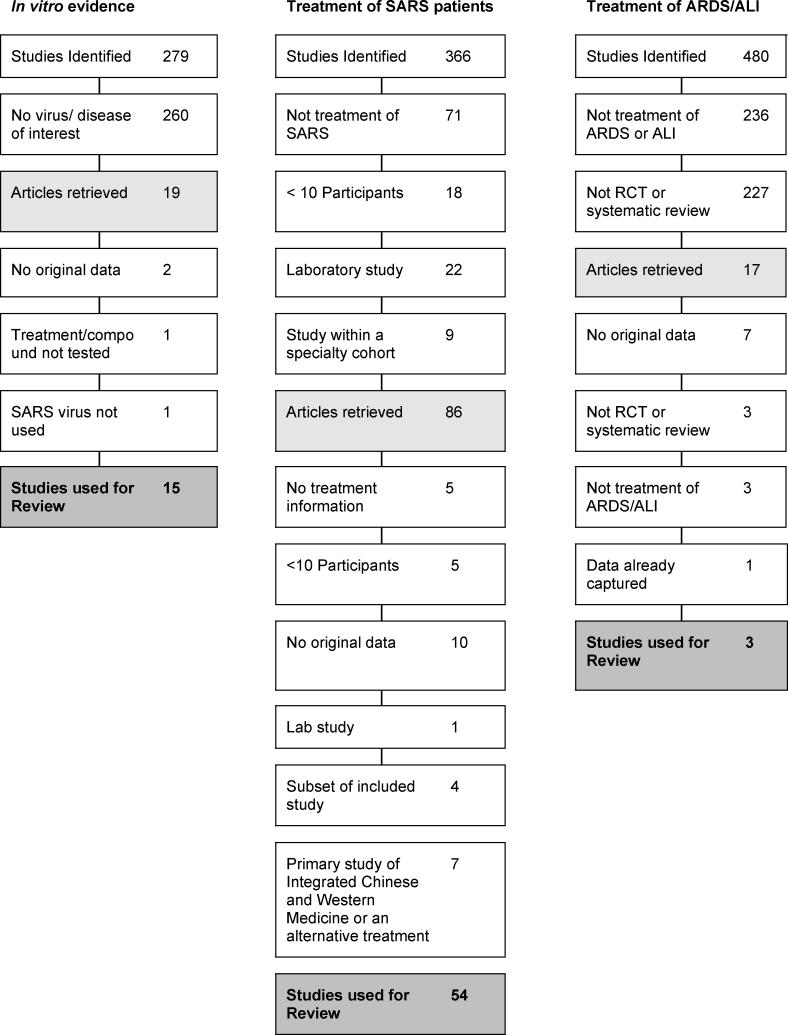
BACKGROUND: The SARS outbreak of 2002-2003 presented clinicians with a new, life-threatening disease for which they had no experience in treating and no research on the effectiveness of treatment options. The World Health Organization (WHO) expert panel on SARS treatment requested a systematic review and comprehensive summary of treatments used for SARS-infected patients in order to guide future treatment and identify priorities for research. METHODS AND FINDINGS: In response to the WHO request we conducted a systematic review of the published literature on ribavirin, corticosteroids, lopinavir and ritonavir (LPV/r), type I interferon (IFN), intravenous immunoglobulin (IVIG), and SARS convalescent plasma from both in vitro studies and in SARS patients. We also searched for clinical trial evidence of treatment for acute respiratory distress syndrome. Sources of data were the literature databases MEDLINE, EMBASE, BIOSIS, and the Cochrane Central Register of Controlled Trials (CENTRAL) up to February 2005. Data from publications were extracted and evidence within studies was classified using predefined criteria. In total, 54 SARS treatment studies, 15 in vitro studies, and three acute respiratory distress syndrome studies met our inclusion criteria. Within in vitro studies, ribavirin, lopinavir, and type I IFN showed inhibition of SARS-CoV in tissue culture. In SARS-infected patient reports on ribavirin, 26 studies were classified as inconclusive, and four showed possible harm. Seven studies of convalescent plasma or IVIG, three of IFN type I, and two of LPV/r were inconclusive. In 29 studies of steroid use, 25 were inconclusive and four were classified as causing possible harm. CONCLUSIONS: Despite an extensive literature reporting on SARS treatments, it was not possible to determine whether treatments benefited patients during the SARS outbreak. Some may have been harmful. Clinical trials should be designed to validate a standard protocol for dosage and timing, and to accrue data in real time during future outbreaks to monitor specific adverse effects and help inform treatment.
Overview
The claims and statistics of this paper haven’t been checked yet.
Free: it reads the open-access text and checks the first 5 claims that cite a source we can check. Create a free account to check every claim.
Integrity signals
Registry
Cites
Statistics
Figures
Verification
Claims the paper makes
The claims and statistics of this paper haven’t been checked yet.
Free: it reads the open-access text and checks the first 5 claims that cite a source we can check. Create a free account to check every claim.
Claims other papers make about this one
Each is checked against this paper’s own text: does it say what the citing paper says it does?
The cited source says what the claim attributes to it.
In the citing paper
“There is no effective treatment to date, 17 and despite promising advances, 18,19 no vaccine has been approved.”
From Severe acute respiratory syndrome (SARS) mathematical models and disease parameters: a systematic review (2025) · cites this paper as [17]
Self-check
Percentages, sums and reported differences re-computed from the paper’s own numbers.
The self-check needs the paper’s full text.
Citations
Cites
Identification of a novel coronavirus in patients with severe acute respiratory syndrome
Drosten, C., Günther, S., Preiser, W., van der Werf, S., Brodt, H.-R., Becker, S., Rabenau, H., Panning, M., Kolesnikova, L., Fouchier, R. A. M., et al. (2003) · New England Journal of Medicine · doi:10.1056/nejmoa030747 · Cited by 4,574 · cited 1×
“The causative organism has been identified as a novel coronavirus (SARS-CoV) [2] [3] [4] .”
BackgroundA Novel Coronavirus Associated with Severe Acute Respiratory Syndrome
Ksiazek, T. G., Erdman, D., Goldsmith, C. S., Zaki, S. R., Peret, T., Emery, S., Tong, S., Urbani, C., Comer, J. A., Lim, W., et al. (2003) · New England Journal of Medicine · doi:10.1056/nejmoa030781 · Cited by 4,344 · cited 2×
“The causative organism has been identified as a novel coronavirus (SARS-CoV) [2] [3] [4] .”
BackgroundMethodCoronavirus as a possible cause of severe acute respiratory syndrome
Peiris, J., Lai, S., Poon, L., Guan, Y., Yam, L., Lim, W., Nicholls, J., Yee, W., Yan, W., Cheung, M., et al. (2003) · The Lancet · doi:10.1016/s0140-6736(03)13077-2 · Cited by 2,915 · cited 1×
“The causative organism has been identified as a novel coronavirus (SARS-CoV) [2] [3] [4] .”
BackgroundA Major Outbreak of Severe Acute Respiratory Syndrome in Hong Kong
Lee, N., Hui, D., Wu, A., Chan, P., Cameron, P., Joynt, G. M., Ahuja, A., Yung, M. Y., Leung, C. B., To, K. F., et al. (2003) · New England Journal of Medicine · doi:10.1056/nejmoa030685 · Cited by 2,628 · cited 1×
“Because the urgency of the international outbreak did not allow time for efficacy studies, physicians in Canada and Hong Kong treated the earliest patients with intravenous ribavirin, based on its broad-spectrum antiviral activity [9,10].”
BackgroundRole of lopinavir/ritonavir in the treatment of SARS: initial virological and clinical findings
Chu, C. M. (2004) · Thorax · doi:10.1136/thorax.2003.012658 · Cited by 1,645 · cited 1×
“When LPV/r was added as an initial treatment to ribavirin and corticosteroid therapy, the death rate was lower than among those who received ribavirin and corticosteroids (1/ [20] .”
BackgroundClinical Features and Short-term Outcomes of 144 Patients With SARS in the Greater Toronto Area
Booth, C. M. (2003) · JAMA · doi:10.1001/jama.289.21.joc30885 · Cited by 1,406 · cited 2×
“Four publications presented evidence of possible harm (14) (15) (16) (17) .”
BackgroundResultThe Severe Acute Respiratory Syndrome
Peiris, J. S. M., Yuen, K. Y., Osterhaus, A. D. M. E., & Stöhr, K. (2003) · New England Journal of Medicine · doi:10.1056/nejmra032498 · Cited by 1,346
Identification of Severe Acute Respiratory Syndrome in Canada
Poutanen, S. M., Low, D. E., Henry, B., Finkelstein, S., Rose, D., Green, K., Tellier, R., Draker, R., Adachi, D., Ayers, M., et al. (2003) · New England Journal of Medicine · doi:10.1056/nejmoa030634 · Cited by 1,132 · cited 1×
“Because the urgency of the international outbreak did not allow time for efficacy studies, physicians in Canada and Hong Kong treated the earliest patients with intravenous ribavirin, based on its broad-spectrum antiviral activity [9,10].”
BackgroundMeduri, G. U., Headley, A. S., Golden, E., Carson, S. J., Umberger, R. A., Kelso, T., & Tolley, E. A. (1998) · JAMA · doi:10.1001/jama.280.2.159 · Cited by 1,008 · cited 2×
“Table S11.”
BackgroundHigh-Dose Corticosteroids in Patients with the Adult Respiratory Distress Syndrome
Bernard, G. R., Luce, J. M., Sprung, C. L., Rinaldo, J. E., Tate, R. M., Sibbald, W. J., Kariman, K., Higgins, S., Bradley, R., Metz, C. A., et al. (1987) · New England Journal of Medicine · doi:10.1056/nejm198712173172504 · Cited by 935 · cited 1×
“In two trials, high-dose methylprednisolone given for approximately 2 d was not effective for early ARDS [ 25 ,26].”
Method
Research works printed but not linked: 30
- Ksiazek, 2003, N Engl J Med, 348, 1953
- Peiris, 2003, Lancet, 361, 1319
- Drosten, 2003, N Engl J Med, 348, 1967
- Peiris, 2003, N Engl J Med, 2003, 2431
- Leung, 2004, Ann Intern Med, 141, 662
- Fowler, 2003, JAMA, 290, 367
- Poutanen, 2003, N Engl J Med, 348, 1995
- Lee, 2003, N Engl J Med, 348, 1986
- Morgenstern, 2005, Biochem Biophys Res Commun, 326, 905
- Chen, 2004, J Clin Virol, 31, 69
- Knowles, 2003, Clin Infect Dis, 37, 1139
- Booth, 2003, JAMA, 289, 2801
- Sung, 2004, Thorax, 59, 414
- Wong, 2003, JAMA, 290, 2663
- Yamamoto, 2004, Biochem Biophys Res Commun, 318, 719
- Chan, 2003, Hong Kong Med J, 9, 399
- Chu, 2004, Thorax, 59, 252
- Lee, 2004, J Clin Virol, 31, 304
- Lee, 2004, Clin Infect Dis, 39, 1247
- Xiao, 2004, Zhonghua Nei Ke Za Zhi, 43, 179
- Li, 2004, Zhonghua Yi Xue Za Zhi, 84, 1348
- Bernard, 1987, N Engl J Med, 317, 1565
- Weigelt, 1985, Arch Surg, 120, 536
- Meduri, 1998, JAMA, 280, 159
- Scagnolari, 2004, Antivir Ther, 9, 1003
- Sainz, 2004, Virology, 329, 11
- Wu, 2003, Zhonghua Nei Ke Za Zhi, 42, 453
- Li, 2003, Zhonghua Er Ke Za Zhi, 41, 574
- Hwang, 2005, Mod Pathol, 18, 1
- Wang, 2003, N Engl J Med, 349, 507
Cited by
Items 601–700 of 1,001
Taype-Rondán, Á., Herrera‐Añazco, P., & Málaga, G. (2020) · ACTA MEDICA PERUANA · doi:10.35663/amp.2020.372.982 · Cited by 22
Knight, T. E. (2020) · Biopreservation and Biobanking · doi:10.1089/bio.2020.0066 · Cited by 17
Zabolotskikh, I. B., Кirov, М. Y., Лебединский, К. М., Николаевич, П. Д., Avdeev, S. N., Andreenko, A. A., Arsentev, L. V., Афончиков, В. С., Игоревич, А. И., Belkin, A. A., et al. (2020) · Annals of critical care · doi:10.21320/1818-474x-2020-s1-9-120 · Cited by 17
Bîrluțiu, V., Bîrluţiu, R. M., & Chicea, L. M. (2021) · Medicine · doi:10.1097/md.0000000000025832 · Cited by 15
“Our patients with CRS had no response to corticosteroid therapy, as it was demonstrated in several other SARS-CoV and MERS-CoV studies([27,28]) or SARS-CoV-2 studies([29,30]) where serum level of IL-6 increased after administration of methylprednisolone or dexamethasone.”
ResultImmunology of SARS-CoV-2 infections and vaccines
Schenten, D., & Bhattacharya, D. (2021) · Advances in immunology · doi:10.1016/bs.ai.2021.08.002 · Cited by 15
Antirheumatic Drugs against COVID-19 from the Perspective of Rheumatologists
Kawazoe, M., Kihara, M., & Nanki, T. (2021) · Pharmaceuticals · doi:10.3390/ph14121256 · Cited by 16
Gajendran, M., Perisetti, A., Aziz, M., Raghavapuram, S., Bansal, P., Tharian, B., & Goyal, H. (2020) · Annals of Gastroenterology · doi:10.20524/aog.2020.0547 · Cited by 17
“However, if the patient is on systemic corticosteroids, such as prednisone, it should be tapered quickly whenever possible, because of concerns over the immunosuppressive effect of steroids, which could increase the risk of severe infection [55,90,91].”
BackgroundSarker, M. T., Hasan, A., Rafi, M. O., Hossain, M. J., El-Mageed, H. R. A., Elsapagh, R. M., Capasso, R., & Emran, T. B. (2021) · Biologics · doi:10.3390/biologics1030021 · Cited by 16
He, Q., Wang, C., Wang, Y., Chen, G., Zhou, Y., Wu, Y., & Zhong, M. (2023) · BMC Infectious Diseases · doi:10.1186/s12879-023-08874-w · Cited by 15
“…glucocorticoids are often used as adjuvant treatment of viral pneumo-nias and ARDS treatments [7], such as severe acute respiratory syndrome (SARS) [8], middle east respiratory syndrome (MERS) [9], etc. National Institutes of Health in the United States have included glucocorticoids as a treatment…”
BackgroundParlakpınar, H., & Günata, M. (2020) · Cell Biochemistry and Function · doi:10.1002/cbf.3591 · Cited by 15
Wu, J., & Tang, Y. (2020) · Frontiers in Neurology · doi:10.3389/fneur.2020.566680 · Cited by 16
A recurrent question from a primary care physician: How should I treat my COVID-19 patients at home?
Perico, N., Suter, F., & Remuzzi, G. (2020) · Clinical and Medical Investigations · doi:10.15761/cmi.1000207 · Cited by 13
Vomero, M., Barbati, C., Colasanti, T., Celia, A. I., Speziali, M., Ucci, F. M., Ciancarella, C., Conti, F., & Alessandri, C. (2020) · Frontiers in Pharmacology · doi:10.3389/fphar.2020.569849 · Cited by 18
Potential therapeutic approach of intravenous immunoglobulin against COVID-19
Kolahchi, Z., Sohrabi, H., Nasab, S. E., Mamaghani, H. J., Alamdari, M. K., & Rezaei, N. (2021) · Allergy Asthma and Clinical Immunology · doi:10.1186/s13223-021-00609-3 · Cited by 14
Breskin, A., Wiener, C., Adimora, A. A., Brown, R. S., Landis, C. S., Reddy, K. R., Verna, E. C., Crawford, J. M., Mospan, A. R., Fried, M. W., et al. (2023) · Epidemiology · doi:10.1097/ede.0000000000001598 · Cited by 15
Muthu, S., Jeyaraman, M., Selvaraj, P., Jeyaraman, N., Potty, A. G. R., & Gupta, A. (2023) · Life · doi:10.3390/life13040907 · Cited by 16
“[31] has shown that the use of CS was harmful.”
Corticosteroid Use in Otolaryngology: Current Considerations During the COVID‐19 Era
Chang, C. W. D., McCoul, E. D., Briggs, S. E., Guardiani, E. A., Durand, M. L., Hadlock, T. A., Hillel, A. T., Kattar, N., Openshaw, P., Osazuwa‐Peters, N., et al. (2021) · Otolaryngology · doi:10.1177/01945998211064275 · Cited by 16
Zabolotskikh, I. B., Кirov, М. Y., Лебединский, К. М., Николаевич, П. Д., Avdeev, S. N., Andreenko, A. A., Arsentev, L. V., Афончиков, В. С., Игоревич, А. И., Belkin, A. A., et al. (2022) · Annals of critical care · doi:10.21320/1818-474x-2022-1-5-140 · Cited by 14
The Severe Acute Respiratory Syndrome Epidemic in Mainland China Dissected
Cao, W., Vlas, S. J. D., & Richardus, J. H. (2011) · Infectious Disease Reports · doi:10.4081/idr.2011.1794 · Cited by 16
Importance of a Travel History in Evaluation of Respiratory Infections
Duong, T. N., & Waldman, S. (2016) · Current Emergency and Hospital Medicine Reports · doi:10.1007/s40138-016-0109-y · Cited by 14
“was no evidence that the therapies improved outcomes [37, 38].”
BackgroundEmergence of COVID-19 Infection: What Is Known and What Is to Be Expected – Narrative Review Article
AlTakarli, N. S. (2020) · Dubai Medical Journal · doi:10.1159/000506678 · Cited by 14
Zhou, C. G., Packer, C. H., Hersh, A. R., & Caughey, A. B. (2020) · The Journal of Maternal-Fetal & Neonatal Medicine · doi:10.1080/14767058.2020.1763951 · Cited by 18
Haque, M. (2020) · Pesquisa Brasileira em Odontopediatria e Clínica Integrada · doi:10.1590/pboci.2020.137 · Cited by 14
“hyperglycemia, psychosis, and avascular necrosis [98,99].”
COVID-19 in patients with inflammatory bowel disease
Anikhindi, S. A., Kumar, A., & Arora, A. (2020) · Expert Review of Gastroenterology & Hepatology · doi:10.1080/17474124.2020.1816822 · Cited by 14
Johnson, R. M., Doshi, P., & Healy, D. (2020) · BMJ · doi:10.1136/bmj.m3260 · Cited by 13
Cafiero, C., Re, A., Micera, A., Palmirotta, R., Monaco, D., Romano, F., Fabrizio, C., Francia, R. D., Cacciamani, A., Surico, P. L., et al. (2020) · Pharmacogenomics and Personalized Medicine · doi:10.2147/pgpm.s270069 · Cited by 18
Ac2-26 mimetic peptide of annexin A1 to treat severe COVID-19: A hypothesis
Bonavita, A. G. C. (2020) · Medical Hypotheses · doi:10.1016/j.mehy.2020.110352 · Cited by 14
Daoud, A., Alqassieh, A., Alkhader, D., Salas, M. A. P., Rao, V., Fülöp, T., & Soliman, K. (2021) · Renal Failure · doi:10.1080/0886022x.2021.1876730 · Cited by 15
“The reason for coadministering remdesivir and dexamethasone in critically ill patients, is that the former may prevent the steroid-related delay in viral clearance proven in some studies [7,45].”
BackgroundRepurposing antivirals as potential treatments for SARS-CoV-2: From SARS to COVID-19
Gómez-Ríos, D., López-Agudelo, V. A., & Ramírez-Malule, H. (2020) · Journal of Applied Pharmaceutical Science · doi:10.7324/japs.2020.10501 · Cited by 14
“Some of those drugs have reached the clinical phase, emerging as the first options for facing the COVID-19 pandemics, considering availability, cost, and production capacity (Al-Tawfiq and Memish, 2017; Stockman et al., 2006).”
BackgroundRepurposed drug against COVID-19: nanomedicine as an approach for finding new hope in old medicines
Ahmad, M. Z., Ahmad, J., Aslam, M., Khan, M. A., Alasmary, M. Y., & Abdel‐Wahab, B. A. (2021) · Nano Express · doi:10.1088/2632-959x/abffed · Cited by 14
Peiris, M. J. S. (2016) · ASM Press eBooks · doi:10.1128/9781555819439.ch52 · Cited by 17
Lonati, C., Gatti, S., & Catania, A. (2020) · Frontiers in Endocrinology · doi:10.3389/fendo.2020.569241 · Cited by 16
TREATMENT MODALITIES OF THE COVID-19 PANDEMIC THROUGH REPURPOSED DRUGS AND STATUS OF VACCINES
Hussain, M. S., Mohit, M., Pamma, P., & KUMARI, B. (2021) · International Journal of Applied Pharmaceutics · doi:10.22159/ijap.2021v13i2.40554 · Cited by 13
“Largely in the SARS epidemic, it was utilized but was bothered for, causing embryonic development disruptions in the fetus and hemolytic anemia [70].”
BackgroundMethodRemdesivir treatment in hospitalized patients affected by COVID‐19 pneumonia: A case‐control study
Boglione, L., Dodaro, V., Meli, G., Rostagno, R., Poletti, F., Moglia, R., Bianchi, B., Esposito, M., & Borrè, S. (2022) · Journal of Medical Virology · doi:10.1002/jmv.27768 · Cited by 13
“A specific antiviral treatment useful in the first phase of COVID‐ 19, before the development of ARDS, has not yet been identified; despite the recent availability of oral antiviral molnupiravir and paxlovir is promising, other antivirals drugs with inhibition of viral protease or viral RNA synthetase have been repurp…”
MethodSteroids in ARDS: more light is being shed
Arulkumaran, N., Snow, T. A. C., Longobardo, A., Brealey, D. A., & Singer, M. (2020) · Intensive Care Medicine · doi:10.1007/s00134-020-06230-z · Cited by 13
Novel respiratory viruses: what should the clinician be alert for?
Payne, B. A. I., & Bellamy, R. (2014) · Clinical Medicine · doi:10.7861/clinmedicine.14-6-s12 · Cited by 14
Self-citationPotential pharmacological agents for COVID-19
Kotwani, A., & Gandra, S. (2020) · Indian Journal of Public Health · doi:10.4103/ijph.ijph_456_20 · Cited by 13
Potential benefits, mechanisms, and uncertainties of convalescent plasma therapy for COVID-19
Dai, W., Gu, H., & Hao, S. (2020) · Blood Science · doi:10.1097/bs9.0000000000000047 · Cited by 13
The rise and evolution of COVID-19
Baghchechi, M., Jaipaul, N., & Jacob, S. E. (2020) · International Journal of Women’s Dermatology · doi:10.1016/j.ijwd.2020.06.006 · Cited by 14
CHILDREN IN CORONAVIRUSES’ WONDERLAND: WHAT CLINICIANS NEED TO KNOW
Lassandro, G., Palladino, V., Amoruso, A., Palmieri, V. V., Russo, G. M., & Giordano, P. (2020) · Mediterranean Journal of Hematology and Infectious Diseases · doi:10.4084/mjhid.2020.042 · Cited by 13
The COVID‐19 pandemic: A community approach
Cravedi, P., Schold, J. D., Safa, K., Kates, O. S., Elfadawy, N., Mannon, R. B., Shah, M. B., Hammond, S. P., Avery, R. K., Guerrero-Miranda, C. Y., et al. (2020) · Clinical Transplantation · doi:10.1111/ctr.14059 · Cited by 11
Comparative effectiveness of Lopinavir/Ritonavir‐based regimens in COVID‐19
Qu, J., Li, G., Wang, J., He, G., Huang, J., Chen, Y., Qu, Q., Chen, X., & Lu, Q. (2020) · Clinical and Experimental Pharmacology and Physiology · doi:10.1111/1440-1681.13425 · Cited by 12
Clinical Characteristics on Admission Predict In-Hospital Fatality in Old Patients with COVID-19
Yu, Z., Ke, Y., Xie, J., Yu, H., Zhu, W. J., He, L., Zheng, Q., Li, C., Lu, J., Li, S., et al. (2020) · BMC Geriatrics · doi:10.1186/s12877-020-01921-0 · Cited by 12
“Further, it is controversial to administer steroids in cases of viral pneumonia including COVID-19 [26-30].”
BackgroundZabolotskikh, I. B., Кirov, М. Y., Лебединский, К. М., Николаевич, П. Д., Avdeev, S. N., Andreenko, A. A., Arsentev, L. V., Афончиков, В. С., Игоревич, А. И., Belkin, A. A., et al. (2021) · Annals of critical care · doi:10.21320/1818-474x-2021-s1-9-143 · Cited by 14
Contemporary narrative review of treatment options for COVID ‐19
Shang, L., Lye, D. C., & Cao, B. (2021) · Respirology · doi:10.1111/resp.14106 · Cited by 12
Shahbaz, S., Oyegbami, O., Saito, S., Osman, M. S., Sligl, W., & Elahi, S. (2022) · Frontiers in Immunology · doi:10.3389/fimmu.2022.1021928 · Cited by 13
Wysocki, P. J., Kwinta, Ł., Potocki, P. M., Konopka, K. W., Streb, J., Wojtukiewicz, M. Z., Radecka, B. S., Tomczak, P., Jarząb, M., Kawecki, A., et al. (2020) · Oncology in Clinical Practice · doi:10.5603/ocp.2020.0012 · Cited by 12
“These drugs were widely used during the SARS-CoV and MERS-CoV epidemics [48, 49].”
BackgroundEpidemic Viral Pneumonia and Other Emerging Pathogens
Radigan, K. A., & Wunderink, R. G. (2011) · Clinics in Chest Medicine · doi:10.1016/j.ccm.2011.05.010 · Cited by 14
“Treatment Although several different treatments were tried during the recent epidemic, none were proven to have beneficial effect, including high-dose glucocorticoids and ribavirin.(162) Since the outbreak, lopinavir-ritonavir, interferon-a, and convalescent plasma have been tried in a smaller number of patients or in…”
BackgroundArenaviridae exoribonuclease presents genomic RNA edition capacityPreprint
Yekwa, E. L., Aphibanthammakit, C., Carnec, X., Coutard, B., Picard, C., Canard, B., Baize, S., & Ferrón, F. (2019) · bioRxiv (Cold Spring Harbor Laboratory) · doi:10.1101/541698 · Cited by 13
“On the other hand, Ribavirin is ineffective against coronaviruses [74,75], as nsp14 ExoN domain excises the nucleotide analogue [51].”
BackgroundCOVID-19: Recent Developments in Therapeutic Approaches
Gohar, U. F., Iqbal, I., Shah, Z., Mukhtar, H., & Zia‐Ul‐Haq, M. (2021) · Springer eBooks · doi:10.1007/978-3-030-67989-7_9 · Cited by 12
Gao, J. Q., Yu, M., Xu, Y., He, L., Zeng, L., Cao, G., & Wei, X. (2024) · Building and Environment · doi:10.1016/j.buildenv.2024.112019 · Cited by 11
The type I interferon response during viral infections: a “SWOT” analysis
Gaajetaan, G. R., Bruggeman, C. A., & Stassen, F. R. M. (2011) · Reviews in Medical Virology · doi:10.1002/rmv.713 · Cited by 13
“IFNa also showed promising effects in severe acute respiratory syndrome (SARS) [133] [134] [135] and can be very important to induce an adequate immune response and possibly suppress excessive inflammatory responses observed in SARS [136] [137] [138] [139] .”
BackgroundCorticosteroid treatment in severe COVID-19 pneumonia: two cases and literature review
Dai, J., Xiong, Y., Li, H., Qian, Y., Xu, Y., Xu, Q., Yan, X., & Tang, J. (2020) · Clinical Rheumatology · doi:10.1007/s10067-020-05172-7 · Cited by 12
“Clark Russell and his colleagues [4] summarized the available clinical evidence on corticosteroid therapy in severe COVID-19 [5], Middle East respiratory syndrome (MERS) [6] and influenza [7] against corticosteroid use in 2019 novel coronavirus pneumonia, except in the setting of a clinical trial.”
BackgroundSebastian, S., Gonzalez, H. A., & Peyrin‐Biroulet, L. (2020) · Journal of Crohn s and Colitis · doi:10.1093/ecco-jcc/jjaa120 · Cited by 12
“An early systematic review of studies on patients with SARS-CoV-1, including 29 studies documenting glucocorticoid use, found 25 studies that were inconclusive, and four studies that suggested possible harm (53).”
BackgroundCampbell, C. M., Guha, A., Haque, T. Z., Neilan, T. G., & Addison, D. (2020) · Journal of Clinical Medicine · doi:10.3390/jcm9092935 · Cited by 11
Therapeutic Strategies in the Management of COVID-19
Naik, R. R., & Shakya, A. K. (2021) · Frontiers in Molecular Biosciences · doi:10.3389/fmolb.2020.636738 · Cited by 12
“A systemic review of the use of corticosteroids in SARS revealed that in four studies the use of corticosteroids was harmful including a decrease in viral clearance and drug complications while 25 other studies were inconclusive (Stockman et al., 2006).”
BackgroundResultHigh-dose steroids for the treatment of severe COVID-19
For the COCORA Working Group, Piccica, M., Lagi, F., Trotta, M. S., Spinicci, M., Zammarchi, L., & Bartoloni, A. (2021) · Internal and Emergency Medicine · doi:10.1007/s11739-021-02707-x · Cited by 11
“The rationale of their use is to tackle “cytokine storm”-related manifestations, and it partially derives from data obtained during the SARS-CoV epidemic of 2003, when systemic steroids were administered in infected patients who developed the severe respiratory disease [9, 10].”
BackgroundCoronavirus: need for a therapeutic approach
Guery, B. P., & van der Werf, S. (2013) · The Lancet Infectious Diseases · doi:10.1016/s1473-3099(13)70153-1 · Cited by 11
Karataş, M., Tatar, E., Şimşek, C., Yıldırım, A. M., Arı, A., Zengel, B., & Uslu, A. (2021) · Journal of Medical Virology · doi:10.1002/jmv.27110 · Cited by 11
Reply to “Statins may decrease the Fatality Rate of MERS Infection”
Totura, A. L., & Baric, R. S. (2015) · mBio · doi:10.1128/mbio.01303-15 · Cited by 11
“Reliance on data from cell culture experiments is not likely to yield helpful assessments of drug efficacy against highly pathogenic coronaviruses, as ribavirin and interferon are both highly effective against coronavirus infection in vitro but not in human patients (5, 6).”
BackgroundMorse, J. S., Lalonde, T. J., Xu, S., & Liu, W. R. (2020) · ChemRxiv · doi:10.26434/chemrxiv.11728983.v1 · Cited by 11
“At best, efficacy with RBV was inconclusive, with some studies showing a worsening of patient outcomes (as reviewed by Stockman, et al).(32) Exonuclease activity by the enzyme nsp14 has been shown to be able to remove mismatches as well as incorporated nucleoside analogs, and inactivation of nsp14’s exonuclease activi…”
ResultSevere Acute Respiratory Syndrome (SARS)
Peiris, M. J. S., Guan, Y., Poon, L. L. M., Cheng, V. C., Nicholls, J. M., & Yuen, K.-Y. (2008) · ASM Press eBooks · doi:10.1016/b978-012374410-4.00780-9 · Cited by 23
Wuhan novel coronavirus 2019nCoV – update January 27th 2020
MacIntyre, C. R. (2020) · Global Biosecurity · doi:10.31646/gbio.51 · Cited by 10
“SARS was transmitted by droplet, contact and airborne spread, including aerosolization from floor to floor in buildings.”
BackgroundInfluentialGenomic Variations of SARS-CoV-2 and Effect of Various Factors on COVID-19
Rani, A., Arya, R., & Sharma, P. (2020) · International Journal of Current Research and Review · doi:10.31782/ijcrr.2020.sp57 · Cited by 10
Advances in attractive therapeutic approach for macrophage activation syndrome in COVID-19
Chen, S., Zhang, C., Chen, D., Dong, L., Chang, T., & Tang, Z. (2023) · Frontiers in Immunology · doi:10.3389/fimmu.2023.1200289 · Cited by 16
Harnessing the power of IFN for therapeutic approaches to COVID-19
Viox, E. G., Bosinger, S. E., Douek, D. C., Schreiber, G., & Paiardini, M. (2024) · Journal of Virology · doi:10.1128/jvi.01204-23 · Cited by 15
“However, these studies entirely lacked a control group, were not randomized, or had a high risk of bias, and thus, the efficacy of these treatments was determined to be inconclusive in systematic reviews conducted by multiple, independ ent groups (115, 116).”
BackgroundDu, N., Chen, H., Zhang, Q., Che, L., Lou, L., Li, X., Zhang, K., & Bao, W. (2020) · Virulence · doi:10.1080/21505594.2020.1767357 · Cited by 10
“The cause is the novel coronavirus SARS-CoV-2 (severe acute respiratory syndrome coronavirus 2; formerly known as 2019-nCoV) [3], and it is capable of rapid human-to-human transmission.”
MethodInfluentialCashman, D. P. (2020) · Medical Hypotheses · doi:10.1016/j.mehy.2020.110027 · Cited by 10
The application of corticosteroids in COVID-19: A two-edged sword
Li, N., & Jie, Z. (2020) · Journal of Translational Internal Medicine · doi:10.2478/jtim-2020-0011 · Cited by 10
“Stockman et al.[15] conducted a systematic review and comprehensive summary of the treatments used for patients infected with SARS.”
MethodEvidence-Based Management of the Critically Ill Adult With SARS-CoV-2 Infection
Chivukula, R. R., Maley, J. H., Dudzinski, D. M., Hibbert, K. A., & Hardin, C. C. (2020) · Journal of Intensive Care Medicine · doi:10.1177/0885066620969132 · Cited by 12
COVID-19; Immunology, pathology, severity and immunosuppressants
Safwat, M.-A., Abdul-Rahman, A., Forsan, H. F., Abduljabar, R. S., & Riad, O. K. M. (2021) · Azhar International Journal of Pharmaceutical and Medical Sciences/Azhar International Journal of Pharmaceutical and Medical Sciences · doi:10.21608/aijpms.2021.50103.1005 · Cited by 11
Vahedi, A., Tabasi, F., Monjazebi, F., Hashemian, S. M. R., Tabarsi, P., Farzanegan, B., Malekmohammad, M., Salimi, A., Salimi, M., Raoufy, M. R., et al. (2020) · PubMed Central · Cited by 10
Al-Mayyahi, R. S., & Al-Tumah, W. A. G. (2021) · Iraqi Journal of Pharmaceutical Sciences · doi:10.31351/vol30iss1pp56-65 · Cited by 11
“Previous studies showed that patients received either intravenous or enteral administration while inhaled administration shows no benefit over enteral or intravenous administration ((77,78)).”
BackgroundIqtadar, S., Hashmat, M., Chaudhry, M. N. A., Mumtaz, S. U., Abaidullah, S., Pascual-Figal, D. A., & Khan, A. (2022) · Therapeutic Advances in Infectious Disease · doi:10.1177/20499361221097417 · Cited by 11
An IL-17-EGFR-TRAF4 axis contributes to the alleviation of lung inflammation in severe influenza
Dutta, A., Hung, C., Chen, T., Hsiao, S.-H., Chang, C., Lin, Y., Lin, C., & Huang, C. (2023) · Communications Biology · doi:10.1038/s42003-023-04982-0 · Cited by 10
Increasing the Signal-to-Noise Ratio: COVID-19 Clinical Synopsis for Outpatient Providers
Sartor, Z., & Hess, B. (2020) · Journal of Primary Care & Community Health · doi:10.1177/2150132720922957 · Cited by 11
Coronavirus Treatments: What Drugs Might Work Against COVID-19?
Bourhia, M., Amrati, F. E., Ullah, R., Alqahtani, A. S., Bousta, D., Ibenmoussa, S., & Khlil, N. (2020) · Natural Product Communications · doi:10.1177/1934578x20945442 · Cited by 10
Kosaka, M., Yamazaki, Y., Maruno, T., Sakaguchi, K., & Sawaki, S. (2020) · Journal of Infection and Chemotherapy · doi:10.1016/j.jiac.2020.09.007 · Cited by 10
Spadea, M., Carraro, F., Saglio, F., Vassallo, E., Pessolano, R., Berger, M., Scolfaro, C., Grassitelli, S., & Fagioli, F. (2020) · Transplant Infectious Disease · doi:10.1111/tid.13470 · Cited by 10
Immune response and possible therapeutics in COVID-19
Dutta, A., Roy, A., Roy, L., Chattopadhyay, S., & Chatterjee, S. (2021) · RSC Advances · doi:10.1039/d0ra08901j · Cited by 10
Kaur, K. K., Allahbadia, G., & Singh, M. (2020) · Iberoamerican Journal of Medicine · doi:10.53986/ibjm.2020.0019 · Cited by 12
The interplay between the immune system and SARS-CoV-2 in COVID-19 patients
Shabbir, S., Raza, M. H., Arshad, M., & Khan, M. J. (2021) · Archives of Virology · doi:10.1007/s00705-021-05091-1 · Cited by 11
Current Overviews on COVID-19 Management Strategies
Rai, P. K., Mueed, Z., Chowdhury, A., Deval, R., Kumar, D., Kamal, M. A., Negi, Y. S., Pareek, S., Sharma, H., & Poddar, N. K. (2021) · Current Pharmaceutical Biotechnology · doi:10.2174/1389201022666210509022313 · Cited by 11
Ferreira‐da‐Silva, R., Ribeiro‐Vaz, I., Morato, M., & Polónia, J. J. (2022) · European Journal of Clinical Investigation · doi:10.1111/eci.13763 · Cited by 9
COVID-19 pandemic experiences of secondary school students in Turkey
Aslan, H., Aslan, A. M., & Dost, M. T. (2022) · Current Psychology · doi:10.1007/s12144-022-03111-0 · Cited by 12
“In recent times, though not as serious as the previous ones, SARS that took place in 2002–2003 SARS (Stockman et al., 2006), Influenza virus that came out in 2009–2010 (Girard et al.”
ResultEmerging Infectious Diseases: Concepts in Preparing for and Responding to the Next Microbial Threat
Gamage, S. D., Kralovic, S. M., & Roselle, G. A. (2009) · Cambridge University Press eBooks · doi:10.1017/cbo9780511902482.008 · Cited by 10
The 2019 novel coronavirus (2019-nCoV) – transmission, symptoms and treatment
Wawrzyniak, A., Kuczborska, K., Lipińska‐Opałka, A., Będzichowska, A., & Kalicki, B. (2019) · Pediatria i Medycyna Rodzinna · doi:10.15557/pimr.2020.0001 · Cited by 10
“However, it is believed that not only viral factors, but also the host’s immune response is important. c3 PEDIATR MED RODZ Vol. 15 No. 4, p. c1–c5 DOI: 10.15557/PiMR.2020.0001 Increased serum levels of pro-inflammatory cytokines, such as interleukins (IL-1B, IL-6, IL-12, IL-17), interferon gamma (IFN-γ) and tumour nec…”
BackgroundInfluentialMiddle East Respiratory Syndrome (MERS) Coronavirus
McFee, R. B. (2020) · Disease-a-Month · doi:10.1016/j.disamonth.2020.101053 · Cited by 12
Shedding light on therapeutics in alopecia and their relevance to COVID-19
Fagan, N., Meah, N., York, K., Bokhari, L., Fletcher, G., Chen, G., Tobin, D. J., Messenger, A. G., Irvine, A. D., Sinclair, R. D., et al. (2020) · Clinics in Dermatology · doi:10.1016/j.clindermatol.2020.12.015 · Cited by 10
The Efficacy of Oral/Intravenous Corticosteroid Use in COVID-19 Patients: A Systematic Review
Latarissa, I. R., Rendrayani, F., Iftinan, G. N., Suhandi, C., Meiliana, A., Sormin, I. P., Barliana, M. I., & Lestari, K. (2024) · Journal of Experimental Pharmacology · doi:10.2147/jep.s484596 · Cited by 10
“12,14,36,37 Their ability to reduce systemic inflammation and prevent respiratory failure has made them a central component in treating severe COVID-19.”
BackgroundMonari, C., Gentile, V., Camaioni, C., Marino, G., Coppola, N., & Vanvitelli COVID-19 group (2020) · Life · doi:10.3390/life10080146 · Cited by 9
“In SARS-CoV-1, a systematic review showed inconclusive results in 26 of 30 studies, with 4 of them showing possible harms due to adverse reactions [70].”
ResultWang, Y., Li, W., Jiang, Z., Xi, X., & Zhu, Y. (2020) · Medicine · doi:10.1097/md.0000000000022379 · Cited by 9
Li, G., Zhang, X., & Zhang, G. (2022) · International Journal of Environmental Research and Public Health · doi:10.3390/ijerph19158965 · Cited by 12
“Last century had witnessed large-scale outbreaks of infectious diseases very often, such as the 1918 Spanish influenza [9], Asian flu pandemic during 1957–1958 [10], Hong Kong flu pandemic during 1968–1969 [11], the SARS in 2003 [12], H1N1 Pandemic [13], and the MERS in 2011 [14], and the time elapse between two infec…”
BackgroundTherapeutic strategies against COVID-19.
Esposito, S., Gnocchi, M., Gagliardi, M., Affanni, P., Veronesi, L., Colucci, M. E., Neglia, C., Argentiero, A., & Principi, N. (2020) · Acta bio-medica dell'Ateneo parmense/Acta biomedica · doi:10.23750/abm.v91i3.10450 · Cited by 10
“Finally, patients with SARS and MERS had no appreciable advantages from corticosteroid use and, in some cases, these drugs were found dangerous as they delayed virus clearance or caused relevant adverse events such as psychosis and diabetes [58, 78].”
BackgroundFanshawe, J. B., Howell, J., Omar, A., Piper, M., & Simpson, T. (2021) · Physiotherapy Research International · doi:10.1002/pri.1903 · Cited by 7
“…increased risk of early mortality (Brown et al., 2020; Ojo et al., 2020) When previously given during active infection for SARS and MERS, corticosteroids led to enhanced viral replication, reduced viral clearance and had no positive effect on survival (Arabi et al., 2018; Stockman et al., 2006).”
BackgroundAzad, A., Fatima, S., Capraro, A., Waters, S. A., & Vafaee, F. (2021) · Patterns · doi:10.1016/j.patter.2021.100325 · Cited by 9
Meta‐analysis of arbidol versus lopinavir/ritonavir in the treatment of coronavirus disease 2019
Yu, M., Wang, D., Li, S., Lei, Y., Wei, J., & Huang, L. (2021) · Journal of Medical Virology · doi:10.1002/jmv.27481 · Cited by 9
“Notably, LPV/r has been shown to inhibit SARS‐CoV in in vitro studies.(31,32) Studies have shown that SARS‐CoV‐2, like the SARS‐CoV, enters the cell through the angiotensin‐ converting enzyme 2 receptor,(33) so LPV/r may inhibit the normal function of the coronavirus and then exert an antiviral effect.”
BackgroundAsthma and COVID-19 Associations: Focus on IgE-Related Immune Pathology
Wang, C.-J., Cheng, S.-L., & Kuo, S.-H. (2022) · Life · doi:10.3390/life12020153 · Cited by 10
“Previous studies of corticosteroid treatment during respiratory viral illness, including SARS, have generally shown a lack of effectiveness in reducing morbidity and instead, possible harm [53,54].”
BackgroundPharmacological repurposed agents for COVID-19
Alaraj, M. (2022) · Research Journal of Pharmacy and Technology · doi:10.52711/0974-360x.2022.00073 · Cited by 9
Opportunities and Challenges in Targeting the Proofreading Activity of SARS-CoV-2 Polymerase Complex
Deval, J., & Gurard‐Levin, Z. A. (2022) · Molecules · doi:10.3390/molecules27092918 · Cited by 9
Metadata
- Authors
- Stockman, L. J., Bellamy, R., & Garner, P.
- Affiliations
- Centers for Disease Control and Prevention (US)
- James Cook University Hospital (GB)
- Liverpool School of Tropical Medicine (GB)
- Corresponding author
- Stockman, Lauren J
- ORCID
- Garner, Paul
- Venue
- PLoS Medicine
- Publisher
- Public Library of Science (PLoS)
- Published
- 2006-09-12
- Volume
- 3
- Issue
- 9
- Pages
- e343
- ISSN
- 1549-1277 (ISSN-L)
- 1549-1676
- PMC
- PMC1564166
- OpenAlex
- W2054076340
- Semantic Scholar
- 1fabf8b5ddd4560d1ce7431b19642ab0e29847cc
- Cited by
- 1,217
- References
- 31
- Citations by year
- 2026: 3 · 2025: 9 · 2024: 34 · 2023: 58 · 2022: 92 · 2021: 254 · 2020: 579 · 2019: 10 · 2018: 3 · 2017: 9 · 2016: 28 · 2015: 16 · 2014: 20 · 2013: 19 · 2012: 8
- FWCI
- 1.94
- Type
- journal article
- Language
- en
- Open access
- gold
- doi.org
- Licence
- Locations
- PLoS Medicine (publishedVersion, public-domain)
- Europe PMC (PubMed Central) (publishedVersion, public-domain)
- PubMed (publishedVersion)
- RePEc: Research Papers in Economics (publishedVersion)
- LSTM Online Archive (Liverpool School of Tropical Medicine) (acceptedVersion)
- DOAJ (DOAJ: Directory of Open Access Journals) (submittedVersion, cc-by-sa)
- Figshare (submittedVersion, cc-by)
- Funders
- Department for International Development
- Centers for Disease Control and Prevention
- Topics
- Health Sciences › Medicine › Infectious Diseases › SARS-CoV-2 and COVID-19 Research
- Health Sciences › Medicine › Infectious Diseases › COVID-19 Clinical Research Studies
- Health Sciences › Medicine › Infectious Diseases › Viral Infections and Outbreaks Research
- Keywords
- SARS, SARS-CoV, antiviral therapy, ribavirin, corticosteroids, type I interferon, intravenous immunoglobulin, convalescent plasma, acute respiratory distress syndrome, treatment efficacy, adverse effects, clinical trial design
- MeSH terms
- Disease Outbreaks, Humans, Severe Acute Respiratory Syndrome, Severe acute respiratory syndrome-related coronavirus
About these checks
Registry, retraction, Cites and statistics results are computed, not judged, with one exception: a printed reference that no index lists is read once by a model before it counts as a citation error. Claims are extracted by a model and kept only when their quote appears verbatim in the text; each cited source is then checked, with a model’s help, for whether it says what the claim relies on. Those verdicts can be wrong — read the claim’s quote and the cited source before relying on one.
Statistics and arithmetic are recomputed, not judged.
Confidence bands are shown only for fields calibrated on our annotated test set. None is calibrated yet, so no band is shown.
What counts as a claim ›How we measure confidence ›How we check this ›
Are you an author, or do you see a problem with this page? Request a review
Data sources
Bibliographic data: Semantic Scholar, OpenAlex, Crossref.
Contains information from the Semantic Scholar Academic Graph Datasets, made available under the ODC Attribution License (ODC-BY 1.0).
Semantic Scholar’s data is described in: Kinney, R., et al. (2023). The Semantic Scholar Open Data Platform. arXiv:2301.10140.
