

SARS: Systematic Review of Treatment Effects
Open accessThe DOI matches its Crossref record; 31 of the 31 references it cites were found in a registry or an index.
Abstract
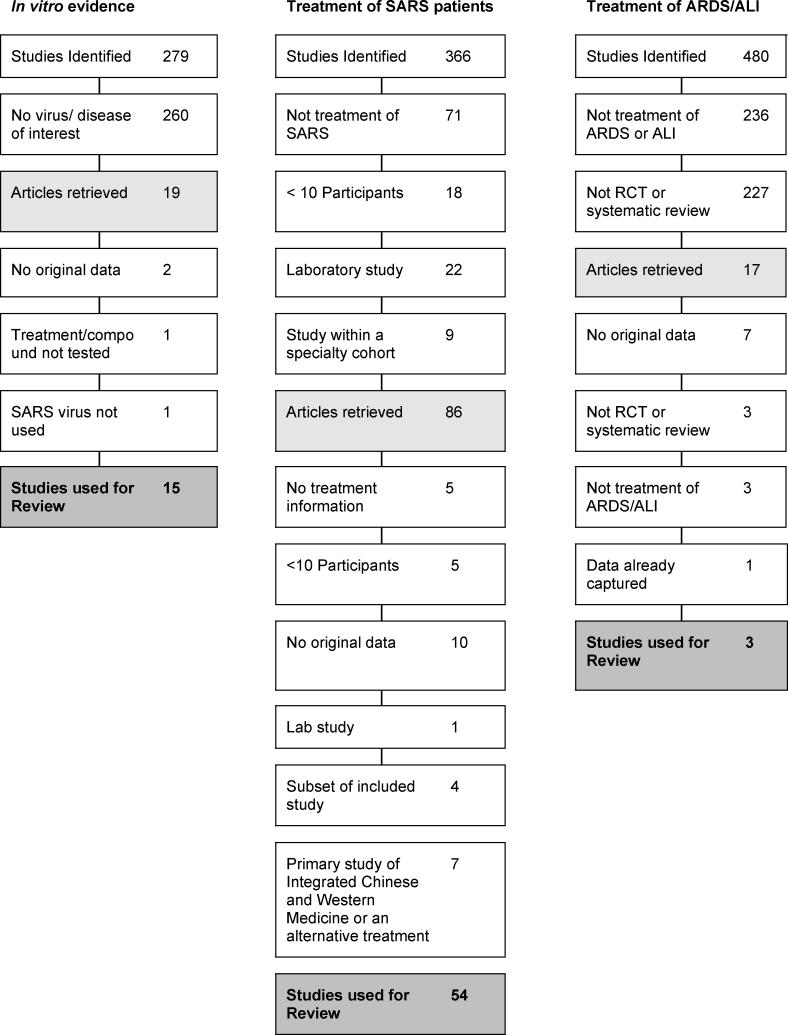
BACKGROUND: The SARS outbreak of 2002-2003 presented clinicians with a new, life-threatening disease for which they had no experience in treating and no research on the effectiveness of treatment options. The World Health Organization (WHO) expert panel on SARS treatment requested a systematic review and comprehensive summary of treatments used for SARS-infected patients in order to guide future treatment and identify priorities for research. METHODS AND FINDINGS: In response to the WHO request we conducted a systematic review of the published literature on ribavirin, corticosteroids, lopinavir and ritonavir (LPV/r), type I interferon (IFN), intravenous immunoglobulin (IVIG), and SARS convalescent plasma from both in vitro studies and in SARS patients. We also searched for clinical trial evidence of treatment for acute respiratory distress syndrome. Sources of data were the literature databases MEDLINE, EMBASE, BIOSIS, and the Cochrane Central Register of Controlled Trials (CENTRAL) up to February 2005. Data from publications were extracted and evidence within studies was classified using predefined criteria. In total, 54 SARS treatment studies, 15 in vitro studies, and three acute respiratory distress syndrome studies met our inclusion criteria. Within in vitro studies, ribavirin, lopinavir, and type I IFN showed inhibition of SARS-CoV in tissue culture. In SARS-infected patient reports on ribavirin, 26 studies were classified as inconclusive, and four showed possible harm. Seven studies of convalescent plasma or IVIG, three of IFN type I, and two of LPV/r were inconclusive. In 29 studies of steroid use, 25 were inconclusive and four were classified as causing possible harm. CONCLUSIONS: Despite an extensive literature reporting on SARS treatments, it was not possible to determine whether treatments benefited patients during the SARS outbreak. Some may have been harmful. Clinical trials should be designed to validate a standard protocol for dosage and timing, and to accrue data in real time during future outbreaks to monitor specific adverse effects and help inform treatment.
Overview
The claims and statistics of this paper haven’t been checked yet.
Free: it reads the open-access text and checks the first 5 claims that cite a source we can check. Create a free account to check every claim.
Integrity signals
Registry
Cites
Statistics
Figures
Verification
Claims the paper makes
The claims and statistics of this paper haven’t been checked yet.
Free: it reads the open-access text and checks the first 5 claims that cite a source we can check. Create a free account to check every claim.
Claims other papers make about this one
Each is checked against this paper’s own text: does it say what the citing paper says it does?
The cited source says what the claim attributes to it.
In the citing paper
“There is no effective treatment to date, 17 and despite promising advances, 18,19 no vaccine has been approved.”
From Severe acute respiratory syndrome (SARS) mathematical models and disease parameters: a systematic review (2025) · cites this paper as [17]
Self-check
Percentages, sums and reported differences re-computed from the paper’s own numbers.
The self-check needs the paper’s full text.
Citations
Cites
Identification of a novel coronavirus in patients with severe acute respiratory syndrome
Drosten, C., Günther, S., Preiser, W., van der Werf, S., Brodt, H.-R., Becker, S., Rabenau, H., Panning, M., Kolesnikova, L., Fouchier, R. A. M., et al. (2003) · New England Journal of Medicine · doi:10.1056/nejmoa030747 · Cited by 4,574 · cited 1×
“The causative organism has been identified as a novel coronavirus (SARS-CoV) [2] [3] [4] .”
BackgroundA Novel Coronavirus Associated with Severe Acute Respiratory Syndrome
Ksiazek, T. G., Erdman, D., Goldsmith, C. S., Zaki, S. R., Peret, T., Emery, S., Tong, S., Urbani, C., Comer, J. A., Lim, W., et al. (2003) · New England Journal of Medicine · doi:10.1056/nejmoa030781 · Cited by 4,344 · cited 2×
“The causative organism has been identified as a novel coronavirus (SARS-CoV) [2] [3] [4] .”
BackgroundMethodCoronavirus as a possible cause of severe acute respiratory syndrome
Peiris, J., Lai, S., Poon, L., Guan, Y., Yam, L., Lim, W., Nicholls, J., Yee, W., Yan, W., Cheung, M., et al. (2003) · The Lancet · doi:10.1016/s0140-6736(03)13077-2 · Cited by 2,915 · cited 1×
“The causative organism has been identified as a novel coronavirus (SARS-CoV) [2] [3] [4] .”
BackgroundA Major Outbreak of Severe Acute Respiratory Syndrome in Hong Kong
Lee, N., Hui, D., Wu, A., Chan, P., Cameron, P., Joynt, G. M., Ahuja, A., Yung, M. Y., Leung, C. B., To, K. F., et al. (2003) · New England Journal of Medicine · doi:10.1056/nejmoa030685 · Cited by 2,628 · cited 1×
“Because the urgency of the international outbreak did not allow time for efficacy studies, physicians in Canada and Hong Kong treated the earliest patients with intravenous ribavirin, based on its broad-spectrum antiviral activity [9,10].”
BackgroundRole of lopinavir/ritonavir in the treatment of SARS: initial virological and clinical findings
Chu, C. M. (2004) · Thorax · doi:10.1136/thorax.2003.012658 · Cited by 1,645 · cited 1×
“When LPV/r was added as an initial treatment to ribavirin and corticosteroid therapy, the death rate was lower than among those who received ribavirin and corticosteroids (1/ [20] .”
BackgroundClinical Features and Short-term Outcomes of 144 Patients With SARS in the Greater Toronto Area
Booth, C. M. (2003) · JAMA · doi:10.1001/jama.289.21.joc30885 · Cited by 1,406 · cited 2×
“Four publications presented evidence of possible harm (14) (15) (16) (17) .”
BackgroundResultThe Severe Acute Respiratory Syndrome
Peiris, J. S. M., Yuen, K. Y., Osterhaus, A. D. M. E., & Stöhr, K. (2003) · New England Journal of Medicine · doi:10.1056/nejmra032498 · Cited by 1,346
Identification of Severe Acute Respiratory Syndrome in Canada
Poutanen, S. M., Low, D. E., Henry, B., Finkelstein, S., Rose, D., Green, K., Tellier, R., Draker, R., Adachi, D., Ayers, M., et al. (2003) · New England Journal of Medicine · doi:10.1056/nejmoa030634 · Cited by 1,132 · cited 1×
“Because the urgency of the international outbreak did not allow time for efficacy studies, physicians in Canada and Hong Kong treated the earliest patients with intravenous ribavirin, based on its broad-spectrum antiviral activity [9,10].”
BackgroundMeduri, G. U., Headley, A. S., Golden, E., Carson, S. J., Umberger, R. A., Kelso, T., & Tolley, E. A. (1998) · JAMA · doi:10.1001/jama.280.2.159 · Cited by 1,008 · cited 2×
“Table S11.”
BackgroundHigh-Dose Corticosteroids in Patients with the Adult Respiratory Distress Syndrome
Bernard, G. R., Luce, J. M., Sprung, C. L., Rinaldo, J. E., Tate, R. M., Sibbald, W. J., Kariman, K., Higgins, S., Bradley, R., Metz, C. A., et al. (1987) · New England Journal of Medicine · doi:10.1056/nejm198712173172504 · Cited by 935 · cited 1×
“In two trials, high-dose methylprednisolone given for approximately 2 d was not effective for early ARDS [ 25 ,26].”
Method
Research works printed but not linked: 30
- Ksiazek, 2003, N Engl J Med, 348, 1953
- Peiris, 2003, Lancet, 361, 1319
- Drosten, 2003, N Engl J Med, 348, 1967
- Peiris, 2003, N Engl J Med, 2003, 2431
- Leung, 2004, Ann Intern Med, 141, 662
- Fowler, 2003, JAMA, 290, 367
- Poutanen, 2003, N Engl J Med, 348, 1995
- Lee, 2003, N Engl J Med, 348, 1986
- Morgenstern, 2005, Biochem Biophys Res Commun, 326, 905
- Chen, 2004, J Clin Virol, 31, 69
- Knowles, 2003, Clin Infect Dis, 37, 1139
- Booth, 2003, JAMA, 289, 2801
- Sung, 2004, Thorax, 59, 414
- Wong, 2003, JAMA, 290, 2663
- Yamamoto, 2004, Biochem Biophys Res Commun, 318, 719
- Chan, 2003, Hong Kong Med J, 9, 399
- Chu, 2004, Thorax, 59, 252
- Lee, 2004, J Clin Virol, 31, 304
- Lee, 2004, Clin Infect Dis, 39, 1247
- Xiao, 2004, Zhonghua Nei Ke Za Zhi, 43, 179
- Li, 2004, Zhonghua Yi Xue Za Zhi, 84, 1348
- Bernard, 1987, N Engl J Med, 317, 1565
- Weigelt, 1985, Arch Surg, 120, 536
- Meduri, 1998, JAMA, 280, 159
- Scagnolari, 2004, Antivir Ther, 9, 1003
- Sainz, 2004, Virology, 329, 11
- Wu, 2003, Zhonghua Nei Ke Za Zhi, 42, 453
- Li, 2003, Zhonghua Er Ke Za Zhi, 41, 574
- Hwang, 2005, Mod Pathol, 18, 1
- Wang, 2003, N Engl J Med, 349, 507
Cited by
Clinical features of patients infected with 2019 novel coronavirus in Wuhan, China
Huang, C., Wang, Y., Li, X., Ren, L., Zhao, J., Hu, Y., Zhang, L., Fan, G., Xu, J., Gu, X., et al. (2020) · The Lancet · doi:10.1016/s0140-6736(20)30183-5 · Cited by 48,884
Dexamethasone in Hospitalized Patients with Covid-19
The RECOVERY Collaborative Group (2021) · New England Journal of Medicine · doi:10.1056/nejmoa2021436 · Cited by 11,477
“Heart disease 586 (28) 1171 (27) 519 (34) 1074 (28) 164 (16)”
Characteristics of SARS-CoV-2 and COVID-19
Hu, B., Guo, H., Zhou, P., & Shi, Z.-L. (2021) · Nature Reviews Microbiology · doi:10.1038/s41579-020-00459-7 · Cited by 5,291
The trinity of COVID-19: immunity, inflammation and intervention
Tay, M. Z., Poh, C. M., Rénia, L., MacAry, P. A., & Ng, L. F. P. (2020) · Nature Reviews Immunology · doi:10.1038/s41577-020-0311-8 · Cited by 4,360
“79, 80 .”
Coronaviruses: An Overview of Their Replication and Pathogenesis
Fehr, A. R., & Perlman, S. (2015) · Methods in Molecular Biology · doi:10.1007/978-1-4939-2438-7_1 · Cited by 3,787
“IFNs in combination with ribavirin may have increased activity in vitro when compared to IFNs alone against some coronaviruses; however, the effectiveness of this combination in vivo requires further evaluation [ 105 ].”
BackgroundThe pathogenesis and treatment of the `Cytokine Storm' in COVID-19
Ye, Q., Wang, B., & Mao, J. (2020) · Journal of Infection · doi:10.1016/j.jinf.2020.03.037 · Cited by 2,761
Channappanavar, R., & Perlman, S. (2017) · Seminars in Immunopathology · doi:10.1007/s00281-017-0629-x · Cited by 2,524
“SARS outbreak showed inconclusive results [114].”
Pharmacologic Treatments for Coronavirus Disease 2019 (COVID-19): A Review
Sanders, J. M., Monogue, M. L., Jodlowski, T. Z., & Cutrell, J. B. (2020) · JAMA · doi:10.1001/jama.2020.6019 · Cited by 2,347
Alhazzani, W., Møller, M. H., Arabi, Y. M., Loeb, M., Gong, M. N., Fan, E., Oczkowski, S., Levy, M. M., Derde, L., Dzierba, A., et al. (2020) · Intensive Care Medicine · doi:10.1007/s00134-020-06022-5 · Cited by 2,105
“Recombinant interferon, often combined with ribavirin therapy, has been used in patients with MERS and SARS [179, 200–202].”
Clinical evidence does not support corticosteroid treatment for 2019-nCoV lung injury
Russell, C. D., Millar, J. E., & Baillie, J. K. (2020) · The Lancet · doi:10.1016/s0140-6736(20)30317-2 · Cited by 2,008
Coronaviruses post-SARS: update on replication and pathogenesis
Perlman, S., & Netland, J. (2009) · Nature Reviews Microbiology · doi:10.1038/nrmicro2147 · Cited by 1,764
“Finally, no effective treatments exist for any coronavirus infections, including SAR”
BackgroundAlhazzani, W., Møller, M. H., Arabi, Y. M., Loeb, M., Gong, M. N., Fan, E., Oczkowski, S., Levy, M. M., Derde, L., Dzierba, A., et al. (2020) · Critical Care Medicine · doi:10.1097/ccm.0000000000004363 · Cited by 1,565
Intensive care management of coronavirus disease 2019 (COVID-19): challenges and recommendations
Phua, J., Weng, L., Ling, L., Egi, M., Lim, C.-M., Divatia, J. V., Shrestha, B. R., Arabi, Y. M., Ng, J., Gomersall, C. D., et al. (2020) · The Lancet Respiratory Medicine · doi:10.1016/s2213-2600(20)30161-2 · Cited by 1,509
“58 Although expert guidance can be sought from local or international societies, patients treated with experimental therapies should be enrolled in a clinical study when possible.”
Agostini, M. L., Andres, E. L., Sims, A. C., Graham, R. L., Sheahan, T. P., Lu, X., Smith, E. C., Case, J. B., Feng, J. Y., Jordan, R., et al. (2018) · mBio · doi:10.1128/mbio.00221-18 · Cited by 1,416
COVID-19 and cardiovascular disease: from basic mechanisms to clinical perspectives
Nishiga, M., Wang, D. W., Han, Y., Lewis, D. B., & Wu, J. C. (2020) · Nature Reviews Cardiology · doi:10.1038/s41569-020-0413-9 · Cited by 1,409
Discovering drugs to treat coronavirus disease 2019 (COVID-19)
Dong, L., Hu, S., & Gao, J. (2020) · Drug Discoveries & Therapeutics · doi:10.5582/ddt.2020.01012 · Cited by 1,390
“IFN-α is a broad-spectrum antiviral that is usually used to treat hepatitis, though it is reported to inhibit SARS-CoV reproduction in vitro (4).”
BackgroundWorld Health Organization (2020) · Pediatria i Medycyna Rodzinna · doi:10.15557/pimr.2020.0003 · Cited by 1,329
“Remark 1: A systematic review of observational studies of corticosteroids administered to patients with SARS reported no survival benefit and possible harms (avascular necrosis, psychosis, diabetes, and delayed viral clearance) (62).”
BackgroundNetland, J., Meyerholz, D. K., Moore, S., Cassell, M., & Perlman, S. (2008) · Journal of Virology · doi:10.1128/jvi.00737-08 · Cited by 1,293
“Furthermore, some patients who survived SARS display neurological/psychological sequelae that appear to be disproportionate to the extent of lung infection or expected side effects of corticosteroid therapy (11, 25, 28, 53) (steroids were used in most patients with SARS in the outbreak of 2002 to 2003) (45).”
BackgroundMiddle East respiratory syndrome
Zumla, A., Hui, D. S., & Perlman, S. (2015) · The Lancet · doi:10.1016/s0140-6736(15)60454-8 · Cited by 1,263
From SARS to MERS, Thrusting Coronaviruses into the Spotlight
Song, Z., Xu, Y., Bao, L., Zhang, L., Yu, P., Qu, Y., Zhu, H., Zhao, W., Han, Y., & Qin, C. (2019) · Viruses · doi:10.3390/v11010059 · Cited by 1,265
“Host protease inhibitors Effective in mouse models [138] In vitro inhibition [138] Viral protease inhibitors In vitro inhibition [139] In vitro inhibition [140] Monoclonal and polyclonal antibodies Effective in mouse, ferrets, golden Syrian hamster [124, 141, 142] and non-human primate models [143, 144] Effective in m…”
BackgroundRuuskanen, O., Lahti, E., Jennings, L. C., & Murdoch, D. R. (2011) · The Lancet · doi:10.1016/s0140-6736(10)61459-6 · Cited by 1,124
Corticosteroid Therapy for Critically Ill Patients with Middle East Respiratory Syndrome
Arabi, Y. M., Mandourah, Y., Al-Hameed, F., Sindi, A. A., Almekhlafi, G. A., Hussein, M. A., Jose, J., Pinto, R., Al-Omari, A., Kharaba, A., et al. (2018) · American Journal of Respiratory and Critical Care Medicine · doi:10.1164/rccm.201706-1172oc · Cited by 1,122
“inconclusive and four were classified as causing possible harm.(6) In one randomized controlled trial (RCT) that included 16 non-ICU patients, "early" (<7 days of illness) hydrocortisone therapy was associated with a higher subsequent plasma viral load.”
BackgroundZimmermann, P., & Curtis, N. (2020) · Pediatric Infectious Disease Journal · doi:10.1097/inf.0000000000002660 · Cited by 1,077
“152 There is no evidence for the use of monoclonal antibodies against tumor necrosis factor alpha.”
BackgroundInfluentialXiong, Y., Liu, Y., Cao, L., Wang, D., Guo, M., Jiang, A., Guo, D., Hu, W., Yang, J., Tang, Z., et al. (2020) · Emerging Microbes & Infections · doi:10.1080/22221751.2020.1747363 · Cited by 1,076
“Due to its anti-inflammatory effect, glucocorticoids have been widely used to stop the progression of the acute lung injury and acute respiratory distress syndrome in SARS and COVID-19 patients by suppressing lung inflammation [4,49].”
BackgroundThe deadly coronaviruses: The 2003 SARS pandemic and the 2020 novel coronavirus epidemic in China
Yang, Y., Peng, F., Wang, R., Guan, K., Jiang, T., Xu, G., Sun, J., & Chang, C. (2020) · Journal of Autoimmunity · doi:10.1016/j.jaut.2020.102434 · Cited by 1,068
“In vivo, the effectiveness of IFNs combined with ribavirin requires further evaluation [39].”
Clinical Features of 69 Cases With Coronavirus Disease 2019 in Wuhan, China
Wang, Z., Yang, B., Li, Q., Wen, L., & Zhang, R. (2020) · Clinical Infectious Diseases · doi:10.1093/cid/ciaa272 · Cited by 1,063
“Evidence from SARS and MERS indicates that receiving corticosteroids did not improve mortality, but rather delayed viral clearance [23, 24].”
BackgroundBhimraj, A., Morgan, R. L., Shumaker, A. H., Lavergne, V., Baden, L., Cheng, V. C.-C., Edwards, K. M., Gandhi, R., Muller, W. J., O’Horo, J. C., et al. (2024) · Clinical Infectious Diseases · doi:10.1093/cid/ciaa478 · Cited by 1,033
“A systematic review [30] reported on 15 studies, 13 of which were inconclusive to any benefits of corticosteroids.”
Coronavirus disease 2019: What we know?
He, F., Deng, Y., & Li, W. (2020) · Journal of Medical Virology · doi:10.1002/jmv.25766 · Cited by 1,007
Mair-Jenkins, J., Saavedra-Campos, M., Baillie, J. K., Cleary, P., Khaw, F.-M., Lim, W. S., Makki, S., Rooney, K. D., Convalescent Plasma Study Group, Nguyen-Van-Tam, J. S., et al. (2015) · Journal of Infectious Diseases · doi:10.1093/infdis/jiu396 · Cited by 983
“Two systematic reviews were at low risk of bias [7, 21], whereas one was at moderate to low risk of bias across most domains”
BackgroundClinical Features and Treatment of COVID-19 Patients in Northeast Chongqing
Wan, S., Xiang, Y., Fang, W., Zheng, Y., Li, B., Hu, Y., Lang, C., Huang, D., Sun, Q., Xiong, Y., et al. (2020) · Journal of Medical Virology · doi:10.1002/jmv.25783 · Cited by 982
Yang, Y., Islam, M. S., Wang, J., Li, Y., & Chen, X. (2020) · International Journal of Biological Sciences · doi:10.7150/ijbs.45538 · Cited by 960
Lin, L., Lu, L., Cao, W., & Li, T. (2020) · Emerging Microbes & Infections · doi:10.1080/22221751.2020.1746199 · Cited by 914
“This is different from the effect of high-dose of glucocorticoids described in other literature [14].”
ResultType I and Type III Interferons – Induction, Signaling, Evasion, and Application to Combat COVID-19
Park, A., & Iwasaki, A. (2020) · Cell Host & Microbe · doi:10.1016/j.chom.2020.05.008 · Cited by 909
te Velthuis, A. J. W., van den Worm, S. H. E., Sims, A. C., Baric, R. S., Snijder, E. J., & van Hemert, M. J. (2010) · PLoS Pathogens · doi:10.1371/journal.ppat.1001176 · Cited by 893
“antivirals are currently still lacking for the effective treatment of SARS and other nidovirus-related diseases [33].”
BackgroundEffect of Dexamethasone in Hospitalized Patients with COVID-19 – Preliminary Report
Horby, P., Lim, W. S., Emberson, J., Mafham, M., Bell, J., Linsell, L., Staplin, N., Brightling, C., Ustianowski, A., Elmahi, E., et al. (2020) · doi:10.1101/2020.06.22.20137273 · Cited by 11,475
“28-31 In addition, the evidence base has suffered from heterogeneity in corticosteroid doses, medical conditions, and disease severity studied.”
BackgroundWhat we know so far: COVID-19 current clinical knowledge and research
Lake, M. A. (2020) · Clinical Medicine · doi:10.7861/clinmed.2019-coron · Cited by 800
COVID-19 and diabetes: Knowledge in progress
Hussain, A., Bhowmik, B., & do Vale Moreira, N. C. (2020) · Diabetes Research and Clinical Practice · doi:10.1016/j.diabres.2020.108142 · Cited by 796
“[77] Stockman Lauren J, Bellamy Richard, Garner Paul, Low Donald.”
Morse, J. S., Lalonde, T., Xu, S., & Liu, W. R. (2020) · ChemBioChem · doi:10.1002/cbic.202000047 · Cited by 776
“At best, efficacy with RBV was inconclusive, with some studies showing a worsening of patient outcomes (as reviewed by Stockman, et al).(32) Exonuclease activity by the enzyme nsp14 has been shown to be able to remove mismatches as well as incorporated nucleoside analogs, and inactivation of nsp14’s exonuclease activi…”
ResultRespiratory Viral Infections in Infants: Causes, Clinical Symptoms, Virology, and Immunology
Tregoning, J. S., & Schwarze, J. (2010) · Clinical Microbiology Reviews · doi:10.1128/cmr.00032-09 · Cited by 747
de Wilde, A. H., Jochmans, D., Posthuma, C. C., Zevenhoven-Dobbe, J. C., van Nieuwkoop, S., Bestebroer, T. M., van den Hoogen, B. G., Neyts, J., & Snijder, E. J. (2014) · Antimicrobial Agents and Chemotherapy · doi:10.1128/aac.03011-14 · Cited by 736
“Also the merits of treating SARS patients with 106 immunomodulatory corticosteroids have remained a matter of debate (reviewed in (28-30)).”
BackgroundSharma, A., Tiwari, S., Deb, M. K., & Marty, J. L. (2020) · International Journal of Antimicrobial Agents · doi:10.1016/j.ijantimicag.2020.106054 · Cited by 705
Jamilloux, Y., Henry, T., Belot, A., Viel, S., Fauter, M., El Jammal, T., Walzer, T., François, B., & Sève, P. (2020) · Autoimmunity Reviews · doi:10.1016/j.autrev.2020.102567 · Cited by 658
“Evidence is mainly derived from experience with SARS-CoV and MERS-CoV infections [95].”
The Novel Coronavirus 2019 epidemic and kidneys
Naicker, S., Yang, C.-W., Hwang, S.-J., Liu, B.-C., Chen, J.-H., & Jha, V. (2020) · Kidney International · doi:10.1016/j.kint.2020.03.001 · Cited by 650
“In a meta-analysis of corticosteroid use in patients with SARS, 4 studies provided conclusive evidence of harm (psychosis, diabetes, avascular necrosis, and delayed viral clearance).(27) Therefore, the use of steroids is controversial and not recommended by the World Health Organization because of potential inhibition…”
MethodThe signal pathways and treatment of cytokine storm in COVID-19
Yang, L., Xie, X., Tu, Z., Fu, J., Xu, D., & Zhou, Y. (2021) · Signal Transduction and Targeted Therapy · doi:10.1038/s41392-021-00679-0 · Cited by 603
On the use of corticosteroids for 2019-nCoV pneumonia
Shang, L., Zhao, J., Hu, Y., Du, R., & Cao, B. (2020) · The Lancet · doi:10.1016/s0140-6736(20)30361-5 · Cited by 604
IFN-I response timing relative to virus replication determines MERS coronavirus infection outcomes
Channappanavar, R., Fehr, A. R., Zheng, J., Wohlford-Lenane, C., Abrahante, J. E., Mack, M., Sompallae, R., McCray, P. B., Meyerholz, D. K., & Perlman, S. (2019) · Journal of Clinical Investigation · doi:10.1172/jci126363 · Cited by 556
“IFN-I therapy has been used to treat patients with severe respiratory disease caused by CoVs, with similarly inconsistent outcomes (25).”
BackgroundCytokine storm intervention in the early stages of COVID-19 pneumonia
Sun, X., Wang, T., Cai, D., Hu, Z., Chen, J., Liao, H., Zhi, L., Wei, H., Zhang, Z., Qiu, Y., et al. (2020) · Cytokine & Growth Factor Reviews · doi:10.1016/j.cytogfr.2020.04.002 · Cited by 513
“However, further studies indicated opposite clinical outcomes and a systematic review in SARS, MERS and influenza infections indicated no survival benefit and possible harm (avascular necrosis, psychosis, diabetes, delayed viral clearance and secondary infections) with corticosteroids [22].”
Severe Acute Respiratory Syndrome
Hui, D. S. C., & Zumla, A. (2019) · Infectious Disease Clinics of North America · doi:10.1016/j.idc.2019.07.001 · Cited by 506
“A systematic review concluded that systemic corticosteroid treatment was not associated with definite benefits and was potentially harmful.(92)”
Deng, L., Li, C., Zeng, Q., Liu, X., Li, X., Zhang, H., Hong, Z., & Xia, J. (2020) · Journal of Infection · doi:10.1016/j.jinf.2020.03.002 · Cited by 505
Type 1 interferons as a potential treatment against COVID-19
Sallard, E., Lescure, F.-X., Yazdanpanah, Y., Mentre, F., & Peiffer-Smadja, N. (2020) · Antiviral Research · doi:10.1016/j.antiviral.2020.104791 · Cited by 509
“In addition, results often differ substantially between studies because of inconsistencies in the experimental settings or the clinical conditions (Stockman et al., 2006): for example, a study on SARS-CoV revealed a positive effect of IFN-I treatment (Loutfy et al.”
InfluentialT Cell Responses to Whole SARS Coronavirus in Humans
Li, C. K.-F., Wu, H., Yan, H., Ma, S., Wang, L., Zhang, M., Tang, X., Temperton, N. J., Weiss, R. A., Brenchley, J. M., et al. (2008) · The Journal of Immunology · doi:10.4049/jimmunol.181.8.5490 · Cited by 497
“ment benefited SARS patients during the outbreak (4).”
BackgroundDequin, P.-F., Heming, N., Meziani, F., Plantefève, G., Voiriot, G., Badié, J., François, B., Aubron, C., Ricard, J.-D., Ehrmann, S., et al. (2020) · JAMA · doi:10.1001/jama.2020.16761 · Cited by 499
Omrani, A. S., Saad, M. M., Baig, K., Bahloul, A., Abdul-Matin, M., Alaidaroos, A. Y., Almakhlafi, G. A., Albarrak, M. M., Memish, Z. A., & Albarrak, A. M. (2014) · The Lancet Infectious Diseases · doi:10.1016/s1473-3099(14)70920-x · Cited by 493
Type I Interferon Susceptibility Distinguishes SARS-CoV-2 from SARS-CoV
Lokugamage, K. G., Hage, A., de Vries, M., Valero-Jimenez, A. M., Schindewolf, C., Dittmann, M., Rajsbaum, R., & Menachery, V. D. (2020) · Journal of Virology · doi:10.1128/jvi.01410-20 · Cited by 483
Comparative Review of SARS-CoV-2, SARS-CoV, MERS-CoV, and Influenza A Respiratory Viruses
Abdelrahman, Z., Li, M., & Wang, X. (2020) · Frontiers in Immunology · doi:10.3389/fimmu.2020.552909 · Cited by 480
“associated immunopathological damage (123)”
Bolles, M., Deming, D., Long, K., Agnihothram, S., Whitmore, A., Ferris, M., Funkhouser, W., Gralinski, L., Totura, A., Heise, M., et al. (2011) · Journal of Virology · doi:10.1128/jvi.06048-11 · Cited by 477
“Multiple candidate antiviral and immunomodulatory therapeutics have been developed in response to the epidemic, and vaccines would likely be a major tool in controlling any new SARS-CoV outbreak (51).”
BackgroundCoronavirus disease 2019 (COVID-19): a clinical update
Zhou, M., Zhang, X., & Qu, J. (2020) · Frontiers of Medicine · doi:10.1007/s11684-020-0767-8 · Cited by 476
COVID-19, cytokines and immunosuppression: what can we learn from severe acute respiratory syndrome?
Sarzi-Puttini, P., Giorgi, V., Sirotti, S., Marotto, D., Ardizzone, S., Rizzardini, G., Antinori, S., & Galli, M. (2020) · Clinical and Experimental Rheumatology · doi:10.55563/clinexprheumatol/xcdary · Cited by 466
“They can suppress the exuberant systemic inflammatory response associated with ARDS (66), but there is no evidence that they lead to a clinical improvement in patients with viral interstitial pneumonia, particularly SARS, MERS and H1N1 (25, 64, 65-68), and they may even exacerbate lung injury (69).”
BackgroundCOVID-19 infection and rheumatoid arthritis: Faraway, so close
Favalli, E. G., Ingegnoli, F., De Lucia, O., Cincinelli, G., Cimaz, R., & Caporali, R. (2020) · Autoimmunity Reviews · doi:10.1016/j.autrev.2020.102523 · Cited by 454
“drome (MERS)-CoV [44] and SARS-CoV [45] outbreaks, both histologically characterized by lung inflammation and diffuse alveolar damage [46].”
Totura, A. L., Whitmore, A., Agnihothram, S., Schäfer, A., Katze, M. G., Heise, M. T., & Baric, R. S. (2015) · mBio · doi:10.1128/mbio.00638-15 · Cited by 455
“Despite the importance of SARS-CoV and MERS-CoV as public health threats, there are currently no available antivirals against these pathogens, with current evidence suggesting that the antiviral drugs ribavirin and interferon (IFN) are not efficacious in ameliorating SARS or MERS infections (7) (8) (9) .”
BackgroundTreatment with interferon-α2b and ribavirin improves outcome in MERS-CoV–infected rhesus macaques
Falzarano, D., de Wit, E., Rasmussen, A. L., Feldmann, F., Okumura, A., Scott, D. P., Brining, D., Bushmaker, T., Martellaro, C., Baseler, L., et al. (2013) · Nature Medicine · doi:10.1038/nm.3362 · Cited by 445
Smith, E. C., Blanc, H., Vignuzzi, M., & Denison, M. R. (2013) · PLoS Pathogens · doi:10.1371/journal.ppat.1003565 · Cited by 444
“Retrospective clinical studies during the SARS epidemic ultimately concluded that treatment with ribavirin (RBV), an antiviral drug shown to be mutagenic for some RNA viruses [23, 24] , was ineffective against SARS-CoV [25] [26] [27] [28] .”
BackgroundInterplay between SARS-CoV-2 and the type I interferon response
Sa Ribero, M., Jouvenet, N., Dreux, M., & Nisole, S. (2020) · PLOS Pathogens · doi:10.1371/journal.ppat.1008737 · Cited by 443
“First, it became clear from these former studies that IFN β is a more potent inhibitor than IFN α as shown both in vitro and in patients [129, 132].”
Chen, Y. W., Yiu, C.-P. B., & Wong, K.-Y. (2020) · F1000Research · doi:10.12688/f1000research.22457.2 · Cited by 426
Yu, M.-S., Lee, J., Lee, J. M., Kim, Y., Chin, Y.-W., Jee, J.-G., Keum, Y.-S., & Jeong, Y.-J. (2012) · Bioorganic & Medicinal Chemistry Letters · doi:10.1016/j.bmcl.2012.04.081 · Cited by 422
Alhazzani, W., Evans, L., Alshamsi, F., Møller, M. H., Ostermann, M., Prescott, H. C., Arabi, Y. M., Loeb, M., Ng Gong, M., Fan, E., et al. (2021) · Critical Care Medicine · doi:10.1097/ccm.0000000000004899 · Cited by 417
SARS coronavirus pathogenesis: host innate immune responses and viral antagonism of interferon
Totura, A. L., & Baric, R. S. (2012) · Current Opinion in Virology · doi:10.1016/j.coviro.2012.04.004 · Cited by 415
“By July of 2003 the virus was controlled by public health measures, but no vaccines or antivirals are currently approved for the treatment of SARS-CoV should the virus re-emerge [6,7].”
BackgroundEdalatifard, M., Akhtari, M., Salehi, M., Naderi, Z., Jamshidi, A., Mostafaei, S., Najafizadeh, S. R., Farhadi, E., Jalili, N., Esfahani, M., et al. (2020) · European Respiratory Journal · doi:10.1183/13993003.02808-2020 · Cited by 410
Structural and molecular basis of mismatch correction and ribavirin excision from coronavirus RNA
Ferron, F., Subissi, L., Silveira De Morais, A. T., Le, N. T. T., Sevajol, M., Gluais, L., Decroly, E., Vonrhein, C., Bricogne, G., Canard, B., et al. (2018) · Proceedings of the National Academy of Sciences · doi:10.1073/pnas.1718806115 · Cited by 404
“Importantly, in contrast to hepatitis C virus (7), respiratory syncytial virus (8), and Lassa fever (9) infections, coronavirus (CoV)-infected patients do not respond to Rbv (10, 11).”
BackgroundChan, K. W., Wong, V. T., & Tang, S. C. W. (2020) · The American Journal of Chinese Medicine · doi:10.1142/s0192415x20500378 · Cited by 398
“Corticosteroids use on the current outbreak was widely reported (Stockman et al., 2006; Guan et al., 2020; Huang et al., 2020; Wang et al., 2020a; Chen et al., 2020a; Xu et al., 2020c).”
BackgroundMethodInfluentialHuman immunopathogenesis of severe acute respiratory syndrome (SARS)
Cameron, M. J., Bermejo-Martin, J. F., Danesh, A., Muller, M. P., & Kelvin, D. J. (2008) · Virus Research · doi:10.1016/j.virusres.2007.02.014 · Cited by 391
“recently reviewed these therapies and concluded that, at the present moment, it is not known if any of the potential treatments for SARS, whether antiviral or immunomodulatory, will be particularly effective in the event of a new outbreak (Stockman et al., 2006) .”
BackgroundCameron, M. J., Ran, L., Xu, L., Danesh, A., Bermejo-Martin, J. F., Cameron, C. M., Muller, M. P., Gold, W. L., Richardson, S. E., Poutanen, S. M., et al. (2007) · Journal of Virology · doi:10.1128/jvi.00527-07 · Cited by 386
“Since corticosteroid treatment may delay adaptive immunity and viral clearance if administered during acute-phase SARS (29), our results further emphasize the need for clearer recommendations regarding immunosuppressive therapy of severe viral infections in humans (46).”
BackgroundResultDo chronic respiratory diseases or their treatment affect the risk of SARS-CoV-2 infection?
Halpin, D. M. G., Faner, R., Sibila, O., Badia, J. R., & Agusti, A. (2020) · The Lancet Respiratory Medicine · doi:10.1016/s2213-2600(20)30167-3 · Cited by 385
“11 The potential benefits or harms of inhaled corticosteroids and other treatments for people at risk of SARS-CoV-2 infection or patients with COVID-19 are unclear at present, and no changes to the treatment or management of chronic respiratory conditions, including COPD and asthma, should be considered at this stage.”
BackgroundNg, D. L., Al Hosani, F., Keating, M. K., Gerber, S. I., Jones, T. L., Metcalfe, M. G., Tong, S., Tao, Y., Alami, N. N., Haynes, L. M., et al. (2016) · The American Journal of Pathology · doi:10.1016/j.ajpath.2015.10.024 · Cited by 384
“A systematic review of high-dose corticosteroids for treatment of SARS-CoV reported evidence of harm without survival benefit.(28) In patients with influenza A(H1N1)pdm09 virus infection, corticosteroid treatment was associated with increased mortality,(29) although further studies are needed.”
BackgroundCorticosteroid use in COVID-19 patients: a systematic review and meta-analysis on clinical outcomes
van Paassen, J., Vos, J. S., Hoekstra, E. M., Neumann, K. M. I., Boot, P. C., & Arbous, S. M. (2020) · Critical Care · doi:10.1186/s13054-020-03400-9 · Cited by 382
“Earlier studies done in MERS-CoV and SARS-CoV showed delayed viral clearance, opportunistic infections and hyperglycemia [20–22].”
ResultOngoing Clinical Trials for the Management of the COVID-19 Pandemic
Lythgoe, M. P., & Middleton, P. (2020) · Trends in Pharmacological Sciences · doi:10.1016/j.tips.2020.03.006 · Cited by 380
“Corticosteroids were previously trialled in SARSCoV; however, the results were inconclusive and adverse effects were associated [19].”
How Big Data and Artificial Intelligence Can Help Better Manage the COVID-19 Pandemic
Bragazzi, N. L., Dai, H., Damiani, G., Behzadifar, M., Martini, M., & Wu, J. (2020) · International Journal of Environmental Research and Public Health · doi:10.3390/ijerph17093176 · Cited by 377
“In a systematic review of the treatment e ff ects of candidate drugs against SARS-CoV, 25 out of 29 studies assessed mentioning steroid, its use was found to be inconclusive, with four of them showing potential harm to patients’ health [23].”
BackgroundYang, Z., Liu, J., Zhou, Y., Zhao, X., Zhao, Q., & Liu, J. (2020) · Journal of Infection · doi:10.1016/j.jinf.2020.03.062 · Cited by 363
“33 In a meta-analysis of corticosteroid use in patients with influenza pneumonia, the results showed that compared with placebo, corticosteroids were associated with higher mortality, longer ICU LOS, and a higher rate of secondary infection but not mechanical ventilation days.”
ResultNovel coronavirus treatment with ribavirin: Groundwork for an evaluation concerning COVID‐19
Khalili, J. S., Zhu, H., Mak, N. S. A., Yan, Y., & Zhu, Y. (2020) · Journal of Medical Virology · doi:10.1002/jmv.25798 · Cited by 359
Effective inhibition of MERS-CoV infection by resveratrol
Lin, S.-C., Ho, C.-T., Chuo, W.-H., Li, S., Wang, T. T., & Lin, C.-C. (2017) · BMC Infectious Diseases · doi:10.1186/s12879-017-2253-8 · Cited by 358
“However, most of the medication regimes showed no significant efficacy to SARS and came along with side effects, such as renal dysfunction or hemolytic anemia caused by ribavirin [34].”
BackgroundMuralidar, S., Ambi, S. V., Sekaran, S., & Krishnan, U. M. (2020) · Biochimie · doi:10.1016/j.biochi.2020.09.018 · Cited by 346
Agostini, M. L., Pruijssers, A. J., Chappell, J. D., Gribble, J., Lu, X., Andres, E. L., Bluemling, G. R., Lockwood, M. A., Sheahan, T. P., Sims, A. C., et al. (2019) · Journal of Virology · doi:10.1128/jvi.01348-19 · Cited by 337
“Previous efforts to treat CoV infections with existing antivirals did not conclusively benefit clinical outcomes; thus, the current standard of care remains mostly supportive (14) (15) (16) .”
BackgroundEarly Corticosteroids in Severe Influenza A/H1N1 Pneumonia and Acute Respiratory Distress Syndrome
Brun-Buisson, C., Richard, J.-C. M., Mercat, A., Thiébaut, A. C. M., & Brochard, L. (2011) · American Journal of Respiratory and Critical Care Medicine · doi:10.1164/rccm.201101-0135oc · Cited by 338
“In reports from the 2002–2003 outbreak of severe acute respiratory syndrome associated with a new Coronavirus strain, as well as in reports of patients infected with influenza A(H5N1), about half of patients received corticosteroids (3, 4), despite the lack of evidence for a beneficial effect (5, 6).”
BackgroundMethodCoronavirus Disease 2019 Treatment: A Review of Early and Emerging Options
McCreary, E. K., & Pogue, J. M. (2020) · Open Forum Infectious Diseases · doi:10.1093/ofid/ofaa105 · Cited by 334
“Multiple analyses show no impact on outcomes [47], one report demonstrates decreased mortality in critically ill patients [48], and others have documented worse outcomes for patients receiving steroids, including increased time to viral clearance [49] or an increase in the composite endpoint of ICU admission or death…”
Human Coronaviruses: What Do They Cause?
Van Der Hoek, L. (2007) · Antiviral Therapy · doi:10.1177/135965350701200s01.1 · Cited by 331
“In general, the patients seemed to improve upon IVIG treatment, but more controlled trials are needed to obtain evidence of an effect for SARS [68].”
BackgroundResultEmerging treatment strategies for COVID-19 infection
Gavriatopoulou, M., Ntanasis-Stathopoulos, I., Korompoki, E., Fotiou, D., Migkou, M., Tzanninis, I.-G., Psaltopoulou, T., Kastritis, E., Terpos, E., & Dimopoulos, M. A. (2021) · Clinical and Experimental Medicine · doi:10.1007/s10238-020-00671-y · Cited by 326
“Observational studies have shown more secondary infections, delayed viral clearance, increased mortality and more adverse effects such as psychosis, hyperglycaemia and avascular necrosis with steroid treatment [78].”
BackgroundChen, Y. W., Yiu, C.-P. B., & Wong, K.-Y. (2020) · F1000Research · doi:10.12688/f1000research.22457.1 · Cited by 323
Pathology, Molecular Biology, and Pathogenesis of Avian Influenza A (H5N1) Infection in Humans
Korteweg, C., & Gu, J. (2008) · The American Journal of Pathology · doi:10.2353/ajpath.2008.070791 · Cited by 320
“Unfortunately, the data on treatment with corticosteroids, albeit limited, have thus far not shown any obvious clinical benefit in treatment of human H5N1 infection.41 Similarly, corticosteroids have failed to show any clear benefits in the treatment of other viral respiratory infections, including SARS.56 Further, no…”
BackgroundInhaled corticosteroids and COVID-19: a systematic review and clinical perspective
Halpin, D. M. G., Singh, D., & Hadfield, R. M. (2020) · European Respiratory Journal · doi:10.1183/13993003.01009-2020 · Cited by 310
Coronavirus 2019-nCoV: A brief perspective from the front line
Han, Q., Lin, Q., Jin, S., & You, L. (2020) · Journal of Infection · doi:10.1016/j.jinf.2020.02.010 · Cited by 308
“[38] [39] [40] Recently, the study of the largest case series of 2019-nCoV from Wuhan showed that there was no effective outcomes were observed with usage of varied dose of methylprednisolone.”
BackgroundJosset, L., Menachery, V. D., Gralinski, L. E., Agnihothram, S., Sova, P., Carter, V. S., Yount, B. L., Graham, R. L., Baric, R. S., & Katze, M. G. (2013) · mBio · doi:10.1128/mbio.00165-13 · Cited by 293
“While there is no proven effective antiviral therapy against SARS-CoV (33), several molecules have in vitro antiviral activity, including ribavirin, lopinavir, and type I IFN, but their benefits for patients are unclear (33).”
BackgroundTreatment of Coronavirus Disease 2019 (COVID-19) Patients with Convalescent Plasma
Salazar, E., Perez, K. K., Ashraf, M., Chen, J., Castillo, B., Christensen, P. A., Eubank, T., Bernard, D. W., Eagar, T. N., Long, S. W., et al. (2020) · The American Journal of Pathology · doi:10.1016/j.ajpath.2020.05.014 · Cited by 289
Pharmaco-Immunomodulatory Therapy in COVID-19
Rizk, J. G., Kalantar-Zadeh, K., Mehra, M. R., Lavie, C. J., Rizk, Y., & Forthal, D. N. (2020) · Drugs · doi:10.1007/s40265-020-01367-z · Cited by 288
Leung, J. M., Niikura, M., Yang, C. W. T., & Sin, D. D. (2020) · European Respiratory Journal · doi:10.1183/13993003.02108-2020 · Cited by 287
“In SARS, while the majority of studies were inconclusive, four studies showed harm, including delayed viral clearance and increased rates of psychosis [72].”
Zhang, J. J. Y., Lee, K. S., Ang, L. W., Leo, Y. S., & Young, B. E. (2020) · Clinical Infectious Diseases · doi:10.1093/cid/ciaa576 · Cited by 285
“Corticosteroids were used during the SARS-CoV outbreak; however, in a meta-analysis, only 4 studies provided conclusive data, and all 4 indicated possible harm [31, 32].”
BackgroundMethodCurrent status of potential therapeutic candidates for the COVID-19 crisis
Zhang, J., Xie, B., & Hashimoto, K. (2020) · Brain, Behavior, and Immunity · doi:10.1016/j.bbi.2020.04.046 · Cited by 283
“Several clinical trials and meta-analyses have indicated that corticosteroids are associated with increased mortality, a tendency for requiring mechanical ventilation therapy, and relatively longer hospitalizations for SARS, MERS, and H1N1 infections (Arabi et al., 2018; Han et al., 2011; Stockman et al., 2006).”
Hasan, S. S., Capstick, T., Ahmed, R., Kow, C. S., Mazhar, F., Merchant, H. A., & Zaidi, S. T. R. (2020) · Expert Review of Respiratory Medicine · doi:10.1080/17476348.2020.1804365 · Cited by 283
“Similar to SARS, it has recently been recognized that the pathophysiology of COVID-19 also involves the overproduction of proinflammatory cytokines, termed cytokine storm, that leads to enhanced vascular hyperpermeability which often triggers ARDS and hence the interest in exploring the role of corticosteroids in miti…”
BackgroundInfluentialCurrent pharmacological treatments for COVID‐19: What's next?
Scavone, C., Brusco, S., Bertini, M., Sportiello, L., Rafaniello, C., Zoccoli, A., Berrino, L., Racagni, G., Rossi, F., & Capuano, A. (2020) · British Journal of Pharmacology · doi:10.1111/bph.15072 · Cited by 283
Madhavan, M. V., Bikdeli, B., Gupta, A., Jimenez, D., Burton, J. R., Der Nigoghossian, C., Chuich, T., Nouri, S. N., Dreyfus, I., Driggin, E., et al. (2020) · Thrombosis and Haemostasis · doi:10.1055/s-0040-1713152 · Cited by 258
Structure and Inhibition of the SARS Coronavirus Envelope Protein Ion Channel
Pervushin, K., Tan, E., Parthasarathy, K., Lin, X., Jiang, F. L., Yu, D., Vararattanavech, A., Soong, T. W., Liu, D. X., & Torres, J. (2009) · PLoS Pathogens · doi:10.1371/journal.ppat.1000511 · Cited by 253
“Other compounds [12–17] have shown activity against SARS-CoV and HCoV-229E, but there is no data from animal studies or clinical trials [18].”
Background
Metadata
- Authors
- Stockman, L. J., Bellamy, R., & Garner, P.
- Affiliations
- Centers for Disease Control and Prevention (US)
- James Cook University Hospital (GB)
- Liverpool School of Tropical Medicine (GB)
- Corresponding author
- Stockman, Lauren J
- ORCID
- Garner, Paul
- Venue
- PLoS Medicine
- Publisher
- Public Library of Science (PLoS)
- Published
- 2006-09-12
- Volume
- 3
- Issue
- 9
- Pages
- e343
- ISSN
- 1549-1277 (ISSN-L)
- 1549-1676
- PMC
- PMC1564166
- OpenAlex
- W2054076340
- Semantic Scholar
- 1fabf8b5ddd4560d1ce7431b19642ab0e29847cc
- Cited by
- 1,217
- References
- 31
- Citations by year
- 2026: 3 · 2025: 9 · 2024: 34 · 2023: 58 · 2022: 92 · 2021: 254 · 2020: 579 · 2019: 10 · 2018: 3 · 2017: 9 · 2016: 28 · 2015: 16 · 2014: 20 · 2013: 19 · 2012: 8
- FWCI
- 1.94
- Type
- journal article
- Language
- en
- Open access
- gold
- doi.org
- Licence
- Locations
- PLoS Medicine (publishedVersion, public-domain)
- Europe PMC (PubMed Central) (publishedVersion, public-domain)
- PubMed (publishedVersion)
- RePEc: Research Papers in Economics (publishedVersion)
- LSTM Online Archive (Liverpool School of Tropical Medicine) (acceptedVersion)
- DOAJ (DOAJ: Directory of Open Access Journals) (submittedVersion, cc-by-sa)
- Figshare (submittedVersion, cc-by)
- Funders
- Department for International Development
- Centers for Disease Control and Prevention
- Topics
- Health Sciences › Medicine › Infectious Diseases › SARS-CoV-2 and COVID-19 Research
- Health Sciences › Medicine › Infectious Diseases › COVID-19 Clinical Research Studies
- Health Sciences › Medicine › Infectious Diseases › Viral Infections and Outbreaks Research
- Keywords
- SARS, SARS-CoV, antiviral therapy, ribavirin, corticosteroids, type I interferon, intravenous immunoglobulin, convalescent plasma, acute respiratory distress syndrome, treatment efficacy, adverse effects, clinical trial design
- MeSH terms
- Disease Outbreaks, Humans, Severe Acute Respiratory Syndrome, Severe acute respiratory syndrome-related coronavirus
About these checks
Registry, retraction, Cites and statistics results are computed, not judged, with one exception: a printed reference that no index lists is read once by a model before it counts as a citation error. Claims are extracted by a model and kept only when their quote appears verbatim in the text; each cited source is then checked, with a model’s help, for whether it says what the claim relies on. Those verdicts can be wrong — read the claim’s quote and the cited source before relying on one.
Statistics and arithmetic are recomputed, not judged.
Confidence bands are shown only for fields calibrated on our annotated test set. None is calibrated yet, so no band is shown.
What counts as a claim ›How we measure confidence ›How we check this ›
Are you an author, or do you see a problem with this page? Request a review
Data sources
Bibliographic data: Semantic Scholar, OpenAlex, Crossref.
Contains information from the Semantic Scholar Academic Graph Datasets, made available under the ODC Attribution License (ODC-BY 1.0).
Semantic Scholar’s data is described in: Kinney, R., et al. (2023). The Semantic Scholar Open Data Platform. arXiv:2301.10140.
