

SARS: Systematic Review of Treatment Effects
Open accessThe DOI matches its Crossref record; 31 of the 31 references it cites were found in a registry or an index.
Abstract
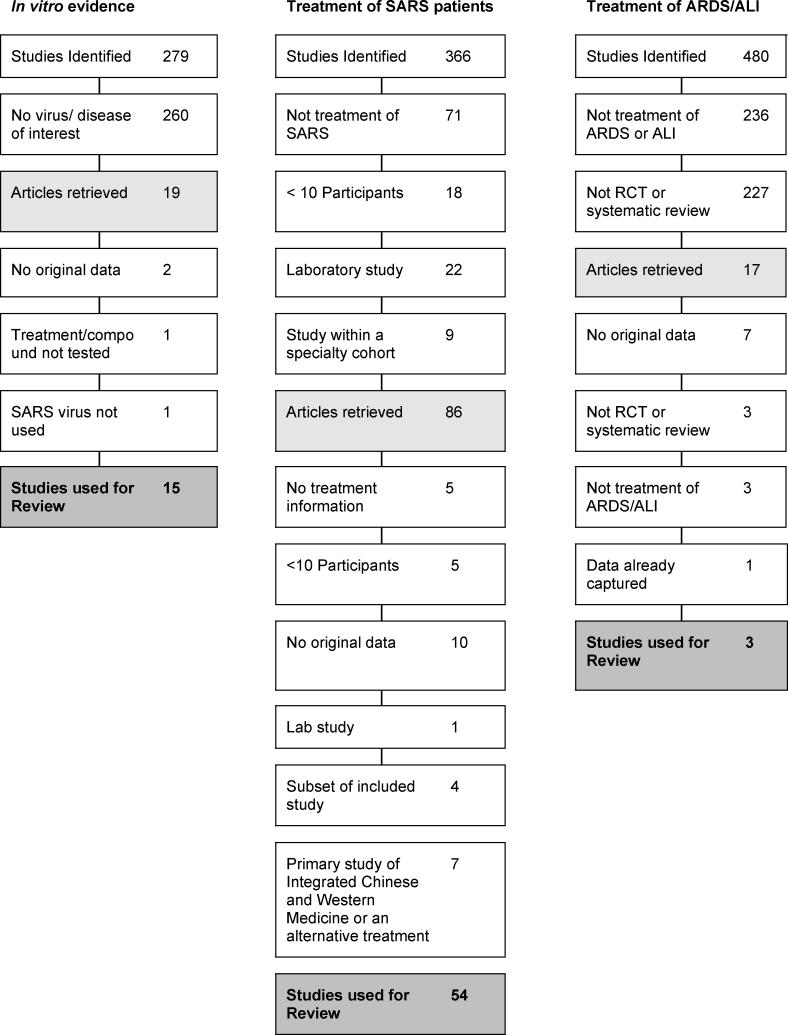
BACKGROUND: The SARS outbreak of 2002-2003 presented clinicians with a new, life-threatening disease for which they had no experience in treating and no research on the effectiveness of treatment options. The World Health Organization (WHO) expert panel on SARS treatment requested a systematic review and comprehensive summary of treatments used for SARS-infected patients in order to guide future treatment and identify priorities for research. METHODS AND FINDINGS: In response to the WHO request we conducted a systematic review of the published literature on ribavirin, corticosteroids, lopinavir and ritonavir (LPV/r), type I interferon (IFN), intravenous immunoglobulin (IVIG), and SARS convalescent plasma from both in vitro studies and in SARS patients. We also searched for clinical trial evidence of treatment for acute respiratory distress syndrome. Sources of data were the literature databases MEDLINE, EMBASE, BIOSIS, and the Cochrane Central Register of Controlled Trials (CENTRAL) up to February 2005. Data from publications were extracted and evidence within studies was classified using predefined criteria. In total, 54 SARS treatment studies, 15 in vitro studies, and three acute respiratory distress syndrome studies met our inclusion criteria. Within in vitro studies, ribavirin, lopinavir, and type I IFN showed inhibition of SARS-CoV in tissue culture. In SARS-infected patient reports on ribavirin, 26 studies were classified as inconclusive, and four showed possible harm. Seven studies of convalescent plasma or IVIG, three of IFN type I, and two of LPV/r were inconclusive. In 29 studies of steroid use, 25 were inconclusive and four were classified as causing possible harm. CONCLUSIONS: Despite an extensive literature reporting on SARS treatments, it was not possible to determine whether treatments benefited patients during the SARS outbreak. Some may have been harmful. Clinical trials should be designed to validate a standard protocol for dosage and timing, and to accrue data in real time during future outbreaks to monitor specific adverse effects and help inform treatment.
Overview
The claims and statistics of this paper haven’t been checked yet.
Free: it reads the open-access text and checks the first 5 claims that cite a source we can check. Create a free account to check every claim.
Integrity signals
Registry
Cites
Statistics
Figures
Verification
Claims the paper makes
The claims and statistics of this paper haven’t been checked yet.
Free: it reads the open-access text and checks the first 5 claims that cite a source we can check. Create a free account to check every claim.
Claims other papers make about this one
Each is checked against this paper’s own text: does it say what the citing paper says it does?
The cited source says what the claim attributes to it.
In the citing paper
“There is no effective treatment to date, 17 and despite promising advances, 18,19 no vaccine has been approved.”
From Severe acute respiratory syndrome (SARS) mathematical models and disease parameters: a systematic review (2025) · cites this paper as [17]
Self-check
Percentages, sums and reported differences re-computed from the paper’s own numbers.
The self-check needs the paper’s full text.
Citations
Cites
Identification of a novel coronavirus in patients with severe acute respiratory syndrome
Drosten, C., Günther, S., Preiser, W., van der Werf, S., Brodt, H.-R., Becker, S., Rabenau, H., Panning, M., Kolesnikova, L., Fouchier, R. A. M., et al. (2003) · New England Journal of Medicine · doi:10.1056/nejmoa030747 · Cited by 4,574 · cited 1×
“The causative organism has been identified as a novel coronavirus (SARS-CoV) [2] [3] [4] .”
BackgroundA Novel Coronavirus Associated with Severe Acute Respiratory Syndrome
Ksiazek, T. G., Erdman, D., Goldsmith, C. S., Zaki, S. R., Peret, T., Emery, S., Tong, S., Urbani, C., Comer, J. A., Lim, W., et al. (2003) · New England Journal of Medicine · doi:10.1056/nejmoa030781 · Cited by 4,344 · cited 2×
“The causative organism has been identified as a novel coronavirus (SARS-CoV) [2] [3] [4] .”
BackgroundMethodCoronavirus as a possible cause of severe acute respiratory syndrome
Peiris, J., Lai, S., Poon, L., Guan, Y., Yam, L., Lim, W., Nicholls, J., Yee, W., Yan, W., Cheung, M., et al. (2003) · The Lancet · doi:10.1016/s0140-6736(03)13077-2 · Cited by 2,915 · cited 1×
“The causative organism has been identified as a novel coronavirus (SARS-CoV) [2] [3] [4] .”
BackgroundA Major Outbreak of Severe Acute Respiratory Syndrome in Hong Kong
Lee, N., Hui, D., Wu, A., Chan, P., Cameron, P., Joynt, G. M., Ahuja, A., Yung, M. Y., Leung, C. B., To, K. F., et al. (2003) · New England Journal of Medicine · doi:10.1056/nejmoa030685 · Cited by 2,628 · cited 1×
“Because the urgency of the international outbreak did not allow time for efficacy studies, physicians in Canada and Hong Kong treated the earliest patients with intravenous ribavirin, based on its broad-spectrum antiviral activity [9,10].”
BackgroundRole of lopinavir/ritonavir in the treatment of SARS: initial virological and clinical findings
Chu, C. M. (2004) · Thorax · doi:10.1136/thorax.2003.012658 · Cited by 1,645 · cited 1×
“When LPV/r was added as an initial treatment to ribavirin and corticosteroid therapy, the death rate was lower than among those who received ribavirin and corticosteroids (1/ [20] .”
BackgroundClinical Features and Short-term Outcomes of 144 Patients With SARS in the Greater Toronto Area
Booth, C. M. (2003) · JAMA · doi:10.1001/jama.289.21.joc30885 · Cited by 1,406 · cited 2×
“Four publications presented evidence of possible harm (14) (15) (16) (17) .”
BackgroundResultThe Severe Acute Respiratory Syndrome
Peiris, J. S. M., Yuen, K. Y., Osterhaus, A. D. M. E., & Stöhr, K. (2003) · New England Journal of Medicine · doi:10.1056/nejmra032498 · Cited by 1,346
Identification of Severe Acute Respiratory Syndrome in Canada
Poutanen, S. M., Low, D. E., Henry, B., Finkelstein, S., Rose, D., Green, K., Tellier, R., Draker, R., Adachi, D., Ayers, M., et al. (2003) · New England Journal of Medicine · doi:10.1056/nejmoa030634 · Cited by 1,132 · cited 1×
“Because the urgency of the international outbreak did not allow time for efficacy studies, physicians in Canada and Hong Kong treated the earliest patients with intravenous ribavirin, based on its broad-spectrum antiviral activity [9,10].”
BackgroundMeduri, G. U., Headley, A. S., Golden, E., Carson, S. J., Umberger, R. A., Kelso, T., & Tolley, E. A. (1998) · JAMA · doi:10.1001/jama.280.2.159 · Cited by 1,008 · cited 2×
“Table S11.”
BackgroundHigh-Dose Corticosteroids in Patients with the Adult Respiratory Distress Syndrome
Bernard, G. R., Luce, J. M., Sprung, C. L., Rinaldo, J. E., Tate, R. M., Sibbald, W. J., Kariman, K., Higgins, S., Bradley, R., Metz, C. A., et al. (1987) · New England Journal of Medicine · doi:10.1056/nejm198712173172504 · Cited by 935 · cited 1×
“In two trials, high-dose methylprednisolone given for approximately 2 d was not effective for early ARDS [ 25 ,26].”
Method
Research works printed but not linked: 30
- Ksiazek, 2003, N Engl J Med, 348, 1953
- Peiris, 2003, Lancet, 361, 1319
- Drosten, 2003, N Engl J Med, 348, 1967
- Peiris, 2003, N Engl J Med, 2003, 2431
- Leung, 2004, Ann Intern Med, 141, 662
- Fowler, 2003, JAMA, 290, 367
- Poutanen, 2003, N Engl J Med, 348, 1995
- Lee, 2003, N Engl J Med, 348, 1986
- Morgenstern, 2005, Biochem Biophys Res Commun, 326, 905
- Chen, 2004, J Clin Virol, 31, 69
- Knowles, 2003, Clin Infect Dis, 37, 1139
- Booth, 2003, JAMA, 289, 2801
- Sung, 2004, Thorax, 59, 414
- Wong, 2003, JAMA, 290, 2663
- Yamamoto, 2004, Biochem Biophys Res Commun, 318, 719
- Chan, 2003, Hong Kong Med J, 9, 399
- Chu, 2004, Thorax, 59, 252
- Lee, 2004, J Clin Virol, 31, 304
- Lee, 2004, Clin Infect Dis, 39, 1247
- Xiao, 2004, Zhonghua Nei Ke Za Zhi, 43, 179
- Li, 2004, Zhonghua Yi Xue Za Zhi, 84, 1348
- Bernard, 1987, N Engl J Med, 317, 1565
- Weigelt, 1985, Arch Surg, 120, 536
- Meduri, 1998, JAMA, 280, 159
- Scagnolari, 2004, Antivir Ther, 9, 1003
- Sainz, 2004, Virology, 329, 11
- Wu, 2003, Zhonghua Nei Ke Za Zhi, 42, 453
- Li, 2003, Zhonghua Er Ke Za Zhi, 41, 574
- Hwang, 2005, Mod Pathol, 18, 1
- Wang, 2003, N Engl J Med, 349, 507
Cited by
Items 101–200 of 1,001
Singh, A. K., Majumdar, S., Singh, R., & Misra, A. (2020) · Diabetes & Metabolic Syndrome: Clinical Research & Reviews · doi:10.1016/j.dsx.2020.06.054 · Cited by 252
“Pathogenesis of ARDS and i showed adverse outcomes with corticosteroid treatment [7,8].”
BackgroundXie, Y., Cao, S., Dong, H., Li, Q., Chen, E., Zhang, W., Yang, L., Fu, S., & Wang, R. (2020) · Journal of Infection · doi:10.1016/j.jinf.2020.03.044 · Cited by 252
Antiviral Potential of Nanoparticles—Can Nanoparticles Fight Against Coronaviruses?
Gurunathan, S., Qasim, M., Choi, Y., Do, J. T., Park, C., Hong, K., Kim, J.-H., & Song, H. (2020) · Nanomaterials · doi:10.3390/nano10091645 · Cited by 248
“Further, interferons (IFNs) seem to be partially effective against CoVs; a combination of IFNs and ribavirin exhibited increased inhibitory activity in vitro when compared to IFNs alone against some CoVs [19,20].”
BackgroundInhibition of SARS–CoV-2 by type I and type III interferons
Felgenhauer, U., Schoen, A., Gad, H. H., Hartmann, R., Schaubmar, A. R., Failing, K., Drosten, C., & Weber, F. (2020) · Journal of Biological Chemistry · doi:10.1074/jbc.ac120.013788 · Cited by 246
The immediate impact of the 2019 novel coronavirus (COVID-19) outbreak on subjective sleep status
Lin, L.-Y., Wang, J., Ou-yang, X.-Y., Miao, Q., Chen, R., Liang, F.-X., Zhang, Y.-P., Tang, Q., & Wang, T. (2021) · Sleep Medicine · doi:10.1016/j.sleep.2020.05.018 · Cited by 245
“COVID-19 has a longer latency and is more contagious than SARS, another coronavirus-related disease [20,21].”
Cyclosporin A inhibits the replication of diverse coronaviruses
de Wilde, A. H., Zevenhoven-Dobbe, J. C., van der Meer, Y., Thiel, V., Narayanan, K., Makino, S., Snijder, E. J., & van Hemert, M. J. (2011) · Journal of General Virology · doi:10.1099/vir.0.034983-0 · Cited by 243
“…of coronavirus enzymes (reviewed by Tong, 2009) and compounds that inhibit replication in cell culture have been described (Kono et al., 2008; te Velthuis et al., 2010b; Vincent et al., 2005), but effective treatment for coronavirus infections is currently unavailable (Stockman et al., 2006).”
Feasibility of Using Convalescent Plasma Immunotherapy for MERS-CoV Infection, Saudi Arabia
Arabi, Y. M., Hajeer, A. H., Luke, T., Raviprakash, K., Balkhy, H., Johani, S., Al-Dawood, A., Al-Qahtani, S., Al-Omari, A., Al-Hameed, F., et al. (2016) · Emerging Infectious Diseases · doi:10.3201/eid2209.151164 · Cited by 244
Ranjbar, K., Moghadami, M., Mirahmadizadeh, A., Fallahi, M. J., Khaloo, V., Shahriarirad, R., Erfani, A., Khodamoradi, Z., & Gholampoor Saadi, M. H. (2021) · BMC Infectious Diseases · doi:10.1186/s12879-021-06045-3 · Cited by 241
Review of Emerging Pharmacotherapy for the Treatment of Coronavirus Disease 2019
Barlow, A., Landolf, K. M., Barlow, B., Yeung, S. Y. A., Heavner, J. J., Claassen, C. W., & Heavner, M. S. (2020) · Pharmacotherapy: The Journal of Human Pharmacology and Drug Therapy · doi:10.1002/phar.2398 · Cited by 240
“The lack of survival benefit was further supported by a systematic review of corticosteroids in patients with SARS but showed an increased risk of psychosis, avascular necrosis, prolonged viremia, and hyperglycemia with corticosteroid treatment.(120) Although severe, potentially life-threatening ARDS can occur, genera…”
BackgroundAlijotas-Reig, J., Esteve-Valverde, E., Belizna, C., Selva-O'Callaghan, A., Pardos-Gea, J., Quintana, A., Mekinian, A., Anunciacion-Llunell, A., & Miró-Mur, F. (2020) · Autoimmunity Reviews · doi:10.1016/j.autrev.2020.102569 · Cited by 235
Dexamethasone for the Treatment of Coronavirus Disease (COVID-19): a Review
Ahmed, M. H., & Hassan, A. (2020) · SN Comprehensive Clinical Medicine · doi:10.1007/s42399-020-00610-8 · Cited by 234
Potential benefits of precise corticosteroids therapy for severe 2019-nCoV pneumonia
Zhou, W., Liu, Y., Tian, D., Wang, C., Wang, S., Cheng, J., Hu, M., Fang, M., & Gao, Y. (2020) · Signal Transduction and Targeted Therapy · doi:10.1038/s41392-020-0127-9 · Cited by 234
Benzotriazole: An overview on its versatile biological behavior
Briguglio, I., Piras, S., Corona, P., Gavini, E., Nieddu, M., Boatto, G., & Carta, A. (2015) · European Journal of Medicinal Chemistry · doi:10.1016/j.ejmech.2014.09.089 · Cited by 229
“It affected almost 8000 patients and cause the death of about 10% of those infected, reaching a high mortality rate [274].”
BackgroundQ&A: The novel coronavirus outbreak causing COVID-19
Fisher, D., & Heymann, D. (2020) · BMC Medicine · doi:10.1186/s12916-020-01533-w · Cited by 226
Broad-spectrum coronavirus antiviral drug discovery
Totura, A. L., & Bavari, S. (2019) · Expert Opinion on Drug Discovery · doi:10.1080/17460441.2019.1581171 · Cited by 218
“as part of treatment regimens for SARS and MERS patients, but meta-analyses of case studies have found limited (if any) efficacy of ribavirin in treating patients with highly pathogenic coronavirus respiratory syndromes [108,109].”
BackgroundPsychological impact on SARS survivors: Critical review of the English language literature.
Gardner, P. J., & Moallef, P. (2015) · Canadian Psychology / Psychologie canadienne · doi:10.1037/a0037973 · Cited by 215
GLUCOCOVID investigators, Corral-Gudino, L., Bahamonde, A., Arnaiz-Revillas, F., Gómez-Barquero, J., Abadía-Otero, J., García-Ibarbia, C., Mora, V., Cerezo-Hernández, A., Hernández, J. L., et al. (2021) · Wiener klinische Wochenschrift · doi:10.1007/s00508-020-01805-8 · Cited by 214
Yuan, J., Zou, R., Zeng, L., Kou, S., Lan, J., Li, X., Liang, Y., Ding, X., Tan, G., Tang, S., et al. (2020) · Inflammation Research · doi:10.1007/s00011-020-01342-0 · Cited by 210
“A couple of therapeutic interventions for coronavirus were investigated during the outbreak of SARS-CoV and MERS-CoV [11, 12] , and combination of ribavirin and interferon has been proved beneficial in patients with SARS-CoV or MERS-CoV infection [13, 14] .”
BackgroundSong, Y., Zhang, M., Yin, L., Wang, K., Zhou, Y., Zhou, M., & Lu, Y. (2020) · International Journal of Antimicrobial Agents · doi:10.1016/j.ijantimicag.2020.106080 · Cited by 204
Coronavirus disease COVID-2019
Romanov, B. K. (2020) · Safety and Risk of Pharmacotherapy · doi:10.30895/2312-7821-2020-8-1-3-8 · Cited by 203
Cytokine storm syndrome in coronavirus disease 2019: A narrative review
Gao, Y. ‐., Xu, G., Wang, B., & Liu, B. ‐. (2021) · Journal of Internal Medicine · doi:10.1111/joim.13144 · Cited by 202
Replication of human coronaviruses SARS-CoV, HCoV-NL63 and HCoV-229E is inhibited by the drug FK506
Carbajo-Lozoya, J., Müller, M. A., Kallies, S., Thiel, V., Drosten, C., & von Brunn, A. (2012) · Virus Research · doi:10.1016/j.virusres.2012.02.002 · Cited by 201
“Until now effective treatment of coronavirus infection in umans is unavailable (Stockman et al., 2006), even though nhibitors of coronavirus enzymes (reviewed by (Tong, 2009a,b) nd compounds inhibiting in vitro replication have been described Abbreviations: EC50, 50% effective inhibitory…”
MethodDexamethasone in the management of covid -19
Johnson, R. M., & Vinetz, J. M. (2020) · BMJ · doi:10.1136/bmj.m2648 · Cited by 200
Comprehensive review of coronavirus disease 2019 (COVID-19)
Chauhan, S. (2020) · Biomedical Journal · doi:10.1016/j.bj.2020.05.023 · Cited by 194
“Studies carried out in previous SARS epidemics have shown that corticosteroids had no impact on mortality but possible harms, including avascular necrosis, psychosis, diabetes, and delayed viral clearance [36].”
BackgroundCOVID-19 revisiting inflammatory pathways of arthritis
Schett, G., Manger, B., Simon, D., & Caporali, R. (2020) · Nature Reviews Rheumatology · doi:10.1038/s41584-020-0451-z · Cited by 191
Cicco, S., Cicco, G., Racanelli, V., & Vacca, A. (2020) · Mediators of Inflammation · doi:10.1155/2020/7527953 · Cited by 189
“One systematic review on SARS-CoV infection found that 25 studies were inconclusive regarding the role of the use of glucocorticoids in addition to standard therapy, while four studies demonstrated that systemic glucocorticoids in SARS patients may cause possible harm [223].”
BackgroundUse of Corticosteroids in Coronavirus Disease 2019 Pneumonia: A Systematic Review of the Literature
Veronese, N., Demurtas, J., Yang, L., Tonelli, R., Barbagallo, M., Lopalco, P., Lagolio, E., Celotto, S., Pizzol, D., Zou, L., et al. (2020) · Frontiers in Medicine · doi:10.3389/fmed.2020.00170 · Cited by 188
“In a meta-analysis of 60 corticosteroid use in patients with SARS, only four studies provided conclusive data, all indicating 61 higher mortality [6].”
BackgroundMethodCOVID-19: Unmasking Emerging SARS-CoV-2 Variants, Vaccines and Therapeutic Strategies
Raman, R., Patel, K. J., & Ranjan, K. (2021) · Biomolecules · doi:10.3390/biom11070993 · Cited by 188
“Due to their immunosuppressive and potent anti-inflammatory effect, glucocorticoids have been widely used to treat COVID-19 related syndromes, like SARS, Middle East respiratory syndrome (MERS), severe influenza and acute respiratory distress syndrome (ARDS) [134–136].”
BackgroundInfluentialCOVID-19: The Potential Treatment of Pulmonary Fibrosis Associated with SARS-CoV-2 Infection
Lechowicz, K., Drożdżal, S., Machaj, F., Rosik, J., Szostak, B., Zegan-Barańska, M., Biernawska, J., Dabrowski, W., Rotter, I., & Kotfis, K. (2020) · Journal of Clinical Medicine · doi:10.3390/jcm9061917 · Cited by 184
“Direct evidence for the use of corticosteroids in COVID-19 is very limited, however previous reviews regarding outcomes in other viral pneumonia provide important clinical information [67,68].”
BackgroundMaternal and perinatal outcomes of pregnant women with SARS‐CoV ‐2 infection
The WAPM (World Association of Perinatal Medicine) Working Group on COVID‐19 (2021) · Ultrasound in Obstetrics & Gynecology · doi:10.1002/uog.23107 · Cited by 184
Algahtani, H., Subahi, A., & Shirah, B. (2016) · Case Reports in Neurological Medicine · doi:10.1155/2016/3502683 · Cited by 176
“In fact, four studies reported harm due to steroid therapy in terms of avascular necrosis and steroid-induced psychosis in SARS-CoV infected patients [18].”
BackgroundCOVID-19 as an Acute Inflammatory Disease
Manjili, R. H., Zarei, M., Habibi, M., & Manjili, M. H. (2020) · The Journal of Immunology · doi:10.4049/jimmunol.2000413 · Cited by 176
“Corticosteroids have been used during the outbreaks of SARS-CoV (87) and MERS-CoV (88) and are being used in combination with other medications in patients with SARS-CoV-2 infection (10).”
MethodGalmés, S., Serra, F., & Palou, A. (2020) · Nutrients · doi:10.3390/nu12092738 · Cited by 175
“However, coronaviruses similar to SARS-CoV-2 can suppress the host IFN-I-based antiviral response as part of their infection mechanism [68].”
BackgroundImpact of Corticosteroids in Coronavirus Disease 2019 Outcomes
Cano, E. J., Fonseca Fuentes, X., Corsini Campioli, C., O’Horo, J. C., Abu Saleh, O., Odeyemi, Y., Yadav, H., & Temesgen, Z. (2021) · Chest · doi:10.1016/j.chest.2020.10.054 · Cited by 175
Zhao, X., Jiang, Y., Zhao, Y., Xi, H., Liu, C., Qu, F., & Feng, X. (2020) · European Journal of Clinical Microbiology & Infectious Diseases · doi:10.1007/s10096-020-03897-6 · Cited by 173
“[70] .”
Using digital twins in viral infection
Laubenbacher, R., Sluka, J. P., & Glazier, J. A. (2021) · Science · doi:10.1126/science.abf3370 · Cited by 169
Kang, S., Peng, W., Zhu, Y., Lu, S., Zhou, M., Lin, W., Wu, W., Huang, S., Jiang, L., Luo, X., et al. (2020) · International Journal of Antimicrobial Agents · doi:10.1016/j.ijantimicag.2020.105950 · Cited by 168
Corticosteroid treatment in severe COVID-19 patients with acute respiratory distress syndrome
Liu, J., Zhang, S., Dong, X., Li, Z., Xu, Q., Feng, H., Cai, J., Huang, S., Guo, J., Zhang, L., et al. (2020) · Journal of Clinical Investigation · doi:10.1172/jci140617 · Cited by 166
“In a systematic review including 29 studies with corticosteroid therapy for SARS infection, 25 studies were inconclusive and 4 studies indicated harmful results (10).”
BackgroundIdentification of New Respiratory Viruses in the New Millennium
Berry, M., Gamieldien, J., & Fielding, B. (2015) · Viruses · doi:10.3390/v7030996 · Cited by 162
Treatment for emerging viruses: Convalescent plasma and COVID-19
Brown, B. L., & McCullough, J. (2020) · Transfusion and Apheresis Science · doi:10.1016/j.transci.2020.102790 · Cited by 161
“Seven studies of convalescent plasma or intravenous immunoglobulin for SARS were inconclusive [20].”
Severe Acute Respiratory Syndrome (SARS)
Cleri, D. J., Ricketti, A. J., & Vernaleo, J. R. (2010) · Infectious Disease Clinics of North America · doi:10.1016/j.idc.2009.10.005 · Cited by 159
“Some reports demonstrate ribavirin antiviral activity and synergy with type I IFN (IFN-b1a or leukocytic IFN-a).(8) Subsequent reports indicated that ribavirin and mizoribine (both inosine-50 monophosphate dehydrogenase inhibitors) had poor in vitro antiviral activity and were associated with frequent toxicity.”
BackgroundViral Pandemics of the Last Four Decades: Pathophysiology, Health Impacts and Perspectives
Roychoudhury, S., Das, A., Sengupta, P., Dutta, S., Roychoudhury, S., Choudhury, A. P., Ahmed, A. B. F., Bhattacharjee, S., & Slama, P. (2020) · International Journal of Environmental Research and Public Health · doi:10.3390/ijerph17249411 · Cited by 159
The anti-viral facet of anti-rheumatic drugs: Lessons from COVID-19
Perricone, C., Triggianese, P., Bartoloni, E., Cafaro, G., Bonifacio, A. F., Bursi, R., Perricone, R., & Gerli, R. (2020) · Journal of Autoimmunity · doi:10.1016/j.jaut.2020.102468 · Cited by 159
“Equally, the use of GCs seemed to protract SARS-CoV viral cl earance [51-53].”
MethodKalil, A. C., Mehta, A. K., Patterson, T. F., Erdmann, N., Gomez, C. A., Jain, M. K., Wolfe, C. R., Ruiz-Palacios, G. M., Kline, S., Regalado Pineda, J., et al. (2021) · The Lancet Respiratory Medicine · doi:10.1016/s2213-2600(21)00384-2 · Cited by 158
“12 Type 1 IFN can inhibit SARS-CoV-1, Middle East respiratory syndrome (MERS) coronavirus, and SARS-CoV-2 replication, 4,8,13,14 and recent data published in 2020 suggest that SARS-CoV-2 could be more sensitive to intrinsic IFN than SARS-CoV-1.”
Quispe-Laime, A. M., Bracco, J. D., Barberio, P. A., Campagne, C. G., Rolfo, V. E., Umberger, R. A., & Meduri, G. U. (2009) · Intensive Care Medicine · doi:10.1007/s00134-009-1727-6 · Cited by 165
“late), dosage (hydrocortisone equivalent 300–6,000 mg/day), and duration (2–36 days) of treatment made any assessment of efficacy unfeasible [20].”
BackgroundDagens, A., Sigfrid, L., Cai, E., Lipworth, S., Cheng, V., Harris, E., Bannister, P., Rigby, I., & Horby, P. (2020) · BMJ · doi:10.1136/bmj.m1936 · Cited by 156
COVID-19: Progress in diagnostics, therapy and vaccination
Liu, X., Liu, C., Liu, G., Luo, W., & Xia, N. (2020) · Theranostics · doi:10.7150/thno.47987 · Cited by 172
“There are numerous examples in which convalescent plasma therapy has been successfully applied to treat patients, as follows: SARS; MERS; H1N1 (pandemic 2009 influenza A); H5N1 (avian influenza A); several hemorrhagic fevers, such as Ebola; and other viral infections [116-120].”
BackgroundRespiratory Viruses Other than Influenza Virus: Impact and Therapeutic Advances
Nichols, W. G., Peck Campbell, A. J., & Boeckh, M. (2008) · Clinical Microbiology Reviews · doi:10.1128/cmr.00045-07 · Cited by 155
“Data from clinical studies during the SARS outbreak using either convalescent plasma or intravenous immune globulin were inconclusive with regard to a beneficial effect (33, 84, 195, 200, 221).”
BackgroundMethodCOVID‐19: Lessons from SARS and MERS
Park, M., Thwaites, R. S., & Openshaw, P. (2020) · European Journal of Immunology · doi:10.1002/eji.202070035 · Cited by 180
Clinical trial analysis of 2019‐nCoV therapy registered in China
Zhang, Q., Wang, Y., Qi, C., Shen, L., & Li, J. (2020) · Journal of Medical Virology · doi:10.1002/jmv.25733 · Cited by 159
Interferon and cytokine responses to SARS-coronavirus infection
Thiel, V., & Weber, F. (2008) · Cytokine & Growth Factor Reviews · doi:10.1016/j.cytogfr.2008.01.001 · Cited by 153
“IFNs may also alleviate symptoms in SARS patients, but case numbers are too low for definite conclusions [96,97].”
BackgroundPulmonary rehabilitation for patients with coronavirus disease 2019 (COVID‐19)
Yang, L., & Yang, T. (2020) · Chronic Diseases and Translational Medicine · doi:10.1016/j.cdtm.2020.05.002 · Cited by 153
“11,12 However, patients with COVID-19 treated with IFN-a 2b in combination with Ribavirin have no significant improvement in the risk of death compared to those treated with IFN-a 2b alone.”
Flattening the COVID-19 Curve With Natural Killer Cell Based Immunotherapies
Market, M., Angka, L., Martel, A. B., Bastin, D. J., Olanubi, O., Tennakoon, G., Boucher, D. M., Ng, J., Ardolino, M., & Auer, R. C. (2020) · Frontiers in Immunology · doi:10.3389/fimmu.2020.01512 · Cited by 166
Momattin, H., Mohammed, K., Zumla, A. I., Memish, Z. A., & Al‐Tawfiq, J. A. (2013) · International Journal of Infectious Diseases · doi:10.1016/j.ijid.2013.07.002 · Cited by 169
“The clinical experience from SARS suggests that a number of interventions including ribavirin with and without corticosteroids, interferon alfa with corticosteroids, ribavirin with lopinavir and ritonavir, and convalescent plasma may improve the outcome in patients but the data are not conclusive.(5)”
BackgroundHark back: Passive immunotherapy for influenza and other serious infections
Luke, T. C., Casadevall, A., Watowich, S. J., Hoffman, S. L., Beigel, J. H., & Burgess, T. H. (2010) · Critical Care Medicine · doi:10.1097/ccm.0b013e3181d44c1e · Cited by 150
“Although the authors indicated that passive immunotherapy was beneficial in reducing morbidity and mortality rates, a systematic review categorized the studies as inconclusive because of the confounding effects of varying cotreatments (some possibly harmful), comorbidities, and other factors among the studies (86).”
BackgroundChinese herbs combined with Western medicine for severe acute respiratory syndrome (SARS)
Liu, X., Zhang, M., He, L., & Li, Y. (2012) · Cochrane Database of Systematic Reviews · doi:10.1002/14651858.cd004882.pub3 · Cited by 149
Ashokka, B., Loh, M.-H., Tan, C. H., Su, L., Young, B. E., Lye, D. C., Biswas, A., Illanes, S. E., & Choolani, M. A. (2020) · American Journal of Obstetrics and Gynecology · doi:10.1016/j.ajog.2020.04.005 · Cited by 203
“In the first randomized controlled trial on COVID-19 treatment, 400-mg/100-mg lopinavir-ritonavir twice daily was found to be similar to the standard of care in time to clinical improvement, mortality, and viral shedding.(52) This may be due to differences in viral proteases between HIVand coronavirus.”
MethodCovid-19: Perspectives on Innate Immune Evasion
Taefehshokr, N., Taefehshokr, S., Hemmat, N., & Heit, B. (2020) · Frontiers in Immunology · doi:10.3389/fimmu.2020.580641 · Cited by 165
IL-6 Inhibitors in the Treatment of Serious COVID-19: A Promising Therapy?
Atal, S., & Fatima, Z. (2020) · Pharmaceutical Medicine · doi:10.1007/s40290-020-00342-z · Cited by 144
Metabolic syndrome and COVID-19: An update on the associated comorbidities and proposed therapies
Costa, F. F., Rosário, W. R., Ribeiro Farias, A. C., de Souza, R. G., Duarte Gondim, R. S., & Barroso, W. A. (2020) · Diabetes & Metabolic Syndrome: Clinical Research & Reviews · doi:10.1016/j.dsx.2020.06.016 · Cited by 144
A compendium answering 150 questions on COVID‐19 and SARS‐CoV‐2
Riggioni, C., Comberiati, P., Giovannini, M., Agache, I. O., Akdiş, M., Alves‐Correia, M., Antó, J. M., Arcolacı, A., Azkur, A. K., Azkur, D., et al. (2020) · Allergy · doi:10.1111/all.14449 · Cited by 148
Sultana, J., Cutroneo, P. M., Crisafulli, S., Puglisi, G., Caramori, G., & Trifirò, G. (2020) · Drug Safety · doi:10.1007/s40264-020-00976-7 · Cited by 167
COVID-19 and the Kidneys: An Update
Benedetti, C., Waldman, M. A., Zaza, G., Riella, L. V., & Cravedi, P. (2020) · Frontiers in Medicine · doi:10.3389/fmed.2020.00423 · Cited by 157
Day, C. W., Baric, R., Cai, S. X., Frieman, M., Kumaki, Y., Morrey, J. D., Smee, D. F., & Barnard, D. L. (2009) · Virology · doi:10.1016/j.virol.2009.09.023 · Cited by 140
“In 2006, systematic review and comprehensive summary of treatments used for SARS patients found that 26 studies with ribavirin were inconclusive and that four showed possible harm (Stockman, Bellamy, and Garner, 2006) .”
BackgroundMethodMolecular strategies to inhibit the replication of RNA viruses
Leyssen, P., Clercq, E. D., & Neyts, J. H. (2008) · Antiviral Research · doi:10.1016/j.antiviral.2008.01.004 · Cited by 140
“Placebocontrolled studies, may be for ethical reasons impossible to perform in patients with CCHF. Despite this shortcoming, postexposure prophylaxis and treatment with ribavirin in every stage of the disease is recommended Ribavirin has also been used without much success as a first-line-of-defence against emerging v…”
BackgroundEpidemiology, genome, and clinical features of the pandemic SARS-CoV-2: a recent view
Abduljalil, J. M. A., & Abduljalil, B. (2020) · New Microbes and New Infections · doi:10.1016/j.nmni.2020.100672 · Cited by 165
“Sixthly, the initial administration of corticosteroids during the early stage of the SARS epidemic was justi fi ed because corticosteroids mitigated the in-fl ammatory response, but it was subsequently halted as a result of the delay in virus clearance [61].”
SARS-CoV-2 and COVID-19: From the Bench to the Bedside
Romagnoli, S., Peris, A., Gaudio, A. R. D., & Geppetti, P. (2020) · Physiological Reviews · doi:10.1152/physrev.00020.2020 · Cited by 158
“A systematic review of clinical experience with ribavirin in the treatment of SARS did not show conclusive results, and possible harm due to adverse effects, such as hematologic complications (hemolytic anemia in more than 60% of patients) and liver toxicity, has emerged (60).”
BackgroundChemistry and Biology of SARS-CoV-2
Dömling, A., & Gao, L. (2020) · Chem · doi:10.1016/j.chempr.2020.04.023 · Cited by 137
The emergence of the Middle East Respiratory Syndrome coronavirus
Milne-Price, S., Miazgowicz, K. L., & Munster, V. J. (2014) · Pathogens and Disease · doi:10.1111/2049-632x.12166 · Cited by 153
“Type-I IFN regimens for SARS-CoV patients were sometimes used as part of a multi-drug regimen, and one study of 22 SARS-CoV patients reported more rapid improvement of radiographic lung pathologies and better oxygenation in patients treated with IFN-a1 (Loutfy et al., 2003; Stockman et al., 2006; Cheng et al., 2013).”
BackgroundMethodInfluentialMERS-CoV spike protein: Targets for vaccines and therapeutics
Wang, Q., Wong, G., Lu, G., Yan, J., & Gao, G. F. (2016) · Antiviral Research · doi:10.1016/j.antiviral.2016.07.015 · Cited by 134
“evaluate the effectiveness of combination treatment with IFN-a2b and ribavirin, which are used to treat SARS patients (Stockman et al., 2006), and demonstrate anti-MERS-CoV effects in vitro (Falzarano et al.”
MethodNițulescu, G. M., Păunescu, H., Moschos, S. A., Petrakis, D., Nițulescu, G., Ion, D., Spandidos, D. A., Νikolouzakis, Τ. Κ., Drakoulis, N., & Tsatsakis, A. M. (2020) · International Journal of Molecular Medicine · doi:10.3892/ijmm.2020.4608 · Cited by 141
“A comprehensive evaluation of the therapies tested in the SARS‑CoV outbreak found two studies reporting IFN‑ α therapies in combination with steroids and/or ribavirin, without a significant difference in the clinical outcome when compared to other therapies used (140).”
The Role of Type I Interferons in the Pathogenesis and Treatment of COVID-19
Schreiber, G. (2020) · Frontiers in Immunology · doi:10.3389/fimmu.2020.595739 · Cited by 155
“While IFNa and b were efficient in vitro and in certain animal models, their success in humans was less convincing [for review see, (71, 72)].”
BackgroundPlasma therapy against infectious pathogens, as of yesterday, today and tomorrow
Garraud, O., Heshmati, F., Pozzetto, B., Lefrère, F., Girot, R., Saillol, A., & Laperche, S. (2016) · Transfusion Clinique et Biologique · doi:10.1016/j.tracli.2015.12.003 · Cited by 130
“All released publications claimed that this therapy was followed by a drop of viral load and an improvement of patient symptoms [32] [33] [34] [35] [36] [37] [38] .”
BackgroundKim, H., Shin, H., Park, H., Kim, Y., Yun, Y. G., Park, S., Shin, H., & Kim, K. H. (2007) · Journal of Clinical Virology · doi:10.1016/j.jcv.2007.10.011 · Cited by 129
“Since then, several anti-SARS agents have been tested for coronavirus-specific therapy; however, an effective SARS antiviral therapy has not yet been established (Groneberg et al., 2005; Haagmans and Osterhaus, 2006; Stockman et al., 2006) .”
BackgroundInfluentialZhang, J., Yu, M., Tong, S., Liu, L.-Y., & Tang, L.-V. (2020) · Journal of Clinical Virology · doi:10.1016/j.jcv.2020.104392 · Cited by 148
“However, current evidence in patients with SARS and MERS suggests the significant effect of corticosteroids on mortality [22, 23].”
BackgroundAdjunct Immunotherapies for the Management of Severely Ill COVID-19 Patients
Bonam, S. R., Kaveri, S. V., Sakuntabhai, A., Gilardin, L., & Bayry, J. (2020) · Cell Reports Medicine · doi:10.1016/j.xcrm.2020.100016 · Cited by 135
“Ribavirin, however, did not show benefits for MERS-CoV and SARS-CoV and was associated with severe side effects, like hemolytic anemia and liver dysfunction.(27,32) The window of treatment is critical with antiviral drugs, and they need to be used early in a disease.”
Geng, Y., Wei, Z.-Y., Qian, H., Huang, J., Lodato, R. F., & Castriotta, R. J. (2020) · Cardiovascular Pathology · doi:10.1016/j.carpath.2020.107228 · Cited by 141
Khadke, S., Ahmed, N., Ahmed, N., Ratts, R., Raju, S., Gallogly, M. M., Lima, M. J. G. D., & Sohail, M. R. (2020) · Virology Journal · doi:10.1186/s12985-020-01415-w · Cited by 140
Immunoglobulins in the treatment of COVID-19 infection: Proceed with caution!
Nguyen, A. A., Habiballah, S. B., Platt, C. D., Geha, R. S., Chou, J. S., & McDonald, D. R. (2020) · Clinical Immunology · doi:10.1016/j.clim.2020.108459 · Cited by 137
Viral Pandemics in the Past Two Decades
Bhadoria, P., Gupta, G., & Agarwal, A. (2021) · Journal of Family Medicine and Primary Care · doi:10.4103/jfmpc.jfmpc_2071_20 · Cited by 135
“Preventive measures such as immediate isolation of confirmed cases, wearing protective gears, barriers by medical practitioners during handling of patients helped to control further spread of disease.[6] Since 2004, no more cases of SARS CoV-1 have been reported.”
BackgroundMorse, J. S., Lalonde, T. J., Xu, S., & Liu, W. R. (2020) · ChemRxiv · doi:10.26434/chemrxiv.11728983 · Cited by 126
Shum, K. T., & Tanner, J. A. (2008) · ChemBioChem · doi:10.1002/cbic.200800491 · Cited by 125
Pros and cons of corticosteroid therapy for COVID-19 patients
Mattos-Silva, P., Felix, N. S., Silva, P. L., Robba, C., Battaglini, D., Pelosi, P. P., Rocco, P. R. M., & Cruz, F. F. (2020) · Respiratory Physiology & Neurobiology · doi:10.1016/j.resp.2020.103492 · Cited by 126
“Among the 29 evaluated studies, 25 were inconclusive and four concluded that steroids should not be used in SARS-CoV-1 infection, since they were associated with increased mortality (Stockman et al., 2006).”
Fodor, A., Tiperciuc, B., Login, C., Orasan, O. H., Lazăr, A.-L., Buchman, C., Hanghicel, P., Sitar-Tăut, A., Suharoschi, R., Vulturar, R., et al. (2021) · Oxidative Medicine and Cellular Longevity · doi:10.1155/2021/8671713 · Cited by 139
“These results can be explained by the limited number of patients included and the heterogeneity of the studies, by the different inhibition mechanisms of the IFN signaling pathway used by the two viruses, as well as by the difficulty in assessing whether the clinical benefit observed was due to IFN or to the drugs wit…”
ResultMERS coronavirus outbreak: Implications for emerging viral infections
Al-Omari, A., Rabaan, A. A., Salih, S., Al-Tawfiq, J. A., & Memish, Z. A. (2019) · Diagnostic Microbiology and Infectious Disease · doi:10.1016/j.diagmicrobio.2018.10.011 · Cited by 122
“Early treatment (within 4–5 days of symptoms onset) with convalescent plasma (or hyperimmune IV immunoglobulin (HVIG) from plasma of convalescent donors) has been associated with decreased viral load and reduced mortality for influenza and SARS-CoV infection, although the quality of studies for SARS-CoV has been uneve…”
Role of interferon therapy in severe COVID-19: the COVIFERON randomized controlled trial
Darazam, I. A., Shokouhi, S., Pourhoseingholi, M. A., Irvani, S. S. N., Mokhtari, M., Shabani, M., Amirdosara, M., Torabinavid, P., Golmohammadi, M., Hashemi, S., et al. (2021) · Scientific Reports · doi:10.1038/s41598-021-86859-y · Cited by 133
Repurposing Drugs, Ongoing Vaccine, and New Therapeutic Development Initiatives Against COVID-19
Saha, R. P., Sharma, A. R., Singh, M. K., Samanta, S., Bhakta, S., Mandal, S., Bhattacharya, M., Lee, S. S., & Chakraborty, C. (2020) · Frontiers in Pharmacology · doi:10.3389/fphar.2020.01258 · Cited by 124
Wohlford-Lenane, C., Meyerholz, D. K., Perlman, S. M., Zhou, H., Tran, D., Selsted, M. E., & McCray, P. B. (2009) · Journal of Virology · doi:10.1128/jvi.01363-09 · Cited by 123
“laxis and treatment in vitro and in various animal models (reviewed in references 9 and 32), including vaccines (5, 13, 14), passive immunization (33, 36), alpha interferon (1, 4, 20), RNA interference (10, 18), protease inhibitors (41), recombinant angiotensin converting enzyme 2 (16), angiotensin converting enzyme i…”
BackgroundTherapeutic targets and interventional strategies in COVID-19: mechanisms and clinical studies
Zhou, Y., Xie, Y., Tang, L., Pu, D., Zhu, Y., Liu, J., & Ma, X. (2021) · Signal Transduction and Targeted Therapy · doi:10.1038/s41392-021-00733-x · Cited by 128
The yin and yang of viruses and interferons
Wang, B. X., & Fish, E. N. (2012) · Trends in Immunology · doi:10.1016/j.it.2012.01.004 · Cited by 116
Drugs and the renin-angiotensin system in covid-19
Aronson, J. K., & Ferner, R. E. (2020) · BMJ · doi:10.1136/bmj.m1313 · Cited by 115
Alluwaimi, A. M., Alshubaith, I. H., Al-Ali, A. M., & Abohelaika, S. (2020) · Frontiers in Veterinary Science · doi:10.3389/fvets.2020.582287 · Cited by 133
Hypertension and Diabetes Delay the Viral Clearance in COVID-19 PatientsPreprint
Chen, X., Hu, W., Ling, J., Mo, P., Zhang, Y., Jiang, Q., Ma, Z., Cao, Q., Deng, L., Song, S., et al. (2020) · medRxiv · doi:10.1101/2020.03.22.20040774 · Cited by 139
“The usage 173 of cortisone had unexpectedly a negative effect on the process of viral clearance, although 174 cortisone was commonly used in the SARS patients [39].”
MethodHu, T., Zhang, Y. L., Li, L., Wang, K., Chen, S., Chen, J., Ding, J., Jiang, H., & Shen, X. (2009) · Virology · doi:10.1016/j.virol.2009.03.034 · Cited by 108
Berry, J. D., Hay, K., Rini, J. M., Yu, M., Wang, L., Plummer, F. A., Corbett, C. R., & Andonov, A. (2010) · mAbs · doi:10.4161/mabs.2.1.10788 · Cited by 111
“During the SARS epidemic, hyperimmune sera from convalescent patients were used as treatment with no adverse side effects.(31) An assessment of the efficacy of this treatment is hard to complete due to the small sample numbers available, though it did seem to shorten hospitalisation time.”
MethodImmune dysregulation and system pathology in COVID-19
Jamal, M., Bangash, H. I., Habiba, M., Lei, Y., Xie, T., Sun, J., Wei, Z., Hong, Z., Shao, L., & Zhang, Q. (2021) · Virulence · doi:10.1080/21505594.2021.1898790 · Cited by 127
Xue, Y., Liu, C., Andrews, G., Wang, J., & Ge, Y. (2022) · Nano Convergence · doi:10.1186/s40580-022-00307-9 · Cited by 115
Singh, S., Sharma, P. C., Pal, N., Sarma, D. K., Tiwari, R. R., & Kumar, M. (2024) · ACS Infectious Diseases · doi:10.1021/acsinfecdis.3c00625 · Cited by 157
Treatment Options for COVID-19: A Review
Ali, M. J., Hanif, M., Haider, M. A., Ahmed, M. U., Sundas, F., Hirani, A., Khan, I. A., Anis, K., & Karim, A. H. (2020) · Frontiers in Medicine · doi:10.3389/fmed.2020.00480 · Cited by 123
Metadata
- Authors
- Stockman, L. J., Bellamy, R., & Garner, P.
- Affiliations
- Centers for Disease Control and Prevention (US)
- James Cook University Hospital (GB)
- Liverpool School of Tropical Medicine (GB)
- Corresponding author
- Stockman, Lauren J
- ORCID
- Garner, Paul
- Venue
- PLoS Medicine
- Publisher
- Public Library of Science (PLoS)
- Published
- 2006-09-12
- Volume
- 3
- Issue
- 9
- Pages
- e343
- ISSN
- 1549-1277 (ISSN-L)
- 1549-1676
- PMC
- PMC1564166
- OpenAlex
- W2054076340
- Semantic Scholar
- 1fabf8b5ddd4560d1ce7431b19642ab0e29847cc
- Cited by
- 1,217
- References
- 31
- Citations by year
- 2026: 3 · 2025: 9 · 2024: 34 · 2023: 58 · 2022: 92 · 2021: 254 · 2020: 579 · 2019: 10 · 2018: 3 · 2017: 9 · 2016: 28 · 2015: 16 · 2014: 20 · 2013: 19 · 2012: 8
- FWCI
- 1.94
- Type
- journal article
- Language
- en
- Open access
- gold
- doi.org
- Licence
- Locations
- PLoS Medicine (publishedVersion, public-domain)
- Europe PMC (PubMed Central) (publishedVersion, public-domain)
- PubMed (publishedVersion)
- RePEc: Research Papers in Economics (publishedVersion)
- LSTM Online Archive (Liverpool School of Tropical Medicine) (acceptedVersion)
- DOAJ (DOAJ: Directory of Open Access Journals) (submittedVersion, cc-by-sa)
- Figshare (submittedVersion, cc-by)
- Funders
- Department for International Development
- Centers for Disease Control and Prevention
- Topics
- Health Sciences › Medicine › Infectious Diseases › SARS-CoV-2 and COVID-19 Research
- Health Sciences › Medicine › Infectious Diseases › COVID-19 Clinical Research Studies
- Health Sciences › Medicine › Infectious Diseases › Viral Infections and Outbreaks Research
- Keywords
- SARS, SARS-CoV, antiviral therapy, ribavirin, corticosteroids, type I interferon, intravenous immunoglobulin, convalescent plasma, acute respiratory distress syndrome, treatment efficacy, adverse effects, clinical trial design
- MeSH terms
- Disease Outbreaks, Humans, Severe Acute Respiratory Syndrome, Severe acute respiratory syndrome-related coronavirus
About these checks
Registry, retraction, Cites and statistics results are computed, not judged, with one exception: a printed reference that no index lists is read once by a model before it counts as a citation error. Claims are extracted by a model and kept only when their quote appears verbatim in the text; each cited source is then checked, with a model’s help, for whether it says what the claim relies on. Those verdicts can be wrong — read the claim’s quote and the cited source before relying on one.
Statistics and arithmetic are recomputed, not judged.
Confidence bands are shown only for fields calibrated on our annotated test set. None is calibrated yet, so no band is shown.
What counts as a claim ›How we measure confidence ›How we check this ›
Are you an author, or do you see a problem with this page? Request a review
Data sources
Bibliographic data: Semantic Scholar, OpenAlex, Crossref.
Contains information from the Semantic Scholar Academic Graph Datasets, made available under the ODC Attribution License (ODC-BY 1.0).
Semantic Scholar’s data is described in: Kinney, R., et al. (2023). The Semantic Scholar Open Data Platform. arXiv:2301.10140.
