

SARS: Systematic Review of Treatment Effects
Open accessThe DOI matches its Crossref record; 31 of the 31 references it cites were found in a registry or an index.
Abstract
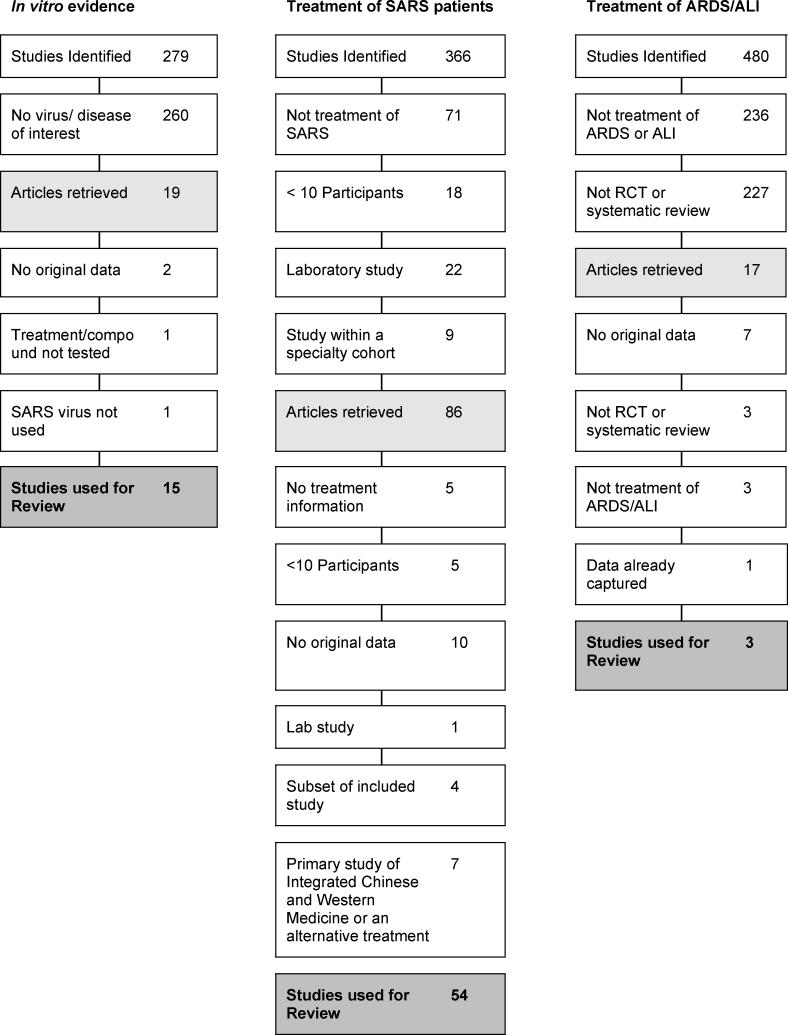
BACKGROUND: The SARS outbreak of 2002-2003 presented clinicians with a new, life-threatening disease for which they had no experience in treating and no research on the effectiveness of treatment options. The World Health Organization (WHO) expert panel on SARS treatment requested a systematic review and comprehensive summary of treatments used for SARS-infected patients in order to guide future treatment and identify priorities for research. METHODS AND FINDINGS: In response to the WHO request we conducted a systematic review of the published literature on ribavirin, corticosteroids, lopinavir and ritonavir (LPV/r), type I interferon (IFN), intravenous immunoglobulin (IVIG), and SARS convalescent plasma from both in vitro studies and in SARS patients. We also searched for clinical trial evidence of treatment for acute respiratory distress syndrome. Sources of data were the literature databases MEDLINE, EMBASE, BIOSIS, and the Cochrane Central Register of Controlled Trials (CENTRAL) up to February 2005. Data from publications were extracted and evidence within studies was classified using predefined criteria. In total, 54 SARS treatment studies, 15 in vitro studies, and three acute respiratory distress syndrome studies met our inclusion criteria. Within in vitro studies, ribavirin, lopinavir, and type I IFN showed inhibition of SARS-CoV in tissue culture. In SARS-infected patient reports on ribavirin, 26 studies were classified as inconclusive, and four showed possible harm. Seven studies of convalescent plasma or IVIG, three of IFN type I, and two of LPV/r were inconclusive. In 29 studies of steroid use, 25 were inconclusive and four were classified as causing possible harm. CONCLUSIONS: Despite an extensive literature reporting on SARS treatments, it was not possible to determine whether treatments benefited patients during the SARS outbreak. Some may have been harmful. Clinical trials should be designed to validate a standard protocol for dosage and timing, and to accrue data in real time during future outbreaks to monitor specific adverse effects and help inform treatment.
Overview
The claims and statistics of this paper haven’t been checked yet.
Free: it reads the open-access text and checks the first 5 claims that cite a source we can check. Create a free account to check every claim.
Integrity signals
Registry
Cites
Statistics
Figures
Verification
Claims the paper makes
The claims and statistics of this paper haven’t been checked yet.
Free: it reads the open-access text and checks the first 5 claims that cite a source we can check. Create a free account to check every claim.
Claims other papers make about this one
Each is checked against this paper’s own text: does it say what the citing paper says it does?
The cited source says what the claim attributes to it.
In the citing paper
“There is no effective treatment to date, 17 and despite promising advances, 18,19 no vaccine has been approved.”
From Severe acute respiratory syndrome (SARS) mathematical models and disease parameters: a systematic review (2025) · cites this paper as [17]
Self-check
Percentages, sums and reported differences re-computed from the paper’s own numbers.
The self-check needs the paper’s full text.
Citations
Cites
Identification of a novel coronavirus in patients with severe acute respiratory syndrome
Drosten, C., Günther, S., Preiser, W., van der Werf, S., Brodt, H.-R., Becker, S., Rabenau, H., Panning, M., Kolesnikova, L., Fouchier, R. A. M., et al. (2003) · New England Journal of Medicine · doi:10.1056/nejmoa030747 · Cited by 4,574 · cited 1×
“The causative organism has been identified as a novel coronavirus (SARS-CoV) [2] [3] [4] .”
BackgroundA Novel Coronavirus Associated with Severe Acute Respiratory Syndrome
Ksiazek, T. G., Erdman, D., Goldsmith, C. S., Zaki, S. R., Peret, T., Emery, S., Tong, S., Urbani, C., Comer, J. A., Lim, W., et al. (2003) · New England Journal of Medicine · doi:10.1056/nejmoa030781 · Cited by 4,344 · cited 2×
“The causative organism has been identified as a novel coronavirus (SARS-CoV) [2] [3] [4] .”
BackgroundMethodCoronavirus as a possible cause of severe acute respiratory syndrome
Peiris, J., Lai, S., Poon, L., Guan, Y., Yam, L., Lim, W., Nicholls, J., Yee, W., Yan, W., Cheung, M., et al. (2003) · The Lancet · doi:10.1016/s0140-6736(03)13077-2 · Cited by 2,915 · cited 1×
“The causative organism has been identified as a novel coronavirus (SARS-CoV) [2] [3] [4] .”
BackgroundA Major Outbreak of Severe Acute Respiratory Syndrome in Hong Kong
Lee, N., Hui, D., Wu, A., Chan, P., Cameron, P., Joynt, G. M., Ahuja, A., Yung, M. Y., Leung, C. B., To, K. F., et al. (2003) · New England Journal of Medicine · doi:10.1056/nejmoa030685 · Cited by 2,628 · cited 1×
“Because the urgency of the international outbreak did not allow time for efficacy studies, physicians in Canada and Hong Kong treated the earliest patients with intravenous ribavirin, based on its broad-spectrum antiviral activity [9,10].”
BackgroundRole of lopinavir/ritonavir in the treatment of SARS: initial virological and clinical findings
Chu, C. M. (2004) · Thorax · doi:10.1136/thorax.2003.012658 · Cited by 1,645 · cited 1×
“When LPV/r was added as an initial treatment to ribavirin and corticosteroid therapy, the death rate was lower than among those who received ribavirin and corticosteroids (1/ [20] .”
BackgroundClinical Features and Short-term Outcomes of 144 Patients With SARS in the Greater Toronto Area
Booth, C. M. (2003) · JAMA · doi:10.1001/jama.289.21.joc30885 · Cited by 1,406 · cited 2×
“Four publications presented evidence of possible harm (14) (15) (16) (17) .”
BackgroundResultThe Severe Acute Respiratory Syndrome
Peiris, J. S. M., Yuen, K. Y., Osterhaus, A. D. M. E., & Stöhr, K. (2003) · New England Journal of Medicine · doi:10.1056/nejmra032498 · Cited by 1,346
Identification of Severe Acute Respiratory Syndrome in Canada
Poutanen, S. M., Low, D. E., Henry, B., Finkelstein, S., Rose, D., Green, K., Tellier, R., Draker, R., Adachi, D., Ayers, M., et al. (2003) · New England Journal of Medicine · doi:10.1056/nejmoa030634 · Cited by 1,132 · cited 1×
“Because the urgency of the international outbreak did not allow time for efficacy studies, physicians in Canada and Hong Kong treated the earliest patients with intravenous ribavirin, based on its broad-spectrum antiviral activity [9,10].”
BackgroundMeduri, G. U., Headley, A. S., Golden, E., Carson, S. J., Umberger, R. A., Kelso, T., & Tolley, E. A. (1998) · JAMA · doi:10.1001/jama.280.2.159 · Cited by 1,008 · cited 2×
“Table S11.”
BackgroundHigh-Dose Corticosteroids in Patients with the Adult Respiratory Distress Syndrome
Bernard, G. R., Luce, J. M., Sprung, C. L., Rinaldo, J. E., Tate, R. M., Sibbald, W. J., Kariman, K., Higgins, S., Bradley, R., Metz, C. A., et al. (1987) · New England Journal of Medicine · doi:10.1056/nejm198712173172504 · Cited by 935 · cited 1×
“In two trials, high-dose methylprednisolone given for approximately 2 d was not effective for early ARDS [ 25 ,26].”
Method
Research works printed but not linked: 30
- Ksiazek, 2003, N Engl J Med, 348, 1953
- Peiris, 2003, Lancet, 361, 1319
- Drosten, 2003, N Engl J Med, 348, 1967
- Peiris, 2003, N Engl J Med, 2003, 2431
- Leung, 2004, Ann Intern Med, 141, 662
- Fowler, 2003, JAMA, 290, 367
- Poutanen, 2003, N Engl J Med, 348, 1995
- Lee, 2003, N Engl J Med, 348, 1986
- Morgenstern, 2005, Biochem Biophys Res Commun, 326, 905
- Chen, 2004, J Clin Virol, 31, 69
- Knowles, 2003, Clin Infect Dis, 37, 1139
- Booth, 2003, JAMA, 289, 2801
- Sung, 2004, Thorax, 59, 414
- Wong, 2003, JAMA, 290, 2663
- Yamamoto, 2004, Biochem Biophys Res Commun, 318, 719
- Chan, 2003, Hong Kong Med J, 9, 399
- Chu, 2004, Thorax, 59, 252
- Lee, 2004, J Clin Virol, 31, 304
- Lee, 2004, Clin Infect Dis, 39, 1247
- Xiao, 2004, Zhonghua Nei Ke Za Zhi, 43, 179
- Li, 2004, Zhonghua Yi Xue Za Zhi, 84, 1348
- Bernard, 1987, N Engl J Med, 317, 1565
- Weigelt, 1985, Arch Surg, 120, 536
- Meduri, 1998, JAMA, 280, 159
- Scagnolari, 2004, Antivir Ther, 9, 1003
- Sainz, 2004, Virology, 329, 11
- Wu, 2003, Zhonghua Nei Ke Za Zhi, 42, 453
- Li, 2003, Zhonghua Er Ke Za Zhi, 41, 574
- Hwang, 2005, Mod Pathol, 18, 1
- Wang, 2003, N Engl J Med, 349, 507
Cited by
Items 201–300 of 1,001
A comparison of COVID-19, SARS and MERS
Hu, T., Liu, Y., Zhao, M., Zhuang, Q., Xu, L., & He, Q. (2020) · PeerJ · doi:10.7717/peerj.9725 · Cited by 126
“Unfortunately, the abovementioned treatments are associated with adverse effects, including avascular necrosis and osteoporosis (Stockman et al., 2006).”
BackgroundCoronaviruses as DNA Wannabes: A New Model for the Regulation of RNA Virus Replication Fidelity
Smith, E. C., & Denison, M. R. (2013) · PLoS Pathogens · doi:10.1371/journal.ppat.1003760 · Cited by 109
“However, in vitro and in vivo studies demonstrate the limited antiviral activity and variable effectiveness of RBV against SARS-CoV infection [32, 33] .”
BackgroundA critical evaluation of glucocorticoids in the management of severe COVID-19
Solinas, C., Perra, L., Aiello, M. M., Migliori, E., & Petrosillo, N. (2020) · Cytokine & Growth Factor Reviews · doi:10.1016/j.cytogfr.2020.06.012 · Cited by 118
COVID-19 challenges and its therapeutics
Rehman, S. U., Rehman, S. U., & Yoo, H. H. (2021) · Biomedicine & Pharmacotherapy · doi:10.1016/j.biopha.2021.112015 · Cited by 132
“combined plasma have short term passive immunity [135]”
BackgroundFuzimoto, A. D., & Isidoro, C. (2020) · Journal of Traditional and Complementary Medicine · doi:10.1016/j.jtcme.2020.05.003 · Cited by 115
“Among the isolated bioflavonoids , amentoflavone (9) was the most potent inhibitor of”
BackgroundInfluentialRespiratory Infections in the U.S. Military: Recent Experience and Control
Sánchez, J. L., Cooper, M. J., Myers, C. A., Cummings, J. F., Vest, K. G., Russell, K. L., Sanchez, J. L., Hiser, M. J., & Gaydos, C. A. (2015) · Clinical Microbiology Reviews · doi:10.1128/cmr.00039-14 · Cited by 122
“However, no study to date has demonstrated conclusive evidence that any of these treatments has had any benefit for SARS-CoV-infected patients (370).”
BackgroundRitschl, P. V., Nevermann, N., Wiering, L., Wu, H., Moroder, P., Brandl, A., Hillebrandt, K. H., Tacke, F., Friedersdorff, F., Schlomm, T., et al. (2020) · American Journal of Transplantation · doi:10.1111/ajt.15933 · Cited by 106
Severe Acute Lung Injury Related to COVID‐19 Infection: A Review and the Possible Role for Escin
Gallelli, L., Zhang, L., Wang, T., & Fu, F. (2020) · The Journal of Clinical Pharmacology · doi:10.1002/jcph.1644 · Cited by 118
Montero, F., Martínez‐Barrio, J., Serrano-Benavente, B., González, T. L., Rivera, J., Collada, J. M., Castrejón, I., & Álvaro‐Gracia, J. M. (2020) · Rheumatology International · doi:10.1007/s00296-020-04676-4 · Cited by 108
Covid-19 — A Reminder to Reason
Zagury‐Orly, I., & Schwartzstein, R. M. (2020) · New England Journal of Medicine · doi:10.1056/nejmp2009405 · Cited by 128
Molecular Biology of the SARS-Coronavirus
Lal, S. K. (2010) · Springer eBooks · doi:10.1007/978-3-642-03683-5 · Cited by 103
Review article: prevention, diagnosis and management of COVID‐19 in the IBD patient
Al‐Ani, A., Prentice, R., Rentsch, C. A., Johnson, D., Ardalan, Z. S., Heerasing, N. M., Garg, M., Campbell, S., Sasadeusz, J. J., Macrae, F., et al. (2020) · Alimentary Pharmacology & Therapeutics · doi:10.1111/apt.15779 · Cited by 110
Tao, K., Tzou, P. L., Nouhin, J., Bonilla, H. F., Jagannathan, P., & Shafer, R. W. (2021) · Clinical Microbiology Reviews · doi:10.1128/cmr.00109-21 · Cited by 111
Qin, Y., Zhou, Y., Lu, Y., Sun, F., Yang, S., Harypursat, V., & Chen, Y. (2020) · Chinese Medical Journal · doi:10.1097/cm9.0000000000000791 · Cited by 120
“One systematic review of studies on patients with SARS-CoV, including 29 studies documenting glucocorticoid use, found 25 studies that were inconclusive regarding the role of the adjunctive use of glucocorticoids, and four studies demonstrated that the use of systemic glucocorticoids in patients with SARS may cause po…”
BackgroundSevere acute respiratory syndrome coronavirus 2 (SARS-CoV-2) and the neuroendocrine stress axis
Steenblock, C., Todorov, V., Kanczkowski, W., Eisenhofer, G., Schedl, A., Wong, M., Licinio, J., Bauer, M., Young, A. H., Gainetdinov, R. R., et al. (2020) · Molecular Psychiatry · doi:10.1038/s41380-020-0758-9 · Cited by 112
Non‐steroidal anti‐inflammatory drugs, prostaglandins, and COVID‐19
Robb, C. T., Goepp, M., Rossi, A. G., & Yao, C. (2020) · British Journal of Pharmacology · doi:10.1111/bph.15206 · Cited by 117
“recommended for treatment of SARS (Stockman et al., 2006), there are many clinical trials proposed to use steroids in COVID-19 patients (https://clinicaltrials.”
MethodLakhani, H. V., Pillai, S. S., Zehra, M., Sharma, I., & Sodhi, K. (2020) · International Journal of Environmental Research and Public Health · doi:10.3390/ijerph17124279 · Cited by 116
“IFN-α is a broad-spectrum antiviral used to treat hepatitis and is reported to inhibit SARS-CoV reproduction in vitro [65].”
BackgroundA review of treatment modalities for Middle East Respiratory Syndrome
Mo, Y., & Fisher, D. A. (2016) · Journal of Antimicrobial Chemotherapy · doi:10.1093/jac/dkw338 · Cited by 105
“91 A single-centre RCT on SARS patients which compared ribavirin with IFN-1a showed no significant differences in days to symptom improvement and discharge.”
BackgroundInfluentialMeini, S., Pagotto, A., Longo, B., Vendramin, I., Pecori, D., & Tascini, C. (2020) · Journal of Clinical Medicine · doi:10.3390/jcm9072050 · Cited by 107
“However, both these studies were determined to be “inconclusive” due to the possible bias in the selection of the control group or treatment allocation [14].”
BackgroundDrug Discovery Strategies for SARS-CoV-2
Shyr, Z. A., Gorshkov, K., Chen, C. Z., & Zheng, W. (2020) · Journal of Pharmacology and Experimental Therapeutics · doi:10.1124/jpet.120.000123 · Cited by 102
“However, when used as a treatment for SARS-CoV infection in both preclinical (Day et al., 2009) and clinical settings (Stockman et al., 2006), ribavirin did not improve outcomes TABLE 2 Clinical therapies for COVID-19 Compound/treatment Target Phase ClinicalTrials.govidentifier Approved for other…”
BackgroundMethodNanocarrier vaccines for SARS-CoV-2
Machhi, J., Shahjin, F., Das, S., Patel, M., Abdelmoaty, M. M., Cohen, J. D., Singh, P. A., Baldi, A., Bajwa, N., Kumar, R., et al. (2021) · Advanced Drug Delivery Reviews · doi:10.1016/j.addr.2021.01.002 · Cited by 104
“Clinical trial involving combination therapy of PEGylated IFN-α with ribavirin has been reported (ChiCTR2000029387).”
InfluentialThe management of coronavirus infections with particular reference to SARS
Wong, S. S. Y., & Yuen, K. (2008) · Journal of Antimicrobial Chemotherapy · doi:10.1093/jac/dkn243 · Cited by 102
Controversial treatments: An updated understanding of the coronavirus disease 2019
Zhang, C., Huang, S., Zheng, F., & Dai, Y. (2020) · Journal of Medical Virology · doi:10.1002/jmv.25788 · Cited by 97
“However, no evidence was found on the antiviral effect of corticosteroids alone in resisting SARS‐CoV in vitro.(25) In addition, interim guidance from the WHO on the clinical management of suspected COVID‐19”
BackgroundThiopurine analogues inhibit papain-like protease of severe acute respiratory syndrome coronavirus
Chou, C.-Y., Chien, C.-H., Han, Y.-S., Prebanda, M. T., Hsieh, H.-P., Turk, B., Chang, G.-G., & Chen, X. (2008) · Biochemical Pharmacology · doi:10.1016/j.bcp.2008.01.005 · Cited by 96
“To date, there is no effective anti-SARS drug available with proven efficacy in vivo [2], although vaccines and monoclonal antibodies against SARS-CoV are being developed [3,4].”
BackgroundMethodological challenges of analysing COVID-19 data during the pandemic
Wolkewitz, M., & Puljak, L. (2020) · BMC Medical Research Methodology · doi:10.1186/s12874-020-00972-6 · Cited by 103
Suwannarach, N., Kumla, J., Sujarit, K., Pattananandecha, T., Saenjum, C., & Lumyong, S. (2020) · Molecules · doi:10.3390/molecules25081800 · Cited by 104
Xu, X., Ong, Y. K., & Wang, D. Y. (2020) · Military Medical Research · doi:10.1186/s40779-020-00251-x · Cited by 107
Possible application of high-dose vitamin C in the prevention and therapy of coronavirus infection
Hoang, B. X., Shaw, G., Fang, W., & Han, B. (2020) · Journal of Global Antimicrobial Resistance · doi:10.1016/j.jgar.2020.09.025 · Cited by 90
“Retrospective reviews on SARS and MERS treatment suggest that administration of corticosteroids failed to achieve a reduction in mortality rate and potentially delayed viral clearance [11,12].”
Guo, Y., Chen, X., & Gong, P. (2021) · International Journal of Biological Macromolecules · doi:10.1016/j.ijbiomac.2021.05.139 · Cited by 91
Inflammation and Antiviral Immune Response Associated With Severe Progression of COVID-19
Zhang, Q., Meng, Y., Wang, K., Zhang, X., Chen, W., Sheng, J., Qiu, Y., Diao, H., & Li, L. (2021) · Frontiers in Immunology · doi:10.3389/fimmu.2021.631226 · Cited by 104
Viral Pneumonia and Acute Respiratory Distress Syndrome
Shah, R. D., & Wunderink, R. G. (2016) · Clinics in Chest Medicine · doi:10.1016/j.ccm.2016.11.013 · Cited by 103
“However, most experts agree that these therapies were of little or no benefit, and adverse effects of these therapies were common.(119,120) SARS-CoV has been dormant since the end of the outbreak in 2004.”
Devasenapathy, N., Ye, Z., Loeb, M. B., Fang, F., Najafabadi, B. T., Xiao, Y., Couban, R., Bégin, P., & Guyatt, G. H. (2020) · Canadian Medical Association Journal · doi:10.1503/cmaj.200642 · Cited by 92
Zdravković, M., Berger‐Estilita, J., Zdravković, B., & Berger, D. (2020) · PLoS ONE · doi:10.1371/journal.pone.0241826 · Cited by 90
“Indeed, apart from exposing patients to potential side effects of some drugs [46, 59, 60], treatment strategies based on case reports are generally futile [61].”
BackgroundLu, L., Liu, Q., Du, L., & Jiang, S. (2013) · Microbes and Infection · doi:10.1016/j.micinf.2013.06.003 · Cited by 94
“261 262 263 264 265 266 267 268 269 270 271 272 273 274 275 276 277 278 279 280 281 282 283 284 285 286 287 288 289 290 291 292 293 294 295 296 297 298 299 300 301 302 303 304 305 306 307 308 309 310 311 312 313 314 315 316 317 318 319 320 321 322 323 324 325 326 327 328 329 330 331 332 333 334 335 336 337 338 339 340…”
A comparative epidemiologic analysis of SARS in Hong Kong, Beijing and Taiwan
Lau, E. H., Hsiung, C. A., Cowling, B. J., Chen, C.-H., Ho, L.-M., Tsang, T., Chang, C.-W., Donnelly, C. A., & Leung, G. M. (2010) · BMC Infectious Diseases · doi:10.1186/1471-2334-10-50 · Cited by 87
“However, the treatment of choice in Hong Kong and Taiwan was the combined use of ribavirin and corticosteroids [14,23], and a large meta-analysis has shown that these treatments were likely ineffective [24].”
BackgroundImmunology, immunopathogenesis and immunotherapeutics of COVID-19; an overview
Khosroshahi, L. M., Rokni, M., Mokhtari, T., & Noorbakhsh, F. (2021) · International Immunopharmacology · doi:10.1016/j.intimp.2020.107364 · Cited by 94
“therapy in SARS were inconclusive [163].”
Verschueren, K. H. G., Pumpor, K., Anemüller, S., Chen, S., Mesters, J. R., & Hilgenfeld, R. (2008) · Chemistry & Biology · doi:10.1016/j.chembiol.2008.04.011 · Cited by 86
“Left with few other options, physicians also tested HIV proteinase inhibitors (Stockman et al., 2006), and Wu et al. (2006) found that one of them, lopinavir, targeted SARS-CoV Mpro with an IC50 of z50 mM.”
BackgroundInfluentialDevelopment of chemical inhibitors of the SARS coronavirus: Viral helicase as a potential target
Keum, Y., & Jeong, Y. (2012) · Biochemical Pharmacology · doi:10.1016/j.bcp.2012.08.012 · Cited by 86
“In a retrospective review of treatment effects, however, it was demonstrated that none of them actually benefited the SARS patients, and some of them (for example, ribavirin and corticosteroids) may have actually harmed the patients [71].”
BackgroundYaqinuddin, A., & Kashir, J. (2020) · Medical Hypotheses · doi:10.1016/j.mehy.2020.109777 · Cited by 93
“Interferon-α is a broad-spectrum antiviral drug previously used for viral hepatitis, and could also potentially block viral replication of SARS-COV [22] .”
Zhang, S., Wang, C., Shi, L., & Xue, Q. (2021) · Drug Design Development and Therapy · doi:10.2147/dddt.s298691 · Cited by 97
“In Stockman’s metaanalysis on the use of steroids in SARS, the idea of using corticosteroids to treat ARDS was conjectured, for 25 studies were inconclusive and only four were conclusive, all of which showed that corticosteroid use was harmful.(52) Moreover, corticosteroids may damage the innate antiviral immune respo…”
BackgroundCannabinoid Receptor Type 2: A Possible Target in SARS-CoV-2 (CoV-19) Infection?
Rossi, F., Tortora, C., Argenziano, M., Paola, A. D., & Punzo, F. (2020) · International Journal of Molecular Sciences · doi:10.3390/ijms21113809 · Cited by 89
“[54] reported clinical evidence about SARS [56] and MERS [57], in which the administration of corticosteroids did not induce any difference in terms of mortality, but it was only associated with a worst clearance of viral RNA from the respiratory system.”
Liu, W. Y., Zhou, P., Chen, K., Ye, Z., Liu, F., Li, X., He, N., Wu, Z., Zhang, Q., Gong, X., et al. (2020) · Canadian Medical Association Journal · doi:10.1503/cmaj.200647 · Cited by 87
Solé, G., Salort‐Campana, E., Péréon, Y., Stojkovic, T., Wahbi, K., Cintas, P., Adams, D., Laforêt, P., Tiffreau, V., Desguerre, I., et al. (2020) · Revue Neurologique · doi:10.1016/j.neurol.2020.04.004 · Cited by 93
“High-dose steroid therapy has been tested previously in respiratory syndromes such as SARS or MERS without worsening or even improving mortality rates [20,21].”
McIntosh, K., & Perlman, S. M. (2015) · Elsevier eBooks · doi:10.1016/b978-1-4557-4801-3.00157-0 · Cited by 109
“It is now known that ribavirin has little activity against SARS-CoV in vitro, and there is no evidence that either intervention improved outcomes.(135,136) Lopinavir/ritonavir and intravenous immune globulin were also used in some patients, again without conclusive evidence that they were helpful or harmful.”
Yuan, M., Xu, X., Xia, D., Tao, Z., Yin, W., Tan, W., Hu, Y., & Song, C. (2020) · Shock · doi:10.1097/shk.0000000000001574 · Cited by 79
“A systematic review of observational studies of corticosteroid administered to patients with SARS reported no survival benefit and possible harms (avascular necrosis, psychosis, diabetes, and delayed viral clearance) (20).”
BackgroundInterferon Beta-1b and Lopinavir–Ritonavir for Middle East Respiratory Syndrome
Arabi, Y. M., Asiri, A. Y., Assiri, A. M., Balkhy, H. H., bshabshe, A. A. A. A., Jeraisy, M. A., Mandourah, Y., Azzam, M. H., Eshaq, A. M. B., Johani, S. A., et al. (2020) · New England Journal of Medicine · doi:10.1056/nejmoa2015294 · Cited by 87
Drosophila as a genetic model for studying pathogenic human viruses
Hughes, T. T., Allen, A. L., Bardin, J. E., Christian, M. N., Daimon, K., Dozier, K. D., Hansen, C. L., Holcomb, L. M., & Ahlander, J. (2011) · Virology · doi:10.1016/j.virol.2011.11.016 · Cited by 91
“An effective drug to treat SARS is still being pursued, since most pharmaceutical treatment of SARS patients so far have proven ineffective (Stockman et al., 2006) .”
nCOVID-19 Pandemic: From Molecular Pathogenesis to Potential Investigational Therapeutics
Kabir, M. T., Uddin, M. S., Hossain, M. F., Abdulhakim, J. A., Alam, M. A., Ashraf, G. M., BUNGAU, S. G., Bin-Jumah, M. N., Abdel‐Daim, M. M., & Aleya, L. (2020) · Frontiers in Cell and Developmental Biology · doi:10.3389/fcell.2020.00616 · Cited by 89
Kapoor, M., Pringle, K. D., Kumar, A., Dearth, S. M., Liu, L., Lovchik, J. C., Perez, O., Pontones, P., Richards, S. M., Yeadon-Fagbohun, J., et al. (2014) · Clinical Infectious Diseases · doi:10.1093/cid/ciu635 · Cited by 80
“ness of IVIG treatment for SARS patients is unknown due to confounders, variable severity of illness when treatment was initiated, and the uncontrolled study design [23].”
BackgroundThe role of mesenchymal stromal cells in immune modulation of COVID-19: focus on cytokine storm
Kavianpour, M., Saleh, M., & Verdi, J. (2020) · Stem Cell Research & Therapy · doi:10.1186/s13287-020-01849-7 · Cited by 78
Potential therapeutic targets and promising drugs for combating SARS‐CoV‐2
Zhou, H., Fang, Y., Xu, T., Ni, W., Shen, A., & Meng, X. (2020) · British Journal of Pharmacology · doi:10.1111/bph.15092 · Cited by 85
“However, whether to choose RBV as a candidate drug is unclear, as some studies have shown a worsening of patient outcomes by RBV administration, indicating that RBV (at least itself) is not a good choice for anti-SARS-CoV-2 drug development(Stockman et al., 2006; Zhang et al., 2020).”
BackgroundDiabetes and COVID-19: Global and regional perspectives
Jeong, I., Yoon, K., & Lee, M. K. (2020) · Diabetes Research and Clinical Practice · doi:10.1016/j.diabres.2020.108303 · Cited by 93
COVID-19 Therapeutic Options Under Investigation
Kaddoura, M., Ibrahim, M. A., Hijazi, G., Soudani, N., Audi, A., Alkalamouni, H., Haddad, S., Eid, A. H., & Zaraket, H. (2020) · Frontiers in Pharmacology · doi:10.3389/fphar.2020.01196 · Cited by 80
“Nonetheless, other studies on the use of convalescent plasma to treat SARS patients were inconclusive (Stockman et al., 2006).”
BackgroundPharmacogenomics of COVID-19 therapies
Takahashi, T., Luzum, J. A., Nicol, M. R., & Jacobson, P. A. (2020) · npj Genomic Medicine · doi:10.1038/s41525-020-00143-y · Cited by 84
Effectiveness and safety of glucocorticoids to treat COVID-19: a rapid review and meta-analysis
on behalf of COVID-19 Evidence and Recommendations Working Group, Lu, S., Zhou, Q. X., Huang, L., Shi, Q., Zhao, S., Wang, Z., Li, W., Tang, Y., Ma, Y., et al. (2020) · Annals of Translational Medicine · doi:10.21037/atm-20-3307 · Cited by 81
Chen, X., Ling, J., Mo, P., Zhang, Y., Jiang, Q., Ma, Z., Cao, Q., Hu, W., Zou, S., Chen, L., et al. (2020) · medRxiv · doi:10.1101/2020.03.03.20030437 · Cited by 75
Plasma Albumin Levels Predict Risk for Nonsurvivors in Critically Ill Patients with Covid-19
Li, J., Li, M., Zheng, S., Li, M., Zhang, M., Sun, M., Li, X., Deng, A., Cai, Y., & Zhang, H. (2020) · Biomarkers in Medicine · doi:10.2217/bmm-2020-0254 · Cited by 77
Potential immuno-nanomedicine strategies to fight COVID-19 like pulmonary infections
Bonam, S. R., Kotla, N. G., Bohara, R. A., Rochev, Y. A., Webster, T. J., & Bayry, J. (2020) · Nano Today · doi:10.1016/j.nantod.2020.101051 · Cited by 79
“against SARS [149] and MERS [150], the use as a drug candidate against COVID-19”
MethodXiang, H., Cheng, X., Li, Y., Luo, W.-W., Zhang, Q., & Wen-xing, P. (2021) · International Immunopharmacology · doi:10.1016/j.intimp.2021.107732 · Cited by 74
“Numerous clinical trials, retrospective studies and observational studies about SARS-Cov-2 disease are underway, and we found some effective antiviral agents against the infection but the lack of standardized therapy makes the condition worse.”
InfluentialZaher, N. H., Mostafa, M. I., & Al-Taher, A. Y. (2020) · Acta Pharmaceutica · doi:10.2478/acph-2020-0024 · Cited by 75
COVID-19: etiology, clinical picture, treatment
MIu, S., Колобухина, Л. В., Burgasova, O., Сергеевна, К. И., & Vv, M. (2020) · Russian Journal of Infection and Immunity · doi:10.15789/2220-7619-cec-1473 · Cited by 128
Ma, S., Xu, C., Liu, S., Sun, X., Li, R., Mao, M., Feng, S., & Wang, X. (2021) · Signal Transduction and Targeted Therapy · doi:10.1038/s41392-021-00521-7 · Cited by 81
Antiviral Treatment Guidelines for Middle East Respiratory Syndrome
Chong, Y. P., Song, J. Y., Seo, Y. B., Choi, J., Shin, H., & Rapid Response Team (2015) · Infection and Chemotherapy · doi:10.3947/ic.2015.47.3.212 · Cited by 82
“However, there was no clear conclusion about the efficacy of antivirals [4].”
BackgroundResultInfluentialThe 2019 novel cornoavirus pneumonia with onset of oculomotor nerve palsy: a case study
Wei, H., Yin, H., Huang, M., & Guo, Z. (2020) · Journal of Neurology · doi:10.1007/s00415-020-09773-9 · Cited by 72
Zhang, Y., Yu, L., Tang, L.-L., Zhu, M., Jin, Y., Wang, Z., & Li, L. (2020) · Engineering · doi:10.1016/j.eng.2020.03.006 · Cited by 81
“However, clinical management of severe patients infected with SARS or MERS has revealed that corticosteroid therapy did not reduce mortality; in contrast, it led to delayed viral clearance [15,16].”
COVID-19 pandemic: A review based on current evidence
Medhi, B., Mahalmani, V., Mahendru, D., Semwal, A., Kaur, S., Kaur, H., Sarma, P., & Prakash, A. (2020) · Indian Journal of Pharmacology · doi:10.4103/ijp.ijp_310_20 · Cited by 87
Potential role of interferons in treating COVID-19 patients
Abdolvahab, M. H., Moradi‐Kalbolandi, S., Zarei, M., Bose, D., Majidzadeh‐A, K., & Farahmand, L. (2020) · International Immunopharmacology · doi:10.1016/j.intimp.2020.107171 · Cited by 77
Kim, H., Eo, E., Park, H., Kim, Y., Park, S., Shin, H., & Kim, K. H. (2010) · Antiviral Therapy · doi:10.3851/imp1615 · Cited by 71
Ibarguren, A. M., Busca, C., & Robles‐Marhuenda, Á. (2020) · Frontiers in Immunology · doi:10.3389/fimmu.2020.01736 · Cited by 77
Tlayjeh, H., Mhish, O. H., Enani, M. A., Alruwaili, A., Tleyjeh, R., Thalib, L., Hassett, L. C., Arabi, Y. M., Kashour, T. S., & Tleyjeh, I. M. (2020) · Journal of Infection and Public Health · doi:10.1016/j.jiph.2020.09.008 · Cited by 128
“93) hich is consistent with previous data in other viral infections such s SARS-CoV, MERS-CoV and influenza [7,8,62].”
ResultAktaş, G. (2020) · Experimental Biomedical Research · doi:10.30714/j-ebr.2020463629 · Cited by 73
“The use of steroids in patients with severe SARS, MERS and influenza infections reported either no improvement or an increase in mortality rates [62-64].”
BackgroundA rationale for using steroids in the treatment of severe cases of H5N1 avian influenza
Carter, M. J. (2007) · Journal of Medical Microbiology · doi:10.1099/jmm.0.47124-0 · Cited by 71
“Such scenarios might explain apparent steroid treatment failure in some severe cases of SARS (Li et al., 2004; details cited in Stockman et al., 2006; Poutanen et al., 2003) and avian influenza (Hien et al., 2004).”
BackgroundAntiviral therapy in management of COVID-19: a systematic review on current evidence.
Yousefifard, M., Zali, A., Ali, K. M., Neishaboori, A. M., Zarghi, A., Hosseini, M., & Safari, S. (2020) · Archives of Academic Emergency Medicine · doi:10.22037/aaem.v8i1.658 · Cited by 70
“Surprisingly, no completed clinical trial on SARS-CoV and MERS-CoV was found, and all of the proposals were based on simulation studies, in vitro studies, pre-clinical studies or at best, observational studies and case-series (33-38).”
BackgroundCoronavirus Disease-2019 (COVID-19) and Cardiovascular Complications
Ma, L., Song, K., & Huang, Y. (2020) · Journal of Cardiothoracic and Vascular Anesthesia · doi:10.1053/j.jvca.2020.04.041 · Cited by 79
Perceived vulnerability to Coronavirus infection: impact on dental practice
González‐Olmo, M. J., Martínez, A. R. O., Delgado-Ramos, B., Romero‐Maroto, M., & Carrillo‐Diaz, M. (2020) · Brazilian Oral Research · doi:10.1590/1807-3107bor-2020.vol34.0044 · Cited by 82
Sun, M., Xu, Y., He, H., Zhang, L., Wang, X., Qiu, Q., Sun, C., Guo, Y., Qiu, S., & Ma, K. (2020) · International Journal of Infectious Diseases · doi:10.1016/j.ijid.2020.06.107 · Cited by 74
“Later, CP was used to treat Ebola, SARS, MERS, pandemic influenza, and other unexpected major infectious diseases; additionally, some progress has been made in related research (Leider et al., 2010; Stockman et al., 2006; Arabi et al., 2015).”
Matthay, M. A., & Hendrickson, C. M. (2013) · Seminars in Respiratory and Critical Care Medicine · doi:10.1055/s-0033-1351122 · Cited by 75
High‐dose methylprednisolone in nonintubated patients with severe COVID‐19 pneumonia
Papamanoli, A., Yoo, J., Grewal, P. K., Predun, W., Hotelling, J., Jacob, R., Mojahedi, A., Skopicki, H. A., Mansour, M., Marcos, L. A., et al. (2020) · European Journal of Clinical Investigation · doi:10.1111/eci.13458 · Cited by 76
“Duration of symptoms, days 7 (4-10) 7 (3-8) .”
Coronaviruses in humans and animals: the role of bats in viral evolution
El-Sayed, A., & Kamel, M. S. (2021) · Environmental Science and Pollution Research · doi:10.1007/s11356-021-12553-1 · Cited by 80
Zhao, J., Perera, R. A. P. M., Kayali, G., Meyerholz, D., Perlman, S., & Peiris, M. (2015) · Journal of Virology · doi:10.1128/jvi.00446-15 · Cited by 68
“sults, although in the absence of controlled clinical trials, the results remain inconclusive (13, 14).”
ResultA role for retinoids in the treatment of COVID‐19?
Trasino, S. E. (2020) · Clinical and Experimental Pharmacology and Physiology · doi:10.1111/1440-1681.13354 · Cited by 71
Drożdżal, S., Rosik, J., Lechowicz, K., Machaj, F., Szostak, B., Majewski, P., Rotter, I., & Kotfis, K. (2020) · Brain Sciences · doi:10.3390/brainsci10070465 · Cited by 78
“Further observational studies aiming to evaluate the efficacy of agents used in SARS reported no survival benefit and possible harms (mainly delayed viral clearance) in patients treated with corticosteroids [105].”
BackgroundSystemic Corticosteroids and Mortality in Severe and Critical COVID-19 Patients in Wuhan, China
Wu, J., Huang, J., Zhu, G., Liu, Y., Xiao, H., Zhou, Q., Yi, H., Yi, H., Yang, D.-Y. D., 杨大雅, et al. (2020) · The Journal of Clinical Endocrinology & Metabolism · doi:10.1210/clinem/dgaa627 · Cited by 67
“Systemic corticosteroids have been studied extensively with variable and inconsistent results in the treatment of acute respiratory distress syndrome (ARDS) caused by viral pneumonia (5-7).”
BackgroundThe use of GRADE approach in systematic reviews of animal studies
Wei, D., Tang, K., Wang, Q., Estill, J. A. M., Yao, L., Wang, X., Chen, Y., & Yang, K. (2016) · Journal of Evidence-Based Medicine · doi:10.1111/jebm.12198 · Cited by 80
“However, for the emergencies in public health, such as the severe acute respiratory syndrome (SARS) or Ebola, it may be necessary to develop health policies based on the results of animal studies directly because of the lack of research in humans.”
BackgroundCombination Attenuation Offers Strategy for Live Attenuated Coronavirus Vaccines
Menachery, V. D., Gralinski, L. E., Mitchell, H. D., Dinnon, K. H., Leist, S. R., Yount, B. L., McAnarney, E. T., Graham, R. L., Waters, K. M., & Baric, R. S. (2018) · Journal of Virology · doi:10.1128/jvi.00710-18 · Cited by 68
“Standard antiviral treatments with type I interferon (IFN) or traditional nucleoside analogs like ribavirin have shown minimal success against either epidemic strain (6).”
Backgrounddos Santos, G. C., Martins, L. M., Bregadiolli, B. A., Moreno, V. F., da Silva‐Filho, L. C., & Silva, B. (2021) · Journal of Heterocyclic Chemistry · doi:10.1002/jhet.4349 · Cited by 77
Endothelial Dysfunction in COVID-19: Potential Mechanisms and Possible Therapeutic Options
Pelle, M. C., Zaffina, I., Lucà, S., Forte, V., Trapanese, V., Melina, M., Giofrè, F., & Arturi, F. (2022) · Life · doi:10.3390/life12101605 · Cited by 81
“In addition, experimental studies have shown that the use of corticosteroids is associated with increased levels of certain coagulation factors, which could demonstrate how this class of drugs may represent a risk for the development of thrombotic disease [148,152].”
BackgroundQiu, C., Deng, Z., Xiao, Q., Shu, Y., Deng, Y., Wang, H., Liao, X., Liu, H., Zhou, D., Zhao, X., et al. (2020) · Journal of Medical Virology · doi:10.1002/jmv.25975 · Cited by 64
“Evidence suggests corticosteroids did not decrease the mortality of patients with SARS and MERS, but rather delayed the clearance of viral 19, 21 .”
BackgroundLiu, X., Cao, W., & Li, T. (2020) · Frontiers in Immunology · doi:10.3389/fimmu.2020.01660 · Cited by 79
COVID-19: An overview of the current pharmacological interventions, vaccines, and clinical trials
Chakraborty, R., & Parvez, S. (2020) · Biochemical Pharmacology · doi:10.1016/j.bcp.2020.114184 · Cited by 73
“However, data for its use in severe coronavirus diseases is inconclusive and controversial as it shows no impact on clinical outcomes in SARS [73].”
BackgroundReplication of the coronavirus genome: A paradox among positive-strand RNA viruses
Grellet, E., L’Hote, I., Goulet, A., & Imbert, I. (2022) · Journal of Biological Chemistry · doi:10.1016/j.jbc.2022.101923 · Cited by 77
“This result may explain its limited ef fi cacy on CoV-infected patients (108, 109).”
COVID‐19 Susceptibility in chronic obstructive pulmonary disease
Olloquequi, J. (2020) · European Journal of Clinical Investigation · doi:10.1111/eci.13382 · Cited by 71
Clinical Characteristics, Diagnosis, and Treatment of Major Coronavirus Outbreaks
Mann, R., Perisetti, A., Gajendran, M., Gandhi, Z., Umapathy, C., & Goyal, H. (2020) · Frontiers in Medicine · doi:10.3389/fmed.2020.581521 · Cited by 73
Severe COVID-19 in a renal transplant recipient: A focus on pharmacokinetics
Meziyerh, S., Zwart, T. C., van Etten, R. W., Janson, J. A., van Gelder, T., Alwayn, I. P. J., de Fijter, J. W., Reinders, M. E. J., Moes, D. J. A. R., & de Vries, A. P. J. (2020) · American Journal of Transplantation · doi:10.1111/ajt.15943 · Cited by 64
“The Dutch Center for Disease Control and Prevention (Rijksinstituut voor Volksgezondheid en Milieu; RIVM) suggested initially chloroquine and lopinavir/ritonavir as an option for hospitalized patients based on the MERS and SARS-CoV-1 outbreaks[5-7].”
BackgroundCharacteristics of inflammatory factors and lymphocyte subsets in patients with severe COVID‐19
Ni, M., Tian, F., Xiang, D., & Yu, B. (2020) · Journal of Medical Virology · doi:10.1002/jmv.26070 · Cited by 65
“High‐dose corticosteroids were the mainstay of immunomodulatory therapy during the SARS and MERS epidemics.(45,46) Corticosteroid administration often leads to early improvements in terms of reduced fever, resolution of radiographic lung infiltrates, and better oxygenation.”
BackgroundMirtaleb, M. S., Mirtaleb, A. H., Nosrati, H., Heshmatnia, J., Falak, R., & Emameh, R. Z. (2021) · Biomedicine & Pharmacotherapy · doi:10.1016/j.biopha.2021.111518 · Cited by 69
Han, Y., Yuan, K., Wang, Z., Liu, W., Lu, Z.-A., Liu, L., Shi, L., Yan, W., Yuan, J., Li, J., et al. (2021) · Translational Psychiatry · doi:10.1038/s41398-021-01629-8 · Cited by 75
“Corticosteroids were commonly used during the outbreaks of SARS-CoV and MERS-CoV, especially for patients with critical conditions [181, 182].”
Nhean, S., Varela, M. E., Nguyen, Y.-N., Juarez, A., Huynh, T., Udeh, D., & Tseng, A. L.-I. (2021) · Journal of Pharmacy Practice · doi:10.1177/08971900211048139 · Cited by 76
“Early in the pandemic, the use of corticosteroids for COVID-19 was widely debated due to reports of lack of clinical benefit and possible harm such as delayed viral clearance, avascular necrosis, and diabetes as observed with use in previous outbreaks of SARS-CoVand MERS-CoV.(13,14) However, data have since emerged to…”
BackgroundHallmarks of immune response in COVID-19: Exploring dysregulation and exhaustion
Mazzoni, A., Salvati, L., Maggi, L., Annunziato, F., & Cosmi, L. (2021) · Seminars in Immunology · doi:10.1016/j.smim.2021.101508 · Cited by 80
The Lord of the NanoRings: Cyclodextrins and the battle against SARS-CoV-2
Garrido, P. F., Calvelo, M., Blanco-González, A., Veleiro, U., Suárez-Lestón, F., Conde-Torres, D., Cabezón, A., Piñeiro, Á., & García‐Fandiño, R. (2020) · International Journal of Pharmaceutics · doi:10.1016/j.ijpharm.2020.119689 · Cited by 63
Metadata
- Authors
- Stockman, L. J., Bellamy, R., & Garner, P.
- Affiliations
- Centers for Disease Control and Prevention (US)
- James Cook University Hospital (GB)
- Liverpool School of Tropical Medicine (GB)
- Corresponding author
- Stockman, Lauren J
- ORCID
- Garner, Paul
- Venue
- PLoS Medicine
- Publisher
- Public Library of Science (PLoS)
- Published
- 2006-09-12
- Volume
- 3
- Issue
- 9
- Pages
- e343
- ISSN
- 1549-1277 (ISSN-L)
- 1549-1676
- PMC
- PMC1564166
- OpenAlex
- W2054076340
- Semantic Scholar
- 1fabf8b5ddd4560d1ce7431b19642ab0e29847cc
- Cited by
- 1,217
- References
- 31
- Citations by year
- 2026: 3 · 2025: 9 · 2024: 34 · 2023: 58 · 2022: 92 · 2021: 254 · 2020: 579 · 2019: 10 · 2018: 3 · 2017: 9 · 2016: 28 · 2015: 16 · 2014: 20 · 2013: 19 · 2012: 8
- FWCI
- 1.94
- Type
- journal article
- Language
- en
- Open access
- gold
- doi.org
- Licence
- Locations
- PLoS Medicine (publishedVersion, public-domain)
- Europe PMC (PubMed Central) (publishedVersion, public-domain)
- PubMed (publishedVersion)
- RePEc: Research Papers in Economics (publishedVersion)
- LSTM Online Archive (Liverpool School of Tropical Medicine) (acceptedVersion)
- DOAJ (DOAJ: Directory of Open Access Journals) (submittedVersion, cc-by-sa)
- Figshare (submittedVersion, cc-by)
- Funders
- Department for International Development
- Centers for Disease Control and Prevention
- Topics
- Health Sciences › Medicine › Infectious Diseases › SARS-CoV-2 and COVID-19 Research
- Health Sciences › Medicine › Infectious Diseases › COVID-19 Clinical Research Studies
- Health Sciences › Medicine › Infectious Diseases › Viral Infections and Outbreaks Research
- Keywords
- SARS, SARS-CoV, antiviral therapy, ribavirin, corticosteroids, type I interferon, intravenous immunoglobulin, convalescent plasma, acute respiratory distress syndrome, treatment efficacy, adverse effects, clinical trial design
- MeSH terms
- Disease Outbreaks, Humans, Severe Acute Respiratory Syndrome, Severe acute respiratory syndrome-related coronavirus
About these checks
Registry, retraction, Cites and statistics results are computed, not judged, with one exception: a printed reference that no index lists is read once by a model before it counts as a citation error. Claims are extracted by a model and kept only when their quote appears verbatim in the text; each cited source is then checked, with a model’s help, for whether it says what the claim relies on. Those verdicts can be wrong — read the claim’s quote and the cited source before relying on one.
Statistics and arithmetic are recomputed, not judged.
Confidence bands are shown only for fields calibrated on our annotated test set. None is calibrated yet, so no band is shown.
What counts as a claim ›How we measure confidence ›How we check this ›
Are you an author, or do you see a problem with this page? Request a review
Data sources
Bibliographic data: Semantic Scholar, OpenAlex, Crossref.
Contains information from the Semantic Scholar Academic Graph Datasets, made available under the ODC Attribution License (ODC-BY 1.0).
Semantic Scholar’s data is described in: Kinney, R., et al. (2023). The Semantic Scholar Open Data Platform. arXiv:2301.10140.
