

SARS: Systematic Review of Treatment Effects
Open accessThe DOI matches its Crossref record; 31 of the 31 references it cites were found in a registry or an index.
Abstract
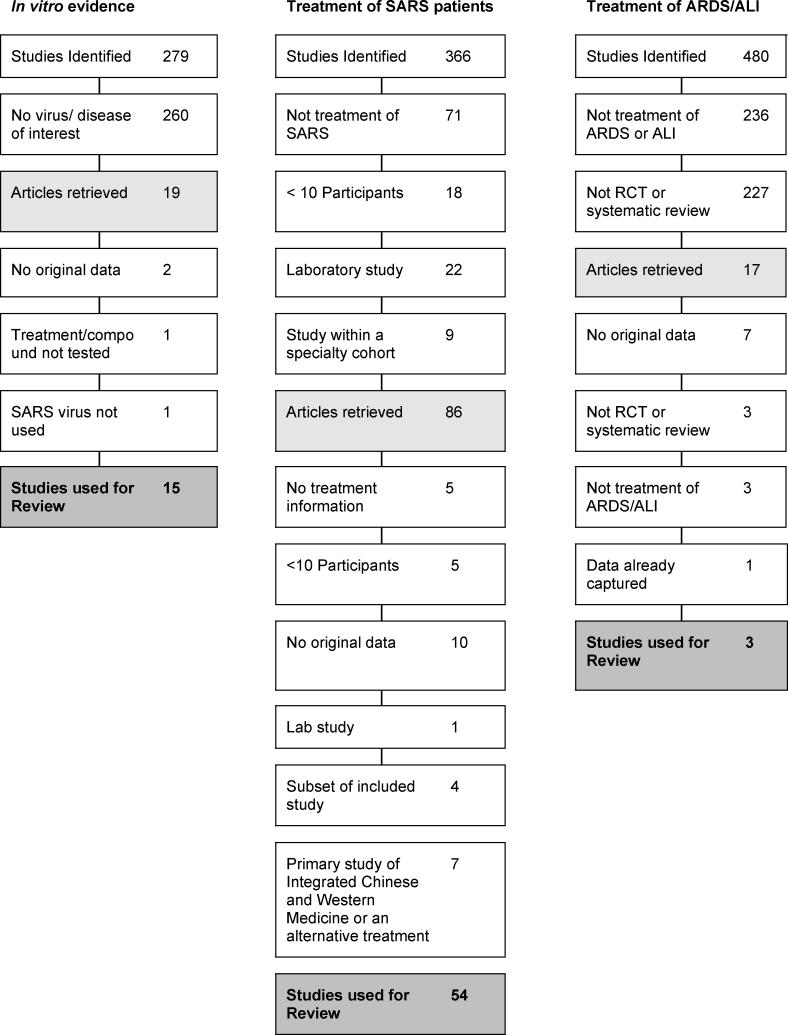
BACKGROUND: The SARS outbreak of 2002-2003 presented clinicians with a new, life-threatening disease for which they had no experience in treating and no research on the effectiveness of treatment options. The World Health Organization (WHO) expert panel on SARS treatment requested a systematic review and comprehensive summary of treatments used for SARS-infected patients in order to guide future treatment and identify priorities for research. METHODS AND FINDINGS: In response to the WHO request we conducted a systematic review of the published literature on ribavirin, corticosteroids, lopinavir and ritonavir (LPV/r), type I interferon (IFN), intravenous immunoglobulin (IVIG), and SARS convalescent plasma from both in vitro studies and in SARS patients. We also searched for clinical trial evidence of treatment for acute respiratory distress syndrome. Sources of data were the literature databases MEDLINE, EMBASE, BIOSIS, and the Cochrane Central Register of Controlled Trials (CENTRAL) up to February 2005. Data from publications were extracted and evidence within studies was classified using predefined criteria. In total, 54 SARS treatment studies, 15 in vitro studies, and three acute respiratory distress syndrome studies met our inclusion criteria. Within in vitro studies, ribavirin, lopinavir, and type I IFN showed inhibition of SARS-CoV in tissue culture. In SARS-infected patient reports on ribavirin, 26 studies were classified as inconclusive, and four showed possible harm. Seven studies of convalescent plasma or IVIG, three of IFN type I, and two of LPV/r were inconclusive. In 29 studies of steroid use, 25 were inconclusive and four were classified as causing possible harm. CONCLUSIONS: Despite an extensive literature reporting on SARS treatments, it was not possible to determine whether treatments benefited patients during the SARS outbreak. Some may have been harmful. Clinical trials should be designed to validate a standard protocol for dosage and timing, and to accrue data in real time during future outbreaks to monitor specific adverse effects and help inform treatment.
Overview
The claims and statistics of this paper haven’t been checked yet.
Free: it reads the open-access text and checks the first 5 claims that cite a source we can check. Create a free account to check every claim.
Integrity signals
Registry
Cites
Statistics
Figures
Verification
Claims the paper makes
The claims and statistics of this paper haven’t been checked yet.
Free: it reads the open-access text and checks the first 5 claims that cite a source we can check. Create a free account to check every claim.
Claims other papers make about this one
Each is checked against this paper’s own text: does it say what the citing paper says it does?
The cited source says what the claim attributes to it.
In the citing paper
“There is no effective treatment to date, 17 and despite promising advances, 18,19 no vaccine has been approved.”
From Severe acute respiratory syndrome (SARS) mathematical models and disease parameters: a systematic review (2025) · cites this paper as [17]
Self-check
Percentages, sums and reported differences re-computed from the paper’s own numbers.
The self-check needs the paper’s full text.
Citations
Cites
Identification of a novel coronavirus in patients with severe acute respiratory syndrome
Drosten, C., Günther, S., Preiser, W., van der Werf, S., Brodt, H.-R., Becker, S., Rabenau, H., Panning, M., Kolesnikova, L., Fouchier, R. A. M., et al. (2003) · New England Journal of Medicine · doi:10.1056/nejmoa030747 · Cited by 4,574 · cited 1×
“The causative organism has been identified as a novel coronavirus (SARS-CoV) [2] [3] [4] .”
BackgroundA Novel Coronavirus Associated with Severe Acute Respiratory Syndrome
Ksiazek, T. G., Erdman, D., Goldsmith, C. S., Zaki, S. R., Peret, T., Emery, S., Tong, S., Urbani, C., Comer, J. A., Lim, W., et al. (2003) · New England Journal of Medicine · doi:10.1056/nejmoa030781 · Cited by 4,344 · cited 2×
“The causative organism has been identified as a novel coronavirus (SARS-CoV) [2] [3] [4] .”
BackgroundMethodCoronavirus as a possible cause of severe acute respiratory syndrome
Peiris, J., Lai, S., Poon, L., Guan, Y., Yam, L., Lim, W., Nicholls, J., Yee, W., Yan, W., Cheung, M., et al. (2003) · The Lancet · doi:10.1016/s0140-6736(03)13077-2 · Cited by 2,915 · cited 1×
“The causative organism has been identified as a novel coronavirus (SARS-CoV) [2] [3] [4] .”
BackgroundA Major Outbreak of Severe Acute Respiratory Syndrome in Hong Kong
Lee, N., Hui, D., Wu, A., Chan, P., Cameron, P., Joynt, G. M., Ahuja, A., Yung, M. Y., Leung, C. B., To, K. F., et al. (2003) · New England Journal of Medicine · doi:10.1056/nejmoa030685 · Cited by 2,628 · cited 1×
“Because the urgency of the international outbreak did not allow time for efficacy studies, physicians in Canada and Hong Kong treated the earliest patients with intravenous ribavirin, based on its broad-spectrum antiviral activity [9,10].”
BackgroundRole of lopinavir/ritonavir in the treatment of SARS: initial virological and clinical findings
Chu, C. M. (2004) · Thorax · doi:10.1136/thorax.2003.012658 · Cited by 1,645 · cited 1×
“When LPV/r was added as an initial treatment to ribavirin and corticosteroid therapy, the death rate was lower than among those who received ribavirin and corticosteroids (1/ [20] .”
BackgroundClinical Features and Short-term Outcomes of 144 Patients With SARS in the Greater Toronto Area
Booth, C. M. (2003) · JAMA · doi:10.1001/jama.289.21.joc30885 · Cited by 1,406 · cited 2×
“Four publications presented evidence of possible harm (14) (15) (16) (17) .”
BackgroundResultThe Severe Acute Respiratory Syndrome
Peiris, J. S. M., Yuen, K. Y., Osterhaus, A. D. M. E., & Stöhr, K. (2003) · New England Journal of Medicine · doi:10.1056/nejmra032498 · Cited by 1,346
Identification of Severe Acute Respiratory Syndrome in Canada
Poutanen, S. M., Low, D. E., Henry, B., Finkelstein, S., Rose, D., Green, K., Tellier, R., Draker, R., Adachi, D., Ayers, M., et al. (2003) · New England Journal of Medicine · doi:10.1056/nejmoa030634 · Cited by 1,132 · cited 1×
“Because the urgency of the international outbreak did not allow time for efficacy studies, physicians in Canada and Hong Kong treated the earliest patients with intravenous ribavirin, based on its broad-spectrum antiviral activity [9,10].”
BackgroundMeduri, G. U., Headley, A. S., Golden, E., Carson, S. J., Umberger, R. A., Kelso, T., & Tolley, E. A. (1998) · JAMA · doi:10.1001/jama.280.2.159 · Cited by 1,008 · cited 2×
“Table S11.”
BackgroundHigh-Dose Corticosteroids in Patients with the Adult Respiratory Distress Syndrome
Bernard, G. R., Luce, J. M., Sprung, C. L., Rinaldo, J. E., Tate, R. M., Sibbald, W. J., Kariman, K., Higgins, S., Bradley, R., Metz, C. A., et al. (1987) · New England Journal of Medicine · doi:10.1056/nejm198712173172504 · Cited by 935 · cited 1×
“In two trials, high-dose methylprednisolone given for approximately 2 d was not effective for early ARDS [ 25 ,26].”
Method
Research works printed but not linked: 30
- Ksiazek, 2003, N Engl J Med, 348, 1953
- Peiris, 2003, Lancet, 361, 1319
- Drosten, 2003, N Engl J Med, 348, 1967
- Peiris, 2003, N Engl J Med, 2003, 2431
- Leung, 2004, Ann Intern Med, 141, 662
- Fowler, 2003, JAMA, 290, 367
- Poutanen, 2003, N Engl J Med, 348, 1995
- Lee, 2003, N Engl J Med, 348, 1986
- Morgenstern, 2005, Biochem Biophys Res Commun, 326, 905
- Chen, 2004, J Clin Virol, 31, 69
- Knowles, 2003, Clin Infect Dis, 37, 1139
- Booth, 2003, JAMA, 289, 2801
- Sung, 2004, Thorax, 59, 414
- Wong, 2003, JAMA, 290, 2663
- Yamamoto, 2004, Biochem Biophys Res Commun, 318, 719
- Chan, 2003, Hong Kong Med J, 9, 399
- Chu, 2004, Thorax, 59, 252
- Lee, 2004, J Clin Virol, 31, 304
- Lee, 2004, Clin Infect Dis, 39, 1247
- Xiao, 2004, Zhonghua Nei Ke Za Zhi, 43, 179
- Li, 2004, Zhonghua Yi Xue Za Zhi, 84, 1348
- Bernard, 1987, N Engl J Med, 317, 1565
- Weigelt, 1985, Arch Surg, 120, 536
- Meduri, 1998, JAMA, 280, 159
- Scagnolari, 2004, Antivir Ther, 9, 1003
- Sainz, 2004, Virology, 329, 11
- Wu, 2003, Zhonghua Nei Ke Za Zhi, 42, 453
- Li, 2003, Zhonghua Er Ke Za Zhi, 41, 574
- Hwang, 2005, Mod Pathol, 18, 1
- Wang, 2003, N Engl J Med, 349, 507
Cited by
Items 301–400 of 1,001
Atrial fibrillation in COVID‐19: A review of possible mechanisms
Stone, E., Kiat, H., & McLachlan, C. S. (2020) · The FASEB Journal · doi:10.1096/fj.202001613 · Cited by 64
SARS-CoV-2: A critical review of its history, pathogenesis, transmission, diagnosis and treatment
Sofi, M. S., Hamid, A., & Bhat, S. U. (2020) · Biosafety and Health · doi:10.1016/j.bsheal.2020.11.002 · Cited by 81
Mechanisms of COVID-19-induced kidney injury and current pharmacotherapies
Faour, W. H., Choaib, A., Issa, E., Choueiry, F. E., Shbaklo, K., Alhajj, M., Sawaya, R. T., Harhous, Z., Alefishat, E. A., & Nader, M. (2021) · Inflammation Research · doi:10.1007/s00011-021-01520-8 · Cited by 69
“, during the SARS outbreak in 2002–2003 revealed no significant improvement in patients treated with steroids but clear manifestations of side effects such as diabetes, avascular necrosis, psychosis, and prolonged viremia [5].”
BackgroundChrzanowski, W., Kim, S. Y., & McClements, L. (2020) · Frontiers in Bioengineering and Biotechnology · doi:10.3389/fbioe.2020.00554 · Cited by 58
“In relation to the meta-analysis of SARS-CoV treatments, the authors systematically reviewed 54 treatment studies, 15 in vitro studies and three ARDS studies (Stockman et al., 2006).”
MethodCorticosteroid therapy is associated with the delay of SARS-CoV-2 clearance in COVID-19 patients
Huang, R., Zhu, C., Wang, J., Xue, L., Li, C., Yan, X., Huang, S., Zhang, B., Zhu, L., Xu, T., et al. (2020) · European Journal of Pharmacology · doi:10.1016/j.ejphar.2020.173556 · Cited by 63
“During the outbreaks of severe acute respiratory syndrome (SARS) and Middle East respiratory syndrome (MERS), corticosteroids were widely used (Stockman et al., 2006).”
Shi, N., Guo, L., Liu, B., Bian, Y., Chen, R., Chen, S., Chen, Y., Chen, Y., Cong, X., Dong, G., et al. (2020) · Phytomedicine · doi:10.1016/j.phymed.2020.153367 · Cited by 64
Liu, J., Li, H., Luo, M., Liu, J., Wu, L., Lin, X., Li, R., Wang, Z., Zhong, H., Zheng, W., et al. (2020) · PLoS ONE · doi:10.1371/journal.pone.0241659 · Cited by 70
“IVIG was used as a previous therapeutic measure for SARS, but it was not confirmed as effective for outcome improvement [28].”
MethodTreatable traits and therapeutic targets: Goals for systems biology in infectious disease
Russell, C. D., & Baillie, J. K. (2017) · Current Opinion in Systems Biology · doi:10.1016/j.coisb.2017.04.003 · Cited by 69
Discovery of human coronaviruses pan-papain-like protease inhibitors using computational approaches
Alamri, M. A., Qamar, M. T. U., Mirza, M. U., Alqahtani, S. M., Froeyen, M., & Chen, L. (2020) · Journal of Pharmaceutical Analysis · doi:10.1016/j.jpha.2020.08.012 · Cited by 63
“Similarly, previous studies reported that lopinavir showed promising results against MERS-CoV [105 e 108] and SARS-CoV [109 e 111], and currently it is under clinical trials for COVID-19 treatment [11,112 e 114].”
ResultHigh versus standard doses of corticosteroids in severe COVID-19: a retrospective cohort study
Monreal, E., de la Maza, S. S., Natera‐Villalba, E., Beltrán‐Corbellini, Á., Rodríguez‐Jorge, F., Fernández-Velasco, J. I., Walo-Delgado, P. E., Muriel, A., Zamora, J., Cánovas, A. A., et al. (2020) · European Journal of Clinical Microbiology & Infectious Diseases · doi:10.1007/s10096-020-04078-1 · Cited by 60
Zhou, Z., Xie, S., Zhang, J., Zheng, F., Jiang, D., Li, K.-Y., Zuo, Q., Yan, Y., Liu, J., Xie, Y.-L., et al. (2020) · Preprints.org · doi:10.20944/preprints202003.0065.v1 · Cited by 59
Effectiveness and safety of available treatments for COVID-19 during pregnancy: a critical review
Favilli, A., Gentili, M. M., Raspa, F., Giardina, I., Parazzini, F., Vitagliano, A., Borisova, A. V., & Gerli, S. (2020) · The Journal of Maternal-Fetal & Neonatal Medicine · doi:10.1080/14767058.2020.1774875 · Cited by 60
“There are few direct data evaluating the effect of interferon type I on SARS-CoV-2, but several studies have shown that I-IFN has antiviral effects on various animal cell models [57] and it has been proposed for the treatment of COVID-19 [96].”
BackgroundHigh‐dose, short‐term corticosteroids for ARDS caused by COVID ‐19: a case series
So, C., Ro, S., Murakami, M., Imai, R., & Jinta, T. (2020) · Respirology Case Reports · doi:10.1002/rcr2.596 · Cited by 64
“However, current evidence in patients with SARS and MERS suggests that corticosteroids had no effect on mortality, but instead delayed viral clearance [11,12].”
BackgroundAdvances in the possible treatment of COVID-19: A review.
Chibber, P., Haq, S. A., Ahmed, I., Andrabi, N. I., & Singh, G. (2020) · European Journal of Pharmacology · doi:10.1016/j.ejphar.2020.173372 · Cited by 60
“However, studies involving corticosteroid-treated SARS and MERS patients show disrupted infection clearance and no effect on mortality (Arabi et al., 2018; Stockman et al., 2006).”
InfluentialRole of arachidonic cascade in COVID-19 infection: A review
Ripon, M. A. R., Bhowmik, D. R., Amin, M. T., & Hossain, M. S. (2021) · Prostaglandins & Other Lipid Mediators · doi:10.1016/j.prostaglandins.2021.106539 · Cited by 65
EHA Infectious Disease Scientific Working Group, von Lilienfeld-Toal, M., Vehreschild, J. J., Cornely, O., Pagano, L., Compagno, F., & Hirsch, H. H. (2020) · Leukemia · doi:10.1038/s41375-020-0832-y · Cited by 55
Dulek, D. E., Fuhlbrigge, R. C., Tribble, A. C., Connelly, J. A., Loi, M. M., Chebib, H. E., Chandrakasan, S., Otto, W. R., Diorio, C. J., Keim, G. P., et al. (2020) · Journal of the Pediatric Infectious Diseases Society · doi:10.1093/jpids/piaa098 · Cited by 61
Rodriguez-Morales, A. J., Sah, R., Oñate, J., González, Á., Montenegro-Idrogo, J. J., Scherger, S. J., Franco‐Paredes, C., & Henao‐Martínez, A. F. (2021) · Therapeutic Advances in Infectious Disease · doi:10.1177/20499361211027065 · Cited by 59
Potential Effects of Coronaviruses on the Liver: An Update
Wang, X., Lei, J., Li, Z., & Yan, L. (2021) · Frontiers in Medicine · doi:10.3389/fmed.2021.651658 · Cited by 57
Mehta, J., Rolta, R., Mehta, B. B., Kaushik, N., Choi, E. H., & Kaushik, N. K. (2022) · Frontiers in Microbiology · doi:10.3389/fmicb.2022.813358 · Cited by 72
“Moreover, in initial COVID-19 analyses, changes in corticosteroid doses and administration led to inconsistent data regarding the efficiency of such drugs (Stockman et al., 2006).”
BackgroundCOVID-19, Modern Pandemic: A Systematic Review From Front-Line Health Care Providers’ Perspective
Balla, M., Merugu, G. P., Patel, M., Koduri, N. M., Gayam, V. B. R., Adapa, S. R., Naramala, S., & Konala, V. M. (2020) · Journal of Clinical Medicine Research · doi:10.14740/jocmr4142 · Cited by 60
“Stockman et al reported to inhibit SARS-CoV reproduction in vitro [3, 48].”
BackgroundLega, S., Naviglio, S., Volpi, S., & Tommasini, A. (2020) · Vaccines · doi:10.3390/vaccines8020224 · Cited by 60
“Of 30 trials evaluating ribavirin in patients with SARS, 26 were classified as inconclusive and 4 reported possible harm due to the occurrence of hemolytic anemia and liver toxicity in a high proportion of treated patients [150].”
BackgroundMethodShuai, H., Chu, H., Hou, Y., Yang, D., Wang, Y., Hu, B., Huang, X., Zhang, X., Chai, Y., Cai, J., et al. (2020) · Journal of Infection · doi:10.1016/j.jinf.2020.07.016 · Cited by 57
Martínez‐López, A., Cuenca‐Barrales, C., Montero‐Vílchez, T., Molina‐Leyva, A., & Arias‐Santiago, S. (2020) · Journal of the American Academy of Dermatology · doi:10.1016/j.jaad.2020.08.006 · Cited by 55
“RIBAVIRIN/INTERFERON Systemic ribavirin, a guanine analogue that inhibits RNA polymerase and has been used in chronic hepatitis C virus infection, is currently being investigated as a treatment for COVID-19 in 3 clinical trials,(10) although previous studies in patients with SARS-CoV-1 and MERS showed no significant e…”
MethodPharmacological treatments of COVID-19
Sahebnasagh, A., Avan, R., Saghafi, F., Mojtahedzadeh, M., Sadremomtaz, A., Arasteh, O., Tanzifi, A., Faramarzi, F., Negarandeh, R., Safdari, M., et al. (2020) · Pharmacological Reports · doi:10.1007/s43440-020-00152-9 · Cited by 60
Multiple Routes of Antibody-Dependent Enhancement of SARS-CoV-2 Infection
Okuya, K., Hattori, T., Saito, T., Takadate, Y., Sasaki, M., Furuyama, W., Marzi, A., Ohiro, Y., Konno, S., Hattori, T., et al. (2022) · Microbiology Spectrum · doi:10.1128/spectrum.01553-21 · Cited by 59
Novel insights into the treatment of SARS-CoV-2 infection: An overview of current clinical trials
Oroojalian, F., Haghbin, A., Baradaran, B., Hemmat, N., Shahbazi, M., Baghi, H. B., Mokhtarzadeh, A., & Hamblin, M. R. (2020) · International Journal of Biological Macromolecules · doi:10.1016/j.ijbiomac.2020.09.204 · Cited by 53
“However, in the absence of suitable clinical trials, the results remain controversial [144].”
Risk Management and Treatment of Coagulation Disorders Related to COVID-19 Infection
Zanza, C., Racca, F., Longhitano, Y., Piccioni, A., Franceschi, F., Artico, M., Abenavoli, L., Maiese, A., Passaro, G., Volonnino, G., et al. (2021) · International Journal of Environmental Research and Public Health · doi:10.3390/ijerph18031268 · Cited by 60
Corticosteroids for treatment of COVID-19: effect, evidence, expectation and extent
Patel, V. K., Shirbhate, E., Patel, P., Veerasamy, R., Sharma, P. C., & Rajak, H. (2021) · Beni-Suef University Journal of Basic and Applied Sciences · doi:10.1186/s43088-021-00165-0 · Cited by 56
“Corticosteroids, alone or in combination with ribavirin, were particularly efficient in the treatment of the SARS outbreak in 2003 [15, 16].”
BackgroundMukherjee, P. K., Shah, F., Desai, P. V., & Avery, M. A. (2011) · Journal of Chemical Information and Modeling · doi:10.1021/ci1004916 · Cited by 51
Current Status of Multiple Drug Molecules, and Vaccines: An Update in SARS-CoV-2 Therapeutics
Kandimalla, R. J. L., John, A. A., Abburi, C., Vallamkondu, J., & Reddy, P. H. (2020) · Molecular Neurobiology · doi:10.1007/s12035-020-02022-0 · Cited by 53
“Ribavirin, when used with interferon, did show very mild therapeutic benefits against MERS-CoV infection [26].”
BackgroundCoronavirus (SARS-CoV-2) Pandemic: Future Challenges for Dental Practitioners
Bordea, I. R., Xhajanka, E., Candrea, S., Bran, S., Onisor, F. G., Inchingolo, A. D., Malcangi, G., Pham, V. H., Inchingolo, A. M., Scarano, A., et al. (2020) · Microorganisms · doi:10.3390/microorganisms8111704 · Cited by 66
Review of New and Newly Discovered Respiratory Tract Viruses in Children
Brodzinski, H., & Ruddy, R. M. (2009) · Pediatric Emergency Care · doi:10.1097/pec.0b013e3181a3497e · Cited by 62
Immunopathogenesis of COVID-19 and early immunomodulators
Lee, K., Rhim, J. W., & Kang, J.-H. (2020) · Korean Journal of Pediatrics · doi:10.3345/cep.2020.00759 · Cited by 51
Product of natural evolution (SARS, MERS, and SARS-CoV-2); deadly diseases, from SARS to SARS-CoV-2
Shahrajabian, M. H., Sun, W., & Cheng, Q. (2020) · Human Vaccines & Immunotherapeutics · doi:10.1080/21645515.2020.1797369 · Cited by 53
Ashour, N. A., Elmaaty, A. A., Sarhan, A. A., Elkaeed, E. B., Moussa, A. M., Erfan, I. A., & Al-Karmalawy, A. A. (2022) · Drug Design Development and Therapy · doi:10.2147/dddt.s354841 · Cited by 57
“It was revealed as a possible agent with SARS-CoV inhibitory activities based on in-vitro experiments during the SARS epidemic.(140) It was reported to prevent the replication of SARS CoV.”
Focus on the 2019 Novel Coronavirus (SARS-CoV-2)
Zhang, L.-P., Wang, M., Wang, Y., Zhu, J., & Zhang, N. (2020) · Future Microbiology · doi:10.2217/fmb-2020-0063 · Cited by 59
The severe COVID-19: A sepsis induced by viral infection? And its immunomodulatory therapy
Lin, H. (2020) · Chinese Journal of Traumatology · doi:10.1016/j.cjtee.2020.06.002 · Cited by 65
Slimano, F., Baudouin, A., Zerbit, J., Deldicque, A., Thomas‐Schoemann, A., Chevrier, R., Daouphars, M., Madelaine, I., Pourroy, B., Tournamille, J., et al. (2020) · Cancer Treatment Reviews · doi:10.1016/j.ctrv.2020.102063 · Cited by 53
“Regarding corticosteroids, a metaanalysis performed by the WHO following the SARS-CoV epidemic found no harmful effects [81]; in COVID-19, clinical trials using corticosteroids are ongoing especially in the early stage of respiratory distress syndrome.”
Inhaled Corticosteroids and COVID-19 Risk and Mortality: A Nationwide Cohort Study
Choi, J. C., Jung, S., Yoon, U. A., You, S., Kim, M.-S., Baek, M. S., Jung, J., & Kim, W. (2020) · Journal of Clinical Medicine · doi:10.3390/jcm9113406 · Cited by 50
“Systemic corticosteroids were extensively used during previous coronavirus outbreaks because of their anti-inflammatory effects, although previous studies regarding their use for SARS revealed no significant benefit [5].”
BackgroundInfluentialNelson, B. C., Laracy, J. C., Shoucri, S. M., Dietz, D., Zucker, J. E., Patel, N. M., Sobieszczyk, M. E., Kubin, C. J., & Gomez‐Simmonds, A. (2020) · Clinical Infectious Diseases · doi:10.1093/cid/ciaa1163 · Cited by 55
“A systematic review of the literature on corticosteroid use in SARS-CoV yielded inconclusive results, with some studies trending towards harm [10].”
BackgroundSARS-CoV-2 (COVID-19) in patients with some degree of immunosuppression
Cajamarca-Barón, J., Guavita-Navarro, D., Buitrago-Bohórquez, J., Gallego-Cardona, L., Navas, Á., Cubides, H. H., Arredondo, A. M., Escobar, A., & Rojas‐Villarraga, A. (2020) · Reumatología Clínica (English Edition) · doi:10.1016/j.reumae.2020.08.001 · Cited by 49
Aoe, T. (2020) · Frontiers in Pharmacology · doi:10.3389/fphar.2020.01095 · Cited by 50
“However, the clinical data for SARS, MERS, and COVID-19 do not support the clinical efficacy of corticosteroids (Stockman et al., 2006; Russell et al., 2020).”
BackgroundWhat Is the Optimal Therapy for Patients with H5N1 Influenza?
White, N. J., Webster, R. G., Govorkova, E. A., & Uyeki, T. M. (2009) · PLoS Medicine · doi:10.1371/journal.pmed.1000091 · Cited by 52
“anemia occurred in some treated patients [30,31].”
Price, E., MacPhie, E. M., Kay, L., Lanyon, P., Griffiths, B., Holroyd, C. R., Abhishek, A., Youngstein, T., Bailey, K. M., Clinch, J., et al. (2020) · Clinical Medicine · doi:10.7861/clinmed.2020-0149 · Cited by 51
Xu, X., Zhang, J., Zheng, W., Yang, Z., Zhao, X., Wang, C., Su, H., Zhao, L., Xue, L., Hu, F., et al. (2021) · Annals of Palliative Medicine · doi:10.21037/apm-20-2121 · Cited by 50
“Different drugs were tried, including HIV protease inhibitors (21-23), nucleoside analogs (24), chloroquine (24), and corticosteroids (25-27), but with uncertain efficacy and sometimes significant side effects (28).”
BackgroundChinese herbs combined with Western medicine for severe acute respiratory syndrome (SARS)
Liu, X., Zhang, M., He, L., & Li, Y. (2006) · Cochrane Database of Systematic Reviews · doi:10.1002/14651858.cd004882.pub2 · Cited by 47
Nahama, A., Ramachandran, R., Cisternas, A. F., & Ji, H. (2020) · Medicine in Drug Discovery · doi:10.1016/j.medidd.2020.100033 · Cited by 46
“Although use of corticosteroids might be beneficial in reducing inflammationinduced lung injury, evidence from SARS and MERS patients shows no or little improvement in mortality rates, with a delay in viral load clearance [6,7].”
Suter, F., Consolaro, E., Pedroni, S., Moroni, C., Pastò, E., Paganini, M. V., Pravettoni, G., Cantarelli, U., Rubis, N., Perico, N., et al. (2021) · EClinicalMedicine · doi:10.1016/j.eclinm.2021.100941 · Cited by 52
“However, the use of corticosteroids in COVID-19 patients has been controversial, due to the risk of prolonging the presence of the virus in the respiratory tract and blood, and the incidence of complications, as shown in previous observational studies in patients with coronavirus pneumonia induced by SARS and MERS [36…”
Spiking Pandemic Potential: Structural and Immunological Aspects of SARS-CoV-2
Wang, Y.-T., Landeras-Bueno, S., Hsieh, L.-E., Terada, Y., Kim, K., Ley, K. F., Shresta, S., Saphire, E. O., & Regla-Nava, J. Á. (2020) · Trends in Microbiology · doi:10.1016/j.tim.2020.05.012 · Cited by 51
“However, there is no clear evidence that type I IFN therapies had direct benefit for SARS and MERS patients [62,64].”
Medical Management of COVID-19: Evidence and Experience
Bose, S., Adapa, S. R., Aeddula, N. R., Roy, S., Nandikanti, D. K., Vupadhyayula, P. M., Naramala, S., Gayam, V. B. R., Muppidi, V., & Konala, V. M. (2020) · Journal of Clinical Medicine Research · doi:10.14740/jocmr4201 · Cited by 47
“Data obtained from the experiments involving treatment of SARS-CoV and MERS-CoV and ISG’s ability to disrupt the IFN signaling pathway would be valuable for selecting IFNbeta as a potential treatment option against SARS-CoV-2 [44, 45].”
MethodInfluentialThe Current Clinically Relevant Findings on COVID-19 Pandemic
Pergolizzi, J. V., Magnusson, P., LeQuang, J. A., Breve, F., Paladini, A., Rekatsina, M., Yeam, C. T., Imani, F., Saltelli, G., Taylor, R., et al. (2020) · Anesthesiology and Pain Medicine · doi:10.5812/aapm.103819 · Cited by 48
“(n = 100), chloroquine has inhibited the exacerbation of pneumonia, improved lung imaging, promoted a virusnegative conversion, and shortened the course of the disease to a greater extent than control treatment (47).”
BackgroundMethodClinical utility of chest radiography for severe COVID-19
Hui, T. C. H., Khoo, H. W., Young, B. E., Mohideen, S. M. H., Lee, Y. S., Lim, C. J., Leo, Y., Kaw, G. J. L., Lye, D. C., & Tan, C. H. (2020) · Quantitative Imaging in Medicine and Surgery · doi:10.21037/qims-20-642 · Cited by 47
“Corticosteroids were avoided given inconsistent data and potential harm in SARS-CoV (15).”
BackgroundInfluentialSherren, P. B., Ostermann, M., Agarwal, S., Meadows, C. I. S., Ioannou, N., & Camporota, L. (2020) · British Journal of Anaesthesia · doi:10.1016/j.bja.2020.08.050 · Cited by 54
“The WHO recommended against the use of corticosteroids, but this was largely based on concerns over increased viral shedding observed in Middle Eastern Respiratory Syndrome113 and an inconclusive systematic review in SARS-CoV-1.”
Liu, F., Ji, C., Luo, J., Wu, W., Zhang, J., Zhong, Z., Lankford, S., Huang, H., Lin, F., Wang, Y., et al. (2020) · Scientific Reports · doi:10.1038/s41598-020-70387-2 · Cited by 47
Advances in antivirals for non‐influenza respiratory virus infections
Hayden, F. G. (2013) · Influenza and Other Respiratory Viruses · doi:10.1111/irv.12173 · Cited by 44
“12, 18, 19 The use of available agents like ribavirin and HIV protease inhibitors was not associated with proven benefit in SARS patients, although retrospective studies reported that severe outcomes (ARDS or death) occurred less often in those receiving a combination of lopinavir/ritonavir and ribavirin with corticos…”
BackgroundCOVID-19 : physiopathologie d’une maladie à plusieurs visages
Bonny, V., Maillard, A., Mousseaux, C., Plaçais, L., & Richier, Q. (2020) · La Revue de Médecine Interne · doi:10.1016/j.revmed.2020.05.003 · Cited by 121
“Si des études structurales permettront le développement de molécules spécifiques, des traitements développés contre la protéase du VIH ont montré une certaine efficacité in vitro contre le SARS-CoV-1 [45] et le SARS-CoV-2 [46].”
Peptides: Prospects for Use in the Treatment of COVID-19
Khavinson, V. K., Linkova, N. S., Dyatlova, A., Bi, K., & Umnov, R. S. (2020) · Molecules · doi:10.3390/molecules25194389 · Cited by 48
“Moreover, ribavirin had dose-dependent hematological toxicity, which makes it impossible to use it in high doses with a high frequency [68].”
BackgroundLangarizadeh, M. A., Tavakoli, M. R., Abiri, A., Ghasempour, A., Rezaei, M., & Ameri, A. (2021) · EXCLI journal · doi:10.17179/excli2020-3196 · Cited by 63
Corticosteroids in severe COVID-19: a critical view of the evidence
Backer, D. D., Azoulay, É., & Vincent, J. (2020) · Critical Care · doi:10.1186/s13054-020-03360-0 · Cited by 47
“Although use of steroids in patients with ARDS [1] and severe viral pneumonia [2, 3] has been challenged, several arguments support the biological plausibility of steroid use in patients with severe COVID-19.”
BackgroundA review of candidate therapies for Middle East respiratory syndrome from a molecular perspective
Rabaan, A. A., Al-Ahmed, S. H., Bazzi, A. M., & Alhani, H. M. (2017) · Journal of Medical Microbiology · doi:10.1099/jmm.0.000565 · Cited by 46
“However, for SARS-CoV the quality of studies has been inconsistent and the results have been inconclusive, with a lack of adequate clinical trials [69, 70].”
ResultAl-Karmalawy, A. A., Soltane, R., Elmaaty, A. A., Tantawy, M. A., Antar, S. A., Yahya, G., Chrouda, A., Pashameah, R. A., Mustafa, M., Mraheil, M. A., et al. (2021) · Vaccines · doi:10.3390/vaccines9111317 · Cited by 44
“A systematic review of observational trials of corticosteroids given to SARS patients found no benefit in terms of survival or possible side effects (avascular necrosis, psychosis, diabetes, and viral clearance delay) [230,231].”
BackgroundAshour, N. A., Abo Elmaaty, A., Sarhan, A. A., Elkaeed, E. B., Moussa, A. M., Erfan, I. A., & Al-Karmalawy, A. A. (2022) · DOAJ (DOAJ: Directory of Open Access Journals) · Cited by 44
Pathogenesis and Management of Myocardial Injury in Coronavirus Disease 2019
Wei, Z., Geng, Y., Huang, J., & Qian, H. (2020) · European Journal of Heart Failure · doi:10.1002/ejhf.1967 · Cited by 47
Li, H., Xiong, N., Li, C., Gong, Y., Liu, L., Yang, H., Tan, X., Jiang, N., Zong, Q., Wang, J., et al. (2021) · International Journal of Infectious Diseases · doi:10.1016/j.ijid.2021.01.055 · Cited by 43
Impact of corticosteroids in hospitalised COVID-19 patients
Ho, K. S., Narasimhan, B., DiFabrizio, L., Rogers, L. J., Bose, S., Li, L., Chen, R., Sheehan, J., El-Halabi, M. A., Sarosky, K., et al. (2021) · BMJ Open Respiratory Research · doi:10.1136/bmjresp-2020-000766 · Cited by 44
Subcutaneous injection of IFN alpha-2b for COVID-19: an observational study
Wang, B., Li, D., Liu, T., Wang, H., Luo, F., & Liu, Y. (2020) · BMC Infectious Diseases · doi:10.1186/s12879-020-05425-5 · Cited by 44
Öz, M., Lorke, D. E., & Kabbani, N. (2020) · Pharmacology & Therapeutics · doi:10.1016/j.pharmthera.2020.107750 · Cited by 49
Modernising epidemic science: enabling patient-centred research during epidemics
Rojek, A. M., & Horby, P. (2016) · BMC Medicine · doi:10.1186/s12916-016-0760-x · Cited by 42
“they had significant methodological limitations [12], and if another SARS outbreak was to occur there remains no clear consensus on ribavirin use.”
BackgroundTriazole, imidazole, and thiazole-based compounds as potential agents against coronavirus
Seck, I., & Nguemo, F. (2021) · Results in Chemistry · doi:10.1016/j.rechem.2021.100132 · Cited by 45
Current pharmacological treatments for SARS-COV-2: A narrative review
Nittari, G., Pallotta, G., Amenta, F., & Tayebati, S. K. (2020) · European Journal of Pharmacology · doi:10.1016/j.ejphar.2020.173328 · Cited by 45
“Observational studies showed a delay in viral clearance from the respiratory tract that is associated with some complications including psychosis ed hyperglycemia by using corticosteroid combinations in patients with SARS and MERS (Arabi et al., 2018; Stockman et al., 2006).”
Recent biotechnological approaches for treatment of novel COVID-19: from bench to clinical trial
Mousavi, S. M., Hashemi, S. A., Parvin, N., Gholami, A., Ramakrishna, S., Omidifar, N., Moghadami, M., Chiang, W., & Mazraedoost, S. (2020) · Drug Metabolism Reviews · doi:10.1080/03602532.2020.1845201 · Cited by 42
“This study was done using corticosteroid in a meta-analysis (Stockman et al. 2006).”
MethodTowards our understanding of SARS-CoV, an emerging and devastating but quickly conquered virus
Feng, Y., & Gao, G. F. (2007) · Comparative Immunology Microbiology and Infectious Diseases · doi:10.1016/j.cimid.2007.05.009 · Cited by 42
“Also, alveolar walls are thickened by mild mononuclear infiltrate, and in later stages air spaces contain fibromyxoid-organizing exudates [1,7,22,24].”
BackgroundInfluentialMa, Y., Feng, Y., Liu, D., & Gao, G. F. (2009) · Philosophical Transactions of the Royal Society B Biological Sciences · doi:10.1098/rstb.2009.0093 · Cited by 47
EL-Gendy, A. O., Saeed, H., Ali, A. M. A., Zawbaa, H. M., Gomaa, D., Harb, H. S., Madney, Y. M., Osama, H., Abdelrahman, M. A., & Abdelrahim, M. E. A. (2020) · Vaccine · doi:10.1016/j.vaccine.2020.06.083 · Cited by 51
“COVID-19 disease is related to the respiratory infectious diseases caused by coronavirus, the recent attacks of coronavirus were in 2003 caused the severe acute respiratory syndrome (SARS) followed by the Middle east respiratory syndrome (MERS) in 2012 [2,3].”
SARS‐CoV2 and immunosuppression: A double‐edged sword
Lai, Q., Spoletini, G., Bianco, G., Graceffa, D., Agnes, S., Rossi, M., & Lerut, J. P. (2020) · Transplant Infectious Disease · doi:10.1111/tid.13404 · Cited by 43
“SARS-CoV Delayed clearance of viral RNA from the blood (8,9) In case of severe pneumonia, protective effect (0/60 deaths vs.”
BackgroundInfluentialHanna, R., Dalvi, S., Sălăgean, T., Pop, I., Bordea, I. R., & Benedicenti, S. (2021) · Journal of Inflammation Research · doi:10.2147/jir.s282213 · Cited by 46
COVID-19: A Brief Overview of the Discovery Clinical Trial
Eynde, J. J. V. (2020) · Pharmaceuticals · doi:10.3390/ph13040065 · Cited by 41
The CoV-2 outbreak: how hematologists could help to fight Covid-19
Galimberti, S., Baldini, C., Baratè, C., Ricci, F., Balducci, S., Grassi, S., Ferro, F., Buda, G., Benedetti, E., Fazzi, R., et al. (2020) · Pharmacological Research · doi:10.1016/j.phrs.2020.104866 · Cited by 47
“Indeed, while the in vitro studies showed a good antiviral power of IFNs (with IFN beta being more effective than alpha), the in vivo studies were inconclusive, with a doubtful prognostic advantage in respect of steroids [84].”
BackgroundInterim Guidelines on Antiviral Therapy for COVID-19
Kim, S. B., Huh, K., Heo, J. Y., Joo, E., Kim, Y. J., Choi, W. S., Kim, Y., Seo, Y. B., Yoon, Y. K., Ku, N. S., et al. (2020) · Infection and Chemotherapy · doi:10.3947/ic.2020.52.2.281 · Cited by 45
“In an observation study of SARS patients, the use of steroids did not improve the mortality, and adverse effects such as avascular necrosis, psychosis, diabetes, and delayed viral clearance were reported [107].”
BackgroundManagement of Hemoglobin Disorders During the COVID-19 Pandemic
Chowdhury, S. F., & Anwar, S. (2020) · Frontiers in Medicine · doi:10.3389/fmed.2020.00306 · Cited by 45
Dexamethasone inhibits SARS-CoV-2 spike pseudotyped virus viropexis by binding to ACE2
Zhang, Y., Hu, S., Wang, J., Xue, Z., Wang, C., & Wang, N. (2020) · Virology · doi:10.1016/j.virol.2020.12.001 · Cited by 43
Existing Antiviral Options Against SARS-CoV-2 Replication in COVID-19 Patients
Ghanbari, R., Teimoori, A., Sadeghı, A., Mohamadkhani, A., Rezasoltani, S., Asadi, E., Jouyban, A., & Sumner, S. (2020) · Future Microbiology · doi:10.2217/fmb-2020-0120 · Cited by 44
A comprehensive review on potential therapeutics interventions for COVID-19
Chugh, H., Awasthi, A., Agarwal, Y., Gaur, R. K., Dhawan, G., & Chandra, R. (2020) · European Journal of Pharmacology · doi:10.1016/j.ejphar.2020.173741 · Cited by 51
Co-infection of SARS-COV-2 and Influenza A Virus: A Case Series and Fast Review
Xiang, X., Wang, Z.-H., Ye, L., He, X., Wei, X., Ma, Y., Li, H., Chen, L., Wang, X., & Zhou, Q. (2021) · Current Medical Science · doi:10.1007/s11596-021-2317-2 · Cited by 42
The 15-Months Clinical Experience of SARS-CoV-2: A Literature Review of Therapies and Adjuvants
Inchingolo, A. D., Dipalma, G., Inchingolo, A. M., Malcangi, G., Santacroce, L., D’Oria, M. T., Isacco, C. G., Bordea, I. R., Candrea, S., Scarano, A., et al. (2021) · Antioxidants · doi:10.3390/antiox10060881 · Cited by 60
Shen, H., Zhang, N., Liu, Y., Yang, X., He, Y., Li, Q., Shen, X., Zhu, Y., & Yang, Y. M. (2022) · Frontiers in Pharmacology · doi:10.3389/fphar.2021.805535 · Cited by 43
“Corticosteroids do not affect on improving survival, and are accompanied by steroid-related adverse events such as femoral head necrosis, hyperglycemia, and psychosis (Stockman et al., 2006; Arabi et al., 2018).”
BackgroundInfluentialQiu, G., Helmeste, D. M., Samaranayake, A. N., Lau, B. W.-M., Lee, T. M. C., Tang, S.-W., & So, K. (2007) · Neuroscience Bulletin · doi:10.1007/s12264-007-0019-9 · Cited by 44
“[23] Stockman LJ, Bellamy R, Garner P. SARS: systematic review of treatment effects.”
Bassetti, M., Giacobbe, D. R., Aliberti, S., Barisione, E., Centanni, S., Rosa, F. G. D., Marco, F. D., Gori, A., Granata, G., Mikulska, M., et al. (2020) · Clinical Microbiology and Infection · doi:10.1016/j.cmi.2020.04.031 · Cited by 40
“…a systematic review and meta-analysis of observational studies on corticosteroids provided to patients with SARS-CoV-1, only four studies provided conclusive data, reporting no survival bene fi t and possible harms including avascular necrosis, psychosis, diabetes and delayed virus clearance [57].”
Cheng, W., Li, Y., Cui, Y., Chen, Y., Shan, S., Xiao, D., Chen, X., Chen, Z., & Xu, A. (2020) · Frontiers in Pharmacology · doi:10.3389/fphar.2020.571156 · Cited by 39
“Moreover, previous studies have shown inconclusive clinical evidence of the effect of corticosteroid therapy for viral pneumonia (such as SARS, MERS, and H1N1), and pulse-dose therapy or long-term use of a high-dose corticosteroid in the early stage of disease might be harmful (Stockman et al., 2006; Arabi et al., 201…”
BackgroundResultLiterature-related discovery: Potential treatments and preventatives for SARS
Kostoff, R. N. (2011) · Technological Forecasting and Social Change · doi:10.1016/j.techfore.2011.03.022 · Cited by 40
“Some may have been harmful.") [60] .”
Middle East Respiratory Syndrome (MERS)
Rasmussen, S. A., Watson, A. K., & Swerdlow, D. L. (2016) · Microbiology Spectrum · doi:10.1128/microbiolspec.ei10-0020-2016 · Cited by 54
“A systematic review of treatments used for patients with SARS showed that systemic steroids might be harmful (151); thus, steroids should not be used in MERS patients.”
BackgroundSinopoli, A., Isonne, C., Santoro, M. M., & Baccolini, V. (2021) · Reviews in Medical Virology · doi:10.1002/rmv.2261 · Cited by 38
Yu, Y., Shi, Q., Zheng, P., Gao, L., Li, H., Tao, P., Gu, B., Wang, D., & Chen, H. (2020) · Journal of Medical Virology · doi:10.1002/jmv.25901 · Cited by 39
National Vaccination and Local Intervention Impacts on COVID-19 Cases
Toharudin, T., Pontoh, R. S., Caraka, R. E., Zahroh, S., Kendogo, P., Sijabat, N., Sari, M. D. P., Gio, P. U., Basyuni, M., & Pardamean, B. (2021) · Sustainability · doi:10.3390/su13158282 · Cited by 47
“In particular, with mass manufacturing, this entire process will take between 12 and 18 months to achieve optimal results [54].”
BackgroundThe dynamics of trust and communication in COVID-19 vaccine decision making: A qualitative inquiry
Ledford, C. J. W., Cafferty, L. A., Moore, J. X., Roberts, C., Whisenant, E. B., Rychtarikova, A. G., & Seehusen, D. A. (2022) · Journal of Health Communication · doi:10.1080/10810730.2022.2028943 · Cited by 39
Elahi, S. (2020) · The Journal of Immunology · doi:10.4049/jimmunol.2000710 · Cited by 38
“Current evidence in patients with MERS and SARS suggests that corticosteroids did not influence the mortality rate but delayed viral clearance (99, 100).”
BackgroundFunctional and druggability analysis of the SARS-CoV-2 proteome
Cavasotto, C. N., Sánchez‐Lamas, M., & Maggini, J. (2020) · European Journal of Pharmacology · doi:10.1016/j.ejphar.2020.173705 · Cited by 40
Current COVID-19 treatments: Rapid review of the literature
Dong, Y., Shamsuddin, A., Campbell, H. J., & Τheodoratou, E. (2021) · Journal of Global Health · doi:10.7189/jogh.11.10003 · Cited by 41
Metadata
- Authors
- Stockman, L. J., Bellamy, R., & Garner, P.
- Affiliations
- Centers for Disease Control and Prevention (US)
- James Cook University Hospital (GB)
- Liverpool School of Tropical Medicine (GB)
- Corresponding author
- Stockman, Lauren J
- ORCID
- Garner, Paul
- Venue
- PLoS Medicine
- Publisher
- Public Library of Science (PLoS)
- Published
- 2006-09-12
- Volume
- 3
- Issue
- 9
- Pages
- e343
- ISSN
- 1549-1277 (ISSN-L)
- 1549-1676
- PMC
- PMC1564166
- OpenAlex
- W2054076340
- Semantic Scholar
- 1fabf8b5ddd4560d1ce7431b19642ab0e29847cc
- Cited by
- 1,217
- References
- 31
- Citations by year
- 2026: 3 · 2025: 9 · 2024: 34 · 2023: 58 · 2022: 92 · 2021: 254 · 2020: 579 · 2019: 10 · 2018: 3 · 2017: 9 · 2016: 28 · 2015: 16 · 2014: 20 · 2013: 19 · 2012: 8
- FWCI
- 1.94
- Type
- journal article
- Language
- en
- Open access
- gold
- doi.org
- Licence
- Locations
- PLoS Medicine (publishedVersion, public-domain)
- Europe PMC (PubMed Central) (publishedVersion, public-domain)
- PubMed (publishedVersion)
- RePEc: Research Papers in Economics (publishedVersion)
- LSTM Online Archive (Liverpool School of Tropical Medicine) (acceptedVersion)
- DOAJ (DOAJ: Directory of Open Access Journals) (submittedVersion, cc-by-sa)
- Figshare (submittedVersion, cc-by)
- Funders
- Department for International Development
- Centers for Disease Control and Prevention
- Topics
- Health Sciences › Medicine › Infectious Diseases › SARS-CoV-2 and COVID-19 Research
- Health Sciences › Medicine › Infectious Diseases › COVID-19 Clinical Research Studies
- Health Sciences › Medicine › Infectious Diseases › Viral Infections and Outbreaks Research
- Keywords
- SARS, SARS-CoV, antiviral therapy, ribavirin, corticosteroids, type I interferon, intravenous immunoglobulin, convalescent plasma, acute respiratory distress syndrome, treatment efficacy, adverse effects, clinical trial design
- MeSH terms
- Disease Outbreaks, Humans, Severe Acute Respiratory Syndrome, Severe acute respiratory syndrome-related coronavirus
About these checks
Registry, retraction, Cites and statistics results are computed, not judged, with one exception: a printed reference that no index lists is read once by a model before it counts as a citation error. Claims are extracted by a model and kept only when their quote appears verbatim in the text; each cited source is then checked, with a model’s help, for whether it says what the claim relies on. Those verdicts can be wrong — read the claim’s quote and the cited source before relying on one.
Statistics and arithmetic are recomputed, not judged.
Confidence bands are shown only for fields calibrated on our annotated test set. None is calibrated yet, so no band is shown.
What counts as a claim ›How we measure confidence ›How we check this ›
Are you an author, or do you see a problem with this page? Request a review
Data sources
Bibliographic data: Semantic Scholar, OpenAlex, Crossref.
Contains information from the Semantic Scholar Academic Graph Datasets, made available under the ODC Attribution License (ODC-BY 1.0).
Semantic Scholar’s data is described in: Kinney, R., et al. (2023). The Semantic Scholar Open Data Platform. arXiv:2301.10140.
