

Quantifying the Number of Pregnancies at Risk of Malaria in 2007: A Demographic Study
Open accessThe DOI matches its Crossref record; 31 of the 33 references it cites were found in a registry or an index.
Abstract
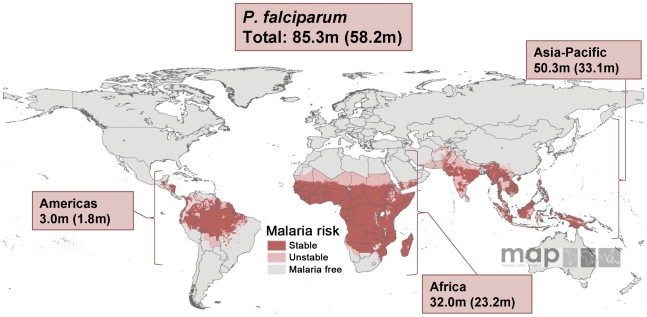
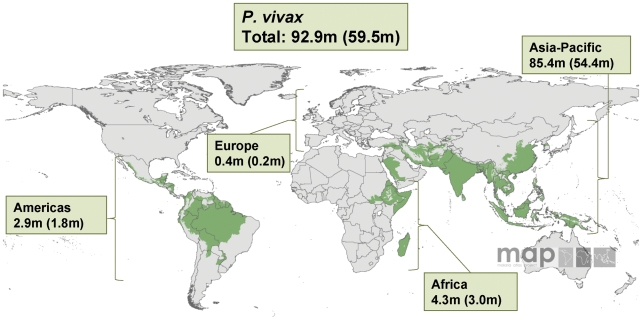
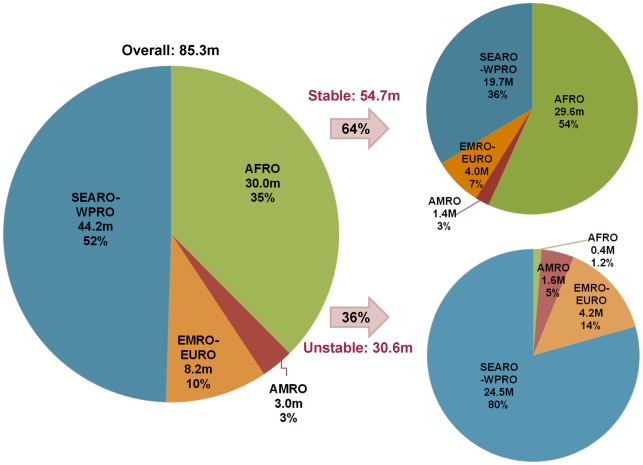
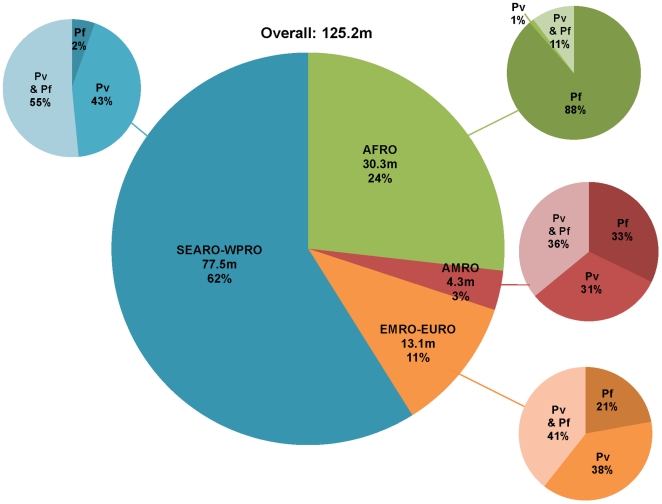
BACKGROUND: Comprehensive and contemporary estimates of the number of pregnancies at risk of malaria are not currently available, particularly for endemic areas outside of Africa. We derived global estimates of the number of women who became pregnant in 2007 in areas with Plasmodium falciparum and P. vivax transmission. METHODS AND FINDINGS: A recently published map of the global limits of P. falciparum transmission and an updated map of the limits of P. vivax transmission were combined with gridded population data and growth rates to estimate total populations at risk of malaria in 2007. Country-specific demographic data from the United Nations on age, sex, and total fertility rates were used to estimate the number of women of child-bearing age and the annual rate of live births. Subregional estimates of the number of induced abortions and country-specific stillbirths rates were obtained from recently published reviews. The number of miscarriages was estimated from the number of live births and corrected for induced abortion rates. The number of clinically recognised pregnancies at risk was then calculated as the sum of the number of live births, induced abortions, spontaneous miscarriages, and stillbirths among the population at risk in 2007. In 2007, 125.2 million pregnancies occurred in areas with P. falciparum and/or P. vivax transmission resulting in 82.6 million live births. This included 77.4, 30.3, 13.1, and 4.3 million pregnancies in the countries falling under the World Health Organization (WHO) regional offices for South-East-Asia (SEARO) and the Western-Pacific (WPRO) combined, Africa (AFRO), Europe and the Eastern Mediterranean (EURO/EMRO), and the Americas (AMRO), respectively. Of 85.3 million pregnancies in areas with P. falciparum transmission, 54.7 million occurred in areas with stable transmission and 30.6 million in areas with unstable transmission (clinical incidence <1 per 10,000 population/year); 92.9 million occurred in areas with P. vivax transmission, 53.0 million of which occurred in areas in which P. falciparum and P. vivax co-exist and 39.9 million in temperate regions with P. vivax transmission only. CONCLUSIONS: In 2007, 54.7 million pregnancies occurred in areas with stable P. falciparum malaria and a further 70.5 million in areas with exceptionally low malaria transmission or with P. vivax only. These represent the first contemporary estimates of the global distribution of the number of pregnancies at risk of P. falciparum and P. vivax malaria and provide a first step towards a more informed estimate of the geographical distribution of infection rates and the corresponding disease burden of malaria in pregnancy.
Overview
The claims and statistics of this paper haven’t been checked yet.
Free: it reads the open-access text and checks the first 5 claims that cite a source we can check. Create a free account to check every claim.
Integrity signals
Registry
Cites
Statistics
Figures
Verification
Claims the paper makes
The claims and statistics of this paper haven’t been checked yet.
Free: it reads the open-access text and checks the first 5 claims that cite a source we can check. Create a free account to check every claim.
Claims other papers make about this one
Each is checked against this paper’s own text: does it say what the citing paper says it does?
The cited source doesn’t support the claim as written.
In the citing paper
“Previous estimates of pregnancies at risk of malaria have used the same metric [20, 38]”
From Global estimates of pregnancies at risk of Plasmodium falciparum and Plasmodium vivax infection in 2020 and changes in risk patterns since 2000 (2022) · cites this paper as [20]
Checked by a reasoning model — may be wrong.
Experimental — accuracy not yet measuredThe source backs part of the claim, not all of it — or backs it for a different population, condition or comparison.
In the citing paper
“In the absence of an effective vaccine, malaria during pregnancy remains a significant public health problem [19].”
From Current update on malaria in pregnancy: a systematic review (2025) · cites this paper as [19]
Experimental — accuracy not yet measuredThe source backs part of the claim, not all of it — or backs it for a different population, condition or comparison.
In the citing paper
“In addition, the genetic diversity of P.vivax is remarkable, with the existence of different haplotypes (groups of genetic variations) and the ability to develop at lower temperatures, in contrast to the lower genetic diversity observed in P.falciparum.”
From Current update on malaria in pregnancy: a systematic review (2025) · cites this paper as [163]
Experimental — accuracy not yet measuredThe source backs part of the claim, not all of it — or backs it for a different population, condition or comparison.
In the citing paper
“A phylogenetic analysis examining the evolutionary relationships between the organisms shows that the P.vivax population is globally distributed among pregnant women [163–166].”
From Current update on malaria in pregnancy: a systematic review (2025) · cites this paper as [163]
Experimental — accuracy not yet measuredThe source backs part of the claim, not all of it — or backs it for a different population, condition or comparison.
In the citing paper
“Interestingly, P.falciparum has been linked to specific genotypes associated with asymptomatic infections at the time of delivery.”
From Current update on malaria in pregnancy: a systematic review (2025) · cites this paper as [164]
Experimental — accuracy not yet measured
15 more claims about this paper
Create a free account to see every claim other papers make about this one.
Self-check
Percentages, sums and reported differences re-computed from the paper’s own numbers.
The self-check needs the paper’s full text.
Citations
Cites
The global distribution of clinical episodes of Plasmodium falciparum malaria
Snow, R. W., Guerra, C. A., Noor, A. M., Myint, H. Y., & Hay, S. I. (2005) · Nature · doi:10.1038/nature03342 · Cited by 2,741 · cited 2×
“falciparum [12] due to its global epidemiological significance [13] and better prospects for its control and local elimination [14].”
BackgroundMethodSelf-citationDivision, U. P. (1991) · Cited by 1,434
Epidemiology and burden of malaria in pregnancy
Desai, M., ter Kuile, F. O., Nosten, F., McGready, R., Asamoa, K., Brabin, B., & Newman, R. D. (2007) · The Lancet Infectious Diseases · doi:10.1016/s1473-3099(07)70021-x · Cited by 1,432 · cited 2×
“Although malaria in pregnancy is associated with miscarriages and stillbirths [30], the majority of the health and economic burden is likely through the impact on pregnancies that result in live births by increasing the risk of preterm births and low birth-weight [30] and by modifying the susceptibility to malaria in…”
BackgroundA new world malaria map: Plasmodium falciparum endemicity in 2010
Gething, P. W., Patil, A. P., Smith, D. L., Guerra, C. A., Elyazar, I. R., Johnston, G. L., Tatem, A. J., & Hay, S. I. (2011) · Malaria Journal · doi:10.1186/1475-2875-10-378 · Cited by 1,146
Self-citationThe global distribution and population at risk of malaria: past, present, and future
Hay, S. I., Guerra, C. A., Tatem, A. J., Noor, A. M., & Snow, R. W. (2004) · The Lancet Infectious Diseases · doi:10.1016/s1473-3099(04)01043-6 · Cited by 1,001 · cited 3×
“It is the major cause of malaria in much of Asia and Latin America [6] [7], and recent evidence has shown that P. vivax infections are far from benign and can result in significant morbidity in pregnant women with serious consequences for maternal and infant health [8] [9] [10].”
BackgroundSelf-citationSnow, R. W., Craig, M., Deichmann, U., & Marsh, K. (1999) · PubMed · Cited by 735
Self-citationA World Malaria Map: Plasmodium falciparum Endemicity in 2007
Hay, S. I., Guerra, C. A., Gething, P. W., Patil, A. P., Tatem, A. J., Noor, A. M., Kabaria, C. W., Manh, B. H., Elyazar, I. R. F., Brooker, S., et al. (2009) · PLoS Medicine · doi:10.1371/journal.pmed.1000048 · Cited by 505 · cited 8×
“falciparum transmission intensity model of risk within the defined stable limits which was developed recently by the Malaria Atlas Project [31], allowing disease impact calculations across multiple transmission strata to be made.”
BackgroundInfluentialSelf-citationStillbirth rates: delivering estimates in 190 countries
Stanton, C., Lawn, J. E., Rahman, H., Wilczynska-Ketende, K., & Hill, K. (2006) · The Lancet · doi:10.1016/s0140-6736(06)68586-3 · Cited by 495 · cited 1×
“[25] that derived data from vital registration, demographic and health surveys (DHS), and data from study reports integrated into a regression model.”
MethodDetermining Global Population Distribution: Methods, Applications and Data
Balk, D. L., Deichmann, U., Yetman, G., Pozzi, F., Hay, S. I., & Nelson, A. (2006) · Advances in Parasitology · doi:10.1016/s0065-308x(05)62004-0 · Cited by 490 · cited 2×
“The Global Rural-Urban Mapping Project (GRUMP) alpha version provides gridded population counts and population density estimates for the years 1990, 1995, and 2000, both adjusted and unadjusted to the United Nations’ national population estimates [11,20].”
BackgroundMethodInduced abortion: estimated rates and trends worldwide
Sedgh, G., Henshaw, S., Singh, S., Åhman, E., & Shah, I. H. (2007) · The Lancet · doi:10.1016/s0140-6736(07)61575-x · Cited by 474
Research works printed but not linked: 3
- United Nations Children's Fund 1998 The state of the world's children New York Oxford University Press
- Leridon H 1977 Human fertility: the basic components (Table 4.20) Chicago University of Chicago Press
- Hammerslough CR 1992 Estimating the probability of spontaneous abortion in the presence of induced abortion and vice versa. Public Health Rep 107 269 277 1594736 PMC1403646
Cited by
Items 201–300 of 486
van Hasselt, J. G. C., Andrew, M. A., Hébert, M. F., Tärning, J., Vicini, P., & Mattison, D. R. (2012) · British Journal of Clinical Pharmacology · doi:10.1111/j.1365-2125.2012.04280.x · Cited by 28
McDonald, C. R., Elphinstone, R. E., & Kain, K. C. (2013) · Trends in Parasitology · doi:10.1016/j.pt.2013.03.005 · Cited by 29
Maheu‐Giroux, M., & Castro, M. C. (2014) · Malaria Journal · doi:10.1186/1475-2875-13-440 · Cited by 31
Hristov, A. D., Sanchez, M. C. A., Ferreira, J. J. B., Lima-Cooper, G., Inoue, J., Costa-Nascimento, M. J., Sanchez, A. R., Ramos-Sanchez, E. M., & Santi, S. M. D. (2014) · Memórias do Instituto Oswaldo Cruz · doi:10.1590/0074-0276140229 · Cited by 27
“However, this criterion depends on the local conditions and specific orientations for each area (Dellicour et al. 2010, WHO 2013).”
BackgroundInfluentialAmuta, E. U., Houmsou, R. S., Wama, E. B., & Ameh, M. (2014) · Infectious Disease Reports · doi:10.4081/idr.2014.5050 · Cited by 31
Borges, M. C., Buffarini, R., Santos, R. V., Cardoso, A. M., Welch, J. R., Garnelo, L., Coimbra, C. Ε. A., & Horta, B. L. (2015) · BMC Women s Health · doi:10.1186/s12905-016-0287-5 · Cited by 39
“intervals, high prevalence of endemic parasitic infections, food insecurity, and poor prenatal care [25–27].”
BackgroundA Public Health Paradox: The Women Most Vulnerable to Malaria Are the Least Protected
González, R., Sevene, E., Jagoe, G., Slutsker, L., & Menéndez, C. (2016) · PLoS Medicine · doi:10.1371/journal.pmed.1002014 · Cited by 27
“In this region, approximately 30 million pregnancies occur annually in areas of intense Plasmodium falciparum transmission, and HIV-infected women are known to be the most vulnerable to malaria infection [2,3].”
BackgroundPregnant Women: An Overlooked Asset to Plasmodium falciparum Malaria Elimination Campaigns?
Gonçalves, B. P., Walker, P. G. T., Cairns, M. E., Tiono, A. B., Bousema, T., & DRAKELEY, C. J. (2017) · Trends in Parasitology · doi:10.1016/j.pt.2017.03.001 · Cited by 31
“Pooled analysis of clinical data generated in different sites in sub-Saharan Africa with a wide range of SP resistance prevalence showed that where malaria parasites routinely carried mutations linked to SP resistance, up to 40% of pregnant women receiving SP carried falciparum parasites on day 42 after treatment admi…”
InfluentialMlugu, E. M., Minzi, O., Asghar, M., Färnert, A., Kamuhabwa, A. A. R., & Aklillu, E. (2020) · Pathogens · doi:10.3390/pathogens9030207 · Cited by 25
“Each year, more than 30 million of all women who become pregnant in Sub-Saharan Africa are at risk of malaria [4].”
BackgroundWebster, J., Ansariadi, A., Burdam, F. H., Landuwulang, C. U. R., Bruce, J., Poespoprodjo, J. R., Syafruddin, D., Ahmed, R., & Hill, J. (2018) · Malaria Journal · doi:10.1186/s12936-018-2448-5 · Cited by 27
Sicuri, E., Fernandes, S., Macete, E., González, R., Mombo‐Ngoma, G., Massougbodgi, A., Abdulla, S., Kuwawenaruwa, A., Katana, A., Desai, M. R., et al. (2015) · PLoS ONE · doi:10.1371/journal.pone.0125072 · Cited by 27
the FSP/MISAME study Group, Valea, I., Tinto, H., Drabo, M. K., Huybregts, L., Henry, M.-C., Roberfroid, D., Guiguemde, R. T., Kolsteren, P., & D'Alessandro, U. (2010) · Malaria Journal · doi:10.1186/1475-2875-9-324 · Cited by 24
“Background In Africa, in malaria endemic areas, about 30 million pregnancies occur each year [1].”
BackgroundComplement Activation in Placental Malaria
McDonald, C. R., Tran, V., & Kain, K. C. (2015) · Frontiers in Microbiology · doi:10.3389/fmicb.2015.01460 · Cited by 30
Pre-clinical and clinical development of the first placental malaria vaccine
Pehrson, C., Salanti, A., Theander, T. G., & Nielsen, M. A. (2017) · Expert Review of Vaccines · doi:10.1080/14760584.2017.1322512 · Cited by 34
Prevalence of the Pfdhfr and Pfdhps mutations among asymptomatic pregnant women in Southeast Nigeria
Esu, E., Tacoli, C., Gai, P. P., Berens‐Riha, N., Pritsch, M., Loescher, T., & Meremikwu, M. M. (2018) · Parasitology Research · doi:10.1007/s00436-018-5754-5 · Cited by 29
“Over 32 million pregnant women are estimated to be at risk of P. falciparum malaria in sub-Saharan Africa annually (Dellicour et al. 2010).”
Savić, R. M., Jagannathan, P., Kajubi, R., Huang, L., Zhang, N., Were, M., Kakuru, A., Muhindo, M. K., Mwebaza, N., Wallender, E. K., et al. (2018) · Clinical Infectious Diseases · doi:10.1093/cid/ciy218 · Cited by 27
“In sub-Saharan Africa, over 25 million pregnancies occur each year in areas where malaria is endemic, and malaria in pregnancy is estimated to cause nearly one million low birthweight deliveries[1-3].”
BackgroundMalaria early in the first pregnancy: Potential impact of iron status
Diallo, S., Roberts, S. A., Gies, S., Rouamba, T., Swinkels, D. W., Geurts-Moespot, A. J., Ouédraogo, S., Ouédraogo, G. A., Tinto, H., & Brabin, B. J. (2019) · Clinical Nutrition · doi:10.1016/j.clnu.2019.01.016 · Cited by 26
“Without malaria control measures during pregnancy, 45% of 32 million pregnancies in malaria-endemic sub-Saharan Africa are exposed to Plasmodium falciparum malaria [6].”
BackgroundLopez-Perez, M., Larsen, M. D., Bayarri-Olmos, R., Ampomah, P., Stevenson, L., Arévalo-Herrera, M., Herrera, S., & Hviid, L. (2018) · Infection and Immunity · doi:10.1128/iai.00136-18 · Cited by 24
“More than 50 million pregnancies each year are at risk of placental malaria (34), and 100,000 infants die because of placental malaria (5).”
BackgroundBonsra, E. A., Osei, P. A., Kyeremeh, E. A., Adama, S., Sekyi, A. G., & King, E. F. (2025) · Malaria Journal · doi:10.1186/s12936-025-05244-6 · Cited by 28
“Other factors include gravidity and access to preventive measures like Insecticide-Treated Nets (ITNs) and Intermittent Preventive Treatment (IPTp) with sulfadoxine-pyrimethamine [6].”
Nzila, A. M., Okombo, J., & Molloy, A. M. (2013) · Journal of Antimicrobial Chemotherapy · doi:10.1093/jac/dkt394 · Cited by 27
Henry, M., Florey, L., Youll, S., & Gutman, J. (2018) · Malaria Journal · doi:10.1186/s12936-018-2512-1 · Cited by 29
Noguchi, L., Grenier, L., Kabue, M., Ugwa, E. A., Oyetunji, J., Suhowatsky, S., Onguti, B. N., Orji, B., Whiting-Collins, L. J., & Adetiloye, O. (2020) · Malaria Journal · doi:10.1186/s12936-020-3099-x · Cited by 23
Re-orienting anti-malarial drug development to better serve pregnant women
Gaaloul, M. E., Tornesi, B. M., Lebus, F., Reddy, D., & Kaszubska, W. (2022) · Malaria Journal · doi:10.1186/s12936-022-04137-2 · Cited by 24
“For example, China was listed as a ‘malaria-endemic’ country with over 21 million pregnancies at risk [3], while the WHO has now certified the country as malaria-free [4].”
Bobossi-Serengbé, G., Moyen, J. M., Fioboy, R., Beyam, N., Kango, S. C., Bangue, C., & Manirakiza, A. (2015) · BMC Research Notes · doi:10.1186/s13104-015-1124-x · Cited by 23
“Malaria is a major public health problem, especially for vulnerable groups such as children under 5 years and pregnant women in sub-Saharan Africa, where 90% of malaria deaths occur [1,2].”
BackgroundFernandes, S., Sicuri, E., Kayentao, K., van Eijk, A. M., Hill, J., Webster, J., Were, V. O., Akazili, J., Madanitsa, M., ter Kuile, F. O., et al. (2015) · The Lancet Global Health · doi:10.1016/s2214-109x(14)70385-7 · Cited by 30
Park, S., Nixon, C. E., Miller, O., Choi, N., Kurtis, J. D., Friedman, J. F., & Michelow, I. C. (2020) · The Journal of Infectious Diseases · doi:10.1093/infdis/jiaa139 · Cited by 29
Developing vaccines to prevent malaria in pregnant women
Ndam, N. T., & Deloron, P. (2015) · Expert Opinion on Biological Therapy · doi:10.1517/14712598.2015.1049595 · Cited by 30
Hansen, K. S., Ndyomugyenyi, R., Magnussen, P., & Clarke, S. E. (2012) · International Health · doi:10.1016/j.inhe.2011.10.001 · Cited by 21
Prevention and control of malaria in pregnancy – new threats, new opportunities?
Rogerson, S. J., & Unger, H. W. (2016) · Expert Review of Anti-infective Therapy · doi:10.1080/14787210.2017.1272411 · Cited by 28
“Although the burden of malaria in pregnancy is highest in sub-Saharan Africa, the number of pregnancies at risk is highest in South and South-East Asia [7,17].”
BackgroundMutsigiri-Murewanhema, F., Mafaune, P. T., Shambira, G., Juru, T., Bangure, D., Mungati, M., Gombe, N. T., & Tshimanga, M. (2017) · Pan African Medical Journal · doi:10.11604/pamj.2017.27.23.10957 · Cited by 28
“Pregnant women have a reduced immunity hence they have increased risk of infection with malaria, severe disease and ultimately increased risk of death [9, 10].”
BackgroundA brief review on features of falciparum malaria during pregnancy
Manirakiza, A., Serdouma, E., Ngbalé, R. N., Moussa, S., Gondjé, S., Degana, R. M., Bata, G. G. B., Moyen, J. M., Delmont, J. P., Grésenguet, G., et al. (2017) · Journal of Public Health in Africa · doi:10.4081/jphia.2017.668 · Cited by 25
Obiakor, H., Avril, M., MacDonald, N. J., Srinivasan, P., Reiter, K., Anderson, C., Holmes, K. L., Fried, M., Duffy, P. E., Smith, J. D., et al. (2013) · Clinical and Vaccine Immunology · doi:10.1128/cvi.00638-12 · Cited by 22
“Primigravid women are more susceptible to higher-density placental infections, resulting in maternal anemia, low birth weight, or death of the fetus (4, 5, 6).”
BackgroundMalaria in pregnancy complications in Southern Venezuela
Romero, M., Leiba, E., Carrión-Nessi, F. S., Freitas-De Nobrega, D. C., Kaid-Bay, S., Gamardo, Á. F., Chavero, M., Figuera, L., Camejo-Ávila, N. A., Marcano, M. V., et al. (2021) · Malaria Journal · doi:10.1186/s12936-021-03728-9 · Cited by 21
“pregnancy (MiP) in the Americas is uncertain, but in 2007 was estimated at least 3 million pregnant women were at risk of malaria infection [3].”
BackgroundRoman, E., Wallon, M., Brieger, W. R., Dickerson, A., Rawlins, B. J., & Agarwal, K. (2014) · Global Health Science and Practice · doi:10.9745/ghsp-d-13-00136 · Cited by 22
“Data were collected between 2009 and 2011 and analyzed across 8 MIP health systems components: (1) integration of programs and services, (2) policy, (3) commodities, (4) quality assurance, (5) capacity building, (6) community involvement, (7) monitoring and evaluation, and (8) financing.”
MethodChandrasiri, U., Fowkes, F. J. I., Richards, J. S., Langer, C., Fan, Y., Taylor, S. M., Beeson, J. G., Dewey, K. G., Maleta, K. M., Ashorn, P., et al. (2015) · Malaria Journal · doi:10.1186/s12936-015-0707-2 · Cited by 21
“Background It is estimated that about 125 million pregnancies worldwide are at risk of malaria annually, significantly increasing maternal and child morbidity and mortality [1].”
BackgroundCressman, A. M., McDonald, C. R., Silver, K., Kain, K. C., & Piquette‐Miller, M. (2013) · Drug Metabolism and Disposition · doi:10.1124/dmd.113.053983 · Cited by 23
“In Sub-Saharan Africa an estimated 25% of all pregnancies are complicated by placental malaria (PM) infection (Dellicour et al., 2010).”
BackgroundPrioritizing Pregnant Women for Long-Lasting Insecticide Treated Nets through Antenatal Care Clinics
Hill, J., Hoyt, J., van Eijk, A. M., ter Kuile, F. O., Webster, J., & Steketee, R. W. (2014) · PLoS Medicine · doi:10.1371/journal.pmed.1001717 · Cited by 23
“Worldwide, an estimated 125 million pregnancies are at risk from malaria each year [9].”
BackgroundBôtto-Menezes, C., Silva dos Santos, M. C., Lopes Simplício, J., Menezes de Medeiros, J., Barroso Gomes, K. C., de Carvalho Costa, I. C., Batista-Silva, E., Teixeira do Nascimento, C., da Silva Chagas, E. C., Jardim Sardinha, J. F., et al. (2015) · PLOS ONE · doi:10.1371/journal.pone.0144399 · Cited by 20
“1%) occurred in the American region [2].”
Dharmaratne, A. D. V. T. T., Dini, S., O’Flaherty, K., Price, D. J., Beeson, J., McGready, R., Nosten, F., Fowkes, F. J. I., Simpson, J. A., & Zaloumis, S. G. (2022) · Malaria Journal · doi:10.1186/s12936-022-04111-y · Cited by 20
Malaria-Associated Factors among Pregnant Women in Guinea
Touré, A. A., Doumbouya, A., Diallo, A., Loua, G., Cissé, A., Sidibé, S., & Béavogui, A. H. (2019) · Journal of Tropical Medicine · doi:10.1155/2019/3925094 · Cited by 20
Peripheral Blood Cell Signatures of Plasmodium falciparum Infection during Pregnancy
Ibitokou, S. A., Oesterholt, M., Brutus, L., Borgella, S., Agbowaï, C., Ezinmègnon, S., Lusingu, J., Schmiegelow, C., Massougbodji, A., Deloron, P., et al. (2012) · PLoS ONE · doi:10.1371/journal.pone.0049621 · Cited by 24
“Its prominence as such reflects the burden of maternal and neonatal disease and death for which it is directly responsible worldwide [9].”
BackgroundHounkonnou, C., Briand, V., Fiévet, N., Accrombessi, M., Yovo, E., Mama, A., Sossou, D., Vianou, B., Massougbodji, A., Ndam, N. T., et al. (2019) · Clinical Infectious Diseases · doi:10.1093/cid/ciz748 · Cited by 27
“laria every year [1, 2] in sub-Saharan Africa.”
Subussa, B. W., Eshetu, T., Degefa, T., & Ali, M. M. (2021) · PLoS ONE · doi:10.1371/journal.pone.0248074 · Cited by 22
“It increases the risk of stillbirths, spontaneous abortion, premature delivery, and low birth weight [7].”
BackgroundSingh, K. P., Shakeel, S., Naskar, N., Bharti, A., Kaul, A., Anwar, S., Kumari, S., Kumar, A., Singh, J. K., Kumari, N., et al. (2018) · Molecular Immunology · doi:10.1016/j.molimm.2018.03.019 · Cited by 19
Maternal Clinical Findings in Malaria in Pregnancy in a Region of Northwestern Colombia
Piñeros, J. G., Tobon-Castaño, A., Álvarez, G., Portilla, C., & Blair, S. (2013) · The American Society of Tropical Medicine and Hygiene · doi:10.4269/ajtmh.12-0205 · Cited by 19
Bouyou-Akotet, M. K., Mawili-Mboumba, D. P., Kendjo, É., Chiesa, S. M., Mbuyi, M. L. T., Tsoumbou-Bakana, G., Zong, J., Ambounda, N. L., & Kombila, M. (2016) · Transactions of the Royal Society of Tropical Medicine and Hygiene · doi:10.1093/trstmh/trw034 · Cited by 21
Iwalokun, B. A., Iwalokun, S. O., Adebodun, V., & Balogun, M. (2015) · Medical Principles and Practice · doi:10.1159/000430987 · Cited by 26
Esu, E., Berens‐Riha, N., Pritsch, M., Nwachuku, N. S., Loescher, T., & Meremikwu, M. M. (2018) · Malaria Journal · doi:10.1186/s12936-018-2394-2 · Cited by 25
Kashif, A. H., Adam, G. K., Mohmmed, A. A., Elzaki, S. E., AbdelHalim, A. M., & Adam, I. (2013) · Diagnostic Pathology · doi:10.1186/1746-1596-8-59 · Cited by 18
“However, blood film microscopy is time-consuming and needs significant technical skills, good-quality reagents, and clean slides; thus, its accuracy is of highly variable quality in sub-Saharan African hospitals [7-10].”
BackgroundSaito, M., Mansoor, R., Kennon, K., McGready, R. M., Nosten, F. H., Guerin, P. J., & Stepniewska, K. (2019) · BMJ Open · doi:10.1136/bmjopen-2018-027503 · Cited by 18
“IntrOduCtIOn About 60% of all pregnancies are estimated to take place in malaria-endemic areas.(1) In addition, pregnant women are among the most vulnerable groups for malaria infection leading to higher morbidity and mortality of both mothers and fetuses.”
BackgroundTadesse, G., Kamaliddin, C., Doolan, C., Amarasekara, R., Legese, R., Mohon, A. N., Cheaveau, J., Yewhalaw, D., & Pillai, D. R. (2020) · Malaria Journal · doi:10.1186/s12936-020-03380-9 · Cited by 20
Burger, R. J., Visser, B. J., Grobusch, M. P., & van Vugt, M. (2016) · Malaria Journal · doi:10.1186/s12936-016-1160-6 · Cited by 18
“Background Malaria infection during pregnancy remains an important public health problem with potential life-threatening risks for the pregnant woman, the foetus and the newborn child [1, 2].”
BackgroundIbitokou, S. A., Boström, S., Brutus, L., Ndam, N. T., Vianou, B., Agbowaï, C., Zin, M. A., Huynh, B.-T., Massougbodji, A., Deloron, P., et al. (2014) · Clinical and Vaccine Immunology · doi:10.1128/cvi.00009-14 · Cited by 24
“falciparum-infected erythrocytes (PfiEs) in the placenta, via their adherence to chondroitin sulfate A (CSA) expressed by syncytiotrophoblasts, is the major pathological characteristic of pregnancy-associated malaria (PAM), with potentially multiple detrimental outcomes (6).”
BackgroundGaw, S. L., Hromatka, B. S., Ngeleza, S., Buarpung, S., Özarslan, N., Tshefu, A. K., & Fisher, S. J. (2019) · Malaria Research and Treatment · doi:10.1155/2019/1378174 · Cited by 21
McDonald, C. R., Weckman, A. M., Wright, J. K., Conroy, A. L., & Kain, K. C. (2022) · Frontiers in Public Health · doi:10.3389/fpubh.2022.1021901 · Cited by 24
Malaria, Danger, and Risk Perceptions among the Yao in Rural Malawi
Launiala, A., & Honkasalo, M. (2010) · Medical Anthropology Quarterly · doi:10.1111/j.1548-1387.2010.01111.x · Cited by 18
Malaria in pregnancy: the relevance of animal models for vaccine development
Doritchamou, J., Teo, A., Fried, M., & Duffy, P. E. (2017) · Lab Animal · doi:10.1038/laban.1349 · Cited by 19
Hommel, M., Chan, J.-A., Umbers, A. J., Langer, C., Rogerson, S. J., Smith, J. D., & Beeson, J. G. (2018) · Parasites & Vectors · doi:10.1186/s13071-018-2653-7 · Cited by 19
“malaria control, approximately 125 million pregnancies remain at risk of malaria and adverse outcomes [2].”
BackgroundMbouamboua, Y., Koukouikila-Koussounda, F., Ntoumi, F., Adukpo, S., Kombo, M., Vouvoungui, C., van Helden, J., & Kobawila, S. C. (2019) · Acta Tropica · doi:10.1016/j.actatropica.2019.03.001 · Cited by 18
Impact of Malaria in Pregnancy as Latin America Approaches Elimination
Yanow, S. K., Gavina, K., Gnidehou, S., & Maestre, A. (2016) · Trends in Parasitology · doi:10.1016/j.pt.2016.01.008 · Cited by 21
“vivax, with overlapping distributions of the two species in most countries [6].”
BackgroundHill, J., Landuwulang, C. U. R., Ansariadi, A., Hoyt, J., Burdam, F. H., Bonsapia, I., Syafruddin, D., Poespoprodjo, J. R., ter Kuile, F. O., Ahmed, R., et al. (2018) · Malaria Journal · doi:10.1186/s12936-018-2426-y · Cited by 19
Integrated Proteomics Reveals Apoptosis-related Mechanisms Associated with Placental Malaria*
Kawahara, R., Rosa-Fernandes, L., dos Santos, A. F., Bandeira, C. L., Dombrowski, J. G., de Souza, R. M., da Fonseca, M. P., Festuccia, W. T., Labriola, L., Larsen, M. R., et al. (2018) · Molecular & Cellular Proteomics · doi:10.1074/mcp.ra118.000907 · Cited by 17
“vivax) can pose devastating consequences to a pregnant woman and the developing fetus (2), including maternal anemia and low birth weight because of preterm delivery and fetal growth restriction (3).”
BackgroundOmer, S. A., Adam, I., Noureldien, A., Elhaj, H., Guerrero-Latorre, L., Silgado, A., Sulleiro, E., & Molina, I. (2020) · Journal of Tropical Pediatrics · doi:10.1093/tropej/fmz083 · Cited by 16
Ajonina, M. U., Ajonina-Ekoti, I. U., Ngulefac, J., Ade, N., Awambeng, D. N., Nfor, C. K., Ayim, M., & Apinjoh, T. O. (2024) · BMC Pregnancy and Childbirth · doi:10.1186/s12884-024-06769-5 · Cited by 16
“Malaria due to Plasmodium falciparum remains a significant public health challenge, particularly in endemic regions where vulnerable populations such as pregnant women are at increased risk of infection [1].”
BackgroundIron overload in Plasmodium berghei-infected placenta as a pathogenesis mechanism of fetal death
Penha‐Gonçalves, C., Gozzelino, R., & de Moraes, L. V. (2014) · Frontiers in Pharmacology · doi:10.3389/fphar.2014.00155 · Cited by 17
“In 2007 over 125 million women living in areas with Plasmodium falciparum and or P. vivax transmission became pregnant and at risk of developing malaria (Dellicour et al., 2010).”
Axame, W. K., Kweku, M., Amelor, S., Kye-Duodu, G., Agboli, E., Agbemafle, I., Takramah, W. K., Tarkang, E. E., & Binka, F. N. (2016) · Central African Journal of Public Health · doi:10.11648/j.cajph.20160201.16 · Cited by 23
Modelling stillbirth mortality reduction with the Lives Saved Tool
Blencowe, H. K., Chou, V. B., Lawn, J. E., & Bhutta, Z. A. (2017) · BMC Public Health · doi:10.1186/s12889-017-4742-5 · Cited by 18
“It is estimated that over 125 million pregnant women are at risk of malaria each year, with pregnant women at risk of more severe disease, and their fetus is vulnerable due to effects of maternal systemic febrile illness, impaired placenta function due to placental infection, or the more rare condition of direct fetal…”
BackgroundFernandes, S., Were, V. O., Gutman, J., Dorsey, G., Kakuru, A., Desai, M. R., Kariuki, S., Kamya, M. R., ter Kuile, F. O., & Hanson, K. (2020) · The Lancet Global Health · doi:10.1016/s2214-109x(20)30369-7 · Cited by 18
Paintain, L. S., Hill, J., Ahmed, R., Landuwulang, C. U. R., Ansariadi, A., Poespoprodjo, J. R., Syafruddin, D., Khairallah, C., Burdam, F. H., Bonsapia, I., et al. (2020) · The Lancet Global Health · doi:10.1016/s2214-109x(20)30386-7 · Cited by 19
Effect of malaria on placental volume measured using three-dimensional ultrasound: a pilot study
Rijken, M. J., Moroski, W. E., Kiricharoen, S., Karunkonkowit, N., Stevenson, G., Ohuma, E. O., Noble, J. A., Kennedy, S. H., McGready, R., Papageorghiou, A. T., et al. (2012) · Malaria Journal · doi:10.1186/1475-2875-11-5 · Cited by 16
“Background Falciparum and vivax malaria have a markedly negative impact on mothers and babies [1,2].”
BackgroundNasr, A., Hamid, O., Al-Ghamdi, A., & Allam, G. A. (2013) · Malaria Journal · doi:10.1186/1475-2875-12-110 · Cited by 19
“Each year, more than 125 million pregnant women are at risk of malaria infection with devastating consequences for the newborn and first and second time mothers [1].”
BackgroundPreventing malaria during pregnancy in sub-Saharan Africa: Determinants of effective IPTp delivery
Florey, L. (2013) · Cited by 16
Pinto, V. V., Salanti, A., Joergensen, L., Dahlbäck, M., Resende, M., Ditlev, S. B., Agger, E. M., Arnot, D. E., Theander, T. G., & Nielsen, M. A. (2011) · Vaccine · doi:10.1016/j.vaccine.2011.11.068 · Cited by 17
“pproximately 25 million pregnant women are at risk of developng severe anaemia, leading to the deaths of 10,000 women and 00,000 newborns each year, as a direct result of the accumulaion of Plasmodium falciparum parasite in the placenta [1].”
BackgroundMalaria in the Pregnant Traveler
McKinney, K. L., Wu, H. M., Tan, K. R., & Gutman, J. (2020) · Journal of Travel Medicine · doi:10.1093/jtm/taaa074 · Cited by 22
Soma‐Pillay, P., & Macdonald, A. P. (2012) · Obstetric Medicine · doi:10.1258/om.2011.110063 · Cited by 18
Phiri, K. S., Kimani, J., Mtove, G. A., Zhao, Q., Rojo, R., Robbins, J. L., Duparc, S., Ayoub, A., & Vandenbroucke, P. (2016) · PLoS ONE · doi:10.1371/journal.pone.0165692 · Cited by 18
Odongo, C. O., Odida, M., Wabinga, H., Obua, C., & Byamugisha, J. K. (2016) · Malaria Research and Treatment · doi:10.1155/2016/1839795 · Cited by 17
“30 million pregnancies at risk of malaria occur in subSaharanAfrica [3].”
BackgroundOdjidja, E. N., Kwanin, C. B., & Saha, M. (2017) · Health Systems and Policy Research · doi:10.21767/2254-9137.100079 · Cited by 17
Contribution of Murine Models to the Study of Malaria During Pregnancy
Barateiro, A., Pereira, M. H. N., Epiphânio, S., & Marinho, C. R. F. (2019) · Frontiers in Microbiology · doi:10.3389/fmicb.2019.01369 · Cited by 18
Douamba, Z., Dao, N. G. L., Zohoncon, T. M., Bisseyé, C., Compaore, T. R., Kafando, J. G., Sombie, B. C., Ouermi, D., Djigma, F. W., Ouédraogo, P., et al. (2014) · Malaria Research and Treatment · doi:10.1155/2014/390513 · Cited by 22
“In sub-Saharan Africa, about thirty-two million pregnant women are living in areas at risk for Plasmodium falciparummalaria transmission [1].”
BackgroundMalaria and Early Life Immunity: Competence in Context
Callaway, P. C., Farrington, L. A., & Feeney, M. E. (2021) · Frontiers in Immunology · doi:10.3389/fimmu.2021.634749 · Cited by 15
Unger, H. W., Bleicher, A., Ome‐Kaius, M., Aitken, E. H., & Rogerson, S. J. (2022) · Malaria Journal · doi:10.1186/s12936-022-04177-8 · Cited by 18
McDonald, C. R., Weckman, A. M., Conroy, A. L., Olwoch, P., Natureeba, P., Kamya, M. R., Havlir, D. V., Dorsey, G., & Kain, K. C. (2019) · Scientific Reports · doi:10.1038/s41598-019-43191-w · Cited by 16
Pons‐Duran, C., Llach, M., Sanz, S., Ramírez, M., Méndez, S., Roman, E., Tholandi, M., Pagnoni, F., Menéndez, C., & González, R. (2021) · BMJ Open · doi:10.1136/bmjopen-2020-044680 · Cited by 15
Persistence of Plasmodium falciparum Parasites in Infected Pregnant Mozambican Women after Delivery
Serra‐Casas, E., Menéndez, C., Dobaño, C., Bardají, A., Quintó, L., Ordï, J., Sigaúque, B., Cisteró, P., Mandomando, I., Alonso, P. L., et al. (2010) · Infection and Immunity · doi:10.1128/iai.00814-10 · Cited by 14
“Microscopy/histology Age (yr) 20 23/130 (18) 28/111 (25) 21–25 9/101 (9) 9/89 (10) 25 7/128 (5) 13/109 (12) Parity PG 21/100 (21) 1 25/87 (29) 1 MG 18//259 (7) 0.”
Establishing a conceptual framework of the impact of placental malaria on infant neurodevelopment
Lawford, H. L. S., Lee, A. C., Kumar, S., Liley, H. G., & Bora, S. (2019) · International Journal of Infectious Diseases · doi:10.1016/j.ijid.2019.04.019 · Cited by 20
“3 million pregnancies occurred in areas of Plasmodium falciparum transmission in 2007 (Dellicour et al., 2010).”
BackgroundIyoke, C. A., Lawani, L. O., Onoh, R. C., Okeke, E., & Onyebuchi, A. K. (2014) · Patient Preference and Adherence · doi:10.2147/ppa.s61448 · Cited by 18
“Malaria is endemic in Nigeria and has remained so despite numerous efforts by the Roll Back Malaria Partnership initiative and the United Nations Millennium Development Goals aimed at reducing its scourge.”
Pattern of the Antimalarials Prescription during Pregnancy in Bangui, Central African Republic
Manirakiza, A., Soula, G., Laganier, R., Klement-Frutos, E., Djallé, D., Moyen, J. M., Madji, N., Heredeïbona, L. S., Faou, A. L., & Delmont, J. P. (2011) · Malaria Research and Treatment · doi:10.4061/2011/414510 · Cited by 14
“SAGE-Hindawi Access to Research Malaria Research and Treatment Volume 2011, Article ID 414510, 4 pages doi:10.4061/2011/414510”
InfluentialTalundzic, E., Shah, S., Fawole, O., Owino, S. O., Moore, J. M., & Peterson, D. S. (2012) · PLoS ONE · doi:10.1371/journal.pone.0031565 · Cited by 14
“The Tajima test statistic [1] was estimated using MEGA4 [2].”
BackgroundMethodAngiogenic proteins, placental weight and perinatal outcomes among pregnant women in Tanzania
McDonald, C. R., Darling, A. M., Liu, E., Tran, V., Cabrera, A. L., Aboud, S., Urassa, W. K., Kain, K. C., & Fawzi, W. W. (2016) · PLoS ONE · doi:10.1371/journal.pone.0167716 · Cited by 14
“Malaria in pregnancy also contributes to obstetric outcomes in endemic regions [34, 35].”
BackgroundDarteh, E. K. M., Buabeng, I., & Akuamoah-Boateng, C. (2020) · Journal of Public Health · doi:10.1007/s10389-020-01206-1 · Cited by 18
“…side, concerns include attitudes and behaviors of pregnant women shaped by sociocultural factors, which in turn predict how, where, and when pregnant women seek malaria prevention and treatment (Boateng et al. 2018; Yoder et al. 2015; Dellicour et al. 2010; Dhiman et al. 2012; Pell et al. 2011).”
BackgroundElbashir, H. M., Salih, M. M., Elhassan, E. M., Mohmmed, A. A., Elbashir, M. I., & Adam, I. (2011) · Diagnostic Pathology · doi:10.1186/1746-1596-6-128 · Cited by 12
“6 million in areas with unstable transmission [2].”
BackgroundOdongo, C. O., Bisaso, K. R., Ntale, M., Odia, G., Ojara, F. W., Byamugisha, J. K., Mukonzo, J., & Obua, C. (2015) · Drugs in R&D · doi:10.1007/s40268-015-0110-z · Cited by 14
Health Indicators of Pregnant Women in Tonkolili District, Rural Sierra Leone
Bussink-Voorend, D., Bussink, A. P., Falama, A. M., & Stekelenburg, J. (2020) · International Journal of Environmental Research and Public Health · doi:10.3390/ijerph17113918 · Cited by 12
“Estimates indicate that, in malaria endemic areas like Sierra Leone, 50% of LBW in infants can be attributed to malaria [10].”
BackgroundAndronescu, L. R., Sharma, A., Peterson, I., Kachingwe, M., Kachepa, W., Liang, Y., Gutman, J., Mathanga, D. P., Chinkhumba, J., & Laufer, M. K. (2021) · The Journal of Infectious Diseases · doi:10.1093/infdis/jiab351 · Cited by 13
Pregnancy-associated malaria: Effects of cytokine and chemokine expression
Sánchez, K., & Spencer, L. M. (2022) · Travel Medicine and Infectious Disease · doi:10.1016/j.tmaid.2022.102282 · Cited by 14
Sarr, D., Bracken, T. C., Owino, S. O., Cooper, C. A., Smith, G., Nagy, T., & Moore, J. M. (2015) · Placenta · doi:10.1016/j.placenta.2015.04.007 · Cited by 13
“More than 100 million pregnancies worldwide are at risk of malaria infection every year [1].”
BackgroundOjurongbe, O. D., Nguetse, C. N., Fayemiwo, S. A., Falade, C. O., Ojurongbe, T. A., Thomas, B. N., Meyer, C. G., & Velavan, T. P. (2018) · Pathogens and Global Health · doi:10.1080/20477724.2017.1422615 · Cited by 13
Kuepfer, I., Mishra, N., Bruce, J., Mishra, V. K., Anvikar, A. R., Satpathi, S., Behera, P. K., Muehlenbachs, A., Webster, J., ter Kuile, F. O., et al. (2019) · BMJ Global Health · doi:10.1136/bmjgh-2019-001399 · Cited by 15
“2 million pregnancies are at risk of Plasmodium falciparum (Pf) malaria annually in India, and thus even a low prevalence can translate into substantial mortality and morbidity.(8) Especially pregnant women from tribal populations and residents of forested hilly areas are known to be at higher risk of infection.”
BackgroundTobón-Castaño, A., & Betancur, J. E. (2019) · Biomédica · doi:10.7705/biomedica.v39i3.4403 · Cited by 15
Metadata
- Authors
- Dellicour, S., Tatem, A. J., Guerra, C. A., Snow, R. W., & ter Kuile, F. O.
- Affiliations
- Liverpool School of Tropical Medicine (GB)
- Kenya Medical Research Institute (KE)
- Venue
- PLoS Medicine
- Publisher
- Public Library of Science (PLoS)
- Published
- 2010-01-26
- Volume
- 7
- Issue
- 1
- Pages
- e1000221
- ISSN
- 1549-1277 (ISSN-L)
- 1549-1676
- PMC
- PMC2811150
- OpenAlex
- W2150567785
- Cited by
- 490
- References
- 33
- Citations by year
- 2026: 6 · 2025: 11 · 2024: 16 · 2023: 12 · 2022: 19 · 2021: 20 · 2020: 36 · 2019: 45 · 2018: 38 · 2017: 37 · 2016: 37 · 2015: 56 · 2014: 45 · 2013: 37 · 2012: 39
- FWCI
- 35.63
- Type
- journal article
- Language
- en
- Open access
- gold
- doi.org
- Locations
- PLoS Medicine (publishedVersion, cc-by)
- PubMed Central (publishedVersion, cc-by)
- PubMed (publishedVersion)
- LSTM Online Archive (Liverpool School of Tropical Medicine) (acceptedVersion)
- ePrints Soton (University of Southampton) (acceptedVersion)
- Data Archiving and Networked Services (DANS) (submittedVersion)
- UvA-DARE (University of Amsterdam) (submittedVersion, other-oa)
- DOAJ (DOAJ: Directory of Open Access Journals) (submittedVersion, cc-by-sa)
- Figshare (submittedVersion, cc-by)
- Data Archiving and Networked Services (DANS) (submittedVersion, other-oa)
- Greater South Information System
- Funders
- Bill and Melinda Gates Foundation (49446)
- Wellcome Trust (079080, 079091)
- Topics
- Health Sciences › Medicine › Public Health, Environmental and Occupational Health › Malaria Research and Control
- Health Sciences › Medicine › Pediatrics, Perinatology and Child Health › Global Maternal and Child Health
- Health Sciences › Medicine › Public Health, Environmental and Occupational Health › Reproductive Health and Contraception
- Keywords
- malaria in pregnancy, Plasmodium falciparum, Plasmodium vivax, women of child-bearing age, live birth, abortion, stillbirth, miscarriage, WHO regions, Southeast Asia, western Pacific, Africa, Americas
- MeSH terms
- Abortion, Spontaneous, Abortion, Induced, Female, Humans, Malaria, Plasmodium falciparum, Plasmodium vivax, Pregnancy, Pregnancy Outcome, Risk, Pregnancy Complications, Parasitic, Incidence
About these checks
Registry, retraction, Cites and statistics results are computed, not judged, with one exception: a printed reference that no index lists is read once by a model before it counts as a citation error. Claims are extracted by a model and kept only when their quote appears verbatim in the text; each cited source is then checked, with a model’s help, for whether it says what the claim relies on. Those verdicts can be wrong — read the claim’s quote and the cited source before relying on one.
Statistics and arithmetic are recomputed, not judged.
Confidence bands are shown only for fields calibrated on our annotated test set. None is calibrated yet, so no band is shown.
What counts as a claim ›How we measure confidence ›How we check this ›
Are you an author, or do you see a problem with this page? Request a review
Data sources
Bibliographic data: Semantic Scholar, OpenAlex, Crossref.
Contains information from the Semantic Scholar Academic Graph Datasets, made available under the ODC Attribution License (ODC-BY 1.0).
Semantic Scholar’s data is described in: Kinney, R., et al. (2023). The Semantic Scholar Open Data Platform. arXiv:2301.10140.
