

Quantifying the Number of Pregnancies at Risk of Malaria in 2007: A Demographic Study
Open accessThe DOI matches its Crossref record; 31 of the 33 references it cites were found in a registry or an index.
Abstract
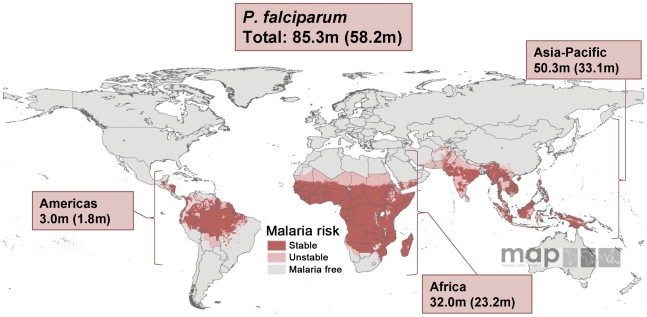
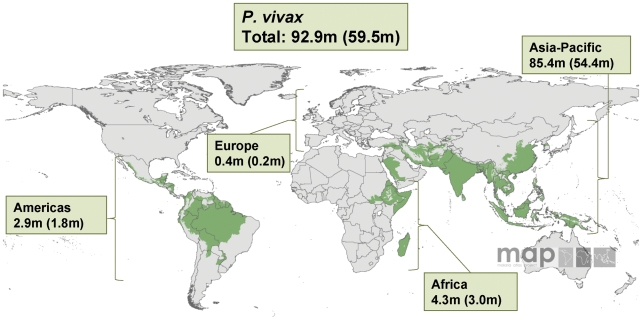
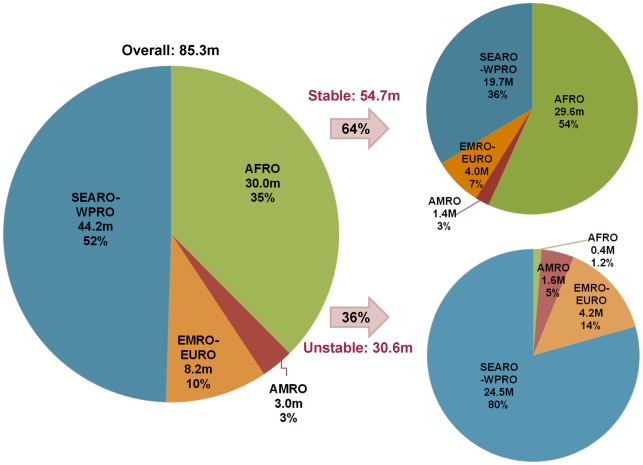
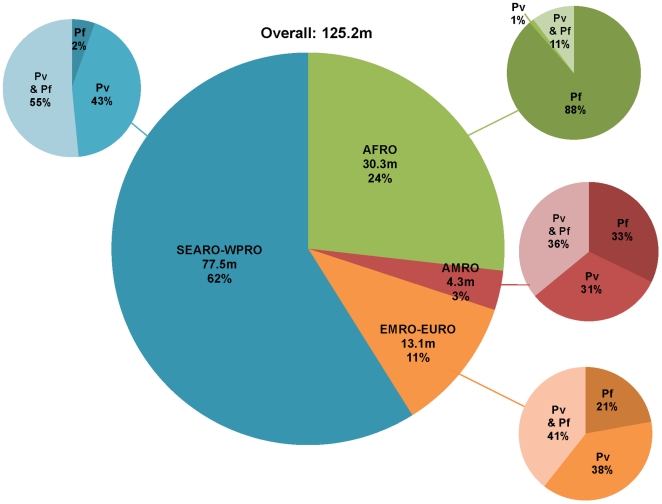
BACKGROUND: Comprehensive and contemporary estimates of the number of pregnancies at risk of malaria are not currently available, particularly for endemic areas outside of Africa. We derived global estimates of the number of women who became pregnant in 2007 in areas with Plasmodium falciparum and P. vivax transmission. METHODS AND FINDINGS: A recently published map of the global limits of P. falciparum transmission and an updated map of the limits of P. vivax transmission were combined with gridded population data and growth rates to estimate total populations at risk of malaria in 2007. Country-specific demographic data from the United Nations on age, sex, and total fertility rates were used to estimate the number of women of child-bearing age and the annual rate of live births. Subregional estimates of the number of induced abortions and country-specific stillbirths rates were obtained from recently published reviews. The number of miscarriages was estimated from the number of live births and corrected for induced abortion rates. The number of clinically recognised pregnancies at risk was then calculated as the sum of the number of live births, induced abortions, spontaneous miscarriages, and stillbirths among the population at risk in 2007. In 2007, 125.2 million pregnancies occurred in areas with P. falciparum and/or P. vivax transmission resulting in 82.6 million live births. This included 77.4, 30.3, 13.1, and 4.3 million pregnancies in the countries falling under the World Health Organization (WHO) regional offices for South-East-Asia (SEARO) and the Western-Pacific (WPRO) combined, Africa (AFRO), Europe and the Eastern Mediterranean (EURO/EMRO), and the Americas (AMRO), respectively. Of 85.3 million pregnancies in areas with P. falciparum transmission, 54.7 million occurred in areas with stable transmission and 30.6 million in areas with unstable transmission (clinical incidence <1 per 10,000 population/year); 92.9 million occurred in areas with P. vivax transmission, 53.0 million of which occurred in areas in which P. falciparum and P. vivax co-exist and 39.9 million in temperate regions with P. vivax transmission only. CONCLUSIONS: In 2007, 54.7 million pregnancies occurred in areas with stable P. falciparum malaria and a further 70.5 million in areas with exceptionally low malaria transmission or with P. vivax only. These represent the first contemporary estimates of the global distribution of the number of pregnancies at risk of P. falciparum and P. vivax malaria and provide a first step towards a more informed estimate of the geographical distribution of infection rates and the corresponding disease burden of malaria in pregnancy.
Overview
The claims and statistics of this paper haven’t been checked yet.
Free: it reads the open-access text and checks the first 5 claims that cite a source we can check. Create a free account to check every claim.
Integrity signals
Registry
Cites
Statistics
Figures
Verification
Claims the paper makes
The claims and statistics of this paper haven’t been checked yet.
Free: it reads the open-access text and checks the first 5 claims that cite a source we can check. Create a free account to check every claim.
Claims other papers make about this one
Each is checked against this paper’s own text: does it say what the citing paper says it does?
The cited source doesn’t support the claim as written.
In the citing paper
“Previous estimates of pregnancies at risk of malaria have used the same metric [20, 38]”
From Global estimates of pregnancies at risk of Plasmodium falciparum and Plasmodium vivax infection in 2020 and changes in risk patterns since 2000 (2022) · cites this paper as [20]
Checked by a reasoning model — may be wrong.
Experimental — accuracy not yet measuredThe source backs part of the claim, not all of it — or backs it for a different population, condition or comparison.
In the citing paper
“In the absence of an effective vaccine, malaria during pregnancy remains a significant public health problem [19].”
From Current update on malaria in pregnancy: a systematic review (2025) · cites this paper as [19]
Experimental — accuracy not yet measuredThe source backs part of the claim, not all of it — or backs it for a different population, condition or comparison.
In the citing paper
“In addition, the genetic diversity of P.vivax is remarkable, with the existence of different haplotypes (groups of genetic variations) and the ability to develop at lower temperatures, in contrast to the lower genetic diversity observed in P.falciparum.”
From Current update on malaria in pregnancy: a systematic review (2025) · cites this paper as [163]
Experimental — accuracy not yet measuredThe source backs part of the claim, not all of it — or backs it for a different population, condition or comparison.
In the citing paper
“A phylogenetic analysis examining the evolutionary relationships between the organisms shows that the P.vivax population is globally distributed among pregnant women [163–166].”
From Current update on malaria in pregnancy: a systematic review (2025) · cites this paper as [163]
Experimental — accuracy not yet measuredThe source backs part of the claim, not all of it — or backs it for a different population, condition or comparison.
In the citing paper
“Interestingly, P.falciparum has been linked to specific genotypes associated with asymptomatic infections at the time of delivery.”
From Current update on malaria in pregnancy: a systematic review (2025) · cites this paper as [164]
Experimental — accuracy not yet measured
15 more claims about this paper
Create a free account to see every claim other papers make about this one.
Self-check
Percentages, sums and reported differences re-computed from the paper’s own numbers.
The self-check needs the paper’s full text.
Citations
Cites
The global distribution of clinical episodes of Plasmodium falciparum malaria
Snow, R. W., Guerra, C. A., Noor, A. M., Myint, H. Y., & Hay, S. I. (2005) · Nature · doi:10.1038/nature03342 · Cited by 2,741 · cited 2×
“falciparum [12] due to its global epidemiological significance [13] and better prospects for its control and local elimination [14].”
BackgroundMethodSelf-citationDivision, U. P. (1991) · Cited by 1,434
Epidemiology and burden of malaria in pregnancy
Desai, M., ter Kuile, F. O., Nosten, F., McGready, R., Asamoa, K., Brabin, B., & Newman, R. D. (2007) · The Lancet Infectious Diseases · doi:10.1016/s1473-3099(07)70021-x · Cited by 1,432 · cited 2×
“Although malaria in pregnancy is associated with miscarriages and stillbirths [30], the majority of the health and economic burden is likely through the impact on pregnancies that result in live births by increasing the risk of preterm births and low birth-weight [30] and by modifying the susceptibility to malaria in…”
BackgroundA new world malaria map: Plasmodium falciparum endemicity in 2010
Gething, P. W., Patil, A. P., Smith, D. L., Guerra, C. A., Elyazar, I. R., Johnston, G. L., Tatem, A. J., & Hay, S. I. (2011) · Malaria Journal · doi:10.1186/1475-2875-10-378 · Cited by 1,146
Self-citationThe global distribution and population at risk of malaria: past, present, and future
Hay, S. I., Guerra, C. A., Tatem, A. J., Noor, A. M., & Snow, R. W. (2004) · The Lancet Infectious Diseases · doi:10.1016/s1473-3099(04)01043-6 · Cited by 1,001 · cited 3×
“It is the major cause of malaria in much of Asia and Latin America [6] [7], and recent evidence has shown that P. vivax infections are far from benign and can result in significant morbidity in pregnant women with serious consequences for maternal and infant health [8] [9] [10].”
BackgroundSelf-citationSnow, R. W., Craig, M., Deichmann, U., & Marsh, K. (1999) · PubMed · Cited by 735
Self-citationA World Malaria Map: Plasmodium falciparum Endemicity in 2007
Hay, S. I., Guerra, C. A., Gething, P. W., Patil, A. P., Tatem, A. J., Noor, A. M., Kabaria, C. W., Manh, B. H., Elyazar, I. R. F., Brooker, S., et al. (2009) · PLoS Medicine · doi:10.1371/journal.pmed.1000048 · Cited by 505 · cited 8×
“falciparum transmission intensity model of risk within the defined stable limits which was developed recently by the Malaria Atlas Project [31], allowing disease impact calculations across multiple transmission strata to be made.”
BackgroundInfluentialSelf-citationStillbirth rates: delivering estimates in 190 countries
Stanton, C., Lawn, J. E., Rahman, H., Wilczynska-Ketende, K., & Hill, K. (2006) · The Lancet · doi:10.1016/s0140-6736(06)68586-3 · Cited by 495 · cited 1×
“[25] that derived data from vital registration, demographic and health surveys (DHS), and data from study reports integrated into a regression model.”
MethodDetermining Global Population Distribution: Methods, Applications and Data
Balk, D. L., Deichmann, U., Yetman, G., Pozzi, F., Hay, S. I., & Nelson, A. (2006) · Advances in Parasitology · doi:10.1016/s0065-308x(05)62004-0 · Cited by 490 · cited 2×
“The Global Rural-Urban Mapping Project (GRUMP) alpha version provides gridded population counts and population density estimates for the years 1990, 1995, and 2000, both adjusted and unadjusted to the United Nations’ national population estimates [11,20].”
BackgroundMethodInduced abortion: estimated rates and trends worldwide
Sedgh, G., Henshaw, S., Singh, S., Åhman, E., & Shah, I. H. (2007) · The Lancet · doi:10.1016/s0140-6736(07)61575-x · Cited by 474
Research works printed but not linked: 3
- United Nations Children's Fund 1998 The state of the world's children New York Oxford University Press
- Leridon H 1977 Human fertility: the basic components (Table 4.20) Chicago University of Chicago Press
- Hammerslough CR 1992 Estimating the probability of spontaneous abortion in the presence of induced abortion and vice versa. Public Health Rep 107 269 277 1594736 PMC1403646
Cited by
Items 101–200 of 486
Dombrowski, J. G., Souza, R. M. D., Silva, N. R. M., Barateiro, A., Epiphanio, S., Gonçalves, L. A., & Marinho, C. R. F. (2018) · PLOS ONE · doi:10.1371/journal.pone.0199415 · Cited by 43
Silver, K. L., Conroy, A. L., Leke, R. G. F., Leke, R. J. I., Gwanmesia, P., Molyneux, M. E., Wallace, D. T., Rogerson, S. J., & Kain, K. C. (2011) · PLoS ONE · doi:10.1371/journal.pone.0024985 · Cited by 43
“falciparum infection every year [6], there is a need to better understand the mediators of poor”
BackgroundChandrasiri, U. P., Randall, L. M., Saad, A. A., Bashir, A. M., Rogerson, S. J., & Adam, I. (2014) · The Journal of Infectious Diseases · doi:10.1093/infdis/jit646 · Cited by 44
“Over 125 million pregnancies are at risk of malaria infection every year [1], resulting in 10,000 maternal and 100,0000-200,000 infant deaths annually [2, 3].”
BackgroundFowkes, F. J. I., Moore, K. A., Opi, D. H., Simpson, J. A., Langham, F. J., Stanisic, D. I., Ura, A., King, C. L., Siba, P. M., Müeller, I., et al. (2018) · BMC Medicine · doi:10.1186/s12916-018-1146-z · Cited by 48
Effects of Malaria in the First Trimester of Pregnancy on Poor Maternal and Birth Outcomes in Benin
Accrombessi, M., Yovo, E., Fiévet, N., Cottrell, G., Agbota, G., Gartner, A., Martin‐Prével, Y., Vianou, B., Sossou, D., Fanou‐Fogny, N., et al. (2018) · Clinical Infectious Diseases · doi:10.1093/cid/ciy1073 · Cited by 58
“Over 125 million pregnancies are exposed to malaria each year, with sub-Saharan Africa 66 (SSA) accounting for 25% of this total burden [1].”
BackgroundUndernutrition and malaria in pregnancy – a dangerous dyad?
Unger, H. W., Ashorn, P., Cates, J., Dewey, K. G., & Rogerson, S. J. (2016) · BMC Medicine · doi:10.1186/s12916-016-0695-2 · Cited by 49
“In LMICs, populations are often affected by both hunger and malaria [2, 8], and the two may interact (Fig.”
BackgroundTarning, J., Kloprogge, F., Piola, P., Dhorda, M., Muwanga, S., Turyakira, E., Nuengchamnong, N., Nosten, F., Day, N. P., White, N. J., et al. (2012) · Malaria Journal · doi:10.1186/1475-2875-11-293 · Cited by 43
“3 million pregnancies occurred in 2007 in areas with Plasmodium falciparum transmission [2].”
BackgroundPaesano, R., Natalizi, T., Berlutti, F., & Valenti, P. (2012) · Pathogens and Global Health · doi:10.1179/2047773212y.0000000043 · Cited by 48
McDonald, C. R., Cahill, L. S., Ho, K. T., Yang, J., Kim, H., Silver, K., Ward, P. A., Mount, H. T. J., Liles, W. C., Sled, J. G., et al. (2015) · PLoS Pathogens · doi:10.1371/journal.ppat.1005140 · Cited by 46
“Each year, an estimated 125 million pregnancies worldwide are at risk of malaria infection [1].”
Global prevalence of congenital malaria: A systematic review and meta-analysis
Bilal, J. A., Malik, E. E., Al‐Nafeesah, A., & Adam, I. (2020) · European Journal of Obstetrics & Gynecology and Reproductive Biology · doi:10.1016/j.ejogrb.2020.06.025 · Cited by 45
MAIP: a web service for predicting blood‐stage malaria inhibitors
Bosc, N., Félix, E., Arcila, R., Méndez, D., Saunders, M. R., Green, D. V. S., Ochoada, J., Shelat, A. A., Martin, É., Iyer, P., et al. (2021) · Journal of Cheminformatics · doi:10.1186/s13321-021-00487-2 · Cited by 47
Chêne, A., Briand, V., Ibitokou, S. A., Dechavanne, S., Massougbodji, A., Deloron, P., Luty, A. J. F., Gamain, B., & Fiévet, N. (2014) · Infection and Immunity · doi:10.1128/iai.01922-14 · Cited by 53
IFN-gamma and TNF associated with severe falciparum malaria infection in Saudi pregnant women
Nasr, A., Allam, G. A., Hamid, O., & Al-Ghamdi, A. (2014) · Malaria Journal · doi:10.1186/1475-2875-13-314 · Cited by 48
“falciparum infection every year [5], there is a need to better understand the mediators of poor clinical outcome of pregnancy-associated malaria (PAM) [6].”
BackgroundThe immune response to malaria in utero
Feeney, M. E. (2019) · Immunological Reviews · doi:10.1111/imr.12806 · Cited by 46
Taylor, S. M., van Eijk, A. M., Hand, C. C., Mwandagalirwa, K., Messina, J. P., Tshefu, A. K., Atua, B., Emch, M., Muwonga, J. M., Meshnick, S. R., et al. (2011) · The Journal of Infectious Diseases · doi:10.1093/infdis/jir625 · Cited by 48
“sub–Saharan Africa, a recent spatial demographic study estimated that 31 million pregnancies occur annually that result in approximately 23 million live births [9].”
BackgroundMethodInfluentialAdam, I., Tärning, J., Lindegårdh, N., Mahgoub, H. M., McGready, R. M., & Nosten, F. H. (2012) · American Journal of Tropical Medicine and Hygiene · doi:10.4269/ajtmh.2012.11-0410 · Cited by 43
“3 million African women become pregnant in malaria-endemic areas.(1)”
BackgroundVásquez, A. M., Zuluaga, L. M., Tobón-Castaño, A., Posada, M., Tobón, G. J. V., González, I. J., Campillo, A., & Ding, X. C. (2018) · Malaria Journal · doi:10.1186/s12936-018-2403-5 · Cited by 47
Scott, S., D’Alessandro, U., Kendall, L., Bradley, J., Bojang, K., Correa, S., Njie, F., Tinto, H., Traoré‐Coulibaly, M., Natama, H. M., et al. (2018) · Clinical Infectious Diseases · doi:10.1093/cid/ciy522 · Cited by 48
“Malaria causes significant adverse pregnancy outcomes, such as maternal anemia, preterm delivery, low birth weight [1], and even maternal and infant death [2, 3].”
BackgroundBoene, H. E., González, R., Valá, A., Rupérez, M., Velasco, C., Machevo, S., Sacoor, C. N., Sevene, E., Macete, E., Menéndez, C., et al. (2014) · PLoS ONE · doi:10.1371/journal.pone.0086038 · Cited by 51
Tahita, M. C., Tinto, H., Menten, J., Ouédraogo, J., Guiguemdé, R. T., Geertruyden, J. V., Erhart, A., & D’Alessandro, U. (2013) · Malaria Journal · doi:10.1186/1475-2875-12-464 · Cited by 49
“Malaria in pregnancy (MiP) is a major public health problem in e ndemic countries where 31 million pregnancies occur annually, resulting in approximately 23 mill ion ive births [1].”
BackgroundRiley, C., Dellicour, S., Ouma, P., Kioko, U., ter Kuile, F. O., Omar, A. H., Kariuki, S., Buff, A. M., Desai, M. R., & Gutman, J. (2016) · PLoS ONE · doi:10.1371/journal.pone.0145616 · Cited by 48
“3 million of these occur in Kenya [1].”
BackgroundSelf-citationExploring Risk Perception and Attitudes to Miscarriage and Congenital Anomaly in Rural Western Kenya
Dellicour, S., Desai, M. R., Mason, L., Odidi, B., Aol, G., Phillips‐Howard, P. A., Laserson, K. F., & ter Kuile, F. O. (2013) · PLoS ONE · doi:10.1371/journal.pone.0080551 · Cited by 48
Self-citationImpact of Pregnancy-Associated Malaria on Infant Malaria Infection in Southern Benin
Borgella, S., Fievet, N., Huynh, B.-T., Ibitokou, S., Hounguevou, G., Affedjou, J., Sagbo, J.-C., Houngbegnon, P., Guezo-Mévo, B., Massougbodji, A., et al. (2013) · PLoS ONE · doi:10.1371/journal.pone.0080624 · Cited by 39
“Each year 125 million pregnancies are at risk of infection with Plasmodium falciparum in endemic areas [1].”
BackgroundSafety of artemether-lumefantrine exposure in first trimester of pregnancy: an observational cohort
Mosha, D., Mazuguni, F., Mrema, S., Sevene, E., Abdulla, S., & Genton, B. (2014) · Malaria Journal · doi:10.1186/1475-2875-13-197 · Cited by 38
“Over 60% of all pregnancies globally are at risk of malaria and more than 32 million are in sub-Sahara Africa [1].”
BackgroundInfluentialSaito, M., Mansoor, R., Kennon, K., Anvikar, A. R., Ashley, E. A., Chandramohan, D., Cohee, L. M., D'Alessandro, U., Genton, B., Gilder, M. E., et al. (2020) · The Lancet Infectious Diseases · doi:10.1016/s1473-3099(20)30064-5 · Cited by 39
Ahmed, R., Levy, E. I., Maratina, S. S., de Jong, J. J., Asih, P. B. S., Rozi, I. E., Hawley, W., Syafruddin, D., & ter Kuile, F. (2015) · Malaria Journal · doi:10.1186/s12936-015-0943-5 · Cited by 38
“3 million pregnancies are potentially at risk of Plasmodium falciparum or Plasmodium vivax malaria [1] and the corresponding risk of malaria associated maternal anaemia and low birth weight due to pre-term delivery or intra-uterine growth retardation [2–4].”
BackgroundMuhindo, M. K., Kakuru, A., Natureeba, P., Awori, P., Olwoch, P., Ategeka, J., Nayebare, P., Clark, T. D., Muehlenbachs, A., Roh, M. E., et al. (2016) · Malaria Journal · doi:10.1186/s12936-016-1489-x · Cited by 41
“Background In sub-Saharan Africa, over 30 million pregnancies occur annually in areas where malaria is endemic, and each year malaria in pregnancy is estimated to cause nearly one million low birth weight (LBW) deliveries and up to 100,000 infant deaths [1–3].”
BackgroundAccrombessi, M., Zeitlin, J. A., Massougbodji, A., Cot, M., & Briand, V. (2017) · Paediatric and Perinatal Epidemiology · doi:10.1111/ppe.12433 · Cited by 48
Accrombessi, M., Fiévet, N., Yovo, E., Cottrell, G., Agbota, G., Massougbodji, A., Cot, M., & Briand, V. (2018) · The Journal of Infectious Diseases · doi:10.1093/infdis/jiy009 · Cited by 55
“In endemic areas, malaria threatens 125 million pregnancies each year, with sub-Saharan Africa accounting for 25% of this total burden [1].”
Umbers, A. J., Unger, H. W., Rosanas-Urgell, A., Wangnapi, R. A., Kattenberg, J. H., Jally, S., Silim, S., Lufele, E., Karl, S., Ome-Kaius, M., et al. (2015) · Malaria Journal · doi:10.1186/s12936-015-0927-5 · Cited by 37
“Globally 125 million pregnancies remain at risk of malaria exposure [2], three quarters of which occur in the Asia–Pacific region.”
BackgroundAgudelo, O. M., Aristizabal, B. H., Yanow, S. K., Arango, E., Carmona-Fonseca, J., & Maestre, A. (2014) · Malaria Journal · doi:10.1186/1475-2875-13-122 · Cited by 37
“Background Globally, an estimated 125 million pregnancies are at risk of malaria each year [1] and the disease causes substantial maternal and infant morbidity/mortality [2].”
BackgroundThe Role of Transporters in Toxicity and Disease
Schuetz, J. D., Swaan, P. W., & Tweedie, D. (2014) · Drug Metabolism and Disposition · doi:10.1124/dmd.114.057539 · Cited by 37
“In Sub-Saharan Africa, an estimated 25% of all pregnancies are complicated by placental malaria infection (Dellicour et al., 2010).”
BackgroundAsia-Pacific malaria is singular, pervasive, diverse and invisible
Baird, J. K. (2016) · International Journal for Parasitology · doi:10.1016/j.ijpara.2016.06.006 · Cited by 43
“Another distinct problem with P. vivax is the inability to offer primaquine therapy against relapse to 93 million at-risk and highly vulnerable pregnant women and their infants, together with several hundred million G6PD-deficient patients living at risk (Dellicour et al., 2010; Howes et al., 2012).”
BackgroundDeterminants of uptake of intermittent preventive treatment during pregnancy: a review
Roman, E., Andrejko, K. L., Wolf, K., Henry, M., Youll, S., Florey, L., Ferenchick, E. K., & Gutman, J. (2019) · Malaria Journal · doi:10.1186/s12936-019-3004-7 · Cited by 39
Avery, J. W., Smith, G., Owino, S. O., Sarr, D., Nagy, T., Mwalimu, S., Matthias, J., Kelly, L. F., Poovassery, J. S., Middii, J. D., et al. (2012) · PLoS ONE · doi:10.1371/journal.pone.0031090 · Cited by 41
“[1].”
Arnaldo, P., Rovira-Vallbona, E., Langa, J. S., Salvador, C., Guetens, P., Chiheb, D., Xavier, B., Kestens, L., Enosse, S. M., & Rosanas‐Urgell, A. (2018) · Malaria Journal · doi:10.1186/s12936-018-2255-z · Cited by 44
“It is estimated that in the SSA region, 32 million pregnant women are at risk of acquiring malaria in pregnancy (MiP) every year [2, 3].”
BackgroundKakuru, A., Staedke, S. G., Dorsey, G., Rogerson, S. J., & Chandramohan, D. (2019) · Malaria Journal · doi:10.1186/s12936-019-2943-3 · Cited by 39
Mchwampaka, W. M., Tarimo, D. S., Chacky, F., Mohamed, A. J., Kishimba, R. S., & Samwel, A. (2019) · BMC Pregnancy and Childbirth · doi:10.1186/s12884-019-2592-0 · Cited by 38
Mace, K. E., Chalwe, V., Katalenich, B. L., Nambozi, M., Mubikayi, L., Mulele, C. K., Wiegand, R. E., Filler, S. J., Kamuliwo, M., Craig, A. S., et al. (2015) · Malaria Journal · doi:10.1186/s12936-015-0576-8 · Cited by 35
“Approximately 32 million pregnancies per year occurring in regions of sub-Saharan Africa are at risk for malaria [1], and an estimated 200,000 of them occur in Zambia [2].”
BackgroundAhmed, R., Singh, N., ter Kuile, F. O., Bharti, P. K., Singh, P. P., Desai, M., Udhayakumar, V., & Terlouw, D. J. (2014) · Malaria Journal · doi:10.1186/1475-2875-13-232 · Cited by 35
“Background An estimated 125 million pregnant women worldwide are exposed to the risks of malaria in pregnancy (MiP) every year, contributing to morbidity and mortality in pregnant women and newborn babies [1,2].”
BackgroundSaito, M., Gilder, M. E., Nosten, F. H., McGready, R. M., & Guerin, P. J. (2017) · Malaria Journal · doi:10.1186/s12936-017-2135-y · Cited by 35
“Background Approximately 60% of all pregnancies worldwide take place in malaria endemic areas, leading to 125 million pregnant women at risk of malaria every year [1].”
BackgroundThe case for PfEMP1-based vaccines to protect pregnant women against Plasmodium falciparum malaria
Hviid, L. (2011) · Expert Review of Vaccines · doi:10.1586/erv.11.113 · Cited by 34
de Kock, M., Tarning, J., Workman, L., Nyunt, M., Adam, I., Barnes, K., & Denti, P. (2017) · CPT: Pharmacometrics & Systems Pharmacology · doi:10.1002/psp4.12181 · Cited by 34
Andrews, K. G., Lynch, M., Eckert, E. L., & Gutman, J. (2015) · Malaria Journal · doi:10.1186/s12936-015-1033-4 · Cited by 40
“In addition to children under five, malaria disproportionately affects pregnant women, and an estimated 125 million pregnancies occur annually in malaria-endemic areas [4].”
BackgroundBoudová, S., Divala, T., Mungwira, R., Mawindo, P., Tomoka, T., & Laufer, M. K. (2017) · The Journal of Infectious Diseases · doi:10.1093/infdis/jix372 · Cited by 35
Plasmodium vivax Malaria during Pregnancy, Bolivia
Brutus, L., Santalla, J., Schneider, D., Avila, J. C., & Deloron, P. (2013) · Emerging Infectious Diseases · doi:10.3201/eid1910.130308 · Cited by 34
Boudová, S., Divala, T. H., Mawindo, P., Cohee, L. M., Kalilani‐Phiri, L., Thesing, P. C., Taylor, T. E., & Laufer, M. K. (2015) · Malaria Journal · doi:10.1186/s12936-015-0945-3 · Cited by 40
In vivo Multiphoton Microscopy Technique to Reveal the Physiology of the Mouse Placenta
Zenclussen, A. C., Olivieri, D. N., Dustin, M. L., & Tadokoro, C. E. (2012) · American Journal of Reproductive Immunology · doi:10.1111/j.1600-0897.2012.01161.x · Cited by 34
McClure, E. M., Meshnick, S. R., Lazebnik, N., Mungai, P., King, C. L., Hudgens, M. G., Goldenberg, R. L., Siega‐Riz, A. M., & Dent, A. E. (2014) · International Journal of Gynecology & Obstetrics · doi:10.1016/j.ijgo.2014.01.016 · Cited by 41
“Malaria in pregnancy causes lowbirthweight, amajor contributor to neonatal mortality and morbidity worldwide [1–5].”
BackgroundPatel, J. C., Hathaway, N. J., Parobek, C. M., Thwai, K. L., Madanitsa, M., Khairallah, C., Kalilani‐Phiri, L., Mwapasa, V., Massougbodji, A., Fiévet, N., et al. (2017) · Scientific Reports · doi:10.1038/s41598-017-04737-y · Cited by 38
Azizi, S. C. (2020) · BMC Public Health · doi:10.1186/s12889-020-08471-5 · Cited by 38
Tonga, C., Kimbi, H. K., Anchang-Kimbi, J. K., Nyabeyeu, H. N., Bissemou, Z. B., & Lehman, L. G. (2013) · PLoS ONE · doi:10.1371/journal.pone.0065876 · Cited by 45
“More than half of the world’s population is at risk of malaria and the vast majority of cases are from sub-Saharan Africa, where about 30 million pregnant women are highly exposed to the disease each year [1].”
BackgroundNdeserua, R., Juma, A., Mosha, D., & Chilongola, J. O. (2015) · African Health Sciences · doi:10.4314/ahs.v15i3.15 · Cited by 39
Arnaldo, P., Cambe, M. I., Magaço, A., Chicumbe, S., Rovira-Vallbona, E., Rosanas‐Urgell, A., & Enosse, S. M. (2019) · PLoS ONE · doi:10.1371/journal.pone.0203740 · Cited by 38
Balcha, F., Menna, T., & Lombamo, F. (2023) · Malaria Journal · doi:10.1186/s12936-023-04460-2 · Cited by 38
“It increases the risk of stillbirths, spontaneous abortion, premature delivery, and low birth weight [5, 6].”
BackgroundOrish, V. N., Onyeabor, O. S., Boampong, J. N., Acquah, S., Sanyaolu, A. O., & Iriemenam, N. C. (2012) · International Journal of Gynecology & Obstetrics · doi:10.1016/j.ijgo.2012.09.021 · Cited by 37
“In Sub-Saharan Africa, approximately 30 million pregnant women are affected with malaria annually; up to 10 000 maternal deaths and 200 000 newborn deaths occur as a result of Plasmodium falciparum infection each year [1,2].”
BackgroundPregnant women are a reservoir of malaria transmission in Blantyre, Malawi
Boudová, S., Cohee, L. M., Kalilani‐Phiri, L., Thesing, P. C., Kamiza, S., Muehlenbachs, A., Taylor, T. E., & Laufer, M. K. (2014) · Malaria Journal · doi:10.1186/1475-2875-13-506 · Cited by 37
“Every year, 125 million pregnancies occur in malaria-endemic countries [1].”
BackgroundLopez-Perez, M., Pacheco, M. A., Buriticá, L., Escalante, A. A., Herrera, S., & Arévalo-Herrera, M. (2016) · Malaria Journal · doi:10.1186/s12936-016-1125-9 · Cited by 34
“About 125 million women are at risk of acquiring malaria infections during pregnancy [2], mainly in Africa where Plasmodium falciparum is the predominant malaria parasite.”
BackgroundInfluentialChico, R. M., Dellicour, S., Roman, E., Mangiaterra, V., Coleman, J., Menendez, C., Majeres-Lugand, M., Webster, J., & Hill, J. (2015) · Malaria Journal · doi:10.1186/s12936-015-0728-x · Cited by 32
“Close to 32 million pregnancies occur every year in areas of stable malaria transmission where the World Health Organization (WHO) recommends a three-pronged approach to control MiP: the provision of intermittent preventive treatment in pregnancy (IPTp) using sulphadoxine-pyrimethamine (SP), the use of insecticide-tre…”
BackgroundSelf-citationFigueroa-Romero, A., Pons‐Duran, C., & González, R. (2022) · Tropical Medicine and Infectious Disease · doi:10.3390/tropicalmed7080152 · Cited by 39
Mutanyi, J. A., Onguru, D., Ogolla, S., & Adipo, L. B. (2021) · Infectious Diseases of Poverty · doi:10.1186/s40249-021-00887-4 · Cited by 36
Christensen, D. L., Kapur, A., & Bygbjerg, I. C. (2011) · International Journal of Gynecology & Obstetrics · doi:10.1016/s0020-7292(11)60006-4 · Cited by 40
Tan, K. R., Katalenich, B., Mace, K. E., Nambozi, M., Taylor, S. M., Meshnick, S. R., Wiegand, R. E., Chalwe, V., Filler, S., Kamuliwo, M., et al. (2014) · Malaria Journal · doi:10.1186/1475-2875-13-227 · Cited by 43
“Two (2%, 95% CI [1-8]) of the samples had mutations at codon 581 of dhps and both of these samples also had”
BackgroundBriggs, J. J., Ategeka, J., Kajubi, R., Ochieng, T., Kakuru, A., Ssemanda, C., Wasswa, R., Jagannathan, P., Greenhouse, B., Rodríguez-Barraquer, I., et al. (2019) · The Journal of Infectious Diseases · doi:10.1093/infdis/jiz130 · Cited by 38
“Frequent assessments for parasitemia applyparastyle “fig//caption/p[1]” parastyle “FigCapt””
Malaria in pregnancy: Meta-analyses of prevalence and associated complications
Das, J. K., Lakhani, S., Rahman, A. R., Siddiqui, F., Ali Padhani, Z., Rashid, Z., Mahmud, O., Naqvi, S. K., Amir Naseem, H., Jehanzeb, H., et al. (2024) · Epidemiology and Infection · doi:10.1017/s0950268824000177 · Cited by 31
“About125millionpregnantwomenworldwideareatriskof contractingmalariacausedbyeitherPlasmodiumfalciparumor Plasmodiumvivaxeachyear[9].”
Dombrowski, J. G., Souza, R. M. D., Lima, F. A., Bandeira, C. L., Murillo, O., Costa, D. D. S., Peixoto, E. P. M., Cunha, M. D. P., Zanotto, P. M. D. A., Bevilacqua, E., et al. (2019) · JAMA Network Open · doi:10.1001/jamanetworkopen.2019.3300 · Cited by 31
Nyunt, M. M., Nguyen, V. K., Kajubi, R., Huang, L., Ssebuliba, J., Kiconco, S., Mwima, M. W., Achan, J., Aweeka, F. T., Parikh, S., et al. (2015) · Antimicrobial Agents and Chemotherapy · doi:10.1128/aac.01605-15 · Cited by 35
Effectiveness of the delivery of interventions to prevent malaria in pregnancy in Kenya
Dellicour, S., Hill, J., Bruce, J., Ouma, P., Marwanga, D., Otieno, P., Desai, M. R., Hamel, M. J., Kariuki, S., & Webster, J. (2016) · Malaria Journal · doi:10.1186/s12936-016-1261-2 · Cited by 35
“25 % for Kenya in 2010 [8] or 17 % for Nyanza Province [7]) as the presented estimates are derived from a cross-section of pregnant women not capturing the IPTp coverage for the whole pregnancy period and represent IPTp eligible women coming to ANC whereas estimates from demographic health surveys and/or malaria indic…”
BackgroundSelf-citationEpidemiology of Plasmodium vivax in Indonesia
Surjadjaja, C., Surya, A., & Baird, J. K. (2016) · American Journal of Tropical Medicine and Hygiene · doi:10.4269/ajtmh.16-0093 · Cited by 45
Vásquez, A. M., Tobón, G. J. V., Medina, A. C., Serra‐Casas, E., Campillo, A., Gonzalez, I. J., Murphy, S., Seilie, A. M., Ding, X. C., & Tobón-Castaño, A. (2020) · BMC Pregnancy and Childbirth · doi:10.1186/s12884-020-03114-4 · Cited by 32
Fucosylated Chondroitin Sulfate Inhibits Plasmodium falciparum Cytoadhesion and Merozoite Invasion
Bastos, M. F., Albrecht, L., Kozlowski, E. O., Lopes, S. C. P., Blanco, Y. C., Carlos, B. C., Castiñeiras, C., Vicente, C. P., WERNECK, C. C., Wunderlich, G., et al. (2014) · Antimicrobial Agents and Chemotherapy · doi:10.1128/aac.00686-13 · Cited by 32
“MiP affects 125 million women each year and results in 200,000 infant deaths (2, 3).”
BackgroundOlofin, I. O., Spiegelman, D., Aboud, S., Duggan, C., Danaei, G., & Fawzi, W. W. (2014) · JAIDS Journal of Acquired Immune Deficiency Syndromes · doi:10.1097/qai.0000000000000375 · Cited by 30
“Millions of pregnancies occur each year in world regions affected by malaria transmission.(1) Malaria in pregnancy may cause maternal anemia, maternal mortality, premature pregnancy termination,(2) and low birth weight or death of the offspring.”
BackgroundGore-Langton, G. R., Cano, J., Simpson, H., Tatem, A., Tejedor-Garavito, N., Wigley, A., Carioli, A., Gething, P., Weiss, D. J., Chandramohan, D., et al. (2022) · PLOS Global Public Health · doi:10.1371/journal.pgph.0001061 · Cited by 30
Self-citationNambozi, M., Tinto, H., Mwapasa, V., Tagbor, H. K., Kabuya, J.-B. B., Hachizovu, S., Traoré‐Coulibaly, M., Valéa, I., Tahita, M. C., Ampofo, G. D., et al. (2019) · Malaria Journal · doi:10.1186/s12936-019-2737-7 · Cited by 31
Chandra, R., Orazem, J. P., Ubben, D., Duparc, S., Robbins, J. L., & Vandenbroucke, P. (2013) · Malaria Journal · doi:10.1186/1475-2875-12-122 · Cited by 32
“5 million in areas with Plasmodium vivax only or low transmission [1].”
BackgroundAndrew, E. V. W., Pell, C. L., Angwin, A., Auwun, A., Daniels, J., Müeller, I., Phuanukoonnon, S., & Pool, R. (2015) · PLoS ONE · doi:10.1371/journal.pone.0119077 · Cited by 37
Malaria in Pregnancy and Adverse Birth Outcomes: New Mechanisms and Therapeutic Opportunities
Ngai, M., Weckman, A. M., Erice, C., McDonald, C. R., Cahill, L. S., Sled, J. G., & Kain, K. C. (2019) · Trends in Parasitology · doi:10.1016/j.pt.2019.12.005 · Cited by 36
Accrombessi, M., Ouédraogo, S., Agbota, G., González, R., Massougbodji, A., Menéndez, C., & Cot, M. (2015) · PLoS ONE · doi:10.1371/journal.pone.0129510 · Cited by 41
“Malaria in pregnancy (MiP), a commonplace disease in these areas [2], is the main risk factor for anaemia during gestation, with the most important negative impact on maternal haemoglobin (Hb) observed in primigravidae [3].”
BackgroundVásquez, A.-M., Zuluaga-Idárraga, L., Arboleda, M., Usuga, L.-Y., Gallego-Marin, C., Lasso, A., Carbal, L., Piñeros-Jiménez, J.-G., & Tobón-Castaño, A. (2020) · Infectious Diseases in Obstetrics and Gynecology · doi:10.1155/2020/2750258 · Cited by 31
Molecular Principles of Intrauterine Growth Restriction in Plasmodium Falciparum Infection
Seitz, J., Prieto, D. M. M., Fávaro, R. R., Schneider, H., & Markert, U. R. (2019) · Frontiers in Endocrinology · doi:10.3389/fendo.2019.00098 · Cited by 37
“falciparum malaria, about 2/3 lived in regions with stable (endemic) malaria (16).”
BackgroundKumar, R., Farzeen, M., Hafeez, A., Achakzai, B. K., Vankwani, M., Lal, M., Iqbal, R., & Somrongthong, R. (2020) · Malaria Journal · doi:10.1186/s12936-020-03298-2 · Cited by 34
Scott, S., Mens, P. F., Tinto, H., Nahum, A., Ruizendaal, E., Pagnoni, F., Grietens, K. P., Kendall, L., Bojang, K., Schallig, H. D. F. H., et al. (2014) · Trials · doi:10.1186/1745-6215-15-340 · Cited by 36
“In sub-Saharan Africa, over 30 million women living in malaria endemic areas become pregnant each year [8], with malaria causing an estimated >10,000 maternal deaths and 75,000 to 200,000 infant deaths.”
BackgroundHoyt, J., Landuwulang, C. U. R., Ansariadi, A., Ahmed, R., Burdam, F. H., Bonsapia, I., Poespoprodjo, J. R., Syafruddin, D., ter Kuile, F. O., Webster, J., et al. (2018) · Malaria Journal · doi:10.1186/s12936-018-2490-3 · Cited by 30
Mutations of complement lectin pathway genes MBL2 and MASP2 associated with placental malaria
Holmberg, V., Onkamo, P., Lahtela, E., Lahermo, P., Bedu‐Addo, G., Mockenhaupt, F. P., & Meri, S. (2012) · Malaria Journal · doi:10.1186/1475-2875-11-61 · Cited by 34
“falciparum, 85 million pregnancies occur annually, and malariaassociated LBW in Africa results in an estimated 100,000 indirect infant deaths each year [1-3].”
BackgroundNgimuh, L., Fokam, E. B., Anchang-Kimbi, J. K., & Wanji, S. (2016) · Archives of Public Health · doi:10.1186/s13690-016-0116-1 · Cited by 28
“Background Malaria infection during pregnancy is a serious public health problem which can result in maternal and new born morbidity and mortality, especially in sub Saharan Africa where about 30 millions pregnant women are at risk of the disease yearly [1].”
BackgroundCoulibaly, S. O., Kayentao, K., Taylor, S. M., Guirou, E. A., Khairallah, C., Guindo, N., Djimdé, M., Bationo, R., Soulama, A., Dabira, E., et al. (2014) · Malaria Journal · doi:10.1186/1475-2875-13-41 · Cited by 32
“Background In sub-Saharan Africa, malaria places 31 million pregnancies at risk of maternal anaemia and intrauterine growth retardation resulting in low birth weight (LBW) annually [1-3].”
BackgroundPell, C. L., Meñaca, A., Chatio, S. T., Hodgson, A., Tagbor, H. K., & Pool, R. (2014) · Malaria Journal · doi:10.1186/1475-2875-13-432 · Cited by 31
“Furthermore, appropriate health messaging is particularly important in endemic areas where MiP is often asymptomatic [1,38] as is research on AL adherence among pregnant women.”
BackgroundVector-borne diseases in pregnancy
O’Kelly, B., & Lambert, J. S. (2020) · Therapeutic Advances in Infectious Disease · doi:10.1177/2049936120941725 · Cited by 43
Omer, S. A., Franco‐Jarava, C., Noureldien, A., Omer, M., Abdelrahim, M., Molina, I., & Adam, I. (2021) · Malaria Journal · doi:10.1186/s12936-021-03580-x · Cited by 35
Weckman, A. M., Conroy, A. L., Madanitsa, M., Gnaneswaran, B., McDonald, C. R., Kalilani‐Phiri, L., Chandna, J., Ali, D., Mwapasa, V., Khairallah, C., et al. (2021) · PLoS Medicine · doi:10.1371/journal.pmed.1003701 · Cited by 29
Malaria in pregnancy: diagnosing infection and identifying fetal risk
Conroy, A. L., McDonald, C. R., & Kain, K. C. (2012) · Expert Review of Anti-infective Therapy · doi:10.1586/eri.12.123 · Cited by 32
Maestre, A., & Carmona‐Fonseca, J. (2014) · The Journal of Infection in Developing Countries · doi:10.3855/jidc.3777 · Cited by 29
“falciparum transmission [33].”
Hambisa, M. T., Debela, T., Dessie, Y., & Gobena, T. (2018) · BMC Public Health · doi:10.1186/s12889-018-5022-8 · Cited by 29
“Consequently, nearly 10,000 women and 200,000 children die annually in African region alone [3].”
BackgroundGridded birth and pregnancy datasets for Africa, Latin America and the Caribbean
James, W. H. M., Tejedor-Garavito, N., Hanspal, S. E., Campbell-Sutton, A., Hornby, G. M., Pezzulo, C., Nilsen, K., Sorichetta, A., Ruktanonchai, C. W., Carioli, A., et al. (2018) · Scientific Data · doi:10.1038/sdata.2018.90 · Cited by 29
Self-citationBabakhanyan, A., Leke, R. G. F., Salanti, A., Bobbili, N., Gwanmesia, P., Leke, R. J. I., Quakyi, I. A., Chen, J. J., & Taylor, D. W. (2014) · PLoS ONE · doi:10.1371/journal.pone.0088173 · Cited by 26
“falciparum during pregnancy [32].”
Gavina, K., Gnidehou, S., Arango, E., Hamel-Martineau, C., Mitran, C., Agudelo, O., Lopez, C., Karidio, A., Banman, S., Carmona-Fonseca, J., et al. (2018) · Infection and Immunity · doi:10.1128/iai.00797-17 · Cited by 26
“According to the WHO Global Survey on maternal and perinatal health (32), patent malaria infection in pregnancy is not a risk factor for PTB in Latin America.”
BackgroundInfluentialComplement activation: a critical mediator of adverse fetal outcomes in placental malaria?
Conroy, A. L., McDonald, C. R., Silver, K. L., Liles, W. C., & Kain, K. C. (2011) · Trends in Parasitology · doi:10.1016/j.pt.2011.02.005 · Cited by 26
Babakhanyan, A., Fang, R., Wey, A. R., Salanti, A., Sama, G., Efundem, C., LEKE, R. J. I., Chen, J. J., Leke, R. G. F., & Taylor, D. W. (2015) · Malaria Journal · doi:10.1186/s12936-015-1023-6 · Cited by 28
“Identifying fine immunological differences between women with PM and those without could expedite VAR2CSA-based vaccine development, a vaccine that could protect an estimated 85 million women and their fetuses worldwide from the severe effects of malaria [23].”
BackgroundCorder, R. M., de Lima, A. C. P., Khoury, D. S., Docken, S. S., Davenport, M. P., & Ferreira, M. U. (2020) · PLoS neglected tropical diseases · doi:10.1371/journal.pntd.0008526 · Cited by 28
How many mosquito nets are needed to maintain universal coverage: an update
Koenker, H. M., Yukich, J. O., Erskine, M., Opoku, R. A., Sternberg, E. D., & Kilian, A. (2023) · Malaria Journal · doi:10.1186/s12936-023-04609-z · Cited by 26
“It is most straightforward for distribution to pregnant women and infants, as a) these populations are relatively consistent at around 4–5% and 4% of the population in sub-Saharan Africa at any given time, respectively [6], and b) attendance rates at antenatal care visits (ANC) and immunization visits (EPI) are genera…”
Background
Metadata
- Authors
- Dellicour, S., Tatem, A. J., Guerra, C. A., Snow, R. W., & ter Kuile, F. O.
- Affiliations
- Liverpool School of Tropical Medicine (GB)
- Kenya Medical Research Institute (KE)
- Venue
- PLoS Medicine
- Publisher
- Public Library of Science (PLoS)
- Published
- 2010-01-26
- Volume
- 7
- Issue
- 1
- Pages
- e1000221
- ISSN
- 1549-1277 (ISSN-L)
- 1549-1676
- PMC
- PMC2811150
- OpenAlex
- W2150567785
- Cited by
- 490
- References
- 33
- Citations by year
- 2026: 6 · 2025: 11 · 2024: 16 · 2023: 12 · 2022: 19 · 2021: 20 · 2020: 36 · 2019: 45 · 2018: 38 · 2017: 37 · 2016: 37 · 2015: 56 · 2014: 45 · 2013: 37 · 2012: 39
- FWCI
- 35.63
- Type
- journal article
- Language
- en
- Open access
- gold
- doi.org
- Locations
- PLoS Medicine (publishedVersion, cc-by)
- PubMed Central (publishedVersion, cc-by)
- PubMed (publishedVersion)
- LSTM Online Archive (Liverpool School of Tropical Medicine) (acceptedVersion)
- ePrints Soton (University of Southampton) (acceptedVersion)
- Data Archiving and Networked Services (DANS) (submittedVersion)
- UvA-DARE (University of Amsterdam) (submittedVersion, other-oa)
- DOAJ (DOAJ: Directory of Open Access Journals) (submittedVersion, cc-by-sa)
- Figshare (submittedVersion, cc-by)
- Data Archiving and Networked Services (DANS) (submittedVersion, other-oa)
- Greater South Information System
- Funders
- Bill and Melinda Gates Foundation (49446)
- Wellcome Trust (079080, 079091)
- Topics
- Health Sciences › Medicine › Public Health, Environmental and Occupational Health › Malaria Research and Control
- Health Sciences › Medicine › Pediatrics, Perinatology and Child Health › Global Maternal and Child Health
- Health Sciences › Medicine › Public Health, Environmental and Occupational Health › Reproductive Health and Contraception
- Keywords
- malaria in pregnancy, Plasmodium falciparum, Plasmodium vivax, women of child-bearing age, live birth, abortion, stillbirth, miscarriage, WHO regions, Southeast Asia, western Pacific, Africa, Americas
- MeSH terms
- Abortion, Spontaneous, Abortion, Induced, Female, Humans, Malaria, Plasmodium falciparum, Plasmodium vivax, Pregnancy, Pregnancy Outcome, Risk, Pregnancy Complications, Parasitic, Incidence
About these checks
Registry, retraction, Cites and statistics results are computed, not judged, with one exception: a printed reference that no index lists is read once by a model before it counts as a citation error. Claims are extracted by a model and kept only when their quote appears verbatim in the text; each cited source is then checked, with a model’s help, for whether it says what the claim relies on. Those verdicts can be wrong — read the claim’s quote and the cited source before relying on one.
Statistics and arithmetic are recomputed, not judged.
Confidence bands are shown only for fields calibrated on our annotated test set. None is calibrated yet, so no band is shown.
What counts as a claim ›How we measure confidence ›How we check this ›
Are you an author, or do you see a problem with this page? Request a review
Data sources
Bibliographic data: Semantic Scholar, OpenAlex, Crossref.
Contains information from the Semantic Scholar Academic Graph Datasets, made available under the ODC Attribution License (ODC-BY 1.0).
Semantic Scholar’s data is described in: Kinney, R., et al. (2023). The Semantic Scholar Open Data Platform. arXiv:2301.10140.
