

The DOI matches its Crossref record; 36 of the 36 references it cites were found in a registry or an index.
Changes in Intake of Fruits and Vegetables and Weight Change in United States Men and Women Followed for Up to 24 Years: Analysis from Three Prospective Cohort Studies
Open accessAbstract
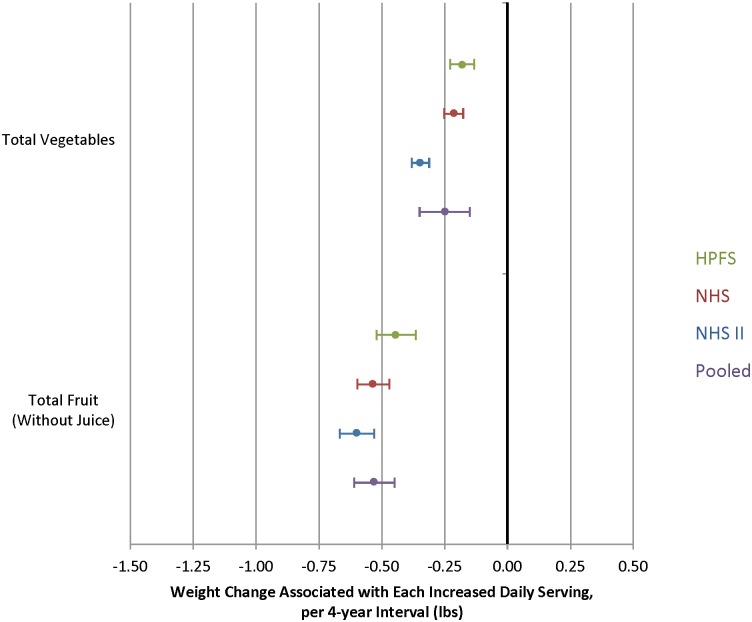
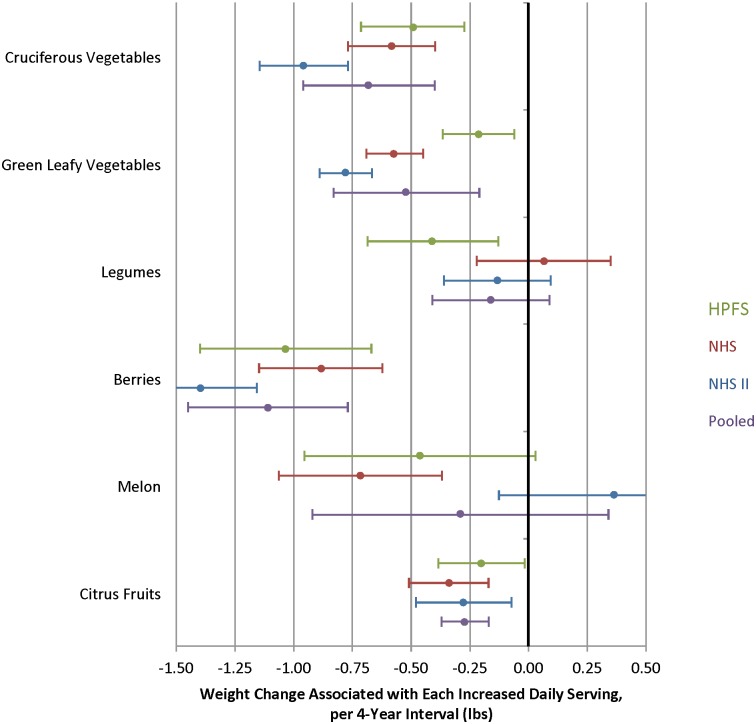
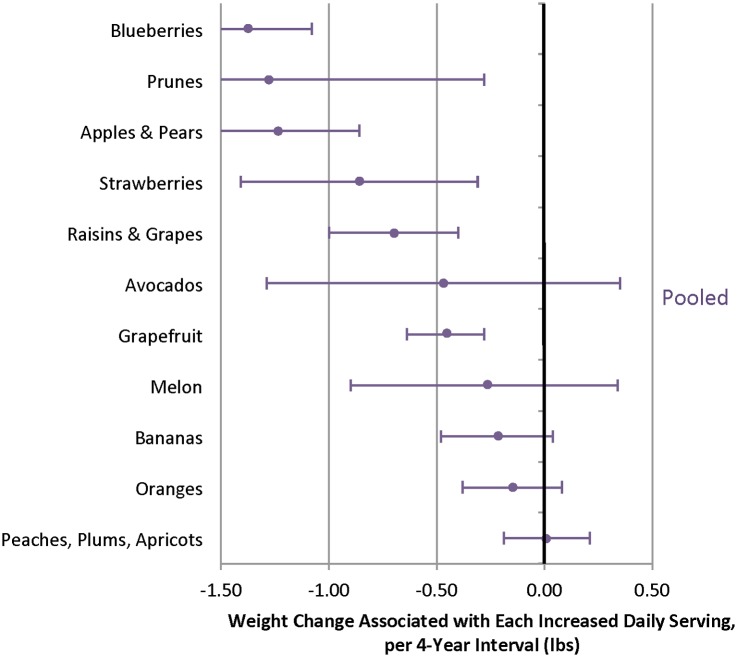
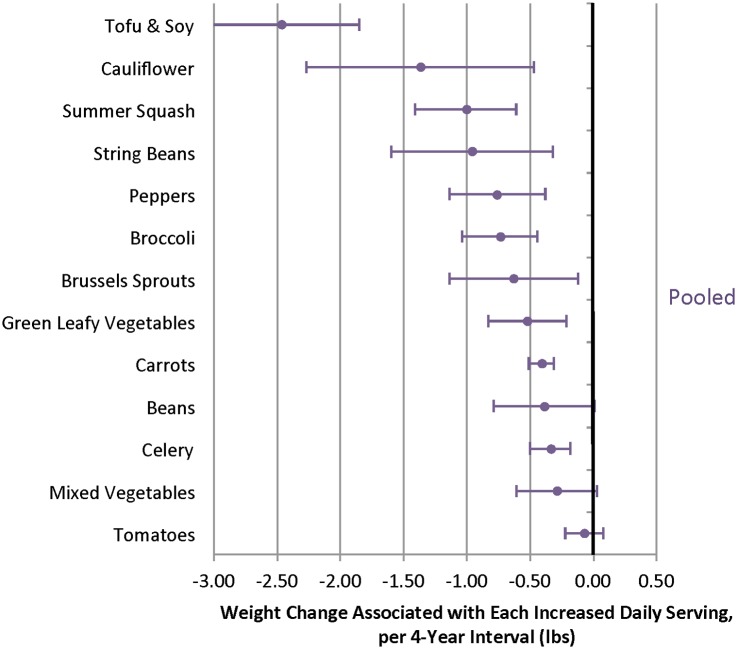
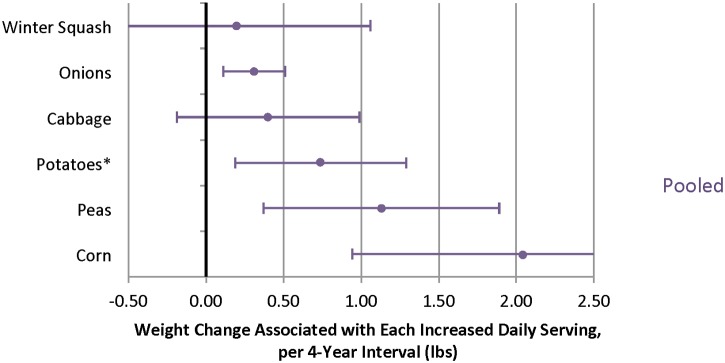
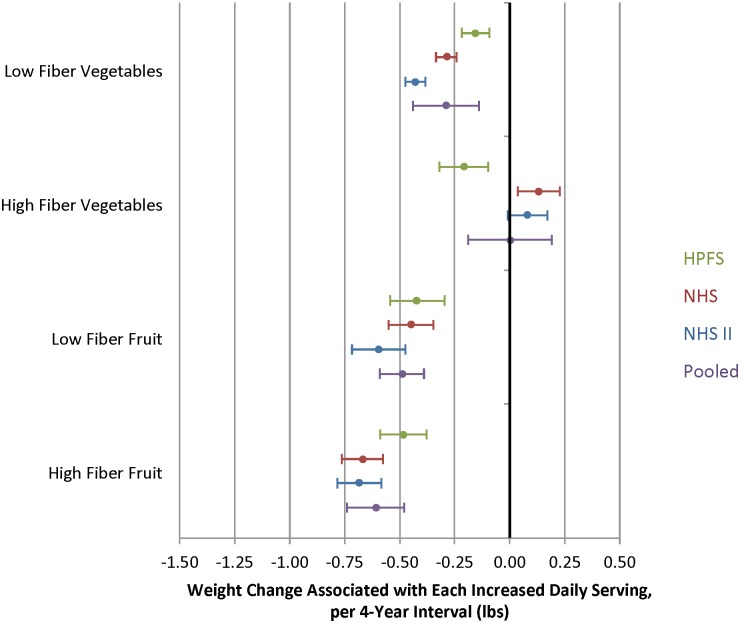
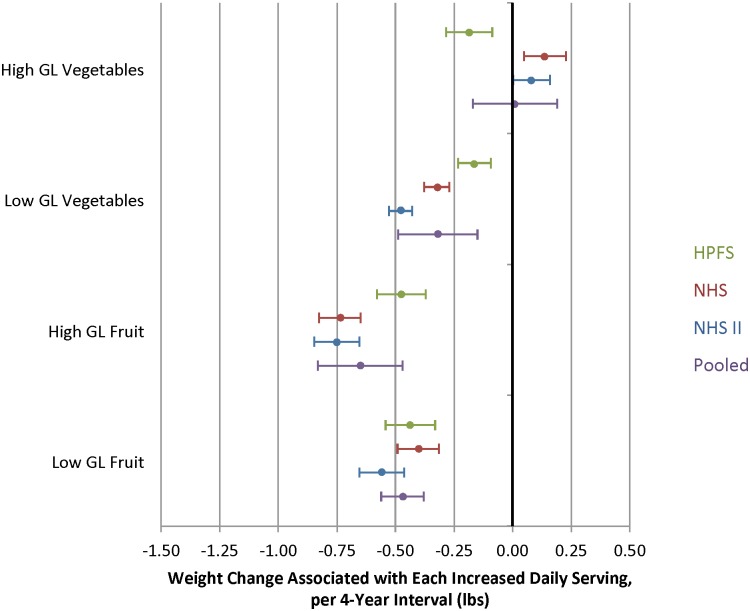
BACKGROUND: Current dietary guidelines recommend eating a variety of fruits and vegetables. However, based on nutrient composition, some particular fruits and vegetables may be more or less beneficial for maintaining or achieving a healthy weight. We hypothesized that greater consumption of fruits and vegetables with a higher fiber content or lower glycemic load would be more strongly associated with a healthy weight. METHODS AND FINDINGS: We examined the association between change in intake of specific fruits and vegetables and change in weight in three large, prospective cohorts of 133,468 United States men and women. From 1986 to 2010, these associations were examined within multiple 4-y time intervals, adjusting for simultaneous changes in other lifestyle factors, including other aspects of diet, smoking status, and physical activity. Results were combined using a random effects meta-analysis. Increased intake of fruits was inversely associated with 4-y weight change: total fruits -0.53 lb per daily serving (95% CI -0.61, -0.44), berries -1.11 lb (95% CI -1.45, -0.78), and apples/pears -1.24 lb (95% CI -1.62, -0.86). Increased intake of several vegetables was also inversely associated with weight change: total vegetables -0.25 lb per daily serving (95% CI -0.35, -0.14), tofu/soy -2.47 lb (95% CI, -3.09 to -1.85 lb) and cauliflower -1.37 lb (95% CI -2.27, -0.47). On the other hand, increased intake of starchy vegetables, including corn, peas, and potatoes, was associated with weight gain. Vegetables having both higher fiber and lower glycemic load were more strongly inversely associated with weight change compared with lower-fiber, higher-glycemic-load vegetables (p < 0.0001). Despite the measurement of key confounders in our analyses, the potential for residual confounding cannot be ruled out, and although our food frequency questionnaire specified portion size, the assessment of diet using any method will have measurement error. CONCLUSIONS: Increased consumption of fruits and non-starchy vegetables is inversely associated with weight change, with important differences by type suggesting that other characteristics of these foods influence the magnitude of their association with weight change.
Overview
The claims and statistics of this paper haven’t been checked yet.
Run the check — free, no account needed. It reads the open-access text and checks the sources it cites.
Integrity signals
Registry
Cites
Statistics
Figures
Verification
Claims the paper makes
The claims and statistics of this paper haven’t been checked yet.
Run the check — free, no account needed. It reads the open-access text and checks the sources it cites.
Claims other papers make about this one
Each is checked against this paper’s own text: does it say what the citing paper says it does?
In the citing paper
“in contrast to nonstarchy vegetables which are associated with protection against weight gain and diabetes.28, 55, 146, 147”
From Dietary and Policy Priorities for Cardiovascular Disease, Diabetes, and Obesity: A Comprehensive Review (2016) · cites this paper as [55]
In the citing paper
“while potatoes, corn, and peas are linked to greater long-term weight gain”
From Dietary and Policy Priorities for Cardiovascular Disease, Diabetes, and Obesity: A Comprehensive Review (2016) · cites this paper as [55]
In the citing paper
“In recent work, among major vegetables consumed in the US, potatoes, corn, and peas were each associated with long-term weight gain, whereas other vegetable subtypes were each associated with weight loss.55”
From Dietary and Policy Priorities for Cardiovascular Disease, Diabetes, and Obesity: A Comprehensive Review (2016) · cites this paper as [55]
In the citing paper
“Among those that have, higher intake of potatoes, including boiled and baked potatoes, is prospectively linked to incidence of diabetes”
From Dietary and Policy Priorities for Cardiovascular Disease, Diabetes, and Obesity: A Comprehensive Review (2016) · cites this paper as [55]
Self-check
Percentages, sums and reported differences re-computed from the paper’s own numbers.
The self-check needs the paper’s full text.
Citations
Cites
Changes in diet and lifestyle and long-term weight gain in women and men
Mozaffarian, D., Hao, T., Rimm, E. B., Willett, W. C., & Hu, F. B. (2011) · New England Journal of Medicine · doi:10.1056/nejmoa1014296 · Cited by 2,527 · cited 5×
“Multivariable generalized linear regression models were used to examine the independent association between change in weight (lb) over 4 y and change in intake of fruits and vegetables (servings/day) over the same 4-y time interval, as described in a previous publication [2].”
BackgroundMethodResultInfluentialSelf-citationRimm, E. B., Giovannucci, E. L., Stampfer, M. J., Colditz, G. A., Litin, L. B., & Willett, W. C. (1992) · American Journal of Epidemiology · doi:10.1093/oxfordjournals.aje.a116211 · Cited by 2,104 · cited 1×
“A validated [17] 131-item semi-quantitative FFQ was administered every 4 y beginning in 1986 in the NHS and HPFS, and in 1991 in the NHS II.”
MethodSelf-citationLudwig (2002) · doi:10.1001/jama.287.18.2414 · Cited by 1,775 · cited 2×
“We found a stronger inverse association between increased intake of higher-fiber, lower-GL vegetables and weight change, consistent with experimental evidence suggesting an influence of these factors on satiety [8], glucose and insulin responses [21], fat storage [21], and energy expenditure [9].”
BackgroundResultSelf-citationDietary Guidelines for Americans, 2010
Marshall, T. A. (2011) · The Journal of the American Dental Association · doi:10.14219/jada.archive.2011.0248 · Cited by 1,401
Prospective study of alcohol consumption and risk of coronary disease in men.
Rimm, E. B., Giovannucci, E. L., Willett, W. C., Colditz, G. A., Ascherio, A., Rosner, B., & Stampfer, M. J. (1991) · The Lancet · doi:10.1016/0140-6736(91)90542-w · Cited by 1,239 · cited 1×
“The Health Professionals Follow-up Study (HPFS) is a parallel cohort of 51,529 male health professionals from 50 states aged 40–75 y at enrollment in 1986 [14].”
BackgroundSelf-citationFeskanich, D., Rimm, E. B., Giovannucci, E. L., Colditz, G. A., Stampfer, M. J., Litin, L. B., & Willett, W. C. (1993) · Journal of the American Dietetic Association · doi:10.1016/0002-8223(93)91754-e · Cited by 1,070 · cited 1×
“53 for individual vegetables (S17 Table) [19].”
Self-citationDietary Fiber and Weight Regulation
Howarth, N. C., Saltzman, E. J., & Roberts, S. B. (2009) · Nutrition Reviews · doi:10.1111/j.1753-4887.2001.tb07001.x · Cited by 1,053 · cited 1×
“Higher fiber intake increases satiety, which in turn may reduce total energy intake and prevent weight gain [3–7].”
BackgroundReproducibility and validity of a self-administered physical activity questionnaire
WOLF, A. M., HUNTER, D. J., COLDITZ, G. A., MANSON, J. E., STAMPFER, M. J., CORSANO, K. A., ROSNER, B., KRISKA, A., & WILLETT, W. C. (1994) · International Journal of Epidemiology · doi:10.1093/ije/23.5.991 · Cited by 1,038
Self-citationSalvini, S., Hunter, D. J., SAMPSON, L., Stampfer, M. J., Colditz, G. A., ROSNER, B. A., & Willett, W. C. (1989) · International Journal of Epidemiology · doi:10.1093/ije/18.4.858 · Cited by 1,038 · cited 1×
“48 [18], with a range 0.”
Self-citationValidity of Self-Reported Waist and Hip Circumferences in Men and Women
Rimm, E. B., Stampfer, M. J., Colditz, G. A., Chute, C. G., Litin, L. B., & Willett, W. C. (1990) · Epidemiology · doi:10.1097/00001648-199011000-00009 · Cited by 1,015 · cited 1×
“97 [16].”
Self-citation
Cited by
Sorted by citations
Food in the Anthropocene: the EAT–Lancet Commission on healthy diets from sustainable food systems
Willett, W., Rockström, J., Loken, B., Springmann, M., Lang, T., Vermeulen, S., Garnett, T., Tilman, D., DeClerck, F., Wood, A., et al. (2019) · The Lancet · doi:10.1016/s0140-6736(18)31788-4 · Cited by 10,880
Self-citationFunctional mapping and annotation of genetic associations with FUMA
Watanabe, K., Taskesen, E., van Bochoven, A., & Posthuma, D. (2017) · Nature Communications · doi:10.1038/s41467-017-01261-5 · Cited by 4,083
Mozaffarian, D. (2016) · Circulation · doi:10.1161/circulationaha.115.018585 · Cited by 2,216
“yogurt, fish, and whole grains each appear to protect against chronic weight gain: the more these foods are consumed, the less the average weight gain.(28,29,51,55) The mechanistic pathways underlying these observed benefits are still being elucidated, but may partly reflect opposing, protective effects in comparison…”
Self-citationGlobal Impacts of Western Diet and Its Effects on Metabolism and Health: A Narrative Review
Clemente‐Suárez, V. J., Beltrán-Velasco, A. I., Redondo-Flórez, L., Martín-Rodríguez, A., & Tornero-Aguilera, J. F. (2023) · Nutrients · doi:10.3390/nu15122749 · Cited by 930
“One study found that increasing the consumption of fruits and vegetables, which are high in antioxidants, was associated with a lower risk of mortality from cardiovascular disease and cancer [70].”
BackgroundDeterminants and Consequences of Obesity
Hruby, A., Manson, J. E., Qi, L., Malik, V., Rimm, E. B., Sun, Q., Willett, W. C., & Hu, F. B. (2016) · American Journal of Public Health · doi:10.2105/ajph.2016.303326 · Cited by 751
Self-citationRecent Research on the Health Benefits of Blueberries and Their Anthocyanins
Kalt, W., Cassidy, A., Howard, L. R., Krikorian, R., Stull, A. J., Tremblay, F., & Zamora‐Ros, R. (2019) · Advances in Nutrition · doi:10.1093/advances/nmz065 · Cited by 679
“64 kg over 4 y) in a prospective study of over 133,000 men and women followed for ≤24 y (43).”
BackgroundThe EAT–Lancet Commission on healthy, sustainable, and just food systems
Rockström, J., Thilsted, S. H., Willett, W. C., Gordon, L. J., Herrero, M., Hicks, C. C., Mason-D’Croz, D., Rao, N., Springmann, M., Wright, E. C., et al. (2025) · The Lancet · doi:10.1016/s0140-6736(25)01201-2 · Cited by 599
Self-citationPoti, J. M., Braga, B., & Qin, B. (2017) · Current Obesity Reports · doi:10.1007/s13679-017-0285-4 · Cited by 484
Healthy Weight and Obesity Prevention
Lavie, C. J., Laddu, D., Arena, R. A., Ortega, F. B., Alpert, M., & Kushner, R. F. (2018) · Journal of the American College of Cardiology · doi:10.1016/j.jacc.2018.08.1037 · Cited by 480
“On the contrary, increased intake of starchy, higher GI vegetables, such as corn, peas, and potatoes, is associated with weight gain in these populations (95).”
BackgroundBias correction for inverse variance weighting Mendelian randomization
Mounier, N., & Kutalik, Z. (2023) · Genetic Epidemiology · doi:10.1002/gepi.22522 · Cited by 451
Fruit and Vegetable Intake and Mortality
Wang, D. D., Li, Y., Bhupathiraju, S. N., ROSNER, B. A., Sun, Q., Giovannucci, E. L., Rimm, E. B., Manson, J. E., Willett, W. C., Stampfer, M. J., et al. (2021) · Circulation · doi:10.1161/circulationaha.120.048996 · Cited by 474
Self-citationUpdated Cardiovascular Prevention Guideline of the Brazilian Society of Cardiology - 2019
Précoma, D. B., de Oliveira, G. M. M., Simão, A. F. L., Dutra, Ó. P., Coelho-Filho, O. R., Izar, M. C. D. O., Póvoa, R., Giuliano, I. D. C. B., Filho, A. C. D. A., Machado, C. A., et al. (2019) · Arquivos Brasileiros de Cardiologia · doi:10.5935/abc.20190204 · Cited by 509
FlashPCA2: principal component analysis of Biobank-scale genotype datasets
Abraham, G., Qiu, Y., & Inouye, M. (2017) · Bioinformatics · doi:10.1093/bioinformatics/btx299 · Cited by 379
Whole Fruits and Fruit Fiber Emerging Health Effects
Dreher, M. L. (2018) · Nutrients · doi:10.3390/nu10121833 · Cited by 393
“Associations between a daily serving of specific non-juice fruits and vegetables and weight change in US men and women over 4 years from the Nurses’ Health Studies and Health Professionals Follow-up Study (pooled data; multivariate adjusted; *excludes French fries and potato chips) [96].”
BackgroundSleep Duration and Myocardial Infarction
Daghlas, I., Dashti, H. S., Lane, J. M., Aragam, K. G., Rutter, M. K., Saxena, R., & Vetter, C. (2019) · Journal of the American College of Cardiology · doi:10.1016/j.jacc.2019.07.022 · Cited by 289
Haplotype Reference Consortium, Evans, L. M., Tahmasbi, R., Vrieze, S. I., Abecasis, G. R., Das, S., Gazal, S., Bjelland, D. W., de Candia, T. R., Goddard, M. E., et al. (2018) · Nature Genetics · doi:10.1038/s41588-018-0108-x · Cited by 239
Khan, T. A., & Sievenpiper, J. L. (2016) · Zeitschrift für Ernährungswissenschaft · doi:10.1007/s00394-016-1345-3 · Cited by 230
Aune, D. (2019) · Advances in Nutrition · doi:10.1093/advances/nmz042 · Cited by 222
Hesperidin and SARS-CoV-2: New Light on the Healthy Function of Citrus Fruits
Bellavite, P., & Donzelli, A. (2020) · Antioxidants · doi:10.3390/antiox9080742 · Cited by 207
Bertoia, M. L., Rimm, E. B., Mukamal, K. J., Hu, F. B., Willett, W. C., & Cassidy, A. (2016) · BMJ · doi:10.1136/bmj.i17 · Cited by 196
Self-citationDevelopment and Validation of a Novel Food-Based Global Diet Quality Score (GDQS)
Bromage, S., Batis, C., Bhupathiraju, S. N., Fawzi, W. W., Fung, T. T., Li, Y., Deitchler, M., Angulo, E., Birk, N. W., Castellanos-Gutiérrez, A., et al. (2021) · Journal of Nutrition · doi:10.1093/jn/nxab244 · Cited by 183
Self-citationRuhee, R. T., & Suzuki, K. (2020) · Antioxidants · doi:10.3390/antiox9060521 · Cited by 166
“Daily servings of cruciferous vegetables may have a significant effect on reducing body weight [13].”
BackgroundStrate, L. L., Keeley, B. R., Cao, Y., Wu, K., Giovannucci, E. L., & Chan, A. T. (2017) · Gastroenterology · doi:10.1053/j.gastro.2016.12.038 · Cited by 167
The Relationship between Vegetable Intake and Weight Outcomes: A Systematic Review of Cohort Studies
Nour, M. M., Lutze, S., Grech, A. L., & Allman-Farinelli, M. A. (2018) · Nutrients · doi:10.3390/nu10111626 · Cited by 161
“, (2015) [33] Y Y Y Y Y N/A Y Y Y Y Y Include”
BackgroundResultInfluentialHager, K., Du, M., Li, Z., Mozaffarian, D., Chui, K. K. H., Shi, P., Ling, B., Cash, S. B., Folta, S. C., & Zhang, F. F. (2023) · Circulation Cardiovascular Quality and Outcomes · doi:10.1161/circoutcomes.122.009520 · Cited by 147
Self-citationGenetic and functional insights into the fractal structure of the heart
Meyer, H. V., Dawes, T. J. W., Serrani, M., Bai, W., Tokarczuk, P. F., Cai, J., de Marvao, A., Henry, A., Lumbers, R. T., Gierten, J., et al. (2020) · Nature · doi:10.1038/s41586-020-2635-8 · Cited by 139
Naughton, F., Ward, E., Khondoker, M. R., Belderson, P., Minihane, A. M., Dainty, J. R., Hanson, S., Holland, R., Brown, T. J., & Notley, C. J. (2021) · British Journal of Health Psychology · doi:10.1111/bjhp.12500 · Cited by 144
“Fruit and vegetable consumption is consistently associated with survival and mortality, body weight maintenance and the risk of many chronic conditions, and in particular cardiovascular diseases (Angelino et al., 2019; Bellavia, Larsson, Bottai, Wolk, & Orsini, 2013; Bertoia et al., 2015).”
BackgroundRisk Factors for Unhealthy Weight Gain and Obesity among Children with Autism Spectrum Disorder
Dhaliwal, K. K., Orsso, C. E., Richard, C., Haqq, A. M., & Zwaigenbaum, L. (2019) · International Journal of Molecular Sciences · doi:10.3390/ijms20133285 · Cited by 157
“The consumption of fruits and vegetables has shown to be inversely associated with weight change and body adiposity [44,45].”
BackgroundBirthweight, Type 2 Diabetes Mellitus, and Cardiovascular Disease
Zanetti, D., Tikkanen, E., Gustafsson, S., Priest, J. R., Burgess, S., & Ingelsson, E. (2018) · Circulation Genomic and Precision Medicine · doi:10.1161/circgen.117.002054 · Cited by 137
Dietary and policy priorities to reduce the global crises of obesity and diabetes
Mozaffarian, D. (2020) · Nature Food · doi:10.1038/s43016-019-0013-1 · Cited by 136
Self-citationShen, X., Reus, L. M., Cox, S. R., Adams, M. J., Liewald, D. C. M., Bastin, M. E., Smıth, D. J., Deary, I. J., Whalley, H. C., & McIntosh, A. M. (2017) · Scientific Reports · doi:10.1038/s41598-017-05507-6 · Cited by 129
Impact of increasing fruit and vegetables and flavonoid intake on the human gut microbiota
Klinder, A., Shen, Q., Heppel, S., Lovegrove, J. A., Rowland, I. R., & Tuohy, K. M. (2016) · Food & Function · doi:10.1039/c5fo01096a · Cited by 133
Halvorsen, R. E., Elvestad, M., Molin, M., & Aune, D. (2021) · BMJ Nutrition Prevention & Health · doi:10.1136/bmjnph-2020-000218 · Cited by 134
A Clinician's Guide to Healthy Eating for Cardiovascular Disease Prevention
Pallazola, V. A., Davis, D. M., Whelton, S. P., Cardoso, R. N., Latina, J. M., Michos, E. D., Sarkar, S., Blumenthal, R. S., Arnett, D. K., Stone, N. J., et al. (2019) · Mayo Clinic Proceedings Innovations Quality & Outcomes · doi:10.1016/j.mayocpiqo.2019.05.001 · Cited by 133
“Simultaneous limiting of “empty calorie” foods such as SSBs, candy, starchy vegetables (corn, peas, and white potatoes), and processed foods is essential to sustained weight loss.(89) When considering a healthy diet, it is important to take into account cultural and SES factors because patients will benefit most if th…”
BackgroundMahumud, R. A., Sahle, B. W., Owusu‐Addo, E., Chen, W. L., Morton, R. L., & Renzaho, A. M. N. (2021) · International Journal of Obesity · doi:10.1038/s41366-021-00908-0 · Cited by 140
Meta-matching as a simple framework to translate phenotypic predictive models from big to small data
He, T., An, L., Chen, P., Chen, J., Feng, J., Bzdok, D., Holmes, A. J., Eickhoff, S. B., & Yeo, B. T. T. (2022) · Nature Neuroscience · doi:10.1038/s41593-022-01059-9 · Cited by 99
Colizzi, C., Harbers, M. C., Vellinga, R. E., Verschuren, W. M. M., Boer, J. M. A., Biesbroek, S., Temme, E. H. M., & van der Schouw, Y. T. (2023) · Journal of the American Heart Association · doi:10.1161/jaha.122.026318 · Cited by 105
Madsen, H., Sen, A., & Aune, D. (2023) · European Journal of Nutrition · doi:10.1007/s00394-023-03145-5 · Cited by 128
“Interestingly, some of the subtypes of fruits and vegetables that were most strongly associated with reduced weight gain (apples and pears, avocado, blueberries, raisins or grapes, broccoli, carrots, and lettuce) [32] were also the ones that appeared to be beneficial for the prevention of hypertension in the current a…”
BackgroundGenome‐Wide Association Study of NAFLD Using Electronic Health Records
Fairfield, C. J., Drake, T. M., Pius, R., Bretherick, A. D., Campbell, A., Clark, D. W., Fallowfield, J. A., Hayward, C., Henderson, N. C., Joshi, P. K., et al. (2021) · Hepatology Communications · doi:10.1002/hep4.1805 · Cited by 102
Optimal nutrition and the ever-changing dietary landscape: a conference report
Shao, A., Drewnowski, A., Willcox, D. C., Krämer, L., Lausted, C. G., Eggersdorfer, M. L., Mathers, J. C., Bell, J. D., Randolph, R. K., Witkamp, R. F., et al. (2017) · European Journal of Nutrition · doi:10.1007/s00394-017-1460-9 · Cited by 97
“1 3 well as an inverse association with 4-year weight change [14].”
BackgroundChoi, S. E., Seligman, H. K., & Basu, S. (2017) · American Journal of Preventive Medicine · doi:10.1016/j.amepre.2016.12.013 · Cited by 94
Lauria, F., Russo, M. D., Formisano, A., Henauw, S. D., Hebestreit, A., Hunsberger, M. L., Krogh, V., Intemann, T., Lissner, L., Molnár, D., et al. (2021) · Nutrition Metabolism and Cardiovascular Diseases · doi:10.1016/j.numecd.2021.07.019 · Cited by 108
Pitts, S. J., Jahns, L., Wu, Q., Moran, N. E., Bell, R. A., Truesdale, K. P., & Laska, M. N. (2018) · Public Health Nutrition · doi:10.1017/s136898001700430x · Cited by 90
Assessing Lung Cancer Absolute Risk Trajectory Based on a Polygenic Risk Model
Hung, R. J., Warkentin, M. T., Brhane, Y., Chatterjee, N., Christiani, D. C., Landi, M. T., Caporaso, N. E., Liu, G., Johansson, M., Albanes, D., et al. (2021) · Cancer Research · doi:10.1158/0008-5472.can-20-1237 · Cited by 91
Recent Advances in Nanoencapsulation of Phytochemicals to Combat Obesity and Its Comorbidities
Göktaş, Z., Zu, Y., Abbasi, M., Galyean, S., Wu, D., Fan, Z., & Wang, S. F. (2020) · Journal of Agricultural and Food Chemistry · doi:10.1021/acs.jafc.0c00131 · Cited by 91
A deep learning method for HLA imputation and trans-ethnic MHC fine-mapping of type 1 diabetes
Naito, T., Ken, S., Hirata, J., Kamatani, Y., Matsuda, K., Toda, T., & Okada, Y. (2021) · Nature Communications · doi:10.1038/s41467-021-21975-x · Cited by 93
Blood CSF1 and CXCL12 as Causal Mediators of Coronary Artery Disease
Sjaarda, J., Gerstein, H., Chong, M., Yusuf, S., Meyre, D., Anand, S. S., Hess, S., & Paré, G. (2018) · Journal of the American College of Cardiology · doi:10.1016/j.jacc.2018.04.067 · Cited by 94
Wang, M., Du, X., Huang, W., & Xu, Y. (2022) · American Journal of Hypertension · doi:10.1093/ajh/hpac069 · Cited by 80
Watts, A. W., Rydell, S. A., Eisenberg, M. E., Laska, M. N., & Neumark‐Sztainer, D. (2018) · International Journal of Behavioral Nutrition and Physical Activity · doi:10.1186/s12966-018-0674-4 · Cited by 75
Natural Selection in Cancer Biology: From Molecular Snowflakes to Trait HallmarksPreprint
Fortunato, A., Boddy, A., Mallo, D., Aktipis, A., Maley, C. C., & Pepper, J. W. (2016) · Cold Spring Harbor Perspectives in Medicine · doi:10.1101/cshperspect.a029652 · Cited by 82
Nour, M. M., Chen, J., & Allman-Farinelli, M. A. (2016) · Journal of Medical Internet Research · doi:10.2196/jmir.5082 · Cited by 73
“Furthermore, every 1-serving increase in vegetable intake has been associated with a 0.12 kg reduction in weight (95% CI -0.35 to -0.14) [46].”
InfluentialDrozd, M., Pujades‐Rodríguez, M., Lillie, P. J., Straw, S., Morgan, A. W., Kearney, M. T., Witte, K. K., & Cubbon, R. M. (2021) · The Lancet Infectious Diseases · doi:10.1016/s1473-3099(20)30978-6 · Cited by 71
Kahleová, H., Dort, S., Holubkov, R., & Barnard, N. D. (2018) · Nutrients · doi:10.3390/nu10091302 · Cited by 70
Wan, Y., Tobias, D. K., Dennis, K. K., Guasch-Ferré, M., Sun, Q., Rimm, E. B., Hu, F. B., Ludwig, D. S., Devinsky, O., & Willett, W. C. (2023) · BMJ · doi:10.1136/bmj-2022-073939 · Cited by 64
Self-citationThe Effects of Blueberry Phytochemicals on Cell Models of Inflammation and Oxidative Stress
Lavefve, L., Howard, L. R., Adams, S. H., & Baum, J. (2021) · Advances in Nutrition · doi:10.1093/advances/nmab137 · Cited by 71
The fruit and vegetable intake of young Australian adults: a population perspective
Nour, M. M., Sui, Z., Grech, A. L., Rangan, A., McGeechan, K., & Allman-Farinelli, M. A. (2017) · Public Health Nutrition · doi:10.1017/s1368980017001124 · Cited by 67
A genetic perspective on the relationship between eudaimonic –and hedonic well-being
Baselmans, B. M. L., & Bartels, M. (2018) · Scientific Reports · doi:10.1038/s41598-018-32638-1 · Cited by 88
Foods, obesity, and diabetes—are all calories created equal?
Mozaffarian, D. (2017) · Nutrition Reviews · doi:10.1093/nutrit/nuw024 · Cited by 64
Self-citationKimani, S. T., Mirie, W., Chege, M. N., Okube, O. T., & Muniu, S. (2019) · BMJ Open · doi:10.1136/bmjopen-2018-023995 · Cited by 70
Weight-Related Dietary Behaviors in Young Adults
Allman-Farinelli, M. A., Partridge, S. R., & Roy, R. (2016) · Current Obesity Reports · doi:10.1007/s13679-016-0189-8 · Cited by 65
Poulimeneas, D., Anastasiou, C. A., Santos, I., Hill, J. O., Panagiotakos, D. B., & Yannakoulia, M. (2020) · British Journal of Nutrition · doi:10.1017/s0007114520001798 · Cited by 62
Dietary fibre and weight loss: Where are we now?
Brownlee, I. A., Chater, P. I., Pearson, J. P., & Wilcox, M. D. (2016) · Food Hydrocolloids · doi:10.1016/j.foodhyd.2016.08.029 · Cited by 61
Blackberries and Mulberries: Berries with Significant Health-Promoting Properties
Martins, M. S., Gonçalves, A. C., Alves, G., & Silva, L. R. (2023) · International Journal of Molecular Sciences · doi:10.3390/ijms241512024 · Cited by 68
“Therefore, it should not be surprising that recent epidemiological and clinical studies have shown the importance of a fruit-rich diet for the prevention of many illnesses, including cardiovascular diseases, cancer, and metabolic disorders [1,2].”
BackgroundReprint of: Healthy Weight and Obesity Prevention
Lavie, C. J., Laddu, D., Arena, R. A., Ortega, F. B., Alpert, M., & Kushner, R. F. (2018) · Journal of the American College of Cardiology · doi:10.1016/j.jacc.2018.10.024 · Cited by 59
Higher dietary diversity score is associated with obesity: a case–control study
Karimbeiki, R., Pourmasoumi, M., Feizi, A., Abbasi, B., Hadi, A., Rafie, N., & Safavi, S. M. (2018) · Public Health · doi:10.1016/j.puhe.2018.01.028 · Cited by 58
Social jetlag, eating behaviours and BMI among adolescents in the USA
Mathew, G. M., Hale, L. E., & Chang, A. (2020) · British Journal Of Nutrition · doi:10.1017/s0007114520001804 · Cited by 59
Perspective: Defining Carbohydrate Quality for Human Health and Environmental Sustainability
Schulz, R., & Slavin, J. L. (2021) · Advances in Nutrition · doi:10.1093/advances/nmab050 · Cited by 60
Briers, B., Huh, Y. E., Chan, E., & Mukhopadhyay, A. (2020) · Appetite · doi:10.1016/j.appet.2020.104639 · Cited by 55
“Though the literature suggests that both fruit and vegetable consumption generally serve to lower BMI (Bertoia et al., 2015), the relation between fruit consumption and BMI is more complex.”
BackgroundChen, C., Wang, J., Sun, M., Li, J., & Wang, H. (2021) · Biomedicine & Pharmacotherapy · doi:10.1016/j.biopha.2021.112416 · Cited by 55
McGuirt, J. T., Pitts, S. J., & Gustafson, A. (2018) · Nutrients · doi:10.3390/nu10121974 · Cited by 56
Avoiding collider bias in Mendelian randomization when performing stratified analyses
Coscia, C., Gill, D., Benítez, R., Pérez, T., Malats, N., & Burgess, S. (2022) · European Journal of Epidemiology · doi:10.1007/s10654-022-00879-0 · Cited by 52
Improving fruit and vegetable intake attenuates the genetic association with long-term weight gain
Wang, T., Heianza, Y., Sun, D., Zheng, Y., Huang, T., Ma, W., Rimm, E. B., Manson, J. E., Hu, F. B., Willett, W. C., et al. (2019) · American Journal of Clinical Nutrition · doi:10.1093/ajcn/nqz136 · Cited by 50
“Data from the NHS and HPFS indicate that increased fruit and vegetable intake is associated with less weight gain over time (9, 10).”
BackgroundSelf-citationSebastian, R. S., Enns, C. W., Goldman, J., & Moshfegh, A. J. (2017) · Nutrients · doi:10.3390/nu9080827 · Cited by 46
“Potatoes, particularly fried potatoes, are associated with weight gain [46,47] and increases in WC [52], but inconsistent results have been reported with regard to other vegetable classes [46,48].”
BackgroundResultDrywień, M. E., Hamułka, J., Zielinska-Pukos, M. A., Jeruszka-Bielak, M., & Górnicka, M. (2020) · Sustainability · doi:10.3390/su12187768 · Cited by 50
Shen, X., Adams, M. J., Ritakari, T. E., Cox, S. R., McIntosh, A. M., & Whalley, H. C. (2019) · Biological Psychiatry · doi:10.1016/j.biopsych.2019.06.011 · Cited by 48
A Comprehensive Critical Assessment of Increased Fruit and Vegetable Intake on Weight Loss in Women
Dreher, M. L., & Ford, N. A. (2020) · Nutrients · doi:10.3390/nu12071919 · Cited by 49
Pepe, R. B., Lottenberg, A. M., Fujiwara, C. T. H., Beyruti, M., Cintra, D. E., Machado, R. M., Rodrigues, A., Jensen, N. S. O., Caldas, A. P. S., Fernandes, A. E., et al. (2023) · Diabetology & Metabolic Syndrome · doi:10.1186/s13098-023-01037-6 · Cited by 66
“16 kg per daily serving of vegetables [231].”
BackgroundDreher, M. L., Cheng, F. W., & Ford, N. A. (2021) · Nutrients · doi:10.3390/nu13124376 · Cited by 45
“Change in body weight per daily serving of fruit and vegetables over 4 years in US men and women [24].”
BackgroundFouda-Mbanga, B. G., Prabakaran, E., & Pillay, K. (2020) · Arabian Journal of Chemistry · doi:10.1016/j.arabjc.2020.06.030 · Cited by 45
Carnauba, R. A., Chaves, D. F. S., Baptistella, A. B., Paschoal, V., Naves, A., & Buehler, A. M. (2016) · International Journal of Food Sciences and Nutrition · doi:10.1080/09637486.2016.1229761 · Cited by 44
“These foods, besides containing phytochemicals, have a low-glycemic index and provide vitamins, minerals and mono and polyunsaturated fatty acids, which provide diverse beneficial effects and may contribute to weight maintenance and reduced risk of obesity (Ye et al. 2012; Jackson & Hu 2014; Bertoia et al. 2015).”
BackgroundWang, X., Liu, F., Cui, Y., Yin, Y., Li, S., & Li, X. (2021) · Journal of Agricultural and Food Chemistry · doi:10.1021/acs.jafc.1c07258 · Cited by 45
Dietary factors and their association with childhood obesity in the Middle East: A systematic review
Albataineh, S. R., Badran, E., & Tayyem, R. (2018) · Nutrition and Health · doi:10.1177/0260106018803243 · Cited by 43
Garfield, V., Farmaki, A., Fatemifar, G., Eastwood, S. V., Mathur, R., Rentsch, C. T., Denaxas, S., Bhaskaran, K., Smeeth, L. L., & Chaturvedi, N. (2021) · Diabetes · doi:10.2337/db20-0895 · Cited by 44
Phytochemical characterization of turnip greens (Brassica rapa ssp. rapa): A systematic review
Dejanovic, G. M., Asllanaj, E., Gamba, M., Raguindin, P. F., Itodo, O. A., Minder, B., Bussler, W. W., Metzger, B. T., Muka, T., Glišić, M., et al. (2021) · PLoS ONE · doi:10.1371/journal.pone.0247032 · Cited by 42
Changes in the Global Diet Quality Score, Weight, and Waist Circumference in Mexican Women
Angulo, E., Stern, D., Castellanos-Gutiérrez, A., Monge, A., Lajous, M., Bromage, S., Fung, T. T., Li, Y., Bhupathiraju, S. N., Deitchler, M., et al. (2021) · Journal of Nutrition · doi:10.1093/jn/nxab171 · Cited by 42
“Studies in 3 cohorts in the United States found that a 1-serving/d increase of vegetables, fruits, whole grains, and nuts was associated with less weight gain long-term (33, 34).”
BackgroundSelf-citationFruit and vegetable consumption as a preventative strategy for non-communicable diseases
Woodside, J. V., Nugent, A. P., Moore, R. E., & McKinley, M. C. (2023) · Proceedings of The Nutrition Society · doi:10.1017/s0029665123002161 · Cited by 44
Lamb, M. J. E., Griffin, S. J., Sharp, S. J., & Cooper, A. (2016) · European Journal of Clinical Nutrition · doi:10.1038/ejcn.2016.180 · Cited by 41
Crosby, L., Rembert, E., Levin, S., Green, A., Ali, Z., Jardine, M., Nguyen, M., Elliott, P., Goldstein, D., Freeman, A., et al. (2022) · Journal of the Academy of Nutrition and Dietetics · doi:10.1016/j.jand.2022.04.008 · Cited by 41
Minckas, N., Gram, L., Smith, C. J., & Mannell, J. (2021) · BMJ Global Health · doi:10.1136/bmjgh-2020-004698 · Cited by 42
Impact of Whole, Fresh Fruit Consumption on Energy Intake and Adiposity: A Systematic Review
Guyenet, S. J. (2019) · Frontiers in Nutrition · doi:10.3389/fnut.2019.00066 · Cited by 36
“(55) compiled data from three cohorts representing 133,468 US male and female health professionals (55).”
BackgroundCruciferous vegetable and isothiocyanate intake and multiple health outcomes
Li, N., Wu, X., Wen, Z., Wu, C., Rao, Z., Du, L., & Zhou, Y. (2021) · Food Chemistry · doi:10.1016/j.foodchem.2021.131816 · Cited by 42
Association between anticholinergic burden and dementia in UK Biobank
Mur, J., Russ, T. C., Cox, S. R., Marioni, R. E., & Terrera, G. M. (2022) · Alzheimer s & Dementia Translational Research & Clinical Interventions · doi:10.1002/trc2.12290 · Cited by 40
Gayer, B., Avendano, E. E., Edelson, E., Nirmala, N., Johnson, E. J., & Raman, G. (2019) · Current Developments in Nutrition · doi:10.1093/cdn/nzz109 · Cited by 39
“One study (50), comprising 3 prospective cohorts (NHS, NHS II, and HPFS) with a total of 133,468 participants found an association between increased intake of apple and a decrease in body weight by an average of−1.”
BackgroundFruit and vegetable consumption, cardiovascular disease, and all-cause mortality in China
Wang, J., Liu, F., Li, J., Huang, K., Yang, X., Chen, J., Liu, X., Cao, J., Chen, S., Shen, C., et al. (2021) · Science China Life Sciences · doi:10.1007/s11427-020-1896-x · Cited by 40
Partridge, S. R., McGeechan, K., Bauman, A. E., Phongsavan, P., & Allman-Farinelli, M. A. (2016) · International Journal of Behavioral Nutrition and Physical Activity · doi:10.1186/s12966-016-0368-8 · Cited by 38
“This finding is consistent with previous research that indicate vegetable intake and SSB consumption are related to weight management [5, 32].”
BackgroundResultYuan, S., Yu, H., Liu, M., Huang, Y., Yang, X., Tang, B. W., Song, Y., Cao, Z. K., Wu, H., He, Q., et al. (2018) · Public Health · doi:10.1016/j.puhe.2018.01.027 · Cited by 39
Higher intake of phytochemical-rich foods is inversely related to prediabetes: A case-control study
Sotoudeh, G., Abshirini, M., Mahaki, B., Bagheri, F., Siassi, F., & Koohdani, F. (2018) · International Journal of Preventive Medicine · doi:10.4103/ijpvm.ijpvm_145_18 · Cited by 38
Fredsgaard, M., Kaniki, S. E. K., Antonopoulou, I., Chaturvedi, T., & Thomsen, M. H. (2023) · Molecules · doi:10.3390/molecules28145312 · Cited by 36
Hauser, M. E., Nordgren, J., Adam, M., Gardner, C. D., Rydel, T. A., Bever, A. M., & Steinberg, E. (2020) · American Journal of Lifestyle Medicine · doi:10.1177/1559827620916699 · Cited by 36
Goshtasebi, A., Hosseinpour‐Niazi, S., Mirmiran, P., Lamyian, M., Moghaddam‐Banaem, L., & Azizi, F. (2018) · Diabetes Research and Clinical Practice · doi:10.1016/j.diabres.2018.02.033 · Cited by 34
Metadata
- Authors
- Bertoia, M. L., Mukamal, K. J., Cahill, L. E., Hou, T., Ludwig, D. S., Mozaffarian, D., Willett, W. C., Hu, F. B., & Rimm, E. B.
- Affiliations
- Brigham and Women's Hospital (US)
- Beth Israel Deaconess Medical Center (US)
- Harvard University (US)
- Boston Children's Hospital (US)
- Tufts University (US)
- Corresponding author
- Bertoia, Monica L.
- ORCID
- Venue
- PLOS Medicine
- Publisher
- Public Library of Science (PLoS)
- Published
- 2015-09-22
- Volume
- 12
- Issue
- 9
- Pages
- e1001878
- ISSN
- 1549-1277 (ISSN-L)
- 1549-1676
- PMC
- PMC4578962
- OpenAlex
- W1915710460
- Cited by
- 397
- References
- 36
- Citations by year
- 2026: 13 · 2025: 29 · 2024: 24 · 2023: 47 · 2022: 42 · 2021: 52 · 2020: 41 · 2019: 45 · 2018: 41 · 2017: 37 · 2016: 24 · 2015: 2
- FWCI
- 37.18
- Type
- journal article
- Language
- en
- Update notices
- correction (2016-01-20)
- Open access
- gold
- doi.org
- Licence
- Locations
- PLoS Medicine (publishedVersion, cc-by)
- Europe PMC (PubMed Central) (publishedVersion, cc-by)
- PubMed Central (publishedVersion, cc-by)
- PubMed (publishedVersion)
- Digital Access to Scholarship at Harvard (DASH) (Harvard University) (submittedVersion, cc-by)
- DOAJ (DOAJ: Directory of Open Access Journals) (submittedVersion, cc-by-sa)
- Figshare (submittedVersion, cc-by)
- Funders
- U.S. Department of Agriculture
- Brigham and Women's Hospital (R01 HL088521)
- Amarin Corporation
- National Institutes of Health (5r01ca049449-18, R01 CA49449, UM1-CA-176726, UM1-CA167552, CA176726, CA-167552, CA67262, CA 87969)
- National Heart, Lung, and Blood Institute (R01HL035464, R01 HL35464, R01HL034594, R01HL088521)
- National Cancer Institute (R01-CA49449, P01CA087969, R01‐CA049449, UM1CA176726, R01 CA67262, UM1CA167552, R01CA067262, [P01 CA87969)
- National Institute of Diabetes and Digestive and Kidney Diseases (K24DK082730)
- Topics
- Health Sciences › Medicine › Public Health, Environmental and Occupational Health › Nutritional Studies and Diet
- Health Sciences › Nursing › Nutrition and Dietetics › Nutrition, Health and Food Behavior
- Health Sciences › Medicine › Public Health, Environmental and Occupational Health › Obesity, Physical Activity, Diet
- Keywords
- fruits, vegetables, weight change, weight gain, dietary fiber, glycemic load, berries, cauliflower, starchy vegetables, potato, maize, pea, longitudinal dietary change, obesity prevention, healthy weight maintenance, prospective cohort, random-effects meta-analysis, residual confounding, sex differences, United States adults, physical activity
- MeSH terms
- Adult, Aged, Body Weight, Female, Fruit, Humans, Male, Middle Aged, Prospective Studies, Surveys and Questionnaires, United States, Vegetables
About these checks
Registry, retraction, Cites and statistics results are computed, not judged, with one exception: a printed reference that no index lists is read once by a model before it counts as a citation error. Claims are extracted by a model and kept only when their quote appears verbatim in the text; each cited source is then checked, with a model’s help, for whether it says what the claim relies on. Those verdicts can be wrong — read the claim’s quote and the cited source before relying on one.
Statistics and arithmetic are recomputed, not judged.
Confidence bands are shown only for fields calibrated on our annotated test set. None is calibrated yet, so no band is shown.
What counts as a claim ›How we measure confidence ›How we check this ›
Are you an author, or do you see a problem with this page? Request a review
