

The DOI matches its Crossref record; 68 of the 68 references it cites were found in a registry or an index.
Association between fatty acid metabolism in the brain and Alzheimer disease neuropathology and cognitive performance: A nontargeted metabolomic study
Open accessAbstract
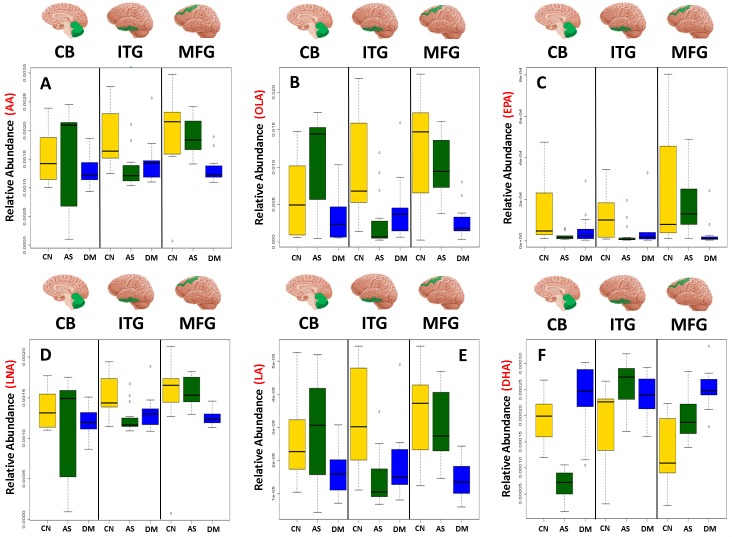
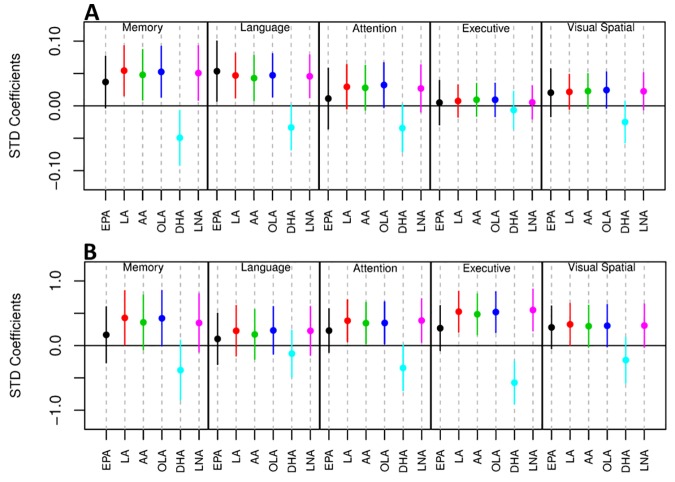
BACKGROUND: The metabolic basis of Alzheimer disease (AD) pathology and expression of AD symptoms is poorly understood. Omega-3 and -6 fatty acids have previously been linked to both protective and pathogenic effects in AD. However, to date little is known about how the abundance of these species is affected by differing levels of disease pathology in the brain. METHODS AND FINDINGS: We performed metabolic profiling on brain tissue samples from 43 individuals ranging in age from 57 to 95 y old who were stratified into three groups: AD (N = 14), controls (N = 14) and "asymptomatic Alzheimer's disease" (ASYMAD), i.e., individuals with significant AD neuropathology at death but without evidence for cognitive impairment during life (N = 15) from the autopsy sample of the Baltimore Longitudinal Study of Aging (BLSA). We measured 4,897 metabolite features in regions both vulnerable in the middle frontal and inferior temporal gyri (MFG and ITG) and resistant (cerebellum) to classical AD pathology. The levels of six unsaturated fatty acids (UFAs) in whole brain were compared in controls versus AD, and the differences were as follows: linoleic acid (p = 8.8 x 10⁻⁸, FC = 0.52, q = 1.03 x 10⁻⁶), linolenic acid (p = 2.5 x 10⁻⁴, FC = 0.84, q = 4.03 x 10⁻⁴), docosahexaenoic acid (p = 1.7 x 10⁻⁷, FC = 1.45, q = 1.24 x 10⁻⁶), eicosapentaenoic acid (p = 4.4 x 10⁻⁴, FC = 0.16, q = 6.48 x 10⁻⁴), oleic acid (p = 3.3 x 10⁻⁷, FC = 0.34, q = 1.46 x 10⁻⁶), and arachidonic acid (p = 2.98 x 10⁻⁵, FC = 0.75, q = 7.95 x 10⁻⁵). These fatty acids were strongly associated with AD when comparing the groups in the MFG and ITG, respectively: linoleic acid (p < 0.0001, p = 0.0006), linolenic acid (p < 0.0001, p = 0.002), docosahexaenoic acid (p < 0.0001, p = 0.0024), eicosapentaenoic acid (p = 0.0002, p = 0.0008), oleic acid (p < 0.0001, p = 0.0003), and arachidonic acid (p = 0.0001, p = 0.001). Significant associations were also observed between the abundance of these UFAs with neuritic plaque and neurofibrillary tangle burden as well as domain-specific cognitive performance assessed during life. Based on the regional pattern of differences in brain tissue levels of these metabolites, we propose that alterations in UFA metabolism represent both global metabolic perturbations in AD as well as those related to specific features of AD pathology. Within the middle frontal gyrus, decrements in linoleic acid, linolenic acid, and arachidonic acid (control>ASYMAD>AD) and increases in docosahexanoic acid (AD>ASYMAD>control) may represent regionally specific threshold levels of these metabolites beyond which the accumulation of AD pathology triggers the expression of clinical symptoms. The main limitation of this study is the relatively small sample size. There are few cohorts with extensive longitudinal cognitive assessments during life and detailed neuropathological assessments at death, such as the BLSA. CONCLUSIONS: The findings of this study suggest that unsaturated fatty acid metabolism is significantly dysregulated in the brains of patients with varying degrees of Alzheimer pathology.
Overview
The claims and statistics of this paper haven’t been checked yet.
Run the check — free, no account needed. It reads the open-access text and checks the sources it cites.
Integrity signals
Registry
Cites
Statistics
Figures
Verification
Claims the paper makes
The claims and statistics of this paper haven’t been checked yet.
Run the check — free, no account needed. It reads the open-access text and checks the sources it cites.
Claims other papers make about this one
Each is checked against this paper’s own text: does it say what the citing paper says it does?
The source backs part of the claim, not all of it — or backs it for a different population, condition or comparison.
In the citing paper
“It further corresponds with altered lipid metabolites and relevant gene expression in human AD. 53 , 54 , 55”
From Unique transcriptomic alterations in 5XFAD;PS19 mouse model identify glial lipid dysregulation and coordinated microglial–oligodendrocyte responses (2026) · cites this paper as [55]
Experimental — accuracy not yet measured
Self-check
Percentages, sums and reported differences re-computed from the paper’s own numbers.
The self-check needs the paper’s full text.
Citations
Cites
KEGG: Kyoto Encyclopedia of Genes and Genomes
Kanehisa, M. (2000) · Nucleic Acids Research · doi:10.1093/nar/28.1.27 · Cited by 37,077
KEGG: Kyoto Encyclopedia of Genes and Genomes
Ogata, H., Goto, S., Sato, K., Fujibuchi, W., Bono, H., & Kanehisa, M. (1999) · Nucleic Acids Research · doi:10.1093/nar/27.1.29 · Cited by 31,232
McKhann, G., Drachman, D., Folstein, M., Katzman, R., Price, D., & Stadlan, E. M. (1984) · Neurology · doi:10.1212/wnl.34.7.939 · Cited by 27,915
Alzheimer's disease: the amyloid cascade hypothesis
Hardy, J. A., & Higgins, G. A. (1992) · Science · doi:10.1126/science.1566067 · Cited by 7,484
Prostaglandins and Leukotrienes: Advances in Eicosanoid Biology
Funk, C. D. (2001) · Science · doi:10.1126/science.294.5548.1871 · Cited by 3,817
Metabolomics — the link between genotypes and phenotypes
Fiehn, O. (2002) · Springer eBooks · doi:10.1007/978-94-010-0448-0_11 · Cited by 3,168
Epidemiology of Alzheimer disease
Reitz, C., Brayne, C., & Mayeux, R. (2011) · Nature Reviews Neurology · doi:10.1038/nrneurol.2011.2 · Cited by 1,675
Serhan, C. N., Hong, S., Gronert, K., Colgan, S. P., Devchand, P. R., Mirick, G., & Moussignac, R.-L. (2002) · The Journal of Experimental Medicine · doi:10.1084/jem.20020760 · Cited by 1,650
Omega-3 fatty acids EPA and DHA: Health benefits throughout life
Swanson, D., Block, R., & Mousa, S. A. (2012) · Advances in Nutrition · doi:10.3945/an.111.000893 · Cited by 1,575
Metabolomics--the link between genotypes and phenotypes.
Fiehn, O. (2002) · PubMed · Cited by 1,517
Cited by
Sorted by citations
Items 101–200 of 310
Wieder, N. W., Coraor, J., Kim, C., Sidhom, E.-H., Brown, M., Marshall, J. L., Arevalo, C., Dvela‐Levitt, M., Kost‐Alimova, M., Sieber, J., et al. (2023) · Cell Metabolism · doi:10.1016/j.cmet.2023.03.018 · Cited by 33
Андреевна, Л. Е., Kazakov, A. S., Sokolov, A. S., Леонидовна, Н. Е., Galushko, E. I., Dzhus, U. F., Marchenkov, V. V., Galzitskaya, O. V., Permyakov, E. A., & Permyakov, S. E. (2019) · Biochemical and Biophysical Research Communications · doi:10.1016/j.bbrc.2019.01.081 · Cited by 31
Amidfar, M., Askari, G., & Kim, Y. (2023) · Progress in Neuro-Psychopharmacology and Biological Psychiatry · doi:10.1016/j.pnpbp.2023.110848 · Cited by 33
Lipidomics of human adipose tissue reveals diversity between body areas
Al‐Sari, N., Suvitaival, T., Mattila, I. M., Ali, A., Ahonen, L. L., Trôst, K., Henriksen, T. F., Pociot, F., Dragsted, L. O., & Legido‐Quigley, C. (2020) · PLoS ONE · doi:10.1371/journal.pone.0228521 · Cited by 33
Self-citationKleinloog, J. P. D., Tischmann, L., Mensink, R. P., Adam, T. C., & Joris, P. J. (2021) · American Journal of Clinical Nutrition · doi:10.1093/ajcn/nqab289 · Cited by 30
Modulations of bioactive lipids and their receptors in postmortem Alzheimer’s disease brains
Kurano, M., Saito, Y., Uranbileg, B., Saigusa, D., Kano, K., Aoki, J., & Yatomi, Y. (2022) · Frontiers in Aging Neuroscience · doi:10.3389/fnagi.2022.1066578 · Cited by 30
Tokuoka, S. M., Kita, Y., Shimizu, T., & Oda, Y. (2019) · PLoS ONE · doi:10.1371/journal.pone.0226073 · Cited by 29
Islam, A., Takeyama, E., Mamun, M. A., Sato, T., Horikawa, M., Takahashi, Y., Kikushima, K., & Setou, M. (2020) · Metabolites · doi:10.3390/metabo10040153 · Cited by 28
Free Fatty Acids Are Associated with the Cognitive Functions in Stroke Survivors
Kotlęga, D., Peda, B., Palma, J., Zembroń-Łacny, A., Gołąb-Janowska, M., Masztalewicz, M., Nowacki, P., & Szczuko, M. (2021) · International Journal of Environmental Research and Public Health · doi:10.3390/ijerph18126500 · Cited by 32
Sáez-Orellana, F., Leroy, T., Ribeiro, F., Kreis, A., Leroy, K., Lalloyer, F., Baugé, E., Staels, B., Duyckaerts, C., Brion, J.-P., et al. (2021) · JCI Insight · doi:10.1172/jci.insight.150099 · Cited by 29
Model Membranes and Their Interactions with Native and Artificial Lipoproteins
Waldie, S. (2020) · doi:10.24834/isbn.9789178771325 · Cited by 28
Kim, Y. H., Shim, H. S., Kim, K. H., Lee, J.-H., Chung, B. C., Kowall, N. W., Ryu, H., & Lee, J. (2019) · Experimental Neurobiology · doi:10.5607/en.2019.28.3.376 · Cited by 28
Tao, L., Liu, K., Chen, S., Yu, H., An, Y., Wang, Y., Zhang, X., Wang, Y., Qin, Z., & Xiao, R. (2019) · Frontiers in Aging Neuroscience · doi:10.3389/fnagi.2019.00226 · Cited by 28
Self-citationXue-ju, Z., Wu, C., & Tan, W. (2021) · Journal of Proteome Research · doi:10.1021/acs.jproteome.0c01050 · Cited by 28
Metabolic profiling of Alzheimer's disease: Untargeted metabolomics analysis of plasma samples
Milos, T., Rojo, D., Erjavec, G. N., Konjevod, M., Tudor, L., Vuić, B., Štrac, D. Š., Uzun, S., Mimica, N., Kozumplik, O., et al. (2023) · Progress in Neuro-Psychopharmacology and Biological Psychiatry · doi:10.1016/j.pnpbp.2023.110830 · Cited by 28
Desai, R. J., Varma, V. R., Gerhard, T., Segal, J. B., Mahesri, M., Chin, K., Nonnenmacher, E., Gabbeta, A., Oommen, A. M., Varma, S., et al. (2020) · Alzheimer s & Dementia Translational Research & Clinical Interventions · doi:10.1002/trc2.12095 · Cited by 26
Self-citationBao, Y., Shen, Y., Wu, Z., Tao, S., Yang, B., Zhu, T., Zhao, W., Zhang, Y., Zhao, X., Jiao, L., et al. (2023) · Aquaculture Reports · doi:10.1016/j.aqrep.2023.101506 · Cited by 27
Envisioning the future of polymer therapeutics for brain disorders
Rodriguez‐Otormin, F., Duro‐Castaño, A., Conejos‐Sánchez, I., & Vicent, M. J. (2018) · Wiley Interdisciplinary Reviews Nanomedicine and Nanobiotechnology · doi:10.1002/wnan.1532 · Cited by 27
Guarnieri, L., Bosco, F., Leo, A., Citraro, R., Palma, E., Sarro, G. D., & Mollace, V. (2024) · Ageing Research Reviews · doi:10.1016/j.arr.2024.102210 · Cited by 28
Borkowski, K., Taha, A. Y., Pedersen, T. L., Jager, P. L. D., Bennett, D. A., Arnold, M., Kaddurah‐Daouk, R., & Newman, J. W. I. (2021) · Scientific Reports · doi:10.1038/s41598-021-98640-2 · Cited by 28
Strefeler, A., Jan, M., Quadroni, M., Teav, T., Rosenberg, N., Chatton, J., Guex, N., Gallart‐Ayala, H., & Ivanišević, J. (2023) · Alzheimer s Research & Therapy · doi:10.1186/s13195-023-01162-4 · Cited by 27
Lifetime cognition and late midlife blood metabolites: findings from a British birth cohort
Proitsi, P., Kuh, D. J., Wong, A., Maddock, J., Bendayan, R., Wulaningsih, W., Hardy, R., & Richards, M. (2018) · Translational Psychiatry · doi:10.1038/s41398-018-0253-0 · Cited by 26
Differences in plasma metabolites related to Alzheimer's disease, APOE ε4 status, and ethnicity
Vardarajan, B. N., Kalia, V., Manly, J. J., Brickman, A. M., Reyes‐Dumeyer, D., Lantigua, R., Ionita‐Laza, I., Jones, D. P., Miller, G. W., & Mayeux, R. P. (2020) · Alzheimer s & Dementia Translational Research & Clinical Interventions · doi:10.1002/trc2.12025 · Cited by 21
Afrin, M. R., Upadhyaya, P. G., Hashim, A., Bhattacharya, K., Chanu, N. R., Das, D., Khanal, P., & Deka, S. (2025) · Ageing Research Reviews · doi:10.1016/j.arr.2025.102736 · Cited by 27
Spatially resolved mass spectrometry analysis of amyloid plaque‐associated lipids
Blank, M., & Hopf, C. (2020) · Journal of Neurochemistry · doi:10.1111/jnc.15216 · Cited by 24
ABCA7 Regulates Brain Fatty Acid Metabolism During LPS-Induced Acute Inflammation
Aikawa, T., Ren, Y., Holm, M., Asmann, Y. W., Alam, A., Fitzgerald, M. L., Bu, G., & Kanekiyo, T. (2021) · Frontiers in Neuroscience · doi:10.3389/fnins.2021.647974 · Cited by 24
Lipidome Evolution in Mammalian Tissues
Khrameeva, E. E., Kurochkin, I., Bożek, K., Giavalisco, P., & Khaitovich, P. (2018) · Molecular Biology and Evolution · doi:10.1093/molbev/msy097 · Cited by 24
The shift in the fatty acid composition of the circulating lipidome in Alzheimer's disease
Dakterzada, F., Jové, M., Cantero, J. L., Mota‐Martorell, N., Pamplona, R., & Piñoll‐Ripoll, G. (2024) · Alzheimer s & Dementia · doi:10.1002/alz.13792 · Cited by 23
Mapstone, M. E., Gross, T. J., Macciardi, F. M., Cheema, A. K., Petersen, M. E., Head, E., Handen, B. L., Klunk, W. E., Christian, B. T., Silverman, W. P., et al. (2020) · Alzheimer s & Dementia Diagnosis Assessment & Disease Monitoring · doi:10.1002/dad2.12028 · Cited by 24
Arachidonic Acid Mobilization and Peroxidation Promote Microglial Dysfunction in Aβ Pathology
Lin, D., Gold, A., Kaye, S., Atkinson, J., Tol, M. J., Sas, A., Segal, B. M., Tontonoz, P., Zhu, J., & Gao, J. (2024) · Journal of Neuroscience · doi:10.1523/jneurosci.0202-24.2024 · Cited by 23
Xiao, X., Yan, X., Liang, C., & Yang, Y. (2026) · Frontiers in Neurology · doi:10.3389/fneur.2026.1772036 · Cited by 25
Microglial Mechanisms and Therapeutic Potential in Brain Injury Post-Intracerebral Hemorrhage
Gong, Y., Li, H., Cui, H., & Gong, Y. (2025) · Journal of Inflammation Research · doi:10.2147/jir.s498809 · Cited by 23
Mill, J., & Li, L. (2022) · Phenomics · doi:10.1007/s43657-021-00036-9 · Cited by 21
Yu, Y., Pang, D., Li, C., Gu, X., Chen, Y., Ou, R., Wei, Q., & Shang, H. (2022) · Molecular Neurobiology · doi:10.1007/s12035-022-02789-4 · Cited by 21
Aging decreases docosahexaenoic acid transport across the blood-brain barrier in C57BL/6J mice
Iwao, T., Takata, F., Matsumoto, J., Aridome, H., Yasunaga, M., Yokoya, M., Kataoka, Y., & Dohgu, S. (2023) · PLoS ONE · doi:10.1371/journal.pone.0281946 · Cited by 25
Unraveling brain palmitic acid: Origin, levels and metabolic fate
Smith, M. E., & Bazinet, R. P. (2024) · Progress in Lipid Research · doi:10.1016/j.plipres.2024.101300 · Cited by 22
Takeyama, E., Islam, A., Watanabe, N., Tsubaki, H., Fukushima, M., Mamun, M. A., Sato, S., Sato, T., Eto, F., Yao, I., et al. (2019) · Nutrients · doi:10.3390/nu11102371 · Cited by 20
An Overview of Several Inhibitors for Alzheimer’s Disease: Characterization and Failure
Boopathi, S., Poma, A. B., & Garduño‐Juárez, R. (2021) · International Journal of Molecular Sciences · doi:10.3390/ijms221910798 · Cited by 20
Fiocco, A. J., Krieger, L., D’Amico, D., Parrott, M. D., Laurin, D., Gaudreau, P., Greenwood, C., & Ferland, G. (2019) · Ageing Research Reviews · doi:10.1016/j.arr.2019.04.008 · Cited by 21
Associations of the Lipidome with Ageing, Cognitive Decline and Exercise Behaviours
Kadyrov, M., Whiley, L., Brown, B. M., Erickson, K. I., & Holmes, E. C. (2022) · Metabolites · doi:10.3390/metabo12090822 · Cited by 25
Trépanier, M., Hildebrand, K. D., Nyamoya, S., Amor, S., Bazinet, R. P., & Kipp, M. (2018) · Journal of Neurochemistry · doi:10.1111/jnc.14335 · Cited by 21
Ma, Y., Shi, W., Dong, Y., Sun, Y., & Jin, Q. (2024) · Current Issues in Molecular Biology · doi:10.3390/cimb46050298 · Cited by 22
Sun, W., Liu, C., Zhou, X. W., Li, X., Chu, X., Wang, X., & Han, F. (2020) · Journal of Chromatography B · doi:10.1016/j.jchromb.2020.122346 · Cited by 18
Advances in Genetic and Molecular Understanding of Alzheimer’s Disease
Ibáñez, L., Cruchaga, C., & Fernández, M. V. (2021) · Genes · doi:10.3390/genes12081247 · Cited by 20
Sliz, E., Shin, J., Syme, C. A., Black, S. E., Seshadri, S. S., Paus, T., & Pausová, Z. (2020) · Communications Biology · doi:10.1038/s42003-020-01189-5 · Cited by 18
Acer Truncatum Seed Oil Alleviates Learning and Memory Impairments of Aging Mice
Xiao, L., Li, T., Hong, X., Liu, J., Yang, X. F., & Liu, G. P. (2021) · Frontiers in Cell and Developmental Biology · doi:10.3389/fcell.2021.680386 · Cited by 18
Xu, J., Fang, K., Gao, X., Liu, S., & Ge, J. (2021) · Neurochemical Research · doi:10.1007/s11064-021-03398-8 · Cited by 17
Poxleitner, M., Hoffmann, S. H. L., Berezhnoy, G., Ionescu, T. M., González-Menéndez, I., Maier, F. C., Seyfried, D., Ehrlichmann, W., Quintanilla‐Martínez, L., Schmid, A. M., et al. (2024) · Journal of Neuroinflammation · doi:10.1186/s12974-024-03080-0 · Cited by 22
Zhao, Y., Song, P., Zhang, H., Chen, X., Han, P., Yu, X., Fang, C., Xie, F., & Guo, Q. (2022) · Frontiers in Aging Neuroscience · doi:10.3389/fnagi.2022.951146 · Cited by 16
Gibson, C. L., Codreanu, S. G., Schrimpe‐Rutledge, A. C., Retzlaff, C. L., Wright, J., Mortlock, D. P., Sherrod, S. D., MCLEAN, J. A. J., & Blakely, R. (2018) · Molecular Omics · doi:10.1039/c7mo00022g · Cited by 16
Lü, Y., Shi, X.-F., Nguyen, P. H., Sterpone, F., Salsbury, F. R., & Derreumaux, P. (2019) · The Journal of Physical Chemistry B · doi:10.1021/acs.jpcb.9b00431 · Cited by 16
Metabolites Associated with Early Cognitive Changes Implicated in Alzheimer’s Disease
Darst, B. F., Huo, Z., Jonaitis, E. M., Koscik, R. L., Clark, L. R., Lu, Q., Kremen, W. S., Franz, C. E., Rana, B., Lyons, M. J., et al. (2021) · Journal of Alzheimer’s Disease · doi:10.3233/jad-200176 · Cited by 16
Mutreja, Y., & Gamblin, T. C. (2017) · Methods in cell biology · doi:10.1016/bs.mcb.2017.06.007 · Cited by 17
Gastl, M., Peereboom, S. M., Gotschy, A., Füetterer, M., von Deuster, C., Boenner, F., Kelm, M., Schwotzer, R., Flammer, A. J., Manka, R., et al. (2019) · Journal of Cardiovascular Magnetic Resonance · doi:10.1186/s12968-019-0519-6 · Cited by 16
Alteration of Metabolic Profiles during the Progression of Alzheimer’s Disease
Yu, W., Chen, L., Li, X., Han, T.-L., Yang, Y., Hu, C., Yu, W., & Lü, Y. (2023) · Brain Sciences · doi:10.3390/brainsci13101459 · Cited by 15
Hooshmand, K., Xu, J., Simonsen, A. H., Wretlind, A., de Zawadzki, A., Sulek, K., Hasselbalch, S. G., & Legido‐Quigley, C. (2023) · Molecular Neurobiology · doi:10.1007/s12035-023-03666-4 · Cited by 15
Self-citationThe contributions of metabolomics in the discovery of new therapeutic targets in Alzheimer's disease
Samey, R. A., Antier, D., Mavel, S., Dufour‐Rainfray, D., Balageas, A., Beaufils, É., Emond, P., Foucault‐Fruchard, L., & Chalon, S. (2021) · Fundamental and Clinical Pharmacology · doi:10.1111/fcp.12654 · Cited by 16
Krokidis, M. G., Exarchos, T. P., & Vlamos, P. (2021) · Mathematical Biosciences & Engineering · doi:10.3934/mbe.2021094 · Cited by 14
Wang, X., Yang, X., Hou, Z., Tian, S., Xu, G., Li, J., Wen, L., Bi, D., Gao, F., Shen, Y., et al. (2022) · Talanta · doi:10.1016/j.talanta.2022.124046 · Cited by 15
Aggregation Behavior of Amyloid Beta Peptide Depends Upon the Membrane Lipid Composition
Mirdha, L. (2024) · The Journal of Membrane Biology · doi:10.1007/s00232-024-00314-3 · Cited by 14
Lipid profiling reveals unsaturated lipid reduction in women with Alzheimer's disease
Wretlind, A., Xu, J., Chen, W., Velayudhan, L., Ashton, N. J., Zetterberg, H., Proitsi, P., & Legido‐Quigley, C. (2025) · Alzheimer s & Dementia · doi:10.1002/alz.70512 · Cited by 19
Self-citationThe relationship between microwave radiation injury and abnormal lipid metabolism
Tian, Y., Xia, Z., Li, M., Zhang, G., Cui, H., Li, B., Zhou, H., & Dong, J.-X. (2019) · Chemistry and Physics of Lipids · doi:10.1016/j.chemphyslip.2019.104802 · Cited by 13
Tracking the potential involvement of metabolic disease in Alzheimer's disease—Biomarkers and beyond
Luchsinger, J. A., & Zetterberg, H. (2020) · International review of neurobiology · doi:10.1016/bs.irn.2020.03.014 · Cited by 13
Temporal Quantitative Profiling of Newly Synthesized Proteins during Aβ Accumulation
Ma, Y., McClatchy, D. B., Martínez‐Bartolomé, S., Bamberger, C., & Yates, J. R. (2020) · Journal of Proteome Research · doi:10.1021/acs.jproteome.0c00645 · Cited by 10
Waldie, S., Sebastiani, F., Moulin, M., Giudice, R. D., Paracini, N., Roosen-Runge, F., Gerelli, Y., Prévost, S., Voss, J., Darwish, T., et al. (2021) · Frontiers in Chemistry · doi:10.3389/fchem.2021.630152 · Cited by 9
Genetic overlap between Alzheimer's disease and blood lipid levels
van der Linden, R. J., Reus, L. M., Witte, W. D., Tijms, B. M., Rikkert, M. G. M. O., Visser, P. J., & Poelmans, G. (2021) · Neurobiology of Aging · doi:10.1016/j.neurobiolaging.2021.06.019 · Cited by 13
Tokuda, H., Horikawa, C., Nishita, Y., Nakamura, A., Kato, T., Kaneda, Y., Obata, H., Rogi, T., Nakai, M., Shimokata, H., et al. (2022) · Neurobiology of Aging · doi:10.1016/j.neurobiolaging.2022.05.008 · Cited by 14
Role of de novo lipogenesis in inflammation and insulin resistance in Alzheimer's disease
Khan, M. A., Khan, Z. A., Shoeb, F., Fatima, G., Khan, R. H., & Khan, M. M. (2023) · International Journal of Biological Macromolecules · doi:10.1016/j.ijbiomac.2023.124859 · Cited by 13
Blusztajn, J. K., Aytan, N., Rajendiran, T. M., Mellott, T. J., Soni, T., Burant, C., Serrano, G. E., Beach, T. G., Lin, H., & Stein, T. D. (2023) · Journal of Alzheimer s Disease · doi:10.3233/jad-230543 · Cited by 13
Chin, W.-L., Lee, B., Hsu, Q.-Y., Hou, C., Pai, M.-C., Lin, C., & Hsu, W.-H. (2025) · Food Research International · doi:10.1016/j.foodres.2025.116049 · Cited by 12
Effect of Lauric Acid on the Stability of Aβ42 Oligomers
Khatua, P., Jana, A. K., & Hansmann, U. H. E. (2021) · ACS Omega · doi:10.1021/acsomega.0c06211 · Cited by 12
The pro- and antiinflammatory activity of fatty acids
Salsinha, A. S., Socodato, R., Relvas, J. B., & Pintado, M. (2022) · Elsevier eBooks · doi:10.1016/b978-0-12-824043-4.00002-6 · Cited by 14
Sriwichaiin, S., Chattipakorn, N., & Chattipakorn, S. C. (2021) · Journal of Alzheimer s Disease · doi:10.3233/jad-210737 · Cited by 12
Jia, T., Chu, C., Liu, Y., van Dongen, J., Armstrong, N. J., Bastin, M. E., Carrillo‐Roa, T., den Braber, A., Harris, M. A., Jansen, R., et al. (2018) · bioRxiv (Cold Spring Harbor Laboratory) · doi:10.1101/460444 · Cited by 12
Lipids and Secretory Vesicle Exocytosis
Akefe, I. O., Osborne, S. L., Matthews, B., Wallis, T. P., & Meunier, F. A. (2023) · Advances in neurobiology · doi:10.1007/978-3-031-34229-5_14 · Cited by 11
Puris, E., Kouřil, Š., Najdekr, L., Loppi, S. H., Korhonen, P., Kanninen, K. M., Malm, T., Koıstınaho, J., Friedecký, D., & Gynther, M. (2021) · Scientific Reports · doi:10.1038/s41598-021-92602-4 · Cited by 11
Furman, R., Lee, J. V., & Axelsen, P. H. (2018) · Free Radical Biology and Medicine · doi:10.1016/j.freeradbiomed.2018.02.019 · Cited by 11
Li, D., Hagen, C. E., Fett, A. R., Bui, H. H., Knopman, D. S., Vemuri, P., Machulda, M. M., Jack, C. R., Petersen, R. C., & Mielke, M. M. (2019) · Neurobiology of Aging · doi:10.1016/j.neurobiolaging.2019.03.005 · Cited by 12
Research Progress of Lipid Metabolism-Mediated Neuroinflammation in Alzheimer’s Disease
Shen, Y., Wang, X., Liu, X., Wang, G., Hou, X., & Zhou, X. (2025) · Cellular and Molecular Neurobiology · doi:10.1007/s10571-025-01648-9 · Cited by 12
Shen, Y., Wei, C., Taishi, Y., Zhang, G., Su, Z., Zhao, P., Wang, Y., Li, M., Ji, Y., & Sun, L. (2024) · BMC Public Health · doi:10.1186/s12889-024-18478-x · Cited by 11
Yang, X., Huang, L., Zhang, Y., Wang, K., Liu, S., Li, X., Ding, Y., Deng, D., Zhang, T., Zhao, W., et al. (2024) · Clinical Nutrition · doi:10.1016/j.clnu.2024.07.039 · Cited by 10
Atef, F., Abdelkawy, M. A., Eltanany, B. M., Pont, L., Fayez, A. M., Abdelhameed, M. F., Benavente, F., Younis, I. Y., & Otify, A. M. (2025) · Scientific Reports · doi:10.1038/s41598-024-82265-2 · Cited by 10
Zhou, M., Jiao, Q., Wu, Z., Li, W., Liu, G., Wang, R., & Tang, Y. (2023) · Journal of Alzheimer s Disease · doi:10.3233/jad-220727 · Cited by 10
Otoki, Y., Yu, D., Shen, Q. X., Sahlas, D. J., Ramirez, J., Gao, F., Masellis, M., Swartz, R. H., Chan, P. C., Pettersen, J. A., et al. (2023) · Journal of Alzheimer s Disease · doi:10.3233/jad-220795 · Cited by 10
Sex Modifies the Impact of Type 2 Diabetes Mellitus on the Murine Whole Brain Metabolome
Norman, J., Nuthikattu, S., Milenković, D., & Villablanca, A. C. (2023) · Metabolites · doi:10.3390/metabo13091012 · Cited by 10
PACTS-Assisted Thermal Proteome Profiling for Use in Identifying Peptide-Interacting Proteins
Zhao, T., Tian, J., Wang, X., Hao, Y., Xu, M., Zhao, Y., Liu, X., Chen, Y., & Jia, C. (2022) · Analytical Chemistry · doi:10.1021/acs.analchem.2c00581 · Cited by 10
Rate of Muscle Contraction Is Associated With Cognition in Women, Not in Men
Tian, Q., Osawa, Y., Resnick, S. M., Ferrucci, L., & Studenski, S. A. (2018) · The Journals of Gerontology Series A · doi:10.1093/gerona/gly115 · Cited by 10
Jain, S., Acharya, R., Verma, L., & Chauhan, A. (2025) · ACS Pharmacology & Translational Science · doi:10.1021/acsptsci.5c00077 · Cited by 9
Metabolic dysregulation in Alzheimer's disease: A brain metabolomics approach
Hüls, A., Tan, Y., Casey, E., Li, Z., Gearing, M., Levey, A. I., Lah, J. J., Wingo, A. P., Jones, D. P., Walker, D. I., et al. (2025) · Alzheimer s & Dementia · doi:10.1002/alz.70528 · Cited by 13
Alzheimer's disease: from molecular pathways to therapies
Feng, J.-Q., Yang, L.-L., Ya-xi, L., & Yao, X. (2026) · Molecular Biomedicine · doi:10.1186/s43556-026-00443-2 · Cited by 10
Kelley, C. M., Maloney, B., Beck, J. S., Ginsberg, S. D., Liang, W. S., Lahiri, D. K., Mufson, E. J., & Counts, S. (2024) · Brain Communications · doi:10.1093/braincomms/fcae082 · Cited by 9
Maehashi, S., Arora, K., Fisher, A. L., Schweitzer, D. R., & Akefe, I. O. (2024) · Neuroscience & Biobehavioral Reviews · doi:10.1016/j.neubiorev.2024.105741 · Cited by 11
Hata, S., Kikuchi, K., Kano, K., Saito, H., Sobu, Y., Kinoshita, S., Saito, T., Saido, T. C., Sano, Y., Taru, H., et al. (2021) · Journal of Neurochemistry · doi:10.1111/jnc.15490 · Cited by 9
Li, T., Chen, G., Cao, L., Rong, W., Zhao, H., Xiong, Z., Liu, Q., Song, J., Wang, W., Liu, Y., et al. (2024) · The Journal of Steroid Biochemistry and Molecular Biology · doi:10.1016/j.jsbmb.2024.106665 · Cited by 8
Yang, T., Zhang, Y., Cai, Z., Wang, Y., & Deng, S. (2025) · Frontiers in Aging Neuroscience · doi:10.3389/fnagi.2025.1534303 · Cited by 8
High Resolution Magic Angle Spinning Proton NMR Study of Alzheimer’s Disease with Mouse Models
Füzesi, M. V., Muti, I. H., Berker, Y., Li, W., Sun, J., Habbel, P., Nowak, J., Xie, Z., Cheng, L. L., & Zhang, Y. (2022) · Metabolites · doi:10.3390/metabo12030253 · Cited by 7
Ghosh, S., Villacorta-Martín, C., Lindstrom-Vautrin, J., Kenney, D., Golden, C. S., Edwards, C. V., Sanchorawala, V., Connors, L. H., Giadone, R. M., & Murphy, G. J. (2023) · Amyloid · doi:10.1080/13506129.2023.2224494 · Cited by 8
Terzo, S., Amato, A., Calvi, P., Giardina, M., Nuzzo, D., Picone, P., Piccionello, A. P., Amata, S., Giardina, I. C., Massaro, A. S., et al. (2024) · Neural Regeneration Research · doi:10.4103/nrr.nrr-d-23-02039 · Cited by 8
Anti-Aging Potential of Avocado Oil via Its Antioxidant Effects
Torres‐Isidro, O., González-Montoya, M., Vargas-Vargas, M. A., Florian-Rodriguez, U., Garcia‐Berumen, C. I., Montoya-Pérez, R. D. C., Saavedra‐Molina, A., Cortés, E. C., Rodríguez-Orozco, A. R., & Cortés‐Rojo, C. (2025) · Pharmaceuticals · doi:10.3390/ph18020246 · Cited by 11
Thambisetty, M. (2017) · American Journal of Physiology-Cell Physiology · doi:10.1152/ajpcell.00111.2017 · Cited by 8
Self-citation
Metadata
- Authors
- Snowden, S. G., Ebshiana, A. A., Hye, A., An, Y., Pletnikova, O., O’Brien, R., Troncoso, J., Legido-Quigley, C., & Thambisetty, M.
- Affiliations
- King's College London (GB)
- National Institute on Aging (US)
- Duke University (US)
- Johns Hopkins University (US)
- Corresponding author
- Thambisetty, Madhav
- Venue
- PLOS Medicine
- Publisher
- Public Library of Science (PLoS)
- Published
- 2017-03-21
- Volume
- 14
- Issue
- 3
- Pages
- e1002266
- ISSN
- 1549-1277 (ISSN-L)
- 1549-1676
- PMC
- PMC5360226
- OpenAlex
- W2600991905
- Cited by
- 309
- References
- 68
- Citations by year
- 2026: 21 · 2025: 39 · 2024: 33 · 2023: 32 · 2022: 30 · 2021: 42 · 2020: 42 · 2019: 35 · 2018: 22 · 2017: 12
- FWCI
- 22.47
- Type
- journal article
- Language
- en
- Open access
- gold
- doi.org
- Licence
- public-domain
- creativecommons.org/publicdomain/zero/1.0/ (vor)
- Locations
- PLoS Medicine (publishedVersion, public-domain)
- PubMed Central (publishedVersion, public-domain)
- PubMed (publishedVersion)
- DOAJ (DOAJ: Directory of Open Access Journals) (submittedVersion, cc-by-sa)
- Figshare (submittedVersion, cc-by)
- Research Portal (King's College London) (submittedVersion, public-domain)
- Funders
- Innovative Medicines Initiative. (European Medical Information Framework grant agreement no. 115372)
- Innovative Medicines Initiative (European Medical Information Framework grant agreement no. 115372)
- libyan cultural attache (7922)
- Intramural Research Program of the NIH, National Institute on Aging
- Topics
- Life Sciences › Neuroscience › Cellular and Molecular Neuroscience › Alzheimer's disease research and treatments
- Health Sciences › Nursing › Nutrition and Dietetics › Fatty Acid Research and Health
- Health Sciences › Medicine › Psychiatry and Mental health › Dementia and Cognitive Impairment Research
- Keywords
- Alzheimer's disease, brain fatty acid metabolism, unsaturated fatty acids, omega-3 fatty acids, omega-6 fatty acids, docosahexaenoic acid, eicosapentaenoic acid, linoleic acid, arachidonic acid, linolenic acid, oleic acid, Alzheimer's disease pathology, cognitive performance, middle frontal gyrus, inferior temporal gyrus, cerebellum
- MeSH terms
- Aged, Aged, 80 and over, Alzheimer Disease, Brain, Cognition, Fatty Acids, Female, Humans, Longitudinal Studies, Male, Middle Aged, Baltimore, Metabolome, Cognitive Dysfunction
About these checks
Registry, retraction, Cites and statistics results are computed, not judged, with one exception: a printed reference that no index lists is read once by a model before it counts as a citation error. Claims are extracted by a model and kept only when their quote appears verbatim in the text; each cited source is then checked, with a model’s help, for whether it says what the claim relies on. Those verdicts can be wrong — read the claim’s quote and the cited source before relying on one.
Statistics and arithmetic are recomputed, not judged.
Confidence bands are shown only for fields calibrated on our annotated test set. None is calibrated yet, so no band is shown.
What counts as a claim ›How we measure confidence ›How we check this ›
Are you an author, or do you see a problem with this page? Request a review
