

Variable generalization performance of a deep learning model to detect pneumonia in chest radiographs: A cross-sectional study
Open accessThe DOI matches its Crossref record; 37 of the 37 references it cites were found in a registry or an index.
Abstract
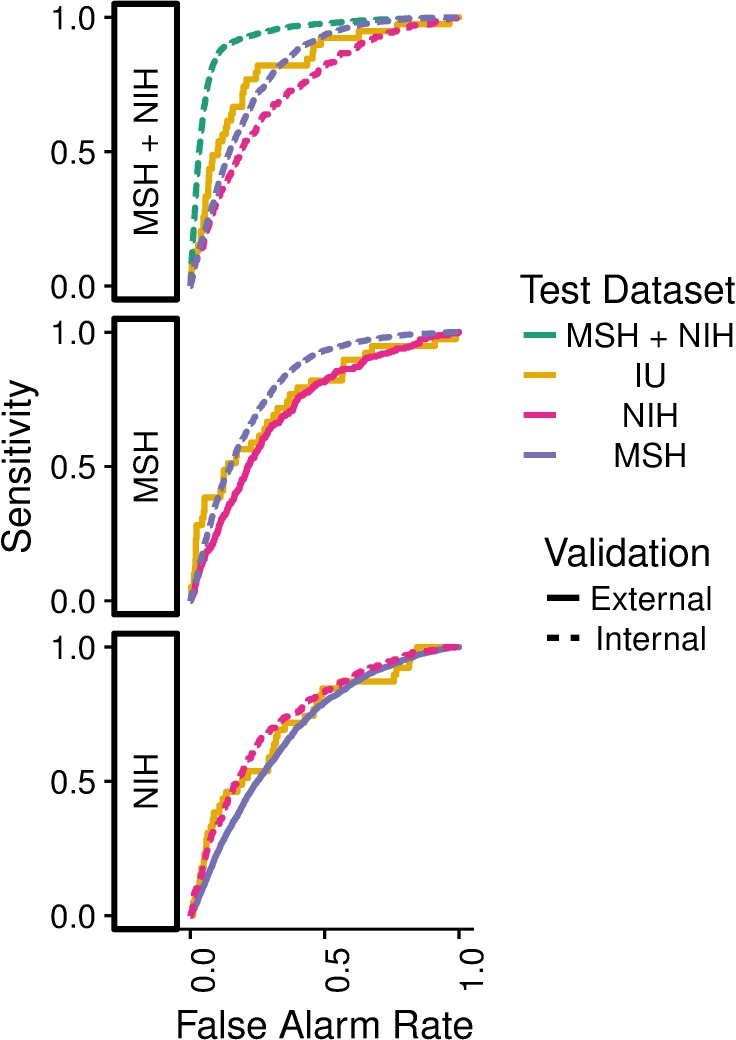
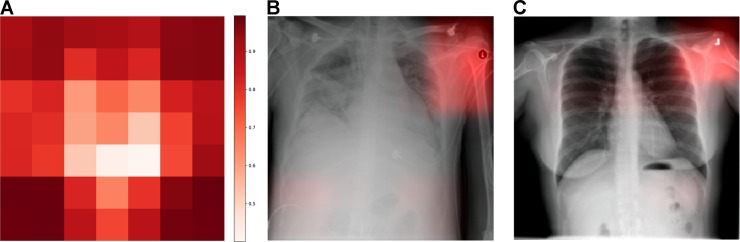
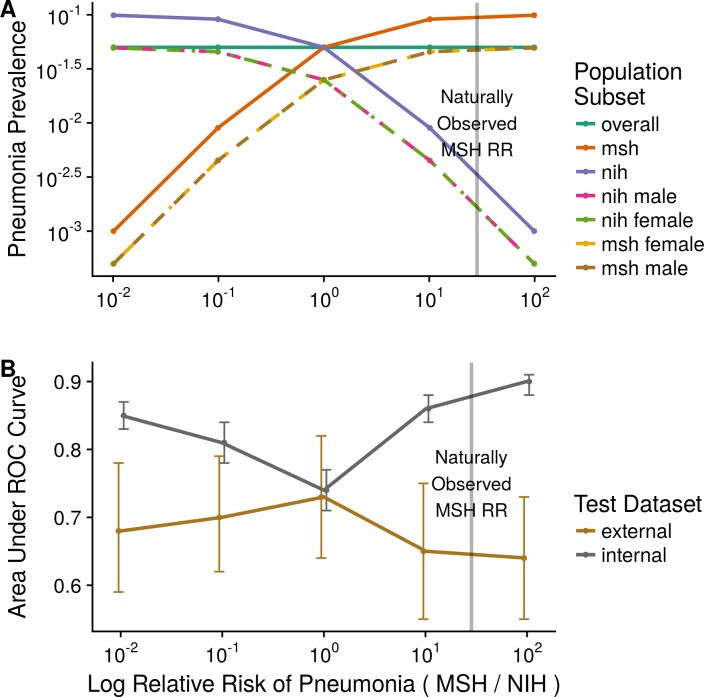
BACKGROUND: There is interest in using convolutional neural networks (CNNs) to analyze medical imaging to provide computer-aided diagnosis (CAD). Recent work has suggested that image classification CNNs may not generalize to new data as well as previously believed. We assessed how well CNNs generalized across three hospital systems for a simulated pneumonia screening task. METHODS AND FINDINGS: A cross-sectional design with multiple model training cohorts was used to evaluate model generalizability to external sites using split-sample validation. A total of 158,323 chest radiographs were drawn from three institutions: National Institutes of Health Clinical Center (NIH; 112,120 from 30,805 patients), Mount Sinai Hospital (MSH; 42,396 from 12,904 patients), and Indiana University Network for Patient Care (IU; 3,807 from 3,683 patients). These patient populations had an age mean (SD) of 46.9 years (16.6), 63.2 years (16.5), and 49.6 years (17) with a female percentage of 43.5%, 44.8%, and 57.3%, respectively. We assessed individual models using the area under the receiver operating characteristic curve (AUC) for radiographic findings consistent with pneumonia and compared performance on different test sets with DeLong's test. The prevalence of pneumonia was high enough at MSH (34.2%) relative to NIH and IU (1.2% and 1.0%) that merely sorting by hospital system achieved an AUC of 0.861 (95% CI 0.855-0.866) on the joint MSH-NIH dataset. Models trained on data from either NIH or MSH had equivalent performance on IU (P values 0.580 and 0.273, respectively) and inferior performance on data from each other relative to an internal test set (i.e., new data from within the hospital system used for training data; P values both <0.001). The highest internal performance was achieved by combining training and test data from MSH and NIH (AUC 0.931, 95% CI 0.927-0.936), but this model demonstrated significantly lower external performance at IU (AUC 0.815, 95% CI 0.745-0.885, P = 0.001). To test the effect of pooling data from sites with disparate pneumonia prevalence, we used stratified subsampling to generate MSH-NIH cohorts that only differed in disease prevalence between training data sites. When both training data sites had the same pneumonia prevalence, the model performed consistently on external IU data (P = 0.88). When a 10-fold difference in pneumonia rate was introduced between sites, internal test performance improved compared to the balanced model (10× MSH risk P < 0.001; 10× NIH P = 0.002), but this outperformance failed to generalize to IU (MSH 10× P < 0.001; NIH 10× P = 0.027). CNNs were able to directly detect hospital system of a radiograph for 99.95% NIH (22,050/22,062) and 99.98% MSH (8,386/8,388) radiographs. The primary limitation of our approach and the available public data is that we cannot fully assess what other factors might be contributing to hospital system-specific biases. CONCLUSION: Pneumonia-screening CNNs achieved better internal than external performance in 3 out of 5 natural comparisons. When models were trained on pooled data from sites with different pneumonia prevalence, they performed better on new pooled data from these sites but not on external data. CNNs robustly identified hospital system and department within a hospital, which can have large differences in disease burden and may confound predictions.
Overview
The claims and statistics of this paper haven’t been checked yet.
Free: it reads the open-access text and checks the first 5 claims that cite a source we can check. Create a free account to check every claim.
Integrity signals
Registry
Cites
Statistics
Figures
Verification
Claims the paper makes
The claims and statistics of this paper haven’t been checked yet.
Free: it reads the open-access text and checks the first 5 claims that cite a source we can check. Create a free account to check every claim.
Claims other papers make about this one
Each is checked against this paper’s own text: does it say what the citing paper says it does?
The source backs part of the claim, not all of it — or backs it for a different population, condition or comparison.
In the citing paper
“Thus, the system was able to distinguish only which machine was used for imaging and not the risk of the patients.”
From Explainability for artificial intelligence in healthcare: a multidisciplinary perspective (2020) · cites this paper as [11]
Experimental — accuracy not yet measuredThe source backs part of the claim, not all of it — or backs it for a different population, condition or comparison.
In the citing paper
“In a study training AI to diagnose pneumonia from chest X-rays, the performance on unseen data from the institution where the training data were collected was significantly higher than its performance on data collected from external hospitals [72].”
From Fairness of artificial intelligence in healthcare: review and recommendations (2024) · cites this paper as [72]
Experimental — accuracy not yet measuredThe source backs part of the claim, not all of it — or backs it for a different population, condition or comparison.
In the citing paper
“Shortcut learning, in which a model latches onto a spurious correlate (eg, the scanner used at a particular site, a hospital-specific text template) rather than the clinical signal of interest, has been repeatedly documented in medical AI and can be difficult to detect without deliberate probing.62”
From Artificial Intelligence in Oncology: Practical Applications Across Clinical Care, Scholarship, and Translation. (2026) · cites this paper as [62]
Experimental — accuracy not yet measuredThe source backs part of the claim, not all of it — or backs it for a different population, condition or comparison.
In the citing paper
“This study hypothesized that multicenter training could enhance the generalizability of AI models, which has previously been demonstrated in other medical imaging scenarios25–27.”
From Federated deep learning for detecting COVID-19 lung abnormalities in CT: a privacy-preserving multinational validation study (2021) · cites this paper as [26]
Experimental — accuracy not yet measuredThe cited source says what the claim attributes to it.
In the citing paper
“However, variations in data collection and processing can degrade model accuracy on data from new hospital deployments (Zech et al., 2018; AlBadawy et al., 2018).”
From WILDS: A Benchmark of in-the-Wild Distribution Shifts (2020) · cites this paper as Zech et al., 2018
12 more claims about this paper
Create a free account to see every claim other papers make about this one.
Self-check
Percentages, sums and reported differences re-computed from the paper’s own numbers.
The self-check needs the paper’s full text.
Citations
Cites
Deep Residual Learning for Image Recognition
He, K., Zhang, X., Ren, S., & Sun, J. (2016) · 2016 IEEE Conference on Computer Vision and Pattern Recognition (CVPR) · doi:10.1109/cvpr.2016.90 · Cited by 235,474 · cited 2×
“Many different CNN architectures have been proposed, including ResNet-50 and DenseNet-121 used in this paper, and improving the performance of these models is an active area of research [14,15].”
MethodLeCun, Y., Bengio, Y., & Hinton, G. (2015) · Nature · doi:10.1038/nature14539 · Cited by 84,126
Scikit-learn: Machine Learning in Python
Pedregosa, F., Varoquaux, G., Gramfort, A., Michel, V., Thirion, B., Grisel, O., Blondel, M., Müller, A., Nothman, J., Louppe, G., et al. (2012) · arXiv · doi:10.48550/arxiv.1201.0490 · Cited by 71,016
Gradient-based learning applied to document recognition
Lecun, Y., Bottou, L., Bengio, Y., & Haffner, P. (1998) · Proceedings of the IEEE · doi:10.1109/5.726791 · Cited by 58,805 · cited 1×
“These studies are generally performed utilizing CNN techniques that were pioneered on well characterized computer vision datasets including the ImageNet Large Scale Visual Recognition Competition (ILSVRC) and the Modified National Institute of Standards and Technology (MNIST) database of hand drawn digits [6, 7].”
MethodDensely Connected Convolutional Networks
Huang, G., Liu, Z., van der Maaten, L., & Weinberger, K. Q. (2016) · arXiv · doi:10.48550/arxiv.1608.06993 · Cited by 48,960
Densely Connected Convolutional Networks
Huang, G., Liu, Z., Van Der Maaten, L., & Weinberger, K. Q. (2017) · 2017 IEEE Conference on Computer Vision and Pattern Recognition (CVPR) · doi:10.1109/cvpr.2017.243 · Cited by 48,566
ImageNet Large Scale Visual Recognition Challenge
Russakovsky, O., Deng, J., Su, H., Krause, J., Satheesh, S., Ma, S., Huang, Z., Karpathy, A., Khosla, A., Bernstein, M., et al. (2015) · International Journal of Computer Vision · doi:10.1007/s11263-015-0816-y · Cited by 39,380 · cited 1×
“These studies are generally performed utilizing CNN techniques that were pioneered on well characterized computer vision datasets including the ImageNet Large Scale Visual Recognition Competition (ILSVRC) and the Modified National Institute of Standards and Technology (MNIST) database of hand drawn digits [6, 7].”
MethodDeLong, E. R., DeLong, D. M., & Clarke-Pearson, D. L. (1988) · Biometrics · doi:10.2307/2531595 · Cited by 22,649
pROC: an open-source package for R and S+ to analyze and compare ROC curves
Robin, X., Turck, N., Hainard, A., Tiberti, N., Lisacek, F., Sanchez, J.-C., & Müller, M. (2011) · BMC Bioinformatics · doi:10.1186/1471-2105-12-77 · Cited by 13,697
(2017) · Cited by 11,625
Cited by
Items 601–700 of 1,005
A “Bumper-Car” Curriculum for Teaching Deep Learning to Radiology Residents☆
Richardson, M. L., & Ojeda, P. I. (2022) · Academic Radiology · doi:10.1016/j.acra.2021.11.016 · Cited by 16
Artificial Intelligence Algorithms in Diabetic Retinopathy Screening
Zafar, S., Mahjoub, H., Mehta, N., Domalpally, A., & Channa, R. (2022) · Current Diabetes Reports · doi:10.1007/s11892-022-01467-y · Cited by 18
“Using data from multiple institutions is important to adequately represent the variations in patient populations in real-world clinical settings, and to verify an algorithm’s performance across this expected variability [52–54].”
BackgroundImproving Follicular Lymphoma Identification using the Class of Interest for Transfer Learning
Somaratne, U. V., Wong, K. W., Parry, J., Sohel, F. A., Wang, X., & Laga, H. (2019) · International Conference on Digital Image Computing: Techniques and Applications (DICTA) · doi:10.1109/dicta47822.2019.8946075 · Cited by 16
“Data from different sites can be included to capture a higher variation [12].”
BackgroundInfluentialBraman, N. M., Adoui, M. E., Vulchi, M., Turk, P., Etesami, M., Fu, P., Bera, K., Drisis, S., Varadan, V., Plecha, D. M., et al. (2020) · Nature Communications · doi:10.48550/arxiv.2001.08570 · Cited by 39
Lu, A. X., Lu, A. X., Schormann, W., Ghassemi, M., Andrews, D. W., & Moses, A. M. (2019) · arXiv (Cornell University) · doi:10.48550/arxiv.1906.07282 · Cited by 17
“Diagnostic systems, such as those that predict pneumonia from chest radiographs, may not generalize to data from different institutions [2].”
BackgroundLoeffen, D. V., Zijta, F. M., Boymans, T. A. E. J., Wildberger, J. E., & Nijssen, E. C. (2025) · European Journal of Radiology · doi:10.1016/j.ejrad.2025.112113 · Cited by 21
“Another aspect of this theoretical approach is that the human-– machine interaction, such as automation bias, and specifically the interaction between radiologists and the AI such as flexible application of rigid scenarios, has been left out of the equation [25 – 29].”
InfoGram and admissible machine learning
Mukhopadhyay, S. (2022) · Machine Learning · doi:10.1007/s10994-021-06121-4 · Cited by 14
“Here is a dazzling example: Researchers at the Icahn School of Medicine at Mount Sinai in New York City found that (Zech et al. 2018; Reardon 2019) a deep-learning algorithm, which showed more than 90% accuracy on the x-rays produced at Mount Sinai, performed poorly when tested on data from other…”
BackgroundMayer, L. M., Strich, J. R., Kadri, S. S., Lionakis, M. S., Evans, N. G., Prevots, D. R., & Ricotta, E. (2022) · Open Forum Infectious Diseases · doi:10.1093/ofid/ofac401 · Cited by 20
Platelet-Based Liquid Biopsies through the Lens of Machine Learning
Cygert, S., Pastuszak, K., Górski, F., Sieczczyński, M., Juszczyk, P., Rutkowski, A., Lewalski, S., Różański, R., Jopek, M. A., Zaczek, A. J., et al. (2023) · Cancers · doi:10.3390/cancers15082336 · Cited by 16
“They exhibit reduced classification performance when presented with data from novel hospitals [17].”
BackgroundBracci, S., Mraz, J., Zeman, A. A., Leys, G., & de Beeck, H. O. (2023) · PLoS Computational Biology · doi:10.1371/journal.pcbi.1011086 · Cited by 22
“, not necessarily object-specific) might become a useful piece of 257 information to recognize the object (41).”
BackgroundYi, P. H., Garner, H. W., Hirschmann, A. C., Jacobson, J. A., Omoumi, P., Oh, K., Zech, J. R., & Lee, Y. H. (2023) · American Journal of Roentgenology · doi:10.2214/ajr.23.29530 · Cited by 22
Self-citationAchieving Reproducibility in EEG-Based Machine Learning
Kinahan, S. P., Saidi, P., Daliri, A., Liss, J., & Berisha, V. (2024) · ACM Conference on Fairness, Accountability, and Transparency (FAccT) · doi:10.1145/3630106.3658983 · Cited by 26
“For high-stakes applications like healthcare, the repercussions of deploying non-reproducible models are significant; they can deny necessary prescriptions, misinterpret X-rays, and overlook common health concerns, thereby harming patients and eroding public trust in ML technology [32, 39, 40].”
BackgroundMulti-source deep feature fusion for medical image analysis
Gürsoy, E., & Kaya, Y. (2024) · Multidimensional Systems and Signal Processing · doi:10.1007/s11045-024-00897-z · Cited by 26
“In (Zech et al., 2018), the authors used saliency maps on chest X-rays to visualize a DL system’s learned patterns that classify pneumonia patients.”
Assessing and improving reliability of neighbor embedding methods: a map-continuity perspective
Liu, Z., Ma, R., & Zhong, Y. (2025) · Nature Communications · doi:10.1038/s41467-025-60434-9 · Cited by 28
“Highlight specific scenarios or datasets where LOO-map excels and provide potential reasons for these results.”
An online platform for interactive feedback in biomedical machine learning
Abid, A., Ali, A., Abid, A., Khan, D., Alfozan, A., & Zou, J. (2020) · Nature Machine Intelligence · doi:10.1038/s42256-020-0147-8 · Cited by 17
Biologically Informed Neural Networks Predict Drug Responses
Greene, C. S., & Costello, J. C. (2020) · Cancer Cell · doi:10.1016/j.ccell.2020.10.014 · Cited by 18
Basic Artificial Intelligence Techniques
Kalpathy–Cramer, J., Patel, J., Bridge, C. P., & Chang, K. (2021) · Radiologic Clinics of North America · doi:10.1016/j.rcl.2021.06.005 · Cited by 18
Conditional generation of medical time series for extrapolation to underrepresented populations
Bing, S., Dittadi, A., Bauer, S., & Schwab, P. (2022) · PLOS Digital Health · doi:10.1371/journal.pdig.0000074 · Cited by 32
“Basing machine learning models on single site data sets only risks overfitting to a cohort of patients that is biased towards the population seen at one clinic or hospital, and renders their use for general applications across heterogeneous patient populations uninformative at best and harmful at worst [10, 11].”
BackgroundPrabhudesai, S., Wang, N. C., Ahluwalia, V., Huan, X., Bapuraj, J. R., Banovic, N., & Rao, A. (2021) · Frontiers in Neuroscience · doi:10.3389/fnins.2021.740353 · Cited by 13
“We demonstrate this framework with a cross-sectional study design similar to Zech et al. (2018) and analyze how well an ML algorithm trained on one glioma type (either HGG, exemplified by GBM or LGG) generalizes to another, out-of-distribution glioma type.”
BackgroundMethodDas, A., Agarwal, V., & Shetty, N. P. (2025) · Frontiers in Artificial Intelligence · doi:10.3389/frai.2025.1608837 · Cited by 19
Yu, W., Zhou, H., Goldin, J. G., Wong, W. K., & Kim, G. H. J. (2021) · Medical Physics · doi:10.1002/mp.14754 · Cited by 15
“At the same time, this lack of generalizability is not surprising as such findings are frequently reported in many areas of research when deep learning models are applied to unseen domains.(34) This provides a warning that when deploying the developed model to scans collected from other institutions or ILD patients wi…”
ResultKshirsagar, M., Robinson, C., Yang, S., Gholami, S., Klyuzhin, I. S., Mukherjee, S., Nasır, Ortiz, A., Oviedo, F., Tanner, D., et al. (2021) · Proceedings of the AAAI/ACM Conference on AI Ethics and Society · doi:10.1145/3461702.3462599 · Cited by 30
“[80] found that a dataset of chest x-rays curated for screening pneumonia cases could be used to train amodel to accurately predict which hospital system the x-ray comes from, indicating that the pneumonia detection model developed from the dataset could have been aided by features not related to the medical condition.”
BackgroundSemisupervised Training of a Brain MRI Tumor Detection Model Using Mined Annotations
Swinburne, N., Yadav, V. H., Kim, J., Choi, Y. R., Gutman, D. C., Yang, J. T., Moss, N. S., Stone, J. B., Tisnado, J., Hatzoglou, V., et al. (2022) · Radiology · doi:10.1148/radiol.210817 · Cited by 17
Quantum Transfer Learning for Diagnosis of Diabetic Retinopathy
Sridevi, S., Kanimozhi, T., Bhattacharjee, S., Shahwar, D., & Reddy, K. S. S. (2022) · International Conference on Innovative Trends in Information Technology (ICITIIT) · doi:10.1109/icitiit54346.2022.9744184 · Cited by 13
Lee, S. Y., Ha, S., Jeon, M. G., Li, H., Choi, H., Kim, H. P., Choi, Y. R., Hoseok, I., Jeong, Y. J., Park, Y. H., et al. (2022) · npj Digital Medicine · doi:10.1038/s41746-022-00658-x · Cited by 16
“Based on a clinically appropriate standard, localization accuracy of CADs should be routinely assessed as inaccurate lesion localization may lead to automation bias 36 , or worse, correct classi fi cation through localization of confounders would erode trust in CAD predictions 53,54 .”
MethodAn Efficient Deep Neural Network to Classify Large 3D Images With Small Objects
Park, J., Chłędowski, J., Jastrzȩbski, S., Witowski, J. S., Xu, Y., Du, L., Gaddam, S., Kim, E. S., Lewin, A. A., Parikh, U., et al. (2023) · IEEE Transactions on Medical Imaging · doi:10.1109/tmi.2023.3302799 · Cited by 21
“This is because there are variations in data collection and processing between datasets collected from different hospitals, which could degrade cross-institutional generalization [36].”
BackgroundChallenges of Machine Learning and AI (What Is Next?), Responsible and Ethical AI
Gkontra, P., Quaglio, G., Garmendia, A. T., & Lekadir, K. (2023) · Springer eBooks · doi:10.1007/978-3-031-36678-9_17 · Cited by 22
Kerber, B., Hepp, T., Küstner, T., & Gatidis, S. (2023) · PLoS ONE · doi:10.1371/journal.pone.0292993 · Cited by 21
Zheng, R., Su, R. J., Fan, Y., Xing, F., Huang, K., Yan, F., Chen, H., Liu, B., Fang, L., Du, Y., et al. (2024) · Analytical Chemistry · doi:10.1021/acs.analchem.4c01171 · Cited by 15
The Application of artificial intelligence in periprosthetic joint infection
Li, P., Wang, Y., Zhao, R., Hao, L., Chai, W., Jiying, C., Feng, Z., Ji, Q., & Zhang, G. (2025) · Journal of Advanced Research · doi:10.1016/j.jare.2025.03.039 · Cited by 18
“For instance, a study using CNNs to diagnose pneumonia revealed that models identified metal tokens indicating body side for diagnosis, which significantly weakened the model’s generalization capability on external data [237].”
A primer on applying AI synergistically with domain expertise to oncology
Kim, J., Kusko, R. L., Zeskind, B. J., Zhang, J., & Escalante-Chong, R. (2021) · Biochimica et Biophysica Acta (BBA) - Reviews on Cancer · doi:10.1016/j.bbcan.2021.188548 · Cited by 13
Deep Learning Improves the Temporal Reproducibility of Aortic Measurement
Bratt, A. K., Blezek, D. J., Ryan, W. J., Philbrick, K. A., Rajiah, P. S., Tandon, Y. K., Walkoff, L. A., Cai, J. C., Sheedy, E. N., Korfiatis, P. D., et al. (2021) · Journal of Imaging Informatics in Medicine · doi:10.1007/s10278-021-00465-y · Cited by 13
“It is well-known that slight, even imperceptible, differences in input, such as those related to images acquired on different scanners, can lead to erratic model performance [11, 12].”
BackgroundYi, P. H., Arun, A., Hafezi‐Nejad, N., Choy, G., Sair, H. I., Hui, F. K., & Fritz, J. (2021) · Skeletal Radiology · doi:10.1007/s00256-021-03880-y · Cited by 15
Hallinan, J. T. P. D., Feng, M., Ng, D., Sia, S. Y., Tiong, V. T. Y., Jagmohan, P., Makmur, A., & Thian, Y. L. (2021) · Academic Radiology · doi:10.1016/j.acra.2021.09.013 · Cited by 13
Schramowski, P., Stammer, W., Teso, S., Brugger, A., Shao, X., Luigs, H.-G., Mahlein, A., & Kristian Kersting, B. (2020) · arXiv (Cornell University) · Cited by 13
Learning Deep Attribution Priors Based On Prior KnowledgePreprint
Weinberger, E., Janizek, J. D., & Lee, S. (2019) · arXiv (Cornell University) · doi:10.48550/arxiv.1912.10065 · Cited by 30
Accounting for Unobserved Confounding in Domain GeneralizationPreprint
Bellot, A., & van der Schaar, M. (2020) · arXiv (Cornell University) · doi:10.48550/arxiv.2007.10653 · Cited by 39
Ben Ahmed, K., Hall, L. O., Goldgof, D. B., & Fogarty, R. (2022) · IEEE Access · doi:10.1109/access.2022.3193700 · Cited by 12
Mitigating adversarial evasion attacks by deep active learning for medical image classification
Ahmed, U., Lin, J. C., & Srivastava, G. (2022) · Multimedia Tools and Applications · doi:10.1007/s11042-021-11473-z · Cited by 14
“The study, [38], addressed the over-fitting issues in the deep learning model.”
BackgroundCan deep adult lung segmentation models generalize to the pediatric population?
Rajaraman, S., Yang, F., Zamzmi, G., Xue, Z., & Antani, S. (2023) · Expert Systems with Applications · doi:10.1016/j.eswa.2023.120531 · Cited by 12
Horry, M. J., Chakraborty, S., Pradhan, B., Paul, M., Zhu, J. F., Loh, H. W., Barua, P. D., & Acharya, U. R. (2023) · Sensors · doi:10.3390/s23146585 · Cited by 28
“Projection labels are effective predictors of CXR repository sources with accuracy of up to 99.98% and 100% accuracy in separating emergency room from inpatient CXR images [56].”
InfluentialBlinding to Circumvent Human Biases: Deliberate Ignorance in Humans, Institutions, and Machines
Hertwig, R., Herzog, S. M., & Kozyreva, A. (2023) · Perspectives on Psychological Science · doi:10.1177/17456916231188052 · Cited by 23
“When there is a correlation between an irrelevant feature and the prevalence of disease per site, models can use this confounding information to predict the disease (Zech et al., 2018).”
BackgroundTowards trustworthy seizure onset detection using workflow notes
Saab, K. K., Tang, S., Taha, M., Lee‐Messer, C., Ré, C., & Rubin, D. L. (2024) · npj Digital Medicine · doi:10.1038/s41746-024-01008-9 · Cited by 16
“Alarmingly, there has been a growing body of work revealing that healthcare models with “ expert-level ” performance often rely on non-generalizable features 16,17 , resulting in unexpected drops in performance over hidden subgroups 18,19 or under data distribution shifts 20 .”
Kahouadji, N. (2024) · Information · doi:10.3390/info15050252 · Cited by 13
Gan, T., Liu, X., Liu, R., Huang, J., Liu, D., Tu, W., Song, J., Cai, P., Shen, H., & Wang, W. (2024) · Frontiers in Medicine · doi:10.3389/fmed.2024.1354925 · Cited by 14
A Review of Intracranial Aneurysm Imaging Modalities, from CT to State-of-the-Art MR
Allaw, S., Khabaz, K., Given, T. C., Montas, D. M., Alcazar‐Félix, R. J., Srinath, A., Kass‐Hout, T., Carroll, T. J., Hurley, M. C., & Polster, S. P. (2024) · American Journal of Neuroradiology · doi:10.3174/ajnr.a8549 · Cited by 12
MLHOps: Machine Learning Health Operations
Khattak, F. K., Subasri, V., Krishnan, A., Pou-Prom, C., Koçak, S. A., Dolatabadi, E., Pandya, D., Seyyed-Kalantari, L., & Rudzicz, F. (2024) · IEEE Access · doi:10.1109/access.2024.3521279 · Cited by 39
“In the context of medical images, including chest X-rays [233], [319], diabetic retinopathies [44], and histology slides [273], classifier methods have proven effective.”
Evaluating deep transfer learning for whole-brain cognitive decoding
Thomas, A. W., Lindenberger, U., Samek, W., & Müller, K. (2023) · Journal of the Franklin Institute · doi:10.1016/j.jfranklin.2023.07.015 · Cited by 17
A ensemble methodology for automatic classification of chest X-rays using deep learning
Vogado, L. H. S., Araújo, F. H. D., Neto, P. D. A. D. S., de Almeida, J. D. S., Tavares, J. M. R. S., & Veras, R. D. M. S. (2022) · Computers in Biology and Medicine · doi:10.1016/j.compbiomed.2022.105442 · Cited by 12
“[23,24], the presence of metallic tokens in X-ray images can bias the learning of CNNs.”
BackgroundArtificial intelligence: Advances and new frontiers in medical imaging
Fromherz, M., & Makary, M. S. (2022) · Artificial Intelligence in Medical Imaging · doi:10.35711/aimi.v3.i2.33 · Cited by 14
Loch, A. A., Lopes-Rocha, A. C., Ara, A., Gondim, J. M., Cecchi, G., Corcoran, C. M., Mota, N. B., & Argôlo, F. C. (2022) · JMIR Mental Health · doi:10.2196/41014 · Cited by 20
“Exemplifying this, in 2018, a study aimed to investigate the generalizability across sites of a deep learning model to detect pneumonia in chest radiographs [48].”
BackgroundBenchmarking explanation methods for mental state decoding with deep learning models
Thomas, A. W., Ré, C., & Poldrack, R. A. (2023) · NeuroImage · doi:10.1016/j.neuroimage.2023.120109 · Cited by 19
“While the models performed well in the training data, comprising X-rays from few hospitals, their performance meaningfully decreased for X-rays from new hospitals.”
BackgroundDabre, K., Varma, S. L., & Patil, P. B. (2023) · Biomedical Signal Processing and Control · doi:10.1016/j.bspc.2023.105375 · Cited by 13
Huffer, D., Wood, C., & Graham, S. (2019) · Internet Archaeology · doi:10.11141/ia.52.5 · Cited by 16
Do Neural Information Extraction Algorithms Generalize Across Institutions?
Santus, E., Li, C., Yala, A., Peck, D., Soomro, R., Faridi, N., Mamshad, I., Tang, R., Lanahan, C. R., Barzilay, R., et al. (2019) · JCO Clinical Cancer Informatics · doi:10.1200/cci.18.00160 · Cited by 12
Automated Detection of Covid-19 Coronavirus Cases Using Deep Neural Networks with X-ray Images
Aboughazala, L. M. (2020) · Al-Azhar University Journal of Virus Researches and Studies · doi:10.21608/aujv.2020.106722 · Cited by 12
Chang, A. C. (2020) · Elsevier eBooks · doi:10.1016/b978-0-12-823337-5.00005-6 · Cited by 14
X-ray image based pneumonia classification using convolutional neural networks
AlSumairi, S. B., & Ismail, M. M. B. (2020) · ACCENTS Transactions on Image Processing and Computer Vision · doi:10.19101/tipcv.2020.618050 · Cited by 14
Barnett, A. J., Schwartz, F. R., Tao, C., Chen, C., Ren, Y., Lo, J. Y.-C., & Rudin, C. D. (2021) · arXiv (Cornell University) · doi:10.48550/arxiv.2103.12308 · Cited by 12
“, type of equipment) rather than medical information [4, 52, 57].”
BackgroundInfluentialTryp: a dataset of microscopy images of unstained thick blood smears for trypanosome detection
Anzaku, E. T., Mohammed, M. A., Özbulak, U., Won, J., Hong, H., Krishnamoorthy, J., Hoecke, S. V., Magez, S., Messem, A. V., & Neve, W. D. (2023) · Scientific Data · doi:10.1038/s41597-023-02608-y · Cited by 14
“Similarly, findings on the effect of spurious correlations in pneumonia 26 and COVID-19 27 detection using chest radiographs have also been published.”
BackgroundHooper, S., Wu, S., Davies, R. H., Bhuva, A., Schelbert, E. B., Moon, J., Kellman, P., Xue, H., Langlotz, C. P., & Ré, C. (2023) · Journal of medical imaging · doi:10.1117/1.jmi.10.2.024007 · Cited by 12
Sung, G., & Park, E. (2024) · Biomedical Signal Processing and Control · doi:10.1016/j.bspc.2024.106068 · Cited by 14
Santomartino, S. M., Zech, J. R., Hall, K., Jeudy, J. J., Parekh, V. S., & Yi, P. H. (2024) · Radiology · doi:10.1148/radiol.232746 · Cited by 17
Self-citationSource Matters: Source Dataset Impact on Model Robustness in Medical Imaging
Juodelyte, D., Lu, Y., Jiménez-Sánchez, A., Bottazzi, S., Ferrante, E., & Cheplygina, V. (2025) · Lecture notes in computer science · doi:10.1007/978-3-031-82007-6_11 · Cited by 18
Gupta, A. K., Mustafiz, C., Mutahar, D., Zaka, A., Parvez, R., Mridha, N., Stretton, B., Kovoor, J. G., Bacchi, S., Ramponi, F., et al. (2025) · Canadian Journal of Cardiology · doi:10.1016/j.cjca.2025.01.037 · Cited by 19
Diagnosing Model Performance Under Distribution Shift
Cai, T., Namkoong, H., & Yadlowsky, S. (2025) · Operations Research · doi:10.1287/opre.2023.0217 · Cited by 73
Current Status and Future Direction of Artificial Intelligence in Healthcare and Medical Education
Jung, J. S. (2020) · Korean Medical Education Review · doi:10.17496/kmer.2020.22.2.99 · Cited by 14
Corbacho-Abelaira, D., Abelaira, F. C., Ruano‐Raviña, A., & Fernández‐Villar, A. (2021) · Open Respiratory Archives · doi:10.1016/j.opresp.2020.100078 · Cited by 13
“A deep learning method used by Song 43 achieved an accuracy of 86.0% for the differential classification of the type of pneumonia and an accuracy of 94.”
MethodInfluentialBroadbent, A., & Grote, T. (2022) · Philosophy & Technology · doi:10.1007/s13347-022-00509-3 · Cited by 17
“ML algorithms achieve high predictive accuracy by exploiting shortcuts: e.g. using artefacts at the edges of an image as a predictor for pneumonia (Zech et al., 2018).”
BackgroundMethodKuo, M., Chiu, K. W.-H., Wang, D. S., Larici, A. R., Poplavskiy, D., Valentini, A., Napoli, A., Borghesi, A., Ligabue, G., Fang, B., et al. (2022) · European Radiology · doi:10.1007/s00330-022-08969-z · Cited by 13
“…set allowed us to evaluate the model ’ s “ true ” performance across a broad cross section of age groups, disease conditions, localities, and healthcare systems, which is particularly relevant among growing concerns of “ brittle ” AI, model performance overestimations, and cohort bias [29, 30].”
BackgroundPham, V.-T.-N., Nguyen, Q.-C., & Nguyen, Q.-V. (2022) · Vietnam Journal of Computer Science · doi:10.1142/s2196888822500348 · Cited by 12
Tsuji, T., Hirata, Y., Kusunose, K., Sata, M., Kumagai, S., Shiraishi, K., & Kotoku, J. (2023) · BMC Medical Imaging · doi:10.1186/s12880-023-01019-0 · Cited by 15
“When classifying pneumonia on chest X-ray images, emphasis assigned by the CNN to metal markers at the image corners has been reported [13].”
Interpretability Analysis of Convolutional Neural Networks for Crack Detection
Wu, J., He, Y., Xu, C., Jia, X., Huang, Y., Chen, Q., Huang, C., Eslamlou, A. D., & Huang, S. (2023) · Buildings · doi:10.3390/buildings13123095 · Cited by 14
DiFazio, M. R., Thomason, J. D., Cernicchiaro, N., Biller, D. S., Thomason, S., & Harness, P. (2020) · Journal of Veterinary Internal Medicine · doi:10.1111/jvim.15811 · Cited by 11
End-to-end pre-trained CNN-based computer-aided classification system design for chest radiographs
Chandola, Y., Virmani, J., Bhadauria, H. S., & Kumar, P. (2021) · Elsevier eBooks · doi:10.1016/b978-0-323-90184-0.00011-4 · Cited by 16
A Human-Centered Machine-Learning Approach for Muscle-Tendon Junction Tracking in Ultrasound Images
Leitner, C., Jarolim, R., Englmair, B., Kruse, A., Hernandez, K. A. L., Konrad, A., Su, E. Y.-S., Schröttner, J., Kelly, L. A., Lichtwark, G. A., et al. (2021) · IEEE Transactions on Biomedical Engineering · doi:10.1109/tbme.2021.3130548 · Cited by 17
“Moreover, predictions across multiple-domains (e.g. data collected from different instruments) are key in generalizing machine learning algorithms [39].”
Galuzio, P. P., & Cherif, A. (2022) · Advances in Chronic Kidney Disease · doi:10.1053/j.ackd.2022.07.002 · Cited by 13
Three Reasons Why Artificial Intelligence Might Be the Radiologist’s Best Friend
van Rijn, R. R., & Luca, A. D. (2020) · Radiology · doi:10.1148/radiol.2020200855 · Cited by 12
On the Composition and Limitations of Publicly Available COVID-19 X-Ray Imaging DatasetsPreprint
Cruz, B. G. S., Sölter, J., Bossa, M. N., & Husch, A. (2020) · arXiv (Cornell University) · doi:10.48550/arxiv.2008.11572 · Cited by 15
“But there is growing awareness in the community that the presence of different sources of bias significantly decreases overall generalisation of models, while model performances are overestimated in internal validation [9, 10, 11, 12].”
BackgroundDeep learning in magnetic resonance prostate segmentation: A review and a new perspectivePreprint
Gillespie, D., Kendrick, C., Boon, I. S., Boon, C. S., Rattay, T., & Yap, M. H. (2020) · arXiv (Cornell University) · doi:10.48550/arxiv.2011.07795 · Cited by 22
“This seems to be in line with the literature, where mixing datasets, can lead to poorer performance, than a model trained on a singular dataset Zech et al. (2018); Onofrey et al. (2019).”
Addressing catastrophic forgetting for medical domain expansionPreprint
Gupta, S., Singh, P., Chang, K., Qu, L., Aggarwal, M., Arun, N., Vaswani, A., Raghavan, S., Agarwal, V., Gidwani, M., et al. (2021) · Research Square · doi:10.21203/rs.3.rs-1087025/v1 · Cited by 22
Leszczyńska, A., Seweryn, M., Obuchowicz, R., Strzelecki, M., Piórkowski, A., & Potocki, P. M. (2026) · Cancers · doi:10.3390/cancers18050808 · Cited by 12
Fu, H., Novak, A., Robert, D., Kumar, S., Tanamala, S., Oke, J. L., Bhatia, K., Shah, R., Romsauerova, A., Das, T., et al. (2024) · BMJ Open · doi:10.1136/bmjopen-2023-079824 · Cited by 11
Exploring dermoscopic structures for melanoma lesions' classification
Malik, F. S., Yousaf, M. H., Sial, H. A., & Viriri, S. (2024) · Frontiers in Big Data · doi:10.3389/fdata.2024.1366312 · Cited by 12
Model interpretability enhances domain generalization in the case of textual complexity modeling
van der Sluis, F., & van den Broek, E. L. (2025) · Patterns · doi:10.1016/j.patter.2025.101177 · Cited by 18
“10 Domain differences between factors such as sampling location, 33 time, or—particularly in natural language processing (NLP)—variations in genre, writing style, and topic may lead to data shifts in feature distributions (i.e., co-variate shifts).”
Yang, X., Yang, R., Liu, X., Chen, Z., & Zheng, Q. (2025) · Annals of Surgical Oncology · doi:10.1245/s10434-025-17228-6 · Cited by 14
Makrygiannakis, M. A., Giannakopoulos, K., Kavadella, A., Paraskevis, D. N., & Kaklamanos, E. G. (2025) · European Journal of Orthodontics · doi:10.1093/ejo/cjaf054 · Cited by 14
Biomolecular Interaction Prediction: The Era of AI
Wang, H., Meng, X., & Zhang, Y. (2025) · Advanced Science · doi:10.1002/advs.202509501 · Cited by 18
Dunnmon, J. (2021) · Radiologic Clinics of North America · doi:10.1016/j.rcl.2021.07.006 · Cited by 10
Spectral decoupling for training transferable neural networks in medical imaging
Pohjonen, J., Stürenberg, C., Rannikko, A. S., Mirtti, T. K., & Pitkänen, E. (2022) · iScience · doi:10.1016/j.isci.2022.103767 · Cited by 17
“Furthermore, three out of five neural networks for pneumonia detection showed significantly worse performance during external validation [5] and recent neural networks for COVID-19 detection rely on confounding factors rather than actual medical pathology [6].”
BackgroundUNAS-Net: A deep convolutional neural network for predicting Covid-19 severity
Syarif, A., Azman, N., Repi, V. V. R., Sinaga, E., & Asvial, M. (2022) · Informatics in Medicine Unlocked · doi:10.1016/j.imu.2021.100842 · Cited by 10
“To guarantee that the proposed model points to reasonable aspects of the images [9,20], we performed a saliency map.”
Kim, K., Cho, K., Kim, M., Lee, K. H., Lee, S. J., Lee, S. M., Lee, K. H., & Kim, N. (2022) · Computer Methods and Programs in Biomedicine · doi:10.1016/j.cmpb.2022.106705 · Cited by 11
Ko, Y., Chen, W.-S., Chen, H., Hsu, T.-K., Chen, Y., Liu, C. J.-L., & Lu, H. H. (2022) · Biomedicines · doi:10.3390/biomedicines10061314 · Cited by 11
“Generalizability is a critical issue for the further application of DL-assisted detection of disease using images [31], especially in the detection of GON.”
Machine Learning in Cardiovascular Imaging: A Scoping Review of Published Literature
Rouzrokh, P., Khosravi, B., Vahdati, S., Moassefi, M., Faghani, S., Mahmoudi, E., Chalian, H., & Erickson, B. J. (2022) · Current Radiology Reports · doi:10.1007/s40134-022-00407-8 · Cited by 15
“formance of a DL model in identifying pneumonia may be attributable to its attention to radiology markers present in CXR imaging [48].”
BackgroundRuiz, F. M., Lahrmann, B., Bartels, L., Krauthoff, A., Keil, A., Härtel, S., Tao, A. S., Ströbel, P., Clarke, M. A., Wentzensen, N., et al. (2023) · Frontiers in Medicine · doi:10.3389/fmed.2023.1173616 · Cited by 12
AI based image analysis of red blood cells in oscillating microchannels
Link, A., Pardo, I. L., Porr, B., & Franke, T. (2023) · RSC Advances · doi:10.1039/d3ra04644c · Cited by 10
Roca, V., Kuchcinski, G., Pruvo, J., Manouvriez, D., Leclerc, X., & Lopes, R. (2023) · Heliyon · doi:10.1016/j.heliyon.2023.e22647 · Cited by 14
“However, the generalization of this type of model in medical imaging studies can be challenging [55].”
BackgroundNeural networks memorise personal information from one sample
Hartley, J., Sanchez, P. P., Haider, F., & Tsaftaris, S. A. (2023) · Scientific Reports · doi:10.1038/s41598-023-48034-3 · Cited by 10
“For example, DNNs used in healthcare may encode information about patients in their weights 9,10 , for which disclosure is legally restricted in the EU by the General Data Protection Regulation (GDPR).”
MethodFailures Hiding in Success for Artificial Intelligence in Radiology
Purkayastha, S., Trivedi, H., & Gichoya, J. W. (2021) · Journal of the American College of Radiology · doi:10.1016/j.jacr.2020.11.008 · Cited by 10
Raising context awareness in motion forecasting
Ben-younes, H., Zablocki, É., Chen, M., Pérez, P., & Cord, M. (2022) · IEEE/CVF Conference on Computer Vision and Pattern Recognition Workshops (CVPRW) · doi:10.1109/cvprw56347.2022.00487 · Cited by 13
Metadata
- Authors
- Zech, J. R., Badgeley, M. A., Liu, M., Costa, A. B., Titano, J. J., & Oermann, E. K.
- Affiliations
- California Pacific Medical Center (US)
- Verily Life Sciences LLC (United States) (US)
- Icahn School of Medicine at Mount Sinai (US)
- Corresponding author
- Oermann, Eric Karl
- ORCID
- Venue
- PLOS Medicine
- Publisher
- Public Library of Science (PLoS)
- Published
- 2018-11-06
- Volume
- 15
- Issue
- 11
- Pages
- e1002683
- ISSN
- 1549-1277 (ISSN-L)
- 1549-1676
- PMC
- PMC6219764
- OpenAlex
- W2811374795
- Cited by
- 1,719
- References
- 34
- Citations by year
- 2026: 412 · 2025: 212 · 2024: 186 · 2023: 190 · 2022: 206 · 2021: 236 · 2020: 173 · 2019: 90 · 2018: 12
- FWCI
- 87.44
- Type
- journal article
- Language
- en
- Open access
- gold
- doi.org
- Licence
- Locations
- PLoS Medicine (publishedVersion, cc-by)
- Europe PMC (PubMed Central) (publishedVersion, cc-by)
- PubMed Central (publishedVersion, cc-by)
- PubMed (publishedVersion)
- arXiv (Cornell University) (submittedVersion)
- DOAJ (DOAJ: Directory of Open Access Journals) (submittedVersion, cc-by-sa)
- Figshare (submittedVersion, cc-by)
- Funders
- Icahn School of Medicine at Mount Sinai
- Topics
- Health Sciences › Medicine › Radiology, Nuclear Medicine and Imaging › COVID-19 diagnosis using AI
- Health Sciences › Medicine › Radiology, Nuclear Medicine and Imaging › Radiomics and Machine Learning in Medical Imaging
- Health Sciences › Medicine › Health Informatics › Artificial Intelligence in Healthcare and Education
- Keywords
- pneumonia detection, chest radiograph, convolutional neural networks, model generalization, external validation, computer-aided diagnosis, pneumonia screening, split-sample validation, radiographic findings, deep learning for medical imaging
- MeSH terms
- Deep Learning, Adult, Aged, Cross-Sectional Studies, Diagnosis, Computer-Assisted, Female, Humans, Male, Middle Aged, Pneumonia, Predictive Value of Tests, Radiographic Image Interpretation, Computer-Assisted, Radiology Information Systems, Retrospective Studies, Radiography, Thoracic, United States, Reproducibility of Results
About these checks
Registry, retraction, Cites and statistics results are computed, not judged, with one exception: a printed reference that no index lists is read once by a model before it counts as a citation error. Claims are extracted by a model and kept only when their quote appears verbatim in the text; each cited source is then checked, with a model’s help, for whether it says what the claim relies on. Those verdicts can be wrong — read the claim’s quote and the cited source before relying on one.
Statistics and arithmetic are recomputed, not judged.
Confidence bands are shown only for fields calibrated on our annotated test set. None is calibrated yet, so no band is shown.
What counts as a claim ›How we measure confidence ›How we check this ›
Are you an author, or do you see a problem with this page? Request a review
Data sources
Bibliographic data: Semantic Scholar, OpenAlex, Crossref.
Contains information from the Semantic Scholar Academic Graph Datasets, made available under the ODC Attribution License (ODC-BY 1.0).
Semantic Scholar’s data is described in: Kinney, R., et al. (2023). The Semantic Scholar Open Data Platform. arXiv:2301.10140.
