

MicroRNAs: Novel Regulators Involved in the Pathogenesis of Psoriasis?
Open accessThe DOI matches its Crossref record; 24 of the 24 references it cites were found in a registry or an index.
Abstract
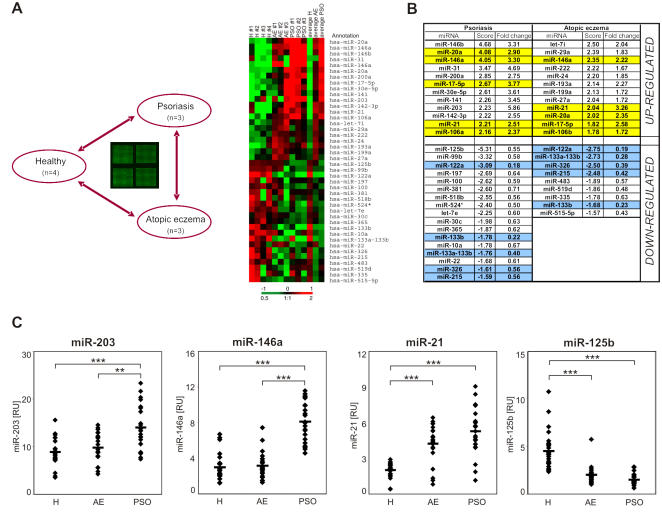
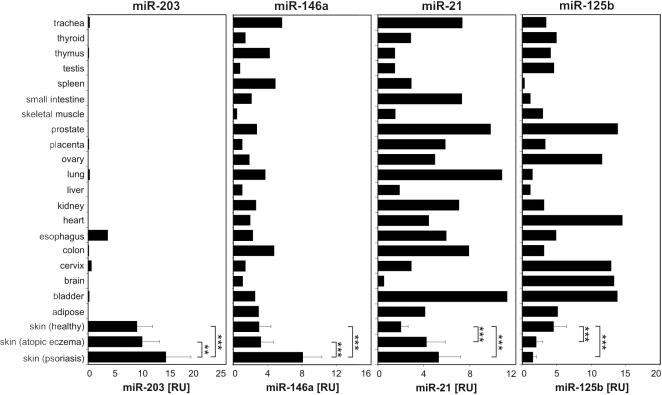
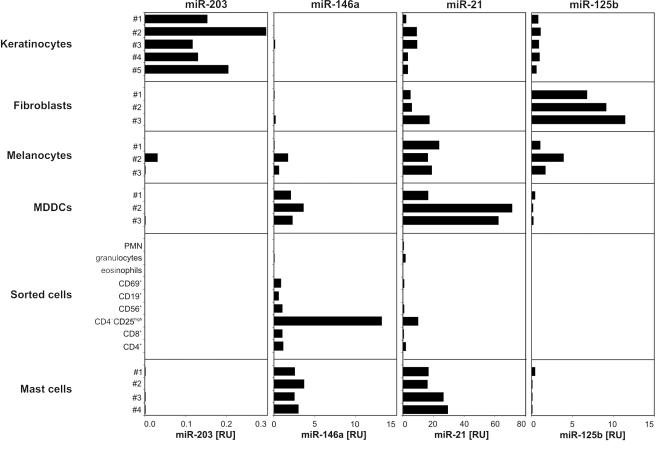
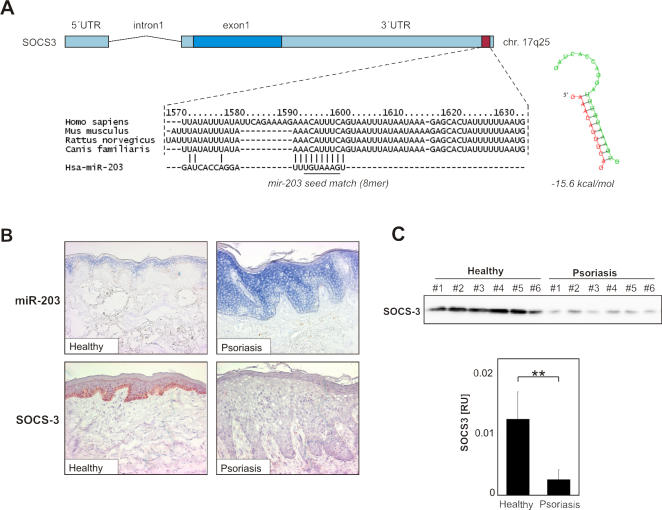
MicroRNAs are a recently discovered class of posttranscriptional regulators of gene expression with critical functions in health and disease. Psoriasis is the most prevalent chronic inflammatory skin disease in adults, with a substantial negative impact on the patients' quality of life. Here we show for the first time that psoriasis-affected skin has a specific microRNA expression profile when compared with healthy human skin or with another chronic inflammatory skin disease, atopic eczema. Among the psoriasis-specific microRNAs, we identified leukocyte-derived microRNAs and one keratinocyte-derived microRNA, miR-203. In a panel of 21 different human organs and tissues, miR-203 showed a highly skin-specific expression profile. Among the cellular constituents of the skin, it was exclusively expressed by keratinocytes. The up-regulation of miR-203 in psoriatic plaques was concurrent with the down-regulation of an evolutionary conserved target of miR-203, suppressor of cytokine signaling 3 (SOCS-3), which is involved in inflammatory responses and keratinocyte functions. Our results suggest that microRNA deregulation is involved in the pathogenesis of psoriasis and contributes to the dysfunction of the cross talk between resident and infiltrating cells. Taken together, a new layer of regulatory mechanisms is involved in the pathogenesis of chronic inflammatory skin diseases.
Overview
The claims and statistics of this paper haven’t been checked yet.
Free: it reads the open-access text and checks the first 5 claims that cite a source we can check. Create a free account to check every claim.
Integrity signals
Registry
Cites
Statistics
Figures
Verification
Claims the paper makes
The claims and statistics of this paper haven’t been checked yet.
Free: it reads the open-access text and checks the first 5 claims that cite a source we can check. Create a free account to check every claim.
Claims other papers make about this one
Each is checked against this paper’s own text: does it say what the citing paper says it does?
In the citing paper
“Its overexpression in human psoriatic skin has been suggested to reflect insufficient compensation of overt skin inflammation.91”
From The Innate Immune System in Acute and Chronic Wounds (2016) · cites this paper as [91]
Self-check
Percentages, sums and reported differences re-computed from the paper’s own numbers.
The self-check needs the paper’s full text.
Citations
Cites
Bartel (2004) · doi:10.1016/s0092-8674(04)00045-5 · Cited by 34,714
In silico prediction of protein-protein interactions in human macrophages
Souiai, O., Guerfali, F., Ben Miled, S., Brun, C., & Benkahla, A. (2014) · BMC Research Notes · doi:10.1186/1756-0500-7-157 · Cited by 10,803
The functions of animal microRNAs
Ambros, V. (2004) · Nature · doi:10.1038/nature02871 · Cited by 10,728
Significance analysis of microarrays applied to the ionizing radiation response
Tusher, V. G., Tibshirani, R., & Chu, G. (2001) · Proceedings of the National Academy of Sciences · doi:10.1073/pnas.091062498 · Cited by 10,568
Taganov, K. D., Boldin, M. P., Chang, K.-J., & Baltimore, D. (2006) · Proceedings of the National Academy of Sciences · doi:10.1073/pnas.0605298103 · Cited by 4,317 · cited 1×
“. Interestingly, a recent study showed that miR-146a, one of the psoriasis-specific miRNAs, inhibits the expression of IRAK-1 and TRAF-6 proteins both of which are regulators of the TNF-α signaling pathway”
BackgroundNon-coding RNAs and cancer: microRNAs and beyond
Raia, R. M., & Calin, G. A. (2011) · Journal of Nucleic Acids Investigation · doi:10.4081/jnai.2011.e5 · Cited by 3,382
Pathogenesis and therapy of psoriasis
Lowes, M. A., Bowcock, A. M., & Krueger, J. G. (2007) · Nature · doi:10.1038/nature05663 · Cited by 1,778 · cited 8×
“SOCS-3 deficiency leads to sustained activation of STAT3 in response to IL-6 [18], a cytokine present in the psoriasis lesions [11].”
BackgroundInfluentialmiRNAs, Cancer, and Stem Cell Division
Croce, C. M., & Calin, G. A. (2005) · Cell · doi:10.1016/j.cell.2005.06.036 · Cited by 1,329 · cited 1×
“. Indeed, miRNAs have regulatory roles in development, differentiation, organogenesis, stem cell and germline proliferation, growth control and apoptosis. Moreover, deregulation of miRNA expression may contribute to human diseases; in particular, miRNAs are often aberrantly expressed or mutated in cancer”
BackgroundPlasmacytoid predendritic cells initiate psoriasis through interferon-α production
Nestle, F. O., Conrad, C., Tun-Kyi, A., Homey, B., Gombert, M., Boyman, O., Burg, G., Liu, Y.-J., & Gilliet, M. (2005) · The Journal of Experimental Medicine · doi:10.1084/jem.20050500 · Cited by 1,124
Self-citationSOCS3 negatively regulates IL-6 signaling in vivo
Croker, B. A., Krebs, D. L., Zhang, J.-G., Wormald, S., Willson, T. A., Stanley, E. G., Robb, L., Greenhalgh, C. J., Förster, I., Clausen, B. E., et al. (2003) · Nature Immunology · doi:10.1038/ni931 · Cited by 840 · cited 1×
“SOCS-3 deficiency leads to sustained activation of STAT3 in response to IL-6 [18], a cytokine present in the psoriasis lesions [11].”
Background
Cited by
Items 301–400 of 767
Yuan, L., Sun, Y., Xu, M., Zeng, F., & Xiong, X. (2019) · NeuroImmunoModulation · doi:10.1159/000503087 · Cited by 42
Integrated microRNA/mRNA expression profiling of the skin of psoriasis patients
Delić, D., Wolk, K., Schmid, R., Gabrielyan, O., Christou, D., Rieber, K., Rolser, M., Jakob, I., Wiech, F., Griesser, M., et al. (2019) · Journal of Dermatological Science · doi:10.1016/j.jdermsci.2019.11.003 · Cited by 46
Aubert, P. M., Suárez‐Fariñas, M., Mitsui, H., Johnson-Huang, L. M., Harden, J. L., Pierson, K. C., Dolan, J. G., Novitskaya, I., Coats, I., Estes, J. D., et al. (2012) · PLoS ONE · doi:10.1371/journal.pone.0049408 · Cited by 40
“Other mirs that have been reported to be skin specific were upregulated in LS tissues; these include mirs 9-1, 199a-2, 203, and 320a [28].”
BackgroundMicroRNAs, stem cells and cancer stem cells
Garg, M. (2012) · World Journal of Stem Cells · doi:10.4252/wjsc.v4.i7.62 · Cited by 44
Genome-Wide Screen for MicroRNAs Reveals a Role for miR-203 in Melanoma Metastasis
Lohcharoenkal, W., Mahapatra, K. D., Pasquali, L., Crudden, C., Kular, L., Akkaya‐Ulum, Y. Z., Zhang, L., Xu, N., Girnita, L., Jagodic, M., et al. (2018) · Journal of Investigative Dermatology · doi:10.1016/j.jid.2017.09.049 · Cited by 40
Self-citationThe Role of Genetics, the Environment, and Epigenetics in Atopic Dermatitis
Mu, Z., & Zhang, J. (2020) · Advances in experimental medicine and biology · doi:10.1007/978-981-15-3449-2_4 · Cited by 47
Novel findings in pain processing pathways: implications for miRNAs as future therapeutic targets
Kynast, K. L., Russe, O. Q., Geißlinger, G., & Niederberger, E. (2013) · Expert Review of Neurotherapeutics · doi:10.1586/ern.13.34 · Cited by 44
Expression of microRNA‐184 in keratinocytes represses argonaute 2
Roberts, J. C., Warren, R. B., Griffiths, C. E. M., & Ross, K. (2013) · Journal of Cellular Physiology · doi:10.1002/jcp.24401 · Cited by 42
Marthaler, A., Podgórska, M., Feld, P., Fingerle, A., Knerr-Rupp, K., Grässer, F. A., Smola, H., Roemer, K., Ebert, E., Kim, Y.-J., et al. (2017) · PLoS Pathogens · doi:10.1371/journal.ppat.1006406 · Cited by 44
“As expected from findings in normal human skin [36], miR-203 displayed a complementary expression pattern and was detected in suprabasal spinous as well as granular layers but not in basal or parabasal keratinocytes (Fig 1C).”
Ma, X., Guo, S., Jiang, K., Wang, X., Yin, N., Yang, Y., Zahoor, A., & Deng, G. (2019) · International Immunopharmacology · doi:10.1016/j.intimp.2018.11.024 · Cited by 40
Morphine and microRNA Activity: Is There a Relation with Addiction?
Rodríguez, R. E. (2012) · Frontiers in Genetics · doi:10.3389/fgene.2012.00223 · Cited by 43
Micro-RNAs in inflammatory diseases and as a link between inflammation and cancer
Ranjha, R., & Paul, J. (2013) · Inflammation Research · doi:10.1007/s00011-013-0600-9 · Cited by 39
“[62] reported differential expression of miRNA in psoriasisaffected skin compared to healthy controls.”
BackgroundSaadane, A., Eastman, J. F., Berger, M., & Bonfield, T. L. (2011) · Journal of Inflammation · doi:10.1186/1476-9255-8-26 · Cited by 39
miR‐203 Is a Direct Transcriptional Target of E2F1 and Causes G1 Arrest in Esophageal Cancer Cells
Zhang, K., Dai, L., Zhang, B., Xu, X., Shi, J., Fu, L., Chen, X., Li, J., & Bai, Y. (2014) · Journal of Cellular Physiology · doi:10.1002/jcp.24821 · Cited by 39
Understanding psoriasis: Role of miRNAs (Review)
Timiș, T. L., & Orăsan, R. (2018) · Biomedical Reports · doi:10.3892/br.2018.1146 · Cited by 38
Hepatocyte growth control by SOCS1 and SOCS3
Khan, M. G. M., Ghosh, A., Variya, B. C., Santharam, M. A., Kandhi, R., Ramanathan, S., & Ilangumaran, S. (2019) · Cytokine · doi:10.1016/j.cyto.2019.154733 · Cited by 39
Hessam, S., Sand, M. S., Skrygan, M., Gambichler, T., & Bechara, F. G. (2016) · Journal of Dermatological Science · doi:10.1016/j.jdermsci.2016.02.009 · Cited by 39
PRINS Non-Coding RNA Regulates Nucleic Acid-Induced Innate Immune Responses of Human Keratinocytes
Danis, J., Göblös, A., Bata‐Csörgõ, Z., Kemény, L. V., & Széll, M. (2017) · Frontiers in Immunology · doi:10.3389/fimmu.2017.01053 · Cited by 42
“The contribution of both microRNAs (miRNAs) and long non-coding RNAs (lncRNAs) to psoriasis has been extensively studied (11, 12).”
BackgroundPerceived well-being in malignant melanoma survivors.
Dirksen, S. R. (1989) · PubMed · Cited by 47
Raaby, L., Langkilde, A., Kjellerup, R. B., Vinter, H., Khatib, S. H., Hjuler, K. F., Johansen, C., & Iversen, L. (2015) · British Journal of Dermatology · doi:10.1111/bjd.13721 · Cited by 40
Różalski, M., Rudnicka, L., & Samochocki, Z. (2016) · Advances in Dermatology and Allergology · doi:10.5114/ada.2016.60606 · Cited by 39
“203 becomes greater in keratinocytes [8].”
BackgroundInfluentialJiang, Q., Zhou, Y. C., Yang, H., Li, L., Deng, X., Cheng, C., Xie, Y., Luo, X., Fang, W., & Liu, Z. (2016) · Oncotarget · doi:10.18632/oncotarget.11691 · Cited by 37
“ZEB2 is a key factor which promotes metastasis in some tumor types [16, 17, 30].”
BackgroundUchiyama, T., Ota, H., Itaya‐Hironaka, A., Shobatake, R., Yamauchi, A., Sakuramoto‐Tsuchida, S., Makino, M., Kimura, H., Takeda, M., Ohbayashi, C., et al. (2017) · Biochemistry and Biophysics Reports · doi:10.1016/j.bbrep.2017.07.005 · Cited by 42
MicroRNA regulation of B cell receptor signaling
Borbet, T. C., Hines, M. J., & Koralov, S. B. (2021) · Immunological Reviews · doi:10.1111/imr.13024 · Cited by 40
Oner, T., Yenmiş, G., Tombultürk, F. K., Cam, C., Su, Ö., Yakicier, M. C., Dizman, D., & Sultuybek, G. K. (2015) · Genetic Testing and Molecular Biomarkers · doi:10.1089/gtmb.2015.0016 · Cited by 39
“…adaptive immunity (miR-155, miR-181a) (Rodriguez et al. , 2007; Chen et al. , 2004), chronic inflammatory diseases (miR-203, miR-146) (Taga-nov et al. , 2006; Sonkoly et al. , 2007), myosin gene regulation (miR-499) (Van Rooij et al. , 2009), and antiviral defense (miR-196) (Pedersen et al. , 2007).”
Masalha, M., Sidi, Y., & Avni, D. (2018) · Experimental Dermatology · doi:10.1111/exd.13520 · Cited by 37
Nunes, S., Bonyek-Silva, Í., Ampuero, M. R., de Noronha, A. L. L., de Souza, L. C. L., Correia, T. C., Khouri, R., Boaventura, V. S., Barral, A. M. P., Ramos, P. I. P., et al. (2018) · Frontiers in Immunology · doi:10.3389/fimmu.2018.00640 · Cited by 39
The MicroRNA‐326: Autoimmune diseases, diagnostic biomarker, and therapeutic target
Jadideslam, G., Ansarin, K., Sakhinia, E., Alipour, S., Pouremamali, F., & Khabbazi, A. (2018) · Journal of Cellular Physiology · doi:10.1002/jcp.26949 · Cited by 37
“…syndrome miR‐17–92, miR‐181a (Alevizos, Bajracharya, Alexander, Turner, & Illei, 2009; Peng et al., 2014) Psoriasis mir17–92, miR‐19a, miR‐21, MiR‐99a, miR125b, miR‐146a, miR‐150, miR‐155, miR‐217, miR‐369 miR‐492, miR‐1266 (Guo et al., 2013; Hirao et al., 2013; Ichihara et al., 2012; Y. Li, Su,…”
Liu, Y., He, H., Xiao, Z. J., Ji, A., Ye, J., Sun, Q., & Cao, Y. (2020) · Briefings in Bioinformatics · doi:10.1093/bib/bbaa324 · Cited by 40
The Relevance of miRNA-21 in HSV-Induced Inflammation in a Mouse Model
Choi, B., Kim, H., Suh, C., Byun, H. O., Jung, J., & Sohn, S. (2015) · International Journal of Molecular Sciences · doi:10.3390/ijms16047413 · Cited by 36
Pivarcsi, A., Ståhle, M., & Sonkoly, E. (2014) · Experimental Dermatology · doi:10.1111/exd.12469 · Cited by 39
Self-citationMicroRNAs: New therapeutic targets for intestinal barrier dysfunction
Zhang, L., Cheng, J., & Fan, X.-M. (2014) · World Journal of Gastroenterology · doi:10.3748/wjg.v20.i19.5818 · Cited by 36
Yang, L., Engeland, C. G., & Cheng, B. (2013) · PLoS ONE · doi:10.1371/journal.pone.0072359 · Cited by 42
Duan, X., Fu, Z., Gao, L., Zhou, J., Deng, X., Luo, X., Fang, W., & Luo, R. (2016) · Acta Biochimica et Biophysica Sinica · doi:10.1093/abbs/gmw099 · Cited by 35
MiR-330 inhibits IL-22-induced keratinocyte proliferation through targeting CTNNB1
Shen, H., Zeng, B., Wang, C., Tang, X., Wang, H., Liu, W., & Yang, Z. (2017) · Biomedicine & Pharmacotherapy · doi:10.1016/j.biopha.2017.05.005 · Cited by 37
Next-Generation Sequencing Identifies the Keratinocyte-Specific miRNA Signature of Psoriasis
Srivastava, A., Meisgen, F., Pasquali, L., Munkhammar, S., Xia, P., Ståhle, M., Xu, N., Pivarcsi, A., & Sonkoly, E. (2019) · Journal of Investigative Dermatology · doi:10.1016/j.jid.2019.05.019 · Cited by 36
Self-citationShao, S., & Gudjonsson, J. E. (2020) · Advances in experimental medicine and biology · doi:10.1007/978-981-15-3449-2_8 · Cited by 34
H3K27Ac modification and gene expression in psoriasis
Masalha, M., Ben‐Dov, I. Z., Ram, O., Meningher, T., Jacob‐Hirsch, J., Kassem, R., Sidi, Y., & Avni, D. (2021) · Journal of Dermatological Science · doi:10.1016/j.jdermsci.2021.07.003 · Cited by 35
Inflammatory Skin Diseases: Focus on the Role of Suppressors of Cytokine Signaling (SOCS) Proteins
Cianciulli, A., Calvello, R., Porro, C., Lofrumento, D. D., & Panaro, M. A. (2024) · Cells · doi:10.3390/cells13060505 · Cited by 38
Chowdhari, S., & Saini, N. (2015) · Cellular Signalling · doi:10.1016/j.cellsig.2015.10.015 · Cited by 34
Divergent Influence of MicroRNA-21 Deletion on Murine Colitis Phenotypes
Wu, F., Dong, F., Arendovich, N., Zhang, J., Huang, Y., & Kwon, J. H. (2014) · Inflammatory Bowel Diseases · doi:10.1097/mib.0000000000000201 · Cited by 35
“In addition, differential miR-21 expression was found to be associated with other immune diseases, including systemic lupus erythematosus(30) and psoriasis.(31) In this study, we first established miRNA signatures for the most commonly used murine models of colitis and identified”
BackgroundYang, Z., Zeng, B., Tang, X., Wang, H., Wang, C., Yan, Z., Huang, P., Pan, Y., & Xu, B. (2016) · Journal of Ethnopharmacology · doi:10.1016/j.jep.2016.08.028 · Cited by 34
MicroRNAs in the Host Response to Viral Infections of Veterinary Importance
Samir, M., Vaas, L. A. I., & Peßler, F. (2016) · Frontiers in Veterinary Science · doi:10.3389/fvets.2016.00086 · Cited by 36
“Earlier reports suggested that miRNAs are involved in the regulation of inflammatory pathways as well as adaptive and innate immunity, stress factors, and cytokine signaling (74).”
BackgroundAlataş, E. T., Kara, M., Doğan, G., & Belli, A. A. (2020) · Anais Brasileiros de Dermatologia · doi:10.1016/j.abd.2020.07.001 · Cited by 34
“After the first study demonstrating the association between mi-RNAs and psoriasis, over 250 mi-RNAs have been reported as aberrantly expressed in psoriasis.(14) Diverse mi-RNA profiles have been studied in psoriatic skin, psoriatic patients’ blood, and hair samples.”
BackgroundKissler, S. M., Klepac, P., Tang, M. L., Conlan, A. J. K., & Gog, J. R. (2018) · bioRxiv (Cold Spring Harbor Laboratory) · doi:10.1101/479154 · Cited by 39
MicroRNAs in normal and psoriatic skin
Xia, J., & Zhang, W. (2013) · Physiological Genomics · doi:10.1152/physiolgenomics.00157.2013 · Cited by 34
Zhou, Z., Shu, B., Xu, Y., Liu, J., Wang, P., Chen, L., Zhao, J., Liu, X., Qi, S., Xiong, K., et al. (2018) · Cellular Physiology and Biochemistry · doi:10.1159/000493834 · Cited by 33
Aghanoori, M., Mirzaei, B., & Tavallaei, M. (2014) · Asian Pacific Journal of Cancer Prevention · doi:10.7314/apjcp.2014.15.22.9557 · Cited by 33
“Two miRNAs: miR-146 and miR-203 are associated with psoriasis and have specific pattern of expression in patients (Sonkoly et al., 2007; Nestle et al., 2009).”
BackgroundCheung, L. K., Fisher, R. M., Kuzmina, N., Li, D., Li, X., Werngren, O., Blomqvist, L., Ståhle, M., & Xu, N. (2015) · Journal of Investigative Dermatology · doi:10.1016/j.jid.2015.12.008 · Cited by 41
Self-citationDownregulation of MicroRNA-21 in Colonic CD3+ T Cells in UC Remission
Ando, Y., Mazzurana, L., Forkel, M., Okazaki, K., Aoi, M., Schmidt, P. T., Mjösberg, J., & Bresso, F. (2016) · Inflammatory Bowel Diseases · doi:10.1097/mib.0000000000000969 · Cited by 33
MiR-125b-5p and miR-181b-5p inhibit keratinocyte proliferation in skin by targeting Akt3
Zheng, Y., Cai, B., Li, X., Li, D., & Yin, G. (2019) · European Journal of Pharmacology · doi:10.1016/j.ejphar.2019.172659 · Cited by 33
The Role of Epigenetics in the Chronic Sinusitis with Nasal Polyp
Liu, T., Sun, Y., & Bai, W. (2020) · Current Allergy and Asthma Reports · doi:10.1007/s11882-020-00976-8 · Cited by 34
Abdallah, F., Henriet, E., Suet, A., Arar, A., Clémençon, R., Malinge, J., Lecellier, G. J., Baril, P., & Pichon, C. (2021) · Cells · doi:10.3390/cells10102547 · Cited by 33
“Moreover, a few years ago, a deregulated profile of MicroRNAs (miRs or miRNAs) in psoriasis was identified [10–12].”
Recent progress in studies of mi RNA and skin diseases
Jinnin, M. (2015) · The Journal of Dermatology · doi:10.1111/1346-8138.12904 · Cited by 32
Dominguez‐Gutierrez, P. R., Ceribelli, A., Satoh, M., Sobel, E. S., Reeves, W. H., & Chan, E. K. L. (2014) · Arthritis Research & Therapy · doi:10.1186/ar4451 · Cited by 34
“miR-146a has also been reported to be overexpressed in Sjögren’s syndrome [19], psoriasis [20,21], and rheumatoid arthritis [22-24].”
Feng, C., Bai, M., Yu, N., Wang, X., & Liu, Z. (2016) · Journal of Cellular and Molecular Medicine · doi:10.1111/jcmm.12963 · Cited by 32
RetractedLiu, L., Hua, M., Liu, C., He, N., Li, Z., & Ma, D. (2016) · Oncotarget · doi:10.18632/oncotarget.12949 · Cited by 32
“MiR-21 has been widely implicated in the regulation of inflammatory disorders, and it was found increased in psoriasis, atopic eczema, and SLE [29, 30].”
BackgroundmiR-203 promotes HaCaT cell overproliferation through targeting LXR-α and PPAR-γ
Xiao, Y., Wang, H., Wang, C., Zeng, B., Tang, X., Zhang, Y., Peng, Y., Luo, M., Huang, P., & Yang, Z. (2020) · Cell Cycle · doi:10.1080/15384101.2020.1783934 · Cited by 31
Epigenetic Regulations of AhR in the Aspect of Immunomodulation
Wajda, A., Łapczuk-Romańska, J., & Paradowska‐Gorycka, A. (2020) · International Journal of Molecular Sciences · doi:10.3390/ijms21176404 · Cited by 34
Steinhilber, J., von Bonin, M., Walter, M. J., Fend, F., Bonzheim, I., & Quintanilla‐Martínez, L. (2015) · PLoS ONE · doi:10.1371/journal.pone.0117780 · Cited by 35
Lee, J.-Y., Yun, M., Paik, J., Lee, S., & Yang, S.-W. (2016) · Investigative Ophthalmology & Visual Science · doi:10.1167/iovs.15-18157 · Cited by 32
Hasan, M., Ashik, A. I., Chowdhury, M. B., Tasnim, A. T., Nishat, Z. S., Hossain, T., & Ahmed, S. (2021) · Informatics in Medicine Unlocked · doi:10.1016/j.imu.2021.100569 · Cited by 31
“Aberrations in the functionalities of these RNAs have already been linked to various diseases such as cancers [72,73], cardiovascular disease [74,75], schizophrenia [76,77], and psoriasis [78].”
Advances in pathogenesis and nanoparticles (NPs)-mediated treatment of psoriasis
Shen, Q., Liu, R., Tan, S., Xu, X., Fang, J., & Li, R. (2022) · Frontiers in Immunology · doi:10.3389/fimmu.2022.1089262 · Cited by 31
“miR-203 was the first miRNA reported in psoriasis patients (61).”
BackgroundSong, X., Sturgis, E. M., Liu, J., Jin, L., Wang, Z., Zhang, C., Wei, Q., & Li, G. (2013) · PLoS ONE · doi:10.1371/journal.pone.0056622 · Cited by 30
“Recent studies have demonstrated that microRNAs participate in mediating inflammatory and cytokine signaling as well as innate and acquired immune response to viral infection by targeting critical elements in inflammatory signaling pathways [37,38].”
BackgroundmiRNAs in inflammatory skin diseases and their clinical implications
Løvendorf, M. B., & Skov, L. (2015) · Expert Review of Clinical Immunology · doi:10.1586/1744666x.2015.1020301 · Cited by 31
“demonstrating that psoriasis-affected skin has a specific miRNA expression profile compared with healthy human skin and to another chronic inflammatory skin disease, AD [34].”
BackgroundResultInfluentialDickinson, A. M., & Norden, J. (2015) · International Journal of Immunogenetics · doi:10.1111/iji.12202 · Cited by 30
“It has been implicated in the pathogenesis of autoimmune diseases such as rheumatoid arthritis (Pauley et al., 2008) and systemic lupus erythematosus (Tang et al., 2009) and psoriasis (Sonkoly et al., 2007).”
BackgroundKura, B., Babál, P., & Slezák, J. (2017) · Canadian Journal of Physiology and Pharmacology · doi:10.1139/cjpp-2016-0741 · Cited by 32
Various applications of microRNAs in skin diseases
Jinnin, M. (2014) · Journal of Dermatological Science · doi:10.1016/j.jdermsci.2014.01.004 · Cited by 29
A Decade of Global mRNA and miRNA Profiling of HPV-Positive Cell Lines and Clinical Specimens
Kaczkowski, B., Morevati, M., Rossing, M., Cilius, F., & Norrild, B. (2012) · The Open Virology Journal · doi:10.2174/1874357901206010216 · Cited by 29
Ubiquitin-specific peptidase 2 as a potential link between microRNA-125b and psoriasis
Wei, T., Folkersen, L., Biskup, E., Xu, N., Manfé, V., Niazi, O., & Gniadecki, R. (2016) · British Journal of Dermatology · doi:10.1111/bjd.14916 · Cited by 29
Self-citationHou, R., Liu, R. F., Zhao, X. C., Jia, Y. R., An, P., Hao, Z. P., Li, J. Q., Li, X. H., Yin, G. H., & Zhang, K. M. (2016) · Genetics and Molecular Research · doi:10.4238/gmr.15038631 · Cited by 29
“To date, dozens of miRNA have been implicated in diseases characterized by abnormal immune response, such as cancers and inflammatory or autoimmune disorders such as psoriasis (Sonkoly et al., 2007; O’Connell et al., 2010; Tili et al., 2011; Deng et al., 2015).”
miR-203 inhibits cell proliferation and ERK pathway in prostate cancer by targeting IRS-1
Meng, Y., Hu, X., Li, S., Zeng, X., Qiu, L., Wei, M., Wang, Z., & Han, J. (2020) · BMC Cancer · doi:10.1186/s12885-020-07472-2 · Cited by 30
Liu, J., Shu, B., Zhou, Z., Xu, Y., Liu, Y., Wang, P., Xiong, K., & Xie, J. (2020) · Stem Cell Research & Therapy · doi:10.1186/s13287-020-01829-x · Cited by 29
Beer, L., Kalinina, P., Köcher, M., Laggner, M., Jeitler, M., Zadeh, S. A., Copic, D., Tschachler, E., & Mildner, M. (2020) · International Journal of Molecular Sciences · doi:10.3390/ijms21239288 · Cited by 29
Abdallah, H. Y., Faisal, S., Tawfik, N. Z., Soliman, N. H., Kishk, R. M., & Ellawindy, A. (2023) · Molecular Diagnosis & Therapy · doi:10.1007/s40291-023-00646-1 · Cited by 29
The Role of Epigenetic Factors in the Pathogenesis of Psoriasis
Olejnik-Wojciechowska, J., Boboryko, D., Bratborska, A. W., Rusińska, K., Ostrowski, P., Baranowska, M., & Pawlik, A. (2024) · International Journal of Molecular Sciences · doi:10.3390/ijms25073831 · Cited by 32
“Environmental risk factors are now recognized as dynamic elements, either exacerbating disease in diagnosed individuals or catalyzing disease development in genetically susceptible individuals [112,113].”
BackgroundThe Type I IFN-Induced miRNA, miR-21
Yang, C. H., Li, K., Pfeffer, S. R., & Pfeffer, L. M. (2015) · Pharmaceuticals · doi:10.3390/ph8040836 · Cited by 36
Takuse, Y., Watanabe, M., Inoue, N., Ozaki, R., Ohtsu, H., Saeki, M., Katsumata, Y., Hidaka, Y., & Iwatani, Y. (2017) · Immunological Investigations · doi:10.1080/08820139.2017.1322975 · Cited by 29
“hsa-miR-106a-5p is upregulated in psoriasis (Sonkoly et al., 2007) and inhibits the extrinsic apoptotic pathway by targeting Fas (Wang et al.”
BackgroundResultWu, C.-J., & Lu, L. (2017) · Current topics in microbiology and immunology · doi:10.1007/82_2017_65 · Cited by 32
Koury, J., Ramirez, A., Xie, C., Harb, J. F., Dong, C., Maki, C. B., Ramos, T., Izadyar, F., Clark, D. L., Drechsler, Y., et al. (2019) · PLoS ONE · doi:10.1371/journal.pone.0218670 · Cited by 34
Wang, Y., Dong, Q., Gu, Y., & Groome, L. J. (2016) · American Journal of Reproductive Immunology · doi:10.1111/aji.12589 · Cited by 30
Hu, F., Zhu, W., & Wang, L. (2012) · Archives of Oral Biology · doi:10.1016/j.archoralbio.2012.08.013 · Cited by 28
Advances in the Application and Impact of MicroRNAs as Therapies for Skin Disease
Lawrence, P., & Ceccoli, J. (2017) · BioDrugs · doi:10.1007/s40259-017-0243-4 · Cited by 31
“When the thymosin-a-1 (T) immune modulator was introduced, the miRNA dysregulation was reversed, with miR-3940-5p Table 1 Signature microRNA profiles of different skin conditions Skin condition UV-A (6 h) [45] UV-B (6 h) [45] UV-A (7 d) [47] Atopic dermatitis [48] Psoriasis [48] Vitiligo [58] Vitiligo ?”
InfluentialMicroRNA‑146a as a potential regulator involved in the pathogenesis of atopic dermatitis
Yan, F., Meng, W., Ye, S., Zhang, X., Mo, X., Liu, J., Chen, D., & Lin, Y. (2019) · Molecular Medicine Reports · doi:10.3892/mmr.2019.10695 · Cited by 31
“Psoriatic ad patients have been characterized by the reduced expression of mir-122a, mir-133a-133b, mir-133b, mir-215 and mir-326, whereas the downregulated expression of mir-33, mir-483, mir-515-5p and mir-519d has occurred only in patients with ad (31).”
BackgroundGuan, X., Sturgis, E. M., Song, X., Liu, Z., El‐Naggar, A. K., Wei, Q., & Li, G. (2012) · Cancer Letters · doi:10.1016/j.canlet.2012.11.048 · Cited by 27
“Functional analyses also have indicated that miRNAs are involved in the regulation of inflammatory responses and cytokine signaling [31].”
BackgroundMicroRNA profiling of psoriatic skin identifies 11 miRNAs associated with disease severity
Solvin, Å. Ø., Chawla, K., Olsen, L. C., Hegre, S. A., Danielsen, K., Jenssen, M., Furberg, A., Saunes, M., Hveem, K., Sætrom, P., et al. (2021) · Experimental Dermatology · doi:10.1111/exd.14497 · Cited by 27
The Effect of miRNA Gene Regulation on HIV Disease
Chinniah, R., Adimulam, T., Nandlal, L., Arumugam, T., & Ramsuran, V. (2022) · Frontiers in Genetics · doi:10.3389/fgene.2022.862642 · Cited by 28
“Furthermore, the increasing emergence of HIV drug resistance poses a threat to the success of the current regimens (Bertagnolio et al., 2012; Le Douce et al., 2012; Stadeli and Richman, 2013).”
BackgroundDeppe, J., Steinritz, D., Santovito, D., Egea, V., Schmidt, A., Weber, C., & Ries, C. (2015) · Toxicology Letters · doi:10.1016/j.toxlet.2015.09.012 · Cited by 30
Shams, K., Kurowska‐Stolarska, M., Schütte, F., Burden, A. D., McKimmie, C. S., & Graham, G. J. (2017) · Journal of Biological Chemistry · doi:10.1074/jbc.m117.809780 · Cited by 28
“MicroRNAs with the highest likelihood of binding the ACKR2 3 -UTR (as indicated by the total context, CT, score) and that were concurrently identified as being upregulated in psoriatic plaques in humans were selected for further study (27, 37).”
BackgroundMajd, M., Hosseini, A., Ghaedi, K., Kiani‐Esfahani, A., Tanhaei, S., Shiralian-Esfahani, H., Rahnamaee, S. Y., Mowla, S. J., & Nasr‐Esfahani, M. H. (2018) · PubMed Central · doi:10.22038/ijbms.2018.25382.6275 · Cited by 35
“MiR-106-5p was found to be up-regulated in psoriasis (32).”
BackgroundWang, X., Bao, K., Wu, P., Yu, X., Wang, C., Ji, L., & Hong, M. (2018) · International Journal of Molecular Sciences · doi:10.3390/ijms19103263 · Cited by 27
“Previous studies have shown that miR-21, miR-146, and miR-223 are not only increased in several other allergic disorders, but also upregulated in AD [19].”
Vaher, H., Laanesoo, A., Runnel, T., Raam, L., Prans, E., Maslovskaja, J., Abram, K., Kaldvee, B., Mrowietz, U., Weidinger, S., et al. (2019) · Experimental Dermatology · doi:10.1111/exd.14049 · Cited by 30
Activation of Toll‐like receptors alters the micro RNA expression profile of keratinocytes
Meisgen, F., Xu Landén, N., Bouez, C., Zuccolo, M., Gueniche, A., Ståhle, M., Sonkoly, E., Breton, L., & Pivarcsi, A. (2014) · Experimental Dermatology · doi:10.1111/exd.12361 · Cited by 26
Self-citationXia, Y., Wang, Y., Wang, Q., Ghaffar, M., Wang, Y., Sheng, W., & Zhang, F. (2018) · Anti-Cancer Drugs · doi:10.1097/cad.0000000000000687 · Cited by 26
He, H., Ji, A., Zhao, Y., Han, N., Hu, S. C., Kong, Q., Jiang, L., Ye, J., Liu, Y., & Sun, Q. (2019) · International Journal of Legal Medicine · doi:10.1007/s00414-019-02196-w · Cited by 26
Therapeutic Strategies Against Cancer Stem Cells in Esophageal Carcinomas
Das, P. K., Islam, F., Smith, R. A., & Lam, A. K.-Y. (2021) · Frontiers in Oncology · doi:10.3389/fonc.2020.598957 · Cited by 26
miR ‐378a regulates keratinocyte responsiveness to interleukin‐17A in psoriasis*
Xia, P., Pasquali, L., Gao, C., Srivastava, A., Khera, N., Freisenhausen, J. C., Luo, L., Rosén, E., Lierop, A. V., Homey, B., et al. (2022) · British Journal of Dermatology · doi:10.1111/bjd.21232 · Cited by 28
Self-citationLi, S., Shang, X., Liu, J., Wang, Y., Guo, Y., & You, J. (2017) · Analytical Biochemistry · doi:10.1016/j.ab.2017.04.013 · Cited by 26
Zhou, Q., Yu, Q., Gong, Y., Liu, Z., Xu, H., Wang, Y., & Shi, Y. (2019) · Experimental and Therapeutic Medicine · doi:10.3892/etm.2019.8035 · Cited by 27
Häsler, R., Jacobs, G., Till, A., Grabe, N., Cordes, C., Nikolaus, S., Lao, K., Schreiber, S., & Rosenstiel, P. C. (2012) · PLoS ONE · doi:10.1371/journal.pone.0031151 · Cited by 26
“resulted in upregulation of miR-132, miR-155 and miR-146 [19,20], which has also been shown to play a potential role in psoriasis [21] or cancer [22].”
Background
Metadata
- Authors
- Sonkoly, E., Wei, T., Janson, P. C. J., Sääf, A., Lundeberg, L., Tengvall-Linder, M., Norstedt, G., Alenius, H., Homey, B., Scheynius, A., Ståhle, M., & Pivarcsi, A.
- Affiliations
- Karolinska Institutet (SE)
- Finnish Institute of Occupational Health (FI)
- Heinrich Heine University Düsseldorf (DE)
- Corresponding author
- Sonkoly, Enikö
- Pivarcsi, Andor
- ORCID
- Venue
- PLoS ONE
- Publisher
- Public Library of Science (PLoS)
- Published
- 2007-07-11
- Volume
- 2
- Issue
- 7
- Pages
- e610
- ISSN
- 1932-6203 (ISSN-L)
- PMC
- PMC1905940
- OpenAlex
- W1991320836
- Cited by
- 754
- References
- 24
- Citations by year
- 2026: 6 · 2025: 18 · 2024: 19 · 2023: 29 · 2022: 37 · 2021: 45 · 2020: 44 · 2019: 35 · 2018: 30 · 2017: 39 · 2016: 67 · 2015: 55 · 2014: 64 · 2013: 50 · 2012: 50
- FWCI
- 12.90
- Type
- journal article
- Language
- en
- Open access
- gold
- doi.org
- Locations
- PLoS ONE (publishedVersion, cc-by)
- PubMed Central (publishedVersion, cc-by)
- PubMed (publishedVersion)
- DOAJ (DOAJ: Directory of Open Access Journals) (submittedVersion, cc-by-sa)
- Figshare (submittedVersion, cc-by)
- Funders
- Wenner-Gren Foundation
- Insamlingsstiftelsen Cancer- och Allergifonden
- Karolinska Institutet
- Stockholms Läns Landsting
- Szegedi Tudományegyetem
- Medical Research Council
- Topics
- Life Sciences › Immunology and Microbiology › Immunology › Psoriasis: Treatment and Pathogenesis
- Life Sciences › Biochemistry, Genetics and Molecular Biology › Cancer Research › MicroRNA in disease regulation
- Health Sciences › Medicine › Dermatology › Dermatology and Skin Diseases
- Keywords
- microRNA, psoriasis, miR-203, SOCS3, keratinocytes, miRNA expression profiling, atopic dermatitis, chronic inflammatory skin disease, post-transcriptional regulation, infiltrating immune cells
- MeSH terms
- Adult, Algorithms, Dermatitis, Atopic, Fibroblasts, Gene Expression Regulation, Humans, Mast Cells, Psoriasis, Quality of Life, Reference Values, Skin, Skin Physiological Phenomena, T-Lymphocytes, Blotting, Western, Keratinocytes, Gene Expression Profiling, MicroRNAs
About these checks
Registry, retraction, Cites and statistics results are computed, not judged, with one exception: a printed reference that no index lists is read once by a model before it counts as a citation error. Claims are extracted by a model and kept only when their quote appears verbatim in the text; each cited source is then checked, with a model’s help, for whether it says what the claim relies on. Those verdicts can be wrong — read the claim’s quote and the cited source before relying on one.
Statistics and arithmetic are recomputed, not judged.
Confidence bands are shown only for fields calibrated on our annotated test set. None is calibrated yet, so no band is shown.
What counts as a claim ›How we measure confidence ›How we check this ›
Are you an author, or do you see a problem with this page? Request a review
Data sources
Bibliographic data: Semantic Scholar, OpenAlex, Crossref.
Contains information from the Semantic Scholar Academic Graph Datasets, made available under the ODC Attribution License (ODC-BY 1.0).
Semantic Scholar’s data is described in: Kinney, R., et al. (2023). The Semantic Scholar Open Data Platform. arXiv:2301.10140.
