

MicroRNAs: Novel Regulators Involved in the Pathogenesis of Psoriasis?
Open accessThe DOI matches its Crossref record; 24 of the 24 references it cites were found in a registry or an index.
Abstract
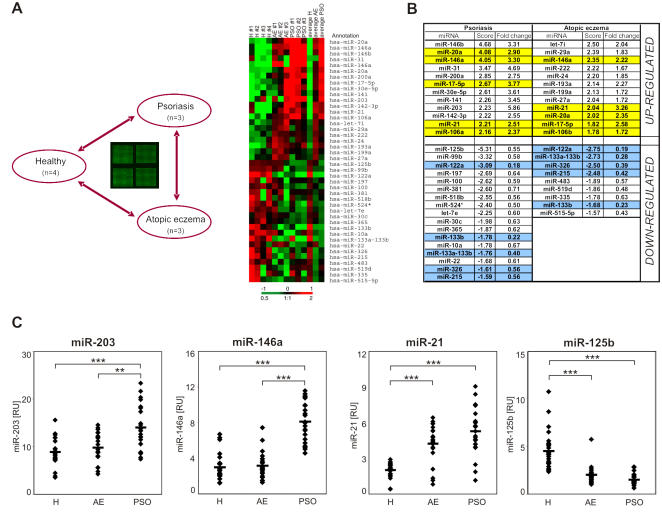
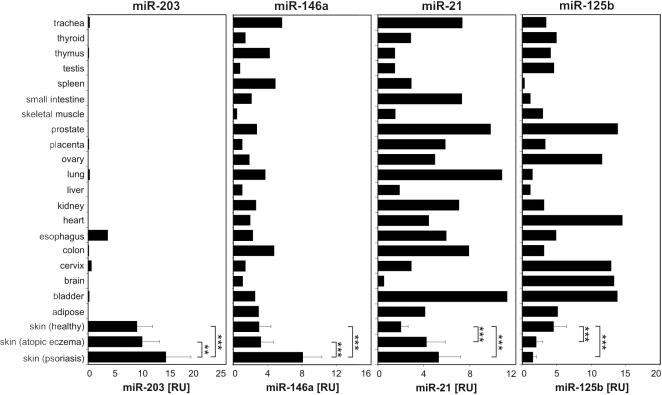
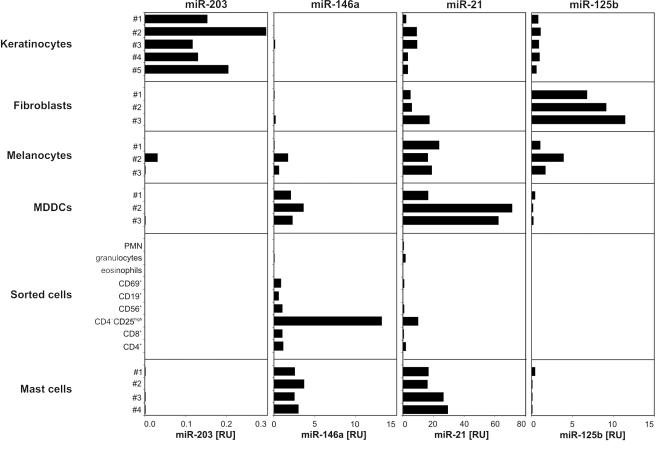
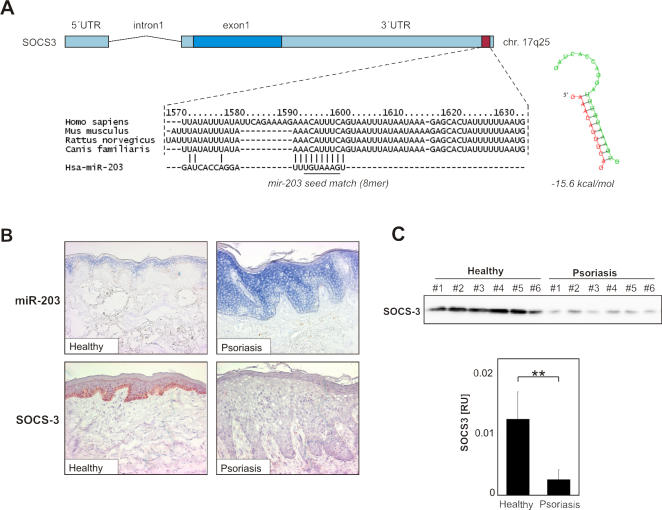
MicroRNAs are a recently discovered class of posttranscriptional regulators of gene expression with critical functions in health and disease. Psoriasis is the most prevalent chronic inflammatory skin disease in adults, with a substantial negative impact on the patients' quality of life. Here we show for the first time that psoriasis-affected skin has a specific microRNA expression profile when compared with healthy human skin or with another chronic inflammatory skin disease, atopic eczema. Among the psoriasis-specific microRNAs, we identified leukocyte-derived microRNAs and one keratinocyte-derived microRNA, miR-203. In a panel of 21 different human organs and tissues, miR-203 showed a highly skin-specific expression profile. Among the cellular constituents of the skin, it was exclusively expressed by keratinocytes. The up-regulation of miR-203 in psoriatic plaques was concurrent with the down-regulation of an evolutionary conserved target of miR-203, suppressor of cytokine signaling 3 (SOCS-3), which is involved in inflammatory responses and keratinocyte functions. Our results suggest that microRNA deregulation is involved in the pathogenesis of psoriasis and contributes to the dysfunction of the cross talk between resident and infiltrating cells. Taken together, a new layer of regulatory mechanisms is involved in the pathogenesis of chronic inflammatory skin diseases.
Overview
The claims and statistics of this paper haven’t been checked yet.
Free: it reads the open-access text and checks the first 5 claims that cite a source we can check. Create a free account to check every claim.
Integrity signals
Registry
Cites
Statistics
Figures
Verification
Claims the paper makes
The claims and statistics of this paper haven’t been checked yet.
Free: it reads the open-access text and checks the first 5 claims that cite a source we can check. Create a free account to check every claim.
Claims other papers make about this one
Each is checked against this paper’s own text: does it say what the citing paper says it does?
In the citing paper
“Its overexpression in human psoriatic skin has been suggested to reflect insufficient compensation of overt skin inflammation.91”
From The Innate Immune System in Acute and Chronic Wounds (2016) · cites this paper as [91]
Self-check
Percentages, sums and reported differences re-computed from the paper’s own numbers.
The self-check needs the paper’s full text.
Citations
Cites
Bartel (2004) · doi:10.1016/s0092-8674(04)00045-5 · Cited by 34,714
In silico prediction of protein-protein interactions in human macrophages
Souiai, O., Guerfali, F., Ben Miled, S., Brun, C., & Benkahla, A. (2014) · BMC Research Notes · doi:10.1186/1756-0500-7-157 · Cited by 10,803
The functions of animal microRNAs
Ambros, V. (2004) · Nature · doi:10.1038/nature02871 · Cited by 10,728
Significance analysis of microarrays applied to the ionizing radiation response
Tusher, V. G., Tibshirani, R., & Chu, G. (2001) · Proceedings of the National Academy of Sciences · doi:10.1073/pnas.091062498 · Cited by 10,568
Taganov, K. D., Boldin, M. P., Chang, K.-J., & Baltimore, D. (2006) · Proceedings of the National Academy of Sciences · doi:10.1073/pnas.0605298103 · Cited by 4,317 · cited 1×
“. Interestingly, a recent study showed that miR-146a, one of the psoriasis-specific miRNAs, inhibits the expression of IRAK-1 and TRAF-6 proteins both of which are regulators of the TNF-α signaling pathway”
BackgroundNon-coding RNAs and cancer: microRNAs and beyond
Raia, R. M., & Calin, G. A. (2011) · Journal of Nucleic Acids Investigation · doi:10.4081/jnai.2011.e5 · Cited by 3,382
Pathogenesis and therapy of psoriasis
Lowes, M. A., Bowcock, A. M., & Krueger, J. G. (2007) · Nature · doi:10.1038/nature05663 · Cited by 1,778 · cited 8×
“SOCS-3 deficiency leads to sustained activation of STAT3 in response to IL-6 [18], a cytokine present in the psoriasis lesions [11].”
BackgroundInfluentialmiRNAs, Cancer, and Stem Cell Division
Croce, C. M., & Calin, G. A. (2005) · Cell · doi:10.1016/j.cell.2005.06.036 · Cited by 1,329 · cited 1×
“. Indeed, miRNAs have regulatory roles in development, differentiation, organogenesis, stem cell and germline proliferation, growth control and apoptosis. Moreover, deregulation of miRNA expression may contribute to human diseases; in particular, miRNAs are often aberrantly expressed or mutated in cancer”
BackgroundPlasmacytoid predendritic cells initiate psoriasis through interferon-α production
Nestle, F. O., Conrad, C., Tun-Kyi, A., Homey, B., Gombert, M., Boyman, O., Burg, G., Liu, Y.-J., & Gilliet, M. (2005) · The Journal of Experimental Medicine · doi:10.1084/jem.20050500 · Cited by 1,124
Self-citationSOCS3 negatively regulates IL-6 signaling in vivo
Croker, B. A., Krebs, D. L., Zhang, J.-G., Wormald, S., Willson, T. A., Stanley, E. G., Robb, L., Greenhalgh, C. J., Förster, I., Clausen, B. E., et al. (2003) · Nature Immunology · doi:10.1038/ni931 · Cited by 840 · cited 1×
“SOCS-3 deficiency leads to sustained activation of STAT3 in response to IL-6 [18], a cytokine present in the psoriasis lesions [11].”
Background
Cited by
Items 101–200 of 767
Chen, Y., Luo, L., Bai, X., Shen, K., Liu, K., Wang, J., & Hu, D. (2020) · Archives of Biochemistry and Biophysics · doi:10.1016/j.abb.2020.108259 · Cited by 150
MicroRNA-155 Is Required for Mycobacterium bovis BCG-Mediated Apoptosis of Macrophages
Ghorpade, D. S., Leyland, R., Kurowska-Stolarska, M., Patil, S. A., & Balaji, K. N. (2012) · Molecular and Cellular Biology · doi:10.1128/mcb.06597-11 · Cited by 142
MiRNA Expression in Psoriatic Skin: Reciprocal Regulation of hsa-miR-99a and IGF-1R
Lerman, G., Avivi, C., Mardoukh, C., Barzilai, A., Tessone, A., Gradus, B., Pavlotsky, F., Barshack, I., Polak‐Charcon, S., Orenstein, A., et al. (2011) · PLoS ONE · doi:10.1371/journal.pone.0020916 · Cited by 148
“Analysis of keratinocyte-derived miRNAs arrays revealed that hsa-miR-203 is up-regulated in psoriatic plaques [17].”
BackgroundResultInfluentialSonkoly, E., Wei, T., Loriè, E. P., Suzuki, H., Kato, M., Törmä, H., Ståhle, M., & Pivarcsi, A. (2009) · Journal of Investigative Dermatology · doi:10.1038/jid.2009.294 · Cited by 147
“To find consistently differentially expressed genes, the data were subjected to SAM analysis as described (Sonkoly et al., 2007).”
InfluentialSelf-citationMicroRNAs in skin and wound healing
Banerjee, J., Chan, Y. C., & Sen, C. K. (2011) · Physiological Genomics · doi:10.1152/physiolgenomics.00157.2010 · Cited by 134
Hawkes, J. E., Nguyen, G. H., Fujita, M., Florell, S. R., Duffin, K. C., Krueger, G. G., & O’Connell, R. M. (2016) · Journal of Investigative Dermatology · doi:10.1038/jid.2015.409 · Cited by 168
“Here, we review the miRNAs most strongly implicated in the immunopathogenesis of psoriasis. miR-203 Multiple studies have reported miR-203 as being dysregulated in patients with psoriasis (Lerman et al., 2011; Sonkoly et al., 2007; Zibert et al., 2010).”
BackgroundInfluentialMicroRNAs in inflammatory bowel disease
Pekow, J. R., & Kwon, J. H. (2012) · Inflammatory Bowel Diseases · doi:10.1002/ibd.21691 · Cited by 136
“ratinocytes in transgenic mice leads to the development of psoriasis.(53,54)”
BackgroundResultMoffatt, C. E., & Lamont, R. J. (2011) · Infection and Immunity · doi:10.1128/iai.00082-11 · Cited by 142
“Furthermore, SOCS3 has been shown to be a target of miR-203 in skin keratinocytes (51).”
BackgroundResultInfluentialBoesch, C., Wagner, A. E., Wolffram, S., & Rimbach, G. H. (2012) · Pharmacological Research · doi:10.1016/j.phrs.2012.02.007 · Cited by 135
Zhang, X.-H., Zhang, Y.-N., Li, H.-B., Hu, C.-Y., Wang, N., Cao, P.-P., Liao, B., Lu, X., Cui, Y.-H., & Liu, Z. (2012) · American Journal of Respiratory and Critical Care Medicine · doi:10.1164/rccm.201103-0456oc · Cited by 131
Induction of Specific MicroRNAs Inhibits Cutaneous Wound Healing
Pastar, I., Khan, A. A., Stojadinovic, O., Lebrun, E. A., Medina, M. C., Brem, H., Kirsner, R. S., Jimenez, J. J., Leslie, C., & Tomic-Canic, M. (2012) · Journal of Biological Chemistry · doi:10.1074/jbc.m112.382135 · Cited by 132
“Second, we checked whether miRNA profiling evidence from other studies supported the expression of the miRNA in epithelial cells (cell line MFC10A) or in skin (21, 23).”
BackgroundGene-Regulatory Activity of α-Tocopherol
Rimbach, G., Moehring, J., Huebbe, P., & Lodge, J. K. (2010) · Molecules · doi:10.3390/molecules15031746 · Cited by 129
The Role of MicroRNA in Inflammatory Bowel Disease.
Dalal, S. R., & Kwon, J. H. (2010) · PubMed Central · Cited by 151
CCL8/MCP‐2 is a target for mir‐146a in HIV‐1‐infected human microglial cells
Rom, S., Rom, I., Passiatore, G., Pacifici, M., Radhakrishnan, S., Del Valle, L., Piña‐Oviedo, S., Khalili, K., Eletto, D., & Peruzzi, F. (2010) · The FASEB Journal · doi:10.1096/fj.09-143503 · Cited by 129
“As a consequence, abnormal expression of miRNAs appears to be a common feature of many human diseases, ranging from muscular (26) and cardiovascular disorders (33, 34), to cancer (35, 36); developmental abnormalities; psychiatric disorders, such as schizophrenia (37); and most recently inflammatory diseases (38).”
BackgroundJardim, M. J., Dailey, L. A., Silbajoris, R. A., & Díaz-Sánchez, D. (2012) · American Journal of Respiratory Cell and Molecular Biology · doi:10.1165/rcmb.2011-0160oc · Cited by 135
A hybrid CNN-LSTM model for pre-miRNA classification
Taşdelen, A., & Şen, B. (2021) · Scientific Reports · doi:10.1038/s41598-021-93656-0 · Cited by 141
DIFFERENTIALLY EXPRESSED MicroRNAs IN SMALL CELL LUNG CANCER
Mikó, E., Czimmerer, Z., Csánky, E., Boros, G., Buslig, J., Dezsö, B., & Scholtz, B. (2009) · Experimental Lung Research · doi:10.3109/01902140902822312 · Cited by 129
MiR-146a Negatively Regulates TLR2-Induced Inflammatory Responses in Keratinocytes
Meisgen, F., Xu Landén, N., Wang, A., Réthi, B., Bouez, C., Zuccolo, M., Gueniche, A., Ståhle, M., Sonkoly, E., Breton, L., et al. (2014) · Journal of Investigative Dermatology · doi:10.1038/jid.2014.89 · Cited by 124
“Interestingly, miR-146a is overexpressed in psoriasis skin, suggesting that it cannot fully compensate for the deregulated immune response of keratinocytes (Sonkoly et al., 2007).”
BackgroundSelf-citationmicroRNA-mediated keratinocyte hyperproliferation in psoriasis vulgaris
Ichihara, A., Jinnin, M., Yamane, K., Fujisawa, A., Sakai, K., Masuguchi, S., Fukushima, S., Maruo, K., & Ihn, H. (2011) · British Journal of Dermatology · doi:10.1111/j.1365-2133.2011.10497.x · Cited by 120
Perry, M. M., Williams, A. E., Tsitsiou, E., Larner-Svensson, H. M., & Lindsay, M. A. (2009) · FEBS Letters · doi:10.1016/j.febslet.2009.09.038 · Cited by 116
“Interestingly, decreased expression of miR146 but not miR-146b has been reported in inflammatory diseases such as psoriasis [20], rheumatoid arthritis [21–23] and osteoarthritis [24,25].”
BackgroundMolecular Mechanisms and Management of a Cutaneous Inflammatory Disorder: Psoriasis
Woo, Y. R., Cho, D., & Park, H. (2017) · International Journal of Molecular Sciences · doi:10.3390/ijms18122684 · Cited by 132
MicroRNA-199a* regulates the expression of cyclooxygenase-2 in human chondrocytes
Akhtar, N., & Haqqi, T. M. (2012) · Annals of the Rheumatic Diseases · doi:10.1136/annrheumdis-2011-200519 · Cited by 123
MicroRNA-203 Expression as a New Prognostic Marker of Pancreatic Adenocarcinoma
Ikenaga, N., Ohuchida, K., Mizumoto, K., Yu, J., Kayashima, T., Sakai, H., Fujita, H., Nakata, K., & Tanaka, M. (2010) · Annals of Surgical Oncology · doi:10.1245/s10434-010-1188-8 · Cited by 120
miR-146a-mediated suppression of the inflammatory response in human adipocytes
Roos, J., Enlund, E., Funcke, J., Tews, D., Holzmann, K., Debatin, K., Wabitsch, M., & Fischer‐Posovszky, P. (2016) · Scientific Reports · doi:10.1038/srep38339 · Cited by 128
Chatzikyriakidou, A., Voulgari, P. V., Georgiou, I., & Drosos, A. A. (2010) · Scandinavian Journal of Immunology · doi:10.1111/j.1365-3083.2010.02381.x · Cited by 116
Feng, Y., Chen, L., Luo, Q., Wu, M., Chen, Y., & Shi, X. (2018) · Drug Design Development and Therapy · doi:10.2147/dddt.s157109 · Cited by 119
MicroRNA-mediated control in the skin
Yi, R., & Fuchs, E. (2010) · Cell Death & Differentiation · doi:10.1038/cdd.2009.92 · Cited by 111
MicroRNA regulation of innate immune responses in epithelial cells
Zhou, R., O’Hara, S. P., & Chen, X. (2011) · Cellular and Molecular Immunology · doi:10.1038/cmi.2011.19 · Cited by 121
Inductive microRNA‐21 impairs anti‐mycobacterial responses by targeting IL‐12 and Bcl‐2
Wu, Z., Lu, H., Sheng, J., & Li, L. (2012) · FEBS Letters · doi:10.1016/j.febslet.2012.06.004 · Cited by 110
“Recently, miR-21 was also shown to be involved in inflammatory responses [13], and regulate the immune responses by targeting programmed cell death 4 (PDCD4) [10,14].”
BackgroundRegulation of pro-inflammatory cytokines TNFα and IL24 by microRNA-203 in primary keratinocytes
Primo, M. N., Bak, R. O., Schibler, B., & Mikkelsen, J. G. (2012) · Cytokine · doi:10.1016/j.cyto.2012.07.031 · Cited by 120
Hildebrand, J., Rütze, M., Walz, N., Gallinat, S., Wenck, H., Deppert, W., Grundhoff, A. T., & Knott, A. (2010) · Journal of Investigative Dermatology · doi:10.1038/jid.2010.268 · Cited by 116
Role of MicroRNA in Proliferation Phase of Wound Healing
Soliman, A. M., Das, S., Ghafar, N. A., & Teoh, S. L. (2018) · Frontiers in Genetics · doi:10.3389/fgene.2018.00038 · Cited by 121
“Moreover, miR-31 expression was stimulated by Transforming Growth Factor Beta 2 (TGF-β2), which was significantly expressed in the wound area (Li D. et al., 2015). miR-203 miR-203 is considered the most abundant keratinocyte-related miRNA in the epidermis (Sonkoly et al., 2007).”
MethodVitamin E dependent microRNA regulation in rat liver
Gaedicke, S., Zhang, X., Schmelzer, C., Lou, Y., Doering, F., Frank, J., & Rimbach, G. (2008) · FEBS Letters · doi:10.1016/j.febslet.2008.09.032 · Cited by 111
“metabolism (miR-122a) [10,11], cancer progression and inflammation (miR-125b) [12–14].”
BackgroundMicroRNAs as novel players in skin development, homeostasis and disease: The role of miRNAs in skin
Schneider, M. R. (2011) · British Journal of Dermatology · doi:10.1111/j.1365-2133.2011.10568.x · Cited by 118
Fix, L. N., Shah, M., Efferth, T., Farwell, M. A., & Zhang, B. (2010) · PubMed · Cited by 124
Are microRNAs true sensors of ageing and cellular senescence?
Williams, J., Smith, F., Kumar, S., Vijayan, M., & Reddy, P. H. (2017) · Ageing Research Reviews · doi:10.1016/j.arr.2016.11.008 · Cited by 101
“Upregulation of miR-203 in psoriatic plaques leads to downregulation of cytokine signaling 3 (SOCS-3), which is involved in inflammatory responses and keratinocyte functions (Sonkoly et al., 2007).”
MicroRNA-203 contributes to skin re-epithelialization
Viticchiè, G., Lena, A. M., Cianfarani, F., Odorisio, T., Annicchiarico-Petruzzelli, M., Melino, G., & Candi, E. (2012) · Cell Death & Disease · doi:10.1038/cddis.2012.174 · Cited by 105
“MiR-203 is the most abundant keratinocyte-specific miRNA in the epidermis.(25) It has an antiproliferative role, fundamental for skin development and differentiation, targeting the 30-UTR of the transcription factor p63.”
BackgroundXie, Y., Shu, R., Jiang, S., Liu, D.-L., Ni, J., & Zhang, X. (2013) · Journal of Inflammation · doi:10.1186/1476-9255-10-20 · Cited by 109
Endisha, H., Rockel, J. S., Jurišica, I., & Kapoor, M. (2018) · JCI Insight · doi:10.1172/jci.insight.121630 · Cited by 109
Gambari, R., Fabbri, E., Borgatti, M., Lampronti, I., Finotti, A., Brognara, E., Bianchi, N., Manicardi, A., Marchelli, R., & Corradini, R. (2011) · Biochemical Pharmacology · doi:10.1016/j.bcp.2011.08.007 · Cited by 115
Kapsogeorgou, E. K., Gourzi, V. C., Manoussakis, M. N., Moutsopoulos, H. Μ., & Tzioufas, A. G. (2011) · Journal of Autoimmunity · doi:10.1016/j.jaut.2011.05.003 · Cited by 107
MicroRNA-223 and miR-143 are important systemic biomarkers for disease activity in psoriasis
Løvendorf, M. B., Zibert, J. R., Gyldenløve, M., Røpke, M. A., & Skov, L. (2014) · Journal of Dermatological Science · doi:10.1016/j.jdermsci.2014.05.005 · Cited by 106
Wang, Q., Liu, S., Tang, Y. C., Liu, Q., & Yao, Y. (2014) · PLoS ONE · doi:10.1371/journal.pone.0100949 · Cited by 102
MicroRNA-203 functions as a tumor suppressor in basal cell carcinoma
Sonkoly, E., Lovén, J., Xu, N., Meisgen, F., Wei, T., Brodin, P., Jaks, V., Kasper, M., Shimokawa, T., Harada, M., et al. (2012) · Oncogenesis · doi:10.1038/oncsis.2012.3 · Cited by 110
Self-citationEpigenome-Wide Association Analysis Identified Nine Skin DNA Methylation Loci for Psoriasis
Zhou, F., Wang, W., Shen, C., Li, H., Zuo, X., Zheng, X., Yue, M., Zhang, C., Yu, L., Chen, M., et al. (2015) · Journal of Investigative Dermatology · doi:10.1016/j.jid.2015.12.029 · Cited by 108
Molecular Biology of Atopic Dermatitis
Mu, Z., Zhao, Y. P., Liu, X., Chang, C. C.-C., & Zhang, J. (2014) · Clinical Reviews in Allergy & Immunology · doi:10.1007/s12016-014-8415-1 · Cited by 114
p63 in Skin Development and Ectodermal Dysplasias
Koster, M. I. (2010) · Journal of Investigative Dermatology · doi:10.1038/jid.2010.119 · Cited by 100
Human Papillomavirus 16 E5 Modulates the Expression of Host MicroRNAs
Greco, D., Kivi, N., Qian, K., Leivonen, S., Auvinen, P., & Auvinen, E. (2011) · PLoS ONE · doi:10.1371/journal.pone.0021646 · Cited by 108
“Suppression of SOCS-3 by miR-203 may lead to increased or elongated inflammatory responses [61].”
BackgroundInfluentialRoles of micro RNA s in psoriasis: Immunological functions and potential biomarkers
Liu, Q., Wu, D., Han, L., Deng, J., Zhou, L., He, R., Lu, C., & Mi, Q. (2017) · Experimental Dermatology · doi:10.1111/exd.13249 · Cited by 101
“From the miRNA profiling studies using full-depth psoriatic skin biopsies (2, 16-18), about a hundred of miRNAs were differentially expressed in psoriatic skin compared with healthy skin, and most highly changed miRNAs were consistent with the elevated inflammation and”
The role of microRNAs in skin fibrosis
Babalola, O., Mamalis, A., Lev‐Tov, H. A., & Jagdeo, J. R. (2013) · Archives of Dermatological Research · doi:10.1007/s00403-013-1410-1 · Cited by 101
Zhu, Z., He, J., Jia, X., Jiang, J., Bai, R., Yu, X., Lv, L., Fan, R., He, X.-Y., Geng, J., et al. (2009) · Domestic Animal Endocrinology · doi:10.1016/j.domaniend.2009.10.004 · Cited by 103
Guo, F., Han, X., Zhang, J., Zhao, X., Lou, J., Chen, H., & Huang, X. (2014) · PLoS ONE · doi:10.1371/journal.pone.0109267 · Cited by 101
“qRT-PCR Master Mix [TaKaRa Biotechnology (Dalian), Dalian, China] was used to conduct qRT-PCR with a 7500 real-time PCR system (Applied Biosystems) as reported by others [26].”
MethodDong, C., Wang, H., Xue, L., Dong, Y., Yang, L., Fan, R., Yu, X., Tian, X., Ma, S., & Smith, G. W. (2012) · RNA · doi:10.1261/rna.033977.112 · Cited by 94
“1679 (Sonkoly et al. 2007).”
Expression and function of micro RNAs in immune cells during normal or disease state
Tili, E., Michaille, J., & Calin, G. A. (2008) · International Journal of Medical Sciences · doi:10.7150/ijms.5.73 · Cited by 105
Resveratrol, MicroRNAs, Inflammation, and Cancer
Tili, E., & Michaille, J. (2011) · Journal of Nucleic Acids · doi:10.4061/2011/102431 · Cited by 102
Epigenetic alterations underlying autoimmune diseases
Aslani, S., Mahmoudi, M., Karami, J., Jamshidi, A., Malekshahi, Z., & Nicknam, M. H. (2016) · Autoimmunity · doi:10.3109/08916934.2015.1134511 · Cited by 102
“is upregulated in psoriatic skin lesions [139].”
Pivarcsi, A., Meisgen, F., Xu, N., Ståhle, M., & Sonkoly, E. (2013) · British Journal of Dermatology · doi:10.1111/bjd.12381 · Cited by 105
Self-citationNOD2 Expression is Regulated by microRNAs in Colonic Epithelial HCT116 Cells
Chuang, A., Chuang, J. C.-M., Zhai, Z., Wu, F., & Kwon, J. H. (2013) · Inflammatory Bowel Diseases · doi:10.1097/01.mib.0000436954.70596.9b · Cited by 98
Xu, L., Leng, H., Shi, X., Ji, J., Fu, J., & Leng, H. (2017) · Biomedicine & Pharmacotherapy · doi:10.1016/j.biopha.2017.03.105 · Cited by 95
Vaher, H., Runnel, T., Aab, A., Baurecht, H., Rodríguez, E., Magilnick, N., Urgard, E., Šahmatova, L., Prans, E., Maslovskaja, J., et al. (2017) · Journal of Investigative Dermatology · doi:10.1016/j.jid.2017.05.012 · Cited by 108
“Both miR-146a/b have been shown to be upregulated in the skin of patients with psoriasis (Lovendorf et al., 2015; Sonkoly et al., 2007).”
BackgroundInfluentialDysregulation of miRNA146a versus IRAK1 induces IL-17 persistence in the psoriatic skin lesions
Xia, P., Fang, X., Zhang, Z., Huang, Q., Yan, K., Kang, K., Han, L., & Zheng, Z. (2012) · Immunology Letters · doi:10.1016/j.imlet.2012.09.004 · Cited by 95
Anatomy and Organization of Human Skin
McGrath, J. A., & Uitto, J. (2010) · Wiley eBooks · doi:10.1002/9781444317633.ch3 · Cited by 148
Yu, X., Jiang, X., Li, H., Guo, L., Jiang, W. B., & Lu, S. (2013) · Stem Cells and Development · doi:10.1089/scd.2013.0308 · Cited by 92
“In addition to the skin, miR-203 was also expressed in organs that contained squamous epithelium, esophagus, and cervix [4].”
MicroRNA miR-328 Regulates Zonation Morphogenesis by Targeting CD44 Expression
Wang, C.-H., Lee, D. Y., Deng, Z., Jeyapalan, Z., Lee, S.-C., Kahai, S., Lu, W.-Y., Zhang, Y., & Yang, B. B. (2008) · PLoS ONE · doi:10.1371/journal.pone.0002420 · Cited by 87
“and many other physiological or pathological processes[21,41,42],”
Small RNAs in development and disease
Sun, B. K., & Tsao, H. (2008) · Journal of the American Academy of Dermatology · doi:10.1016/j.jaad.2008.08.017 · Cited by 101
miR‐483‐3p controls proliferation in wounded epithelial cells
Bertero, T., Gastaldi, C., Bourget‐Ponzio, I., Imbert, V., Loubat, A., Selva, E., Busca, R., Mari, B., Hofman, P., Barbry, P., et al. (2011) · The FASEB Journal · doi:10.1096/fj.10-168401 · Cited by 88
“We focused on miR-483-3p, which was by far the most altered and already known to be expressed in human skin, although not yet studied in this tissue (6).”
BackgroundResultInfluentialMicroRNA array analysis of microRNAs related to systemic scleroderma
Li, H., Rong-ya, Y., Fan, X., Gu, T., Zhao, Z., Chang, D., Wang, W., & Wang, C. (2010) · Rheumatology International · doi:10.1007/s00296-010-1615-y · Cited by 91
Clinical reviews in allergy and immunology
Leung, D. Y. M., Ledford, D. K., Wechsler, M. E., Fulkerson, P. C., Bochner, B. S., Gauvreau, G. M., Gleich, G. J., Henkel, T., Kolbeck, R., Mathur, S. K., et al. (2012) · Cited by 87
miRNA Expression Profiles in Keloid Tissue and Corresponding Normal Skin Tissue
Liu, Y., Yang, D., Xiao, Z., & Zhang, M. (2011) · Aesthetic Plastic Surgery · doi:10.1007/s00266-011-9773-1 · Cited by 88
“Results of the study by Sonkoly et al. [ 20 ] showed that miR-203 expression patterns distinguish psoriasis from healthy skin and from atopic eczema skin.”
BackgroundResultMicroRNA–21 as a novel biomarker in diagnosis and response to therapy in asthmatic children
Elbehidy, R. M., Youssef, D. M., El‐Shal, A. S., Shalaby, S. M., Sherbiny, H. S., Sherief, L. M., & Akeel, N. E. (2016) · Molecular Immunology · doi:10.1016/j.molimm.2015.12.015 · Cited by 91
“…nflammatory disorders, such as eczema and psoriasis, in addition o autoimmune diseases, including systemic lupus erythematosus and rheumatoid arthritis contain elevated levels of miRNA-21 in comparison to healthy controls (Schickel et al., 2008; Sonkoly et al., 2007; Nana-Sinkam et al., 2009b).”
Epigenetic Dysregulation in Autoimmune and Inflammatory Skin Diseases
Gibson, F. T., Hanly, A. M., Grbic, N., Grunberg, N., Wu, M., Collard, M., & Alani, R. M. (2022) · Clinical Reviews in Allergy & Immunology · doi:10.1007/s12016-022-08956-8 · Cited by 89
Sääf, A. M., Tengvall-Linder, M., Chang, H. Y., Adler, A. S., Wahlgren, C.-F., Scheynius, A., Nordenskjöld, M., & Bradley, M. (2008) · PLoS ONE · doi:10.1371/journal.pone.0004017 · Cited by 87
“It has been proposed that microRNAs (mir-203) acting in the SOCS3 39UTR are the regulators of reduced Socs3 protein expression observed in psoriatic skin [49].”
BackgroundSelf-citationMicroRNAs: Emerging Regulators of Immune‐Mediated Diseases
Tománková, T., Petřek, M., Gallo, J., & Kriegová, E. (2012) · Scandinavian Journal of Immunology · doi:10.1111/j.1365-3083.2011.02650.x · Cited by 89
Genomic alterations driving psoriasis pathogenesis
Singh, S., Pradhan, D., Puri, P., Ramesh, V., Aggarwal, S., Nayek, A., & Jain, A. K. (2018) · Gene · doi:10.1016/j.gene.2018.09.042 · Cited by 91
Dietary compounds as potential modulators of microRNA expression in psoriasis
Kocić, H., Damiani, G. B., Stamenkovic, B. N., Tirant, M., Jović, A., Tiodorović, D., & Peris, K. (2019) · Therapeutic Advances in Chronic Disease · doi:10.1177/2040622319864805 · Cited by 85
MicroRNAs in Sjögren's syndrome as a prototypic autoimmune disease
Alevizos, I., & Illei, G. G. (2010) · Autoimmunity Reviews · doi:10.1016/j.autrev.2010.05.009 · Cited by 80
Mortazavi‐Jahromi, S. S., Aslani, M., & Mirshafiey, A. (2020) · Immunology Letters · doi:10.1016/j.imlet.2020.07.008 · Cited by 90
COVID-19: fighting the invisible enemy with microRNAs
Chauhan, N., Jaggi, M., Chauhan, S. C., & Yallapu, M. M. (2020) · Expert Review of Anti-infective Therapy · doi:10.1080/14787210.2020.1812385 · Cited by 82
“Dysregulation in the expression status of miRNAs has been associated with several diseases including viral diseases, cancer [31,32], diabetes, schizophrenia [33,34], psoriasis [35], and cardiovascular disease [36].”
BackgroundMicroRNAs in Skin and Wound Healing
Banerjee, J., & Sen, C. K. (2012) · Methods in molecular biology · doi:10.1007/978-1-62703-083-0_26 · Cited by 86
Wang, B., Gan, Z., Cai, S., Wang, Z., Yu, D., Lin, Z., Lu, Y., Wu, Z., & Jian, J. (2016) · Fish & Shellfish Immunology · doi:10.1016/j.fsi.2016.03.159 · Cited by 85
Allergic contact dermatitis induces upregulation of identical microRNAs in humans and mice
Vennegaard, M. T., Bonefeld, C. M., Hagedorn, P., Bangsgaard, N., Løvendorf, M. B., Ødum, N., Woetmann, A., Geisler, C., & Skov, L. (2012) · Contact Dermatitis · doi:10.1111/j.1600-0536.2012.02083.x · Cited by 84
MicroRNA 203 Expression in Keratinocytes Is Dependent on Regulation of p53 Levels by E6
McKenna, D. J., McDade, S. S., Patel, D., & McCance, D. J. (2010) · Journal of Virology · doi:10.1128/jvi.00703-10 · Cited by 76
Profiling of Serum and Urinary MicroRNAs in Children with Atopic Dermatitis
Lv, Y., Qi, R., Xu, J., Di, Z., Zheng, H., Huo, W., Zhang, L., Chen, H., & Gao, X. (2014) · PLoS ONE · doi:10.1371/journal.pone.0115448 · Cited by 80
“miR-203 was previously reported to be keratinocyte specific, and highly expressed in lesions of psoriasis, but not in AD [5, 9].”
BackgroundInfluentialChen, H.-L., Lo, C., Huang, C.-C., Lu, M.-P., Hu, P.-Y., Chen, C.-S., Chueh, D., Chen, P., Lin, T., Lo, Y., et al. (2021) · Journal of Clinical Investigation · doi:10.1172/jci130740 · Cited by 80
“1172/JCI130740 to lymphocyte infiltration (26).”
MicroRNAs in Allergy and Asthma
Rebane, A., & Akdiş, C. A. (2014) · Current Allergy and Asthma Reports · doi:10.1007/s11882-014-0424-x · Cited by 88
A single‐nucleotide polymorphism of miR‐146a and psoriasis: an association and functional study
Zhang, W., Yi, X., Guo, S., Shi, Q., Wei, C., Li, X., Gao, L., Wang, G., Gao, T., Wang, L., et al. (2014) · Journal of Cellular and Molecular Medicine · doi:10.1111/jcmm.12359 · Cited by 83
MicroRNAs in Autoimmune Diseases
Qu, Z., Li, W., & Fu, B. (2014) · BioMed Research International · doi:10.1155/2014/527895 · Cited by 87
Løvendorf, M. B., Mitsui, H., Zibert, J. R., Røpke, M. A., Hafner, M., Dyring‐Andersen, B., Bonefeld, C. M., Krueger, J. G., & Skov, L. (2015) · Experimental Dermatology · doi:10.1111/exd.12604 · Cited by 83
Bhandari, A., Gordon, W., Dizon, D., Hopkin, A. S., Gordon, E., Yu, Z., & Andersen, B. (2012) · Oncogene · doi:10.1038/onc.2012.168 · Cited by 80
Ha, T.-Y. (2011) · Immune Network · doi:10.4110/in.2011.11.5.227 · Cited by 79
“healthy skin, suggesting posttranscriptional repression of SOCS-3 (93,100).”
BackgroundInfluentialDesmet, E., Bracke, S., Forier, K., Taevernier, L., Stuart, M. C. A., Spiegeleer, B. M. J. D., Raemdonck, K., Gele, M. V., & Lambert, J. (2016) · International Journal of Pharmaceutics · doi:10.1016/j.ijpharm.2016.01.042 · Cited by 77
“The transfection efficiency of antagomiR-containing lipoplexes was examined using an antagomiR directed against miR-203, a psoriasis-specific microRNA highly upregulated in psoriatic plaques (Sonkoly et al., 2007).”
Yu, H., Lu, J., Zuo, L., Yan, Q., Yu, Z., Li, X., Huang, J., Zhao, L., Tang, H., Luo, Z., et al. (2011) · Journal of Virology · doi:10.1128/jvi.05901-11 · Cited by 75
Parallel DNA pyrosequencing unveils new zebrafish microRNAs
Soares, A. R., Pereira, P. M., Santos, B., Egas, C., Gomes, A. C., Arrais, J., Oliveira, J. L., Moura, G. R., & Santos, M. A. (2009) · BMC Genomics · doi:10.1186/1471-2164-10-195 · Cited by 71
MicroRNAs in Asthma and Respiratory Infections: Identifying Common Pathways
Τaka, S., Tzani-Tzanopoulou, P., Wanstall, H. C., & Papadopoulos, N. G. (2020) · Allergy Asthma and Immunology Research · doi:10.4168/aair.2020.12.1.4 · Cited by 75
An Exploration of the Role of MicroRNAs in Psoriasis: A Systematic Review of the Literature
Huang, R., Li, L., Wang, M., Chen, X., Huang, Q., & Lu, C. (2015) · Medicine · doi:10.1097/md.0000000000002030 · Cited by 70
“INTRODUCTION P soriasis is a chronic inflammatory skin disease that involves the skin or joints or both in adults, with an overall prevalence of 2% to 3% of population worldwide and a substantial negative impact on the quality of patients’ life.(1,2) There are 5 types of psoriasis, including plaque psoriasis (also kno…”
BackgroundMicroRNAs as Active Players in the Pathogenesis of Multiple Sclerosis
Fenoglio, C., Ridolfi, E., Galimberti, D., & Scarpini, E. (2012) · International Journal of Molecular Sciences · doi:10.3390/ijms131013227 · Cited by 69
Qi, L., & Zhang, Y. (2014) · Cellular Physiology and Biochemistry · doi:10.1159/000358624 · Cited by 71
Liu, Z., Zhou, G., Deng, X., Qi, Y., Hu, Y., Sun, H., Wang, Z., Chen, H., Jia, C., & Wang, D. (2014) · Journal of Infection · doi:10.1016/j.jinf.2013.12.017 · Cited by 72
Epidermal Differentiation Complex: A Review on Its Epigenetic Regulation and Potential Drug Targets.
Abhishek, S., & Krishnan, S. P. (2016) · PubMed · doi:10.22074/cellj.2016.3980 · Cited by 64
Ramirez, H. A., Liang, L., Pastar, I., Rosa, A. M., Stojadinović, O., Zwick, T. G., Kirsner, R. S., Maione, A. G., Garlick, J. A., & Tomic‐Canic, M. (2015) · PLoS ONE · doi:10.1371/journal.pone.0137133 · Cited by 70
Metadata
- Authors
- Sonkoly, E., Wei, T., Janson, P. C. J., Sääf, A., Lundeberg, L., Tengvall-Linder, M., Norstedt, G., Alenius, H., Homey, B., Scheynius, A., Ståhle, M., & Pivarcsi, A.
- Affiliations
- Karolinska Institutet (SE)
- Finnish Institute of Occupational Health (FI)
- Heinrich Heine University Düsseldorf (DE)
- Corresponding author
- Sonkoly, Enikö
- Pivarcsi, Andor
- ORCID
- Venue
- PLoS ONE
- Publisher
- Public Library of Science (PLoS)
- Published
- 2007-07-11
- Volume
- 2
- Issue
- 7
- Pages
- e610
- ISSN
- 1932-6203 (ISSN-L)
- PMC
- PMC1905940
- OpenAlex
- W1991320836
- Cited by
- 754
- References
- 24
- Citations by year
- 2026: 6 · 2025: 18 · 2024: 19 · 2023: 29 · 2022: 37 · 2021: 45 · 2020: 44 · 2019: 35 · 2018: 30 · 2017: 39 · 2016: 67 · 2015: 55 · 2014: 64 · 2013: 50 · 2012: 50
- FWCI
- 12.90
- Type
- journal article
- Language
- en
- Open access
- gold
- doi.org
- Locations
- PLoS ONE (publishedVersion, cc-by)
- PubMed Central (publishedVersion, cc-by)
- PubMed (publishedVersion)
- DOAJ (DOAJ: Directory of Open Access Journals) (submittedVersion, cc-by-sa)
- Figshare (submittedVersion, cc-by)
- Funders
- Wenner-Gren Foundation
- Insamlingsstiftelsen Cancer- och Allergifonden
- Karolinska Institutet
- Stockholms Läns Landsting
- Szegedi Tudományegyetem
- Medical Research Council
- Topics
- Life Sciences › Immunology and Microbiology › Immunology › Psoriasis: Treatment and Pathogenesis
- Life Sciences › Biochemistry, Genetics and Molecular Biology › Cancer Research › MicroRNA in disease regulation
- Health Sciences › Medicine › Dermatology › Dermatology and Skin Diseases
- Keywords
- microRNA, psoriasis, miR-203, SOCS3, keratinocytes, miRNA expression profiling, atopic dermatitis, chronic inflammatory skin disease, post-transcriptional regulation, infiltrating immune cells
- MeSH terms
- Adult, Algorithms, Dermatitis, Atopic, Fibroblasts, Gene Expression Regulation, Humans, Mast Cells, Psoriasis, Quality of Life, Reference Values, Skin, Skin Physiological Phenomena, T-Lymphocytes, Blotting, Western, Keratinocytes, Gene Expression Profiling, MicroRNAs
About these checks
Registry, retraction, Cites and statistics results are computed, not judged, with one exception: a printed reference that no index lists is read once by a model before it counts as a citation error. Claims are extracted by a model and kept only when their quote appears verbatim in the text; each cited source is then checked, with a model’s help, for whether it says what the claim relies on. Those verdicts can be wrong — read the claim’s quote and the cited source before relying on one.
Statistics and arithmetic are recomputed, not judged.
Confidence bands are shown only for fields calibrated on our annotated test set. None is calibrated yet, so no band is shown.
What counts as a claim ›How we measure confidence ›How we check this ›
Are you an author, or do you see a problem with this page? Request a review
Data sources
Bibliographic data: Semantic Scholar, OpenAlex, Crossref.
Contains information from the Semantic Scholar Academic Graph Datasets, made available under the ODC Attribution License (ODC-BY 1.0).
Semantic Scholar’s data is described in: Kinney, R., et al. (2023). The Semantic Scholar Open Data Platform. arXiv:2301.10140.
