

MicroRNAs: Novel Regulators Involved in the Pathogenesis of Psoriasis?
Open accessThe DOI matches its Crossref record; 24 of the 24 references it cites were found in a registry or an index.
Abstract
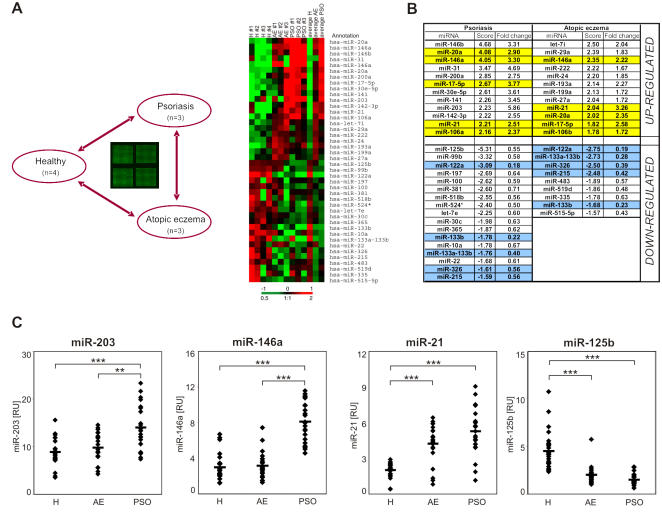
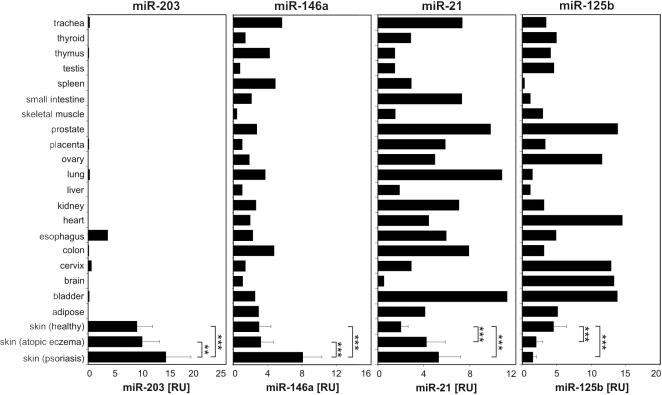
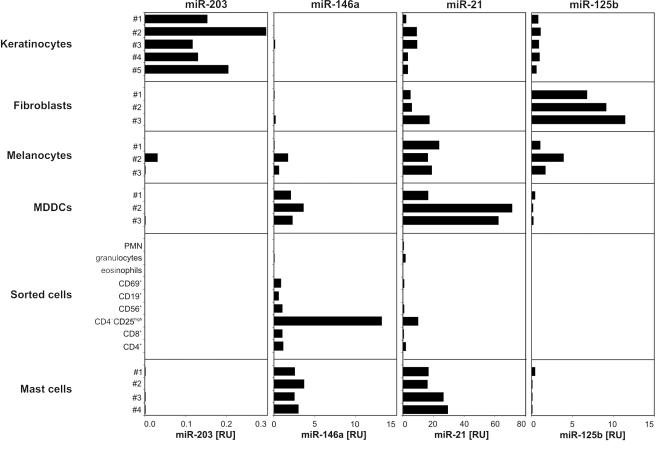
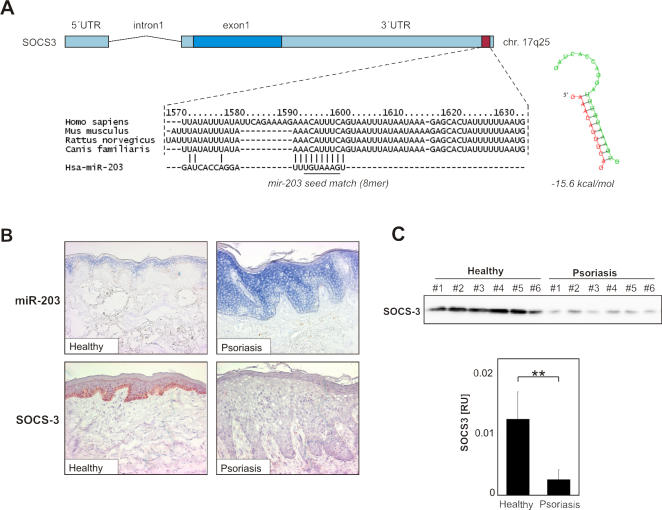
MicroRNAs are a recently discovered class of posttranscriptional regulators of gene expression with critical functions in health and disease. Psoriasis is the most prevalent chronic inflammatory skin disease in adults, with a substantial negative impact on the patients' quality of life. Here we show for the first time that psoriasis-affected skin has a specific microRNA expression profile when compared with healthy human skin or with another chronic inflammatory skin disease, atopic eczema. Among the psoriasis-specific microRNAs, we identified leukocyte-derived microRNAs and one keratinocyte-derived microRNA, miR-203. In a panel of 21 different human organs and tissues, miR-203 showed a highly skin-specific expression profile. Among the cellular constituents of the skin, it was exclusively expressed by keratinocytes. The up-regulation of miR-203 in psoriatic plaques was concurrent with the down-regulation of an evolutionary conserved target of miR-203, suppressor of cytokine signaling 3 (SOCS-3), which is involved in inflammatory responses and keratinocyte functions. Our results suggest that microRNA deregulation is involved in the pathogenesis of psoriasis and contributes to the dysfunction of the cross talk between resident and infiltrating cells. Taken together, a new layer of regulatory mechanisms is involved in the pathogenesis of chronic inflammatory skin diseases.
Overview
The claims and statistics of this paper haven’t been checked yet.
Free: it reads the open-access text and checks the first 5 claims that cite a source we can check. Create a free account to check every claim.
Integrity signals
Registry
Cites
Statistics
Figures
Verification
Claims the paper makes
The claims and statistics of this paper haven’t been checked yet.
Free: it reads the open-access text and checks the first 5 claims that cite a source we can check. Create a free account to check every claim.
Claims other papers make about this one
Each is checked against this paper’s own text: does it say what the citing paper says it does?
In the citing paper
“Its overexpression in human psoriatic skin has been suggested to reflect insufficient compensation of overt skin inflammation.91”
From The Innate Immune System in Acute and Chronic Wounds (2016) · cites this paper as [91]
Self-check
Percentages, sums and reported differences re-computed from the paper’s own numbers.
The self-check needs the paper’s full text.
Citations
Cites
Bartel (2004) · doi:10.1016/s0092-8674(04)00045-5 · Cited by 34,714
In silico prediction of protein-protein interactions in human macrophages
Souiai, O., Guerfali, F., Ben Miled, S., Brun, C., & Benkahla, A. (2014) · BMC Research Notes · doi:10.1186/1756-0500-7-157 · Cited by 10,803
The functions of animal microRNAs
Ambros, V. (2004) · Nature · doi:10.1038/nature02871 · Cited by 10,728
Significance analysis of microarrays applied to the ionizing radiation response
Tusher, V. G., Tibshirani, R., & Chu, G. (2001) · Proceedings of the National Academy of Sciences · doi:10.1073/pnas.091062498 · Cited by 10,568
Taganov, K. D., Boldin, M. P., Chang, K.-J., & Baltimore, D. (2006) · Proceedings of the National Academy of Sciences · doi:10.1073/pnas.0605298103 · Cited by 4,317 · cited 1×
“. Interestingly, a recent study showed that miR-146a, one of the psoriasis-specific miRNAs, inhibits the expression of IRAK-1 and TRAF-6 proteins both of which are regulators of the TNF-α signaling pathway”
BackgroundNon-coding RNAs and cancer: microRNAs and beyond
Raia, R. M., & Calin, G. A. (2011) · Journal of Nucleic Acids Investigation · doi:10.4081/jnai.2011.e5 · Cited by 3,382
Pathogenesis and therapy of psoriasis
Lowes, M. A., Bowcock, A. M., & Krueger, J. G. (2007) · Nature · doi:10.1038/nature05663 · Cited by 1,778 · cited 8×
“SOCS-3 deficiency leads to sustained activation of STAT3 in response to IL-6 [18], a cytokine present in the psoriasis lesions [11].”
BackgroundInfluentialmiRNAs, Cancer, and Stem Cell Division
Croce, C. M., & Calin, G. A. (2005) · Cell · doi:10.1016/j.cell.2005.06.036 · Cited by 1,329 · cited 1×
“. Indeed, miRNAs have regulatory roles in development, differentiation, organogenesis, stem cell and germline proliferation, growth control and apoptosis. Moreover, deregulation of miRNA expression may contribute to human diseases; in particular, miRNAs are often aberrantly expressed or mutated in cancer”
BackgroundPlasmacytoid predendritic cells initiate psoriasis through interferon-α production
Nestle, F. O., Conrad, C., Tun-Kyi, A., Homey, B., Gombert, M., Boyman, O., Burg, G., Liu, Y.-J., & Gilliet, M. (2005) · The Journal of Experimental Medicine · doi:10.1084/jem.20050500 · Cited by 1,124
Self-citationSOCS3 negatively regulates IL-6 signaling in vivo
Croker, B. A., Krebs, D. L., Zhang, J.-G., Wormald, S., Willson, T. A., Stanley, E. G., Robb, L., Greenhalgh, C. J., Förster, I., Clausen, B. E., et al. (2003) · Nature Immunology · doi:10.1038/ni931 · Cited by 840 · cited 1×
“SOCS-3 deficiency leads to sustained activation of STAT3 in response to IL-6 [18], a cytokine present in the psoriasis lesions [11].”
Background
Cited by
Items 501–600 of 767
Tear miRNA expression analysis reveals miR-203 as a potential regulator of corneal epithelial cells
Nakagawa, A., Nakajima, T., & Azuma, M. (2021) · BMC Ophthalmology · doi:10.1186/s12886-021-02141-9 · Cited by 16
Genomewide mi RNA profiling of oral lichenoid disorders and oral squamous cell carcinoma
Setien‐Olarra, A., Bediaga, N., Acha‐Sagredo, A., Marichalar‐Mendía, X., de Pancorbo, M. M., & Urízar, J. M. A. (2016) · Oral Diseases · doi:10.1111/odi.12536 · Cited by 18
Gomes, F., Watanabe, L. A., Nozawa, S. R., de Oliveira, L. F., Cardoso, J. F., Júnior, J. L. D. S. G. V., Nunes, M. R. T., Schneider, H., & Sampaio, I. (2017) · Genomics · doi:10.1016/j.ygeno.2017.02.001 · Cited by 16
“These miRNAs can also influence the normal development of immune response and pathogenesis of chronic inflammatory disturbances [29].”
BackgroundThe pathological role of microRNAs and inflammation in colon carcinogenesis
Zhang, L., & Fan, X. (2014) · Clinics and Research in Hepatology and Gastroenterology · doi:10.1016/j.clinre.2014.06.013 · Cited by 16
Identification of circulating microRNA patterns in patients in psoriasis and psoriatic arthritis
Haschka, J., Simón, D., Bayat, S., Messner, Z., Kampylafka, E. I., Fagni, F., Skalicky, S., Hackl, M., Resch, H., Zwerina, J., et al. (2023) · Rheumatology · doi:10.1093/rheumatology/kead059 · Cited by 17
The critical importance of epigenetics in autoimmune-related skin diseases
Gao, L., & Lu, Q. (2023) · Frontiers of Medicine · doi:10.1007/s11684-022-0980-8 · Cited by 15
Malassezia Yeasts in Seborrheic and Atopic Eczemas
Gaitanis, G., Mayser, P. A., Scheynius, A., & Crameri, R. (2010) · Springer eBooks · doi:10.1007/978-3-642-03616-3_7 · Cited by 18
Self-citationElucidating mechanistic insights into drug action for atopic dermatitis: a systems biology approach
Subramanian, I., Singh, V. K., & Jere, A. (2018) · BMC Dermatology · doi:10.1186/s12895-018-0070-4 · Cited by 15
“SOCS proteins are known to contribute towards disease manifestation in psoriatic skin [47].”
BackgroundGu, C., Li, Y., Wu, J., & Xu, J. (2017) · PubMed Central · Cited by 23
Circ-IGF1R plays a significant role in psoriasis via regulation of a miR-194-5p/CDK1 axis
Fang, Y., Cailing, E., Wu, S., Meng, Z., Qin, G., & Wang, R. (2021) · Cytotechnology · doi:10.1007/s10616-021-00496-x · Cited by 15
Пирузян, Э. С., Соболев, В. В., Abdeev, R. M., Золотаренко, А. Д., Николаев, А. А., Sarkisova, M. K., Sautin, M. E., Ishkin, A., Piruzyan, A. L., Ильина, С. А., et al. (2009) · Acta Naturae · doi:10.32607/actanaturae.10793 · Cited by 19
Russ, E. U., Fatanmi, O. O., Wise, S. Y., Carpenter, A. D., Maniar, M. L., Iordanskiy, S., & Singh, V. K. (2024) · Scientific Reports · doi:10.1038/s41598-024-54997-8 · Cited by 16
“Previously, miR-197 was found to be downregulated in patients suffering from psoriasis, a chronic inflammatory skin disorder 49,50 .”
RNA-Based Antipsoriatic Gene Therapy: An Updated Review Focusing on Evidence from Animal Models
Lin, Z., Hung, C., Aljuffali, I. A., Lin, M., & Fang, J. (2024) · Drug Design Development and Therapy · doi:10.2147/dddt.s447780 · Cited by 15
“28,29 Some circulating miRNAs in the blood may also serve as specific markers for psoriasis diagnosis, prognosis, and treatment response.”
BackgroundMolecular mechanisms and drug therapy of metabolism disorders in psoriasis
Liang, Y., Wang, Y., Peng, A., Li, J., & Zhang, K. (2024) · Journal of Dermatological Treatment · doi:10.1080/09546634.2024.2375580 · Cited by 14
“Moreover, aberrant expressions of small non-protein-coding RNAs (miRNA), which affect gene expression (8), are also involved in the pathogenesis of psoriasis (9).”
Oncogene and Non-Oncogene Addiction in Inflammation-Associated Cancers
Zheng, M. H., Jiang, J., Tang, Y., & Liang, X. (2013) · Future Oncology · doi:10.2217/fon.12.202 · Cited by 14
Epigenetic Changes During Food-Specific Immunotherapy
Bunning, B., DeKruyff, R. H., & Nadeau, K. C. (2016) · Current Allergy and Asthma Reports · doi:10.1007/s11882-016-0665-y · Cited by 14
Evidence on the direct correlation between miR‐31 and IL ‐22 axis in IMQ ‐induced psoriasis
Abdallah, F., & Pichon, C. (2019) · Experimental Dermatology · doi:10.1111/exd.14001 · Cited by 14
Xiao, Y., Wang, C., Zeng, B., Tang, X., Zhang, Y., Xiang, L., Mi, L., Pan, Y., Wang, H., & Yang, Z. (2020) · Molecular Immunology · doi:10.1016/j.molimm.2020.04.002 · Cited by 14
Nie, W., Zhang, X., Yan, H. M., Li, S., Zhu, W., Fan, F., & Zhu, J. (2016) · Biomedicine & Pharmacotherapy · doi:10.1016/j.biopha.2016.04.065 · Cited by 14
Embryology and Anatomy of the Skin
Falco, M. D., Pisano, M. M., & Luca, A. D. (2013) · Springer eBooks · doi:10.1007/978-1-4614-7357-2_1 · Cited by 17
Zhang, L., & Zhang, X. (2020) · PubMed · Cited by 13
Kuret, T., Lakota, K., Čučnik, S., Júrčić, V., Distler, O., Rotar, Ž., Hočevar, A., Sodin‐Šemrl, S., & Frank‐Bertoncelj, M. (2021) · International Journal of Molecular Sciences · doi:10.3390/ijms22126520 · Cited by 13
“MiR-21, -146a and -155 are aberrantly increased in many autoimmune and inflammatory diseases including rheumatoid arthritis [51,52] and psoriasis [53].”
BackgroundSong, C., Zhang, W., Xiao, T., Li, M., Zhang, Y., Wei, X., Chen, Y., Lian, N., Ke, Y., Yu, H., et al. (2022) · Journal of Photochemistry and Photobiology B Biology · doi:10.1016/j.jphotobiol.2022.112613 · Cited by 13
Genomic, Epigenomic, Transcriptomic, Proteomic and Metabolomic Approaches in Atopic Dermatitis
Bratu, D., Boda, D., & Căruntu, C. (2023) · Current Issues in Molecular Biology · doi:10.3390/cimb45060331 · Cited by 13
Research Hotspots in Psoriasis: A Bibliometric Study of the Top 100 Most Cited Articles
Tiucă, O. M., Morariu, S. H., Mariean, C. R., Tiucă, R. A., Nicolescu, A. C., & Cotoi, O. S. (2023) · Healthcare · doi:10.3390/healthcare11131849 · Cited by 13
Miceli‐Richard, C., & Criswell, L. A. (2014) · Expert Review of Clinical Immunology · doi:10.1586/1744666x.2014.901888 · Cited by 13
“Aberrant miR-146a expression has been demonstrated in other AIDs, including psoriasis [81], RA [82] and SS [83].”
BackgroundEpigenetic Regulation of Innate Immunity by microRNAs
Boosani, C. S., & Agrawal, D. K. (2016) · Antibodies · doi:10.3390/antib5020008 · Cited by 15
Song, Z., Liu, D., Peng, Y., LI, J., Zhang, Z., & Pu, N. (2014) · Molecular Medicine Reports · doi:10.3892/mmr.2014.2886 · Cited by 15
“Sonkoly et al (16) analyzed the expression of miR-203 in healthy skin and other tissues.”
Correlation between tissue expression of microRNA-137 and CD8 in oral lichen planus
Aghbari, S. M. H., Abushouk, A. I., Shaker, O. G., Zayed, S., & Attia, A. (2017) · Clinical Oral Investigations · doi:10.1007/s00784-017-2252-6 · Cited by 13
MiR-21 binding site SNP within ITGAM associated with psoriasis susceptibility in women
Hruška, P., Kuruczová, D., Vašků, V., & Vašků, J. B. (2019) · PLoS ONE · doi:10.1371/journal.pone.0218323 · Cited by 12
Epigenetics in Non-tumor Immune-Mediated Skin Diseases
Reolid, A., Muñoz‐Aceituno, E., Abad‐Santos, F., Ovejero-Benito, M. C., & Daudén, E. (2021) · Molecular Diagnosis & Therapy · doi:10.1007/s40291-020-00507-1 · Cited by 12
Identification of microRNA–mRNA–TF regulatory networks in periodontitis by bioinformatics analysis
Gao, X., Zhao, D., Han, J., Zhang, Z., & Wang, Z. (2022) · BMC Oral Health · doi:10.1186/s12903-022-02150-0 · Cited by 12
“MiR-203 was first identified in the pathogenesis of psoriasis and is involved in various physiological and pathological processes [34].”
Seeler, S., Moldovan, L.-I., Bertelsen, T., Hager, H., Iversen, L., Johansen, C., Kjems, J., & Kristensen, L. S. (2022) · PLoS ONE · doi:10.1371/journal.pone.0275219 · Cited by 12
“In particular, miR203a-3p was shown to be enriched in psoriatic skin lesions and to possess a critical role in disease progression by targeting genes involved in epidermal differentiation, such as p63 [63] and SOCS-3 [15], and in immune responses with targets like pro-inflammatory cytokines TNFα and IL-24 encoding tra…”
BackgroundInfluentialSerum exosomal microRNA transcriptome profiling in subacute spinal cord injured rats
Ding, S., Chen, Y., Chen, J., Wang, S., Duan, F., Shi, Y., Hu, J., & Lü, H. (2020) · Genomics · doi:10.1016/j.ygeno.2019.09.021 · Cited by 12
Park, D., Kim, J. H., Yang, H., Ji, Y., Yoo, J., Kim, J., & Bang, O. Y. (2025) · Stem Cell Research & Therapy · doi:10.1186/s13287-025-04649-z · Cited by 11
“It is also upregulated in the skin of patients with psoriasis [39], indicating its involvement in inflammatory skin responses. miR-146a functions in a feedback loop by targeting key NF-κB regulators, including IRAK1, TRAF6, RELB, and CARD10 [36, 40, 41].”
Solé, C., Domingo, S., Penzo, E., Moliné, T., Porres, L., Aparicio, G., Fábrega, B. F., & Cortés-Hernández, J. (2022) · Journal of Investigative Dermatology · doi:10.1016/j.jid.2022.08.036 · Cited by 11
Wang, C., Sturgis, E. M., Chen, X., Zheng, H., Wei, Q., & Li, G. (2016) · Oncotarget · doi:10.18632/oncotarget.8512 · Cited by 11
ITGA9 Inhibits Proliferation and Migration of Dermal Microvascular Endothelial Cells in Psoriasis
Hou, H., Li, J., Wang, J., Zhou, L., Li, J., Liang, J., Yin, G., Li, X., Cheng, Y., & Zhang, K. (2022) · Clinical Cosmetic and Investigational Dermatology · doi:10.2147/ccid.s394398 · Cited by 11
Mesenchymal Stem Cells Manage Endogenous Tissue Regeneration
Meiliana, A., Dewi, N. M., & Wijaya, A. (2016) · The Indonesian Biomedical Journal · doi:10.18585/inabj.v8i2.211 · Cited by 14
Essential Role of microRNA in Skin Physiology and Disease
Glavač, D., & Ravnik‐Glavač, M. (2015) · Advances in experimental medicine and biology · doi:10.1007/978-3-319-22671-2_16 · Cited by 12
Kasela, T., Dąbala, M., Mistarz, M., Wieczorek, W., Wierzbik-Strońska, M., Boroń, K., Zawidlak-Węgrzyńska, B., & Grabarek, B. O. (2022) · Cell Cycle · doi:10.1080/15384101.2022.2103342 · Cited by 10
“[75] indicated that the expression levels of miR-203, miR-146a, miR-21, and miR125b in patients with psoriasis were different from those in healthy volunteers and patients with atopic eczema.”
ResultMicroRNAs induced by Listeria monocytogenes and their role in cells
Allahverdy, J., & Rashidi, N. (2023) · Microbial Pathogenesis · doi:10.1016/j.micpath.2023.105997 · Cited by 10
The Epigenetic Contribution to the Pathogenesis of Psoriasis: Recent Advances
Aslani, S., Mirarefin, S. M. J., Zarredar, H., Asadi, M., Javan, M., Khosrojerdi, A., Johnston, T. P., & Sahebkar, A. (2023) · Current Medicinal Chemistry · doi:10.2174/0929867330666230503143824 · Cited by 10
Liu, C. X., Zhang, Q., Liu, Z., Zhuang, D., Wang, S., Deng, H., Shi, Y., Sun, J., Guo, J., Wei, F., et al. (2023) · Inflammation · doi:10.1007/s10753-023-01930-2 · Cited by 12
Saadawy, S. F., El-Ghareeb, M. I., & Talaat, A. (2023) · International Journal of Dermatology · doi:10.1111/ijd.16962 · Cited by 12
“In agreement with our results, Sonkoly et al. proposed that miR-21 showed elevated expression in psoriatic skin lesions while miR-125b was downregulated.”
ResultChen, H., Liu, Y., & Zhang, X.-J. (2018) · Medicine · doi:10.1097/md.0000000000012671 · Cited by 10
“Moreover, miRNA-146a has an important function in the differentiation or maintenance of CD4+ T regulatory cells, emphasizing its role as a negative regulator of inflammation signaling.([11]) However, the functions of miRNA146a dysregulation in psoriasis remains unclear.”
BackgroundmicroRNA in autoimmune disorders
Jinnin, M. (2011) · Japanese Journal of Clinical Immunology · doi:10.2177/jsci.34.439 · Cited by 11
Wang, J., Cao, H., Hong, X., Chen, G. H., Fan, H., Li, Q. C., Liu, Z. M., & Li, K. F. (2015) · Genetics and Molecular Research · doi:10.4238/2015.december.29.40 · Cited by 10
“, 2007) and participating in the pathological process of chronic inflammation (Sonkoly et al., 2007).”
BackgroundMogaddam, M. R., Ardabili, N. S., Shafaeei, Y., Maleki, N., Jafari, N., & Jafari, A. (2017) · Journal of Cosmetic Dermatology · doi:10.1111/jocd.12336 · Cited by 10
The role of microRNAs in oral lichenoid disorders. Systematic review
Setien‐Olarra, A., Gainza‐Cirauqui, M. L., Urízar, J. M. A., & Marichalar‐Mendía, X. (2017) · Medicina oral, patología oral y cirugía bucal · doi:10.4317/medoral.21819 · Cited by 10
“In this sense, studies show that microRNA-146a is overexpressed in some inflammatory diseases such as psoriasis (29), rheumatoid arthritis (30), osteoarthritis (31), as well as in oral lichenoid disease (13,14,17,20,25).”
BackgroundLai, X., Huang, J., Li, H., Chang, C., Li, R., Li, X., Yan, X., & Dong, L. (2025) · Clinical Epigenetics · doi:10.1186/s13148-025-01999-6 · Cited by 11
“These findings reveal miRNA dysregulation as a novel regulatory layer in psoriasis pathogenesis, driving disease development by disrupting the functional cross talk between keratinocytes and immune cells [139].”
Recent Advances in Noncoding RNAs
Tutar, L. (2022) · IntechOpen eBooks · doi:10.5772/intechopen.98151 · Cited by 10
Concise Review: Custodians of the Transcriptome: How MicroRNAs Guard Stemness in Squamous Epithelia
Ning, M. S., & Andl, T. (2015) · Stem Cells · doi:10.1002/stem.1922 · Cited by 9
Chen, X., Sturgis, E. M., Wang, C., Cao, X., Li, Y., Wei, Q., & Li, G. (2016) · Oncotarget · doi:10.18632/oncotarget.9014 · Cited by 9
Positive-Negative Feedback Loop between Mir-197 and IL-17A Signaling in Human Keratinocytes
Elharrar, E., & Masalha, M. (2016) · Immunome Research · doi:10.4172/1745-7580.10000111 · Cited by 9
“The mechanism leading to miR-197 silencing, as well to additional alterations in miRNAs in the psoriatic lesion [25,26,50,51], should be further investigated.”
BackgroundMicroRNAs in atopic dermatitis: a review
Bhardwaj, N. (2017) · Journal of Translational Genetics and Genomics · doi:10.20517/jtgg.2017.01 · Cited by 10
IL6R is a target of miR‐197 in human keratinocytes
Masalha, M., Gur‐Wahnon, D., Meningher, T., Ben‐Dov, I. Z., Kassem, R., Sidi, Y., & Avni, D. (2020) · Experimental Dermatology · doi:10.1111/exd.14169 · Cited by 9
The Psoriatic Nonlesional Skin: A Battlefield between Susceptibility and Protective Factors
Kelemen, E., Bozó, R., Groma, G., Bata‐Csörgõ, Z., Kemény, L. V., Danis, J., & Széll, M. (2021) · Journal of Investigative Dermatology · doi:10.1016/j.jid.2021.05.020 · Cited by 11
Wang, X., Xu, L., Yu, Y., & Fu, Y. (2021) · Autoimmunity · doi:10.1080/08916934.2021.1998895 · Cited by 9
Genetics for the Practicing Dermatologist
Feramisco, J. D., Tsao, H., & Siegel, D. H. (2010) · Seminars in Cutaneous Medicine and Surgery · doi:10.1016/j.sder.2010.04.006 · Cited by 9
Are BIC (miR-155) Polymorphisms Associated with Eczema Susceptibility?
Sääf, A. M., Kockum, I. S., Wahlgren, C., Xu, N., Sonkoly, E., Ståhle, M., Nordenskjöld, M., Bradley, M., & Pivarcsi, A. (2013) · Acta Dermato Venereologica · doi:10.2340/00015555-1466 · Cited by 9
“We have shown that skin from patients with eczema and psoriasis has an altered expression pattern of miRNAs compared with healthy skin (4, 9).”
BackgroundSelf-citationWu, D., Bi, X., Qu, L., Han, L., Yin, C., Deng, J., Dong, Z., Mi, Q., & Zhou, L. (2016) · Experimental Dermatology · doi:10.1111/exd.13186 · Cited by 9
A panel of blood-based circulatory miRNAs with diagnostic potential in patients with psoriasis
Madaan, P., Sharma, U., Tyagi, N., Brar, B. K., Bansal, S., Kushwaha, H. R., Kapoor, H. S., Jain, A., & Jain, M. (2023) · Frontiers in Medicine · doi:10.3389/fmed.2023.1207993 · Cited by 8
Lentiviral vectors for cutaneous RNA managing
Primo, M. N., Bak, R. O., & Mikkelsen, J. G. (2012) · Experimental Dermatology · doi:10.1111/j.1600-0625.2011.01436.x · Cited by 9
Mustafa, A. I., ‐refaie, A. M. A., El-Shimi, O. S., Fawzy, E. M., & Sorour, N. E. (2021) · Journal of Cosmetic Dermatology · doi:10.1111/jocd.14473 · Cited by 9
Brancaccio, R., Murdaca, G., Casella, R., Loverre, T., Bonzano, L., Nettis, E., & Gangemi, S. (2023) · Biomedicines · doi:10.3390/biomedicines11051266 · Cited by 9
Not miR ‐ly micromanagers: the functions and regulatory networks of microRNAs in mammalian skin
Riemondy, K. A., Hoefert, J. E., & Yi, R. (2014) · Wiley Interdisciplinary Reviews - RNA · doi:10.1002/wrna.1250 · Cited by 10
Novel genomic methods for drug discovery and mechanism-based toxicological assessment.
Gant, T. W., Zhang, S., & Taylor, E. (2009) · PubMed · Cited by 8
Salvi, V., Gaudenzi, C., Mariotti, B., Giongrandi, G., Alacqua, S., Gianello, V., Schioppa, T., Tiberio, L., Ceribelli, A., Selmi, C. F., et al. (2024) · Cell Communication and Signaling · doi:10.1186/s12964-024-01924-z · Cited by 8
“Of note, several miRNAs were found dysregulated in psoriasis, both at the cellular and extracellular levels [37–39].”
BackgroundResultInfluentialKim, H. J., Yang, D., & Hong, J. H. (2025) · Antioxidants · doi:10.3390/antiox14040426 · Cited by 7
“Intriguingly, miR-203 expression is not consistently observed in normal human epidermis but exhibits a gradient, with increased expression of miR-203 in the more differentiated suprabasal layers and decreased expression in the basal cell layer [119].”
Expression of miRNAs in Lymphocytes: A Review
Malumbres, R., & Lossos, I. S. (2010) · Methods in molecular biology · doi:10.1007/978-1-60761-811-9_9 · Cited by 8
How MicroRNAs Modify Protein Production
Feig, J. L., Giles, K. M., Osman, I., & Franks, A. G. (2015) · Journal of Investigative Dermatology · doi:10.1038/jid.2015.99 · Cited by 8
“…characterized in melanoma (Poliseno et al., 2012; Fleming et al., 2014), their roles in the skin extend beyond the field of cancer biology. miRNAs have also been implicated in psoriasis, atopic eczema, and Sézary syndrome (Sonkoly et al., 2007; Ballabio et al., 2010; Guinea-Viniegra et al., 2014).”
BackgroundPivotal MicroRNAs in Melanoma: A Mini-Review
Deng, Z., Hao, J., Lei, D., He, Y., Lu, L., & He, L. (2016) · Molecular Diagnosis & Therapy · doi:10.1007/s40291-016-0219-y · Cited by 7
“miRNA-203 has been identified as a skin-specific miRNA, and its expression is higher in skin than in most other organs [37].”
BackgroundYan, X., Sheng-liang, Z., & Zhang, H. (2016) · Gastroenterology Research and Practice · doi:10.1155/2016/2349453 · Cited by 7
microRNA in Cutaneous Wound Healing
Sen, C. K., & Roy, S. (2008) · Springer eBooks · doi:10.1007/978-1-4020-8533-8_19 · Cited by 9
Dicer and micro‐RNAs in cutaneous disease
Schlauder, S. M., Ahmad, A., & Horn, T. D. (2009) · Journal of Cutaneous Pathology · doi:10.1111/j.1600-0560.2009.01311.x · Cited by 7
Langkilde, A., Raaby, L., Johansen, C., & Iversen, L. (2013) · British Journal of Dermatology · doi:10.1111/bjd.12352 · Cited by 7
MicroRNAs in cutaneous lichen planus
El-Rifaie, A.-A., Rashed, L. A., Doss, R. W., & Osman, S. (2017) · Clinical and Experimental Dermatology · doi:10.1111/ced.13235 · Cited by 7
The hunt for fatal myocardial infarction biomarkers: predictive circulating microRNAs
Russo, F., Rizzo, M., Belling, K., Brunak, S., & Folkersen, L. (2016) · Annals of Translational Medicine · doi:10.21037/atm.2016.08.21 · Cited by 7
Serum miRNA profiling identified miRNAs associated with disease severity in psoriasis
Ganguly, T., Laha, S., Senapati, S., Chatterjee, G., & Chatterjee, R. (2023) · Experimental Dermatology · doi:10.1111/exd.14973 · Cited by 7
Mohammed, O. A., Alghamdi, M. A. A., Bahashwan, E., AlQahtani, A. A. J., Alfaifi, A., Hassan, R. H., Alfaifi, J. A., Alamri, M. M. S., Alhalafi, A. H., Adam, M. I. E., et al. (2024) · Naunyn-Schmiedeberg s Archives of Pharmacology · doi:10.1007/s00210-024-03528-3 · Cited by 7
“The miR-203 upregulation in psoriatic skin causes downregulation of SOCS3, leading to the prolonged activation of STAT3 signaling (Sonkoly et al. 2007) (Fig.”
miRNA: The Next Frontier in Dermatology Research and Therapeutics
Sil, A., & Chakraborty, D. (2024) · Indian Journal of Dermatology · doi:10.4103/ijd.ijd_568_23 · Cited by 6
“[10] Others like miR146a, miR‑21 and miR‑125b subsequently followed, and until date, more than 250 miRNAs have been found to be expressed in psoriatic skin.”
MicroRNA biomarkers in psoriasis
Singh, S., & Rajappa, M. (2025) · Clinica Chimica Acta · doi:10.1016/j.cca.2025.120633 · Cited by 6
Liu, S., Yang, Q., Chen, Y., Liu, Q., Wang, W., Song, J., Zheng, Y., & Liu, W. (2021) · Frontiers in Genetics · doi:10.3389/fgene.2021.695699 · Cited by 6
micro RNA s in psoriasis: leaders or followers?
Lambert, J., Grine, L., & Gele, M. V. (2015) · British Journal of Dermatology · doi:10.1111/bjd.13837 · Cited by 6
Santoro, D., Loria, A. D., Mirante, T., Oliveira, D. M., Laudanna, C., Malanga, D., Dattilo, V., Iaccino, E., Marsella, R., & Ciaramella, P. (2020) · Immunogenetics · doi:10.1007/s00251-020-01162-w · Cited by 6
Morlang, M. I., Weber, K., von Bomhard, W., & Mueller, R. S. (2021) · Veterinary Dermatology · doi:10.1111/vde.12971 · Cited by 9
“These findings suggest that miR-143 may serve as a potential therapeutic target for prevention and therapy of human AD.33 To the best of the authors’ knowledge to date, there are only few published studies investigating miRNAexpression in the skin of allergic dogs.34,35 A specific miRNA expression in canine allergic d…”
BackgroundResultInfluentialMohamed, D. A.-W., Selim, H. M., Elmazny, A. N., Genena, A., & Nabil, M. M. (2022) · Multiple Sclerosis and Related Disorders · doi:10.1016/j.msard.2022.103502 · Cited by 7
Differential microRNA profiles in elderly males with seborrheic dermatitis
Kim, H. J., Yun, J. W., Baek, G., Kim, S., & Jue, M. (2022) · Scientific Reports · doi:10.1038/s41598-022-24383-3 · Cited by 6
“2), were also upregulated in psoriasis 21,22 and urine from children with atopic dermatitis 24 .”
Molecular diagnostic strategies: a role in the practice of dermatology
Elaba, Z., Phelps, A., & Murphy, M. J. (2012) · International Journal of Dermatology · doi:10.1111/j.1365-4632.2011.05439.x · Cited by 6
MicroRNAs and their roles in wound repair and regeneration
Mills, S. J., & Cowin, A. J. (2013) · Adelaide Research & Scholarship (AR&S) (University of Adelaide) · Cited by 9
miRNA125b Downregulation: A Review of the Novel Paradigm of Psoriasis Epigenetic Regulation
Suwanwongse, K., & Shabarek, N. (2020) · Cureus · doi:10.7759/cureus.6798 · Cited by 6
“…diseases altogether. miRNA125b is one of the most miRNAs that showed the most dramatic change in its degree of expression in psoriasis. miRNA125b was found in most human organs; in the skin, miRNA125b is mostly expressed by resident cells, including keratinocytes, melanocytes, and fibroblasts [5].”
InfluentialPotential relevance of microRNAs in the diagnostics of inflammatory bowel diseases
Igaz, I., Szőnyi, M., Varga, P., & Topa, L. (2014) · Orvosi Hetilap · doi:10.1556/oh.2014.29864 · Cited by 5
Selected miRNA and Psoriasis—Cardiovascular Disease (CVD)—Overweight/Obesity Network—A Pilot Study
Michalak-Stoma, A., Walczak, K., Adamczyk, M., Kowal, M., & Krasowska, D. (2023) · International Journal of Molecular Sciences · doi:10.3390/ijms241813916 · Cited by 5
“The miR-146a immunomodulatory role can be also explained by the observation that miR-146a is preferentially expressed by Treg cells [15,70].”
BackgroundUse of intralesional blood to determine diffusible biomarkers from skin lesions
Ishimoto, T., Kataoka, S., Shiga, T., Takaishi, M., & Sano, S. (2018) · Journal of Dermatological Science · doi:10.1016/j.jdermsci.2018.01.001 · Cited by 5
miRNA implication in the pathogenesis and the outcome of Tunisian endemic pemphigus foliaceus
Khabou, B., Fakhfakh, R., Tahri, S., Bahloul, E., Kacem, H. H., Belmabrouk, S., Hachicha, H., Sellami, K., Turki, H., Masmoudi, H., et al. (2023) · Experimental Dermatology · doi:10.1111/exd.14821 · Cited by 5
Golebiewski, C., Gastaldi, C., Vieu, D., Mari, B. P., Rezzonico, R., Bernerd, F., & Marionnet, C. (2023) · Scientific Reports · doi:10.1038/s41598-023-40441-w · Cited by 5
“By directly down-regulating suppressor of cytokine signaling 3 (SOCS-3), miR-203 activates the STAT3 pathway and contributes to increased/prolonged skin inflammation in response to T cell-derived cytokines in psoriatic lesions 8 .”
MicroRNA Biogenesis in Regenerative Medicine
Ghatak, S., & Sen, C. K. (2014) · Elsevier eBooks · doi:10.1016/b978-0-12-405544-5.00001-0 · Cited by 8
Ge, N., Mao, C., Yang, Q., Han, B., Wang, Y., Xu, L., Yang, X., Jiao, W., & Li, C. (2019) · International Journal of Molecular Medicine · doi:10.3892/ijmm.2019.4124 · Cited by 5
The Role of Micro-RNAs in Rheumatic Diseases: An Update
Ciancìo, G., Ferracin, M., Negrini, M., & Govoni, M. (2013) · InTech eBooks · doi:10.5772/54273 · Cited by 5
Metadata
- Authors
- Sonkoly, E., Wei, T., Janson, P. C. J., Sääf, A., Lundeberg, L., Tengvall-Linder, M., Norstedt, G., Alenius, H., Homey, B., Scheynius, A., Ståhle, M., & Pivarcsi, A.
- Affiliations
- Karolinska Institutet (SE)
- Finnish Institute of Occupational Health (FI)
- Heinrich Heine University Düsseldorf (DE)
- Corresponding author
- Sonkoly, Enikö
- Pivarcsi, Andor
- ORCID
- Venue
- PLoS ONE
- Publisher
- Public Library of Science (PLoS)
- Published
- 2007-07-11
- Volume
- 2
- Issue
- 7
- Pages
- e610
- ISSN
- 1932-6203 (ISSN-L)
- PMC
- PMC1905940
- OpenAlex
- W1991320836
- Cited by
- 754
- References
- 24
- Citations by year
- 2026: 6 · 2025: 18 · 2024: 19 · 2023: 29 · 2022: 37 · 2021: 45 · 2020: 44 · 2019: 35 · 2018: 30 · 2017: 39 · 2016: 67 · 2015: 55 · 2014: 64 · 2013: 50 · 2012: 50
- FWCI
- 12.90
- Type
- journal article
- Language
- en
- Open access
- gold
- doi.org
- Locations
- PLoS ONE (publishedVersion, cc-by)
- PubMed Central (publishedVersion, cc-by)
- PubMed (publishedVersion)
- DOAJ (DOAJ: Directory of Open Access Journals) (submittedVersion, cc-by-sa)
- Figshare (submittedVersion, cc-by)
- Funders
- Wenner-Gren Foundation
- Insamlingsstiftelsen Cancer- och Allergifonden
- Karolinska Institutet
- Stockholms Läns Landsting
- Szegedi Tudományegyetem
- Medical Research Council
- Topics
- Life Sciences › Immunology and Microbiology › Immunology › Psoriasis: Treatment and Pathogenesis
- Life Sciences › Biochemistry, Genetics and Molecular Biology › Cancer Research › MicroRNA in disease regulation
- Health Sciences › Medicine › Dermatology › Dermatology and Skin Diseases
- Keywords
- microRNA, psoriasis, miR-203, SOCS3, keratinocytes, miRNA expression profiling, atopic dermatitis, chronic inflammatory skin disease, post-transcriptional regulation, infiltrating immune cells
- MeSH terms
- Adult, Algorithms, Dermatitis, Atopic, Fibroblasts, Gene Expression Regulation, Humans, Mast Cells, Psoriasis, Quality of Life, Reference Values, Skin, Skin Physiological Phenomena, T-Lymphocytes, Blotting, Western, Keratinocytes, Gene Expression Profiling, MicroRNAs
About these checks
Registry, retraction, Cites and statistics results are computed, not judged, with one exception: a printed reference that no index lists is read once by a model before it counts as a citation error. Claims are extracted by a model and kept only when their quote appears verbatim in the text; each cited source is then checked, with a model’s help, for whether it says what the claim relies on. Those verdicts can be wrong — read the claim’s quote and the cited source before relying on one.
Statistics and arithmetic are recomputed, not judged.
Confidence bands are shown only for fields calibrated on our annotated test set. None is calibrated yet, so no band is shown.
What counts as a claim ›How we measure confidence ›How we check this ›
Are you an author, or do you see a problem with this page? Request a review
Data sources
Bibliographic data: Semantic Scholar, OpenAlex, Crossref.
Contains information from the Semantic Scholar Academic Graph Datasets, made available under the ODC Attribution License (ODC-BY 1.0).
Semantic Scholar’s data is described in: Kinney, R., et al. (2023). The Semantic Scholar Open Data Platform. arXiv:2301.10140.
