

MicroRNAs: Novel Regulators Involved in the Pathogenesis of Psoriasis?
Open accessThe DOI matches its Crossref record; 24 of the 24 references it cites were found in a registry or an index.
Abstract
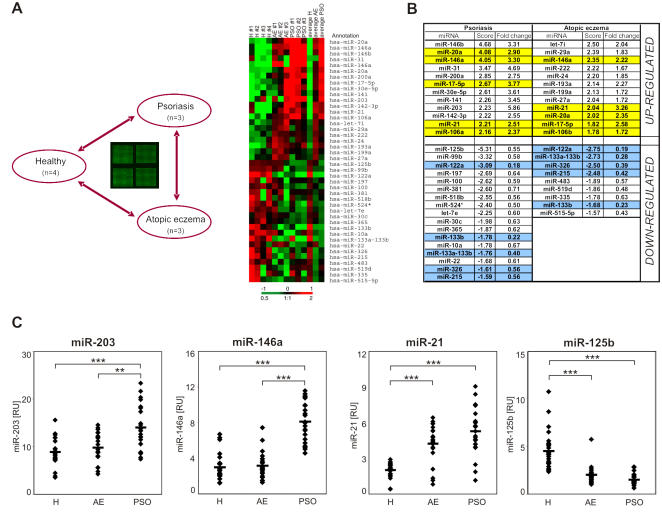
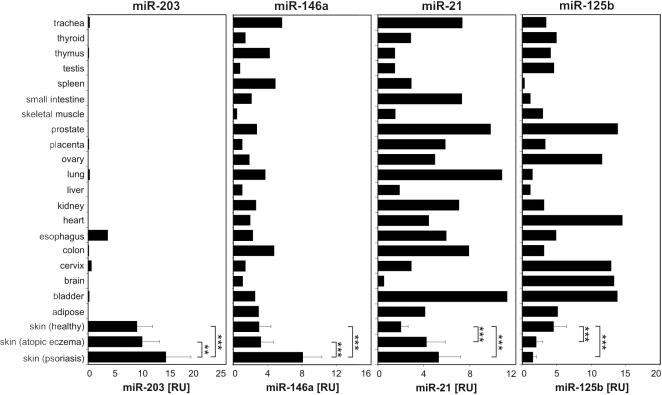
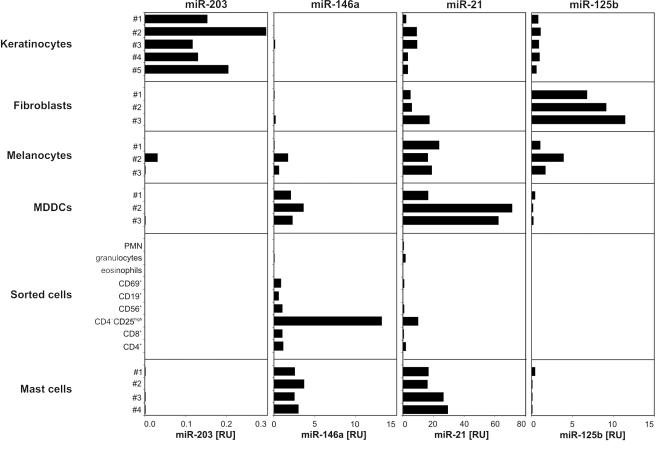
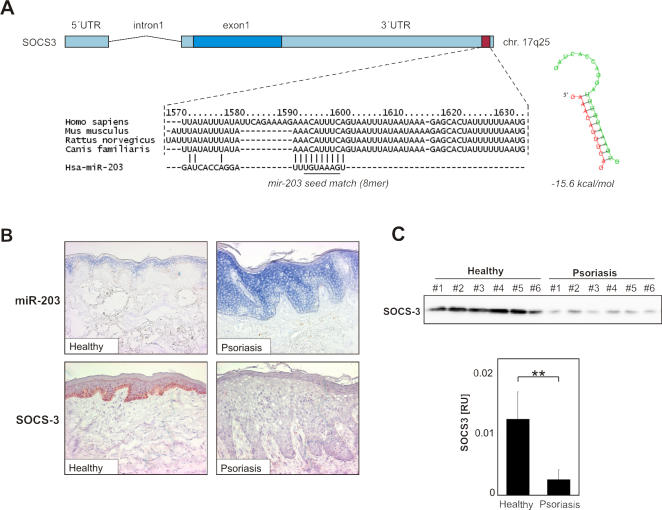
MicroRNAs are a recently discovered class of posttranscriptional regulators of gene expression with critical functions in health and disease. Psoriasis is the most prevalent chronic inflammatory skin disease in adults, with a substantial negative impact on the patients' quality of life. Here we show for the first time that psoriasis-affected skin has a specific microRNA expression profile when compared with healthy human skin or with another chronic inflammatory skin disease, atopic eczema. Among the psoriasis-specific microRNAs, we identified leukocyte-derived microRNAs and one keratinocyte-derived microRNA, miR-203. In a panel of 21 different human organs and tissues, miR-203 showed a highly skin-specific expression profile. Among the cellular constituents of the skin, it was exclusively expressed by keratinocytes. The up-regulation of miR-203 in psoriatic plaques was concurrent with the down-regulation of an evolutionary conserved target of miR-203, suppressor of cytokine signaling 3 (SOCS-3), which is involved in inflammatory responses and keratinocyte functions. Our results suggest that microRNA deregulation is involved in the pathogenesis of psoriasis and contributes to the dysfunction of the cross talk between resident and infiltrating cells. Taken together, a new layer of regulatory mechanisms is involved in the pathogenesis of chronic inflammatory skin diseases.
Overview
The claims and statistics of this paper haven’t been checked yet.
Free: it reads the open-access text and checks the first 5 claims that cite a source we can check. Create a free account to check every claim.
Integrity signals
Registry
Cites
Statistics
Figures
Verification
Claims the paper makes
The claims and statistics of this paper haven’t been checked yet.
Free: it reads the open-access text and checks the first 5 claims that cite a source we can check. Create a free account to check every claim.
Claims other papers make about this one
Each is checked against this paper’s own text: does it say what the citing paper says it does?
In the citing paper
“Its overexpression in human psoriatic skin has been suggested to reflect insufficient compensation of overt skin inflammation.91”
From The Innate Immune System in Acute and Chronic Wounds (2016) · cites this paper as [91]
Self-check
Percentages, sums and reported differences re-computed from the paper’s own numbers.
The self-check needs the paper’s full text.
Citations
Cites
Bartel (2004) · doi:10.1016/s0092-8674(04)00045-5 · Cited by 34,714
In silico prediction of protein-protein interactions in human macrophages
Souiai, O., Guerfali, F., Ben Miled, S., Brun, C., & Benkahla, A. (2014) · BMC Research Notes · doi:10.1186/1756-0500-7-157 · Cited by 10,803
The functions of animal microRNAs
Ambros, V. (2004) · Nature · doi:10.1038/nature02871 · Cited by 10,728
Significance analysis of microarrays applied to the ionizing radiation response
Tusher, V. G., Tibshirani, R., & Chu, G. (2001) · Proceedings of the National Academy of Sciences · doi:10.1073/pnas.091062498 · Cited by 10,568
Taganov, K. D., Boldin, M. P., Chang, K.-J., & Baltimore, D. (2006) · Proceedings of the National Academy of Sciences · doi:10.1073/pnas.0605298103 · Cited by 4,317 · cited 1×
“. Interestingly, a recent study showed that miR-146a, one of the psoriasis-specific miRNAs, inhibits the expression of IRAK-1 and TRAF-6 proteins both of which are regulators of the TNF-α signaling pathway”
BackgroundNon-coding RNAs and cancer: microRNAs and beyond
Raia, R. M., & Calin, G. A. (2011) · Journal of Nucleic Acids Investigation · doi:10.4081/jnai.2011.e5 · Cited by 3,382
Pathogenesis and therapy of psoriasis
Lowes, M. A., Bowcock, A. M., & Krueger, J. G. (2007) · Nature · doi:10.1038/nature05663 · Cited by 1,778 · cited 8×
“SOCS-3 deficiency leads to sustained activation of STAT3 in response to IL-6 [18], a cytokine present in the psoriasis lesions [11].”
BackgroundInfluentialmiRNAs, Cancer, and Stem Cell Division
Croce, C. M., & Calin, G. A. (2005) · Cell · doi:10.1016/j.cell.2005.06.036 · Cited by 1,329 · cited 1×
“. Indeed, miRNAs have regulatory roles in development, differentiation, organogenesis, stem cell and germline proliferation, growth control and apoptosis. Moreover, deregulation of miRNA expression may contribute to human diseases; in particular, miRNAs are often aberrantly expressed or mutated in cancer”
BackgroundPlasmacytoid predendritic cells initiate psoriasis through interferon-α production
Nestle, F. O., Conrad, C., Tun-Kyi, A., Homey, B., Gombert, M., Boyman, O., Burg, G., Liu, Y.-J., & Gilliet, M. (2005) · The Journal of Experimental Medicine · doi:10.1084/jem.20050500 · Cited by 1,124
Self-citationSOCS3 negatively regulates IL-6 signaling in vivo
Croker, B. A., Krebs, D. L., Zhang, J.-G., Wormald, S., Willson, T. A., Stanley, E. G., Robb, L., Greenhalgh, C. J., Förster, I., Clausen, B. E., et al. (2003) · Nature Immunology · doi:10.1038/ni931 · Cited by 840 · cited 1×
“SOCS-3 deficiency leads to sustained activation of STAT3 in response to IL-6 [18], a cytokine present in the psoriasis lesions [11].”
Background
Cited by
Nestle, F. O., Kaplan, D. H., & Barker, J. (2009) · New England Journal of Medicine · doi:10.1056/nejmra0804595 · Cited by 2,786
Transition from inflammation to proliferation: a critical step during wound healing
Landén, N. X., Li, D., & Ståhle, M. (2016) · Cellular and Molecular Life Sciences · doi:10.1007/s00018-016-2268-0 · Cited by 1,980
Self-citationmiRecords: an integrated resource for microRNA-target interactions
Xiao, F., Zuo, Z., Cai, G., Kang, S., Gao, X., & Li, T. (2009) · Nucleic Acids Research · doi:10.1093/nar/gkn851 · Cited by 1,438
“Indeed, it has become a common practice for experimental researchers to look at predictions made by several target prediction programs and focus on their intersections (30,31).”
BackgroundMicroRNAs in Development and Disease
Sayed, D., & Abdellatif, M. (2011) · Physiological Reviews · doi:10.1152/physrev.00006.2010 · Cited by 1,078
“Surely, only in psoriasis, miR-203 targets SOCS-3, which is a negative regulator in cytokine signaling pathways and keratinocyte proliferation (372) and is downregulated in the psoriatic lesions (571).”
BackgroundSheedy, F. J., Palsson-McDermott, E., Hennessy, E. J., Martin, C., O'Leary, J. J., Ruan, Q., Johnson, D. S., Chen, Y., & O'Neill, L. A. J. (2010) · Nature Immunology · doi:10.1038/ni.1828 · Cited by 1,005
Altered expression of MicroRNA in synovial fibroblasts and synovial tissue in rheumatoid arthritis
Stanczyk, J., Pedrioli, D. M. L., Brentano, F., Sanchez‐Pernaute, O., Kolling, C., Gay, R. E., Detmar, M., Gay, S., & Kyburz, D. (2008) · Arthritis & Rheumatism · doi:10.1002/art.23386 · Cited by 904
MicroRNAs: the fine-tuners of Toll-like receptor signalling
O'Neill, L. A., Sheedy, F. J., & McCoy, C. E. (2011) · Nature Reviews Immunology · doi:10.1038/nri2957 · Cited by 856
A skin microRNA promotes differentiation by repressing ‘stemness’
Yi, R., Poy, M. N., Stoffel, M., & Fuchs, E. (2008) · Nature · doi:10.1038/nature06642 · Cited by 790
Inflammation and cancer: interweaving microRNA, free radical, cytokine and p53 pathways
Schetter, A. J., Heegaard, N. H. H., & Harris, C. C. (2010) · Carcinogenesis · doi:10.1093/carcin/bgp272 · Cited by 657
Biological functions of microRNAs: a review
Huang, Y., Shen, X. J., Zou, Q., Wang, S. P., Tang, S. M., & Zhang, G. Z. (2011) · Journal of Physiology and Biochemistry · doi:10.1007/s13105-010-0050-6 · Cited by 652
The Role of MicroRNAs in Human Diseases.
Ardekani, A. M., & Naeini, M. M. (2010) · PubMed Central · Cited by 727
MicroRNAs and immunity: Novel players in the regulation of normal immune function and inflammation
Sonkoly, E., Ståhle, M., & Pivarcsi, A. (2008) · Seminars in Cancer Biology · doi:10.1016/j.semcancer.2008.01.005 · Cited by 523
Self-citationTurning 21: Induction of miR-21 as a Key Switch in the Inflammatory Response
Sheedy, F. J. (2015) · Frontiers in Immunology · doi:10.3389/fimmu.2015.00019 · Cited by 496
MicroRNA history: Discovery, recent applications, and next frontiers
Almeida, M. I., Reis, R. M., & Calin, G. A. (2011) · Mutation Research - Fundamental and Molecular Mechanisms of Mutagenesis · doi:10.1016/j.mrfmmm.2011.03.009 · Cited by 466
“Therefore, future studies should address treatments with miR-203 and miR146 antagomirs for psoriasis patients in order to improve their quality of life [64].”
InfluentialStanczyk, J., Ospelt, C., Karouzakis, E., Filer, A., Raza, K., Kolling, C., Gay, R., Buckley, C. D., Tak, P. P., Gay, S., et al. (2011) · Arthritis & Rheumatism · doi:10.1002/art.30115 · Cited by 407
“Apart from tumor pathology, miR-203 has been shown to play an important role in keratinocyte differentiation in the skin and was found to be highly expressed in psoriatic skin plaques (30,31).”
BackgroundmiR-203 represses ‘stemness’ by repressing ΔNp63
Lena, A. M., Shalom-Feuerstein, R., di Val Cervo, P. R., Aberdam, D., Knight, R. A., Melino, G., & Candi, E. (2008) · Cell Death & Differentiation · doi:10.1038/cdd.2008.69 · Cited by 389
Absolute and Direct MicroRNA Quantification Using DNA–Gold Nanoparticle Probes
Degliangeli, F., Kshirsagar, P., Brunetti, V., Pompa, P. P., & Fiammengo, R. (2014) · Journal of the American Chemical Society · doi:10.1021/ja412152x · Cited by 385
Environmental risk factors and their role in the management of atopic dermatitis
Kantor, R., & Silverberg, J. I. (2017) · Expert Review of Clinical Immunology · doi:10.1080/1744666x.2016.1212660 · Cited by 365
“Two studies found upregulation of miR-155, miR146a, miR-17-5p, and other miRNA in AD lesions, but downregulation of miR-122a, miR-326, miR-133b, and other miRNA [31,32].”
BackgroundCardoso, A. L., Guedes, J. R., Pereira de Almeida, L., & Pedroso de Lima, M. C. (2012) · Immunology · doi:10.1111/j.1365-2567.2011.03514.x · Cited by 336
Akhtar, N., Rasheed, Z., Ramamurthy, S., Anbazhagan, A. N., Voss, F. R., & Haqqi, T. M. (2010) · Arthritis & Rheumatism · doi:10.1002/art.27329 · Cited by 331
Pfeffer, S. R., Yang, C. H., & Pfeffer, L. M. (2015) · Drug Development Research · doi:10.1002/ddr.21257 · Cited by 325
“…2011], and miR-21 upregulation has been found in various inflammatory conditions, including osteoarthritis [Iliopoulos et al., 2008], psoriasis [Sonkoly et al., 2007], ulcerative colitis [Wu et al., 2008], and cardiac hypertrophy [Cheng et al., 2007]. miR-21 apparently is involved in the…”
BackgroundJones, S. W., Watkins, G., Le Good, N., Roberts, S., Murphy, C. L., Brockbank, S. M. V., Needham, M. R. C., Read, S. J., & Newham, P. (2009) · Osteoarthritis and Cartilage · doi:10.1016/j.joca.2008.09.012 · Cited by 321
Suárez, Y., Wang, C., Manes, T. D., & Pober, J. S. (2010) · The Journal of Immunology · doi:10.4049/jimmunol.0902369 · Cited by 320
“miR-17-5p is upregulated in psoriasis, atopic eczema, and systemic lupus erythematosus (26, 27).”
Sonkoly, E., Janson, P., Majuri, M.-L., Savinko, T., Fyhrquist, N., Eidsmo, L., Xu, N., Meisgen, F., Wei, T., Bradley, M., et al. (2010) · Journal of Allergy and Clinical Immunology · doi:10.1016/j.jaci.2010.05.045 · Cited by 317
“Quantification of miRNAs by means of TaqMan real-time PCR was carried out as previously described.(10)”
Self-citationToll-Like Receptor Pathways in Autoimmune Diseases
Chen, J.-Q., Szodoray, P., & Zeher, M. (2016) · Clinical Reviews in Allergy & Immunology · doi:10.1007/s12016-015-8473-z · Cited by 315
“Its up-regulation in psoriatic plaques was concurrent with down-regulation of SOCS3, which is a miR-203 conserved target [147].”
BackgroundThe Role of Epigenetics in Autoimmune/Inflammatory Disease
Surace, A. E. A., & Hedrich, C. M. (2019) · Frontiers in Immunology · doi:10.3389/fimmu.2019.01525 · Cited by 302
“5p,-21, and-106) and five of which are decreased (miR-122a,-133a,-133b,-326, and-215) (52).”
BackgroundInfluentialAre innovation and new technologies in precision medicine paving a new era in patients centric care?
Seyhan, A. A., & Carini, C. (2019) · Journal of Translational Medicine · doi:10.1186/s12967-019-1864-9 · Cited by 299
“Likewise, changes in miRNA levels in blood and other body fluids (miRNAs) have been linked to a variety of autoimmune diseases [17] including: (i) Type 1 diabetes, miR-342, miR-191, miR-375 and miR-21 and miR-510 and others [18–20]; (ii) Type 2 diabetes, miR-30, miR34a, miR-145 and miR-29c, miR-138, -192, -195, -320b,…”
Brooks, W. H., Le Dantec, C., Pers, J.-O., Youinou, P., & Renaudineau, Y. (2010) · Journal of Autoimmunity · doi:10.1016/j.jaut.2009.12.006 · Cited by 298
Identification of microRNAs associated with ileal and colonic Crohnʼs disease†
Wu, F., Zhang, S., Dassopoulos, T., Harris, M. L., Bayless, T. M., Meltzer, S. J., Brant, S. R., & Kwon, J. H. (2010) · Inflammatory Bowel Diseases · doi:10.1002/ibd.21267 · Cited by 290
The Innate Immune System in Acute and Chronic Wounds
MacLeod, A. S., & Mansbridge, J. N. (2016) · Advances in Wound Care · doi:10.1089/wound.2014.0608 · Cited by 289
Anatomy and Organization of Human Skin
McGrath, J. A., Eady, R. A. J., & Pope, F. M. (2004) · Rook's Textbook of Dermatology · doi:10.1002/9780470750520.ch3 · Cited by 289
Functional aspects of animal microRNAs
Williams, A. E. (2008) · Cellular and Molecular Life Sciences · doi:10.1007/s00018-007-7355-9 · Cited by 282
Garcia, A. I., Buisson, M., Bertrand, P., Rimokh, R., Rouleau, E., Lopez, B. S., Lidereau, R., Mikaélian, I., & Mazoyer, S. (2011) · EMBO Molecular Medicine · doi:10.1002/emmm.201100136 · Cited by 265
“Elevated basal expression of miR-146a has been reported in tissues associated with psoriasis (Sonkoly et al, 2007), low-grade osteoarthritis cartilage (Yamasaki et al, 2009), and rheumatoid arthritis (Nakasa et al, 2008; Pauley et al, 2008), suggesting that miR-146a dysregulation could play an…”
BackgroundLi, J., Wan, Y., Guo, Q., Zou, L., Zhang, J., Fang, Y., Zhang, J., Zhang, J., Fu, X., Liu, H., et al. (2010) · Arthritis Research & Therapy · doi:10.1186/ar3006 · Cited by 261
Circulating MicroRNA in inflammatory bowel disease
Paraskevi, A., Theodoropoulos, G., Papaconstantinou, I., Mantzaris, G., Nikiteas, N., & Gazouli, M. (2012) · Journal of Crohn's and Colitis · doi:10.1016/j.crohns.2012.02.006 · Cited by 247
Adding fuel to fire: microRNAs as a new class of mediators of inflammation
Sheedy, F. J., & O'Neill, L. A. J. (2008) · Annals of the Rheumatic Diseases · doi:10.1136/ard.2008.100289 · Cited by 246
“One particular study has outlined the role of a new miRNA in skin inflammation.(43) miR-203 expression is limited to skin epithelia and, more specifically, to keratinocytes.”
BackgroundDeep sequencing of small RNAs from human skin reveals major alterations in the psoriasis miRNAome
Joyce, C. E., Zhou, X., Xia, J., Ryan, C., Thrash, B., Menter, A., Zhang, W., & Bowcock, A. M. (2011) · Human Molecular Genetics · doi:10.1093/hmg/ddr331 · Cited by 246
“We also replicated several miRNA expression changes from two previous miRNA microarray studies which identified 23 miRNAs as +2-fold differentially expressed in PS (22,23).”
BackgroundResultInfluentialChapter 3 Cellular and Molecular Mechanisms in Atopic Dermatitis
Oyoshi, M. K., He, R., Kumar, L., Yoon, J., & Geha, R. S. (2009) · Advances in Immunology · doi:10.1016/s0065-2776(09)01203-6 · Cited by 241
“Using miRNA array comparison of healthy and lesional skin of AD patients, 12 miRNAs were found to be upregulated, and 9 were found to be downregulated in AD skin (Sonkoly et al., 2007).”
BackgroundMicroRNAs: Control and Loss of Control in Human Physiology and Disease
Li, M., Marin‐Muller, C., Bharadwaj, U., Chow, K., Yao, Q., & Chen, C. (2009) · World Journal of Surgery · doi:10.1007/s00268-008-9836-x · Cited by 241
“In addition, a recent investigation of the distribution of miRNAs has implicated miR-146 and miR-203 as regulators in psoriasis, a disease resulting from impairment in the crosstalk between the immune system and structural skin cells [139], via modulation of TNF-a and regulation of keratinocyte function, respectively…”
BackgroundXiao, B., Liu, Z., Li, B., Tang, B., Li, W., Guo, G., Shi, Y., Wang, F., Wu, Y., Tong, W., et al. (2009) · The Journal of Infectious Diseases · doi:10.1086/605443 · Cited by 240
Diagnostic microRNA profiling in cutaneous T-cell lymphoma (CTCL)
Ralfkiaer, U., Hagedorn, P. H., Bangsgaard, N., Løvendorf, M. B., Ahler, C. B., Svensson, L., Kopp, K. L., Vennegaard, M. T., Lauenborg, B., Zibert, J. R., et al. (2011) · Blood · doi:10.1182/blood-2011-06-358382 · Cited by 240
“As mentioned, miR-203 is highly up-regulated in keratinocytes in psoriatic lesions and involved in the repression of Suppressor of Cytokine Signaling-3 (SOCS3).(44) Among other cytokine signaling pathways, SOCS3 inhibits signaling from the interferon-alpha (IFNa) receptor.”
BackgroundMicroRNAs: New Regulators of Toll-Like Receptor Signalling Pathways
He, X., Jing, Z., & Cheng, G. (2014) · BioMed Research International · doi:10.1155/2014/945169 · Cited by 238
“parvum) infection can induce CIS and SOCS4 expression by downregulating miR-98 and let-7 expression in biliary epithelial cells [75, 117, 118].”
BackgroundPeripheral blood MicroRNAs distinguish active ulcerative colitis and Crohnʼs disease
Wu, F., Guo, N. J., Tian, H., Marohn, M., Gearhart, S., Bayless, T. M., Brant, S. R., & Kwon, J. H. (2011) · Inflammatory Bowel Diseases · doi:10.1002/ibd.21450 · Cited by 231
Xu, N., Brodin, P., Wei, T., Meisgen, F., Eidsmo, L., Nagy, N., Kemeny, L., Ståhle, M., Sonkoly, E., & Pivarcsi, A. (2011) · Journal of Investigative Dermatology · doi:10.1038/jid.2011.55 · Cited by 231
Self-citationYan, S., Xu, Z., Lou, F., Zhang, L., Ke, F., Bai, J., Liu, Z., Liu, J., Wang, H., Zhu, H., et al. (2015) · Nature Communications · doi:10.1038/ncomms8652 · Cited by 227
Role of miRNA-146a in the regulation of the innate immune response and cancer
Williams, A. E., Perry, M. M., Moschos, S. A., Larner-Svensson, H. M., & Lindsay, M. A. (2008) · Biochemical Society Transactions · doi:10.1042/bst0361211 · Cited by 226
The Role of MicroRNA-146a in the Pathogenesis of the Diabetic Wound-Healing Impairment
Xu, J., Wu, W., Zhang, L., Dorset-Martin, W., Morris, M. W., Mitchell, M. E., & Liechty, K. W. (2012) · Diabetes · doi:10.2337/db12-0145 · Cited by 225
Collison, A., Mattes, J., Plank, M., & Foster, P. S. (2011) · Journal of Allergy and Clinical Immunology · doi:10.1016/j.jaci.2011.04.005 · Cited by 225
Diagnostic, functional, and therapeutic roles of microRNA in allergic diseases
Lu, T. X., & Rothenberg, M. E. (2013) · Journal of Allergy and Clinical Immunology · doi:10.1016/j.jaci.2013.04.039 · Cited by 222
MicroRNAs and potential target interactions in psoriasis
Zibert, J. R., Løvendorf, M. B., Litman, T., Olsen, J., Kaczkowski, B., & Skov, L. (2010) · Journal of Dermatological Science · doi:10.1016/j.jdermsci.2010.03.004 · Cited by 221
“we could not uncover a downregulation of SOCS-3-mRNA in psoriasis [8].”
InfluentialPsoriasis: what we have learned from mouse models
Wagner, E. F., Schonthaler, H. B., Guinea-Viniegra, J., & Tschachler, E. (2010) · Nature Reviews Rheumatology · doi:10.1038/nrrheum.2010.157 · Cited by 216
“The role of microRNAs in control of multiple important pathways in psoriasis is also being investigated”
BackgroundMicroRNAs and bacterial infection
Staedel, C., & Darfeuille, F. (2013) · Cellular Microbiology · doi:10.1111/cmi.12159 · Cited by 216
“Interestingly, high expression of this miRNA is found to be associated with the chronic inflammatory skin disease psoriasis, indicating that alterations in the fine-tuning of innate immune responses by miRNAs may contribute to inflammatory disorders (Sonkoly et al., 2007).”
BackgroundLindberg, R. L. P., Hoffmann, F., Mehling, M., Kuhle, J., & Kappos, L. (2010) · European Journal of Immunology · doi:10.1002/eji.200940032 · Cited by 214
Adlakha, Y. K., & Saini, N. (2014) · Molecular Cancer · doi:10.1186/1476-4598-13-33 · Cited by 213
“psoriasis [17], diabetes [18], chronic hepatitis [19], AIDS [20], and obesity [21].”
BackgroundMicroRNAs: Essential players in the regulation of inflammation
Rebane, A., & Akdis, C. A. (2013) · Journal of Allergy and Clinical Immunology · doi:10.1016/j.jaci.2013.04.011 · Cited by 213
Sonkoly, E., & Pivarcsi, A. (2009) · International Reviews of Immunology · doi:10.3109/08830180903208303 · Cited by 211
Self-citationXu, N., Meisgen, F., Butler, L. M., Han, G., Wang, X.-J., Söderberg-Nauclér, C., Ståhle, M., Pivarcsi, A., & Sonkoly, E. (2013) · The Journal of Immunology · doi:10.4049/jimmunol.1202695 · Cited by 208
“Earlier expression profiling data from our and other groups showed that miR-31 is one of the miRNAs overexpressed in psoriasis skin (5, 7, 8).”
BackgroundMethodSelf-citationMicroRNAs, new effectors and regulators of NF‐κB
Boldin, M. P., & Baltimore, D. (2012) · Immunological Reviews · doi:10.1111/j.1600-065x.2011.01089.x · Cited by 199
Rebane, A., Runnel, T., Aab, A., Maslovskaja, J., Rückert, B., Zimmermann, M., Plaas, M., Kärner, J., Treis, A., Pihlap, M., et al. (2014) · Journal of Allergy and Clinical Immunology · doi:10.1016/j.jaci.2014.05.022 · Cited by 199
Waschbisch, A., Atiya, M., Linker, R. A., Potapov, S., Schwab, S., & Derfuss, T. (2011) · PLoS ONE · doi:10.1371/journal.pone.0024604 · Cited by 195
“miR-146a was found to be overexpressed at the site of inflammation in RA [17], psoriasis [18] and within active MS lesions [19].”
BackgroundMicroRNAs: novel regulators in skin inflammation
Sonkoly, E., Ståhle, M., & Pivarcsi, A. (2008) · Clinical and Experimental Dermatology · doi:10.1111/j.1365-2230.2008.02804.x · Cited by 194
Self-citationA guide to miRNAs in inflammation and innate immune responses
Nejad, C., Stunden, H. J., & Gantier, M. P. (2018) · The FEBS Journal · doi:10.1111/febs.14482 · Cited by 191
miR-126 Is Downregulated in Cystic Fibrosis Airway Epithelial Cells and Regulates TOM1 Expression
Oglesby, I. K., Bray, I. M., Chotirmall, S. H., Stallings, R. L., O’Neill, S. J., McElvaney, N. G., & Greene, C. M. (2010) · The Journal of Immunology · doi:10.4049/jimmunol.0902669 · Cited by 186
“Altered expression of miR-203 and miR-146 has been shown in the chronic inflammatory skin condition psoriasis, suggesting their involvement in immunemediated diseases (45).”
BackgroundComparison of microRNA profiles of human periodontal diseased and healthy gingival tissues
Xie, Y., Shu, R., Jiang, S., Liu, D., & Zhang, X. (2011) · International Journal of Oral Science · doi:10.4248/ijos11046 · Cited by 185
Ibáñez-Ventoso, C., Vora, M., & Driscoll, M. (2008) · PLoS ONE · doi:10.1371/journal.pone.0002818 · Cited by 183
“Numerous studies have reported on miRNA expression profiles in cells, tissues, organisms, and disease states [8–31].”
Advances in microRNAs: implications for immunity and inflammatory diseases
Sonkoly, E., & Pivarcsi, A. (2009) · Journal of Cellular and Molecular Medicine · doi:10.1111/j.1582-4934.2008.00534.x · Cited by 183
Self-citationYang, C. H., Yue, J., Fan, M., & Pfeffer, L. M. (2010) · Cancer Research · doi:10.1158/0008-5472.can-10-2579 · Cited by 179
MicroRNA Expression Profiling in Mild Asthmatic Human Airways and Effect of Corticosteroid Therapy
Williams, A. E., Larner-Svensson, H., Perry, M. M., Campbell, G. A., Herrick, S. E., Adcock, I. M., Erjefalt, J. S., Chung, K. F., & Lindsay, M. A. (2009) · PLoS ONE · doi:10.1371/journal.pone.0005889 · Cited by 179
“Inflammatory diseases are also likely to be regulated by miRNAs, as miR-203 and miR-146a are associated with psoriasis [14], while miR-155 regulates lung remodelling [15].”
BackgroundMicroRNAs in autoimmunity and inflammatory bowel disease: Crucial regulators in immune response
Iborra, M., Bernuzzi, F., Invernizzi, P., & Danese, S. (2012) · Autoimmunity Reviews · doi:10.1016/j.autrev.2010.07.002 · Cited by 178
Xu, N., Zhang, L., Meisgen, F., Harada, M., Heilborn, J., Homey, B., Grandér, D., Ståhle, M., Sonkoly, E., & Pivarcsi, A. (2012) · Journal of Biological Chemistry · doi:10.1074/jbc.m112.391243 · Cited by 176
Self-citationFenoglio, C., Cantoni, C., De Riz, M., Ridolfi, E., Cortini, F., Serpente, M., Villa, C., Comi, C., Monaco, F., Mellesi, L., et al. (2011) · Neuroscience Letters · doi:10.1016/j.neulet.2011.08.021 · Cited by 176
MicroRNA-99 Family Targets AKT/mTOR Signaling Pathway in Dermal Wound Healing
Jin, Y., Tymen, S. D., Chen, D., Fang, Z. J., Zhao, Y., Dragas, D., Dai, Y., Marucha, P. T., & Zhou, X. (2013) · PLoS ONE · doi:10.1371/journal.pone.0064434 · Cited by 172
“Recent findings report their involvement in psoriasis [1], in autoimmune diseases affecting the skin, such as systemic lupus erythematosus [2], in systemic sclerosis [3], in hair follicle morphogenesis (ablation of microRNAs from keratinocytes causes several defects, such as evagination instead of invagination) [4], a…”
BackgroundMicroRNAs: Novel Regulators During the Immune Response
Bi, Y., Liu, G., & Yang, R. (2009) · Journal of Cellular Physiology · doi:10.1002/jcp.21639 · Cited by 172
“Recent study found this miRNA to be associated with psoriasis, a chronic inflammatory skin disease, indicating that alterations in the fine-tuning of innate immune responses by miRNAs may contribute to inflammatory disorders (Sonkoly et al., 2007).”
BackgroundLoyer, X., Paradis, V., Hénique, C., Vion, A.-C., Colnot, N., Guerin, C. L., Devue, C., On, S., Scetbun, J., Romain, M., et al. (2016) · Gut · doi:10.1136/gutjnl-2014-308883 · Cited by 171
Altered miR-146a expression in Sjögren’s syndrome and its functional role in innate immunity
Pauley, K. M., Stewart, C. M., Gauna, A. E., Dupre, L. C., Kuklani, R., Chan, A. L., Pauley, B. A., Reeves, W. H., Chan, E. K. L., & Cha, S. (2011) · European Journal of Immunology · doi:10.1002/eji.201040757 · Cited by 169
Spotlight on microRNAs in allergy and asthma
Weidner, J., Bartel, S., Kılıç, A., Zissler, U. M., Renz, H., Schwarze, J., Schmidt‐Weber, C. B., Maes, T., Rebane, A., Krauss‐Etschmann, S., et al. (2021) · Allergy · doi:10.1111/all.14646 · Cited by 168
The role of microRNA in rheumatoid arthritis and other autoimmune diseases
Furer, V., Greenberg, J. D., Attur, M., Abramson, S. B., & Pillinger, M. H. (2010) · Clinical Immunology · doi:10.1016/j.clim.2010.02.005 · Cited by 168
MiR‐21 is up‐regulated in psoriasis and suppresses T cell apoptosis
Meisgen, F., Xu, N., Wei, T., Janson, P. C., Obad, S., Broom, O., Nagy, N., Kauppinen, S., Kemény, L., Ståhle, M., et al. (2012) · Experimental Dermatology · doi:10.1111/j.1600-0625.2012.01462.x · Cited by 167
Self-citationThe Genetics and Epigenetics of Atopic Dermatitis—Filaggrin and Other Polymorphisms
Liang, Y., Chang, C., & Lu, Q. (2016) · Clinical Reviews in Allergy & Immunology · doi:10.1007/s12016-015-8508-5 · Cited by 166
“miRNAs upregulated in patients with other allergic disorders, including miR-21, miR-146, and miR-223, are also upregulated in the skin of patients with atopic dermatitis [172, 173].”
BackgroundNavon, R., Wang, H., Steinfeld, I., Tsalenko, A., Ben-Dor, A., & Yakhini, Z. (2009) · PLoS ONE · doi:10.1371/journal.pone.0008003 · Cited by 165
“miRNAs regulate target genes at the post-transcriptional level and play important roles in development as well as in cancer [9–11] and in other human diseases, including heart disease [12–14], schizophrenia [15] and psoriasis [16].”
BackgroundLu, T. X., Sherrill, J. D., Wen, T., Plassard, A. J., Besse, J. A., Abonia, J. P., Franciosi, J. P., Putnam, P. E., Eby, M., Martin, L. J., et al. (2012) · Journal of Allergy and Clinical Immunology · doi:10.1016/j.jaci.2012.01.060 · Cited by 165
“It is particularly interesting that mast cells express high levels of bothmiR-146a andmiR-146b.(52,53)Notably, patients with EoE have concomitant esophageal mastocytosis,(13,54,55) which could be a potential source for the increased miR-146a and miR-146b levels seen in the plasma of patients with EoE.”
Genetic and Epigenetic Aspects of Atopic Dermatitis
Nedoszytko, B., Reszka, E., Gutowska‐Owsiak, D., Trzeciak, M., Lange, M., Jarczak, J., Niedoszytko, M., Jabłońska, E., Romantowski, J., Strapagiel, D., et al. (2020) · International Journal of Molecular Sciences · doi:10.3390/ijms21186484 · Cited by 189
“In particular, miR-155 is necessary for the differentiation of T helper type 17 (Th17) and Treg cells [55,78].”
BackgroundmiRNA regulation of cytokine genes
Asirvatham, A. J., Magner, W. J., & Tomasi, T. B. (2009) · Cytokine · doi:10.1016/j.cyto.2008.11.010 · Cited by 161
“SOCS-3 is a negative regulator of the IL-6 and IFN-c-induced signaling pathways and therefore the suppression of SOCS3 may lead to an increase in inflammatory response in the skin [171].”
Genetic and epigenetic basis of psoriasis pathogenesis
Chandra, A., Ray, A., Senapati, S., & Chatterjee, R. (2015) · Molecular Immunology · doi:10.1016/j.molimm.2014.12.014 · Cited by 161
The critical importance of epigenetics in autoimmunity
Lu, Q. (2013) · Journal of Autoimmunity · doi:10.1016/j.jaut.2013.01.010 · Cited by 160
High-throughput miRNA profiling of human melanoma blood samples
Leidinger, P., Keller, A., Borries, A., Reichrath, J., Rass, K., Jager, S. U., Lenhof, H.-P., & Meese, E. (2010) · BMC Cancer · doi:10.1186/1471-2407-10-262 · Cited by 156
Clinical implications of shared genetics and pathogenesis in autoimmune diseases
Zhernakova, A., Withoff, S., & Wijmenga, C. (2013) · Nature Reviews Endocrinology · doi:10.1038/nrendo.2013.161 · Cited by 158
Targeting miR-21 to Treat Psoriasis
Guinea-Viniegra, J., Jiménez, M., Schonthaler, H. B., Navarro, R., Delgado, Y., José Concha-Garzón, M., Tschachler, E., Obad, S., Daudén, E., & Wagner, E. F. (2014) · Science Translational Medicine · doi:10.1126/scitranslmed.3008089 · Cited by 148
Emerging roles of microRNAs as molecular switches in the integrated circuit of the cancer cell
Sotiropoulou, G., Pampalakis, G., Lianidou, E., & Mourelatos, Z. (2009) · RNA · doi:10.1261/rna.1534709 · Cited by 157
“MICRORNAS IN CANCER Recent studies implicate miRNAs in various diseases, including fragile X syndrome (Jin et al. 2004), DiGeorge syndrome (Gregory et al. 2004), Alzheimer’s disease (Wang et al. 2008b), psoriasis (Sonkoly et al. 2007), diabetes (Tang et al. 2008), and obesity (Takanabe et al. 2008).”
BackgroundLöfgren, S. E., Frostegård, J., Truedsson, L., Pons‐Estel, B. A., D’Alfonso, S., Witte, T., Lauwerys, B. R., Endreffy, E., Kovács, L., Vasconcelos, C., et al. (2012) · Genes and Immunity · doi:10.1038/gene.2011.84 · Cited by 163
MicroRNAs: Novel regulators of immunity
Carissimi, C., Fulci, V., & Macino, G. (2009) · Autoimmunity Reviews · doi:10.1016/j.autrev.2009.01.008 · Cited by 162
Modulation of TLR2 Protein Expression by miR-105 in Human Oral Keratinocytes
Benakanakere, M. R., Li, Q., Eskan, M. A., Singh, A. V., Zhao, J., Galicia, J. C., Stathopoulou, P., Knudsen, T. B., & Kinane, D. F. (2009) · Journal of Biological Chemistry · doi:10.1074/jbc.m109.013862 · Cited by 148
Downregulation of miR-132 by promoter methylation contributes to pancreatic cancer development
Zhang, S., Hao, J., Xie, F., Hu, X., Liu, C., Tong, J., Zhou, J., Wu, J., & Shao, C. (2011) · Carcinogenesis · doi:10.1093/carcin/bgr105 · Cited by 148
von Schack, D., Agostino, M. J., Murray, B. S., Li, Y., Reddy, P. S., Chen, J., Choe, S. E., Strassle, B. W., Li, C., Bates, B., et al. (2011) · PLoS ONE · doi:10.1371/journal.pone.0017670 · Cited by 143
“Temporal regulation of mRNA expression in SNL is known [5,6,37] and the same is likely true of miRNA expression [23,51].”
BackgroundCourts, C., & Madea, B. (2011) · Journal of Forensic Sciences · doi:10.1111/j.1556-4029.2011.01894.x · Cited by 161
Ye, W., Lv, Q., Wong, C.-K. A., Hu, S., Fu, C., Zhong, H., Cai, G., Li, G., Yang, B. B., & Zhang, Y. (2008) · PLoS ONE · doi:10.1371/journal.pone.0001719 · Cited by 158
“Having been studied for about a decade, miRNAs have been demonstrated to have important roles in development[7,8], cell proliferation [9– 11], differentiation [12–16], apoptosis[17,18], cell cycle progression [19–21], tumorigenesis[22–26] and many other physiological or pathological processes[2,16,27].”
BackgroundPeng, J., Omran, A. G., Ashhab, M. U., Kong, H., Gan, N., He, F. P., & Yin, F. (2013) · Journal of Molecular Neuroscience · doi:10.1007/s12031-013-9953-3 · Cited by 154
“Many researches mentioned significant upregulation of miR21 in chronic inflammatory diseases (Sonkoly et al. 2007; Iliopoulos et al. 2008; Lu et al. 2009).”
BackgroundSrivastava, A., Nikamo, P., Lohcharoenkal, W., Li, D., Meisgen, F., Xu, N., Ståhle, M., Pivarcsi, A., & Sonkoly, E. (2016) · Journal of Allergy and Clinical Immunology · doi:10.1016/j.jaci.2016.07.025 · Cited by 158
Self-citationmicroRNAs: a new emerging class of players for disease diagnostics and gene therapy
Zhang, B., & Farwell, M. A. (2007) · Journal of Cellular and Molecular Medicine · doi:10.1111/j.1582-4934.2007.00196.x · Cited by 157
Melar-New, M., & Laimins, L. A. (2010) · Journal of Virology · doi:10.1128/jvi.00078-10 · Cited by 145
Metadata
- Authors
- Sonkoly, E., Wei, T., Janson, P. C. J., Sääf, A., Lundeberg, L., Tengvall-Linder, M., Norstedt, G., Alenius, H., Homey, B., Scheynius, A., Ståhle, M., & Pivarcsi, A.
- Affiliations
- Karolinska Institutet (SE)
- Finnish Institute of Occupational Health (FI)
- Heinrich Heine University Düsseldorf (DE)
- Corresponding author
- Sonkoly, Enikö
- Pivarcsi, Andor
- ORCID
- Venue
- PLoS ONE
- Publisher
- Public Library of Science (PLoS)
- Published
- 2007-07-11
- Volume
- 2
- Issue
- 7
- Pages
- e610
- ISSN
- 1932-6203 (ISSN-L)
- PMC
- PMC1905940
- OpenAlex
- W1991320836
- Cited by
- 754
- References
- 24
- Citations by year
- 2026: 6 · 2025: 18 · 2024: 19 · 2023: 29 · 2022: 37 · 2021: 45 · 2020: 44 · 2019: 35 · 2018: 30 · 2017: 39 · 2016: 67 · 2015: 55 · 2014: 64 · 2013: 50 · 2012: 50
- FWCI
- 12.90
- Type
- journal article
- Language
- en
- Open access
- gold
- doi.org
- Locations
- PLoS ONE (publishedVersion, cc-by)
- PubMed Central (publishedVersion, cc-by)
- PubMed (publishedVersion)
- DOAJ (DOAJ: Directory of Open Access Journals) (submittedVersion, cc-by-sa)
- Figshare (submittedVersion, cc-by)
- Funders
- Wenner-Gren Foundation
- Insamlingsstiftelsen Cancer- och Allergifonden
- Karolinska Institutet
- Stockholms Läns Landsting
- Szegedi Tudományegyetem
- Medical Research Council
- Topics
- Life Sciences › Immunology and Microbiology › Immunology › Psoriasis: Treatment and Pathogenesis
- Life Sciences › Biochemistry, Genetics and Molecular Biology › Cancer Research › MicroRNA in disease regulation
- Health Sciences › Medicine › Dermatology › Dermatology and Skin Diseases
- Keywords
- microRNA, psoriasis, miR-203, SOCS3, keratinocytes, miRNA expression profiling, atopic dermatitis, chronic inflammatory skin disease, post-transcriptional regulation, infiltrating immune cells
- MeSH terms
- Adult, Algorithms, Dermatitis, Atopic, Fibroblasts, Gene Expression Regulation, Humans, Mast Cells, Psoriasis, Quality of Life, Reference Values, Skin, Skin Physiological Phenomena, T-Lymphocytes, Blotting, Western, Keratinocytes, Gene Expression Profiling, MicroRNAs
About these checks
Registry, retraction, Cites and statistics results are computed, not judged, with one exception: a printed reference that no index lists is read once by a model before it counts as a citation error. Claims are extracted by a model and kept only when their quote appears verbatim in the text; each cited source is then checked, with a model’s help, for whether it says what the claim relies on. Those verdicts can be wrong — read the claim’s quote and the cited source before relying on one.
Statistics and arithmetic are recomputed, not judged.
Confidence bands are shown only for fields calibrated on our annotated test set. None is calibrated yet, so no band is shown.
What counts as a claim ›How we measure confidence ›How we check this ›
Are you an author, or do you see a problem with this page? Request a review
Data sources
Bibliographic data: Semantic Scholar, OpenAlex, Crossref.
Contains information from the Semantic Scholar Academic Graph Datasets, made available under the ODC Attribution License (ODC-BY 1.0).
Semantic Scholar’s data is described in: Kinney, R., et al. (2023). The Semantic Scholar Open Data Platform. arXiv:2301.10140.
