

Influenza Virus in Human Exhaled Breath: An Observational Study
Open accessThe DOI matches its Crossref record; 44 of the 44 references it cites were found in a registry or an index.
Abstract
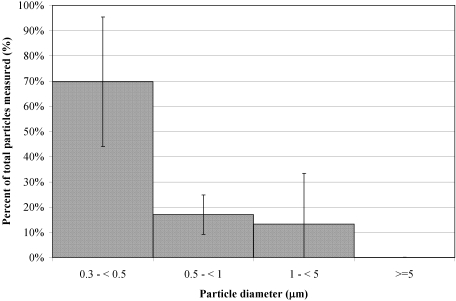
BACKGROUND: Recent studies suggest that humans exhale fine particles during tidal breathing but little is known of their composition, particularly during infection. METHODOLOGY/PRINCIPAL FINDINGS: We conducted a study of influenza infected patients to characterize influenza virus and particle concentrations in their exhaled breath. Patients presenting with influenza-like-illness, confirmed influenza A or B virus by rapid test, and onset within 3 days were recruited at three clinics in Hong Kong, China. We collected exhaled breath from each subject onto Teflon filters and measured exhaled particle concentrations using an optical particle counter. Filters were analyzed for influenza A and B viruses by quantitative polymerase chain reaction (qPCR). Twelve out of thirteen rapid test positive patients provided exhaled breath filter samples (7 subjects infected with influenza B virus and 5 subjects infected with influenza A virus). We detected influenza virus RNA in the exhaled breath of 4 (33%) subjects--three (60%) of the five patients infected with influenza A virus and one (14%) of the seven infected with influenza B virus. Exhaled influenza virus RNA generation rates ranged from <3.2 to 20 influenza virus RNA particles per minute. Over 87% of particles exhaled were under 1 microm in diameter. CONCLUSIONS: These findings regarding influenza virus RNA suggest that influenza virus may be contained in fine particles generated during tidal breathing, and add to the body of literature suggesting that fine particle aerosols may play a role in influenza transmission.
Overview
The claims and statistics of this paper haven’t been checked yet.
Free: it reads the open-access text and checks the first 5 claims that cite a source we can check. Create a free account to check every claim.
Integrity signals
Registry
Cites
Statistics
Figures
Verification
Claims the paper makes
The claims and statistics of this paper haven’t been checked yet.
Free: it reads the open-access text and checks the first 5 claims that cite a source we can check. Create a free account to check every claim.
Claims other papers make about this one
Each is checked against this paper’s own text: does it say what the citing paper says it does?
The source backs part of the claim, not all of it — or backs it for a different population, condition or comparison.
In the citing paper
“Results for four subjects showed influenza virus particles in exhaled breath and over 87% of particles were under 1 μ m in diameter.”
From A Quantitative Assessment of the Total Inward Leakage of NaCl Aerosol Representing Submicron-Size Bioaerosol Through N95 Filtering Facepiece Respirators and Surgical Masks (2014) · cites this paper as [2]
Experimental — accuracy not yet measuredThe source backs part of the claim, not all of it — or backs it for a different population, condition or comparison.
In the citing paper
“Numerous earlier studies have established that aerosol expelled during normal respiratory activities can contain infectious influenza virus [42, 45–54].”
From The protective performance of reusable cloth face masks, disposable procedure masks, KN95 masks and N95 respirators: Filtration and total inward leakage (2021) · cites this paper as [52]
Experimental — accuracy not yet measuredThe cited source says what the claim attributes to it.
In the citing paper
“This size range of particles is similar to the size of bioaerosols released by subjects under breathing conditions as reported previously. (2-5)”
The cited source says what the claim attributes to it.
In the citing paper
“Normal human subjects and infected individuals release considerable numbers of submicron diameter particles in the exhaled breath. (2-4)”
Self-check
Percentages, sums and reported differences re-computed from the paper’s own numbers.
The self-check needs the paper’s full text.
Citations
Cites
Influenza Virus Transmission Is Dependent on Relative Humidity and Temperature
Lowen, A. C., Mubareka, S., Steel, J., & Palese, P. (2007) · PLoS Pathogens · doi:10.1371/journal.ppat.0030151 · Cited by 1,669 · cited 1×
“In animal models, influenza infection by airborne transmission has been demonstrated in monkeys [9], ferrets [10–12], mice [13–20], and guinea pigs [21,22].”
BackgroundAIRBORNE SPREAD OF MEASLES IN A SUBURBAN ELEMENTARY SCHOOL
RILEY, E. C., MURPHY, G., & RILEY, R. L. (1978) · American Journal of Epidemiology · doi:10.1093/oxfordjournals.aje.a112560 · Cited by 932 · cited 1×
“Rudnick and Milton [30] used data from the influenza outbreak aboard an aircraft reported by Moser et al [31] and the WellsRiley equation for non-steady-state conditions [32] to estimate a quantum generation rate of from 79 to 128 quanta per hour for a highly infectious influenza case.”
MethodReview of Aerosol Transmission of Influenza A virus
Tellier, R. (2006) · Emerging Infectious Diseases · doi:10.3201/eid1211.060426 · Cited by 803 · cited 2×
“conclusions about how influenza is transmitted [3,4].”
BackgroundTransmission of influenza A in human beings
Brankston, G., Gitterman, L., Hirji, Z., Lemieux, C., & Gardam, M. (2007) · The Lancet Infectious Diseases · doi:10.1016/s1473-3099(07)70029-4 · Cited by 744 · cited 2×
“conclusions about how influenza is transmitted [3,4].”
BackgroundThe size distribution of droplets in the exhaled breath of healthy human subjects
PAPINENI, R. S., & ROSENTHAL, F. S. (1997) · Journal of Aerosol Medicine · doi:10.1089/jam.1997.10.105 · Cited by 690 · cited 2×
“3 mm in diameter [6–8].”
ResultRudnick, S. N., & Milton, D. K. (2003) · Indoor Air · doi:10.1034/j.1600-0668.2003.00189.x · Cited by 624 · cited 4×
“Rudnick and Milton [30] used data from the influenza outbreak aboard an aircraft reported by Moser et al [31] and the WellsRiley equation for non-steady-state conditions [32] to estimate a quantum generation rate of from 79 to 128 quanta per hour for a highly infectious influenza case.”
MethodInfluentialSelf-citationAN OUTBREAK OF INFLUENZA ABOARD A COMMERCIAL AIRLINER
MOSER, M. R., BENDER, T. R., MARGOLIS, H. S., NOBLE, G. R., KENDAL, A. P., & RITTER, D. G. (1979) · American Journal of Epidemiology · doi:10.1093/oxfordjournals.aje.a112781 · Cited by 605 · cited 2×
“Rudnick and Milton [30] used data from the influenza outbreak aboard an aircraft reported by Moser et al [31] and the WellsRiley equation for non-steady-state conditions [32] to estimate a quantum generation rate of from 79 to 128 quanta per hour for a highly infectious influenza case.”
MethodSimultaneous Detection of Influenza Viruses A and B Using Real-Time Quantitative PCR
van Elden, L. J. R., Nijhuis, M., Schipper, P., Schuurman, R., & van Loon, A. M. (2001) · Journal of Clinical Microbiology · doi:10.1128/jcm.39.1.196-200.2001 · Cited by 456
Human Influenza Resulting from Aerosol Inhalation
Alford, R. H., Kasel, J. A., Gerone, P. J., & Knight, V. (1966) · Experimental Biology and Medicine · doi:10.3181/00379727-122-31255 · Cited by 363 · cited 1×
“Assuming each RNA copy represents one infectious virus, and if, as Alford et al suggested [34,35], the human infectious dose 50% (ID50) by aerosol is between 0.”
BackgroundInhaling to mitigate exhaled bioaerosols
Edwards, D. A., Man, J. C., Brand, P., Katstra, J. P., Sommerer, K., Stone, H. A., Nardell, E., & Scheuch, G. (2004) · Proceedings of the National Academy of Sciences · doi:10.1073/pnas.0408159101 · Cited by 362 · cited 3×
“98% of the particles and concluded that these subjects–classified as ‘‘high producers’’–could over time exhale more particles during normal tidal breathing than during relatively infrequent coughing or sneezing events [8].”
BackgroundResultInfluential
Research works printed but not linked: 1
- Gebhart J Anselm A Heyder J Stahlhofen W 1988 The human lung as aerosol particle generator. J Aerosol Med 1 196 197
Cited by
Items 401–494 of 494
Sampling for airborne influenza virus using RNA preservation buffer: a new approach
Girlando, E. M. (2014) · doi:10.17077/etd.lg6lfxwf · Cited by 6
“, (1997) and Fabian et al., (2008) found that the size distribution of droplets exhaled in human breath is predominantly (> 87%) less than > 1 μm in diameter.”
Preventive, Mitigating and Treatment Strategies for Containing or Ending The COVID-19 PandemicPreprint
Wu, J., & Zha, P. (2020) · OSF Preprints (OSF Preprints) · doi:10.31219/osf.io/knjt5 · Cited by 5
Super-Spreading in Infectious Diseases: A Global Challenge for All Disciplines
Stein, R. A. (2022) · Integrated science · doi:10.1007/978-3-030-96814-4_16 · Cited by 2
Nguyen, X. D., Le, B., Yang, Q., Wang, B., & Wan, X. (2025) · Virology · doi:10.1016/j.virol.2025.110609 · Cited by 2
Suppress the aerosol generation from the air turbine handpiece in dental clinics
Chen, D., Wang, Z., Yu, B., Tang, X., Shen, Y., Wang, L., Wang, Y., Yang, H., & Deng, W. (2022) · AIP Advances · doi:10.1063/5.0095039 · Cited by 2
Sterilization and reuse of masks for a standardized exhaled breath collection device by autoclaving
Shawn, S., Harshman, S. W., Davidson, C. N., Lee, J. H., Jung, A. E., Parker, A., Hawkins, M. A., Stamps, B. W., Pitsch, R. L., & Martin, J. A. (2023) · Journal of Breath Research · doi:10.1088/1752-7163/ace127 · Cited by 2
“A particle size of 1 μm was selected as the size of the smallest exhaled particles likely to contain and transmit communicable diseases, such as the influenza virus [18, 19].”
BackgroundThe risk of aerosol transmission of respiratory infectious diseases in the isolation ward
Guo, W., Li, P., Liu, S., Xu, X., & Liu, L. (2023) · Chinese Science Bulletin (Chinese Version) · doi:10.1360/tb-2023-0765 · Cited by 2
Filtration efficiency of different protective masks against viral aerosols
Brochu, V., Turgeon, N., Richer-Fortin, A., Veillette, M., & Duchaine, C. (2024) · Aerosol Science and Technology · doi:10.1080/02786826.2024.2420683 · Cited by 4
“It is important to note that viral aerosols such as those that contained SARS-CoV-2 and influenza viruses are mainly found in particles smaller than 5 m m (Alsved et al. 2023; Fabian et al. 2008; Groma et al. 2023; Noti et al. 2012).”
Jia, Q., Yang, H., & Wang, J. (2024) · Journal of Building Engineering · doi:10.1016/j.jobe.2024.111381 · Cited by 2
Ren, J., Men, L., Cao, X., Liu, Y., & Kong, X. (2025) · Building and Environment · doi:10.1016/j.buildenv.2025.112546 · Cited by 2
Microfluidic digital focus assays for the quantification of infectious influenza virus
Srimathi, S. R., Ignacio, M. A., Rife, M. F., Tai, S., Milton, D. K., Scull, M. A., & DeVoe, D. L. (2025) · Lab on a Chip · doi:10.1039/d4lc00940a · Cited by 3
Self-citationPrediction of Spatial and Temporal Distribution of Expiratory Droplets in an Aircraft Cabin
Gupta, J., Lin, C., & Chen, Q. (2010) · Purdue e-Pubs (Purdue University System) · Cited by 2
Transfer of microorganisms and respiratory viruses through food.
Dawson, P. (2020) · Medical Research Archives · doi:10.18103/mra.v8i5.2105 · Cited by 2
Characterization of Aerosol Emission from Single-film Rupture in a Tube
Huang, S.-H., Kuo, Y.-M., Lin, C., Chen, P.-C., & Chen, C.-C. (2020) · Aerosol and Air Quality Research · doi:10.4209/aaqr.2019.10.0547 · Cited by 3
“In contrast to these audible and visible aerosol generation mechanisms, generation of aerosols by “silent” tidal breathing has also been reported in recent studies (Papinen and Rosenthal, 1997; Fabian et al. , 2008; Chao et al. , 2009; Morawska et al. , 2009).”
Pfeiffer, T., Khadse, H., Suryawanshi, R., Kishnamurthy, G. S., Téllez, B. D., Creutzburg, R. M., & Hartmann, M. (2021) · Electronic Imaging · doi:10.2352/issn.2470-1173.2021.3.mobmu-039 · Cited by 2
Dobramysl, U., Sieben, C., & Holcman, D. (2024) · Networks and Heterogeneous Media · doi:10.3934/nhm.2024017 · Cited by 2
Prediction of Air Purifier Effectiveness for Eliminating Exhaled Droplets in a Confined Room
Zhao, Y., Russell, A., Ambrose, K., & Wassgren, C. R. (2024) · Processes · doi:10.3390/pr12091917 · Cited by 2
Bacterial Transfer Associated with Blowing Out Candles on a Birthday Cake
Dawson, P., Han, I. Y., Lynn, D., Lackey, J., Baker, J., & Martinez‐Dawson, R. (2017) · Journal of Food Research · doi:10.5539/jfr.v6n4p1 · Cited by 3
Daubert, G., Gillet, G., Guet, L., Marini, H., & Merle, V. (2021) · Journal of Primary Care & Community Health · doi:10.1177/21501327211043734 · Cited by 2
“Number of physicians, median (min, max) 4 (1, 16) 1 (1, 1) 2 (2, 2) 4 (3, 5) 7 (6, 16)”
Comparison of bioaerosol collection methods in the detection of airborne influenza virus
Kienlen, L. L., Nonnenmann, M. W., Peters, T. M., & Henry, T. (2015) · doi:10.17077/etd.9pmuoelr · Cited by 4
“This size distribution is similar to the size of particles that would be expelled during exhalation as suggested by previous studies, and is consistent with particle sizes that would be expected to cause lower respiratory tract infections (Fabian et al., 2008).”
Public Health Intervention Framework for Reviving Economy Amid the COVID-19 Pandemic (1): A ConceptPreprint
Wu, J., & Zha, P. (2020) · OSF Preprints (OSF Preprints) · doi:10.31219/osf.io/hjgw8 · Cited by 4
A Computer Simulation Study on novel Corona Virus Transmission among the People in a QueuePreprint
Mathews, S. S. (2020) · medRxiv · doi:10.1101/2020.05.16.20104489 · Cited by 2
Breaking Down Silos: A Multidisciplinary Approach to Mitigate Indoor Airborne Pathogen Transmission
Zhu, A., Bahnfleth, W. P., Bruns, R., Buonanno, G., Fisman, D. N., Gregory, C. O., Haas, C. N., Jones, B., Kumagai, K., Lagoudas, G., et al. (2026) · Health Security · doi:10.1177/23265094261418814 · Cited by 2
Self-citationLi, J., Bot, M. H. M., Liu, X. G., Yao, Y., Ophoff, R. A., & Zhu, Y. (2025) · Aerosol Science and Technology · doi:10.1080/02786826.2025.2601887 · Cited by 1
“…et al. 2022), whereas IAV RNA concentrations have been reported up to 10 3 gene copies per minute (equals to 167 gene copies per liter given that an adults exhales about 6 liters of air per minute) (Fabian et al. 2008; Yan et al. 2018; Pleil et al. 2021; Shetty et al. 2024; Tay et al. 2025).”
Narihata, K., Sakoda, Y., Minamiguchi, M., Miki, H. A. T. A., Ueda, M., Uehara, S., Arimoto, S., & Yoshida, S. (2026) · Aerosol Science and Technology · doi:10.1080/02786826.2025.2609926 · Cited by 1
“Previous studies have reported that submicron particles can carry a considerable number of viruses and exhibit high diffusivity and lung alveolar deposition (Fabian et al. 2008; Lindsley et al. 2010; Fennelly 2020; Prather et al. 2020; Santarpia et al. 2022).”
Baumann, A., Hoch, D., & Niessner, J. (2023) · Global Challenges · doi:10.1002/gch2.202300008 · Cited by 1
Schulz, J., Lochte, V. N., Blessing, S., Stroh, A., Kriegseis, J., Kemper, N., Limbach, M., & Hahn, H. (2024) · Aerosol Science and Technology · doi:10.1080/02786826.2024.2412633 · Cited by 1
“Nevertheless, during an infection, there can be significant variations in the exhaled concentrations of active viruses and RNA copy numbers among infected individuals (Fabian et al. 2008).”
Joint size and velocity statistics of droplets exhaled while speaking, coughing, and breathing
Grandoni, L., Méès, L., Grosjean, N., Leuzzi, G., Monti, P., Pelliccioni, A., & Salizzoni, P. (2025) · Physical Review Fluids · doi:10.1103/physrevfluids.10.043102 · Cited by 1
Numerical evaluation of airborne viral transmission in outdoor crowd gatherings
Sun, R., Yun, W., Kang, Y., & Lai, D. (2025) · Building and Environment · doi:10.1016/j.buildenv.2025.113252 · Cited by 1
Kanaan, M., Gazo-Hanna, E., & Amine, S. (2025) · Mathematical and Computational Applications · doi:10.3390/mca30040085 · Cited by 1
A new device for bronchoscopy for better protection
Kaya, A. G., ÖZ, M., Orhun, İ. K., Erol, S., Çiledağ, A., Karnak, D., & Kaya, A. (2021) · TURKISH JOURNAL OF MEDICAL SCIENCES · doi:10.3906/sag-2109-258 · Cited by 1
Bioprotection of Transportation and Facilities from SARS-CoV-2 (COVID-19)
Ginsberg, M. (2022) · Transportation Research Record Journal of the Transportation Research Board · doi:10.1177/03611981221074643 · Cited by 1
“(6) and minimum infectious dose from Gabbard et al.”
BackgroundKado, M. J., Perttula, K., Noth, E. M., Moore, D., Nguyen, P. K., Perrino, C. T., Nicas, M., & Hammond, S. K. (2023) · Indoor Air · doi:10.1155/2023/7664472 · Cited by 1
Stevenson, E. D., Mortazavi, R., Casuccio, G. S., Chow, J. C., Lednicky, J. A., Lee, R. J., Levine, A., & Watson, J. G. (2023) · Journal of the Air & Waste Management Association · doi:10.1080/10962247.2023.2253709 · Cited by 1
Boeselt, T., Terhorst, P., Kroenig, J., Nell, C., Spielmanns, M., Boas, U., Veith, M., Vogelmeier, C. F., Greulich, T., Koczulla, A., et al. (2024) · Journal of Virological Methods · doi:10.1016/j.jviromet.2024.114910 · Cited by 1
Total outward leakage reduction efficiency of different protective masks using model viruses
Brochu, V., Chazelet, S., Loison, P., Pacault, S., Turgeon, N., Veillette, M., Duquenne, P., & Duchaine, C. S. (2025) · Aerosol Science and Technology · doi:10.1080/02786826.2025.2498993 · Cited by 3
Torres-Hernández, K. J., & Sevilla-Reyes, E. E. (2009) · Revista del Instituto Nacional de Enfermedades Respiratorias · Cited by 4
Vejerano, E. P., & Ahn, J. (2020) · Aerosol and Air Quality Research · doi:10.4209/aaqr.2020.06.0339 · Cited by 1
“%) with influenza B (Fabian et al. , 2008).”
Priority Analysis of Airborne Infection Prevention Measures Using Wells-Riley Equation
Cheong, C.-H., & 황석호Hwang, S.-H. (2021) · doi:10.22696/jkiaebs.20210034 · Cited by 1
Airflow Patterns and Droplet Spread in Natural Ventilated Classrooms
Kindangen, J. I., & Rogi, O. H. A. (2021) · Civil Engineering and Architecture · doi:10.13189/cea.2021.090718 · Cited by 1
Airborne Transmission and Control of Influenza and Other Respiratory Pathogens
de Mesquita, P. J. B. (2022) · Infectious diseases · doi:10.5772/intechopen.106446 · Cited by 1
Yamamoto, N. (2023) · Elsevier eBooks · doi:10.1016/b978-0-12-824411-1.00004-1 · Cited by 2
Impacts of Respiratory Activities on Infection Risk of COVID-19 in a Passenger Elevator
Du, C., & Chen, Q. (2023) · E3S Web of Conferences · doi:10.1051/e3sconf/202339601024 · Cited by 1
“There are many well-recognized studies on the particle size distribution from human activities such as breathing, speaking and coughing [10,11,12].”
BackgroundCeravolo, L., Moisa, M., Grandjean, D., Ruff, C. C., & Frühholz, S. (2026) · Scientific Reports · doi:10.1038/s41598-026-39668-0 · Cited by 2
From Macro to Nano : Electrokinetic Transport and Surface Control
Pardon, G. (2014) · KTH Publication Database DiVA (KTH Royal Institute of Technology) · Cited by 1
Investigations into human influenza transmission
Killingley, B. (2013) · Nottingham ePrints (University of Nottingham) · Cited by 2
Conceição, S. T. (2012) · Digital Library of Theses and Dissertations (Universidade de São Paulo) · doi:10.11606/t.3.2012.tde-13062013-164203 · Cited by 9
Indirect transmission of highly pathogenic avian influenza in chickens
Spekreijse, D. (2013) · Utrecht University Repository (Utrecht University) · Cited by 1
Analysis of Endogenous Particles in Exhaled Air
Almstrand, A. (2011) · Gothenburg University Publications Electronic Archive (Gothenburg University) · Cited by 1
Celline, P. R. (2017) · Digital Library of Theses and Dissertations (Universidade de São Paulo) · doi:10.11606/d.3.2017.tde-11072017-132626 · Cited by 2
Chen, D., Devin, A. P., Caton, E. R., Bryden, W. A., & McLoughlin, M. J. (2021) · bioRxiv (Cold Spring Harbor Laboratory) · doi:10.1101/2021.06.05.447210 · Cited by 1
Ling, T. Y., Zuo, Z., & Pui, D. Y. H. (2013) · Journal of Physics Conference Series · doi:10.1088/1742-6596/429/1/012006 · Cited by 1
Germs and Flying: Developing Ventilation System Criteria
Walkinshaw, D. S. (2011) · SAE International Journal of Aerospace · doi:10.4271/2011-01-2690
Measurement and Filtration of Virus Aerosols
Zuo, Z. (2014) · University of Minnesota Digital Conservancy (University of Minnesota)
Walkinshaw, D. S. (2010)
Investigations of Spectroscopic Characteristics of Virus-Like Nanobioparticles
Kervalishvili, P. J., & Bzhalava, T. (2016) · American Journal of Condensed Matter Physics
Airborne Transmission of Influenza a Virus in Indoor Environments
Yang, W. (2012) · VTechWorks (Virginia Tech)
이진호 (2017) · Seoul National University Open Repository (Seoul National University)
Fabichak, D. (2018) · Digital Library of Theses and Dissertations (Universidade de São Paulo) · doi:10.11606/t.3.2018.tde-14122018-080257
The SARS-CoV-2 epidemic, a school case for public health
Chossegros, P. (2020) · Archives of Preventive Medicine · doi:10.17352/apm.000022
“The aerial transmission admitted for decades for tuberculosis had been indisputably demonstrated for infl uenza by the presence of viruses in aerosols produced by patients [17,18] and by animal models [19,20].”
BackgroundComputational Airflow Models to Evaluate Biological Agent Transport in Cargo Aircraft
Duran, C. M., & Reilly, D. (2019)
Bekking, C. (2018) · TSpace (University of Toronto)
Development of Inducible Anti-influenza Therapies
McMillen, C. M. (2016) · The Research Repository @ WVU (West Virginia University) · doi:10.33915/etd.6203
Pfeiffer, T., Batcheva, D. T., Khadse, H., Choi, B.-K., Beck, G., & Hartmann, M. (2021) · Electronic Imaging · doi:10.2352/issn.2470-1173.2021.3.mobmu-144
The role of relative humidity and aerosol composition in airborne respiratory virus survival
NiaziEsfyani, S. (2021) · Queensland University of Technology · doi:10.5204/thesis.eprints.214025
Girolamo, P. D. (2020) · Research Square · doi:10.21203/rs.3.rs-67436/v1
“Recent studies and eld measurements have also demonstrated that aerosols can represent an important vehicle for virus transmission (Sattar and Ijaz 1987; Fabian et al. 2008; Tellier 2009).”
BackgroundOlofsson, L., & Kinbom, L. (2014) · KTH Publication Database DiVA (KTH Royal Institute of Technology)
(2019) · The Egyptian Journal of Community Medicine · doi:10.21608/ejcm.2019.28127
2nd Edition of Health Emergency and Disaster Risk Management (Health-EDRM)
Chan, E. Y. Y., & Lam, H. C. Y. (2021) · MDPI eBooks · doi:10.3390/books978-3-0365-1749-0
Computational Modeling of Aerosol Transmission of COVID-19
Ahmadi, G. (2022) · Springer eBooks · doi:10.1007/978-981-19-1356-3_6
Szabó, Z., Gombkötő, P., Aranyi, C., Patkó, L., Gigler, D., & Barta, Z. (2022) · bioRxiv (Cold Spring Harbor Laboratory) · doi:10.1101/2022.09.21.508874
Tabone, L., Rivest, D., Levy, A. R., Buyck, M., Jouvet, P. A., Aubin, C., François, T., Robert, É., & Baudin, F. (2022) · Experimental Lung Research · doi:10.1080/01902148.2022.2135795 · Cited by 1
UV Disinfection of Air and Surfaces
Blatchley, E. R. (2022) · Wiley eBooks · doi:10.1002/9781119871606.ch11
Yamamoto, N. (2023) · Elsevier eBooks · doi:10.1016/b978-0-12-824411-1.00003-x
Virus Control Aboard a Commuter Bus
Rahai, H. R., & Bonifacio, J. (2023) · San José State University ScholarWorks (San Jose State University) · doi:10.31979/mti.2023.2248
Soplar velas del pastel: una forma de transmisión de agentes patógenos
Carrasco, I. R. Z., & Lozano, J. C. (2023) · Revista Latinoamericana de Infectología Pediátrica · doi:10.35366/113208
Air Sampling for Early Pathogen DetectionPreprint
Justen, L. J., & Bradshaw, W. (2023) · Preprints.org · doi:10.20944/preprints202312.1462.v1
Venkatesan, P. (2021) · Epidemiology International Journal · doi:10.23880/eij-16000191
Aerosolmessung bei PCR SARS-CoV-2 positiven und negativen Kindern und Jugendlichen
Herrlich, L. (2025) · Publication Server of Goethe University Frankfurt am Main (Goethe University Frankfurt) · doi:10.21248/gups.92390
Horstink, N., Lassing, K., Knoester, M., Vermeulen, L. C., Rossen, J. W. A., Voß, A., & Lokate, M. (2025) · Frontiers in Microbiology · doi:10.3389/fmicb.2025.1652124
Pathogen Control System for BuildingsPreprint
Fernandes, S., & Sengupta, R. (2025) · medRxiv · doi:10.64898/2025.12.02.25341488
Controlling Spread of Viruses and High-Risk Infections to Hospital Health Care Workers from NIV
Kwok, H. K. H. (2013) · Springer eBooks · doi:10.1007/978-3-7091-1496-4_35
Dynamique de l'infection grippale : modélisation et applications
Canini, L. (2012) · HAL
Caractérisation de la diversité microbienne de l’air des espaces clos.
Gaüzère, C. (2012) · theses.fr (ABES) · doi:10.70675/25ce1375z5f11z4051zbe76zf10bca4695fe · Cited by 2
Understanding the hypovirulence and hypervirulence of listeria monocytogenes
Huang, L. (2019) · theses.fr (ABES) · doi:10.70675/38bcd895z8ee0z488ezb073za7bf06c78506
Nguyen, X. D., Le, B. T., Bleich, J., Espada, C., Zhang, W., & Wan, X. (2026) · Journal of Virology · doi:10.1128/jvi.00634-26
“Human respira tory aerosol generation has been well characterized, with measurable particle emis sion during tidal breathing and increased output during speech and other expiratory activities (21, 28).”
Mutalik, C., Redmann, R. K., Bose, S., Tassin, B., Phou, A., & Roy, C. J. (2026) · Sensors · doi:10.3390/s26123839
“The ability of MCPR films to capture both ionic and proteinaceous aerosol components while preserving chemically interpretable optical and vibrational signatures demonstrates their suitability as integrated substrates for multimodal breath-aerosol sensing platforms [2,5,6,48].”
Influenza A (H1N1) and SARS-CoV-2 Transmission in Airplanes: Quanta Profiles and Infection Control
Li, A., Yen, H., Leung, N., Tang, J. W.-T., & Li, Y. (2026) · Environmental Science & Technology · doi:10.1021/acs.est.6c09696
Tekşam, Ö., & Bayrakçı, B. (2013) · Springer eBooks · doi:10.1007/978-3-7091-1496-4_29
Metadata
- Authors
- Fabian, P., McDevitt, J. J., DeHaan, W. H., Fung, R. O. P., Cowling, B. J., Chan, K. H., Leung, G. M., & Milton, D. K.
- Affiliations
- University of Massachusetts Lowell (US)
- Pulmatrix (United States) (US)
- University of Hong Kong (HK)
- Queen Mary Hospital (CN)
- Venue
- PLoS ONE
- Publisher
- Public Library of Science (PLoS)
- Published
- 2008-07-16
- Volume
- 3
- Issue
- 7
- Pages
- e2691
- ISSN
- 1932-6203 (ISSN-L)
- PMC
- PMC2442192
- OpenAlex
- W2061268350
- Cited by
- 496
- References
- 43
- Citations by year
- 2026: 6 · 2025: 25 · 2024: 27 · 2023: 29 · 2022: 48 · 2021: 62 · 2020: 67 · 2019: 23 · 2018: 12 · 2017: 12 · 2016: 17 · 2015: 16 · 2014: 24 · 2013: 31 · 2012: 26
- FWCI
- 17.57
- Type
- journal article
- Language
- en
- Open access
- gold
- doi.org
- Locations
- PLoS ONE (publishedVersion, cc-by)
- PubMed Central (publishedVersion, cc-by)
- PubMed (publishedVersion)
- Digital Access to Scholarship at Harvard (DASH) (Harvard University) (submittedVersion, cc-by)
- DOAJ (DOAJ: Directory of Open Access Journals) (submittedVersion, cc-by-sa)
- The HKU Scholars Hub (University of Hong Kong) (submittedVersion)
- Funders
- Food and Health Bureau
- Centers for Disease Control and Prevention (U01CI000439, 1u01ci000446-01, 1u01ci000439-01, U01CI000446, 1U01CI000446)
- Federal Aviation Administration (04-C-ACE-HU)
- National Institute of Allergy and Infectious Diseases (F31AI061884)
- Topics
- Health Sciences › Medicine › Epidemiology › Influenza Virus Research Studies
- Health Sciences › Medicine › Pulmonary and Respiratory Medicine › Infection Control and Ventilation
- Health Sciences › Medicine › Epidemiology › Respiratory viral infections research
- Keywords
- influenza virus, exhaled breath, fine particles, airborne transmission, influenza A virus, influenza B, viral RNA, particle size, respiratory infections, tidal breathing
- MeSH terms
- Adolescent, Adult, Air, Breath Tests, Female, Humans, Influenza, Human, Male, Middle Aged, Mouth Breathing, Orthomyxoviridae, Polytetrafluoroethylene, Respiration, RNA, Viral, Exhalation
About these checks
Registry, retraction, Cites and statistics results are computed, not judged, with one exception: a printed reference that no index lists is read once by a model before it counts as a citation error. Claims are extracted by a model and kept only when their quote appears verbatim in the text; each cited source is then checked, with a model’s help, for whether it says what the claim relies on. Those verdicts can be wrong — read the claim’s quote and the cited source before relying on one.
Statistics and arithmetic are recomputed, not judged.
Confidence bands are shown only for fields calibrated on our annotated test set. None is calibrated yet, so no band is shown.
What counts as a claim ›How we measure confidence ›How we check this ›
Are you an author, or do you see a problem with this page? Request a review
Data sources
Bibliographic data: Semantic Scholar, OpenAlex, Crossref.
Contains information from the Semantic Scholar Academic Graph Datasets, made available under the ODC Attribution License (ODC-BY 1.0).
Semantic Scholar’s data is described in: Kinney, R., et al. (2023). The Semantic Scholar Open Data Platform. arXiv:2301.10140.
