

The DOI matches its Crossref record; 51 of the 51 references it cites were found in a registry or an index.
A Normalization Model of Attentional Modulation of Single Unit Responses
Open accessAbstract
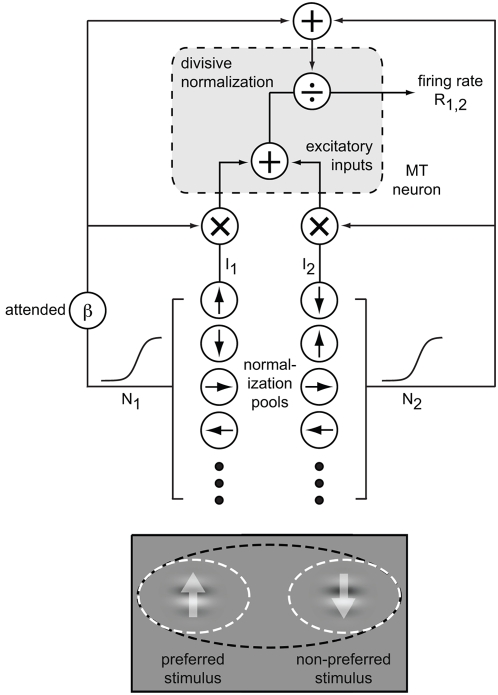
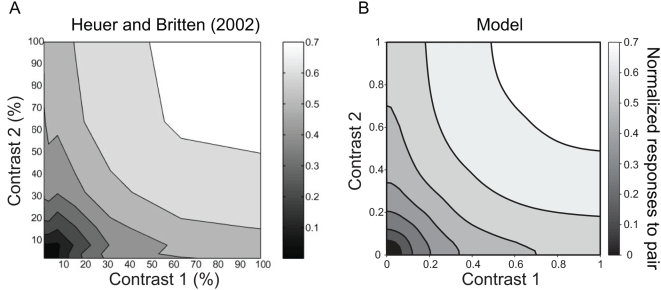
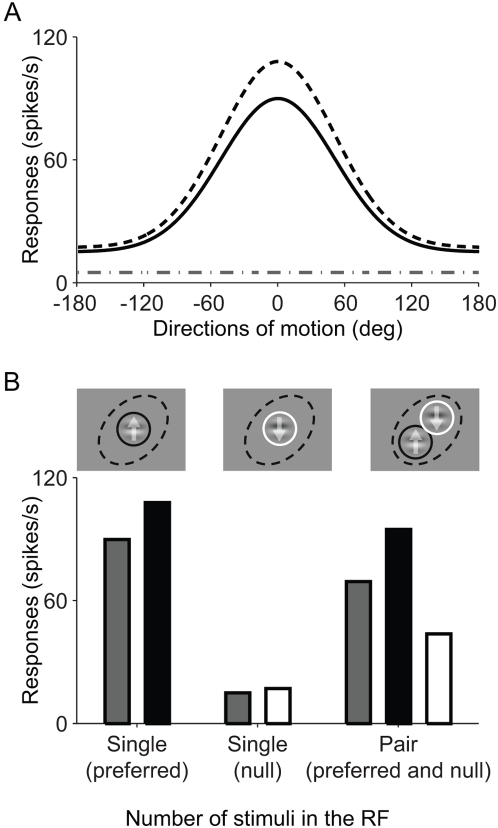
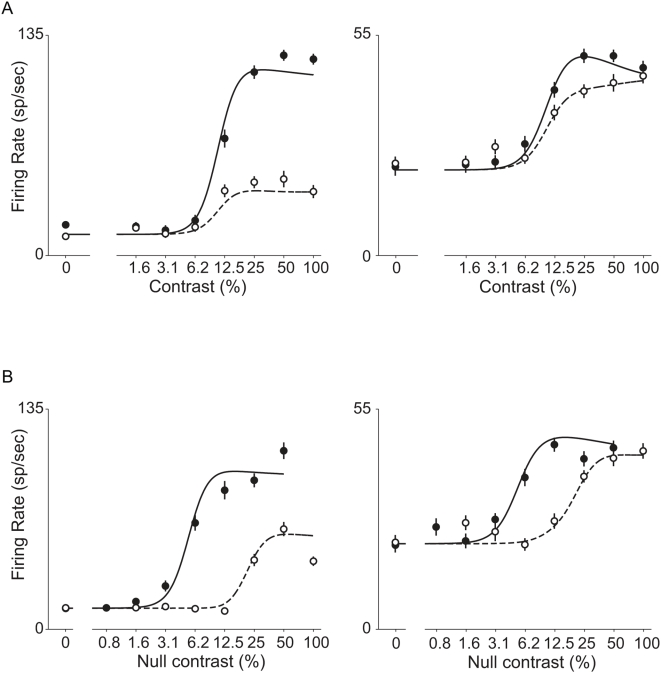
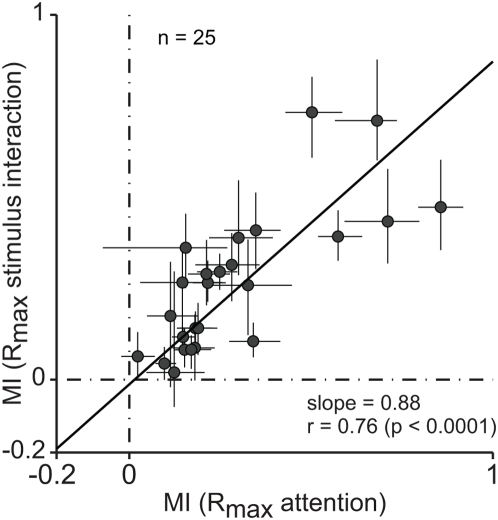
Although many studies have shown that attention to a stimulus can enhance the responses of individual cortical sensory neurons, little is known about how attention accomplishes this change in response. Here, we propose that attention-based changes in neuronal responses depend on the same response normalization mechanism that adjusts sensory responses whenever multiple stimuli are present. We have implemented a model of attention that assumes that attention works only through this normalization mechanism, and show that it can replicate key effects of attention. The model successfully explains how attention changes the gain of responses to individual stimuli and also why modulation by attention is more robust and not a simple gain change when multiple stimuli are present inside a neuron's receptive field. Additionally, the model accounts well for physiological data that measure separately attentional modulation and sensory normalization of the responses of individual neurons in area MT in visual cortex. The proposal that attention works through a normalization mechanism sheds new light a broad range of observations on how attention alters the representation of sensory information in cerebral cortex.
Overview
The claims and statistics of this paper haven’t been checked yet.
Run the check — free, no account needed. It reads the open-access text and checks the sources it cites.
Integrity signals
Registry
Cites
Statistics
Figures
Verification
Claims the paper makes
The claims and statistics of this paper haven’t been checked yet.
Run the check — free, no account needed. It reads the open-access text and checks the sources it cites.
Claims other papers make about this one
Each is checked against this paper’s own text: does it say what the citing paper says it does?
In the citing paper
“Attentional modulation of neural gain has been particularly well studied in the non-human primate visual system1,42,43, in which visual spatial attention within the receptive field of a recorded neuron enhances both contrast gain (that is, scaling of that neuron’s stimulus-response relationship along the contrast axis)43 and response gain (that is, multiplicative transformation of responses to all”
From Mechanisms underlying gain modulation in the cortex (2020) · cites this paper as [46]
Self-check
Percentages, sums and reported differences re-computed from the paper’s own numbers.
The self-check needs the paper’s full text.
Citations
Cites
Neural Mechanisms of Selective Visual Attention
Desimone, R., & Duncan, J. (1995) · Annual Review of Neuroscience · doi:10.1146/annurev.ne.18.030195.001205 · Cited by 8,388
Selective Attention Gates Visual Processing in the Extrastriate Cortex
Moran, J., & Desimone, R. (1985) · Science · doi:10.1126/science.4023713 · Cited by 2,433
Shadlen, M. N., & Newsome, W. T. (1998) · The Journal of Neuroscience · doi:10.1523/jneurosci.18-10-03870.1998 · Cited by 2,178
Selective Attention Gates Visual Processing in the Extrastriate Cortex
Moran, J., & Desimone, R. (2003) · The MIT Press eBooks · doi:10.7551/mitpress/2834.003.0024 · Cited by 2,164
Normalization of cell responses in cat striate cortex
Heeger, D. J. (1992) · Visual Neuroscience · doi:10.1017/s0952523800009640 · Cited by 1,835
Synaptic depression and cortical gain control
Abbott, L. F., Varela, J. A., Sen, K., & Nelson, S. B. (1997) · Science · doi:10.1126/science.275.5297.221 · Cited by 1,690
Neural mechanisms of spatial selective attention in areas V1, V2, and V4 of macaque visual cortex
Luck, S. J., Chelazzi, L., Hillyard, S. A., & Desimone, R. (1997) · Journal of Neurophysiology · doi:10.1152/jn.1997.77.1.24 · Cited by 1,615
The neural bases of momentary lapses in attention
Weissman, D. H., Roberts, K. C., Visscher, K. M., & Woldorff, M. G. (2006) · Nature Neuroscience · doi:10.1038/nn1727 · Cited by 1,566
Feature-based attention influences motion processing gain in macaque visual cortex
Treue, S., & Trujillo, J. C. M. (1999) · Nature · doi:10.1038/21176 · Cited by 1,465
Maunsell, J. H. R., & Essen, D. C. V. (1983) · Journal of Neurophysiology · doi:10.1152/jn.1983.49.5.1127 · Cited by 1,462
Self-citation
Cited by
Sorted by citations
Items 101–200 of 248
Spatially tuned normalization explains attention modulation variance within neurons
Ni, A. M., & Maunsell, J. H. R. (2017) · Journal of Neurophysiology · doi:10.1152/jn.00218.2017 · Cited by 40
Self-citationDependency Reduction with Divisive Normalization: Justification and Effectiveness
Lyu, S. (2011) · Neural Computation · doi:10.1162/neco_a_00197 · Cited by 39
Attentional attraction of receptive fields can explain spatial and temporal effects of attention
Baruch, O., & Yeshurun, Y. (2014) · Visual Cognition · doi:10.1080/13506285.2014.911235 · Cited by 37
Hara, Y., Pestilli, F., & Gardner, J. L. (2014) · Frontiers in Computational Neuroscience · doi:10.3389/fncom.2014.00012 · Cited by 36
Li, K., Kozyrev, V., Kyllingsbæk, S., Treue, S., Ditlevsen, S., & Bundesen, C. (2016) · Frontiers in Computational Neuroscience · doi:10.3389/fncom.2016.00141 · Cited by 35
Coordinated multiplexing of information about separate objects in visual cortex
Jun, N. Y., Ruff, D. A., Kramer, L. E., Bowes, B., Tokdar, S. T., Cohen, M. R., & Groh, J. M. (2022) · eLife · doi:10.7554/elife.76452 · Cited by 31
Input-Gain Control Produces Feature-Specific Surround Suppression
Trott, A., & Born, R. T. (2015) · Journal of Neuroscience · doi:10.1523/jneurosci.4000-14.2015 · Cited by 31
A mechanistic cortical microcircuit of attention for amplification, normalization and suppression
Beuth, F., & Hamker, F. H. (2015) · Vision Research · doi:10.1016/j.visres.2015.04.004 · Cited by 31
A normalization model suggests that attention changes the weighting of inputs between visual areas
Ruff, D. A., & Cohen, M. R. (2017) · Proceedings of the National Academy of Sciences · doi:10.1073/pnas.1619857114 · Cited by 32
Attention Selectively Gates Afferent Signal Transmission to Area V4
Grothe, I., Rotermund, D., Neitzel, S. D., Mandon, S., Ernst, U. A., Kreiter, A. K., & Pawelzik, K. R. (2018) · Journal of Neuroscience · doi:10.1523/jneurosci.2221-17.2018 · Cited by 31
Relating normalization to neuronal populations across cortical areas
Ruff, D. A., Alberts, J. J., & Cohen, M. R. (2016) · Journal of Neurophysiology · doi:10.1152/jn.00017.2016 · Cited by 30
Attention biases preferential choice by enhancing an option’s value.
Pleskac, T. J., Yu, S., Grunevski, S., & Liu, T. (2022) · Journal of Experimental Psychology General · doi:10.1037/xge0001307 · Cited by 24
Attention directed by expectations enhances receptive fields in cortical area MT
Ghose, G. M., & Bearl, D. W. (2009) · Vision Research · doi:10.1016/j.visres.2009.10.003 · Cited by 29
Visual attention and flexible normalization pools
Schwartz, O., & Coen-Cagli, R. (2013) · Journal of Vision · doi:10.1167/13.1.25 · Cited by 29
PM10 concentration forecast using modified depth-first search and supervised learning neural network
Photphanloet, C., & Lipikorn, R. (2020) · The Science of The Total Environment · doi:10.1016/j.scitotenv.2020.138507 · Cited by 31
Strategic deployment of feature-based attentional gain in primate visual cortex
Kozyrev, V., Daliri, M. R., Schwedhelm, P., & Treue, S. (2019) · PLoS Biology · doi:10.1371/journal.pbio.3000387 · Cited by 27
Dissociating activity in the lateral intraparietal area from value using a visual foraging task
Mirpour, K., & Bisley, J. W. (2012) · Proceedings of the National Academy of Sciences · doi:10.1073/pnas.1120763109 · Cited by 29
Muscarinic and Nicotinic Contribution to Contrast Sensitivity of Macaque Area V1 Neurons
Herrero, J. L., Gieselmann, M. A., & Thiele, A. (2017) · Frontiers in Neural Circuits · doi:10.3389/fncir.2017.00106 · Cited by 25
Adaptation in the visual system: Networked fatigue or suppressed prediction error signalling?
Feuerriegel, D. (2024) · Cortex · doi:10.1016/j.cortex.2024.06.003 · Cited by 25
Grossberg, S., Srinivasan, K., & Yazdanbakhsh, A. (2015) · Frontiers in Psychology · doi:10.3389/fpsyg.2014.01457 · Cited by 25
Deconstructing Interocular Suppression: Attention and Divisive Normalization
Li, H.-H., Carrasco, M., & Heeger, D. J. (2015) · PLoS Computational Biology · doi:10.1371/journal.pcbi.1004510 · Cited by 27
Selective Tuning for Contrast in Macaque Area V4
Sani, I., Santandrea, E., Golzar, A., Morrone, M. C., & Chelazzi, L. (2013) · Journal of Neuroscience · doi:10.1523/jneurosci.3465-13.2013 · Cited by 25
Smith, P. L., Sewell, D. K., & Lilburn, S. D. (2014) · Vision Research · doi:10.1016/j.visres.2014.11.001 · Cited by 25
Limits in feature-based attention to multiple colors
Liu, T., & Jigo, M. (2017) · Attention Perception & Psychophysics · doi:10.3758/s13414-017-1390-x · Cited by 23
Schwedhelm, P., Krishna, B. S., & Treue, S. (2016) · PLoS Computational Biology · doi:10.1371/journal.pcbi.1005225 · Cited by 26
A single functional model of drivers and modulators in cortex
Spratling, M. (2013) · Journal of Computational Neuroscience · doi:10.1007/s10827-013-0471-7 · Cited by 22
It takes two to tango: Suppression of task-irrelevant features requires (spatial) competition
Müller, M. M., Gundlach, C., Forschack, N., & Brummerloh, B. (2018) · NeuroImage · doi:10.1016/j.neuroimage.2018.05.073 · Cited by 22
Cholinergic Modulation Promotes Attentional Modulation in Primary Visual Cortex- A Modeling Study
Sajedin, A., Menhaj, M. B., Vahabie, A., Panzeri, S., & Esteky, H. (2019) · Scientific Reports · doi:10.1038/s41598-019-56608-3 · Cited by 22
Attentional Modulation and Selection – An Integrated Approach
Rothenstein, A. L., & Tsotsos, J. K. (2014) · PLoS ONE · doi:10.1371/journal.pone.0099681 · Cited by 22
Probing mechanisms of visual spatial attention in mice
Speed, A., & Haider, B. (2021) · Trends in Neurosciences · doi:10.1016/j.tins.2021.07.009 · Cited by 22
Montijn, J. S., Klink, P. C., & Wezel, R. J. A. V. (2012) · Frontiers in Neural Circuits · doi:10.3389/fncir.2012.00022 · Cited by 21
Miconi, T., & VanRullen, R. (2016) · PLoS Computational Biology · doi:10.1371/journal.pcbi.1004770 · Cited by 24
Attention operates uniformly throughout the classical receptive field and the surround
Verhoef, B.-E., & Maunsell, J. H. R. (2016) · eLife · doi:10.7554/elife.17256 · Cited by 21
Self-citationItthipuripat, S., Chang, K.-Y., Bong, A., & Serences, J. T. (2019) · Journal of Vision · doi:10.1167/19.14.8 · Cited by 21
Top–Down Attention Is Limited Within but Not Between Feature Dimensions
Adamian, N., Slaustaite, E., & Andersen, . K. (2019) · Journal of Cognitive Neuroscience · doi:10.1162/jocn_a_01383 · Cited by 20
Auditory-Cortex Short-Term Plasticity Induced by Selective Attention
Jääskeläinen, I. P., & Ahveninen, J. (2014) · Neural Plasticity · doi:10.1155/2014/216731 · Cited by 20
Attention and normalization circuits in macaque V1
Sanayei, M., Herrero, J. L., Distler, C., & Thiele, A. (2015) · European Journal of Neuroscience · doi:10.1111/ejn.12857 · Cited by 19
A role for ocular dominance in binocular integration
Mitchell, B., Carlson, B. M., Westerberg, J. A., Cox, M. A., & Maier, A. (2023) · Current Biology · doi:10.1016/j.cub.2023.08.019 · Cited by 20
Spatial summation in macaque parietal area 7a follows a winner-take-all rule
Oleksiak, A., Klink, P. C., Postma, A., van der Ham, I. J. M., Lankheet, M. J., & Wezel, R. J. A. V. (2010) · Journal of Neurophysiology · doi:10.1152/jn.00907.2010 · Cited by 19
Low rank mechanisms underlying flexible visual representations
Ruff, D. A., Xue, C., Kramer, L. E., Baqai, F., & Cohen, M. R. (2020) · Proceedings of the National Academy of Sciences · doi:10.1073/pnas.2005797117 · Cited by 20
Kanamaru, T., & Aihara, K. (2019) · PLoS ONE · doi:10.1371/journal.pone.0223592 · Cited by 18
Xiao, J., Niu, Y., Wiesner, S., & Huang, X. (2014) · Journal of Neurophysiology · doi:10.1152/jn.00700.2013 · Cited by 18
A Focus on Selection for Fixation
Tsotsos, J. K., Kotseruba, I., & Wloka, C. (2016) · Journal of Eye Movement Research · doi:10.16910/jemr.9.5.2 · Cited by 18
Adamian, N., & Andersen, . K. (2023) · Journal of Cognitive Neuroscience · doi:10.1162/jocn_a_02070 · Cited by 17
Feuerriegel, D., Keage, H. A. D., Rossion, B., & Quek, G. L. (2018) · Biological Psychology · doi:10.1016/j.biopsycho.2018.09.002 · Cited by 17
On the connections between saliency and tracking
Mahadevan, V., & Vasconcelos, N. M. (2014) · Cited by 17
Temporal Contingencies Determine Whether Adaptation Strengthens or Weakens Normalization
Aschner, A., Solomon, S. G., Landy, M. S., Heeger, D. J., & Kohn, A. (2018) · Journal of Neuroscience · doi:10.1523/jneurosci.1131-18.2018 · Cited by 17
Temporally evolving gain mechanisms of attention in macaque area V4
Sani, I., Santandrea, E., Morrone, M. C., & Chelazzi, L. (2017) · Journal of Neurophysiology · doi:10.1152/jn.00522.2016 · Cited by 16
A Normalization Circuit Underlying Coding of Spatial Attention in Primate Lateral Prefrontal Cortex
Duong, L., Leavitt, M. L., Pieper, F., Sachs, A. J., & Martínez-Trujillo, J. (2019) · eNeuro · doi:10.1523/eneuro.0301-18.2019 · Cited by 15
Integrating Levels of Analysis in Systems and Cognitive Neurosciences
Itthipuripat, S., & Serences, J. T. (2015) · The Neuroscientist · doi:10.1177/1073858415603312 · Cited by 17
Attentional effect on contrast appearance: From enhancement to attenuation.
Zhou, L.-F., Buetti, S., Lu, S., & Cai, Y. (2017) · Journal of Experimental Psychology Human Perception & Performance · doi:10.1037/xhp0000499 · Cited by 15
Kauramäki, J., Jääskeläinen, I. P., Hänninen, J. L., Auranen, T., Nummenmaa, A. R., Lampinen, J., & Sams, M. E. (2012) · PLoS ONE · doi:10.1371/journal.pone.0046872 · Cited by 14
Attention does more than modulate suppressive interactions: attending to multiple items
Scalf, P. E., Basak, C., & Beck, D. M. (2011) · Experimental Brain Research · doi:10.1007/s00221-011-2730-z · Cited by 14
Using spatial uncertainty to manipulate the size of the attention focus
Huang, D., Xue, L., Wang, X., & Chen, Y. (2016) · Scientific Reports · doi:10.1038/srep32364 · Cited by 13
Perceptual Difficulty Regulates Attentional Gain Modulations in Human Visual Cortex
Sawetsuttipan, P., Phunchongharn, P., Ounjai, K., Salazar, A., Pongsuwan, S., Intrachooto, S., Serences, J. T., & Itthipuripat, S. (2023) · Journal of Neuroscience · doi:10.1523/jneurosci.0519-22.2023 · Cited by 13
Itthipuripat, S., Phangwiwat, T., Wiwatphonthana, P., Sawetsuttipan, P., Chang, K.-Y., Störmer, V. S., Woodman, G. F., & Serences, J. T. (2023) · Journal of Neuroscience · doi:10.1523/jneurosci.2192-22.2023 · Cited by 13
Control Principles of Neural Dynamics Revealed by the Neurobiology of Timing
Stine, G. M., & Jazayeri, M. (2025) · Annual Review of Neuroscience · doi:10.1146/annurev-neuro-091724-015512 · Cited by 12
Navigating the Statistical Minefield of Model Selection and Clustering in Neuroscience
Király, B., & Hangya, B. (2022) · eNeuro · doi:10.1523/eneuro.0066-22.2022 · Cited by 12
Xiao-gang, W., Wang, A., & Zhang, M. (2021) · Quarterly Journal of Experimental Psychology · doi:10.1177/17470218211024829 · Cited by 10
Drebitz, E., Rausch, L.-P., & Kreiter, A. K. (2025) · Nature Communications · doi:10.1038/s41467-025-62732-8 · Cited by 10
Awareness-Dependent Normalization Framework of Visual Bottom-up Attention
Wang, S., Huang, L., Chen, Q., Wang, J., Xu, S., & Zhang, X. (2021) · Journal of Neuroscience · doi:10.1523/jneurosci.1110-21.2021 · Cited by 10
Temporal attention affects contrast response function by response gain
Jing, C., Jin, H., Li, W., Wu, Z., Chen, Y., & Huang, D. (2023) · Frontiers in Human Neuroscience · doi:10.3389/fnhum.2022.1020260 · Cited by 10
The normalization model predicts responses in the human visual cortex during object-based attention
Doostani, N., Hossein‐Zadeh, G., & Vaziri-Pashkam, M. (2023) · eLife · doi:10.7554/elife.75726 · Cited by 10
Erez, Y., Kadohisa, M., Petrov, P., Sigala, N., Buckley, M. J., Kusunoki, M., & Duncan, J. (2022) · European Journal of Neuroscience · doi:10.1111/ejn.15757 · Cited by 9
A dynamic normalization model of temporal attentionPreprint
Denison, R. N., Carrasco, M., & Heeger, D. J. (2019) · bioRxiv (Cold Spring Harbor Laboratory) · doi:10.1101/2019.12.21.886051 · Cited by 9
Reward-Related Suppression of Neural Activity in Macaque Visual Area V4
Shapcott, K. A., Schmiedt, J. T., Kouroupaki, K., Kienitz, R., Lazăr, A., Singer, W., & Schmid, M. C. (2020) · Cerebral Cortex · doi:10.1093/cercor/bhaa079 · Cited by 8
Flexible top-down modulation in human ventral temporal cortex
Zhang, R., & Kay, K. (2020) · NeuroImage · doi:10.1016/j.neuroimage.2020.116964 · Cited by 8
A unified circuit model of attention: Neural and behavioral effectsPreprint
Lindsay, G. W., Rubin, D. B., & Miller, K. D. (2019) · bioRxiv (Cold Spring Harbor Laboratory) · doi:10.1101/2019.12.13.875534 · Cited by 8
Sustained attention operates via dissociable neural mechanisms across different eccentric locations
Phangwiwat, T., Phunchongharn, P., Wongsawat, Y., Chatnuntawech, I., Wang, S., Chunharas, C., Sprague, T. C., Woodman, G. F., & Itthipuripat, S. (2024) · Scientific Reports · doi:10.1038/s41598-024-61171-7 · Cited by 7
Behavioral and ERP evidence that object-based attention utilizes fine-grained spatial mechanisms
Çatak, E. N., Özkan, M., Kafalıgönül, H., & Stoner, G. R. (2022) · Cortex · doi:10.1016/j.cortex.2022.02.013 · Cited by 7
Treue, S., & Martínez-Trujillo, J. (2012) · e-Neuroforum · doi:10.1007/s13295-012-0034-9 · Cited by 7
Daliri, M. R., Kozyrev, V., & Treue, S. (2016) · Scientific Reports · doi:10.1038/srep27666 · Cited by 7
Feuerriegel, D., Churches, O. F., Coussens, S. W., & Keage, H. A. D. (2018) · Neuropsychologia · doi:10.1016/j.neuropsychologia.2018.11.010 · Cited by 7
Synchrony, flexible network configuration, and linking neural events to behavior
Kreiter, A. K. (2020) · Current Opinion in Physiology · doi:10.1016/j.cophys.2020.08.008 · Cited by 7
Cholinergic manipulations affect sensory responses but not attentional enhancement in macaque MT
Veith, V. K., Quigley, C., & Treue, S. (2021) · BMC Biology · doi:10.1186/s12915-021-00993-7 · Cited by 7
Contrast Dependence of Smooth Pursuit Eye Movements following a Saccade to Superimposed Targets
Fallah, M., & Reynolds, J. H. (2012) · PLoS ONE · doi:10.1371/journal.pone.0037888 · Cited by 7
Feature-based attention processes in primate prefrontal cortex do not rely on feature similarity
Stalter, M., Westendorff, S., & Nieder, A. (2021) · Cell Reports · doi:10.1016/j.celrep.2021.109470 · Cited by 6
Dynamic NormalizationPreprint
Heeger, D. J., & Zemlianova, K. O. (2020) · bioRxiv (Cold Spring Harbor Laboratory) · doi:10.1101/2020.03.22.002634 · Cited by 6
Nobre, A. C. (2018) · Wiley eBooks · doi:10.1002/9781119170174.epcn206 · Cited by 8
Rosenthal, I. A., Bashford, L., Bjånes, D. A., Pejsa, K., Lee, B., Liu, C. Y., & Andersen, R. A. (2025) · Journal of Neurophysiology · doi:10.1152/jn.00518.2024 · Cited by 5
Are neuronal mechanisms of attention universal across human sensory and motor brain maps?
DeYoe, E. A., Huddleston, W. E., & Greenberg, A. S. (2024) · Psychonomic Bulletin & Review · doi:10.3758/s13423-024-02495-3 · Cited by 5
Unconditional stability of a recurrent neural circuit implementing divisive normalization
Rawat, S., Heeger, D. J., & Martiniani, S. (2024) · neural information processing systems · doi:10.52202/079017-0470 · Cited by 7
Normalizing population receptive fields
Foster, J. J., & Ling, S. (2021) · Proceedings of the National Academy of Sciences · doi:10.1073/pnas.2118367118 · Cited by 5
Jeong, W., Kim, S., Park, J., & Lee, J. (2023) · Communications Biology · doi:10.1038/s42003-023-04481-2 · Cited by 4
Self-citationAttention as Reward-Driven Optimization of Sensory Processing
Chalk, M., Murray, I., & Seriès, P. (2013) · Neural Computation · doi:10.1162/neco_a_00494 · Cited by 4
Spatial Scaling of the Profile of Selective Attention in the Visual Field
Gannon, M. A., Knapp, A. A., Adams, T. G., Long, S. M., & Parks, N. A. (2016) · PLoS ONE · doi:10.1371/journal.pone.0162190 · Cited by 4
Moore, B., Khang, S., & Francis, J. T. (2020) · Frontiers in Behavioral Neuroscience · doi:10.3389/fnbeh.2020.541920 · Cited by 5
Behavioral engagement facilitates auditory neuron responses beyond their receptive fields
Chen, C., Remington, E. D., & Wang, X. (2026) · PLoS Biology · doi:10.1371/journal.pbio.3003707 · Cited by 3
Normalization in mouse primary visual cortex
Zayyad, Z., Maunsell, J. H. R., & MacLean, J. N. (2023) · PLoS ONE · doi:10.1371/journal.pone.0295140 · Cited by 3
Self-citationPerceptual consequence of normalization revealed by a novel brightness induction
Hong, S. W., & Kang, M.-S. (2013) · Vision Research · doi:10.1016/j.visres.2013.08.002 · Cited by 3
Biologically-Inspired Models for Attentive Robot Vision
Jamalian, A., & Hamker, F. H. (2015) · Advances in computational intelligence and robotics book series · doi:10.4018/978-1-4666-8723-3.ch003 · Cited by 3
Spatial Distribution of Attentional Modulation at Columnar Resolution in Macaque Area V4
Tanigawa, H., Chen, G., & Roe, A. W. (2016) · Frontiers in Neural Circuits · doi:10.3389/fncir.2016.00102 · Cited by 3
Chakrala, A. S., Xiao, J., & Huang, X. (2023) · bioRxiv (Cold Spring Harbor Laboratory) · doi:10.1101/2023.06.25.546480 · Cited by 4
Attentional Top-Down Modulation, Models of
Schwedhelm, P., & Treue, S. (2015) · Springer eBooks · doi:10.1007/978-1-4614-6675-8_566 · Cited by 3
hMT+ activity predicts the effect of spatial attention on surround suppression
Kınıklıoğlu, M., & Boyacı, H. (2025) · Journal of Vision · doi:10.1167/jov.25.4.12 · Cited by 2
Overview of visual system structure and function
Price, N. S. C. (2013) · Advances in consciousness research · doi:10.1075/aicr.90.03pri · Cited by 2
Neuronal heterogeneity of normalization strength in a circuit model
Song, D., Ruff, D. A., Cohen, M. R., & Huang, C. (2026) · Science Advances · doi:10.1101/2024.11.22.624903 · Cited by 3
Attention preserves the selectivity of feature-tuned normalization
Klímová, M., Bloem, I. M., & Ling, S. (2023) · Journal of Neurophysiology · doi:10.1152/jn.00194.2023 · Cited by 2
Responses of Leaky Integrate-and-Fire Neurons to a Plurality of Stimuli in Their Receptive Fields
Li, K., Bundesen, C., & Ditlevsen, S. (2016) · The Journal of Mathematical Neuroscience · doi:10.1186/s13408-016-0040-2 · Cited by 2
Das, A., & Ray, S. (2021) · Cerebral Cortex Communications · doi:10.1093/texcom/tgab009 · Cited by 2
Metadata
- Authors
- Lee, J., & Maunsell, J. H. R.
- Affiliations
- Baylor College of Medicine (US)
- Howard Hughes Medical Institute (US)
- Corresponding author
- Maunsell, John H. R.
- Venue
- PLoS ONE
- Publisher
- Public Library of Science (PLoS)
- Published
- 2009-02-27
- Volume
- 4
- Issue
- 2
- Pages
- e4651
- ISSN
- 1932-6203 (ISSN-L)
- PMC
- PMC2645695
- OpenAlex
- W2163588736
- Cited by
- 257
- References
- 51
- Citations by year
- 2026: 3 · 2025: 10 · 2024: 6 · 2023: 27 · 2022: 10 · 2021: 14 · 2020: 11 · 2019: 18 · 2018: 13 · 2017: 13 · 2016: 18 · 2015: 18 · 2014: 20 · 2013: 18 · 2012: 17
- FWCI
- 9.09
- Type
- journal article
- Language
- en
- Open access
- gold
- doi.org
- Locations
- PLoS ONE (publishedVersion, cc-by)
- PubMed Central (publishedVersion, cc-by)
- PubMed (publishedVersion)
- Digital Access to Scholarship at Harvard (DASH) (Harvard University) (submittedVersion, cc-by)
- RePEc: Research Papers in Economics (submittedVersion)
- DOAJ (DOAJ: Directory of Open Access Journals) (submittedVersion)
- Funders
- Howard Hughes Medical Institute
- National Institutes of Health
- National Eye Institute (R01EY005911)
- Topics
- Life Sciences › Neuroscience › Cognitive Neuroscience › Visual perception and processing mechanisms
- Physical Sciences › Computer Science › Computer Vision and Pattern Recognition › Visual Attention and Saliency Detection
- Life Sciences › Neuroscience › Cognitive Neuroscience › Neural dynamics and brain function
- Keywords
- attentional modulation, single-unit responses, gain modulation, multiple stimuli, receptive fields, area MT, visual cortex, computational model of attention, neuronal gain
- MeSH terms
- Attention, Cerebral Cortex, Humans, Models, Theoretical
About these checks
Registry, retraction, Cites and statistics results are computed, not judged, with one exception: a printed reference that no index lists is read once by a model before it counts as a citation error. Claims are extracted by a model and kept only when their quote appears verbatim in the text; each cited source is then checked, with a model’s help, for whether it says what the claim relies on. Those verdicts can be wrong — read the claim’s quote and the cited source before relying on one.
Statistics and arithmetic are recomputed, not judged.
Confidence bands are shown only for fields calibrated on our annotated test set. None is calibrated yet, so no band is shown.
What counts as a claim ›How we measure confidence ›How we check this ›
Are you an author, or do you see a problem with this page? Request a review
