

The DOI matches its Crossref record; 51 of the 51 references it cites were found in a registry or an index.
A Normalization Model of Attentional Modulation of Single Unit Responses
Open accessAbstract
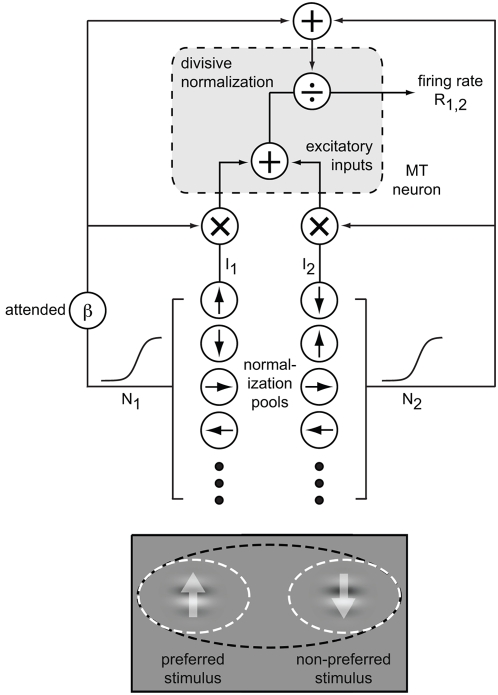
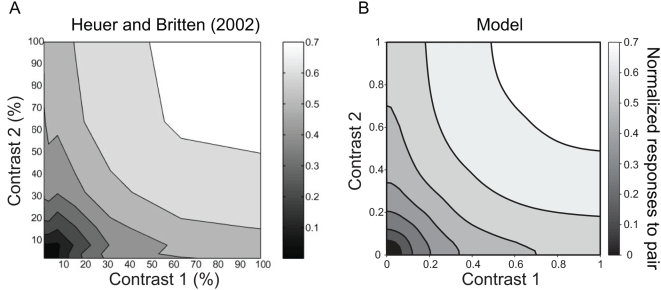
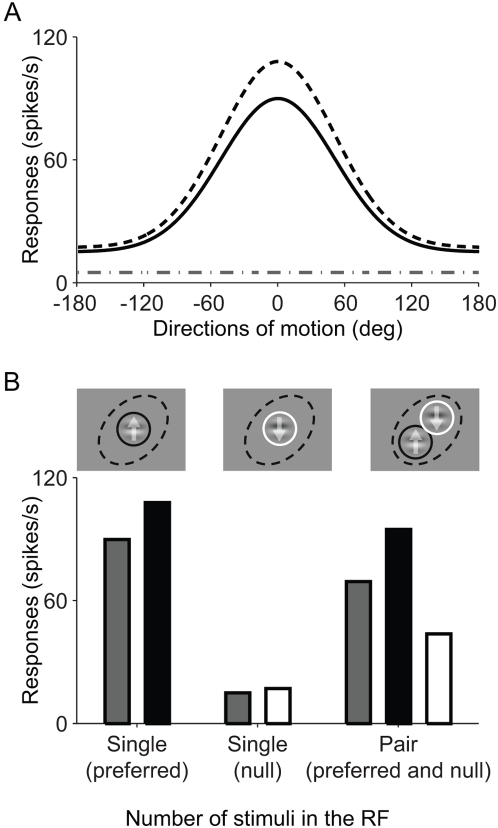
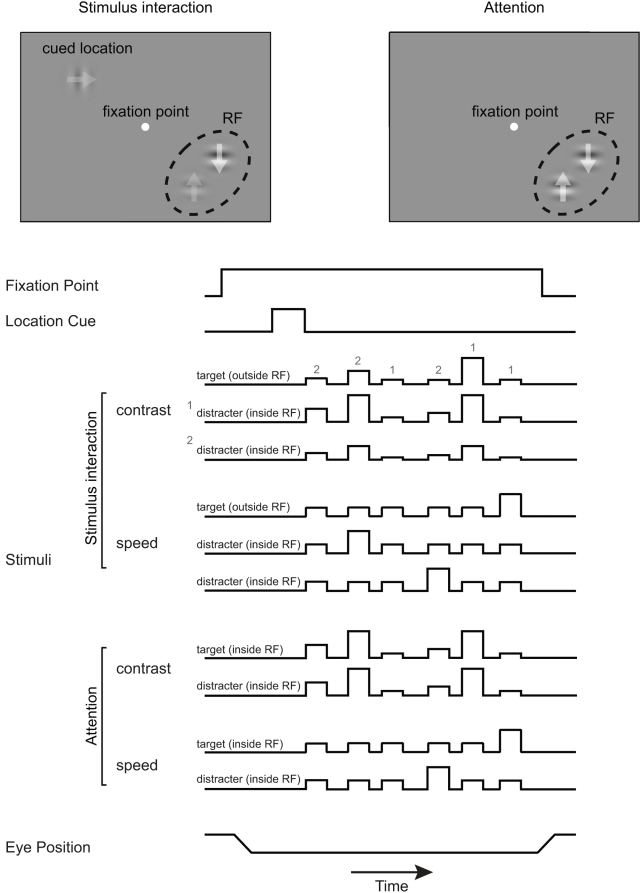
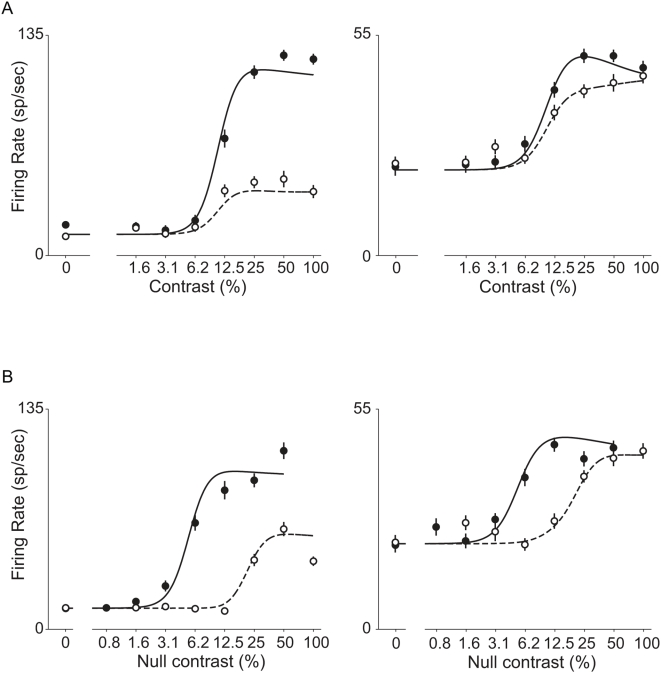
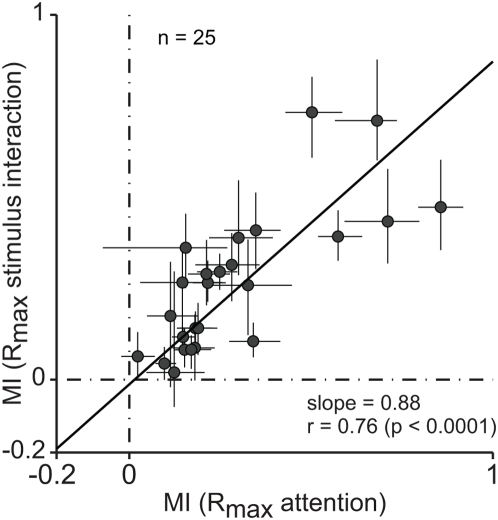
Although many studies have shown that attention to a stimulus can enhance the responses of individual cortical sensory neurons, little is known about how attention accomplishes this change in response. Here, we propose that attention-based changes in neuronal responses depend on the same response normalization mechanism that adjusts sensory responses whenever multiple stimuli are present. We have implemented a model of attention that assumes that attention works only through this normalization mechanism, and show that it can replicate key effects of attention. The model successfully explains how attention changes the gain of responses to individual stimuli and also why modulation by attention is more robust and not a simple gain change when multiple stimuli are present inside a neuron's receptive field. Additionally, the model accounts well for physiological data that measure separately attentional modulation and sensory normalization of the responses of individual neurons in area MT in visual cortex. The proposal that attention works through a normalization mechanism sheds new light a broad range of observations on how attention alters the representation of sensory information in cerebral cortex.
Overview
The claims and statistics of this paper haven’t been checked yet.
Run the check — free, no account needed. It reads the open-access text and checks the sources it cites.
Integrity signals
Registry
Cites
Statistics
Figures
Verification
Claims the paper makes
The claims and statistics of this paper haven’t been checked yet.
Run the check — free, no account needed. It reads the open-access text and checks the sources it cites.
Claims other papers make about this one
Each is checked against this paper’s own text: does it say what the citing paper says it does?
In the citing paper
“Attentional modulation of neural gain has been particularly well studied in the non-human primate visual system1,42,43, in which visual spatial attention within the receptive field of a recorded neuron enhances both contrast gain (that is, scaling of that neuron’s stimulus-response relationship along the contrast axis)43 and response gain (that is, multiplicative transformation of responses to all”
From Mechanisms underlying gain modulation in the cortex (2020) · cites this paper as [46]
Self-check
Percentages, sums and reported differences re-computed from the paper’s own numbers.
The self-check needs the paper’s full text.
Citations
Cites
Neural Mechanisms of Selective Visual Attention
Desimone, R., & Duncan, J. (1995) · Annual Review of Neuroscience · doi:10.1146/annurev.ne.18.030195.001205 · Cited by 8,388
Selective Attention Gates Visual Processing in the Extrastriate Cortex
Moran, J., & Desimone, R. (1985) · Science · doi:10.1126/science.4023713 · Cited by 2,433
Shadlen, M. N., & Newsome, W. T. (1998) · The Journal of Neuroscience · doi:10.1523/jneurosci.18-10-03870.1998 · Cited by 2,178
Selective Attention Gates Visual Processing in the Extrastriate Cortex
Moran, J., & Desimone, R. (2003) · The MIT Press eBooks · doi:10.7551/mitpress/2834.003.0024 · Cited by 2,164
Normalization of cell responses in cat striate cortex
Heeger, D. J. (1992) · Visual Neuroscience · doi:10.1017/s0952523800009640 · Cited by 1,835
Synaptic depression and cortical gain control
Abbott, L. F., Varela, J. A., Sen, K., & Nelson, S. B. (1997) · Science · doi:10.1126/science.275.5297.221 · Cited by 1,690
Neural mechanisms of spatial selective attention in areas V1, V2, and V4 of macaque visual cortex
Luck, S. J., Chelazzi, L., Hillyard, S. A., & Desimone, R. (1997) · Journal of Neurophysiology · doi:10.1152/jn.1997.77.1.24 · Cited by 1,615
The neural bases of momentary lapses in attention
Weissman, D. H., Roberts, K. C., Visscher, K. M., & Woldorff, M. G. (2006) · Nature Neuroscience · doi:10.1038/nn1727 · Cited by 1,566
Feature-based attention influences motion processing gain in macaque visual cortex
Treue, S., & Trujillo, J. C. M. (1999) · Nature · doi:10.1038/21176 · Cited by 1,465
Maunsell, J. H. R., & Essen, D. C. V. (1983) · Journal of Neurophysiology · doi:10.1152/jn.1983.49.5.1127 · Cited by 1,462
Self-citation
Cited by
Sorted by citations
Visual attention: The past 25 years
Carrasco, M. (2011) · Vision Research · doi:10.1016/j.visres.2011.04.012 · Cited by 2,660
Top-down influences on visual processing
Gilbert, C. D., & Li, W. (2013) · Nature Reviews Neuroscience · doi:10.1038/nrn3476 · Cited by 1,224
Attention improves performance primarily by reducing interneuronal correlations
Cohen, M. R., & Maunsell, J. H. R. (2009) · Nature Neuroscience · doi:10.1038/nn.2439 · Cited by 1,163
Self-citationSpatial attention decorrelates intrinsic activity fluctuations in macaque area V4
Mitchell, J. F., Sundberg, K. A., & Reynolds, J. H. (2009) · Neuron · doi:10.1016/j.neuron.2009.09.013 · Cited by 710
Divisive Normalization in Olfactory Population Codes
Olsen, S. R., Bhandawat, V., & Wilson, R. I. (2010) · Neuron · doi:10.1016/j.neuron.2010.04.009 · Cited by 500
Neural mechanisms of selective visual attention.
Moore, T., & Zirnsak, M. (2017) · Annual Review of Psychology · doi:10.1146/annurev-psych-122414-033400 · Cited by 471
Rapid Neocortical Dynamics: Cellular and Network Mechanisms
Haider, B., & McCormick, D. A. (2009) · Neuron · doi:10.1016/j.neuron.2009.04.008 · Cited by 441
Sound-Driven Synaptic Inhibition in Primary Visual Cortex
Iurilli, G., Ghezzi, D., Olcese, U., Lassi, G., Nazzaro, C., Tonini, R., Tucci, V., Benfenati, F., & Medini, P. (2012) · Neuron · doi:10.1016/j.neuron.2011.12.026 · Cited by 424
Thiele, A., & Bellgrove, M. A. (2018) · Neuron · doi:10.1016/j.neuron.2018.01.008 · Cited by 350
Neuronal Mechanisms of Visual Attention
Maunsell, J. H. R. (2015) · Annual Review of Vision Science · doi:10.1146/annurev-vision-082114-035431 · Cited by 346
Self-citationWhen size matters: attention affects performance by contrast or response gain
Herrmann, K., Montaser‐Kouhsari, L., Carrasco, M., & Heeger, D. J. (2010) · Nature Neuroscience · doi:10.1038/nn.2669 · Cited by 336
Circuits for Action and Cognition: A View from the Superior Colliculus
Basso, M. A., & May, P. J. (2017) · Annual Review of Vision Science · doi:10.1146/annurev-vision-102016-061234 · Cited by 347
Mechanisms underlying gain modulation in the cortex
Ferguson, K. A., & Cardin, J. A. (2020) · Nature Reviews Neuroscience · doi:10.1038/s41583-019-0253-y · Cited by 327
Attention Reduces Stimulus-Driven Gamma Frequency Oscillations and Spike Field Coherence in V1
Chalk, M., Herrero, J. L., Gieselmann, M. A., Delicato, L. S., Gotthardt, S., & Thiele, A. (2010) · Neuron · doi:10.1016/j.neuron.2010.03.013 · Cited by 287
Do gamma oscillations play a role in cerebral cortex?
Ray, S., & Maunsell, J. H. R. (2014) · Trends in Cognitive Sciences · doi:10.1016/j.tics.2014.12.002 · Cited by 272
Self-citationMoving Sensory Adaptation beyond Suppressive Effects in Single Neurons
Solomon, S. G., & Kohn, A. (2014) · Current Biology · doi:10.1016/j.cub.2014.09.001 · Cited by 247
The neural basis of visual attention
Bisley, J. W. (2011) · Journal of Physiology · doi:10.1113/jphysiol.2010.192666 · Cited by 232
Using Neuronal Populations to Study the Mechanisms Underlying Spatial and Feature Attention
Cohen, M. R., & Maunsell, J. H. R. (2011) · Neuron · doi:10.1016/j.neuron.2011.04.029 · Cited by 223
Self-citationAttention stabilizes the shared gain of V4 populations
Rabinowitz, N. C., Goris, R. L., Cohen, M., & Simoncelli, E. P. (2015) · eLife · doi:10.7554/elife.08998 · Cited by 194
A Neuronal Population Measure of Attention Predicts Behavioral Performance on Individual Trials
Cohen, M. R., & Maunsell, J. H. R. (2010) · Journal of Neuroscience · doi:10.1523/jneurosci.2171-10.2010 · Cited by 181
Self-citationNath, A. R., & Beauchamp, M. S. (2011) · Journal of Neuroscience · doi:10.1523/jneurosci.4853-10.2011 · Cited by 169
Object decoding with attention in inferior temporal cortex
Zhang, Y., Meyers, E. M., Bichot, N. P., Serre, T., Poggio, T., & Desimone, R. (2011) · Proceedings of the National Academy of Sciences · doi:10.1073/pnas.1100999108 · Cited by 141
Wu, W. (2023) · doi:10.1093/oso/9780192866899.001.0001 · Cited by 134
Canonical computations of cerebral cortex
Miller, K. D. (2016) · Current Opinion in Neurobiology · doi:10.1016/j.conb.2016.01.008 · Cited by 136
Cortical gamma oscillations: the functional key is activation, not cognition
Merker, B. H. (2013) · Neuroscience & Biobehavioral Reviews · doi:10.1016/j.neubiorev.2013.01.013 · Cited by 136
A shared inhibitory circuit for both exogenous and endogenous control of stimulus selection
Mysore, S. P., & Knudsen, E. I. (2013) · Nature Neuroscience · doi:10.1038/nn.3352 · Cited by 131
Montijn, J. S., Meijer, G. T., Lansink, C. S., & Pennartz, C. M. A. (2016) · Cell Reports · doi:10.1016/j.celrep.2016.07.065 · Cited by 126
Attention Is Amplification, Not Selection
Fazekas, P., & Nánay, B. (2018) · The British Journal for the Philosophy of Science · doi:10.1093/bjps/axy065 · Cited by 124
A neural mechanism underlying failure of optimal choice with multiple alternatives
Chau, B. K. H., Kolling, N., Hunt, L. T., Walton, M. E., & Rushworth, M. F. S. (2014) · Nature Neuroscience · doi:10.1038/nn.3649 · Cited by 128
Attention-driven auditory cortex short-term plasticity helps segregate relevant sounds from noise
Ahveninen, J., Hämäläinen, M., Jääskeläinen, I. P., Ahlfors, S. P., Huang, S., Lin, F., Raij, T., Sams, M. E., Vasios, C. E., & Belliveau, J. W. (2011) · Proceedings of the National Academy of Sciences · doi:10.1073/pnas.1016134108 · Cited by 111
Spatial attention increases the pupillary response to light changes
Binda, P., & Murray, S. O. (2015) · Journal of Vision · doi:10.1167/15.2.1 · Cited by 109
Tuned Normalization Explains the Size of Attention Modulations
Ni, A. M., Ray, S., & Maunsell, J. H. R. (2012) · Neuron · doi:10.1016/j.neuron.2012.01.006 · Cited by 109
Self-citationOptimal Deployment of Attentional Gain during Fine Discriminations
Scolari, M., Byers, A., & Serences, J. T. (2012) · Journal of Neuroscience · doi:10.1523/jneurosci.5558-11.2012 · Cited by 106
On event-based optical flow detection
Brosch, T., Tschechne, S., & Heiko Neumann, B. (2015) · Frontiers in Neuroscience · doi:10.3389/fnins.2015.00137 · Cited by 100
Attentional Modulation of MT Neurons with Single or Multiple Stimuli in Their Receptive Fields
Lee, J., & Maunsell, J. H. R. (2010) · Journal of Neuroscience · doi:10.1523/jneurosci.3766-09.2010 · Cited by 99
Self-citationOptogenetic Activation of Normalization in Alert Macaque Visual Cortex
Nassi, J. J., Avery, M. C., Cetin, A. H., Roe, A. W., & Reynolds, J. H. (2015) · Neuron · doi:10.1016/j.neuron.2015.05.040 · Cited by 100
Montijn, J. S., Vinck, M. A., & Pennartz, C. M. A. (2014) · Frontiers in Computational Neuroscience · doi:10.3389/fncom.2014.00058 · Cited by 92
Neural Circuits That Mediate Selective Attention: A Comparative Perspective
Knudsen, E. I. (2018) · Trends in Neurosciences · doi:10.1016/j.tins.2018.06.006 · Cited by 98
Changing the Spatial Scope of Attention Alters Patterns of Neural Gain in Human Cortex
Itthipuripat, S., Garcia, J. O., Rungratsameetaweemana, N., Sprague, T. C., & Serences, J. T. (2013) · Journal of Neuroscience · doi:10.1523/jneurosci.3943-13.2014 · Cited by 91
Visual–Vestibular Integration for Self-Motion Perception
DeAngelis, G. C., & Angelaki, D. E. (2011) · Frontiers in neuroscience · doi:10.1201/b11092-39 · Cited by 93
Lennert, T., & Martínez-Trujillo, J. (2011) · Neuron · doi:10.1016/j.neuron.2011.02.041 · Cited by 88
Ekstrom, L. B., Roelfsema, P. R., Arsenault, J. T., Kolster, H., & Vanduffel, W. (2009) · The Journal of Neuroscience · doi:10.1523/jneurosci.0673-09.2009 · Cited by 83
Signaling of the Strongest Stimulus in the Owl Optic Tectum
Mysore, S. P., Asadollahi, A., & Knudsen, E. I. (2011) · Journal of Neuroscience · doi:10.1523/jneurosci.4592-10.2011 · Cited by 83
Long-range neural coupling through synchronization with attention
Gregoriou, G. G., Gotts, S. J., Zhou, H., & Desimone, R. (2009) · Progress in brain research · doi:10.1016/s0079-6123(09)17603-3 · Cited by 82
Feature-based attention enhances performance by increasing response gain
Herrmann, K., Heeger, D. J., & Carrasco, M. (2012) · Vision Research · doi:10.1016/j.visres.2012.04.016 · Cited by 78
Ohshiro, T., Angelaki, D. E., & DeAngelis, G. C. (2017) · Neuron · doi:10.1016/j.neuron.2017.06.043 · Cited by 81
Cognitive Penetration and Attention
Gross, S. (2017) · Frontiers in Psychology · doi:10.3389/fpsyg.2017.00221 · Cited by 81
Ferro, D., van Kempen, J., Boyd, M., Panzeri, S., & Thiele, A. (2021) · Proceedings of the National Academy of Sciences · doi:10.1073/pnas.2022097118 · Cited by 75
Recent developments in a computational theory of visual attention (TVA)
Bundesen, C., Vangkilde, S., & Petersen, A. (2014) · Vision Research · doi:10.1016/j.visres.2014.11.005 · Cited by 75
Wu, W. (2023) · Trends in Cognitive Sciences · doi:10.1016/j.tics.2023.11.007 · Cited by 81
A dynamic normalization model of temporal attention
Denison, R. N., Carrasco, M., & Heeger, D. J. (2021) · Nature Human Behaviour · doi:10.1038/s41562-021-01129-1 · Cited by 72
Neural Implementation of Hierarchical Bayesian Inference by Importance Sampling
Shi, L., & Griffiths, T. L. (2009) · Cited by 72
Mysore, S. P., & Knudsen, E. I. (2012) · Neuron · doi:10.1016/j.neuron.2011.10.037 · Cited by 71
A recurrent circuit implements normalization, simulating the dynamics of V1 activity
Heeger, D. J., & Zemlianova, K. O. (2020) · Proceedings of the National Academy of Sciences · doi:10.1073/pnas.2005417117 · Cited by 72
Itthipuripat, S., Ester, E. F., Deering, S., & Serences, J. T. (2014) · Journal of Neuroscience · doi:10.1523/jneurosci.2277-14.2014 · Cited by 71
Strength of Gamma Rhythm Depends on Normalization
Ray, S., Ni, A. M., & Maunsell, J. H. R. (2013) · PLoS Biology · doi:10.1371/journal.pbio.1001477 · Cited by 68
Self-citationShort-term plasticity as a neural mechanism supporting memory and attentional functions
Jääskeläinen, I. P., Ahveninen, J., Andermann, M. L., Belliveau, J. W., Raij, T., & Sams, M. E. (2011) · Brain Research · doi:10.1016/j.brainres.2011.09.031 · Cited by 70
Computing with a Canonical Neural Circuits Model with Pool Normalization and Modulating Feedback
Brosch, T., & Heiko Neumann, B. (2014) · Neural Computation · doi:10.1162/neco_a_00675 · Cited by 64
When Emotion Blinds: A Spatiotemporal Competition Account of Emotion-Induced Blindness
Wang, L., Kennedy, B. L., & Most, S. B. (2012) · Frontiers in Psychology · doi:10.3389/fpsyg.2012.00438 · Cited by 70
To look or not to look: dissociating presaccadic and covert spatial attention
Li, H.-H., Hanning, N. M., & Carrasco, M. (2021) · Trends in Neurosciences · doi:10.1016/j.tins.2021.05.002 · Cited by 69
Stimulus Dependence of Correlated Variability across Cortical Areas
Ruff, D. A., & Cohen, M. R. (2016) · Journal of Neuroscience · doi:10.1523/jneurosci.0504-16.2016 · Cited by 64
Attention-related changes in correlated neuronal activity arise from normalization mechanisms
Verhoef, B.-E., & Maunsell, J. H. R. (2017) · Nature Neuroscience · doi:10.1038/nn.4572 · Cited by 63
Self-citationDifferent computations underlie overt presaccadic and covert spatial attention
Li, H.-H., Pan, J., & Carrasco, M. (2021) · Nature Human Behaviour · doi:10.1038/s41562-021-01099-4 · Cited by 61
Attention enhances contrast appearance via increased input baseline of neural responses
Cutrone, E., Heeger, D. J., & Carrasco, M. (2014) · Journal of Vision · doi:10.1167/14.14.16 · Cited by 60
The Effect of Attention on Neuronal Responses to High and Low Contrast Stimuli
Lee, J., & Maunsell, J. H. R. (2010) · Journal of Neurophysiology · doi:10.1152/jn.01019.2009 · Cited by 59
Self-citationSundberg, K. A., Mitchell, J. F., Gawne, T. J., & Reynolds, J. H. (2012) · Journal of Neuroscience · doi:10.1523/jneurosci.0489-12.2012 · Cited by 58
Covert shift of attention modulates the value encoding in the orbitofrontal cortex
Xie, Y., Nie, C., & Yang, T. (2018) · eLife · doi:10.7554/elife.31507 · Cited by 61
Luo, T. Z., & Maunsell, J. H. R. (2018) · Neuron · doi:10.1016/j.neuron.2018.02.007 · Cited by 58
Self-citationBottom-Up Biases in Feature-Selective Attention
Andersen, . K., Müller, M. M., & Martinović, J. (2012) · Journal of Neuroscience · doi:10.1523/jneurosci.1767-12.2012 · Cited by 58
Thiele, A., Herrero, J. L., Distler, C., & Hoffmann, K. (2012) · Journal of Neuroscience · doi:10.1523/jneurosci.0554-12.2012 · Cited by 60
Modulation of visual physiology by behavioral state in monkeys, mice, and flies
Maimon, G. (2011) · Current Opinion in Neurobiology · doi:10.1016/j.conb.2011.05.001 · Cited by 56
Towards the quantitative evaluation of visual attention models
Bylinskii, Z., DeGennaro, E. M., Rajalingham, R., Ruda, H., Zhang, J., & Tsotsos, J. K. (2015) · Vision Research · doi:10.1016/j.visres.2015.04.007 · Cited by 58
Priority coding in the visual system
Rust, N. C., & Cohen, M. R. (2022) · Nature reviews. Neuroscience · doi:10.1038/s41583-022-00582-9 · Cited by 59
Lauritzen, T. Z., Ales, J. M., & Wade, A. R. (2010) · Journal of Vision · doi:10.1167/10.14.39 · Cited by 56
Functional MRI and EEG Index Complementary Attentional Modulations
Itthipuripat, S., Sprague, T. C., & Serences, J. T. (2019) · Journal of Neuroscience · doi:10.1523/jneurosci.2519-18.2019 · Cited by 56
Smith, P. L., & Sewell, D. K. (2013) · Psychological Review · doi:10.1037/a0033140 · Cited by 53
Andersen, . K., Muller, M. M., & Hillyard, S. A. (2015) · Journal of Neuroscience · doi:10.1523/jneurosci.5268-14.2015 · Cited by 52
Normalization governs attentional modulation within human visual cortex
Bloem, I. M., & Ling, S. (2019) · Nature Communications · doi:10.1038/s41467-019-13597-1 · Cited by 52
Space-, object-, and feature-based attention interact to organize visual scenes
Kravitz, D. J., & Behrmann, M. (2011) · Attention Perception & Psychophysics · doi:10.3758/s13414-011-0201-z · Cited by 50
Visual Saliency Computations: Mechanisms, Constraints, and the Effect of Feedback
Soltani, A., & Koch, C. (2010) · Journal of Neuroscience · doi:10.1523/jneurosci.1517-10.2010 · Cited by 50
An information capacity limitation of visual short-term memory.
Sewell, D. K., Lilburn, S. D., & Smith, P. L. (2014) · Journal of Experimental Psychology Human Perception & Performance · doi:10.1037/a0037744 · Cited by 49
Thiele, A., Brandt, C., Dasilva, M., Gotthardt, S., Chicharro, D., Panzeri, S., & Distler, C. (2016) · Journal of Neuroscience · doi:10.1523/jneurosci.0872-16.2016 · Cited by 49
Golomb, J. D., & Mazer, J. A. (2021) · Annual Review of Vision Science · doi:10.1146/annurev-vision-032321-100012 · Cited by 48
Signal enhancement and suppression during visual–spatial selective attention
Couperus, J. W., & Mangun, G. R. (2010) · Brain Research · doi:10.1016/j.brainres.2010.08.076 · Cited by 46
Khayat, P. S., Niebergall, R., & Martínez-Trujillo, J. (2010) · Journal of Neuroscience · doi:10.1523/jneurosci.5314-09.2010 · Cited by 46
Foley, N. C., Grossberg, S., & Mingolla, E. (2012) · Cognitive Psychology · doi:10.1016/j.cogpsych.2012.02.001 · Cited by 46
Goddard, E., Carlson, T. A., & Woolgar, A. (2021) · Journal of Cognitive Neuroscience · doi:10.1162/jocn_a_01796 · Cited by 49
Pre-cueing, the Epistemic Role of Early Vision, and the Cognitive Impenetrability of Early Vision
Raftopoulos, A. (2017) · Frontiers in Psychology · doi:10.3389/fpsyg.2017.01156 · Cited by 45
Neural basis of visual selective attention
Chelazzi, L., Libera, C. D., Sani, I., & Santandrea, E. (2010) · Wiley Interdisciplinary Reviews Cognitive Science · doi:10.1002/wcs.117 · Cited by 45
Expansion of MT Neurons Excitatory Receptive Fields during Covert Attentive Tracking
Niebergall, R., Khayat, P. S., Treue, S., & Martínez-Trujillo, J. (2011) · Journal of Neuroscience · doi:10.1523/jneurosci.2822-11.2011 · Cited by 45
A Normalization Framework for Emotional Attention
Zhang, X., JAPEE, S. A., Safiullah, Z. N., Mlynaryk, N., & Ungerleider, L. G. (2016) · PLoS Biology · doi:10.1371/journal.pbio.1002578 · Cited by 46
Prefrontal Neurons of Opposite Spatial Preference Display Distinct Target Selection Dynamics
Lennert, T., & Martínez-Trujillo, J. (2013) · Journal of Neuroscience · doi:10.1523/jneurosci.5156-12.2013 · Cited by 49
The Attentional Field Revealed by Single-Voxel Modeling of fMRI Time Courses
Puckett, A. M., & DeYoe, E. A. (2015) · Journal of Neuroscience · doi:10.1523/jneurosci.3754-14.2015 · Cited by 48
Distinguishing bias from sensitivity effects in multialternative detection tasks
Sridharan, D., Steinmetz, N. A., Moore, T., & Knudsen, E. I. (2014) · Journal of Vision · doi:10.1167/14.9.16 · Cited by 45
Corticocortical feedback increases the spatial extent of normalization
Nassi, J. J., Gómez-Laberge, C., Kreiman, G., & Born, R. T. (2014) · Frontiers in Systems Neuroscience · doi:10.3389/fnsys.2014.00105 · Cited by 42
How can temporal expectations bias perception and action?
Nobre, A. C. (2010) · Oxford University Press eBooks · doi:10.1093/acprof:oso/9780199563456.003.0027 · Cited by 41
Visual temporal attention from perception to computation
Denison, R. N. (2024) · Nature Reviews Psychology · doi:10.1038/s44159-024-00294-0 · Cited by 40
Two different mechanisms support selective attention at different phases of training
Itthipuripat, S., Cha, K., Byers, A., & Serences, J. T. (2017) · PLoS Biology · doi:10.1371/journal.pbio.2001724 · Cited by 42
Neuronal Effects of Spatial and Feature Attention Differ Due to Normalization
Ni, A. M., & Maunsell, J. H. R. (2019) · Journal of Neuroscience · doi:10.1523/jneurosci.2106-18.2019 · Cited by 40
Self-citationSpatial Attention, Feature-Based Attention, and Saccades: Three Sides of One Coin?
Mazer, J. A. (2011) · Biological Psychiatry · doi:10.1016/j.biopsych.2011.03.014 · Cited by 40
Metadata
- Authors
- Lee, J., & Maunsell, J. H. R.
- Affiliations
- Baylor College of Medicine (US)
- Howard Hughes Medical Institute (US)
- Corresponding author
- Maunsell, John H. R.
- Venue
- PLoS ONE
- Publisher
- Public Library of Science (PLoS)
- Published
- 2009-02-27
- Volume
- 4
- Issue
- 2
- Pages
- e4651
- ISSN
- 1932-6203 (ISSN-L)
- PMC
- PMC2645695
- OpenAlex
- W2163588736
- Cited by
- 257
- References
- 51
- Citations by year
- 2026: 3 · 2025: 10 · 2024: 6 · 2023: 27 · 2022: 10 · 2021: 14 · 2020: 11 · 2019: 18 · 2018: 13 · 2017: 13 · 2016: 18 · 2015: 18 · 2014: 20 · 2013: 18 · 2012: 17
- FWCI
- 9.09
- Type
- journal article
- Language
- en
- Open access
- gold
- doi.org
- Locations
- PLoS ONE (publishedVersion, cc-by)
- PubMed Central (publishedVersion, cc-by)
- PubMed (publishedVersion)
- Digital Access to Scholarship at Harvard (DASH) (Harvard University) (submittedVersion, cc-by)
- RePEc: Research Papers in Economics (submittedVersion)
- DOAJ (DOAJ: Directory of Open Access Journals) (submittedVersion)
- Funders
- Howard Hughes Medical Institute
- National Institutes of Health
- National Eye Institute (R01EY005911)
- Topics
- Life Sciences › Neuroscience › Cognitive Neuroscience › Visual perception and processing mechanisms
- Physical Sciences › Computer Science › Computer Vision and Pattern Recognition › Visual Attention and Saliency Detection
- Life Sciences › Neuroscience › Cognitive Neuroscience › Neural dynamics and brain function
- Keywords
- attentional modulation, single-unit responses, gain modulation, multiple stimuli, receptive fields, area MT, visual cortex, computational model of attention, neuronal gain
- MeSH terms
- Attention, Cerebral Cortex, Humans, Models, Theoretical
About these checks
Registry, retraction, Cites and statistics results are computed, not judged, with one exception: a printed reference that no index lists is read once by a model before it counts as a citation error. Claims are extracted by a model and kept only when their quote appears verbatim in the text; each cited source is then checked, with a model’s help, for whether it says what the claim relies on. Those verdicts can be wrong — read the claim’s quote and the cited source before relying on one.
Statistics and arithmetic are recomputed, not judged.
Confidence bands are shown only for fields calibrated on our annotated test set. None is calibrated yet, so no band is shown.
What counts as a claim ›How we measure confidence ›How we check this ›
Are you an author, or do you see a problem with this page? Request a review
