

20-Hydroxycholecalciferol, Product of Vitamin D3 Hydroxylation by P450scc, Decreases NF-κB Activity by Increasing IκBα Levels in Human Keratinocytes
Open accessThe DOI matches its Crossref record; 77 of the 77 references it cites were found in a registry or an index.
Abstract
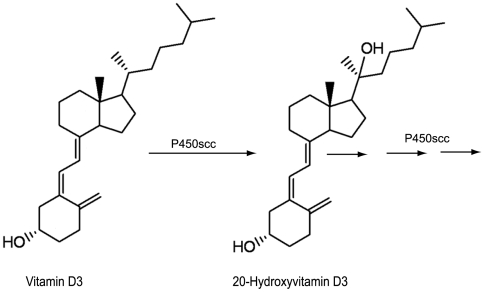
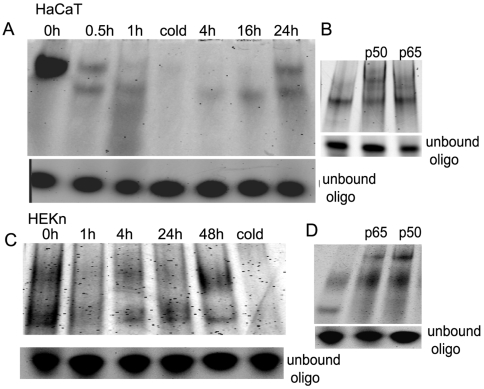
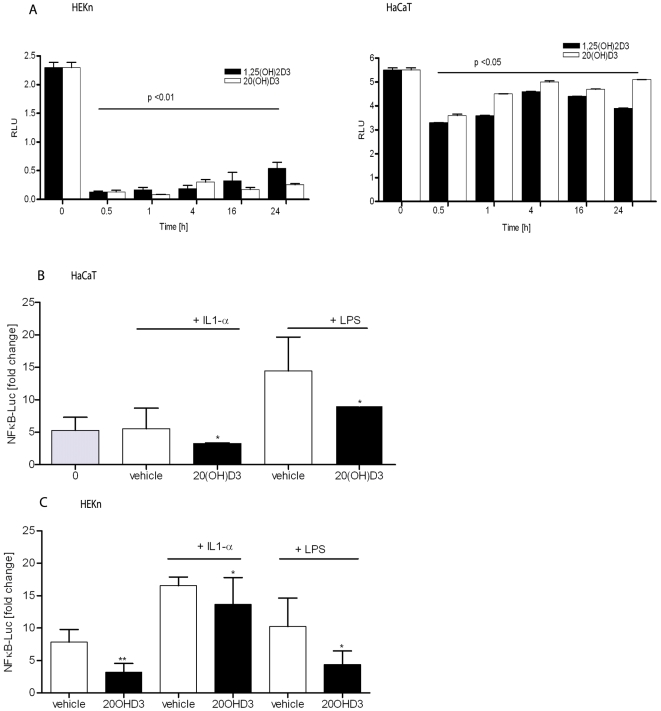
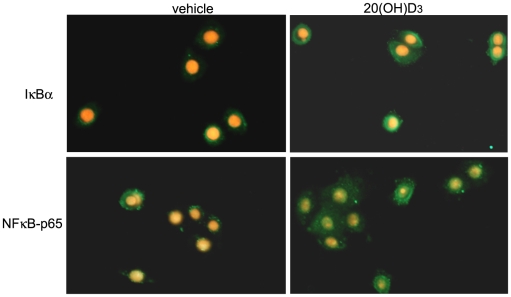
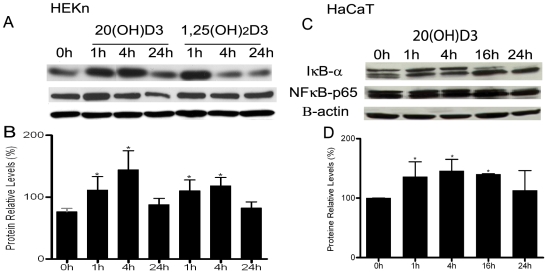
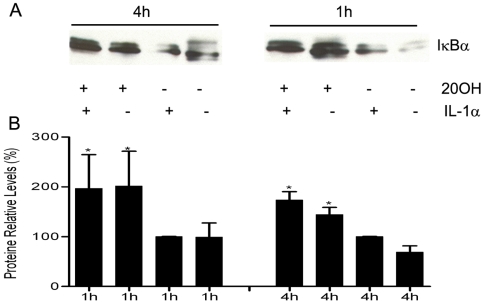
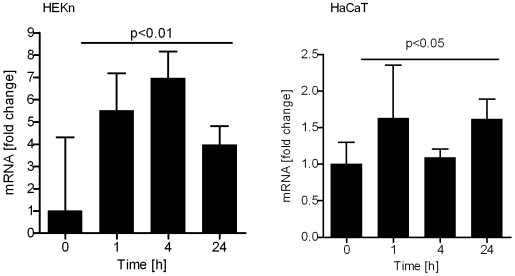
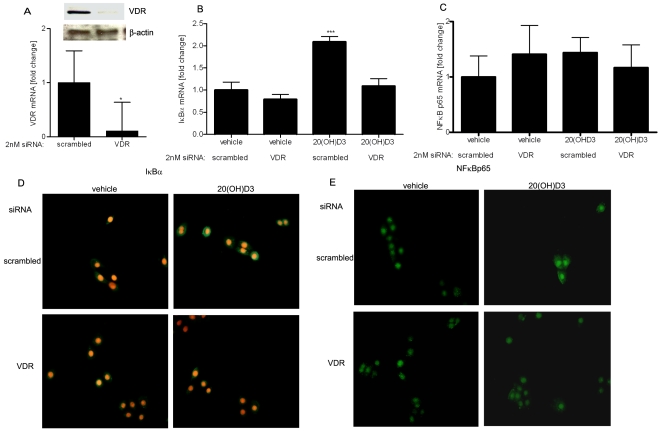
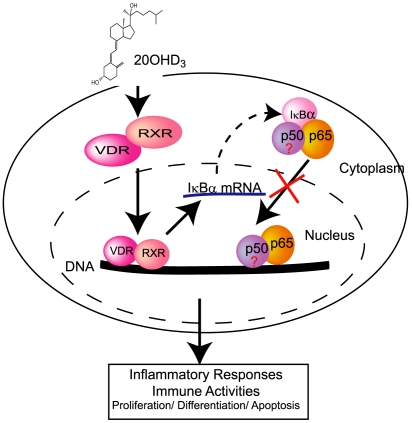
The side chain of vitamin D3 is hydroxylated in a sequential manner by cytochrome P450scc (CYP11A1) to form 20-hydroxycholecalciferol, which can induce growth arrest and differentiation of both primary and immortalized epidermal keratinocytes. Since nuclear factor-kappaB (NF-kappaB) plays a pivotal role in the regulation of cell proliferation, differentiation and apoptosis, we examined the capability of 20-hydroxycholecalciferol to modulate the activity of NF-kappaB, using 1,25-dihydroxycholecalciferol (calcitriol) as a positive control. 20-hydroxycholecalciferol inhibits the activation of NFkappaB DNA binding activity as well as NF-kappaB-driven reporter gene activity in keratinocytes. Also, 20-hydroxycholecalciferol induced significant increases in the mRNA and protein levels of the NF-kappaB inhibitor protein, IkappaB alpha, in a time dependent manner, while no changes in total NF-kappaB-p65 mRNA or protein levels were observed. Another measure of NF-kappaB activity, p65 translocation from the cytoplasm into the nucleus was also inhibited in extracts of 20-hydroxycholecalciferol treated keratinocytes. Increased IkappaB alpha was concomitantly observed in cytosolic extracts of 20-hydroxycholecalciferol treated keratinocytes, as determined by immunoblotting and immunofluorescent staining. In keratinocytes lacking vitamin D receptor (VDR), 20-hydroxycholecalciferol did not affect IkappaB alpha mRNA levels, indicating that it requires VDR for its action on NF-kappaB activity. Comparison of the effects of calcitrol, hormonally active form of vitamin D3, with 20-hydrocholecalciferol show that both agents have a similar potency in inhibiting NF-kappaB. Since NF-kappaB is a major transcription factor for the induction of inflammatory mediators, our findings indicate that 20-hydroxycholecalciferol may be an effective therapeutic agent for inflammatory and hyperproliferative skin diseases.
Overview
The claims and statistics of this paper haven’t been checked yet.
Free: it reads the open-access text and checks the first 5 claims that cite a source we can check. Create a free account to check every claim.
Integrity signals
Registry
Cites
Statistics
Figures
Verification
Claims the paper makes
The claims and statistics of this paper haven’t been checked yet.
Free: it reads the open-access text and checks the first 5 claims that cite a source we can check. Create a free account to check every claim.
Claims other papers make about this one
Each is checked against this paper’s own text: does it say what the citing paper says it does?
The source backs part of the claim, not all of it — or backs it for a different population, condition or comparison.
In the citing paper
“These secosteroids inhibit DNA synthesis and colony formation, cause cell cycle arrest and stimulate the differentiation program of keratinocytes with a potency comparable to that of 1,25(OH)2D3.”
From The role of CYP11A1 in the production of vitamin D metabolites and their role in the regulation of epidermal functions (2014) · cites this paper as [70]
Experimental — accuracy not yet measuredThe source backs part of the claim, not all of it — or backs it for a different population, condition or comparison.
In the citing paper
“20(OH)D3 and 20,23(OH)2D3 inhibit NF-κB activity in normal and immortalized keratinocytes and have anti-inflammatory properties”
From The role of CYP11A1 in the production of vitamin D metabolites and their role in the regulation of epidermal functions (2014) · cites this paper as [70]
Experimental — accuracy not yet measuredThe source backs part of the claim, not all of it — or backs it for a different population, condition or comparison.
In the citing paper
“Importantly, in vitro studies with exogenously added compounds reveal that novel CYP11A1-derived secosteroids and Δ7steroids exerts anti-proliferative, pro-differentiation, and anti-inflammatory effects on cultured skin cells, which are dependent on the structure of the compound and the cell lineage [57,104,112,114–119].”
From Novel activities of CYP11A1 and their potential physiological significance (2015) · cites this paper as [115]
Experimental — accuracy not yet measuredThe cited source says what the claim attributes to it.
In the citing paper
“Thus, stimulation of the expression of IκBα sequesters NF-κB in the cytoplasm and attenuates its transcriptional activity.”
From The role of CYP11A1 in the production of vitamin D metabolites and their role in the regulation of epidermal functions (2014) · cites this paper as [70]
In the citing paper
“In epidermal keratinocytes, 20(OH)D3, 20(OH)D2 and 20,23(OH)2D3 inhibited cell proliferation, stimulated differentiation and inhibited NF-κB activity with potencies comparable to 1,25(OH)2D3, acting as partial agonists on the VDR.”
From The role of CYP11A1 in the production of vitamin D metabolites and their role in the regulation of epidermal functions (2014) · cites this paper as [70]
4 more claims about this paper
Create a free account to see every claim other papers make about this one.
Self-check
Percentages, sums and reported differences re-computed from the paper’s own numbers.
The self-check needs the paper’s full text.
Citations
Cites
1 retracted
RETRACTED: The anti-inflammatory activity of 1,25-dihydroxyvitamin D3 in macrophages
Cohen-Lahav, M., Douvdevani, A., Chaimovitz, C., & Shany, S. (2007) · The Journal of Steroid Biochemistry and Molecular Biology · doi:10.1016/j.jsbmb.2006.12.093 · Cited by 118 · cited 1×
“. A similar effect is also seen in murine macrophages”
BackgroundRetractedHolick, M. F. (2007) · New England Journal of Medicine · doi:10.1056/nejmra070553 · Cited by 13,720
Shared Principles in NF-κB Signaling
Hayden, M. S., & Ghosh, S. (2008) · Cell · doi:10.1016/j.cell.2008.01.020 · Cited by 4,494
NF-κB regulation in the immune system
Li, Q., & Verma, I. M. (2002) · Nature Reviews Immunology · doi:10.1038/nri910 · Cited by 4,007
Norman, A. W. (1979) · Cited by 3,769
Vitamin D signalling pathways in cancer: potential for anticancer therapeutics
Deeb, K. K., Trump, D. L., & Johnson, C. S. (2007) · Nature Reviews Cancer · doi:10.1038/nrc2196 · Cited by 1,419 · cited 1×
“diseases and cancer [16,17,18,19,20] as well as on bone physiology”
BackgroundThe IKK NF-κB system: a treasure trove for drug development
Karin, M., Yamamoto, Y., & Wang, Q. M. (2004) · Nature Reviews Drug Discovery · doi:10.1038/nrd1279 · Cited by 1,364
Vitamin D: a millenium perspective
Holick, M. F. (2003) · Journal of Cellular Biochemistry · doi:10.1002/jcb.10338 · Cited by 1,319 · cited 3×
“[2,21,25,26,27], including modulation of the skin immune system”
BackgroundDusso, A. S., Brown, A. J., & Slatopolsky, E. (2005) · American Journal of Physiology-Renal Physiology · doi:10.1152/ajprenal.00336.2004 · Cited by 1,148
Noncalcemic Actions of Vitamin D Receptor Ligands
Nagpal, S., Na, S., & Rathnachalam, R. (2005) · Endocrine Reviews · doi:10.1210/er.2004-0002 · Cited by 961 · cited 1×
“and blood pressure [21,22,23].”
Cited by
Items 101–133 of 133
Total synthesis of biologically active 20S-hydroxyvitamin D3
Wang, Q., Lin, Z., Kim, T., Slominski, A. T., Miller, D. D., & Li, W. (2015) · Steroids · doi:10.1016/j.steroids.2015.09.009 · Cited by 15
Self-citationCheng, C. Y. S., Kim, T., Jeayeng, S., Slominski, A. T., & Tuckey, R. C. (2017) · The Journal of Steroid Biochemistry and Molecular Biology · doi:10.1016/j.jsbmb.2017.07.011 · Cited by 16
“Normal human melanocytes and dermal fibroblasts were isolated from the neonatal foreskin of African American donors following procedures previously described (31,52).”
MethodSelf-citationDown-regulation of NF-κB signals is involved in loss of 1α,25-dihydroxyvitamin D3 responsiveness
Bao, B., Ting, H., Hsu, J., Yasmin‐Karim, S., Messing, E. M., & Lee, Y. (2010) · The Journal of Steroid Biochemistry and Molecular Biology · doi:10.1016/j.jsbmb.2010.02.030 · Cited by 17
Metabolism of 20-hydroxyvitamin D3 by mouse liver microsomes
Cheng, C. Y. S., Slominski, A. T., & Tuckey, R. C. (2014) · The Journal of Steroid Biochemistry and Molecular Biology · doi:10.1016/j.jsbmb.2014.08.009 · Cited by 13
Self-citationEffect of Hypovitaminosis D on Lipid Profile in Hypothyroid Patients in Saudi Arabia
AlSamghan, A. S., Alsaleem, S. A., Alzahrani, M. A., Patel, A. A., Mallick, A. K., & Sheweita, S. A. (2020) · Oxidative Medicine and Cellular Longevity · doi:10.1155/2020/6640402 · Cited by 14
Contribution of Crop Biofortification in Mitigating Vitamin Deficiency Globally
Chaturvedi, S., Chaudhary, R., & Tiwari, S. (2021) · Wiley eBooks · doi:10.1002/9781119672425.ch7 · Cited by 14
Vitamin D in autoimmune bullous disease
Tukaj, S. (2020) · Acta Biochimica Polonica · doi:10.18388/abp.2020_2905 · Cited by 14
Molecular Cross-Talk Between Nuclear Receptors and Nuclear Factor-κB
Beck, I. M. E., Haegeman, G., & Bosscher, K. D. (2010) · Springer eBooks · doi:10.1007/978-90-481-9531-2_10 · Cited by 9
Design, Synthesis and Biological Activities of Novel Gemini 20S-Hydroxyvitamin D3 Analogs.
Lin, Z., Marepally, S. R., Kim, T., Janjetović, Z., Oak, A. S. W., Postlethwaite, A. E., Myers, L. K., Tuckey, R. C., Slominski, A. T., Miller, D. D., et al. (2016) · UWA Profiles and Research Repository (University of Western Australia) · Cited by 9
Self-citationVitamin D endocrine system in breast cancer
Linowiecka, K., Wolnicka-Głubisz, A., & Brożyna, A. A. (2021) · Acta Biochimica Polonica · doi:10.18388/abp.2020_5961 · Cited by 10
“The anticancer activity of these derivatives is at least as strong as that of 1,25(OH)2D3 or even stronger (Zbytek et al., 2008; Janjetovic et al., 2009; Janjetovic et al., 2010; Li et al., 2010; Slominski et al., 2011; Slominski et al., 2012a; Slominski et al., 2013; Slominski et al., 2013;…”
BackgroundChen, J., Slominski, A. T., Miller, D. D., & Li, W. (2013) · Dermato-Endocrinology · doi:10.4161/derm.24339 · Cited by 9
Self-citationSynthesis of Deuterium-Labeled Vitamin D Metabolites as Internal Standards for LC-MS Analysis
Nagata, A., Iijima, K., Sakamoto, R. L., Mizumoto, Y., Iwaki, M., Takiwaki, M., Kikutani, Y., Fukuzawa, S., Odagi, M., Tera, M., et al. (2022) · Molecules · doi:10.3390/molecules27082427 · Cited by 7
Kawagoe, F., Mototani, S., Yasuda, K., Takeuchi, A., Mano, H., Kakuda, S., Saitoh, H., Sakaki, T., & Kittaka, A. (2023) · The Journal of Organic Chemistry · doi:10.1021/acs.joc.3c01134 · Cited by 8
Sunlight Protection by Vitamin D Compounds
Mason, R. S., Dixon, K. M., Sequeira, V. B., & Gordon‐Thomson, C. (2011) · Elsevier eBooks · doi:10.1016/b978-0-12-381978-9.10100-3 · Cited by 6
Ewendt, F., Janjetović, Z., Kim, T., Mobley, A. A., Brożyna, A. A., Senthilkumar, R., Fabisiak, A., Brzeminski, P., Siciński, R. R., Stangl, G. I., et al. (2025) · American Journal of Physiology-Cell Physiology · doi:10.1152/ajpcell.00827.2024 · Cited by 6
Self-citationVulcan, T., Suciu, T. S., Lenghel, L. M., Toma, V. A., Decea, N., Moldovan, R., Mitrea, D.-R., Bâldea, I., & Filip, G. A. (2024) · Medicine and Pharmacy Reports · doi:10.15386/mpr-2798 · Cited by 5
“A reduced pNFkB expression after vitamin D3 administration in rats with PCOS+HFD was common finding found in this treatment [31,32].”
BackgroundComplementary and Alternative Medicine
Price, K. N., Thompson, A. M., & Shi, V. Y. (2021) · Elsevier eBooks · doi:10.1016/b978-0-323-77724-7.00028-0 · Cited by 4
1,24,25(OH)3D3 is a fully active catabolite of vitamin D in keratinocytes
Domżalski, P., Nowak, J. I., Olszewska, A., Myszczyński, K., Tuckey, R. C., Piotrowska, A., & Zmijewski, M. A. (2025) · Scientific Reports · doi:10.1038/s41598-025-31780-x · Cited by 2
Self-citationCutaneous Secosteroidal System
Slominski, A. T., Zmijewski, M. A., Skobowiat, C., Zbytek, B., Slominski, R. M., & Steketee, J. D. (2012) · Advances in anatomy, embryology and cell biology · doi:10.1007/978-3-642-19683-6_8 · Cited by 1
Self-citationCorticotropin Signaling System in the Skin
Slominski, A. T., Zmijewski, M. A., Skobowiat, C., Zbytek, B., Slominski, R. M., & Steketee, J. D. (2012) · Advances in anatomy, embryology and cell biology · doi:10.1007/978-3-642-19683-6_5 · Cited by 1
Self-citationSelective Vitamin D Receptor Modulators (SVIMS) as Potential Adjuvant Therapeutic Agents
(2013) · Modern Chemistry & Applications · doi:10.4172/2329-6798.1000e110 · Cited by 1
Dyring‐Andersen, B. (2016) · British Journal of Dermatology · doi:10.1111/bjd.14656 · Cited by 1
Vitamin D and Human Innate Immunity
Jo, E., Shin, D., & Modlin, R. L. (2012) · Oxidative stress and disease · doi:10.1201/b13714-14 · Cited by 1
Vitamin D, Calcium, and the Epidermis
Bikle, D. D. (2017) · Elsevier eBooks · doi:10.1016/b978-0-12-809965-0.00031-8 · Cited by 2
Carter, S. E. (2015) · UPT. Syiah Kuala University Library (Syiah Kuala University) · Cited by 2
Vitamin D and Its Role in Photoprotection of the Skin
Gordon‐Thomson, C., Tongkao‐on, W., & Mason, R. S. (2012) · Oxidative stress and disease · doi:10.1201/b13714-10
Rapholo, A. A. F. (2017) · UpSpace Institutional Repository (University of Pretoria)
Role of Vitamin D in Protecting the E-cadherin Junction of Gingival Keratinocytes
오창석 (2020) · Seoul National University Open Repository (Seoul National University)
Ivanova, P., & Maneva, A. I. (2021) · Восточно Европейский Научный Журнал
Psoriasis and other skin disorders
Reichrath, J., & Holick, M. F. (2023) · Elsevier eBooks · doi:10.1016/b978-0-323-91338-6.00054-9
Dietary nutrition and neurological disorders: a review
Li, F., Feng, Z., Li, J., Ma, L., Li, M., Li, S., Liu, S., & Tang, C. (2025) · Food Science and Human Wellness · doi:10.26599/fshw.2025.9250714
Metadata
- Authors
- Janjetovic, Z., Zmijewski, M. A., Tuckey, R. C., DeLeon, D. A., Nguyen, M. N., Pfeffer, L. M., & Slominski, A. T.
- Affiliations
- University of Tennessee Health Science Center (US)
- The University of Western Australia (AU)
- Corresponding author
- Slominski, Andrzej T.
- Venue
- PLoS ONE
- Publisher
- Public Library of Science (PLoS)
- Published
- 2009-06-19
- Volume
- 4
- Issue
- 6
- Pages
- e5988
- ISSN
- 1932-6203 (ISSN-L)
- PMC
- PMC2694402
- OpenAlex
- W2018517476
- Cited by
- 130
- References
- 75
- Citations by year
- 2025: 5 · 2024: 5 · 2023: 4 · 2022: 7 · 2021: 10 · 2020: 14 · 2019: 2 · 2018: 3 · 2017: 7 · 2016: 8 · 2015: 12 · 2014: 10 · 2013: 11 · 2012: 16
- FWCI
- 3.58
- Type
- journal article
- Language
- en
- Open access
- gold
- doi.org
- Locations
- PLoS ONE (publishedVersion, cc-by)
- PubMed Central (publishedVersion, cc-by)
- PubMed (publishedVersion)
- UWA Profiles and Research Repository (UWA) (submittedVersion, other-oa)
- DOAJ (DOAJ: Directory of Open Access Journals) (submittedVersion, cc-by-sa)
- Funders
- National Institutes of Health
- Health Science Center, University of Tennessee
- National Cancer Institute (R01CA133322)
- National Institute of Arthritis and Musculoskeletal and Skin Diseases (R01AR052190)
- Topics
- Life Sciences › Biochemistry, Genetics and Molecular Biology › Cancer Research › NF-κB Signaling Pathways
- Health Sciences › Medicine › Endocrinology, Diabetes and Metabolism › Vitamin D Research Studies
- Life Sciences › Immunology and Microbiology › Immunology › Psoriasis: Treatment and Pathogenesis
- Keywords
- vitamin D3 hydroxylation, CYP11A1, NF-κB, IκBα, keratinocytes, vitamin D receptor, 1,25-dihydroxyvitamin D3, p65 nuclear translocation, epidermal differentiation, skin inflammation, hyperproliferative skin diseases
- MeSH terms
- NF-KappaB Inhibitor alpha, Cholecalciferol, Cholesterol Side-Chain Cleavage Enzyme, Humans, Hydroxycholecalciferols, Mixed Function Oxygenases, Inflammation, Models, Biological, Transcription Factors, Immunoblotting, Keratinocytes, NF-kappa B, I-kappa B Proteins, Cell Proliferation, Interleukin-1alpha
About these checks
Registry, retraction, Cites and statistics results are computed, not judged, with one exception: a printed reference that no index lists is read once by a model before it counts as a citation error. Claims are extracted by a model and kept only when their quote appears verbatim in the text; each cited source is then checked, with a model’s help, for whether it says what the claim relies on. Those verdicts can be wrong — read the claim’s quote and the cited source before relying on one.
Statistics and arithmetic are recomputed, not judged.
Confidence bands are shown only for fields calibrated on our annotated test set. None is calibrated yet, so no band is shown.
What counts as a claim ›How we measure confidence ›How we check this ›
Are you an author, or do you see a problem with this page? Request a review
Data sources
Bibliographic data: Semantic Scholar, OpenAlex, Crossref.
Contains information from the Semantic Scholar Academic Graph Datasets, made available under the ODC Attribution License (ODC-BY 1.0).
Semantic Scholar’s data is described in: Kinney, R., et al. (2023). The Semantic Scholar Open Data Platform. arXiv:2301.10140.
