

20-Hydroxycholecalciferol, Product of Vitamin D3 Hydroxylation by P450scc, Decreases NF-κB Activity by Increasing IκBα Levels in Human Keratinocytes
Open accessThe DOI matches its Crossref record; 77 of the 77 references it cites were found in a registry or an index.
Abstract
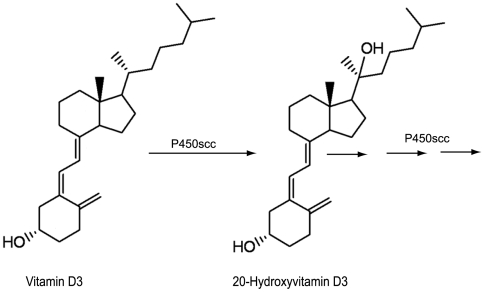
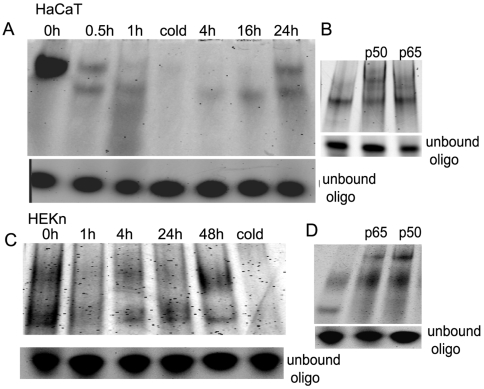
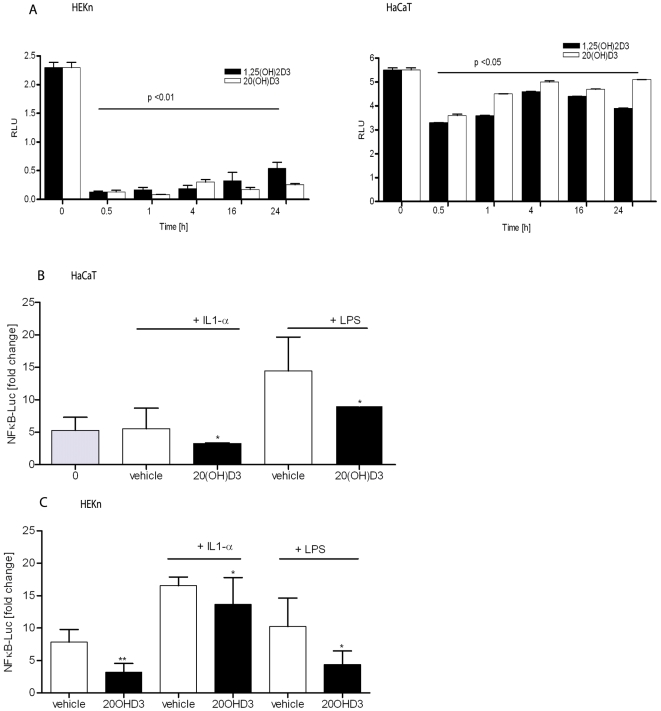
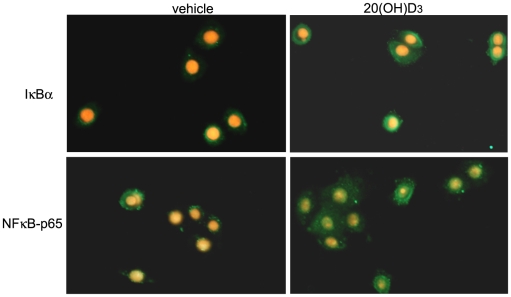
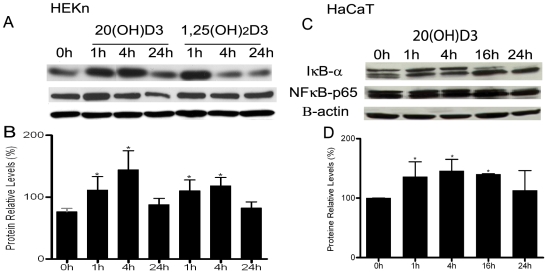
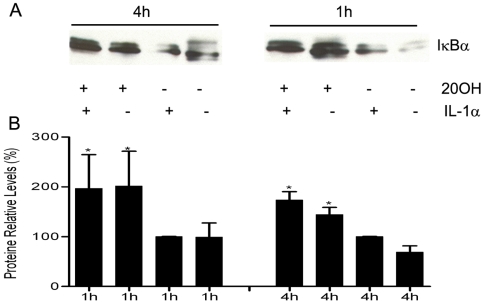
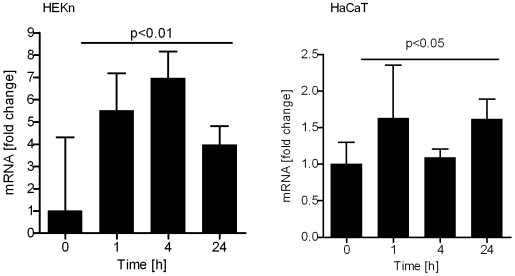
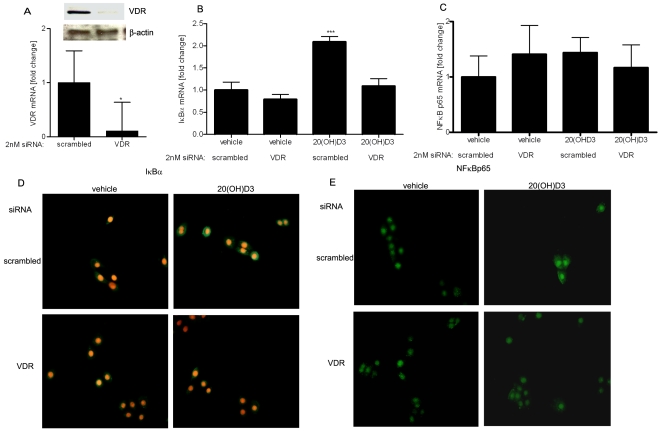
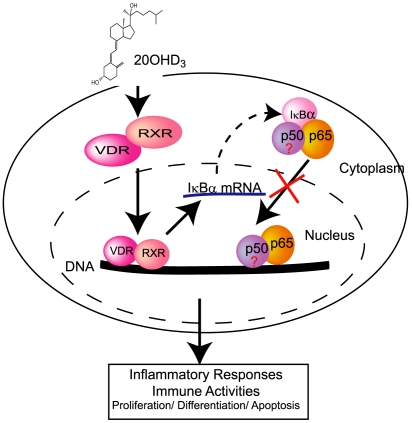
The side chain of vitamin D3 is hydroxylated in a sequential manner by cytochrome P450scc (CYP11A1) to form 20-hydroxycholecalciferol, which can induce growth arrest and differentiation of both primary and immortalized epidermal keratinocytes. Since nuclear factor-kappaB (NF-kappaB) plays a pivotal role in the regulation of cell proliferation, differentiation and apoptosis, we examined the capability of 20-hydroxycholecalciferol to modulate the activity of NF-kappaB, using 1,25-dihydroxycholecalciferol (calcitriol) as a positive control. 20-hydroxycholecalciferol inhibits the activation of NFkappaB DNA binding activity as well as NF-kappaB-driven reporter gene activity in keratinocytes. Also, 20-hydroxycholecalciferol induced significant increases in the mRNA and protein levels of the NF-kappaB inhibitor protein, IkappaB alpha, in a time dependent manner, while no changes in total NF-kappaB-p65 mRNA or protein levels were observed. Another measure of NF-kappaB activity, p65 translocation from the cytoplasm into the nucleus was also inhibited in extracts of 20-hydroxycholecalciferol treated keratinocytes. Increased IkappaB alpha was concomitantly observed in cytosolic extracts of 20-hydroxycholecalciferol treated keratinocytes, as determined by immunoblotting and immunofluorescent staining. In keratinocytes lacking vitamin D receptor (VDR), 20-hydroxycholecalciferol did not affect IkappaB alpha mRNA levels, indicating that it requires VDR for its action on NF-kappaB activity. Comparison of the effects of calcitrol, hormonally active form of vitamin D3, with 20-hydrocholecalciferol show that both agents have a similar potency in inhibiting NF-kappaB. Since NF-kappaB is a major transcription factor for the induction of inflammatory mediators, our findings indicate that 20-hydroxycholecalciferol may be an effective therapeutic agent for inflammatory and hyperproliferative skin diseases.
Overview
The claims and statistics of this paper haven’t been checked yet.
Free: it reads the open-access text and checks the first 5 claims that cite a source we can check. Create a free account to check every claim.
Integrity signals
Registry
Cites
Statistics
Figures
Verification
Claims the paper makes
The claims and statistics of this paper haven’t been checked yet.
Free: it reads the open-access text and checks the first 5 claims that cite a source we can check. Create a free account to check every claim.
Claims other papers make about this one
Each is checked against this paper’s own text: does it say what the citing paper says it does?
The source backs part of the claim, not all of it — or backs it for a different population, condition or comparison.
In the citing paper
“These secosteroids inhibit DNA synthesis and colony formation, cause cell cycle arrest and stimulate the differentiation program of keratinocytes with a potency comparable to that of 1,25(OH)2D3.”
From The role of CYP11A1 in the production of vitamin D metabolites and their role in the regulation of epidermal functions (2014) · cites this paper as [70]
Experimental — accuracy not yet measuredThe source backs part of the claim, not all of it — or backs it for a different population, condition or comparison.
In the citing paper
“20(OH)D3 and 20,23(OH)2D3 inhibit NF-κB activity in normal and immortalized keratinocytes and have anti-inflammatory properties”
From The role of CYP11A1 in the production of vitamin D metabolites and their role in the regulation of epidermal functions (2014) · cites this paper as [70]
Experimental — accuracy not yet measuredThe source backs part of the claim, not all of it — or backs it for a different population, condition or comparison.
In the citing paper
“Importantly, in vitro studies with exogenously added compounds reveal that novel CYP11A1-derived secosteroids and Δ7steroids exerts anti-proliferative, pro-differentiation, and anti-inflammatory effects on cultured skin cells, which are dependent on the structure of the compound and the cell lineage [57,104,112,114–119].”
From Novel activities of CYP11A1 and their potential physiological significance (2015) · cites this paper as [115]
Experimental — accuracy not yet measuredThe cited source says what the claim attributes to it.
In the citing paper
“Thus, stimulation of the expression of IκBα sequesters NF-κB in the cytoplasm and attenuates its transcriptional activity.”
From The role of CYP11A1 in the production of vitamin D metabolites and their role in the regulation of epidermal functions (2014) · cites this paper as [70]
In the citing paper
“In epidermal keratinocytes, 20(OH)D3, 20(OH)D2 and 20,23(OH)2D3 inhibited cell proliferation, stimulated differentiation and inhibited NF-κB activity with potencies comparable to 1,25(OH)2D3, acting as partial agonists on the VDR.”
From The role of CYP11A1 in the production of vitamin D metabolites and their role in the regulation of epidermal functions (2014) · cites this paper as [70]
4 more claims about this paper
Create a free account to see every claim other papers make about this one.
Self-check
Percentages, sums and reported differences re-computed from the paper’s own numbers.
The self-check needs the paper’s full text.
Citations
Cites
1 retracted
RETRACTED: The anti-inflammatory activity of 1,25-dihydroxyvitamin D3 in macrophages
Cohen-Lahav, M., Douvdevani, A., Chaimovitz, C., & Shany, S. (2007) · The Journal of Steroid Biochemistry and Molecular Biology · doi:10.1016/j.jsbmb.2006.12.093 · Cited by 118 · cited 1×
“. A similar effect is also seen in murine macrophages”
BackgroundRetractedHolick, M. F. (2007) · New England Journal of Medicine · doi:10.1056/nejmra070553 · Cited by 13,720
Shared Principles in NF-κB Signaling
Hayden, M. S., & Ghosh, S. (2008) · Cell · doi:10.1016/j.cell.2008.01.020 · Cited by 4,494
NF-κB regulation in the immune system
Li, Q., & Verma, I. M. (2002) · Nature Reviews Immunology · doi:10.1038/nri910 · Cited by 4,007
Norman, A. W. (1979) · Cited by 3,769
Vitamin D signalling pathways in cancer: potential for anticancer therapeutics
Deeb, K. K., Trump, D. L., & Johnson, C. S. (2007) · Nature Reviews Cancer · doi:10.1038/nrc2196 · Cited by 1,419 · cited 1×
“diseases and cancer [16,17,18,19,20] as well as on bone physiology”
BackgroundThe IKK NF-κB system: a treasure trove for drug development
Karin, M., Yamamoto, Y., & Wang, Q. M. (2004) · Nature Reviews Drug Discovery · doi:10.1038/nrd1279 · Cited by 1,364
Vitamin D: a millenium perspective
Holick, M. F. (2003) · Journal of Cellular Biochemistry · doi:10.1002/jcb.10338 · Cited by 1,319 · cited 3×
“[2,21,25,26,27], including modulation of the skin immune system”
BackgroundDusso, A. S., Brown, A. J., & Slatopolsky, E. (2005) · American Journal of Physiology-Renal Physiology · doi:10.1152/ajprenal.00336.2004 · Cited by 1,148
Noncalcemic Actions of Vitamin D Receptor Ligands
Nagpal, S., Na, S., & Rathnachalam, R. (2005) · Endocrine Reviews · doi:10.1210/er.2004-0002 · Cited by 961 · cited 1×
“and blood pressure [21,22,23].”
Cited by
Slominski, A. T., Zmijewski, M. A., Skobowiat, C., Zbytek, B., Slominski, R. M., & Steketee, J. D. (2012) · Advances in Anatomy, Embryology and Cell Biology · doi:10.1007/978-3-642-19683-6 · Cited by 496
Self-citationSlominski (2012) · doi:10.1007/978-3-642-19683-6_1 · Cited by 461
Self-citationKey role of CRF in the skin stress response system
Slominski, A. T., Zmijewski, M. A., Zbytek, B., Tobin, D. J., Theoharides, T. C., & Rivier, J. (2013) · Endocrine Reviews · doi:10.1210/er.2012-1092 · Cited by 400
Self-citationNovel activities of CYP11A1 and their potential physiological significance
Slominski, A. T., Li, W., Kim, T.-K., Semak, I., Wang, J., Zjawiony, J. K., & Tuckey, R. C. (2015) · The Journal of Steroid Biochemistry and Molecular Biology · doi:10.1016/j.jsbmb.2014.11.010 · Cited by 292
Self-citationSlominski, A. T., Kim, T., Shehabi, H. Z., Semak, I., Tang, E. K. Y., Nguyen, M. N., Benson, H. A. E., Korik, E., Janjetovic, Z., Chen, J., et al. (2012) · The FASEB Journal · doi:10.1096/fj.12-208975 · Cited by 266
Self-citationSlominski, A. T., Kim, T.-K., Li, W., Postlethwaite, A., Tieu, E. W., Tang, E. K. Y., & Tuckey, R. C. (2015) · Scientific Reports · doi:10.1038/srep14875 · Cited by 229
Self-citationOn the role of skin in the regulation of local and systemic steroidogenic activities
Slominski, A. T., Manna, P. R., & Tuckey, R. C. (2015) · Steroids · doi:10.1016/j.steroids.2015.04.006 · Cited by 183
Self-citationSlominski, A. T., Kim, T.-K., Li, W., Yi, A.-K., Postlethwaite, A., & Tuckey, R. C. (2014) · The Journal of Steroid Biochemistry and Molecular Biology · doi:10.1016/j.jsbmb.2013.10.012 · Cited by 170
Self-citationVitamin D receptor(s): In the nucleus but also at membranes?
Zmijewski, M. A., & Carlberg, C. (2020) · Experimental Dermatology · doi:10.1111/exd.14147 · Cited by 162
Self-citationPhotoprotective Properties of Vitamin D and Lumisterol Hydroxyderivatives
Slominski, A. T., Chaiprasongsuk, A., Janjetović, Z., Kim, T., Stefan, J., Slominski, R. M., Hanumanthu, V. S., Raman, C., Qayyum, S., Song, Y., et al. (2020) · Cell Biochemistry and Biophysics · doi:10.1007/s12013-020-00913-6 · Cited by 155
Self-citationSlominski, A. T., Janjetovic, Z., Fuller, B. E., Zmijewski, M. A., Tuckey, R. C., Nguyen, M. N., Sweatman, T., Li, W., Zjawiony, J., Miller, D., et al. (2010) · PLoS ONE · doi:10.1371/journal.pone.0009907 · Cited by 149
Self-citationChaiprasongsuk, A., Janjetovic, Z., Kim, T.-K., Jarrett, S. G., D'Orazio, J. A., Holick, M. F., Tang, E. K. Y., Tuckey, R. C., Panich, U., Li, W., et al. (2019) · Redox Biology · doi:10.1016/j.redox.2019.101206 · Cited by 146
Self-citationWon, S., Sayeed, I., Peterson, B. L., Wali, B., Kahn, J. S., & Stein, D. G. (2015) · PLoS ONE · doi:10.1371/journal.pone.0122821 · Cited by 155
Vitamin D in the skin physiology and pathology.
Piotrowska, A., Wierzbicka, J., & Zmijewski, M. A. (2016) · Acta Biochimica Polonica · doi:10.18388/abp.2015_1104 · Cited by 161
“…20(OH)D 3 and 20,23(OH) 2 D 3 , produced by Cyp450scc, inhibit the transcriptional activity of NFkappaB, a major inducer of inflammation, and therefore they may be effective therapeutic agents for inflammatory and hyperproliferative skin disorders (Janjetovic et al., 2009; Janjetovic et al., 2010).”
BackgroundSelf-citationSlominski, A. T., Kim, T.-K., Hobrath, J. V., Oak, A. S. W., Tang, E. K. Y., Tieu, E. W., Li, W., Tuckey, R. C., & Jetten, A. M. (2017) · The Journal of Steroid Biochemistry and Molecular Biology · doi:10.1016/j.jsbmb.2016.09.024 · Cited by 143
Self-citationYu, J., Gattoni-Celli, M., Zhu, H., Bhat, N. R., Sambamurti, K., Gattoni-Celli, S., & Kindy, M. S. (2011) · Journal of Alzheimer's Disease · doi:10.3233/jad-2011-101986 · Cited by 139
“Calcitriol can inhibit NF-κB, a major transcription factor that induces the production of inflammatory mediators and cytokines [17, 18].”
BackgroundSlominski, A. T., Brożyna, A. A., Zmijewski, M. A., Jóźwicki, W., Jetten, A. M., Mason, R. S., Tuckey, R. C., & Elmets, C. A. (2017) · Laboratory Investigation · doi:10.1038/labinvest.2017.3 · Cited by 136
Self-citationThe Impact of Vitamin D on Skin Aging
Bocheva, G., Slominski, R. M., & Slominski, A. T. (2021) · International Journal of Molecular Sciences · doi:10.3390/ijms22169097 · Cited by 121
Self-citationSlominski, A. T., Kim, T.-K., Janjetovic, Z., Brożyna, A. A., Żmijewski, M. A., Xu, H., Sutter, T. R., Tuckey, R. C., Jetten, A. M., & Crossman, D. K. (2018) · International Journal of Molecular Sciences · doi:10.3390/ijms19103072 · Cited by 121
Self-citationAnti‐Atherosclerotic Effects of Vitamins D and E in Suppression of Atherogenesis
Rashidi, B., Hoseini, Z., Sahebkar, A., & Mirzaei, H. (2017) · Journal of Cellular Physiology · doi:10.1002/jcp.25738 · Cited by 116
“Consequently, the amount of Ang II is also reduced (Janjetovic et al., 2009; Chen et al., 2013).”
BackgroundJanjetovic, Z., Nahmias, Z. P., Hanna, S., Jarrett, S. G., Kim, T., Reiter, R. J., & Slominski, A. T. (2014) · Journal of Pineal Research · doi:10.1111/jpi.12146 · Cited by 113
Self-citationSlominski, A. T., Kim, T.-K., Janjetovic, Z., Tuckey, R. C., Bieniek, R., Yue, J., Li, W., Chen, J., Nguyen, M. N., Tang, E. K. Y., et al. (2011) · American Journal of Physiology-Cell Physiology · doi:10.1152/ajpcell.00203.2010 · Cited by 113
Self-citationDixon, K. M., Norman, A. W., Sequeira, V. B., Mohan, R., Rybchyn, M. S., Reeve, V. E., Halliday, G. M., & Mason, R. S. (2011) · Cancer Prevention Research · doi:10.1158/1940-6207.capr-11-0165 · Cited by 112
Biological Effects of CYP11A1-Derived Vitamin D and Lumisterol Metabolites in the Skin
Slominski, A. T., Kim, T., Janjetović, Z., Slominski, R. M., Li, W., Jetten, A. M., Indra, A. K., Mason, R. S., & Tuckey, R. C. (2024) · Journal of Investigative Dermatology · doi:10.1016/j.jid.2024.04.022 · Cited by 116
Self-citationLee, V., Rekhi, E., Kam, J. H., & Jeffery, G. (2012) · Neurobiology of Aging · doi:10.1016/j.neurobiolaging.2011.12.002 · Cited by 112
Janjetovic, Z., Tuckey, R. C., Nguyen, M. N., Thorpe, E. M., & Slominski, A. T. (2010) · Journal of Cellular Physiology · doi:10.1002/jcp.21992 · Cited by 103
“6A, insert) as we have observed in other studies using this procedure (Zbytek et al., 2008; Janjetovic et al., 2009).”
Self-citationNongenomic Activities of Vitamin D
Zmijewski, M. A. (2022) · Nutrients · doi:10.3390/nu14235104 · Cited by 108
Self-citationThe significance of CYP11A1 expression in skin physiology and pathology
Slominski, R. M., Raman, C., Elmets, C. A., Jetten, A. M., Slominski, A. T., & Tuckey, R. C. (2021) · Molecular and Cellular Endocrinology · doi:10.1016/j.mce.2021.111238 · Cited by 106
Self-citationSlominski, A. T., Kim, T.-K., Shehabi, H. Z., Tang, E. K. Y., Benson, H. A. E., Semak, I., Lin, Z., Yates, C. R., Wang, J., Li, W., et al. (2014) · Molecular and Cellular Endocrinology · doi:10.1016/j.mce.2013.12.012 · Cited by 100
“…2010, 2013c), and are at least as potent as the classical 1,25(OH)2D3 (calcitriol) in skin cells with anti-proliferative, pro-differentiation, anti-cancer and antiinflammatory properties (Janjetovic et al., 2011, 2010, 2009; Kim et al., 2012; Slominski et al., 2013a, 2012a; Zbytek et al., 2008).”
Self-citationDecoding Skin Aging: A Review of Mechanisms, Markers, and Modern Therapies
Naharro‐Rodríguez, J., Bacci, S., Hernández‐Bule, M. L., Pérez-González, L. A., & Fernández-Guarino, M. (2025) · Cosmetics · doi:10.3390/cosmetics12040144 · Cited by 114
On the role of classical and novel forms of vitamin D in melanoma progression and management
Slominski, A. T., Brożyna, A. A., Skobowiat, C., Zmijewski, M. A., Kim, T., Janjetović, Z., Oak, A. S. W., Jóźwicki, W., Jetten, A. M., Mason, R. S., et al. (2017) · The Journal of Steroid Biochemistry and Molecular Biology · doi:10.1016/j.jsbmb.2017.06.013 · Cited by 105
Self-citationJanjetovic, Z., Brozyna, A. A., Tuckey, R. C., Kim, T.-K., Nguyen, M. N., Jozwicki, W., Pfeffer, S. R., Pfeffer, L. M., & Slominski, A. T. (2011) · British Journal of Cancer · doi:10.1038/bjc.2011.458 · Cited by 91
“Sections were made as previously described with minor modifications (Janjetovic et al, 2009).”
BackgroundMethodInfluentialSelf-citationCytochromes P450 and Skin Cancer: Role of Local Endocrine Pathways
Slominski, A., Zmijewski, M., Semak, I., Zbytek, B., Pisarchik, A., Li, W., Zjawiony, J., & Tuckey, R. (2014) · Anti-Cancer Agents in Medicinal Chemistry · doi:10.2174/18715206113139990308 · Cited by 91
Self-citationVitamin D Signaling in Psoriasis: Pathogenesis and Therapy
Brożyna, A. A., Slominski, R. M., Nedoszytko, B., Zmijewski, M. A., & Slominski, A. T. (2022) · International Journal of Molecular Sciences · doi:10.3390/ijms23158575 · Cited by 100
Self-citationTuckey, R. C., Li, W., Shehabi, H. Z., Janjetovic, Z., Nguyen, M. N., Kim, T.-K., Chen, J., Howell, D. E., Benson, H. A. E., Sweatman, T., et al. (2011) · Drug Metabolism and Disposition · doi:10.1124/dmd.111.040071 · Cited by 88
“…have been tested on a range of skin and other cell types, and they have many but not all of the properties of the hormonally active form of vitamin D3, 1,25(OH)2D3, acting as partial receptor agonists (Zbytek et al., 2008; Janjetovic et al., 2009, 2010; Slominski et al., 2010; Tang et al., 2010a).”
BackgroundSelf-citationSlominski, A. T., Janjetović, Z., Kim, T., Wright, A. C., Grese, L., Riney, S. J., Nguyen, M. N., & Tuckey, R. C. (2012) · UWA Profiles and Research Repository (UWA) · Cited by 93
Self-citationSlominski, A. T., Kim, T.-K., Chen, J., Nguyen, M. N., Li, W., Yates, C. R., Sweatman, T., Janjetovic, Z., & Tuckey, R. C. (2012) · The International Journal of Biochemistry & Cell Biology · doi:10.1016/j.biocel.2012.07.027 · Cited by 81
“In fact, therapeutic utilities for novel hydroxyl-derivatives of vitamin D, acting through the vitamin D receptor, have already been demonstrated (Janjetovic et al., 2009, Zbytek et al., 2008, Janjetovic et al., 2010, Slominski et al., 2010, Zmijewski et al., 2009, Slominski et al., 2011b,…”
Self-citationSlominski, A. T., Janjetovic, Z., Kim, T.-K., Wasilewski, P., Rosas, S., Hanna, S., Sayre, R. M., Dowdy, J. C., Li, W., & Tuckey, R. C. (2015) · The Journal of Steroid Biochemistry and Molecular Biology · doi:10.1016/j.jsbmb.2015.01.014 · Cited by 77
Self-citationNovel vitamin D photoproducts and their precursors in the skin
Slominski, A., Kim, T.-K., Zmijewski, M. A., Janjetovic, Z., Li, W., Chen, J., Kusniatsova, E. I., Semak, I., Postlethwaite, A., Miller, D. D., et al. (2013) · Dermato-Endocrinology · doi:10.4161/derm.23938 · Cited by 76
Self-citationNeuroendocrinology of the skin: An overview and selective analysis
Zmijewski, M. A., & Slominski, A. T. (2011) · Dermato-Endocrinology · doi:10.4161/derm.3.1.14617 · Cited by 71
Self-citationWang, J., Slominski, A. T., Tuckey, R. C., Janjetović, Z., Kulkarni, A. L., Chen, J., Postlethwaite, A. E., Miller, D. D., & Li, W. (2012) · UWA Profiles and Research Repository (UWA) · Cited by 83
Self-citationVitamin D Controls Murine and Human Plasmacytoid Dendritic Cell Function
Karthaus, N., van Spriel, A. B., Looman, M. W. G., Chen, S., Spilgies, L. M., Lieben, L., Carmeliet, G., Ansems, M., & Adema, G. J. (2013) · Journal of Investigative Dermatology · doi:10.1038/jid.2013.501 · Cited by 75
Chemical synthesis of 20S-hydroxyvitamin D3, which shows antiproliferative activity
Li, W., Chen, J., Janjetovic, Z., Kim, T.-K., Sweatman, T., Lu, Y., Zjawiony, J., Tuckey, R. C., Miller, D., & Slominski, A. (2010) · Steroids · doi:10.1016/j.steroids.2010.05.021 · Cited by 68
Self-citationKim, T.-K., Wang, J., Janjetovic, Z., Chen, J., Tuckey, R. C., Nguyen, M. N., Tang, E. K. Y., Miller, D., Li, W., & Slominski, A. T. (2012) · Molecular and Cellular Endocrinology · doi:10.1016/j.mce.2012.04.001 · Cited by 67
“20(OH)D3, 20(OH)D2 and 20,23(OH)2D3 display potent anti-proliferative activity comparable to that for 1,25(OH)2D3, the hormonally active form of vitamin D3 (Janjetovic et al., 2009, 2010, 2011; Slominski et al., 2011a; Zbytek et al., 2008).”
BackgroundSelf-citationCYP11A1 in skin: an alternative route to photoprotection by vitamin D compounds
Tongkao-on, W., Carter, S., Reeve, V. E., Dixon, K. M., Gordon-Thomson, C., Halliday, G. M., Tuckey, R. C., & Mason, R. S. (2015) · The Journal of Steroid Biochemistry and Molecular Biology · doi:10.1016/j.jsbmb.2014.11.015 · Cited by 63
Self-citationCOVID‐19 and Vitamin D: A lesson from the skin
Slominski, R. M., Stefan, J., Athar, M., Holick, M. F., Jetten, A. M., Raman, C., & Slominski, A. T. (2020) · Experimental Dermatology · doi:10.1111/exd.14170 · Cited by 66
Self-citationSlominski, A. T., Kim, T., Slominski, R. M., Song, Y., Janjetović, Z., Podgórska, E., Reddy, S. B., Song, Y., Raman, C., Tang, E. K. Y., et al. (2022) · The FASEB Journal · doi:10.1096/fj.202200578r · Cited by 62
Self-citationSunlight exposure is just one of the factors which influence vitamin D status
Abboud, M., Rybchyn, M. S., Rizk, R., Fraser, D. R., & Mason, R. S. (2017) · Photochemical & Photobiological Sciences · doi:10.1039/c6pp00329j · Cited by 63
Tieu, E. W., Li, W., Chen, J., Baldisseri, D. M., Slominski, A. T., & Tuckey, R. C. (2012) · The Journal of Steroid Biochemistry and Molecular Biology · doi:10.1016/j.jsbmb.2011.11.012 · Cited by 56
Self-citationChen, J., Wang, J., Kim, T., Tieu, E. W., Tang, E. K. Y., Lin, Z., Kovacic, D., Miller, D. D., Postlethwaite, A. E., Tuckey, R. C., et al. (2014) · UWA Profiles and Research Repository (University of Western Australia) · Cited by 65
Self-citationSlominski, A. T., Brożyna, A. A., Zmijewski, M. A., Janjetović, Z., Kim, T., Slominski, R. M., Tuckey, R. C., Mason, R. S., Jetten, A. M., Guroji, P., et al. (2020) · Advances in experimental medicine and biology · doi:10.1007/978-3-030-46227-7_13 · Cited by 57
Self-citationResearch Progress in Skin Aging and Immunity
He, X., Gao, X., & Xie, W. (2024) · International Journal of Molecular Sciences · doi:10.3390/ijms25074101 · Cited by 59
Wasiewicz, T., Szyszka, P., Cichorek, M., Janjetovic, Z., Tuckey, R., Slominski, A., & Zmijewski, M. (2015) · International Journal of Molecular Sciences · doi:10.3390/ijms16046645 · Cited by 48
Self-citationChaiprasongsuk, A., Janjetović, Z., Kim, T., Tuckey, R. C., Li, W., Raman, C., Panich, U., & Slominski, A. T. (2020) · Free Radical Biology and Medicine · doi:10.1016/j.freeradbiomed.2020.05.016 · Cited by 49
Self-citationLin, Z., Marepally, S. R., Goh, E. S. Y., Cheng, C. Y. S., Janjetović, Z., Kim, T., Miller, D. D., Postlethwaite, A. E., Slominski, A. T., Tuckey, R. C., et al. (2018) · Scientific Reports · doi:10.1038/s41598-018-19183-7 · Cited by 50
Self-citationVitamin D in Cancer Prevention: Gaps in Current Knowledge and Room for Hope
Henn, M., Martín-Gorgojo, V., & Martin-Moreno, J. M. (2022) · Nutrients · doi:10.3390/nu14214512 · Cited by 54
Noncalcemic 20-hydroxyvitamin D3 inhibits human melanoma growth in in vitro and in vivo models
Skobowiat, C., Oak, A. S. W., Kim, T.-K., Yang, C. H., Pfeffer, L. M., Tuckey, R. C., & Slominski, A. T. (2017) · Oncotarget · doi:10.18632/oncotarget.14193 · Cited by 44
Self-citationTieu, E. W., Tang, E. K. Y., Chen, J., Li, W., Nguyen, M. N., Janjetovic, Z., Slominski, A., & Tuckey, R. C. (2012) · Biochemical Pharmacology · doi:10.1016/j.bcp.2012.09.032 · Cited by 44
Self-citationCYP24A1 Expression Inversely Correlates with Melanoma Progression: Clinic-Pathological Studies
Brożyna, A. A., Jochymski, C., Janjetović, Z., Jóźwicki, W., Tuckey, R. C., & Slominski, A. T. (2014) · International Journal of Molecular Sciences · doi:10.3390/ijms151019000 · Cited by 47
“Skin cells were isolated from adult skin or neonatal foreskins, as described previously [40,64].”
Self-citationEffect of Nordic Walking training on iron metabolism in elderly women
Antosiewicz, J., Kortas, J. A., Prusik, K., Flis, D. J., Leaver, N., Ziemann, E., & Prusik, K. (2015) · Clinical Interventions in Aging · doi:10.2147/cia.s90413 · Cited by 55
Hydroxylation of CYP11A1-derived products of vitamin D3 metabolism by human and mouse CYP27B1
Tang, E. K. Y., Chen, J., Janjetovic, Z., Tieu, E. W., Slominski, A. T., Li, W., & Tuckey, R. C. (2013) · Drug Metabolism and Disposition · doi:10.1124/dmd.113.050955 · Cited by 42
“…cell proliferation; promote differentiation; and display antiinflammatory activity by decreasing nuclear factor-ĸB activity (Zbytek et al., 2008; Janjetovic et al., 2009, 2010, 2011; Li et al., 2010; Slominski et al., 2010, 2011, 2012a; Tang et al., 2010a; Tuckey et al., 2011; Kim et al.,…”
BackgroundSelf-citationChaiprasongsuk, A., Janjetović, Z., Kim, T., Schwartz, C. J., Tuckey, R. C., Tang, E. K. Y., Raman, C., Panich, U., & Slominski, A. T. (2020) · International Journal of Molecular Sciences · doi:10.3390/ijms21249374 · Cited by 42
“dimers and heterodimers containing p65 function as activators for the transcription of NFκB family proteins [45,46].”
BackgroundMethodSelf-citationTang, E. K. Y., Li, W., Janjetovic, Z., Nguyen, M. N., Wang, Z., Slominski, A., & Tuckey, R. C. (2010) · Drug Metabolism and Disposition · doi:10.1124/dmd.110.034389 · Cited by 40
“A new source of vitamin D analogs with such properties arises from the action of cytochrome P450scc on vitamin D3 (Slominski et al., 2006; Zbytek et al., 2008; Janjetovic et al., 2009; Slominski et al., 2010).”
BackgroundSelf-citationTang, E. K. Y., Voo, K. J. Q., Nguyen, M. N., & Tuckey, R. C. (2010) · The Journal of Steroid Biochemistry and Molecular Biology · doi:10.1016/j.jsbmb.2010.02.022 · Cited by 40
Self-citationOh, C., Kim, H. J., & Kim, H. (2019) · Journal of Periodontal & Implant Science · doi:10.5051/jpis.2019.49.5.270 · Cited by 39
Marincevic, M., Mansouri, M. R., Kanduri, M., Isaksson, A., Göransson, H., Smedby, K. E. E., Jurlander, J., Juliusson, G., Davi, F., Σταματόπουλος, Κ., et al. (2010) · Haematologica · doi:10.3324/haematol.2010.028639 · Cited by 42
Detection of 7-Dehydrocholesterol and Vitamin D3 Derivatives in Honey
Kim, T., Atigadda, V. R., Brzeminski, P., Fabisiak, A., Tang, E. K. Y., Tuckey, R. C., & Slominski, A. T. (2020) · Molecules · doi:10.3390/molecules25112583 · Cited by 36
Self-citationSharif‐Askari, F. S., Sharif‐Askari, N. S., Halwani, R., Abusnana, S., Hamoudi, R., & Sulaiman, N. D. (2020) · Diabetes Metabolic Syndrome and Obesity · doi:10.2147/dmso.s245742 · Cited by 37
Regulatory effects of 1,25-dihydroxyvitamin D3 on vascular smooth muscle cells.
Tukaj, S., Trzonkowski, P., & Tukaj, C. (2012) · Acta Biochimica Polonica · doi:10.18388/abp.2012_2128 · Cited by 32
“Vitamin D analogues, 1,24(OH)2D3 or 20(OH) 2D3, have been reported to inhibit NF-κB activity (Sun et al., 2006; Janjetovic et al., 2009).”
BackgroundOizumi, A., Nakayama, H., Okino, N., Iwahara, C., Kina, K., Matsumoto, R., Ogawa, H., Takamori, K., Ito, M., Suga, Y., et al. (2014) · PLoS ONE · doi:10.1371/journal.pone.0089402 · Cited by 32
Brocato, B. E., Zoerner, A. A., Janjetović, Z., Skobowiat, C., Gupta, S., Moore, B. M., II, Slominski, A. T., Zhang, J., Schenone, M., Phinehas, R., et al. (2013) · Placenta · doi:10.1016/j.placenta.2013.08.007 · Cited by 34
Self-citationZabul, P., Woźniak, M., Slominski, A. T., Preis, K., Górska‐Ponikowska, M., Korożan, M., Wieruszewski, J., Zmijewski, M. A., Zabul, E., Tuckey, R. C., et al. (2015) · International Journal of Molecular Sciences · doi:10.3390/ijms160613043 · Cited by 32
Self-citationVitamin D and the aging skin: insights into oxidative stress, inflammation, and barrier function
Gao, H., Xie, T., Zhang, Y., Zhao, S., Su, L., Chen, Z., & Wang, G. (2025) · Immunity & Ageing · doi:10.1186/s12979-025-00536-6 · Cited by 31
“…in epidermal keratinocytes indicate that active Vitamin D analogues reduce NF-κB DNA-binding activity, accompanied by IκBα upregulation and partial inhibition of subunit transloca-tion—supporting the presence of a subunit-transloca-tion–independent suppression mechanism in skin cells [207, 216].”
Nakashyan, V., Tipton, D. A., Karydis, A., Livada, R., & Stein, S. H. (2017) · Journal of Periodontal Research · doi:10.1111/jre.12452 · Cited by 31
Vitamin D and Cardiovascular Risk: Which Implications in Children?
Savastio, S., Pozzi, E., Tagliaferri, F., Degrandi, R., Cinquatti, R., Rabbone, I., & Bona, G. (2020) · International Journal of Molecular Sciences · doi:10.3390/ijms21103536 · Cited by 34
Design, Synthesis, and Biological Action of 20 R-Hydroxyvitamin D3
Lu, Y., Chen, J., Janjetovic, Z., Michaels, P., Tang, E. K. Y., Wang, J., Tuckey, R. C., Slominski, A. T., Li, W., & Miller, D. D. (2012) · Journal of Medicinal Chemistry · doi:10.1021/jm201478e · Cited by 28
Self-citationAntifibrogenic Activities of CYP11A1-derived Vitamin D3-hydroxyderivatives Are Dependent on RORγ
Janjetović, Z., Postlethwaite, A. E., Kang, H. S., Kim, T., Tuckey, R. C., Crossman, D. K., Qayyum, S., Jetten, A. M., & Slominski, A. T. (2020) · Endocrinology · doi:10.1210/endocr/bqaa198 · Cited by 27
Self-citationNovel CYP11A1-Derived Vitamin D and Lumisterol Biometabolites for the Management of COVID-19
Qayyum, S., Slominski, R. M., Raman, C., & Slominski, A. T. (2022) · Nutrients · doi:10.3390/nu14224779 · Cited by 27
Self-citationWang, X., Li, M., Zhang, X., Li, Y., He, G., Dinnyés, A., Qun, S., & Xu, W. (2021) · Frontiers in Molecular Biosciences · doi:10.3389/fmolb.2020.608447 · Cited by 26
Vitamin D3 and its hydroxyderivatives as promising drugs against COVID-19: a computational study
Song, Y., Qayyum, S., Greer, R. A., Slominski, R. M., Raman, C., Slominski, A. T., & Song, Y. (2021) · Journal of Biomolecular Structure and Dynamics · doi:10.1080/07391102.2021.1964601 · Cited by 26
Self-citationCytochrome P450 Vitamin D Hydroxylases in Inflammation and Cancer
Gröschel, C., Tennakoon, S., & Kállay, E. (2015) · Advances in pharmacology · doi:10.1016/bs.apha.2015.03.002 · Cited by 29
Lin, Z., Marepally, S. R., Ma, D., Myers, L. K., Postlethwaite, A. E., Tuckey, R. C., Cheng, C. Y. S., Kim, T., Yue, J., Slominski, A. T., et al. (2015) · Journal of Medicinal Chemistry · doi:10.1021/acs.jmedchem.5b00881 · Cited by 26
Self-citationPostlethwaite, A. E., Tuckey, R. C., Kim, T., Li, W., Bhattacharya, S. K., Myers, L. K., Brand, D. D., & Slominski, A. T. (2021) · Frontiers in Immunology · doi:10.3389/fimmu.2021.678487 · Cited by 25
“org 7 pro-differentiatory effects on epidermal cells (32, 34, 76, 77).”
BackgroundSelf-citationThe Vitamin D Receptor, Inflammatory Bowel Diseases, and Colon Cancer
Lu, R., Wu, S., Xia, Y., & Sun, J. (2012) · Current Colorectal Cancer Reports · doi:10.1007/s11888-011-0114-1 · Cited by 25
IKKε Knockout Prevents High Fat Diet Induced Arterial Atherosclerosis and NF-κB Signaling in Mice
Cao, C., Zhu, Y., Chen, W., Li, L., Qi, Y., Wang, X., Zhao, Y., Wan, X. H., & Chen, X. (2013) · PLoS ONE · doi:10.1371/journal.pone.0064930 · Cited by 24
Novel Interactive Partners of Neuroligin 3: New Aspects for Pathogenesis of Autism
Shen, C., Huo, L.-R., Zhao, X., Wang, P., & Zhong, N. (2014) · Journal of Molecular Neuroscience · doi:10.1007/s12031-014-0470-9 · Cited by 24
Holick, M. F., & Slominski, A. T. (2023) · Elsevier eBooks · doi:10.1016/b978-0-323-91386-7.00006-4 · Cited by 40
Self-citationJanjetović, Z., & Slominski, A. T. (2024) · Cosmetics · doi:10.3390/cosmetics11020037 · Cited by 25
Self-citationPardo, V. G., Verstuyf, A., Boland, R., & de Boland, A. R. (2013) · British Journal of Pharmacology · doi:10.1111/bph.12219 · Cited by 23
“…to the mode of action of TX 527, it has been reported that 20-hydroxy-vitamin D3, a product British Journal of Pharmacology (2013) 169 1635–1645 1641 of vitamin D3 hydroxylation by P450scc, decreases NF-κB activity by increasing IκBα levels in human keratinocytes (Janjetovic et al., 2009).”
BackgroundOak, A. S. W., Bocheva, G., Kim, T., Brożyna, A. A., Janjetović, Z., Athar, M., Tuckey, R. C., & Slominski, A. T. (2020) · Anticancer Research · doi:10.21873/anticanres.14216 · Cited by 26
Self-citationThe burgeoning role of cytochrome P450-mediated vitamin D metabolites against colorectal cancer
Wang, P., Qin, X., Liu, M., & Wang, X. (2018) · Pharmacological Research · doi:10.1016/j.phrs.2018.04.022 · Cited by 22
Alternative pathways for vitamin D metabolism
Slominski, A. T., Tuckey, R. C., Jenkinson, C., Li, W., & Jetten, A. M. (2023) · Elsevier eBooks · doi:10.1016/b978-0-323-91386-7.00001-5 · Cited by 25
Self-citation1α,25(OH)2D3 down-regulates HBp17/FGFBP-1 expression via NF-κB pathway
Rosli, S. N. Z., Shintani, T., Hayashido, Y., Toratani, S., Usui, E., & Okamoto, T. (2012) · The Journal of Steroid Biochemistry and Molecular Biology · doi:10.1016/j.jsbmb.2012.10.011 · Cited by 21
Lin, Z., Marepally, S. R., Ma, D., Kim, T.-K., Oak, A. S., Myers, L. K., Tuckey, R. C., Slominski, A. T., Miller, D. D., & Li, W. (2016) · Journal of Medicinal Chemistry · doi:10.1021/acs.jmedchem.6b00182 · Cited by 21
Self-citationHydroxylation of 20-hydroxyvitamin D3 by human CYP3A4
Cheng, C. Y. S., Slominski, A. T., & Tuckey, R. C. (2016) · The Journal of Steroid Biochemistry and Molecular Biology · doi:10.1016/j.jsbmb.2016.03.014 · Cited by 20
Self-citationBrzeminski, P., Fabisiak, A., Slominski, R. M., Kim, T., Janjetović, Z., Podgórska, E., Song, Y., Saleem, M., Reddy, S. B., Qayyum, S., et al. (2022) · Bioorganic Chemistry · doi:10.1016/j.bioorg.2022.105660 · Cited by 21
Self-citationMetabolism of 20-hydroxyvitamin D3 and 20,23-dihydroxyvitamin D3 by rat and human CYP24A1
Tieu, E. W., Li, W., Chen, J., Kim, T., Ma, D., Slominski, A. T., & Tuckey, R. C. (2015) · The Journal of Steroid Biochemistry and Molecular Biology · doi:10.1016/j.jsbmb.2015.02.010 · Cited by 23
Self-citationMyers, L. K., Winstead, M. L., Kee, J. D., Park, J. J., Zhang, S., Li, W., Yi, A., Stuart, J. M., Rosloniec, E. F., Brand, D. D., et al. (2021) · International Journal of Molecular Sciences · doi:10.3390/ijms222413342 · Cited by 18
Self-citationNovel vitamin D compounds and skin cancer prevention
Tongkao‐on, W., Gordon‐Thomson, C., Dixon, K. M., Song, E. J., Luu, T., Carter, S. E., Sequeira, V. B., Reeve, V. E., & Mason, R. S. (2013) · Dermato-Endocrinology · doi:10.4161/derm.23939 · Cited by 17
RETRACTED: Ferroptosis and aerobic training in ageing
Kordi, N., Saydi, A., Karami, S., Bagherzadeh-Rahmani, B., Marzetti, E., Jung, F., & Stockwell, B. R. (2024) · Clinical Hemorheology and Microcirculation · doi:10.3233/ch-232076 · Cited by 16
“The level of vitamin D may be another effective factor in reducing pro-inflammatory signals [106].”
Retracted
Metadata
- Authors
- Janjetovic, Z., Zmijewski, M. A., Tuckey, R. C., DeLeon, D. A., Nguyen, M. N., Pfeffer, L. M., & Slominski, A. T.
- Affiliations
- University of Tennessee Health Science Center (US)
- The University of Western Australia (AU)
- Corresponding author
- Slominski, Andrzej T.
- Venue
- PLoS ONE
- Publisher
- Public Library of Science (PLoS)
- Published
- 2009-06-19
- Volume
- 4
- Issue
- 6
- Pages
- e5988
- ISSN
- 1932-6203 (ISSN-L)
- PMC
- PMC2694402
- OpenAlex
- W2018517476
- Cited by
- 130
- References
- 75
- Citations by year
- 2025: 5 · 2024: 5 · 2023: 4 · 2022: 7 · 2021: 10 · 2020: 14 · 2019: 2 · 2018: 3 · 2017: 7 · 2016: 8 · 2015: 12 · 2014: 10 · 2013: 11 · 2012: 16
- FWCI
- 3.58
- Type
- journal article
- Language
- en
- Open access
- gold
- doi.org
- Locations
- PLoS ONE (publishedVersion, cc-by)
- PubMed Central (publishedVersion, cc-by)
- PubMed (publishedVersion)
- UWA Profiles and Research Repository (UWA) (submittedVersion, other-oa)
- DOAJ (DOAJ: Directory of Open Access Journals) (submittedVersion, cc-by-sa)
- Funders
- National Institutes of Health
- Health Science Center, University of Tennessee
- National Cancer Institute (R01CA133322)
- National Institute of Arthritis and Musculoskeletal and Skin Diseases (R01AR052190)
- Topics
- Life Sciences › Biochemistry, Genetics and Molecular Biology › Cancer Research › NF-κB Signaling Pathways
- Health Sciences › Medicine › Endocrinology, Diabetes and Metabolism › Vitamin D Research Studies
- Life Sciences › Immunology and Microbiology › Immunology › Psoriasis: Treatment and Pathogenesis
- Keywords
- vitamin D3 hydroxylation, CYP11A1, NF-κB, IκBα, keratinocytes, vitamin D receptor, 1,25-dihydroxyvitamin D3, p65 nuclear translocation, epidermal differentiation, skin inflammation, hyperproliferative skin diseases
- MeSH terms
- NF-KappaB Inhibitor alpha, Cholecalciferol, Cholesterol Side-Chain Cleavage Enzyme, Humans, Hydroxycholecalciferols, Mixed Function Oxygenases, Inflammation, Models, Biological, Transcription Factors, Immunoblotting, Keratinocytes, NF-kappa B, I-kappa B Proteins, Cell Proliferation, Interleukin-1alpha
About these checks
Registry, retraction, Cites and statistics results are computed, not judged, with one exception: a printed reference that no index lists is read once by a model before it counts as a citation error. Claims are extracted by a model and kept only when their quote appears verbatim in the text; each cited source is then checked, with a model’s help, for whether it says what the claim relies on. Those verdicts can be wrong — read the claim’s quote and the cited source before relying on one.
Statistics and arithmetic are recomputed, not judged.
Confidence bands are shown only for fields calibrated on our annotated test set. None is calibrated yet, so no band is shown.
What counts as a claim ›How we measure confidence ›How we check this ›
Are you an author, or do you see a problem with this page? Request a review
Data sources
Bibliographic data: Semantic Scholar, OpenAlex, Crossref.
Contains information from the Semantic Scholar Academic Graph Datasets, made available under the ODC Attribution License (ODC-BY 1.0).
Semantic Scholar’s data is described in: Kinney, R., et al. (2023). The Semantic Scholar Open Data Platform. arXiv:2301.10140.
