

The DOI matches its Crossref record; 46 of the 46 references it cites were found in a registry or an index.
Genetic Profiling Reveals Cross-Contamination and Misidentification of 6 Adenoid Cystic Carcinoma Cell Lines: ACC2, ACC3, ACCM, ACCNS, ACCS and CAC2
Open accessAbstract
Adenoid cystic carcinoma (ACC) is the second most common malignant neoplasm of the salivary glands. Most patients survive more than 5 years after surgery and postoperative radiation therapy. The 10 year survival rate, however, drops to 40%, due to locoregional recurrences and distant metastases. Improving long-term survival in ACC requires the development of more effective systemic therapies based on a better understanding of the biologic behavior of ACC. Much preclinical research in this field involves the use of cultured cells and, to date, several ACC cell lines have been established. Authentication of these cell lines, however, has not been reported. We performed DNA fingerprint analysis on six ACC cell lines using short tandem repeat (STR) examinations and found that all six cell lines had been contaminated with other cells. ACC2, ACC3, and ACCM were determined to be cervical cancer cells (HeLa cells), whereas the ACCS cell line was composed of T24 urinary bladder cancer cells. ACCNS and CAC2 cells were contaminated with cells derived from non-human mammalian species: the cells labeled ACCNS were mouse cells and the CAC2 cells were rat cells. These observations suggest that future studies using ACC cell lines should include cell line authentication to avoid the use of contaminated or non-human cells.
Overview
The claims and statistics of this paper haven’t been checked yet.
Run the check — free, no account needed. It reads the open-access text and checks the sources it cites.
Integrity signals
Registry
Cites
Statistics
Figures
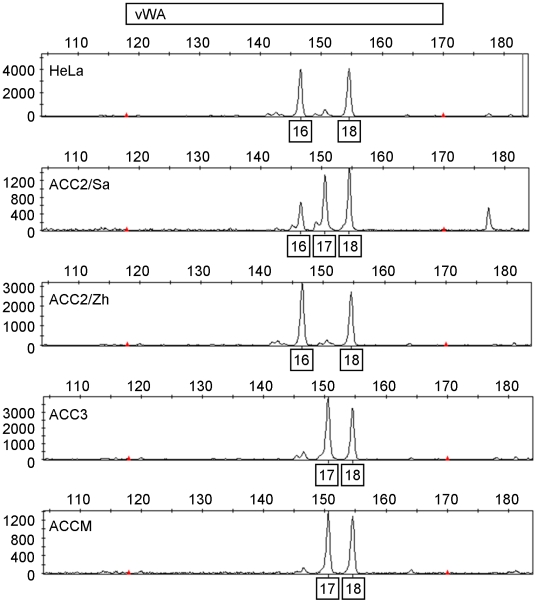
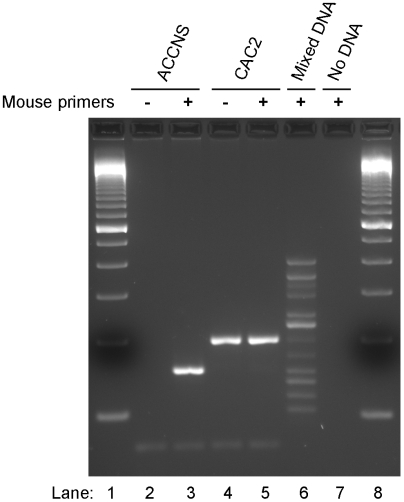
Verification
Claims the paper makes
The claims and statistics of this paper haven’t been checked yet.
Run the check — free, no account needed. It reads the open-access text and checks the sources it cites.
Claims other papers make about this one
Each is checked against this paper’s own text: does it say what the citing paper says it does?
The cited source says what the claim attributes to it.
In the citing paper
“Two adenoid cystic carcinoma, ACC-2 and ACC-M were reported as being contaminated by HeLa [22].”
From Investigation of Cross-Contamination and Misidentification of 278 Widely Used Tumor Cell Lines (2017) · cites this paper as [22]
Self-check
Percentages, sums and reported differences re-computed from the paper’s own numbers.
The self-check needs the paper’s full text.
Citations
Cites
Barcoding animal life: cytochrome c oxidase subunit 1 divergences among closely related species
Hebert, P. D. N., Ratnasingham, S., & de Waard, J. R. (2003) · Proceedings of the Royal Society of London. Series B: Biological Sciences · doi:10.1098/rsbl.2003.0025 · Cited by 4,466
(1952) · Cancer Research · Cited by 987
Schweppe, R. E., Klopper, J. P., Korch, C., Pugazhenthi, U., Benezra, M., Knauf, J. A., Fagin, J. A., Marlow, L. A., Copland, J. A., Smallridge, R. C., et al. (2008) · The Journal of Clinical Endocrinology & Metabolism · doi:10.1210/jc.2008-1102 · Cited by 563
HeLa cells 50 years on: the good, the bad and the ugly
Masters, J. R. (2002) · Nature Reviews Cancer · doi:10.1038/nrc775 · Cited by 560
Established cell line of urinary bladder carcinoma (T24) containing tumour‐specific antigen
Bubenik, J., Barešová, M., Viklický, V., Jakoubková, J., Sainerová, H., & DONNER, J. (1973) · International Journal of Cancer · doi:10.1002/ijc.2910110327 · Cited by 524
Short tandem repeat profiling provides an international reference standard for human cell lines
Masters, J. R., Thomson, J. A., Daly-Burns, B., Reid, Y. A., Dirks, W. G., Packer, P., Toji, L. H., Ohno, T., Tanabe, H., Arlett, C. F., et al. (2001) · Proceedings of the National Academy of Sciences · doi:10.1073/pnas.121616198 · Cited by 478
Validity of nucleic acid purities monitored by 260nm/280nm absorbance ratios.
Glasel, J. A. (1995) · PubMed · Cited by 437
The Costs of using Unauthenticated, Over-Passaged Cell Lines: How Much more Data do we Need?
Hughes, P., Marshall, D., Reid, Y., Parkes, H., & Gelber, C. (2007) · BioTechniques · doi:10.2144/000112598 · Cited by 434
Spontaneous transformation and immortalization of human endothelial cells
Takahashi, K., Sawasaki, Y., Hata, J., Mukai, K., & Goto, T. (1990) · In Vitro Cellular & Developmental Biology - Plant · doi:10.1007/bf02624456 · Cited by 419
Rae, J. M., Creighton, C. J., Meck, J. M., Haddad, B. R., & Johnson, M. D. (2007) · Breast Cancer Research and Treatment · doi:10.1007/s10549-006-9392-8 · Cited by 374
Research works printed but not linked: 4
- [8]Carlson ER Kim j Mirowski GW Stewart JCB Zarbo RJ 2008 Salivary gland diseases. Oral Pathology: Clinical Pathology Correlations. Regezi JA Sciubba JJ Jordan RCK St. Louis, MI, USA Saunders 179 215
- [16]Takata T Kudo Y Zhao M Ogawa I Miyauchi M 1999 Reduced expression of p27(Kip1) protein in relation to salivary adenoid cystic carcinoma metastasis. Cancer 86 928 35 10491517
- [30]Suda K Rothen-Rutishauser B Günthert M Wunderli-Allenspach H 2001 Phenotypic characterization of human umbilical vein endothelial (ECV304) and urinary carcinoma (T24) cells: endothelial versus epithelial features. In Vitro Cell Dev Biol Anim 37 505 14 11669284
- [37]MacLeod RA Dirks WG Matsuo Y Kaufmann M Milch H 1999 Widespread intraspecies cross-contamination of human tumor cell lines arising at source. Int J Cancer 83 555 63 10508494
Cited by
Sorted by citations
Persson, M., Andrén, Y., Mark, J., Horlings, H. M., Persson, F., & Stenman, G. (2009) · Proceedings of the National Academy of Sciences · doi:10.1073/pnas.0909114106 · Cited by 803
“In the absence of t(6;9)-positive, authentic ACC cell lines (23) we used primary cultured fusion-positive ACC cells.”
The mutational landscape of adenoid cystic carcinoma
Ho, A. S., Kannan, K. S., Roy, D. M., Morris, L. G. T., Ganly, I., Katabi, N., Ramaswami, D., Walsh, L. A., Eng, S., Huse, J. T., et al. (2013) · Nature Genetics · doi:10.1038/ng.2643 · Cited by 472
Vasilevsky, N. A., Brush, M. H., Paddock, H., Ponting, L., Tripathy, S. J., LaRocca, G. M., & Haendel, M. A. (2013) · PeerJ · doi:10.7717/peerj.148 · Cited by 271
“There are increasingly documented occurrences of cell line misidentification and contamination, as highlighted by the infamous HeLa contamination statistics (Gartler, 1968) and other cell line contaminations (Phuchareon et al., 2009).”
BackgroundNasopharyngeal carcinoma: The next challenges
Razak, A. R. A., Siu, L. L., Liu, F., Ito, E., O’Sullivan, B., & Chan, K. (2010) · European Journal of Cancer · doi:10.1016/j.ejca.2010.04.004 · Cited by 212
Ye, F., Chen, C., Qin, J., Liu, J., & Zheng, C. (2015) · The FASEB Journal · doi:10.1096/fj.14-266718 · Cited by 144
“51%), affecting 30 individual cell lines, 5 of which had recently been reported as spurious (22, 23).”
BackgroundReproducibility: changing the policies and culture of cell line authentication
Freedman, L. P., Gibson, M. C., Ethier, S. P., Soule, H. R., Neve, R. M., & Reid, Y. A. (2015) · Nature Methods · doi:10.1038/nmeth.3403 · Cited by 136
Sridhara, S. R. C., Carvalho, S., Grosso, A. R., Gallego-Paez, L. M., Carmo‐Fonseca, M., & de Almeida, S. F. (2017) · Cell Reports · doi:10.1016/j.celrep.2016.12.050 · Cited by 116
New tricks from an old oncogene
Stenman, G., Andersson, M. K., & Andrén, Y. (2010) · Cell Cycle · doi:10.4161/cc.9.15.12515 · Cited by 109
Chae, Y. K., Chung, S. Y., Davis, A. A., Carneiro, B. A., Chandra, S., Kaplan, J. B., Kalyan, A., & Giles, F. J. (2015) · Oncotarget · doi:10.18632/oncotarget.5076 · Cited by 106
“The most cost effective approach is to start in vitro, but establishing a validated ACC cell line has been challenging [109].”
BackgroundInvestigation of Cross-Contamination and Misidentification of 278 Widely Used Tumor Cell Lines
Huang, Y., Liu, Y., Zheng, C., & Shen, C. (2017) · PLOS ONE · doi:10.1371/journal.pone.0170384 · Cited by 105
Andersson, M. K., Afshari, M. K., Andrén, Y., Wick, M. J., & Stenman, G. (2017) · JNCI Journal of the National Cancer Institute · doi:10.1093/jnci/djx017 · Cited by 102
Systematic Review: Characteristics and Preclinical Uses of Bladder Cancer Cell Lines
Zuiverloon, T. C. M., de Jong, F. C., Costello, J. C., & Theodorescu, D. (2018) · Bladder Cancer · doi:10.3233/blc-180167 · Cited by 105
Sources of error in the retracted scientific literature
Casadevall, A., Steen, R. G., & Fang, F. C. (2014) · The FASEB Journal · doi:10.1096/fj.14-256735 · Cited by 89
Bian, X., Yang, Z., Feng, H., Sun, H., & Liu, Y. (2017) · Scientific Reports · doi:10.1038/s41598-017-09660-w · Cited by 86
“7% (8) were mixtures of multiple cell lines at present.”
BackgroundCoussens, N. P., Braisted, J. C., Peryea, T., Sittampalam, G. S., Simeonov, A. M., & Hall, M. D. (2017) · Pharmacological Reviews · doi:10.1124/pr.117.013755 · Cited by 80
“Worse, it was reported that all six adenoid cystic carcinoma cell lines used for oncology studies are contaminated by other common cell lines, rendering a significant amount of work in the field redundant (Phuchareon et al., 2009).”
BackgroundIvanov, S. V., Panaccione, A., Brown, B. T., Guo, Y. P., Moskaluk, C. A., Wick, M. J., Brown, J. L., Ivanova, A. V., Issaeva, N., El‐Naggar, A. K., et al. (2012) · Oncogene · doi:10.1038/onc.2012.377 · Cited by 77
Molecular biology of adenoid cystic carcinoma
Liu, J., Shao, C., Tan, M., Mu, D., Ferris, R. L., & Ha, P. K. (2011) · Head & Neck · doi:10.1002/hed.21849 · Cited by 79
“Structurally related to platelet-derived growth factor/colony stimulating factor-1 receptors,(50) c-kit is activated by binding to stem cell factor (alternatively known as mast cell growth factor, steel factor), and promotes cell growth and differentiation.(49) C-kit activation is important for a variety of normal phy…”
BackgroundShao, C., Sun, W., Tan, M., Glazer, C. A., Bhan, S., Zhong, X., Fakhry, C., Sharma, R. B., Westra, W. H., Hoque, M. O., et al. (2011) · Clinical Cancer Research · doi:10.1158/1078-0432.ccr-10-2992 · Cited by 74
Adenoid cystic carcinoma: emerging role of translocations and gene fusions
Wysocki, P., Izumchenko, E., Meir, J., Ha, P. K., Sidransky, D., & Brait, M. (2016) · Oncotarget · doi:10.18632/oncotarget.11288 · Cited by 74
“Unfortunately, past efforts to identify the significance of this anomaly have been largely hampered by the lack of validated ACC cell lines [27].”
BackgroundWarner, K. A., Adams, A., Bernardi, L., Nör, C., Finkel, K. A., Zhang, Z., McLean, S. A., Helman, J. I., Wolf, G. T., Divi, V., et al. (2013) · Oral Oncology · doi:10.1016/j.oraloncology.2013.08.004 · Cited by 70
TGF-β1 Promotes Migration and Invasion of Salivary Adenoid Cystic Carcinoma
Dong, L., Wang, Y., Li, S. L., Yu, G., Gan, Y., Li, D., & Wang, C. Y. (2011) · Journal of Dental Research · doi:10.1177/0022034511401407 · Cited by 67
“Recently, it was reported that SACC cell lines from different sources were contaminated with HeLa cells (Phuchareon et al., 2009).”
BackgroundDevelopment and characterization of xenograft model systems for adenoid cystic carcinoma
Moskaluk, C. A., Baras, A. S., Mancuso, S. A., Fan, H., Davidson, R. J., Dirks, D. C., Golden, W. L., & Frierson, H. F. (2011) · Laboratory Investigation · doi:10.1038/labinvest.2011.105 · Cited by 66
Systemic therapies for salivary gland adenoid cystic carcinoma.
Sahara, S., Herzog, A. E., & Nor, J. E. (2021) · PubMed Central · Cited by 65
Nightingale, J., Lum, B., Ladwa, R., Simpson, F., & Panizza, B. J. (2021) · Biochimica et Biophysica Acta (BBA) - Reviews on Cancer · doi:10.1016/j.bbcan.2021.188523 · Cited by 58
ATR is a MYB regulated gene and potential therapeutic target in adenoid cystic carcinoma
Andersson, M. K., Mangiapane, G., Nevado, P. T., Tsakaneli, A., Carlsson, T., Corda, G., Nieddu, V., Abrahamian, C., Chayka, O., Rai, L., et al. (2020) · Oncogenesis · doi:10.1038/s41389-020-0194-3 · Cited by 57
Frerich, C. A., Brayer, K. J., Painter, B., Kang, H., Mitani, Y., El‐Naggar, A. K., & Ness, S. A. (2017) · Oncotarget · doi:10.18632/oncotarget.23641 · Cited by 55
“In addition, there have been reports that several supposed ACC cell lines have been misidentified or could be contaminated by other cell types, so studies that have relied primarily on cell line analyses may be compromised [23, 24].”
BackgroundGao, R., Cao, C., Zhang, M., Lopez, M.-C., Yan, Y., Chen, Z., Mitani, Y., Zhang, L., Zajac‐Kaye, M., Liu, B., et al. (2014) · Oncotarget · doi:10.18632/oncotarget.2985 · Cited by 52
“In contrast, molecular characterization of a recurrent t(6;9) rearrangement in ACC was delayed due to lack of validated ACC tumor cell lines [7-10] until 2009 when the MYB-NFIB fusion oncogene was isolated using short-term cultures of ACC surgical biopsies [11].”
Panaccione, A., Chang, M. T., Carbone, B. E., Guo, Y. P., Moskaluk, C. A., Virk, R. K., Chiriboga, L. A., Prasad, M. L., Judson, B. L., Mehra, S., et al. (2016) · Clinical Cancer Research · doi:10.1158/1078-0432.ccr-15-2208 · Cited by 52
“Development of targeted therapies for ACC has been further complicated by lack of reliable in vitro models, as there are currently no ACC cell lines available from centralized resources, and six previously created and shared cell lineswere proven to be grossly contaminated ormisidentified (4).”
BackgroundFrierson, H. F., & Moskaluk, C. A. (2013) · Journal of Clinical Investigation · doi:10.1172/jci69070 · Cited by 50
Chen, C., Choudhury, S., Wangsa, D., Lescott, C. J., Wilkins, D. J., Sripadhan, P., Liu, X., Wangsa, D., Ried, T., Moskaluk, C. A., et al. (2017) · Scientific Reports · doi:10.1038/s41598-017-11764-2 · Cited by 49
Tetsu, O., Phuchareon, J., Chou, A. Y., Cox, D. P., Eisele, D. W., & Jordan, R. C. (2010) · Neoplasia · doi:10.1593/neo.10356 · Cited by 46
“HEK 293T cells were chosen because they barely express endogenous c-Kit and because widely used cell lines thought to be ACC cells have recently been shown to have been replaced with other cells because of cross-contamination and misidentification [3].”
BackgroundSelf-citationEpithelial-to-Mesenchymal Transition in the Pathogenesis and Therapy of Head and Neck Cancer
Thierauf, J., Veit, J. A., & Heß, J. (2017) · Cancers · doi:10.3390/cancers9070076 · Cited by 45
“Similar to mucosal melanoma, the availability of reliable preclinical models is limited [51], and most published studies on expression and regulation of EMT-related proteins rely on retrospective studies with FFPE (Formalin-fixed paraffin-embedded) tissue samples.”
BackgroundFerrarotto, R., Mishra, V., Herz, E., Yaacov, A., Solomon, O., Rauch, R., Mondshine, A., Motin, M., Leibovich-Rivkin, T., Davis, M., et al. (2022) · Cell Death and Disease · doi:10.1038/s41419-022-05133-9 · Cited by 39
Suprabasin Is Hypomethylated and Associated with Metastasis in Salivary Adenoid Cystic Carcinoma
Shao, C., Tan, M., Bishop, J. A., Liu, J. S., Bai, W., Gaykalova, D. A., Ogawa, T., Vikani, A. R., Agrawal, Y., Li, R. J., et al. (2012) · PLoS ONE · doi:10.1371/journal.pone.0048582 · Cited by 38
“Although expression profiling in primary ACC tumor samples provides convincing evidence in these studies, the majority of these works also utilized ACC cancer cell lines ACCM, ACC2, or ACC3; concern has been raised about contamination of these cell lines in a recent report [22].”
ResultUM-HACC-2A: MYB-NFIB fusion-positive human adenoid cystic carcinoma cell line
Warner, K. A., Herzog, A. E., Pearson, A. T., Zhang, Z., Wu, W., Divi, V., Rodriguez-Ramirez, C., CASTILHO, R. M., Polverini, P. J., & Nor, J. E. (2018) · Oral Oncology · doi:10.1016/j.oraloncology.2018.10.012 · Cited by 40
“Six ACC cell lines were found to be cross-contaminated with HeLa (ACC2, ACC3, ACCM), T24 bladder cancer cells (ACCS), established from mouse (ACCNS), or derived from rat (CAC2) [19].”
BackgroundPotential biological functions of microvesicles derived from adenoid cystic carcinoma
Zhang, Z., Yan, C., Li, B., & Li, L. (2018) · Oncology Letters · doi:10.3892/ol.2018.8296 · Cited by 37
“A previous study suggested that ACCs may exhibit similarities with HeLa cells (30).”
BackgroundKeysar, S. B., Eagles, J. R., Miller, B., Jackson, B. C., Chowdhury, F. N., Reisinger, J., Chimed, T.-S., Le, P. N., Morton, J. J., Somerset, H., et al. (2018) · Clinical Cancer Research · doi:10.1158/1078-0432.ccr-17-3871 · Cited by 32
“These already limited models are further diluted by disease histotype (4) and cell line misidentification (5).”
BackgroundDevelopment and characterization of salivary adenoid cystic carcinoma cell line
Li, J., Perlaky, L., Rao, P. H., Weber, R. S., & El‐Naggar, A. K. (2014) · Oral Oncology · doi:10.1016/j.oraloncology.2014.06.012 · Cited by 32
“STR DNA fingerprinting assay was conducted by the CCSG Characterized Cell Line Core at MD Anderson Cancer Center as previously described [15,20].”
MethodRadiosensitization of Adenoid Cystic Carcinoma with MDM2 Inhibition
Prabakaran, P. J., Javaid, A. M., Swick, A. D., Werner, L. R., Nickel, K. P., Sampene, E., Hu, R., Ong, I. M., Bruce, J. Y., Hartig, G. K., et al. (2017) · Clinical Cancer Research · doi:10.1158/1078-0432.ccr-17-0969 · Cited by 32
Head and neck adenoid cystic carcinoma
Bell, D., & Hanna, E. Y. (2012) · Current Opinion in Otolaryngology & Head & Neck Surgery · doi:10.1097/moo.0b013e32835c05fd · Cited by 30
MYB-activated models for testing therapeutic agents in adenoid cystic carcinoma
Jiang, Y., Gao, R., Cao, C., Forbes, L., Li, J., Freeberg, S., Fredenburg, K. M., Justice, J. M., Silver, N. L., Wu, L., et al. (2019) · Oral Oncology · doi:10.1016/j.oraloncology.2019.09.005 · Cited by 30
“Despite the direct evidence for structural MYB rearrangements, it has been difficult to generate validated human ACC tumor cell lines (31) and there are no activated MYB mouse models that recapitulate ACC salivary gland tumors.”
BackgroundSalivary glands adenoid cystic carcinoma: a molecular profile update and potential implications
da Silva, F. J., de Azevedo, J. C., Ralph, A. C. L., Pinheiro, J. D. J. V., Freitas, V. M., & Calcagno, D. Q. (2023) · Frontiers in Oncology · doi:10.3389/fonc.2023.1191218 · Cited by 28
“In vitro, assays are also insufficient due to the few established cell lines, and some have proven cross-contamination (82).”
BackgroundPanaccione, A., Zhang, Y., Ryan, M. R., Moskaluk, C. A., Anderson, K. S., Yarbrough, W. G., & Ivanov, S. V. (2017) · Stem Cell Research · doi:10.1016/j.scr.2017.05.002 · Cited by 25
“Unfortunately, most ACC cell lines generated 20–30 years ago and shared between laboratories turned out to be grossly contaminated or misidentified (Phuchareon et al., 2009; PLoS One, 2014).”
Korch, C. T., & Capes-Davis, A. (2021) · SLAS Discovery · doi:10.1177/24725552211051963 · Cited by 23
Phuchareon, J., Overdevest, J. B., McCormick, F. P., Eisele, D. W., van Zante, A., & Tetsu, O. (2014) · Translational Oncology · doi:10.1016/j.tranon.2014.10.003 · Cited by 23
Self-citationAuthentication of human cell-based products: the role of a new consensus standard
Kerrigan, L., & Nims, R. W. (2011) · Regenerative Medicine · doi:10.2217/rme.11.5 · Cited by 23
Zheng, C., Qiao, B., Wang, M., & Tao, Q. (2012) · The Kaohsiung Journal of Medical Sciences · doi:10.1016/j.kjms.2012.09.001 · Cited by 21
“Currently, the most effective treatment for ACC is a combination therapy involving surgery, postoperative radiation, and chemotherapy [4].”
BackgroundTargeting MDM2 for Treatment of Adenoid Cystic Carcinoma
Warner, K. A., Nör, F., Acasigua, G. A., Martins, M. D., Zhang, Z., McLean, S. A., Spector, M. E., Chepeha, D. B., Helman, J. I., Wick, M. J., et al. (2016) · Clinical Cancer Research · doi:10.1158/1078-0432.ccr-15-1698 · Cited by 22
“The Tetsu laboratory reported contamination and misidentification of six established ACC cell lines (16).”
BackgroundPhuchareon, J., van Zante, A., Overdevest, J. B., McCormick, F. P., Eisele, D. W., & Tetsu, O. (2014) · Translational Oncology · doi:10.1016/j.tranon.2014.07.006 · Cited by 20
Self-citationOptimization of cell lines as tumour models by integrating multi-omics data
Zhao, N., Liu, Y., Wei, Y., Yan, Z., Zhang, Q., Wu, C., Chang, Z., & Xu, Y. (2016) · Briefings in Bioinformatics · doi:10.1093/bib/bbw082 · Cited by 20
Faridi, N., Bathaie, S. Z., Abroun, S., Farzaneh, P., Karbasian, H., Tamanoi, F., & Mohagheghi, M. A. (2018) · Cytotechnology · doi:10.1007/s10616-017-0159-3 · Cited by 19
“Generally, primary cells retain cellular functions, growth characteristics, cellular markers and signaling pathways more similar to the original tissue when propagated in culture (Berwald and Sachs 1963; Phuchareon et al. 2009; Romano et al. 2009, ZenBio Scientific Publications 2015).”
BackgroundHarvesting Human Prostate Tissue Material and Culturing Primary Prostate Epithelial Cells
Frame, F. M., Pellacani, D., Collins, A. T., & Maitland, N. J. (2016) · Methods in molecular biology · doi:10.1007/978-1-4939-3724-0_12 · Cited by 18
Andreasen, S., Agander, T. K., Bjørndal, K., Erentaite, D., Heegaard, S., Larsen, S. R., Melchior, L. C., Tan, Q., Ulhøi, B. P., Wessel, I., et al. (2018) · Oncotarget · doi:10.18632/oncotarget.24800 · Cited by 18
“As previous in vitro studies on the involvement of miRNA in the metastatic progression of ACC has been hampered by cross-contamination, data from human samples has not been available until now [15].”
BackgroundEstablishment, authenticity, and characterization of cervical cancer cell lines
Martinez, M. D. L. Z., Mendoza, C. M. L., Salazar, J. T., García-Carrancá, A. M., Cervantes, M. A. C., & Alcántara-Quintana, L. E. (2022) · Molecular & Cellular Oncology · doi:10.1080/23723556.2022.2078628 · Cited by 17
Johnen, G., Rozynek, P., von der Gathen, Y., Bryk, O., Zdrenka, R., Johannes, C., Weber, D. G., Igwilo-Okuefuna, O., Raiko, I., Hippler, J., et al. (2013) · PLoS ONE · doi:10.1371/journal.pone.0064139 · Cited by 17
Korch, C. T., & Varella‐Garcia, M. (2018) · Advances in Molecular Pathology · doi:10.1016/j.yamp.2018.07.003 · Cited by 16
Authentication of the R06E Fruit Bat Cell Line
Jordan, I., Munster, V. J., & Sandig, V. (2012) · Viruses · doi:10.3390/v4050889 · Cited by 16
Yarbrough, W. G., Panaccione, A., Chang, M. T., & Ivanov, S. V. (2016) · Laryngoscope Investigative Otolaryngology · doi:10.1002/lio2.22 · Cited by 19
Stawarz, K., Durzyńska, M., Galazka, A., Gorzelnik, A., Zwoliński, J., Paszkowska, M., Bieńkowska‐Pluta, K., & Misiak-Gałązka, M. (2025) · Oncology Letters · doi:10.3892/ol.2025.14899 · Cited by 15
“The ACC2, ACC3 and ACCM cell lines were primarily contaminated with cervical cancer cells, while the ACCS cell line was composed of T24 urinary bladder cancer cells (11).”
Wang, S. J., Asthana, S., van Zante, A., Heaton, C. M., Phuchareon, J., Stein, L. C., Higuchi, S., Kishimoto, T., Chiu, C. Y., Olshen, A. B., et al. (2017) · Oral Oncology · doi:10.1016/j.oraloncology.2017.03.020 · Cited by 14
“Cell culture The following cell lines were from the American Type Culture Collection: SCC-4, SCC-25, CAL27, HeLa, SW480, 293T, and WI-38.”
BackgroundInfluentialSelf-citationMolecular features of adenoid cystic carcinoma with an emphasis on micro RNA expression
Andreasen, S. (2018) · Apmis · doi:10.1111/apm.12828 · Cited by 14
“in vitro studies, but the cell lines used have since been shown to be severely contaminated with various non-ACC cells (153).”
BackgroundCai, C., Rodepeter, F. R., Rossmann, A., Teymoortash, A., Lee, J.-S., Quint, K., Fazio, P. D., Ocker, M., Werner, J. A., & Mandić, R. (2012) · PubMed · Cited by 14
Schweppe, R. E. (2012) · Frontiers in Endocrinology · doi:10.3389/fendo.2012.00081 · Cited by 13
Persson, M., Andersson, M. K., Sahlin, P., Mitani, Y., Brandwein‐Weber, M., Frierson, H. F., Moskaluk, C. A., Fonseca, I., Ferrarotto, R., Boecker, W., et al. (2023) · The Journal of Pathology · doi:10.1002/path.6172 · Cited by 13
Guarracino, M. R., Xanthopoulos, P., Pyrgiotakis, G., Tomaino, V., Moudgil, B. M., & Pardalos, P. M. (2011) · Artificial Intelligence in Medicine · doi:10.1016/j.artmed.2011.07.002 · Cited by 13
“To his day, the most accurate way of discriminating among various ells is through genetic profiling (gene expression) [7] or identificaion with biomarkers, which can take long time, requires expensive quipment and trained personnel [8].”
BackgroundIGRhCellID: integrated genomic resources of human cell lines for identification
Shiau, C.-K., Gu, D.-L., Chen, C., Lin, C.-H., & Jou, Y. (2010) · Nucleic Acids Research · doi:10.1093/nar/gkq1075 · Cited by 12
Girolamo, N. D., Chow, S., Richardson, A., & Wakefield, D. (2016) · Investigative Ophthalmology & Visual Science · doi:10.1167/iovs.15-18783 · Cited by 12
Robustin-silicoidentification of cancer cell lines based on next generation sequencing
Otto, R., Sers, C., & Leser, U. (2017) · Oncotarget · doi:10.18632/oncotarget.16110 · Cited by 12
“Oncotarget34315www.impactjournals.com/oncotarget Three factors have been found to be associated with false negative (FN) predictions: About 100 of the 546 FN-predictions for weight 1.0 occurred between queryreference pairs that were defined as identical by the goldstandard due to either cross-contamination (e.g. ACCS…”
BackgroundInfluentialRoth, J. S., Lee, T. D., Cheff, D. M., Gosztyla, M. L., Asawa, R. R., Danchik, C., Michael, S., Simeonov, A. M., Klumpp-Thomas, C. A., Wilson, K. M., et al. (2020) · SLAS DISCOVERY · doi:10.1177/2472555220911451 · Cited by 15
Establishment and genomic characterization of primary salivary duct carcinoma cell line
Li, J., Mitani, Y., Rao, P. H., Perlaky, L., Liu, B., Weber, R. S., & El‐Naggar, A. K. (2017) · Oral Oncology · doi:10.1016/j.oraloncology.2017.04.007 · Cited by 11
Adenoid cystic carcinoma: insights from molecular characterization and therapeutic advances
Jia, Y., Liu, Y., Yang, H., & Yao, F. (2024) · MedComm · doi:10.1002/mco2.734 · Cited by 10
The Epigenesis of Salivary Glands Carcinoma: From Field Cancerization to Carcinogenesis
Lazim, N. M., Yousaf, A., Abusalah, M. A. H., Sulong, S., Ismail, Z. I. M., Mohamud, R., Abu-Harirah, H. A., AlRamadneh, T. N., Hassan, R., & Abdullah, B. (2023) · Cancers · doi:10.3390/cancers15072111 · Cited by 9
Ling, S., Rettig, E. M., Tan, M., Chang, X., Wang, Z., Brait, M., Bishop, J. A., Fertig, E. J., Considine, M., Wick, M. J., et al. (2016) · International Journal of Oncology · doi:10.3892/ijo.2016.3532 · Cited by 9
“Our approach was to circumvent the lack of viable ACC cell lines (20) by using primary xenograft tumor models, in an attempt to identify relevant genes exhibiting differential promoter methylation.”
MethodThe cross-contaminated cell lines of adenoid cystic carcinoma: A crucial concern
Chen, W., Liu, N., & Zhang, S.-L. (2017) · Translational Surgery · doi:10.4103/2468-5585.200513 · Cited by 8
Dožić, B., Glumac, S., Boričić, N., Dožić, M., Aničić, B., & Boričić, I. (2016) · PubMed · Cited by 8
Elevated TARP promotes proliferation and metastasis of salivary adenoid cystic carcinoma
Yue, H., Cai, Y., Song, Y., Meng, L., Chen, X., Wang, M., Bian, Z., & Wang, R. (2016) · Oral Surgery Oral Medicine Oral Pathology and Oral Radiology · doi:10.1016/j.oooo.2016.11.023 · Cited by 7
Establishment and characterization of an orthotopic sinonasal squamous cell carcinoma mouse model
Costales, M., López, F., García–Inclán, C., Fernández, S., Marcos, C. Á., Llorente, J. L., & Hermsen, M. A. J. A. (2014) · Head & Neck · doi:10.1002/hed.23832 · Cited by 6
“Gelbard et al(21) used 2 aggressive tumor cell lines: DM14 is a highly metastatic clone of cell line TU167 of an SCC of the floor of the mouth, and ACC3 was, in fact, not an adenoid cystic carcinoma cell line, but HeLa.(23,24) Our cell line, SCCNC4, was derived from a T2N1M0 primary maxillary sinus SCC.”
MethodXia, R., Wang, Z., Zhang, C., Hu, Y., Zhou, R., Wang, L., Tian, Z., & Jiang, L. (2015) · Oral Surgery Oral Medicine Oral Pathology and Oral Radiology · doi:10.1016/j.oooo.2015.04.015 · Cited by 6
Challenges and Advances in the Development of Cell Lines and Xenografts
Schweppe, R. E., & Korch, C. T. (2018) · Advances in Molecular Pathology · doi:10.1016/j.yamp.2018.07.004 · Cited by 6
Human Cell Line Authentication: The Critical First Step in Any Project Using Human Cell Lines
McLaren, R. S., Reid, Y. A., & Storts, D. R. (2012) · Methods in molecular biology · doi:10.1007/978-1-62703-230-8_21 · Cited by 5
Witte, H. M., Gebauer, N., & Steinestel, K. (2022) · Critical Reviews in Oncology/Hematology · doi:10.1016/j.critrevonc.2022.103592 · Cited by 5
Rose, A. J., Fleming, M. M., Francis, J. C., Ning, J., Patrikeev, A., Chauhan, R., Harrington, K. J., & Swain, A. (2023) · The Journal of Pathology · doi:10.1002/path.6209 · Cited by 4
“There are few bona fi de ACC cell lines, and most do not retain consistent MYB expression if a translocation is present [17,18].”
BackgroundSodium Iodide Symporter Expression in Adenoid Cystic Carcinoma of the Head and Neck
Gainor, D. L., Chute, D. J., & Lorenz, R. R. (2015) · JAMA Otolaryngology–Head & Neck Surgery · doi:10.1001/jamaoto.2015.0970 · Cited by 4
Warner, K. A., Sahara, S., Herzog, A. E., Nör, F., CASTILHO, R. M., Polverini, P. J., & Nor, J. E. (2025) · Frontiers in Oral Health · doi:10.3389/froh.2025.1570042 · Cited by 3
“Phuchareon and colleagues identi fi ed the cross contamination of 6 ACC cell lines widely used to study this disease (47).”
Slivar, I. D. S., Zanesco, B. D. A., Martins, M. D., Matos, L. L., Nunes, F. D., Schuch, L. F., & Wagner, V. P. (2025) · Journal of Oral Pathology and Medicine · doi:10.1111/jop.70028 · Cited by 3
“While the organoids have been obtained from ACC validated patient-derived xenograft (PDX) models, caution must be taken in the analysis of the second study as the cell line used (ACCM) has been shown to be contaminated with HeLa [32].”
Transcriptomic Prediction of Pig Liver-Enriched Gene 1 Functions in a Liver Cell Line
Zhang, Z., Wang, Z., Dang, Y., Wang, J., Jayaprakash, S., Wang, H., & He, J. H. (2020) · Genes · doi:10.3390/genes11040412 · Cited by 3
Warner, K. A., Herzog, A. E., Sahara, S., Nör, F., CASTILHO, R. M., Demirci, H., Chepeha, D. B., Polverini, P. J., & Nor, J. E. (2024) · Oral Surgery Oral Medicine Oral Pathology and Oral Radiology · doi:10.1016/j.oooo.2024.06.005 · Cited by 3
Yoshino, K., Saijo, K., Noro, C., & Nakamura, Y. (2010) · Interdisciplinary Bio Central · doi:10.4051/ibc.2010.2.4.0014 · Cited by 3
Application of RapidHIT™ ID for cell authentication by fast and convenient STR profiling
Koh, U. N., Lee, J. H., Kang, H. J., Joo, K. M., Lee, J. C., & Lim, S. (2023) · Genes & Genomics · doi:10.1007/s13258-023-01388-4 · Cited by 2
Robust in-silico identification of Cancer Cell Lines based on RNA and targeted DNA sequencing data
Otto, R., Rössler, J.-N., Sers, C., Mamlouk, S., & Leser, U. (2019) · Scientific Reports · doi:10.1038/s41598-018-36300-8 · Cited by 2
Roseti, L., Bassi, A., Fornasari, P., Serra, M., Canella, F., Maso, A., Dallari, D., Bini, C., & Pelotti, S. (2013) · PubMed · Cited by 1
Genetic Manipulation Via Gene Transfer
Edwards, P. C., & Passineau, M. J. (2014) · Elsevier eBooks · doi:10.1016/b978-0-12-397157-9.00008-4 · Cited by 1
Johnson, M. (2012) · Materials and Methods · doi:10.13070/mm.en.2.145
Research ethics dilemmas in thyroid disease
Rosenthal, M. S., Angelos, P., & Schweppe, R. E. (2018) · Current Opinion in Endocrinology Diabetes and Obesity · doi:10.1097/med.0000000000000429
(2010) · Wiley eBooks · doi:10.1002/9780470649367.refs
Metadata
- Authors
- Phuchareon, J., Ohta, Y., Woo, J. M., Eisele, D. W., & Tetsu, O.
- Affiliations
- University of California, San Francisco (US)
- Corresponding author
- Tetsu, Osamu
- Venue
- PLoS ONE
- Publisher
- Public Library of Science (PLoS)
- Published
- 2009-06-25
- Volume
- 4
- Issue
- 6
- Pages
- e6040
- ISSN
- 1932-6203 (ISSN-L)
- PMC
- PMC2698276
- OpenAlex
- W2000248995
- Cited by
- 105
- References
- 46
- Citations by year
- 2026: 4 · 2025: 4 · 2024: 2 · 2023: 5 · 2022: 3 · 2021: 3 · 2020: 4 · 2019: 2 · 2018: 10 · 2017: 14 · 2016: 10 · 2015: 5 · 2014: 7 · 2013: 10 · 2012: 9
- FWCI
- 7.44
- Type
- journal article
- Language
- en
- Open access
- gold
- doi.org
- Locations
- PLoS ONE (publishedVersion, cc-by)
- Europe PMC (PubMed Central) (publishedVersion, cc-by)
- PubMed Central (publishedVersion, cc-by)
- PubMed (publishedVersion)
- DOAJ (DOAJ: Directory of Open Access Journals) (submittedVersion)
- Figshare (submittedVersion, cc-by)
- Funders
- Adenoid Cystic Carcinoma Research Foundation
- Johns Hopkins University
- University of California, San Francisco
- Topics
- Health Sciences › Medicine › Surgery › Salivary Gland Tumors Diagnosis and Treatment
- Life Sciences › Biochemistry, Genetics and Molecular Biology › Molecular Biology › Identification and Quantification in Food
- Life Sciences › Biochemistry, Genetics and Molecular Biology › Genetics › Genetic diversity and population structure
- Keywords
- adenoid cystic carcinoma, cell line contamination, cell line authentication, short tandem repeat profiling, DNA fingerprinting, HeLa cells, T24 cells, salivary gland carcinoma
- MeSH terms
- Alleles, Animals, Urinary Bladder Neoplasms, Carcinoma, Adenoid Cystic, Electron Transport Complex IV, HeLa Cells, Humans, Salivary Gland Neoplasms, Gene Expression Regulation, Neoplastic, Gene Expression Profiling, Cell Line, Tumor, Mice, Rats
About these checks
Registry, retraction, Cites and statistics results are computed, not judged, with one exception: a printed reference that no index lists is read once by a model before it counts as a citation error. Claims are extracted by a model and kept only when their quote appears verbatim in the text; each cited source is then checked, with a model’s help, for whether it says what the claim relies on. Those verdicts can be wrong — read the claim’s quote and the cited source before relying on one.
Statistics and arithmetic are recomputed, not judged.
Confidence bands are shown only for fields calibrated on our annotated test set. None is calibrated yet, so no band is shown.
What counts as a claim ›How we measure confidence ›How we check this ›
Are you an author, or do you see a problem with this page? Request a review
