

Global Brain Gene Expression Analysis Links Glutamatergic and GABAergic Alterations to Suicide and Major Depression
Open accessThe DOI matches its Crossref record; 108 of the 108 references it cites were found in a registry or an index.
Abstract
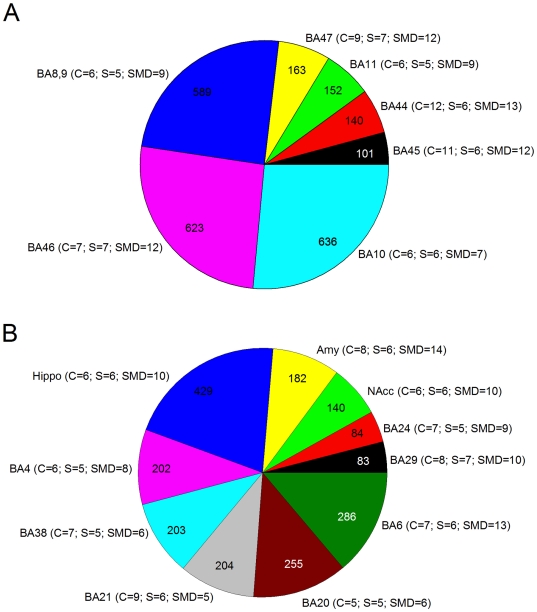
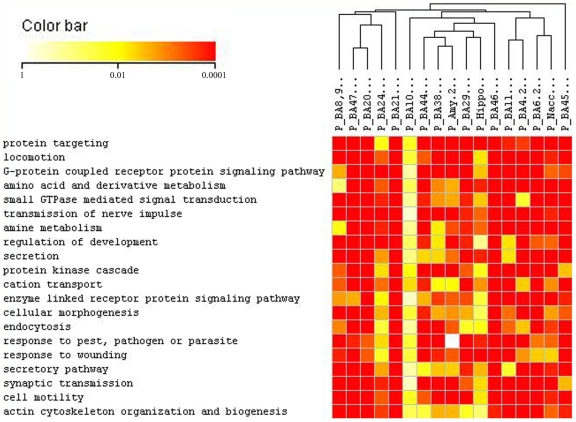
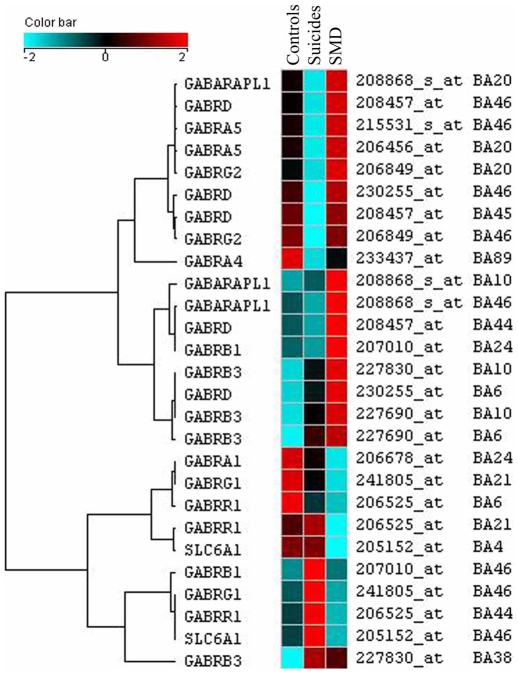
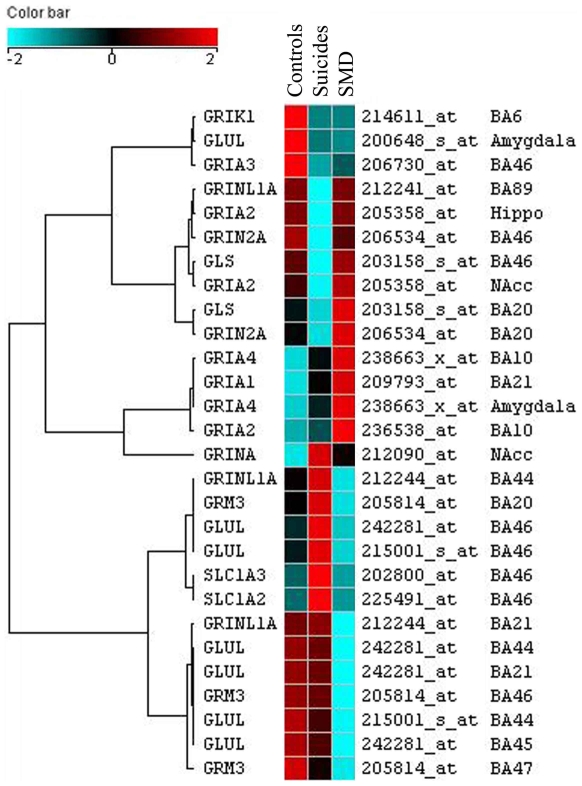
BACKGROUND: Most studies investigating the neurobiology of depression and suicide have focused on the serotonergic system. While it seems clear that serotonergic alterations play a role in the pathogenesis of these major public health problems, dysfunction in additional neurotransmitter systems and other molecular alterations may also be implicated. Microarray expression studies are excellent screening tools to generate hypotheses about additional molecular processes that may be at play. In this study we investigated brain regions that are known to be implicated in the neurobiology of suicide and major depression are likely to represent valid global molecular alterations. METHODOLOGY/PRINCIPAL FINDINGS: We performed gene expression analysis using the HG-U133AB chipset in 17 cortical and subcortical brain regions from suicides with and without major depression and controls. Total mRNA for microarray analysis was obtained from 663 brain samples isolated from 39 male subjects, including 26 suicide cases and 13 controls diagnosed by means of psychological autopsies. Independent brain samples from 34 subjects and animal studies were used to control for the potential confounding effects of comorbidity with alcohol. Using a Gene Ontology analysis as our starting point, we identified molecular pathways that may be involved in depression and suicide, and performed follow-up analyses on these possible targets. Methodology included gene expression measures from microarrays, Gene Score Resampling for global ontological profiling, and semi-quantitative RT-PCR. We observed the highest number of suicide specific alterations in prefrontal cortical areas and hippocampus. Our results revealed alterations of synaptic neurotransmission and intracellular signaling. Among these, Glutamatergic (GLU) and GABAergic related genes were globally altered. Semi-quantitative RT-PCR results investigating expression of GLU and GABA receptor subunit genes were consistent with microarray data. CONCLUSIONS/SIGNIFICANCE: The observed results represent the first overview of global expression changes in brains of suicide victims with and without major depression and suggest a global brain alteration of GLU and GABA receptor subunit genes in these conditions.
Overview
The claims and statistics of this paper haven’t been checked yet.
Free: it reads the open-access text and checks the first 5 claims that cite a source we can check. Create a free account to check every claim.
Integrity signals
Registry
Cites
Statistics
Figures
Verification
Claims the paper makes
The claims and statistics of this paper haven’t been checked yet.
Free: it reads the open-access text and checks the first 5 claims that cite a source we can check. Create a free account to check every claim.
Claims other papers make about this one
Each is checked against this paper’s own text: does it say what the citing paper says it does?
The source backs part of the claim, not all of it — or backs it for a different population, condition or comparison.
In the citing paper
“and the levels of connexins, 21 glutamine synthase (GS), glutamate transporter-1 (GLT-1), 21 , 22 and aquaporin-4 (AQP4) 23 are reduced in patients with MDD.”
From Major depressive disorder: hypothesis, mechanism, prevention and treatment (2024) · cites this paper as [22]
Experimental — accuracy not yet measuredThe source backs part of the claim, not all of it — or backs it for a different population, condition or comparison.
In the citing paper
“Global topological E/I imbalance in MDD is discovered through gene and protein expression of molecules related to inhibitory GABAergic and excitatory glutamatergic signaling in the postmortem MDD brains. 22 , 208 , 209”
From Major depressive disorder: hypothesis, mechanism, prevention and treatment (2024) · cites this paper as [22]
Experimental — accuracy not yet measuredThe cited source says what the claim attributes to it.
In the citing paper
“How this compares to human GluA1 gene SNPs was not described, but this evidence converges with human data implicating AMPARs [115].Gene clusters associated with excitatory synaptic function are also commonly identified in genetic screens in suicide and depression [116][117][118] and in preclinical studies [119].”
From Plasticity of synapses and reward circuit function in the genesis and treatment of depression (2023) · cites this paper as [116]
Self-check
Percentages, sums and reported differences re-computed from the paper’s own numbers.
The self-check needs the paper’s full text.
Citations
Cites
Controlling the False Discovery Rate: A Practical and Powerful Approach to Multiple Testing
Benjamini, Y., & Hochberg, Y. (1995) · Journal of the Royal Statistical Society Series B: Statistical Methodology · doi:10.1111/j.2517-6161.1995.tb02031.x · Cited by 109,482 · cited 1×
“While different statistical approaches exist to correct for type I errors [40–42], independent replication, both internal and external, is the method of choice to determine the accuracy of results [43].”
Gene Ontology: tool for the unification of biology
Ashburner, M., Ball, C. A., Blake, J. A., Botstein, D., Butler, H., Cherry, J. M., Davis, A. P., Dolinski, K., Dwight, S. S., Eppig, J. T., et al. (2000) · Nature Genetics · doi:10.1038/75556 · Cited by 43,206
Quantitative Monitoring of Gene Expression Patterns with a Complementary DNA Microarray
Schena, M., Shalon, D., Davis, R. W., & Brown, P. O. (1995) · Science · doi:10.1126/science.270.5235.467 · Cited by 9,609 · cited 1×
“Microarray technology offers the possibility of parallel monitoring expression levels of several thousands to virtually all genes based on the hybridization of nucleotide probes mounted on high density arrays to a target nucleotide sequence [35,36].”
DAVID: Database for Annotation, Visualization, and Integrated Discovery
Dennis, G., Sherman, B. T., Hosack, D. A., Yang, J., Gao, W., Lane, H. C., & Lempicki, R. A. (2003) · Genome Biology · doi:10.1186/gb-2003-4-5-p3 · Cited by 9,327 · cited 5×
“In order to specifically explore GABAergic and glutamatergic genes that were differentially expressed across the different brain regions, we interrogated the list of 5,868 differentially expressed genes using the probe sets identified and annotated using DAVID.”
InfluentialA randomized trial of an N-methyl-D-aspartate antagonist in treatment-resistant major depression.
Zarate, C. A., Singh, J. B., Carlson, P. J., Brutsche, N. E., Ameli, R., Luckenbaugh, D. A., Charney, D. S., & Manji, H. K. (2006) · Archives of General Psychiatry · doi:10.1001/archpsyc.63.8.856 · Cited by 3,766 · cited 1×
“This hypothesis, if true, is in agreement with the observation that a single dose of Ketamine, an NMDA antagonist, is sufficient to produce a rapid and long lasting antidepressant effect [88].”
The world health report 2000 - Health systems: improving performance
Reinhardt, U. E., & Cheng, T.-M. (2000) · Europe PMC (PubMed Central) · doi:10.1590/s0042-96862000000800020 · Cited by 3,467
Expression monitoring by hybridization to high-density oligonucleotide arrays
Lockhart, D. J., Dong, H., Byrne, M. C., Follettie, M. T., Gallo, M. V., Chee, M. S., Mittmann, M., Wang, C., Kobayashi, M., Norton, H., et al. (1996) · Nature Biotechnology · doi:10.1038/nbt1296-1675 · Cited by 2,840 · cited 1×
“Microarray technology offers the possibility of parallel monitoring expression levels of several thousands to virtually all genes based on the hybridization of nucleotide probes mounted on high density arrays to a target nucleotide sequence [35,36].”
A molecular and cellular theory of depression
Duman, R. S. (1997) · Archives of General Psychiatry · doi:10.1001/archpsyc.1997.01830190015002 · Cited by 2,129 · cited 1×
“This is consistent with what one would expect according to neuroanatomical studies of depression and suicide and is also consistent with previous studies looking at discrete brain regions [4,57–63].”
Glucocorticoids and Hippocampal Atrophy in Neuropsychiatric Disorders
Sapolsky, R. M. (2000) · Archives of General Psychiatry · doi:10.1001/archpsyc.57.10.925 · Cited by 2,016 · cited 1×
“Glutamate seems to mediate stress-induced neuronal atrophy in the hippocampus [89].”
Hippocampal Volume Reduction in Major Depression
Bremner, J. D., Narayan, M., Anderson, E. R., Staib, L. H., Miller, H. L., & Charney, D. S. (2000) · American Journal of Psychiatry · doi:10.1176/ajp.157.1.115 · Cited by 1,670 · cited 1×
“This is consistent with what one would expect according to neuroanatomical studies of depression and suicide and is also consistent with previous studies looking at discrete brain regions [4,57–63].”
Research works printed but not linked: 1
- Bremner JD Narayan M Anderson ER Staib LH Miller HL 2000 Hippocampal volume reduction in major depression. Am J Psychiatry 157 115 118 10618023 · DOI · Paper page
Cited by
Items 301–400 of 409
Slabe, Z., Balesar, R. A., Verwer, R. W. H., Drevenšek, G., & Swaab, D. F. (2023) · Frontiers in Molecular Neuroscience · doi:10.3389/fnmol.2023.1277958 · Cited by 5
Rajkowska, G. (2014) · Springer eBooks · doi:10.1007/978-1-4939-1056-4_14 · Cited by 6
“Expression of the mRNA for glutamine synthetase was also down-regulated in the dorsolateral prefrontal cortex, premotor cortex, and the amygdala of depressed suicide victims (Sequeira et al. 2009).”
BackgroundHomeostasis to Allostasis: Prefrontal Astrocyte Roles in Cognitive Flexibility and Stress Biology
Wulaer, B., Holtz, M., & Nagai, J. (2024) · Advances in neurobiology · doi:10.1007/978-3-031-64839-7_6 · Cited by 4
Cîmpianu, M. E., Onișan, E., Sărac, V. M., Sărac, I., Ganea, M., Gligor, O., Bâlici, Ș., Nicula, G. Z., Domșa, E. M., Cîmpianu, T., et al. (2025) · International Journal of Molecular Sciences · doi:10.3390/ijms26168053 · Cited by 4
“Similar associations were also found for the neurotrophic factors [30–32, 43, Examining the influence of rs110402 on brain responses to negative emotions under the influence of alcohol consumption in adolescents and young adults at high risk for alcoholism, a study demonstrated by functional…”
Bastawy, E. M., Eraslan, I. M., Voglsanger, L. M., Suphioglu, C., Walker, A. J., Dean, O. M., Read, J. L., Ziemann, M., & Smith, C. M. (2024) · International Journal of Molecular Sciences · doi:10.3390/ijms25137391 · Cited by 4
“This finding is consistent with human brain transcriptome studies that also observed reduced expression of this same gene set in depressed and suicide participants compared to controls, within samples from the dorsolateral prefrontal cortex [61] and other cortical and subcortical regions [62].”
ResultMother's little helper turned a foe: Alprazolam use, misuse, and abuse
Cardona-Acosta, A. M., Meisser, N., Vardeleon, N. I., Steiner, H., & Bolaños‐Guzmán, C. A. (2024) · Progress in Neuro-Psychopharmacology and Biological Psychiatry · doi:10.1016/j.pnpbp.2024.111137 · Cited by 5
Approaches and Findings from Gene Expression Profiling Studies of Suicide
Fiori, L. M., & Turecki, G. (2012) · Cited by 5
Self-citationRéus, G. Z., Abelaira, H. M., Coutellier, L. D., Manosso, L. M., & Pavlovic, Z. M. (2022) · Springer eBooks · doi:10.1007/978-3-030-87480-3_3 · Cited by 4
Nagai, T., Hashimoto, R., Okuda, S. M., Kodera, Y., Oh‐Ishi, M., Maeda, T., Ito, N., Hanawa, T., Kiyohara, H., & Yamada, H. (2015) · Traditional & Kampo Medicine · doi:10.1002/tkm2.1018 · Cited by 4
“CNPase1 is one of several oligodendrocyte-specific markers, and was previously implicated in major depressive disorder [20,21] supporting the hypothesis that altered CNPase1 function may participate in the pathophysiology of psychiatric disorders.”
BackgroundLi, Z., Kruck, G., Thng, G., & Nagy, C. (2025) · Brain Behavior and Immunity · doi:10.1016/j.bbi.2025.05.023 · Cited by 3
“In GABAergic neurotransmission, genes encoding the GABA A subunits were dysregulated in a region-specific manner, with certain subunits upregulated in the dlPFC and others downregulated in the ACC and temporal cortex (Choudary et al., 2005; Sequeira et al., 2009).”
Characterization of the chromosome 7 locus associated with suicidal behavior
Fiori, L. M., Chawla, A., Nathan, V., Maitra, M., Nagy, C., & Turecki, G. (2026) · Molecular Psychiatry · doi:10.1038/s41380-026-03600-9 · Cited by 3
“Both of these regions have previously been implicated in suicide, and demonstrate numerous suicide-associated alterations at the epigenetic, gene expression and protein expression levels [14 – 17].”
Self-citationNeurobiology of Suicide in Depressive Disorders
Sönmez, D., Kurhan, F., & Hocaoğlu, Ç. (2024) · Springer eBooks · doi:10.1007/978-3-031-32035-4_152-1 · Cited by 4
Stress, Vulnerability, and Suicide: The Stress–Diathesis Model
van Heeringen, K. (2018) · Cambridge University Press eBooks · doi:10.1017/9781316563205.003 · Cited by 3
Actualidades en neurobiología de la depresión
Villa, B. A. D., & González, C. G. (2012) · Cited by 34
Biological Alterations in Depression
Benton, C. S., & Wiltshire, T. (2011) · InTech eBooks · doi:10.5772/27658 · Cited by 5
Suicide in Children and Adults with Epilepsy: A Complex Relationship
Jones, J. E., & Bordenave, J. M. (2018) · Springer eBooks · doi:10.1007/978-3-319-74391-2_6 · Cited by 2
Recent Progress in Functional Genomic Studies of Depression and Suicide
Almeida, D. M., & Turecki, G. (2017) · Current Genetic Medicine Reports · doi:10.1007/s40142-017-0112-y · Cited by 2
Self-citationNeurobiología de la Patología Dual
Rojas-Bernal, L. Á., & Pérez, G. A. C. (2017) · African journal of rhetoric · doi:10.21134/haaj.v17i2.310 · Cited by 5
“Al mismo tiempo, la expresión aumentada de la mayoría de los receptores glutamatérgicos ionotrópicos; en estas regiones cerebrales de pacientes deprimidos suicidas refuerzan la idea de una alteración importante en la neurotransmisión glutamatérgica en esta población (Sequeira et al., 2009).”
BackgroundDean, B. (2021) · Elsevier eBooks · doi:10.1016/b978-0-12-817935-2.00037-4 · Cited by 2
The Role of Micro-RNAs in Post-Traumatic Stress Disorder
Shahini, A., Khaksar, Z., & Negah, S. S. (2018) · The Neuroscience Journal of Shefaye Khatam · doi:10.29252/shefa.6.1.49 · Cited by 1
Karanović, J., Beraković, D., Katrašnik, M., Arčan, I. Š., Pantović-Stefanović, M., Radenković, L., Garai, N., Ivković, M., Pavicevic, D. S., Zupanc, T., et al. (2024) · European Archives of Psychiatry and Clinical Neuroscience · doi:10.1007/s00406-024-01895-9 · Cited by 1
“Changes in global gene expression in brain tissue samples of (depressed) suicides where shown for glu - tamine synthetase (involved in glutamate recycling), and glutamate ionotropic and metabotropic receptors, with the latter being typically upregulated [20].”
Barone, J., Romano, R., Nagpal, A., Salerno, A., Patterson, A., Wenzel, E., Guzman, G., Alluri, V., Maki, P. M., Pinna, G., et al. (2025) · Translational Psychiatry · doi:10.1038/s41398-025-03767-9 · Cited by 1
“Postmortem studies in suicide victims have shown that these genes tend to be co-upregulated or co-downregulated [78], supporting the potential for coordinated regulation of these subunits across brain and peripheral systems and highlighting the value of examining GABA A R subunit co-expression more…”
Jensen, N. N., Wilhelmsen, K. S., Jensen, M. H., Mentgen, S., Bavo, F., Kristiansen, U., Wellendorph, P., & Frølund, B. (2026) · Journal of Medicinal Chemistry · doi:10.1021/acs.jmedchem.5c01990 · Cited by 1
Mapping the genetic landscape of suicide risk: Insights from genomic SEM
Yao, K., Zhuo, C., Chen, X., Li, C., Song, H., Zou, J., & Tian, H. (2026) · Neurotherapeutics · doi:10.1016/j.neurot.2026.e00852 · Cited by 1
“This finding suggests that imbalances in excitatory – inhibitory signaling and impaired synaptic plasticity are key neurobiological mechanisms underlying suicide susceptibility, consistent with findings from prior genetic and postmortem brain studies [104 – 106].”
Astrocytes in the Circadian System: A Promising Target for Mood Disorder Interventions
Liu, P., Li, H., Zhu, Y., Song, S., Kang, L., & Hu, Y. (2026) · Journal of Integrative Neuroscience · doi:10.31083/jin48501 · Cited by 1
Li, S., Xiong, G.-J., Li, Z., & Sheng, Z. (2026) · Nature Communications · doi:10.1038/s41467-026-76722-x · Cited by 1
“Tran-scriptomic studies have identi fi ed reduced Snph mRNA expression in the subgenual anterior cingulate cortex of individuals with MDD 93 , whereas another study reported increased Snph expression in sub-cortical tissue from individuals with major depression who died by suicide 94 .”
Suicidality and epilepsy: a complex relationship
Kanner, A. M. (2014) · Cambridge University Press eBooks · doi:10.1017/cbo9781139519502.018 · Cited by 1
Altered GABA function in Major Depression
French, B. J., Seney, M. L., & Sibille, E. L. (2014) · Springer eBooks · doi:10.1007/978-1-4939-1056-4_13 · Cited by 2
The Role of Genetic and Environmental Risk Factors in Aetiology of Suicidal Behaviour
Zainullina, A., Valiullina, A., & Хуснутдинова, Э. К. (2016) · Palgrave Macmillan UK eBooks · doi:10.1057/9781137437327_11 · Cited by 3
Ketamine’s Mechanisms of Rapid Antidepressant Activity: Evidence from Preclinical Studies
Hermes, G., & Sanacora, G. (2016) · Springer eBooks · doi:10.1007/978-3-319-42925-0_6 · Cited by 1
Dong, Y., Lin, H., Rattelle, A., Panzer, J. A., & Lynch, D. R. (2017) · Elsevier eBooks · doi:10.1016/b978-0-12-801238-3.65836-1 · Cited by 4
Dysregulation of the Glutamatergic System in Major Depressive Disorder
Cooper, T. M., & Iosifescu, D. V. (2019) · Elsevier eBooks · doi:10.1016/b978-0-323-58131-8.00012-4 · Cited by 2
Biological theories of suicidal behaviour
Turecki, G. (2021) · doi:10.1093/med/9780198834441.003.0022 · Cited by 1
Self-citationAstroglial Pathology in Major Depressive Disorders: Metabolic and Molecular Aspects
Sarawagi, A., Bhat, U. A., Sinha, S., Iyer, H., Patel, A. B., & Kumar, A. (2022) · Springer eBooks · doi:10.1007/978-981-16-8313-8_11 · Cited by 1
Santovito, L. S., & Pinna, G. (2023) · Neuromethods · doi:10.1007/978-1-0716-3218-5_15 · Cited by 1
Steinholtz, L., Persson, J., Thörnblom, E., Wall, A. E., Lubberink, M., Fällmar, D., & Bodén, R. (2026) · BMC Psychiatry · doi:10.1186/s12888-026-08573-1 · Cited by 1
“Post-mortem findings indicate an altered expression of GABA A -receptor subunits in the frontal cortex tissue of individuals with depression [60, 61].”
Voineskos, D. (2019) · TSpace (University of Toronto) · Cited by 1
Sluyter, F. (2010) · Neuropraxis · doi:10.1007/s12474-010-0009-y · Cited by 1
Neurobiology of psychiatric disorders
Maletic, V., & DeMuri-Maletic, B. (2017) · Oxford University Press eBooks · doi:10.1093/med/9780198746638.003.0005 · Cited by 1
A hyperglycosylated form of Kv 1.2 upregulated in LGI1 knockout micePreprint
Ramírez‐Franco, J., Sangiardi, M., Debreux, K., Belghazi, M., Lévêque, C., SEAGAR, M. J., & Far, O. E. (2025) · bioRxiv (Cold Spring Harbor Laboratory) · doi:10.1101/2025.10.29.685130 · Cited by 1
Prévot, T. D. (2015) · theses.fr (ABES) · doi:10.70675/ede624f4zd89cz47a2z9b47z4074eaaea9b2 · Cited by 5
Kiselycznyk, C., & Sanacora, G. (2014) · Springer eBooks · doi:10.1007/978-1-4939-1056-4_17
Mediators of synaptic activity in anxiety- and depression-related behaviors
Kiselycznyk, C. (2012) · Figshare
Chang, L. (2014) · D-Scholarship@Pitt (University of Pittsburgh) · Cited by 1
de Souza, M. B. R., & de Oliveira, J. R. M. (2012) · Journal of Molecular Neuroscience · doi:10.1007/s12031-012-9771-z
“Recent studies show level changes altered in GLUL gene in the prefrontal cortex of suicidal MDD subjects (Sequeira et al. 2009).”
Background[An integrated program for psychosis].
Tassara, J. M., Diaz, J., & Mourgues, C. (1980) · PubMed
Koslow, S. H., Ruiz, P., & Nemeroff, C. B. (2014) · Cambridge University Press eBooks · doi:10.1017/cbo9781139519502.012
THE ROLE OF DENDRITIC BDNF TRANSCRIPTS ON ALTERED INHIBITORY CIRCUITRY IN AGING AND DEPRESSION
Oh, H. (2015) · D-Scholarship@Pitt (University of Pittsburgh)
Neurobiology and Pharmacological Prevention of Suicide in Mood Disorders
Gonda, X., Rihmer, Z., & Döme, P. (2016) · Springer eBooks · doi:10.1007/978-81-322-2803-5_32
Chloride Homeostasis in Central Neurons
Yelhekar, T. D. (2016) · DiVA at Umeå University (Umeå University) · Cited by 1
Misquitta, K. A. (2016) · TSpace (University of Toronto)
Prefrontal gene expression changes in mood disorders and suicide
Zhao, J. (2018) · Data Archiving and Networked Services (DANS)
Zhang, Y., Shi, Q., Li, X., & Xia, C. (2019) · Journal of Neuropathology & Experimental Neurology · doi:10.1093/jnen/nlz113
Arasappan, D., Eickhoff, S. B., Nemeroff, C. B., Hofmann, H. A., & Jabbi, M. (2019) · bioRxiv (Cold Spring Harbor Laboratory) · doi:10.1101/864900
What Is Suicidal Behavior, and Can It Be Prevented?
van Heeringen, K. (2018) · Cambridge University Press eBooks · doi:10.1017/9781316563205.002
“In my end is my beginning”: A Neurodevelopmental Perspective on Suicidal Behavior*
van Heeringen, K. (2018) · Cambridge University Press eBooks · doi:10.1017/9781316563205.008
I Predict, Therefore I Cannot Be: A Predictive Coding Account of Suicidal Behavior
van Heeringen, K. (2018) · Cambridge University Press eBooks · doi:10.1017/9781316563205.009
Predicting the Unpredictable: Neuroscience Contributions to Suicide Prediction
van Heeringen, K. (2018) · Cambridge University Press eBooks · doi:10.1017/9781316563205.010
The Dark Side of the Brain: Neuroscience Approaches to Suicidal Behavior
van Heeringen, K. (2018) · Cambridge University Press eBooks · doi:10.1017/9781316563205.004
Zhang, L., Li, X., Cheng, L., Kang, Y., Zhang, Y., & Guo, Q. K. (2020) · Lecture notes in electrical engineering · doi:10.1007/978-981-15-6978-4_92
Sun, Y. (2017) · TSpace (University of Toronto)
The Treatment of Suicide Risk: Neuroscience Aspects
van Heeringen, K. (2018) · Cambridge University Press eBooks · doi:10.1017/9781316563205.011
Images of the Suicidal Brain: Systems Neuroscience and Suicide
van Heeringen, K. (2018) · Cambridge University Press eBooks · doi:10.1017/9781316563205.007
I Think, Therefore I Do Not Want to Be: The Cognitive Neuroscience of Suicidal Behavior
van Heeringen, K. (2018) · Cambridge University Press eBooks · doi:10.1017/9781316563205.006
Beyond neurons: The role of the oligodendrocyte-specific gene CNP1 in major depressive disorder
Edgar, N. M. (2011) · D-Scholarship@Pitt (University of Pittsburgh)
van Heeringen, K. (2018) · Cambridge University Press eBooks · doi:10.1017/9781316563205.013
van Heeringen, K. (2018) · Cambridge University Press eBooks · doi:10.1017/9781316563205.015
van Heeringen, K. (2018) · Cambridge University Press eBooks · doi:10.1017/9781316563205.001
Lethal Signals: The Molecular Neuroscience of Suicidal Behavior
van Heeringen, K. (2018) · Cambridge University Press eBooks · doi:10.1017/9781316563205.005
van Heeringen, K. (2018) · Cambridge University Press eBooks · doi:10.1017/9781316563205.012
Posttraumatic stress disorder, major depressive disorder, and noncoding RNAs
Braný, D., Dvorská, D., Lockwood, L. E., Strnádel, J., & Youssef, N. A. (2022) · Elsevier eBooks · doi:10.1016/b978-0-12-823039-8.00011-3
Zhurov, V., Stead, J. D. H., Merali, Z., Palkovits, M., Faludi, G., Schild‐Poulter, C., Anisman, H., & Poulter, M. O. (2013) · PLoS ONE · doi:10.1371/annotation/a023885b-a395-4d6c-9f7c-fe255675f171
(2018) · Elsevier eBooks · doi:10.1016/b978-0-12-811351-6.00026-7
Estudio post-mortem de las alteraciones en la expresión de RNA en el cerebro de pacientes suicidasPreprint
Cabrera‐Mendoza, B. (2020) · Thesis Commons (OSF Preprints) · doi:10.31237/osf.io/cmvjb
van Heeringen, K. (2018) · Cambridge University Press eBooks · doi:10.1017/9781316563205.014
Knudsen, J. K. (2021) · VBN Forskningsportal (Aalborg Universitet) · doi:10.54337/aau455013245
Anisman, H., Hayley, S. P., & Kusnecov, A. W. (2024) · Elsevier eBooks · doi:10.1016/b978-0-443-23565-8.00006-5
(2024) · Elsevier eBooks · doi:10.1016/b978-0-443-23565-8.09996-8
Tyron, J. M., Ip, C.-T., Jørgensen, M. B., & Jensen, K. H. R. (2024) · Journal of Affective Disorders · doi:10.1016/j.jad.2024.11.073
Öztürk, H. K. A., Zeybek, V., Kesan, S., & Acar, K. (2024) · Clinical and Experimental Health Sciences · doi:10.33808/clinexphealthsci.1480334
Biological theories of suicidal behaviour
Fiori, L. M., & Turecki, G. (2021) · doi:10.1093/med/9780198834441.003.0022_update_001
Self-citationRai, M. K., Tripathy, S., Awale, R., Gupta, L., Mehta, P., Pande, G., Sharma, S., Hashim, Z., Nath, A., Gurjar, M., et al. (2025) · Research Square · doi:10.21203/rs.3.rs-6526890/v1
Neurobiology of Suicide in Depressive Disorders
Sönmez, D., Kurhan, F., & Hocaoğlu, Ç. (2025) · Springer eBooks · doi:10.1007/978-3-031-73368-0_152
Kim, J. (2018) · eScholarship@McGill (McGill) · doi:10.82308/5177
Factores de riesgo de suicidio en primeros episodios psicóticos
Canal‐Rivero, M., & de la Salut, U. A. D. B. D. D. P. C. I. (2018) · LA Referencia (Red Federada de Repositorios Institucionales de Publicaciones Científicas) · Cited by 1
The role of long non-coding RNAs in the depressed brain
Zhou, Y. (2017) · eScholarship@McGill (McGill) · doi:10.82308/24424 · Cited by 1
The role of microRNA in major depression and antidepressant treatment
Buitrago, J. P. L. (2016) · eScholarship@McGill (McGill) · doi:10.82308/53951
Cytoplasmic cyclin D1 roles in neurons: effects on neuritogenesis and type A GABA receptors
Monserrat Monserrat, M. V. (2019) · RECERCAT (Consorci de Serveis Universitaris de Catalunya)
Epigenetic dysregulation of the lateral amygdala in depressed individuals who died by suicide
Chay, M.-A. (2017) · eScholarship@McGill (McGill) · doi:10.82308/13458
Pešička, M. (2024) · Qucosa (Saxon State and University Library Dresden)
Zheng, H., Yan, K., Gou, X., Wang, Z., Yang, L., Huang, Y., Liu, H., Dai, J., Sun, L., & Cao, G. (2026) · PLoS Biology · doi:10.1371/journal.pbio.3003594
“For example, MDD risk genes tend to be enriched in neuronal subtypes, while ANO risk genes tend to be enriched in Microglia subtype, which is consistent with previous study [59,60].”
Strafella, R. (2022) · TSpace (University of Toronto)
Weissman, C. R. (2024) · TSpace (University of Toronto) · Cited by 1
Wang, X. (2012) · D-Scholarship@Pitt (University of Pittsburgh)
Analyse de profils d'expression génique dans des modèles murins d'anxiété/dépression
Xia, L. (2012) · theses.fr (ABES) · doi:10.70675/287ae503z3613z4b68z8a4fz308199883026
Belzeaux-R, R. (2011) · theses.fr (ABES) · doi:10.70675/d3993ecez577ez4c2ez8692za6370a2e4df1
Extracellular cues shape GABAergic transmission in the developing hippocampus : the case of leptin
Guimond, D. (2014) · theses.fr (ABES) · doi:10.70675/55e3c580z6d21z4892zabc0ze0262bc50f6e
Metadata
- Authors
- Sequeira, A., Mamdani, F., Ernst, C., Vawter, M. P., Bunney, W. E., Lebel, V., Rehal, S., Klempan, T., Gratton, A., Benkelfat, C., Rouleau, G. A., Mechawar, N., & Turecki, G.
- Affiliations
- Douglas Mental Health University Institute (CA)
- University of California, Irvine (US)
- Royal Victoria Hospital (CA)
- Université de Montréal (CA)
- Corresponding author
- Turecki, Gustavo
- ORCID
- Venue
- PLoS ONE
- Publisher
- Public Library of Science (PLoS)
- Published
- 2009-08-11
- Volume
- 4
- Issue
- 8
- Pages
- e6585
- ISSN
- 1932-6203 (ISSN-L)
- PMC
- PMC2719799
- OpenAlex
- W2000551557
- Cited by
- 388
- References
- 108
- Citations by year
- 2026: 11 · 2025: 16 · 2024: 17 · 2023: 17 · 2022: 11 · 2021: 28 · 2020: 25 · 2019: 32 · 2018: 36 · 2017: 20 · 2016: 31 · 2015: 31 · 2014: 25 · 2013: 20 · 2012: 26
- FWCI
- 16.11
- Type
- journal article
- Language
- en
- Open access
- gold
- doi.org
- Locations
- PLoS ONE (publishedVersion, cc-by)
- PubMed Central (publishedVersion, cc-by)
- PubMed (publishedVersion)
- DOAJ (DOAJ: Directory of Open Access Journals) (submittedVersion)
- eScholarship (California Digital Library) (submittedVersion, cc-by)
- Figshare (submittedVersion, cc-by)
- Funders
- Canadian Institutes of Health Research (53321)
- Topics
- Health Sciences › Medicine › Pharmacology (medical) › Treatment of Major Depression
- Social Sciences › Psychology › Clinical Psychology › Suicide and Self-Harm Studies
- Life Sciences › Neuroscience › Biological Psychiatry › Tryptophan and brain disorders
- Keywords
- suicide, major depressive disorder, glutamatergic system, GABAergic system, gene expression, brain transcriptome, glutamate receptor subunits, GABA receptor subunits, prefrontal cortex, hippocampus, synaptic transmission, intracellular signaling
- MeSH terms
- Adult, Animals, Brain, Depressive Disorder, Major, Major Depressive Disorder, gamma-Aminobutyric Acid, Humans, Male, Middle Aged, RNA, Messenger, Suicide, Rats, Sprague-Dawley, Glutamic Acid, Reverse Transcriptase Polymerase Chain Reaction, Oligonucleotide Array Sequence Analysis, Gene Expression Profiling, Rats
About these checks
Registry, retraction, Cites and statistics results are computed, not judged, with one exception: a printed reference that no index lists is read once by a model before it counts as a citation error. Claims are extracted by a model and kept only when their quote appears verbatim in the text; each cited source is then checked, with a model’s help, for whether it says what the claim relies on. Those verdicts can be wrong — read the claim’s quote and the cited source before relying on one.
Statistics and arithmetic are recomputed, not judged.
Confidence bands are shown only for fields calibrated on our annotated test set. None is calibrated yet, so no band is shown.
What counts as a claim ›How we measure confidence ›How we check this ›
Are you an author, or do you see a problem with this page? Request a review
Data sources
Bibliographic data: Semantic Scholar, OpenAlex, Crossref.
Contains information from the Semantic Scholar Academic Graph Datasets, made available under the ODC Attribution License (ODC-BY 1.0).
Semantic Scholar’s data is described in: Kinney, R., et al. (2023). The Semantic Scholar Open Data Platform. arXiv:2301.10140.
