

Adult Type 3 Adenylyl Cyclase–Deficient Mice Are Obese
Open accessThe DOI matches its Crossref record; 60 of the 60 references it cites were found in a registry or an index.
Abstract
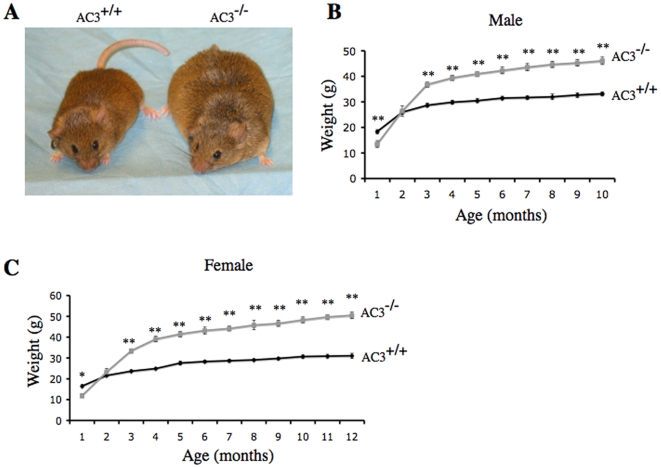
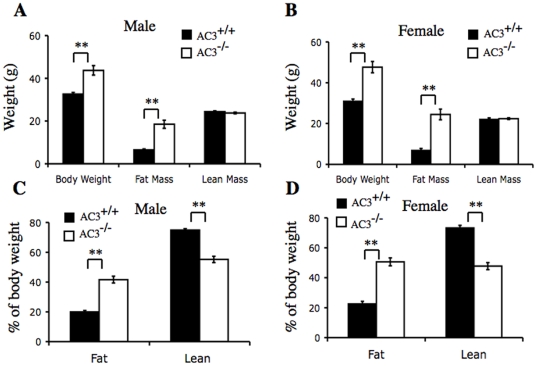
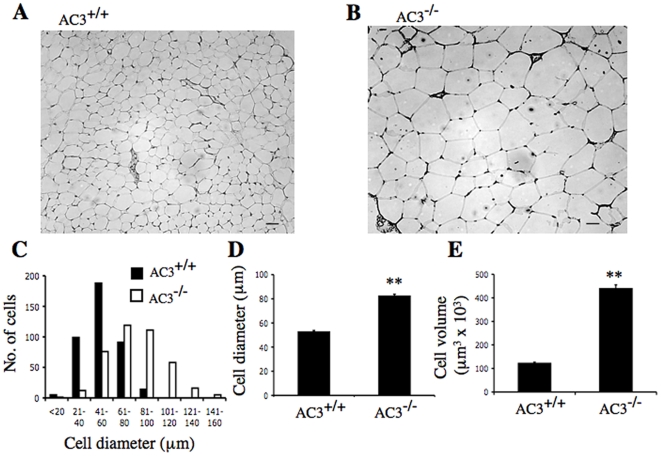
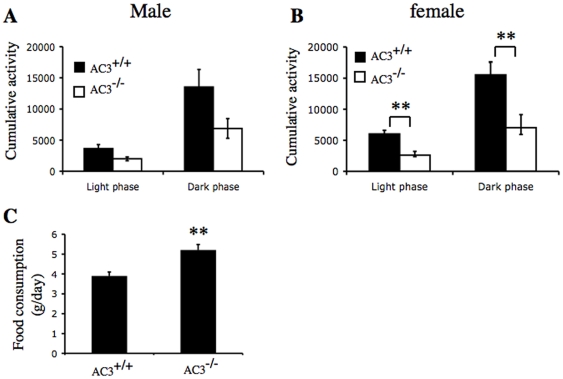
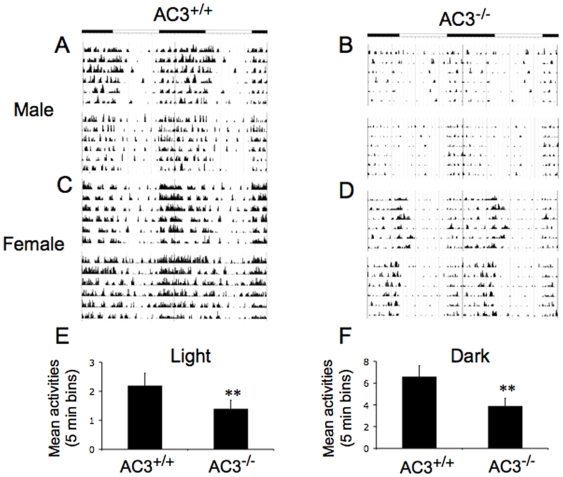
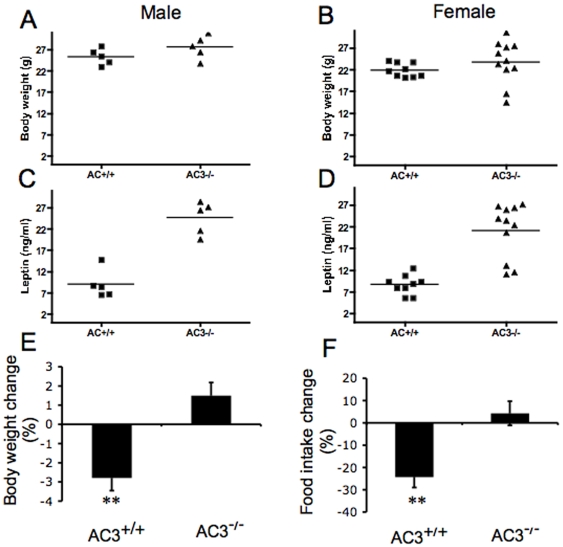
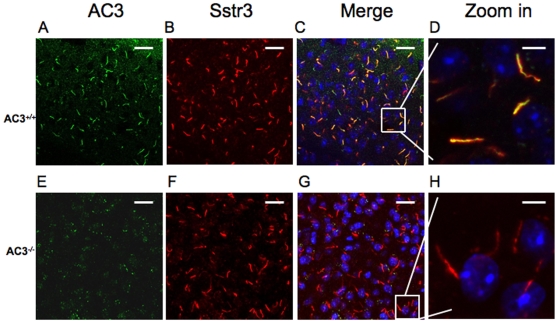
BACKGROUND: A recent study of obesity in Swedish men found that polymorphisms in the type 3 adenylyl cyclase (AC3) are associated with obesity, suggesting the interesting possibility that AC3 may play a role in weight control. Therefore, we examined the weight of AC3 mice over an extended period of time. METHODOLOGY/PRINCIPAL FINDINGS: We discovered that AC3(-/-) mice become obese as they age. Adult male AC3(-/-) mice are about 40% heavier than wild type male mice while female AC3(-/-) are 70% heavier. The additional weight of AC3(-/-) mice is due to increased fat mass and larger adipocytes. Before the onset of obesity, young AC3(-/-) mice exhibit reduced physical activity, increased food consumption, and leptin insensitivity. Surprisingly, the obesity of AC3(-/-) mice is not due to a loss of AC3 from white adipose and a decrease in lipolysis. CONCLUSIONS/SIGNIFICANCE: We conclude that mice lacking AC3 exhibit obesity that is apparently caused by low locomotor activity, hyperphagia, and leptin insensitivity. The presence of AC3 in primary cilia of neurons of the hypothalamus suggests that cAMP signals generated by AC3 in the hypothalamus may play a critical role in regulation of body weight.
Overview
The claims and statistics of this paper haven’t been checked yet.
Free: it reads the open-access text and checks the first 5 claims that cite a source we can check. Create a free account to check every claim.
Integrity signals
Registry
Cites
Statistics
Figures
Verification
Claims the paper makes
The claims and statistics of this paper haven’t been checked yet.
Free: it reads the open-access text and checks the first 5 claims that cite a source we can check. Create a free account to check every claim.
Claims other papers make about this one
Each is checked against this paper’s own text: does it say what the citing paper says it does?
The cited source says what the claim attributes to it.
In the citing paper
“At young ages, AC3−/− mice were less active and consumed more food, and at old ages they continued to be less active.”
From Physiological roles of mammalian transmembrane adenylyl cyclase isoforms (2022) · cites this paper as [299]
In the citing paper
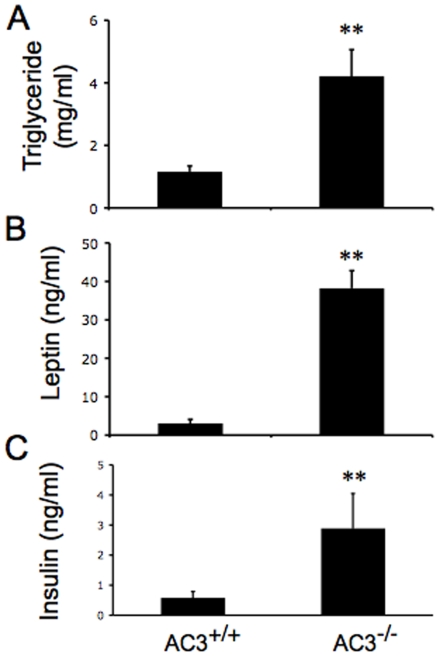
“These AC3−/− mice had significantly more fat versus lean mass, larger adipocytes, and increases in triglycerides, leptin, and insulin.”
From Physiological roles of mammalian transmembrane adenylyl cyclase isoforms (2022) · cites this paper as [299]
In the citing paper
“These AC3−/− mice had significantly more fat versus lean mass, larger adipocytes, and increases in triglycerides, leptin, and insulin.”
From Physiological roles of mammalian transmembrane adenylyl cyclase isoforms (2022) · cites this paper as [299]
In the citing paper
“At young ages, AC3−/− mice were less active and consumed more food, and at old ages they continued to be less active.”
From Physiological roles of mammalian transmembrane adenylyl cyclase isoforms (2022) · cites this paper as [299]
In the citing paper
“These AC3−/− mice had significantly more fat versus lean mass, larger adipocytes, and increases in triglycerides, leptin, and insulin.”
From Physiological roles of mammalian transmembrane adenylyl cyclase isoforms (2022) · cites this paper as [299]
2 more claims about this paper
Create a free account to see every claim other papers make about this one.
Self-check
Percentages, sums and reported differences re-computed from the paper’s own numbers.
The self-check needs the paper’s full text.
Citations
Cites
Kopelman, P. G. (2000) · Nature · doi:10.1038/35007508 · Cited by 4,795 · cited 1×
“risk for a number of diseases including type 2 diabetes, cardiovascular disease, metabolic syndrome, hypertension, certain forms of cancer, and sleep-breathing disorders [1].”
BackgroundWeight-Reducing Effects of the Plasma Protein Encoded by the obese Gene
Halaas, J. L., Gajiwala, K. S., Maffei, M., Cohen, S. L., Chait, B. T., Rabinowitz, D., Lallone, R. L., Burley, S. K., & Friedman, J. M. (1995) · Science · doi:10.1126/science.7624777 · Cited by 4,451
Effects of the obese Gene Product on Body Weight Regulation in ob / ob Mice
Pelleymounter, M. A., Cullen, M. J., Baker, M. B., Hecht, R., Winters, D., Boone, T., & Collins, F. (1995) · Science · doi:10.1126/science.7624776 · Cited by 4,017 · cited 1×
“In normal mice, leptin signals the central nervous system to reduce food intake [29], and administration of leptin causes a weight loss [30,31,32].”
BackgroundMaffei, M., Halaas, J., Ravussin, E., Pratley, R. E., Lee, G. H., Zhang, Y., Fei, H., Kim, S., Lallone, R., Ranganathan, S., et al. (1995) · Nature Medicine · doi:10.1038/nm1195-1155 · Cited by 3,725 · cited 1×
“Obesity is often associated with increased leptin production and leptin insensitivity [40].”
BackgroundCampfield, L. A., Smith, F. J., Guisez, Y., Devos, R., & Burn, P. (1995) · Science · doi:10.1126/science.7624778 · Cited by 3,243 · cited 1×
“In normal mice, leptin signals the central nervous system to reduce food intake [29], and administration of leptin causes a weight loss [30,31,32].”
BackgroundTargeted disruption of the melanocortin-4 receptor results in obesity in mice
Huszar, D., Lynch, C. A., Fairchild-Huntress, V., Dunmore, J. H., Fang, Q., Berkemeier, L. R., Gu, W., Kesterson, R. A., Boston, B. A., Cone, R. D., et al. (1997) · Cell · doi:10.1016/s0092-8674(00)81865-6 · Cited by 3,030 · cited 1×
“Furthermore, transgenic mice lacking specific proteins expressed in the VMH including leptin receptor, steroidogenic factor 1 (SF-1), melanocortin-4 receptor (MC4R), and brain-derived neurotrophic factor (BDNF), exhibits obesity, hyperphagia, and low locomotor activity similar to AC3 mice [46,47,48,49,50,51].”
BackgroundYears of Life Lost Due to Obesity
Fontaine, K. R., Redden, D. T., Wang, C., Westfall, A. O., & Allison, D. B. (2003) · JAMA · doi:10.1001/jama.289.2.187 · Cited by 2,495 · cited 1×
“Furthermore, obesity decreases longevity [2,3,4] and lowers the general quality of life [5].”
BackgroundObesity and the regulation of energy balance
Spiegelman, B. M., & Flier, J. S. (2001) · Cell · doi:10.1016/s0092-8674(01)00240-9 · Cited by 2,398
Adipogenesis and Obesity: Rounding Out the Big Picture
Spiegelman, B. M., & Flier, J. S. (1996) · Cell · doi:10.1016/s0092-8674(00)81359-8 · Cited by 1,269 · cited 1×
“One of the physiological roles of leptin is to signal the nutritional status of the animal to the brain [39].”
BackgroundBDNF regulates eating behavior and locomotor activity in mice
Kernie, S. G., Liebl, D. J., & Parada, L. F. (2000) · The EMBO Journal · doi:10.1093/emboj/19.6.1290 · Cited by 806 · cited 1×
“Furthermore, transgenic mice lacking specific proteins expressed in the VMH including leptin receptor, steroidogenic factor 1 (SF-1), melanocortin-4 receptor (MC4R), and brain-derived neurotrophic factor (BDNF), exhibits obesity, hyperphagia, and low locomotor activity similar to AC3 mice [46,47,48,49,50,51].”
Background
Cited by
Items 101–161 of 161
Adenylate Cyclase Type III Is Not a Ubiquitous Marker for All Primary Cilia during Development
Antal, M. C., Bénardais, K., Samama, B., Auger, C., Schini‐Kerth, V. B., Ghandour, S., & Boehm, N. (2017) · PLoS ONE · doi:10.1371/journal.pone.0170756 · Cited by 24
Interactions between intracellular free Ca2+ and cyclic AMP in neuroendocrine cells
Antoni, F. A. (2012) · Cell Calcium · doi:10.1016/j.ceca.2011.12.013 · Cited by 20
Recent Progress in the Understanding of Obesity: Contributions of Genome-Wide Association Studies
Andersen, M. K., & Sandholt, C. H. (2015) · Current Obesity Reports · doi:10.1007/s13679-015-0173-8 · Cited by 21
Molecular modelling of novel ADCY3 variant predicts a molecular target for tackling obesity
Toumba, M., Fanis, P., Vlachakis, D. P., Neocleous, V., Phylactou, L. A., Skordis, N., Mantzoros, C. S., & Pantelidou, M. (2021) · International Journal of Molecular Medicine · doi:10.3892/ijmm.2021.5065 · Cited by 22
Zhou, Y., Qiu, L., Sterpka, A., Wang, H., Chu, F., & Chen, X. (2019) · Frontiers in Cellular Neuroscience · doi:10.3389/fncel.2019.00034 · Cited by 18
“Additionally, neuronal primary cilia have abundant expression of G-protein coupled receptors (GPCRs), such as type 3 somatostatin receptor (Wang et al., 2009; Einstein et al., 2010), type 6 serotonin receptor (Brodsky et al.”
BackgroundSzalanczy, A., Chuang, C., & Woods, L. C. S. (2021) · The Journal of Nutritional Biochemistry · doi:10.1016/j.jnutbio.2021.108928 · Cited by 22
Paternal High-Protein Diet Programs Offspring Insulin Sensitivity in a Sex-Specific Manner
Gong, P., Bailbé, D., Bianchi, L., Pommier, G., Liu, J., Tolu, S., Stathopoulou, M. G., Portha, B., Grandjean, V., & Movassat, J. (2021) · Biomolecules · doi:10.3390/biom11050751 · Cited by 18
“Adcy3 has been implicated in the regulation of body adiposity [51,52], but also has metabolic roles in the liver and muscle [53,54].”
BackgroundMeng, Y., Guan, Y., Zhang, W., Wu, Y., Jia, H., Zhang, Y., Zhang, X., Du, H., & Wang, X. (2016) · Scientific Reports · doi:10.1038/srep34138 · Cited by 17
CaV1.2 and CaV1.3 voltage-gated L-type Ca2+ channels in rat white fat adipocytes
Fedorenko, O. A., Pulbutr, P., Banke, E., Akaniro-Ejim, N. E., Bentley, D. C., Olofsson, C. S., Chan, S., & Smith, P. A. (2019) · Journal of Endocrinology · doi:10.1530/joe-19-0493 · Cited by 17
“However, the exact mechanisms by which Ca2+, and indeed Ca2+ influx modulates basal lipolysis remains unknown; it is unlikely to involve the Ca2+-sensitive, isoform III, of adenylyl cyclase found in WFA (Wang et al. 2009) since changes in Ca2+ influx do not affect adipocyte cAMP levels under basal conditions (Ziegler…”
BackgroundPerianes-Cachero, A., Burgos‐Ramos, E., Puebla‐Jiménez, L., Canelles, S., Viveros, M., Mela, V., Chowen, J. A., Argente, J., Arilla, E., & Barrios, V. (2012) · Neurochemistry International · doi:10.1016/j.neuint.2012.09.019 · Cited by 16
“, 2003) and also in knockout mice for these isoforms (Wang et al., 2009).”
Powell, D. R., Doree, D. D., DaCosta, C. M., Platt, K. A., Hansen, G. M., Sligtenhorst, I. V., Ding, Z., Revelli, J., & Brommage, R. (2020) · Diabetes Metabolic Syndrome and Obesity · doi:10.2147/dmso.s259546 · Cited by 14
Powell, D. R., Revelli, J., Doree, D. D., DaCosta, C. M., Desai, U., Shadoan, M. K., Rodriguez, L., Mullens, M., Yang, Q. M., Ding, Z., et al. (2021) · Diabetes Metabolic Syndrome and Obesity · doi:10.2147/dmso.s322083 · Cited by 16
Genome-wide association studies of human adiposity: Zooming in on synapses
Sandholt, C. H., Grarup, N., Pedersen, O. B., & Hansen, T. F. (2015) · Molecular and Cellular Endocrinology · doi:10.1016/j.mce.2015.09.029 · Cited by 18
Yang, D. J., Wu, X., Wang, W., Zhou, Y., & Wang, Z. (2021) · Advanced Science · doi:10.1002/advs.202102568 · Cited by 16
Self-citationAdenylate cyclase 3: a potential genetic link between obesity and major depressive disorder
Fitzpatrick, M., & Woods, L. C. S. (2023) · Physiological Genomics · doi:10.1152/physiolgenomics.00056.2023 · Cited by 14
Muroya, S., OTOMARU, K., Oshima, K., Oshima, I., Ojima, K., & Gotoh, T. (2023) · International Journal of Molecular Sciences · doi:10.3390/ijms241310682 · Cited by 17
“GSα encoded by the GNAS gene is the stimulatory subunit that can activate ADCY3 to promote the production of cAMP, disruption of which results in obese and insulin-resistant phenotypes [50,52].”
BackgroundThe Genetic Blueprint of Obesity: From Pathogenesis to Novel Therapies
Tonin, G., Eržen, S., Mlinarič, Z., Jurišić‐Eržen, D., Horvat, S., Kunej, T., & Klen, J. (2025) · Obesity Reviews · doi:10.1111/obr.13978 · Cited by 18
Gene Expression Profiles of Main Olfactory Epithelium in Adenylyl Cyclase 3 Knockout Mice
Wang, Z., Zhou, Y., Luo, Y., Zhang, J., Zhai, Y., Yang, D. J., Zhang, Z., Li, Y., Storm, D. R., & Ma, R. (2015) · International Journal of Molecular Sciences · doi:10.3390/ijms161226107 · Cited by 9
“AC3 deficient mice exhibit olfactory dysfunction, adult obesity and malfunction of smell related behaviors [4,10–13].”
BackgroundSelf-citationChu, S., Narayan, V. P., Sung, M., & Park, T. (2017) · Molecular Nutrition & Food Research · doi:10.1002/mnfr.201601124 · Cited by 8
Competition between stochastic neuropeptide signals calibrates the rate of satiation
Zhang, S. X., Kim, A., Madara, J. C., Zhu, P. K., Christenson, L. F., Lutas, A., Kalugin, P. N., Jin, Y., Pal, A., Tian, L., et al. (2023) · doi:10.1101/2023.07.11.548551 · Cited by 56
Chen, T., Zhou, Y., Liu, X., Liu, Y., Yuan, J., & Wang, Z. (2021) · Theriogenology · doi:10.1016/j.theriogenology.2021.12.017 · Cited by 8
Self-citationAlptekin, İ. M., Çakiroğlu, F. P., Reçber, T., & Nemutlu, E. (2024) · International Journal of Food Sciences and Nutrition · doi:10.1080/09637486.2024.2408545 · Cited by 8
“In addition, Adcy3 -knockout mice are more vulnerable to HFD-induced obesity (Wang et al. 2009).”
De l’importance des organismes modèles pour l’étude des cils et des flagelles
Vincensini, L., Blisnick, T., & Bastin, P. (2011) · Biologie Aujourd hui · doi:10.1051/jbio/2011005 · Cited by 10
Fitzpatrick, M. K., Szalanczy, A., Beeson, A., Vora, A., Scott, C., Grzybowski, M. N., Klotz, J., Der, N., Chen, R., Geurts, A. M., et al. (2024) · Obesity · doi:10.1002/oby.24178 · Cited by 5
“Some [23, 24, 26], but not all [22, 25], studies have reported that KO mice consume more food.”
AC3: A Novel Gene Plays a Role in the Regulation of Body Weight
Gu, H. F. (2010) · The Open Diabetes Journal · doi:10.2174/1876524601003010011 · Cited by 5
Zhou, K., Zhou, Y., Yang, D. J., Chen, T., Liu, X., Li, S., & Wang, Z. (2021) · Neurogastroenterology & Motility · doi:10.1111/nmo.14140 · Cited by 5
Self-citationHuang, C., Yeh, H., Lin, R., Liao, T., Shen, H., Yang, Y., & Lin, H. (2024) · American Journal of Physiology-Gastrointestinal and Liver Physiology · doi:10.1152/ajpgi.00104.2023 · Cited by 5
Functional Evaluation of a Novel Homozygous ADCY3 Variant Causing Childhood Obesity
Mohammed, I., Selvaraj, S., Ahmed, W. S., Al-Barazenji, T., Dauleh, H., Love, D. R., Saraiva, L. R., & Hussain, K. (2024) · International Journal of Molecular Sciences · doi:10.3390/ijms252111815 · Cited by 5
“One study showed that homozygous ADCY3 knock-out mice are obese, hyperphagic, and have leptin resistance [6].”
BackgroundGuo, J., Kang, S., Huang, K., & Tong, T. (2024) · Foods · doi:10.3390/foods13233938 · Cited by 4
“Adcy3 − / − mice exhibit pronounced obesity, hyperphagia, and leptin resistance and lower physical activity [73], whereas the Adcy3 gain-of-function mutation results in reduced fat mass and body weights in HFD-fed mice [74].”
Leptin, Sonic Hedgehogs, and Neurogenesis- A Primary Cilium’s Taleon
Armato, U., Chakravarthy, B., Chiarini, A., Chioffi, F., Prà, I. D., & Whitfield, J. F. (2012) · Journal of Alzheimer’s Disease & Parkinsonism · doi:10.4172/2161-0460.1000e105 · Cited by 4
“What were these game-changing results? Knocking out POMC neurons’ cilia by disabling intraflagellar transport [8] or knocking out cilial adenylyl cyclase III in the hypothalamic neurons made adult mice unresponsive to Lep, hyperphagic, obese, and consequently hyper-leptinemic due to the build-up of Lep-producing adipo…”
BackgroundNanobody-directed targeting of optogenetic tools to study signaling in the primary ciliumPreprint
Hansen, J. N., Kaiser, F., Klausen, C., Stüven, B., Chong, R., Bönigk, W., Mick, D. U., Möglich, A., Jurisch‐Yaksi, N., Schmidt, F. I., et al. (2020) · bioRxiv (Cold Spring Harbor Laboratory) · doi:10.1101/2020.02.04.933440 · Cited by 4
“Loss-of-function mutations in the ADCY3 gene, encoding for AC3, or loss of ADCY3 expression cause monogenic severe obesity and increase the risk for type 2 diabetes (Cao et al., 2016; Grarup et al., 2018; Nordman et al., 2005; Saeed et al., 2018; Siljee et al., 2018; Wang et al., 2009).”
BackgroundKreis, N., Friemel, A., Ritter, A., Hentrich, A. E., Siebelitz, E., Louwen, F., & Yuan, J. (2025) · Communications Biology · doi:10.1038/s42003-025-08986-w · Cited by 6
The role of primary cilia in physiological and pathological states of the central nervous system
Zhai, D., Zhou, X., Xu, Z., Chen, X., Li, Y., Li, J., Zhou, T., & Xie, S. (2025) · Journal of genetics and genomics/Journal of Genetics and Genomics · doi:10.1016/j.jgg.2025.11.011 · Cited by 7
Wu, X., Yang, D. J., Zhou, Y., Li, S., & Wang, Z. (2022) · iScience · doi:10.1016/j.isci.2022.104534 · Cited by 3
Self-citationLi, Y., Liu, P., Yao, Y., Wang, W., Jia, H., Bai, Y., Yuan, Z., & Yang, Z. (2024) · Molecular Therapy — Nucleic Acids · doi:10.1016/j.omtn.2024.102163 · Cited by 3
“30,31 ADCY3 expression was downregulated in Olig2 -knockout mice and Olig1/Olig2 double-knockout mice, which showed compromised terminal differentiation and maturation of olfactory sensory neurons (OSNs), and excessive OSNs apoptosis has been reported in Adcy3 (cid:2) / (cid:2) mice.”
BackgroundThe primary cilium is required for MC4R control of food intake and body weightPreprint
Wang, Y., Bernard, A., Comblain, F., Yue, X., Paillart, C., Zhang, S., Reiter, J. F., & Vaisse, C. (2020) · bioRxiv (Cold Spring Harbor Laboratory) · doi:10.1101/2020.11.13.382234 · Cited by 3
Fitzpatrick, M. K., Dyson, C., Beeson, A., Adrian, L., Marrs, G. S., Grzybowski, M. N., Klotz, J., Geurts, A. M., Chen, R., Weiner, J. L., et al. (2025) · Genes Brain & Behavior · doi:10.1111/gbb.70028 · Cited by 2
“Regardless, the increased fat mass in both sexes is consistent with previous studies showing that Adcy3 KO mice also have increased adiposity [30–32].”
Zhenlong, C., Jiangye, H., Yanfen, Z., Zhang, Z., Ni, Z., Hu, Y., Weili, L., Li, Y., Daniel, R. S., Ma, R. Z., et al. (2014) · PubMed · doi:10.3724/sp.j.1005.2014.0574 · Cited by 2
“[DOI] [7] Wang ZS, Li V, Chan GCK, Phan T, Nudelman AS, Xia ZQ, Storm DR.”
BackgroundLiu, L., Cui, H., Xiang, Z., Dong, N., & Niu, D. (2025) · Functional & Integrative Genomics · doi:10.1007/s10142-025-01789-6 · Cited by 2
Primary Cilia in Cerebral Cortex: Growth and Functions on Neuronal and Non-neuronal Cells
Sarkisian, M. R., Arellano, J. I., & Breunig, J. J. (2012) · Springer eBooks · doi:10.1007/978-94-007-5808-7_4 · Cited by 2
Wood, A. C., & Wang, Z. (2015) · Springer eBooks · doi:10.1007/978-3-319-12125-3_10-1 · Cited by 1
Self-citationRecent Advance in Isoform-Specific Regulation of Adenylyl Cyclase
Ho, D. W.-K., Umemura, M., Bravo, C., & Iwatsubo, K. (2012) · Current Enzyme Inhibition · doi:10.2174/157340812800793282 · Cited by 1
Berbari, N. F., Pasek, R. C., & Yoder, B. K. (2012) · Springer eBooks · doi:10.1007/978-94-007-5808-7_6 · Cited by 1
Sypniewski, M., & Szydłowski, M. (2023) · Veterinary Sciences · doi:10.3390/vetsci10060390 · Cited by 4
“Mutations in ADCY3 in mice cause impaired insulin sensitivity and dyslipidaemia [30] and mice with ADCY3 knockout show increased fat mass, hyperphagia, depression-like phenotypes, and leptin resistance [31,32].”
BackgroundMartins, A. R. (2014) · Digital Library of Theses and Dissertations (Universidade de São Paulo) · doi:10.11606/t.87.2014.tde-05012015-152951
Parker, D. S., & Katsanis, N. (2010) · Endocrine updates · doi:10.1007/978-1-4419-7034-3_4
Impact of Candidate Genes on Obesity and Type 2 Diabetes
Långberg, E. (2011) · Figshare
Vatner, S. F., Zhang, J., & Vatner, D. E. (2016) · Springer eBooks · doi:10.1007/978-3-319-45865-6_10
Saito, Y., Hamamoto, A., & Kobayashi, Y. (2019) · Folia Pharmacologica Japonica · doi:10.1254/fpj.154.179 · Cited by 1
Yoshiuchi, I. (2020) · Research Square · doi:10.21203/rs.3.rs-18469/v1
“ADCY3-de cient mice showed severe obesity, impaired insulin sensitivity and reduced physical activity (18).”
BackgroundWood, A. C., & Wang, Z. (2016) · Springer eBooks · doi:10.1007/978-3-319-11251-0_10 · Cited by 1
Self-citationSazzini, M., Abondio, P., Sarno, S., Gnecchi‐Ruscone, G. A., Ragno, M., Giuliani, C., De Fanti, S., Ojeda‐Granados, C., Boattini, A., Marquis, J., et al. (2020) · Figshare · doi:10.6084/m9.figshare.12355664
Wang, W., Liu, Y., Dong, S., Wu, X., Zhang, F., Wang, X., Zhang, X., Hu, X., & Wang, Z. (2026) · EBioMedicine · doi:10.1016/j.ebiom.2025.106112
“19,20 Our previous studies demonstrated that Adcy3 knockout mice exhibit obesity phenotypes, 21 and increasing evidence suggests that ADCY3 participates in regulating multiple obesity-related processes, including brown adipose thermogenesis and white adipose accumulation.”
Self-citationFitzpatrick, M. K., Seshie, O., Scott, C. C., Vora, A., Seramur, M. E., Beeson, A., Adrian, L. A., Grzybowski, M. N., Klotz, J., Geurts, A. M., et al. (2026) · Research Square · doi:10.21203/rs.3.rs-8309561/v1
Wang, W., Li, Y., Dong, S., Liu, Y., Guo, C., Su, Y., Tian, W., Hu, X., & Wang, Z. (2026) · EMBO Reports · doi:10.1038/s44319-026-00758-9
“In mice, Adcy3 de fi ciency results in severe obesity and insulin resistance (Wang et al, 2009).”
InfluentialSelf-citationDecoding molecular and cellular mechanisms of POMC-lineage neuron programming in maternal obesity
Lee, H. Y. T. (2025) · theses.fr (ABES) · doi:10.70675/8c37a24dzb8cez483ez8eabz2173315e4530
Latest Advances in Obesity Treatment by Regulating Adipocyte Thermogenesis
Nie, T., Chen, J., Wang, Z., & Mao, L. (2026) · PPAR Research · doi:10.1155/ppar/1742256
Self-citation
Metadata
- Authors
- Wang, Z., Li, V., Chan, G. C. K., Phan, T., Nudelman, A. S., Xia, Z., & Storm, D. R.
- Affiliations
- University of Washington (US)
- Corresponding author
- Storm, Daniel R.
- Venue
- PLoS ONE
- Publisher
- Public Library of Science (PLoS)
- Published
- 2009-09-11
- Volume
- 4
- Issue
- 9
- Pages
- e6979
- ISSN
- 1932-6203 (ISSN-L)
- PMC
- PMC2735775
- OpenAlex
- W2053154705
- Cited by
- 159
- References
- 60
- Citations by year
- 2026: 4 · 2025: 7 · 2024: 10 · 2023: 6 · 2022: 8 · 2021: 15 · 2020: 13 · 2019: 6 · 2018: 11 · 2017: 11 · 2016: 13 · 2015: 11 · 2014: 8 · 2013: 4 · 2012: 11
- FWCI
- 4.79
- Type
- journal article
- Language
- en
- Open access
- gold
- doi.org
- Locations
- PLoS ONE (publishedVersion, cc-by)
- PubMed Central (publishedVersion, cc-by)
- PubMed (publishedVersion)
- DOAJ (DOAJ: Directory of Open Access Journals) (submittedVersion, cc-by-sa)
- Figshare (submittedVersion, cc-by)
- Funders
- University of Washington
- National Institutes of Health
- National Institute on Deafness and Other Communication Disorders (DC 04158, R01DC004158)
- Topics
- Life Sciences › Neuroscience › Endocrine and Autonomic Systems › Regulation of Appetite and Obesity
- Health Sciences › Medicine › Endocrinology, Diabetes and Metabolism › Adipokines, Inflammation, and Metabolic Diseases
- Life Sciences › Biochemistry, Genetics and Molecular Biology › Genetics › Genetic and Kidney Cyst Diseases
- Keywords
- obesity, fat mass, adipocyte size, hyperphagia, physical inactivity, cAMP signaling, body weight regulation, sex differences
- MeSH terms
- Cyclic AMP, Adenylyl Cyclases, Adipose Tissue, Animals, Body Weight, Female, Hypothalamus, Male, Neurons, Obesity, Polymorphism, Genetic, Sex Factors, Adipocytes, Leptin, Mice
About these checks
Registry, retraction, Cites and statistics results are computed, not judged, with one exception: a printed reference that no index lists is read once by a model before it counts as a citation error. Claims are extracted by a model and kept only when their quote appears verbatim in the text; each cited source is then checked, with a model’s help, for whether it says what the claim relies on. Those verdicts can be wrong — read the claim’s quote and the cited source before relying on one.
Statistics and arithmetic are recomputed, not judged.
Confidence bands are shown only for fields calibrated on our annotated test set. None is calibrated yet, so no band is shown.
What counts as a claim ›How we measure confidence ›How we check this ›
Are you an author, or do you see a problem with this page? Request a review
Data sources
Bibliographic data: Semantic Scholar, OpenAlex, Crossref.
Contains information from the Semantic Scholar Academic Graph Datasets, made available under the ODC Attribution License (ODC-BY 1.0).
Semantic Scholar’s data is described in: Kinney, R., et al. (2023). The Semantic Scholar Open Data Platform. arXiv:2301.10140.
