

Adult Type 3 Adenylyl Cyclase–Deficient Mice Are Obese
Open accessThe DOI matches its Crossref record; 60 of the 60 references it cites were found in a registry or an index.
Abstract
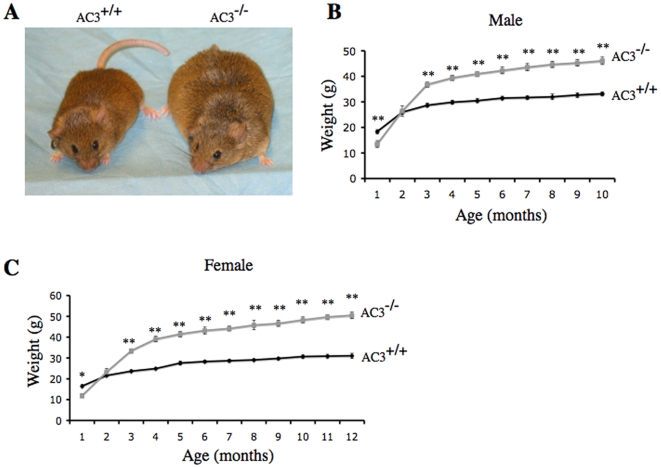
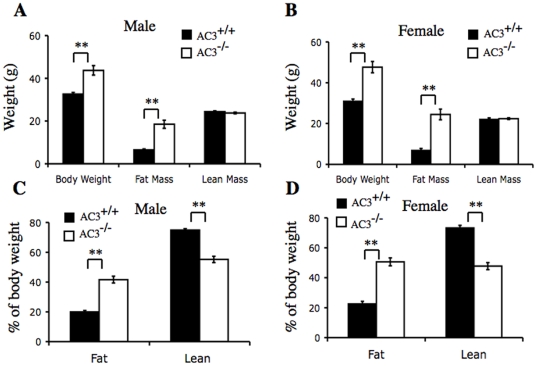
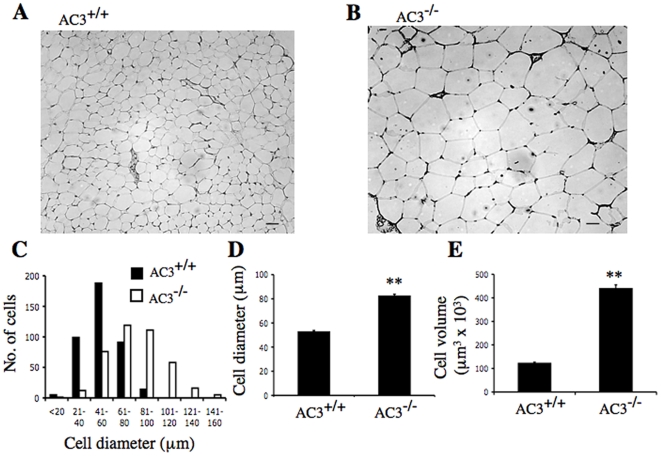
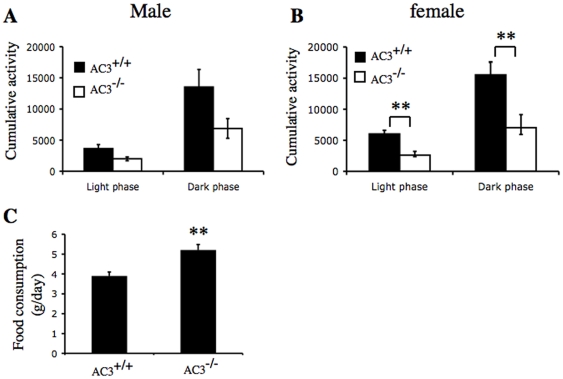
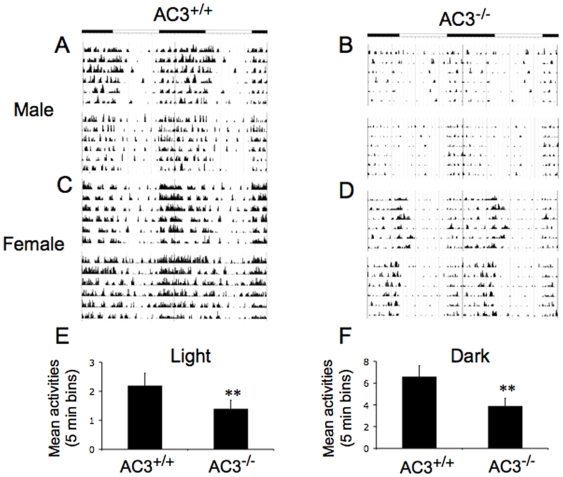
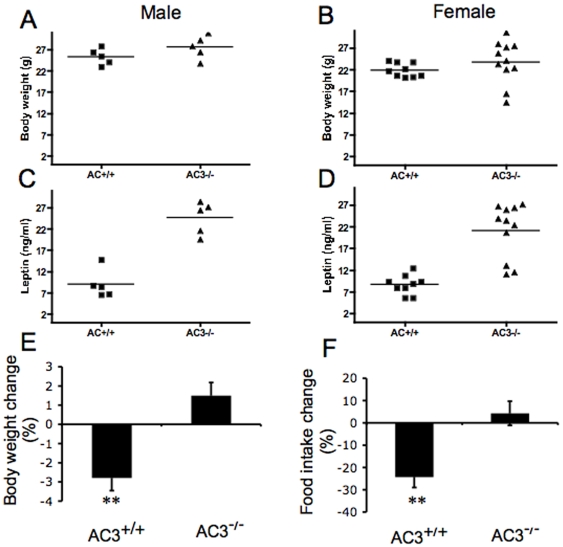
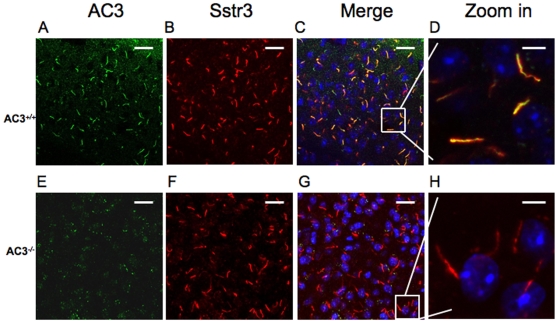
BACKGROUND: A recent study of obesity in Swedish men found that polymorphisms in the type 3 adenylyl cyclase (AC3) are associated with obesity, suggesting the interesting possibility that AC3 may play a role in weight control. Therefore, we examined the weight of AC3 mice over an extended period of time. METHODOLOGY/PRINCIPAL FINDINGS: We discovered that AC3(-/-) mice become obese as they age. Adult male AC3(-/-) mice are about 40% heavier than wild type male mice while female AC3(-/-) are 70% heavier. The additional weight of AC3(-/-) mice is due to increased fat mass and larger adipocytes. Before the onset of obesity, young AC3(-/-) mice exhibit reduced physical activity, increased food consumption, and leptin insensitivity. Surprisingly, the obesity of AC3(-/-) mice is not due to a loss of AC3 from white adipose and a decrease in lipolysis. CONCLUSIONS/SIGNIFICANCE: We conclude that mice lacking AC3 exhibit obesity that is apparently caused by low locomotor activity, hyperphagia, and leptin insensitivity. The presence of AC3 in primary cilia of neurons of the hypothalamus suggests that cAMP signals generated by AC3 in the hypothalamus may play a critical role in regulation of body weight.
Overview
The claims and statistics of this paper haven’t been checked yet.
Free: it reads the open-access text and checks the first 5 claims that cite a source we can check. Create a free account to check every claim.
Integrity signals
Registry
Cites
Statistics
Figures
Verification
Claims the paper makes
The claims and statistics of this paper haven’t been checked yet.
Free: it reads the open-access text and checks the first 5 claims that cite a source we can check. Create a free account to check every claim.
Claims other papers make about this one
Each is checked against this paper’s own text: does it say what the citing paper says it does?
The cited source says what the claim attributes to it.
In the citing paper
“At young ages, AC3−/− mice were less active and consumed more food, and at old ages they continued to be less active.”
From Physiological roles of mammalian transmembrane adenylyl cyclase isoforms (2022) · cites this paper as [299]
In the citing paper
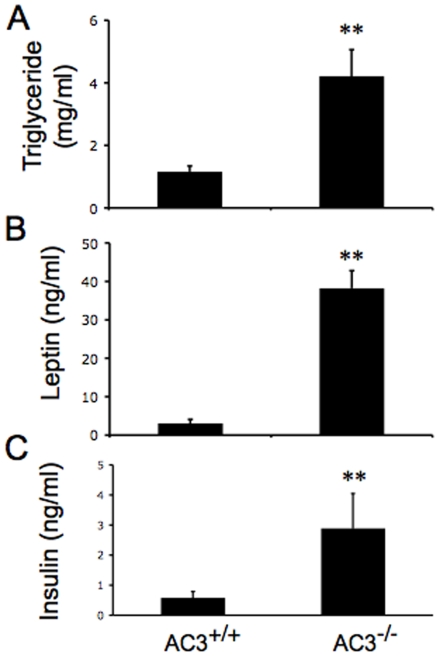
“These AC3−/− mice had significantly more fat versus lean mass, larger adipocytes, and increases in triglycerides, leptin, and insulin.”
From Physiological roles of mammalian transmembrane adenylyl cyclase isoforms (2022) · cites this paper as [299]
In the citing paper
“These AC3−/− mice had significantly more fat versus lean mass, larger adipocytes, and increases in triglycerides, leptin, and insulin.”
From Physiological roles of mammalian transmembrane adenylyl cyclase isoforms (2022) · cites this paper as [299]
In the citing paper
“At young ages, AC3−/− mice were less active and consumed more food, and at old ages they continued to be less active.”
From Physiological roles of mammalian transmembrane adenylyl cyclase isoforms (2022) · cites this paper as [299]
In the citing paper
“These AC3−/− mice had significantly more fat versus lean mass, larger adipocytes, and increases in triglycerides, leptin, and insulin.”
From Physiological roles of mammalian transmembrane adenylyl cyclase isoforms (2022) · cites this paper as [299]
2 more claims about this paper
Create a free account to see every claim other papers make about this one.
Self-check
Percentages, sums and reported differences re-computed from the paper’s own numbers.
The self-check needs the paper’s full text.
Citations
Cites
Kopelman, P. G. (2000) · Nature · doi:10.1038/35007508 · Cited by 4,795 · cited 1×
“risk for a number of diseases including type 2 diabetes, cardiovascular disease, metabolic syndrome, hypertension, certain forms of cancer, and sleep-breathing disorders [1].”
BackgroundWeight-Reducing Effects of the Plasma Protein Encoded by the obese Gene
Halaas, J. L., Gajiwala, K. S., Maffei, M., Cohen, S. L., Chait, B. T., Rabinowitz, D., Lallone, R. L., Burley, S. K., & Friedman, J. M. (1995) · Science · doi:10.1126/science.7624777 · Cited by 4,451
Effects of the obese Gene Product on Body Weight Regulation in ob / ob Mice
Pelleymounter, M. A., Cullen, M. J., Baker, M. B., Hecht, R., Winters, D., Boone, T., & Collins, F. (1995) · Science · doi:10.1126/science.7624776 · Cited by 4,017 · cited 1×
“In normal mice, leptin signals the central nervous system to reduce food intake [29], and administration of leptin causes a weight loss [30,31,32].”
BackgroundMaffei, M., Halaas, J., Ravussin, E., Pratley, R. E., Lee, G. H., Zhang, Y., Fei, H., Kim, S., Lallone, R., Ranganathan, S., et al. (1995) · Nature Medicine · doi:10.1038/nm1195-1155 · Cited by 3,725 · cited 1×
“Obesity is often associated with increased leptin production and leptin insensitivity [40].”
BackgroundCampfield, L. A., Smith, F. J., Guisez, Y., Devos, R., & Burn, P. (1995) · Science · doi:10.1126/science.7624778 · Cited by 3,243 · cited 1×
“In normal mice, leptin signals the central nervous system to reduce food intake [29], and administration of leptin causes a weight loss [30,31,32].”
BackgroundTargeted disruption of the melanocortin-4 receptor results in obesity in mice
Huszar, D., Lynch, C. A., Fairchild-Huntress, V., Dunmore, J. H., Fang, Q., Berkemeier, L. R., Gu, W., Kesterson, R. A., Boston, B. A., Cone, R. D., et al. (1997) · Cell · doi:10.1016/s0092-8674(00)81865-6 · Cited by 3,030 · cited 1×
“Furthermore, transgenic mice lacking specific proteins expressed in the VMH including leptin receptor, steroidogenic factor 1 (SF-1), melanocortin-4 receptor (MC4R), and brain-derived neurotrophic factor (BDNF), exhibits obesity, hyperphagia, and low locomotor activity similar to AC3 mice [46,47,48,49,50,51].”
BackgroundYears of Life Lost Due to Obesity
Fontaine, K. R., Redden, D. T., Wang, C., Westfall, A. O., & Allison, D. B. (2003) · JAMA · doi:10.1001/jama.289.2.187 · Cited by 2,495 · cited 1×
“Furthermore, obesity decreases longevity [2,3,4] and lowers the general quality of life [5].”
BackgroundObesity and the regulation of energy balance
Spiegelman, B. M., & Flier, J. S. (2001) · Cell · doi:10.1016/s0092-8674(01)00240-9 · Cited by 2,398
Adipogenesis and Obesity: Rounding Out the Big Picture
Spiegelman, B. M., & Flier, J. S. (1996) · Cell · doi:10.1016/s0092-8674(00)81359-8 · Cited by 1,269 · cited 1×
“One of the physiological roles of leptin is to signal the nutritional status of the animal to the brain [39].”
BackgroundBDNF regulates eating behavior and locomotor activity in mice
Kernie, S. G., Liebl, D. J., & Parada, L. F. (2000) · The EMBO Journal · doi:10.1093/emboj/19.6.1290 · Cited by 806 · cited 1×
“Furthermore, transgenic mice lacking specific proteins expressed in the VMH including leptin receptor, steroidogenic factor 1 (SF-1), melanocortin-4 receptor (MC4R), and brain-derived neurotrophic factor (BDNF), exhibits obesity, hyperphagia, and low locomotor activity similar to AC3 mice [46,47,48,49,50,51].”
Background
Cited by
The primary cilium at a glance
Satir, P., Pedersen, L. B., & Christensen, S. T. (2010) · Journal of Cell Science · doi:10.1242/jcs.050377 · Cited by 504
“Furthermore, type 3 adenylyl cyclase, which is also associated with obesity in mice and humans, is also specifically localized to hypothalamic neurons (Wang et al., 2009).”
BackgroundMukhopadhyay, S., Wen, X., Chih, B., Nelson, C. D., Lane, W. S., Scales, S. J., & Jackson, P. K. (2010) · Genes & Development · doi:10.1101/gad.1966210 · Cited by 435
Leptin signalling pathways in hypothalamic neurons
Kwon, O., Kim, K. W., & Kim, M.-S. (2016) · Cellular and Molecular Life Sciences · doi:10.1007/s00018-016-2133-1 · Cited by 280
The melanocortin pathway and control of appetite-progress and therapeutic implications
Baldini, G., & Phelan, K. D. (2019) · Journal of Endocrinology · doi:10.1530/joe-18-0596 · Cited by 272
Cilia in the CNS: The Quiet Organelle Claims Center Stage
Louvi, A., & Grove, E. A. (2011) · Neuron · doi:10.1016/j.neuron.2011.03.002 · Cited by 253
“In the presence of Shh, Ptch1 binds Shh and moves away from the ciliary membrane, allowing Smo to accumulate in the cilium (Chen et al., 2009; Corbit et al., 2005; Endoh-Yamagami et al., 2009; Kim et al., 2009; Rohatgi et al., 2007; Wang et al., 2009a).”
Siljee, J. E., Wang, Y., Bernard, A. A., Ersoy, B. A., Zhang, S., Marley, A., Von Zastrow, M., Reiter, J. F., & Vaisse, C. (2018) · Nature Genetics · doi:10.1038/s41588-017-0020-9 · Cited by 247
Loss-of-function variants in ADCY3 increase risk of obesity and type 2 diabetes
Grarup, N., Moltke, I., Andersen, M. K., Dalby, M., Vitting-Seerup, K., Kern, T., Mahendran, Y., Jørsboe, E., Larsen, C. V. L., Dahl-Petersen, I. K., et al. (2018) · Nature Genetics · doi:10.1038/s41588-017-0022-7 · Cited by 216
Loktev, A. V., & Jackson, P. K. (2013) · Cell Reports · doi:10.1016/j.celrep.2013.11.011 · Cited by 212
“The ACIII knockout mice develop obesity at ages similar to BBS and tubby mice (Davenport et al., 2007; Wang et al., 2009).”
BackgroundDessauer, C. W., Watts, V. J., Ostrom, R. S., Conti, M., Dove, S., & Seifert, R. (2017) · Pharmacological Reviews · doi:10.1124/pr.116.013078 · Cited by 201
“ADCY3 gene polymorphisms have been associated with obesity (Nordman et al., 2008; Wang et al., 2009, 2010; Wen et al., 2012; Stergiakouli et al., 2014; Warrington et al., 2015), depression (Wray et al., 2012), and inflammatory bowel disease (Hulur et al., 2015).”
BackgroundLoss-of-function mutations in ADCY3 cause monogenic severe obesity
Saeed, S., Bonnefond, A., Tamanini, F., Mirza, M. U., Manzoor, J., Janjua, Q. M., Din, S. M., Gaitan, J., Milochau, A., Durand, E., et al. (2018) · Nature Genetics · doi:10.1038/s41588-017-0023-6 · Cited by 187
Tributyrin attenuates obesity-associated inflammation and insulin resistance in high-fat-fed mice
Vinolo, M. A. R., Rodrigues, H. G., Festuccia, W. T., Crisma, A. R., Alves, V. S., Martins, A. R., Amaral, C. L., Fiamoncini, J., Hirabara, S. M., Sato, F. T., et al. (2012) · American Journal of Physiology-Endocrinology and Metabolism · doi:10.1152/ajpendo.00053.2012 · Cited by 167
“injected twice (4 h between each injection) (24, 49).”
BackgroundEmerging mechanistic understanding of cilia function in cellular signalling
Hilgendorf, K. I., Myers, B. R., & Reiter, J. F. (2024) · Nature Reviews Molecular Cell Biology · doi:10.1038/s41580-023-00698-5 · Cited by 163
Shi, X., Garcia, G., Van De Weghe, J. C., McGorty, R., Pazour, G. J., Doherty, D., Huang, B., & Reiter, J. F. (2017) · Nature Cell Biology · doi:10.1038/ncb3599 · Cited by 159
1001 model organisms to study cilia and flagella
Vincensini, L., Blisnick, T., & Bastin, P. (2011) · Biology of the Cell · doi:10.1042/bc20100104 · Cited by 153
“For instance, mice with deleted BBS genes become blind following photoreceptor degradation (Sheffield, 2010), and obese due to characterized defective leptin signalling (Wang et al., 2009).”
BackgroundInfluentialRole of primary cilia in brain development and cancer
Han, Y.-G., & Alvarez-Buylla, A. (2010) · Current Opinion in Neurobiology · doi:10.1016/j.conb.2009.12.002 · Cited by 152
Stratigopoulos, G., Martin Carli, J. F., O’Day, D. R., Wang, L., LeDuc, C. A., Lanzano, P., Chung, W. K., Rosenbaum, M., Egli, D., Doherty, D. A., et al. (2014) · Cell Metabolism · doi:10.1016/j.cmet.2014.04.009 · Cited by 152
Disruption of a Ciliary B9 Protein Complex Causes Meckel Syndrome
Dowdle, W. E., Robinson, J. F., Kneist, A., Sirerol-Piquer, M. S., Frints, S. G. M., Corbit, K. C., Zaghloul, N. A., van Lijnschoten, G., Mulders, L. G. M., Verver, D. E., et al. (2011) · The American Journal of Human Genetics · doi:10.1016/j.ajhg.2011.06.003 · Cited by 168
“Whereas the intraflagellar transport protein Ift88 localized to bothWTand B9d1mutant MEF cilia, the small GTPase Arl13b and the adenylate cyclase ACIII were found only in WT MEF cilia (Figures 4E–4G; Figure S6).(22,55,72) This protein localization defect is similar to that seen upon disruption of Tctn1, Tctn2, Tmem67,…”
BackgroundStratigopoulos, G., LeDuc, C. A., Cremona, M. L., Chung, W. K., & Leibel, R. L. (2011) · Journal of Biological Chemistry · doi:10.1074/jbc.m110.188482 · Cited by 148
Mukhopadhyay, S., & Jackson, P. K. (2011) · Genome Biology · doi:10.1186/gb-2011-12-6-225 · Cited by 147
“Mchr1 is involved in the regulation of feeding and energy balance [59,60], and ACIII-deficient mice become obese with age [61].”
BackgroundPhysiological roles of mammalian transmembrane adenylyl cyclase isoforms
Ostrom, K. F., LaVigne, J. E., Brust, T. F., Seifert, R., Dessauer, C. W., Watts, V. J., & Ostrom, R. S. (2022) · Physiological Reviews · doi:10.1152/physrev.00013.2021 · Cited by 131
Somatostatin Signaling in Neuronal Cilia Is Criticalfor Object Recognition Memory
Einstein, E. B., Patterson, C. A., Hon, B. J., Regan, K. A., Reddi, J., Melnikoff, D. E., Mateer, M. J., Schulz, S., Johnson, B. N., & Tallent, M. K. (2010) · The Journal of Neuroscience · doi:10.1523/jneurosci.5295-09.2010 · Cited by 129
“Likewise, the robust deficit in forskolin activation of AC activity in ACIII knock-out mice would also likely involve activation of other AC isoforms in the cell soma through amplification into the soma of cilia-based signaling events (Wang et al., 2009).”
BackgroundG-Protein-Coupled Receptor Signaling in Cilia
Mykytyn, K., & Askwith, C. (2017) · Cold Spring Harbor Perspectives in Biology · doi:10.1101/cshperspect.a028183 · Cited by 126
“Moreover, mice lacking ciliary GPCRs or ciliary-enriched downstream effectors of GPCR signaling display similar phenotypes (Wang et al. 2009, 2011; Einstein et al. 2010).”
BackgroundLeptin-promoted cilia assembly is critical for normal energy balance
Han, Y. M., Kang, G. M., Byun, K., Ko, H. W., Kim, J., Shin, M.-S., Kim, H.-K., Gil, S. Y., Yu, J. H., Lee, B., et al. (2014) · Journal of Clinical Investigation · doi:10.1172/jci69395 · Cited by 115
“Indeed, mice that lack AC3, a ciliary enzyme that catalyzes cAMP production, are obese and insensitive to leptin (14), demonstrating a connection between cilia-mediated cAMP signaling and leptin signaling.”
Childhood adiposity and risk of type 1 diabetes: A Mendelian randomization study
Censin, J. C., Nowak, C., Cooper, N., Bergsten, P., Todd, J. A., & Fall, T. (2017) · PLOS Medicine · doi:10.1371/journal.pmed.1002362 · Cited by 114
Vaisse, C., Reiter, J. F., & Berbari, N. F. (2017) · Cold Spring Harbor Perspectives in Biology · doi:10.1101/cshperspect.a028217 · Cited by 112
“Loss of Adcy3 function can itself cause obesity in mice through alterations in activity, hyperphagia, and leptin resistance (Wang et al. 2009).”
BackgroundALMS1 and Alström syndrome: a recessive form of metabolic, neurosensory and cardiac deficits
Hearn, T. (2018) · Journal of Molecular Medicine · doi:10.1007/s00109-018-1714-x · Cited by 120
Mutations in TRAF3IP1/IFT54 reveal a new role for IFT proteins in microtubule stabilization
Bizet, A. A., Becker-Heck, A., Ryan, R., Weber, K., Filhol, E., Krug, P., Halbritter, J., Delous, M., Lasbennes, M.-C., Linghu, B., et al. (2015) · Nature Communications · doi:10.1038/ncomms9666 · Cited by 105
“Defective cAMP/PKA signaling is a common feature of mutations in IFT genes 10,32 and provides a potential explanation for the obesity observed in patients, a characteristic of an ACIII-deficient murine model 33 .”
The hypothalamus for whole-body physiology: from metabolism to aging
Liu, T., Xu, Y., Yi, C.-X., Tong, Q., & Cai, D. (2022) · Protein & Cell · doi:10.1007/s13238-021-00834-x · Cited by 102
“Indeed, Adcy3 gene mutated mice became fatter with immobile lifestyle and hyperphagia (Wang et al., 2009).”
BackgroundWang, Z., Phan, T., & Storm, D. R. (2011) · The Journal of Neuroscience · doi:10.1523/jneurosci.6561-10.2011 · Cited by 100
“The immunohistochemistry of hippocampal slices was performed as described previously (Wang et al., 2009b).”
MethodSelf-citationDevelopment and distribution of neuronal cilia in mouse neocortex
Arellano, J. I., Guadiana, S. M., Breunig, J. J., Rakic, P., & Sarkisian, M. R. (2012) · Journal of Comparative Neurology · doi:10.1002/cne.22793 · Cited by 97
“We found that the signal for ACIII is 125– 130 kDa, suggesting that cortical ACIII might be predominantly in a less glycosylated form (Murthy and Makhlouf, 1997; Wei et al., 1996).”
BackgroundHypomorphism of Fto and Rpgrip1l causes obesity in mice
Stratigopoulos, G., Burnett, L. C., Rausch, R. N., Gill, R., Penn, D. B., Skowronski, A. A., LeDuc, C. A., Lanzano, A., Zhang, P., Storm, D. R., et al. (2016) · Journal of Clinical Investigation · doi:10.1172/jci85526 · Cited by 101
“Congenital systemic deletion of Ac3 results in obesity in mice (32).”
Self-citationWang, Y., Bernard, A., Comblain, F., Yue, X., Paillart, C., Zhang, S., Reiter, J. F., & Vaisse, C. (2021) · Journal of Clinical Investigation · doi:10.1172/jci142064 · Cited by 91
Stergiakouli, E., Gaillard, R., Tavaré, J. M., Balthasar, N., Loos, R. J., Taal, H. R., Evans, D. M., Rivadeneira, F., St Pourcain, B., Uitterlinden, A. G., et al. (2014) · Obesity · doi:10.1002/oby.20840 · Cited by 90
“In situ hybridization data from the Allen Mouse Brain Atlas (33), which integrates extensive gene expression and neuroanatomical data, show ADCY3 mRNA expression in the mouse brain within several nuclei of the hypothalamus, including the paraventricular, ventromedial, and arcuate nucleus (Figure 6) (33,34), regions th…”
BackgroundMethodTong, T., Shen, Y., Lee, H.-W., Yu, R., & Park, T. (2016) · Scientific Reports · doi:10.1038/srep34179 · Cited by 82
Wachten, D., & Mick, D. U. (2021) · Pharmacology & Therapeutics · doi:10.1016/j.pharmthera.2021.107836 · Cited by 85
Neuronal and astrocytic primary cilia in the mature brain
Sterpka, A., & Chen, X. (2018) · Pharmacological Research · doi:10.1016/j.phrs.2018.10.002 · Cited by 80
“Third, both conventional and tamoxifen-induced conditional AC3 KO mice exhibit adult-onset obesity [44,103].”
BackgroundNeuronal ciliary signaling in homeostasis and disease
Green, J. A., & Mykytyn, K. (2010) · Cellular and Molecular Life Sciences · doi:10.1007/s00018-010-0425-4 · Cited by 77
“Intriguingly, ACIII knockout mice become obese as they age due to hyperphagia, reduced physical activity, and leptin insensitivity [94], suggesting that cAMP-signaling within neuronal cilia is important for proper regulation of food consumption and energy balance.”
cAMP and cGMP signaling: sensory systems with prokaryotic roots adopted by eukaryotic cilia
Johnson, J.-L., & Leroux, M. R. (2010) · Trends in Cell Biology · doi:10.1016/j.tcb.2010.05.005 · Cited by 88
Chen, X., Luo, J., Leng, Y., Yang, Y., Zweifel, L. S., Palmiter, R. D., & Storm, D. R. (2016) · Biological Psychiatry · doi:10.1016/j.biopsych.2015.12.012 · Cited by 74
Self-citationComplex Chemosensory Control of Female Reproductive Behaviors
Fraser, E. J., & Shah, N. M. (2014) · PLoS ONE · doi:10.1371/journal.pone.0090368 · Cited by 77
“The more severe deficits in Golf and AC3 mutants may reflect their expression in the brain and other tissues; consistent with this notion, Golf mutants display increased locomotor activity, possibly due to Golf expression in the basal ganglia, and AC3 null mice are obese [18,34].”
BackgroundGenome-wide association of meat quality traits and tenderness in swine1,2
Nonneman, D., Shackelford, T. K., King, D. A., WHEELER, T. L., Wiedmann, R. T., Snelling, W. M., & Rohrer, G. A. (2013) · Journal of Animal Science · doi:10.2527/jas.2013-6255 · Cited by 70
AbouAlaiwi, W. A., Ratnam, S., Booth, R. L., Shah, J. V., & Nauli, S. M. (2010) · Human Molecular Genetics · doi:10.1093/hmg/ddq470 · Cited by 71
Engle, S. E., Bansal, R., Antonellis, P. J., & Berbari, N. F. (2020) · Seminars in Cell and Developmental Biology · doi:10.1016/j.semcdb.2020.05.006 · Cited by 74
“Furthermore, ACIII is almost ubiquitously localized on cilia in the central nervous system and mice lacking ACIII are obese suggesting that ciliary localization of ACIII plays an important role in energy homeostasis [76, 77].”
BackgroundSeriously cilia: A tiny organelle illuminates evolution, disease, and intercellular communication
Derderian, C., Canales, G., & Reiter, J. F. (2023) · Developmental Cell · doi:10.1016/j.devcel.2023.06.013 · Cited by 78
Keele, G. R., Prokop, J. W., He, H., Holl, K., Littrell, J. C., Deal, A. W., Francic, S., Cui, L., Gatti, D. M., Broman, K. W., et al. (2017) · Obesity · doi:10.1002/oby.22075 · Cited by 72
“Adcy3 knock-out and haplo-insufficient mice develop obesity with age, exhibiting increased food intake and decreased locomotion (32,33).”
A truncating mutation of Alms1 reduces the number of hypothalamic neuronal cilia in obese mice
Heydet, D., Chen, L. X., Larter, C. Z., Inglis, C., Silverman, M. A., Farrell, G. C., & Leroux, M. R. (2013) · Developmental Neurobiology · doi:10.1002/dneu.22031 · Cited by 66
“…of primary cilia, which presumably transduce satiety signals via appetite-modulating receptors, such as the leptin receptor, Sstr3, and Mchr1 (Berbari et al., 2009; Sen Gupta et al., 2009; Seo et al., 2009; Mok et al., 2010), as well as other signaling molecules, including AC3 (Wang et al., 2009).”
BackgroundLi, W., Tang, R., Ma, F., Ouyang, S., Liu, Z., & Wu, J. (2018) · The Journal of Nutritional Biochemistry · doi:10.1016/j.jnutbio.2018.05.010 · Cited by 74
A Gain-of-Function Mutation in Adenylate Cyclase 3 Protects Mice from Diet-Induced Obesity
Pitman, J. L., Wheeler, M. C., Lloyd, D. J., Walker, J. R., Glynne, R. J., & Gekakis, N. (2014) · PLoS ONE · doi:10.1371/journal.pone.0110226 · Cited by 63
“In the ventral medial hypothalamus, AC is expressed in primary cilia and its absence may be the reason for a lack of response to leptin [17].”
BackgroundInfluentialQuantitative comparison of primary cilia marker expression and length in the mouse brain
Sipos, É., Komoly, S., & Ács, P. (2018) · Journal of Molecular Neuroscience · doi:10.1007/s12031-018-1036-z · Cited by 61
Wang, L., Liu, Y., Stratigopoulos, G., Panigrahi, S. K., Sui, L., Zhang, Y., LeDuc, C. A., Glover, H. J., Rosa, M. C. D., Burnett, L. C., et al. (2021) · Journal of Clinical Investigation · doi:10.1172/jci146287 · Cited by 64
Stochastic neuropeptide signals compete to calibrate the rate of satiation
Zhang, S. X., Kim, A., Madara, J. C., Zhu, P. K., Christenson, L. F., Lutas, A., Kalugin, P. N., Sunkavalli, P. S., Jin, Y., Pal, A., et al. (2025) · Nature · doi:10.1038/s41586-024-08164-8 · Cited by 55
Nanobody-directed targeting of optogenetic tools to study signaling in the primary cilium
Hansen, J. N., Kaiser, F., Klausen, C., Stüven, B., Chong, R., Bönigk, W., Mick, D. U., Möglich, A., Jurisch‐Yaksi, N., Schmidt, F. I., et al. (2020) · eLife · doi:10.7554/elife.57907 · Cited by 58
Adenylate cyclase 3: a new target for anti‐obesity drug development
Wu, L., Shen, C., Ahmed, M. S., Östenson, C., & Gu, H. F. (2016) · Obesity Reviews · doi:10.1111/obr.12430 · Cited by 59
“wild-type male mice, while female ADCY3 / mice were 70% heavier than wild-type female mice (31).”
Background5-HT(6) receptor blockade regulates primary cilia morphology in striatal neurons
Brodsky, M., Lesiak, A. J., Croicu, A., Cohenca, N., Sullivan, J. M., & Neumaier, J. F. (2017) · Brain Research · doi:10.1016/j.brainres.2017.01.010 · Cited by 54
Jurisch-Yaksi, N., Wachten, D., & Gopalakrishnan, J. (2024) · Trends in Neurosciences · doi:10.1016/j.tins.2024.03.004 · Cited by 47
The role of primary cilia in obesity and diabetes
Volta, F., & Gerdes, J. M. (2017) · Annals of the New York Academy of Sciences · doi:10.1111/nyas.13216 · Cited by 47
The cilium: a cellular antenna with an influence on obesity risk
Mariman, E. C. M., Vink, R., Roumans, N. J. T., Bouwman, F. G., Schrander-Stumpel, C. T. R. M., Aller, E. E. J. G., van Baak, M. A., & Wang, P. (2016) · British Journal Of Nutrition · doi:10.1017/s0007114516002282 · Cited by 46
“out mice present with obesity, hyperphagia, low locomotor activity and leptin insensitivity((113)).”
BackgroundGodlewski, G., Jourdan, T., Szanda, G., Tam, J., Çınar, R., Harvey-White, J. D., Liu, J., Mukhopadhyay, B., Pacher, P., Mo, F. M., et al. (2015) · Scientific Reports · doi:10.1038/srep14953 · Cited by 50
The central melanocortin system and human obesity
Yang, Y., & Xu, Y. (2020) · Journal of Molecular Cell Biology · doi:10.1093/jmcb/mjaa048 · Cited by 55
“Consistent with this, mutations of adult type 3 adenylyl cyclase (Adcy3), a member of the adenylyl cyclase family that mediates Gαs signaling, leads to obesity in mice (Wang et al., 2009).”
BackgroundType 3 adenylyl cyclase: a key enzyme mediating the cAMP signaling in neuronal cilia.
Qiu, L., LeBel, R. P., Storm, D. R., & Chen, X. (2016) · Europe PMC (PubMed Central) · Cited by 55
Self-citationÁvalos, Y., Hernández‐Cáceres, M. P., Lagos, P., Pinto-Núñez, D., Rivera, P., Burgos, P., Díaz‐Castro, F., Joy-Immediato, M., Venegas-Zamora, L., Lopez‐Gallardo, E., et al. (2022) · Cell Death and Disease · doi:10.1038/s41419-022-05109-9 · Cited by 45
Sensory primary cilium is a responsive cAMP microdomain in renal epithelia
Sherpa, R. T., Mohieldin, A. M., Pala, R., Wachten, D., Ostrom, R. S., & Nauli, S. M. (2019) · Scientific Reports · doi:10.1038/s41598-019-43002-2 · Cited by 48
Charles, J. F., Coury, F., Sulyanto, R. M., Sitara, D., Wu, J., Brady, N. J., Tsang, K., Sigrist, K. S., Tollefsen, D. M., He, L., et al. (2012) · Bone · doi:10.1016/j.bone.2012.08.113 · Cited by 45
“Adcy3−/− mice are runted in the early perinatal period but paradoxically obese in adulthood because of reduced locomotor activity, hyperphagia, and leptin insensitivity [39].”
BackgroundResultSelf-citationSazzini, M., Abondio, P., Sarno, S., Gnecchi‐Ruscone, G. A., Ragno, M., Giuliani, C., Fanti, S. D., Ojeda‐Granados, C., Boattini, A., Marquis, J., et al. (2020) · BMC Biology · doi:10.1186/s12915-020-00778-4 · Cited by 43
Somatilaka, B. N., Hwang, S., Palicharla, V. R., White, K. A., Badgandi, H., Shelton, J. M., & Mukhopadhyay, S. (2020) · Developmental Cell · doi:10.1016/j.devcel.2020.06.034 · Cited by 46
“, 2015), whereas individual knockdown or knockouts are only partially penetrant in increased Hh signaling phenotypes and are not embryonic lethal (Vuolo et al., 2015; Wang et al., 2009), unlike PKA null mutants (Tuson et al.”
BackgroundWang, H., Wu, M., Zhu, W., Shen, J., Shi, X., Yang, J., Zhao, Q., Ni, C., Xu, Y., Shen, H., et al. (2010) · PLoS ONE · doi:10.1371/journal.pone.0013851 · Cited by 37
“With the age of more than two moths, AC3 mice become obese [11].”
BackgroundResultQi, Z., & Ding, S. (2015) · Journal of Pediatric Endocrinology and Metabolism · doi:10.1515/jpem-2015-0182 · Cited by 43
A novel form of ciliopathy underlies hyperphagia and obesity in Ankrd26 knockout mice
Acs, P., Bauer, P. O., Mayer, B., Bera, T., Macallister, R., Mezey, E., & Pastan, I. (2015) · Brain Structure and Function · doi:10.1007/s00429-014-0741-9 · Cited by 37
“Since it has been reported that ciliary defects in BBS affect the function of the melanocortin pathway leading to leptinresistant obesity (Rahmouni et al. 2008; Wang et al. 2009; Guo and Rahmouni 2011) we wondered which appetiterelated neuronal pathways are affected by the ciliopathy and MC4R dysfunction in Ankrd26-/-…”
InfluentialLiang, Y., Li, Z., Liang, S., Li, Y., Yang, L., Lu, M., Gu, H. F., & Xia, N. (2016) · Nutrition & Diabetes · doi:10.1038/nutd.2015.37 · Cited by 35
Hypothalamic primary cilium: A hub for metabolic homeostasis
Yang, D. J., Hong, J., & Kim, K. W. (2021) · Experimental & Molecular Medicine · doi:10.1038/s12276-021-00644-5 · Cited by 34
“This finding was particularly relevant since it was previously reported that ADCY3 mutations are closely associated with human obesity, and Adcy3-KO mice exhibited obesity upon disruption of cAMP signaling in the hypothalamus [57].”
BackgroundInfluentialGoñi, L., Riezu‐Boj, J. I., Milagro, F. I., Corrales, F. J., Ortiz, L., Cuervo, M., & Martínez, J. A. (2018) · Nutrients · doi:10.3390/nu10060789 · Cited by 36
“In accordance with the studies in humans, the Adcy3 knockout mice (Adcy3−/−) developed obesity characterized by an increase in fat mass and larger adipocytes [26].”
BackgroundResultLoss-of-function mutations in ADCY3 cause monogenic severe obesity
Saeed, S., Bonnefond, A., Tamanini, F., Mirza, M. U., Manzoor, J., Janjua, Q. M., Din, S. M., Gaitan, J., Milochau, A., Durand, E., et al. (2018) · Yearbook of pediatric endocrinology · doi:10.1530/ey.15.11.5 · Cited by 35
Stubbs, T., Koemeter-Cox, A., Bingman, J. I., Zhao, F., Kalyanasundaram, A., Rowland, L. A., Periasamy, M., Carter, C. S., Sheffield, V. C., Askwith, C. C., et al. (2022) · Journal of Neuroscience · doi:10.1523/jneurosci.0497-22.2022 · Cited by 42
“As constitutive AC3 KO mice exhibit adult-onset obesity associated with lower locomotor activity and hyperphagia (Wang et al., 2009), it is tempting to speculate that D 1 enrichment could impact normal ciliary cAMP signaling by preventing AC3 ciliary localization.”
BackgroundNeuronal cilia in energy homeostasis
Brewer, K. M., Brewer, K. K., Richardson, N. C., & Berbari, N. F. (2022) · Frontiers in Cell and Developmental Biology · doi:10.3389/fcell.2022.1082141 · Cited by 38
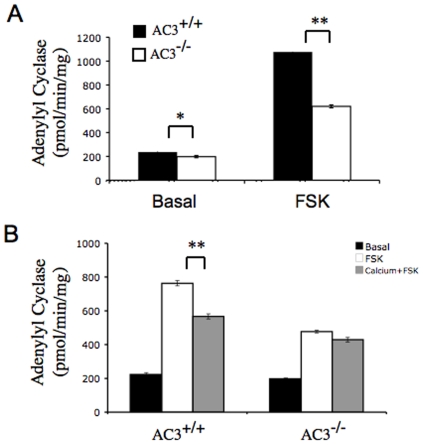
“Additionally, ADCY3 activity in the hypothalamus was reduced upon forskolin stimulation (Wang et al., 2009).”
BackgroundVatner, S. F., Pachon, R. E., & Vatner, D. E. (2015) · Oxidative Medicine and Cellular Longevity · doi:10.1155/2015/250310 · Cited by 33
“Importantly, the AC5/SIRT1 regulation is unique to AC5, since our data show that AC5 KO is resistant to obesity [6], but AC6 KO did not affect body weight and SIRT1 expression [3] (Figure 3), and AC3 KO actually induced obesity [125].”
BackgroundMechanism underlying starvation-dependent modulation of olfactory behavior in Drosophila larva
Slankster-Schmierer, E., Kollala, S. S., Baria, D., Dailey-Krempel, B., Jain, R., Odell, S. R., & Mathew, D. (2020) · Scientific Reports · doi:10.1038/s41598-020-60098-z · Cited by 32
Son, Y., Choi, C., Saha, A., Park, J., Im, H., Cho, Y. K., Seong, J. K., Burl, R. B., Rondini, E. A., Granneman, J. G., et al. (2022) · Metabolism · doi:10.1016/j.metabol.2022.155159 · Cited by 31
del Pozo, C. H., Calvo, R. M., Vesperinas, G., Gómez‐Ambrosi, J., Frühbeck, G., Rubio, M. Á., & Obregón, M.-J. (2010) · Obesity Surgery · doi:10.1007/s11695-010-0246-4 · Cited by 36
Adenylyl Cyclase Type 5 Deficiency Protects Against Diet-Induced Obesity and Insulin Resistance
Ho, D., Zhao, X., Yan, L., Yuan, C., Zong, H., Vatner, D. E., Pessin, J. E., & Vatner, S. F. (2015) · Diabetes · doi:10.2337/db14-0494 · Cited by 28
“Furthermore, the AC5KO mice have extended longevity by ;33% and are protected against cancer (1,41), which may not be due simply to generalized reduction in cAMP, since other AC isoforms, when disrupted, do not have these effects or do not protect against diabetes or obesity (40).”
BackgroundLiraglutide reduces body weight by upregulation of adenylate cyclase 3
Li, Z., Liang, Y., Xia, N., Lai, Y., Pan, H., Zhou, S. Y., Jiang, F., & He, Y. (2017) · Nutrition and Diabetes · doi:10.1038/nutd.2017.17 · Cited by 31
Effects of liraglutide on lipolysis and the AC3/PKA/HSL pathway
Li, Z., Yang, P., Liang, Y., Xia, N., Li, Y., Su, H., & Pan, H. (2019) · Diabetes Metabolic Syndrome and Obesity · doi:10.2147/dmso.s216455 · Cited by 29
“It is also found that TG of AC3 knockout mice is increased, and the fat mass of epididymal adipocytes of AC3 knockout mice is more than that of control mice.(18) Our previous studies have shown that liraglutide can upregulate hepatic GLP-1R and AC3 levels in obese mice, and the levels of AC3 were negatively correlated…”
BackgroundADCY3, neuronal primary cilia and obesity
Barroso, I. (2018) · Nature Genetics · doi:10.1038/s41588-018-0043-x · Cited by 37
Disruption of Type 3 Adenylyl Cyclase Expression in the Hypothalamus Leads to Obesity
Cao, H., Chen, X., Yang, Y., & R Storm, D. (2016) · Integrative Obesity and Diabetes · doi:10.15761/iod.1000149 · Cited by 25
“Immunofluorescene procedures were performed as described previously with a few modifications [9].”
BackgroundMethodGenetics of metabolic traits in Greenlanders: lessons from an isolated population
Andersen, M. K., & Hansen, T. F. (2018) · Journal of Internal Medicine · doi:10.1111/joim.12814 · Cited by 27
Abdel‐Halim, S. M., Madhoun, A. S. A., Nizam, R., Melhem, M., Cherian, P., Al‐Khairi, I., Haddad, D., Abu‐Farha, M., Abubaker, J. A., Bitar, M. S., et al. (2020) · Biology · doi:10.3390/biology9090244 · Cited by 27
“In addition, ADCY3-knockout mice were found to be more vulnerable to obesity induced by a high-fat diet [17]; meanwhile, the gain-of-function ADCY3M279I mutant protects animals from diet-induced metabolic imbalance [18].”
BackgroundMechanisms of Weight Control by Primary Cilia
Lee, C. H., Kang, G. M., & Kim, M. (2022) · Molecules and Cells · doi:10.14348/molcells.2022.2046 · Cited by 32
“AC3 is highly expressed in the hypothalamic regions involved in body weight control, whereas brown and white adipose tissues have little AC3 expression (Wang et al., 2009).”
BackgroundMethodInfluentialAhmed, M. S., Kovoor, A., Nordman, S., Seman, N. A., Gu, T., Efendić, S., Brismar, K., Östenson, C., & Gu, H. F. (2012) · Islets · doi:10.4161/isl.22283 · Cited by 27
Cold-induced expression of a truncated adenylyl cyclase 3 acts as rheostat to brown fat function
Khani, S., Topel, H., Kardinal, R., Tavanez, A. R., Josephrajan, A., Larsen, B. D., Gaudry, M. J., Leyendecker, P., Egedal, N. M., Güller, A. S., et al. (2024) · Nature Metabolism · doi:10.1038/s42255-024-01033-8 · Cited by 28
GPR45 modulates Gα s at primary cilia of the paraventricular hypothalamus to control food intake
Xun, Y., Jiang, Y., Xu, B., Tang, M., Ludwig, S. M., Nakamura, K., Mukhopadhyay, S., Liu, C., Beutler, B., & Zhang, Z. (2025) · Science · doi:10.1126/science.adp3989 · Cited by 38
Neuronal primary cilia integrate peripheral signals with metabolic drives
DeMars, K. M., Ross, M. R., Starr, A., & McIntyre, J. C. (2023) · Frontiers in Physiology · doi:10.3389/fphys.2023.1150232 · Cited by 24
Influence of genetic variants associated with body mass index on eating behavior in childhood
Monnereau, C., Jansen, P. W., Tiemeier, H. W., Jaddoe, V. W. V., & Felix, J. F. (2017) · Obesity · doi:10.1002/oby.21778 · Cited by 30
Cold-induced expression of a truncated Adenylyl Cyclase 3 acts as rheostat to brown fat function
Khani, S., Topel, H., Josephrajan, A., Larsen, B. D. M., de Almeida Tavanez, A. R. A., Gaudry, M. J., Leyendecker, P., Stanic, N., Gaziano, I., Hansmeier, N. R., et al. (2022) · doi:10.1101/2022.08.01.502156 · Cited by 24
Choi, Y., Hur, C., & Park, T. (2013) · PLoS ONE · doi:10.1371/journal.pone.0056610 · Cited by 22
“Furthermore, mice lacking AC3, which is a downstream regulator of olfactory receptors, exhibit obesity that is apparently caused by low locomotor activity, hyperphagia, and leptin insensitivity [20].”
BackgroundTermination and activation of store‐operated cyclic AMP production
Maiellaro, I., Lefkimmiatis, K., Moyer, M. P., Curci, S., & Hofer, A. M. (2012) · Journal of Cellular and Molecular Medicine · doi:10.1111/j.1582-4934.2012.01592.x · Cited by 24
“Of note are the dramatic phenotypes associated with knocking down AC3, which in mouse induces an obese phenotype [41].”
BackgroundCilia, tubby mice, and obesity
Mukhopadhyay, S., & Jackson, P. K. (2013) · Cilia · doi:10.1186/2046-2530-2-1 · Cited by 21
“Mice deficient in ACIII become obese with age, suggesting that ACIII-mediated cAMP signals are critical in the hypothalamus [21].”
BackgroundRazzoli, M., Andreoli, M., Maraia, G., Di Francesco, C., & Arban, R. (2010) · Neuroscience · doi:10.1016/j.neuroscience.2010.07.022 · Cited by 20
Chen, J., Ding, Q., An, L., & Wang, H. (2022) · Frontiers in Pharmacology · doi:10.3389/fphar.2022.949384 · Cited by 25
“Whole body KO or knockdown of Adcy3 in ventromedial hypothalamus causes obesity (Wang et al., 2009; Yang et al., 2022).”
BackgroundCiliary control of adipocyte progenitor cell fate regulates energy storage
Scamfer, S. R., Lee, M. D., & Hilgendorf, K. I. (2022) · Frontiers in Cell and Developmental Biology · doi:10.3389/fcell.2022.1083372 · Cited by 20
“Similarly, type III adenylyl cyclase (ACIII/AC3) knockout mice are obese due to hyperphagia (Wang et al., 2009).”
BackgroundMaternal Age at Menarche Gene Polymorphisms Are Associated with Offspring Birth Weight
Reshetnikova, Y., Churnosova, M., Степанов, В. А., Бочарова, А. В., Сереброва, В. Н., Trifonova, E. A., Ponomarenko, I., Николаевна, С. И., Efremova, O. A., Orlova, V. S., et al. (2023) · Life · doi:10.3390/life13071525 · Cited by 22
Dysfunction of intraflagellar transport-A causes hyperphagia-induced obesity and metabolic syndrome
Jacobs, D. T., Silva, L. M., Allard, B. A., Schonfeld, M. P., Chatterjee, A., Talbott, G. C., Beier, D. R., & Tran, P. V. (2016) · Disease Models & Mechanisms · doi:10.1242/dmm.025791 · Cited by 23
“Deletion of AC3 in mice causes obesity (Wang et al., 2009), whereas a gain-of-function mutation in AC3 protects mice from diet-induced obesity (Pitman et al., 2014).”
Metadata
- Authors
- Wang, Z., Li, V., Chan, G. C. K., Phan, T., Nudelman, A. S., Xia, Z., & Storm, D. R.
- Affiliations
- University of Washington (US)
- Corresponding author
- Storm, Daniel R.
- Venue
- PLoS ONE
- Publisher
- Public Library of Science (PLoS)
- Published
- 2009-09-11
- Volume
- 4
- Issue
- 9
- Pages
- e6979
- ISSN
- 1932-6203 (ISSN-L)
- PMC
- PMC2735775
- OpenAlex
- W2053154705
- Cited by
- 159
- References
- 60
- Citations by year
- 2026: 4 · 2025: 7 · 2024: 10 · 2023: 6 · 2022: 8 · 2021: 15 · 2020: 13 · 2019: 6 · 2018: 11 · 2017: 11 · 2016: 13 · 2015: 11 · 2014: 8 · 2013: 4 · 2012: 11
- FWCI
- 4.79
- Type
- journal article
- Language
- en
- Open access
- gold
- doi.org
- Locations
- PLoS ONE (publishedVersion, cc-by)
- PubMed Central (publishedVersion, cc-by)
- PubMed (publishedVersion)
- DOAJ (DOAJ: Directory of Open Access Journals) (submittedVersion, cc-by-sa)
- Figshare (submittedVersion, cc-by)
- Funders
- University of Washington
- National Institutes of Health
- National Institute on Deafness and Other Communication Disorders (DC 04158, R01DC004158)
- Topics
- Life Sciences › Neuroscience › Endocrine and Autonomic Systems › Regulation of Appetite and Obesity
- Health Sciences › Medicine › Endocrinology, Diabetes and Metabolism › Adipokines, Inflammation, and Metabolic Diseases
- Life Sciences › Biochemistry, Genetics and Molecular Biology › Genetics › Genetic and Kidney Cyst Diseases
- Keywords
- obesity, fat mass, adipocyte size, hyperphagia, physical inactivity, cAMP signaling, body weight regulation, sex differences
- MeSH terms
- Cyclic AMP, Adenylyl Cyclases, Adipose Tissue, Animals, Body Weight, Female, Hypothalamus, Male, Neurons, Obesity, Polymorphism, Genetic, Sex Factors, Adipocytes, Leptin, Mice
About these checks
Registry, retraction, Cites and statistics results are computed, not judged, with one exception: a printed reference that no index lists is read once by a model before it counts as a citation error. Claims are extracted by a model and kept only when their quote appears verbatim in the text; each cited source is then checked, with a model’s help, for whether it says what the claim relies on. Those verdicts can be wrong — read the claim’s quote and the cited source before relying on one.
Statistics and arithmetic are recomputed, not judged.
Confidence bands are shown only for fields calibrated on our annotated test set. None is calibrated yet, so no band is shown.
What counts as a claim ›How we measure confidence ›How we check this ›
Are you an author, or do you see a problem with this page? Request a review
Data sources
Bibliographic data: Semantic Scholar, OpenAlex, Crossref.
Contains information from the Semantic Scholar Academic Graph Datasets, made available under the ODC Attribution License (ODC-BY 1.0).
Semantic Scholar’s data is described in: Kinney, R., et al. (2023). The Semantic Scholar Open Data Platform. arXiv:2301.10140.
