

Internet Treatment for Depression: A Randomized Controlled Trial Comparing Clinician vs. Technician Assistance
Open accessThe DOI matches its Crossref record; 53 of the 57 references it cites were found in a registry or an index.
Abstract
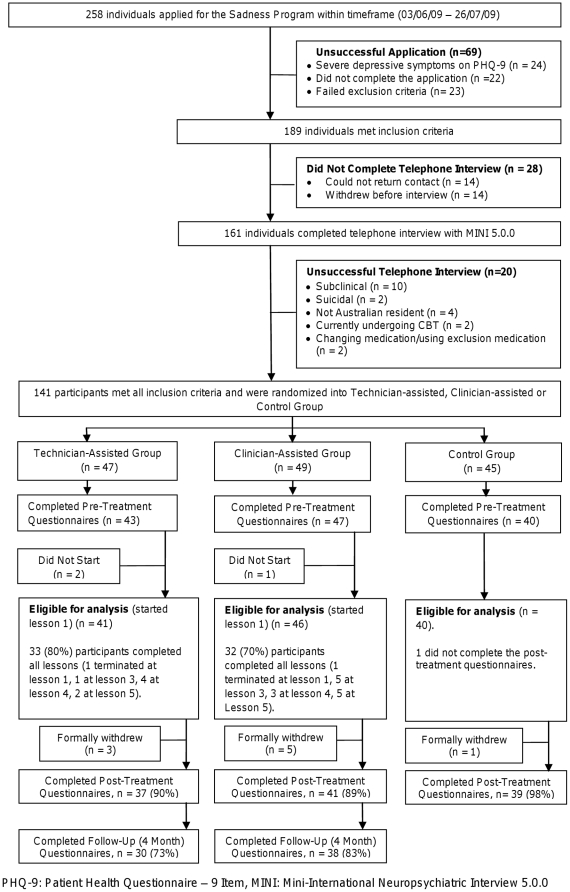
BACKGROUND: Internet-based cognitive behavioural therapy (iCBT) for depression is effective when guided by a clinician, less so if unguided. QUESTION: Would guidance from a technician be as effective as guidance from a clinician? METHOD: Randomized controlled non-inferiority trial comparing three groups: Clinician-assisted vs. technician-assisted vs. delayed treatment. Community-based volunteers applied to the VirtualClinic (www.virtualclinic.org.au) research program, and 141 participants with major depressive disorder were randomized. Participants in the clinician- and technician-assisted groups received access to an iCBT program for depression comprising 6 online lessons, weekly homework assignments, and weekly supportive contact over a treatment period of 8 weeks. Participants in the clinician-assisted group also received access to a moderated online discussion forum. The main outcome measures were the Beck Depression Inventory (BDI-II) and the Patient Health QUESTIONnaire-9 Item (PHQ-9). Completion rates were high, and at post-treatment, both treatment groups reduced scores on the BDI-II (p<0.001) and PHQ-9 (p<0.001) compared to the delayed treatment group but did not differ from each other. Within group effect sizes on the BDI-II were 1.27 and 1.20 for the clinician- and technician-assisted groups respectively, and on the PHQ-9, were 1.54 and 1.60 respectively. At 4-month follow-up participants in the technician group had made further improvements and had significantly lower scores on the PHQ-9 than those in the clinician group. A total of approximately 60 minutes of clinician or technician time was required per participant during the 8-week treatment program. CONCLUSIONS: Both clinician- and technician-assisted treatment resulted in large effect sizes and clinically significant improvements comparable to those associated with face-to-face treatment, while a delayed treatment control group did not improve. These results provide support for large scale trials to determine the clinical effectiveness and acceptability of technician-assisted iCBT programs for depression. This form of treatment has potential to increase the capacity of existing mental health services. TRIAL REGISTRATION: Australian New Zealand Clinical Trials Registry ACTRN12609000559213.
Overview
The claims and statistics of this paper haven’t been checked yet.
Free: it reads the open-access text and checks the first 5 claims that cite a source we can check. Create a free account to check every claim.
Integrity signals
Registry
Cites
Statistics
Figures
Verification
Claims the paper makes
The claims and statistics of this paper haven’t been checked yet.
Free: it reads the open-access text and checks the first 5 claims that cite a source we can check. Create a free account to check every claim.
Claims other papers make about this one
Each is checked against this paper’s own text: does it say what the citing paper says it does?
The cited source doesn’t support the claim as written.
In the citing paper
“Other studies on the combination of online sessions and personal support only investigated support through e-mail, or instant messaging (e.g. [19,36-38]).”
From Blending online therapy into regular face-to-face therapy for depression: content, ratio and preconditions according to patients and therapists using a Delphi study (2014) · cites this paper as [38]
Checked by a reasoning model — may be wrong.
Experimental — accuracy not yet measuredThe source backs part of the claim, not all of it — or backs it for a different population, condition or comparison.
In the citing paper
“Similarly, the level of training did not impact the effectiveness of a digital intervention for depression [96].”
From The therapeutic alliance in digital mental health interventions for serious mental illnesses: narrative review (2020) · cites this paper as [96]
Experimental — accuracy not yet measuredThe source backs part of the claim, not all of it — or backs it for a different population, condition or comparison.
In the citing paper
“Moreover, outcomes for DMHTs supported by non–mental health specialists do not differ from outcomes for DMHTs supported by mental health specialists (43), which allows for task-shifting options to lower levels of licensure, education requirements, and cost.”
From Banbury forum consensus statement on the path forward for digital mental health treatment (2021) · cites this paper as [43]
Experimental — accuracy not yet measuredThe source backs part of the claim, not all of it — or backs it for a different population, condition or comparison.
In the citing paper
“Characteristics of the intervention that may improve adherence to the intervention include a strong theoretical foundation [41], perceived personal relevance to the user [65,66], perceived effectiveness [67,68], tailoring [69,70], persuasive technologies [71], credibility [72,73], social networking [74,75], and regular “push factors” including human support [76-78] and/or periodic prompts (eg, by”
From Web-Based Interventions for Behavior Change and Self-Management: Potential, Pitfalls, and Progress (2012) · cites this paper as [77]
Experimental — accuracy not yet measuredThe source backs part of the claim, not all of it — or backs it for a different population, condition or comparison.
In the citing paper
“In a series of studies, Titov and colleagues have found that support administered from a technician can be equivalent to the support provided by a psychologist [26,27].”
From The promise and pitfalls of the internet for cognitive behavioral therapy (2010) · cites this paper as [27]
Experimental — accuracy not yet measured
6 more claims about this paper
Create a free account to see every claim other papers make about this one.
Self-check
Percentages, sums and reported differences re-computed from the paper’s own numbers.
The self-check needs the paper’s full text.
Citations
Cites
The PHQ-9: Validity of a brief depression severity measure
Kroenke, K., Spitzer, R. L., & Williams, J. B. W. (2001) · Journal of General Internal Medicine · doi:10.1046/j.1525-1497.2001.016009606.x · Cited by 44,910
(1998) · The Journal of Clinical Psychiatry · Cited by 19,139
KESSLER, R. C., ANDREWS, G., COLPE, L. J., HIRIPI, E., MROCZEK, D. K., NORMAND, S.-L. T., WALTERS, E. E., & ZASLAVSKY, A. M. (2002) · Psychological Medicine · doi:10.1017/s0033291702006074 · Cited by 10,327 · cited 9×
“Large (.0.80) within-group effect sizes (ESs) were found for both treatment groups on the K-10 and SDS. Clinical Significance: Remission, Recovery, and Reliable Clinical Change.”
MethodInfluentialSelf-citation(1998) · PubMed · Cited by 10,216
Jacobson, N. S., & Truax, P. (1991) · Journal of Consulting and Clinical Psychology · doi:10.1037/0022-006x.59.1.12 · Cited by 7,770 · cited 1×
“This was defined as the proportion of participants who met the criteria of statistically reliable change as described in Jacobson and Truax [46] and who also demonstrated a reduction in BDI-II scores of at least 10 points, a magnitude of change that has been used in similar research [47].”
MethodThe mini international neuropsychiatric interview
Lecrubier, Y., Sheehan, D., Hergueta, T., & Weiller, E. (1998) · European Psychiatry · doi:10.1016/s0924-9338(99)80239-9 · Cited by 5,872
Moher, D., Schulz, K. F., & Altman, D. G. (2001) · BMC Medical Research Methodology · doi:10.1186/1471-2288-1-2 · Cited by 2,755 · cited 1×
“The present CONSORT-Revised compliant randomized controlled trial (RCT)”
MethodMoher, D. (2001) · JAMA · doi:10.1001/jama.285.15.1987 · Cited by 2,545
Psychometric properties of the credibility/expectancy questionnaire
Devilly, G. J., & Borkovec, T. D. (2000) · Journal of Behavior Therapy and Experimental Psychiatry · doi:10.1016/s0005-7916(00)00012-4 · Cited by 2,295 · cited 4×
“The SDS is a 3 item measure of disability with scores ranging from 0–30 and the CEQ is a widely used measure of the expectancies or perception of treatment credibility.”
MethodInfluentialCredibility of analogue therapy rationales
Borkovec, T. D., & Nau, S. D. (1972) · Journal of Behavior Therapy and Experimental Psychiatry · doi:10.1016/0005-7916(72)90045-6 · Cited by 1,553 · cited 4×
“The SDS is a 3 item measure of disability with scores ranging from 0–30 and the CEQ is a widely used measure of the expectancies or perception of treatment credibility.”
MethodInfluential
Research works printed but not linked: 2
- Titov N Andrews G Schwencke G Solley K Johnston L 2009 An RCT comparing two types of support on severity of symptoms for people completing Internet-based cognitive behavior therapy for social phobia. Aust N Z J Psychiatry 43 920 926 · DOI · Paper page
- American Psychiatric Association 1994 Diagnostic and Statistical Manual of Mental Disorders (4th ed.). Washington, DC American Psychiatric Association 886
Cited by
Items 201–300 of 406
Kirkpatrick, T., Manoukian, L., Dear, B. F., Johnston, L., & Titov, N. (2013) · PeerJ · doi:10.7717/peerj.210 · Cited by 29
“, 2013) as well as non-therapists under supervision (Titov et al., 2010; Robinson et al., 2010; Johnston et al., 2011).”
BackgroundResultSelf-citationMol, M., Dozeman, E., Provoost, S., van Schaik, A., Riper, H., & Smit, J. H. (2018) · Journal of Medical Internet Research · doi:10.2196/jmir.9890 · Cited by 29
Barakat, S., Burton, A. L., Cunich, M. M., Hay, P., Hazelton, J. L., Kim, M., Lymer, S. J., Madden, S., Maloney, D., Miskovic‐Wheatley, J., et al. (2023) · Psychiatry Research · doi:10.1016/j.psychres.2023.115534 · Cited by 33
“…to suggest that very light touch contact from a researcher or technician (which may in some way resemble the researcher contact in our trial) may be the optimal form of contact for digital for self-help programs (Andrews et al., 2010; Robinson et al., 2010; Shim et al., 2017; Titov et al., 2010).”
BackgroundMehta, S., Hadjistavropoulos, H., Nugent, M., Karin, E., Titov, N., & Dear, B. F. (2020) · Spinal Cord · doi:10.1038/s41393-019-0398-6 · Cited by 27
Self-citationBröcker, E., Olff, M., Suliman, S., Kidd, M., Mqaisi, B., Greyvenstein, L., Kilian, S., & Seedat, S. (2022) · European Journal of Psychotraumatology · doi:10.1080/20008066.2022.2107359 · Cited by 30
“The latter is supported by previous studies of PTSD Coach Mobile App as well as other internet-based interventions (Cernvall, Sveen, Bergh Johannesson, & Arnberg, 2018; Clarke et al., 2005; Mohr, Cuijpers, & Lehman, 2011; Possemato et al., 2016; Titov et al., 2010).”
ResultAn Introduction to Core Competencies for the Use of Mobile Apps in Cognitive and Behavioral Practice
Schueller, S. M., Armstrong, C. M., Neary, M., & Ciulla, R. (2020) · Cognitive and Behavioral Practice · doi:10.1016/j.cbpra.2020.11.002 · Cited by 30
Lattie, E. G., Graham, A. K., Hadjistavropoulos, H. D., Dear, B. F., Titov, N., & Mohr, D. C. (2019) · DIGITAL HEALTH · doi:10.1177/2055207619896145 · Cited by 27
“25,26 Nevertheless, it should be noted that when lay-and bachelor’s-trained individuals have been used in research studies, considerable training, structure, and supervision have been made available and, thus, this should be considered when using coaches who are not trained mental health…”
BackgroundSelf-citationHanuka, S., Olson, E. A., Admon, R., Webb, C. A., Killgore, W. D. S., Rauch, S. L., Rosso, I. M., & Pizzagalli, D. A. (2022) · Psychological Medicine · doi:10.1017/s0033291722001106 · Cited by 48
“Internet-based cognitive-behavioral therapy (iCBT) treatment program This study used a modified version of the Sadness Program, a technician-assisted iCBT treatment program that was originally developed at the University of New South Wales (UNSW) (Perini, Titov, & Andrews, 2009; Titov et al., 2010).”
MethodOnline Cognitive Behavioral Therapy for Depressed Primary Care Patients: A Pilot Feasibility Project
Whiteside, U., Richards, J., Steinfeld, B., Simon, G., Caka, S., Tachibana, C., Stuckey, S., & Ludman, E. (2014) · The Permanente Journal · doi:10.7812/tpp/13-155 · Cited by 27
Computer-Assisted CBT and Mobile Apps for Depression: Assessment and Integration Into Clinical Care
Wright, J. H., & Mishkind, M. C. (2020) · FOCUS The Journal of Lifelong Learning in Psychiatry · doi:10.1176/appi.focus.20190044 · Cited by 36
Alfonsson, S., Olsson, E. M. G., Linderman, S., Winnerhed, S., & Hursti, T. J. (2016) · Computers in Human Behavior · doi:10.1016/j.chb.2016.01.035 · Cited by 31
Acceptability of internet interventions for youth mental health in Vietnam
Sobowale, K., Nguyen, M., Weiss, B., Van, T. T. H., & Trung, L. T. (2016) · Global Mental Health · doi:10.1017/gmh.2016.18 · Cited by 25
Eustis, E. H., Graham-LoPresti, J. R., Aguilera, A., & Schueller, S. M. (2023) · Journal of Medical Internet Research · doi:10.2196/45409 · Cited by 31
“Some research indicates that support can be delivered by people with minimal professional training, which can afford benefits in terms of cost-effectiveness, scalability, and the sustainability of these programs [60,63,68].”
Klein, J. P., Späth, C., Schröder, J., Meyer, B., Greiner, W., Hautzinger, M., Lutz, W., Rose, M., Vettorazzi, E., Andersson, G., et al. (2017) · Behaviour Research and Therapy · doi:10.1016/j.brat.2017.07.013 · Cited by 26
Cheung, E. O., Addington, E. L., Bassett, S. M., Schuette, S., Shiu, E. W., Cohn, M., Leykin, Y., Saslow, L. R., & Moskowitz, J. T. (2018) · JMIR Research Protocols · doi:10.2196/10494 · Cited by 27
Gunn, J. M., Wachtler, C., Fletcher, S. L., Davidson, S. K., Mihalopoulos, C., Palmer, V. J., Hegarty, K. L., Coe, A., Murray, E., Dowrick, C. F., et al. (2017) · Trials · doi:10.1186/s13063-017-2089-y · Cited by 26
“This role will be filled by RAs, in line with evidence supporting the effectiveness of non-clinician provided support to This Way Up users [50].”
ResultSelf-citationStanger, C., Kowatsch, T., Xie, H., Nahum-Shani, I. B., Lim-Liberty, F., Anderson, M. A. B., Santhanam, P., Kaden, S. J., & Rosenberg, B. (2021) · JMIR Research Protocols · doi:10.2196/27109 · Cited by 22
Borghouts, J. W., Eikey, E. V., Leon, C. D., Schueller, S. M., Schneider, M. L., Stadnick, N. A., Zheng, K., Wilson, L., Caro, D., Mukamel, D. B., et al. (2022) · JMIR Formative Research · doi:10.2196/43192 · Cited by 34
Xiang, X., Kayser, J., Turner, S., Ash, S., & Himle, J. A. (2024) · Journal of Medical Internet Research · doi:10.2196/53001 · Cited by 27
“Notably, Titov et al [52] showed that layperson-supported wCBT for depression was as effective as a clinician-supported intervention in an RCT involving adults (mean age 44, SD 12.3 years).”
InfluentialZhao, D., Lustria, M. L. A., & Hendrickse, J. (2017) · Patient Education and Counseling · doi:10.1016/j.pec.2017.01.004 · Cited by 31
Internet-Delivered Cognitive Behaviour Therapy
Richards, D., Enrique, Á., Palacios, J. E., & Duffy, D. J. (2018) · InTech eBooks · doi:10.5772/intechopen.71412 · Cited by 31
Rodriguez, M. A., Eisenlohr-Moul, T. A., Weisman, J., & Rosenthal, M. Z. (2021) · JMIR Formative Research · doi:10.2196/25772 · Cited by 27
Internet-Based Cognitive Behavior Therapy
Andersson, G., Carlbring, P., & Hadjistavropoulos, H. D. (2017) · Elsevier eBooks · doi:10.1016/b978-0-12-803457-6.00021-0 · Cited by 30
Religious versus Conventional Internet-based Cognitive Behavioral Therapy for Depression
Tulbure, B. T., Andersson, G., Sălăgean, N., Pearce, M., & Koenig, H. G. (2017) · Journal of Religion and Health · doi:10.1007/s10943-017-0503-0 · Cited by 28
“…(Andersson 2009; Marks et al. 2007; Johansson and Andersson 2012), and effective Internet-delivered cognitive behavioral treatments (iCBTs) for depression have already been successfully tested (Berger et al. 2011; Meyer et al. 2009; O’Mahen et al. 2014; Perini et al. 2009; Titov et al. 2010).”
BackgroundEnrique, Á., Mooney, O., Salamanca-Sanabria, A., Lee, C. T., Farrell, S., & Richards, D. (2019) · Internet Interventions · doi:10.1016/j.invent.2019.100254 · Cited by 30
The use of automated assessments in internet-based CBT: The computer will be with you shortly
Mason, E. C., & Andrews, G. (2014) · Internet Interventions · doi:10.1016/j.invent.2014.10.003 · Cited by 23
Self-citationEvidence on Technology-Based Psychological Interventions in Diagnosed Depression: Systematic Review
Köhnen, M., Dreier, M., Seeralan, T., Kriston, L., Härter, M., Baumeister, H., & Liebherz, S. (2021) · JMIR Mental Health · doi:10.2196/21700 · Cited by 23
Jesús-Romero, R. D., Holder-Dixon, A. R., Buss, J., & Lorenzo‐Luaces, L. (2024) · Journal of Medical Internet Research · doi:10.2196/50780 · Cited by 37
Feng, X. L., & Campbell, A. (2011) · Journal of Technology in Human Services · doi:10.1080/15228835.2011.595276 · Cited by 21
“In contrast, people who do seek online help for mental health concerns are not always met with appropriate treatment or useful information as the quality of online information is generally poor (Griffiths & Christensen, 2000 ; Lissman & Boehnlein, 2001 ; Titov et al, 2010 ).”
BackgroundWindler, C., Clair, M., Long, C. E., Boyle, L., & Radović, A. (2019) · JMIR Mental Health · doi:10.2196/13467 · Cited by 24
“Additionally, the method of support offered is not as important as consistency in meeting expectations and needs [39].”
Chan, W. S., Cheng, W. Y., Lok, S. H. C., Cheah, A. K. M., Lee, A. K. W., Ng, A. S. Y., & Kowatsch, T. (2024) · JMIR Mental Health · doi:10.2196/51716 · Cited by 29
Psychological eHealth interventions for people with intellectual disabilities: A scoping review
Oudshoorn, C. E. M., Frielink, N., Nijs, S. L. P., & Embregts, P. J. C. M. (2021) · Journal of Applied Research in Intellectual Disabilities · doi:10.1111/jar.12877 · Cited by 29
Mori, M., Tajima, M., Kimura, R., Sasaki, N., Somemura, H., Ito, Y., Okanoya, J., Yamamoto, M., Nakamura, S., & Tanaka, K. (2014) · JMIR Research Protocols · doi:10.2196/resprot.3629 · Cited by 21
“The protocol for Web-based CBT by Titov et al required six sessions across 8 weeks, and experts held these sessions on a one-on-one basis [45].”
MethodRodriguez-Pulido, F., Castillo-Sánchez, G., Hamrioui, S., Martin, L. D., Vazquez-Beltrán, P., Díez, I. D. L. T., & Franco, M. (2020) · Journal of Medical Systems · doi:10.1007/s10916-020-1543-7 · Cited by 22
“They considered 6 studies, cited in previous reviews plus the articles by Kessler 2009 [40] and Titov 2010 [41].”
BackgroundResultIntervenciones basadas en internet para los trastornos depresivos: Una visión general
Cuijpers, P., & Riper, H. (2015) · Revista de Psicopatología y Psicología Clínica · doi:10.5944/rppc.vol.19.num.3.2014.13902 · Cited by 19
Adherence to self-care interventions for depression or anxiety: A systematic review
Simco, R., McCusker, J., & Sewitch, M. J. (2014) · Health Education Journal · doi:10.1177/0017896913514738 · Cited by 22
“…of previous modules (Andersson et al., 2005, 2006; Carlbring et al., 2006, 2007; Furmark et al., 2009; Kaldo et al., 2008; Perini et al., 2009; Titov et al., 2010; van Straten et al., 2008) or on a weekly basis (Grime, 2004; Learmonth et al., 2008; Lorig et al., 2008; Shapiro et al., 2004;…”
BackgroundInfluentialAre Trials of Computerized Therapy Generalizable? A Multidimensional Meta-analysis
Wilks, C. R., Zieve, G. G., & Lessing, H. K. (2016) · Telemedicine and e-Health · doi:10.1089/tmj.2015.0129 · Cited by 18
Henry, J. A., Goodworth, M.-C., Lima, E., Zaugg, T., & Thielman, E. J. (2022) · Ear & Hearing · doi:10.1097/aud.0000000000001150 · Cited by 18
“…licensed psychologists (Andersson et al. 2012); and (3) both clinician- and technician-assisted CBT were effective in the treatment of depression (Titov et al. 2010) and generalized anxiety 1VA RR&D National Center for Rehabilitative Auditory Research, VA Portland Health Care System, Portland,…”
BackgroundReutrakul, S., Martyn-Nemeth, P. A., Quinn, L. T., Rydzon, B., Priyadarshini, M., Danielson, K. K., Baron, K. G., & Duffecy, J. L. (2022) · Pilot and Feasibility Studies · doi:10.1186/s40814-022-01076-2 · Cited by 22
Hadjistavropoulos, H. D., Schneider, L. H., Hadjistavropoulos, T., Titov, N., & Dear, B. F. (2018) · Canadian Journal of Pain · doi:10.1080/24740527.2018.1442675 · Cited by 18
“, students, minimally trained support staff) without compromising clinical outcomes or acceptability.(7,34,35) Over the course of 8 weeks, the coach contacted clients via telephone.”
BackgroundSelf-citationAn Online Pain Education Program for Working Adults: Pilot Randomized Controlled Trial
Li, Y., & Tse, M. Y. M. (2019) · Journal of Medical Internet Research · doi:10.2196/15071 · Cited by 20
Castro, A., García-Palacios, A., García-Campayo, J., Mayoral, F., Botella, C., García-Herrera, J. M., Pérez-Yus, M.-C., Vives, M., Baños, R. M., Roca, M., et al. (2015) · BMC Psychiatry · doi:10.1186/s12888-015-0475-0 · Cited by 17
“59 in the positive affect group [31], 16.”
BackgroundTong, A. C. Y., Ho, F. S., Chu, O. H., & Mak, W. W. S. (2023) · Journal of Medical Internet Research · doi:10.2196/39029 · Cited by 21
Lobban, F. A., Dodd, A., Dagnan, D., Diggle, P. J., Griffiths, M., Hollingsworth, B. P., Knowles, D., Long, R., Mallinson, S., Morriss, R. K., et al. (2015) · Contemporary Clinical Trials · doi:10.1016/j.cct.2015.01.004 · Cited by 20
“However, previous research in this broad area suggests that selfmanagement interventions are likely to be more effective when they are supported [54,55], that this may be because of greater adherence and use of the site [14], and that peer and therapist support are both potential options [56].”
BackgroundWild, T. S. N., Fromberger, P., Jordan, K., Müller, I., & Müller, J. L. (2019) · Frontiers in Psychiatry · doi:10.3389/fpsyt.2018.00763 · Cited by 26
“Indeed, several studies found that guided internet-based cognitive behavioral therapies are more effective than internet-based cognitive behavioral therapies without therapeutic guidance (56, 57) and that 10min of support per patient and week are sufficient to achieve clinically significant improvements (58, 59).”
BackgroundInfluentialSainsbury, K., Mullan, B. A., & Sharpe, L. (2014) · International Journal of Behavioral Medicine · doi:10.1007/s12529-014-9416-4 · Cited by 18
A Case Study Illustrating Therapist-Assisted Internet Cognitive Behavior Therapy for Depression
Pugh, N. E., Hadjistavropoulos, H. D., Klein, B., & Austin, D. W. (2014) · Cognitive and Behavioral Practice · doi:10.1016/j.cbpra.2013.08.002 · Cited by 16
Murray, E., Linke, S., Harwood, E., Conroy, S., Stevenson, F. A., & Godfrey, C. (2012) · Alcohol and Alcoholism · doi:10.1093/alcalc/ags096 · Cited by 19
Digitalizing Public Services: Opportunities for Latin America and the Caribbean
Cristia, J., & Vlaicu, R. (2022) · doi:10.18235/0004543 · Cited by 31
Collins, S., Byrne, M., Hawe, J., & O'Reilly, G. (2018) · British Journal of Clinical Psychology · doi:10.1111/bjc.12165 · Cited by 15
Availability of Internet-Based Cognitive-Behavioral Therapies for Depression: A Systematic ReviewPreprint
Buss, J., Steinberg, J. S., Banks, G., Horani, D., Rutter, L. A., Wasil, A. R., Ramírez, I., & Lorenzo‐Luaces, L. (2020) · PsyArXiv (OSF Preprints) · doi:10.1016/j.beth.2023.06.003 · Cited by 21
Andersson, G., Wagner, B., & Cuijpers, P. J. (2016) · Springer eBooks · doi:10.1007/978-3-319-06083-5_2 · Cited by 18
MacLean, S. E., Corsi, D. J., Litchfield, S., Kucharski, J., Genise, K., Selaman, Z., Testa, V., & Hatcher, S. (2020) · Journal of Medical Internet Research · doi:10.2196/15001 · Cited by 17
“To date, coaches have included both students [12] and licensed professionals from a variety of backgrounds, including psychology [13], counseling [14], and social work [15,16].”
BackgroundHatcher, S., Whittaker, R., Patton, M., Miles, W., Ralph, N., Kercher, K., & Sharon, C. (2018) · JMIR Mental Health · doi:10.2196/mental.8510 · Cited by 17
“To date, coaches have come from a variety of backgrounds including psychology, social work, as well as “technicians” [10,11].”
BackgroundFlores Plata, L. A., Cárdenas López, G., Durán Baca, X., & De la Rosa Gómez, A. (2014) · Psicología Iberoamericana · doi:10.48102/pi.v22i1.139 · Cited by 14
Sasseville, M., LeBlanc, A., Tchuente, J., Boucher, M., Dugas, M., Mbemba, G. I. C., Barony, R., Chouinard, M., Beaulieu, M., Beaudet, N., et al. (2023) · Systematic Reviews · doi:10.1186/s13643-023-02241-1 · Cited by 22
“Titov [92] 2010 Australia Major depressive disorder 141 Internet or website/email (SMS) Depression/distress”
BackgroundÖberg, S., Johansson, L., Sandberg, J., Johansson, P., & Broström, A. (2020) · The Journal of Cardiovascular Nursing · doi:10.1097/jcn.0000000000000626 · Cited by 17
“Fewer therapists can treat more patients online, and Internet-based CBT-I can be delivered by healthcare personnel with less training in CBT.(55) Internet-based CBT supported by a nurse has previously been used to treat depression in patients with heart failure.”
BackgroundInfluentialBielinski, L. L., & Berger, T. (2020) · Counseling Psychology and Psychotherapy · doi:10.17759/cpp.2020280305 · Cited by 21
Dopke, C. A., McBride, A., Babington, P., Jonathan, G., Michaels, T., Ryan, C., Duffecy, J. L., Mohr, D. C., & Goulding, E. H. (2021) · JMIR Formative Research · doi:10.2196/25810 · Cited by 14
“To reduce costs and increase access, human support for MHTs often involves personnel without professional training in mental health care [34-36].”
Massoudi, B., Blanker, M. H., van Valen, E., Wouters, H., Bockting, C., & Burger, H. (2017) · BMC Psychiatry · doi:10.1186/s12888-017-1376-1 · Cited by 17
Mackenzie, A., Harvey, S. B., Mewton, L. R., & Andrews, G. (2014) · The Medical Journal of Australia · doi:10.5694/mja14.00293 · Cited by 15
Self-citationTitov, N., Dear, B. F., Johnston, L., & Terides, M. (2012) · Revista de Psicopatología y Psicología Clínica · doi:10.5944/rppc.vol.17.num.3.2012.11842 · Cited by 13
Self-citationJohansson, R. (2013) · Linköping studies in behavioural science · doi:10.3384/diss.diva-100385 · Cited by 18
Wiersma, J., Titov, N., van Schaik, A., van Oppen, P., Beekman, A. T. F., Cuijpers, P. J., & Andrews, G. (2011) · Psychotherapy and Psychosomatics · doi:10.1159/000323167 · Cited by 15
Self-citationGlobal sensitivity analysis of clinical trials with missing patient-reported outcomes
Scharfstein, D. O., & McDermott, A. (2018) · Statistical Methods in Medical Research · doi:10.1177/0962280218759565 · Cited by 18
“[149] N Titov, G Andrews, M Davies, K McIntyre, E Robinson, and K Solley.”
BackgroundSignificant events in an Internet‐delivered (Space from Depression) intervention for depression
Richards, D., Dowling, M., O'Brien, E., Viganò, N., & Timulak, L. (2018) · Counselling and Psychotherapy Research · doi:10.1002/capr.12142 · Cited by 13
“…(Baumeister, Reichler, Munzinger & Lin, 2014; Richards & Richardson, 2012), but the nature, type, duration of any support are still largely unanswered as it seems that a variety of implementations of support can achieve the same outcomes (Richards & Richardson, 2012; Titov et al., 2009, 2010).”
Amer, N. A., Abdelrazek, S. M., Eladrosy, W., El-Bakry, H. M., & Shohieb, S. M. (2024) · International Journal of Cognitive Therapy · doi:10.1007/s41811-024-00225-0 · Cited by 14
“The studies conducted by Watanabe et al. (2015) and Titov et al., (2010a, b) concentrated on CBT programs using smartphones for major depression, which included components such as cognitive restructuring and self-monitoring.”
Nissling, L., Fahlke, C., Lilja, J. L., Skoglund, I., & Weineland, S. (2020) · JMIR Formative Research · doi:10.2196/19226 · Cited by 15
Young, L. M., Moylan, S., John, T., Turner, M., Opie, R., Hockey, M., Saunders, D., Bruscella, C., Jacka, F. N., Teychenne, M. J., et al. (2022) · BMC Psychiatry · doi:10.1186/s12888-022-03840-3 · Cited by 16
“This was based both on statistical reasoning (sample size and recruitment feasibility over the funded 18-month study period), clinical judgement and other psychotherapy trials using non-inferiority designs [72].”
Receiving Online Psychological Counseling and its Causes: A Structural Equation Model
Erdem, A., Bardakçı, S., & Erdem, Ş. (2016) · Current Psychology · doi:10.1007/s12144-016-9542-z · Cited by 16
Are Digitally Delivered Psychological Interventions for Depression the Way Forward? A Review
Stefanopoulou, E., Lewis, D., Taylor, M., Broscombe, J., Ahmad, J., & Larkin, J. (2018) · Psychiatric Quarterly · doi:10.1007/s11126-018-9576-5 · Cited by 12
Armaou, M. (2024) · Social Sciences · doi:10.3390/socsci13020114 · Cited by 13
Rajeshkumar, L., Mishkind, M. C., Coleman, J. J., Pahwa, M., LaPreze, D., Solenske, S., & Wright, J. H. (2024) · Journal of Psychiatric Practice · doi:10.1097/pra.0000000000000815 · Cited by 15
“42 43 – 45 Another evidence-based program for CCBT, Space from Depression , which was developed in Ireland, has been shown to be effective compared with control conditions in 2 RCTs, 46,47 but a study in women with depression and a history of breast cancer did not show a signi fi cant difference in…”
Individually tailored internet-based cognitive behavioural therapy for anxiety disorders
Nordgren, L. B. (2013) · Linköping University Electronic Press eBooks · doi:10.3384/diss.diva-100969 · Cited by 12
Danaher, B. G., Seeley, J. R., Stormshak, E. A., Tyler, M. S., Caruthers, A. S., Moore, K. J., & Cardenas, L. E. (2018) · JMIR Research Protocols · doi:10.2196/11106 · Cited by 14
“Using the term coach implies that the coach’s interaction with families need not require the skills of a highly trained clinician [34].”
Klein, J. P., Knaevelsrud, C., Bohus, M., Ebert, D. D., Gerlinger, G., Günther, K., Jacobi, C., Löbner, M., Riedel-Heller, S. G., Sander, J., et al. (2019) · Fortschritte der Neurologie · Psychiatrie · doi:10.1055/a-0849-9902 · Cited by 12
McCusker, J., Cole, M. G., Yaffe⃰, M. J., Strumpf, E., Sewitch, M. J., Sussman, T., Ciampi, A., Lavoie, K., Platt, R. W., & Belzile, É. (2016) · General Hospital Psychiatry · doi:10.1016/j.genhosppsych.2016.02.004 · Cited by 11
Hails, K. A., McWhirter, A. C., Sileci, A. C. B., & Stormshak, E. A. (2024) · Early Childhood Research Quarterly · doi:10.1016/j.ecresq.2024.09.009 · Cited by 11
Guided Internet-Delivered Treatment for Depression: Scoping Review
Børtveit, L., Dechsling, A., Sütterlin, S., Nordgreen, T., & Nordahl‐Hansen, A. (2022) · JMIR Mental Health · doi:10.2196/37342 · Cited by 14
“In Multimedia Appendix 5 [17,73-182], the data charted from and the characteristics of the different sources of evidence are presented.”
BackgroundComputerised cognitive behaviour therapy for major depression: a reply to the REEACT trial
Andrews, G., Hobbs, M. J., & Newby, J. M. (2016) · Evidence Based Mental Health · doi:10.1136/eb-2015-102293 · Cited by 10
Self-citationBerg, I., Hovne, V., Carlbring, P., Bernhard‐Oettel, C., Oscarsson, M., Mechler, J., Lindqvist, K., Topooco, N., Andersson, G., & Philips, B. (2022) · Internet Interventions · doi:10.1016/j.invent.2022.100592 · Cited by 14
“Likewise, support of a more practical and technical nature, without clinical advice, may be comparable to support from a clinician (Titov et al., 2010).”
BackgroundComputerised cognitive behavioural therapy: helping Ireland log on
Twomey, C. D., O’Reilly, G., & Byrne, M. (2013) · Irish Journal of Psychological Medicine · doi:10.1017/ipm.2012.5 · Cited by 11
Skaczkowski, G., van der Kruk, S., Loxton, S., Hughes-Barton, D., Howell, C., Turnbull, D., Jensen, N., Smout, M., & Gunn, K. (2022) · JMIR Mental Health · doi:10.2196/31018 · Cited by 9
Watt, M., Hyde, A. M., Spence, J. C., Wright, G. M., Well, S. V., Johnson, E., Mason, A. L., McLeod, M., & Tandon, P. (2023) · Canadian Liver Journal · doi:10.3138/canlivj-2022-0045 · Cited by 9
Mutter, A., Bücheler, M., Idrees, A. R., Domhardt, M., & Baumeister, H. (2024) · BMJ Open · doi:10.1136/bmjopen-2024-086728 · Cited by 12
Westas, M., Mourad, G., Andersson, G., Neher, M., Lundgren, J., & Johansson, P. (2022) · BMC Psychiatry · doi:10.1186/s12888-022-03939-7 · Cited by 14
“Moreover, iCBT can be delivered to patients in their home by healthcare providers with only brief introductory training in CBT, allowing more patients to have access to the treatment [14].”
BackgroundMethodBeerli, J., Ehlert, U., & Castro, R. T. A. (2022) · BMC Family Practice · doi:10.1186/s12875-022-01779-8 · Cited by 11
“In addition, the impact of lack of personal contact and consequently women’s inability to benefit from the therapeutic alliance [36–38], may restrict effectiveness of internet-based interventions [36, 39].”
BackgroundThe Impact of the Internet in Twenty-First Century Addictions: An Overview
Bisen, S. S., & Deshpande, Y. (2017) · Advances in human and social aspects of technology book series · doi:10.4018/978-1-5225-3477-8.ch001 · Cited by 11
Xiang, X., Turner, S., Ruiz-Sierra, S., Zheng, C., Ash, S., Kodkany, N., Dimoji, A., Gosdzinski, C., & Kubicek, G. (2024) · Clinical Gerontologist · doi:10.1080/07317115.2024.2395890 · Cited by 9
“These findings contribute to the sparse literature on the role of laypersons, as opposed to highly trained therapists, in providing human support in DMHIs (Karyotaki et al., 2022; Titov et al., 2010; Tomasino et al., 2017).”
Andersson, G., Nordgren, L. B., Buhrman, M., & Carlbring, P. (2015) · Revista de Psicopatología y Psicología Clínica · doi:10.5944/rppc.vol.19.num.3.2014.13903 · Cited by 10
“There are some studies indicating that support can be provided mainly from a technical and administrative point of view with little need for psychotherapeutic expertise (Titov et al., 2010).”
Williams, A. D., Blackwell, S. E., Holmes, E. A., & Andrews, G. (2013) · BMJ Open · doi:10.1136/bmjopen-2013-004049 · Cited by 9
“previous trials (20-23) and a quality assurance effectiveness study conducted in primary care”
BackgroundSelf-citationReduced Contact Cognitive-Behavioral Interventions for Adult Depression: A Review
Beshai, S., Wallace, L. M., McDougall, K. H., Waldmann, K., & Stea, J. N. (2015) · The Journal of Psychology · doi:10.1080/00223980.2015.1087376 · Cited by 10
“Furthermore, some of the previously reviewed studies (e.g., Berger et al., 2011; Titov et al., 2010) demonstrated effect sizes comparable to previous studies of traditional, face-to-face CBT.”
BackgroundResultKöhnen, M., Kriston, L., Härter, M. C., Baumeister, H., & Liebherz, S. (2020) · Journal of Medical Internet Research · doi:10.2196/24584 · Cited by 17
“TBI arms o f i n c l u d e d s t u d i e s a p p l i e d g u i d e d [25,29,31,38,46,47,55,65,70,73,84,85,88,89,91], unguided [25,45,62,65,77,95], or therapist-administered [50,91] interventions.”
BackgroundInfluentialNakao, T., Murayama, K., Takahashi, S., Kayama, M., Nishi, D., Horinouchi, T., Oya, N., & Kuga, H. (2021) · International Journal of Environmental Research and Public Health · doi:10.3390/ijerph18147318 · Cited by 10
“Internet-based CBT could be a useful method during the COVID-19 pandemic because its effectiveness has been demonstrated in several studies [23,24].”
MethodChoi, I., Andrews, G., Sharpe, L., & Hunt, C. J. (2014) · Social Psychiatry and Psychiatric Epidemiology · doi:10.1007/s00127-014-0956-3 · Cited by 9
Self-citationInternet-Based Therapy: Too Good to be True?
Lampe, L. A. (2011) · Australian & New Zealand Journal of Psychiatry · doi:10.3109/00048674.2011.560138 · Cited by 8
“But the clinician ’ s role may extend beyond simply corresponding in cyberspace with programme participants, and recent reports suggest technicians may do as well or better in this regard anyway [5], since, although acceptability of computer-assisted treatment programmes has been reported as high [6], this is usually…”
BackgroundAlbers, N., Melo, F. S., Neerincx, M. A., Kudina, O., & Brinkman, W. (2025) · npj Digital Medicine · doi:10.1038/s41746-025-01701-3 · Cited by 9
“For example, given that the quali fi cation of human coaches providing support does not seem to play a large role in internet-based mental health interventions 50 , it has been proposed that technicians 58 or expertpatients 17 couldalsoprovidefeedback.”
Community mental health interventions for people with major depressive disorder: A scoping review
Tan, R. X. R., & Goh, Y. S. (2022) · International Journal of Mental Health Nursing · doi:10.1111/inm.13029 · Cited by 12
Use of weekly assessment data to enhance evaluation of a subjective wellbeing intervention
Colla, L., Fuller‐Tyszkiewicz, M., Tomyn, A. J., Richardson, B., & Tomyn, J. D. (2015) · Quality of Life Research · doi:10.1007/s11136-015-1150-0 · Cited by 11
Gega, L., Swift, L., Barton, G., Todd, G., Reeve, N., Bird, K., Holland, R., Howe, A. C., Wilson, J., & Molle, J. (2012) · Trials · doi:10.1186/1745-6215-13-151 · Cited by 9
“Other studies use less experienced support staff, such as an administrator [28,29], lay counsellors [26] or psychology students [22], who are easier to find and less costly to employ, but may be less effective or less acceptable, or may have hidden costs (for example, increased patient use of other services).”
Metadata
- Authors
- Titov, N., Andrews, G., Davies, M., McIntyre, K., Robinson, E., & Solley, K.
- Affiliations
- UNSW Sydney (AU)
- St Vincent's Hospital Sydney (AU)
- Corresponding author
- Titov, Nickolai
- Venue
- PLoS ONE
- Publisher
- Public Library of Science (PLoS)
- Published
- 2010-06-08
- Volume
- 5
- Issue
- 6
- Pages
- e10939
- ISSN
- 1932-6203 (ISSN-L)
- PMC
- PMC2882336
- OpenAlex
- W2056813394
- Semantic Scholar
- 433011dba85527e73ea0ec22c25ce00808babfdc
- Cited by
- 406
- References
- 57
- Citations by year
- 2026: 6 · 2025: 16 · 2024: 19 · 2023: 26 · 2022: 27 · 2021: 26 · 2020: 17 · 2019: 28 · 2018: 20 · 2017: 39 · 2016: 34 · 2015: 24 · 2014: 37 · 2013: 40 · 2012: 23
- FWCI
- 41.93
- Type
- journal article
- Language
- en
- Open access
- gold
- doi.org
- Locations
- PLoS ONE (publishedVersion, cc-by)
- PubMed Central (publishedVersion, cc-by)
- PubMed (publishedVersion)
- RePEc: Research Papers in Economics (submittedVersion)
- DOAJ (DOAJ: Directory of Open Access Journals) (submittedVersion, cc-by-sa)
- Figshare (submittedVersion, cc-by)
- Topics
- Social Sciences › Psychology › Applied Psychology › Digital Mental Health Interventions
- Social Sciences › Psychology › Experimental and Cognitive Psychology › Anxiety, Depression, Psychometrics, Treatment, Cognitive Processes
- Health Sciences › Medicine › Public Health, Environmental and Occupational Health › Telemedicine and Telehealth Implementation
- Keywords
- internet-based cognitive behavioral therapy, depression, major depressive disorder, treatment completion, treatment delay, non-inferiority, mental health service capacity
- MeSH terms
- Adult, Aged, Depression, Female, Health Personnel, Humans, Male, Middle Aged, Surveys and Questionnaires, Treatment Outcome, Internet
About these checks
Registry, retraction, Cites and statistics results are computed, not judged, with one exception: a printed reference that no index lists is read once by a model before it counts as a citation error. Claims are extracted by a model and kept only when their quote appears verbatim in the text; each cited source is then checked, with a model’s help, for whether it says what the claim relies on. Those verdicts can be wrong — read the claim’s quote and the cited source before relying on one.
Statistics and arithmetic are recomputed, not judged.
Confidence bands are shown only for fields calibrated on our annotated test set. None is calibrated yet, so no band is shown.
What counts as a claim ›How we measure confidence ›How we check this ›
Are you an author, or do you see a problem with this page? Request a review
Data sources
Bibliographic data: Semantic Scholar, OpenAlex, Crossref.
Contains information from the Semantic Scholar Academic Graph Datasets, made available under the ODC Attribution License (ODC-BY 1.0).
Semantic Scholar’s data is described in: Kinney, R., et al. (2023). The Semantic Scholar Open Data Platform. arXiv:2301.10140.
