

The DOI matches its Crossref record; 93 of the 93 references it cites were found in a registry or an index.
Risky Decisions and Their Consequences: Neural Processing by Boys with Antisocial Substance Disorder
Open accessAbstract
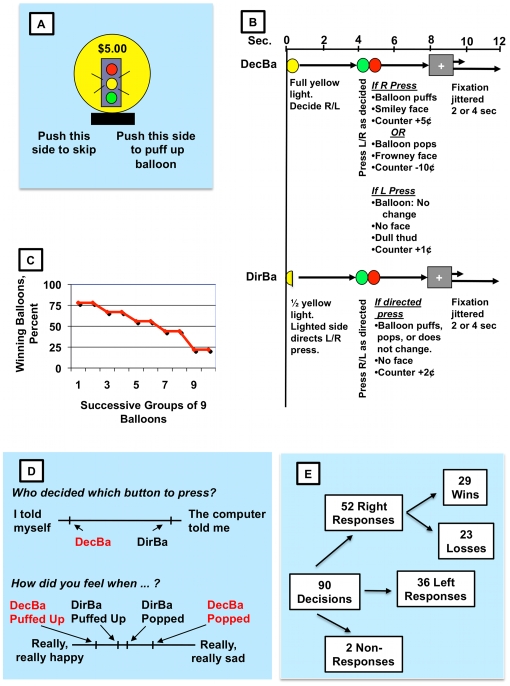
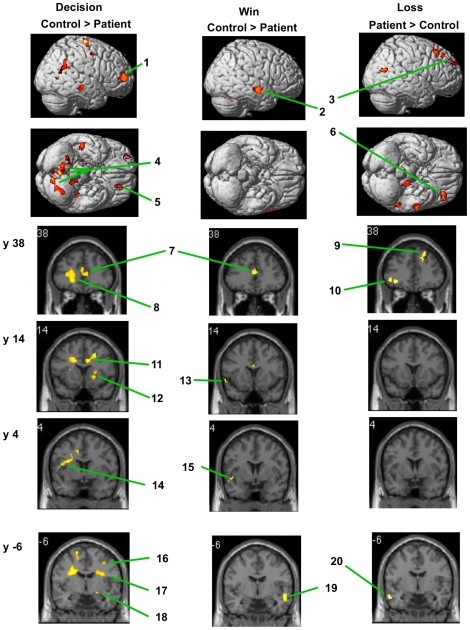
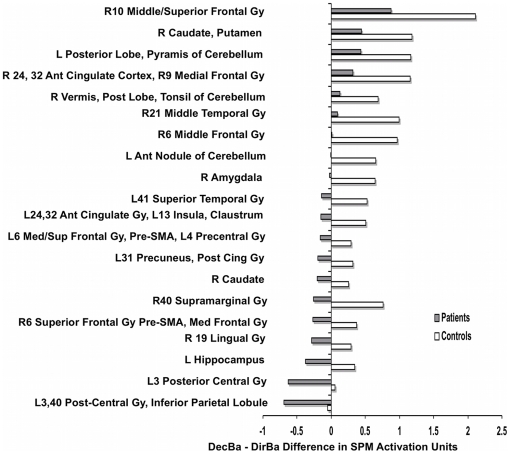
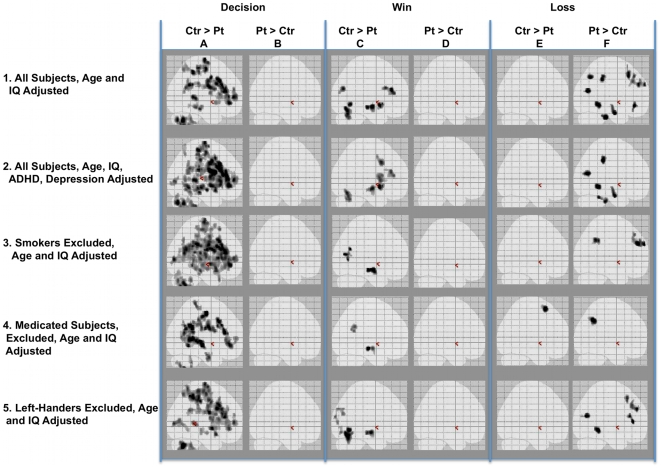
BACKGROUND: Adolescents with conduct and substance problems ("Antisocial Substance Disorder" (ASD)) repeatedly engage in risky antisocial and drug-using behaviors. We hypothesized that, during processing of risky decisions and resulting rewards and punishments, brain activation would differ between abstinent ASD boys and comparison boys. METHODOLOGY/PRINCIPAL FINDINGS: We compared 20 abstinent adolescent male patients in treatment for ASD with 20 community controls, examining rapid event-related blood-oxygen-level-dependent (BOLD) responses during functional magnetic resonance imaging. In 90 decision trials participants chose to make either a cautious response that earned one cent, or a risky response that would either gain 5 cents or lose 10 cents; odds of losing increased as the game progressed. We also examined those times when subjects experienced wins, or separately losses, from their risky choices. We contrasted decision trials against very similar comparison trials requiring no decisions, using whole-brain BOLD-response analyses of group differences, corrected for multiple comparisons. During decision-making ASD boys showed hypoactivation in numerous brain regions robustly activated by controls, including orbitofrontal and dorsolateral prefrontal cortices, anterior cingulate, basal ganglia, insula, amygdala, hippocampus, and cerebellum. While experiencing wins, ASD boys had significantly less activity than controls in anterior cingulate, temporal regions, and cerebellum, with more activity nowhere. During losses ASD boys had significantly more activity than controls in orbitofrontal cortex, dorsolateral prefrontal cortex, brain stem, and cerebellum, with less activity nowhere. CONCLUSIONS/SIGNIFICANCE: Adolescent boys with ASD had extensive neural hypoactivity during risky decision-making, coupled with decreased activity during reward and increased activity during loss. These neural patterns may underlie the dangerous, excessive, sustained risk-taking of such boys. The findings suggest that the dysphoria, reward insensitivity, and suppressed neural activity observed among older addicted persons also characterize youths early in the development of substance use disorders.
Overview
The claims and statistics of this paper haven’t been checked yet.
Run the check — free, no account needed. It reads the open-access text and checks the sources it cites.
Integrity signals
Registry
Cites
Statistics
Figures
Verification
Claims the paper makes
The claims and statistics of this paper haven’t been checked yet.
Run the check — free, no account needed. It reads the open-access text and checks the sources it cites.
Claims other papers make about this one
Each is checked against this paper’s own text: does it say what the citing paper says it does?
In the citing paper
“Crowley and colleagues [653] found that adolescents with CD and comorbid substance-use disorder displayed relative hypoactivation in the striatum and ACC during risky decision-making for rewards.”
From Reward circuitry dysfunction in psychiatric and neurodevelopmental disorders and genetic syndromes: animal models and clinical findings (2012) · cites this paper as [653]
Self-check
Percentages, sums and reported differences re-computed from the paper’s own numbers.
The self-check needs the paper’s full text.
Citations
Cites
How do you feel — now? The anterior insula and human awareness
(Bud) Craig, A. D. (2009) · Nature Reviews Neuroscience · doi:10.1038/nrn2555 · Cited by 6,657 · cited 1×
“Via widespread connections [65] insula integrates current internal feelings with past memories to guide goal-directed behavior [66].”
BackgroundWechsler Abbreviated Scale of Intelligence
Dumont, R., Willis, J. O., Veizel, K., & Zibulsky, J. (2014) · Wiley eBooks · doi:10.1002/9781118660584.ese2519 · Cited by 5,546
Koob, G. F., & Volkow, N. D. (2010) · Neuropsychopharmacology · doi:10.1038/npp.2009.110 · Cited by 5,340
The precuneus: a review of its functional anatomy and behavioural correlates
Cavanna, A. E., & Trimble, M. R. (2006) · Brain · doi:10.1093/brain/awl004 · Cited by 5,128
Wechsler Abbreviated Scale of Intelligence
Wechsler, D. (1999) · PsycTESTS Dataset · doi:10.1037/t15170-000 · Cited by 4,681
Prevalence and development of psychiatric disorders in childhood and adolescence
Costello, E. J., Mustillo, S., Erkanli, A., Keeler, G., & Angold, A. (2003) · Archives of General Psychiatry · doi:10.1001/archpsyc.60.8.837 · Cited by 4,035
Social class and mental illness: Community study.
Hollingshead, A. B., & Redlich, F. C. (1958) · John Wiley & Sons, Inc. eBooks · doi:10.1037/10645-000 · Cited by 3,744
SHAFFER, D., FISHER, P., LUCAS, C. P., DULCAN, M. K., & SCHWAB-STONE, M. E. (2000) · Journal of the American Academy of Child & Adolescent Psychiatry · doi:10.1097/00004583-200001000-00014 · Cited by 3,505
The role of the medial frontal cortex in cognitive control
Ridderinkhof, K. R., Ullsperger, M., Crone, E. A., & Nieuwenhuis, S. (2004) · Science · doi:10.1126/science.1100301 · Cited by 2,974
Robins, L. N. (1988) · Archives of General Psychiatry · doi:10.1001/archpsyc.1988.01800360017003 · Cited by 2,909
The human orbitofrontal cortex: linking reward to hedonic experience
Kringelbach, M. L. (2005) · Nature Reviews Neuroscience · doi:10.1038/nrn1747 · Cited by 2,180
Functional role of the supplementary and pre-supplementary motor areas
Nachev, P., Kennard, C., & Husain, M. (2008) · Nature Reviews Neuroscience · doi:10.1038/nrn2478 · Cited by 1,928
Social Class and Mental Illness: A Community Study
Hollingshead, A. B., & Redlich, F. C. (2007) · American Journal of Public Health · doi:10.2105/ajph.97.10.1756 · Cited by 1,846
Circuitry and functional aspects of the insular lobe in primates including humans
AUGUSTINE, J. (1996) · Brain Research Reviews · doi:10.1016/s0165-0173(96)00011-2 · Cited by 1,776
Jeurgen, K., Assheuer, J., & Paxinos, G. (1997) · Medical Entomology and Zoology · Cited by 1,403
The Role of the Dorsal Striatum in Reward and Decision-Making: Figure 1.
Balleine, B. W., Delgado, M. R., & Hikosaka, O. (2007) · The Journal of Neuroscience · doi:10.1523/jneurosci.1554-07.2007 · Cited by 1,390
Lateral prefrontal cortex: architectonic and functional organization
Petrides, M. (2005) · Philosophical Transactions of the Royal Society B: Biological Sciences · doi:10.1098/rstb.2005.1631 · Cited by 1,212
Imaging dopamine's role in drug abuse and addiction
Volkow, N. D., Fowler, J. S., Wang, G. J., Baler, R., & Telang, F. (2009) · Neuropharmacology · doi:10.1016/j.neuropharm.2008.05.022 · Cited by 988
Human fronto–mesolimbic networks guide decisions about charitable donation
Moll, J., Krueger, F., Zahn, R., Pardini, M., de Oliveira-Souza, R., & Grafman, J. (2006) · Proceedings of the National Academy of Sciences · doi:10.1073/pnas.0604475103 · Cited by 900
Human insula activation reflects risk prediction errors as well as risk
Preuschoff, K., Quartz, S. R., & Bossaerts, P. (2008) · The Journal of Neuroscience · doi:10.1523/jneurosci.4286-07.2008 · Cited by 784
Halstead-Reitan Neuropsychological Test Battery
(2012) · Springer eBooks · doi:10.1007/springerreference_180120 · Cited by 755
Paulus, M. P., Rogalsky, C., Simmons, A., Feinstein, J. S., & Stein, M. B. (2003) · NeuroImage · doi:10.1016/s1053-8119(03)00251-9 · Cited by 745
Altered functional connectivity in early Alzheimer's disease: A resting‐state fMRI study
Wang, K., Liang, M., Wang, L. Y., Tian, L., Zhang, X., Li, K., & Jiang, T. (2006) · Human Brain Mapping · doi:10.1002/hbm.20324 · Cited by 737
Social Decision-Making: Insights from Game Theory and Neuroscience
Sanfey, A. G. (2007) · Science · doi:10.1126/science.1142996 · Cited by 719
Achenbach, T. M., Howell, C. T., Quay, H. C., Conners, C. K., & Bates, J. E. (1991) · Monographs of the Society for Research in Child Development · doi:10.2307/1166156 · Cited by 571
Risk-taking and the adolescent brain: Who is at risk?
Galvan, A., Hare, T., Voss, H., Glover, G., & Casey, B. J. (2007) · Developmental Science · doi:10.1111/j.1467-7687.2006.00579.x · Cited by 568
Guidelines for reporting an fMRI study
Poldrack, R. A., Fletcher, P. C., Henson, R. N., Worsley, K. J., Brett, M., & Nichols, T. E. (2008) · NeuroImage · doi:10.1016/j.neuroimage.2007.11.048 · Cited by 550
Distinct neural mechanisms of risk and ambiguity: A meta-analysis of decision-making
Krain, A. L., Wilson, A. M., Arbuckle, R., Castellanos, F. X., & Milham, M. P. (2006) · NeuroImage · doi:10.1016/j.neuroimage.2006.02.047 · Cited by 522
Belin, D., Jonkman, S., Dickinson, A., Robbins, T. W., & Everitt, B. J. (2009) · Behavioural Brain Research · doi:10.1016/j.bbr.2008.09.027 · Cited by 520
Neurocircuitry in alcoholism: a substrate of disruption and repair
Sullivan, E. V., & Adolf Pfefferbaum, A. (2005) · Psychopharmacology · doi:10.1007/s00213-005-2267-6 · Cited by 503
Mesolimbic dopamine reward system hypersensitivity in individuals with psychopathic traits
Buckholtz, J. W., Treadway, M. T., Cowan, R. L., Woodward, N. D., Benning, S. D., Li, R., Ansari, M. S., Baldwin, R. M., Schwartzman, A. N., Shelby, E. S., et al. (2010) · Nature Neuroscience · doi:10.1038/nn.2510 · Cited by 497
The principled control of false positives in neuroimaging
Bennett, C. M., Wolford, G. L., & Miller, M. B. (2009) · Social Cognitive and Affective Neuroscience · doi:10.1093/scan/nsp053 · Cited by 486
Neural foundations to moral reasoning and antisocial behavior.
Raine, A., & Yang, Y. (2006) · Social Cognitive and Affective Neuroscience · doi:10.1093/scan/nsl033 · Cited by 479
Response perseveration in psychopaths.
Newman, J. P., Patterson, C. M., & Kosson, D. S. (1987) · Journal of Abnormal Psychology · doi:10.1037//0021-843x.96.2.145 · Cited by 468
Prefrontal Regions Orchestrate Suppression of Emotional Memories via a Two-Phase Process
Depue, B. E., Curran, T., & Banich, M. T. (2007) · Science · doi:10.1126/science.1139560 · Cited by 467
Self-citationDrug Addiction and the Memory Systems of the Brain
Robbins, T. W., Ersche, K. D., & Everitt, B. J. (2008) · Annals of the New York Academy of Sciences · doi:10.1196/annals.1441.020 · Cited by 467
Effects of ADHD, Conduct Disorder, and Gender on Substance Use and Abuse in Adolescence
Disney, E. R., Elkins, I. J., McGue, M. K., & Iacono, W. G. (1999) · American Journal of Psychiatry · doi:10.1176/ajp.156.10.1515 · Cited by 409
The Carroll Rating Scale for Depression I. Development, Reliability and Validation
Carroll, B. J., Feinberg, M. P., Smouse, P. E., Rawson, S. G., & Greden, J. F. (1981) · The British Journal of Psychiatry · doi:10.1192/bjp.138.3.194 · Cited by 380
Choice selection and reward anticipation: an fMRI study
Ernst, M., Nelson, E. E., McClure, E. B., Monk, C. S., Munson, S., Eshel, N., Zarahn, E., Leibenluft, E., Zametkin, A., Towbin, K., et al. (2004) · Neuropsychologia · doi:10.1016/j.neuropsychologia.2004.05.011 · Cited by 377
Blair, J. (2008) · Philosophical Transactions of the Royal Society B Biological Sciences · doi:10.1098/rstb.2008.0027 · Cited by 365
Finger, E. C., Marsh, A. A., Mitchell, D. G., Reid, M. E., Sims, C., Budhani, S., Kosson, D. S., Chen, G., Towbin, K. E., Leibenluft, E., et al. (2008) · Archives of General Psychiatry · doi:10.1001/archpsyc.65.5.586 · Cited by 365
Eshel, N., Nelson, E. E., Blair, R. J., Pine, D. S., & Ernst, M. (2007) · Neuropsychologia · doi:10.1016/j.neuropsychologia.2006.10.004 · Cited by 355
Cerebellar neurocognition: insights into the bottom of the brain
Baillieux, H., Smet, H. J. D., Paquier, P. F., De Deyn, P. P., & Mariën, P. (2008) · Clinical Neurology and Neurosurgery · doi:10.1016/j.clineuro.2008.05.013 · Cited by 342
Neural connections of the posteromedial cortex in the macaque
Parvizi, J., Hoesen, G. W. V., Buckwalter, J. A., V, & Damásio, A. R. (2006) · Proceedings of the National Academy of Sciences · doi:10.1073/pnas.0507729103 · Cited by 312
Yan, C., Liu, D., Yong He, A., Zou, Q., Zhu, C., Zuo, X., Long, X., & Zang, Y. (2009) · PLoS ONE · doi:10.1371/journal.pone.0005743 · Cited by 310
Sterzer, P., Stadler, C., Poustka, F., & Kleinschmidt, A. K. (2007) · NeuroImage · doi:10.1016/j.neuroimage.2007.04.043 · Cited by 308
Functional MRI of inhibitory processing in abstinent adolescent marijuana users
Tapert, S. F., Schweinsburg, A. D., Drummond, S. P. A., Paulus, M. P., Brown, S. A., Yang, T. T., & Frank, L. R. (2007) · Psychopharmacology · doi:10.1007/s00213-007-0823-y · Cited by 306
Common genetic risk factors for conduct disorder and alcohol dependence.
Slutske, W. S., Heath, A. C., Dinwiddie, S. H., Madden, P. A. F., Bucholz, K. K., Dunne, M. P., Statham, D. J., & Martin, N. G. (1998) · Journal of Abnormal Psychology · doi:10.1037/0021-843x.107.3.363 · Cited by 290
David, S. P., Munafo, M. R., Johansen‐Berg, H., Smith, S. M., Rogers, R. D., Matthews, P. M., & Walton, R. T. (2005) · Biological Psychiatry · doi:10.1016/j.biopsych.2005.04.028 · Cited by 275
Halstead‐Reitan Neuropsychological Test Battery
Wedding, D. (2010) · Wiley eBooks · doi:10.1002/9780470479216.corpsy0401 · Cited by 263
Achenbach, T. M., Howell, C. T., Quay, H. C., & Ck, C. (1991) · PubMed · Cited by 240
Morphometric Brain Abnormalities in Boys With Conduct Disorder
HUEBNER, T., VLOET, T. D., MARX, I., KONRAD, K., FINK, G. R., HERPERTZ, S. C., & HERPERTZ-DAHLMANN, B. (2008) · Journal of the American Academy of Child & Adolescent Psychiatry · doi:10.1097/chi.0b013e3181676545 · Cited by 239
The Anatomy of the Nervous System
Ranson, S. W. (1925) · The American Journal of the Medical Sciences · doi:10.1097/00000441-192501000-00020 · Cited by 225
The role of ventral frontostriatal circuitry in reward-based learning in humans.
Galvan, A., Hare, T. A., Davidson, M., Spicer, J., Glover, G., & Casey, B. J. (2005) · The Journal of Neuroscience · doi:10.1523/jneurosci.2431-05.2005 · Cited by 207
Benegal, V., Antony, G., Venkatasubramanian, G., & Jayakumar, P. N. (2006) · Addiction Biology · doi:10.1111/j.1369-1600.2006.00043.x · Cited by 190
Brain Function and Neurophysiological Correlates of Signals Used in Functional Neuroimaging
Lauritzen, M., & Gold, L. (2003) · Journal of Neuroscience · doi:10.1523/jneurosci.23-10-03972.2003 · Cited by 187
Right ventromedial prefrontal cortex: a neuroanatomical correlate of impulse control in boys
Boes, A. D., Bechara, A., Tranel, D., Anderson, S. W., Richman, L. C., & Nopoulos, P. (2008) · Social Cognitive and Affective Neuroscience · doi:10.1093/scan/nsn035 · Cited by 171
Crowley, T. J., Mikulich, S. K., Macdonald, M. J., Young, S. E., & Zerbe, G. O. (1998) · Drug and Alcohol Dependence · doi:10.1016/s0376-8716(98)00016-7 · Cited by 167
Self-citationThe DSM-IV field trial for substance use disorders: major results
Cottler, L. B. (1995) · Drug and Alcohol Dependence · doi:10.1016/0376-8716(94)01091-x · Cited by 158
Selective activation of the nucleus accumbens during risk-taking decision making
Matthews, S. C., Simmons, A. N., Lane, S. D., & Paulus, M. P. (2004) · NeuroReport · doi:10.1097/00001756-200409150-00025 · Cited by 157
National survey of problems and competencies among four- to sixteen-year olds
Achenbach, T. M. (1991) · Medical Entomology and Zoology · Cited by 152
Validity of Structured Clinical Evaluations in Adolescents With Conduct and Substance Problems
Crowley, T. J., Mikulich, S. K., Ehlers, K. M., WHITMORE, E. A., & Macdonald, M. J. (2001) · Journal of the American Academy of Child & Adolescent Psychiatry · doi:10.1097/00004583-200103000-00005 · Cited by 149
Self-citationFMRI Reveals a Dissociation between Grasping and Perceiving the Size of Real 3D Objects
Cavina‐Pratesi, C., Goodale, M. A., & Culham, J. C. (2007) · PLoS ONE · doi:10.1371/journal.pone.0000424 · Cited by 147
Psychiatric Comorbidity and Substance Use Treatment Outcomes of Adolescents.
Tomlinson, K. L., Brown, S. A., & Abrantes, A. M. (2004) · Psychology of Addictive Behaviors · doi:10.1037/0893-164x.18.2.160 · Cited by 143
Mai, J. K., Assheuer, J., & Paxinos, G. 1. (2004) · Cited by 140
A Risk-Taking “Set” in a Novel Task Among Adolescents With Serious Conduct and Substance Problems
Crowley, T. J., Raymond, K. M., Mikulich‐Gilbertson, S. K., Thompson, L. L., & Lejuez, C. W. (2006) · Journal of the American Academy of Child & Adolescent Psychiatry · doi:10.1097/01.chi.0000188893.60551.31 · Cited by 117
Self-citationRethinking substance abuse: what the science shows, and what we should do about it.
Miller, W. R., & Carroll, K. M. (2006) · Cited by 108
Right anterior cingulate: A neuroanatomical correlate of aggression and defiance in boys.
Boes, A. D., Tranel, D., Anderson, S. W., & Nopoulos, P. (2008) · Behavioral Neuroscience · doi:10.1037/0735-7044.122.3.677 · Cited by 107
Elliott, R., & Deakin, J. F. W. (2005) · International review of neurobiology · doi:10.1016/s0074-7742(04)65004-5 · Cited by 105
Killgore, W. D. S., & Yurgelun-Todd, D. A. (2005) · Developmental Psychobiology · doi:10.1002/dev.20099 · Cited by 105
Neto, L. L., Oliveira, E., Correia, F., & Gonçalves-Ferreira, A. (2008) · Neuromodulation Technology at the Neural Interface · doi:10.1111/j.1525-1403.2007.00138.x · Cited by 105
Comparing assessments of DSM-IV substance dependence disorders using CIDI-SAM and SCAN
Compton, W. M., Cottler, L. B., Dorsey, K. B., Spitznagel, E. L., & Magera, D. E. (1996) · Drug and Alcohol Dependence · doi:10.1016/0376-8716(96)01249-5 · Cited by 102
Bamford, N. S., Zhang, H., Joyce, J. A., Scarlis, C. A., Hanan, W., Wu, N.-P., André, V. M., Cohen, R. E., Cepeda, C., Levine, M. S., et al. (2008) · Neuron · doi:10.1016/j.neuron.2008.01.033 · Cited by 92
An adoption study of drug abuse/dependency in females
Cadoret, R. J., Yates, W. R., Troughton, E. P., Woodworth, G. G., & Stewart, M. A. (1996) · Comprehensive Psychiatry · doi:10.1016/s0010-440x(96)90567-2 · Cited by 87
Impulsiveness and venturesomeness in children
Eysenck, S. B. G., & Eysenck, H. J. (1980) · Personality and Individual Differences · doi:10.1016/0191-8869(80)90006-9 · Cited by 83
Cannabinoids enhance susceptibility of immature brain to ethanol neurotoxicity
Hansen, H. H., Krutz, B., Sifringer, M., Stefovska, V. G., Bittigau, P., Pragst, F., Marsicano, G., Lutz, B., & Ikonomidou, C. (2007) · Annals of Neurology · doi:10.1002/ana.21287 · Cited by 79
The Anatomy of the Nervous System
RANSON, B. S. W., & GEIST, E. D. (1953) · American Journal of Physical Medicine & Rehabilitation · doi:10.1097/00002060-195308000-00008 · Cited by 76
Button, T. M. M., Rhee, S. H., Hewitt, J. K., Young, S. E., Corley, R. P., & Stallings, M. C. (2006) · Drug and Alcohol Dependence · doi:10.1016/j.drugalcdep.2006.07.012 · Cited by 66
Halstead-Reitan Neuropsychological Test Battery
(2012) · SpringerReference · doi:10.1007/springerreference_183009 · Cited by 65
Savage, L. M., & Ramos, R. L. (2008) · Behavioural Brain Research · doi:10.1016/j.bbr.2008.10.028 · Cited by 63
Reducing susceptibility artifacts in fMRI using volume‐selective z‐shim compensation
Du, Y. P., Dalwani, M. S., Wylie, K. P., Claus, E. D., & Tregellas, J. R. (2007) · Magnetic Resonance in Medicine · doi:10.1002/mrm.21150 · Cited by 63
Self-citationMorgan, V. L., Mishra, A., Newton, A. T., Gore, J. C., & Ding, Z. (2009) · PLoS ONE · doi:10.1371/journal.pone.0006660 · Cited by 62
Brain Activation, Response Inhibition, and Increased Risk for Substance Use Disorder
McNamee, R. L., Edelman, K. L., Luna, B., Clark, D. B., Eddy, W. F., & Tarter, R. E. (2008) · Alcoholism Clinical and Experimental Research · doi:10.1111/j.1530-0277.2007.00604.x · Cited by 59
Reduced posterior mesofrontal cortex activation by risky rewards in substance-dependent patients
Bjork, J. M., Momenan, R., Smith, A. R., & Hommer, D. W. (2008) · Drug and Alcohol Dependence · doi:10.1016/j.drugalcdep.2007.12.014 · Cited by 56
The characterization of depressive disorders in serious juvenile offenders
Alessi, N. E., McManus, M., GRAPENTINE, W. L., & Brickman, A. S. (1984) · Journal of Affective Disorders · doi:10.1016/0165-0327(84)90003-x · Cited by 54
The reinforcers for drug abuse: Why people take drugs
Crowley, T. J. (1972) · Comprehensive Psychiatry · doi:10.1016/0010-440x(72)90034-x · Cited by 52
Self-citationBanich, M. T., Crowley, T. J., Thompson, L. L., Jacobson, B. L., Liu, X., Raymond, K. M., & Claus, E. D. (2007) · Drug and Alcohol Dependence · doi:10.1016/j.drugalcdep.2007.03.009 · Cited by 48
Self-citationFamily Transmission and Heritability of Externalizing Disorders: A Twin-Family Study
Hicks, B. M., Krueger, R. F., Iacono, W. G., McGue, M., & Patrick, C. J. (2004) · Archives of General Psychiatry · doi:10.1001/archpsyc.61.9.922 · Cited by 46
Long-term outcomes of adolescents treated for substance misuse
Larm, P., Hodgins, S., Larsson, A., Molero, Y., & Tengström, A. (2008) · Drug and Alcohol Dependence · doi:10.1016/j.drugalcdep.2008.01.026 · Cited by 36
Individual preferences modulate incentive values: Evidence from functional MRI
Koeneke, S., Pedroni, A., Dieckmann, A., Bosch, V., & Jäncke, L. (2008) · Behavioral and Brain Functions · doi:10.1186/1744-9081-4-55 · Cited by 33
Compton, W. M., Cottler, L. B., Dorsey, K. B., Spitznagel, E. L., & MAGER, D. E. (1996) · Drug and Alcohol Dependence · doi:10.1016/s0376-8716(96)01300-2 · Cited by 32
Risk taking by adolescents with maladaptive behavior histories.
Lane, S. D., & Cherek, D. R. (2001) · Experimental and Clinical Psychopharmacology · doi:10.1037/1064-1297.9.1.74 · Cited by 29
Xiong (1999) · doi:10.1002/(sici)1097-0193(1999)8:2/3
Research works printed but not linked: 2
- 2000, Diagnostic and Statistical Manual of Mental Disorders 4th Edition, Text Revision
- TJ Crowley, 1998, Substance-dependent, conduct-disordered adolescent males: Severity of diagnosis predicts two-year outcome., Drug Alcohol Depend, 49, 225
Cited by
Sorted by citations
The neurobiology of psychopathic traits in youths
Blair, J. (2013) · Nature reviews. Neuroscience · doi:10.1038/nrn3577 · Cited by 666
Conduct disorder and callous-unemotional traits in youth
Blair, R. J. R., Leibenluft, E., & Pine, D. S. (2014) · New England Journal of Medicine · doi:10.1056/nejmra1315612 · Cited by 371
Dichter, G. S., Damiano, C. A., & Allen, J. A. (2012) · Journal of Neurodevelopmental Disorders · doi:10.1186/1866-1955-4-19 · Cited by 299
Silverman, M. H., Jedd, K., & Luciana, M. (2015) · NeuroImage · doi:10.1016/j.neuroimage.2015.07.083 · Cited by 277
The Neurobiology of Impulsive Aggression
Blair, R. J. R. (2016) · Journal of Child and Adolescent Psychopharmacology · doi:10.1089/cap.2015.0088 · Cited by 235
Metadata
- Authors
- Crowley, T. J., Dalwani, M. S., Mikulich-Gilbertson, S. K., Du, Y. P., Lejuez, C. W., Raymond, K. M., & Banich, M. T.
- Affiliations
- University of Colorado Denver (US)
- University of Maryland, College Park (US)
- University of Colorado Boulder (US)
- Corresponding author
- Crowley, Thomas J.
- Venue
- PLoS ONE
- Publisher
- Public Library of Science (PLoS)
- Published
- 2010-09-22
- Volume
- 5
- Issue
- 9
- Pages
- e12835
- ISSN
- 1932-6203 (ISSN-L)
- PMC
- PMC2943904
- OpenAlex
- W2121848896
- Cited by
- 142
- References
- 93
- Citations by year
- 2026: 3 · 2025: 5 · 2024: 6 · 2023: 8 · 2022: 5 · 2021: 2 · 2020: 8 · 2019: 13 · 2018: 10 · 2017: 10 · 2016: 12 · 2015: 22 · 2014: 10 · 2013: 13 · 2012: 6
- FWCI
- 5.22
- Type
- journal article
- Language
- en
- Open access
- gold
- doi.org
- Locations
- PLoS ONE (publishedVersion, cc-by)
- PubMed Central (publishedVersion, cc-by)
- PubMed (publishedVersion)
- DOAJ (DOAJ: Directory of Open Access Journals) (submittedVersion, cc-by-sa)
- KU ScholarWorks (The University of Kansas) (submittedVersion, other-oa)
- Funders
- U.S. Public Health Service (011015)
- National Institute on Drug Abuse (P60DA011015, DA009842, R37DA009842, R01DA009842)
- Topics
- Life Sciences › Neuroscience › Cognitive Neuroscience › Neural and Behavioral Psychology Studies
- Health Sciences › Medicine › Epidemiology › Substance Abuse Treatment and Outcomes
- Social Sciences › Psychology › Clinical Psychology › Psychopathy, Forensic Psychiatry, Sexual Offending
- Keywords
- risky decision making, adolescent boys, substance use disorders, conduct disorder, reward processing, punishment processing, orbitofrontal cortex, dorsolateral prefrontal cortex, anterior cingulate cortex, cerebellum, brainstem, risk-taking
- MeSH terms
- Adolescent, Antisocial Personality Disorder, Brain, Brain Mapping, Decision Making, Humans, Magnetic Resonance Imaging, Male, Risk-Taking, Substance-Related Disorders, Young Adult
About these checks
Registry, retraction, Cites and statistics results are computed, not judged, with one exception: a printed reference that no index lists is read once by a model before it counts as a citation error. Claims are extracted by a model and kept only when their quote appears verbatim in the text; each cited source is then checked, with a model’s help, for whether it says what the claim relies on. Those verdicts can be wrong — read the claim’s quote and the cited source before relying on one.
Statistics and arithmetic are recomputed, not judged.
Confidence bands are shown only for fields calibrated on our annotated test set. None is calibrated yet, so no band is shown.
What counts as a claim ›How we measure confidence ›How we check this ›
Are you an author, or do you see a problem with this page? Request a review
