

Resistant Starches Types 2 and 4 Have Differential Effects on the Composition of the Fecal Microbiota in Human Subjects
Open accessThe DOI matches its Crossref record; 61 of the 61 references it cites were found in a registry or an index.
Abstract
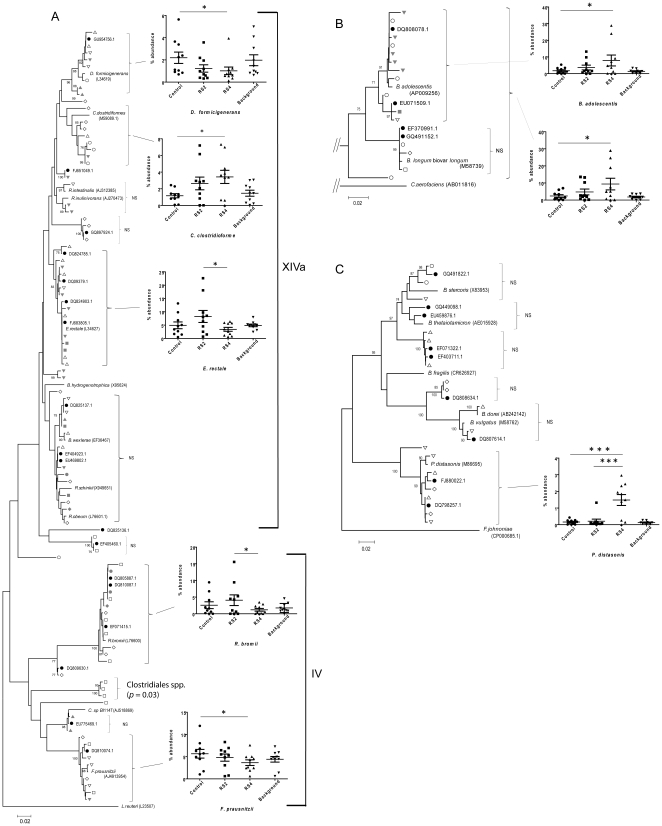
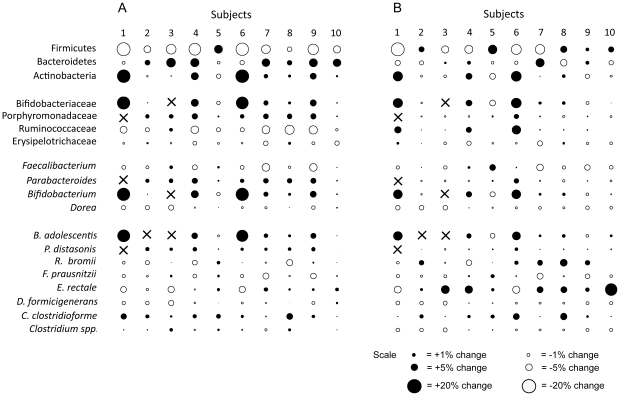
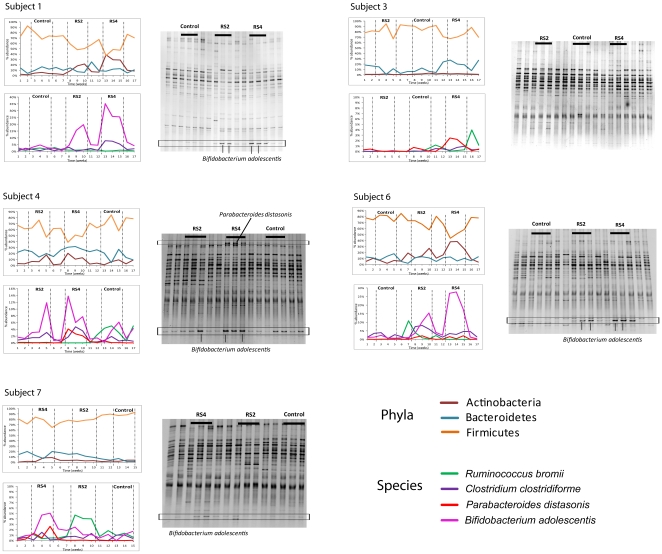
BACKGROUND: To systematically develop dietary strategies based on resistant starch (RS) that modulate the human gut microbiome, detailed in vivo studies that evaluate the effects of different forms of RS on the community structure and population dynamics of the gut microbiota are necessary. The aim of the present study was to gain a community wide perspective of the effects of RS types 2 (RS2) and 4 (RS4) on the fecal microbiota in human individuals. METHODS AND FINDINGS: Ten human subjects consumed crackers for three weeks each containing either RS2, RS4, or native starch in a double-blind, crossover design. Multiplex sequencing of 16S rRNA tags revealed that both types of RS induced several significant compositional alterations in the fecal microbial populations, with differential effects on community structure. RS4 but not RS2 induced phylum-level changes, significantly increasing Actinobacteria and Bacteroidetes while decreasing Firmicutes. At the species level, the changes evoked by RS4 were increases in Bifidobacterium adolescentis and Parabacteroides distasonis, while RS2 significantly raised the proportions of Ruminococcus bromii and Eubacterium rectale when compared to RS4. The population shifts caused by RS4 were numerically substantial for several taxa, leading for example, to a ten-fold increase in bifidobacteria in three of the subjects, enriching them to 18-30% of the fecal microbial community. The responses to RS and their magnitudes varied between individuals, and they were reversible and tightly associated with the consumption of RS. CONCLUSION: Our results demonstrate that RS2 and RS4 show functional differences in their effect on human fecal microbiota composition, indicating that the chemical structure of RS determines its accessibility by groups of colonic bacteria. The findings imply that specific bacterial populations could be selectively targeted by well designed functional carbohydrates, but the inter-subject variations in the response to RS indicates that such strategies might benefit from more personalized approaches.
Overview
The claims and statistics of this paper haven’t been checked yet.
Free: it reads the open-access text and checks the first 5 claims that cite a source we can check. Create a free account to check every claim.
Integrity signals
Registry
Cites
Statistics
Figures

Verification
Claims the paper makes
The claims and statistics of this paper haven’t been checked yet.
Free: it reads the open-access text and checks the first 5 claims that cite a source we can check. Create a free account to check every claim.
Claims other papers make about this one
Each is checked against this paper’s own text: does it say what the citing paper says it does?
In the citing paper
“In 2 of the studies not included in the meta-analysis, raffinose and resistant starch interventions did not lead to significant difference in α-diversity compared with placebo (93,101).”
From Dietary fiber intervention on gut microbiota composition in healthy adults: a systematic review and meta-analysis (2018) · cites this paper as [101]
In the citing paper
“Human consumption of resistant starch led to significant increases in Bifidobacterium, Faecalibacterium, and Eubacterium, while decreasing some Ruminococcus strains (74,75).”
From Diet and the Microbiota–Gut–Brain Axis: Sowing the Seeds of Good Mental Health (2021) · cites this paper as [74]
In the citing paper
“Symptoms linked to increased fiber consumption such as flatulence and bloating are likely the result of gas formation during fermentation by the gut microbiota, 22 , 23 which shows substantial inter-individual variation. 48–50”
From Adaptation to tolerate high doses of arabinoxylan is associated with fecal levels of Bifidobacterium longum (2024) · cites this paper as [48]
Self-check
Percentages, sums and reported differences re-computed from the paper’s own numbers.
The self-check needs the paper’s full text.
Citations
Cites
MUSCLE: multiple sequence alignment with high accuracy and high throughput
Edgar, R. C. (2004) · Nucleic Acids Research · doi:10.1093/nar/gkh340 · Cited by 44,662
Hall, T. A. (1999) · Nucleic Acids Symposium Series · doi:10.14601/phytopathol_mediterr-14998u1.29 · Cited by 38,297 · cited 2×
“A local nucleotide database was established for each subject in BioEdit [ 56 ] containing all sequences detected by pyrosequencing , and the BLASTn algorithm was used with a 97% cutoff ( min . length 300 bp ) to quantify each OTU in the fecal bacterial populations in each sample .”
MethodMEGA4: Molecular Evolutionary Genetics Analysis (MEGA) Software Version 4.0
Tamura, K., Dudley, J., Nei, M., & Kumar, S. (2007) · Molecular Biology and Evolution · doi:10.1093/molbev/msm092 · Cited by 28,730 · cited 2×
“0 Software [ 55 ] by neighbor - joining with 1 , 000 bootstrap replicates .”
MethodAn obesity-associated gut microbiome with increased capacity for energy harvest
Turnbaugh, P. J., Ley, R. E., Mahowald, M. A., Magrini, V., Mardis, E. R., & Gordon, J. I. (2006) · Nature · doi:10.1038/nature05414 · Cited by 12,444 · cited 1×
“A microbiome enriched in Firmicutes has been associated with an increased capacity for energy harvest and obesity [49,50], and a reduction of this phylum could therefore reduce the amount of calories extracted from the diet.”
BackgroundHuman gut microbes associated with obesity
Ley, R. E., Turnbaugh, P. J., Klein, S., & Gordon, J. I. (2006) · Nature · doi:10.1038/4441022a · Cited by 8,785 · cited 1×
“The bacterial composition in the ten subjects during the baseline period was, as shown by other studies [28,29], dominated by the phyla Firmicutes (78%) and Bacteroidetes (13%).”
ResultA core gut microbiome in obese and lean twins
Turnbaugh, P. J., Hamady, M., Yatsunenko, T., Cantarel, B. L., Duncan, A., Ley, R. E., Sogin, M. L., Jones, W. J., Roe, B. A., Affourtit, J. P., et al. (2009) · Nature · doi:10.1038/nature07540 · Cited by 7,823 · cited 3×
“First, few OTU are completely conserved among humans [28,44], thus species that were affected in some subjects might simply not be present in other individuals.”
BackgroundMethodResultDominguez-Bello, M. G., Costello, E. K., Contreras, M., Magris, M., Hidalgo, G., Fierer, N., & Knight, R. (2010) · Proceedings of the National Academy of Sciences · doi:10.1073/pnas.1002601107 · Cited by 4,774 · cited 1×
“This technique has been extremely valuable, for example, in the characterization of the human microbiota in terms of lean and obese physiological states, impact of antibiotics, and the importance of delivery mode at birth [26,27,28].”
MethodThe Ribosomal Database Project: improved alignments and new tools for rRNA analysis
Cole, J. R., Wang, Q., Cardenas, E., Fish, J., Chai, B., Farris, R. J., Kulam-Syed-Mohideen, A. S., McGarrell, D. M., Marsh, T., Garrity, G. M., et al. (2009) · Nucleic Acids Research · doi:10.1093/nar/gkn879 · Cited by 4,762 · cited 1×
“edu/) [53] with default parameters (which included the removal of sequences containing at least one ambiguous nucleotide), except for the minimum sequence length, which was set to 300 bp.”
Ecological and Evolutionary Forces Shaping Microbial Diversity in the Human Intestine
Ley, R. E., Peterson, D. A., & Gordon, J. I. (2006) · Cell · doi:10.1016/j.cell.2006.02.017 · Cited by 3,358 · cited 1×
“A microbiome enriched in Firmicutes has been associated with an increased capacity for energy harvest and obesity [49,50], and a reduction of this phylum could therefore reduce the amount of calories extracted from the diet.”
BackgroundDethlefsen, L., Huse, S., Sogin, M. L., & Relman, D. A. (2008) · PLoS Biology · doi:10.1371/journal.pbio.0060280 · Cited by 2,361 · cited 1×
“This technique has been extremely valuable, for example, in the characterization of the human microbiota in terms of lean and obese physiological states, impact of antibiotics, and the importance of delivery mode at birth [26,27,28].”
Method
Research works printed but not linked: 1
- Ryan KJ 2004 Normal Microbial Flora. Ryan KJ Ray CG Medical Microbiology An intorduction to infectious diseases. 4th ed New York McGraw-Hill
Cited by
Items 301–400 of 662
Gut microbiota in older subjects: variation, health consequences and dietary intervention prospects
O’Connor, E. M., O’Herlihy, E. A., & O’Toole, P. W. (2014) · Proceedings of The Nutrition Society · doi:10.1017/s0029665114000597 · Cited by 48
“Resistant starch types 2 and 4 have different effects on microbiota composition because of their accessibility to the bacteria due to their chemical structures((119)).”
BackgroundHerrmann, E., Young, W., Reichert-Grimm, V., Weis, S., Riedel, C. U., Rosendale, D., Stoklosinski, H. M., Hunt, M., & Egert, M. (2018) · Nutrients · doi:10.3390/nu10020179 · Cited by 50
“However, other reports showed a decrease of this genus following RS consumption in humans and pigs [20,60,61].”
BackgroundBenítez‐Páez, A., Hess, A. L., Krautbauer, S., Liebisch, G., Christensen, L. H., Hjorth, M. F., Larsen, T. M., & Sanz, Y. (2021) · Molecular Nutrition & Food Research · doi:10.1002/mnfr.202000996 · Cited by 47
Butyrate-producing colonic clostridia: picky glycan utilization specialists
Leth, M. L., Pichler, M. J., & Hachem, M. A. (2023) · Essays in Biochemistry · doi:10.1042/ebc20220125 · Cited by 48
do Rosario, V. A., Fernandes, R., & Trindade, E. B. S. D. M. (2016) · Nutrition Reviews · doi:10.1093/nutrit/nuw012 · Cited by 39
Vinke, P. C., Aidy, S. E., & van Dijk, G. (2017) · Frontiers in Nutrition · doi:10.3389/fnut.2017.00034 · Cited by 46
Iron Reshapes the Gut Microbiome and Host Metabolism
Botta, A. M., Barra, N. G., Lam, N. H., Chow, S., Pantopoulos, K., Schertzer, J. D., & Sweeney, G. (2021) · Journal of Lipid and Atherosclerosis · doi:10.12997/jla.2021.10.2.160 · Cited by 44
Gastrointestinal effects of resistant starch, soluble maize fibre and pullulan in healthy adults
Klosterbuer, A. S., Hullar, M. A. J., Li, F., Traylor, E., Lampe, J. W., Thomas, W., & Slavin, J. L. (2013) · British Journal of Nutrition · doi:10.1017/s0007114513000019 · Cited by 44
“This is consistent with other research reporting increased flatulence with RS at doses ranging from 10 to 39 g/d((16,19,22)).”
BackgroundResultInfluentialIntestinal microbiota, obesity and prebiotics
Barczyńska, R., Bandurska, K., Śliżewska, K., Litwin, M., Szalecki, M., Libudzisz, Z., & Kapuśniak, J. (2015) · Polish Journal of Microbiology · doi:10.33073/pjm-2015-014 · Cited by 49
Usual Dietary Intake of Resistant Starch in US Adults from NHANES 2015–2016
Miketinas, D. C., Shankar, K., Maiya, M., & Patterson, M. A. (2020) · Journal of Nutrition · doi:10.1093/jn/nxaa232 · Cited by 43
Microbial metabolites are involved in tumorigenesis and development by regulating immune responses
Liu, J., Tian, R., Sun, C., Guo, Y., Dong, L., Li, Y., & Song, X. (2023) · Frontiers in Immunology · doi:10.3389/fimmu.2023.1290414 · Cited by 41
Links between Diet, Intestinal Anaerobes, Microbial Metabolites and Health
Duncan, S. H., Conti, E., Ricci, L., & Walker, A. W. (2023) · Biomedicines · doi:10.3390/biomedicines11051338 · Cited by 46
Hamamah, S., Iatcu, O. C., & Covașă, M. (2024) · Nutrients · doi:10.3390/nu16020269 · Cited by 43
Devarakonda, S. L. S., Superdock, D. K., Ren, J., Johnson, L. M., Loinard-González, A. P., & Poole, A. C. (2024) · Gut Microbes · doi:10.1080/19490976.2024.2367301 · Cited by 47
“7,9,46,47 50”
Highly accurate and sensitive absolute quantification of bacterial strains in human fecal samples
Li, F., Liu, J., Maldonado-Gómez, M. X., Frese, S. A., Gänzle, M. G., & Walter, J. (2024) · Microbiome · doi:10.1186/s40168-024-01881-2 · Cited by 46
“…total DNA from human fecal samples were tested and compared in this study: a phenol–chloroform-based method [39], a modified method based on the QIAamp Fast DNA Stool Mini Kit (Qiagen, Valencia, CA, USA) [22, 40], and an optimized kit-based method based on the protocol Q described previously [41].”
MethodSelf-citationLi, H., Gilbert, R. G., & Gidley, M. J. (2021) · Food Chemistry · doi:10.1016/j.foodchem.2021.130188 · Cited by 41
Wang, S., Paepe, K. D., de Wiele, T. V., Fu, X., Yuan, Y., Zhang, B., & Huang, Q. (2021) · Journal of Agricultural and Food Chemistry · doi:10.1021/acs.jafc.1c04039 · Cited by 42
Moraes, C., Borges, N. A., & Mafra, D. (2016) · European Journal of Nutrition · doi:10.1007/s00394-015-1138-0 · Cited by 43
Murine Gut Microbiota—Diet Trumps Genes
Walter, J. (2015) · Cell Host & Microbe · doi:10.1016/j.chom.2014.12.004 · Cited by 40
Self-citationResistant starch as a novel dietary strategy to maintain kidney health in diabetes mellitus
Koh, G. Y., & Rowling, M. J. (2017) · Nutrition Reviews · doi:10.1093/nutrit/nux006 · Cited by 40
Walter, J., Martínez, I., & Rose, D. J. (2013) · Gut Microbes · doi:10.4161/gmic.24707 · Cited by 45
Self-citationBernard, M., Lecoeur, A., Coville, J., Bruneau, N., Jardet, D., Lagarrigue, S., Meynadier, A., Calenge, F., Pascal, G., & Zerjal, T. (2024) · Scientific Reports · doi:10.1038/s41598-024-58374-3 · Cited by 43
“Increase in Bifidobacterium content was observed often in relation with resistant starch fermentation 40,41 .”
BackgroundAbreu y Abreu, A. T., Milke-García, M. P., Argüello-Arévalo, G. A., Calderón-de la Barca, A. M., Carmona-Sánchez, R. I., Consuelo-Sánchez, A., Coss-Adame, E., García-Cedillo, M. F., Hernández-Rosiles, V., Icaza-Chávez, M. E., et al. (2021) · Revista de Gastroenterología de México (English Edition) · doi:10.1016/j.rgmxen.2021.02.002 · Cited by 32
Understanding the effects of dietary components on the gut microbiome and human health
Rackerby, B., Kim, H. J., Dallas, D. C., & Park, S. H. (2020) · Food Science and Biotechnology · doi:10.1007/s10068-020-00811-w · Cited by 43
Sorghum and health: An overview of potential protective health effects
Stefoska‐Needham, A. (2024) · Journal of Food Science · doi:10.1111/1750-3841.16978 · Cited by 51
“Favorable impacts on antioxidant (Khan et al., 2015; Girard & Awika, 2018; Zhang et al., 2019) and anti-inflammatory processes (Yang et al., 2009; Zhang et al., 2019) as well as on gut microbiota modulation (Martínez et al., 2010), have also been reported.”
Wu, T.-Y., Tsai, S.-J., Sun, N.-N., Dai, F.-J., Yu, P.-H., Chen, Y.-C., & Chau, C. (2020) · International Journal of Biological Macromolecules · doi:10.1016/j.ijbiomac.2020.05.271 · Cited by 39
Antoniussen, C. S., Rasmussen, H. H., Holst, M., & Lauridsen, C. (2021) · Frontiers in Nutrition · doi:10.3389/fnut.2021.733433 · Cited by 39
“bromii, and Eubacterium rectale depending on the type of RS consumed (84).”
BackgroundNagara, Y., Fujii, D., Takada, T., Sato-Yamazaki, M., Odani, T., & Oishi, K. (2022) · The ISME Journal · doi:10.1038/s41396-022-01196-w · Cited by 38
“rectale to intake of starch granules or similar RS2 food have been reported [9, 28, 35], to our knowledge, this hierarchical relationship where B.”
BackgroundResultFibre: The Forgotten Carbohydrate in Sports Nutrition Recommendations
Mancin, L., Burke, L. M., & Rollo, I. (2025) · Sports Medicine · doi:10.1007/s40279-024-02167-1 · Cited by 48
“Interestingly, the enrichment of bacterial species appears dependent pn the different types of RS ingested (RS type 2 vs type 3 vs type 4) [49, 54], indicating that changes in the microbial community are associated with the chemical structure of the fibre.”
Obanda, D. N., Page, R. C., Guice, J. L., Raggio, A. M., Husseneder, C., Marx, B. D., Stout, R. W., Welsh, D. A., Taylor, C. M., Luo, M., et al. (2018) · Obesity · doi:10.1002/oby.22120 · Cited by 38
“Such a model could serve as a model for humans who are reported to be low fermenters (28-30).”
An In Vitro Enrichment Strategy for Formulating Synergistic Synbiotics
Kok, C. R., Quintero, D. F. G., Niyirora, C., Rose, D. J., Li, A., & Hutkins, R. W. (2019) · Applied and Environmental Microbiology · doi:10.1128/aem.01073-19 · Cited by 42
“for whom this expected response does not occur (13, 17, 18).”
BackgroundNagara, Y., Takada, T., Nagata, Y., Kado, S., & Kushiro, A. (2017) · PLoS ONE · doi:10.1371/journal.pone.0175497 · Cited by 40
Lee, S., Choi, S.-P., Choi, H., Jeong, H., & Park, Y. (2024) · World Journal of Microbiology and Biotechnology · doi:10.1007/s11274-024-04085-w · Cited by 39
“In addition, maintenance of the host’s well-being is contingent on the influence of the responder in conjunction with the host’s abiotic factors, such as digestive enzymes, pH levels, intestinal transit time, and analogous elements (Martínez et al. 2010).”
The gut microbiome: an unexpected player in cancer immunity
Peterson, S. N., Bradley, L. M., & Ronai, Z. A. (2019) · Current Opinion in Neurobiology · doi:10.1016/j.conb.2019.09.016 · Cited by 38
Probiotic administration in congenital heart disease: a pilot study
Ellis, C. L., Bokulich, N. A., Kalanetra, K. M., Mirmiran, M., Elumalai, J., Haapanen, L. A. D., Schegg, T., Rutledge, J. C., Raff, G. W., Mills, D. A., et al. (2013) · Journal of Perinatology · doi:10.1038/jp.2013.41 · Cited by 36
Newman, M. A., Petri, R. M., Grüll, D., Zebeli, Q., & Metzler-Zebeli, B. U. (2018) · Frontiers in Microbiology · doi:10.3389/fmicb.2018.00224 · Cited by 37
“Likewise, feeding RS3 to growing pigs elevated cecal and colonic SCFA concentrations, but showed similar mucosal FFAR2 and FFAR3 expression (Haenen et al., 2013).”
BackgroundResultInfluentialAssociation of dietary patterns with the fecal microbiota in Korean adolescents
Jang, H. B., Choi, M.-K., Kang, J., Park, S. I., & Lee, H. (2017) · BMC Nutrition · doi:10.1186/s40795-016-0125-z · Cited by 35
Stefoska‐Needham, A., & Tapsell, L. C. (2020) · Trends in Food Science & Technology · doi:10.1016/j.tifs.2020.01.012 · Cited by 33
Johnstone, A. M., Kelly, J., Ryan, S., Romero-Gonzalez, R., McKinnon, H., Fyfe, C., Näslund, E. B., López‐Nicolás, R., Bosscher, D., Bonnema, A. L., et al. (2020) · Journal of Nutrition · doi:10.1093/jn/nxaa124 · Cited by 37
Modulating the Gut Microbiota of Humans by Dietary Intervention with Plant Glycans
Tannock, G. W. (2020) · Applied and Environmental Microbiology · doi:10.1128/aem.02757-20 · Cited by 33
Fiber-Rich Barley Increases Butyric Acid-Producing Bacteria in the Human Gut Microbiota
Akagawa, S., Akagawa, Y., Nakai, Y., Yamagishi, M., Yamanouchi, S., Kimata, T., Chino, K., Tamiya, T., Hashiyada, M., Akane, A., et al. (2021) · Metabolites · doi:10.3390/metabo11080559 · Cited by 36
“Similar results were reported in another study conducted in the participants consuming meals with type-2 resistant starch [21].”
ResultPan, L., Chen, F., Yang, Y., Li, Q., Fan, X., Zhao, D., Liu, Q., & Zhang, C. (2022) · Food Chemistry · doi:10.1016/j.foodchem.2022.132071 · Cited by 34
Powell, D. R., Smith, M. G., Doree, D. D., Harris, A. L., Greer, J., DaCosta, C. M., Thompson, A. Y., Jeter-Jones, S. L., Xiong, W., Carson, K. G., et al. (2017) · Journal of Pharmacology and Experimental Therapeutics · doi:10.1124/jpet.117.240820 · Cited by 34
“Sodium/glucose cotransporter 2 (SGLT2) inhibitors are a new class of antidiabetic therapeutics (Mudaliar et al., 2015).”
BackgroundInfluentialShort-term dietary fiber interventions produce consistent gut microbiome responses across studies
Rodriguez, C. I., Isobe, K., & Martiny, J. B. H. (2024) · mSystems · doi:10.1128/msystems.00133-24 · Cited by 39
“Finally, although microbial responses to fiber interventions are thought to be highly individualized to the person (58, 76), bacterial taxa that respond to fiber interven tions showed a phylogenetic signal.”
BackgroundHarnessing Prebiotics to Improve Type 2 Diabetes Outcomes
Iatcu, O. C., Hamamah, S., & Covașă, M. (2024) · Nutrients · doi:10.3390/nu16203447 · Cited by 38
“Different types of resistant starches elicit varied responses in gut microbiota composition, with RS4 potentially promoting Bacteroidetes, while RS2 favors Firmicutes [61,62].”
BackgroundOther Industrial Uses of Sorghum
Aruna, C., & Visarada, K. B. R. S. (2018) · Elsevier eBooks · doi:10.1016/b978-0-08-101879-8.00017-6 · Cited by 40
Xie, Z., Ding, L., Huang, Q., Fu, X., Liu, F., Dhital, S., & Zhang, B. (2021) · Food Research International · doi:10.1016/j.foodres.2021.110317 · Cited by 32
Cheng, Z., Li, J., Qiao, D., Wang, L., Zhao, S., & Zhang, B. (2022) · International Journal of Biological Macromolecules · doi:10.1016/j.ijbiomac.2022.03.034 · Cited by 32
Manipulation of the diet–microbiota–brain axis in Alzheimer’s disease
Lee, D. D., Lee, V. M. ‐., & Hur, S. K. (2022) · Frontiers in Neuroscience · doi:10.3389/fnins.2022.1042865 · Cited by 29
“, 2012), has been associated with an increase in microbial diversity ranging in strain specificities and enzymatic capacities (Flint et al., 2008; Martínez et al., 2010; Alfa et al., 2018)”
BackgroundPu, G., Hou, L., Du, T., Zhou, W., Liu, C., Niu, P., Wu, C., Bao, W., Huang, R., & Li, P. (2022) · mSystems · doi:10.1128/msystems.00937-22 · Cited by 33
“, cellulose, pectin, and xylan) (46), and phylum Bacteroidetes possessed the highest potential of fiber degradation compared to other phyla (43, 50).”
BackgroundLim, Y.-M., Barnes, M. B., Gras, S. L., McSweeney, C. S., Lockett, T. J., Augustin, M. A., & Gooley, P. R. (2013) · Journal of Functional Foods · doi:10.1016/j.jff.2013.09.027 · Cited by 42
Young, W., Roy, N. C., Lee, J., Lawley, B., Otter, D. E., Henderson, G., McCann, M. J., & Tannock, G. W. (2012) · Applied and Environmental Microbiology · doi:10.1128/aem.01536-12 · Cited by 35
“Bacteroidetes and Actinobacteria were greater than those seen in previous reports (19, 39).”
ResultBrüssow, H. (2016) · Microbial Biotechnology · doi:10.1111/1751-7915.12391 · Cited by 33
Resistant Starch Is Actively Fermented by Infant Faecal Microbiota and Increases Microbial Diversity
Gopalsamy, G. L., Mortimer, E. K., Greenfield, P. A., Bird, A. R., Young, G. P., & Christophersen, C. T. (2019) · Nutrients · doi:10.3390/nu11061345 · Cited by 36
“In a study feeding modified and unmodified RS to adult participants, different effects on faecal microbiota composition between the two starches were found [33].”
BackgroundResultMarcia, A. D. R., Yao, T., Chen, M., Oles, R. E., & Lindemann, S. R. (2021) · Nutrients · doi:10.3390/nu13092924 · Cited by 33
Kadyan, S., Park, G., Singh, P. R., Arjmandi, B. H., & Nagpal, R. (2023) · Frontiers in Nutrition · doi:10.3389/fnut.2023.1106463 · Cited by 36
“Compelling evidence has demonstrated the modulating role of RS in the restructuring of gut microbiome composition, which is further dictated by the selective ability of gut microbes to metabolize different RS types (50).”
BackgroundBarczyńska, R., Śliżewska, K., Litwin, M., Szalecki, M., & Kapuśniak, J. (2016) · Acta Biochimica Polonica · doi:10.18388/abp.2015_1068 · Cited by 34
Shi, C., Zhu, Y., Niu, Q., Wang, J., Wang, J., & Zhu, W. (2018) · Current Microbiology · doi:10.1007/s00284-018-1442-z · Cited by 33
Huwiler, V. V., Schönenberger, K. A., von Brunegg, A. S., Reber, E., Mühlebach, S., Stanga, Z. G., & Balmer, M. L. (2022) · Nutrients · doi:10.3390/nu14132627 · Cited by 37
Chen, R., Zhang, C., Xu, F., Yu, L., Tian, F., Chen, W., & Zhai, Q. (2023) · Food & Function · doi:10.1039/d3fo00845b · Cited by 34
Clavel, T., & Mapesa, J. O. (2013) · Springer eBooks · doi:10.1007/978-3-642-22144-6_94 · Cited by 33
Marlatt, K. L., White, U. A., Beyl, R. A., Peterson, C. M., Martin, C. K., Marco, M. L., Keenan, M. J., Martin, R. J., Aryana, K. J., & Ravussin, É. (2017) · Contemporary Clinical Trials · doi:10.1016/j.cct.2017.12.005 · Cited by 32
“In humans, RS fermentation can enrich gut microbiota species such as Bifidobacterium, Ruminococcus bromii, and Eubacterium rectale [8]; improve cardiometabolic endpoints such as insulin sensitivity, body fat storage, and cholesterol levels [9–14]; and may suppress appetite [15–17].”
BackgroundLeblois, J., Massart, S., Soyeurt, H., Grelet, C., Dehareng, F., Schroyen, M., Li, B., Wavreille, J., Bindelle, J., & Everaert, N. (2018) · PLoS ONE · doi:10.1371/journal.pone.0199568 · Cited by 32
Seel, W., Reiners, S., Kipp, K., Simon, M., & Dawczynski, C. (2023) · Nutrients · doi:10.3390/nu15081914 · Cited by 30
“A decrease in Firmicutes/Bacteriodetes ratio was also seen in response to an increased intake of resistant starches, which may support a weight management hypothesis [46].”
BackgroundRemes-Troche, J. M., Taboada-Liceaga, H. A., Gill, S. K., Amieva‐Balmori, M., Rossi, M., Hernández‐Ramírez, G., García-Mazcorro, J. F., & Whelan, K. (2020) · Neurogastroenterology & Motility · doi:10.1111/nmo.13986 · Cited by 40
y Abreu, A. T. A., Milke-García, M. D. P., Argüello-Arévalo, G. A., de la Barca, A. M. C., Carmona-Sánchez, R., Consuelo‐Sánchez, A., Coss‐Adame, E., Cedillo, M. F. G., Hernández-Rosiles, V., Icaza-Chávez, M. E., et al. (2021) · Revista de Gastroenterología de México · doi:10.1016/j.rgmx.2021.02.004 · Cited by 33
Deehan, E. C., Duar, R. M., Armet, A. M., Pérez-Muñoz, M. E., Jin, M., & Walter, J. (2018) · ASM Press eBooks · doi:10.1128/9781555819705.ch20 · Cited by 33
Self-citationHoeflinger, J. L., Kashtanov, D., Cox, S. B., Dowd, S. E., Jouni, Z. E., Donovan, S. M., & Miller, M. J. (2015) · PLoS ONE · doi:10.1371/journal.pone.0135494 · Cited by 33
“Martinez and colleagues [64] did report a significant increase of Parabacteroides distasonis in human feces following consumption of resistant starch type 4 but not resistant starch type 2.”
BackgroundBarczyńska, R., Jurgoński, A., Śliżewska, K., Juśkiewicz, J., & Kapuśniak, J. (2017) · Journal of Functional Foods · doi:10.1016/j.jff.2017.05.023 · Cited by 31
Methodologies for producing amylose: A review
Doblado-Maldonado, A. F., Gomand, S. V., Goderis, B., & Delcour, J. A. (2015) · Critical Reviews in Food Science and Nutrition · doi:10.1080/10408398.2014.954030 · Cited by 30
“…are referred to as resistant starch type 2 (Topping et al., 2003) and a source of dietary fiber with beneficial health effects (Bird et al., 2009; Martinez et al., 2010; Keenan et al., 2013), as is resistant starch type 3 (i.e., retrograded starch) (Eerlingen and Delcour, 1995; Topping et al.,…”
BackgroundAdemosun, A. O., Ajeigbe, O. F., Ademosun, M. T., Ogunruku, O. O., & Oboh, G. (2024) · Human Nutrition & Metabolism · doi:10.1016/j.hnm.2024.200295 · Cited by 32
Duar, R. M., Ang, P. T., Hoffman, M., Wehling, R. L., Hutkins, R. W., & Schlegel, V. L. (2015) · Cogent Food & Agriculture · doi:10.1080/23311932.2015.1013782 · Cited by 28
Self-citationGut microbiome and its potential link to personalized nutrition
Kviatcovsky, D., Zheng, D., & Elinav, E. (2021) · Current Opinion in Physiology · doi:10.1016/j.cophys.2021.05.002 · Cited by 28
“Consumption of dietary-resistant starches among different individuals led to substantial inter-subject variations in fecal bacterial species [24] and butyrate levels [25].”
BackgroundDietary resistant starch supplementation increases gut luminal deoxycholic acid abundance in mice
Reuter, M. A., Tucker, M., Marfori, Z., Shishani, R., Bustamante, J. M., Moreno, R., Goodson, M. L., Ehrlich, A. K., Taha, A. Y., Lein, P. J., et al. (2024) · Gut Microbes · doi:10.1080/19490976.2024.2315632 · Cited by 25
“17 While RS is comprised of sugars that cannot be digested by human enzymes, RS can be fermented by bacteria.”
BackgroundMah, E., Garcia‐Campayo, V., & Liska, D. J. (2018) · Current Developments in Nutrition · doi:10.1093/cdn/nzy066 · Cited by 25
Kang, S., You, H. J., Lee, Y., Jeong, Y., Johnston, T. V., Baek, N., Ku, S., & Ji, G. E. (2020) · International Journal of Molecular Sciences · doi:10.3390/ijms21020445 · Cited by 26
Loman, B. R., Shrestha, C. L., Thompson, R., Groner, J. A., Mejías, A., Ruoff, K. L., O’Toole, G. A., Bailey, M. T., & Kopp, B. T. (2020) · Pediatric Pulmonology · doi:10.1002/ppul.24766 · Cited by 28
The human microbiota associated with overall health
Xu, X., Wang, Z., & Zhang, X. (2013) · Critical Reviews in Biotechnology · doi:10.3109/07388551.2013.819485 · Cited by 31
Next-Generation Sequencing Reveals Significant Bacterial Diversity of Botrytized Wine
Bokulich, N. A., Joseph, C. M. L., Allen, G., Benson, A. K., & Mills, D. A. (2012) · PLoS ONE · doi:10.1371/journal.pone.0036357 · Cited by 254
Dietary Fiber and Gut Microbiota
Senés‐Guerrero, C., Hernandez, M. S. G., Gamboa, R. G., & García‐Cayuela, T. (2020) · Food engineering series · doi:10.1007/978-3-030-38654-2_12 · Cited by 33
Vázquez, L., Flórez, A. B., Redruello, B., & Mayo, B. (2020) · Biomolecules · doi:10.3390/biom10060950 · Cited by 26
“However, it remains unknown whether other intestinal microbes are involved in isoflavone metabolism and equol formation [9], and this prevents us from developing strategies for modulating the endogenous production of isoflavone-bioactive metabolites via, for example, the use of prebiotics, probiotics, or other dietary…”
BackgroundCanola meal in nursery pig diets: growth performance and gut health
Hong, J., Ndou, S. P., Adams, S., Scaria, J., & Woyengo, T. A. (2020) · Journal of Animal Science · doi:10.1093/jas/skaa338 · Cited by 24
Resistant Starch as a Dietary Intervention to Limit the Progression of Diabetic Kidney Disease
Drake, A. M., Coughlan, M. T., Christophersen, C. T., & Snelson, M. (2022) · Nutrients · doi:10.3390/nu14214547 · Cited by 26
“Interestingly, whilst both RS2 and RS4 increased Bifidobacterium achieved this change at a slower rate [86].”
BackgroundInfluentialJian, Y., Cheng, L., Hong, Y., Li, Z., Li, C., Ban, X., Zhu, L., & Gu, Z. (2023) · Nutrients · doi:10.3390/nu15245080 · Cited by 27
Lewis, Z. T., Bokulich, N. A., Kalanetra, K. M., Ruiz‐Moyano, S., Underwood, M. A., & Mills, D. A. (2012) · Anaerobe · doi:10.1016/j.anaerobe.2012.12.005 · Cited by 23
“enzymatic lysis and a bead-beating step [17].”
Xu, G., Cai, L., Ni, Y.-S., Tian, S., Lu, Y.-Q., Wang, L., Chen, L., Ma, W.-Y., & Deng, S. (2018) · Biological and Pharmaceutical Bulletin · doi:10.1248/bpb.b17-00978 · Cited by 24
Li, L., Ryan, J., Ning, Z., Zhang, X., Mayne, J., Lavallée‐Adam, M., Stintzi, A., & Figeys, D. (2020) · Computational and Structural Biotechnology Journal · doi:10.1016/j.csbj.2020.10.042 · Cited by 25
Carvajal‐Aldaz, D., Guice, J. L., Page, R. C., Raggio, A. M., Martin, R. J., Husseneder, C., Durham, H. A., Geaghan, J. P., Janes, M. E., Gauthier, T. J., et al. (2016) · Molecular Nutrition & Food Research · doi:10.1002/mnfr.201600609 · Cited by 22
“Additionally, we hypothesized that an initial knockdown may persist over the long-term [5] and produce a nonresponder model that could be used for investigating treatments for individuals that are reported not to ferment RS well [6].”
Adithya, K. K., Rajeev, R., Selvin, J., & Kiran, G. S. (2021) · ACS Food Science & Technology · doi:10.1021/acsfoodscitech.0c00075 · Cited by 26
Grant, L. J., Mikkelsen, D., Phan, A. D. T., Kang, S., Ouwerkerk, D., Klieve, A. V., Gidley, M. J., & Williams, B. A. (2020) · Food & Function · doi:10.1039/c9fo02428j · Cited by 24
Huang, Y., Dhital, S., Liu, F., Fu, X., Huang, Q., & Zhang, B. (2021) · Food & Function · doi:10.1039/d1fo00488c · Cited by 25
Cold-chain cooked rice with different water contents: Retarded starch digestion by refrigeration
Li, D., Wu, Z., Zhao, S., Wang, L., Qiao, D., Zhang, L., & Zhang, B. (2021) · International Journal of Biological Macromolecules · doi:10.1016/j.ijbiomac.2021.12.066 · Cited by 21
Liu, Y., Upadhyaya, B., Fardin‐Kia, A. R., Juenemann, R. M., & Dey, M. (2016) · Food & Function · doi:10.1039/c6fo00856a · Cited by 23
Corbin, K. D., Krajmalnik‐Brown, R., Carnero, E. Á., Bock, C., Emerson, R., Rittmann, B. E., Marcus, A. K., Davis, T. L., Dirks, B., Ilhan, Z. E., et al. (2020) · Contemporary Clinical Trials Communications · doi:10.1016/j.conctc.2020.100646 · Cited by 21
Ellner, C., Wessels, A. G., & Zentek, J. (2022) · Animals · doi:10.3390/ani12010109 · Cited by 22
DeMartino, P., Johnston, E. A., Petersen, K. H., Kris‐Etherton, P. M., & Cockburn, D. W. (2022) · Nutrients · doi:10.3390/nu14030721 · Cited by 22
“Even in studies where foods are prepared with RS, the amount of RS per item is greater than typical daily intake [23,24].”
BackgroundResultRS 4‐Type Resistant Starch: Chemistry, Functionality and Health Benefits
Maniñgat, C. C., & Seib, P. A. (2013) · Wiley eBooks · doi:10.1002/9781118528723.ch03 · Cited by 26
High-throughput isolation and culture of human gut bacteria with droplet microfluidicsPreprint
Villa, M. M., Bloom, R. J., Silverman, J. D., Durand, H. K., Jiang, S., Wu, A., Huang, S., You, L., & David, L. A. (2019) · bioRxiv (Cold Spring Harbor Laboratory) · doi:10.1101/630822 · Cited by 21
Chemical modification of starch
Kaur, L., Kaur, R., & Singh, J. (2024) · Elsevier eBooks · doi:10.1016/b978-0-323-96102-8.00015-2 · Cited by 24
Tiwari, U. P., Mandal, R. K., Neupane, K. R., Mishra, B., & Jha, R. (2022) · Journal of Animal Science and Biotechnology/Journal of animal science and biotechnology · doi:10.1186/s40104-022-00699-y · Cited by 23
“There was a significant increase in the Bacteroides population when swine were supplemented with RS type 4 [22].”
Background
Metadata
- Authors
- Martínez, I., Kim, J., Duffy, P. R., Schlegel, V. L., & Walter, J.
- Affiliations
- University of Nebraska–Lincoln (US)
- Corresponding author
- Walter, Jens
- Venue
- PLoS ONE
- Publisher
- Public Library of Science (PLoS)
- Published
- 2010-11-29
- Volume
- 5
- Issue
- 11
- Pages
- e15046
- ISSN
- 1932-6203 (ISSN-L)
- PMC
- PMC2993935
- OpenAlex
- W2065925831
- Cited by
- 645
- References
- 61
- Citations by year
- 2026: 27 · 2025: 31 · 2024: 48 · 2023: 35 · 2022: 51 · 2021: 53 · 2020: 64 · 2019: 56 · 2018: 49 · 2017: 41 · 2016: 40 · 2015: 44 · 2014: 32 · 2013: 34 · 2012: 26
- FWCI
- 9.50
- Type
- journal article
- Language
- en
- Open access
- gold
- doi.org
- Locations
- PLoS ONE (publishedVersion, cc-by)
- Europe PMC (PubMed Central) (publishedVersion, cc-by)
- PubMed Central (publishedVersion, cc-by)
- PubMed (publishedVersion)
- Lincoln (University of Nebraska) (submittedVersion, cc-by)
- DOAJ (DOAJ: Directory of Open Access Journals) (submittedVersion, cc-by-sa)
- Figshare (submittedVersion, cc-by)
- Funders
- U.S. Department of Agriculture
- Nebraska Corn Board
- Technische Universität München
- Topics
- Life Sciences › Biochemistry, Genetics and Molecular Biology › Molecular Biology › Gut microbiota and health
- Health Sciences › Nursing › Nutrition and Dietetics › Food composition and properties
- Health Sciences › Nursing › Nutrition and Dietetics › Microbial Metabolites in Food Biotechnology
- Keywords
- resistant starch, resistant starch type 4, fecal microbiota, gut microbiota, dietary intervention, Bifidobacterium adolescentis, Parabacteroides distasonis, Ruminococcus bromii, Eubacterium rectale, actinobacteria, Bacteroidetes, Firmicutes, interindividual variability, functional carbohydrates, personalized nutrition
- MeSH terms
- Adult, Bacteria, DNA, Bacterial, Double-Blind Method, Feces, Female, Humans, Male, RNA, Ribosomal, 16S, Species Specificity, Starch, Genetic Variation, Sequence Analysis, DNA, Cross-Over Studies, Metagenome, Young Adult
About these checks
Registry, retraction, Cites and statistics results are computed, not judged, with one exception: a printed reference that no index lists is read once by a model before it counts as a citation error. Claims are extracted by a model and kept only when their quote appears verbatim in the text; each cited source is then checked, with a model’s help, for whether it says what the claim relies on. Those verdicts can be wrong — read the claim’s quote and the cited source before relying on one.
Statistics and arithmetic are recomputed, not judged.
Confidence bands are shown only for fields calibrated on our annotated test set. None is calibrated yet, so no band is shown.
What counts as a claim ›How we measure confidence ›How we check this ›
Are you an author, or do you see a problem with this page? Request a review
Data sources
Bibliographic data: Semantic Scholar, OpenAlex, Crossref.
Contains information from the Semantic Scholar Academic Graph Datasets, made available under the ODC Attribution License (ODC-BY 1.0).
Semantic Scholar’s data is described in: Kinney, R., et al. (2023). The Semantic Scholar Open Data Platform. arXiv:2301.10140.
