

Resistant Starches Types 2 and 4 Have Differential Effects on the Composition of the Fecal Microbiota in Human Subjects
Open accessThe DOI matches its Crossref record; 61 of the 61 references it cites were found in a registry or an index.
Abstract
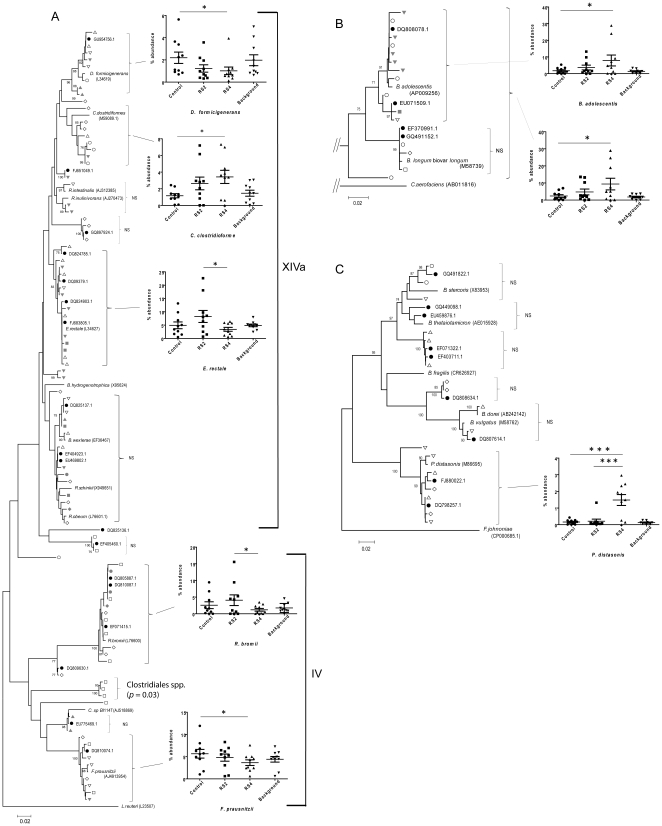
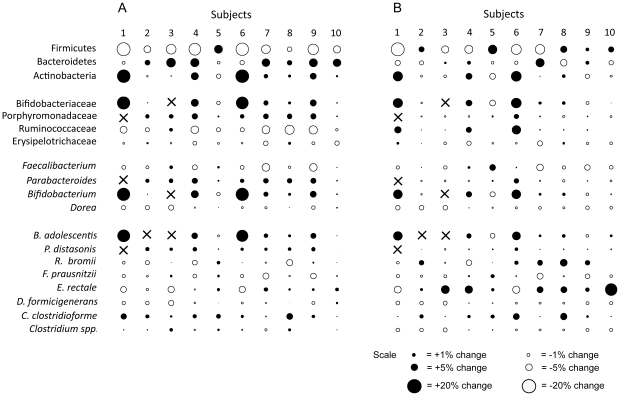
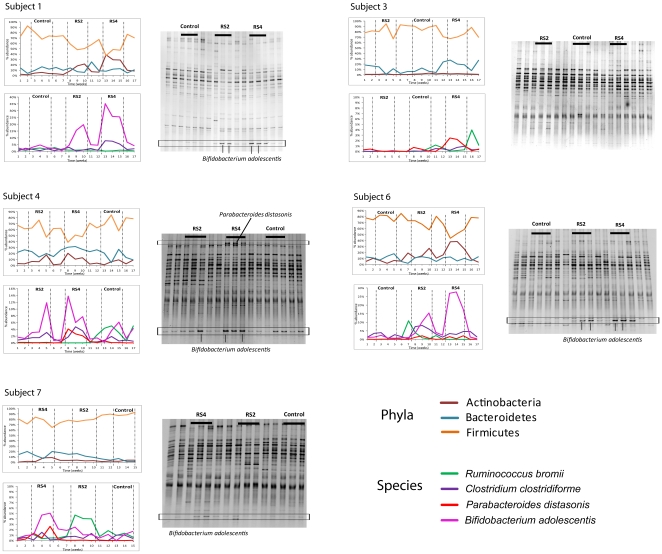
BACKGROUND: To systematically develop dietary strategies based on resistant starch (RS) that modulate the human gut microbiome, detailed in vivo studies that evaluate the effects of different forms of RS on the community structure and population dynamics of the gut microbiota are necessary. The aim of the present study was to gain a community wide perspective of the effects of RS types 2 (RS2) and 4 (RS4) on the fecal microbiota in human individuals. METHODS AND FINDINGS: Ten human subjects consumed crackers for three weeks each containing either RS2, RS4, or native starch in a double-blind, crossover design. Multiplex sequencing of 16S rRNA tags revealed that both types of RS induced several significant compositional alterations in the fecal microbial populations, with differential effects on community structure. RS4 but not RS2 induced phylum-level changes, significantly increasing Actinobacteria and Bacteroidetes while decreasing Firmicutes. At the species level, the changes evoked by RS4 were increases in Bifidobacterium adolescentis and Parabacteroides distasonis, while RS2 significantly raised the proportions of Ruminococcus bromii and Eubacterium rectale when compared to RS4. The population shifts caused by RS4 were numerically substantial for several taxa, leading for example, to a ten-fold increase in bifidobacteria in three of the subjects, enriching them to 18-30% of the fecal microbial community. The responses to RS and their magnitudes varied between individuals, and they were reversible and tightly associated with the consumption of RS. CONCLUSION: Our results demonstrate that RS2 and RS4 show functional differences in their effect on human fecal microbiota composition, indicating that the chemical structure of RS determines its accessibility by groups of colonic bacteria. The findings imply that specific bacterial populations could be selectively targeted by well designed functional carbohydrates, but the inter-subject variations in the response to RS indicates that such strategies might benefit from more personalized approaches.
Overview
The claims and statistics of this paper haven’t been checked yet.
Free: it reads the open-access text and checks the first 5 claims that cite a source we can check. Create a free account to check every claim.
Integrity signals
Registry
Cites
Statistics
Figures

Verification
Claims the paper makes
The claims and statistics of this paper haven’t been checked yet.
Free: it reads the open-access text and checks the first 5 claims that cite a source we can check. Create a free account to check every claim.
Claims other papers make about this one
Each is checked against this paper’s own text: does it say what the citing paper says it does?
In the citing paper
“In 2 of the studies not included in the meta-analysis, raffinose and resistant starch interventions did not lead to significant difference in α-diversity compared with placebo (93,101).”
From Dietary fiber intervention on gut microbiota composition in healthy adults: a systematic review and meta-analysis (2018) · cites this paper as [101]
In the citing paper
“Human consumption of resistant starch led to significant increases in Bifidobacterium, Faecalibacterium, and Eubacterium, while decreasing some Ruminococcus strains (74,75).”
From Diet and the Microbiota–Gut–Brain Axis: Sowing the Seeds of Good Mental Health (2021) · cites this paper as [74]
In the citing paper
“Symptoms linked to increased fiber consumption such as flatulence and bloating are likely the result of gas formation during fermentation by the gut microbiota, 22 , 23 which shows substantial inter-individual variation. 48–50”
From Adaptation to tolerate high doses of arabinoxylan is associated with fecal levels of Bifidobacterium longum (2024) · cites this paper as [48]
Self-check
Percentages, sums and reported differences re-computed from the paper’s own numbers.
The self-check needs the paper’s full text.
Citations
Cites
MUSCLE: multiple sequence alignment with high accuracy and high throughput
Edgar, R. C. (2004) · Nucleic Acids Research · doi:10.1093/nar/gkh340 · Cited by 44,662
Hall, T. A. (1999) · Nucleic Acids Symposium Series · doi:10.14601/phytopathol_mediterr-14998u1.29 · Cited by 38,297 · cited 2×
“A local nucleotide database was established for each subject in BioEdit [ 56 ] containing all sequences detected by pyrosequencing , and the BLASTn algorithm was used with a 97% cutoff ( min . length 300 bp ) to quantify each OTU in the fecal bacterial populations in each sample .”
MethodMEGA4: Molecular Evolutionary Genetics Analysis (MEGA) Software Version 4.0
Tamura, K., Dudley, J., Nei, M., & Kumar, S. (2007) · Molecular Biology and Evolution · doi:10.1093/molbev/msm092 · Cited by 28,730 · cited 2×
“0 Software [ 55 ] by neighbor - joining with 1 , 000 bootstrap replicates .”
MethodAn obesity-associated gut microbiome with increased capacity for energy harvest
Turnbaugh, P. J., Ley, R. E., Mahowald, M. A., Magrini, V., Mardis, E. R., & Gordon, J. I. (2006) · Nature · doi:10.1038/nature05414 · Cited by 12,444 · cited 1×
“A microbiome enriched in Firmicutes has been associated with an increased capacity for energy harvest and obesity [49,50], and a reduction of this phylum could therefore reduce the amount of calories extracted from the diet.”
BackgroundHuman gut microbes associated with obesity
Ley, R. E., Turnbaugh, P. J., Klein, S., & Gordon, J. I. (2006) · Nature · doi:10.1038/4441022a · Cited by 8,785 · cited 1×
“The bacterial composition in the ten subjects during the baseline period was, as shown by other studies [28,29], dominated by the phyla Firmicutes (78%) and Bacteroidetes (13%).”
ResultA core gut microbiome in obese and lean twins
Turnbaugh, P. J., Hamady, M., Yatsunenko, T., Cantarel, B. L., Duncan, A., Ley, R. E., Sogin, M. L., Jones, W. J., Roe, B. A., Affourtit, J. P., et al. (2009) · Nature · doi:10.1038/nature07540 · Cited by 7,823 · cited 3×
“First, few OTU are completely conserved among humans [28,44], thus species that were affected in some subjects might simply not be present in other individuals.”
BackgroundMethodResultDominguez-Bello, M. G., Costello, E. K., Contreras, M., Magris, M., Hidalgo, G., Fierer, N., & Knight, R. (2010) · Proceedings of the National Academy of Sciences · doi:10.1073/pnas.1002601107 · Cited by 4,774 · cited 1×
“This technique has been extremely valuable, for example, in the characterization of the human microbiota in terms of lean and obese physiological states, impact of antibiotics, and the importance of delivery mode at birth [26,27,28].”
MethodThe Ribosomal Database Project: improved alignments and new tools for rRNA analysis
Cole, J. R., Wang, Q., Cardenas, E., Fish, J., Chai, B., Farris, R. J., Kulam-Syed-Mohideen, A. S., McGarrell, D. M., Marsh, T., Garrity, G. M., et al. (2009) · Nucleic Acids Research · doi:10.1093/nar/gkn879 · Cited by 4,762 · cited 1×
“edu/) [53] with default parameters (which included the removal of sequences containing at least one ambiguous nucleotide), except for the minimum sequence length, which was set to 300 bp.”
Ecological and Evolutionary Forces Shaping Microbial Diversity in the Human Intestine
Ley, R. E., Peterson, D. A., & Gordon, J. I. (2006) · Cell · doi:10.1016/j.cell.2006.02.017 · Cited by 3,358 · cited 1×
“A microbiome enriched in Firmicutes has been associated with an increased capacity for energy harvest and obesity [49,50], and a reduction of this phylum could therefore reduce the amount of calories extracted from the diet.”
BackgroundDethlefsen, L., Huse, S., Sogin, M. L., & Relman, D. A. (2008) · PLoS Biology · doi:10.1371/journal.pbio.0060280 · Cited by 2,361 · cited 1×
“This technique has been extremely valuable, for example, in the characterization of the human microbiota in terms of lean and obese physiological states, impact of antibiotics, and the importance of delivery mode at birth [26,27,28].”
Method
Research works printed but not linked: 1
- Ryan KJ 2004 Normal Microbial Flora. Ryan KJ Ray CG Medical Microbiology An intorduction to infectious diseases. 4th ed New York McGraw-Hill
Cited by
Items 501–600 of 662
Rose, D. J. (2011) · ACS symposium series · doi:10.1021/bk-2011-1089.ch006 · Cited by 7
Nourishing the gut microbiota: The potential of prebiotics in microbiota-gut-brain axis research
Dalile, B., Verbeke, K., Oudenhove, L. V., & Vervliet, B. (2019) · Behavioral and Brain Sciences · doi:10.1017/s0140525x18002856 · Cited by 7
Barczyńska, R., Jurgoński, A., Śliżewska, K., Juśkiewicz, J., & Kapuśniak, J. (2019) · British Food Journal · doi:10.1108/bfj-02-2019-0083 · Cited by 7
Chen, J., Kuerbanjiang, M., Zhang, Y., Cheng, H., Lin, B., Yue, P., Wang, L.-H., Liu, F., Shi, J., Wan, Z., et al. (2022) · Foods · doi:10.3390/foods11192980 · Cited by 6
From Gut Microbiomes to Infectious Pathogens: Neurological Disease Game Changers
Muhasina, K. M., Ghosh, P., Nagappan, K., Palaniswamy, D. S., Begum, R., Islam, M. R., Tagde, P., Shaikh, N. K., Farahim, F., & Mondal, T. K. (2024) · Molecular Neurobiology · doi:10.1007/s12035-024-04323-0 · Cited by 6
Wellington, M. O., Adams, S., Lee, J. W., Agyekum, A. K., & Woyengo, T. A. (2025) · Journal of Animal Science · doi:10.1093/jas/skaf008 · Cited by 6
“Similarly, resistant starch consumption modulated the compositional structures of human intestinal microbiota (Martínez et al., 2010) and the cecal microbiota of swine (Haenen et al., 2013; Umu et al., 2015).”
Pletsch, E. A., Dawson, H. D., Cheung, L., Ragonese, J., Chen, C. T., & Smith, A. D. (2025) · Food & Function · doi:10.1039/d4fo04697h · Cited by 6
Kędzierska-Kapuza, K., Grudniewska, A., Durma, A. C., Małecki, R., Franek, E., & Szczuko, M. (2025) · Journal of Clinical Medicine · doi:10.3390/jcm14134701 · Cited by 5
“In an interventional study by Martínez et al. [59], ten healthy participants were monitored weekly over a 17-week period to assess the individual effects of resistant starch types RS2 and RS4, compared with a control group receiving native starch.”
InfluentialFecal Biomarkers for Research on Dietary and Lifestyle Risk Factors in Colorectal Cancer Etiology
Kato, I., Startup, J. J., & Ram, J. L. (2013) · Current Colorectal Cancer Reports · doi:10.1007/s11888-013-0195-0 · Cited by 7
Smith, A. D., Chen, C. T., Cheung, L., Ward, R. E., Jones, B. S., Pletsch, E. A., & Dawson, H. D. (2024) · Food & Function · doi:10.1039/d3fo04512a · Cited by 6
Patra, S., Nunn, S. L. E., Levent, G., & Chelikani, P. K. (2025) · The FASEB Journal · doi:10.1096/fj.202403239r · Cited by 5
“…compared to pectin and is associated with increased fecal Actinobacteria and Bacteroidetes phyla, Bifidobacterium and Parabacteroides species, 54,66 and a more sustained production of butyrate and propionate in the distal colon of humans, 54 and increased colonic Bifidobacterium and…”
Effect of Unripe Berlin Banana Flour on Lipid Profile of Dyslipidemia Rats
Agustin, F., Febriyatna, A., Damayati, R. P., Hermawan, H., Faiziah, N., Santoso, R. D., & Wulandari, R. D. (2019) · Majalah kedokteran Bandung/Majalah Kedokteran Bandung · doi:10.15395/mkb.v51n2.1630 · Cited by 5
Monitoring the degradation of individual dietary fibres in pig models
Jonathan, M. C. (2013) · doi:10.18174/247365 · Cited by 8
van den Belt, M., Liu, Z., Duijghuijsen, L. J., Zoetendal, E. G., Witteman, B. J. M., de Roos, N. M., Vos, A. P., Smidt, H., & de Wit, N. J. W. (2025) · Journal of Nutritional Science · doi:10.1017/jns.2025.10021 · Cited by 4
“(20) Animal and in vitro studies with insoluble pea fibre have shown an increase in bifidobacteria, (21,22) although this is not shown in human studies yet.”
The interconnection between dietary fibre, gut microbiome and psychological well-being
Ng, H. M., Wall, C. L., Bayer, S. B., Gearry, R. B., & Roy, N. C. (2025) · Proceedings of The Nutrition Society · doi:10.1017/s002966512510061x · Cited by 6
Hyperuricemia and the gut microbiota: current research hotspots and future trends
Yang, J., Chen, J., Li, D., Wu, Q., Zhang, Y., Li, Y., & Deng, Y. (2025) · Frontiers in Microbiology · doi:10.3389/fmicb.2025.1620561 · Cited by 10
From the Laboratory to the Plate: How Gut Microbiome Science Is Reshaping Our Diet
Hiol, A. N., & Veiga, P. (2025) · Journal of Nutrition · doi:10.1016/j.tjnut.2025.08.032 · Cited by 5
Kumar, P. P., Wang, Y., & Yao, T. (2026) · Discover Endocrinology and Metabolism · doi:10.1007/s44417-026-00021-8 · Cited by 4
Impact of evolution on lifestyle in microbiome
González, A., Fullaondo, A., & Odriozola, A. (2024) · Advances in genetics · doi:10.1016/bs.adgen.2024.02.003 · Cited by 4
Schmitz, S. S., Salgado, J. P.-A., & Glendinning, L. (2024) · Access Microbiology · doi:10.1099/acmi.0.000774.v4 · Cited by 5
The Impact of Yoyo Dieting and Resistant Starch on Weight Loss and Gut Microbiome in C57Bl/6 Mice
Phuong-Nguyen, K., O’Hely, M., Kowalski, G. M., McGee, S. L., Aston‐Mourney, K., Connor, T., Mahmood, M. Q., & Rivera, L. R. (2024) · Nutrients · doi:10.3390/nu16183138 · Cited by 4
Insights on the Role of Fiber in Colonic Microbiota Health
Dreher, M. L. (2017) · Springer eBooks · doi:10.1007/978-3-319-50557-2_3 · Cited by 5
Riess, H. T., Shani-Levi, C., & Lesmes, U. (2024) · Food & Function · doi:10.1039/d4fo00711e · Cited by 4
Lactose—a conditional prebiotic?
Gänzle, M. (2019) · Lactose · doi:10.1016/b978-0-12-811720-0.00004-0 · Cited by 2
Ferronatto, A. N., Rossi, R. C., & Cappellari, F. (2020) · Saúde e Desenvolvimento Humano · doi:10.18316/sdh.v8i2.5180 · Cited by 38
Acid‐treated high‐amylose corn starch suppresses high‐fat diet‐induced steatosis
Yoshida, R., Yano, Y., Hoshi, N., Okamoto, N., Sui, Y., Yamamoto, A., Asaji, N., Shiomi, Y., Yasutomi, E., Hatazawa, Y., et al. (2022) · Journal of Food Science · doi:10.1111/1750-3841.16146 · Cited by 4
Pigmented Sorghum: Functional Properties and Bioactive Diversity
Mehany, T., Rashad, Y. M., Olawoye, B. T., Cacciotti, I., Esua, O. J., Popoola-Akinola, O. O., Han, Z., & Fekry, W. M. E. (2023) · Royal Society of Chemistry eBooks · doi:10.1039/9781837670291-00109 · Cited by 4
Short-Chain Fatty AcidsPreprint
Markowiak‐Kopeć, P., & Śliżewska, K. (2020) · doi:10.32545/encyclopedia202005.0006.v2 · Cited by 4
Carbohydrate quality vs quantity on cancer Risk: Perspective of microbiome mechanisms
Liu, L., Sun, T., Liu, H., Li, J. J., & Li, T. (2024) · Journal of Functional Foods · doi:10.1016/j.jff.2024.106246 · Cited by 5
Fibre, microbes and radiotherapy: unravelling the gut’s impact on radiotherapy in cancer
Twhigg, L., Ng, H. M., Glyn, T., Wall, C., & Purcell, R. V. (2025) · ESMO Gastrointestinal Oncology · doi:10.1016/j.esmogo.2025.100174 · Cited by 5
“10,24,25 26-29 Gut microbiota response to dietary changes is highly individualised and is in fl uenced by host genetics and the individual ’ s gut microbiota before intervention.”
Wu, J., Xiang, J., Song, P., Bai, Y., Che, Q., Cao, H., Guo, J., & Su, Z. (2025) · Journal of Food Science · doi:10.1111/1750-3841.70361 · Cited by 3
Li, H., Zhou, X., & Yu, W. (2025) · International Journal of Biological Macromolecules · doi:10.1016/j.ijbiomac.2025.147631 · Cited by 3
Microbiome, Prebiotics, and Human Health
Dwivedi, S. L., Puppala, N., & Ortiz, R. O. (2015) · Elsevier eBooks · doi:10.1016/b978-0-08-100596-5.03154-1 · Cited by 3
Krumbeck, J. A. (2016) · Lincoln (University of Nebraska) · Cited by 3
Neutraceutical Properties of Resistant Starch
Akhtar, G., Farooq, S., Ganaie, T. A., Mir, S. A., & Masoodi, F. A. (2021) · Springer eBooks · doi:10.1007/978-3-030-27061-2_3 · Cited by 5
КАРТОФЕЛЬ: НОВЫЙ ВЗГЛЯД НА ТРАДИЦИОННЫЙ ПИЩЕВОЙ ПРОДУКТ И ЕГО УПОТРЕБЛЕНИЕ В ВИДЕ СОКА (обзор)
РАН, Ф. У. Ф. А. Н.-И. Ц. У. О., & Петровна, Ш. Е. (2024) · Sel skokhozyaistvennaya Biologiya · doi:10.15389/agrobiology.2024.1.22rus · Cited by 4
INFLUENCE OF DIETARY FIBERS AND WHOLE GRAINS ON FECAL MICROBIOTA DURING IN VITRO FERMENTATION
Yang, J. (2012) · Lincoln (University of Nebraska) · Cited by 3
Hinkle, E. (2012) · Lincoln (University of Nebraska) · Cited by 4
Haugabrooks, E. M. (2013) · Iowa State University Digital Repository (Iowa State University) · doi:10.31274/etd-180810-2482 · Cited by 4
“In a double-blind crossover design, 10 (5 female, 5 male) healthy participants consumed crackers containing either RS2, RS4, or control starch for 3 weeks with a 2 week washout (Martínez et al., 2010) human fecal bacterial shifts were comparable to that found by Silvi and associates (1999) in HFA rats.”
MethodPOTATO JUICE vs. TRADITIONAL POTATO USE — A NEW INSIGHT (review)
Петровна, Ш. Е. (2024) · Sel skokhozyaistvennaya Biologiya · doi:10.15389/agrobiology.2024.1.22eng · Cited by 3
The human gut metacommunity as a conceptual aid in the development of precision medicine
Tannock, G. W. (2024) · Frontiers in Microbiology · doi:10.3389/fmicb.2024.1469543 · Cited by 2
Wiryawan, D. M., Ariestanti, C. A., & Prasetyaningsih, A. (2024) · Jurnal Agritech · doi:10.22146/agritech.87733 · Cited by 2
Shigetomi, S., Fujimoto, N., Hirano, K., Matsuda, T., Kato, C., Nishimura, N., & Hino, S. (2026) · Journal of Nutrition · doi:10.1016/j.tjnut.2026.101469 · Cited by 2
Microbial metabolites as emerging Biomodulators of host function and disease susceptibility
Hunzai, H., Ansari, A. A., Ghazanfar, S., Islam, A., Elkelish, A., Das, J., Chaudhary, P., Sridhar, S. B., Panigrahy, U. P., Mantry, S., et al. (2026) · PharmaNutrition · doi:10.1016/j.phanu.2026.100523 · Cited by 2
Resistant starch types 2 and 4 induce distinct and reversible changes in the human gut microbiome
Piperni, E., Blanco‐Míguez, A., Mengoni, C., Piccinno, G., Punčochář, M., Ren, J., Segata, N., Asnicar, F., & Poole, A. C. (2026) · Microbiology Spectrum · doi:10.1128/spectrum.00763-26 · Cited by 3
“There is considerable interindividual variability in the effects of dietary fiber supplemen tation, including RS, on the human gut microbiome (14, 16).”
InfluentialFuture Perspectives of Probiotics and Prebiotics in Foods and Food Supplements
Hassan, Z., Hugenholtz, F., Zoetendal, E. G., & Smidt, H. (2022) · Wiley eBooks · doi:10.1002/9781119762621.ch8 · Cited by 2
Qiao, Z., Xing, J., & Li, F. (2023) · Pakistan Journal of Zoology · doi:10.17582/journal.pjz/20230302100304 · Cited by 2
Channo, A., Kaka, A., Memon, A. A., Malhi, M. C., Bakhsh, M., Kalwar, Q., Tunio, S. A., & Panhwar, M. I. (2023) · Pakistan Journal of Zoology · doi:10.17582/journal.pjz/20220523220514 · Cited by 2
Pelpolage, S., Kobayashi, H., Fukuma, N. M., Hoshizawa, M., Hamamoto, T., Han, K., & Fukushima, M. (2023) · Food Chemistry · doi:10.1016/j.foodchem.2024.139102 · Cited by 3
Li, Y., Kong, F., Lu, H., Lou, Y., & Liu, G. (2025) · LWT · doi:10.1016/j.lwt.2025.118061 · Cited by 2
Soy and Soy Products, Isoflavones, Equol, and Health
Mayo, B., Guadamuro, L., Flórez, A. B., & Delgado, S. (2016) · Advances in environmental engineering and green technologies book series · doi:10.4018/978-1-5225-0591-4.ch011 · Cited by 4
Tuohy, K. M., Brown, D. T., Klinder, A., Costabile, A., & Fava, F. (2014) · Elsevier eBooks · doi:10.1016/b978-0-12-407825-3.00005-8 · Cited by 2
Application of dietary fibers in flour products
Ma, S., Wang, Z., & Zheng, X. (2021) · Elsevier eBooks · doi:10.1016/b978-0-12-821048-2.00009-x · Cited by 5
Influence of pectin supplementation on feed fermentation characteristics in rats and pigs
Tian, L. (2016) · doi:10.18174/370098 · Cited by 2
Snelson, M., & Coughlan, M. T. (2019) · Journal of Renal Nutrition · doi:10.1053/j.jrn.2019.07.002 · Cited by 2
Digestibility of starchPreprint
Šárka, E., Smrčková, P., & Sluková, M. (2024) · Preprints.org · doi:10.20944/preprints202405.0006.v1 · Cited by 3
Functional metagenomic analysis of carbohydrate degrading enzymes from the human gut microbiota
Szczepańska, A. (2011) · UEA Digital Repository (University of East Anglia) · Cited by 4
Navarro‐Tapia, E., Chenoll, E., Rueda, J. M. W., & Ramón, D. (2021) · Elsevier eBooks · doi:10.1016/b978-0-12-819265-8.00105-4 · Cited by 1
Microbiome-based dietary supplements for better development and healthy brain
Upadhyay, R., Mani, S., & Sevanan, M. (2025) · International review of neurobiology · doi:10.1016/bs.irn.2025.03.009 · Cited by 1
Prebiotic properties of resistant starch
Bojarczuk, A. (2024) · Biuletyn Głównej Biblioteki Lekarskiej · doi:10.2478/bgbl-2024-0008 · Cited by 1
Wang, S., Paepe, K. D., Onyango, S. O., Zhang, B., Huang, Q., Wang, S., & de Wiele, T. V. (2025) · Carbohydrate Polymers · doi:10.1016/j.carbpol.2025.124614 · Cited by 2
Role of diet in shaping the gut microbiome
Siddiqui, B., Tiwari, S., Fatima, S., & Abdin, M. Z. (2026) · Elsevier eBooks · doi:10.1016/b978-0-443-40483-2.00027-3
López-Cárdenas, F. G., Alegría-Gómez, J., Mateos, R., Zamora-Gasga, V. M., Ruiz-Valdiviezo, V. M., & Sáyago‐Ayerdi, S. G. (2026) · Food Chemistry · doi:10.1016/j.foodchem.2026.149214 · Cited by 1
McCartney, C., Hajjar, R., & Santos, M. M. (2026) · Frontiers in Microbiology · doi:10.3389/fmicb.2026.1774501 · Cited by 1
“…diastonis in response to resistant starch type 4, an increase in Ruminococcus bromii and Eubacterium rectale in response to resistant starch type 2 (Martínez et al., 2010), and an increase in Bifidobacteria in response to inulin (Kolida et al., 2007), has been shown in healthy volunteers, there…”
He, X., Tian, H., Hu, X., & Ma, Z. (2026) · Carbohydrate Polymers · doi:10.1016/j.carbpol.2026.125662 · Cited by 1
Suzauddula, M., Wang, W., & Shi, Y. (2026) · Nutrients · doi:10.3390/nu18162682 · Cited by 1
“However, because this was a small short-term human intervention, the findings should be interpreted as evidence that RS type and chemical structure can differentially shape fecal microbiota composition rather than as definitive proof of broad clinical benefit [63].”
Flint, H. J. (2013) · Wiley eBooks · doi:10.1002/9781118528723.ch14 · Cited by 1
Castillo, A., & Jennifer, A. (2014) · Lincoln (University of Nebraska) · Cited by 1
Juenemann, R. M. (2016) · Open PRAIRIE (South Dakota State University) · Cited by 1
Microbes, human milk, and prebiotics
Kujawska, M., Collado, M. C., & Hall, L. J. (2020) · Elsevier eBooks · doi:10.1016/b978-0-12-818097-6.00009-2 · Cited by 1
Review Article: Gut Microbiota as Biological Regulators for Human Health
Ghoniem, G. A., Rabie, M., Anees, F. R., & Gabr, S. A. (2022) · Journal of Food and Dairy Sciences · doi:10.21608/jfds.2022.145915.1063 · Cited by 1
(2022) · Medical & Clinical Research · doi:10.33140/mcr.07.12.07 · Cited by 1
Age-Related Changes in the Gut Microbiota Composition of Hog Deer (Axis porcinus)
Yan, H.-J., Wang, W., Yu, J., Yi, J., Niu, L., Chen, H., Qu, Y., Pu, Y., Chen, A., Zhong, Y., et al. (2023) · Pakistan Journal of Zoology · doi:10.17582/journal.pjz/20190729100714 · Cited by 3
Impact of Precision Nutrition on Microbiota and Obesity
Merra, G., Gualtieri, P., LORENZO, A. D., Capacci, A., Frank, G., Dri, M., Renzo, L. D., & Marchetti, M. (2023) · Current Nutrition & Food Science · doi:10.2174/1573401319666230724112531 · Cited by 1
Hussain, S., & Bhattacharyya, N. (2024) · Springer eBooks · doi:10.1007/978-3-031-72757-3_21 · Cited by 2
Microbiomes in Medicine and Agriculture
ROSENBERG, E. B. (2021) · The microbiomes of humans, animals, plants, and the environment · doi:10.1007/978-3-030-65317-0_10 · Cited by 2
The impact of physical activity and resistant starch on gut fermentation
Kim, J. (2016) · K-State Research Exchange (Kansas State University) · Cited by 1
Self-citationDigestibility of Selected Resistant Starches in Humans
Alraefaei, A. (2015) · TSpace (University of Toronto) · Cited by 1
A Study of the Effects of Diet on Human Gut Microbial Community Structure and Mercury Metabolism
Saha, R. (2017) · uO Research (University of Ottawa) · doi:10.20381/ruor-20768 · Cited by 2
Jiminez, J. A. (2016) · ERA: Education and Research Archive (University of Alberta) · doi:10.7939/r3610vx6d · Cited by 1
Gut bacterial fermentation of food by-products
de Souza, B. (2019) · Research Publications (Maastricht University) · doi:10.26481/dis.20190213cb · Cited by 1
Effects of Five Products on Gut Microbiota and Short-Chain Fatty Acids of Obese RatsPreprint
Tan, S., & Wang, J. (2019) · bioRxiv (Cold Spring Harbor Laboratory) · doi:10.1101/652495 · Cited by 1
Microbiota and diet in infants and young children
Leong, C. S.-F. (2019) · Otago University Research Archive (University of Otago) · Cited by 2
Sahu, S., Kaushik, S. R., Goswami, B., Dasgupta, A., Guha, H., Das, R., Saha, S. T., Das, A., & Nanda, R. K. (2021) · medRxiv · doi:10.1101/2021.11.15.21266154 · Cited by 1
Correa, R. F. P. (2023) · doi:10.18174/589640 · Cited by 1
Armet, A. M., Li, F., Deehan, E. C., Nikolaeva, D. D., Delannoy-Bruno, O., Siegwald, L., Berger, B. W., Minehira, K., Rodionov, D. A., Arzamasov, A. A., et al. (2025) · medRxiv · doi:10.1101/2025.11.20.25340625 · Cited by 5
Self-citationMetabolic implications of fiber consumption in children
Weber, C. (2013) · K-State Research Exchange (Kansas State University) · Cited by 1
Resistant Starch on Glycemia and Satiety in Humans
Haub, M. D. (2013) · Wiley eBooks · doi:10.1002/9781118528723.ch11
Thomas, F. (2011) · HAL · Cited by 3
SATIETY, GLYCEMIC, AND GASTROINTESTINAL EFFECTS OF NOVEL FIBERS
Klosterbuer, A. S. (2012) · University of Minnesota Digital Conservancy (University of Minnesota)
Sardá, F. A. H. (2015) · Digital Library of Theses and Dissertations (Universidade de São Paulo) · doi:10.11606/t.9.2015.tde-29092015-133025 · Cited by 3
Microbes, Metabolites and Health
Lockett, T. J., Bird, A. R., Christophersen, C. T., Clarke, J. M., Conlon, M. A., & Topping, D. L. (2016) · Springer eBooks · doi:10.1007/978-3-319-46326-1_2 · Cited by 1
Health Effects of Dietary Fermentable Fiber (Resistant Starch)
Carvajal-Aldaz, D. (2015) · Louisiana State University · doi:10.31390/gradschool_dissertations.916
“The gut microbiota is important for the human host because it affects metabolism and immune functions [40].”
BackgroundYan, Y. (2018) · ERA: Education and Research Archive (University of Alberta) · doi:10.7939/r3vq2sr7c
Fouhse, J. M. (2016) · ERA: Education and Research Archive (University of Alberta) · doi:10.7939/r33f4m10p
Hoving, L. R. (2019) · Leiden Repository (Leiden University)
Villanueva, E. M. G. D. P. (2018) · RiuNet (Universitat Politècnica de València) · doi:10.4995/thesis/10251/114770
A Comparative Analysis of the Fermentation Capabilities of Various Bifidobacterium Strains
Oney, E. (2019) · Lincoln (University of Nebraska)
Kim, J. S., Emerson, S. R., Haub, M. D., & Rosenkranz, S. K. (2019) · Open Journal of Preventive Medicine · doi:10.4236/ojpm.2019.97007
“Additionally, a double-blinded cross-over study in healthy human subjects demonstrated that RS type 4 elicited significant microbiome changes in as little as two to three weeks [12].”
BackgroundSelf-citationYang, C. (2019) · ERA: Education and Research Archive (University of Alberta) · doi:10.7939/r3-h9sv-fm73 · Cited by 1
Metadata
- Authors
- Martínez, I., Kim, J., Duffy, P. R., Schlegel, V. L., & Walter, J.
- Affiliations
- University of Nebraska–Lincoln (US)
- Corresponding author
- Walter, Jens
- Venue
- PLoS ONE
- Publisher
- Public Library of Science (PLoS)
- Published
- 2010-11-29
- Volume
- 5
- Issue
- 11
- Pages
- e15046
- ISSN
- 1932-6203 (ISSN-L)
- PMC
- PMC2993935
- OpenAlex
- W2065925831
- Cited by
- 645
- References
- 61
- Citations by year
- 2026: 27 · 2025: 31 · 2024: 48 · 2023: 35 · 2022: 51 · 2021: 53 · 2020: 64 · 2019: 56 · 2018: 49 · 2017: 41 · 2016: 40 · 2015: 44 · 2014: 32 · 2013: 34 · 2012: 26
- FWCI
- 9.50
- Type
- journal article
- Language
- en
- Open access
- gold
- doi.org
- Locations
- PLoS ONE (publishedVersion, cc-by)
- Europe PMC (PubMed Central) (publishedVersion, cc-by)
- PubMed Central (publishedVersion, cc-by)
- PubMed (publishedVersion)
- Lincoln (University of Nebraska) (submittedVersion, cc-by)
- DOAJ (DOAJ: Directory of Open Access Journals) (submittedVersion, cc-by-sa)
- Figshare (submittedVersion, cc-by)
- Funders
- U.S. Department of Agriculture
- Nebraska Corn Board
- Technische Universität München
- Topics
- Life Sciences › Biochemistry, Genetics and Molecular Biology › Molecular Biology › Gut microbiota and health
- Health Sciences › Nursing › Nutrition and Dietetics › Food composition and properties
- Health Sciences › Nursing › Nutrition and Dietetics › Microbial Metabolites in Food Biotechnology
- Keywords
- resistant starch, resistant starch type 4, fecal microbiota, gut microbiota, dietary intervention, Bifidobacterium adolescentis, Parabacteroides distasonis, Ruminococcus bromii, Eubacterium rectale, actinobacteria, Bacteroidetes, Firmicutes, interindividual variability, functional carbohydrates, personalized nutrition
- MeSH terms
- Adult, Bacteria, DNA, Bacterial, Double-Blind Method, Feces, Female, Humans, Male, RNA, Ribosomal, 16S, Species Specificity, Starch, Genetic Variation, Sequence Analysis, DNA, Cross-Over Studies, Metagenome, Young Adult
About these checks
Registry, retraction, Cites and statistics results are computed, not judged, with one exception: a printed reference that no index lists is read once by a model before it counts as a citation error. Claims are extracted by a model and kept only when their quote appears verbatim in the text; each cited source is then checked, with a model’s help, for whether it says what the claim relies on. Those verdicts can be wrong — read the claim’s quote and the cited source before relying on one.
Statistics and arithmetic are recomputed, not judged.
Confidence bands are shown only for fields calibrated on our annotated test set. None is calibrated yet, so no band is shown.
What counts as a claim ›How we measure confidence ›How we check this ›
Are you an author, or do you see a problem with this page? Request a review
Data sources
Bibliographic data: Semantic Scholar, OpenAlex, Crossref.
Contains information from the Semantic Scholar Academic Graph Datasets, made available under the ODC Attribution License (ODC-BY 1.0).
Semantic Scholar’s data is described in: Kinney, R., et al. (2023). The Semantic Scholar Open Data Platform. arXiv:2301.10140.
