

Resistant Starches Types 2 and 4 Have Differential Effects on the Composition of the Fecal Microbiota in Human Subjects
Open accessThe DOI matches its Crossref record; 61 of the 61 references it cites were found in a registry or an index.
Abstract
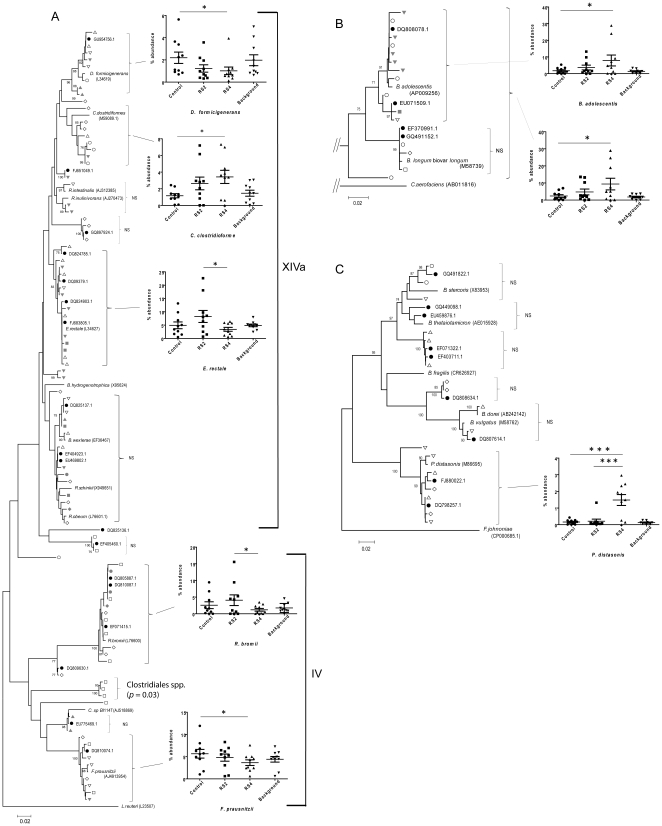
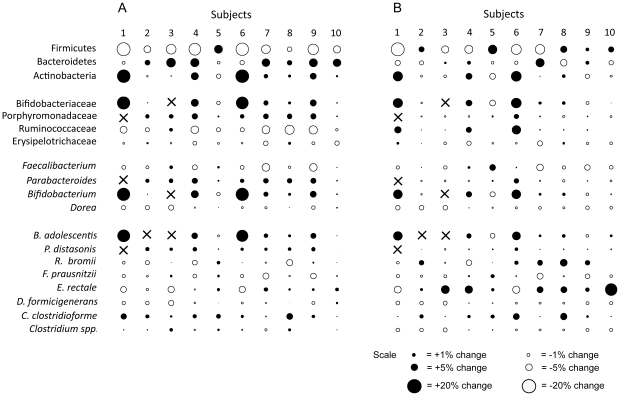
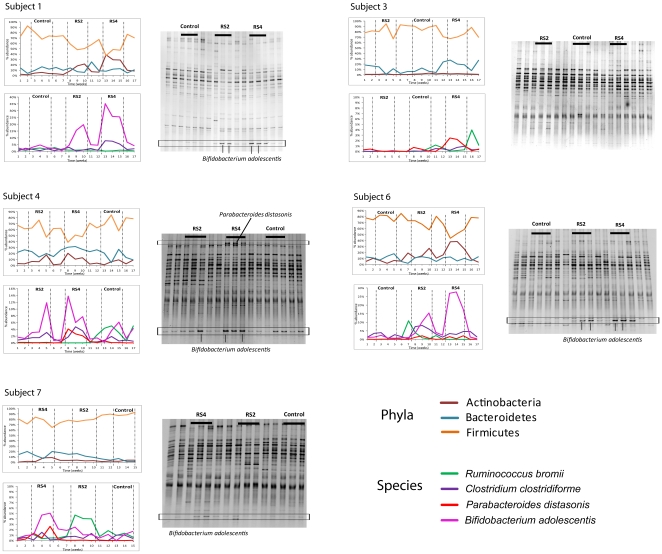
BACKGROUND: To systematically develop dietary strategies based on resistant starch (RS) that modulate the human gut microbiome, detailed in vivo studies that evaluate the effects of different forms of RS on the community structure and population dynamics of the gut microbiota are necessary. The aim of the present study was to gain a community wide perspective of the effects of RS types 2 (RS2) and 4 (RS4) on the fecal microbiota in human individuals. METHODS AND FINDINGS: Ten human subjects consumed crackers for three weeks each containing either RS2, RS4, or native starch in a double-blind, crossover design. Multiplex sequencing of 16S rRNA tags revealed that both types of RS induced several significant compositional alterations in the fecal microbial populations, with differential effects on community structure. RS4 but not RS2 induced phylum-level changes, significantly increasing Actinobacteria and Bacteroidetes while decreasing Firmicutes. At the species level, the changes evoked by RS4 were increases in Bifidobacterium adolescentis and Parabacteroides distasonis, while RS2 significantly raised the proportions of Ruminococcus bromii and Eubacterium rectale when compared to RS4. The population shifts caused by RS4 were numerically substantial for several taxa, leading for example, to a ten-fold increase in bifidobacteria in three of the subjects, enriching them to 18-30% of the fecal microbial community. The responses to RS and their magnitudes varied between individuals, and they were reversible and tightly associated with the consumption of RS. CONCLUSION: Our results demonstrate that RS2 and RS4 show functional differences in their effect on human fecal microbiota composition, indicating that the chemical structure of RS determines its accessibility by groups of colonic bacteria. The findings imply that specific bacterial populations could be selectively targeted by well designed functional carbohydrates, but the inter-subject variations in the response to RS indicates that such strategies might benefit from more personalized approaches.
Overview
The claims and statistics of this paper haven’t been checked yet.
Free: it reads the open-access text and checks the first 5 claims that cite a source we can check. Create a free account to check every claim.
Integrity signals
Registry
Cites
Statistics
Figures

Verification
Claims the paper makes
The claims and statistics of this paper haven’t been checked yet.
Free: it reads the open-access text and checks the first 5 claims that cite a source we can check. Create a free account to check every claim.
Claims other papers make about this one
Each is checked against this paper’s own text: does it say what the citing paper says it does?
In the citing paper
“In 2 of the studies not included in the meta-analysis, raffinose and resistant starch interventions did not lead to significant difference in α-diversity compared with placebo (93,101).”
From Dietary fiber intervention on gut microbiota composition in healthy adults: a systematic review and meta-analysis (2018) · cites this paper as [101]
In the citing paper
“Human consumption of resistant starch led to significant increases in Bifidobacterium, Faecalibacterium, and Eubacterium, while decreasing some Ruminococcus strains (74,75).”
From Diet and the Microbiota–Gut–Brain Axis: Sowing the Seeds of Good Mental Health (2021) · cites this paper as [74]
In the citing paper
“Symptoms linked to increased fiber consumption such as flatulence and bloating are likely the result of gas formation during fermentation by the gut microbiota, 22 , 23 which shows substantial inter-individual variation. 48–50”
From Adaptation to tolerate high doses of arabinoxylan is associated with fecal levels of Bifidobacterium longum (2024) · cites this paper as [48]
Self-check
Percentages, sums and reported differences re-computed from the paper’s own numbers.
The self-check needs the paper’s full text.
Citations
Cites
MUSCLE: multiple sequence alignment with high accuracy and high throughput
Edgar, R. C. (2004) · Nucleic Acids Research · doi:10.1093/nar/gkh340 · Cited by 44,662
Hall, T. A. (1999) · Nucleic Acids Symposium Series · doi:10.14601/phytopathol_mediterr-14998u1.29 · Cited by 38,297 · cited 2×
“A local nucleotide database was established for each subject in BioEdit [ 56 ] containing all sequences detected by pyrosequencing , and the BLASTn algorithm was used with a 97% cutoff ( min . length 300 bp ) to quantify each OTU in the fecal bacterial populations in each sample .”
MethodMEGA4: Molecular Evolutionary Genetics Analysis (MEGA) Software Version 4.0
Tamura, K., Dudley, J., Nei, M., & Kumar, S. (2007) · Molecular Biology and Evolution · doi:10.1093/molbev/msm092 · Cited by 28,730 · cited 2×
“0 Software [ 55 ] by neighbor - joining with 1 , 000 bootstrap replicates .”
MethodAn obesity-associated gut microbiome with increased capacity for energy harvest
Turnbaugh, P. J., Ley, R. E., Mahowald, M. A., Magrini, V., Mardis, E. R., & Gordon, J. I. (2006) · Nature · doi:10.1038/nature05414 · Cited by 12,444 · cited 1×
“A microbiome enriched in Firmicutes has been associated with an increased capacity for energy harvest and obesity [49,50], and a reduction of this phylum could therefore reduce the amount of calories extracted from the diet.”
BackgroundHuman gut microbes associated with obesity
Ley, R. E., Turnbaugh, P. J., Klein, S., & Gordon, J. I. (2006) · Nature · doi:10.1038/4441022a · Cited by 8,785 · cited 1×
“The bacterial composition in the ten subjects during the baseline period was, as shown by other studies [28,29], dominated by the phyla Firmicutes (78%) and Bacteroidetes (13%).”
ResultA core gut microbiome in obese and lean twins
Turnbaugh, P. J., Hamady, M., Yatsunenko, T., Cantarel, B. L., Duncan, A., Ley, R. E., Sogin, M. L., Jones, W. J., Roe, B. A., Affourtit, J. P., et al. (2009) · Nature · doi:10.1038/nature07540 · Cited by 7,823 · cited 3×
“First, few OTU are completely conserved among humans [28,44], thus species that were affected in some subjects might simply not be present in other individuals.”
BackgroundMethodResultDominguez-Bello, M. G., Costello, E. K., Contreras, M., Magris, M., Hidalgo, G., Fierer, N., & Knight, R. (2010) · Proceedings of the National Academy of Sciences · doi:10.1073/pnas.1002601107 · Cited by 4,774 · cited 1×
“This technique has been extremely valuable, for example, in the characterization of the human microbiota in terms of lean and obese physiological states, impact of antibiotics, and the importance of delivery mode at birth [26,27,28].”
MethodThe Ribosomal Database Project: improved alignments and new tools for rRNA analysis
Cole, J. R., Wang, Q., Cardenas, E., Fish, J., Chai, B., Farris, R. J., Kulam-Syed-Mohideen, A. S., McGarrell, D. M., Marsh, T., Garrity, G. M., et al. (2009) · Nucleic Acids Research · doi:10.1093/nar/gkn879 · Cited by 4,762 · cited 1×
“edu/) [53] with default parameters (which included the removal of sequences containing at least one ambiguous nucleotide), except for the minimum sequence length, which was set to 300 bp.”
Ecological and Evolutionary Forces Shaping Microbial Diversity in the Human Intestine
Ley, R. E., Peterson, D. A., & Gordon, J. I. (2006) · Cell · doi:10.1016/j.cell.2006.02.017 · Cited by 3,358 · cited 1×
“A microbiome enriched in Firmicutes has been associated with an increased capacity for energy harvest and obesity [49,50], and a reduction of this phylum could therefore reduce the amount of calories extracted from the diet.”
BackgroundDethlefsen, L., Huse, S., Sogin, M. L., & Relman, D. A. (2008) · PLoS Biology · doi:10.1371/journal.pbio.0060280 · Cited by 2,361 · cited 1×
“This technique has been extremely valuable, for example, in the characterization of the human microbiota in terms of lean and obese physiological states, impact of antibiotics, and the importance of delivery mode at birth [26,27,28].”
Method
Research works printed but not linked: 1
- Ryan KJ 2004 Normal Microbial Flora. Ryan KJ Ray CG Medical Microbiology An intorduction to infectious diseases. 4th ed New York McGraw-Hill
Cited by
Items 601–662 of 662
PROMOTION OF COLON HEALTH BY STRAWBERRY AND CRANBERRY
Han, Y. (2020) · ScholarWorks@UMassAmherst (University of Massachusetts Amherst) · doi:10.7275/bcy8-p973
Fibre degradation by pig microbiota
Long, C. (2020) · Research Publications (Maastricht University) · doi:10.26481/dis.20201126cl
Renall, N. (2020) · Massey Research Online (Massey University) · Cited by 2
Microbiota intestinal: su importancia en la salud y los factores que la modifican
Espinoza, Y. R. (2020) · Latin American Journal of Clinical Sciences and Medical Technology · doi:10.34141/ljcs3995284
The Role of High Sugar Diets in Colitis
Rajaruban, S. (2020) · ERA: Education and Research Archive (University of Alberta) · doi:10.7939/r3-tthe-t208
Signaling Pathways Associated with Metabolites of Dietary Fibers Link to Host Health
Rani, K., Kumar, J., Sangwan, S., Masharing, N., Mitra, M., & Singh, H. (2021) · Dietary Fibers [Working Title] · doi:10.5772/intechopen.99586
“Species such as Bifidobacteriumadolescentis, Ruminoccocusbromii, Eubacteriumrectale, and Parabacteroides distasonisplay significant roles in degrading resistant Starch [1, 17].”
BackgroundEVALUATION OF RADIOLOGICAL TRAINER DEVICE X11F3
Leahy, E. J., & DePew, J. R. (1961) · OSTI OAI (U.S. Department of Energy Office of Scientific and Technical Information)
Maiya, M., Cartagenova, A., Fitko, K. A., Roa, S., Law, C., & Patterson, M. A. (2022) · Research Square · doi:10.21203/rs.3.rs-1247087/v1
Impact of Probiotic and Prebiotic on Gut Microbiota in Pre-diabetes and Type 2 Diabetes
Ramos, F. M. M., Salgaço, M. K., Cesar, T. B., & Sivieri, K. (2022) · Springer eBooks · doi:10.1007/978-3-030-92196-5_3
Quigley, E. M. M. (2020) · Faculty Opinions – Post-Publication Peer Review of the Biomedical Literature · doi:10.3410/f.732207081.793569652
Gut Microbial Mechanisms in Nutrition and Health
Ishiguro, E. E., Haskey, N., & Campbell, K. (2023) · Elsevier eBooks · doi:10.1016/b978-0-323-91387-4.00004-1
Chen, C.-H., & Ding, L.-X. (2023) · Pakistan Journal of Zoology · doi:10.17582/journal.pjz/20221011021005
Liu, Y., Wang, S., & Yang, T. (2023) · Pakistan Journal of Zoology · doi:10.17582/journal.pjz/20230330030335
Analgesic Effect of Nalbuphine Combined with Sufentanil After Laparoscopic Hysterectomy
Cai, Z., Jiang, X., Dai, X., & Wu, P. (2023) · Pakistan Journal of Zoology · doi:10.17582/journal.pjz/20230331210308
“Other dominant genera in our result could also be found in other ruminant (Martínez et al., 2010; Cockburn et al., 2016).”
BackgroundÖlmez, M., Kara, K., Ramay, M. S., Rıaz, R., & Şahin, T. (2023) · Tropical Animal Health and Production · doi:10.1007/s11250-023-03692-3
Effet du microbiote intestinal sur la pharmaco-onco-immunologie des statines
Pukar, K. C. (2020) · theses.fr (ABES) · doi:10.70675/ff8b34e6z83e6z4a77z8a50z14b3a52080e9
Li, Z., & Nie, Q. (2025) · Elsevier eBooks · doi:10.1016/b978-0-443-21630-5.00011-3
Shi, J., Jeradechachai, T., Maniñgat, C. C., Jo, M., Chen, Z., & Shi, Y. (2025) · Cereal Chemistry · doi:10.1002/cche.10868
Miralles‐Pérez, B., Ramos‐Romero, S., Charpentier, M. J., Sánchez‐Martos, V., Fortuño-Mar, À., Ponomarenko, J. V., Amézqueta, S., Piñol‐Piñol, D., Zhang, X., Torres, J. L., et al. (2025) · Molecular Nutrition & Food Research · doi:10.1002/mnfr.70230 · Cited by 1
Research Progress on the Synergy Mechanism of Dietary Fiber and Prebiotics
Zhao, H. (2025) · International journal of agriculture and food sciences research. · doi:10.62051/ijafsr.v3n2.04
“For instance, Martinez et al. discovered that type 2 and type 4 resistant starches can increase the number of good bacteria like Bifidobacterium and Lactobacillus in human feces [13].”
Pantoja-Feliciano, I. G., Karl, J. P., Perisin, M., Doherty, L. A., McClung, H. L., Armstrong, N. J., Renberg, R. L., Racicot, K., Branck, T. A., Arcidiacono, S., et al. (2023) · Figshare · doi:10.6084/m9.figshare.22600024
Kok, C. R., Rose, D. J., Cui, J., Whisenhunt, L. A., & Hutkins, R. (2024) · Figshare · doi:10.6084/m9.figshare.25903919
Kok, C. R., Rose, D. J., Cui, J., Whisenhunt, L. A., & Hutkins, R. (2024) · Figshare · doi:10.6084/m9.figshare.25903873
Metabolic treatments in murine models of multiple sclerosis
Alaeiilkhchi, N. (2023) · cIRcle (University of British Columbia) · doi:10.14288/1.0438320 · Cited by 1
Phoonlapdacha, P., Tangshewinsirikul, C., Phosuwattanakul, J., Kittisakmontri, K., Nitisinprasert, S., Nakayama, J., Prombutara, P., Suthutvoravut, U., & Chongviriyaphan, N. (2022) · Figshare · doi:10.6084/m9.figshare.19092594
Pantoja-Feliciano, I. G., Karl, J. P., Perisin, M., Doherty, L. A., McClung, H. L., Armstrong, N. J., Renberg, R. L., Racicot, K., Branck, T. A., Arcidiacono, S., et al. (2023) · Figshare · doi:10.6084/m9.figshare.22600021
Nutri-cereals as a Source of Resistant Starch
Vatsa, E., Aggarwal, M., & Chaudhary, N. (2026) · Springer eBooks · doi:10.1007/978-3-032-09502-2_14
Jovandarić, M. Z. (2026) · Elsevier eBooks · doi:10.1016/b978-0-443-33931-8.00008-6
Gut microbiota remodeling underlies the metabolic benefits of low-glutelin rice in mice
Liu, R., Yuan, C. H. E. N., & Yu, W. (2026) · Grain & Oil Science and Technology · doi:10.1016/j.gaost.2026.03.002
Utilization of Sorghum and Artemisia absinthium for development of future food using 3-D printing
Ayoub, A., Gani, A., Rayees, R., Shah, A. S., & Mushtaq, M. (2026) · International Journal of Gastronomy and Food Science · doi:10.1016/j.ijgfs.2026.101465
Veiga, P., & Hiol, A. N. (2024) · Histoire de la recherche contemporaine · doi:10.4000/15v9o
Microbiote intestinal, cancer du sein et métabolisme lipidique
Luu, T. H. (2018) · theses.fr (ABES) · doi:10.70675/5a95efcbzc6e9z41b8z84a5z058eda043638
Debbabi, S. H. (2018) · theses.fr (ABES) · doi:10.70675/a9e8c6faze8d0z44d4zb97dzcacb09c83ffd · Cited by 1
Bedu-Ferrari, C. (2022) · theses.fr (ABES) · doi:10.70675/17cf5e69z9e36z4daczb0b6z93f0767b79db · Cited by 2
Rôle dépendant du sexe du récepteur constitutif aux androstanes CAR dans le métabolisme hépatique
Huillet, M. (2024) · theses.fr (ABES) · doi:10.70675/540eb301z7e1az46b2z8bc9z8e0347fb266a
Prebiotic Activity of Resistant Starches
Ferreira, B. M., Pereira, E. P. R., & Sant’Ana, A. S. (2026) · Methods and protocols in food science · doi:10.1007/978-1-0716-5116-2_19
Román, L., Gallego-Lobillo, P., Lopez-Rodulfo, I. M., & Martínez, M. M. (2026) · Elsevier eBooks · doi:10.1016/b978-0-443-33285-2.00024-0
Decreased carbohydrate sources reduce microbial diversity and taxonomic redundancy in the murine gut
Flores, C., & Seekatz, A. M. (2026) · Microbiology Spectrum · doi:10.1128/spectrum.03107-25
Gut Microbiome, Disease, and Diet: Leveraging Big Data for Precise Nutrition
Huang, Z., Ye, C., Liu, K., Ma, W., Liu, Q., & Li, D. Y. (2026) · Food Science and Human Wellness · doi:10.26599/fshw.2026.9251155
Tonkie, J. N. (2026) · Massey Research Online (Massey University)
Purple Potato and Its Polyphenols Modulate Cecal Fermentation in Rats
Chiba, M., Kilua, A., Nagata, R., Shimada, K., Tani, M., Han, K., & Fukushima, M. (2026) · Preventive Nutrition and Food Science · doi:10.3746/pnf.2026.120
“The present findings are consistent with previous research demonstrating that RS intake reduced Dorea abundance in humans (Martínez et al., 2010; Upadhyaya et al., 2016).”
Guo, M., Fu, L., Wang, Q., & Mackay, C. R. (2026) · Food Bioscience · doi:10.1016/j.fbio.2026.109842
Yang, Y., Li, M., Gao, M., Wang, M., Cheng, K., Jiao, A., & Jin, Z. (2026) · Food Chemistry · doi:10.1016/j.foodchem.2026.151004
Liu, T., Zhang, X., Xu, H., Wu, X., Fan, Y., Jiang, H., Pan, X., Ma, R., Liu, C., & Tian, Y. (2026) · Food Hydrocolloids · doi:10.1016/j.foodhyd.2026.113354 · Cited by 1
Jafari, A., Karimzadeh‐Soureshjani, E., Kiani-Shamsabadi, D., Mohammadpour, H., & Mardani, H. (2026) · Elsevier eBooks · doi:10.1016/b978-0-443-29835-6.00004-6
李仕贵, Dong, C., Yang, J., Wang, X., Yue, J., Wang, Z., Yang, Z., & Wei, S. (2026) · Foods · doi:10.3390/foods15193497
“Consequently, the general health benefits attributed to resistant starch—such as improved glycemic control, enhanced satiety, and gut health—cannot be assumed to apply uniformly to all enzymatically modified potato starch products [4,17,84].”
Takeuchi, T., Reddy, A., Robinson, E. K., Kotaka, K., Higginbottom, S. K., Sonnenburg, E. D., & Sonnenburg, J. L. (2026) · bioRxiv (Cold Spring Harbor Laboratory) · doi:10.64898/2026.09.29.755216
Charumathi, K., Kim, S., & Shin, H. (2026) · Frontiers in Microbiology · doi:10.3389/fmicb.2026.1927734 · Cited by 1
МИКРОБИОЛОГИЧЕСКИЙ АНАЛИЗ НАПИТОК БУЗА НА ОСНОВЕ МОЛОЧНОЙ СЫВОРОТКИ И ЗЕРНОГОГО СЫРЯ
Otabek, B. Н. К., & Зинатуллаевна, Д. Г. (2025) · European Journal of Interdisciplinary Research and Development
PLANT PREBIOTICS AND HUMAN HEALTH: BIOTECHNOLOGY TO BREED PREBIOTIC-RICH NUTRITIOUS FOOD CROPS
SHINDE, P. D. P. P. (2021) · International Journal of Multidisciplinary Research and Studies
Day, A. S., Armet, A. M., Kamath, S., Joyce, P. M., Bryant, R. V., & Armstrong, H. (2026) · Gut Microbes Reports · doi:10.1080/29933935.2026.2744027
Xu, Z., Liu, Y., Wu, H., Xu, H., & Li, Z. (2026) · Nutrients · doi:10.3390/nu18203394
“RS2 and RS4 produced different, reversible microbiota changes in a crossover study [37].”
Poole, A. C. (2025) · Zenodo (CERN European Organization for Nuclear Research) · doi:10.5281/zenodo.15054013
Designing Clean-Label Low-Glycemic Foods: From Starch Structure to Human Glycemic Response
Chuwech, M., Ounjaijean, S., Suwitchayanon, P., Anuduang, A., Phimolsiripol, Y., & Boonyapranai, K. (2026) · Foods · doi:10.3390/foods15213928
Methylation of NOTCH genes in normal and at-risk colorectal epithelium
McCallum, I. J. D. (2013)
Metadata
- Authors
- Martínez, I., Kim, J., Duffy, P. R., Schlegel, V. L., & Walter, J.
- Affiliations
- University of Nebraska–Lincoln (US)
- Corresponding author
- Walter, Jens
- Venue
- PLoS ONE
- Publisher
- Public Library of Science (PLoS)
- Published
- 2010-11-29
- Volume
- 5
- Issue
- 11
- Pages
- e15046
- ISSN
- 1932-6203 (ISSN-L)
- PMC
- PMC2993935
- OpenAlex
- W2065925831
- Cited by
- 645
- References
- 61
- Citations by year
- 2026: 27 · 2025: 31 · 2024: 48 · 2023: 35 · 2022: 51 · 2021: 53 · 2020: 64 · 2019: 56 · 2018: 49 · 2017: 41 · 2016: 40 · 2015: 44 · 2014: 32 · 2013: 34 · 2012: 26
- FWCI
- 9.50
- Type
- journal article
- Language
- en
- Open access
- gold
- doi.org
- Locations
- PLoS ONE (publishedVersion, cc-by)
- Europe PMC (PubMed Central) (publishedVersion, cc-by)
- PubMed Central (publishedVersion, cc-by)
- PubMed (publishedVersion)
- Lincoln (University of Nebraska) (submittedVersion, cc-by)
- DOAJ (DOAJ: Directory of Open Access Journals) (submittedVersion, cc-by-sa)
- Figshare (submittedVersion, cc-by)
- Funders
- U.S. Department of Agriculture
- Nebraska Corn Board
- Technische Universität München
- Topics
- Life Sciences › Biochemistry, Genetics and Molecular Biology › Molecular Biology › Gut microbiota and health
- Health Sciences › Nursing › Nutrition and Dietetics › Food composition and properties
- Health Sciences › Nursing › Nutrition and Dietetics › Microbial Metabolites in Food Biotechnology
- Keywords
- resistant starch, resistant starch type 4, fecal microbiota, gut microbiota, dietary intervention, Bifidobacterium adolescentis, Parabacteroides distasonis, Ruminococcus bromii, Eubacterium rectale, actinobacteria, Bacteroidetes, Firmicutes, interindividual variability, functional carbohydrates, personalized nutrition
- MeSH terms
- Adult, Bacteria, DNA, Bacterial, Double-Blind Method, Feces, Female, Humans, Male, RNA, Ribosomal, 16S, Species Specificity, Starch, Genetic Variation, Sequence Analysis, DNA, Cross-Over Studies, Metagenome, Young Adult
About these checks
Registry, retraction, Cites and statistics results are computed, not judged, with one exception: a printed reference that no index lists is read once by a model before it counts as a citation error. Claims are extracted by a model and kept only when their quote appears verbatim in the text; each cited source is then checked, with a model’s help, for whether it says what the claim relies on. Those verdicts can be wrong — read the claim’s quote and the cited source before relying on one.
Statistics and arithmetic are recomputed, not judged.
Confidence bands are shown only for fields calibrated on our annotated test set. None is calibrated yet, so no band is shown.
What counts as a claim ›How we measure confidence ›How we check this ›
Are you an author, or do you see a problem with this page? Request a review
Data sources
Bibliographic data: Semantic Scholar, OpenAlex, Crossref.
Contains information from the Semantic Scholar Academic Graph Datasets, made available under the ODC Attribution License (ODC-BY 1.0).
Semantic Scholar’s data is described in: Kinney, R., et al. (2023). The Semantic Scholar Open Data Platform. arXiv:2301.10140.
