

Resistant Starches Types 2 and 4 Have Differential Effects on the Composition of the Fecal Microbiota in Human Subjects
Open accessThe DOI matches its Crossref record; 61 of the 61 references it cites were found in a registry or an index.
Abstract
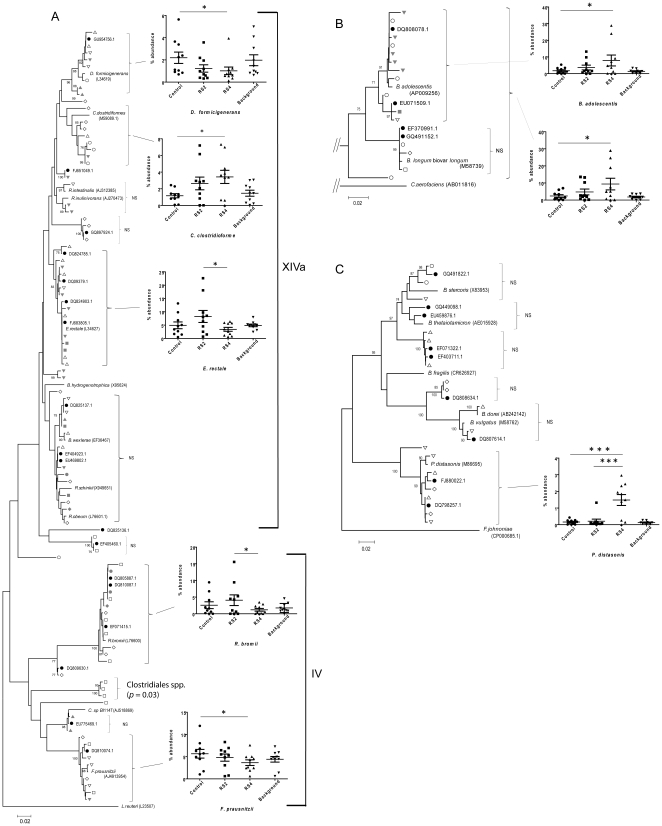
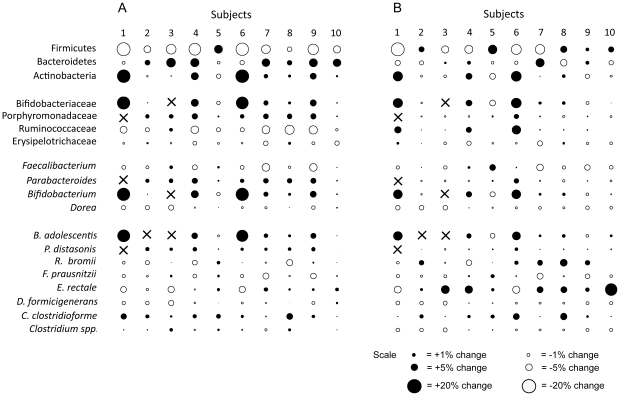
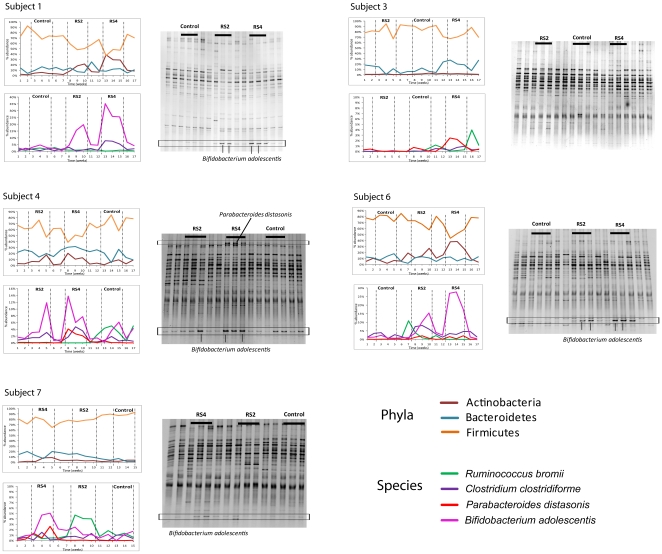
BACKGROUND: To systematically develop dietary strategies based on resistant starch (RS) that modulate the human gut microbiome, detailed in vivo studies that evaluate the effects of different forms of RS on the community structure and population dynamics of the gut microbiota are necessary. The aim of the present study was to gain a community wide perspective of the effects of RS types 2 (RS2) and 4 (RS4) on the fecal microbiota in human individuals. METHODS AND FINDINGS: Ten human subjects consumed crackers for three weeks each containing either RS2, RS4, or native starch in a double-blind, crossover design. Multiplex sequencing of 16S rRNA tags revealed that both types of RS induced several significant compositional alterations in the fecal microbial populations, with differential effects on community structure. RS4 but not RS2 induced phylum-level changes, significantly increasing Actinobacteria and Bacteroidetes while decreasing Firmicutes. At the species level, the changes evoked by RS4 were increases in Bifidobacterium adolescentis and Parabacteroides distasonis, while RS2 significantly raised the proportions of Ruminococcus bromii and Eubacterium rectale when compared to RS4. The population shifts caused by RS4 were numerically substantial for several taxa, leading for example, to a ten-fold increase in bifidobacteria in three of the subjects, enriching them to 18-30% of the fecal microbial community. The responses to RS and their magnitudes varied between individuals, and they were reversible and tightly associated with the consumption of RS. CONCLUSION: Our results demonstrate that RS2 and RS4 show functional differences in their effect on human fecal microbiota composition, indicating that the chemical structure of RS determines its accessibility by groups of colonic bacteria. The findings imply that specific bacterial populations could be selectively targeted by well designed functional carbohydrates, but the inter-subject variations in the response to RS indicates that such strategies might benefit from more personalized approaches.
Overview
The claims and statistics of this paper haven’t been checked yet.
Free: it reads the open-access text and checks the first 5 claims that cite a source we can check. Create a free account to check every claim.
Integrity signals
Registry
Cites
Statistics
Figures

Verification
Claims the paper makes
The claims and statistics of this paper haven’t been checked yet.
Free: it reads the open-access text and checks the first 5 claims that cite a source we can check. Create a free account to check every claim.
Claims other papers make about this one
Each is checked against this paper’s own text: does it say what the citing paper says it does?
In the citing paper
“In 2 of the studies not included in the meta-analysis, raffinose and resistant starch interventions did not lead to significant difference in α-diversity compared with placebo (93,101).”
From Dietary fiber intervention on gut microbiota composition in healthy adults: a systematic review and meta-analysis (2018) · cites this paper as [101]
In the citing paper
“Human consumption of resistant starch led to significant increases in Bifidobacterium, Faecalibacterium, and Eubacterium, while decreasing some Ruminococcus strains (74,75).”
From Diet and the Microbiota–Gut–Brain Axis: Sowing the Seeds of Good Mental Health (2021) · cites this paper as [74]
In the citing paper
“Symptoms linked to increased fiber consumption such as flatulence and bloating are likely the result of gas formation during fermentation by the gut microbiota, 22 , 23 which shows substantial inter-individual variation. 48–50”
From Adaptation to tolerate high doses of arabinoxylan is associated with fecal levels of Bifidobacterium longum (2024) · cites this paper as [48]
Self-check
Percentages, sums and reported differences re-computed from the paper’s own numbers.
The self-check needs the paper’s full text.
Citations
Cites
MUSCLE: multiple sequence alignment with high accuracy and high throughput
Edgar, R. C. (2004) · Nucleic Acids Research · doi:10.1093/nar/gkh340 · Cited by 44,662
Hall, T. A. (1999) · Nucleic Acids Symposium Series · doi:10.14601/phytopathol_mediterr-14998u1.29 · Cited by 38,297 · cited 2×
“A local nucleotide database was established for each subject in BioEdit [ 56 ] containing all sequences detected by pyrosequencing , and the BLASTn algorithm was used with a 97% cutoff ( min . length 300 bp ) to quantify each OTU in the fecal bacterial populations in each sample .”
MethodMEGA4: Molecular Evolutionary Genetics Analysis (MEGA) Software Version 4.0
Tamura, K., Dudley, J., Nei, M., & Kumar, S. (2007) · Molecular Biology and Evolution · doi:10.1093/molbev/msm092 · Cited by 28,730 · cited 2×
“0 Software [ 55 ] by neighbor - joining with 1 , 000 bootstrap replicates .”
MethodAn obesity-associated gut microbiome with increased capacity for energy harvest
Turnbaugh, P. J., Ley, R. E., Mahowald, M. A., Magrini, V., Mardis, E. R., & Gordon, J. I. (2006) · Nature · doi:10.1038/nature05414 · Cited by 12,444 · cited 1×
“A microbiome enriched in Firmicutes has been associated with an increased capacity for energy harvest and obesity [49,50], and a reduction of this phylum could therefore reduce the amount of calories extracted from the diet.”
BackgroundHuman gut microbes associated with obesity
Ley, R. E., Turnbaugh, P. J., Klein, S., & Gordon, J. I. (2006) · Nature · doi:10.1038/4441022a · Cited by 8,785 · cited 1×
“The bacterial composition in the ten subjects during the baseline period was, as shown by other studies [28,29], dominated by the phyla Firmicutes (78%) and Bacteroidetes (13%).”
ResultA core gut microbiome in obese and lean twins
Turnbaugh, P. J., Hamady, M., Yatsunenko, T., Cantarel, B. L., Duncan, A., Ley, R. E., Sogin, M. L., Jones, W. J., Roe, B. A., Affourtit, J. P., et al. (2009) · Nature · doi:10.1038/nature07540 · Cited by 7,823 · cited 3×
“First, few OTU are completely conserved among humans [28,44], thus species that were affected in some subjects might simply not be present in other individuals.”
BackgroundMethodResultDominguez-Bello, M. G., Costello, E. K., Contreras, M., Magris, M., Hidalgo, G., Fierer, N., & Knight, R. (2010) · Proceedings of the National Academy of Sciences · doi:10.1073/pnas.1002601107 · Cited by 4,774 · cited 1×
“This technique has been extremely valuable, for example, in the characterization of the human microbiota in terms of lean and obese physiological states, impact of antibiotics, and the importance of delivery mode at birth [26,27,28].”
MethodThe Ribosomal Database Project: improved alignments and new tools for rRNA analysis
Cole, J. R., Wang, Q., Cardenas, E., Fish, J., Chai, B., Farris, R. J., Kulam-Syed-Mohideen, A. S., McGarrell, D. M., Marsh, T., Garrity, G. M., et al. (2009) · Nucleic Acids Research · doi:10.1093/nar/gkn879 · Cited by 4,762 · cited 1×
“edu/) [53] with default parameters (which included the removal of sequences containing at least one ambiguous nucleotide), except for the minimum sequence length, which was set to 300 bp.”
Ecological and Evolutionary Forces Shaping Microbial Diversity in the Human Intestine
Ley, R. E., Peterson, D. A., & Gordon, J. I. (2006) · Cell · doi:10.1016/j.cell.2006.02.017 · Cited by 3,358 · cited 1×
“A microbiome enriched in Firmicutes has been associated with an increased capacity for energy harvest and obesity [49,50], and a reduction of this phylum could therefore reduce the amount of calories extracted from the diet.”
BackgroundDethlefsen, L., Huse, S., Sogin, M. L., & Relman, D. A. (2008) · PLoS Biology · doi:10.1371/journal.pbio.0060280 · Cited by 2,361 · cited 1×
“This technique has been extremely valuable, for example, in the characterization of the human microbiota in terms of lean and obese physiological states, impact of antibiotics, and the importance of delivery mode at birth [26,27,28].”
Method
Research works printed but not linked: 1
- Ryan KJ 2004 Normal Microbial Flora. Ryan KJ Ray CG Medical Microbiology An intorduction to infectious diseases. 4th ed New York McGraw-Hill
Cited by
Items 401–500 of 662
Intestinal microbiota-mediated dietary fiber bioavailability
Guo, K., Yao, Z., & Yang, T. (2022) · Frontiers in Nutrition · doi:10.3389/fnut.2022.1003571 · Cited by 22
Helou, C., Anton, P. M., Niquet‐Léridon, C., Spatz, M., Tessier, F. J., & Gadonna‐Widehem, P. (2017) · Food & Function · doi:10.1039/c7fo00430c · Cited by 21
Microbial Metabolism in the Mammalian Gut: Molecular Mechanisms and Clinical Implications
Hall, A., & Versalovic, J. A. (2018) · Journal of Pediatric Gastroenterology and Nutrition · doi:10.1097/mpg.0000000000001857 · Cited by 22
“org and Bifidobacterium species (57,58), with R bromii an essential species for the initiation of RS metabolism.”
BackgroundResistant Starch Has No Effect on Appetite and Food Intake in Individuals with Prediabetes
White, U. A., Peterson, C. M., Beyl, R. A., Martin, C. K., & Ravussin, É. (2020) · Journal of the Academy of Nutrition and Dietetics · doi:10.1016/j.jand.2020.01.017 · Cited by 22
Beloshapka, A. N., Cross, T.-W., & Swanson, K. S. (2020) · Journal of Animal Science · doi:10.1093/jas/skaa409 · Cited by 21
Cao, S., & Li, C. (2022) · Journal of Agricultural and Food Chemistry · doi:10.1021/acs.jafc.2c05380 · Cited by 20
Kok, C. R., Rose, D. J., Cui, J., Whisenhunt, L. A., & Hutkins, R. L. (2024) · BMC Microbiology · doi:10.1186/s12866-024-03344-y · Cited by 24
“Although numerous studies have shown that prebiotic fibers enrich for bifidobacteria and can contribute to host health, responses are highly individualized [4, 5, 10–12].”
BackgroundResultSorndech, W., Rodtong, S., Blennow, A., & Tongta, S. (2019) · Starch - Stärke · doi:10.1002/star.201800231 · Cited by 20
A comparative study of gut microbiomes in captive nocturnal strepsirrhines
Bornbusch, S. L., Greene, L. K., McKenney, E. A., Volkoff, S. J., Midani, F. S., Joseph, G., Gerhard, W. A., Iloghalu, U. B., Granek, J. A., & Gunsch, C. K. (2019) · American Journal of Primatology · doi:10.1002/ajp.22986 · Cited by 20
Mou, D., Li, S., Yan, C., Zhang, Q., Li, J., Wu, Q., Qiu, P., He, Y., Li, Y., Liu, H., et al. (2020) · Animal Feed Science and Technology · doi:10.1016/j.anifeedsci.2020.114636 · Cited by 22
Sas20 is a highly flexible starch-binding protein in the Ruminococcus bromii cell-surface amylosome
Cerqueira, F. M., Photenhauer, A. L., Doden, H. L., Brown, A. N., Abdel-Hamid, A. M., Moraïs, S., Bayer, E. A., Wawrzak, Z., Cann, I., Ridlon, J. M., et al. (2022) · Journal of Biological Chemistry · doi:10.1016/j.jbc.2022.101896 · Cited by 20
“While not all RS has similar effects on our microbiome (8), RS consumption tends to increase colonic butyrate, a microbially derived short-chain fatty acid that strengthens the gut barrier and has anti-inflammatory and anti-tumorigenic properties (9–12).”
BackgroundKang, J. W., Tang, X., Walton, C. J., Brown, M. J., Brewer, R. A., Maddela, R. L., Zheng, J. J., Agus, J., & Zivkovic, A. M. (2022) · Frontiers in Nutrition · doi:10.3389/fnut.2022.908534 · Cited by 20
Impact of resistant vs. digested starch on starch energy value in the pig gut
Fouhse, J. M., & Zijlstra, R. T. (2017) · Bioactive Carbohydrates and Dietary Fibre · doi:10.1016/j.bcdf.2017.08.001 · Cited by 20
O’Connell, S. M., Woodman, R. J., Brown, I. L., Vincent, D. J., Binder, H. J., Ramakrishna, B., & Young, G. P. (2018) · Journal of the International Society of Sports Nutrition · doi:10.1186/s12970-018-0253-8 · Cited by 22
Fibre matrices for enhanced gut health: a mini review
Fang, F., Junejo, S. A., Wang, K., Yang, X., Yuan, Y., & Zhang, B. (2022) · International Journal of Food Science & Technology · doi:10.1111/ijfs.15702 · Cited by 18
Devi, R., Sharma, E., Thakur, R., Lal, P., Kumar, A., Altaf, M. A., Singh, B., Tiwari, R. K., Lal, M. K., & Kumar, R. (2023) · Food Research International · doi:10.1016/j.foodres.2023.112980 · Cited by 20
In vivo digestibility of cross-linked phosphorylated (RS4) wheat starch in ileostomy subjects
Iacovou, M., Lim, J., Maniñgat, C. C., Bogatyrev, A., Ly, E., Dhital, S., Gidley, M. J., Shi, Y., Muir, J. G., & Seib, P. A. (2017) · Bioactive Carbohydrates and Dietary Fibre · doi:10.1016/j.bcdf.2017.08.002 · Cited by 18
Dahl, W. J., Ford, A., Ukhanova, M., Radford, A., Christman, M. C., Waugh, S. G., & Mai, V. (2016) · Journal of Functional Foods · doi:10.1016/j.jff.2016.02.013 · Cited by 19
Zheng, B., Wen, H., Zheng, B., Xiang, X., & Zhu, C. (2025) · Journal of Agricultural and Food Chemistry · doi:10.1021/acs.jafc.5c06354 · Cited by 19
Gut microbiota changes associated with low-carbohydrate diet intervention for obesity
Li, L., Zhao, X., Abdugheni, R., Yu, F., Zhao, Y., Ma, B.-F., Zhifang, Y., Li, R., Li, Y., Maimaitiyiming, Y., et al. (2024) · Open Life Sciences · doi:10.1515/biol-2022-0803 · Cited by 21
“In line with this notion, a decreased abundance of Firmicutes over Bacteroidetes and Bi fi dobacteria is suggested to be bene fi cial in preventing and treating obesity [48].”
Let food be your medicine – dietary fiber
Liu, M., Li, S., Cao, S., Liu, C., Han, Y., Cheng, J., Zhang, S., Zhao, J., & Shi, Y. (2024) · Food & Function · doi:10.1039/d3fo05641d · Cited by 17
Li, F. N., Peng, X., & Li, W. (2025) · Food & Function · doi:10.1039/d4fo04430d · Cited by 18
Coulon, D. B., Page, R. C., Raggio, A. M., Guice, J. L., Marx, B., Gourineni, V., Stewart, M., & Keenan, M. J. (2019) · Molecular Nutrition & Food Research · doi:10.1002/mnfr.201900901 · Cited by 17
Resistant Starch in Wheat‐, Barley‐, Rye‐, and Oat‐Based Foods: A Review
Nguyen, S. N., Drawbridge, P. C., & Trust Beta (2022) · Starch - Stärke · doi:10.1002/star.202100251 · Cited by 18
Schoonakker, M. P., van Peet, P. G., van den Burg, E. L., Numans, M. E., Ducarmon, Q. R., Pijl, H., & Wiese, M. (2024) · Nutrition Research Reviews · doi:10.1017/s0954422424000131 · Cited by 17
“Within the carbohydrate category, literature has demonstrated differential effects on the microbiome when comparing simple and complex carbohydrates (91,119,120) .”
Kalmokoff, M. L., Franklin, J., Petronella, N., Green, J., & Brooks, S. P. J. (2015) · Nutrients · doi:10.3390/nu7053279 · Cited by 17
“For example, increases in the abundance of Ruminococcus bromii have been observed in the fecal communities of humans [1,8,9] and rodents [10,11] in response to diets containing type-2 resistant starch, as well as in the rumen of cattle fed barley containing rations [12].”
BackgroundLunken, G., Murphy, R. A., Butts, C. A., Brough, L., Rosendale, D., Blatchford, P. A., Stoklosinski, H. M., & Coad, J. (2017) · Bioactive Carbohydrates and Dietary Fibre · doi:10.1016/j.bcdf.2017.07.001 · Cited by 17
Bui, A. T., Williams, B. A., Murtaza, N., Lisle, A. T., Mikkelsen, D., Morrison, M., & Gidley, M. J. (2020) · Food Hydrocolloids · doi:10.1016/j.foodhyd.2020.106560 · Cited by 16
Fouhse, J. M., Gänzle, M. G., Beattie, A. D., Vasanthan, T., & Zijlstra, R. T. (2017) · Journal of Nutrition · doi:10.3945/jn.117.255851 · Cited by 18
Deehan, E. C., Zhang, Z., Nguyen, N. K., Perez-Muñoz, M. E., Cole, J., Riva, A., Berry, D., Prado, C. M., & Walter, J. (2024) · Gut Microbes · doi:10.1080/19490976.2024.2363021 · Cited by 15
Self-citationTannock, G. W. (2023) · Microbiology and Molecular Biology Reviews · doi:10.1128/mmbr.00127-22 · Cited by 19
“…combination of the common types of dietary RS may need to be included in test diets in case there is a differential functional response by microbiotas (244), but RS3 is probably most relevant because it is retrograded starch found in potatoes, rice, pasta, and bread after cooking and cooling (160).”
BackgroundKoutsos, A., & Lovegrove, J. A. (2014) · Elsevier eBooks · doi:10.1016/b978-0-12-407825-3.00012-5 · Cited by 22
Probiotic and Prebiotic Dairy Desserts
Buriti, F. C. A., Bedani, R., & Saad, S. M. I. (2015) · Elsevier eBooks · doi:10.1016/b978-0-12-802189-7.00023-x · Cited by 16
Vázquez, L., Flórez, A. B., Verbruggen, S. E. L., Redruello, B., Verhoeven, J., Venema, K., & Mayo, B. (2020) · Journal of Functional Foods · doi:10.1016/j.jff.2020.103819 · Cited by 17
Response of the gut microbiome and metabolome to dietary fiber in healthy dogs
Bhosle, A., Jackson, M. I., Walsh, A. M., Franzosa, E. A., Badri, D. V., & Huttenhower, C. (2024) · mSystems · doi:10.1128/msystems.00452-24 · Cited by 19
Dietary resistant dextrins positively modulate fecal and cecal microbiota composition in young rats
Śliżewska, K., Libudzisz, Z., Barczyńska, R., Kapuśniak, J., Zduńczyk, Z., & Juśkiewicz, J. (2015) · Acta Biochimica Polonica · doi:10.18388/abp.2015_1101 · Cited by 14
Kim, M.-H., Kuehn, L. A., Bono, J. L., Berry, E. D., Kalchayanand, N., Freetly, H. C., Benson, A. K., & Wells, J. E. (2017) · Journal of Applied Microbiology · doi:10.1111/jam.13545 · Cited by 17
“Total community DNA was extracted from 426 faecal samples using a MiniBeadbeater-8 (BioSpec Products, Bartlesville, OK) followed by the QIAamp DNA Stool Mini Kit (Qiagen, Hilden, Germany) as described previously (Martinez et al. 2010).”
MethodProbiotics in Functional Foods
Brahma, S., Sadiq, M. B., & Ahmad, I. N. (2019) · Elsevier eBooks · doi:10.1016/b978-0-08-100596-5.22368-8 · Cited by 14
Yu, M., & Shin, M. (2015) · Starch - Stärke · doi:10.1002/star.201400223 · Cited by 14
WHOLE-meal ancient wheat-based diet: Effect on metabolic parameters and microbiota
Carroccio, A., Celano, G., Cottone, C., Disclafani, G., Vannini, L., D’Alcamo, A., Vacca, M., Calabrese, F. M., Mansueto, P., Soresi, M., et al. (2021) · Digestive and Liver Disease · doi:10.1016/j.dld.2021.04.026 · Cited by 15
Gut microbial dysbiosis in the pathogenesis of leukemia: an immune-based perspective
Goswami, M., & Bose, P. D. (2024) · Experimental Hematology · doi:10.1016/j.exphem.2024.104211 · Cited by 14
Mak, I. E. K., Yao, Y., Ng, M. T. T., & Kim, J. E. (2025) · Critical Reviews in Food Science and Nutrition · doi:10.1080/10408398.2025.2452362 · Cited by 14
“These findings are also in line with that of other dietary intervention studies, which reported significant heterogeneity in gut microbiota composition and functional changes amongst individuals following a given dietary modulation (Eckburg et al. 2005; Martínez et al. 2010; Shoaie et al. 2015).”
Self-citationKarl, J. P., Fagnant, H. S., Radcliffe, P. N., Wilson, M. A., Karis, A. J., Sayers, B., Wijeyesekera, A., Gibson, G. R., Lieberman, H. R., Giles, G. E., et al. (2025) · American Journal of Physiology-Regulatory, Integrative and Comparative Physiology · doi:10.1152/ajpregu.00109.2025 · Cited by 15
Smith, A. D., Chen, C. T., Cheung, L., Ward, R. E., Hintze, K. J., & Dawson, H. D. (2022) · Frontiers in Nutrition · doi:10.3389/fnut.2022.782667 · Cited by 15
Resistant starch type-4 intake alters circulating bile acids in human subjects
Dhakal, S., & Dey, M. (2022) · Frontiers in Nutrition · doi:10.3389/fnut.2022.930414 · Cited by 13
“It is also possible that the differences in the chemical structures among RS determined their variable accessibility to different gut microbes (9, 10, 13, 15, 16), potentially resulting in distinct modulation of microbial metabolites.”
BackgroundSandri, M., Sgorlon, S., Scarsella, E., & Stefanon, B. (2020) · Animal nutrition · doi:10.1016/j.aninu.2020.03.003 · Cited by 15
“, 2013), humans (Martinez et al., 2010) and dogs (Simpson, 1998).”
Hindgut fermentation of starch is greater for pulse grains than cereal grains in growing pigs
Tan, F., Wang, L. F., Gao, J. L., Beltranena, E., Vasanthan, T., & Zijlstra, R. T. (2021) · Journal of Animal Science · doi:10.1093/jas/skab306 · Cited by 12
Effect of the Gut Microbiota on Obesity and Its Underlying Mechanisms: an Update
Ling Ling, Q. I. A. N., Li, H. T., Zhang, L., Qi Chen, F. A. N. G., & Jia, W. (2015) · Biomedical and Environmental Sciences · doi:10.1016/s0895-3988(15)30116-1 · Cited by 18
Impacts of Habitual Diets Intake on Gut Microbial Counts in Healthy Japanese Adults
Sugimoto, T., Shima, T., Amamoto, R., Kaga, C., Kado, Y., Watanabe, O., Shiinoki, J., Iwazaki, K., Shigemura, H., Tsuji, H., et al. (2020) · Nutrients · doi:10.3390/nu12082414 · Cited by 13
“We found a positive association between intake of beans and numbers of Roseburia and Ruminococcus (Table 3), consistent with a previous study [43], but a negative association with the number of Eubacterium (Table 3), inconsistent with a previous study [41].”
BackgroundResultGomes, M. J. C., da Silva, J. S., Alves, N. E. G., de Assis, A., de Mejía, E. G., Mantovani, H. C., & Martino, H. S. D. (2022) · The Journal of Nutritional Biochemistry · doi:10.1016/j.jnutbio.2022.109022 · Cited by 12
Martina, A., Felis, G. E., Corradi, M., Maffeis, C., Torriani, S., & Venema, K. (2019) · Beneficial Microbes · doi:10.3920/bm2018.0088 · Cited by 12
Zayed, A., Adly, G. M., Khaled, L., El-Al, M. S. A., & Farag, M. A. (2025) · Food Bioscience · doi:10.1016/j.fbio.2025.107535 · Cited by 11
Jaagura, M., Part, N., Adamberg, K., Kazantseva, J., & Viiard, E. (2021) · Journal of Functional Foods · doi:10.1016/j.jff.2021.104899 · Cited by 14
Pantoja-Feliciano, I. G., Karl, J. P., Perisin, M., Doherty, L. A., McClung, H. L., Armstrong, N. J., Renberg, R. L., Racicot, K., Branck, T. A., Arcidiacono, S., et al. (2023) · BMC Microbiology · doi:10.1186/s12866-023-02776-2 · Cited by 11
“has previously shown fecal microbiota composition changes after a RS2 diet in a human study, specifically a significant increase in the Ruminococcus bromii and Eubacterium rectale proportions [12].”
BackgroundGut microbiota: methodological aspects to describe taxonomy and functionality
Ngom‐Bru, C., & Barretto, C. (2012) · Briefings in Bioinformatics · doi:10.1093/bib/bbs019 · Cited by 15
“Depending on the laboratory, different variable regions are targeted: V2 [12], V1–V2 [13], V1–V3 [14], V4 [15], V4–V5 [16] and V6 [17].”
Newman, M. A., Zebeli, Q., van der Velde, K., Grüll, D., Molnar, T., Kandler, W., & Metzler-Zebeli, B. U. (2016) · PLoS ONE · doi:10.1371/journal.pone.0167784 · Cited by 11
Saarenpää, M., Roslund, M. I., Puhakka, R., Grönroos, M., Parajuli, A., Hui, N., Nurminen, N., Laitinen, O. H., Hyöty, H., Cinek, O., et al. (2021) · International Journal of Environmental Research and Public Health · doi:10.3390/ijerph18073742 · Cited by 12
Wang, J., Zhang, Y., Wu, Q., Zhong, Y., Xu, Z., & Yang, J. (2026) · Frontiers in Microbiology · doi:10.3389/fmicb.2026.1757551 · Cited by 21
BeMiller, J. N. (2020) · Food engineering series · doi:10.1007/978-3-030-38654-2_7 · Cited by 20
Li, M., Jin, W., Li, Y., Zhao, L., Cheng, Y., & Zhu, W. (2016) · World Journal of Microbiology and Biotechnology · doi:10.1007/s11274-016-2054-z · Cited by 10
“In a previous study on the composition of the fecal microbiota in human, Martinez et al. (2010) found that the genus Dorea was significantly reduced by resistant starch.”
BackgroundRamadass, B., Pugazhendhi, S., Balachander, G. M., Dharmalingam, T., Mortimer, E. K., Gopalsamy, G. L., Woodman, R. J., Meng, X., Alpers, D., MANARY, M. J., et al. (2019) · International Journal of Environmental Research and Public Health · doi:10.3390/ijerph16203922 · Cited by 11
“There was a 2-week washout period between the two RS interventions to allow the colonic luminal environment and microflora to stabilize [23].”
MethodJabehdar, S. K., Aghjehgheshlagh, F. M., Navidshad, B., Mahdavi, A., & Staji, H. (2018) · Kafkas Universitesi Veteriner Fakultesi Dergisi · doi:10.9775/kvfd.2018.20290 · Cited by 11
Peng, Q., Jiang, P., Yi, L., Li, Y., Yang, Q., Wan, X., He, J., Mo, Z., Niu, H., Lan, Q., et al. (2025) · Gut Microbes · doi:10.1080/19490976.2025.2541028 · Cited by 10
Rudzka, A., Patloka, O., Płecha, M., Zborowski, M., Królikowski, T., Oczkowski, M., Kołożyn‐Krajewska, D., Kruk, M., Karbowiak, M., Mosiej, W., et al. (2025) · Nutrients · doi:10.3390/nu17193093 · Cited by 12
Kemp, J. A., dos Santos, H. F., de Jesus, H. E., Esgalhado, M., Paiva, B. R., Azevedo, R., Stenvinkel, P., Bergman, P., Lindholm, B., Alves, M. R., et al. (2022) · Journal of the American Nutrition Association · doi:10.1080/07315724.2021.1967814 · Cited by 12
Jiang, X., Li, B., Su, Y., & Zhu, W. (2013) · doi:10.12691/jfnr-1-6-7 · Cited by 13
“Feeding a resistant starch-based diet resulted in the proliferation of indigenous bifidobacteria in the hindgut of rats, pigs and humans [27,31,32].”
BackgroundInfluentialAlfilasari, N., Sirivongpaisal, P., & Wichienchot, S. (2021) · Current Microbiology · doi:10.1007/s00284-021-02564-z · Cited by 11
O’Neill, S., Minehan, M., Knight-Agarwal, C. R., & Pyne, D. B. (2024) · Frontiers in Nutrition · doi:10.3389/fnut.2023.1303405 · Cited by 11
Huxley, R., Woodward, M., & Clifton, P. M. (2012) · Current Nutrition Reports · doi:10.1007/s13668-012-0030-2 · Cited by 14
“GOS enriches different lineages within the genus Bifidobacterium compared with resistant starches [48].”
BackgroundBarrón-Pastor, H. J., & Gordon, D. (2016) · Environmental Microbiology Reports · doi:10.1111/1758-2229.12367 · Cited by 10
“Studies reveal that short-term diet intervention may cause significant changes in the composition of gut microbial communities (De Filippo et al., 2010; Martínez et al., 2010; Pérez-Cobas et al., 2015).”
BackgroundMalcomson, F. C., Louca, P., Nelson, A., Willis, N. D., McCallum, I. J. D., Xie, L., Ouwehand, A. C., Stowell, J. D., Preston, T., Morrison, D. J., et al. (2024) · British Journal Of Nutrition · doi:10.1017/s000711452400271x · Cited by 10
Zhu, J., Zhu, S., Wong, W. T., Liu, H., & Li, C. (2025) · Journal of Agricultural and Food Chemistry · doi:10.1021/acs.jafc.5c08279 · Cited by 8
Genetically identical co-housed pigs as models for dietary studies of gut microbiomes
Yang, F., Chia, N., Mazur, M. J., Pettigrew, J. E., Schook, L. B., & White, B. A. (2014) · Microbiome Science and Medicine · doi:10.2478/micsm-2014-0002 · Cited by 18
Marchesi, J. R., Allen, S., Scott, E., Jenkins, H. R., Sadlier, C., & Thomas, S. (2022) · Gut Microbes · doi:10.1080/19490976.2022.2138661 · Cited by 9
Song, E., Lee, E., So, Y.-S., Lee, C., Nam, Y., Lee, B., & Seo, D. (2023) · Food Science and Biotechnology · doi:10.1007/s10068-022-01238-1 · Cited by 8
“Gut microbial profiles are affected by RS type (Martínez et al., 2010; Walker et al., 2011), with RS4 decreasing the proportion of Firmicutes and increasing the proportions of Bacteroidetes and Actinobacteria.”
BackgroundKang, R., Lee, H., Seon, H., Park, C., Song, J., Park, J. K., Kim, Y. K., Kim, M., & Park, T. (2024) · Journal of Animal Science and Technology · doi:10.5187/jast.2023.e109 · Cited by 11
“Total community DNA was extracted from 42 rumen fluid samples (six from donor animals and 36 from the in vitro rumen fermentation experiment) using a Mini-Beadbeater-16 (BioSpec Products, Bartlesville, OK, USA) and the QIAamp DNA Stool Mini Kit (Qiagen, Valencia, CA, USA) [26].”
MethodJaago, M., Timmusk, U. S., Timmusk, T., & Palm, K. (2021) · Frontiers in Nutrition · doi:10.3389/fnut.2021.654008 · Cited by 8
“Third, as suggested previously (41, 42) but now confirmed by this longitudinal case study, microbial response to dietary fiber consumption included the keystone species of the individual.”
In vivo evaluation of an innovative synbiotics on stage IIIb-IV chronic kidney disease patients
Vacca, M., Celano, G., Calabrese, F. M., Rocchetti, M. T., Iacobellis, I., Serale, N., Calasso, M. P., Gesualdo, L., & Angelis, M. D. (2023) · Frontiers in Nutrition · doi:10.3389/fnut.2023.1215836 · Cited by 8
“Both Firmicutes and Actinobacteria exert specialized roles, including the initiation of complex substrate degradation (42).”
BackgroundZhang, W., Jia, T., Zhang, H., & Zhu, W. (2023) · Frontiers in Microbiology · doi:10.3389/fmicb.2023.1264109 · Cited by 11
“Studies have shown that Bacteroides could supplement eukaryotic genome by degrading enzymes targeting resistant dietary polymers, and it is believed that Bacteroidota had the higher fiber degradation potential compared with other phyla (Martínez et al., 2010; El Kaoutari et al., 2013).”
BackgroundBasuray, N., Deehan, E. C., Vieira, F. T., Avedzi, H. M., Duke, R. L., Colin-Ramírez, E., Tun, H. M., Zhang, Z., Wine, E., Madsen, K. L., et al. (2024) · European Journal of Clinical Nutrition · doi:10.1038/s41430-024-01429-5 · Cited by 11
Reevaluating the hype: four bacterial metabolites under scrutiny
Fröhlich, E. E., Mayerhofer, R., & Holzer, P. D. (2014) · European Journal of Microbiology and Immunology · doi:10.1556/eujmi-d-14-00030 · Cited by 9
Azevedo, R., Esgalhado, M., Kemp, J. A., Regis, B., Cardozo, L., Nakao, L. S., de Brito, J. S., & Mafra, D. (2020) · Brazilian Journal of Nephrology · doi:10.1590/2175-8239-jbn-2020-0003 · Cited by 9
Gut microbiome profiles in Thai healthy pregnant women and its association with types of foods
Phoonlapdacha, P., Tangshewinsirikul, C., Phosuwattanakul, J., Kittisakmontri, K., Nitisinprasert, S., Nakayama, J., Prombutara, P., Suthutvoravut, U., & Chongviriyaphan, N. (2022) · BMC Pregnancy and Childbirth · doi:10.1186/s12884-022-04397-5 · Cited by 9
“De Filipo et al. reported an abundance of Bacteroidetes, Actinobacteria, and Enterobacteriaceae in rural African children, whereas Firmicutes were predominantly present in European counterparts.”
BackgroundInfluentialShaping the human microbiome with prebiotic foods – current perspectives for continued development
Tuohy, K. M., Brown, D. T., Klinder, A., & Costabile, A. (2010) · Food Science & Technology Bulletin Functional Foods · doi:10.1616/1476-2137.15989 · Cited by 9
Resistant Starch Content of Traditional Indian Legume Preparations
Nigudkar, M., & Gurminder, J. (2017) · Current Research in Nutrition and Food Science Journal · doi:10.12944/crnfsj.5.3.08 · Cited by 8
Smooth cordgrass (Spartina alterniflora), a potential food source for Apostichopus japonicus
Feng, Q.-M., Zhang, L., Ru, X., Ding, K., Zhang, S., & Gao, H. (2020) · Aquaculture · doi:10.1016/j.aquaculture.2020.735863 · Cited by 8
Optimizing Dietary Fiber Intake: Strategies for Human Nutrition and Food Science
Walsh, S. K., Armet, A. M., Nikolaeva, D. D., Mota, J. F., Lucey, A. J., Oliero, M., & Walter, J. (2026) · Annual Review of Food Science and Technology · doi:10.1146/annurev-food-052824-044842 · Cited by 10
Self-citationFlint, H. J., Duncan, S. H., & Louis, P. (2014) · Springer eBooks · doi:10.1007/978-1-4939-1203-2_5 · Cited by 8
Beloshapka, A. N., & Forster, G. M. (2016) · Journal of Veterinary Science & Technology · doi:10.4172/2157-7579.1000366 · Cited by 8
“For example, increased fecal Ruminococcus was observed in human stool following the increased consumption of resistant starch [37,38].”
BackgroundStimulation of microbial butyrate synthesis through prebiotics
Simonelli, N., Abraham, A. G., & Medrano, M. (2024) · Food Bioscience · doi:10.1016/j.fbio.2024.105329 · Cited by 8
Breeding Sorghum for Specific End Uses
Visarada, K. B. R. S., & Aruna, C. (2020) · Springer eBooks · doi:10.1007/978-981-15-8249-3_19 · Cited by 9
Mukherjee, R., & Aich, P. (2021) · Food Bioscience · doi:10.1016/j.fbio.2021.101136 · Cited by 7
Gut Microbiota and Health: Understanding the Role of Diet
Alasmar, R. M., Kavitha, V., Shanmugakonar, M., & Al‐Naemi, H. A. (2019) · Food and Nutrition Sciences · doi:10.4236/fns.2019.1011097 · Cited by 10
“Rat model has more similar baseline of Firmicutes:Bacteroidetes and similar phylogenetic ratio to human fecal microbiota than mice.”
BackgroundInfluentialLi, R., Yang, Q., He, J., Li, M., Ding, Q., Tian, K., Yang, W., Zhang, G., Guo, A., Gu, M., et al. (2025) · npj Biofilms and Microbiomes · doi:10.1038/s41522-025-00877-6 · Cited by 9
“This is consistent with previous studies 27,28 .”
High Fibres Functional Products
Olagunju, A. I., & Omoba, O. S. (2022) · Springer eBooks · doi:10.1007/978-3-031-05611-6_13 · Cited by 6
Wolever, T. M. S., Maniñgat, C. C., Seib, P. A., Campbell, J. E., & Jenkins, A. L. (2023) · International Journal of Food Sciences and Nutrition · doi:10.1080/09637486.2023.2236809 · Cited by 6
Xu, J., Kong, H., Li, C., Ban, X., & Li, Z. (2024) · Food Science and Human Wellness · doi:10.26599/fshw.2024.9250055 · Cited by 6
Agrinier, A.-L., Pilon, G., & Marette, A. (2024) · Frontiers in Microbiology · doi:10.3389/fmicb.2024.1250366 · Cited by 6
Deciphering the role of dietary modifications and gut dysbiosis in Non-Alcoholic Fatty Liver Disease
Vachher, M., Kaur, K., Marothia, M., Burman, A., Deepanjana, & Bansal, S. (2025) · Human Nutrition & Metabolism · doi:10.1016/j.hnm.2025.200305 · Cited by 9
Haute, M. J. S. V. (2015) · Lincoln (University of Nebraska) · Cited by 8
Metadata
- Authors
- Martínez, I., Kim, J., Duffy, P. R., Schlegel, V. L., & Walter, J.
- Affiliations
- University of Nebraska–Lincoln (US)
- Corresponding author
- Walter, Jens
- Venue
- PLoS ONE
- Publisher
- Public Library of Science (PLoS)
- Published
- 2010-11-29
- Volume
- 5
- Issue
- 11
- Pages
- e15046
- ISSN
- 1932-6203 (ISSN-L)
- PMC
- PMC2993935
- OpenAlex
- W2065925831
- Cited by
- 645
- References
- 61
- Citations by year
- 2026: 27 · 2025: 31 · 2024: 48 · 2023: 35 · 2022: 51 · 2021: 53 · 2020: 64 · 2019: 56 · 2018: 49 · 2017: 41 · 2016: 40 · 2015: 44 · 2014: 32 · 2013: 34 · 2012: 26
- FWCI
- 9.50
- Type
- journal article
- Language
- en
- Open access
- gold
- doi.org
- Locations
- PLoS ONE (publishedVersion, cc-by)
- Europe PMC (PubMed Central) (publishedVersion, cc-by)
- PubMed Central (publishedVersion, cc-by)
- PubMed (publishedVersion)
- Lincoln (University of Nebraska) (submittedVersion, cc-by)
- DOAJ (DOAJ: Directory of Open Access Journals) (submittedVersion, cc-by-sa)
- Figshare (submittedVersion, cc-by)
- Funders
- U.S. Department of Agriculture
- Nebraska Corn Board
- Technische Universität München
- Topics
- Life Sciences › Biochemistry, Genetics and Molecular Biology › Molecular Biology › Gut microbiota and health
- Health Sciences › Nursing › Nutrition and Dietetics › Food composition and properties
- Health Sciences › Nursing › Nutrition and Dietetics › Microbial Metabolites in Food Biotechnology
- Keywords
- resistant starch, resistant starch type 4, fecal microbiota, gut microbiota, dietary intervention, Bifidobacterium adolescentis, Parabacteroides distasonis, Ruminococcus bromii, Eubacterium rectale, actinobacteria, Bacteroidetes, Firmicutes, interindividual variability, functional carbohydrates, personalized nutrition
- MeSH terms
- Adult, Bacteria, DNA, Bacterial, Double-Blind Method, Feces, Female, Humans, Male, RNA, Ribosomal, 16S, Species Specificity, Starch, Genetic Variation, Sequence Analysis, DNA, Cross-Over Studies, Metagenome, Young Adult
About these checks
Registry, retraction, Cites and statistics results are computed, not judged, with one exception: a printed reference that no index lists is read once by a model before it counts as a citation error. Claims are extracted by a model and kept only when their quote appears verbatim in the text; each cited source is then checked, with a model’s help, for whether it says what the claim relies on. Those verdicts can be wrong — read the claim’s quote and the cited source before relying on one.
Statistics and arithmetic are recomputed, not judged.
Confidence bands are shown only for fields calibrated on our annotated test set. None is calibrated yet, so no band is shown.
What counts as a claim ›How we measure confidence ›How we check this ›
Are you an author, or do you see a problem with this page? Request a review
Data sources
Bibliographic data: Semantic Scholar, OpenAlex, Crossref.
Contains information from the Semantic Scholar Academic Graph Datasets, made available under the ODC Attribution License (ODC-BY 1.0).
Semantic Scholar’s data is described in: Kinney, R., et al. (2023). The Semantic Scholar Open Data Platform. arXiv:2301.10140.
