

Disordered Microbial Communities in the Upper Respiratory Tract of Cigarette Smokers
Open accessThe DOI matches its Crossref record; 52 of the 52 references it cites were found in a registry or an index.
Abstract
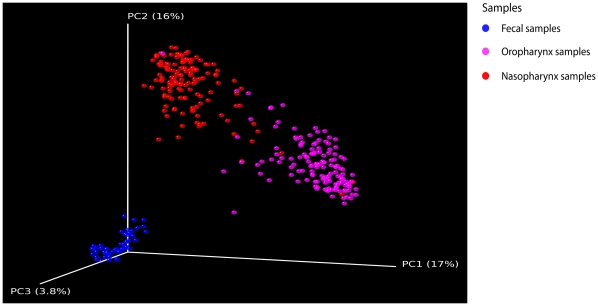
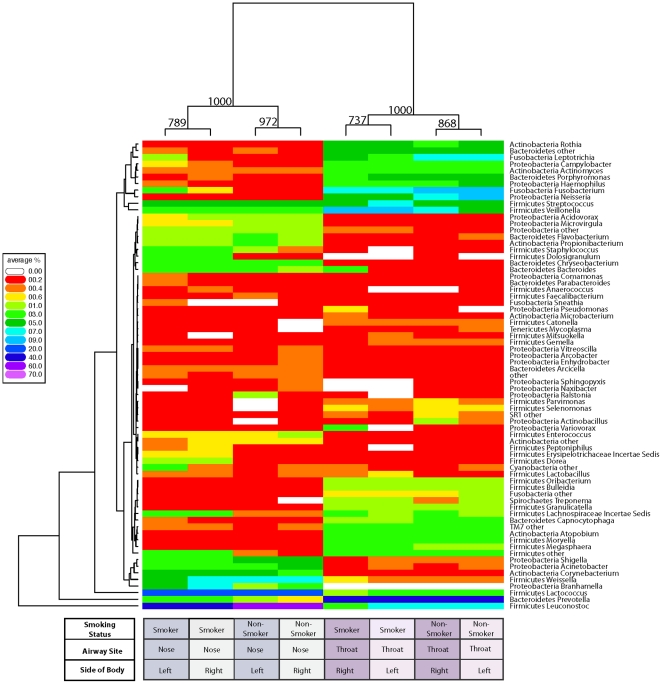
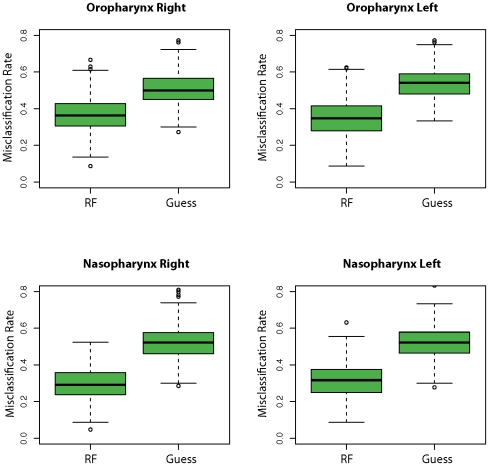
Cigarette smokers have an increased risk of infectious diseases involving the respiratory tract. Some effects of smoking on specific respiratory tract bacteria have been described, but the consequences for global airway microbial community composition have not been determined. Here, we used culture-independent high-density sequencing to analyze the microbiota from the right and left nasopharynx and oropharynx of 29 smoking and 33 nonsmoking healthy asymptomatic adults to assess microbial composition and effects of cigarette smoking. Bacterial communities were profiled using 454 pyrosequencing of 16S sequence tags (803,391 total reads), aligned to 16S rRNA databases, and communities compared using the UniFrac distance metric. A Random Forest machine-learning algorithm was used to predict smoking status and identify taxa that best distinguished between smokers and nonsmokers. Community composition was primarily determined by airway site, with individuals exhibiting minimal side-of-body or temporal variation. Within airway habitats, microbiota from smokers were significantly more diverse than nonsmokers and clustered separately. The distributions of several genera were systematically altered by smoking in both the oro- and nasopharynx, and there was an enrichment of anaerobic lineages associated with periodontal disease in the oropharynx. These results indicate that distinct regions of the human upper respiratory tract contain characteristic microbial communities that exhibit disordered patterns in cigarette smokers, both in individual components and global structure, which may contribute to the prevalence of respiratory tract complications in this population.
Overview
The claims and statistics of this paper haven’t been checked yet.
Free: it reads the open-access text and checks the first 5 claims that cite a source we can check. Create a free account to check every claim.
Integrity signals
Registry
Cites
Statistics
Figures
Verification
Claims the paper makes
The claims and statistics of this paper haven’t been checked yet.
Free: it reads the open-access text and checks the first 5 claims that cite a source we can check. Create a free account to check every claim.
Claims other papers make about this one
Each is checked against this paper’s own text: does it say what the citing paper says it does?
The source backs part of the claim, not all of it — or backs it for a different population, condition or comparison.
In the citing paper
“The oropharynx, which is lined with a non-keratinized stratified squamous epithelium, has more diverse bacterial communities than the nasopharynx41, which are characterized by streptococcal species, Neisseria spp., Rothia spp. and anaerobes, including Veillonella spp., Prevotella spp. and Leptotrichia spp.39,41,51,52.”
From The microbiota of the respiratory tract: gatekeeper to respiratory health (2017) · cites this paper as [41]
Experimental — accuracy not yet measuredThe cited source says what the claim attributes to it.
In the citing paper
“Active smoking also affects the microbial communities in the URT37,41; however, in the LRT, smoking has no clear influence on the composition of the microbiota42.”
From The microbiota of the respiratory tract: gatekeeper to respiratory health (2017) · cites this paper as [41]
Self-check
Percentages, sums and reported differences re-computed from the paper’s own numbers.
The self-check needs the paper’s full text.
Citations
Cites
QIIME allows analysis of high-throughput community sequencing data
Caporaso, J. G., Kuczynski, J., Stombaugh, J., Bittinger, K., Bushman, F. D., Costello, E. K., Fierer, N., Peña, A. G., Goodrich, J. K., Gordon, J. I., et al. (2010) · Nature Methods · doi:10.1038/nmeth.f.303 · Cited by 34,887 · cited 1×
“Denoised sequences were analyzed using the Qiime pipeline [24], in which sequences were clustered at 97% sequence identity into operational taxonomic units (OTUs, also called phylotypes) and assigned a taxonomic identity by alignment to the RDP reference 16S rRNA database [25].”
MethodSelf-citationSearch and clustering orders of magnitude faster than BLAST
Edgar, R. C. (2010) · Bioinformatics · doi:10.1093/bioinformatics/btq461 · Cited by 20,826
Naïve Bayesian Classifier for Rapid Assignment of rRNA Sequences into the New Bacterial Taxonomy
Wang, Q., Garrity, G. M., Tiedje, J. M., & Cole, J. R. (2007) · Applied and Environmental Microbiology · doi:10.1128/aem.00062-07 · Cited by 19,885 · cited 2×
“Denoised sequences were analyzed using the Qiime pipeline [24], in which sequences were clustered at 97% sequence identity into operational taxonomic units (OTUs, also called phylotypes) and assigned a taxonomic identity by alignment to the RDP reference 16S rRNA database [25].”
MethodFastTree 2 – Approximately Maximum-Likelihood Trees for Large Alignments
Price, M. N., Dehal, P. S., & Arkin, A. P. (2010) · PLoS ONE · doi:10.1371/journal.pone.0009490 · Cited by 14,894
UniFrac: a New Phylogenetic Method for Comparing Microbial Communities
Lozupone, C., & Knight, R. (2005) · Applied and Environmental Microbiology · doi:10.1128/aem.71.12.8228-8235.2005 · Cited by 8,227 · cited 3×
“QIIME generates data summaries of the proportions of identified taxa in each community and calculates the amount of bacterial diversity shared between two communities using the UniFrac metric [26].”
MethodA core gut microbiome in obese and lean twins
Turnbaugh, P. J., Hamady, M., Yatsunenko, T., Cantarel, B. L., Duncan, A., Ley, R. E., Sogin, M. L., Jones, W. J., Roe, B. A., Affourtit, J. P., et al. (2009) · Nature · doi:10.1038/nature07540 · Cited by 7,823
PyNAST: a flexible tool for aligning sequences to a template alignment
Caporaso, J. G., Bittinger, K., Bushman, F. D., DeSantis, T. Z., Andersen, G. L., & Knight, R. (2010) · Bioinformatics · doi:10.1093/bioinformatics/btp636 · Cited by 3,396 · cited 1×
“, aligned to full length 16S rRNA sequences with PyNAST”
BackgroundSelf-citationBacterial Community Variation in Human Body Habitats Across Space and Time
Costello, E. K., Lauber, C. L., Hamady, M., Fierer, N., Gordon, J. I., & Knight, R. (2009) · Science · doi:10.1126/science.1177486 · Cited by 3,231 · cited 5×
“7%, consistent with previous reports surveying the throat and oral cavity [18,19,29,35].”
BackgroundResultInfluentialTopographical and Temporal Diversity of the Human Skin Microbiome
Grice, E. A., Kong, H. H., Conlan, S., Deming, C. B., Davis, J., Young, A. C., Program, N. C. S., Bouffard, G. G., Blakesley, R. W., Murray, P. R., et al. (2009) · Science · doi:10.1126/science.1171700 · Cited by 2,953
Lozupone, C. A., Hamady, M., Kelley, S. T., & Knight, R. (2007) · Applied and Environmental Microbiology · doi:10.1128/aem.01996-06 · Cited by 2,656 · cited 1×
“UniFrac [26,52] was used to measure beta diversity between all pairs of bacterial communities, including both an unweighted (considers only presence or absence of lineages to assess community membership) and a weighted analysis (includes relative abundances of lineages to assess community structure).”
MethodDisordered Microbial Communities in Asthmatic Airways
Hilty, M., Burke, C., Pedro, H., Cardenas, P., Bush, A., Bossley, C., Davies, J., Ervine, A., Poulter, L., Pachter, L., et al. (2010) · PLoS ONE · doi:10.1371/journal.pone.0008578 · Cited by 1,824 · cited 2×
“7%, consistent with previous reports surveying the throat and oral cavity [18,19,29,35].”
BackgroundResultDefining the healthy “core microbiome” of oral microbial communities
Zaura, E., Keijser, B. J., Huse, S. M., & Crielaard, W. (2009) · BMC Microbiology · doi:10.1186/1471-2180-9-259 · Cited by 1,323 · cited 1×
“7%, consistent with previous reports surveying the throat and oral cavity [18,19,29,35].”
ResultJakobsson, H. E., Jernberg, C., Andersson, A. F., Sjölund-Karlsson, M., Jansson, J. K., & Engstrand, L. (2010) · PLoS ONE · doi:10.1371/journal.pone.0009836 · Cited by 1,160 · cited 2×
“7%, consistent with previous reports surveying the throat and oral cavity [18,19,29,35].”
ResultA diversity profile of the human skin microbiota
Grice, E. A., Kong, H. H., Renaud, G., Young, A. C., Bouffard, G. G., Blakesley, R. W., Wolfsberg, T. G., Turner, M. L., & Segre, J. A. (2008) · Genome Research · doi:10.1101/gr.075549.107 · Cited by 1,024 · cited 1×
“This distribution of phyla is similar to, yet distinct from prior 16S rRNA sequencing studies of the anterior nares, which reported comparable groups [18,31,32] but a higher abundance of Actinobacteria more similar to skin microbiota [33,34], perhaps because we sampled posterior nasopharyngeal organisms in addition to…”
ResultCigarette Smoking and Infection
Arcavi, L., & Benowitz, N. L. (2004) · Archives of Internal Medicine · doi:10.1001/archinte.164.20.2206 · Cited by 1,020 · cited 1×
“Cigarette smoke may promote pathogenic microbial colonization by enhancing bacterial binding to oral epithelial cells [4], disrupting effective nasal mucociliary clearance [5,6], or impairing host immune responses against pathogens [7].”
BackgroundAccurate determination of microbial diversity from 454 pyrosequencing data
Quince, C., Lanzén, A., Curtis, T. P., Davenport, R. J., Hall, N., Head, I. M., Read, L. F., & Sloan, W. T. (2009) · Nature Methods · doi:10.1038/nmeth.1361 · Cited by 1,000 · cited 2×
“Pyrosequence reads were denoised with the denoising algorithim described by Quince et al [23,44], including removing sequences with a mean window quality score ,25.”
MethodRapidly denoising pyrosequencing amplicon reads by exploiting rank-abundance distributions
Reeder, J., & Knight, R. (2010) · Nature Methods · doi:10.1038/nmeth0910-668b · Cited by 678 · cited 1×
“Pyrosequence reads were denoised with the denoising algorithim described by Quince et al [23,44], including removing sequences with a mean window quality score ,25.”
MethodKumar, P. S., Griffen, A. L., Moeschberger, M. L., & Leys, E. J. (2005) · Journal of Clinical Microbiology · doi:10.1128/jcm.43.8.3944-3955.2005 · Cited by 487 · cited 1×
“, an anaerobic gram negative lineage of the Firmicutes phyla which are known to reside in the oral cavity and is associated with periodontitis [38].”
BackgroundMolecular analysis of the gut microbiota of identical twins with Crohn's disease
Dicksved, J., Halfvarson, J., Rosenquist, M., Järnerot, G., Tysk, C., Apajalahti, J., Engstrand, L., & Jansson, J. K. (2008) · The ISME Journal · doi:10.1038/ismej.2008.37 · Cited by 459 · cited 1×
“Such analyses implicate global alterations of microbial communities in the pathogenesis of asthma [19], cystic fibrosis [20], obesity [21,22], and Crohn’s disease [22].”
BackgroundAirway Microbiota and Pathogen Abundance in Age-Stratified Cystic Fibrosis Patients
Cox, M. J., Allgaier, M., Taylor, B., Baek, M. S., Huang, Y. J., Daly, R. A., Karaoz, U., Andersen, G. L., Brown, R., Fujimura, K. E., et al. (2010) · PLoS ONE · doi:10.1371/journal.pone.0011044 · Cited by 451 · cited 2×
“Such analyses implicate global alterations of microbial communities in the pathogenesis of asthma [19], cystic fibrosis [20], obesity [21,22], and Crohn’s disease [22].”
BackgroundWu, G. D., Lewis, J. D., Hoffmann, C., Chen, Y.-Y., Knight, R., Bittinger, K., Hwang, J., Chen, J., Berkowsky, R., Nessel, L., et al. (2010) · BMC Microbiology · doi:10.1186/1471-2180-10-206 · Cited by 389
Self-citationUncultivated Bacteria as Etiologic Agents of Intra-Amniotic Inflammation Leading to Preterm Birth
Han, Y. W., Shen, T., Chung, P., Buhimschi, I. A., & Buhimschi, C. S. (2009) · Journal of Clinical Microbiology · doi:10.1128/jcm.01206-08 · Cited by 345 · cited 1×
“, that have been linked to human disease in clinical case reports [36] and only recently have been associated with the airways microbiota by culture-independent surveys [20,37].”
BackgroundCigarette Smoking Increases the Risk for Subgingival Infection With Periodontal Pathogens
Zambon, J. J., Grossi, S. G., Machtei, E. E., Ho, A. W., Dunford, R., & Genco, R. J. (1996) · Journal of Periodontology · doi:10.1902/jop.1996.67.10s.1050 · Cited by 334 · cited 3×
“To date, the effects of cigarette smoke on altering microbial colonization have been characterized in greatest detail in the subgingival environment, especially as it relates to periodontitis [14,15,17,43].”
BackgroundComparative analyses of the bacterial microbiota of the human nostril and oropharynx
Lemon, K. P., Klepac-Ceraj, V., Schiffer, H. K., Brodie, E. L., Lynch, S. V., & Kolter, R. (2010) · mBio · doi:10.1128/mbio.00129-10 · Cited by 322
Diversity and seasonal dynamics of bacterial community in indoor environment
Rintala, H., Pitkaranta, M., Toivola, M., Paulin, L., & Nevalainen, A. (2008) · BMC Microbiology · doi:10.1186/1471-2180-8-56 · Cited by 291 · cited 1×
“have been associated with indoor dust in previous literature [48,49,50].”
Subgingival Microbial Profiles of Smokers with Periodontitis
Shchipkova, A. Y., Nagaraja, H. N., & Kumar, P. S. (2010) · Journal of Dental Research · doi:10.1177/0022034510377203 · Cited by 250 · cited 2×
“To date, the effects of cigarette smoke on altering microbial colonization have been characterized in greatest detail in the subgingival environment, especially as it relates to periodontitis [14,15,17,43].”
BackgroundSmoking Affects the Subgingival Microflora in Periodontitis
van Winkelhoff, A. J., Bosch‐Tijhof, C. J., Winkel, E. G., & van der Reijden, W. A. (2001) · Journal of Periodontology · doi:10.1902/jop.2001.72.5.666 · Cited by 227 · cited 2×
“To date, the effects of cigarette smoke on altering microbial colonization have been characterized in greatest detail in the subgingival environment, especially as it relates to periodontitis [14,15,17,43].”
BackgroundKlepac‐Ceraj, V., Lemon, K. P., Martin, T. R., Allgaier, M., Kembel, S. W., Knapp, A. A., Lory, S., Brodie, E. L., Lynch, S. V., Bohannan, B. J. M., et al. (2010) · Environmental Microbiology · doi:10.1111/j.1462-2920.2010.02173.x · Cited by 218 · cited 1×
“in the oropharynx [19,29,30].”
Effect of cigarette smoking on nasal mucociliary clearance and ciliary beat frequency.
Stanley, P. J., Wilson, R., Greenstone, M. A., MacWilliam, L., & Cole, P. J. (1986) · Thorax · doi:10.1136/thx.41.7.519 · Cited by 164 · cited 1×
“Cigarette smoke may promote pathogenic microbial colonization by enhancing bacterial binding to oral epithelial cells [4], disrupting effective nasal mucociliary clearance [5,6], or impairing host immune responses against pathogens [7].”
BackgroundCrowe, C. C., Sanders, W. E., & Longley, S. (1973) · Journal of Infectious Diseases · doi:10.1093/infdis/128.4.527 · Cited by 162 · cited 2×
“The ability of indigenous upper airway flora to interfere with pathogen colonization also plays an important role in microbial community homeostasis [10,11,12] and airway health.”
BackgroundHuman Pathogens Abundant in the Bacterial Metagenome of Cigarettes
Sapkota, A. R., Berger, S., & Vogel, T. M. (2010) · Environmental Health Perspectives · doi:10.1289/ehp.0901201 · Cited by 142
Cigarette Smoke Exposure Impairs Respiratory Epithelial Ciliogenesis
Tamashiro, E., Xiong, G., Anselmo-Lima, W. T., Kreindler, J. L., Palmer, J. N., & Cohen, N. A. (2009) · American Journal of Rhinology & Allergy · doi:10.2500/ajra.2009.23.3280 · Cited by 133 · cited 1×
“Cigarette smoke may promote pathogenic microbial colonization by enhancing bacterial binding to oral epithelial cells [4], disrupting effective nasal mucociliary clearance [5,6], or impairing host immune responses against pathogens [7].”
BackgroundThe effect of cigarette smoke on adherence of respiratory pathogens to buccal epithelial cells
Ahmer, O. R., Essery, S. D., Saadi, A. T., Raza, M. W., Ogilvie, M. M., Weir, D. M., & Blackwell, C. C. (1999) · FEMS Immunology & Medical Microbiology · doi:10.1111/j.1574-695x.1999.tb01713.x · Cited by 131 · cited 1×
“Cigarette smoke may promote pathogenic microbial colonization by enhancing bacterial binding to oral epithelial cells [4], disrupting effective nasal mucociliary clearance [5,6], or impairing host immune responses against pathogens [7].”
BackgroundTurkeltaub, P. C., & Gergen, P. J. (1991) · PubMed · Cited by 125
A poke into the diversity and associations within human anterior nare microbial communities
Wos-Oxley, M. L., Plumeier, I., von Eiff, C., Taudien, S., Platzer, M., Vilchez-Vargas, R., Becker, K., & Pieper, D. H. (2010) · The ISME Journal · doi:10.1038/ismej.2010.15 · Cited by 123 · cited 2×
“This study also sampled a relatively large number of participants (n = 62) compared to earlier studies [18,31,32].”
ResultPredominance of Gram‐positive bacteria in house dust in the low‐allergy risk Russian Karelia
Pakarinen, J., Hyvärinen, A., Salkinoja‐Salonen, M., Laitinen, S., Nevalainen, A., Mäkelä, M. J., Haahtela, T., & Von Hertzen, L. (2008) · Environmental Microbiology · doi:10.1111/j.1462-2920.2008.01723.x · Cited by 122 · cited 1×
“have been associated with indoor dust in previous literature [48,49,50].”
Microbial content of house dust samples determined with qPCR
Kaarakainen, P., Rintala, H., Vepsäläinen, A., Hyvärinen, A., Nevalainen, A. I., & Meklin, T. (2009) · The Science of The Total Environment · doi:10.1016/j.scitotenv.2009.04.046 · Cited by 109 · cited 1×
“have been associated with indoor dust in previous literature [48,49,50].”
Natural populations of lactic acid bacteria isolated from vegetable residues and silage fermentation
Yang, J., Cao, Y., Cai, Y., & Terada, F. (2010) · Journal of Dairy Science · doi:10.3168/jds.2009-2898 · Cited by 108 · cited 1×
“have also been associated with environmental habitats [51].”
BackgroundAssociation Between Cigarette Smoking and Acute Respiratory Tract Illness in Young Adults
Aronson, M. D. (1982) · JAMA: The Journal of the American Medical Association · doi:10.1001/jama.1982.03330020025023 · Cited by 106 · cited 1×
“Cigarette smoking is associated with an increased risk of acute respiratory tract infections [1,2].”
BackgroundMicrobial diversity in the sputum of a cystic fibrosis patient studied with 16S rDNA pyrosequencing
Armougom, F., Bittar, F., Stremler, N., Rolain, J., Robert, C., Dubus, J. ‐., Sarles, J., Raoult, D., & Scola, B. L. (2009) · European Journal of Clinical Microbiology & Infectious Diseases · doi:10.1007/s10096-009-0749-x · Cited by 104 · cited 1×
“, that have been linked to human disease in clinical case reports [36] and only recently have been associated with the airways microbiota by culture-independent surveys [20,37].”
BackgroundThe Differential Effect of Cigarette Smoke on the Growth of Bacteria Found in Humans
Ertel, A., Eng, R. H. K., & Smith, S. M. R. (1991) · CHEST Journal · doi:10.1378/chest.100.3.628 · Cited by 102 · cited 1×
“[8].”
Resident aerobic microbiota of the adult human nasal cavity
Rasmussen, T. T., Kirkeby, L. P., Poulsen, K., Reinholdt, J., & Kilian, M. (2000) · APMIS · doi:10.1034/j.1600-0463.2000.d01-13.x · Cited by 100 · cited 1×
“, in the nasopharynx [28] and Neisseria, Haemophilus, and anaerobic lineages such as Prevotella, Veillonella, and Fusobacterium spp.”
BackgroundBrook, I., & Gober, A. E. (2005) · CHEST Journal · doi:10.1378/chest.127.6.2072 · Cited by 100
Bloodstream and endovascular infections due to Abiotrophia defectiva and Granulicatellaspecies
Senn, L., Entenza, J. M., Greub, G., Jaton, K., Wenger, A., Billé, J., Calandra, T., & Prod’hom, G. (2006) · BMC Infectious Diseases · doi:10.1186/1471-2334-6-9 · Cited by 92 · cited 1×
“, which can be isolated from dental plaque [41,42] and is an occasional cause of bacterial endocarditis [42].”
BackgroundThe Role of Bacterial Interference in Otitis, Sinusitis and Tonsillitis
Brook, I. (2005) · Otolaryngology–Head and Neck Surgery · doi:10.1016/j.otohns.2005.03.012 · Cited by 91 · cited 1×
“In contrast, the Peptostreptococcus genera was decreased in smokers, which may be significant because several species are implicated as an interfering bacteria, known to inhibit growth of pathogenic bacteria in the upper respiratory tract [39].”
BackgroundCharacterisation of Eubacterium-like strains isolated from oral infections
Downes, J., Munson, M. A., Spratt, D. A., Könönen, E., Tarkka, E., Jousimies-Somer, H. R., & Wade, W. G. (2001) · Journal of Medical Microbiology · doi:10.1099/0022-1317-50-11-947 · Cited by 86 · cited 1×
“have been previously associated with active oral infections [40].”
BackgroundBacterial Interference among Strains of Staphylococcus aureus in Man
Aly, R., Maibach, H. I., Shinefield, H. R., Mandel, A., & Strauss, W. G. (1974) · Journal of Infectious Diseases · doi:10.1093/infdis/129.6.720 · Cited by 73 · cited 2×
“The ability of indigenous upper airway flora to interfere with pathogen colonization also plays an important role in microbial community homeostasis [10,11,12] and airway health.”
BackgroundBrook, I., & Gober, A. E. (1995) · Archives of Otolaryngology - Head and Neck Surgery · doi:10.1001/archotol.1995.01890120061012 · Cited by 67
Brook, I., & Gober, A. E. (2008) · Annals of Otology Rhinology & Laryngology · doi:10.1177/000348940811701003 · Cited by 66 · cited 1×
“Both active smoking in adults and passive exposure to cigarette smoke in children is associated with increased carriage of pathogenic organisms in the upper airways [3].”
BackgroundSmoking Cessation Alters Subgingival Microbial Recolonization
Fullmer, S. C., Preshaw, P. M., Heasman, P. A., & Kumar, P. S. (2009) · Journal of Dental Research · doi:10.1177/0022034509338676 · Cited by 62 · cited 3×
“To date, the effects of cigarette smoke on altering microbial colonization have been characterized in greatest detail in the subgingival environment, especially as it relates to periodontitis [14,15,17,43].”
BackgroundEffect of Smoking Cessation on the Microbial Flora
Brook, I., & Gober, A. E. (2007) · Archives of Otolaryngology - Head and Neck Surgery · doi:10.1001/archotol.133.2.135 · Cited by 51 · cited 1×
“a greater number of health-associated organisms and fewer potential pathogens in both the nasopharynx [16] and subgingiva [17].”
BackgroundAbiotrophia species in early dental plaque
Mikkelsen, L. S., Theilade, E., & Poulsen, K. (2000) · Oral Microbiology and Immunology · doi:10.1034/j.1399-302x.2000.150409.x · Cited by 47 · cited 1×
“, which can be isolated from dental plaque [41,42] and is an occasional cause of bacterial endocarditis [42].”
Background
Cited by
Waste Not, Want Not: Why Rarefying Microbiome Data Is Inadmissible
McMurdie, P. J., & Holmes, S. (2014) · PLoS Computational Biology · doi:10.1371/journal.pcbi.1003531 · Cited by 2,921
“…of “rarefying to even sampling depth” as a standard normalization procedure appears to explain why rarefied counts are also used in studies that attempt to detect differential abundance of OTUs between prede-fined classes of samples [33–37], in addition to studies that use proportions directly [38].”
The microbiota of the respiratory tract: gatekeeper to respiratory health
Man, W. H., de Steenhuijsen Piters, W. A. A., & Bogaert, D. (2017) · Nature Reviews Microbiology · doi:10.1038/nrmicro.2017.14 · Cited by 1,384
Topographical Continuity of Bacterial Populations in the Healthy Human Respiratory Tract
Charlson, E. S., Bittinger, K., Haas, A. R., Fitzgerald, A. S., Frank, I., Yadav, A., Bushman, F. D., & Collman, R. G. (2011) · American Journal of Respiratory and Critical Care Medicine · doi:10.1164/rccm.201104-0655oc · Cited by 1,144
“This pattern was similar to that reported previously in studies of oral flora (11, 13, 14, 32).”
BackgroundMethodResultSelf-citationAssociating microbiome composition with environmental covariates using generalized UniFrac distances
Chen, J., Bittinger, K., Charlson, E. S., Hoffmann, C., Lewis, J., Wu, G. D., Collman, R. G., Bushman, F. D., & Li, H. (2012) · Bioinformatics · doi:10.1093/bioinformatics/bts342 · Cited by 1,145
“The second set of simulations utilize a real upper respiratory tract microbiome dataset consisting of 60 samples and 856 OTUs from Charlson et al. (2010) (Fig.”
MethodSelf-citationSegata, N., Haake, S. K., Mannon, P., Lemon, K. P., Waldron, L., Gevers, D., Huttenhower, C., & Izard, J. (2012) · Genome Biology · doi:10.1186/gb-2012-13-6-r42 · Cited by 1,076
“Previous studies of the healthy adult digestive tract microbiota have typically included less than 20 individuals [11-21] and the studies with over 100 individuals have most often focused on a single body site [22-26].”
Background
Metadata
- Authors
- Charlson, E. S., Chen, J., Custers-Allen, R., Bittinger, K., Li, H., Sinha, R., Hwang, J., Bushman, F. D., & Collman, R. G.
- Affiliations
- University of Pennsylvania (US)
- Corresponding author
- Bushman, Frederic D.
- Collman, Ronald G.
- Venue
- PLoS ONE
- Publisher
- Public Library of Science (PLoS)
- Published
- 2010-12-20
- Volume
- 5
- Issue
- 12
- Pages
- e15216
- ISSN
- 1932-6203 (ISSN-L)
- PMC
- PMC3004851
- OpenAlex
- W2037878492
- Cited by
- 437
- References
- 52
- Citations by year
- 2026: 16 · 2025: 20 · 2024: 23 · 2023: 30 · 2022: 47 · 2021: 46 · 2020: 34 · 2019: 33 · 2018: 40 · 2017: 34 · 2016: 26 · 2015: 23 · 2014: 19 · 2013: 19 · 2012: 21
- FWCI
- 17.07
- Type
- journal article
- Language
- en
- Open access
- gold
- doi.org
- Locations
- PLoS ONE (publishedVersion, cc-by)
- PubMed Central (publishedVersion, cc-by)
- PubMed (publishedVersion)
- DOAJ (DOAJ: Directory of Open Access Journals) (submittedVersion, cc-by-sa)
- Figshare (submittedVersion, cc-by)
- Funders
- Pennsylvania Department of Health
- University of Pennsylvania
- National Institutes of Health
- National Heart, Lung, and Blood Institute (U01HL098957, U01 HL98957)
- National Institute of Allergy and Infectious Diseases (P30AI045008)
- Topics
- Health Sciences › Dentistry › Periodontics › Oral microbiology and periodontitis research
- Life Sciences › Biochemistry, Genetics and Molecular Biology › Molecular Biology › Gut microbiota and health
- Physical Sciences › Environmental Science › Ecology › Microbial Community Ecology and Physiology
- Keywords
- cigarette smoking, upper respiratory tract microbiota, nasopharynx, oropharynx, bacterial community composition, microbial diversity, anaerobic bacteria, periodontal disease, respiratory infections, smoking status prediction
- MeSH terms
- Adult, Algorithms, Artificial Intelligence, DNA, Bacterial, Female, Humans, Magnetics, Male, Middle Aged, Respiratory System, RNA, Ribosomal, 16S, Smoking, Bacterial Typing Techniques, Polymerase Chain Reaction, Sequence Analysis, DNA
About these checks
Registry, retraction, Cites and statistics results are computed, not judged, with one exception: a printed reference that no index lists is read once by a model before it counts as a citation error. Claims are extracted by a model and kept only when their quote appears verbatim in the text; each cited source is then checked, with a model’s help, for whether it says what the claim relies on. Those verdicts can be wrong — read the claim’s quote and the cited source before relying on one.
Statistics and arithmetic are recomputed, not judged.
Confidence bands are shown only for fields calibrated on our annotated test set. None is calibrated yet, so no band is shown.
What counts as a claim ›How we measure confidence ›How we check this ›
Are you an author, or do you see a problem with this page? Request a review
Data sources
Bibliographic data: Semantic Scholar, OpenAlex, Crossref.
Contains information from the Semantic Scholar Academic Graph Datasets, made available under the ODC Attribution License (ODC-BY 1.0).
Semantic Scholar’s data is described in: Kinney, R., et al. (2023). The Semantic Scholar Open Data Platform. arXiv:2301.10140.
