

Your Flaws Are My Pain: Linking Empathy To Vicarious Embarrassment
Open accessThe DOI matches its Crossref record; 44 of the 44 references it cites were found in a registry or an index.
Abstract
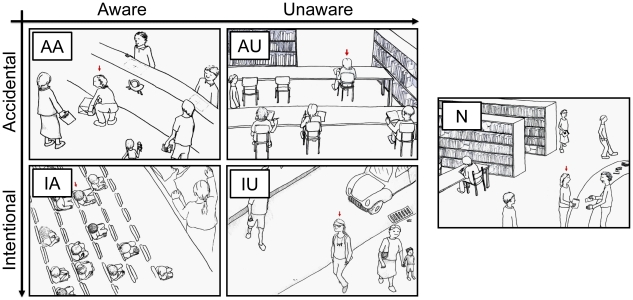
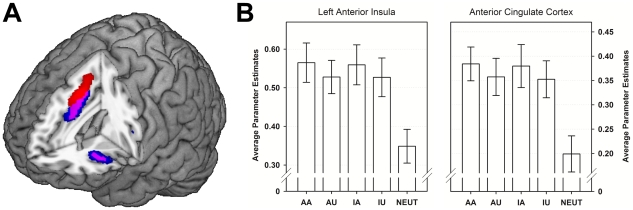
People vicariously experience embarrassment when observing others' public pratfalls or etiquette violations. In two consecutive studies we investigated the subjective experience and the neural correlates of vicarious embarrassment for others in a broad range of situations. We demonstrated, first, that vicarious embarrassment was experienced regardless of whether the observed protagonist acted accidentally or intentionally and was aware or unaware that he/she was in an embarrassing situation. Second, using functional magnetic resonance imaging (fMRI), we showed that the anterior cingulate cortex and the left anterior insula, two cortical structures typically involved in vicarious feelings of others' pain, are also strongly implicated in experiencing the 'social pain' for others' flaws and pratfalls. This holds true even for situations that engage protagonists not aware of their current predicament. Importantly, the activity in the anterior cingulate cortex and the left anterior insula positively correlated with individual differences in trait empathy. The present findings establish the empathic process as a fundamental prerequisite for vicarious embarrassment experiences, thus connecting affect and cognition to interpersonal processes."When we are living with people who have a delicate sense of propriety, we are in misery on their account when anything unbecoming is committed. So I always feel for and with Charlotte when a person is tipping his chair. She cannot endure it." [Elective Affinities, J. W. Goethe].
Overview
The claims and statistics of this paper haven’t been checked yet.
Free: it reads the open-access text and checks the first 5 claims that cite a source we can check. Create a free account to check every claim.
Integrity signals
Registry
Cites
Statistics
Figures
Verification
Claims the paper makes
The claims and statistics of this paper haven’t been checked yet.
Free: it reads the open-access text and checks the first 5 claims that cite a source we can check. Create a free account to check every claim.
Claims other papers make about this one
Each is checked against this paper’s own text: does it say what the citing paper says it does?
The cited source says what the claim attributes to it.
In the citing paper
“Apart from vicarious physical pain, the AI is also associated with feelings of embarrassment or social pain (Krach et al., 2011).”
From Connecting minds and sharing emotions through mimicry: A neurocognitive model of emotional contagion (2017) · cites this paper as Krach et al., 2011
Experimental — accuracy not yet measured
Self-check
Percentages, sums and reported differences re-computed from the paper’s own numbers.
The self-check needs the paper’s full text.
Citations
Cites
Measuring individual differences in empathy: Evidence for a multidimensional approach.
Davis, M. H. (1983) · Journal of Personality and Social Psychology · doi:10.1037/0022-3514.44.1.113 · Cited by 10,272 · cited 2×
“In line with conceptualizations of trait empathy as a multidimensional construct [27,28], the emotional facet of the E-Scale describes individual differences in the experience of another’s emotion, whereas the cognitive facet focuses on the mental act to take another’s perspective.”
Empathy for Pain Involves the Affective but not Sensory Components of Pain
Singer, T., Seymour, B., O'Doherty, J., Kaube, H., Dolan, R. J., & Frith, C. D. (2004) · Science · doi:10.1126/science.1093535 · Cited by 3,929 · cited 2×
“Based on research on empathy for pain and basic emotions we hypothesized that vicarious embarrassment would result in stronger activations in the anterior insula and the ACC as neural indicators for the ongoing empathic process [13,17].”
Moral Emotions and Moral Behavior
Tangney, J. P., Stuewig, J., & Mashek, D. J. (2007) · Annual Review of Psychology · doi:10.1146/annurev.psych.56.091103.070145 · Cited by 3,222 · cited 1×
“. However, with the presented data we show that these appeasement gestures do only partly (i.e. during AA situations) help to explain how empathic observers experience embarrassment for others' flaws or mishaps. We demonstrated that (i) even for situations in which protagonists are unaware of the embarrassing situatio…”
On Face-Work: An Analysis of Ritual Elements in Social Interaction
Goffman, E. (1955) · Psychiatry · doi:10.1080/00332747.1955.11023008 · Cited by 2,870
Psychological and neural mechanisms of the affective dimension of pain
Price, D. D. (2000) · Science · doi:10.1126/science.288.5472.1769 · Cited by 2,092 · cited 1×
“Functional magnetic resonance imaging (fMRI) studies report that affective-motivational components of the so called ‘pain matrix’ [7,8,9], the anterior insula and the anterior cingulate cortex (ACC), are most reliably involved in the compassionate feeling of pain [10,11,12,13,14,15,16,17].”
Social Cognitive Neuroscience: A Review of Core Processes
Lieberman, M. D. (2007) · Annual Review of Psychology · doi:10.1146/annurev.psych.58.110405.085654 · Cited by 2,010
The social neuroscience of empathy
Singer, T., & Lamm, C. (2009) · Annals of the New York Academy of Sciences · doi:10.1111/j.1749-6632.2009.04418.x · Cited by 1,981 · cited 2×
“The activation of both the left ACC (26 20 44) and the left anterior insula (-32 24 0) showed considerable overlap with the affective-motivational part of the ‘pain matrix’ [9,20].”
Empathic neural responses are modulated by the perceived fairness of others
Singer, T., Seymour, B., O'Doherty, J. P., Stephan, K. E., Dolan, R. J., & Frith, C. D. (2006) · Nature · doi:10.1038/nature04271 · Cited by 1,726 · cited 1×
“Recent fMRI studies could show that the neural response to another person’s physical pain was modulated by the observer’s appraisals due to prior interactions with a protagonist [31] or own professional experience [32].”
Are shame, guilt, and embarrassment distinct emotions?
Tangney, J. P., Miller, R. S., Flicker, L., & Barlow, D. H. (1996) · Journal of Personality and Social Psychology · doi:10.1037/0022-3514.70.6.1256 · Cited by 1,556
Perspective Taking as Egocentric Anchoring and Adjustment.
Epley, N., Keysar, B., Van Boven, L., & Gilovich, T. (2004) · Journal of Personality and Social Psychology · doi:10.1037/0022-3514.87.3.327 · Cited by 1,315 · cited 1×
“This process is far from perfect and rather egocentric than focused merely on the feelings of the observed person [25], and may account for situations that evoke vicarious embarrassment in observers even when the fact of the norm violating incident is not accessible to the observed protagonist himself/ herself.”
Cited by
Toward a second-person neuroscience
Schilbach, L., Timmermans, B., Reddy, V., Costall, A., Bente, G., Schlicht, T., & Vogeley, K. (2013) · Behavioral and Brain Sciences · doi:10.1017/s0140525x12000660 · Cited by 1,510
Bernhardt, B. C., & Singer, T. (2012) · Annual Review of Neuroscience · doi:10.1146/annurev-neuro-062111-150536 · Cited by 952
The neurobiology of rewards and values in social decision making
Ruff, C. C., & Fehr, E. (2014) · Nature reviews. Neuroscience · doi:10.1038/nrn3776 · Cited by 716
Connecting minds and sharing emotions through mimicry: A neurocognitive model of emotional contagion
Prochazkova, E., & Kret, M. E. (2017) · Neuroscience & Biobehavioral Reviews · doi:10.1016/j.neubiorev.2017.05.013 · Cited by 433
“Apart from vicarious physical pain, the AI is also associated with feelings of embarrassment or social pain (Krach et al., 2011).”
The neural correlates of empathy: experience, automaticity, and prosocial behavior
Rameson, L. T., Morelli, S. A., & Lieberman, M. D. (2012) · Journal of Cognitive Neuroscience · doi:10.1162/jocn_a_00130 · Cited by 279
An appraisal theory of empathy and other vicarious emotional experiences.
Wondra, J. D., & Ellsworth, P. C. (2015) · Psychological Review · doi:10.1037/a0039252 · Cited by 243
Prosocial Conformity: Prosocial Norms Generalize Across Behavior and Empathy
Nook, E. C., Ong, D. C., Morelli, S. A., Mitchell, J. P., & Zaki, J. (2016) · Personality and Social Psychology Bulletin · doi:10.1177/0146167216649932 · Cited by 186
Arioli, M., Cattaneo, Z., Ricciardi, E., & Canessa, N. (2021) · Human Brain Mapping · doi:10.1002/hbm.25570 · Cited by 189
“…others' emotional and sensory feelings, including pain (Wu et al., 2019) compassion (Mercadillo, Diaz, Pasaye, & Barrios, 2011), embarrassment (Krach et al., 2011), and exclusion (Beeney, Franklin Jr., Levy, & Adams Jr., 2011), which however are perceived as distinct from one's own ones…”
BackgroundThe past, present and future of social neuroscience: A European perspective
Singer, T. (2012) · NeuroImage · doi:10.1016/j.neuroimage.2012.01.109 · Cited by 153
“…(for an overview see Lamm et al., 2011), and (e) AI and ACC are involved in first-hand, as well as vicarious, experiences of social pain such as social rejection in the absence of any nociceptive stimulation (Eisenberger et al., 2003; Masten et al., 2011) and embarrassment (Krach et al., 2011).”
BackgroundThe neuroscience of social feelings: mechanisms of adaptive social functioning
Eslinger, P. J., Anders, S., Ballarini, T., Boutros, S., Krach, S., Mayer, A. V., Moll, J., Newton, T. L., Schroeter, M. L., de Oliveira-Souza, R., et al. (2021) · Neuroscience & Biobehavioral Reviews · doi:10.1016/j.neubiorev.2021.05.028 · Cited by 130
“Scenes associated with Fremdscham (compared to neutral scenes) elicited activity in the left insula and anterior cingulate cortex, and trait empathy correlated with activation parameters in those regions (Krach et al., 2011; Paulus et al., 2015) (Fig.”
Self-citationThe Moral brain: a multidisciplinary perspective
Decety, J., & Wheatley, T. (2015) · Choice Reviews Online · doi:10.5860/choice.192126 · Cited by 110
Hoogland, C. E., Schurtz, D. R., Cooper, C. M., Combs, D. J. Y., Brown, E. G., & Smith, R. H. (2014) · Motivation and Emotion · doi:10.1007/s11031-014-9447-9 · Cited by 103
“Possibly, another person’s physical pain is more likely to create immediate empathy, for example (but see Krach et al. 2011).”
BackgroundStructural basis of empathy and the domain general region in the anterior insular cortex
Mutschler, I., Reinbold, C., Wankerl, J., Seifritz, E., & Ball, T. (2013) · Frontiers in Human Neuroscience · doi:10.3389/fnhum.2013.00177 · Cited by 92
Krach, S., Kamp‐Becker, I., Einhäuser, W., Sommer, J., Frässle, S., Jansen, A., Rademacher, L., Müller‐Pinzler, L., Gazzola, V., & Paulus, F. M. (2015) · Human Brain Mapping · doi:10.1002/hbm.22949 · Cited by 87
Self-citationNeural pathways of embarrassment and their modulation by social anxiety
Müller-Pinzler, L., Gazzola, V., Keysers, C., Sommer, J., Jansen, A., Frässle, S., Einhäuser, W., Paulus, F. M., & Krach, S. (2015) · NeuroImage · doi:10.1016/j.neuroimage.2015.06.036 · Cited by 85
“…has been suggested to be a unique combination of (a) one's failure and related arousal on the one hand, and (b) mentalizing about how this failure will damage the opinion that others have of oneself on the other hand (Krach et al., 2011; Miller, 1996; Paulus et al., 2014; Tangney et al., 2007).”
BackgroundSelf-citationWesselmann, E. D., Williams, K. D., & Hales, A. H. (2013) · Frontiers in Human Neuroscience · doi:10.3389/fnhum.2013.00153 · Cited by 79
“To our knowledge there have been no vicarious rejection studies, but based on the extant data on vicarious ostracism and other social pain (e.g., vicarious embarrassment; Krach et al., 2011), it is likely that observing rejection would have similar vicarious effects.”
BackgroundMentalizing during social InterAction: A four component model
Wu, H., Liu, X., Hagan, C. C., & Mobbs, D. (2020) · Cortex · doi:10.1016/j.cortex.2019.12.031 · Cited by 87
Mindfulness meditation regulates anterior insula activity during empathy for social pain.
Laneri, D., Krach, S., Paulus, F. M., Kanske, P., Schuster, V., Sommer, J., & Müller‐Pinzler, L. (2017) · Human Brain Mapping · doi:10.1002/hbm.23646 · Cited by 61
Self-citationMentalizing and the Role of the Posterior Superior Temporal Sulcus in Sharing Others' Embarrassment
Paulus, F. M., Müller-Pinzler, L., Jansen, A., Gazzola, V., & Krach, S. (2015) · Cerebral Cortex · doi:10.1093/cercor/bhu011 · Cited by 57
“The results for the behavioral data indicate strong embarrassment from the perceivers’ perspective in response to all modeled situations (Krach et al. 2011).”
BackgroundMethodInfluentialSelf-citationOn the distinction of empathic and vicarious emotions
Paulus, F. M., Müller-Pinzler, L., Westermann, S., & Krach, S. (2013) · Frontiers in Human Neuroscience · doi:10.3389/fnhum.2013.00196 · Cited by 55
“We have previously discussed how mentalizing can result in vicarious emotions that do not match the emotional state of the social target (Krach et al., 2011).”
BackgroundInfluentialSelf-citationIrony and Empathy in Children with Traumatic Brain Injury
Dennis, M., Simić, N., Agostino, A., Taylor, H. G., Bigler, E. D., Rubin, K. H., Vannatta, K. A., Gerhardt, C. A., Stancin, T., & Yeates, K. O. (2013) · Journal of the International Neuropsychological Society · doi:10.1017/s1355617712001440 · Cited by 62
“…such as lending money to friends (e.g., Rameson et al., 2012); selfreported altruism (e.g., Tankersley et al., 2007); vicarious embarrassment (Krach et al., 2011); vicarious rewards (e.g., Mobbs et al., 2009); response to others’ pain (e.g., Hein et al., 2010; Singer et al., 2004; Olsson et…”
BackgroundInfluentialSinger, T., & Tusche, A. (2013) · Elsevier eBooks · doi:10.1016/b978-0-12-416008-8.00027-9 · Cited by 54
Uncover the Offensive Side of Disparagement Humor: An fMRI Study
Bartolo, A., Ballotta, D., Nocetti, L., Baraldi, P., Nichelli, P., & Benuzzi, F. (2021) · Frontiers in Psychology · doi:10.3389/fpsyg.2021.750597 · Cited by 45
Müller‐Pinzler, L., Rademacher, L., Paulus, F. M., & Krach, S. (2015) · Social Cognitive and Affective Neuroscience · doi:10.1093/scan/nsv130 · Cited by 59
“According to our expectations and prior studies on vicarious embarrassment (Krach et al. , 2011; Paulus et al. , 2015), we found stronger shared circuits activity in the ACC [ t (302) ¼ 6.09, P < 0.001; corrected for whole brain analyses] and the AI [ t (302) ¼ 6.34, P < 0.001; corrected for whole…”
InfluentialSelf-citationViewing socio-affective stimuli increases connectivity within an extended default mode network
Göttlich, M., Ye, Z., Rodríguez‐Fornells, A., Münte, T. F., & Krämer, U. M. (2017) · NeuroImage · doi:10.1016/j.neuroimage.2016.12.044 · Cited by 45
“The AI was not included in the work of these authors but has often been reported with respect to empathic responses to various emotions as pain, disgust or embarrassment (Jackson et al., 2005; Krämer et al., 2010; Krach et al., 2011; Zaki and Ochsner, 2012).”
BackgroundThe Social Neuroscience of Interpersonal Emotions
Müller‐Pinzler, L., Krach, S., Krämer, U. M., & Paulus, F. M. (2016) · Current topics in behavioral neurosciences · doi:10.1007/7854_2016_437 · Cited by 51
“We experience vicarious embarrassment even if the observed person is not embarrassed himself or herself, for example, when we observe someone accidentally walking down the street with an open fly (Krach et al. 2011; Müller-Pinzler et al. 2012; Paulus et al. 2013a).”
BackgroundSelf-citationProjecting my envy onto you: Neurocognitive mechanisms of an offline emotional egocentricity bias
Steinbeis, N., & Singer, T. (2014) · NeuroImage · doi:10.1016/j.neuroimage.2014.08.007 · Cited by 48
“We extend this to show that such mechanisms are also at work for higher level social emotions (Krach et al., 2011) that arise out of social comparison, such as such as envy and Schadenfreude.”
BackgroundPiretti, L., Pappaianni, E., Garbin, C., Rumiati, R. I., Job, R., & Grecucci, A. (2023) · Brain Sciences · doi:10.3390/brainsci13040559 · Cited by 51
“, 2011 [45] Induction Vignettes Vicarious embarrassment > neutral 9 32 (17) Krach et al.”
BackgroundKilian, T., Steinmann, S., & Hammes, E. K. (2017) · Psychology and Marketing · doi:10.1002/mar.21072 · Cited by 53
“and away, downcast eyes, diminished posture, and blushing have been identified as universally recognized gestures (Krach et al., 2011).”
BackgroundResultInfluentialWith love, from me to you: Embedding social interactions in affective neuroscience
Gilam, G., & Hendler, T. (2016) · Neuroscience & Biobehavioral Reviews · doi:10.1016/j.neubiorev.2016.06.027 · Cited by 43
Painfully Funny: Cringe Comedy, Benign Masochism, and Not-So-Benign Violations
Hye‐Knudsen, M. (2018) · Leviathan Interdisciplinary Journal in English · doi:10.7146/lev.v0i2.104693 · Cited by 45
“When we observe someone violating a social norm, even a fictional character, we are consequently disposed to experience vicarious embarrassment on their behalf (Krach et al. 2010).”
BackgroundThe Relationship between Experienced and Imagined Bicycling Comfort and Safety
Fitch, D. T., & Handy, S. (2018) · Transportation Research Record Journal of the Transportation Research Board · doi:10.1177/0361198118787635 · Cited by 33
Alexithymia and Empathy Predict Changes in Autonomic Arousal During Affective Stimulation
Bogdanov, V. B., Bogdanova, O. V., Gorlov, D. S., Gorgo, Y. P., Dirckx, J. J. J., Makarchuk, M. Y., Schoenen, J., & Critchley, H. (2013) · Cognitive and Behavioral Neurology · doi:10.1097/wnn.0000000000000002 · Cited by 32
“Individual differences in emotional empathy are related to differences in the reactivity of the anterior cingulate and insular cortices (Krach et al, 2011; Masten et al, 2011; Pfeifer et al, 2008) in a manner similar to alterations in the reactivity reported in some studies of alexithymia (Berthoz…”
ResultReality TV and vicarious embarrassment: An fMRI study
Melchers, M., Markett, S. A., Montag, C., Trautner, P., Weber, B., Lachmann, B., Buss, P., Heinen, R. M., & Reuter, M. (2015) · NeuroImage · doi:10.1016/j.neuroimage.2015.01.022 · Cited by 40
“To our knowledge, there are only two studies, one by Krach et al. (2011) and another by Paulus et al. (2014), explicitly investigating the neural bases of VE in healthy adults.”
BackgroundResultInfluentialPaulus, F. M., Krach, S., Blanke, M., Roth, C., Belke, M., Sommer, J. B., Müller‐Pinzler, L., Menzler, K., Jansen, A., Rosenow, F., et al. (2015) · Cortex · doi:10.1016/j.cortex.2015.01.018 · Cited by 36
“…as sharing happiness (Jabbi & Keysers, 2008; Mobbs et al., 2009), disgust (Jabbi, Bastiaansen, & Keysers, 2008; Wicker et al., 2003) or social pain (Krach et al., 2011; Paulus, Müller-Pinzler, et al., 2014) with significant consequences for interpersonal behavior: the fMRI response pattern…”
BackgroundSelf-citationEmpathy-Related Responses to Depicted People in Art Works
Kesner, L., & Horáček, J. (2017) · Frontiers in Psychology · doi:10.3389/fpsyg.2017.00228 · Cited by 39
“…studies on empathy for pain or social pain that utilized distinctly unnaturalistic stimuli such as computergenerated figures (Masten et al., 2011; Meyer et al., 2013, 2015) or sketches (Krach et al., 2011), yet caused participants to perceive others as active, salient, and significant persons.”
BackgroundThe Space Between: How Empathy Really Works
Maibom, H. L. (2022) · doi:10.1093/oso/9780197637081.001.0001 · Cited by 50
Veldhuis, T. M., Gordijn, E., Veenstra, R., & Lindenberg, S. M. (2014) · PLoS ONE · doi:10.1371/journal.pone.0095421 · Cited by 39
“Similar results have been found for vicarious embarrassment [30].”
ResultPlaying with Mental Models: Analysing the humour in the BBC series the office
de Jongste, H. (2020) · Topics in humor research · doi:10.1075/thr.9 · Cited by 28
Sittenthaler, S., Traut‐Mattausch, E., & Jonas, E. (2015) · Frontiers in Psychology · doi:10.3389/fpsyg.2015.01052 · Cited by 34
Thoma, P., & Bellebaum, C. (2012) · Frontiers in Human Neuroscience · doi:10.3389/fnhum.2012.00135 · Cited by 28
“…during the first-hand experience of pain or other aversive emotions and during the mere observation of someone else experiencing these events with the strength of this overlapping ACC activity correlating positively with self-reported trait empathy (e.g., Singer et al., 2004; Krach et al., 2011).”
BackgroundSocial Behavior from Rodents to Humans: Neural Foundations and Clinical Implications
Wöhr, M., & Krach, S. (2017) · Current topics in behavioral neurosciences · doi:10.1007/978-3-319-47429-8 · Cited by 38
Self-citationThe (un)learning of social functions and its significance for mental health
Flechsenhar, A., Kanske, P., Krach, S., Korn, C. W., & Bertsch, K. (2022) · Clinical Psychology Review · doi:10.1016/j.cpr.2022.102204 · Cited by 35
Self-citationPaulus, F. M., Müller‐Pinzler, L., Stolz, D. S., Mayer, A. V., Rademacher, L., & Krach, S. (2017) · Neuropsychologia · doi:10.1016/j.neuropsychologia.2017.05.030 · Cited by 35
“More recently, we could show that fremdscham is experienced even if the observed protagonist is not embarrassed him- or herself, for example in “spinach-in-the-teeth” kind of situations (Krach et al., 2011; Müller-Pinzler et al., 2012; Paulus et al., 2015a, 2013).”
InfluentialSelf-citationIncreased autonomic activation in vicarious embarrassment
Müller‐Pinzler, L., Paulus, F. M., Stemmler, G., & Krach, S. (2012) · International Journal of Psychophysiology · doi:10.1016/j.ijpsycho.2012.07.183 · Cited by 32
“Krach et al. (2011) extended this approach by showing that observers experience vicarious embarrassment in a much broader variety of situations that expose protagonists to the publicwhile violating etiquette and normative social standards.”
BackgroundInfluentialSelf-citationEmpathic Embarrassment Accuracy in Autism Spectrum Disorder
Adler, N., Dvash, J., & Shamay‐Tsoory, S. (2015) · Autism Research · doi:10.1002/aur.1439 · Cited by 29
Mayer, A. V., Wermter, A.-K., Stroth, S., Alter, P., Haberhausen, M., Stehr, T., Paulus, F. M., Krach, S., & Kamp-Becker, I. (2021) · Scientific Reports · doi:10.1038/s41598-021-94407-x · Cited by 23
Self-citationHooft, J. J. V. ’., Pijnenburg, Y. A. L., Sikkes, S. A. M., Scheltens, P., Spikman, J. M., Jaschke, A. C., Warren, J. D., & Tijms, B. M. (2021) · Brain and Cognition · doi:10.1016/j.bandc.2020.105660 · Cited by 32
Shen, Q., Jin, J. K., & Ma, Q. (2013) · Behavioural Brain Research · doi:10.1016/j.bbr.2013.08.043 · Cited by 23
A Psychological Perspective on Vicarious Embarrassment and Shame in the Context of Cringe Humor
Mayer, A. V., Paulus, F. M., & Krach, S. (2021) · Humanities · doi:10.3390/h10040110 · Cited by 36
Self-citationToward Application and Testing of Measurement Scales and an Example
Kuppelwieser, V. G., Putinas, A.-C., & Bastounis, M. (2017) · Sociological Methods & Research · doi:10.1177/0049124117701486 · Cited by 24
Paulus, F. M., Müller‐Pinzler, L., Meshi, D., Peng, T., Mateo, M. M., & Krach, S. (2019) · Frontiers in Communication · doi:10.3389/fcomm.2019.00011 · Cited by 20
“In other words, regarding the latter case, the observed person is aware of the potential threat to their social integrity but proceeded to violate social norms on purpose (Krach et al., 2011).”
BackgroundSelf-citationPaulus, F. M., Kamp‐Becker, I., & Krach, S. (2013) · Research in Developmental Disabilities · doi:10.1016/j.ridd.2013.01.009 · Cited by 24
Self-citationIntroduction to Painful Laughter: Media and Politics in the Age of Cringe
Schwanebeck, W. (2021) · Humanities · doi:10.3390/h10040123 · Cited by 18
Empathy in Females With Autism Spectrum Disorder
Stroth, S., Paye, L., Kamp‐Becker, I., Wermter, A., Krach, S., Paulus, F. M., & Müller‐Pinzler, L. (2019) · Frontiers in Psychiatry · doi:10.3389/fpsyt.2019.00428 · Cited by 24
“NS in a sample of subjects without ASD (23): ACC, left AI, and thalamus.”
BackgroundResultInfluentialSelf-citationWitnessing verbal aggression: role of customers’ self-conscious emotions
Okan, M., & Elmadağ, A. B. (2020) · Journal of Services Marketing · doi:10.1108/jsm-01-2019-0037 · Cited by 17
Bang, H. (2013) · Mid-western educational researcher · Cited by 17
Advancing the neuroscience of social emotions with social immersion
Krach, S., Müller‐Pinzler, L., Westermann, S., & Paulus, F. M. (2013) · Behavioral and Brain Sciences · doi:10.1017/s0140525x12001951 · Cited by 17
Self-citationSpiegel, T. J. (2023) · Social Epistemology · doi:10.1080/02691728.2023.2268588 · Cited by 13
“…for someone else, i.e. that they are the same emotion just held by a different person so to speak (e.g. Kilian, Steinmann, and Hammes 2018, 81f.; Krach et al. 2011; Mayer, Paulus, and Krach 2021, 3; Müller-Pinzler et al. 2016; cf. also Hye-Knudsen 2018; Welten, Zeelenberg, and Breugelmans…”
Empathy: From Perception to Understanding and Feeling Others' Emotions
Genzer, S., Adiva, Y. B., & Perry, A. (2023) · Cambridge University Press eBooks · doi:10.1017/9781009281072 · Cited by 31
Structural Differences in Insular Cortex Reflect Vicarious Injustice Sensitivity
Baumgärtner, T., Saulin, A., Hein, G., & Knoch, D. (2016) · PLoS ONE · doi:10.1371/journal.pone.0167538 · Cited by 13
“…to their results, observing injustice to others is associated with neural activation in the mid and anterior insular cortex [20,21], in line with a large body of work that has linked this region to other vicarious experiences such as pain [22,23], embarrassment [24,25], or ostracism [26,27].”
ResultMayer, A. V., Müller‐Pinzler, L., Krach, S., & Paulus, F. M. (2020) · Cortex · doi:10.1016/j.cortex.2020.06.001 · Cited by 13
Self-citationFerguson, H. J., Lillo, M. D., Woodrow-Hill, C., Foley, R., & Bradford, E. E. F. (2024) · Social Cognitive and Affective Neuroscience · doi:10.1093/scan/nsae080 · Cited by 17
“Moreover, based on recent research that has examined neural responses to vicarious social pain (Krach et al. 2011, 2015, Fraser et al. 2020, Flasbeck et al. 2023), we predicted that this pain versus no-pain difference would be elicited by both physical and social content, but expected to see…”
Observe, Ask, Intervene: Designing AI Agents for More Inclusive Meetings
Houtti, M., Zhou, M., Terveen, L., & Chancellor, S. (2025) · CHI Conference on Human Factors in Computing Systems · doi:10.1145/3706598.3713838 · Cited by 30
“This may have been caused by vicarious embarrassment [53]—i.e., under-participators may feel uncomfortable with someone else being “called out” in their presence.”
Consumer embarrassment: A systematic literature review and research agenda
Sangwan, V., & Maity, M. (2024) · International Journal of Consumer Studies · doi:10.1111/ijcs.13035 · Cited by 12
The linguistic sources of offense of taboo terms in German Sign Language
Loos, C., Cramer, J.-M., & Napoli, D. J. (2019) · Cognitive Linguistics · doi:10.1515/cog-2018-0077 · Cited by 10
Designer Empathy in Virtual Reality: transforming the Designer Experience closer to the User
Grech, A., Wodehouse, A., & Brisco, R. (2023) · International Association of Societies of Design Research Congress (IASDR) · doi:10.21606/iasdr.2023.380 · Cited by 15
“enhanced when users are experiencing humiliation or ridicule (Krach et al., 2011), however, this was found to be detrimental to creativity and such scenarios were more prone to design fixation (Janes & Olson, 2010).”
BackgroundPark, S., Healey, P. G. T., & Kaniadakis, A. (2021) · CHI Conference on Human Factors in Computing Systems · doi:10.1145/3411764.3445561 · Cited by 11
“, [53, 54]), the positive emotional engagement between the embarrassed individual and others who express vicarious embarrassment have not been recognized in design or robotics literatures.”
BackgroundLatent value in humiliation: A design thinking tool to enhance empathy in creative ideation
Svihla, V., & Kachelmeier, L. (2021) · International Journal of Design Creativity and Innovation · doi:10.1080/21650349.2021.1976677 · Cited by 11
“This somewhat contradicts past research showing that envisioning ridicule of someone else can negatively impact creativity (Janes & Olson, 2010) but enhance empathy (Krach et al., 2011), and that supports for empathy sometimes come at a cost to creativity (Gray et al., 2015).”
BackgroundResultRomantic Relationships: Do Socially Anxious Individuals Benefit?
Gordon, E. A., Heimberg, R. G., Montesi, J. L., & Fauber, R. L. (2012) · Cognitive Behaviour Therapy · doi:10.1080/16506073.2012.656275 · Cited by 20
“…anxious individuals may become concerned about how their partner is behaving, either because they would experience empathic embarrassment (e.g. Krach et al., 2003) should their partner behave in an undesirable fashion, or because they would fear negative evaluation themselves because of their…”
BackgroundValidation and correlates of the vicarious embarrassment scale
Uysal, A., Akbaş, G., Helvacı, E., & Metin-Orta, I. (2014) · Personality and Individual Differences · doi:10.1016/j.paid.2013.12.015 · Cited by 8
Personal and Vicarious Embarrassability: Common and Unique Personality Correlates
Thompson, T. (2014) · Journal of Individual Differences · doi:10.1027/1614-0001/a000122 · Cited by 10
“Recent studies examining vicarious/empathic embarrassability have found associations of trait empathy with increased empathic embarrassment reactions as measured by self-report ratings and neural activity (Krach et al., 2011; Stocks, Lishner, Waits, & Downum, 2011).”
BackgroundVicarious Embarrassment or “Fremdscham”: Overendorsement in Frontotemporal Dementia
Mendez, M. F., Yerstein, O., & Jimenez, E. E. (2019) · Journal of Neuropsychiatry · doi:10.1176/appi.neuropsych.19030053 · Cited by 8
Versammlungen in Krisenzeiten – Eine Typologie anhand des Konfliktverlaufs
Hetze, W. (2020) · Springer eBooks · doi:10.1007/978-3-658-28347-6_8 · Cited by 8
Li, W., Wei, Z., Wu, J., Song, R., Liu, J., & Cui, F. (2025) · Social Cognitive and Affective Neuroscience · doi:10.1093/scan/nsaf015 · Cited by 8
Ziegler, A. H., Allen, A. M., Peloza, J., & Norris, J. I. (2023) · Journal of Consumer Behaviour · doi:10.1002/cb.2266 · Cited by 7
Avoiding attention: The impact of embarrassment on preference for low-saturation design
Zhang, X., Wang, J., Gong, X., & Cheng, S. (2024) · Journal of Business Research · doi:10.1016/j.jbusres.2024.114900 · Cited by 7
de Guzman, A. B., Mesana, J. C. B., & Roman, J. A. M. (2021) · Educational Gerontology · doi:10.1080/03601277.2021.1881868 · Cited by 11
Empathy as a Desideratum in Health Care – Normative Claim or Professional Competence?
Breyer, T., & Storms, A. (2021) · Interdisciplinary Journal for Religion and Transformation in Contemporary Society · doi:10.30965/23642807-bja10028 · Cited by 7
The nature of vicarious embarrassment
Ziegler, A. H., Allen, A. M., Peloza, J., & Norris, J. I. (2022) · Journal of Business Research · doi:10.1016/j.jbusres.2022.08.038 · Cited by 10
Chen, B., Li, Y., Hu, B. A., & Tao, Y. E. (2024) · IEEE International Symposium on Mixed and Augmented Reality Adjunct (ISMAR-Adjunct) · doi:10.1109/ismar-adjunct64951.2024.00041 · Cited by 5
Carving Stories at their Natural JointsPreprint
Dubourg, E., Thouzeau, V., Beuchot, T., Bonard, C., Boyer, P., Chevallier, C., Clasen, M., Boon-Falleur, M., Fiorio, G., Fitouchi, L., et al. (2026) · OSF Preprints (OSF Preprints) · doi:10.31219/osf.io/me6bz · Cited by 12
The temporal course of vicarious embarrassment: An electrophysiological study
Cao, Y., Qing, W., Gui, S., & Li, F. (2020) · Social Neuroscience · doi:10.1080/17470919.2020.1754288 · Cited by 5
“Krach et al. (2011) found that bystanders could experience VE regardless of whether the protagonist was acting accidentally or intentionally and was aware or unaware of the embarrassing situation.”
BackgroundInfluentialNetworked Collective Actions: The Making of an Impeachment
Seo, H. (2021) · doi:10.1093/oso/9780197538883.001.0001 · Cited by 8
Facial Expressions in Empathy Research
Regenbogen, C., & Habel, U. (2014) · Springer eBooks · doi:10.1007/978-81-322-1934-7_6 · Cited by 8
Chen, T., Qiu, Y., Gan, R., Du, Y., Zhang, Y., Lin, S. T., Li, X., & Huang, R. (2025) · Neuroscience & Biobehavioral Reviews · doi:10.1016/j.neubiorev.2025.106200 · Cited by 4
The relationship between insecure attachment and shame: A Meta-analysis
Jiang, X., Zhang, Y., Wu, C., Liu, D., & Zhang, J. (2025) · Personality and Individual Differences · doi:10.1016/j.paid.2025.113585 · Cited by 3
That's So Cringeworthy! Understanding What Cringe Is and Why We Want to Share It
Escoe, B., Martin, N. S., & Salerno, A. G. (2024) · Journal of Marketing Research · doi:10.1177/00222437241305104 · Cited by 7
“Whereas the excusable appraisal from empathetic embarrassment should lead to compassion toward the actor (Krach et al. 2011; Müller-Pinzler et al. 2012), the inexcusable appraisal of cringe should cause the observer to blame the actor for the uncomfortable social situation and demonstrate less…”
InfluentialChen, J., Wei, J., Shang, P., Wang, X., & Zhang, J. (2016) · International Journal of Psychology · doi:10.1002/ijop.12288 · Cited by 4
Pain(less) cleansing: Watching other people in pain reduces guilt and sadness but not shame
Bocian, K., & Baryła, W. (2020) · PLoS ONE · doi:10.1371/journal.pone.0244429 · Cited by 3
“Experience of shame is associated with increased activation in the ACC [47, 48] the same brain region, which is active when people experience physical pain, social pain and when they observe pain in others.”
BackgroundMarks, S. (2018) · Vandenhoeck & Ruprecht eBooks · doi:10.13109/9783788732493.19 · Cited by 3
The Cognitive Basis of Social Interaction Across the Lifespan: An Introduction
Ferguson, H. J. (2021) · Oxford University Press eBooks · doi:10.1093/oso/9780198843290.003.0001 · Cited by 6
Neuronal pathways of embarrassment
Krach, S., Müller‐Pinzler, L., Rademacher, L., Stolz, D. S., & Paulus, F. M. (2016) · e-Neuroforum · doi:10.1007/s13295-016-0024-4 · Cited by 6
“the scientific literature “vicarious embarrassment” [5].”
Self-citationLive theatre as exception and test case for experiencing negative emotions in art
Goldstein, T. R. (2017) · Behavioral and Brain Sciences · doi:10.1017/s0140525x17001704 · Cited by 2
VICARIOUS EMBARRASSMENT SCALE: MORE OF CULTURE THAN EMPATHY
Budiarto, Y., Faturochman, F., & Lufityanto, G. (2023) · Psychological Thought · doi:10.37708/psyct.v16i1.739 · Cited by 2
“As a result, the social target is ignorant of the continual dangers to their social integrity (Krach et al., 2011).”
InfluentialJankowski, K. F., & Pfeifer, J. H. (2020) · PsyArXiv (OSF Preprints) · doi:10.31234/osf.io/uj4tv · Cited by 2
The Poetics and Politics of Invective Humor: Disparagement in Contemporary Female-Led US Sitcoms
Schulze, K. (2022) · American culture studies · doi:10.1515/9783839462607 · Cited by 1
Specifying designers’ empathy experiences in virtual reality: a literature review
Grech, A., Wodehouse, A., Brisco, R., March, J. J., & Hamilton, D. (2025) · International Journal of Design Creativity and Innovation · doi:10.1080/21650349.2025.2592710 · Cited by 2
“An increase in empathy was noted when users experienced ridicule or humiliation and was associated with vicarious embarrassment (Krach et al., 2011).”
Reinhardt, J., & Rötter, G. (2012) · Musiktherapeutische Umschau · doi:10.13109/muum.2012.33.3.233 · Cited by 1
Sewol Ferry Disaster: Growing Anger Toward President Park
Seo, H. (2021) · Oxford University Press eBooks · doi:10.1093/oso/9780197538883.003.0005 · Cited by 1
Metadata
- Authors
- Krach, S., Cohrs, J. C., de Echeverría Loebell, N. C., Kircher, T., Sommer, J., Jansen, A., & Paulus, F. M.
- Affiliations
- Philipps University of Marburg (DE)
- Queen's University Belfast (GB)
- Corresponding author
- Krach, Sören
- Venue
- PLoS ONE
- Publisher
- Public Library of Science (PLoS)
- Published
- 2011-04-13
- Volume
- 6
- Issue
- 4
- Pages
- e18675
- ISSN
- 1932-6203 (ISSN-L)
- PMC
- PMC3076433
- OpenAlex
- W2078512233
- Cited by
- 179
- References
- 44
- Citations by year
- 2026: 10 · 2025: 8 · 2024: 12 · 2023: 7 · 2022: 26 · 2021: 27 · 2020: 26 · 2019: 4 · 2018: 5 · 2017: 10 · 2016: 8 · 2015: 9 · 2014: 8 · 2013: 12 · 2012: 6
- FWCI
- 11.75
- Type
- journal article
- Language
- en
- Open access
- gold
- doi.org
- Locations
- PLoS ONE (publishedVersion, cc-by)
- Europe PMC (PubMed Central) (publishedVersion, cc-by)
- PubMed Central (publishedVersion, cc-by)
- PubMed (publishedVersion)
- DOAJ (DOAJ: Directory of Open Access Journals) (submittedVersion)
- Figshare (submittedVersion, cc-by)
- Research Portal (Queen's University Belfast) (submittedVersion)
- Topics
- Social Sciences › Psychology › Social Psychology › Emotions and Moral Behavior
- Social Sciences › Psychology › Social Psychology › Action Observation and Synchronization
- Life Sciences › Neuroscience › Cognitive Neuroscience › Neural and Behavioral Psychology Studies
- Keywords
- empathy, social pain, anterior cingulate cortex, anterior insula, trait empathy, neural correlates of empathy, affect and cognition
- MeSH terms
- Adult, Empathy, Female, Humans, Magnetic Resonance Imaging, Male
About these checks
Registry, retraction, Cites and statistics results are computed, not judged, with one exception: a printed reference that no index lists is read once by a model before it counts as a citation error. Claims are extracted by a model and kept only when their quote appears verbatim in the text; each cited source is then checked, with a model’s help, for whether it says what the claim relies on. Those verdicts can be wrong — read the claim’s quote and the cited source before relying on one.
Statistics and arithmetic are recomputed, not judged.
Confidence bands are shown only for fields calibrated on our annotated test set. None is calibrated yet, so no band is shown.
What counts as a claim ›How we measure confidence ›How we check this ›
Are you an author, or do you see a problem with this page? Request a review
Data sources
Bibliographic data: Semantic Scholar, OpenAlex, Crossref.
Contains information from the Semantic Scholar Academic Graph Datasets, made available under the ODC Attribution License (ODC-BY 1.0).
Semantic Scholar’s data is described in: Kinney, R., et al. (2023). The Semantic Scholar Open Data Platform. arXiv:2301.10140.
