

The DOI matches its Crossref record; 1 of the 1 references it cites were found in a registry or an index.
Looking the Part: Social Status Cues Shape Race Perception
Overview
The claims and statistics of this paper haven’t been checked yet.
Run the check — free, no account needed. It reads the open-access text and checks the sources it cites.
Integrity signals
Registry
Cites
Statistics
Figures
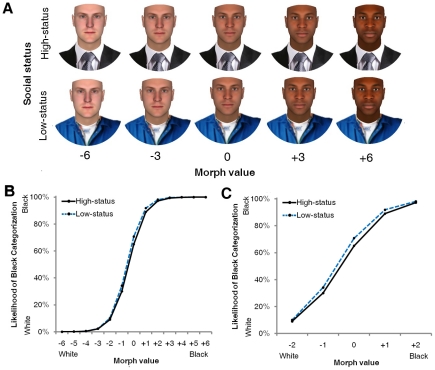
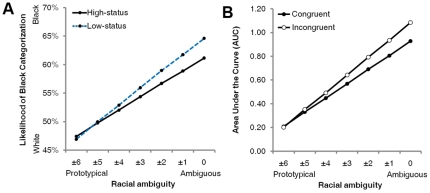
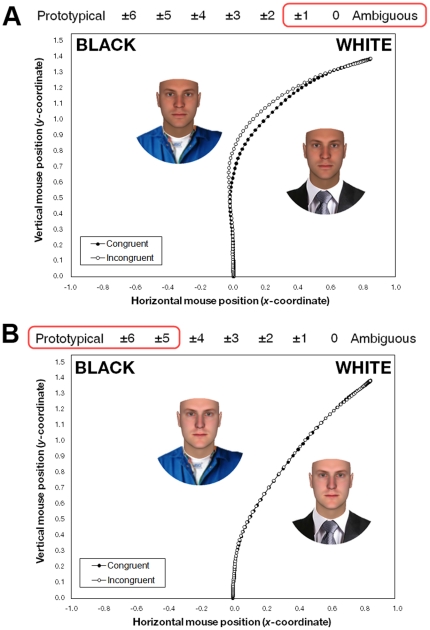
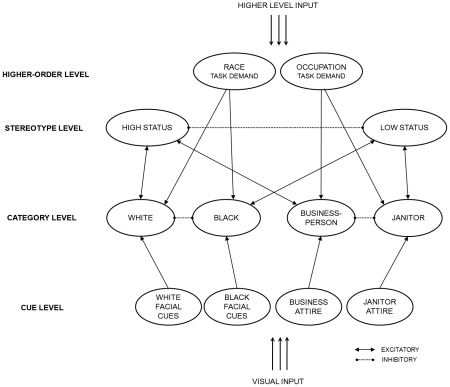
Verification
Claims the paper makes
The claims and statistics of this paper haven’t been checked yet.
Run the check — free, no account needed. It reads the open-access text and checks the sources it cites.
Claims other papers make about this one
Each is checked against this paper’s own text: does it say what the citing paper says it does?
The cited source says what the claim attributes to it.
In the citing paper
“Characteristics such as names (Gaddis 2017; Fryer and Levitt 2004; Luh 2022; Bertrand and Mullainathan 2004), clothing (Freeman et al. 2011), occupation (Freeman et al. 2011), skin tone (Monk 2021; Gyimah-Brempong and Price 2006; Naik and Farrukh 2022; Noe-Bustamante et al. 2021; Davenport 2020; Dixon and Telles 2017), and other physical features (Blair et al. 2002) can impact the perception of an”
From Race and Ethnicity (Mis)measurement in the U.S. Criminal Justice System (2024) · cites this paper as Freeman et al. 2011
Self-check
Percentages, sums and reported differences re-computed from the paper’s own numbers.
The self-check needs the paper’s full text.
Citations
Cites
Stereotypes and prejudice: Their automatic and controlled components
Devine, P. G. (1989) · Journal of Personality and Social Psychology · doi:10.1037/0022-3514.56.1.5 · Cited by 5,673
Research works printed but not linked: 40
- CN Macrae, 2000, Social cognition: Thinking categorically about others., Annual Review of Psychology, 51, 93, 10.1146/annurev.psych.51.1.93 · DOI
- H Hill, 1995, Perceiving the sex and race of faces: The role of shape and colour., Proceedings of the Royal Society of London Series B: Biological Sciences, 261, 367, 10.1098/rspb.1995.0161 · DOI
- ST Fiske, 1990, A continuum model of impression formation from category-based to individuating processes: Influences of information and motivation on attention and interpretation., Advances in Experimental Social Psychology, 23, 1, 10.1016/S0065-2601(08)60317-2 · DOI
- J Hurwitz, 2005, Explaining the great racial divide: Perceptions of fairness in the U.S. criminal justice system., Journal of Politics, 67, 762, 10.1111/j.1468-2508.2005.00338.x · DOI · Paper page
- M Gilens, 1999, Why Americans hate welfare: Race, media, and the politics of antipoverty policy, 10.7208/chicago/9780226293660.001.0001 · DOI
- AM Penner, 2008, How social status shapes race., Proceedings of the National Academy of Sciences of the United States of America, 105, 19628, 10.1073/pnas.0805762105 · DOI
- A Noymer, 2011, Cause of death affects racial classification on death certificates., Plos ONE, 6, e15812, 10.1371/journal.pone.0015812 · DOI
- JL Eberhardt, 2003, Believing is seeing: The effects of racial labels and implicit beliefs on face perception., Personality and Social Psychology Bulletin, 29, 360, 10.1177/0146167202250215 · DOI
- E Castano, 2002, Who may enter? The impact of in-group identification on in-group/out-group categorization., Journal of Experimental Social Psychology, 38, 315, 10.1006/jesp.2001.1512 · DOI
- JL Eberhardt, 2004, Seeing Black: Race, crime, and visual processing., Journal of Personality and Social Psychology, 87, 876, 10.1037/0022-3514.87.6.876 · DOI · Paper page
- OH MacLin, 2001, Racial categorization of faces: The ambiguous-race face effect., Psychology, Public Policy and Law, 7, 98, 10.1037/1076-8971.7.1.98 · DOI
- PG Schyns, 1998, Diagnostic recognition, task constraints, object information, and their interactions., Cognition, 67, 147, 10.1016/S0010-0277(98)00016-X · DOI
- JB Freeman, 2011, A dynamic interactive theory of person construal., Psychological Review, 118, 247, 10.1037/a0022327 · DOI
- PL Smith, 2004, Psychology and neurobiology of simple decisions., Trends in Neurosciences, 27, 161, 10.1016/j.tins.2004.01.006 · DOI · Paper page
- M Usher, 2003, The time course of perceptual choice: The leaky, competing accumulator model., Psychological Review, 108, 550, 10.1037/0033-295X.108.3.550 · DOI · Paper page
- MJ Spivey, 2006, Continuous dynamics in real-time cognition., Current Directions in Psychological Science, 15, 207, 10.1111/j.1467-8721.2006.00437.x · DOI
- JB Freeman, 2010, Continuous dynamics in the real-time perception of race., Journal of Experimental Social Psychology, 46, 179, 10.1016/j.jesp.2009.10.002 · DOI
- JB Freeman, 2008, Will a category cue attract you? Motor output reveals dynamic competition across person construal., Journal of Experimental Psychology: General, 137, 673, 10.1037/a0013875 · DOI
- S Grossberg, 1980, How does a brain build a cognitive code?, Psychological Review, 87, 1, 10.1037/0033-295X.87.1.1 · DOI
- D Peery, 2008, Black+White = Black: Hypodescent in reflexive categorization of racially ambiguous faces., Psychological Science, 19, 973, 10.1111/j.1467-9280.2008.02185.x · DOI
- JB Freeman, 2011, Hand in motion reveals mind in motion., Frontiers in Psychology, 2, 59, 10.3389/fpsyg.2011.00059 · DOI
- SL Zeger, 1986, Longitudinal Data Analysis for Discrete and Continuous Outcomes., Biometrics, 42, 121, 10.2307/2531248 · DOI
- JL McClelland, 1991, Stochastic interactive processes and the effect of context on perception., Cognitive Psychology, 23, 1, 10.1016/0010-0285(91)90002-6 · DOI
- TT Rogers, 2004, Semantic Cognition: A Parallel Distributed Processing Approach, 10.7551/mitpress/6161.001.0001 · DOI
- DT Levin, 2002, Categorical perception of race., Perception, 31, 567, 10.1068/p3315 · DOI
- IV Blair, 2004, The Automaticity of Race and Afrocentric Facial Features in Social Judgments., Journal of Personality and Social Psychology, 87, 763, 10.1037/0022-3514.87.6.763 · DOI
- RB Adams, 2010, The Science of Social Vision, 10.1093/acprof:oso/9780195333176.001.0001 · DOI
- E Balcetis, 2010, The Social Psychology of Visual Perception, 10.4324/9780203848043 · DOI
- RH Fazio, 2001, On the automatic activation of associated evaluations: An overview., Cognition and Emotion, 15, 115, 10.1080/02699930125908 · DOI
- JA Bargh, 1996, Automaticity of social behavior: Direct effects of trait construct and stereotype activation on action., Journal of Personality and Social Psychology, 71, 230, 10.1037/0022-3514.71.2.230 · DOI · Paper page
- NJ Ratcliff, 2011, The allure of status: High-status targets are privileged in face processing and memory., Personality and Social Psychology Bulletin, 37, 1003, 10.1177/0146167211407210 · DOI
- K Hugenberg, 2004, Ambiguity in Social Categorization: The role of prejudice and facial affect in race categorization., Psychological Science, 15, 342, 10.1111/j.0956-7976.2004.00680.x · DOI
- AK Ho, 2011, Evidence for hypodescent and racial hierarchy in the categorization and perception of biracial individuals., Journal of Personality and Social Psychology, 100, 492, 10.1037/a0021562 · DOI
- J Halberstadt, 2011, Why Barack Obama is Black: A cognitive account of hypodescent., Psychological Science, 22, 29, 10.1177/0956797610390383 · DOI
- LA Hirschfeld, 1995, The inheritability of identity: Children's understanding of the cultural biology of race., Child Development, 66, 1418, 10.2307/1131655 · DOI
- K Pauker, 2009, Not so Black and White: Memory for ambiguous group members., Journal of Personality and Social Psychology, 96, 795, 10.1037/a0013265 · DOI
- K Sexton, 1993, Air pollution health risks: do class and race matter?, Toxicology and Industrial Health, 9, 843, 10.1177/074823379300900509 · DOI
- V Blanz, 1999, A morphable model for the synthesis of 3D faces. SIGGRAPH'99, 187
- JB Freeman, 2010, MouseTracker: Software for studying real-time mental processing using a computer mouse-tracking method., Behavior Research Methods, 42, 226, 10.3758/BRM.42.1.226 · DOI
- ER Smith, 1992, Exemplar-based model of social judgment., Psychological Review, 99, 3, 10.1037/0033-295X.99.1.3 · DOI
Cited by
Sorted by citations
On the Opportunities and Risks of Foundation Models
Bommasani, R., Hudson, D. A., Adeli, E., Altman, R., Arora, S., von Arx, S., Bernstein, M. S., Bohg, J., Bosselut, A., Brunskill, E., et al. (2021) · arXiv · doi:10.48550/arxiv.2108.07258 · Cited by 2,676
Perceiving the World Through Group-Colored Glasses: A Perceptual Model of Intergroup Relations
Xiao, Y. J., Coppin, G., & Van Bavel, J. J. (2016) · Psychological Inquiry · doi:10.1080/1047840x.2016.1199221 · Cited by 121
Kunesh, C. E., & Noltemeyer, A. (2019) · Urban Education · doi:10.1177/0042085915623337 · Cited by 113
The Past, Present, and Future of Experimental Methods in the Social Sciences
Mize, T. D., & Manago, B. (2022) · Social Science Research · doi:10.1016/j.ssresearch.2022.102799 · Cited by 76
Ancestry, Color, or Culture? How Whites Racially Classify Others in the U.S.
Schachter, A., Flores, R. D., & Maghbouleh, N. (2021) · American Journal of Sociology · doi:10.1086/714215 · Cited by 74
Race and Ethnicity (Mis)measurement in the U.S. Criminal Justice System
Finlay, K., Luh, E., & Mueller-Smith, M. (2024) · doi:10.3386/w32657 · Cited by 8
Metadata
- Authors
- Freeman, J. B., Penner, A. M., Saperstein, A., Scheutz, M., & Ambady, N.
- Venue
- PLoS ONE
- Publisher
- Public Library of Science (PLoS)
- Published
- 2011-09-26
- Volume
- 6
- Issue
- 9
- Pages
- e25107
- ISSN
- 1932-6203
- PMC
- PMC3180382
- Cited by
- 218
- References
- 1
- Language
- en
About these checks
Registry, retraction, Cites and statistics results are computed, not judged, with one exception: a printed reference that no index lists is read once by a model before it counts as a citation error. Claims are extracted by a model and kept only when their quote appears verbatim in the text; each cited source is then checked, with a model’s help, for whether it says what the claim relies on. Those verdicts can be wrong — read the claim’s quote and the cited source before relying on one.
Statistics and arithmetic are recomputed, not judged.
Confidence bands are shown only for fields calibrated on our annotated test set. None is calibrated yet, so no band is shown.
What counts as a claim ›How we measure confidence ›How we check this ›
Are you an author, or do you see a problem with this page? Request a review
