

Sclerostin Stimulates Osteocyte Support of Osteoclast Activity by a RANKL-Dependent Pathway
Open accessThe DOI matches its Crossref record; 66 of the 66 references it cites were found in a registry or an index.
Abstract
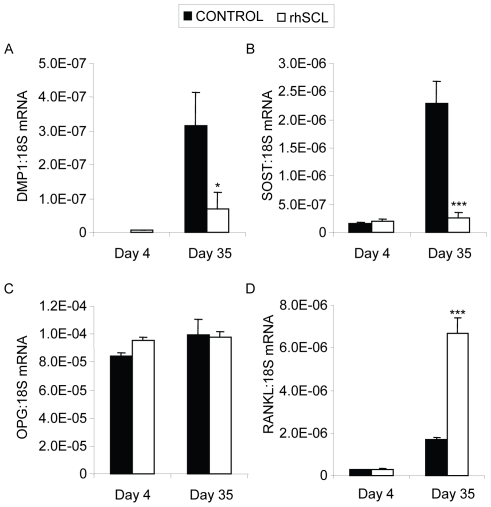
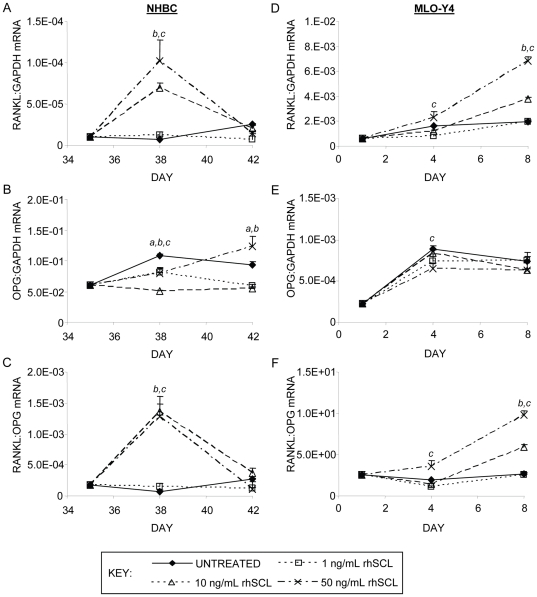
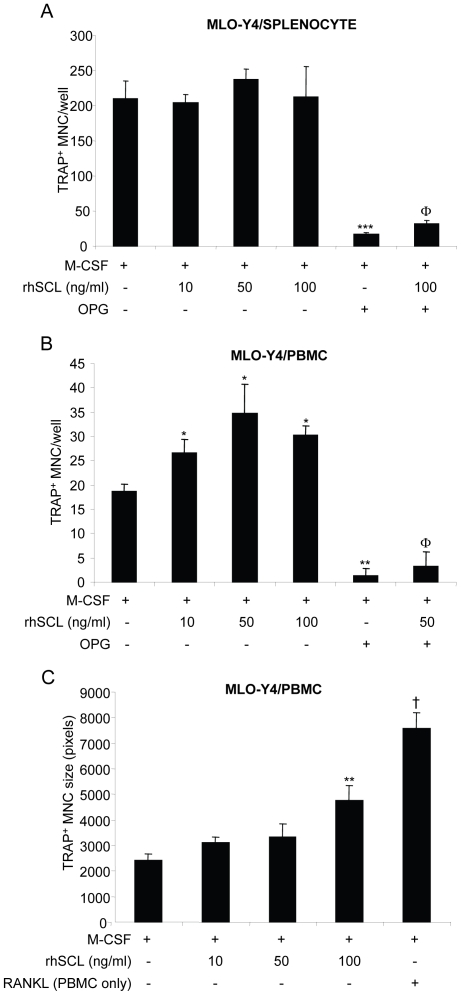
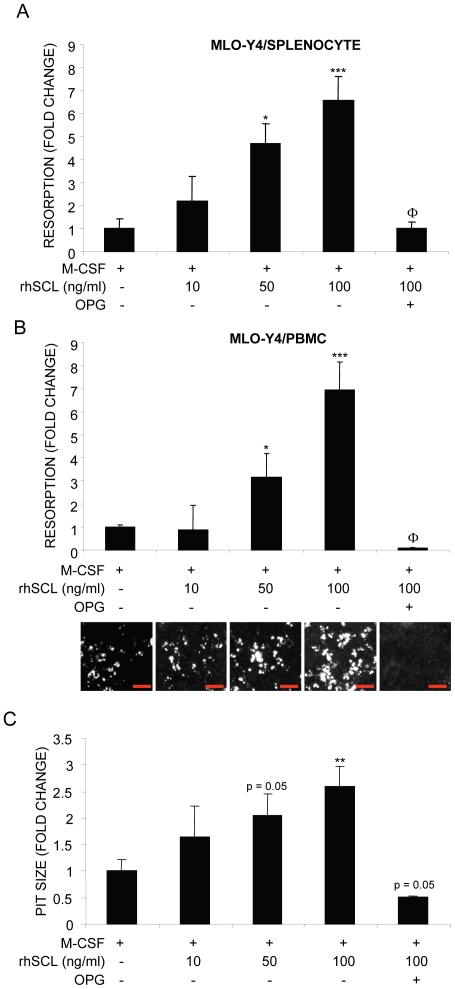
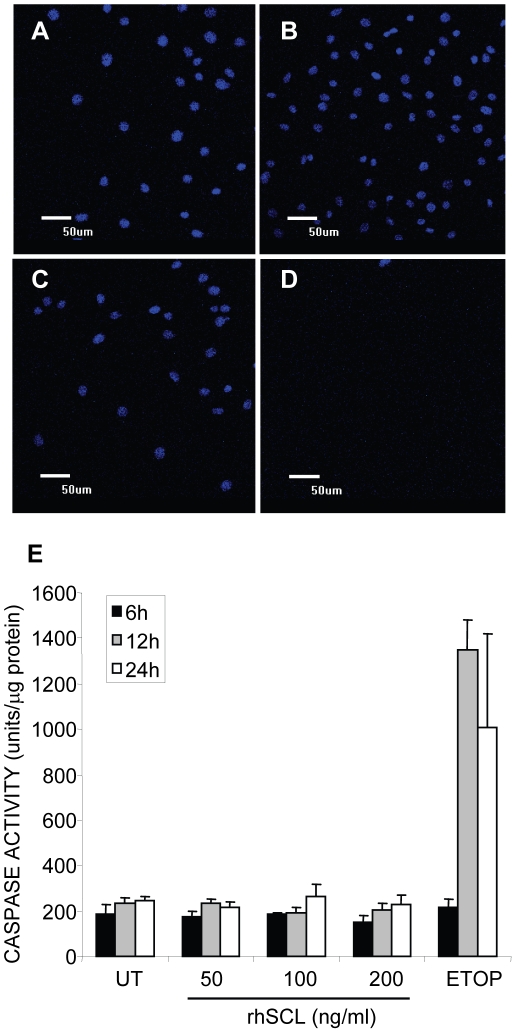
Sclerostin is a product of mature osteocytes embedded in mineralised bone and is a negative regulator of bone mass and osteoblast differentiation. While evidence suggests that sclerostin has an anti-anabolic role, the possibility also exists that sclerostin has catabolic activity. To test this we treated human primary pre-osteocyte cultures, cells we have found are exquisitely sensitive to sclerostin, or mouse osteocyte-like MLO-Y4 cells, with recombinant human sclerostin (rhSCL) and measured effects on pro-catabolic gene expression. Sclerostin dose-dependently up-regulated the expression of receptor activator of nuclear factor kappa B (RANKL) mRNA and down-regulated that of osteoprotegerin (OPG) mRNA, causing an increase in the RANK:OPG mRNA ratio. To examine the effects of rhSCL on resulting osteoclastic activity, MLO-Y4 cells plated onto a bone-like substrate were primed with rhSCL for 3 days and then either mouse splenocytes or human peripheral blood mononuclear cells (PBMC) were added. This resulted in cultures with elevated osteoclastic resorption (approximately 7-fold) compared to untreated co-cultures. The increased resorption was abolished by co-addition of recombinant OPG. In co-cultures of MLO-Y4 cells with PBMC, SCL also increased the number and size of the TRAP-positive multinucleated cells formed. Importantly, rhSCL had no effect on TRAP-positive cell formation from monocultures of either splenocytes or PBMC. Further, rhSCL did not induce apoptosis of MLO-Y4 cells, as determined by caspase activity assays, demonstrating that the osteoclastic response was not driven by dying osteocytes. Together, these results suggest that sclerostin may have a catabolic action through promotion of osteoclast formation and activity by osteocytes, in a RANKL-dependent manner.
Overview
The claims and statistics of this paper haven’t been checked yet.
Free: it reads the open-access text and checks the first 5 claims that cite a source we can check. Create a free account to check every claim.
Integrity signals
Registry
Cites
Statistics
Figures
Verification
Claims the paper makes
The claims and statistics of this paper haven’t been checked yet.
Free: it reads the open-access text and checks the first 5 claims that cite a source we can check. Create a free account to check every claim.
Claims other papers make about this one
Each is checked against this paper’s own text: does it say what the citing paper says it does?
The cited source doesn’t support the claim as written.
In the citing paper
“It achieves this by upregulating the Wnt pathway while also acting as an enhancer of RANKL synthesis, thereby downregulating this latter pathway [83,84,85].”
From Osteoporosis: Molecular Pathology, Diagnostics, and Therapeutics (2023) · cites this paper as [85]
Checked by a reasoning model — may be wrong.
Experimental — accuracy not yet measuredThe source backs part of the claim, not all of it — or backs it for a different population, condition or comparison.
In the citing paper
“it uniquely exhibits the ability to stimulate bone formation while simultaneously reducing bone resorption.”
From Osteoporosis: Molecular Pathology, Diagnostics, and Therapeutics (2023) · cites this paper as [85]
Experimental — accuracy not yet measuredThe check wasn’t confident either way, so it gives no verdict — never disputed.
In the citing paper
“Romosozumab is a newly approved monoclonal antibody targeting sclerostin.”
From Osteoporosis: Molecular Pathology, Diagnostics, and Therapeutics (2023) · cites this paper as [85]
Experimental — accuracy not yet measured
Self-check
Percentages, sums and reported differences re-computed from the paper’s own numbers.
The self-check needs the paper’s full text.
Citations
Cites
Evidence for osteocyte regulation of bone homeostasis through RANKL expression
Nakashima, T., Hayashi, M., Fukunaga, T., Kurata, K., Oh-hora, M., Feng, J. Q., Bonewald, L. F., Kodama, T., Wutz, A., Wagner, E. F., et al. (2011) · Nature Medicine · doi:10.1038/nm.2452 · Cited by 1,778
Self-citationWeinstein, R. S., Jilka, R. L., Parfitt, A. M., & Manolagas, S. C. (1998) · Journal of Clinical Investigation · doi:10.1172/jci2799 · Cited by 1,753 · cited 1×
“However, glucocorticoid-induced osteocyte apoptosis is associated with reduced osteoclastogenesis [63].”
BackgroundCanonical wnt signaling in differentiated osteoblasts controls osteoclast differentiation.
Glass, D. A., Bialek, P., Ahn, J. D., Starbuck, M., Patel, M. S., Clevers, H., Taketo, M. M., Long, F., McMahon, A. P., Lang, R. A., et al. (2005) · Developmental Cell · doi:10.1016/j.devcel.2005.02.017 · Cited by 1,558 · cited 2×
“in response to canonical [20] and potentially non-canonical [21]”
BackgroundSclerostin Binds to LRP5/6 and Antagonizes Canonical Wnt Signaling
Li, X., Zhang, Y., Kang, H., Liu, W., Liu, P., Zhang, J., Harris, S. E., & Wu, D. (2005) · Journal of Biological Chemistry · doi:10.1074/jbc.m413274200 · Cited by 1,366 · cited 1×
“lipoprotein receptor (LRP)-5 and 6 [13,14].”
Mechanical Stimulation of Bone in Vivo Reduces Osteocyte Expression of Sost/Sclerostin
Robling, A. G., Niziolek, P. J., Baldridge, L. A., Condon, K. W., Allen, M. R., Alam, I., Mantila, S. M., Gluhak-Heinrich, J., Bellido, T. M., Harris, S. E., et al. (2008) · Journal of Biological Chemistry · doi:10.1074/jbc.m705092200 · Cited by 1,350 · cited 1×
“loading [26] likely exert an anabolic effect, at least in part, by suppressing SCL expression.”
BackgroundMatrix-embedded cells control osteoclast formation
Xiong, J., Onal, M., Jilka, R. L., Weinstein, R. S., Manolagas, S. C., & O'Brien, C. A. (2011) · Nature Medicine · doi:10.1038/nm.2448 · Cited by 1,304
Osteocyte control of bone formation via sclerostin, a novel BMP antagonist
Winkler, D. G. (2003) · The EMBO Journal · doi:10.1093/emboj/cdg599 · Cited by 1,112 · cited 5×
“which SCL acts, are incompletely understood [7,8,9,10,11],”
BackgroundInfluentialSclerostin is a delayed secreted product of osteocytes that inhibits bone formation
Poole, K. E. S., Van Bezooijen, R. L., Loveridge, N., Hamersma, H., Papapoulos, S. E., Löwik, C. W., & Reeve, J. (2005) · The FASEB Journal · doi:10.1096/fj.05-4221fje · Cited by 965
Li, X., Ominsky, M. S., Niu, Q.-T., Sun, N., Daugherty, B., D'Agostin, D., Kurahara, C., Gao, Y., Cao, J., Gong, J., et al. (2008) · Journal of Bone and Mineral Research · doi:10.1359/jbmr.080216 · Cited by 936 · cited 1×
“gene display an osteopetrotic phenotype [48].”
van Bezooijen, R. L., Roelen, B. A. J., Visser, A., van der Wee-Pals, L., de Wilt, E., Karperien, M., Hamersma, H., Papapoulos, S. E., ten Dijke, P., & Löwik, C. W. G. M. (2004) · The Journal of Experimental Medicine · doi:10.1084/jem.20031454 · Cited by 892
Cited by
Items 201–300 of 563
OCY454 Osteocytes as an in Vitro Cell Model for Bone Remodeling Under Mechanical Loading
Xu, L., Shao, H., Ma, Y. V., & You, L. (2019) · Journal of Orthopaedic Research® · doi:10.1002/jor.24302 · Cited by 36
Naqvi, S. M., Pérez, J. A. P., Kumar, V., Verbruggen, A. S. K., & McNamara, L. M. (2020) · Frontiers in Bioengineering and Biotechnology · doi:10.3389/fbioe.2020.00601 · Cited by 36
Ormsby, R. T., Zelmer, A. R., Yang, D., Gunn, N., Starczak, Y., Kidd, S. P., Nelson, R., Solomon, L. B., & Atkins, G. J. (2021) · European Cells and Materials · doi:10.22203/ecm.v042a19 · Cited by 36
“…under these conditions, these cells display an osteocyte-like phenotype characterised by localised mineral deposition and high levels of expression of osteocyte markers including SOST, DMP1, MEPE and PHEX (Atkins et al., 2011; Welldon et al., 2013; Wijenayaka et al., 2011; Yang et al., 2018).”
BackgroundSelf-citationRai, D., Tripathi, A. K., Sardar, A., Pandey, A. R., Sinha, S., Chutani, K., Dhaniya, G., Kothari, P., Sashidhara, K. V., & Trivedi, R. (2022) · Free Radical Biology and Medicine · doi:10.1016/j.freeradbiomed.2022.08.007 · Cited by 36
Morse, A., Yu, N., Peacock, L., Mikulec, K., Krämer, I., Kneissel, M., McDonald, M. M., & Little, D. G. (2014) · Bone · doi:10.1016/j.bone.2014.10.018 · Cited by 36
“However, osteoclastogenesis and bone resorption is also indirectly promoted by Sclerostin throughmodulation of RANKL andOPG synthesis in osteocytes [7–10].”
BackgroundEffects of chronic hypergravity: from adaptive to deleterious responses in growing mouse skeleton
Gnyubkin, V., Guignandon, A., Laroche, N., Vanden-Bossche, A., Normand, M., Lafage-Proust, M.-H., & Vico, L. (2015) · Journal of Applied Physiology · doi:10.1152/japplphysiol.00364.2015 · Cited by 30
Shakeri, A., & Adanty, C. (2020) · Journal of Population Therapeutics & Clinical Pharmacology · doi:10.15586/jptcp.v27i1.655 · Cited by 35
Osteocyte-mediated mechanical response controls osteoblast differentiation and function
Buck, H., & Stains, J. P. (2024) · Frontiers in Physiology · doi:10.3389/fphys.2024.1364694 · Cited by 35
Novel approaches to the treatment of osteoporosis
Appelman‐Dijkstra, N. M., & Papapoulos, S. E. (2014) · Best Practice & Research Clinical Endocrinology & Metabolism · doi:10.1016/j.beem.2014.07.003 · Cited by 35
Cellular Communication in Bone Homeostasis and the Related Anti-osteoporotic Drug Development
Zhang, Y., Luo, G., & Yu, X. (2018) · Current Medicinal Chemistry · doi:10.2174/0929867325666180801145614 · Cited by 35
A Human Osteocyte Cell Line Model for Studying Staphylococcus aureus Persistence in Osteomyelitis
Gunn, N. J., Zelmer, A. R., Kidd, S. P., Solomon, L. B., Roscioli, E., Yang, D., & Atkins, G. J. (2021) · Frontiers in Cellular and Infection Microbiology · doi:10.3389/fcimb.2021.781022 · Cited by 35
Self-citationFrysz, M., Gergei, I., Scharnagl, H., Smith, G. D., Zheng, J., Lawlor, D. A., Herrmann, M., März, W., & Tobias, J. H. (2020) · Journal of Bone and Mineral Research · doi:10.1002/jbmr.4467 · Cited by 35
“Additionally, sclerostin is thought to stimulate bone resorption via a RANKL-dependent pathway,((42)) which is predicted to release undercarboxylated osteocalcin from the bone matrix.”
BackgroundLuchetti, M. M., Ciccia, F., Avellini, C., Benfaremo, D., Guggino, G., Farinelli, A., Ciferri, M., Rossini, M., Svegliati, S., Spadoni, T., et al. (2018) · The Journal of Rheumatology · doi:10.3899/jrheum.170833 · Cited by 35
Chandran, M. (2022) · Archives of Endocrinology and Metabolism · doi:10.20945/2359-3997000000564 · Cited by 34
“The inhibition of sclerostin also results in a more sustained decrease in bone resorption through reduction in RANKL synthesis (60).”
BackgroundMetzger, C. E., Brezicha, J. E., Elizondo, J. P., Narayanan, S. A., Hogan, H. A., & Bloomfield, S. A. (2017) · Bone · doi:10.1016/j.bone.2017.08.002 · Cited by 34
“Further studies should address the interaction between RANKL and OPG with sclerostin, IL-6, and IGF-I in conditions of loading and unloading as previous literature has highlighted interactions between these factors and the RANKL/OPG axis (29, 34, 42).”
Bhattacharyya, S., Pal, S., & Chattopadhyay, N. (2018) · European Journal of Pharmacology · doi:10.1016/j.ejphar.2018.02.028 · Cited by 34
SEIOMM Working Group, Guañabens, N., Moro-Álvarez, M. J., Casado, E., Blanch‐Rubió, J., Gómez‐Alonso, C., Diaz‐Guerra, G. M., del Pino‐Montes, J., Valero, C., Peris, P., et al. (2019) · Endocrine · doi:10.1007/s12020-019-01919-8 · Cited by 34
Fontalis, A., Kenanidis, E. I., Kotronias, R. A., Papachristou, A., Anagnostis, P. G., Potoupnis, M. E., & Tsiridis, E. E. (2019) · Expert Opinion on Pharmacotherapy · doi:10.1080/14656566.2019.1594772 · Cited by 33
“Notably, sclerostin has also been shown to promote osteoclast formation through a RANKL-dependent pathway [96].”
BackgroundSclerostin is a promising therapeutic target for oral inflammation and regenerative dentistry
Liao, C., Liang, S., Wang, Y., Zhong, T., & Liu, X. (2022) · Journal of Translational Medicine · doi:10.1186/s12967-022-03417-4 · Cited by 33
Sclerostin stimulates angiogenesis in human endothelial cells
Oranger, A., Brunetti, G., Colaianni, G., Tamma, R., Carbone, C., Lippo, L., Mori, G., Pignataro, P., Cirulli, N., Zerlotin, R., et al. (2017) · Bone · doi:10.1016/j.bone.2017.03.001 · Cited by 33
“Importantly, some authors have demonstrate that angiogenesis takes place before osteogenesis [35] and newly formed vessels ensure steady transport of circulating osteoclasts and osteoblasts [34].”
BackgroundRegulation of sclerostin by the SIRT1 stabilization pathway in osteocytes
Kim, J., Yang, Y.-S., Xie, J., Lee, O., Kim, J., Hong, J., Boldyreff, B., Filhol, O., Chun, H., Greenblatt, M. B., et al. (2022) · Cell Death and Differentiation · doi:10.1038/s41418-022-00952-x · Cited by 32
The effects of bariatric surgery on bone and nephrolithiasis
Sakhaee, K., POINDEXTER, J. R., & Aguirre, C. (2015) · Bone · doi:10.1016/j.bone.2015.12.001 · Cited by 33
“In addition, sclerostin stimulates osteoclastic differentiation and activity mediated by receptor activator of nuclear factor kappa B [RANKL] and inhibition of osteoprotegerin (OPG) [30].”
Nusrat, S., Din, R. U., Tariq, M. A., & Yang, H. (2025) · Aging and Disease · doi:10.14336/ad.2025.0370 · Cited by 32
Prevalence of vertebral fractures and serum sclerostin levels in acromegaly
Uygur, M. M., Yazıcı, D., Buğdaycı, O., & Yavuz, D. G. (2021) · Endocrine · doi:10.1007/s12020-021-02751-9 · Cited by 31
Positive and Negative Regulators of Sclerostin Expression
Iwamoto, R., Koide, M., Udagawa, N., & Kobayashi, Y. (2022) · International Journal of Molecular Sciences · doi:10.3390/ijms23094895 · Cited by 31
“Sclerostin also upregulated RANKL expression in human osteoblast-like cells and mouse osteocyte-like MLO-Y4 cells [43].”
BackgroundBiagioni, M., Mendes, A. L., Nogueira, C. R., Leite, C. V., Gollino, L., & Mazeto, G. M. F. D. S. (2017) · Obesity Surgery · doi:10.1007/s11695-017-2546-4 · Cited by 32
“formation by inhibiting the terminal differentiation of osteoblasts and promotes their apoptosis [21, 22].”
BackgroundArchitecture of bone tissue and its adaptation to pathological conditions
Bilgiç, E., Boyacıoğlu, Ö., Gizer, M., Korkusuz, P., & Korkusuz, F. (2020) · Comparative Kinesiology of the Human Body · doi:10.1016/b978-0-12-812162-7.00006-0 · Cited by 30
Osteoblastic Lrp4 promotes osteoclastogenesis by regulating ATP release and adenosine-A2AR signaling
Xiong, L., Jung, J.-U., Guo, H.-H., Pan, J., Sun, X.-D., Mei, L., & Xiong, W. (2017) · The Journal of Cell Biology · doi:10.1083/jcb.201608002 · Cited by 30
“This ratio is up-regulated by multiple factors, including sclerostin Lrp4 (low-density lipoprotein [LDL] receptor–related protein 4) pathway (Itoh et al., 2000; Ma et al., 2001; Huang et al., 2004; Silvestrini et al., 2008; Wijenayaka et al., 2011; Xiong et al., 2015) and down-regulated by factors such as the canonica…”
BackgroundKaur, K., Das, S., & Ghosh, S. (2019) · ACS Omega · doi:10.1021/acsomega.8b03272 · Cited by 30
Yu, C., Huang, D., Wang, K., Lin, B.-C., Liu, Y., Liu, S., Wei-chi, W., & Zhang, H. (2016) · Molecular Medicine Reports · doi:10.3892/mmr.2016.6047 · Cited by 29
“Furthermore, sclerostin promotes osteoclast formation and activity via upregulation of RANKL production by osteocytes (30).”
Sost, independent of the non-coding enhancer ECR5, is required for bone mechanoadaptation
Robling, A. G., Kang, K. S., Bullock, W. A., Foster, W. H., Murugesh, D. K., Loots, G. G., & Genetos, D. C. (2016) · Bone · doi:10.1016/j.bone.2016.09.001 · Cited by 29
“In contrast, the influence of sclerostin on osteoclasts appears to be indirect, mediated through an autocrine mechanism of sclerostin on osteocytes to regulate RANKL and OPG levels[20].”
Bhattacharyya, S., Pal, S., Mohamed, R., Singh, P., Chattopadhyay, S., China, S. P., Porwal, K., Sanyal, S., Gayen, J. R., & Chattopadhyay, N. (2019) · Biomedicine & Pharmacotherapy · doi:10.1016/j.biopha.2019.109207 · Cited by 29
Stapledon, C. J. M., Tsangari, H., Solomon, L. B., Campbell, D. G., Hurtado, P. R., Krishnan, R., & Atkins, G. J. (2019) · PLoS ONE · doi:10.1371/journal.pone.0222602 · Cited by 29
Self-citationDelgado‐Calle, J., Arozamena, J., Pérez-López, J., Bolado‐Carrancio, A., Sañudo, C., Agudo, G., de la Vega, R., Alonso, M. A., Rodríguez-Rey, J. C., & Riancho, J. A. (2013) · Molecular and Cellular Endocrinology · doi:10.1016/j.mce.2013.02.002 · Cited by 28
Sclerostin and Cardiovascular Disease
Tobias, J. H. (2023) · Current Osteoporosis Reports · doi:10.1007/s11914-023-00810-w · Cited by 28
Musculoskeletal Health in the Context of Spinal Cord Injury
Clark, J., & Findlay, D. M. (2017) · Current Osteoporosis Reports · doi:10.1007/s11914-017-0400-1 · Cited by 28
Self-citationSclerostin: an Emerging Target for the Treatment of Cancer-Induced Bone Disease
McDonald, M. M., & Delgado‐Calle, J. (2017) · Current Osteoporosis Reports · doi:10.1007/s11914-017-0403-y · Cited by 29
Barbe, M. F., Massicotte, V. S., Assari, S., Monroy, M. A., Frara, N. A., Harris, M. Y., Amin, M., King, T. E., Cruz, G. E., & Popoff, S. N. (2018) · Bone · doi:10.1016/j.bone.2018.02.014 · Cited by 28
de Vries, T. J., & Huesa, C. (2019) · Current Osteoporosis Reports · doi:10.1007/s11914-019-00509-x · Cited by 27
Xu, X.-J., Shen, L., Yang, Y., Lu, F., Zhu, R., Shuai, B., Cheng-gang, L. I., & Wu, M.-X. (2013) · Chinese Medical Journal · doi:10.3760/cma.j.issn.0366-6999.20130104 · Cited by 27
“According to previous studies, parathyroid hormone and mechanical stimulation can influence/downregulate sclerostin expression.(26,27) Although circulating levels of sclerostin have been shown to be strongly correlated with marrow plasma levels in postmenopausal women, we analyzed serum sclerostin which may be not sen…”
ResultThe canonical Wnt/β-catenin pathway: From the history of its discovery to clinical application
Grebennikova, T. A., Belaya, Z. E., Rozhinskaya, L. Y., & Mel'nichenko, G. A. (2016) · Terapevticheskii arkhiv · doi:10.17116/terarkh201688674-81 · Cited by 27
Role of the Wnt/β-Catenin Pathway in Renal Osteodystrophy
Bisson, S.-K., Ung, R., & Mac‐Way, F. (2018) · International Journal of Endocrinology · doi:10.1155/2018/5893514 · Cited by 26
“In addition to inhibition of bone formation, recent studies have shown that sclerostin might also be an activator of bone resorption by increasing RANKL/OPG ratio in osteocytes [27, 59].”
BackgroundSclerostin injection enhances orthodontic tooth movement in rats
Lu, W., Zhang, X., Firth, F., Mei, L., Yi, J., Gong, C., Li, H., Zheng, W., & Li, Y. (2018) · Archives of Oral Biology · doi:10.1016/j.archoralbio.2018.12.011 · Cited by 26
Osteocyte TSC1 promotes sclerostin secretion to restrain osteogenesis in mice
Liu, W., Wang, Z., Yang, J., Wang, Y., Li, K., Huang, B., Yan, B., Wang, T., Li, M., Zou, Z., et al. (2019) · Open Biology · doi:10.1098/rsob.180262 · Cited by 26
Bernhardt, A., Österreich, V., & Gelinsky, M. (2019) · Tissue Engineering Part A · doi:10.1089/ten.tea.2019.0085 · Cited by 26
“14 Only one co-culture study involving primary osteocytes was published so far.”
Albiol, L., Büttner, A., Pflanz, D., Mikolajewicz, N., Birkhold, A., Krämer, I., Kneissel, M., Duda, G. N., Checa, S., & Willie, B. M. (2019) · Calcified Tissue International · doi:10.1007/s00223-019-00648-4 · Cited by 26
Bone, a Secondary Growth Site of Breast and Prostate Carcinomas: Role of Osteocytes
Maroni, P., & Bendinelli, P. (2020) · Cancers · doi:10.3390/cancers12071812 · Cited by 26
“Moreover, sclerostin is able to up-regulate the expression of RANKL by osteocyte-like cells and to promote osteoclastogenesis [63], supporting the view that osteocytes are targets for the action of sclerostin [64].”
BackgroundInfluentialMenon, V. B., Moysés, R. M. A., Gomes, S. A., Carvalho, A. B., Jorgetti, V., & Heilberg, I. P. (2014) · Clinical Journal of the American Society of Nephrology · doi:10.2215/cjn.10030913 · Cited by 25
“It has been hypothesized that, in response to catabolic stimulus, Scl expressed by mature mineral embedded, or even apoptosing osteocytes, may act in an autocrine manner, increasing local expression of RANKL relative to OPG, as well as a paracrine manner, inducing such expression in immature osteocytes immediately bel…”
BackgroundInfluentialEmerging therapeutic targets for osteoporosis
Gennari, L., Merlotti, D., Falchetti, A., Eller-Vainicher, C., Cosso, R., & Chiodini, I. (2020) · Expert Opinion on Therapeutic Targets · doi:10.1080/14728222.2020.1726889 · Cited by 26
“motes OC formation through a RANKL-dependent pathway [42].”
BackgroundTsourdi, E. A., Lademann, F., Ominsky, M. S., Rijntjes, E., Köhrle, J., Misof, B. M., Roschger, P., Klaushofer, K., Hofbauer, L. C., & Rauner, M. (2017) · Endocrinology · doi:10.1210/en.2017-00247 · Cited by 25
Finite Element Models of Osteocytes and Their Load-Induced Activation
Smit, T. H. (2022) · Current Osteoporosis Reports · doi:10.1007/s11914-022-00728-9 · Cited by 24
“Sclerostin is a negative regulator of osteoblast differentiation and stimulates osteoclastic activity [35, 36].”
BackgroundCao, Y., Wang, B., Wang, D., Zhan, D., Mai, C., Wang, P., Wei, Q., Liu, Y., Wang, H., He, W., et al. (2019) · International Journal of Genomics · doi:10.1155/2019/7076513 · Cited by 24
Increased Serum Sclerostin Levels in Patients With Active Acromegaly
Pekkolay, Z., Kılınç, F., Gözel, N., Etem, E. Ö., & Tuzcu, A. (2019) · The Journal of Clinical Endocrinology & Metabolism · doi:10.1210/clinem/dgz254 · Cited by 24
Fayed, A., Elgohary, R., & Wadie, M. (2019) · Clinical Rheumatology · doi:10.1007/s10067-019-04878-7 · Cited by 24
“In addition to their antianabolic effect, they promote the catabolic activity of osteoclast through expression of receptor activator of nuclear factor kappa-Β ligand (RANKL), and decreasing the expression of osteoprotegerin (OPG) [13, 14].”
BackgroundScl-Ab reverts pro-osteoclastogenic signalling and resorption in estrogen deficient osteocytes
Allison, H., Holdsworth, G., & McNamara, L. M. (2020) · BMC Molecular and Cell Biology · doi:10.1186/s12860-020-00322-w · Cited by 24
“This could suggests that sclerostin might have a direct role in osteoclast differentiation, which is independent of RANKL and OPG [48], however addition of sclerostin to splenocyte or PBMC monocultures had no effect on osteoclastogenesis, indicating that sclerostin does not directly in uence these cells [36]).”
BackgroundZhao, D., Wu, J., Acosta, F. M., Xu, H., & Jiang, J. X. (2023) · Frontiers in Cell and Developmental Biology · doi:10.3389/fcell.2023.1151838 · Cited by 24
“Sclerostin directly increases the levels of RANKL in osteocytes to regulate osteoclast activity by inhibiting βcatenin in osteoclasts (Wijenayaka et al., 2011).”
BackgroundRose, J., Schurman, C. A., King, C. D., Bons, J., Burton, J. B., Srivastava, S., O’Broin, A., Alliston, T. N., & Schilling, B. (2023) · PLoS ONE · doi:10.1371/journal.pone.0292268 · Cited by 23
“These factors are known to be induced during cellular senescence within bone cells and directly shift bone remodeling towards bone resorption by suppressing osteoblast bone formation and increasing osteoclastic bone resorption, respectively [10, 33-36].”
BackgroundThe Role of Sclerostin in the Pathophysiology of Sclerosing Bone Dysplasias
van Lierop, A. H., Hamdy, N. A. T., van Bezooijen, R. L., Löwik, C. W. G. M., & Papapoulos, S. E. (2011) · Clinical Reviews in Bone and Mineral Metabolism · doi:10.1007/s12018-011-9123-5 · Cited by 23
“Furthermore, sclerostin upregulates RANKL synthesis thereby stimulating osteoclastogenesis [13].”
BackgroundClinical Inference of Serum and Bone Sclerostin Levels in Patients with End-Stage Kidney Disease
Maré, A. D., Verhulst, A., Cavalier, E., Delanaye, P., Behets, G. J. S., Meijers, B. K. I., Kuypers, D. R. J., D’Haese, P. C., & Evenepoel, P. (2019) · Journal of Clinical Medicine · doi:10.3390/jcm8122027 · Cited by 23
“At the same time, bone resorption is stimulated, since sclerostin induces receptor activator of nuclear factor kappa-B ligand (RANKL) production by the osteocytes, which in turn induces osteoclastogenesis [5].”
BackgroundEarly response of the human SOST gene to stimulation by 1α,25-dihydroxyvitamin D3
Wijenayaka, A. R., Prideaux, M., Yang, D., Morris, H. A., Findlay, D. M., Anderson, P., & Atkins, G. J. (2015) · The Journal of Steroid Biochemistry and Molecular Biology · doi:10.1016/j.jsbmb.2015.12.006 · Cited by 23
Self-citationKhassawna, T. E., Merboth, F., Malhan, D., Böcker, W., Daghma, D. E. S., Stötzel, S., Kern, S., Hassan, F. S., Rosenbaum, D., Langenstein, J., et al. (2017) · American Journal Of Pathology · doi:10.1016/j.ajpath.2017.04.005 · Cited by 23
“54 Taken together, SOST local stimulation of RANKL in vital osteocytes could be a response to the RANKL-induced described apoptotic osteocytes.”
BackgroundΤhe story of sclerostin inhibition: the past, the present, and the future
Anastasilakis, A. D., & Tsourdi, E. A. (2024) · HORMONES · doi:10.1007/s42000-023-00521-y · Cited by 22
“Furthermore, sclerostin upregulates the receptor activator of NFκB ligand (RANKL)/osteoprotegerin ratio in osteocytes, thereby stimulating osteoclastogenesis [5].”
Fouad-Elhady, E. A., Aglan, H. A., Hassan, R. E., Ahmed, H. H., & Sabry, G. M. (2020) · Heliyon · doi:10.1016/j.heliyon.2020.e03341 · Cited by 22
Impact of iron overload on bone remodeling in thalassemia
Piriyakhuntorn, P., Tantiworawit, A., Phimphilai, M., Shinlapawittayatorn, K., Chattipakorn, S. C., & Chattipakorn, N. (2020) · Archives of Osteoporosis · doi:10.1007/s11657-020-00819-z · Cited by 22
Effect of fluoride on osteocyte-driven osteoclastic differentiation
Jiang, N., Guo, F., Xu, W., Zhang, Z., Jin, H., Shi, L., Zhang, X., Gao, J., & Xu, H. J. (2020) · Toxicology · doi:10.1016/j.tox.2020.152429 · Cited by 22
Sclerostin monoclonal antibodies on bone metabolism and fracture healing
Gamie, Z., Korres, N., Leonidou, A. O., Gray, A. C., & Tsiridis, E. E. (2012) · Expert Opinion on Investigational Drugs · doi:10.1517/13543784.2012.713936 · Cited by 21
“Wnt signalling can increase OPG expression [5] and sclerostin has been found to downregulate OPG and increase levels of RANKL therefore promoting osteoclast formation [6,7].”
BackgroundKocełak, P., Puzianowska‐Kuźnicka, M., Olszanecka‐Glinianowicz, M., & Chudek, J. T. (2023) · Advances in Clinical and Experimental Medicine · doi:10.17219/acem/169567 · Cited by 20
Serum Sclerostin Level and Bone Mineral Density in Pediatric Hemophilic Arthropathy
Mikkawy, D. M. E. E., El-Badawy, M. A., El-Ghany, S. M. A., & Samaha, D. Y. (2019) · The Indian Journal of Pediatrics · doi:10.1007/s12098-019-02855-1 · Cited by 20
Osteocytic connexin 43 channels affect fracture healing
Chen, Y., Chen, M., Xue, T., Li, G., Wang, D., Shang, P., Jiang, J. X., & Xu, H. (2019) · Journal of Cellular Physiology · doi:10.1002/jcp.28581 · Cited by 20
“Sost have a catabolic action on bone through the promotion of osteoclast formation (Wijenayaka et al., 2012) and the inhibition of bone formation (Qin et al.”
BackgroundPositioning novel biologicals in CKD-mineral and bone disorders
Tartaglione, L., Pasquali, M., Rotondi, S., Muci, M. L., Covic, A. C., & Mazzaferro, S. (2017) · Journal of Nephrology · doi:10.1007/s40620-017-0410-1 · Cited by 19
“Sclerostin also increases RANK-L expression in osteoblasts and thereby stimulates osteoclastic bone resorption [51].”
BackgroundYamamoto, T., Ikegame, M., Hirayama, J., Kitamura, K.-I., Tabuchi, Y., Furusawa, Y., Sekiguchi, T., Endo, M., Mishima, H., Seki, A., et al. (2020) · Biomedical Research · doi:10.2220/biomedres.41.279 · Cited by 19
“It has been reported that sclerostin simulates RANKL production in osteocytes (Wijenayaka et al. 2011) and inhibits OPG production in osteoblasts/osteocytes by disturbing the Wnt signaling pathway to activate osteoclasts (Kubota et al. 2009; Kobayashi et al. 2016; Delgado-Calle et al. 2017; Figurek…”
BackgroundEffects of advanced glycation end products on osteocytes mechanosensitivity
Yang, X. Y., Liu, C., Wang, Z., Ding, D., Shi, J., Wu, X., Sun, L., & Fan, Y. (2021) · Biochemical and Biophysical Research Communications · doi:10.1016/j.bbrc.2021.06.074 · Cited by 19
Effects of combined ovariectomy with dexamethasone on rat lumbar vertebrae
Ren, H. J., Liang, D., Shen, G., Yao, Z., Jiang, X., Tang, J., Cui, J., & Lin, S. (2015) · Menopause The Journal of The North American Menopause Society · doi:10.1097/gme.0000000000000547 · Cited by 19
Effects of Rosiglitazone on the Outcome of Experimental Periapical Lesions in Mice
de Oliveira, K. M. H., Garlet, G. P., ROSSI, A. D., Barreiros, D., de Queiroz, A. M., da Silva, L. A. B., Nelson‐Filho, P., & da Silva, R. A. B. (2017) · Journal of Endodontics · doi:10.1016/j.joen.2017.06.026 · Cited by 19
“Using RT-PCR evaluation, we observed that the expression of Sost was higher at 21 days in the rosiglitazone group and was accompanied bymore osteoclasts, which is in agreement with findings in the literature (9).”
BackgroundResultNicol, L. E., Wang, Y., Smith, R. C., Sloan, J. H., Nagamani, S. C. S., Shapiro, J. R., Lee, B., & ORWOLL, E. S. (2017) · Journal of Bone and Mineral Research · doi:10.1002/jbmr.3312 · Cited by 19
“Additionally, SOST can also activate receptor activator of NF-kB ligand (RANKL) and promote osteoclast differentiation and bone resorption.((3)) Multiple lines of evidence in preclinical models show that increased SOST activity in bone leads to low bone mass and that inhibition of SOST results in increase in bone mass…”
BackgroundDisorders of the Endocrine System and of Metabolism
Schifter, M., McLean, M. P., & Sukumar, S. (2021) · Wiley eBooks · doi:10.1002/9781119597797.ch22 · Cited by 19
Sclerostin antibody enhances bone formation in a rat model of distraction osteogenesis
McDonald, M. M., Morse, A., Birke, O., Yu, N. Y. C., Mikulec, K., Peacock, L., Schindeler, A., Liu, M., Ke, H. Z., & Little, D. G. (2017) · Journal of Orthopaedic Research® · doi:10.1002/jor.23726 · Cited by 18
“A limitation of this study was that bone resorption was not specifically analyzed and the anti-resorptive effects of Scl-Ab are being increasingly appreciated.(25) During distraction osteogenesis, osteoclastic forces become more important during consolidation, and thus Scl-Ab treatment spanning both distraction and co…”
BackgroundSankardas, P. A., Lavu, V., Bhaskar, L. V., & Rao, S. R. (2018) · Journal of Investigative and Clinical Dentistry · doi:10.1111/jicd.12369 · Cited by 18
Simfia, I., Schiavi, J., & McNamara, L. M. (2020) · Experimental Cell Research · doi:10.1016/j.yexcr.2020.112005 · Cited by 18
Sclerostin's role in bone–muscle crosstalk and osteoporosis pathogenesis
Shahid, H., Morya, V. K., & Noh, K.-C. (2025) · Osteoporosis and Sarcopenia · doi:10.1016/j.afos.2025.06.004 · Cited by 17
Romosozumab versus parathyroid hormone receptor agonists: which osteoanabolic to choose and when?
Anastasilakis, A. D., Yavropoulou, M. P., Palermo, A., Makras, P., Paccou, J., Tabacco, G., Naciu, A. M., & Tsourdi, E. A. (2024) · European Journal of Endocrinology · doi:10.1093/ejendo/lvae076 · Cited by 17
Nutritional and Pharmacological Effects on Oxidative Stress in Soft Tissue and Bone Remodeling
Savasky, B. M., Mascotti, D. P., Patel, N. B., & Rodríguez‐Collazo, E. R. (2018) · Journal of Nutrition and Metabolism · doi:10.1155/2018/4183407 · Cited by 17
“Sclerostin is a protein that blocks bone formation by osteoblasts by binding to the Wnt co-receptors and low-density lipoprotein receptors (LRP) 4, 5, and 6 [25, 26].”
BackgroundThe diurnal variation of bone formation is attenuated in adult patients with type 2 diabetes
Hygum, K., Starup‐Linde, J., Harsløf, T., Jørgensen, N. R., Hartmann, B., Holst, J. J., & Langdahl, B. L. (2019) · European Journal of Endocrinology · doi:10.1530/eje-19-0309 · Cited by 17
Suppression of tooth movement‐induced sclerostin expression using β‐adrenergic receptor blockers
Uchibori, S., Sekiya, T., Sato, T., Hayashi, K., Takeguchi, A., Muramatsu, R., Ishizuka, K., Kondo, H., Miyazawa, K., Togari, A., et al. (2020) · Oral Diseases · doi:10.1111/odi.13280 · Cited by 17
Loundagin, L. L., & Cooper, D. (2022) · European Cells and Materials · doi:10.22203/ecm.v043a15 · Cited by 17
Sclerostin as a new target of diabetes-induced osteoporosis
Lǐ, Y., Luo, Y., Huang, D., & Peng, L. (2024) · Frontiers in Endocrinology · doi:10.3389/fendo.2024.1491066 · Cited by 16
“It has also been shown that sclerostin stimulates bone resorption through receptor activator of nuclear factor kappa-B ligand-dependent pathway, thereby promoting BMD reduction (82).”
Nakagawa, Y., Komaba, H., Hamano, N., Tanaka, H., Wada, T., Ishida, H., Nakamura, M., Takahashi, H., Takahashi, Y., Hyodo, T., et al. (2021) · The Journal of Clinical Endocrinology & Metabolism · doi:10.1210/clinem/dgab623 · Cited by 16
The Role of Sclerostin in Rheumatic Diseases: A Review
Jaśkiewicz, Ł., Chmielewski, G., Kuna, J., Stompór, T. P., & Krajewska–Włodarczyk, M. (2023) · Journal of Clinical Medicine · doi:10.3390/jcm12196248 · Cited by 16
“Apart from inhibiting the Wnt/ β -catenin pathway, sclerostin can stimulate RANKL secretion in osteocytes, osteoclastogenesis and bone resorption [22,23].”
Asamiya, Y., Yajima, A., Shimizu, S., Otsubo, S., Tsuchiya, K., & Nitta, K. (2014) · Osteoporosis International · doi:10.1007/s00198-014-2934-8 · Cited by 16
Ma, L., Zhao, S., & Li, Z. (2017) · Scandinavian Journal of Clinical and Laboratory Investigation · doi:10.1080/00365513.2017.1354256 · Cited by 16
“soluble blocking agent of the classical Wnt-b signalling pathway [23,24], our findings raise an interest to further study the role of SOST involved in the development of CKD–MBD.”
BackgroundJörg, D. J., Fuertinger, D. H., Cherif, A., Bushinsky, D. A., Mermelstein, A., Raimann, J. G., & Kotanko, P. (2022) · eLife · doi:10.7554/elife.76228 · Cited by 15
Muscle-Bone Crosstalk in Amyotrophic Lateral Sclerosis
Zhou, J., Yi, J., & Bonewald, L. (2015) · Current Osteoporosis Reports · doi:10.1007/s11914-015-0281-0 · Cited by 15
Self-citationManagement of postmenopausal osteoporosis
Reid, I. R., & Bolland, M. J. (2026) · Endocrine Reviews · doi:10.1210/endrev/bnag006 · Cited by 15
An updated overview of the search for biomarkers of osteoporosis based on human proteomics
Wang, X., Zhang, R.-Z., Wang, Y., Pan, S., Yun, S., Li, J., & Xu, Y. (2024) · Journal of Orthopaedic Translation · doi:10.1016/j.jot.2024.08.015 · Cited by 15
“In addition to affecting osteoblast differentiation and apoptosis, sclero-stin stimulates osteoclastogenesis [58].”
BackgroundRole of key players in paradigm shifts of prostate cancer bone metastasis
Sohail, A., Sherin, L., Butt, S. I., Javed, S., Li, Z., Iqbal, S., & Bég, O. A. (2018) · Cancer Management and Research · doi:10.2147/cmar.s162525 · Cited by 15
“It has proved to upregulate the expression of RANKL by osteocyte-like cells and promotes osteoclastogenesis.(12) Similarly, CAPE may prove to be a potential intervention for PCa metastasis, since preclinical trials verified that it suppresses the migration and invasion of PCa cells via activation of non-canonical Wnt…”
BackgroundStarczak, Y., Reinke, D. C., Barratt, K. R., Russell, P. K., Clarke, M., Davey, R. A., Atkins, G. J., & Anderson, P. (2021) · The Journal of Steroid Biochemistry and Molecular Biology · doi:10.1016/j.jsbmb.2021.105857 · Cited by 15
“Splenocytes derived from Vdr or Ctsk/Vdr mice were seeded onto layers of MLO-Y4 osteocyte-like cells, a cell line with an intact VDR-signalling system and known to support osteoclastogenesis [21, 24].”
MethodSelf-citationZhang, L., Yin, Y., Guo, J., Jin, L., & Hou, Z. (2023) · Frontiers in Endocrinology · doi:10.3389/fendo.2023.1035186 · Cited by 15
“Also, sclerostin could facilitate the resorptive function of osteoclasts (35).”
BackgroundShiraki, M., Xu, X., Iovanna, J., Kukita, T., Hirata, H., Kamohara, A., Kubota, Y., Miyamoto, H., Mawatari, M., & Kukita, A. (2019) · The FASEB Journal · doi:10.1096/fj.201802322rr · Cited by 15
“Sost is known to increase the Rankl/Opg mRNA ratio (48).”
BackgroundRemmers, S., Mayer, D. C., Melke, J., Ito, K., & Hofmann, S. (2020) · European Cells and Materials · doi:10.22203/ecm.v040a12 · Cited by 16
“This could occur as a result of factors liberated from the matrix or expressed by the newly seeded monocytes that are now differentiating towards osteoclasts (Pang et al., 2013; Tang et al., 2009; Xian et al., 2012).”
BackgroundSclerostin is essential for alveolar bone loss in occlusal hypofunction
Xu, Y., Wang, L., Sun, Y., Han, X., Gao, T., Xu, X., Tian, C., Zhao, X., Zeng, H., WANG, Y., et al. (2016) · Experimental and Therapeutic Medicine · doi:10.3892/etm.2016.3124 · Cited by 15
Metadata
- Authors
- Wijenayaka, A. R., Kogawa, M., Lim, H. P., Bonewald, L. F., Findlay, D. M., & Atkins, G. J.
- Affiliations
- Hanson Institute (AU)
- University of Missouri–Kansas City (US)
- Corresponding author
- Atkins, Gerald J.
- Venue
- PLoS ONE
- Publisher
- Public Library of Science (PLoS)
- Published
- 2011-10-04
- Volume
- 6
- Issue
- 10
- Pages
- e25900
- ISSN
- 1932-6203 (ISSN-L)
- PMC
- PMC3186800
- OpenAlex
- W2028910660
- Cited by
- 503
- References
- 66
- Citations by year
- 2026: 22 · 2025: 21 · 2024: 26 · 2023: 33 · 2022: 33 · 2021: 33 · 2020: 57 · 2019: 49 · 2018: 37 · 2017: 37 · 2016: 37 · 2015: 29 · 2014: 33 · 2013: 32 · 2012: 22
- FWCI
- 11.55
- Type
- journal article
- Language
- en
- Open access
- gold
- doi.org
- Locations
- PLoS ONE (publishedVersion, cc-by)
- PubMed Central (publishedVersion, cc-by)
- PubMed (publishedVersion)
- Adelaide Research & Scholarship (AR&S) (University of Adelaide) (submittedVersion, cc-by)
- DOAJ (DOAJ: Directory of Open Access Journals) (submittedVersion, cc-by-sa)
- Funders
- Royal Adelaide Hospital
- Medical Research Council
- National Health and Medical Research Council (565372)
- Topics
- Life Sciences › Biochemistry, Genetics and Molecular Biology › Molecular Biology › Bone Metabolism and Diseases
- Health Sciences › Medicine › Orthopedics and Sports Medicine › Bone health and osteoporosis research
- Life Sciences › Biochemistry, Genetics and Molecular Biology › Biochemistry › Bone and Dental Protein Studies
- Keywords
- sclerostin, osteocytes, osteoclasts, RANKL, osteoprotegerin, bone resorption, osteoclastogenesis, bone catabolism, MLO-Y4 cells, TRAP-positive multinucleated cells, osteocyte apoptosis
- MeSH terms
- Tartrate-Resistant Acid Phosphatase, Acid Phosphatase, Adult, Animals, Calcification, Physiologic, Cell Differentiation, Cell Survival, Cells, Cultured, Gene Expression Regulation, Genetic Markers, Humans, Isoenzymes, Osteoblasts, Osteoclasts, Osteocytes, Osteogenesis, Recombinant Proteins, Signal Transduction, Apoptosis, Bone Morphogenetic Proteins, Adaptor Proteins, Signal Transducing, Mice, RANK Ligand
About these checks
Registry, retraction, Cites and statistics results are computed, not judged, with one exception: a printed reference that no index lists is read once by a model before it counts as a citation error. Claims are extracted by a model and kept only when their quote appears verbatim in the text; each cited source is then checked, with a model’s help, for whether it says what the claim relies on. Those verdicts can be wrong — read the claim’s quote and the cited source before relying on one.
Statistics and arithmetic are recomputed, not judged.
Confidence bands are shown only for fields calibrated on our annotated test set. None is calibrated yet, so no band is shown.
What counts as a claim ›How we measure confidence ›How we check this ›
Are you an author, or do you see a problem with this page? Request a review
Data sources
Bibliographic data: Semantic Scholar, OpenAlex, Crossref.
Contains information from the Semantic Scholar Academic Graph Datasets, made available under the ODC Attribution License (ODC-BY 1.0).
Semantic Scholar’s data is described in: Kinney, R., et al. (2023). The Semantic Scholar Open Data Platform. arXiv:2301.10140.
