

Sclerostin Stimulates Osteocyte Support of Osteoclast Activity by a RANKL-Dependent Pathway
Open accessThe DOI matches its Crossref record; 66 of the 66 references it cites were found in a registry or an index.
Abstract
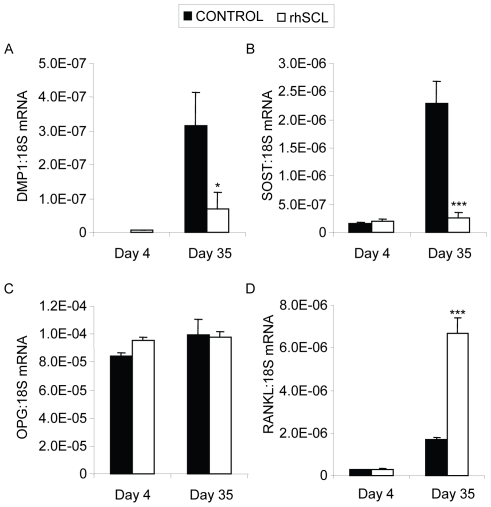
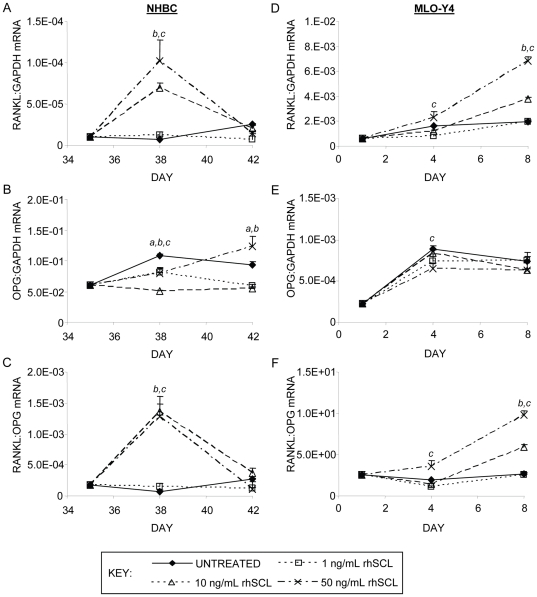
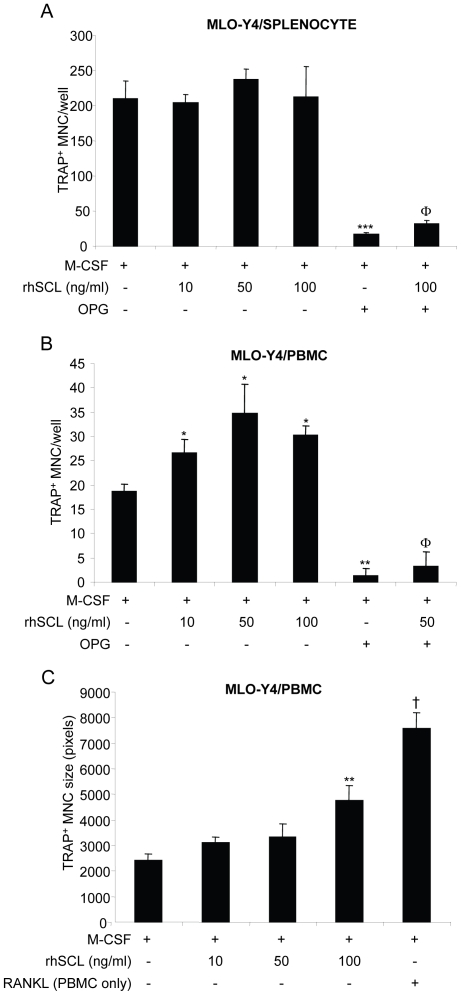
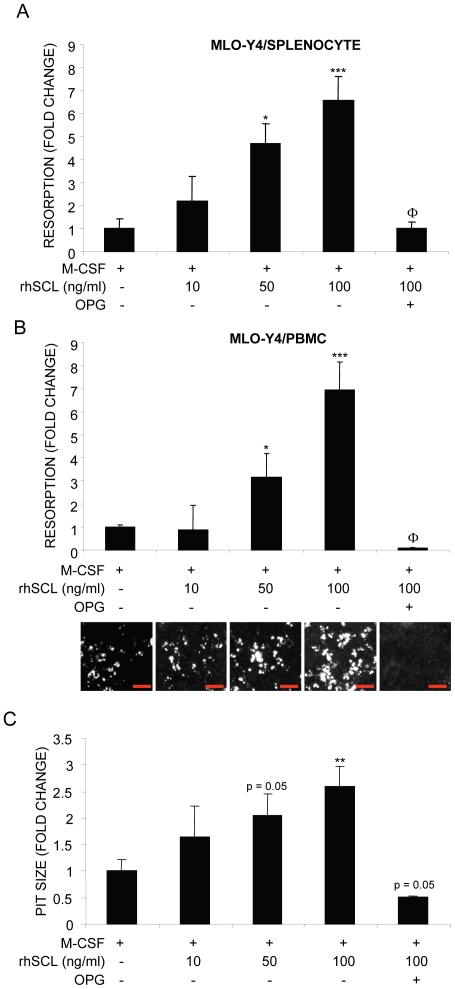
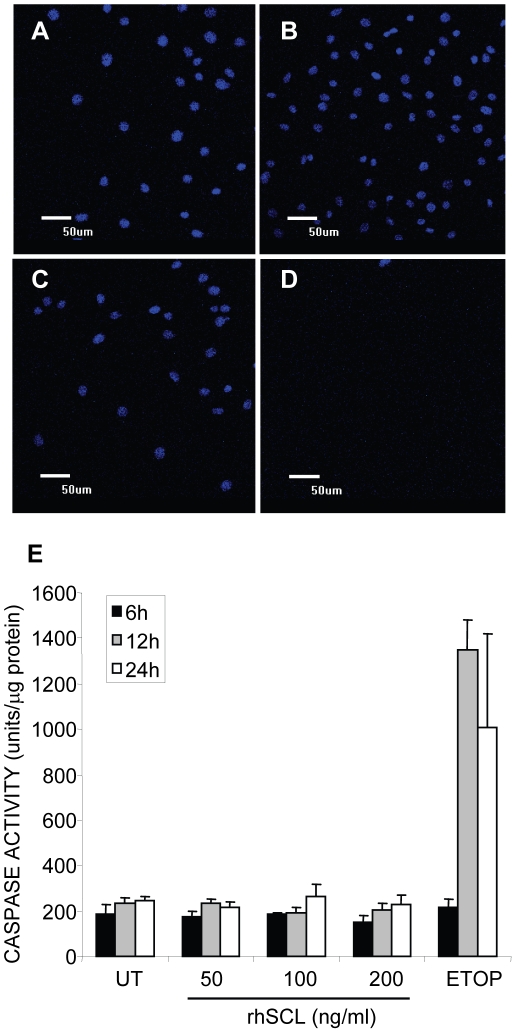
Sclerostin is a product of mature osteocytes embedded in mineralised bone and is a negative regulator of bone mass and osteoblast differentiation. While evidence suggests that sclerostin has an anti-anabolic role, the possibility also exists that sclerostin has catabolic activity. To test this we treated human primary pre-osteocyte cultures, cells we have found are exquisitely sensitive to sclerostin, or mouse osteocyte-like MLO-Y4 cells, with recombinant human sclerostin (rhSCL) and measured effects on pro-catabolic gene expression. Sclerostin dose-dependently up-regulated the expression of receptor activator of nuclear factor kappa B (RANKL) mRNA and down-regulated that of osteoprotegerin (OPG) mRNA, causing an increase in the RANK:OPG mRNA ratio. To examine the effects of rhSCL on resulting osteoclastic activity, MLO-Y4 cells plated onto a bone-like substrate were primed with rhSCL for 3 days and then either mouse splenocytes or human peripheral blood mononuclear cells (PBMC) were added. This resulted in cultures with elevated osteoclastic resorption (approximately 7-fold) compared to untreated co-cultures. The increased resorption was abolished by co-addition of recombinant OPG. In co-cultures of MLO-Y4 cells with PBMC, SCL also increased the number and size of the TRAP-positive multinucleated cells formed. Importantly, rhSCL had no effect on TRAP-positive cell formation from monocultures of either splenocytes or PBMC. Further, rhSCL did not induce apoptosis of MLO-Y4 cells, as determined by caspase activity assays, demonstrating that the osteoclastic response was not driven by dying osteocytes. Together, these results suggest that sclerostin may have a catabolic action through promotion of osteoclast formation and activity by osteocytes, in a RANKL-dependent manner.
Overview
The claims and statistics of this paper haven’t been checked yet.
Free: it reads the open-access text and checks the first 5 claims that cite a source we can check. Create a free account to check every claim.
Integrity signals
Registry
Cites
Statistics
Figures
Verification
Claims the paper makes
The claims and statistics of this paper haven’t been checked yet.
Free: it reads the open-access text and checks the first 5 claims that cite a source we can check. Create a free account to check every claim.
Claims other papers make about this one
Each is checked against this paper’s own text: does it say what the citing paper says it does?
The cited source doesn’t support the claim as written.
In the citing paper
“It achieves this by upregulating the Wnt pathway while also acting as an enhancer of RANKL synthesis, thereby downregulating this latter pathway [83,84,85].”
From Osteoporosis: Molecular Pathology, Diagnostics, and Therapeutics (2023) · cites this paper as [85]
Checked by a reasoning model — may be wrong.
Experimental — accuracy not yet measuredThe source backs part of the claim, not all of it — or backs it for a different population, condition or comparison.
In the citing paper
“it uniquely exhibits the ability to stimulate bone formation while simultaneously reducing bone resorption.”
From Osteoporosis: Molecular Pathology, Diagnostics, and Therapeutics (2023) · cites this paper as [85]
Experimental — accuracy not yet measuredThe check wasn’t confident either way, so it gives no verdict — never disputed.
In the citing paper
“Romosozumab is a newly approved monoclonal antibody targeting sclerostin.”
From Osteoporosis: Molecular Pathology, Diagnostics, and Therapeutics (2023) · cites this paper as [85]
Experimental — accuracy not yet measured
Self-check
Percentages, sums and reported differences re-computed from the paper’s own numbers.
The self-check needs the paper’s full text.
Citations
Cites
Evidence for osteocyte regulation of bone homeostasis through RANKL expression
Nakashima, T., Hayashi, M., Fukunaga, T., Kurata, K., Oh-hora, M., Feng, J. Q., Bonewald, L. F., Kodama, T., Wutz, A., Wagner, E. F., et al. (2011) · Nature Medicine · doi:10.1038/nm.2452 · Cited by 1,778
Self-citationWeinstein, R. S., Jilka, R. L., Parfitt, A. M., & Manolagas, S. C. (1998) · Journal of Clinical Investigation · doi:10.1172/jci2799 · Cited by 1,753 · cited 1×
“However, glucocorticoid-induced osteocyte apoptosis is associated with reduced osteoclastogenesis [63].”
BackgroundCanonical wnt signaling in differentiated osteoblasts controls osteoclast differentiation.
Glass, D. A., Bialek, P., Ahn, J. D., Starbuck, M., Patel, M. S., Clevers, H., Taketo, M. M., Long, F., McMahon, A. P., Lang, R. A., et al. (2005) · Developmental Cell · doi:10.1016/j.devcel.2005.02.017 · Cited by 1,558 · cited 2×
“in response to canonical [20] and potentially non-canonical [21]”
BackgroundSclerostin Binds to LRP5/6 and Antagonizes Canonical Wnt Signaling
Li, X., Zhang, Y., Kang, H., Liu, W., Liu, P., Zhang, J., Harris, S. E., & Wu, D. (2005) · Journal of Biological Chemistry · doi:10.1074/jbc.m413274200 · Cited by 1,366 · cited 1×
“lipoprotein receptor (LRP)-5 and 6 [13,14].”
Mechanical Stimulation of Bone in Vivo Reduces Osteocyte Expression of Sost/Sclerostin
Robling, A. G., Niziolek, P. J., Baldridge, L. A., Condon, K. W., Allen, M. R., Alam, I., Mantila, S. M., Gluhak-Heinrich, J., Bellido, T. M., Harris, S. E., et al. (2008) · Journal of Biological Chemistry · doi:10.1074/jbc.m705092200 · Cited by 1,350 · cited 1×
“loading [26] likely exert an anabolic effect, at least in part, by suppressing SCL expression.”
BackgroundMatrix-embedded cells control osteoclast formation
Xiong, J., Onal, M., Jilka, R. L., Weinstein, R. S., Manolagas, S. C., & O'Brien, C. A. (2011) · Nature Medicine · doi:10.1038/nm.2448 · Cited by 1,304
Osteocyte control of bone formation via sclerostin, a novel BMP antagonist
Winkler, D. G. (2003) · The EMBO Journal · doi:10.1093/emboj/cdg599 · Cited by 1,112 · cited 5×
“which SCL acts, are incompletely understood [7,8,9,10,11],”
BackgroundInfluentialSclerostin is a delayed secreted product of osteocytes that inhibits bone formation
Poole, K. E. S., Van Bezooijen, R. L., Loveridge, N., Hamersma, H., Papapoulos, S. E., Löwik, C. W., & Reeve, J. (2005) · The FASEB Journal · doi:10.1096/fj.05-4221fje · Cited by 965
Li, X., Ominsky, M. S., Niu, Q.-T., Sun, N., Daugherty, B., D'Agostin, D., Kurahara, C., Gao, Y., Cao, J., Gong, J., et al. (2008) · Journal of Bone and Mineral Research · doi:10.1359/jbmr.080216 · Cited by 936 · cited 1×
“gene display an osteopetrotic phenotype [48].”
van Bezooijen, R. L., Roelen, B. A. J., Visser, A., van der Wee-Pals, L., de Wilt, E., Karperien, M., Hamersma, H., Papapoulos, S. E., ten Dijke, P., & Löwik, C. W. G. M. (2004) · The Journal of Experimental Medicine · doi:10.1084/jem.20031454 · Cited by 892
Cited by
Items 301–400 of 563
Glucocorticoid-induced Osteoporosis
Jung, J., & Suh, C. (2017) · Korean Journal of Medicine · doi:10.3904/kjm.2017.92.2.142 · Cited by 15
“골형성은 Dikkopf-related protein 1 (DKK-1)과 sclerostin에 의해 억제되는데 스테로이드에 의하여 이들의 발현이 증가된다[25].”
Zhao, D., Tu, C., Zhang, L., Guda, T., Gu, S., & Jiang, J. X. (2024) · JCI Insight · doi:10.1172/jci.insight.177557 · Cited by 14
“SOST can directly increase RANKL levels from osteocytes, regulating osteoclast activity by inhibiting β -catenin in osteoclasts (41, 42).”
Fgfr1 deficiency in osteocytes leads to increased bone mass by enhancing Wnt/β-catenin signaling
Tang, Y., Yang, P., Jin, M. Y., Huang, S., Chen, H., Chen, L., Yang, J., & Su, N. Y. (2023) · Bone · doi:10.1016/j.bone.2023.116817 · Cited by 14
The Sequential Therapy in Osteoporosis
Sauhta, R., Makkar, D., & Siwach, P. S. (2023) · Indian Journal of Orthopaedics · doi:10.1007/s43465-023-01067-2 · Cited by 14
“It exercises its inhibitory influence by attaching to specific receptors on osteoblasts, thereby impeding their activity and leading to decreased bone formation and mineralization [71].”
Role of osteocytes in mediating bone mineralization during hyperhomocysteinemia
Vijayan, V., & Gupta, S. (2017) · Journal of Endocrinology · doi:10.1530/joe-16-0562 · Cited by 14
“RANKL is a protein secreted by differentiating osteoblasts and osteocytes that bind to RANK receptor on pre-osteoclasts to induce differentiation (Wijenayaka et al. 2011).”
BackgroundJacobsson, M., van Raalte, D. H., Heijboer, A. C., den Heijer, M., & de Jongh, R. T. (2020) · JBMR Plus · doi:10.1002/jbm4.10341 · Cited by 14
“(11) Furthermore, in human primary preosteocyte cultures and mouse osteocyte-like cells, recombinant human sclerostin administration results in a stimulation of osteoclast activity by a RANKL-mediatedmechanism.”
BackgroundKlentrou, P., Angrish, K., Awadia, N., Kurgan, N., Kouvelioti, R., & Falk, B. (2018) · Pediatric Exercise Science · doi:10.1123/pes.2017-0259 · Cited by 14
Tsartsalis, A. N., Lambrou, G. Ι., Tsartsalis, D. N., Papassotiriou, I., Vlachou, E. D., Terpos, E., Chrousos, G. P., Kanaka‐Gantenbein, C., & Kattamis, A. (2019) · Current Molecular Medicine · doi:10.2174/1566524019666190314114447 · Cited by 14
Bauman, W. A., & Cardozo, C. P. (2013) · Elsevier eBooks · doi:10.1016/b978-0-12-415853-5.00047-9 · Cited by 14
Nucleic acid aptamers in orthopedic diseases: promising therapeutic agents for bone disorders
He, Z., Peng, Q., Bin, W., Zhao, L., Chen, Y., Zhang, Y., Yang, W., Yan, X., & Liu, H. (2025) · Bone Research · doi:10.1038/s41413-025-00447-8 · Cited by 13
Occupational Activities: Factors That Tip the Balance From Bone Accrual to Bone Loss
Barbe, M. F., & Popoff, S. N. (2020) · Exercise and Sport Sciences Reviews · doi:10.1249/jes.0000000000000217 · Cited by 13
Sclerostin and its role as a bone modifying agent in periodontal disease
Ashifa, N., Viswanathan, K., Sundaram, R., & Srinivasan, S. (2021) · Journal of Oral Biosciences · doi:10.1016/j.job.2021.04.002 · Cited by 13
Serum Sclerostin and Its Association with Bone Turnover Marker in Metabolic Bone Diseases
Chen, L., Gao, G., Shen, L., Yue, H., Zhang, G., & Zhang, Z. (2022) · Disease Markers · doi:10.1155/2022/7902046 · Cited by 13
“A previous study showed that sclerostin may have a catabolic action through the promotion of osteoclast formation and activity by osteocytes in a RANKLdependent manner [26], since sclerostin has an effect both on bone formation and resorption.”
Pathogenesis, assessment, and management of bone loss in axial spondyloarthritis
Nakamura, A., & Towheed, T. (2023) · Seminars in Arthritis and Rheumatism · doi:10.1016/j.semarthrit.2023.152345 · Cited by 13
Constitutive Activation of β-Catenin in Differentiated Osteoclasts Induces Bone Loss in Mice
Sui, X., Deng, S., Liu, M., Fan, L., Wang, Y., Xu, H., Sun, Y., Kishen, A., & Zhang, Q. (2018) · Cellular Physiology and Biochemistry · doi:10.1159/000492549 · Cited by 13
Chatzopoulos, G. S., Costalonga, M., Mansky, K. C., & Wolff, L. F. (2021) · Medicina · doi:10.3390/medicina57080788 · Cited by 13
“Exclusion criteria were as follows: (a) periodontal treatment received in the last 12 months; (b) need for antibiotic premedication; (c) pregnancy or lactation; (d) antibiotic use in the last 6 months; (e) regular use of nonsteroidal anti-inflammatory drugs (NSAIDs); (f) diagnosis of aggressive periodontitis; (g) use…”
BackgroundInfluentialSapunarova, K., Goranova-Marinova, V. S., Georgiev, P., Deneva, T., Tsvetkova, S., & Grudeva-Popova, Z. G. (2020) · Annals of Medicine · doi:10.1080/07853890.2020.1744708 · Cited by 13
“Regarding OPG and sRANKL, our study adds further evidence about the close interplay between the Wntsignalling pathway and the OPG/RANKL system [56,57].”
BackgroundChildhood Cortical Porosity Is Related to Microstructural Properties of the Bone-Muscle Junction
Schnitzler, C. M. (2014) · Journal of Bone and Mineral Research · doi:10.1002/jbmr.2312 · Cited by 13
“” In response, local osteocytes are expected to activate resorption (new drifting canals) at this site, possibly mediated by sclerostin((43)) in a receptor activator of NF‐kB ligand (RANKL) dependent manner.((44)) RANKL, expressed by local osteocytes,((31)) interacts with RANK on the surface of osteoclast precursors (…”
BackgroundA guideline on biomarkers in the diagnosis and evaluation in axial spondyloarthritis
Liu, D., Xie, Y., Tu, L., Wen, X., Lv, Q., Liu, B., Yang, M., Wu, X., Zheng, X., Luo, X., et al. (2024) · Frontiers in Immunology · doi:10.3389/fimmu.2024.1394148 · Cited by 12
Takase, R., Tsubouchi, Y., Otsu, T., Kataoka, T., Iwasaki, T., Kataoka, M., & Tsumura, H. (2022) · Journal of Orthopaedic Surgery and Research · doi:10.1186/s13018-022-03276-1 · Cited by 12
“When the stoichiometry levels of sclerostin exceed that of the Wnt ligand, the signals will not be activated, thus leading to β-catenin degradation, lower bone formation, osteoblast genesis, and higher bone resorption for increasing the levels of receptor activator of NF-κB ligand [10].”
BackgroundPigeaud, K. E., Rietveld, M. L., Witvliet, A. F., Hogervorst, J. M. A., Zhang, C., Forouzanfar, T., Bravenboer, N., Schoenmaker, T., & de Vries, T. J. (2023) · International Journal of Molecular Sciences · doi:10.3390/ijms24087574 · Cited by 12
“reported that in a co-culture of PBMCs and osteocytes (MLO-Y4 cells) sclerostin can specifically result in increased resorbing activity without increasing the number of TRAcP-positive cells [33].”
BackgroundMethodInfluentialPivonka, P., Calvo‐Gallego, J. L., Schmidt, S., & Martínez‐Reina, J. (2024) · Bone · doi:10.1016/j.bone.2024.117140 · Cited by 12
Simko, J., Karesova, I., Kremláček, J., Fekete, S., Zimčíková, E., Maláková, J., Živná, H., Vališ, M., & Palička, V. (2016) · Epilepsy Research · doi:10.1016/j.eplepsyres.2016.10.005 · Cited by 12
Strollo, R., Soare, A., Khazrai, Y. M., Mauro, A. D., Palermo, A., Toro, R. D., Fallucca, S., Belluomo, M. G., Dugo, L., Pianesi, M., et al. (2016) · Endocrine · doi:10.1007/s12020-016-1171-7 · Cited by 12
“[24–26].”
Review of Secondary Causes of Osteoporotic Fractures Due to Diabetes and Spinal Cord Injury
Zamarioli, A., Staut, C. D. A., & Volpon, J. B. (2020) · Current Osteoporosis Reports · doi:10.1007/s11914-020-00571-w · Cited by 12
Arnett, T. R. (2013) · Elsevier eBooks · doi:10.1016/b978-0-12-415853-5.00008-x · Cited by 12
The WNT/β-catenin system in chronic kidney disease-mineral bone disorder syndrome
Zhang, L., Adu, I. K., Zhang, H., & Wang, J. (2023) · International Urology and Nephrology · doi:10.1007/s11255-023-03569-2 · Cited by 11
“In addition, sclerostin directly activates bone resorption by increasing the ratio of receptor activator of NF-κB ligand (RANKL) to osteoprotectin [89, 98].”
BackgroundLee, C.-C., Hung, C., Chen, C., Hsu, Y., Huang, Y.-P., Huang, T., & Lee, M. (2021) · International Journal of Molecular Sciences · doi:10.3390/ijms22158320 · Cited by 11
Increased circulating sclerostin levels in rheumatoid arthritis patients: an updated meta-analysis
Mao, Y., Liao, T., Ye, Q.-L., Wu, G., Zhang, Q., Tao, S., Zhao, C., Wu, Q., Dan, Y., Pan, H., et al. (2021) · Zeitschrift für Rheumatologie · doi:10.1007/s00393-021-01091-3 · Cited by 11
Aging: A struggle for beneficial to overcome negative factors made by muscle and bone
Welc, S. S., Brotto, M., White, K. E., & Bonewald, L. F. (2025) · Mechanisms of Ageing and Development · doi:10.1016/j.mad.2025.112039 · Cited by 11
Self-citationCirculating Dickkopf-1 and sclerostin in patients with Paget’s disease of bone
Idolazzi, L., Fassio, A., Tripi, G., Braga, V., Viapiana, O., Adami, G., Rossini, M., & Gatti, D. (2017) · Clinical Rheumatology · doi:10.1007/s10067-016-3497-1 · Cited by 11
Schiavi, S. C. (2015) · Current Osteoporosis Reports · doi:10.1007/s11914-015-0263-2 · Cited by 11
Hofsø, D., Bollerslev, J., Sandbu, R., Jørgensen, A. P., Godang, K., Hjelmesaeth, J. S., & Ueland, T. (2016) · Endocrine · doi:10.1007/s12020-016-0903-z · Cited by 12
Rodríguez-Ortiz, M. E., Díaz‐Tocados, J. M., Torralbo, A. I., Valdés-Díaz, K. C., Rivas-Domínguez, A., Guerrero, F., Reina-Alfonso, I., Naves‐Díaz, M., Alonso‐Montes, C., Rodelo‐Haad, C., et al. (2025) · Bone and Joint Research · doi:10.1302/2046-3758.145.bjr-2024-0227.r1 · Cited by 10
“33 Osteomacs are resident macrophages present in bone tissue.”
Sclerostin ablation prevents aortic valve stenosis in mice
Joll, J. E., Riley, L. A., Bersi, M. R., Nyman, J. S., & Merryman, W. D. (2022) · American Journal of Physiology-Heart and Circulatory Physiology · doi:10.1152/ajpheart.00355.2022 · Cited by 10
Mohsin, S., Brock, F., Kaimala, S., Greenwood, C., Sulaiman, M., Rogers, K. D., & Adeghate, E. A. (2023) · PeerJ · doi:10.7717/peerj.16278 · Cited by 10
“In osteoclasts, the expression of cathepsin K, TRAP (tartrate-resistant acid phosphatase), and carbonic anhydrase-2 proteins, involved in the remodeling of the extracellular matrix are upregulated by sclerostin ( Wijenayaka et al., 2011 ).”
Dai, Z., Fang, P., Yan, X., Zhu, R., Feng, Q., Yan, Q., Yang, L., Fan, X., Xie, Y., Zhuang, L., et al. (2021) · Frontiers in Pharmacology · doi:10.3389/fphar.2021.770073 · Cited by 10
Got WNTS? Insight into bone health from a WNT perspective
Craig, S. E. L., Michalski, M. N., & Williams, B. O. (2023) · Current topics in developmental biology/Current Topics in Developmental Biology · doi:10.1016/bs.ctdb.2023.01.004 · Cited by 10
Adhish, M., & Manjubala, I. (2023) · Journal of Biomolecular Structure and Dynamics · doi:10.1080/07391102.2023.2249103 · Cited by 10
“In addition to that, SOST is known to regulate the receptor activator of the nuclear factor-j B ligand (RANKL)/osteoprotegerin (OPG) axis to activate osteoclasts and promote osteoclastogenesis (Rhee et al., 2011; Wijenayaka et al., 2011).”
Osteocytes: Regulating the Mineral Reserves?
Arnett, T. R. (2013) · Journal of Bone and Mineral Research · doi:10.1002/jbmr.2119 · Cited by 11
“This idea is based not only on the present work but on another recent study, showing that sclerostin increased the ratio of RANKL: osteoprotegerin (OPG) mRNA expressed by cultured osteocyte‐ like cells and stimulated osteoclastogenesis in cocultures.((18))”
ResultOsteocytes communicate with osteoclast lineage cells via RANKL
Matsuo, K. (2012) · IBMS BoneKEy · doi:10.1038/bonekey.2012.36 · Cited by 10
Sclerostin in excessive drinkers: relationships with liver function and body composition
Martín González, C., Fernández Rodríguez, C. M., Abreu González, P., García Rodríguez, A., Alvisa Negrín, J. C., Cabañas Perales, E., González Navarrete, L., Vera Delgado, V. E., Ortega Toledo, P., & González Reimers, E. (2022) · Nutrients · doi:10.3390/nu14132574 · Cited by 9
“Some data support the view that sclerostin may also activate bone resorption [4].”
BackgroundRuiz-Lozano, R., Calvo‐Gallego, J. L., Pivonka, P., & Martínez‐Reina, J. (2025) · Biomechanics and Modeling in Mechanobiology · doi:10.1007/s10237-024-01900-z · Cited by 9
“…model of Rmab than the one previously developed by Martin et al. (2020); 2) considering the catabolic effect of sclerostin due to the increase of RANKL levels (Wijenayaka et al. 2011), apart from its well-known anti-anabolic effect; and 3) a fracture risk estimator based on an assumed overload.”
InfluentialWirsig, K., Bürger, N., Fleischhauer, L., Preuß, N. L., & Bernhardt, A. (2025) · Materials Today Bio · doi:10.1016/j.mtbio.2025.102154 · Cited by 9
“Furthermore, SOST supports OC formation and activity through a RANKL-dependent pathway, that regulates the dynamic RANKL/OPG ratio, leading to either bone formation or resorption [69].”
In vitro model to study confined osteocyte networks exposed to flow-induced mechanical stimuli
Zhang, K., Ogando, C. R., Filip, A., Zhang, T., Horton, J. A., & Soman, P. (2022) · Biomedical Materials · doi:10.1088/1748-605x/aca37c · Cited by 9
Sclerostin regulation: a promising therapy for periodontitis by modulating alveolar bone
Li, T., Wang, R., Li, Q., Li, C., & Jiang, L. (2020) · Chinese Medical Journal · doi:10.1097/cm9.0000000000000764 · Cited by 9
Sclerostin and Its Involvement in the Pathogenesis of Idiopathic Scoliosis
Vasiliadis, E. S., Evangelopoulos, D. S., Kaspiris, A., Vlachos, C., & Pneumaticos, S. G. (2021) · Journal of Clinical Medicine · doi:10.3390/jcm10225286 · Cited by 9
How rare bone diseases have informed our knowledge of complex diseases
Johnson, M. L. (2016) · BoneKEy Reports · doi:10.1038/bonekey.2016.69 · Cited by 9
Diao, X., Li, Z., An, B., Xin, H., Wu, Y., Li, K., Feng, F., & Dou, C. (2017) · Scientific Reports · doi:10.1038/s41598-017-06867-9 · Cited by 9
Dhakad, U., Sahoo, R. R., Goel, A. P., Pradhan, S., Srivastava, R., & Das, S. (2019) · Indian Journal of Rheumatology · doi:10.4103/injr.injr_113_18 · Cited by 9
“[11] Overall, sclerostin is involved in the prevention of bone formation.”
Garnero, P., & Cremers, S. (2019) · Elsevier eBooks · doi:10.1016/b978-0-12-814841-9.00078-6 · Cited by 9
Sclerostin: how human mutations have helped reveal a new target for the treatment of osteoporosis
Robinson, M. K., Caminis, J. N., & Brunkow, M. E. (2013) · Drug Discovery Today · doi:10.1016/j.drudis.2013.04.001 · Cited by 9
Wirsig, K., Báčová, J., Richter, R. F., Hintze, V., & Bernhardt, A. (2024) · Materials Today Bio · doi:10.1016/j.mtbio.2024.101006 · Cited by 9
“OCy-produced SOST stimulates the expression of RANKL in OCys [46].”
BackgroundOsteoporosis: definición, tendencia epidemiológica, avances en la fisiopatología y clínica
Romero, M. J. G. D. T., & Henríquez, M. S. (2014) · Medicine - Programa de Formación Médica Continuada Acreditado · doi:10.1016/s0304-5412(14)70811-x · Cited by 8
Serum concentrations of sclerostin and bone turnover markers in children with cow's milk allergy.
Ambroszkiewicz, J., Rowicka, G., Chełchowska, M., Gajewska, J., Strucińska, M., & Laskowska–Klita, T. (2013) · PubMed · Cited by 8
Sclerostin Blockade—A Dual Mode of Action After All?
Baschant, U., Henneicke, H., Hofbauer, L. C., & Rauner, M. (2016) · Journal of Bone and Mineral Research · doi:10.1002/jbmr.2988 · Cited by 8
“Second, osteocyte-derived sclerostin stimulates osteoclastogenesis in a RANKL-dependent manner in vitro.((28)) And third, bone resorption markers decrease after initiating treatment with a sclerostin-neutralizing antibody in rats and humans, both suggesting a dual mode of action; ie, the stimulation of bone formation…”
BackgroundInsight into the WNT system and its drug related response
Tamanini, S., Idolazzi, L., Gatti, D., Viapiana, O., Fassio, A., & Rossini, M. (2013) · Reumatismo · doi:10.4081/reumatismo.2013.219 · Cited by 8
Cucchi, D., Menon, A., Galliera, E., Messina, C., Zanini, B., Marazzi, M. G., Massaccesi, L., Compagnoni, R., Romanelli, M. M. C., & Randelli, P. S. (2018) · Journal of Clinical Densitometry · doi:10.1016/j.jocd.2018.05.039 · Cited by 8
“SOST promotes the RANKL-dependent osteoclast formation and osteocyte activity (27), while DKK-1 induce the production of RANKL, thereby shifting the balance of RANKL/OPG in favour of RANKL and promoting osteoclastogenesis and bone resorption (28,29).”
BackgroundSclerostin: A Novel Player Regulating Bone Mass in Inflammation?
Albisetti, W., Giarratana, L. S., Viganò, C., Castiglioni, S., & Maier, J. A. M. (2013) · European Journal of Inflammation · doi:10.1177/1721727x1301100204 · Cited by 8
Advances in noninvasive diagnosis of renal osteodystrophy
Yang, Q., Chen, S., Yu, Z., Wen, X., & Ou, S. (2025) · Renal Failure · doi:10.1080/0886022x.2025.2593710 · Cited by 7
Li, Y., Ng, S., Kong, K., Jin, M., Fan, W., Zhou, W., Zhai, Z., & Li, H. (2026) · Journal of Orthopaedic Translation · doi:10.1016/j.jot.2025.101044 · Cited by 7
“Mechanistically, beyond suppressing Wnt-mediated bone formation, SOST in osteocytes upregulates RANKL and downregulates OPG, markedly increasing the RANKL/OPG ratio and thereby enhancing osteoclastogenesis and bone resorption [153].”
Gil-Cosano, J. J., Ubago‐Guisado, E., Llorente‐Cantarero, F. J., Mármol-Pérez, A., Rodríguez-Solana, A., Pascual-Gázquez, J. F., Mateos, M. E., Hurtado, J. R. M., García-Fontana, B., Narciso, P. H., et al. (2024) · Nutrients · doi:10.3390/nu16223914 · Cited by 7
“Additionally, recent studies indicate that sclerostin exerts an indirect catabolic effect on bone by raising the RANK/OPG mRNA ratio, which promotes osteoclastic activity and bone resorption [21].”
Dai, Z., Zhu, R., Sheng, Z., Qin, G., Luo, X., Qin, Q., Song, C., Li, L., Jin, P., Yang, G., et al. (2023) · Frontiers in Endocrinology · doi:10.3389/fendo.2023.1168757 · Cited by 7
“Sclerostin may also act as an enhancer of osteoclastogenesis by upregulating the synthesis of the receptor activator of NF-kB ligand (13).”
BackgroundAlternated activation with relaxation of periosteum stimulates bone modeling and remodeling
Saulačić, N., Katagiri, H., Fujioka‐Kobayashi, M., Ferrari, S., & Gerbaix, M. (2024) · Scientific Reports · doi:10.1038/s41598-024-61902-w · Cited by 7
“Sost has been identified as a key regulator of bone formation that inhibits osteoblast differentiation 32 and stimulates osteoclast differentiation in a RANKL-dependent manner 33 .”
BackgroundCellular Contributors to Bone Homeostasis
Rauner, M., Jähn, K., Hemmatian, H., Colditz, J., & Goettsch, C. (2020) · Contemporary cardiology · doi:10.1007/978-3-030-46725-8_16 · Cited by 7
Bone niche and bone metastases
Han, Y., & Kang, Y. (2021) · Elsevier eBooks · doi:10.1016/b978-0-12-821666-8.00041-4 · Cited by 7
Nguyen, H. N., & Kampa, N. (2013) · The Thai Journal of Veterinary Medicine · doi:10.56808/2985-1130.2488 · Cited by 7
“However, recently it has been denoted that sclerostin also promotes osteoclast formation (Wijenayaka et al., 2011).”
BackgroundBecker, M., Witzel, C., Kierdorf, U., Frölich, K., & Kierdorf, H. (2020) · Journal of Anatomy · doi:10.1111/joa.13194 · Cited by 7
Gaudio, A., Muratore, F., Fiore, V., Rapisarda, R., Signorelli, S. S., & Fiore, C. E. (2015) · Osteoporosis International · doi:10.1007/s00198-015-3057-6 · Cited by 6
Sharma, S., Kulkarni, C., Verma, N. K., Srivastava, S., Babu, R., Ghosh, A., Dasgupta, N., Gupta, A., Kaur, S. P., Sapra, L., et al. (2025) · Biomedicine & Pharmacotherapy · doi:10.1016/j.biopha.2025.118501 · Cited by 6
3D Osteocyte Networks under Pulsatile Unidirectional Fluid Flow Stimuli (PUFFS)
Merife, A.-B., Poudel, A., Polshikova, A., Geffert, Z. J., Horton, J. A., Akash, M. M. H., Pandey, A., Basu, S., Fougnier, D., & Soman, P. (2025) · ACS Biomaterials Science & Engineering · doi:10.1021/acsbiomaterials.5c00730 · Cited by 6
Yiğit, U., Kırzıoğlu, F. Y., & Özmen, Ö. (2022) · Biotechnic & Histochemistry · doi:10.1080/10520295.2022.2036370 · Cited by 6
“Inflammatory reactions increase the RANKL:OPG ratio (Wijenayaka et al. 2011; Koide et al. 2017).”
BackgroundImpact of radiotherapy on bone health in women with rectal cancer – A prospective cohort study
Röjvall, A. S., Buchli, C., Sääf, M., Magnusson, P., Rådestad, A. F., Martling, A., & Segelman, J. (2022) · European Journal of Surgical Oncology · doi:10.1016/j.ejso.2022.06.028 · Cited by 6
Ashifa, N., Viswanathan, K., Srinivasan, S., Kumar, S. P., Sundaram, R., & Pavithran, V. K. (2023) · Journal of Advanced Periodontology & Implant Dentistry · doi:10.34172/japid.2023.009 · Cited by 6
Sclerostin and OPG/RANK-L system take part in bone remodeling in patients with acromegaly
Halupczok-Żyła, J., Jawiarczyk-Przybyłowska, A., & Bolanowski, M. (2024) · Frontiers in Endocrinology · doi:10.3389/fendo.2024.1472680 · Cited by 6
Bridging the gap: Compressing non-unions for proper cellular signaling
Kloen, P., Loots, G. G., Hamdy, R. C., & Smit, T. H. (2022) · Medical Hypotheses · doi:10.1016/j.mehy.2022.110794 · Cited by 6
Loss of Nmp4 enhances bone gain from sclerostin antibody administration
Korff, C., Adaway, M., Atkinson, E. G., Horan, D. J., Klunk, A. J., Silva, B. S., Bellido, T., Plotkin, L. I., Robling, A. G., & Bidwell, J. P. (2023) · Bone · doi:10.1016/j.bone.2023.116891 · Cited by 6
Osteocytes and Osteoclasts, a Relationship Under Strain
Bakker, A. D., & Everts, V. E. (2014) · Clinical Reviews in Bone and Mineral Metabolism · doi:10.1007/s12018-014-9153-x · Cited by 6
“Exogenous treatment of osteocytes with sclerostin can increase RANKL-mediated osteoclast activity [49], suggesting that sclerostin production by mechanically unloaded osteocytes not only reduces bone formation, but may also enhance bone resorption.”
BackgroundOsteocytes and Their Messengers as Targets for the Treatment of Multiple Myeloma
Delgado‐Calle, J. (2017) · Clinical Reviews in Bone and Mineral Metabolism · doi:10.1007/s12018-017-9227-7 · Cited by 6
“independent fashion, can also modulate the expression of RANKL in osteocytes [22, 32, 38].”
BackgroundLe, B. K., Ray, C. E., González, B., Miskevics, S. A., Weaver, F. M., Priebe, M. M., & Carbone, L. D. (2019) · Journal of Clinical Densitometry · doi:10.1016/j.jocd.2019.06.003 · Cited by 6
Sinclair, C., Birch, H. L., Smith, R. K. W., & Goodship, A. E. (2013) · Elsevier eBooks · doi:10.1016/b978-0-7020-4771-8.00008-9 · Cited by 6
Cardozo, C. P., & Bauman, W. A. (2020) · Elsevier eBooks · doi:10.1016/b978-0-12-813073-5.00040-x · Cited by 6
WNT Signaling in Skeletal Homeostasis and Diseases
Gori, F., & Baron, R. (2013) · Elsevier eBooks · doi:10.1016/b978-0-12-415853-5.00018-2 · Cited by 6
Kim, Y. K., KAMEO, Y., Tanaka, S., & ADACHI, T. (2024) · JBMR Plus · doi:10.1093/jbmrpl/ziad003 · Cited by 5
Nomura, H., & Nomura, S. (2025) · AME Case Reports · doi:10.21037/acr-24-163 · Cited by 5
“It also stimulates the production of the receptor activator of nuclear factor-κ B ligand (RANKL) and suppresses the production of osteoprotegerin (OPG) in osteoblasts (22,23).”
CAV-1 regulates osteocyte communication with osteoclast and osteoblast precursors
Pizarro‐Gómez, J., Tirado‐Cabrera, I., Heredero‐Jiménez, S., Martín‐Guerrero, E., Portal‐Núñez, S., Alonso, V., Ardura, J. A., & Gortázar, A. R. (2025) · Scientific Reports · doi:10.1038/s41598-025-08570-6 · Cited by 5
Papapoulos, S. E. (2014) · BoneKEy Reports · doi:10.1038/bonekey.2014.18 · Cited by 5
Current Knowledge, Drug-Based Therapeutic Options and Future Directions in Managing Osteoporosis
Moshiri, A., Sharifi, A. M., & Oryan, A. (2016) · Clinical Reviews in Bone and Mineral Metabolism · doi:10.1007/s12018-016-9207-3 · Cited by 6
“Although romosozumab acts as a pure anabolic agent in the beginning of treatment, its continued administration results in mild inhibition of bone resorption and reduction in the remodeling space [157].”
BackgroundLeptin receptor gene deficiency minimally affects osseointegration in rats
Jolic, M., Ruscsák, K., Emanuelsson, L., Norlindh, B., Thomsen, P., Shah, F. A., & Palmquist, A. (2023) · Scientific Reports · doi:10.1038/s41598-023-42379-5 · Cited by 5
Mechanistic implications of diabetes leading to bone pathology
Konar, M., Kaur, B., & Sharma, S. (2024) · Journal of Orthopaedic Reports · doi:10.1016/j.jorep.2024.100485 · Cited by 5
Ouyang, J., Chai, H., Sun, C., Wang, S., She, C., Geng, D., & Xu, W. (2025) · Antioxidants and Redox Signaling · doi:10.1089/ars.2024.0894 · Cited by 5
“Knocking down Cx43 in osteocytes leads to a reduction in Sclerostin (SOST) expression (Hoppock et al., 2023), which can promote the formation of osteoclasts and enhance their resorptive activity (Wijenayaka et al., 2011).”
Could Bone Biomarkers Predict Bone Turnover after Kidney Transplantation?—A Proof-of-Concept Study
Magalhães, J., Quelhas‐Santos, J., Pereira, L., Neto, R., Castro‐Ferreira, I., Martins, S., Frazão, J. M., & Carvalho, C. (2022) · Journal of Clinical Medicine · doi:10.3390/jcm11020457 · Cited by 5
“Other studies have already shown that SOST/sclerostin upwardly regulates RANKL, increases the number of osteoclasts and increases the RANKL/OPG ratio [30,42].”
Romosozumab for the treatment of postmenopausal osteoporosis
Cosman, F., & Saag, K. G. (2020) · Elsevier eBooks · doi:10.1016/b978-0-12-813073-5.00080-0 · Cited by 5
Sclerostin regulates RANKL expression in osteocytes
(2012) · BoneKEy Reports · doi:10.1038/bonekey.2012.20 · Cited by 5
Chen, M., Lin, Y., Wang, H., & Wang, D. (2022) · Materials Express · doi:10.1166/mex.2022.2145 · Cited by 5
Bundling of collagen fibrils influences osteocyte network formation during bone modeling
Hashimoto, M., Takahashi, H., Tabata-Okubo, K., Nagaoka, N., Tokunaga, K., Matsumori, H., Ishihara, Y., Kaku, M., Iimura, T., Hara, T., et al. (2023) · Scientific Reports · doi:10.1038/s41598-023-48786-y · Cited by 5
Fayed, A., Soliman, A. M., & Elgohary, R. (2019) · JCR Journal of Clinical Rheumatology · doi:10.1097/rhu.0000000000001256 · Cited by 5
“Sclerostin inhibits bone formation by inhibiting osteoblasts and promoting osteoclast activity by increasing the expression of the receptor activator of nuclear factor κB ligand and decreasing the expression of osteoprotegerin.(38,39) In addition, sclerostin affects bone mineralization and has an impact on serum fibro…”
BackgroundWNT signaling in skeletal homeostasis and diseases
Gori, F., & Baron, R. (2020) · Elsevier eBooks · doi:10.1016/b978-0-12-813073-5.00012-5 · Cited by 5
Sclerostin: A Potential Link between Osteoporosis and Alzheimer's Disease
Guo, Z., Xu, Q. Y., Zhang, K., Ma, Y., Sheng, S., Jing, D., Sun, X., Kan, C., & Yu, X. (2025) · Neurodegenerative Diseases · doi:10.1159/000547072 · Cited by 4
“Additionally, it promotes osteoclast-mediated bone resorption by upregulating receptor activator of nuclear factor kappa-B ligand expression [23].”
Lee, P. S., Hess, R., Friedrichs, J., Hänchen, V., Eckert, H., Cuniberti, G., Rancourt, D. E., Krawetz, R. J., Hintze, V., Gelinsky, M., et al. (2019) · Journal of Tissue Engineering and Regenerative Medicine · doi:10.1002/term.2921 · Cited by 4
“Additionally, the elevated expression of sclerostin (Sost) would have also induced Trap5b expression via the RANKL‐dependent pathway for bone remodelling and resorption (Weivoda, Youssef, & Oursler, 2017; Wijenayaka et al., 2011).”
Background
Metadata
- Authors
- Wijenayaka, A. R., Kogawa, M., Lim, H. P., Bonewald, L. F., Findlay, D. M., & Atkins, G. J.
- Affiliations
- Hanson Institute (AU)
- University of Missouri–Kansas City (US)
- Corresponding author
- Atkins, Gerald J.
- Venue
- PLoS ONE
- Publisher
- Public Library of Science (PLoS)
- Published
- 2011-10-04
- Volume
- 6
- Issue
- 10
- Pages
- e25900
- ISSN
- 1932-6203 (ISSN-L)
- PMC
- PMC3186800
- OpenAlex
- W2028910660
- Cited by
- 503
- References
- 66
- Citations by year
- 2026: 22 · 2025: 21 · 2024: 26 · 2023: 33 · 2022: 33 · 2021: 33 · 2020: 57 · 2019: 49 · 2018: 37 · 2017: 37 · 2016: 37 · 2015: 29 · 2014: 33 · 2013: 32 · 2012: 22
- FWCI
- 11.55
- Type
- journal article
- Language
- en
- Open access
- gold
- doi.org
- Locations
- PLoS ONE (publishedVersion, cc-by)
- PubMed Central (publishedVersion, cc-by)
- PubMed (publishedVersion)
- Adelaide Research & Scholarship (AR&S) (University of Adelaide) (submittedVersion, cc-by)
- DOAJ (DOAJ: Directory of Open Access Journals) (submittedVersion, cc-by-sa)
- Funders
- Royal Adelaide Hospital
- Medical Research Council
- National Health and Medical Research Council (565372)
- Topics
- Life Sciences › Biochemistry, Genetics and Molecular Biology › Molecular Biology › Bone Metabolism and Diseases
- Health Sciences › Medicine › Orthopedics and Sports Medicine › Bone health and osteoporosis research
- Life Sciences › Biochemistry, Genetics and Molecular Biology › Biochemistry › Bone and Dental Protein Studies
- Keywords
- sclerostin, osteocytes, osteoclasts, RANKL, osteoprotegerin, bone resorption, osteoclastogenesis, bone catabolism, MLO-Y4 cells, TRAP-positive multinucleated cells, osteocyte apoptosis
- MeSH terms
- Tartrate-Resistant Acid Phosphatase, Acid Phosphatase, Adult, Animals, Calcification, Physiologic, Cell Differentiation, Cell Survival, Cells, Cultured, Gene Expression Regulation, Genetic Markers, Humans, Isoenzymes, Osteoblasts, Osteoclasts, Osteocytes, Osteogenesis, Recombinant Proteins, Signal Transduction, Apoptosis, Bone Morphogenetic Proteins, Adaptor Proteins, Signal Transducing, Mice, RANK Ligand
About these checks
Registry, retraction, Cites and statistics results are computed, not judged, with one exception: a printed reference that no index lists is read once by a model before it counts as a citation error. Claims are extracted by a model and kept only when their quote appears verbatim in the text; each cited source is then checked, with a model’s help, for whether it says what the claim relies on. Those verdicts can be wrong — read the claim’s quote and the cited source before relying on one.
Statistics and arithmetic are recomputed, not judged.
Confidence bands are shown only for fields calibrated on our annotated test set. None is calibrated yet, so no band is shown.
What counts as a claim ›How we measure confidence ›How we check this ›
Are you an author, or do you see a problem with this page? Request a review
Data sources
Bibliographic data: Semantic Scholar, OpenAlex, Crossref.
Contains information from the Semantic Scholar Academic Graph Datasets, made available under the ODC Attribution License (ODC-BY 1.0).
Semantic Scholar’s data is described in: Kinney, R., et al. (2023). The Semantic Scholar Open Data Platform. arXiv:2301.10140.
