

Sclerostin Stimulates Osteocyte Support of Osteoclast Activity by a RANKL-Dependent Pathway
Open accessThe DOI matches its Crossref record; 66 of the 66 references it cites were found in a registry or an index.
Abstract
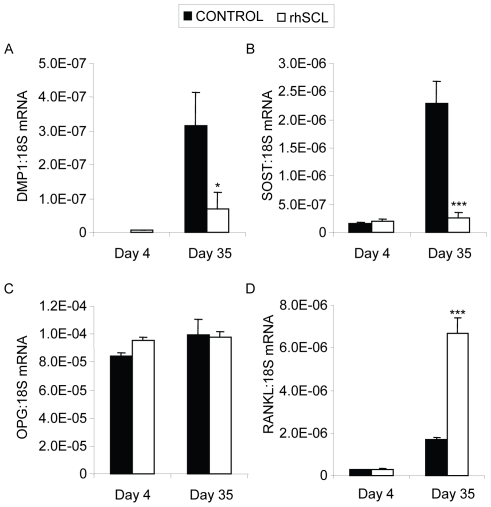
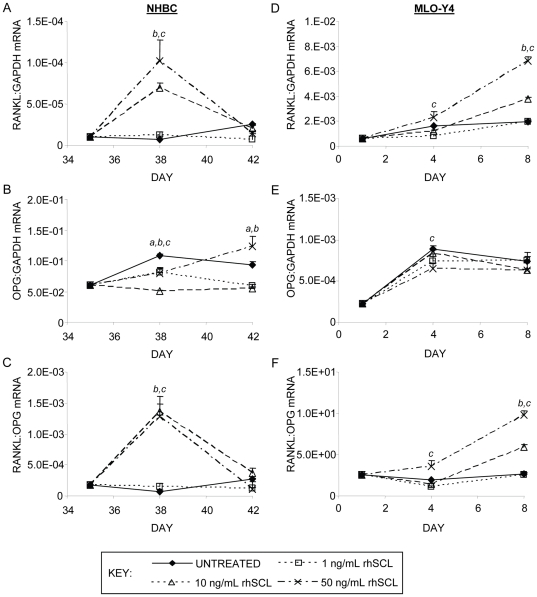
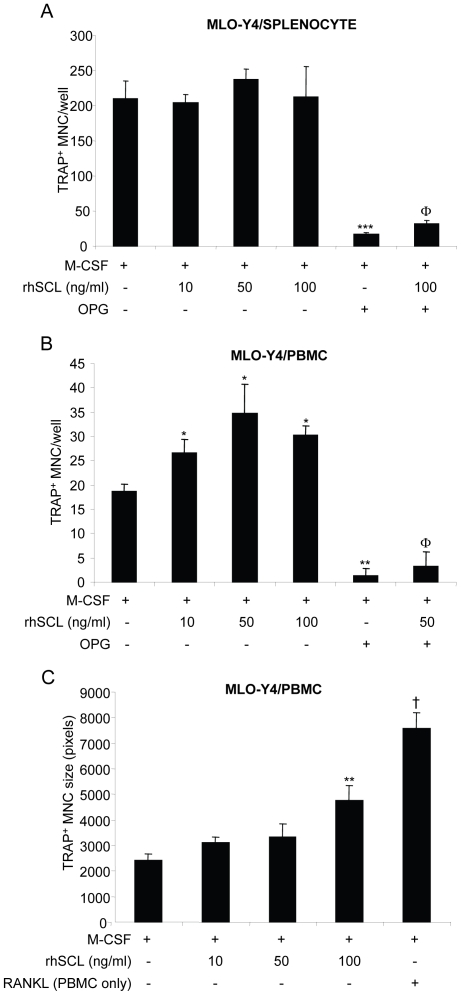
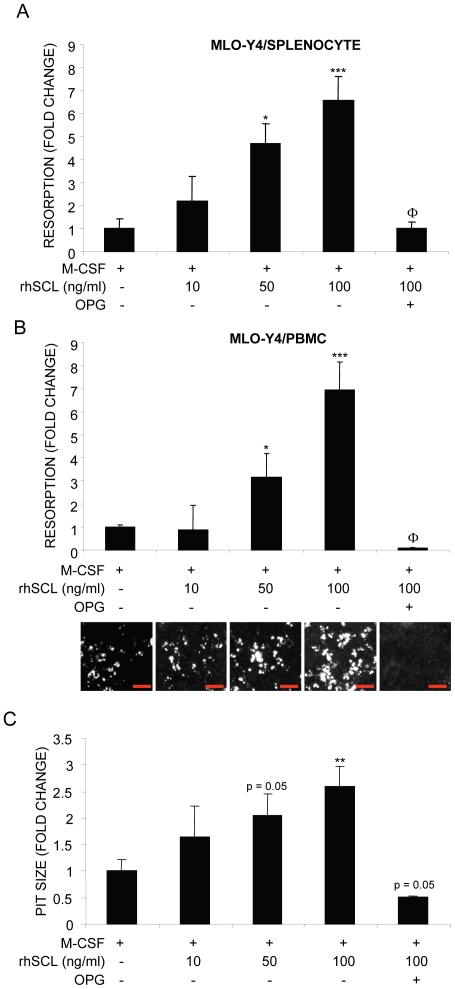
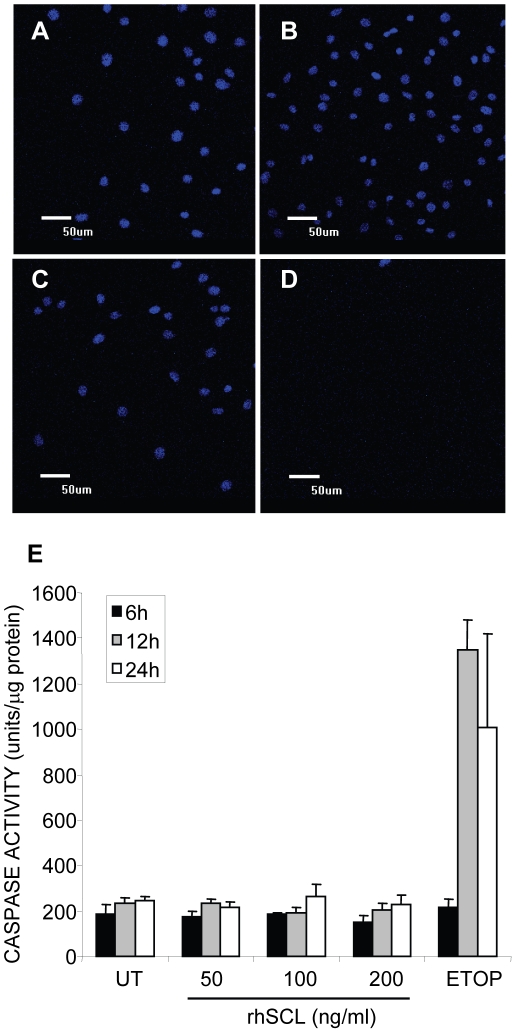
Sclerostin is a product of mature osteocytes embedded in mineralised bone and is a negative regulator of bone mass and osteoblast differentiation. While evidence suggests that sclerostin has an anti-anabolic role, the possibility also exists that sclerostin has catabolic activity. To test this we treated human primary pre-osteocyte cultures, cells we have found are exquisitely sensitive to sclerostin, or mouse osteocyte-like MLO-Y4 cells, with recombinant human sclerostin (rhSCL) and measured effects on pro-catabolic gene expression. Sclerostin dose-dependently up-regulated the expression of receptor activator of nuclear factor kappa B (RANKL) mRNA and down-regulated that of osteoprotegerin (OPG) mRNA, causing an increase in the RANK:OPG mRNA ratio. To examine the effects of rhSCL on resulting osteoclastic activity, MLO-Y4 cells plated onto a bone-like substrate were primed with rhSCL for 3 days and then either mouse splenocytes or human peripheral blood mononuclear cells (PBMC) were added. This resulted in cultures with elevated osteoclastic resorption (approximately 7-fold) compared to untreated co-cultures. The increased resorption was abolished by co-addition of recombinant OPG. In co-cultures of MLO-Y4 cells with PBMC, SCL also increased the number and size of the TRAP-positive multinucleated cells formed. Importantly, rhSCL had no effect on TRAP-positive cell formation from monocultures of either splenocytes or PBMC. Further, rhSCL did not induce apoptosis of MLO-Y4 cells, as determined by caspase activity assays, demonstrating that the osteoclastic response was not driven by dying osteocytes. Together, these results suggest that sclerostin may have a catabolic action through promotion of osteoclast formation and activity by osteocytes, in a RANKL-dependent manner.
Overview
The claims and statistics of this paper haven’t been checked yet.
Free: it reads the open-access text and checks the first 5 claims that cite a source we can check. Create a free account to check every claim.
Integrity signals
Registry
Cites
Statistics
Figures
Verification
Claims the paper makes
The claims and statistics of this paper haven’t been checked yet.
Free: it reads the open-access text and checks the first 5 claims that cite a source we can check. Create a free account to check every claim.
Claims other papers make about this one
Each is checked against this paper’s own text: does it say what the citing paper says it does?
The cited source doesn’t support the claim as written.
In the citing paper
“It achieves this by upregulating the Wnt pathway while also acting as an enhancer of RANKL synthesis, thereby downregulating this latter pathway [83,84,85].”
From Osteoporosis: Molecular Pathology, Diagnostics, and Therapeutics (2023) · cites this paper as [85]
Checked by a reasoning model — may be wrong.
Experimental — accuracy not yet measuredThe source backs part of the claim, not all of it — or backs it for a different population, condition or comparison.
In the citing paper
“it uniquely exhibits the ability to stimulate bone formation while simultaneously reducing bone resorption.”
From Osteoporosis: Molecular Pathology, Diagnostics, and Therapeutics (2023) · cites this paper as [85]
Experimental — accuracy not yet measuredThe check wasn’t confident either way, so it gives no verdict — never disputed.
In the citing paper
“Romosozumab is a newly approved monoclonal antibody targeting sclerostin.”
From Osteoporosis: Molecular Pathology, Diagnostics, and Therapeutics (2023) · cites this paper as [85]
Experimental — accuracy not yet measured
Self-check
Percentages, sums and reported differences re-computed from the paper’s own numbers.
The self-check needs the paper’s full text.
Citations
Cites
Evidence for osteocyte regulation of bone homeostasis through RANKL expression
Nakashima, T., Hayashi, M., Fukunaga, T., Kurata, K., Oh-hora, M., Feng, J. Q., Bonewald, L. F., Kodama, T., Wutz, A., Wagner, E. F., et al. (2011) · Nature Medicine · doi:10.1038/nm.2452 · Cited by 1,778
Self-citationWeinstein, R. S., Jilka, R. L., Parfitt, A. M., & Manolagas, S. C. (1998) · Journal of Clinical Investigation · doi:10.1172/jci2799 · Cited by 1,753 · cited 1×
“However, glucocorticoid-induced osteocyte apoptosis is associated with reduced osteoclastogenesis [63].”
BackgroundCanonical wnt signaling in differentiated osteoblasts controls osteoclast differentiation.
Glass, D. A., Bialek, P., Ahn, J. D., Starbuck, M., Patel, M. S., Clevers, H., Taketo, M. M., Long, F., McMahon, A. P., Lang, R. A., et al. (2005) · Developmental Cell · doi:10.1016/j.devcel.2005.02.017 · Cited by 1,558 · cited 2×
“in response to canonical [20] and potentially non-canonical [21]”
BackgroundSclerostin Binds to LRP5/6 and Antagonizes Canonical Wnt Signaling
Li, X., Zhang, Y., Kang, H., Liu, W., Liu, P., Zhang, J., Harris, S. E., & Wu, D. (2005) · Journal of Biological Chemistry · doi:10.1074/jbc.m413274200 · Cited by 1,366 · cited 1×
“lipoprotein receptor (LRP)-5 and 6 [13,14].”
Mechanical Stimulation of Bone in Vivo Reduces Osteocyte Expression of Sost/Sclerostin
Robling, A. G., Niziolek, P. J., Baldridge, L. A., Condon, K. W., Allen, M. R., Alam, I., Mantila, S. M., Gluhak-Heinrich, J., Bellido, T. M., Harris, S. E., et al. (2008) · Journal of Biological Chemistry · doi:10.1074/jbc.m705092200 · Cited by 1,350 · cited 1×
“loading [26] likely exert an anabolic effect, at least in part, by suppressing SCL expression.”
BackgroundMatrix-embedded cells control osteoclast formation
Xiong, J., Onal, M., Jilka, R. L., Weinstein, R. S., Manolagas, S. C., & O'Brien, C. A. (2011) · Nature Medicine · doi:10.1038/nm.2448 · Cited by 1,304
Osteocyte control of bone formation via sclerostin, a novel BMP antagonist
Winkler, D. G. (2003) · The EMBO Journal · doi:10.1093/emboj/cdg599 · Cited by 1,112 · cited 5×
“which SCL acts, are incompletely understood [7,8,9,10,11],”
BackgroundInfluentialSclerostin is a delayed secreted product of osteocytes that inhibits bone formation
Poole, K. E. S., Van Bezooijen, R. L., Loveridge, N., Hamersma, H., Papapoulos, S. E., Löwik, C. W., & Reeve, J. (2005) · The FASEB Journal · doi:10.1096/fj.05-4221fje · Cited by 965
Li, X., Ominsky, M. S., Niu, Q.-T., Sun, N., Daugherty, B., D'Agostin, D., Kurahara, C., Gao, Y., Cao, J., Gong, J., et al. (2008) · Journal of Bone and Mineral Research · doi:10.1359/jbmr.080216 · Cited by 936 · cited 1×
“gene display an osteopetrotic phenotype [48].”
van Bezooijen, R. L., Roelen, B. A. J., Visser, A., van der Wee-Pals, L., de Wilt, E., Karperien, M., Hamersma, H., Papapoulos, S. E., ten Dijke, P., & Löwik, C. W. G. M. (2004) · The Journal of Experimental Medicine · doi:10.1084/jem.20031454 · Cited by 892
Cited by
Items 501–563 of 563
Ong, A. M. (2020) · eScholarship@McGill (McGill) · doi:10.82308/54884
Amaro, C., & Leticia, D. (2019) · Massey Research Online (Massey University)
Razzaq, S. I., & Noori, A.-D. A. (2021) · Southern Brazilian Journal of Chemistry · doi:10.48141/sbjchem.v29.n31.2021.02_shaba_pgs_10_20.pdf
Bone Turnover and Spinal Cord Injury
Singh, R. (2015) · Exposure and Health · doi:10.1007/978-94-007-7745-3_3-1
Osteoblasts in Human Skeletal Diseases
Findlay, D. M. (2019) · Elsevier eBooks · doi:10.1016/b978-0-12-801238-3.11174-2
Self-citationde Oliveira, R. A. (2014) · Digital Library of Theses and Dissertations (Universidade de São Paulo) · doi:10.11606/t.5.2014.tde-14082014-092649
Cipriani, C., & Bilezikian, J. P. (2021) · Springer eBooks · doi:10.1007/978-3-030-83951-2_14
Watanabe, H., Nakagawa, Y., Ikoma, T., Hattori, S., Minowa, T., & Hanagata, N. (2023) · Drug Delivery Letters · doi:10.2174/2210303113666230316124601
Kemik Dokusunun Potansiyel Biyobelirteçleri
Acıpınar, Ş. (2023) · Özgür Yayınları eBooks · doi:10.58830/ozgur.pub178.c904
Sclerostin - The silent bone breaker
Roshni, K., Shetty, N. J., & Kamath, D. G. (2023) · Cumhuriyet Dental Journal · doi:10.7126/cumudj.1235788
Vitamin D activity in osteoblasts and osteocytes
Anderson, P. (2023) · Elsevier eBooks · doi:10.1016/b978-0-323-91386-7.00030-1
Parathyroid Gland and Bone Therapies
Quarde, A. (2023) · Wiley eBooks · doi:10.1002/9781119863564.ch5
Tratamiento farmacológico tras una fractura de cadera
Carbonell-Abella, C., Carbonell, J. T., Martínez-Laguna, D., & Trujillo, J. M. C. (2024) · FMC - Formación Médica Continuada en Atención Primaria · doi:10.1016/j.fmc.2023.08.003 · Cited by 1
Skeletal Physiology: Responses to Exercise and Training
Whitton, R. C. (2024) · Elsevier eBooks · doi:10.1016/b978-0-7020-8370-9.00012-6
Sklerostin ve Wnt Sinyal Yolu Arasındaki İlişki
Şemsi, R., & Dinçel, A. S. (2024) · Arşiv Kaynak Tarama Dergisi · doi:10.17827/aktd.1459262
Büchler, G. (2025) · eDiss (Georg-August-Universität Göttingen) · doi:10.53846/goediss-11031
McNeill, T. J., Bok, S., Sosa, B. R., Cung, M., Greenblatt, M. B., & van der Meulen, M. C. H. (2025) · Bone · doi:10.1016/j.bone.2025.117693
Þórólfsdóttir, R. B., Sveinbjörnsson, G., Eldjárn, G. H., Aegisdottir, H. M., Styrkársdóttir, U., Grétarsdóttir, S., Steinthórsdóttir, V., Tragante, V., Oddsson, Á., Stefánsdóttir, L., et al. (2025) · Human Molecular Genetics · doi:10.1093/hmg/ddaf177
Kuek, V., Kotecha, R. S., & Cheung, L. C. (2025) · Leukemia & lymphoma/Leukemia and lymphoma · doi:10.1080/10428194.2025.2595220
“…secreted isoforms [26]. it is considered to be the ‘master regulator’ of osteoclastogenesis and is mainly produced by osteoblasts and osteocytes [27,28]. the receptor for RANKl is receptor activator of NF-κB (RANK), a type 1 transmembrane glycoprotein from the tumor necrosis factor receptor (tNFR)…”
Dharmapatni, A. A. S. S. K., Crotti, T. N., Ormsby, R. T., Kogawa, M., Solomon, L. B., Findlay, D. M., Haynes, D. R., & Atkins, G. J. (2025) · bioRxiv (Cold Spring Harbor Laboratory) · doi:10.64898/2025.11.30.691475
Self-citationIdentification of Novel Cellular Pathways involved in Bone Mechanotransduction using Transcriptomics
Chlebek, C. (2022) · eCommons (Cornell University) · doi:10.7298/h3fb-yp11
Rosch, S., & Justus Liebig University Giessen (2020) · University writing server of the Justus Liebig University Giessen (Justus-Liebig-Universität Gießen) · doi:10.22029/jlupub-14804
Bisson, S.-K. (2020) · Corpus Université Laval (Université Laval)
Palumbo, C., Tupler, R. G., & Smargiassi, A. (2016) · IRIS UNIMORE (University of Modena and Reggio Emilia)
Effect of sclerostin depletion on fracture healing in the mouse model
Alzahrani, M. (2015) · doi:10.82308/35462
Khalid, K. A. (2019) · Adelaide Research & Scholarship (AR&S) (University of Adelaide)
Multi Agent Functional Bone Simulation: A theoretical study
Silvestre, I. T. R. D. C. (2019) · Portuguese National Funding Agency for Science, Research and Technology (RCAAP Project by FCT)
Sex-Specific Differences in Adipokine Responses following Acute Resistance Exercise
Patel, V. J. (2024) · D-Scholarship@Pitt (University of Pittsburgh)
Eder, D. (2025) · University of Regensburg Publication Server (University of Regensburg) · doi:10.5283/epub.77616
Nmp4 Suppresses Osteoanabolic Potency
Heim, C. N. (2023) · IUScholarWorks (Indiana University) · doi:10.7912/403z-z919
Hematological and Endocrinological Complications After Traumatic Spinal Cord Injury
Neto, E. R., Hajjar, L. A., & Paiva, W. S. (2025) · Hot topics in acute care surgery and trauma · doi:10.1007/978-3-031-99890-4_15
Kim, Y. K., KAMEO, Y., Tanaka, S., & ADACHI, T. (2026) · npj Systems Biology and Applications · doi:10.1038/s41540-026-00668-5
“(10), considering that RANKL expression is enhanced by sclerostin 59 , the rate P RANKL was de fi ned as where β RANKL is the maximum rate of RANKL production.”
Wirsig, K., & Bernhardt, A. (2026) · Biomedicine & Pharmacotherapy · doi:10.1016/j.biopha.2026.119271
Sclérostine et insuffisance rénale chronique : étude clinique
Pelletier, S. (2015) · theses.fr (ABES) · doi:10.70675/1b5b82ffzde62z418ezab0fz9f3f09ffb607
Impact de l'infection à Staphylococcus aureus sur le microenvironnement osseux
Josse, J. (2016) · theses.fr (ABES) · doi:10.70675/9e64c30fzaad0z4858za4d7ze0448fedaf16
Castro, D. M., García‐López, I., Wirsig, K., Arribas‐Castaño, P., Gomariz, R. P., Martínez, C., Juarranz, Y., Bernhardt, A., & Carrión, M. (2026) · Translational research · doi:10.1016/j.trsl.2026.04.004
Böckmann, I., Leifheit‐Nestler, M., Rehberg, M., Spartà, G., Evers, K. S., Schlingmann, K. P., Kemper, M., Richter-Unruh, A., Schmidt, D., Hiort, O., et al. (2026) · Journal of Bone and Mineral Research · doi:10.1093/jbmr/zjag071
Guisado‐Cuadrado, I., Romero‐Parra, N., Bell, M., Elliott-Sale, K. J., Sale, C., Klentrou, P., & Peinado, A. B. (2026) · Bone · doi:10.1016/j.bone.2026.117910
Kurtgöz, P. Ö., Toktaş, H., Kaçar, E., Köken, T., DOĞAN, N., & Özoğuz, U. (2026) · Journal of Clinical Densitometry · doi:10.1016/j.jocd.2026.101715
Shang, C., Song, J., & 李効松 (2026) · Pharmacognosy Magazine · doi:10.1177/09731296261447606
“More recently, romo-sozumab, targeting sclerostin, a Wnt pathway inhibitor that also stimulates RANKL, has been introduced, promoting bone formation and reducing resorption by inhibiting sclerostin activity (Mullard, 2019; Wijenayaka et al., 2011).”
Bowman, L. C., Allaway, H. C. M., Thomas, P. K., & Lau, A. G. (2026) · Springer eBooks · doi:10.1007/978-3-032-10745-9_15
LepR+ skeletal stem/progenitor cells in craniofacial tissues
Shidara, S., Desai, K. M., & Mizoguchi, T. (2026) · Journal of Oral Biosciences · doi:10.1016/j.job.2026.100791
Depali, S. (2025) · Mspace (University of Manitoba)
Serum sclerostin levels in children with osteogenesis imperfecta
Reincke, S., Rehberg, M., Stasek, S., Junghaenel-Welzing, S., Fuessgen, V., Semler, O., & Hoyer‐Kuhn, H. (2026) · Annals of Clinical Biochemistry International Journal of Laboratory Medicine · doi:10.1177/00045632261467690
DeVet, T., Helou, A., Checa, S., Rack, A., Krämer, I., Wilde, F., Zaslansky, P., & Willie, B. M. (2026) · Bone Reports · doi:10.1016/j.bonr.2026.101937
“Sclerostin inhibits the canonical Wnt signaling pathway through binding to LRP5 and 6, thereby suppressing osteoblast differentiation and bone formation and increasing osteocyte/osteoblast RANKL-mediated osteoclastogenesis and bone resorption (Kogawa et al., 2013; Wijenayaka et al., 2011).”
Pivonka, P., Calvo‐Gallego, J. L., & Martínez‐Reina, J. (2026) · Elsevier eBooks · doi:10.1016/b978-0-443-26739-0.00019-3
Calvo‐Gallego, J. L., Pivonka, P., & Martínez‐Reina, J. (2026) · Elsevier eBooks · doi:10.1016/b978-0-443-26739-0.00004-1
The epigenetic role of Lysine Specific Demethylase 1 in Osteoclast Differentiation
Astleford, K. (2025) · University of Minnesota Digital Conservancy (University of Minnesota)
Hung, C., Yang, F., Huang, H.-E., & Wei, J. C. (2026) · Clinical Journal of the American Society of Nephrology · doi:10.2215/cjn.0000001168
Lv, X., Ran, X., Wei, C., Liu, X., Wang, J., & Huo, L. (2026) · Frontiers in Cell and Developmental Biology · doi:10.3389/fcell.2026.1938041
“Validation should integrate Wnt/ β - catenin activity, SOST and DKK1 expression, the RANKL/OPG ratio (Wijenayaka et al., 2011), matrix formation and mineralization, osteoclast polarization, and quantitative three-dimensional resorption.”
Liu, H., & Lei, B. (2026) · Biogerontology · doi:10.1007/s10522-026-10508-y
“Wijenayaka and colleagues further showed that sclerostin not only inhibits bone formation by blocking Wnt signaling in osteoblasts but also promotes resorption by stimulating RANKL expression in osteocytes (Wijenayaka et al. 2011).”
Kim, W. J., Han, S., Ka, H. I., Lee, S. Y., Kim, J., Joo, H., Soh, S., Oh, G., Yoo, K. H., Han, S. H., et al. (2026) · Arthritis & Rheumatology · doi:10.1002/art.70351
Targeting Sclerostin in Osteoporosis: Therapeutic Positioning of Romosozumab in Modern Rheumatology
Navaneethakrishnan, B., & Mamadapur, M. (2026) · PAIN JOINTS SPINE · doi:10.1922/pjs.16.2s.2026.516
Dear orthopaedic surgeons: put down the hammer and listen to the osteocyte!
Hernigou, P., & Scarlat, M. M. (2026) · International Orthopaedics · doi:10.1007/s00264-026-07066-w
Kulasek, M., Wirth, V. L., DeVet, T., Julien, C., Marini, J. C., Rauch, F., & Willie, B. M. (2026) · JBMR Plus · doi:10.1093/jbmrpl/ziag182
Sclerostin actions in bone and metabolic disease
Choquette, G. M., & Riddle, R. C. (2026) · Reviews in Endocrine and Metabolic Disorders · doi:10.1007/s11154-026-10106-w
Gunn, N. J., Zelmer, A. R., Kidd, S. P., Solomon, L. B., Roscioli, E., Yang, D., & Atkins, G. J. (2021) · doi:10.3389/fcimb.2021.781022.s002
Self-citationZhang, L., Yin, Y., Guo, J., Jin, L., & Hou, Z. (2023) · doi:10.3389/fendo.2023.1035186.s001
Mechanical Control of Sclerostin Protein and SOST Expression in Osteocytes
Buck, H., Wagner, J., & Stains, J. P. (2026) · Current Osteoporosis Reports · doi:10.1007/s11914-026-00998-7
Metadata
- Authors
- Wijenayaka, A. R., Kogawa, M., Lim, H. P., Bonewald, L. F., Findlay, D. M., & Atkins, G. J.
- Affiliations
- Hanson Institute (AU)
- University of Missouri–Kansas City (US)
- Corresponding author
- Atkins, Gerald J.
- Venue
- PLoS ONE
- Publisher
- Public Library of Science (PLoS)
- Published
- 2011-10-04
- Volume
- 6
- Issue
- 10
- Pages
- e25900
- ISSN
- 1932-6203 (ISSN-L)
- PMC
- PMC3186800
- OpenAlex
- W2028910660
- Cited by
- 503
- References
- 66
- Citations by year
- 2026: 22 · 2025: 21 · 2024: 26 · 2023: 33 · 2022: 33 · 2021: 33 · 2020: 57 · 2019: 49 · 2018: 37 · 2017: 37 · 2016: 37 · 2015: 29 · 2014: 33 · 2013: 32 · 2012: 22
- FWCI
- 11.55
- Type
- journal article
- Language
- en
- Open access
- gold
- doi.org
- Locations
- PLoS ONE (publishedVersion, cc-by)
- PubMed Central (publishedVersion, cc-by)
- PubMed (publishedVersion)
- Adelaide Research & Scholarship (AR&S) (University of Adelaide) (submittedVersion, cc-by)
- DOAJ (DOAJ: Directory of Open Access Journals) (submittedVersion, cc-by-sa)
- Funders
- Royal Adelaide Hospital
- Medical Research Council
- National Health and Medical Research Council (565372)
- Topics
- Life Sciences › Biochemistry, Genetics and Molecular Biology › Molecular Biology › Bone Metabolism and Diseases
- Health Sciences › Medicine › Orthopedics and Sports Medicine › Bone health and osteoporosis research
- Life Sciences › Biochemistry, Genetics and Molecular Biology › Biochemistry › Bone and Dental Protein Studies
- Keywords
- sclerostin, osteocytes, osteoclasts, RANKL, osteoprotegerin, bone resorption, osteoclastogenesis, bone catabolism, MLO-Y4 cells, TRAP-positive multinucleated cells, osteocyte apoptosis
- MeSH terms
- Tartrate-Resistant Acid Phosphatase, Acid Phosphatase, Adult, Animals, Calcification, Physiologic, Cell Differentiation, Cell Survival, Cells, Cultured, Gene Expression Regulation, Genetic Markers, Humans, Isoenzymes, Osteoblasts, Osteoclasts, Osteocytes, Osteogenesis, Recombinant Proteins, Signal Transduction, Apoptosis, Bone Morphogenetic Proteins, Adaptor Proteins, Signal Transducing, Mice, RANK Ligand
About these checks
Registry, retraction, Cites and statistics results are computed, not judged, with one exception: a printed reference that no index lists is read once by a model before it counts as a citation error. Claims are extracted by a model and kept only when their quote appears verbatim in the text; each cited source is then checked, with a model’s help, for whether it says what the claim relies on. Those verdicts can be wrong — read the claim’s quote and the cited source before relying on one.
Statistics and arithmetic are recomputed, not judged.
Confidence bands are shown only for fields calibrated on our annotated test set. None is calibrated yet, so no band is shown.
What counts as a claim ›How we measure confidence ›How we check this ›
Are you an author, or do you see a problem with this page? Request a review
Data sources
Bibliographic data: Semantic Scholar, OpenAlex, Crossref.
Contains information from the Semantic Scholar Academic Graph Datasets, made available under the ODC Attribution License (ODC-BY 1.0).
Semantic Scholar’s data is described in: Kinney, R., et al. (2023). The Semantic Scholar Open Data Platform. arXiv:2301.10140.
