

Human Engineered Heart Tissue as a Versatile Tool in Basic Research and Preclinical Toxicology
Open accessThe DOI matches its Crossref record; 31 of the 31 references it cites were found in a registry or an index.
Abstract
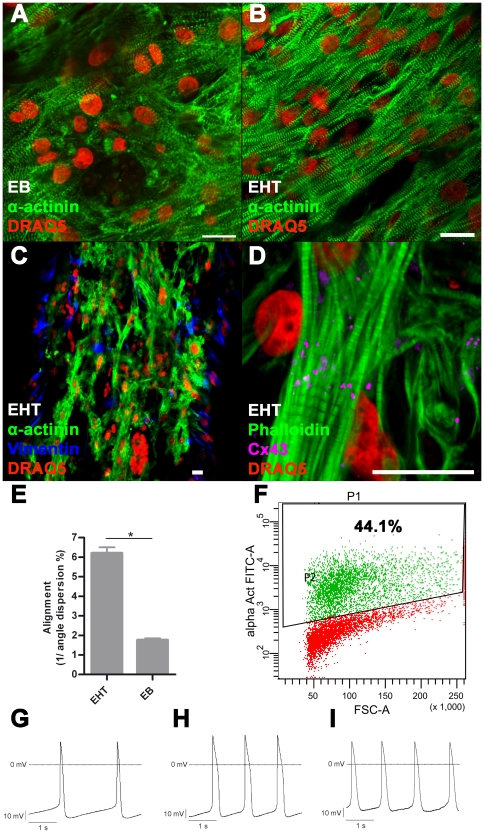
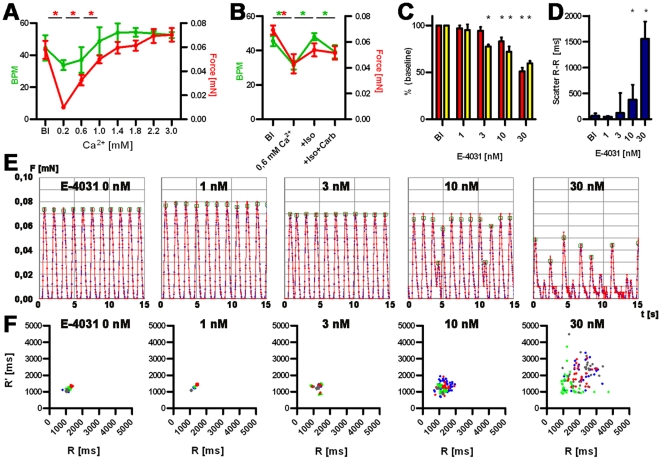
Human embryonic stem cell (hESC) progenies hold great promise as surrogates for human primary cells, particularly if the latter are not available as in the case of cardiomyocytes. However, high content experimental platforms are lacking that allow the function of hESC-derived cardiomyocytes to be studied under relatively physiological and standardized conditions. Here we describe a simple and robust protocol for the generation of fibrin-based human engineered heart tissue (hEHT) in a 24-well format using an unselected population of differentiated human embryonic stem cells containing 30-40% α-actinin-positive cardiac myocytes. Human EHTs started to show coherent contractions 5-10 days after casting, reached regular (mean 0.5 Hz) and strong (mean 100 µN) contractions for up to 8 weeks. They displayed a dense network of longitudinally oriented, interconnected and cross-striated cardiomyocytes. Spontaneous hEHT contractions were analyzed by automated video-optical recording and showed chronotropic responses to calcium and the β-adrenergic agonist isoprenaline. The proarrhythmic compounds E-4031, quinidine, procainamide, cisapride, and sertindole exerted robust, concentration-dependent and reversible decreases in relaxation velocity and irregular beating at concentrations that recapitulate findings in hERG channel assays. In conclusion this study establishes hEHT as a simple in vitro model for heart research.
Overview
The claims and statistics of this paper haven’t been checked yet.
Free: it reads the open-access text and checks the first 5 claims that cite a source we can check. Create a free account to check every claim.
Integrity signals
Registry
Cites
Statistics
Figures

Verification
Claims the paper makes
The claims and statistics of this paper haven’t been checked yet.
Free: it reads the open-access text and checks the first 5 claims that cite a source we can check. Create a free account to check every claim.
Claims other papers make about this one
Each is checked against this paper’s own text: does it say what the citing paper says it does?
The source backs part of the claim, not all of it — or backs it for a different population, condition or comparison.
In the citing paper
“but not pressure- and volume-based metrics directly representing pump performance of the heart”
From Bioengineering an electro-mechanically functional miniature ventricular heart chamber from human pluripotent stem cells (2018) · cites this paper as [16]
Experimental — accuracy not yet measuredThe cited source says what the claim attributes to it.
In the citing paper
“engineered cardiac thin films, micro-tissues and strips allow the assessment of twitch force [9,12–19]”
From Bioengineering an electro-mechanically functional miniature ventricular heart chamber from human pluripotent stem cells (2018) · cites this paper as [16]
Experimental — accuracy not yet measured
Self-check
Percentages, sums and reported differences re-computed from the paper’s own numbers.
The self-check needs the paper’s full text.
Citations
Cites
Proceedings of the National Academy of Sciences of the United States of America
Dowling, J. E., & Wald, G. (2009) · Nutrition Reviews · doi:10.1111/j.1753-4887.1981.tb06752.x · Cited by 17,893
Laflamme, M. A., Chen, K. Y., Naumova, A. V., Muskheli, V., Fugate, J. A., Dupras, S. K., Reinecke, H., Xu, C., Hassanipour, M., Police, S., et al. (2007) · Nature Biotechnology · doi:10.1038/nbt1327 · Cited by 2,206 · cited 2×
“One of the current limitations of hESC-derived cardiac myocytes is their immature and unorganized phenotype in the EB format or 2D cultures [3,5].”
BackgroundFeeder-free growth of undifferentiated human embryonic stem cells
Xu, C., Inokuma, M. S., Denham, J., Golds, K., Kundu, P., Gold, J. D., & Carpenter, M. K. (2001) · Nature Biotechnology · doi:10.1038/nbt1001-971 · Cited by 1,870 · cited 1×
“with CF1-MEF conditioned medium according to published protocols [28].”
MethodKehat, I., Kenyagin‐Karsenti, D., Snir, M., Segev, H., Amit, M., Gepstein, A., Livne, E., Binah, O., Itskovitz‐Eldor, J., & Gepstein, L. (2001) · Journal of Clinical Investigation · doi:10.1172/jci12131 · Cited by 1,814 · cited 1×
“differentiation in serum containing media yielding 8% of beating embryoid bodies (EBs) [1].”
BackgroundCai, C.-L., Liang, X., Shi, Y., Chu, P.-H., Pfaff, S. L., Chen, J., & Evans, S. (2003) · Developmental Cell · doi:10.1016/s1534-5807(03)00363-0 · Cited by 1,610 · cited 1×
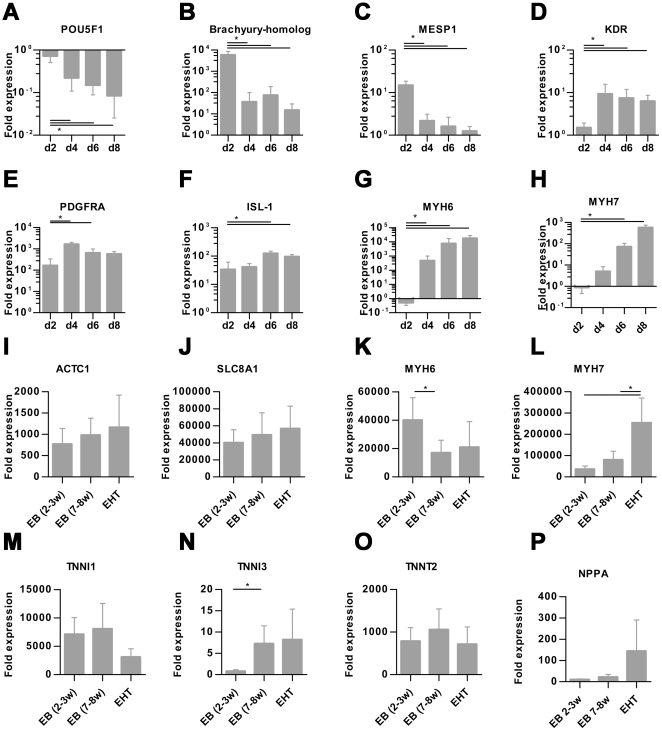
“Islet-1 (ISL1) a progenitor marker of the development of the secondary heart field [21] was significantly upregulated on day 6 and 8.”
BackgroundKehat, I., Kenyagin‐Karsenti, D., Snir, M., et al. (2001) · Journal of Clinical Investigation · doi:10.1172/jci200112131 · Cited by 1,536
REDFERN, W., CARLSSON, L., DAVIS, A., LYNCH, W., MACKENZIE, I., PALETHORPE, S., SIEGL, P., STRANG, I., SULLIVAN, A., & WALLIS, R. (2003) · Cardiovascular Research · doi:10.1016/s0008-6363(02)00846-5 · Cited by 1,532 · cited 2×
“Concentrations were chosen according to published IC50 in hERG assays [23,24].”
MethodHuman cardiovascular progenitor cells develop from a KDR+ embryonic-stem-cell-derived population
Yang, L., Soonpaa, M. H., Adler, E. D., Roepke, T. K., Kattman, S. J., Kennedy, M., Henckaerts, E., Bonham, K., Abbott, G. W., Linden, R. M., et al. (2008) · Nature · doi:10.1038/nature06894 · Cited by 1,389 · cited 3×
“Cardiomyocyte differentiation was performed with a modified EB-based, three-stage, growth factor cocktail protocol [2].”
MethodInfluentialEngineered heart tissue grafts improve systolic and diastolic function in infarcted rat hearts
Zimmermann, W.-H., Melnychenko, I., Wasmeier, G., Didié, M., Naito, H., Nixdorff, U., Hess, A., Budinsky, L., Brune, K., Michaelis, B., et al. (2006) · Nature Medicine · doi:10.1038/nm1394 · Cited by 993 · cited 1×
“The principal usefulness of these techniques for in vitro testing [17,18] and cardiac repair [19] has been demonstrated.”
BackgroundSelf-citationTissue Engineering of a Differentiated Cardiac Muscle Construct
Zimmermann, W.-H., Schneiderbanger, K., Schubert, P., Didié, M., Münzel, F., Heubach, J. F., Kostin, S., Neuhuber, W. L., & Eschenhagen, T. (2002) · Circulation Research · doi:10.1161/hh0202.103644 · Cited by 917 · cited 1×
“EHTs from neonatal rat hearts develop a high degree of cellular differentiation, longitudinal orientation, intercellular coupling and force generation [15,16].”
BackgroundSelf-citation
Research works printed but not linked: 2
- [3]Mummery C Ward-van Oostwaard D Doevendans P Spijker R Brink S van den 2003 Differentiation of human embryonic stem cells to cardiomyocytes: role of coculture with visceral endoderm-like cells. Circulation 107 2733 40 12742992
- [12]FDA 2005 Guidance for Industry S7B Nonclinical Evaluation of the Potential for Delayed Ventricular Repolarization (QT Interval Prolongation) by Human Pharmaceuticals. 16237859
Cited by
Items 301–361 of 361
OECD (2018) · OECD series on testing and assessment · doi:10.1787/9789264304796-6-en · Cited by 1
Human Stem‐Cell‐Derived Cardiomyocytes in Drug Discovery and Toxicity Testing
Szebényi, K., Péntek, A., Varga, N., Erdei, Z., Vőfély, G., Orbán, T. I., Sarkadi, B., & Apáti, Á. (2014) · Wiley eBooks · doi:10.1002/9781118856017.ch15 · Cited by 1
Eiges, R., Zak, N. B., Reubinoff, B. E., & Irving, C. S. (2015) · Wiley eBooks · doi:10.1002/9781118846193.ch25 · Cited by 1
Mokhames, Z., Seyedjafari, E., Seifati, S. M., & Ashkezari, M. D. (2023) · Research Square · doi:10.21203/rs.3.rs-2793592/v1 · Cited by 1
Liau, B. (2013) · DukeSpace (Duke University) · Cited by 1
Disease Models for the Genetic Cardiac Diseases
Pekkanen-Mattila, M., Rajala, K., & Aalto‐Setälä, K. (2013) · InTech eBooks · doi:10.5772/55773
“Cardiac microtissues have also been constructed using human pluripotent stem cell derived cardiomyocytes and the contraction force of the beating tissues has been analyzed with custom made platforms [61, 62].”
MethodHuman embryonic stem cells (hESCs) for heart regeneration
Menasché, P. (2014) · Elsevier eBooks · doi:10.1533/9780857096708.3.266
Maturation of functional cardiac tissue patches
Engelmayr, G. C., Zhang, D., & Bursac, N. (2014) · Elsevier eBooks · doi:10.1533/9780857096715.2.248
Trada, H. (2014) · ThinkIR: The University of Louisville's Institutional Repository (University of Louisville) · doi:10.18297/etd/1736
“Interest in tissue engineering by numerous research groups in the past decade or so has generated a wealth of knowledge about the field [6, 7, 12, 13, 15, 21, 37, 39, 41-48].”
BackgroundConant, G., Yimu, Z., & Radisic, M. (2016) · Frontiers in Bioengineering and Biotechnology · doi:10.3389/conf.fbioe.2016.01.02934
Cashion, A. (2013) · Carolina Digital Repository (University of North Carolina at Chapel Hill) · doi:10.17615/rjg2-xj45
Micro-engineered skeletal and cardiac muscle for Duchenne muscular dystrophy in vitro models
Zatti, S. (2012) · Padua Research Archive (University of Padova)
Micropost arrays as a means to assess cardiac muscle cells
Leonard, A., Rodriguez, M. L., & Sniadecki, N. J. (2015) · Cambridge University Press eBooks · doi:10.1017/cbo9781139939751.017
Human Stem Cell‐Derived Cardiomyocyte In Vitro Models for Cardiotoxicity Screening
Walker, T. M., Harris, K. L., Maifoshie, E., & Chaudhary, K. W. (2016) · Wiley eBooks · doi:10.1002/9781119135449.ch6
Engineering Contractile 2D and 3D Human Skeletal and Cardiac Muscle Microtissues
Duffy, R. M. (2016) · KiltHub Repository · doi:10.1184/r1/6716261
Myokardiales Tissue-Engineering
Martin, U., & Haverich, A. (2016) · Zeitschrift für Herz- Thorax- und Gefäßchirurgie · doi:10.1007/s00398-016-0119-9
Raad, F. S. (2016) · eDiss (Georg-August-Universität Göttingen) · doi:10.53846/goediss-5856
Maturation of Human Pluripotent Stem Cell-Derived Engineered Cardiac Tissues
Ruan, J.-L. (2014) · ResearchWorks at the University of Washington (University of Washington)
In Vitro Human Engineered Myocardium: A Study into both Pathological and Physiological Hypertrophy
Miklas, J. W. (2013) · TSpace (University of Toronto)
Mittal, N., Atmanli, A., Hu, D., Groeneweg, D., Kausel, E., & Domian, I. J. (2017) · bioRxiv (Cold Spring Harbor Laboratory) · doi:10.1101/199737
“compact the gel [16, 17, 19, 20], there is no direct control over the construct stiffness i.”
BackgroundEschenhagen, T. (2017) · Elsevier eBooks · doi:10.1016/b978-0-12-801238-3.99585-0
Self-citationHuman-Induced Pluripotent Stem Cell-Derived Engineered Cardiac Tissues
Nakane, T., Masumoto, H., & Keller, B. B. (2018) · InTech eBooks · doi:10.5772/intechopen.71621
“Moreover, hiPSC-derived ECTs are expected to be more specific and sensitive platforms for drug screening [14].”
BackgroundKurokawa, Y. K. (2017) · Open Scholarship Institutional Repository (Washington University in St. Louis) · doi:10.7936/k7db818f
“Studies have reported a population of vimentin-positive cells that are dispersed in the periphery of 3D cardiac tissues created using hPSC-CM, indicating that these fibroblast-like cells play a role in the formation of these tissues.(64,138) While increasing numbers of fibroblasts reduced electrophysiological maturati…”
BackgroundYip, J. K., & McCain, M. L. (2018) · Elsevier eBooks · doi:10.1016/b978-0-12-813671-3.00008-6 · Cited by 1
Pettine, K. A., & Dordevic, M. (2019) · American journal of stem cell research
Microphysiological system for heart tissue - going from 2D to 3D culture
Busek, M., Schubert, M., Guan, K., Sonntag, F., Schmieder, F., Marschner, U., & Richter, A. (2019) · Current Directions in Biomedical Engineering · doi:10.1515/cdbme-2019-0068
Elucidating Target Biology and Drug Mechanism of Action Across Human Cell‐Based Model Systems
Dawson, J. C., & Carragher, N. O. (2019) · Methods and principles in medicinal chemistry · doi:10.1002/9783527818242.ch7
Newer Models of Cardiac Tissue
Lin, Z., & George, S. A. (2021) · Springer eBooks · doi:10.1007/978-3-030-63355-4_16
Jiang, X., Cheng, H., Huang, J., Cui, C., Zhu, Y., Lin, Y., Miao, W., Liu, H., Chen, H., Ju, W., et al. (2021) · Journal of Bioscience and Bioengineering · doi:10.1016/j.jbiosc.2021.04.012
Maturing Engineered Heart Tissues for Titin-Based Disease Modeling
Keschrumrus, V. (2021) · UA Campus Repository (The University of Arizona)
Stüdemann, T., & Weinberger, F. (2022) · Springer eBooks · doi:10.1007/978-3-030-86140-7_7
Myocardial Pharmacoregeneration
Zelarayan, L. C., Zafeiriou, M.-P., & Zimmermann, W. (2016) · Springer eBooks · doi:10.1007/978-3-319-28386-9_4 · Cited by 1
Self-citationDriehorst, T. (2022) · eDiss (Georg-August-Universität Göttingen) · doi:10.53846/goediss-9096
Microfabricated Systems for Cardiovascular Tissue Modeling
Knee‐Walden, E. J., Wagner, K. T., Wu, Q., Rafatian, N., & Radisic, M. (2022) · Springer eBooks · doi:10.1007/978-3-030-86140-7_10
OECD (2018) · OECD series on testing and assessment · doi:10.1787/9789264304796-14-en
List of viability testing methods (non-inclusive) of cell cultures
OECD (2018) · OECD series on testing and assessment · doi:10.1787/9789264304796-24-en · Cited by 1
Breckwoldt, K., & Eschenhagen, T. (2017) · Elsevier eBooks · doi:10.1016/b978-0-12-809657-4.99585-1
Self-citationOECD (2018) · OECD series on testing and assessment · doi:10.1787/9789264304796-13-en
Apparatus, material and reagents
OECD (2018) · OECD series on testing and assessment · doi:10.1787/9789264304796-9-en
OECD GIVIMP meeting 23-24 March, 2017 - participating experts
OECD (2018) · OECD series on testing and assessment · doi:10.1787/9789264304796-19-en
OECD (2018) · OECD series on testing and assessment · doi:10.1787/9789264304796-8-en
Bioengineering of Cardiac Patches, In Vitro
Ruvinov, E., Sapir, Y., & Cohen, S. (2012) · Synthesis lectures on tissue engineering · doi:10.1007/978-3-031-02584-6_6
Murphy, J. F., Costa, K. D., & Turnbull, I. C. (2023) · Computer Methods and Programs in Biomedicine Update · doi:10.1016/j.cmpbup.2023.100107
Seguret, M., Davidson, P., Robben, S., Jouve, C., Pereira, C., Cerveau, C., Berre, M. L., Ribeiro, R. S. R., & Hulot, J. (2023) · eLife · doi:10.7554/elife.87739.1.sa3
Environmental and genetic influence of circadian rhythm over cardiac metabolism and disease
Orlowska, M. K. (2023) · Queensland University of Technology · doi:10.5204/thesis.eprints.246041
Polymers in sensory and lab-on-a-chip devices
Damiati, S. (2024) · Elsevier eBooks · doi:10.1016/b978-0-443-13394-7.00013-6 · Cited by 1
Individualisierte Therapie mit Stammzellen
Zimmermann, W. (2014) · Herz · doi:10.1007/s00059-014-4073-6
Self-citationJiao, A., Macadangdang, J. R., Kim, J., Moerk, C. T., Palpant, N. J., Mengsteab, P. Y., Park, H., Murry, C. E., & Kim, D.-H. (2026) · Biomaterials Research · doi:10.34133/bmr.0339
“Most engineered tissues remain limited to uniaxially aligned [ 20 – 22 ] or randomly organized cardiomyocytes [ 23 , 24 ], falling short of mimicking the structure– function relationships found in native myocardium.”
Reconstructing the cardiac conduction system in vitro
Devalla, H. D. (2026) · Elsevier eBooks · doi:10.1016/b978-0-443-24142-0.00012-6
Analyse des voies de régulation de la cardiogenèse et de la différenciation cardiomyocytaire
Jeziorowska, D. (2016) · theses.fr (ABES) · doi:10.70675/a00fc919zb35ez4596zaa94zb83059224319
Gauthier, V. (2018) · theses.fr (ABES) · doi:10.70675/1799a992z6d37z41b8zaa63z953f0550c46b · Cited by 2
Breckwoldt, K., & Eschenhagen, T. (2026) · Elsevier eBooks · doi:10.1016/b978-0-443-15734-9.00159-x
Self-citationHosny, N., Cohen, H., Bauer, J., Schreifels, J., Lin, R., Thompson, B. R., & Metzger, J. M. (2026) · Cells · doi:10.3390/cells15111019 · Cited by 1
“Despite these advantages, key immaturities persist, including incomplete t-tubules development and diffuse connexin-43 localization [154,160,164].”
Three-Dimensional Cardiac Tissue Models for Pharmaceutical Research
Lu, X., Xie, B., Zhong, J., Xie, R., & Peng, W. (2026) · ACS Applied Bio Materials · doi:10.1021/acsabm.6c00217
“Heart-in-the-dish” models identify mechanisms of diastolic dysfunction
Dittrich, G. M., & Zimmermann, W. (2026) · Cell stem cell · doi:10.1016/j.stem.2026.07.007
Self-citationWhitten, J. M., Lin, A., Bouker, E. E., Viswanathan, A. R., Berthier, J., Su, X., Schumacher, E. A., Berthier, E., Theberge, A. B., Haack, A. J., et al. (2026) · bioRxiv (Cold Spring Harbor Laboratory) · doi:10.64898/2026.09.11.751043
“Unlike planar STEAM or string-like constructs, which are elongated between two discrete suspension points, 11,15,53–57 the dome construct is radially symmetric, producing a curved tissue (Figure 1aiii).”
Walls, K., Kulmala, L., Kreutzer, J., Ahola, A., Pekkanen-Mattila, M., Hyttinen, J., & Belay, B. (2026) · bioRxiv (Cold Spring Harbor Laboratory) · doi:10.64898/2026.10.08.757603
Wang, Y., Okhovatian, S., Zhao, Y., Wu, Q., Bodenstein, D. F., & Radisic, M. (2026) · Elsevier eBooks · doi:10.1016/b978-0-443-16110-0.00031-5
BindingDB Entry 50006478: Medicinal Chemistry Approaches to Heart Regeneration.
BindingDB (2020) · UC San Diego · doi:10.7270/q2125wns
Metadata
- Authors
- Schaaf, S., Shibamiya, A., Mewe, M., Eder, A., Stöhr, A., Hirt, M. N., Rau, T., Zimmermann, W.-H., Conradi, L., Eschenhagen, T., & Hansen, A.
- Affiliations
- University Medical Center Hamburg-Eppendorf (DE)
- Corresponding author
- Hansen, Arne
- Venue
- PLoS ONE
- Publisher
- Public Library of Science (PLoS)
- Published
- 2011-10-20
- Volume
- 6
- Issue
- 10
- Pages
- e26397
- ISSN
- 1932-6203 (ISSN-L)
- PMC
- PMC3197640
- OpenAlex
- W1969832018
- Cited by
- 365
- References
- 30
- Citations by year
- 2026: 11 · 2025: 7 · 2024: 15 · 2023: 19 · 2022: 17 · 2021: 20 · 2020: 24 · 2019: 26 · 2018: 32 · 2017: 39 · 2016: 34 · 2015: 35 · 2014: 37 · 2013: 27 · 2012: 20
- FWCI
- 10.92
- Type
- journal article
- Language
- en
- Open access
- gold
- doi.org
- Locations
- PLoS ONE (publishedVersion, cc-by)
- Europe PMC (PubMed Central) (publishedVersion, cc-by)
- PubMed Central (publishedVersion, cc-by)
- PubMed (publishedVersion)
- DOAJ (DOAJ: Directory of Open Access Journals) (submittedVersion, cc-by-sa)
- Figshare (submittedVersion, cc-by)
- GRO (submittedVersion)
- Funders
- European Commission
- Deutsche Forschungsgemeinschaft (ZI 708/7-1, HA 3423/3-1)
- Deutsche Herzstiftung (F/13/10)
- Topics
- Life Sciences › Biochemistry, Genetics and Molecular Biology › Molecular Biology › Pluripotent Stem Cells Research
- Health Sciences › Medicine › Surgery › Tissue Engineering and Regenerative Medicine
- Health Sciences › Medicine › Cardiology and Cardiovascular Medicine › Cardiac electrophysiology and arrhythmias
- Keywords
- human embryonic stem cells, cardiomyocytes, cardiomyocyte contraction, spontaneous beating, proarrhythmic drugs, hERG, calcium-induced contraction, beta-adrenergic stimulation, isoproterenol, E-4031, quinidine, procainamide, cisapride, sertindole, preclinical toxicology, high-content screening
- MeSH terms
- Arrhythmias, Cardiac, Cell Differentiation, Drug Evaluation, Preclinical, Fluorescent Antibody Technique, Heart, Humans, Muscle Contraction, Myocardium, RNA, Messenger, Reproducibility of Results, Toxicity Tests, Tissue Engineering, Myocytes, Cardiac, Embryonic Stem Cells, Electrophysiological Phenomena, HEK293 Cells
About these checks
Registry, retraction, Cites and statistics results are computed, not judged, with one exception: a printed reference that no index lists is read once by a model before it counts as a citation error. Claims are extracted by a model and kept only when their quote appears verbatim in the text; each cited source is then checked, with a model’s help, for whether it says what the claim relies on. Those verdicts can be wrong — read the claim’s quote and the cited source before relying on one.
Statistics and arithmetic are recomputed, not judged.
Confidence bands are shown only for fields calibrated on our annotated test set. None is calibrated yet, so no band is shown.
What counts as a claim ›How we measure confidence ›How we check this ›
Are you an author, or do you see a problem with this page? Request a review
Data sources
Bibliographic data: Semantic Scholar, OpenAlex, Crossref.
Contains information from the Semantic Scholar Academic Graph Datasets, made available under the ODC Attribution License (ODC-BY 1.0).
Semantic Scholar’s data is described in: Kinney, R., et al. (2023). The Semantic Scholar Open Data Platform. arXiv:2301.10140.
