

Structural Identifiability of Systems Biology Models: A Critical Comparison of Methods
Open accessThe DOI matches its Crossref record; 64 of the 64 references it cites were found in a registry or an index; none of the 22 sources its claims cite is checked for support yet.
Abstract
Analysing the properties of a biological system through in silico experimentation requires a satisfactory mathematical representation of the system including accurate values of the model parameters. Fortunately, modern experimental techniques allow obtaining time-series data of appropriate quality which may then be used to estimate unknown parameters. However, in many cases, a subset of those parameters may not be uniquely estimated, independently of the experimental data available or the numerical techniques used for estimation. This lack of identifiability is related to the structure of the model, i.e. the system dynamics plus the observation function. Despite the interest in knowing a priori whether there is any chance of uniquely estimating all model unknown parameters, the structural identifiability analysis for general non-linear dynamic models is still an open question. There is no method amenable to every model, thus at some point we have to face the selection of one of the possibilities. This work presents a critical comparison of the currently available techniques. To this end, we perform the structural identifiability analysis of a collection of biological models. The results reveal that the generating series approach, in combination with identifiability tableaus, offers the most advantageous compromise among range of applicability, computational complexity and information provided.
Overview
CoChat Summary
TL;DR
This paper critically compares structural identifiability methods for nonlinear systems-biology models across six case studies. It concludes that the generating series approach combined with identifiability tableaus offers the best compromise among applicability, computational complexity, and information provided.
Key findings
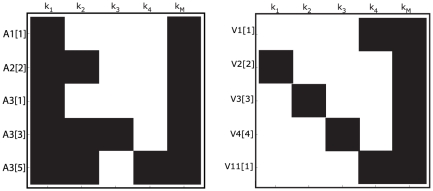
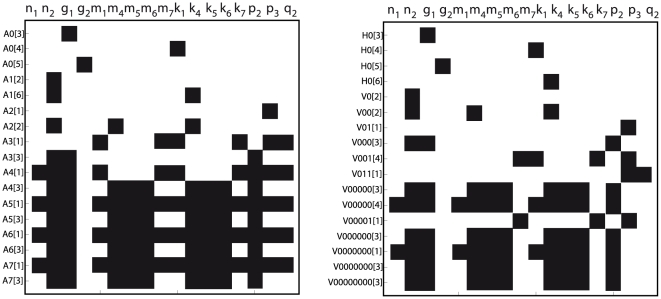
- Across six models, generating series plus tableaus was most advantageous; for the glycolysis-inspired pathway it concluded global identifiability with a unique solution for all parameters, whereas the Taylor series approach gave a rank-5 tableau and multiple solutions.
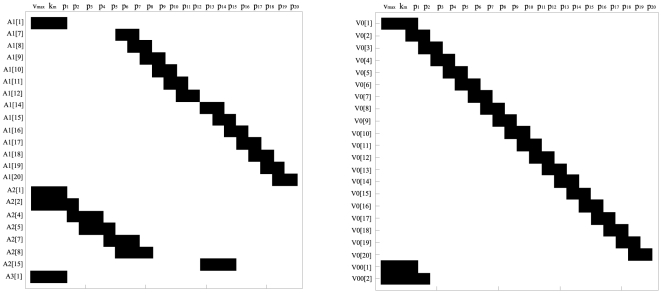
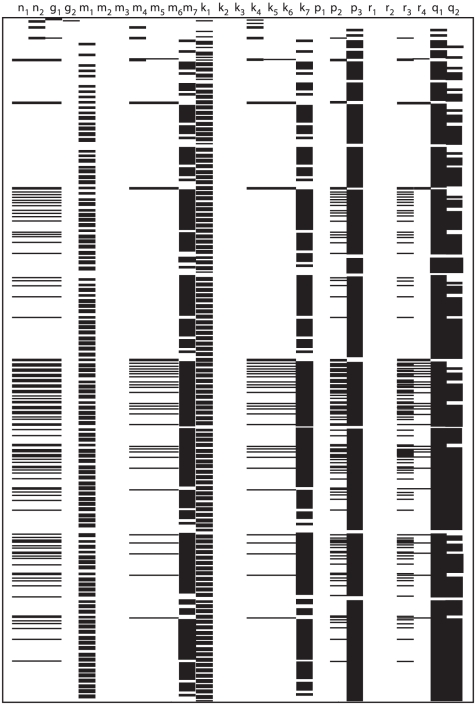
- The high-dimensional model (20 differential equations, 22 parameters, all states measured) was found structurally globally identifiable by the Taylor series approach in a few seconds and by the generating series approach; DAISY also reported structural global identifiability in prior work.
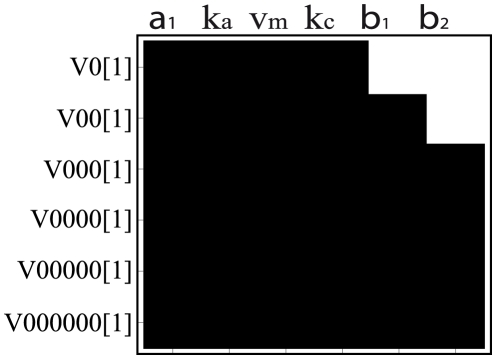
- For the pharmacokinetics model, Taylor/generating series tableaus had full rank, guaranteeing at least structural local identifiability even with one observable; DAISY found the six parameters structurally globally identifiable for the two-observable scenario.
- The Arabidopsis clock was not structurally globally identifiable under constant light, with a subset of parameters non-identifiable; pulse-wise stimulation and polynomial reformulation gave only partial results. For NFκB, generating series and reaction-network plus generating series concluded global/local identifiability of the parameters considered.
Methods
- Design: critical comparison of structural identifiability methods, including Taylor series, generating series, similarity transformation, differential algebra, direct test, implicit function theorem, and reaction-network-based analysis, with identifiability tableaus.
- Data/sample: six biological models of increasing size and complexity—Goodwin oscillator, pharmacokinetics model of receptor-mediated glucose oxidase uptake, glycolysis-inspired metabolic pathway, high-dimensional biochemical reaction model, Arabidopsis thaliana central clock, and NFκB signalling module.
- Analysis: symbolic computations using DAISY, GenSSI, MAPLE, MATHEMATICA, and MATLAB; methods were evaluated by range of applicability, computational complexity, and information provided.
Limitations
- Stated: no single method is amenable to every model; Taylor and generating series methods require an unknown number of derivatives; differential algebra and implicit function theorem struggle with low observable-to-parameter ratios and Michaelis-Menten/Hill kinetics; similarity transformation requires controllability/observability and can be computationally prohibitive; direct test applies only to uncontrolled/autonomous systems.
- Stated: the selected examples are small and medium-size models; apparent conflicting local/global conclusions can arise from initial conditions, symbolic solvability, and DAISY sometimes not using initial conditions.
- Evident from the text: several methods failed due to memory or computational errors, and some results were partial or inconclusive; the comparison is limited to the chosen six models and the specific software implementations used.
Model-written summary. Check it against the paper before relying on it.
Integrity signals
Registry
Cites
Statistics
Figures
Verification
Claims the paper makes
0 Valid · 3 Not valid · 21 Not checked · 115 Own results and interpretations
A result the paper states — it cites no source for it, so there is none to check. The quote shows it is in the paper.
In the paper
“The direct test method was also not applicable since the system is autonomous and controlled.”
§ Structural Identifiability of Systems Biology Models: A Critical Comparison of Methods > Results > Case study 3: Glycolysis inspired metabolic pathway
plainstates a cause- Asserted: passes — The authors put it forward as true.
- Checkable: passes — It can be checked against evidence.
- Load-bearing: unclear — It is unclear whether the paper’s conclusions depend on it.
- Based: passes — The paper gives a reason why it holds.
A result the paper reports from its own data — it cites no other source for it, so there is none to check. The quote shows it is in the paper.
In the paper
“Both differential algebra method implementations found the model to be globally identifiable (computation performed without the use of initial conditions).”
§ Structural Identifiability of Systems Biology Models: A Critical Comparison of Methods > Results > Case study 3: Glycolysis inspired metabolic pathway
plain- Asserted: passes — The authors put it forward as true.
- Checkable: passes — It can be checked against evidence.
- Load-bearing: unclear — It is unclear whether the paper’s conclusions depend on it.
- Based: passes — The paper gives a reason why it holds.
A result the paper reports from its own data — it cites no other source for it, so there is none to check. The quote shows it is in the paper.
In the paper
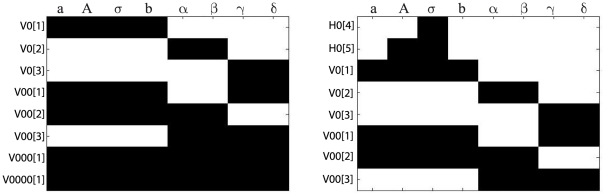
“In contrast, for the case of full observation the power series based methods ended up in a full rank tableau as shown in Figure 1.(a).”
§ Structural Identifiability of Systems Biology Models: A Critical Comparison of Methods > Results > Case study 1: Goodwin's model
plainstates a cause- Asserted: passes — The authors put it forward as true.
- Checkable: passes — It can be checked against evidence.
- Load-bearing: passes — The paper’s conclusions depend on it.
- Based: passes — The paper gives a reason why it holds.
A result the paper reports from its own data — it cites no other source for it, so there is none to check. The quote shows it is in the paper.
In the paper
“The similarity transformation approach could not be used for this example since the observability condition is not fulfilled.”
§ Structural Identifiability of Systems Biology Models: A Critical Comparison of Methods > Results > Case study 3: Glycolysis inspired metabolic pathway
plainstates a cause- Asserted: passes — The authors put it forward as true.
- Checkable: passes — It can be checked against evidence.
- Load-bearing: unclear — It is unclear whether the paper’s conclusions depend on it.
- Based: passes — The paper gives a reason why it holds.
A result the paper reports from its own data — it cites no other source for it, so there is none to check. The quote shows it is in the paper.
In the paper
“The computational cost was significantly lower as compared to the Taylor series approach.”
§ Structural Identifiability of Systems Biology Models: A Critical Comparison of Methods > Results > Case study 3: Glycolysis inspired metabolic pathway
plainSingle case- Asserted: passes — The authors put it forward as true.
- Checkable: passes — It can be checked against evidence.
- Load-bearing: unclear — It is unclear whether the paper’s conclusions depend on it.
- Based: passes — The paper gives a reason why it holds.
64 more claims
Create a free account to see all 139 claims and to verify the 22 references still open.
- Probably not a substantial claim. 29
- It may state two separate claims as one. 49
- The quote only partly states this claim. 2
Claims other papers make about this one
Each is checked against this paper’s own text: does it say what the citing paper says it does?
The cited source says what the claim attributes to it.
In the citing paper
“Fortunately, recent literature is correcting this (e.g. [129–140]).”
From Reverse engineering and identification in systems biology: strategies, perspectives and challenges (2014) · cites this paper as [138]
In the citing paper
“However, a priori methods are often limited to linear ODE systems or are impractical for models containing many parameters [14].”
From Joining forces of Bayesian and frequentist methodology: a study for inference in the presence of non-identifiability (2013) · cites this paper as [14]
Self-check
Percentages, sums and reported differences re-computed from the paper’s own numbers.
Each contradiction between two passages listed here was confirmed by an independent check.
Rated minor: it would not touch a result — a value no result rests on, a p-value that stays on the same side of the significance level, or a conflict that is clerical, resolved elsewhere in the paper, or outside its own findings.
In the paper
§ Structural Identifiability of Systems Biology Models: A Critical Comparison of Methods > Introduction
“the Goodwin oscillator model [32]”
§ Structural Identifiability of Systems Biology Models: A Critical Comparison of Methods > References
“32. Goodwin A Defibaugh D Weber L 1992 The vapor pressure of 1,1,1,2-tetrafluoroethane (r134a) and chlorodifluoromethane (r22). Int J Thermophys 13 837”
Citations
Cites
Nature Reviews Molecular Cell Biology
(2019) · Nature Reviews Molecular Cell Biology · doi:10.1038/41580.1471-0080 · Cited by 2,565
The IκB-NF-κB Signaling Module: Temporal Control and Selective Gene Activation
Hoffmann, A., Levchenko, A., Scott, M. L., & Baltimore, D. (2002) · Science · doi:10.1126/science.1071914 · Cited by 1,858
Failure to Regulate TNF-Induced NF-κB and Cell Death Responses in A20-Deficient Mice
Lee, E. G., Boone, D. L., Chai, S., Libby, S. L., Chien, M., Lodolce, J. P., & Ma, A. (2000) · Science · doi:10.1126/science.289.5488.2350 · Cited by 1,409 · cited 1×
“They used experimental data from previous works by Lee et al.”
MethodCell-signalling dynamics in time and space
Kholodenko, B. N. (2006) · Nature Reviews Molecular Cell Biology · doi:10.1038/nrm1838 · Cited by 1,347 · cited 1×
“[18] considered the analysis of different alternative models of a single phosphorylationdephosphorylation cycle in the MAPK cascade [19], by means of a differential algebra based approach.”
MethodDifferential Algebra and Algebraic Groups
Kolchin, E. R. (2012) · Cited by 1,277
Universally Sloppy Parameter Sensitivities in Systems Biology Models
Gutenkunst, R. N., Waterfall, J. J., Casey, F. P., Brown, K. S., Myers, C. R., & Sethna, J. P. (2007) · PLoS Computational Biology · doi:10.1371/journal.pcbi.0030189 · Cited by 1,261 · cited 1×
“This has been in fact the case in many examples found in the literature [4–8].”
ResultIEEE TRANSACTIONS ON AUTOMATIC CONTROL
Antsaklis, P. J., Kovács, E., Chong, E., Grizzle, J. W., Krstić, M., Spall, J. C., Amamoto, Y. Y., Arzelier, D., Astolfi, A., Braslavsky, J. H., et al. (2006) · Cited by 1,251
Identification of parametric models : from experimental data
Walter, É., & Pronzato, L. (1997) · Cited by 1,197
Computer methods and programs in biomedicine
(1985) · Computer Methods and Programs in Biomedicine · doi:10.1016/0169-2607(85)90039-2 · Cited by 1,151
Oscillatory behavior in enzymatic control processes
Goodwin, B. C. (1965) · Advances in Enzyme Regulation · doi:10.1016/0065-2571(65)90067-1 · Cited by 967
Research works printed but not linked: 1
- [43]Denis-Vidal L Joly-Blanchard G 1996 Identifiability of some nonlinear kinetics. Proceedings of the Third Workshop on Modelling of Chemical Reaction Systems, Heidelberg
Cited by
Items 101–200 of 446
Guillén‐Gosálbez, G., Miró, A., Alves, R., Albert Sorribas, B., & Jiménez, L. (2013) · BMC Systems Biology · doi:10.1186/1752-0509-7-113 · Cited by 28
“The type of optimization problem being faced and the technical challenges to be solved depends upon the biological model of choice, upon the experimental data available, and upon the specific mathematical formalism used [11,12].”
BackgroundPitt, J. A., & Banga, J. R. (2019) · BMC Bioinformatics · doi:10.1186/s12859-019-2630-y · Cited by 31
“Structural identifiability [80, 81] studies if the model parameters can be uniquely determined assuming ideal conditions for the measurements and therefore only considering the model dynamics and the input-output mapping (i.e. what is perturbed and what is observed).”
BackgroundSelf-citationPaulson, J. A., Martin-Casas, M., & Mesbah, A. (2019) · PLoS Computational Biology · doi:10.1371/journal.pcbi.1007308 · Cited by 32
Image based validation of dynamical models for cell reorientation
Lockley, R., Ladds, G., & Bretschneider, T. (2014) · Cytometry Part A · doi:10.1002/cyto.a.22600 · Cited by 25
“This is an important requirement in terms of quantitative modeling that prevents over-fitting and enables selection of structurally identifiable models with unique solutions (14).”
BackgroundInference-based assessment of parameter identifiability in nonlinear biological models
Daly, A. C., Gavaghan, D. J., Cooper, J., & Tavener, S. (2018) · Journal of The Royal Society Interface · doi:10.1098/rsif.2018.0318 · Cited by 35
Identifiability of Infection Model Parameters Early in an Epidemic
SAUER, T. D., Berry, T., Ebeigbe, D., Norton, M. M., Whalen, A. J., & Schiff, S. J. (2021) · SIAM Journal on Control and Optimization · doi:10.1137/20m1353289 · Cited by 36
Quantifying tissue growth, shape and collision via continuum models and Bayesian inference
Falcó, C., Cohen, D. J., Carrillo, J. A., & Baker, R. E. (2023) · Journal of The Royal Society Interface · doi:10.1098/rsif.2023.0184 · Cited by 39
“So-called identifiability analysis methods [26,27] provide a systematic approach to relate model complexity to the type and amount of experimental data, and are a first step towards the estimation of model parameters.”
MethodProfile likelihood-based analyses of infectious disease models
Tönsing, C., Timmer, J., & Kreutz, C. (2018) · Statistical Methods in Medical Research · doi:10.1177/0962280217746444 · Cited by 32
Mapping data to virtual patients in type 1 diabetes
Colmegna, P. H., Wang, K., Garcia‐Tirado, J., & Breton, M. D. (2020) · Control Engineering Practice · doi:10.1016/j.conengprac.2020.104605 · Cited by 26
Quantifying rotavirus kinetics in the REH tumor cell line using in vitro data
González‐Parra, G., Dobrovolny, H. M., Aranda, D. F., Chen‐Charpentier, B. M., & Guerrero, R. A. (2017) · Virus Research · doi:10.1016/j.virusres.2017.09.023 · Cited by 23
“However, in many cases it is difficult to prove or achieve either of these (Chis et al., 2011; Nguyen et al., 2016).”
BackgroundMathematical modeling of variability in intracellular signaling
Loos, C., & Hasenauer, J. (2019) · Current Opinion in Systems Biology · doi:10.1016/j.coisb.2019.10.020 · Cited by 26
Patient-specific models from inter-patient biological models and clinical records
Tronci, E., Mancini, T., Salvo, I., Sinisi, S., Mari, F., Melatti, I., Massini, A., Davì, F., Dierkes, T., Ehrig, R. M., et al. (2014) · Formal Methods in Computer-Aided Design · doi:10.1109/fmcad.2014.6987615 · Cited by 28
“A key feature of parameter identification approaches is their ability to give information about parameter identifiability (see, e.g., [7] and citations thereof).”
BackgroundInput-Output Equations and Identifiability of Linear ODE Models
Ovchinnikov, A., Pogudin, G., & Thompson, P. (2022) · IEEE Transactions on Automatic Control · doi:10.1109/tac.2022.3145571 · Cited by 38
“There are different approaches to assessing identifiability (see [9, 18, 37] for descriptions of methods).”
MethodParameter identifiability and input–output equations
Ovchinnikov, A., Pogudin, G., & Thompson, P. E. (2021) · Applicable Algebra in Engineering Communication and Computing · doi:10.1007/s00200-021-00486-8 · Cited by 31
Determining reliable parameter estimates for within-host and within-vector models of Zika virus
Tuncer, N., & Martcheva, M. (2021) · Journal of Biological Dynamics · doi:10.1080/17513758.2021.1970261 · Cited by 22
“For details about these methods, we refer the reader to the good reviews written on the topic [11,27].”
MethodRateitschak, K., Winter, F., Lange, F., Jaster, R., & Wolkenhauer, O. (2012) · PLoS Computational Biology · doi:10.1371/journal.pcbi.1002815 · Cited by 26
“values are determined by the model structure including a mapping of model variables to observables [7,8] and by the experimental data [8].”
Global sensitivity analysis for the design of nonlinear identification experiments
Lund, A., Dyke, S. J., Song, W., & Bilionis, I. (2019) · Nonlinear Dynamics · doi:10.1007/s11071-019-05199-9 · Cited by 22
A unified framework for estimating parameters of kinetic biological models
Baker, S. M., Poskar, C. H., Schreiber, F., & Junker, B. H. (2015) · BMC Bioinformatics · doi:10.1186/s12859-015-0500-9 · Cited by 24
“A second issue that arises in the successful parameter estimation for any kind of model is non-identifiability [18].”
BackgroundMolecular causality in the advent of foundation models
Lobentanzer, S., Rodríguez-Mier, P., Bauer, S., & Sáez-Rodríguez, J. (2024) · Molecular Systems Biology · doi:10.1038/s44320-024-00041-w · Cited by 30
“The dramatically larger parameter space of models at the molecular level leads to problems in method performance and result identi fi ability (Squires and Uhler, 2022; Esser-Skala and Fortelny, 2023; Chis et al, 2011), as well as in model explainability (Carloni et al, 2023).”
BackgroundCarvalho, F. D. C. T., Nath, K., Serpa, A. L., & Karniadakis, G. E. (2024) · Engineering Applications of Artificial Intelligence · doi:10.1016/j.engappai.2024.109378 · Cited by 26
“Chis et al. [20] and Raue et al. [21] conducted comparative studies of these methods found in the literature, focusing on biological systems.”
BackgroundMethodOn structural and practical identifiability: Current status and update of results
Heinrich, M., Rosenblatt, M., Wieland, F.-G., Stigter, J. D., & Timmer, J. (2025) · Current Opinion in Systems Biology · doi:10.1016/j.coisb.2025.100546 · Cited by 42
Garbarino, S., & Lorenzi, M. (2021) · NeuroImage · doi:10.1016/j.neuroimage.2021.117980 · Cited by 28
“We note that a limitation in the use of DS concerns the identifiabil-ity of the kinetic parameters, whose analysis typically requires symbolic computation ( Chis et al., 2011 ) and can become prohibitive as the sys-tem size and non–linearity increase.”
The Monod Model Is Insufficient To Explain Biomass Growth in Nitrogen-Limited Yeast Fermentation
Henriques, D., & Balsa‐Canto, E. (2021) · Applied and Environmental Microbiology · doi:10.1128/aem.01084-21 · Cited by 25
“Therefore we performed a 335 structural identifiability analysis ((29, 30)) to assess if all parameters of the model can be 336 estimated even if protein measurements are not available.”
MethodSelf-citationStructural identifiability of equilibrium ligand-binding parameters
Middendorf, T. R., & Aldrich, R. W. (2016) · The Journal of General Physiology · doi:10.1085/jgp.201611702 · Cited by 28
Structural and practical identifiability analysis in bioengineering: a beginner’s guide
Wanika, L., Egan, J. R., Swaminathan, N., Duran‐Villalobos, C. A., Branke, J., Goldrick, S., & Chappell, M. J. (2024) · Journal of Biological Engineering · doi:10.1186/s13036-024-00410-x · Cited by 27
“…be gained from SIA and the importance of having a structurally identifiable model, especially where certain model parameters may have important physical or practical significance, several models have been published in the literature which have been shown to be structurally uni-dentifiable [14–16].”
BackgroundMoimenta, A. R., Troitiño-Jordedo, D., Henriques, D., Contreras-Ruíz, A., Minebois, R., Morard, M., Barrio, E., Querol, A., & Balsa‐Canto, E. (2025) · mSystems · doi:10.1128/msystems.01615-24 · Cited by 25
Self-citationChebyshev Approximation and the Global Geometry of Model Predictions
Quinn, K. N., Wilber, H., Townsend, A., & Sethna, J. P. (2019) · Physical Review Letters · doi:10.1103/physrevlett.122.158302 · Cited by 28
“Structural identifiability describes systems for which parameters can be analytically exchanged for one another [13,14].”
Sensitivity matrices as keys to local structural system properties of large-scale nonlinear systems
van Willigenburg, L. G., Stigter, J. D., & Molenaar, J. (2022) · Nonlinear Dynamics · doi:10.1007/s11071-021-07125-4 · Cited by 25
“In the earlier comparisons [15, 16], the computational complexity of establishing identifiability had already been noted.”
BackgroundCho, H., Lewis, A., Storey, K. M., & Byrne, H. M. (2022) · Journal of Theoretical Biology · doi:10.1016/j.jtbi.2022.111377 · Cited by 23
“For further details, we refer the interested reader to [3, 10, 37, 46].”
BackgroundParameter Identifiability in PDE Models of Fluorescence Recovery After Photobleaching
Ciocanel, M.-V., Ding, L., Mastromatteo, L., Reichheld, S., Cabral, S. E., Mowry, K. L., & Sandstede, B. (2024) · Bulletin of Mathematical Biology · doi:10.1007/s11538-024-01266-4 · Cited by 27
“For example, [6, 7, 11, 12] review theoretical results and algorithms for structural and practical identifiability of linear and nonlinear ordinary differential equations (ODE) models, with applications to disease dynamics and systems biology processes.”
BackgroundMassonis, G., & Villaverde, A. F. (2020) · Symmetry · doi:10.3390/sym12030469 · Cited by 36
Lejarza, F., Koninckx, E., Broadbelt, L. J., & Bâldea, M. (2023) · Chemical Engineering Journal · doi:10.1016/j.cej.2023.142089 · Cited by 20
Nienałtowski, K., Włodarczyk, M., Lipniacki, T., & Komorowski, M. (2015) · BMC Systems Biology · doi:10.1186/s12918-015-0205-8 · Cited by 21
“This can be done either based on model structure, often by attempting to find functional relationships between parameters [6], or by analysing model responses to local perturbations in parameter values.”
BackgroundActive Fault Identification by Optimization of Test Designs
Palmer, K. A., Hale, W. T., & Bollas, G. M. (2018) · IEEE Transactions on Control Systems Technology · doi:10.1109/tcst.2018.2867996 · Cited by 21
“uncertainty prior to testing [39], [40].”
BackgroundBallnus, B., Schaper, S., Theis, F. J., & Hasenauer, J. (2018) · Bioinformatics · doi:10.1093/bioinformatics/bty229 · Cited by 20
Simpson, M. J., Walker, S. A., Studerus, E. N., McCue, S. W., Murphy, R. J., & Maclaren, O. J. (2022) · Mathematical Biosciences · doi:10.1016/j.mbs.2022.108950 · Cited by 23
Physics-informed neural entangled-ladder network for inhalation impedance of the respiratory system
Kumar, A., Jain, S., Jain, S., Ritam, M., Xia, Y., & Chandra, R. (2023) · Computer Methods and Programs in Biomedicine · doi:10.1016/j.cmpb.2023.107421 · Cited by 22
Applying a multi-strain dengue model to epidemics data
Araujo, R., Jorge, D. C. P., Dorn, R. C., Cruz-Pacheco, G., Esteva, M. L. M., & Pinho, S. T. R. (2023) · Mathematical Biosciences · doi:10.1016/j.mbs.2023.109013 · Cited by 21
Determining minimal output sets that ensure structural identifiability
Joubert, D., Stigter, J. D., & Molenaar, J. (2018) · PLoS ONE · doi:10.1371/journal.pone.0207334 · Cited by 20
“These models can often be written in the standard state-space form [11]: State variables are contained in a vector x ( t ) (dim x = n ), model parameters are contained in vector θ , (dim θ = p ) and the output signals or measured variables are contained in vector y ( t ) (dim y = m ).”
Lizarralde-Bejarano, D. P., Rojas-Díaz, D., Arboleda-Sánchez, S., & Puerta-Yepes, M. E. (2020) · PLoS ONE · doi:10.1371/journal.pone.0229668 · Cited by 21
Procopio, A., Cosentino, C., Rosa, S. D., Garcia, M. R., Covello, C., Merola, A., Sabatino, J., Luca, A. D., Indolfi, C., & Amato, F. (2018) · IEEE Transactions on Control Systems Technology · doi:10.1109/tcst.2018.2849068 · Cited by 18
“, kmax ⇒ = ∗ where kmax is the smallest positive integer, such that the symbolic computations give the solution of the parameters (see [16] for a deeper discussion).”
BackgroundMethodJiménez, A. A. B., Hauwermeiren, D. V., Peeters, M., Beer, T. D., & Nopens, I. (2021) · Pharmaceutics · doi:10.3390/pharmaceutics13050692 · Cited by 18
“A parameter θi is structurally locally identifiable, if for almost any θi, there exists a neighborhood Ω such that [30]:”
BackgroundBrowning, A. P., & Simpson, M. J. (2023) · PLoS Computational Biology · doi:10.1371/journal.pcbi.1010844 · Cited by 21
Oliveira, R. H. D. M., Annex, B. H., & Popel, A. S. (2024) · Frontiers in Physiology · doi:10.3389/fphys.2024.1351753 · Cited by 19
Inference of hidden variables in systems of differential equations with genetic programming
Cornforth, T. W., & Lipson, H. (2012) · Genetic Programming and Evolvable Machines · doi:10.1007/s10710-012-9175-4 · Cited by 19
Computational modeling of the cell-autonomous mammalian circadian oscillator
Podkolodnaya, O. A., Tverdokhleb, N. N., & Podkolodnyy, N. L. (2017) · BMC Systems Biology · doi:10.1186/s12918-016-0379-8 · Cited by 19
“…a priori identifiability, theoretical identifiability, or qualitative identifiability, which suggests the possibility of evaluating the unique values for model unknown parameters from the available observables, presuming perfect experimental data (i.e. noise-free and continuous in time) [67 – 69].”
BackgroundMethodIdentifiability of Control-Oriented Glucose-Insulin Linear Models: Review and Analysis
Hoyos, J. D., Villa-Tamayo, M. F., Builes-Montaño, C. E., Rincón, A. R., Godoy, J. L., Garcia‐Tirado, J., & Rivadeneira, P. S. (2021) · IEEE Access · doi:10.1109/access.2021.3076405 · Cited by 18
“Different methods and tools assessing structural identifiability can be found in [86], [87].”
MethodOkuneye, K., Bergman, D. R., Bloodworth, J. C., Pearson, A. T., Sweis, R. F., & Jackson, T. L. (2021) · Computational and Systems Oncology · doi:10.1002/cso2.1019 · Cited by 21
Web-Based Structural Identifiability Analyzer
Ilmer, I., Ovchinnikov, A., & Pogudin, G. (2021) · Lecture notes in computer science · doi:10.1007/978-3-030-85633-5_17 · Cited by 28
Moleriu, R. D., Zaharie, D., Moatar-Moleriu, L., Lukinich-Gruia, A. T., Mic, A. A., & Mic, F. A. (2014) · Journal of Theoretical Biology · doi:10.1016/j.jtbi.2014.01.020 · Cited by 18
Challenges and opportunities in uncertainty quantification for healthcare and biological systems
Kimpton, L. M., Păun, L. M., Colebank, M. J., & Volodina, V. (2025) · Philosophical Transactions of the Royal Society A Mathematical Physical and Engineering Sciences · doi:10.1098/rsta.2024.0232 · Cited by 30
Implications of dimensional analysis in bioreactor models: Parameter estimation and identifiability
Lira-Parada, P. A., Pettersen, E., Biegler, L. T., & Bar, N. (2021) · Chemical Engineering Journal · doi:10.1016/j.cej.2021.129220 · Cited by 16
Murphy, R. J., Maclaren, O. J., Calabrese, A. R., Thomas, P. B., Warne, D. J., Williams, E. D., & Simpson, M. J. (2022) · Journal of The Royal Society Interface · doi:10.1098/rsif.2022.0560 · Cited by 17
Sánchez, B. J., Soto, D. C., Jorquera, H., Gelmi, C. A., & Pérez‐Correa, J. R. (2014) · Industrial & Engineering Chemistry Research · doi:10.1021/ie501298b · Cited by 15
Statistical inference of the rates of cell proliferation and phenotypic switching in cancer
Gunnarsson, E. B., Foo, J., & Leder, K. (2022) · Journal of Theoretical Biology · doi:10.1016/j.jtbi.2023.111497 · Cited by 20
“By considering the moments, we can adopt techniques from systems biology used for the analysis of deterministic models based on ordinary differential equations [47].”
Browning, A. P., Taşcă, M., Falcó, C., & Baker, R. E. (2024) · Proceedings of the Royal Society A Mathematical Physical and Engineering Sciences · doi:10.1098/rspa.2023.0911 · Cited by 31
“Several alternative approaches for structural identifiability have been since been established; notably those based on Taylor series, generating series and Lie derivatives [7,18], and similarity transforms [7,19].”
BackgroundMethodLocal Identifiability Analysis of NonLinear ODE Models: How to Determine All Candidate Solutions
Thomaseth, K., & Saccomani, M. P. (2018) · IFAC-PapersOnLine · doi:10.1016/j.ifacol.2018.03.089 · Cited by 15
Mathematical modeling of the cGAS pathway reveals robustness of DNA sensing to TREX1 feedback
Gregg, R. W., Sarkar, S. N., & Shoemaker, J. E. (2018) · Journal of Theoretical Biology · doi:10.1016/j.jtbi.2018.11.001 · Cited by 15
Parameter Identification For Continuous Fluidized Bed Spray Agglomeration
Golovin, I., Strenzke, G., Dürr, R., Palis, S., Bück, A., Tsotsas, E., & Kienle, A. (2018) · Processes · doi:10.3390/pr6120246 · Cited by 16
Schmiester, L., Weindl, D., & Hasenauer, J. (2020) · Journal of Mathematical Biology · doi:10.1007/s00285-020-01522-w · Cited by 17
A MATLAB toolbox for modeling genetic circuits in cell-free systems†
Singhal, V., Tuza, Z. A., Sun, Z. Z., & Murray, R. M. (2021) · Synthetic Biology · doi:10.1093/synbio/ysab007 · Cited by 18
Parameter estimation of a meal glucose–insulin model for TIDM patients from therapy historical data
Sánchez, O. D., Ruiz-Velazquez, E., Alanís, A. Y., Quiroz, G., & Torres‐Treviño, L. (2018) · IET Systems Biology · doi:10.1049/iet-syb.2018.5038 · Cited by 17
A Bayesian framework for the analysis of systems biology models of the brain
Russell-Buckland, J., Barnes, C. P., & Tachtsidis, I. (2019) · PLoS Computational Biology · doi:10.1371/journal.pcbi.1006631 · Cited by 16
“However, this step remains a difficult mathematical and computational problem, potentially originating in the lack of identifiability [9].”
Borisov, I. I., & Metelkin, E. (2020) · PLoS Computational Biology · doi:10.1371/journal.pcbi.1008495 · Cited by 18
“The strengths and weaknesses of those methods have been thoroughly analyzed in scientific literature [1,4].”
BackgroundMartinelli, A. (2022) · Information Fusion · doi:10.1016/j.inffus.2022.03.004 · Cited by 25
Making Predictions Using Poorly Identified Mathematical Models
Simpson, M. J., & Maclaren, O. J. (2024) · Bulletin of Mathematical Biology · doi:10.1007/s11538-024-01294-0 · Cited by 21
“Before presenting the PWA details, we first provide some background about these mathematical models and briefly discuss some application areas that motivate their use.”
BackgroundYu, H., Yue, H., & Halling, P. J. (2018) · Chemical Engineering Science · doi:10.1016/j.ces.2018.05.047 · Cited by 13
Identifiability and Reconstruction of Biochemical Reaction Networks from Population Snapshot Data
Cinquemani, E. (2018) · Processes · doi:10.3390/pr6090136 · Cited by 18
“However a formal definition of practical identifiability is not obvious and still open (see [1,4,6,20], among others).”
BackgroundSala-Mira, I., Siket, M., Kovács, L., Eigner, G., & Bondía, J. (2021) · IEEE Access · doi:10.1109/access.2021.3120880 · Cited by 16
“To analyse the structural identifiability, the generating series (GS) approach was used since it is a tradeoff method between computational cost and provided information regarding other techniques in the literature [27].”
BackgroundMethodModel reduction in bio-chemical reaction networks with Michaelis-Menten kinetics
Hangos, K. M., Gábor, A., & Szederkényi, G. (2013) · European Control Conference (ECC) · doi:10.23919/ecc.2013.6669424 · Cited by 14
“In [18] the author showed that, if the system is not well excited, then some parameters are not identifiable.”
Romain, B., Rouet, L., Ohayon, D., Lucidarme, O., d’Alché–Buc, F., & Letort, V. (2016) · Medical Image Analysis · doi:10.1016/j.media.2016.07.008 · Cited by 15
Structural vs Practical Identifiability of Nonlinear Differential Equation Models in Systems Biology
Saccomani, M. P., & Thomaseth, K. (2016) · Springer eBooks · doi:10.1007/978-3-319-45723-9_3 · Cited by 14
Caringella, G., Bandiera, L., & Menolascina, F. (2023) · Current Opinion in Biotechnology · doi:10.1016/j.copbio.2023.102893 · Cited by 14
A tutorial on the Bayesian statistical approach to inverse problems
Waqar, F., Patel, S. K., & Simon, C. M. (2023) · APL Machine Learning · doi:10.1063/5.0154773 · Cited by 22
Simpson, M. J., & Baker, R. E. (2026) · SIAM Review · doi:10.1137/24m1667968 · Cited by 38
Error estimation in coupled multi-physics models
Subramanian, A., & Mahadevan, S. (2019) · Journal of Computational Physics · doi:10.1016/j.jcp.2019.06.013 · Cited by 17
Sala-Mira, I., García, P., Díez, J.-L., & Bondía, J. (2022) · Computer Methods and Programs in Biomedicine · doi:10.1016/j.cmpb.2022.107061 · Cited by 13
Identification of parameters in systems biology
Abdulla, U. G., & Poteau, R. (2018) · Mathematical Biosciences · doi:10.1016/j.mbs.2018.09.004 · Cited by 18
Albers, D. J., Levine, M. E., Mamykina, L., & Hripcsak, G. M. (2019) · Mathematical Biosciences · doi:10.1016/j.mbs.2019.108242 · Cited by 17
An Early Stage Researcher's Primer on Systems Medicine Terminology
Zanin, M., Aitya, N. A. A., Basílio, J., Baumbach, J., Benis, A., Behera, C. K., Bucholc, M., Castiglione, F., Chouvarda, I., Comte, B., et al. (2021) · Network and Systems Medicine · doi:10.1089/nsm.2020.0003 · Cited by 14
“Another parameter unidentifiability reason can be structural unidentifiability, 335 where the structure of the model in combination with experimental results does not allow the identification of particular parameters.”
BackgroundProfile likelihood analysis for a stochastic model of diffusion in heterogeneous media
Simpson, M. J., Browning, A. P., Drovandi, C., Carr, E. J., Maclaren, O. J., & Baker, R. E. (2021) · QUT ePrints (Queensland University of Technology) · Cited by 13
Yuan, X., Nagy, Z. K., & Benyahia, B. (2025) · Chemical Engineering Journal Advances · doi:10.1016/j.ceja.2025.100823 · Cited by 13
Quantifying and managing uncertainty in systems biology: Mechanistic and data-driven models
Balsa‐Canto, E., Campo-Manzanares, N., Moimenta, A. R., Roudaut, G., & Troitiño-Jordedo, D. (2025) · Current Opinion in Systems Biology · doi:10.1016/j.coisb.2025.100557 · Cited by 24
Self-citationMuñoz‐Tamayo, R., & Tedeschi, L. O. (2023) · Journal of Animal Science · doi:10.1093/jas/skad320 · Cited by 16
“They include the Laplace transform (for linear models), direct test, differential algebra, Taylor series, and generating series Chis et al., 2011; Miao et al., 2011).”
MethodHybrid Dynamic Optimization Methods for Systems Biology with Efficient Sensitivities
Lewis, N. R., Hedengren, J. D., & Haseltine, E. L. (2015) · Processes · doi:10.3390/pr3030701 · Cited by 12
“[18], a comparison of techniques for the selection of the parameter subset shows that the generating series approach in combination with an identifiability analysis is the most widely applicable strategy.”
Havumaki, J., Meza, R., Phares, C. R., Date, K., & Eisenberg, M. C. (2019) · BMC Infectious Diseases · doi:10.1186/s12879-019-4688-6 · Cited by 17
Optimal test and sensor selection for active fault diagnosis using integer programming
Awasthi, U., Palmer, K. A., & Bollas, G. M. (2020) · Journal of Process Control · doi:10.1016/j.jprocont.2020.06.007 · Cited by 12
Profile likelihood analysis for a stochastic model of diffusion in heterogeneous media
Simpson, M. J., Browning, A. P., Drovandi, C., Carr, E. J., Maclaren, O. J., & Baker, R. E. (2021) · Proceedings of the Royal Society A Mathematical Physical and Engineering Sciences · doi:10.1098/rspa.2021.0214 · Cited by 17
Structural Identifiability of Viscoelastic Mechanical Systems
Mahdi, A., Meshkat, N., & Sullivant, S. (2014) · PLoS ONE · doi:10.1371/journal.pone.0086411 · Cited by 18
“Moreover, optimization schemes cannot be employed reliably since they will find difficulties when trying to estimate unidentifiable parameters [2].”
BackgroundA Framework for Performing Data-Driven Modeling of Tumor Growth with Radiotherapy Treatment
Cho, H., Lewis, A., Storey, K. M., Jennings, R., Shtylla, B., Reynolds, A., & Byrne, H. M. (2020) · Association for Women in Mathematics series · doi:10.1007/978-3-030-57129-0_8 · Cited by 13
Sloppiness: Fundamental study, new formalism and its application in model assessment
Jagadeesan, P., Raman, K., & Tangirala, A. K. (2023) · PLoS ONE · doi:10.1371/journal.pone.0282609 · Cited by 13
“There are several analytical methods available for assessing the structural identifiability of a model structure [6, 9–13].”
Inverse Problems in Systems Biology: A Critical Review
Guzzi, R., Colombo, T., & Paci, P. (2017) · Methods in molecular biology · doi:10.1007/978-1-4939-7456-6_6 · Cited by 14
S-synchronization Structural Identifiability and Identification of Nonlinear Dynamic Systems
Karabutov, N. N. (2020) · Mekhatronika Avtomatizatsiya Upravlenie · doi:10.17587/mau.21.323-336 · Cited by 11
Sachak-Patwa, R., Lafferty, E. I., Schmit, C. J., Thompson, R. N., & Byrne, H. M. (2023) · Journal of Theoretical Biology · doi:10.1016/j.jtbi.2023.111491 · Cited by 14
A simple method for identifying parameter correlations in partially observed linear dynamic models
Li, P., & Vu, Q. D. (2015) · BMC Systems Biology · doi:10.1186/s12918-015-0234-3 · Cited by 11
“Using differential algebra, a priori methods were proposed to analyze structural identifiability of linear and nonlinear biological models without any requirement of measurements [33–35, 37–40], based on which effective software tools have been established [35, 41, 42].”
MethodPlant Systems Biology: Insights and Advancements
Bhardwaj, T., & Somvanshi, P. (2015) · Springer eBooks · doi:10.1007/978-81-322-2172-2_28 · Cited by 12
Joubert, D., Stigter, J. D., & Molenaar, J. (2021) · Scientific Reports · doi:10.1038/s41598-021-96293-9 · Cited by 13
Duchesne, R., Guillemin, A., Crauste, F., & Gandrillon, O. (2019) · In Silico Biology · doi:10.3233/isb-190471 · Cited by 16
Mixed growth curve data do not suffice to fully characterize the dynamics of mixed cultures
Balsa‐Canto, E., Alonso‐del‐Real, J., & Querol, A. (2019) · Proceedings of the National Academy of Sciences · doi:10.1073/pnas.1916774117 · Cited by 10
Self-citationA computational approach to the structural analysis of uncertain kinetic systems
Ács, B., Szlobodnyik, G., & Szederkényi, G. (2018) · Computer Physics Communications · doi:10.1016/j.cpc.2018.03.002 · Cited by 9
“Even when we have measurements of sufficient quantity and quality, the lack of structural or practical identifiability may result in highly uncertain models even with the most sophisticated estimation methods [10, 34, 8, 7].”
Method
Metadata
- Authors
- Chis, O.-T., Banga, J. R., & Balsa-Canto, E.
- Affiliations
- Consejo Superior de Investigaciones Científicas (ES)
- ORCID
- Banga, Julio R.
- Venue
- PLoS ONE
- Publisher
- Public Library of Science (PLoS)
- Published
- 2011-11-22
- Volume
- 6
- Issue
- 11
- Pages
- e27755
- ISSN
- 1932-6203 (ISSN-L)
- PMC
- PMC3222653
- OpenAlex
- W2033783472
- Cited by
- 448
- References
- 64
- Citations by year
- 2026: 29 · 2025: 35 · 2024: 38 · 2023: 35 · 2022: 40 · 2021: 41 · 2020: 29 · 2019: 37 · 2018: 45 · 2017: 21 · 2016: 26 · 2015: 24 · 2014: 24 · 2013: 17 · 2012: 7
- FWCI
- 6.23
- Type
- journal article
- Language
- en
- Open access
- gold
- doi.org
- Locations
- PLoS ONE (publishedVersion, cc-by)
- PubMed Central (publishedVersion, cc-by)
- PubMed (publishedVersion)
- RePEc: Research Papers in Economics (submittedVersion)
- DIGITAL.CSIC (Spanish National Research Council (CSIC)) (submittedVersion)
- DOAJ (DOAJ: Directory of Open Access Journals) (submittedVersion, cc-by-sa)
- Funders
- Ministerio de Ciencia e Innovación
- Xunta de Galicia
- Topics
- Life Sciences › Biochemistry, Genetics and Molecular Biology › Molecular Biology › Gene Regulatory Network Analysis
- Physical Sciences › Engineering › Control and Systems Engineering › Control Systems and Identification
- Physical Sciences › Mathematics › Applied Mathematics › Statistical and numerical algorithms
- Keywords
- structural identifiability, systems biology models, parameter estimation, nonlinear dynamic model, generating series, model structure analysis, time series, in silico experimentation
- MeSH terms
- Glycolysis, Models, Biological, NF-kappa B, Arabidopsis, Nonlinear Dynamics, Systems Biology
About these checks
Registry, retraction, Cites and statistics results are computed, not judged, with one exception: a printed reference that no index lists is read once by a model before it counts as a citation error. Claims are extracted by a model and kept only when their quote appears verbatim in the text; each cited source is then checked, with a model’s help, for whether it says what the claim relies on. Those verdicts can be wrong — read the claim’s quote and the cited source before relying on one.
A language model drew the claims from the paper on 2026-10-05, under version 3 of the claim definition (model deepseek-v4.1-flash, prompt extract-v3).
A second model labelled each claim on 2026-10-05 (model jev-1.13-20260917, definition revision gold-guideline-v0.2).
Statistics and arithmetic are recomputed, not judged.
Confidence bands are shown only for fields calibrated on our annotated test set. None is calibrated yet, so no band is shown.
What counts as a claim ›How we measure confidence ›How we check this ›
Are you an author, or do you see a problem with this page? Request a review
Data sources
Bibliographic data: Semantic Scholar, OpenAlex, Crossref.
Contains information from the Semantic Scholar Academic Graph Datasets, made available under the ODC Attribution License (ODC-BY 1.0).
Semantic Scholar’s data is described in: Kinney, R., et al. (2023). The Semantic Scholar Open Data Platform. arXiv:2301.10140.
