

Structural Identifiability of Systems Biology Models: A Critical Comparison of Methods
Open accessThe DOI matches its Crossref record; 64 of the 64 references it cites were found in a registry or an index; none of the 22 sources its claims cite is checked for support yet.
Abstract
Analysing the properties of a biological system through in silico experimentation requires a satisfactory mathematical representation of the system including accurate values of the model parameters. Fortunately, modern experimental techniques allow obtaining time-series data of appropriate quality which may then be used to estimate unknown parameters. However, in many cases, a subset of those parameters may not be uniquely estimated, independently of the experimental data available or the numerical techniques used for estimation. This lack of identifiability is related to the structure of the model, i.e. the system dynamics plus the observation function. Despite the interest in knowing a priori whether there is any chance of uniquely estimating all model unknown parameters, the structural identifiability analysis for general non-linear dynamic models is still an open question. There is no method amenable to every model, thus at some point we have to face the selection of one of the possibilities. This work presents a critical comparison of the currently available techniques. To this end, we perform the structural identifiability analysis of a collection of biological models. The results reveal that the generating series approach, in combination with identifiability tableaus, offers the most advantageous compromise among range of applicability, computational complexity and information provided.
Overview
CoChat Summary
TL;DR
This paper critically compares structural identifiability methods for nonlinear systems-biology models across six case studies. It concludes that the generating series approach combined with identifiability tableaus offers the best compromise among applicability, computational complexity, and information provided.
Key findings
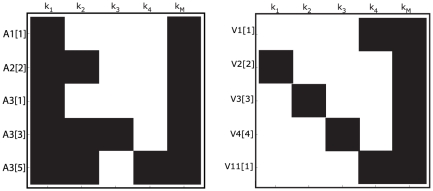
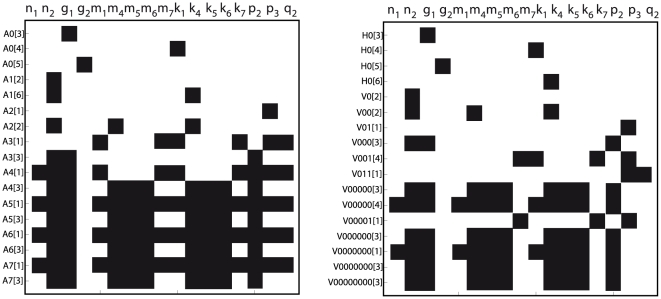
- Across six models, generating series plus tableaus was most advantageous; for the glycolysis-inspired pathway it concluded global identifiability with a unique solution for all parameters, whereas the Taylor series approach gave a rank-5 tableau and multiple solutions.
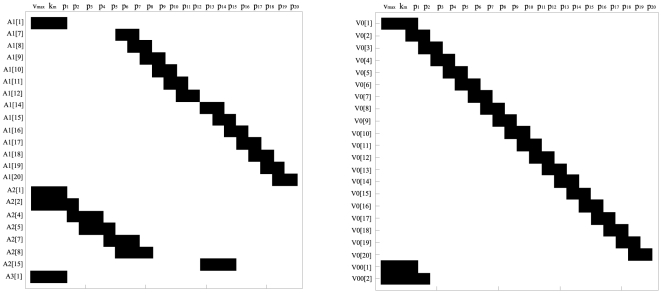
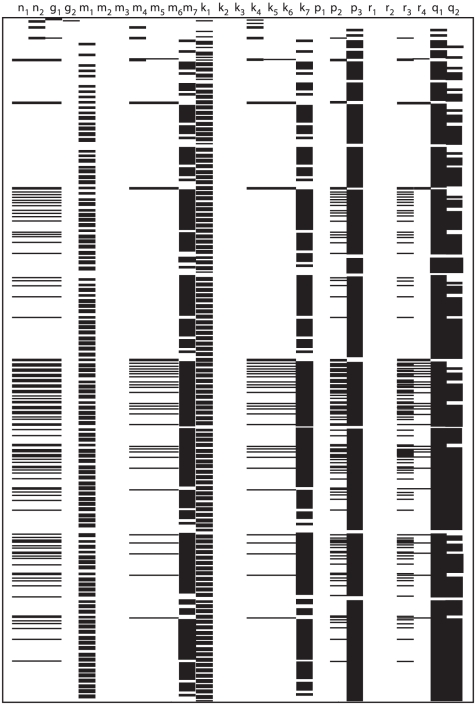
- The high-dimensional model (20 differential equations, 22 parameters, all states measured) was found structurally globally identifiable by the Taylor series approach in a few seconds and by the generating series approach; DAISY also reported structural global identifiability in prior work.
- For the pharmacokinetics model, Taylor/generating series tableaus had full rank, guaranteeing at least structural local identifiability even with one observable; DAISY found the six parameters structurally globally identifiable for the two-observable scenario.
- The Arabidopsis clock was not structurally globally identifiable under constant light, with a subset of parameters non-identifiable; pulse-wise stimulation and polynomial reformulation gave only partial results. For NFκB, generating series and reaction-network plus generating series concluded global/local identifiability of the parameters considered.
Methods
- Design: critical comparison of structural identifiability methods, including Taylor series, generating series, similarity transformation, differential algebra, direct test, implicit function theorem, and reaction-network-based analysis, with identifiability tableaus.
- Data/sample: six biological models of increasing size and complexity—Goodwin oscillator, pharmacokinetics model of receptor-mediated glucose oxidase uptake, glycolysis-inspired metabolic pathway, high-dimensional biochemical reaction model, Arabidopsis thaliana central clock, and NFκB signalling module.
- Analysis: symbolic computations using DAISY, GenSSI, MAPLE, MATHEMATICA, and MATLAB; methods were evaluated by range of applicability, computational complexity, and information provided.
Limitations
- Stated: no single method is amenable to every model; Taylor and generating series methods require an unknown number of derivatives; differential algebra and implicit function theorem struggle with low observable-to-parameter ratios and Michaelis-Menten/Hill kinetics; similarity transformation requires controllability/observability and can be computationally prohibitive; direct test applies only to uncontrolled/autonomous systems.
- Stated: the selected examples are small and medium-size models; apparent conflicting local/global conclusions can arise from initial conditions, symbolic solvability, and DAISY sometimes not using initial conditions.
- Evident from the text: several methods failed due to memory or computational errors, and some results were partial or inconclusive; the comparison is limited to the chosen six models and the specific software implementations used.
Model-written summary. Check it against the paper before relying on it.
Integrity signals
Registry
Cites
Statistics
Figures
Verification
Claims the paper makes
0 Valid · 3 Not valid · 21 Not checked · 115 Own results and interpretations
A result the paper states — it cites no source for it, so there is none to check. The quote shows it is in the paper.
In the paper
“The direct test method was also not applicable since the system is autonomous and controlled.”
§ Structural Identifiability of Systems Biology Models: A Critical Comparison of Methods > Results > Case study 3: Glycolysis inspired metabolic pathway
plainstates a cause- Asserted: passes — The authors put it forward as true.
- Checkable: passes — It can be checked against evidence.
- Load-bearing: unclear — It is unclear whether the paper’s conclusions depend on it.
- Based: passes — The paper gives a reason why it holds.
A result the paper reports from its own data — it cites no other source for it, so there is none to check. The quote shows it is in the paper.
In the paper
“Both differential algebra method implementations found the model to be globally identifiable (computation performed without the use of initial conditions).”
§ Structural Identifiability of Systems Biology Models: A Critical Comparison of Methods > Results > Case study 3: Glycolysis inspired metabolic pathway
plain- Asserted: passes — The authors put it forward as true.
- Checkable: passes — It can be checked against evidence.
- Load-bearing: unclear — It is unclear whether the paper’s conclusions depend on it.
- Based: passes — The paper gives a reason why it holds.
A result the paper reports from its own data — it cites no other source for it, so there is none to check. The quote shows it is in the paper.
In the paper
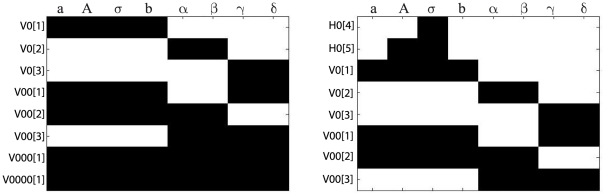
“In contrast, for the case of full observation the power series based methods ended up in a full rank tableau as shown in Figure 1.(a).”
§ Structural Identifiability of Systems Biology Models: A Critical Comparison of Methods > Results > Case study 1: Goodwin's model
plainstates a cause- Asserted: passes — The authors put it forward as true.
- Checkable: passes — It can be checked against evidence.
- Load-bearing: passes — The paper’s conclusions depend on it.
- Based: passes — The paper gives a reason why it holds.
A result the paper reports from its own data — it cites no other source for it, so there is none to check. The quote shows it is in the paper.
In the paper
“The similarity transformation approach could not be used for this example since the observability condition is not fulfilled.”
§ Structural Identifiability of Systems Biology Models: A Critical Comparison of Methods > Results > Case study 3: Glycolysis inspired metabolic pathway
plainstates a cause- Asserted: passes — The authors put it forward as true.
- Checkable: passes — It can be checked against evidence.
- Load-bearing: unclear — It is unclear whether the paper’s conclusions depend on it.
- Based: passes — The paper gives a reason why it holds.
A result the paper reports from its own data — it cites no other source for it, so there is none to check. The quote shows it is in the paper.
In the paper
“The computational cost was significantly lower as compared to the Taylor series approach.”
§ Structural Identifiability of Systems Biology Models: A Critical Comparison of Methods > Results > Case study 3: Glycolysis inspired metabolic pathway
plainSingle case- Asserted: passes — The authors put it forward as true.
- Checkable: passes — It can be checked against evidence.
- Load-bearing: unclear — It is unclear whether the paper’s conclusions depend on it.
- Based: passes — The paper gives a reason why it holds.
64 more claims
Create a free account to see all 139 claims and to verify the 22 references still open.
- Probably not a substantial claim. 29
- It may state two separate claims as one. 49
- The quote only partly states this claim. 2
Claims other papers make about this one
Each is checked against this paper’s own text: does it say what the citing paper says it does?
The cited source says what the claim attributes to it.
In the citing paper
“Fortunately, recent literature is correcting this (e.g. [129–140]).”
From Reverse engineering and identification in systems biology: strategies, perspectives and challenges (2014) · cites this paper as [138]
In the citing paper
“However, a priori methods are often limited to linear ODE systems or are impractical for models containing many parameters [14].”
From Joining forces of Bayesian and frequentist methodology: a study for inference in the presence of non-identifiability (2013) · cites this paper as [14]
Self-check
Percentages, sums and reported differences re-computed from the paper’s own numbers.
Each contradiction between two passages listed here was confirmed by an independent check.
Rated minor: it would not touch a result — a value no result rests on, a p-value that stays on the same side of the significance level, or a conflict that is clerical, resolved elsewhere in the paper, or outside its own findings.
In the paper
§ Structural Identifiability of Systems Biology Models: A Critical Comparison of Methods > Introduction
“the Goodwin oscillator model [32]”
§ Structural Identifiability of Systems Biology Models: A Critical Comparison of Methods > References
“32. Goodwin A Defibaugh D Weber L 1992 The vapor pressure of 1,1,1,2-tetrafluoroethane (r134a) and chlorodifluoromethane (r22). Int J Thermophys 13 837”
Citations
Cites
Nature Reviews Molecular Cell Biology
(2019) · Nature Reviews Molecular Cell Biology · doi:10.1038/41580.1471-0080 · Cited by 2,565
The IκB-NF-κB Signaling Module: Temporal Control and Selective Gene Activation
Hoffmann, A., Levchenko, A., Scott, M. L., & Baltimore, D. (2002) · Science · doi:10.1126/science.1071914 · Cited by 1,858
Failure to Regulate TNF-Induced NF-κB and Cell Death Responses in A20-Deficient Mice
Lee, E. G., Boone, D. L., Chai, S., Libby, S. L., Chien, M., Lodolce, J. P., & Ma, A. (2000) · Science · doi:10.1126/science.289.5488.2350 · Cited by 1,409 · cited 1×
“They used experimental data from previous works by Lee et al.”
MethodCell-signalling dynamics in time and space
Kholodenko, B. N. (2006) · Nature Reviews Molecular Cell Biology · doi:10.1038/nrm1838 · Cited by 1,347 · cited 1×
“[18] considered the analysis of different alternative models of a single phosphorylationdephosphorylation cycle in the MAPK cascade [19], by means of a differential algebra based approach.”
MethodDifferential Algebra and Algebraic Groups
Kolchin, E. R. (2012) · Cited by 1,277
Universally Sloppy Parameter Sensitivities in Systems Biology Models
Gutenkunst, R. N., Waterfall, J. J., Casey, F. P., Brown, K. S., Myers, C. R., & Sethna, J. P. (2007) · PLoS Computational Biology · doi:10.1371/journal.pcbi.0030189 · Cited by 1,261 · cited 1×
“This has been in fact the case in many examples found in the literature [4–8].”
ResultIEEE TRANSACTIONS ON AUTOMATIC CONTROL
Antsaklis, P. J., Kovács, E., Chong, E., Grizzle, J. W., Krstić, M., Spall, J. C., Amamoto, Y. Y., Arzelier, D., Astolfi, A., Braslavsky, J. H., et al. (2006) · Cited by 1,251
Identification of parametric models : from experimental data
Walter, É., & Pronzato, L. (1997) · Cited by 1,197
Computer methods and programs in biomedicine
(1985) · Computer Methods and Programs in Biomedicine · doi:10.1016/0169-2607(85)90039-2 · Cited by 1,151
Oscillatory behavior in enzymatic control processes
Goodwin, B. C. (1965) · Advances in Enzyme Regulation · doi:10.1016/0065-2571(65)90067-1 · Cited by 967
Research works printed but not linked: 1
- [43]Denis-Vidal L Joly-Blanchard G 1996 Identifiability of some nonlinear kinetics. Proceedings of the Third Workshop on Modelling of Chemical Reaction Systems, Heidelberg
Cited by
On structural and practical identifiability
Wieland, F.-G., Hauber, A. L., Rosenblatt, M., Tönsing, C., & Timmer, J. (2021) · Current Opinion in Systems Biology · doi:10.1016/j.coisb.2021.03.005 · Cited by 325
“For reviews of some of these approaches, see [28, 30, 31].”
BackgroundSystems biology informed deep learning for inferring parameters and hidden dynamics
Yazdani, A., Lu, L., Raissi, M., & Karniadakis, G. E. (2020) · PLOS Computational Biology · doi:10.1371/journal.pcbi.1007575 · Cited by 329
“In the process of parameter inference, two issues accounting for system’s (non-)identifiability have to be considered: structural identifiability that is related to the model structure independent of the experimental data [18, 19]; and practical identifiability that is related to the amount and quality of measured dat…”
BackgroundKinetic models in industrial biotechnology – Improving cell factory performance
Almquist, J., Cvijovic, M., Hatzimanikatis, V., Nielsen, J., & Jirstrand, M. (2014) · Metabolic Engineering · doi:10.1016/j.ymben.2014.03.007 · Cited by 293
“A notable exception is the successful application of the generating series approach to a medium-sized model of the NFkB regulatory module (Chis et al., 2011).”
MethodStructural Identifiability of Dynamic Systems Biology Models
Villaverde, A. F., Barreiro, A., & Papachristodoulou, A. (2016) · PLOS Computational Biology · doi:10.1371/journal.pcbi.1005153 · Cited by 272
“Similarly, D1 and k are known constants.”
Reverse engineering and identification in systems biology: strategies, perspectives and challenges
Villaverde, A. F., & Banga, J. R. (2014) · Journal of The Royal Society Interface · doi:10.1098/rsif.2013.0505 · Cited by 229
Self-citationDetermination of parameter identifiability in nonlinear biophysical models: A Bayesian approach
Hines, K. E., Middendorf, T. R., & Aldrich, R. W. (2014) · Journal of General Physiology · doi:10.1085/jgp.201311116 · Cited by 170
“…estimation have been rediscovered in many fields, including econometrics (Koopmans, 1949; Rothenberg, 1971), process industries (Gustavsson, 1975; Chappell and Godfrey, 1992), systems and control engineering (Lee, 1964), and, more recently, systems biology (Audoly et al., 2001; Chis et al., 2011).”
BackgroundInfluentialBenchmarking optimization methods for parameter estimation in large kinetic models
Villaverde, A. F., Fröhlich, F., Weindl, D., Hasenauer, J., & Banga, J. R. (2019) · Bioinformatics · doi:10.1093/bioinformatics/bty736 · Cited by 161
“State-of-the-art identifiability analysis methods have been recently evaluated elsewhere [10,33,38,45,54].”
MethodSelf-citationModeling Influenza Virus Infection: A Roadmap for Influenza Research
Boianelli, A., Nguyễn, V. K., Ebensen, T., Schulze, K., Wilk, E., Sharma, N., Stegemann‐Koniszewski, S., Bruder, D., Toapanta, F. R., Guzmán, C. A., et al. (2015) · Viruses · doi:10.3390/v7102875 · Cited by 172
“The structural and practical identifiability are necessary in mathematical models to reach significant predictions [66–71].”
BackgroundFröhlich, F., Kessler, T., Weindl, D., Shadrin, A., Schmiester, L., Hache, H., Muradyan, A., Schütte, M., Lim, J.-H., Heinig, M., et al. (2018) · Cell Systems · doi:10.1016/j.cels.2018.10.013 · Cited by 143
“This limitation is quantified in terms of structural and practical parameter identifiability as well as parameter uncertainty (Chis et al., 2011; Raue et al., 2009).”
BackgroundGenSSI 2.0: multi-experiment structural identifiability analysis of SBML models
Ligon, T. S., Fröhlich, F., Chis, O., Banga, J. R., Balsa‐Canto, E., & Hasenauer, J. (2017) · Bioinformatics · doi:10.1093/bioinformatics/btx735 · Cited by 139
“To facilitate structural identifiability analysis, multiple open-source software toolboxes have been developed, e.g. COMBOS (Meshkat et al. , 2014), DAISY (Bellu et al. , 2007), EAR (Anguelova et al. , 2012) and GenSSI (Chis¸ et al. , 2011a).”
MethodSelf-citationA protocol for dynamic model calibration
Villaverde, A. F., Pathirana, D., Fröhlich, F., Hasenauer, J., & Banga, J. R. (2022) · Briefings in Bioinformatics · doi:10.1093/bib/bbab387 · Cited by 137
“Structural identifiability (SI) can be analysed using a broad spectrum of methods exploiting, e.g., Taylor and generating series, differential algebra, differential geometry, and probabilistic numerics [15,59,89].”
MethodSelf-citationRoosa, K. M., & Chowell, G. (2019) · Theoretical Biology and Medical Modelling · doi:10.1186/s12976-018-0097-6 · Cited by 166
Observability and Structural Identifiability of Nonlinear Biological Systems
Villaverde, A. F. (2019) · Complexity · doi:10.1155/2019/8497093 · Cited by 180
“The analysis of structural global identifiability requires other approaches [12,45,71].”
BackgroundMethodParameter identifiability analysis and visualization in large-scale kinetic models of biosystems
Gábor, A., Villaverde, A. F., & Banga, J. R. (2017) · BMC Systems Biology · doi:10.1186/s12918-017-0428-y · Cited by 153
Self-citationParameter uncertainty in biochemical models described by ordinary differential equations
Vanlier, J., Tiemann, C. A., Hilbers, P. A. J., & van Riel, N. A. W. (2013) · Mathematical Biosciences · doi:10.1016/j.mbs.2013.03.006 · Cited by 116
“Several methods exist for detecting such non-identifiabilities [62,63] and generally involve working with either Taylor expansions, generating series or assessments of the rank of the Jacobian matrix.”
BackgroundMethodRaue, A., Kreutz, C., Theis, F. J., & Timmer, J. (2013) · Philosophical Transactions of the Royal Society A: Mathematical, Physical and Engineering Sciences · doi:10.1098/rsta.2011.0544 · Cited by 119
Meshkat, N., Kuo, C. E.-Z., & DiStefano, J. J. (2014) · PLoS ONE · doi:10.1371/journal.pone.0110261 · Cited by 144
“[4,9,11,26] for addressing various aspects of the nonlinear problem.”
BackgroundMethodSIAN: software for structural identifiability analysis of ODE models
Hong, H., Ovchinnikov, A., Pogudin, G., & Yap, C. K. (2018) · Bioinformatics · doi:10.1093/bioinformatics/bty1069 · Cited by 127
Villaverde, A. F., Tsiantis, N., & Banga, J. R. (2019) · Journal of The Royal Society Interface · doi:10.1098/rsif.2019.0043 · Cited by 130
Self-citationKinetic Modeling of Mammalian Cell Culture Bioprocessing: The Quest to Advance Biomanufacturing
Kyriakopoulos, S., Ang, K. S., Lakshmanan, M., Huang, Z., Yoon, S., Gunawan, R., & Lee, D. (2018) · Biotechnology Journal · doi:10.1002/biot.201700229 · Cited by 106
Advancing metabolic models with kinetic information
Link, H., Christodoulou, D., & Sauer, U. (2014) · Current Opinion in Biotechnology · doi:10.1016/j.copbio.2014.01.015 · Cited by 117
Identifiability analysis for stochastic differential equation models in systems biology
Browning, A. P., Warne, D. J., Burrage, K., Baker, R. E., & Simpson, M. J. (2020) · Journal of The Royal Society Interface · doi:10.1098/rsif.2020.0652 · Cited by 143
“Heavily over-parameterised models, with large numbers of practically non-identifiable parameters, are often referred to as sloppy in the systems biology literature [136–139].”
BackgroundRaue, A., Kreutz, C., Theis, F. J., & Timmer, J. (2016) · Cited by 101
Determining identifiable parameter combinations using subset profiling
Eisenberg, M. C., & Hayashi, M. A. L. (2014) · Mathematical Biosciences · doi:10.1016/j.mbs.2014.08.008 · Cited by 130
“They may also be difficult to implement algorithmically, computationally intensive, or not guaranteed to terminate, making applications beyond relatively simple models more challenging [8,9,14,15].”
BackgroundStructural and practical identifiability analysis of outbreak models
Tuncer, N., & Le, T. T. (2018) · Mathematical Biosciences · doi:10.1016/j.mbs.2018.02.004 · Cited by 115
“For details about these methods, we refer the reader to the good reviews written on the topic [8,18].”
MethodTuncer, N., Gulbudak, H., Cannataro, V. L., & Martcheva, M. (2016) · Bulletin of Mathematical Biology · doi:10.1007/s11538-016-0200-2 · Cited by 103
Practical parameter identifiability for spatio-temporal models of cell invasion
Simpson, M. J., Baker, R. E., Vittadello, S. T., & Maclaren, O. J. (2020) · Journal of The Royal Society Interface · doi:10.1098/rsif.2020.0055 · Cited by 104
“[13] Chis O-T, Banga JR, Balsa-Canto E.”
Linking Models and Experiments
Bonvin, D., Georgakis, C., Pantelides, C. C., Barolo, M., Grover, M. A., Rodrigues, D., Schneider, R., & Dochain, D. (2016) · Industrial & Engineering Chemistry Research · doi:10.1021/acs.iecr.5b04801 · Cited by 96
Dong, R., Goodbrake, C., Harrington, H. A., & Pogudin, G. (2023) · SIAM Journal on Applied Algebra and Geometry · doi:10.1137/22m1469067 · Cited by 150
“Since then, a number of differ-ent approaches have been proposed (see [11, 32] and references therein) and several software packages and webapps have been developed [4, 44, 39, 35].”
BackgroundOn the relationship between sloppiness and identifiability
Chis, O.-T., Villaverde, A. F., Banga, J. R., & Balsa-Canto, E. (2016) · Mathematical Biosciences · doi:10.1016/j.mbs.2016.10.009 · Cited by 84
“015, when 3 samples are measured at times t = [15, 18, 22], and for different initial conditions: the green ellipsis corresponds to x1(0) = 3, and the red one to x1(0) = 5.”
Self-citationGlobal Identifiability of Differential Models
Hong, H., Ovchinnikov, A., Pogudin, G., & Yap, C. (2020) · Communications on Pure and Applied Mathematics · doi:10.1002/cpa.21921 · Cited by 122
“Thus, from now on, we will elaborate on several (four) more challenging problems taken from literature [4, 8, 9, 12, 23, 25] and compare the performance of Algorithm 1 and the three other software packages (DAISY, COMBOS, GenSSI 2.”
BackgroundMethodModel-based tools for optimal experiments in bioprocess engineering
Abt, V., Barz, T., Bournazou, M. N. C., Herwig, C., Kröll, P., Möller, J., Pörtner, R., & Schenkendorf, R. (2018) · Current Opinion in Chemical Engineering · doi:10.1016/j.coche.2018.11.007 · Cited by 91
Inference for Stochastic Chemical Kinetics Using Moment Equations and System Size Expansion
Fröhlich, F., Thomas, P., Kazeroonian, A., Theis, F. J., Grima, R., & Hasenauer, J. (2016) · PLOS Computational Biology · doi:10.1371/journal.pcbi.1005030 · Cited by 79
A fast algorithm to assess local structural identifiability
Stigter, J. D., & Molenaar, J. (2015) · Automatica · doi:10.1016/j.automatica.2015.05.004 · Cited by 91
“, there are less terms necessary to establish an answer to the local structural identifiability problem than in Pohjanpalo’s well-known Taylor series method [6, 20, 27].”
BackgroundModel-Based Methods in the Biopharmaceutical Process Lifecycle
Kröll, P., Hofer, A., Ulonska, S., Kager, J., & Herwig, C. (2017) · Pharmaceutical Research · doi:10.1007/s11095-017-2308-y · Cited by 91
“There are several methods in order to evaluate structural identifiability (23,24).”
MethodOptimising mechanical ventilation through model-based methods and automation
Morton, S. E., Knopp, J. L., Chase, J. G., Docherty, P. D., Howe, S. L., Möller, K., Shaw, G. M., & Tawhai, M. H. (2019) · Annual Reviews in Control · doi:10.1016/j.arcontrol.2019.05.001 · Cited by 77
Parameter identifiability and model selection for sigmoid population growth models
Simpson, M. J., Browning, A. P., Warne, D. J., Maclaren, O. J., & Baker, R. E. (2021) · Journal of Theoretical Biology · doi:10.1016/j.jtbi.2021.110998 · Cited by 97
Fundamental limitations of network reconstruction from temporal data
Angulo, M. T., Moreno, J. A., Lippner, G., Barabási, A.-Ĺ., & Liu, Y. (2017) · Journal of The Royal Society Interface · doi:10.1098/rsif.2016.0966 · Cited by 93
Karr, J. R., Williams, A. H., Zucker, J., Raue, A., Steiert, B., Timmer, J., Kreutz, C., Wilkinson, S., Allgood, B., Bot, B. M., et al. (2015) · PLoS Computational Biology · doi:10.1371/journal.pcbi.1004096 · Cited by 79
Identification of parameter correlations for parameter estimation in dynamic biological models
Li, P., & Vu, Q. D. (2013) · BMC Systems Biology · doi:10.1186/1752-0509-7-91 · Cited by 83
“Without any requirement of measurement data, global (structural) identifiability can be determined by a priori methods [17-19].”
MethodBioPreDyn-bench: a suite of benchmark problems for dynamic modelling in systems biology
Villaverde, A. F., Henriques, D., Smallbone, K., Bongard, S., Schmid, J., Cicin-Sain, D., Crombach, A., Sáez-Rodríguez, J., Mauch, K., Balsa‐Canto, E., et al. (2015) · BMC Systems Biology · doi:10.1186/s12918-015-0144-4 · Cited by 88
Self-citationEisenberg, M. C., & Jain, H. V. (2017) · Journal of Theoretical Biology · doi:10.1016/j.jtbi.2017.07.018 · Cited by 79
“A wide range of identifiability and uncertainty methods have been developed in the literature to address such questions (e.g. Audoly et al., 2001; Jacquez and Greif, 1985; Raue et al., 2009, or see reviews (Chis et al., 2011; Miao et al., 2011; Raue et al., 2014)).”
BackgroundAnalysis of Practical Identifiability of a Viral Infection Model
Nguyễn, V. K., Klawonn, F., Mikolajczyk, R., & Hernandez-Vargas, E. A. (2016) · PLoS ONE · doi:10.1371/journal.pone.0167568 · Cited by 63
Observability of Complex Systems: Finding the Gap
Stigter, J. D., Joubert, D., & Molenaar, J. (2017) · Scientific Reports · doi:10.1038/s41598-017-16682-x · Cited by 63
Muñoz-Tamayo, R., Puillet, L., Daniel, J. B., Sauvant, D., Martin, O., Taghipoor, M., & Blavy, P. (2018) · animal · doi:10.1017/s1751731117002774 · Cited by 56
MCMC Techniques for Parameter Estimation of ODE Based Models in Systems Biology
Valderrama, G., & Fröhlich, H. (2019) · Frontiers in Applied Mathematics and Statistics · doi:10.3389/fams.2019.00055 · Cited by 61
Structural identifiability of the generalized Lotka–Volterra model for microbiome studies
Remien, C. H., Eckwright, M. J., & Ridenhour, B. J. (2021) · Royal Society Open Science · doi:10.1098/rsos.201378 · Cited by 66
Analysis of passive cardiac constitutive laws for parameter estimation using 3D tagged MRI
Hadjicharalambous, M., Chabiniok, R., Asner, L., Sammut, E. C., Wong, J., Carr‐White, G., Lee, J., Razavi, R., Smith, N. P., & Nordsletten, D. (2014) · Biomechanics and Modeling in Mechanobiology · doi:10.1007/s10237-014-0638-9 · Cited by 57
“This raises the important question of structural identifiability for the various constitutive laws, i.e., whether it is possible to uniquely determine parameter values, given infinite well-defined noise-free data (Chis et al. 2011; Raue et al. 2009).”
BackgroundKao, Y.-H., & Eisenberg, M. C. (2018) · Epidemics · doi:10.1016/j.epidem.2018.05.010 · Cited by 77
How to keep it adequate: A protocol for ensuring validity in agent-based simulation
Troost, C., Huber, R., Bell, A. R., van Delden, H., Filatova, T., Le, Q. B., Lippe, M., Niamir, L., Polhill, G. J., Sun, Z., et al. (2022) · Environmental Modelling & Software · doi:10.1016/j.envsoft.2022.105559 · Cited by 75
“A variety of analytical and numerical approaches to assess structural identifiability are available (Guillaume et al., 2019; Chis et al., 2011) including numerical parameter screening methods from sensitivity analysis (Campolongo et al., 2007; Troost and Berger 2015a).”
MethodBenchmarking tools for a priori identifiability analysis
Barreiro, X. R., & Villaverde, A. F. (2023) · Bioinformatics · doi:10.1093/bioinformatics/btad065 · Cited by 73
“Two key papers [37, 11] provided an overview of the state of the art in 2011: Miao et al [37] reviewed the theoretical foundations of practical and structural identifiability analysis methods, and Chis et al [11] performed a computational comparison of structural identifiability algorithms.”
Fröhlich, F., Theis, F. J., & Hasenauer, J. (2014) · Lecture notes in computer science · doi:10.1007/978-3-319-12982-2_5 · Cited by 71
Model‐based design of experiments for cellular processes
Chakrabarty, A., Buzzard, G. T., & Rundell, A. E. (2013) · WIREs Systems Biology and Medicine · doi:10.1002/wsbm.1204 · Cited by 56
“39 Other cellular processes that were explored using the MBDOE techniques included the circadian clock and cell cycle clocks, 28,33,91 HIV replication, 30 and chemo-taxis and adaptation.”
MethodToward predictive food process models: A protocol for parameter estimation
Vilas, C., Arias-Méndez, A., Garcia, M. R., Alonso, A. A., & Balsa‐Canto, E. (2016) · Critical Reviews in Food Science and Nutrition · doi:10.1080/10408398.2016.1186591 · Cited by 59
Self-citationSimpson, M. J., & Maclaren, O. J. (2023) · PLoS Computational Biology · doi:10.1371/journal.pcbi.1011515 · Cited by 68
“An important feature of our work here is that all three case studies involve practically identifiable models, and we have yet to directly address the question of applying our complete workflow to problems that are structurally unidentifiable [44, 83, 84].”
BackgroundAn Evolutionary Firefly Algorithm for the Estimation of Nonlinear Biological Model Parameters
Abdullah, A., Deris, S., Anwar, S., & Arjunan, S. N. V. (2013) · PLoS ONE · doi:10.1371/journal.pone.0056310 · Cited by 53
“To date, hybridization works have not focused on the issue of model identifiability [30], [31], which is important when developing predictive biological models [32].”
BackgroundA priori identifiability: An overview on definitions and approaches
Anstett-Collin, F., Denis-Vidal, L., & Millérioux, G. (2020) · Annual Reviews in Control · doi:10.1016/j.arcontrol.2020.10.006 · Cited by 75
Mechanistic model of MAPK signaling reveals how allostery and rewiring contribute to drug resistance
Fröhlich, F., Gerosa, L., Muhlich, J. L., & Sorger, P. K. (2023) · Molecular Systems Biology · doi:10.15252/msb.202210988 · Cited by 55
“…that minimize the deviation from experimental data) is compute-intensive (Fröhlich et al, 2017) and even after calibration, parameters can assume wide ranges, a property known as non-identifiablity (Kreutz et al, 2012; Raue et al, 2011; Kreutz et al, 2012; Chis et al, 2011; Wieland et al, 2021).”
MethodAlahmadi, A. A., Belet, S., Black, A. J., Cromer, D., Flegg, J. A., House, T., Jayasundara, P., Keith, J. M., McCaw, J. M., Moss, R. G., et al. (2020) · Epidemics · doi:10.1016/j.epidem.2020.100393 · Cited by 53
A Novel Protocol for Model Calibration in Biological Wastewater Treatment
Zhu, A., Guo, J., Ni, B., Wang, S., Yang, Q., & Peng, Y. (2015) · Scientific Reports · doi:10.1038/srep08493 · Cited by 53
Reverse-Engineering Post-Transcriptional Regulation of Gap Genes in Drosophila melanogaster
Becker, K., Balsa‐Canto, E., Cicin-Sain, D., Hoermann, A., Janssens, H., Banga, J. R., & Jaeger, J. (2013) · PLoS Computational Biology · doi:10.1371/journal.pcbi.1003281 · Cited by 50
“problem has a non-trivial solution at all [31–33].”
BackgroundSelf-citation(2016) · doi:10.1016/j.mib.2016.07.008
“True estimates of some parameters may not be possible due to structural or practical identifiability problems [64].”
BackgroundA Quantitative Systems Pharmacology Perspective on the Importance of Parameter Identifiability
Sher, A., Niederer, S., Mirams, G. R., Kirpichnikova, A., Allen, R., Pathmanathan, P., Gavaghan, D. J., van der Graaf, P. H., & Noble, D. (2022) · Bulletin of Mathematical Biology · doi:10.1007/s11538-021-00982-5 · Cited by 51
“For more complex models (e.g., systems of ODEs), structural identifiability can be more difficult to determine, but a variety of analytical and numerical methods are available to assess structural identifiability (Chis et al. 2011; Miao et al. 2011; Kreutz 2018; Karlsson et al. 2012).”
BackgroundMurphy, R. J., Maclaren, O. J., & Simpson, M. J. (2024) · Journal of The Royal Society Interface · doi:10.1098/rsif.2023.0402 · Cited by 58
C., D. C. L., Barz, T., Peñuela, M., Quiceno, A. P. V., Ochoa, S., & Wozny, G. (2013) · Biotechnology Progress · doi:10.1002/btpr.1753 · Cited by 51
Parameter estimation and identifiability in a neural population model for electro-cortical activity
Hartoyo, A., Cadusch, P. J., Liley, D. T. J., & Hicks, D. G. (2019) · PLoS Computational Biology · doi:10.1371/journal.pcbi.1006694 · Cited by 50
Delineating parameter unidentifiabilities in complex models
Raman, D. V., Anderson, J., & Papachristodoulou, A. (2017) · Physical Review E · doi:10.1103/physreve.95.032314 · Cited by 40
“Previous analyses [9, 21] declared the model structurally identifiable, under relaxed assumptions necessary to maintain viability of the respective algorithms.”
BackgroundMethodState and unknown input observers for nonlinear systems with delayed measurements
Chakrabarty, A., Fridman, E., Żak, S. H., & Buzzard, G. T. (2018) · Automatica · doi:10.1016/j.automatica.2018.05.036 · Cited by 40
An easy and efficient approach for testing identifiability
Kreutz, C. (2018) · Bioinformatics · doi:10.1093/bioinformatics/bty035 · Cited by 47
Structural and Practical Identifiability Analysis of Zika Epidemiological Models
Tuncer, N., Marctheva, M., LaBarre, B., & Payoute, S. (2018) · Bulletin of Mathematical Biology · doi:10.1007/s11538-018-0453-z · Cited by 45
Liu, Y., Suh, K., Maini, P. K., Cohen, D. J., & Baker, R. E. (2024) · Journal of The Royal Society Interface · doi:10.1098/rsif.2023.0607 · Cited by 60
“While several methods exist for determining structural identifiability for ordinary differential equation (ODE) models [7,8], methods for PDE models are restricted to specific classes of models, such as age-structured PDEs [9] or systems of linear reaction – advection – diffusion equations [10].”
MethodThe inverse problem in mathematical biology
Clermont, G., & Zenker, S. (2014) · Mathematical Biosciences · doi:10.1016/j.mbs.2014.09.001 · Cited by 43
On the identifiability of metabolic network models
Berthoumieux, S., Brilli, M., Kahn, D., de Jong, H., & Eugenio Cinquemani, B. (2012) · Journal of Mathematical Biology · doi:10.1007/s00285-012-0614-x · Cited by 42
“In recent years, the topic of identifiability has gained considerable interest in the field of systems biology (Chen et al., 2010; Chis et al., 2011b; Nikerel et al., 2009; Raue et al., 2009, 2011; Gutenkunst et al., 2007; Nemcova, 2010; Srinath and Gunawan, 2010; Voit et al., 2006a) and several…”
BackgroundMethodAnane, E., C., D. C. L., Barz, T., Sin, G., Gernaey, K. V., Neubauer, P. B., & Bournazou, M. N. C. (2019) · Biochemical Engineering Journal · doi:10.1016/j.bej.2019.107247 · Cited by 37
“The reader is referred to the review by Chis and colleges [28] for a comprehensive treatment of some of these methods.”
BackgroundTesting structural identifiability by a simple scaling method
Castro, M., & de Boer, R. J. (2020) · PLoS Computational Biology · doi:10.1371/journal.pcbi.1008248 · Cited by 58
“Not Applicable Goodwin model (1) (7) 6 SG,SIM TS,GS,ST,DT,DA,IFT,RNT Goodwin model (all) (7) 6bis TS,GS,IFT,RNT DA,SG,SIM ST,DT Circadian clock model (42) 7 TS,GS,RNT,SG,SIM ST,DT,DA,IFT HIV model (1) (6, 43) 8 All HIV model (2) (6, 43) 8bis DA,IFT,RNT TS,GS,SIM DT,ST Linear HIV model (1) (6, 43, 44) 8ter DA,IFT,RNT,S…”
Nobile, M. S., Cazzaniga, P., Besozzi, D., Pescini, D., & Mauri, G. (2014) · PLoS ONE · doi:10.1371/journal.pone.0091963 · Cited by 43
Tsiantis, N., Balsa‐Canto, E., & Banga, J. R. (2018) · Bioinformatics · doi:10.1093/bioinformatics/bty139 · Cited by 47
Self-citationFröhlich, F., Reiser, A., Fink, L., Woschée, D., Ligon, T. S., Theis, F. J., Rädler, J. O., & Hasenauer, J. (2018) · npj Systems Biology and Applications · doi:10.1038/s41540-018-0079-7 · Cited by 43
Optimal experiment selection for parameter estimation in biological differential equation models
Transtrum, M. K., & Qiu, P. (2012) · BMC Bioinformatics · doi:10.1186/1471-2105-13-181 · Cited by 34
“Models of this type often involve a large number of unknown parameters [1-8] which need to be inferred from experimental data, a process known as model calibration.”
BackgroundGoswami, L., Kushwaha, A., Napathorn, S. C., & Kim, B. S. (2023) · International Journal of Biological Macromolecules · doi:10.1016/j.ijbiomac.2023.125743 · Cited by 40
Identifiability Analysis of Three Control-Oriented Models for Use in Artificial Pancreas Systems
Garcia‐Tirado, J., Zuluaga-Bedoya, C. C., & Breton, M. D. (2018) · Journal of Diabetes Science and Technology · doi:10.1177/1932296818788873 · Cited by 39
Limits of epidemic prediction using SIR models
Melikechi, O., Young, A. L., Tang, T., Bowman, T., Dunson, D. B., & Johndrow, J. E. (2022) · Journal of Mathematical Biology · doi:10.1007/s00285-022-01804-5 · Cited by 42
“Instead, it is common to see Monte Carlo methods employed, wherein the model is simulated for a set value of the parameters, noise is added to the simulated observations, and a fitting procedure is conducted on the noisy data (Chis et al. 2011; Hamelin et al. 2020; Lee et al. 2020; Tuncer and Le 2018).”
BackgroundMethodInfluentialEfficacy of control measures in the control of Ebola, Liberia 2014–2015
Tuncer, N., Mohanakumar, C., Swanson, S., & Martcheva, M. (2018) · Journal of Biological Dynamics · doi:10.1080/17513758.2018.1535095 · Cited by 35
“There are multiple ways to test for the identifiability of a model: Taylor’s or Generating series approaches, identifiability tableaus, differential algebra approach and others [6].”
MethodOn parameter interpretability of phenomenological-based semiphysical models in biology
Lema-Pérez, L., Muñoz‐Tamayo, R., Garcia‐Tirado, J., & Álvarez, H. (2019) · Informatics in Medicine Unlocked · doi:10.1016/j.imu.2019.02.002 · Cited by 43
Ensemble Kinetic Modeling of Metabolic Networks from Dynamic Metabolic Profiles
Jia, G., Stephanopoulos, G. N., & Gunawan, R. (2012) · Metabolites · doi:10.3390/metabo2040891 · Cited by 36
“Much of the difficulty of this process, especially for kinetic ODE models, is rooted in the fundamental issue of model identifiability [7], wherein it is not possible to uniquely determine model equations and parameter values from experimental data.”
BackgroundGetting the most out of it: Optimal experiments for parameter estimation of microalgae growth models
Muñoz‐Tamayo, R., Martinon, P., Bougaran, G., Mairet, F., & Bernard, O. (2014) · Journal of Process Control · doi:10.1016/j.jprocont.2014.04.021 · Cited by 35
Modeling self-propagating malware with epidemiological models
Chernikova, A., Gozzi, N., Perra, N., Boboila, S., Eliassi‐Rad, T., & Oprea, A. (2023) · Applied Network Science · doi:10.1007/s41109-023-00578-z · Cited by 47
“On the other hand, if parameters are not identifiable their similar values may yield considerably different model outputs (Chis et al. 2011; Tuncer and Le 2018).”
BackgroundMethodAdaptive communication networks with privacy guarantees
Alaeddini, A., Morgansen, K. A., & Mesbahi, M. (2017) · Proceedings of the ... American Control Conference/Proceedings of the American Control Conference · doi:10.23919/acc.2017.7963642 · Cited by 32
To be certain about the uncertainty: Bayesian statistics for 13 C metabolic flux analysis
Theorell, A., Leweke, S., Wiechert, W., & Nöh, K. (2017) · Biotechnology and Bioengineering · doi:10.1002/bit.26379 · Cited by 37
Villaverde, A. F., & Banga, J. R. (2017) · Processes · doi:10.3390/pr5020029 · Cited by 34
“It was soon extended to the nonlinear case and many methods were subsequently developed for its study [3,5,6].”
MethodSelf-citationPalmer, K. A., & Bollas, G. M. (2019) · ISA Transactions · doi:10.1016/j.isatra.2019.02.034 · Cited by 30
Oguz, C., Laomettachit, T., Chen, K. C., Watson, L. T., Baumann, W. T., & Tyson, J. J. (2013) · BMC Systems Biology · doi:10.1186/1752-0509-7-53 · Cited by 32
“Recent reviews on identifiability of systems biology models can be found in [22,23].”
Structural identifiability analysis of age-structured PDE epidemic models
Renardy, M., Kirschner, D. E., & Eisenberg, M. C. (2022) · Journal of Mathematical Biology · doi:10.1007/s00285-021-01711-1 · Cited by 45
“…of linear and non-linear ordinary differential equations (ODEs) models have been derived (Miao et al. 2011; Audoly et al. 2001; Ljung and Glad 1994; Pohjanpalo 1978; Chappell et al. 1990; Cobelli and DiStefano 1980; Chis et al. 2011) and have been applied to study an array of diseases.”
BackgroundLazarus, A., Dalton, D., Husmeier, D., & Gao, H. (2022) · Biomechanics and Modeling in Mechanobiology · doi:10.1007/s10237-022-01571-8 · Cited by 38
Parameter redundancy in discrete state‐space and integrated models
Cole, D. J., & McCrea, R. S. (2016) · Biometrical Journal · doi:10.1002/bimj.201400239 · Cited by 37
Ensemble Inference and Inferability of Gene Regulatory Networks
Ud-Dean, S. M. M., & Gunawan, R. (2014) · PLoS ONE · doi:10.1371/journal.pone.0103812 · Cited by 30
Villaverde, A. F., & Banga, J. R. (2017) · PLoS Computational Biology · doi:10.1371/journal.pcbi.1005878 · Cited by 34
Self-citationComputing Biological Model Parameters by Parallel Statistical Model Checking
Mancini, T., Tronci, E., Salvo, I., Mari, F., Massini, A., & Melatti, I. (2015) · Lecture notes in computer science · doi:10.1007/978-3-319-16480-9_52 · Cited by 33
“, [9]), they are typically used to compute a default parameter value that averages among the behaviours of many patients (as, e.”
MethodDankwa, E. A., Brouwer, A. F., & Donnelly, C. A. (2022) · Epidemics · doi:10.1016/j.epidem.2022.100643 · Cited by 47
“, 2021a; Villaverde, 2022); and 2) the data type considered as model output (Balsa-Canto et al., 2010; Chis et al., 2011; Massonis et al., 2021a; Tuncer and Le, 2018).”
BackgroundChowell, G., Dahal, S., Liyanage, Y. R., Tariq, A., & Tuncer, N. (2023) · Journal of Mathematical Biology · doi:10.1007/s00285-023-02007-2 · Cited by 37
Metadata
- Authors
- Chis, O.-T., Banga, J. R., & Balsa-Canto, E.
- Affiliations
- Consejo Superior de Investigaciones Científicas (ES)
- ORCID
- Banga, Julio R.
- Venue
- PLoS ONE
- Publisher
- Public Library of Science (PLoS)
- Published
- 2011-11-22
- Volume
- 6
- Issue
- 11
- Pages
- e27755
- ISSN
- 1932-6203 (ISSN-L)
- PMC
- PMC3222653
- OpenAlex
- W2033783472
- Cited by
- 448
- References
- 64
- Citations by year
- 2026: 29 · 2025: 35 · 2024: 38 · 2023: 35 · 2022: 40 · 2021: 41 · 2020: 29 · 2019: 37 · 2018: 45 · 2017: 21 · 2016: 26 · 2015: 24 · 2014: 24 · 2013: 17 · 2012: 7
- FWCI
- 6.23
- Type
- journal article
- Language
- en
- Open access
- gold
- doi.org
- Locations
- PLoS ONE (publishedVersion, cc-by)
- PubMed Central (publishedVersion, cc-by)
- PubMed (publishedVersion)
- RePEc: Research Papers in Economics (submittedVersion)
- DIGITAL.CSIC (Spanish National Research Council (CSIC)) (submittedVersion)
- DOAJ (DOAJ: Directory of Open Access Journals) (submittedVersion, cc-by-sa)
- Funders
- Ministerio de Ciencia e Innovación
- Xunta de Galicia
- Topics
- Life Sciences › Biochemistry, Genetics and Molecular Biology › Molecular Biology › Gene Regulatory Network Analysis
- Physical Sciences › Engineering › Control and Systems Engineering › Control Systems and Identification
- Physical Sciences › Mathematics › Applied Mathematics › Statistical and numerical algorithms
- Keywords
- structural identifiability, systems biology models, parameter estimation, nonlinear dynamic model, generating series, model structure analysis, time series, in silico experimentation
- MeSH terms
- Glycolysis, Models, Biological, NF-kappa B, Arabidopsis, Nonlinear Dynamics, Systems Biology
About these checks
Registry, retraction, Cites and statistics results are computed, not judged, with one exception: a printed reference that no index lists is read once by a model before it counts as a citation error. Claims are extracted by a model and kept only when their quote appears verbatim in the text; each cited source is then checked, with a model’s help, for whether it says what the claim relies on. Those verdicts can be wrong — read the claim’s quote and the cited source before relying on one.
A language model drew the claims from the paper on 2026-10-05, under version 3 of the claim definition (model deepseek-v4.1-flash, prompt extract-v3).
A second model labelled each claim on 2026-10-05 (model jev-1.13-20260917, definition revision gold-guideline-v0.2).
Statistics and arithmetic are recomputed, not judged.
Confidence bands are shown only for fields calibrated on our annotated test set. None is calibrated yet, so no band is shown.
What counts as a claim ›How we measure confidence ›How we check this ›
Are you an author, or do you see a problem with this page? Request a review
Data sources
Bibliographic data: Semantic Scholar, OpenAlex, Crossref.
Contains information from the Semantic Scholar Academic Graph Datasets, made available under the ODC Attribution License (ODC-BY 1.0).
Semantic Scholar’s data is described in: Kinney, R., et al. (2023). The Semantic Scholar Open Data Platform. arXiv:2301.10140.
