

Structural Identifiability of Systems Biology Models: A Critical Comparison of Methods
Open accessThe DOI matches its Crossref record; 64 of the 64 references it cites were found in a registry or an index; none of the 22 sources its claims cite is checked for support yet.
Abstract
Analysing the properties of a biological system through in silico experimentation requires a satisfactory mathematical representation of the system including accurate values of the model parameters. Fortunately, modern experimental techniques allow obtaining time-series data of appropriate quality which may then be used to estimate unknown parameters. However, in many cases, a subset of those parameters may not be uniquely estimated, independently of the experimental data available or the numerical techniques used for estimation. This lack of identifiability is related to the structure of the model, i.e. the system dynamics plus the observation function. Despite the interest in knowing a priori whether there is any chance of uniquely estimating all model unknown parameters, the structural identifiability analysis for general non-linear dynamic models is still an open question. There is no method amenable to every model, thus at some point we have to face the selection of one of the possibilities. This work presents a critical comparison of the currently available techniques. To this end, we perform the structural identifiability analysis of a collection of biological models. The results reveal that the generating series approach, in combination with identifiability tableaus, offers the most advantageous compromise among range of applicability, computational complexity and information provided.
Overview
CoChat Summary
TL;DR
This paper critically compares structural identifiability methods for nonlinear systems-biology models across six case studies. It concludes that the generating series approach combined with identifiability tableaus offers the best compromise among applicability, computational complexity, and information provided.
Key findings
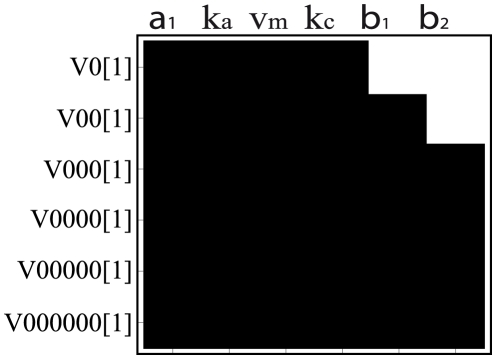
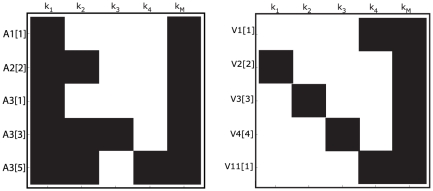
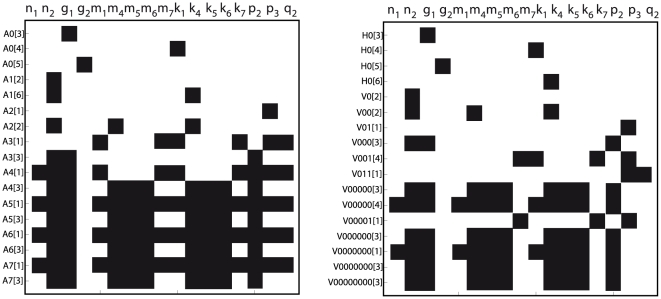
- Across six models, generating series plus tableaus was most advantageous; for the glycolysis-inspired pathway it concluded global identifiability with a unique solution for all parameters, whereas the Taylor series approach gave a rank-5 tableau and multiple solutions.
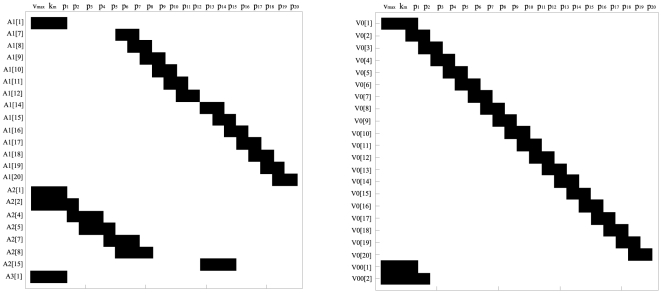
- The high-dimensional model (20 differential equations, 22 parameters, all states measured) was found structurally globally identifiable by the Taylor series approach in a few seconds and by the generating series approach; DAISY also reported structural global identifiability in prior work.
- For the pharmacokinetics model, Taylor/generating series tableaus had full rank, guaranteeing at least structural local identifiability even with one observable; DAISY found the six parameters structurally globally identifiable for the two-observable scenario.
- The Arabidopsis clock was not structurally globally identifiable under constant light, with a subset of parameters non-identifiable; pulse-wise stimulation and polynomial reformulation gave only partial results. For NFκB, generating series and reaction-network plus generating series concluded global/local identifiability of the parameters considered.
Methods
- Design: critical comparison of structural identifiability methods, including Taylor series, generating series, similarity transformation, differential algebra, direct test, implicit function theorem, and reaction-network-based analysis, with identifiability tableaus.
- Data/sample: six biological models of increasing size and complexity—Goodwin oscillator, pharmacokinetics model of receptor-mediated glucose oxidase uptake, glycolysis-inspired metabolic pathway, high-dimensional biochemical reaction model, Arabidopsis thaliana central clock, and NFκB signalling module.
- Analysis: symbolic computations using DAISY, GenSSI, MAPLE, MATHEMATICA, and MATLAB; methods were evaluated by range of applicability, computational complexity, and information provided.
Limitations
- Stated: no single method is amenable to every model; Taylor and generating series methods require an unknown number of derivatives; differential algebra and implicit function theorem struggle with low observable-to-parameter ratios and Michaelis-Menten/Hill kinetics; similarity transformation requires controllability/observability and can be computationally prohibitive; direct test applies only to uncontrolled/autonomous systems.
- Stated: the selected examples are small and medium-size models; apparent conflicting local/global conclusions can arise from initial conditions, symbolic solvability, and DAISY sometimes not using initial conditions.
- Evident from the text: several methods failed due to memory or computational errors, and some results were partial or inconclusive; the comparison is limited to the chosen six models and the specific software implementations used.
Model-written summary. Check it against the paper before relying on it.
Integrity signals
Registry
Cites
Statistics
Figures
Verification
Claims the paper makes
0 Valid · 3 Not valid · 21 Not checked · 115 Own results and interpretations
A result the paper states — it cites no source for it, so there is none to check. The quote shows it is in the paper.
In the paper
“The direct test method was also not applicable since the system is autonomous and controlled.”
§ Structural Identifiability of Systems Biology Models: A Critical Comparison of Methods > Results > Case study 3: Glycolysis inspired metabolic pathway
plainstates a cause- Asserted: passes — The authors put it forward as true.
- Checkable: passes — It can be checked against evidence.
- Load-bearing: unclear — It is unclear whether the paper’s conclusions depend on it.
- Based: passes — The paper gives a reason why it holds.
A result the paper reports from its own data — it cites no other source for it, so there is none to check. The quote shows it is in the paper.
In the paper
“Both differential algebra method implementations found the model to be globally identifiable (computation performed without the use of initial conditions).”
§ Structural Identifiability of Systems Biology Models: A Critical Comparison of Methods > Results > Case study 3: Glycolysis inspired metabolic pathway
plain- Asserted: passes — The authors put it forward as true.
- Checkable: passes — It can be checked against evidence.
- Load-bearing: unclear — It is unclear whether the paper’s conclusions depend on it.
- Based: passes — The paper gives a reason why it holds.
A result the paper reports from its own data — it cites no other source for it, so there is none to check. The quote shows it is in the paper.
In the paper
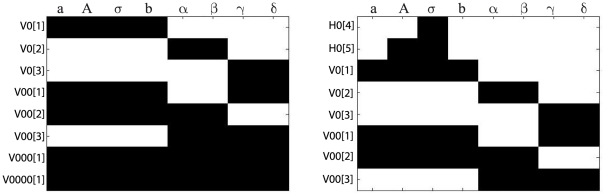
“In contrast, for the case of full observation the power series based methods ended up in a full rank tableau as shown in Figure 1.(a).”
§ Structural Identifiability of Systems Biology Models: A Critical Comparison of Methods > Results > Case study 1: Goodwin's model
plainstates a cause- Asserted: passes — The authors put it forward as true.
- Checkable: passes — It can be checked against evidence.
- Load-bearing: passes — The paper’s conclusions depend on it.
- Based: passes — The paper gives a reason why it holds.
A result the paper reports from its own data — it cites no other source for it, so there is none to check. The quote shows it is in the paper.
In the paper
“The similarity transformation approach could not be used for this example since the observability condition is not fulfilled.”
§ Structural Identifiability of Systems Biology Models: A Critical Comparison of Methods > Results > Case study 3: Glycolysis inspired metabolic pathway
plainstates a cause- Asserted: passes — The authors put it forward as true.
- Checkable: passes — It can be checked against evidence.
- Load-bearing: unclear — It is unclear whether the paper’s conclusions depend on it.
- Based: passes — The paper gives a reason why it holds.
A result the paper reports from its own data — it cites no other source for it, so there is none to check. The quote shows it is in the paper.
In the paper
“The computational cost was significantly lower as compared to the Taylor series approach.”
§ Structural Identifiability of Systems Biology Models: A Critical Comparison of Methods > Results > Case study 3: Glycolysis inspired metabolic pathway
plainSingle case- Asserted: passes — The authors put it forward as true.
- Checkable: passes — It can be checked against evidence.
- Load-bearing: unclear — It is unclear whether the paper’s conclusions depend on it.
- Based: passes — The paper gives a reason why it holds.
64 more claims
Create a free account to see all 139 claims and to verify the 22 references still open.
- Probably not a substantial claim. 29
- It may state two separate claims as one. 49
- The quote only partly states this claim. 2
Claims other papers make about this one
Each is checked against this paper’s own text: does it say what the citing paper says it does?
The cited source says what the claim attributes to it.
In the citing paper
“Fortunately, recent literature is correcting this (e.g. [129–140]).”
From Reverse engineering and identification in systems biology: strategies, perspectives and challenges (2014) · cites this paper as [138]
In the citing paper
“However, a priori methods are often limited to linear ODE systems or are impractical for models containing many parameters [14].”
From Joining forces of Bayesian and frequentist methodology: a study for inference in the presence of non-identifiability (2013) · cites this paper as [14]
Self-check
Percentages, sums and reported differences re-computed from the paper’s own numbers.
Each contradiction between two passages listed here was confirmed by an independent check.
Rated minor: it would not touch a result — a value no result rests on, a p-value that stays on the same side of the significance level, or a conflict that is clerical, resolved elsewhere in the paper, or outside its own findings.
In the paper
§ Structural Identifiability of Systems Biology Models: A Critical Comparison of Methods > Introduction
“the Goodwin oscillator model [32]”
§ Structural Identifiability of Systems Biology Models: A Critical Comparison of Methods > References
“32. Goodwin A Defibaugh D Weber L 1992 The vapor pressure of 1,1,1,2-tetrafluoroethane (r134a) and chlorodifluoromethane (r22). Int J Thermophys 13 837”
Citations
Cites
Nature Reviews Molecular Cell Biology
(2019) · Nature Reviews Molecular Cell Biology · doi:10.1038/41580.1471-0080 · Cited by 2,565
The IκB-NF-κB Signaling Module: Temporal Control and Selective Gene Activation
Hoffmann, A., Levchenko, A., Scott, M. L., & Baltimore, D. (2002) · Science · doi:10.1126/science.1071914 · Cited by 1,858
Failure to Regulate TNF-Induced NF-κB and Cell Death Responses in A20-Deficient Mice
Lee, E. G., Boone, D. L., Chai, S., Libby, S. L., Chien, M., Lodolce, J. P., & Ma, A. (2000) · Science · doi:10.1126/science.289.5488.2350 · Cited by 1,409 · cited 1×
“They used experimental data from previous works by Lee et al.”
MethodCell-signalling dynamics in time and space
Kholodenko, B. N. (2006) · Nature Reviews Molecular Cell Biology · doi:10.1038/nrm1838 · Cited by 1,347 · cited 1×
“[18] considered the analysis of different alternative models of a single phosphorylationdephosphorylation cycle in the MAPK cascade [19], by means of a differential algebra based approach.”
MethodDifferential Algebra and Algebraic Groups
Kolchin, E. R. (2012) · Cited by 1,277
Universally Sloppy Parameter Sensitivities in Systems Biology Models
Gutenkunst, R. N., Waterfall, J. J., Casey, F. P., Brown, K. S., Myers, C. R., & Sethna, J. P. (2007) · PLoS Computational Biology · doi:10.1371/journal.pcbi.0030189 · Cited by 1,261 · cited 1×
“This has been in fact the case in many examples found in the literature [4–8].”
ResultIEEE TRANSACTIONS ON AUTOMATIC CONTROL
Antsaklis, P. J., Kovács, E., Chong, E., Grizzle, J. W., Krstić, M., Spall, J. C., Amamoto, Y. Y., Arzelier, D., Astolfi, A., Braslavsky, J. H., et al. (2006) · Cited by 1,251
Identification of parametric models : from experimental data
Walter, É., & Pronzato, L. (1997) · Cited by 1,197
Computer methods and programs in biomedicine
(1985) · Computer Methods and Programs in Biomedicine · doi:10.1016/0169-2607(85)90039-2 · Cited by 1,151
Oscillatory behavior in enzymatic control processes
Goodwin, B. C. (1965) · Advances in Enzyme Regulation · doi:10.1016/0065-2571(65)90067-1 · Cited by 967
Research works printed but not linked: 1
- [43]Denis-Vidal L Joly-Blanchard G 1996 Identifiability of some nonlinear kinetics. Proceedings of the Third Workshop on Modelling of Chemical Reaction Systems, Heidelberg
Cited by
Items 301–400 of 446
A Framework for Quantitative Systems Pharmacology Model Execution
Sokolov, V. V., Peskov, K. V., & Helmlinger, G. (2025) · Handbook of experimental pharmacology · doi:10.1007/164_2024_738 · Cited by 7
A Methodology for Identifying Phenomenological‐Based Models using a Parameter Hierarchy
López-Restrepo, S., Garcia‐Tirado, J., & Álvarez, H. (2019) · The Canadian Journal of Chemical Engineering · doi:10.1002/cjce.23500 · Cited by 3
Lai, X., Keller, C., Santos, G., Schaft, N., Dörrie, J., & Vera, J. (2022) · Frontiers in Cell and Developmental Biology · doi:10.3389/fcell.2021.746359 · Cited by 4
“Therefore, we used the MATLAB toolbox GenSSI to perform structural identifiability analysis (Chis et al., 2011).”
MethodParameter identifiability for nonlinear LPV models
Srinivasarengan, K., Ragot, J., Aubrun, C., & Maquin, D. (2022) · International Journal of Applied Mathematics and Computer Science · doi:10.34768/amcs-2022-0019 · Cited by 4
“The identifiability tableau proposed by Balsa-Canto et al. (2010) was applied for the Taylor series approach while Chis et al. (2011) used it for the generating series technique to develop the genSSI MATLAB toolbox.”
InfluentialNonlinear Mixed Effects Modeling in Systems Pharmacology
Bonate, P. L., Desai, A. V., Rizwan, A., Zheng, L., & Tannenbaum, S. J. (2016) · AAPS advances in the pharmaceutical sciences series · doi:10.1007/978-3-319-44534-2_12 · Cited by 3
Madi, M. K., & Karameh, F. N. (2018) · Journal of Neural Engineering · doi:10.1088/1741-2552/aac3f7 · Cited by 3
“While model identifiability has been addressed in the context of nonlinear modeling in systems biology (Audoly et al 2001, Miao et al 2011, Chis et al 2011), this property is often assumed as inherent in neuroscience modeling literature mainly by retaining a sufficient model simplicity in relation…”
MethodGeometrical Framework Application Directions in Identification Systems. Review
Karabutov, N. N. (2021) · International Journal of Intelligent Systems and Applications · doi:10.5815/ijisa.2021.02.01 · Cited by 3
“The structural identifiability of nonlinear dynamic systems reduced to the parametrical identifiability on the basis of various approximation methods application [29-31].”
BackgroundMethodInfluentialMathematical Modelling of Cell Culture Processes
Chotteau, V., Hagrot, E., Zhang, L., & Mäkinen, M. (2021) · Cell engineering · doi:10.1007/978-3-030-79871-0_14 · Cited by 7
A Numerical Procedure for Model Identifiability Analysis Applied to Enzyme Kinetics
Daele, T. V., Hoey, S. V., Gernaey, K. V., Krühne, U., & Ingmar Nopens, A. (2015) · Computer-aided chemical engineering/Computer aided chemical engineering · doi:10.1016/b978-0-444-63578-5.50091-8 · Cited by 3
Kinetic realization of delayed polynomial dynamical models
Vághy, M. A., Szlobodnyik, G., & Szederkényi, G. (2019) · IFAC-PapersOnLine · doi:10.1016/j.ifacol.2019.07.008 · Cited by 3
Determining Structurally Identifiable Parameter Combinations Using Subset ProfilingPreprint
Eisenberg, M. C., & Hayashi, M. A. L. (2013) · arXiv (Cornell University) · doi:10.48550/arxiv.1307.2298 · Cited by 3
BioPreDyn-bench: benchmark problems for kinetic modelling in systems biologyPreprint
Villaverde, A. F., Henriques, D., B, K. S. A., Bongard, S., Schmid, J., Cicin-Sain, D., Crombach, A., Sáez-Rodríguez, J., Mauch, K., Balsa‐Canto, E., et al. (2014) · arXiv (Cornell University) · doi:10.48550/arxiv.1407.5856 · Cited by 3
“Structural identifiability is a theoretical property of the model structure, which can be very difficult to determine for large and complex models [44–46].”
BackgroundSelf-citationPractical parameter identifiability for spatiotemporal models of cell invasionPreprint
Simpson, M. J., Baker, R. E., Vittadello, S. T., & Maclaren, O. J. (2019) · bioRxiv (Cold Spring Harbor Laboratory) · doi:10.1101/839282 · Cited by 7
An approach to parameter identifiability for a class of nonlinear models represented in LPV formPreprint
Srinivasarengan, K., Ragot, J., Aubrun, C., & Maquin, D. (2020) · arXiv (Cornell University) · doi:10.48550/arxiv.2003.10297 · Cited by 4
“The realization could be in the form of a toolbox in MATLAB similar to those such as Chis et al. (2011) or Villaverde et al. (2016). That is, a detailed strategy for the model input, options for evaluating local/global identifiability results, and the final display of the results 26”
BackgroundMethodInfluentialAgyeman, B. T., Orouskhani, E., Naouri, M., Appels, W. M., Wolleben, M., Liu, J., & Shah, S. L. (2023) · SSRN Electronic Journal · doi:10.2139/ssrn.4463409 · Cited by 3
Improving Izhikevich neuron models and analyzing dynamical behavior through Bayesian inference
Jia, K., Wang, X., Wei, L., & Ge, M. (2025) · The European Physical Journal Special Topics · doi:10.1140/epjs/s11734-025-01728-3 · Cited by 4
A mechanistic computational model of the HIF signaling pathway in endothelial cells
Oliveira, R. H. D. M., Pathak, A. P., & Popel, A. S. (2026) · iScience · doi:10.1016/j.isci.2026.116195 · Cited by 2
Elsheikh, A. M. G. (2013) · EUROSIM Congress on Modelling and Simulation (EUROSIM) · doi:10.1109/eurosim.2013.61 · Cited by 3
Specialty Grand Challenge: Data and Model Integration in Systems Biology
Saccenti, E. (2021) · Frontiers in Systems Biology · doi:10.3389/fsysb.2021.800894 · Cited by 2
“While model identi fi cation and estimation has relied on numerical methods (Moles, Mendes et al., 2003; Chis, Banga et al., 2011), the last few years have seen the emergence of the use of machine learning techniques, such as neural networks (Raissi, Perdikaris et al., 2019; Yazdani, Lu et al.,…”
MethodLocalization of Noise in Biochemical Networks
Fajiculay, E., & Hsu, C. (2023) · ACS Omega · doi:10.1021/acsomega.2c06113 · Cited by 2
Revisiting the observability and identifiability properties of a popular HIV model
Martinelli, A. (2024) · Journal of Theoretical Biology · doi:10.1016/j.jtbi.2024.111780 · Cited by 3
Foliar Uptake Models for Biocides: Testing Practical Identifiability of Diffusion-Based Models
Sangoi, E., Cattani, F., Padia, F. N., & Galvanin, F. (2024) · IFAC-PapersOnLine · doi:10.1016/j.ifacol.2024.10.013 · Cited by 4
Aguilera, L. U., Weber, L. M., Ron, E., King, C. R., Öcal, K., Popinga, A., Cook, J., May, M. P., Raymond, W., Fox, Z., et al. (2025) · Physical Biology · doi:10.1088/1478-3975/adda85 · Cited by 4
“This is often the case if the model has too many parameters for the amount and type of data collected, a phenomenon called parameter unidentifiability [102].”
Zhao, Y., Averga, S., Buonomo, B., & Lou, J. (2025) · Journal of Theoretical Biology · doi:10.1016/j.jtbi.2025.112280 · Cited by 3
Moreno-Razo, A. S., Martínez‐López, N., Vilas, C., Tudela, J. A., Gil, M. I., & Garcia, M. R. (2025) · Innovative Food Science & Emerging Technologies · doi:10.1016/j.ifset.2025.104307 · Cited by 2
Saccomani, M. P. (2015) · Lecture notes in computer science · doi:10.1007/978-3-319-16483-0_63 · Cited by 2
Yang, H., Meijer, H. G. E., Buitenweg, J. R., & van Gils, S. A. (2016) · Frontiers in Psychology · doi:10.3389/fpsyg.2016.01884 · Cited by 2
Identifiability from a Few Species for a Class of Biochemical Reaction Networks
Jeronimo, G., Millán, M. P., & Solernó, P. (2019) · Bulletin of Mathematical Biology · doi:10.1007/s11538-019-00594-0 · Cited by 4
Bayesian model selection for the Drosophila gap gene network
Zubair, A., Rosen, I. G., Nuzhdin, S. V., & Marjoram, P. (2019) · BMC Bioinformatics · doi:10.1186/s12859-019-2888-0 · Cited by 2
Fekih-Salem, R., Schorsch, J., Dewasme, L., Castro, C., Hantson, A., Kinnaert, M., & Wouwer, A. V. (2019) · Journal of Process Control · doi:10.1016/j.jprocont.2019.07.001 · Cited by 2
Szlobodnyik, G., & Szederkényi, G. (2022) · Kybernetika · doi:10.14736/kyb-2021-6-0939 · Cited by 2
Mathematical Modelling in Plant Synthetic Biology
Deneer, A., & Fleck, C. C. (2022) · Methods in molecular biology · doi:10.1007/978-1-0716-1791-5_13 · Cited by 3
Quantifying Parameter Interdependence in Stochastic Discrete Models of Biochemical Systems
Gholami, S., & Ilie, S. (2023) · Entropy · doi:10.3390/e25081168 · Cited by 4
Global optimization using Gaussian processes to estimate biological parameters from image data
Barac, D., Multerer, M., & Iber, D. (2018) · Journal of Theoretical Biology · doi:10.1016/j.jtbi.2018.12.002 · Cited by 4
“For biological systems described by ordinary differential equation (ODE) models, various methods for detecting structural non-identifiability have been proposed [32].”
BackgroundAn iterative LMA method for parameter estimation in dynamic modeling of TGFβ pathway using ODE
Borzou, P., Ghaisari, J., Izadi, I., & Gheisari, Y. (2019) · Iranian Conference on Electrical Engineering · doi:10.1109/iraniancee.2019.8786632 · Cited by 2
“Other papers such as [6], [7], suggested analysing sensitivity of the model to its parameters, and only try to find parameters that show more sensitivity.”
BackgroundSloppy models can be identifiablePreprint
Chis, O.-T., Banga, J. R., & Balsa‐Canto, E. (2014) · arXiv (Cornell University) · doi:10.48550/arxiv.1403.1417 · Cited by 6
“[15] reviews the different alternative methods to perform the structural identifiability analysis for nonlinear models concluding that not universally valid method exists but that a combination of the generating series approach with identifiability tableaus is suitable for typically large scale dynamic models in syste…”
MethodSelf-citationParameter Identifiability of the Generalized Lotka-Volterra Model for Microbiome StudiesPreprint
Remien, C. H., Eckwright, M. J., & Ridenhour, B. J. (2018) · bioRxiv (Cold Spring Harbor Laboratory) · doi:10.1101/463372 · Cited by 2
Structural identifiability of large systems biology models
Joubert, D. (2020) · doi:10.18174/507603 · Cited by 2
How to Keep it Adequate: A Validation Protocol for Agent-Based SimulationPreprint
Troost, C., Bell, A. R., van Delden, H., Huber, R., Filatova, T., Le, Q. B., Lippe, M., Niamir, L., Polhill, G. J., Sun, Z., et al. (2022) · SSRN Electronic Journal · doi:10.2139/ssrn.4161475 · Cited by 2
Structural identifiability of series-parallel LCR systems
Bortner, C., & Sullivant, S. (2022) · Journal of Symbolic Computation · doi:10.1016/j.jsc.2022.01.002 · Cited by 1
“Since then, several different systems ranging from physical to biological have been analyzed for identifiability using various techniques [2, 6, 9, 14].”
BackgroundMATHEMATICAL MODELING OF INFECTION MECHANISM BETWEEN MILD AND SEVERE COVID-19 PATIENTS
LAN, Q., Wu, H., Lou, J., & Li, J. (2023) · Journal of Biological Systems · doi:10.1142/s021833902350033x · Cited by 1
Structural identifiability of parameters of Anand material model
Rojíček, J., Cienciala, J., & Fusek, M. (2025) · Scientific Reports · doi:10.1038/s41598-025-89360-y · Cited by 1
Daher, A. (2025) · International Journal for Numerical Methods in Biomedical Engineering · doi:10.1002/cnm.70023 · Cited by 1
Falavarjani, M. S., Vázquez, A. G., & Villaverde, A. F. (2025) · Computation · doi:10.3390/computation13120281 · Cited by 1
Zaman, M., Maggioni, G. M., & Rajagopalan, A. K. (2025) · Chemical Engineering Science · doi:10.1016/j.ces.2025.123151 · Cited by 2
Range, J., Bommarius, A. S., & Pleiss, J. (2026) · ACS Catalysis · doi:10.1021/acscatal.6c02553
Co-design of crop monitoring-modeling systems via identifiability analysis
Poudel, P., Welch, S. M., Alderman, P. D., & Lin, X. (2025) · Agricultural Systems · doi:10.1016/j.agsy.2025.104613 · Cited by 2
Kahiya, E. T., Smutný, T., Smutná, L., Tebbens, J. D., Pávek, P., & Bernhauerová, V. (2026) · Bulletin of Mathematical Biology · doi:10.1007/s11538-026-01619-1 · Cited by 1
“There are several methods that can be used to perform SIA (Pohjanpalo 1978; Chis et al. 2011; Wanika et al. 2024; White et al. 2024).”
Stentz, D., Guerraty, M. A., & Metzler, S. D. (2026) · Physics in Medicine and Biology · doi:10.1088/1361-6560/ae62c5 · Cited by 1
“We conclude, consistent with the mathematical derivation in (Metzler et al 2026), that we have local non-identifiability (Chis et al 2011, Guillaume et al 2019, Wieland et al 2021) in the previously stated cases.”
Gupta, A., & Chouhan, U. (2026) · Nonlinear Dynamics · doi:10.1007/s11071-026-12674-7 · Cited by 2
Metzler, S. D., Stentz, D., & Guerraty, M. A. (2026) · Physics in Medicine and Biology · doi:10.1088/1361-6560/ae968a · Cited by 1
“…identifiability’ and has been undertaken in the context of biological systems employing first-order ordinary differential equations, where there are many parameters influencing the observables (Raue et al 2009, 2013, Chis et al 2011, Han et al 2016, Villaverde et al 2016, Gabor et al 2017).”
Parametric estimation of a prey-predator model with Allee effect
Filatova, D. V., & El-Nouty, C. (2016) · International Conference on Information and Digital Technologies (IDT) · doi:10.1109/dt.2016.7557157 · Cited by 1
“We suppose that the system (1) can be presented by a difference model structure M (Θ, x (t,Θ) , y (t,Θ)), which corresponds to M (Θ, X (t,Θ) , Y (t,Θ)) in sense of structural identifiability condition (see [15]).”
BackgroundCardiovascular regulation in response to multiple hemorrhages: analysis and parameter estimation
Ciocanel, M.-V., Docken, S. S., Gasper, R. E., Dean, C., Carlson, B. E., & Olufsen, M. S. (2018) · Biological Cybernetics · doi:10.1007/s00422-018-0781-y · Cited by 2
Karabutov, N. N. (2021) · EPJ Web of Conferences · doi:10.1051/epjconf/202124801004 · Cited by 1
A Note on the Accurate Computation of Structural Properties for Dynamic Control Systems
Stigter, J. D., Joubert, D., van Willigenburg, L. G., & Molenaar, J. (2022) · IFAC-PapersOnLine · doi:10.1016/j.ifacol.2022.09.130 · Cited by 1
Proceedings of the 2023 Meeting of the Animal Science Modelling Group
Kebreab, E., Cant, J. P., & Knapp, J. R. (2024) · Canadian Journal of Animal Science · doi:10.1139/cjas-2024-0024 · Cited by 2
Modeling and analysis of a two-strain immuno-epidemiological model with reinfection
Wu, H., Zhao, Y., Xu, X., & Lou, J. (2024) · Nonlinear Analysis Real World Applications · doi:10.1016/j.nonrwa.2024.104188 · Cited by 2
Core, L. D., & Mirams, G. R. (2025) · Philosophical Transactions of the Royal Society A Mathematical Physical and Engineering Sciences · doi:10.1098/rsta.2024.0224 · Cited by 1
“Structural non-identifiability is the result of functionally related model parameters, where it is impossible for given model output(s) (e.g. in this context, recording only current) to give independent information on all the model parameters no matter what experiment is performed [50].”
Actuator-Attack Selection Strategy for Non-Uniquely Identifiable Cyber-Physical Systems
Du, W., Luo, X., Huan, Y., Fang, C., He, J., & Le, X. (2025) · IEEE Conference on Decision and Control (CDC) · doi:10.1109/cdc57313.2025.11312193 · Cited by 1
“Additional studies [18]–[20] further validate that actuator-attack scenarios often expose sufficient signal interactions for attackers to infer such control parameters through data-driven system identification techniques.”
On the Identifiability of Physiological Models: Optimal Design of Clinical Tests
Bezzo, F., & Galvanin, F. (2018) · Computer-aided chemical engineering/Computer aided chemical engineering · doi:10.1016/b978-0-444-63964-6.00004-0 · Cited by 3
Hroß, S., Theis, F. J., Sixt, M., & Hasenauer, J. (2018) · Journal of The Royal Society Interface · doi:10.1098/rsif.2018.0600 · Cited by 1
“As the absolute concentration of CCL21 was unknown and merely the equilibrium distribution of immobilized CCL21 was measured, the parameters ( a , D , g , k 1 , k 2 1 , S 0 , s , b ) T were structurally non-identifiable (see [39] for definition).”
BackgroundModel Structures and Structural Identifiability: What? Why? How?
Whyte, J. M. (2021) · MATRIX book series · doi:10.1007/978-3-030-62497-2_10 · Cited by 2
Karabutov, N. N. (2021) · Mekhatronika Avtomatizatsiya Upravlenie · doi:10.17587/mau.22.59-70 · Cited by 1
Grunberg, T. W., & Vecchio, D. D. (2023) · SIAM Journal on Applied Dynamical Systems · doi:10.1137/22m1517202 · Cited by 4
Stokka, S. H., Haus, E. S., Fjeld, G., Drengstig, T., & Thorsen, K. (2022) · Linköping electronic conference proceedings · doi:10.3384/ecp21185465 · Cited by 1
Grunberg, T. W., & Vecchio, D. D. (2022) · IEEE Conference on Decision and Control (CDC) · doi:10.1109/cdc51059.2022.9992540 · Cited by 2
Booth, V. (2014) · Encyclopedia of Computational Neuroscience · doi:10.1007/978-1-4614-7320-6_163-1 · Cited by 1
Renardy, M., Kirschner, D. E., & Eisenberg, M. C. (2021) · arXiv (Cornell University) · doi:10.48550/arxiv.2102.06178 · Cited by 1
“Many theoretical results and algorithms for structural identifiability of linear and non-linear ordinary differential equations (ODEs) models have been derived (Miao et al., 2011; Audoly et al., 2001; Ljung and Glad, 1994; Pohjanpalo, 1978; Chappell et al., 1990; Cobelli and DiStefano, 1980; Chis et al., 2011) and hav…”
BackgroundA systems engineering approach to model, tune and test synthetic gene circuits
Acosta, Y. F. B. (2018) · RiuNet (Universitat Politècnica de València) · doi:10.4995/thesis/10251/112725 · Cited by 1
“Authors in (Chis et al., 2011) suggest the lack of identifiability is related to the structure of the model, i.”
BackgroundWeb-based Structural Identifiability AnalyzerPreprint
Ilmer, I., Ovchinnikov, A., & Pogudin, G. (2021) · arXiv (Cornell University) · Cited by 1
Protein-Peptide Turnover Profiling reveals wiring of phosphorylation during protein maturationPreprint
Hammarén, H. M., Geissen, E., Potel, C. M., Beck, M., & Savitski, M. M. (2022) · bioRxiv (Cold Spring Harbor Laboratory) · doi:10.1101/2022.04.03.486883 · Cited by 1
New Contributions Towards Meal and Exercise Announcement-Free Artificial Pancreas Systems
Sala-Mira, I. (2023) · RiuNet (Universitat Politècnica de València) · doi:10.4995/thesis/10251/192684 · Cited by 3
An improved framework for grey-box identification of biological processesPreprint
Jagadeesan, P., Raman, K., & Tangirala, A. K. (2025) · bioRxiv (Cold Spring Harbor Laboratory) · doi:10.1101/2025.02.14.638382 · Cited by 1
“Several analytical and computational methods have been proposed to detect the structural identifiability of nonlinear ODEs [9].”
InfluentialIdentification of dynamic models of microbial communitiesPreprint
Paredes-Vázquez, A., Balsa‐Canto, E., & Banga, J. R. (2025) · bioRxiv (Cold Spring Harbor Laboratory) · doi:10.1101/2025.06.09.658565 · Cited by 1
“In particular, we employed a metaheuristic approach known as enhanced Scatter Search ( eSS ), which combines global search heuristics with local optimization steps to refine potential solutions and is recognized for its reliable convergence properties [35].”
Self-citationMathematical Models for FDG Kinetics in Cancer: A Review
Sommariva, S., Caviglia, G., Sambuceti, G., & Piana, M. (2021) · Metabolites · doi:10.3390/metabo11080519 · Cited by 9
“A simplified version of this renal system proposed in Reference [49] provides an example of application of an inversion procedure inspired by biology.”
BackgroundInfluentialWorkflow Description to Dynamically Model β-Arrestin Signaling Networks
Yvinec, R., Ayoub, M. A., Pascali, F. D., Crépieux, P., Reiter, É., & Poupon, A. (2019) · Methods in molecular biology · doi:10.1007/978-1-4939-9158-7_13 · Cited by 4
A guide to sensitivity analysis of quantitative models of gene expression dynamics
Taylor, B. P., Lee, T. J., & Weitz, J. S. (2013) · Methods · doi:10.1016/j.ymeth.2013.03.007 · Cited by 2
Numerical analysis of nonlinear model of excited carrier decay
Tumanova, N., Čiegis, R., & Meilūnas, M. (2013) · Open Mathematics · doi:10.2478/s11533-013-0226-8
Modeling and identification of the nociceptive system using psychophysical measurements
Yang, H. (2015) · doi:10.3990/1.9789036540049
“On one hand, sufficient conditions can guarantee model identifiability, but such requirements could be too strict to be met in practice (Bellman and Åström, 1970; Chiş et al., 2011).”
Backgroundstrategies, perspectives and challenges Reverse engineering and identification in systems biology:
Villaverde, A. F., & Banga, J. R. (2014)
Self-citationModel Identification and Parameter Estimation
Świerniak, A., Kimmel, M., Śmieja, J., Puszyński, K., & Psiuk-Maksymowicz, K. (2016) · Springer eBooks · doi:10.1007/978-3-319-28095-0_6
A new approach for estimating the robustness of parameter estimates to measurement noise
Raman, D. V., Anderson, J., & Papachristodoulou, A. (2016) · Proceedings of the ... American Control Conference/Proceedings of the American Control Conference · doi:10.1109/acc.2016.7525183 · Cited by 1
“This property is hard to verify for nonlinear ODE models [3].”
BackgroundStructural Analysis of Kinetic Systems with Application to Cell-free Expression Systems
Tuza, Z. A. (2015) · REAL-PhD (Hungarian Academy of Sciences)
Realistic Assessment of Parameter Uncertainty in Dynamic Parameter Estimation
Mordechai Shacham, A., & Neima Brauner, B. (2017) · Computer-aided chemical engineering/Computer aided chemical engineering · doi:10.1016/b978-0-444-63965-3.50049-0
Structural Identifiability of Nonlinear Dynamic Systems
Karabutov, N. N. (2019) · Mekhatronika Avtomatizatsiya Upravlenie · doi:10.17587/mau.20.195-205
Observer-based Diagnosis in Chemical Reaction Networks
Marton, L., Szederkényi, G., & Hangos, K. M. (2019) · European Control Conference (ECC) · doi:10.23919/ecc.2019.8796206
“Similar identifiability results were developed for system biology models in the study [13].”
ResultStructural Identifiability of Nonlinear Systems with Hysteresis
Karabutov, N. N. (2020) · International Conference on Control Systems, Mathematical Modeling, Automation and Energy Efficiency (SUMMA) · doi:10.1109/summa50634.2020.9280635
“Many publications are devoted to the study of the identifiability [1-6].”
BackgroundMethodCsercsik, D., & Kovács, L. (2020) · IFAC-PapersOnLine · doi:10.1016/j.ifacol.2020.12.430
Structural Identifiability of a Third-order Continuous System under Impulsive Feedback
Runvik, H., & Medvedev, A. V. (2020) · IFAC-PapersOnLine · doi:10.1016/j.ifacol.2020.12.614
Contributions to mathematical pharmacology: new receptor theory with dimeric receptor models
White, C. (2021) · Cronfa (Swansea University) · doi:10.23889/suthesis.58297 · Cited by 2
Dong, R., Goodbrake, C., Harrington, H. A., & Pogudin, G. (2021) · arXiv (Cornell University)
Maple application for structural identifiability analysis of ODE models
Ilmer, I., Ovchinnikov, A., & Pogudin, G. (2021) · ACM communications in computer algebra · doi:10.1145/3493492.3493497
Structural Identifiability of System with Nonlinear Adulteration
Karabutov, N. N. (2021) · International Conference on Control Systems, Mathematical Modeling, Automation and Energy Efficiency (SUMMA) · doi:10.1109/summa53307.2021.9632033
Gunawan, R., & Bagheri, N. (2018) · MDPI eBooks · doi:10.3390/books978-3-03897-434-5
Booth, V. (2015) · Encyclopedia of Computational Neuroscience · doi:10.1007/978-1-4614-6675-8_163
A plausible identifiable model of the canonical NF- κ B signaling pathwayPreprint
Jaruszewicz-Błońska, J., Kosiuk, I., Prus, W., & Lipniacki, T. (2022) · bioRxiv (Cold Spring Harbor Laboratory) · doi:10.1101/2022.06.09.495460
Booth, V. (2022) · Encyclopedia of Computational Neuroscience · doi:10.1007/978-1-0716-1006-0_163
Metadata
- Authors
- Chis, O.-T., Banga, J. R., & Balsa-Canto, E.
- Affiliations
- Consejo Superior de Investigaciones Científicas (ES)
- ORCID
- Banga, Julio R.
- Venue
- PLoS ONE
- Publisher
- Public Library of Science (PLoS)
- Published
- 2011-11-22
- Volume
- 6
- Issue
- 11
- Pages
- e27755
- ISSN
- 1932-6203 (ISSN-L)
- PMC
- PMC3222653
- OpenAlex
- W2033783472
- Cited by
- 448
- References
- 64
- Citations by year
- 2026: 29 · 2025: 35 · 2024: 38 · 2023: 35 · 2022: 40 · 2021: 41 · 2020: 29 · 2019: 37 · 2018: 45 · 2017: 21 · 2016: 26 · 2015: 24 · 2014: 24 · 2013: 17 · 2012: 7
- FWCI
- 6.23
- Type
- journal article
- Language
- en
- Open access
- gold
- doi.org
- Locations
- PLoS ONE (publishedVersion, cc-by)
- PubMed Central (publishedVersion, cc-by)
- PubMed (publishedVersion)
- RePEc: Research Papers in Economics (submittedVersion)
- DIGITAL.CSIC (Spanish National Research Council (CSIC)) (submittedVersion)
- DOAJ (DOAJ: Directory of Open Access Journals) (submittedVersion, cc-by-sa)
- Funders
- Ministerio de Ciencia e Innovación
- Xunta de Galicia
- Topics
- Life Sciences › Biochemistry, Genetics and Molecular Biology › Molecular Biology › Gene Regulatory Network Analysis
- Physical Sciences › Engineering › Control and Systems Engineering › Control Systems and Identification
- Physical Sciences › Mathematics › Applied Mathematics › Statistical and numerical algorithms
- Keywords
- structural identifiability, systems biology models, parameter estimation, nonlinear dynamic model, generating series, model structure analysis, time series, in silico experimentation
- MeSH terms
- Glycolysis, Models, Biological, NF-kappa B, Arabidopsis, Nonlinear Dynamics, Systems Biology
About these checks
Registry, retraction, Cites and statistics results are computed, not judged, with one exception: a printed reference that no index lists is read once by a model before it counts as a citation error. Claims are extracted by a model and kept only when their quote appears verbatim in the text; each cited source is then checked, with a model’s help, for whether it says what the claim relies on. Those verdicts can be wrong — read the claim’s quote and the cited source before relying on one.
A language model drew the claims from the paper on 2026-10-05, under version 3 of the claim definition (model deepseek-v4.1-flash, prompt extract-v3).
A second model labelled each claim on 2026-10-05 (model jev-1.13-20260917, definition revision gold-guideline-v0.2).
Statistics and arithmetic are recomputed, not judged.
Confidence bands are shown only for fields calibrated on our annotated test set. None is calibrated yet, so no band is shown.
What counts as a claim ›How we measure confidence ›How we check this ›
Are you an author, or do you see a problem with this page? Request a review
Data sources
Bibliographic data: Semantic Scholar, OpenAlex, Crossref.
Contains information from the Semantic Scholar Academic Graph Datasets, made available under the ODC Attribution License (ODC-BY 1.0).
Semantic Scholar’s data is described in: Kinney, R., et al. (2023). The Semantic Scholar Open Data Platform. arXiv:2301.10140.
