

Structural Identifiability of Systems Biology Models: A Critical Comparison of Methods
Open accessThe DOI matches its Crossref record; 64 of the 64 references it cites were found in a registry or an index; none of the 22 sources its claims cite is checked for support yet.
Abstract
Analysing the properties of a biological system through in silico experimentation requires a satisfactory mathematical representation of the system including accurate values of the model parameters. Fortunately, modern experimental techniques allow obtaining time-series data of appropriate quality which may then be used to estimate unknown parameters. However, in many cases, a subset of those parameters may not be uniquely estimated, independently of the experimental data available or the numerical techniques used for estimation. This lack of identifiability is related to the structure of the model, i.e. the system dynamics plus the observation function. Despite the interest in knowing a priori whether there is any chance of uniquely estimating all model unknown parameters, the structural identifiability analysis for general non-linear dynamic models is still an open question. There is no method amenable to every model, thus at some point we have to face the selection of one of the possibilities. This work presents a critical comparison of the currently available techniques. To this end, we perform the structural identifiability analysis of a collection of biological models. The results reveal that the generating series approach, in combination with identifiability tableaus, offers the most advantageous compromise among range of applicability, computational complexity and information provided.
Overview
CoChat Summary
TL;DR
This paper critically compares structural identifiability methods for nonlinear systems-biology models across six case studies. It concludes that the generating series approach combined with identifiability tableaus offers the best compromise among applicability, computational complexity, and information provided.
Key findings
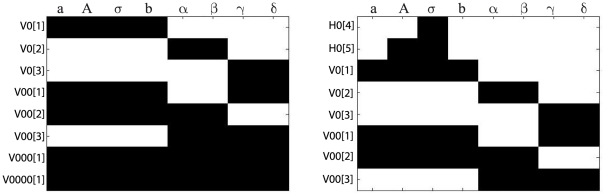
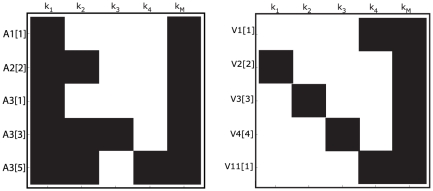
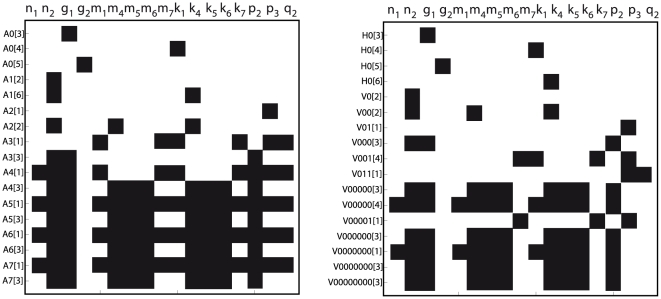
- Across six models, generating series plus tableaus was most advantageous; for the glycolysis-inspired pathway it concluded global identifiability with a unique solution for all parameters, whereas the Taylor series approach gave a rank-5 tableau and multiple solutions.
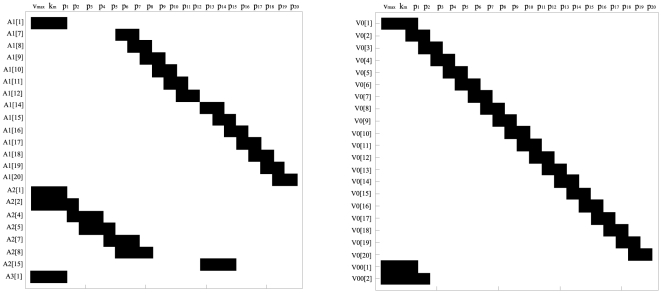
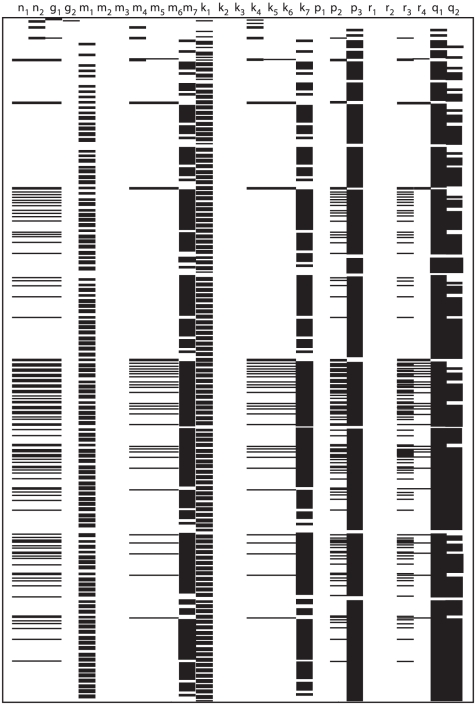
- The high-dimensional model (20 differential equations, 22 parameters, all states measured) was found structurally globally identifiable by the Taylor series approach in a few seconds and by the generating series approach; DAISY also reported structural global identifiability in prior work.
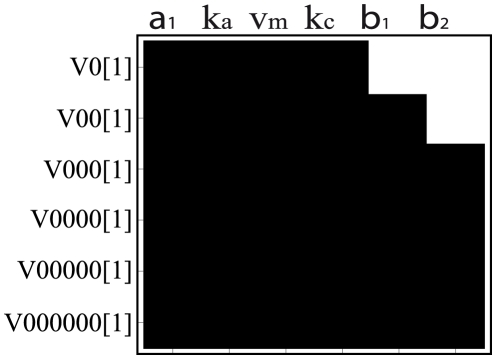
- For the pharmacokinetics model, Taylor/generating series tableaus had full rank, guaranteeing at least structural local identifiability even with one observable; DAISY found the six parameters structurally globally identifiable for the two-observable scenario.
- The Arabidopsis clock was not structurally globally identifiable under constant light, with a subset of parameters non-identifiable; pulse-wise stimulation and polynomial reformulation gave only partial results. For NFκB, generating series and reaction-network plus generating series concluded global/local identifiability of the parameters considered.
Methods
- Design: critical comparison of structural identifiability methods, including Taylor series, generating series, similarity transformation, differential algebra, direct test, implicit function theorem, and reaction-network-based analysis, with identifiability tableaus.
- Data/sample: six biological models of increasing size and complexity—Goodwin oscillator, pharmacokinetics model of receptor-mediated glucose oxidase uptake, glycolysis-inspired metabolic pathway, high-dimensional biochemical reaction model, Arabidopsis thaliana central clock, and NFκB signalling module.
- Analysis: symbolic computations using DAISY, GenSSI, MAPLE, MATHEMATICA, and MATLAB; methods were evaluated by range of applicability, computational complexity, and information provided.
Limitations
- Stated: no single method is amenable to every model; Taylor and generating series methods require an unknown number of derivatives; differential algebra and implicit function theorem struggle with low observable-to-parameter ratios and Michaelis-Menten/Hill kinetics; similarity transformation requires controllability/observability and can be computationally prohibitive; direct test applies only to uncontrolled/autonomous systems.
- Stated: the selected examples are small and medium-size models; apparent conflicting local/global conclusions can arise from initial conditions, symbolic solvability, and DAISY sometimes not using initial conditions.
- Evident from the text: several methods failed due to memory or computational errors, and some results were partial or inconclusive; the comparison is limited to the chosen six models and the specific software implementations used.
Model-written summary. Check it against the paper before relying on it.
Integrity signals
Registry
Cites
Statistics
Figures
Verification
Claims the paper makes
0 Valid · 3 Not valid · 21 Not checked · 115 Own results and interpretations
A result the paper states — it cites no source for it, so there is none to check. The quote shows it is in the paper.
In the paper
“The direct test method was also not applicable since the system is autonomous and controlled.”
§ Structural Identifiability of Systems Biology Models: A Critical Comparison of Methods > Results > Case study 3: Glycolysis inspired metabolic pathway
plainstates a cause- Asserted: passes — The authors put it forward as true.
- Checkable: passes — It can be checked against evidence.
- Load-bearing: unclear — It is unclear whether the paper’s conclusions depend on it.
- Based: passes — The paper gives a reason why it holds.
A result the paper reports from its own data — it cites no other source for it, so there is none to check. The quote shows it is in the paper.
In the paper
“Both differential algebra method implementations found the model to be globally identifiable (computation performed without the use of initial conditions).”
§ Structural Identifiability of Systems Biology Models: A Critical Comparison of Methods > Results > Case study 3: Glycolysis inspired metabolic pathway
plain- Asserted: passes — The authors put it forward as true.
- Checkable: passes — It can be checked against evidence.
- Load-bearing: unclear — It is unclear whether the paper’s conclusions depend on it.
- Based: passes — The paper gives a reason why it holds.
A result the paper reports from its own data — it cites no other source for it, so there is none to check. The quote shows it is in the paper.
In the paper
“In contrast, for the case of full observation the power series based methods ended up in a full rank tableau as shown in Figure 1.(a).”
§ Structural Identifiability of Systems Biology Models: A Critical Comparison of Methods > Results > Case study 1: Goodwin's model
plainstates a cause- Asserted: passes — The authors put it forward as true.
- Checkable: passes — It can be checked against evidence.
- Load-bearing: passes — The paper’s conclusions depend on it.
- Based: passes — The paper gives a reason why it holds.
A result the paper reports from its own data — it cites no other source for it, so there is none to check. The quote shows it is in the paper.
In the paper
“The similarity transformation approach could not be used for this example since the observability condition is not fulfilled.”
§ Structural Identifiability of Systems Biology Models: A Critical Comparison of Methods > Results > Case study 3: Glycolysis inspired metabolic pathway
plainstates a cause- Asserted: passes — The authors put it forward as true.
- Checkable: passes — It can be checked against evidence.
- Load-bearing: unclear — It is unclear whether the paper’s conclusions depend on it.
- Based: passes — The paper gives a reason why it holds.
A result the paper reports from its own data — it cites no other source for it, so there is none to check. The quote shows it is in the paper.
In the paper
“The computational cost was significantly lower as compared to the Taylor series approach.”
§ Structural Identifiability of Systems Biology Models: A Critical Comparison of Methods > Results > Case study 3: Glycolysis inspired metabolic pathway
plainSingle case- Asserted: passes — The authors put it forward as true.
- Checkable: passes — It can be checked against evidence.
- Load-bearing: unclear — It is unclear whether the paper’s conclusions depend on it.
- Based: passes — The paper gives a reason why it holds.
64 more claims
Create a free account to see all 139 claims and to verify the 22 references still open.
- Probably not a substantial claim. 29
- It may state two separate claims as one. 49
- The quote only partly states this claim. 2
Claims other papers make about this one
Each is checked against this paper’s own text: does it say what the citing paper says it does?
The cited source says what the claim attributes to it.
In the citing paper
“Fortunately, recent literature is correcting this (e.g. [129–140]).”
From Reverse engineering and identification in systems biology: strategies, perspectives and challenges (2014) · cites this paper as [138]
In the citing paper
“However, a priori methods are often limited to linear ODE systems or are impractical for models containing many parameters [14].”
From Joining forces of Bayesian and frequentist methodology: a study for inference in the presence of non-identifiability (2013) · cites this paper as [14]
Self-check
Percentages, sums and reported differences re-computed from the paper’s own numbers.
Each contradiction between two passages listed here was confirmed by an independent check.
Rated minor: it would not touch a result — a value no result rests on, a p-value that stays on the same side of the significance level, or a conflict that is clerical, resolved elsewhere in the paper, or outside its own findings.
In the paper
§ Structural Identifiability of Systems Biology Models: A Critical Comparison of Methods > Introduction
“the Goodwin oscillator model [32]”
§ Structural Identifiability of Systems Biology Models: A Critical Comparison of Methods > References
“32. Goodwin A Defibaugh D Weber L 1992 The vapor pressure of 1,1,1,2-tetrafluoroethane (r134a) and chlorodifluoromethane (r22). Int J Thermophys 13 837”
Citations
Cites
Nature Reviews Molecular Cell Biology
(2019) · Nature Reviews Molecular Cell Biology · doi:10.1038/41580.1471-0080 · Cited by 2,565
The IκB-NF-κB Signaling Module: Temporal Control and Selective Gene Activation
Hoffmann, A., Levchenko, A., Scott, M. L., & Baltimore, D. (2002) · Science · doi:10.1126/science.1071914 · Cited by 1,858
Failure to Regulate TNF-Induced NF-κB and Cell Death Responses in A20-Deficient Mice
Lee, E. G., Boone, D. L., Chai, S., Libby, S. L., Chien, M., Lodolce, J. P., & Ma, A. (2000) · Science · doi:10.1126/science.289.5488.2350 · Cited by 1,409 · cited 1×
“They used experimental data from previous works by Lee et al.”
MethodCell-signalling dynamics in time and space
Kholodenko, B. N. (2006) · Nature Reviews Molecular Cell Biology · doi:10.1038/nrm1838 · Cited by 1,347 · cited 1×
“[18] considered the analysis of different alternative models of a single phosphorylationdephosphorylation cycle in the MAPK cascade [19], by means of a differential algebra based approach.”
MethodDifferential Algebra and Algebraic Groups
Kolchin, E. R. (2012) · Cited by 1,277
Universally Sloppy Parameter Sensitivities in Systems Biology Models
Gutenkunst, R. N., Waterfall, J. J., Casey, F. P., Brown, K. S., Myers, C. R., & Sethna, J. P. (2007) · PLoS Computational Biology · doi:10.1371/journal.pcbi.0030189 · Cited by 1,261 · cited 1×
“This has been in fact the case in many examples found in the literature [4–8].”
ResultIEEE TRANSACTIONS ON AUTOMATIC CONTROL
Antsaklis, P. J., Kovács, E., Chong, E., Grizzle, J. W., Krstić, M., Spall, J. C., Amamoto, Y. Y., Arzelier, D., Astolfi, A., Braslavsky, J. H., et al. (2006) · Cited by 1,251
Identification of parametric models : from experimental data
Walter, É., & Pronzato, L. (1997) · Cited by 1,197
Computer methods and programs in biomedicine
(1985) · Computer Methods and Programs in Biomedicine · doi:10.1016/0169-2607(85)90039-2 · Cited by 1,151
Oscillatory behavior in enzymatic control processes
Goodwin, B. C. (1965) · Advances in Enzyme Regulation · doi:10.1016/0065-2571(65)90067-1 · Cited by 967
Research works printed but not linked: 1
- [43]Denis-Vidal L Joly-Blanchard G 1996 Identifiability of some nonlinear kinetics. Proceedings of the Third Workshop on Modelling of Chemical Reaction Systems, Heidelberg
Cited by
Items 401–446 of 446
Sujatha, V. (2022) · Computers & Chemical Engineering · doi:10.1016/j.compchemeng.2022.108077 · Cited by 1
Landgraf, T. G. (2022) · Digital Library of Theses and Dissertations (Universidade de São Paulo) · doi:10.11606/t.18.2022.tde-29112022-122144 · Cited by 2
Bayesian uncertainty quantification to identify population level vaccine hesitancy behaviours
Warne, D. J., Varghese, A., Brewster, A., Browning, A. P., Krell, M. M., Drovandi, C., Hu, W., Mira, A., Mengersen, K. L., & Jenner, A. L. (2026) · PLoS ONE · doi:10.1371/journal.pone.0349499
THE WITHIN-HOST VIRAL KINETICS OF SARS-COV-2
Wang, M., Zhao, Y., Zhang, C., & Lou, J. (2023) · Journal of Applied Analysis & Computation · doi:10.11948/20220389 · Cited by 2
Advanced mathematical modelling tools for food processing and food safety assessment
Soto, J. L. P. (2023) · Digital Repository (Polytechnic University of Cartagena) · doi:10.31428/10317/12359
Henze, S. (2023) · eDiss (Georg-August-Universität Göttingen) · doi:10.53846/goediss-9972
An Objective Measure of Distributional Estimability as Applied to the Phase-Type Aging Model
Nie, C., Liu, X., & Provost, S. B. (2024) · Risks · doi:10.3390/risks12020037
Furió-Novejarque, C. (2024) · RiuNet (Universitat Politècnica de València) · doi:10.4995/thesis/10251/202872
Towards resilient cyber networks against adversarial attacks
Chernikova, A. (2024) · Digital Repository Service (Northeastern University) · doi:10.17760/d20652999
Parameter estimation for glucose–insulin dynamics
Alanís, A. Y., Sánchez, O. D., Vaca-González, A., & Pérez‐Cisneros, M. (2024) · Elsevier eBooks · doi:10.1016/b978-0-44-322341-9.00013-6
Alanís, A. Y., Sánchez, O. D., Vaca-González, A., & Pérez‐Cisneros, M. (2024) · Elsevier eBooks · doi:10.1016/b978-0-44-322341-9.00011-2
Identifiability and characterization of transmon qutrits through Bayesian experimental design
Reddy, S. R. (2024) · Journal of Applied Physics · doi:10.1063/5.0204435 · Cited by 1
“To determine the identifiability of the models of open and closed quantum systems, we will employ the Taylor series approach [34, 35, 36].”
MethodRiva, D. A. (2024) · El Servicio de Difusión de la Creación Intelectual (National University of La Plata) · doi:10.35537/10915/169335
Neural Ordinary Differential Equations Inspired Parameterization of Kinetic ModelsPreprint
van Lent, P., Bunkova, O., Planken, L., Schmitz, J. P. J., & Abeel, T. (2024) · bioRxiv (Cold Spring Harbor Laboratory) · doi:10.1101/2024.12.20.629595
Identifiability of basic models and parameters in mathematical immunology
Grebennikov, D. S., Savinkov, R. S., & Bocharov, G. A. (2025) · Russian Journal of Numerical Analysis and Mathematical Modelling · doi:10.1515/rnam-2025-0015
Parameter Identification for PDEs via Qualitative Constraints
Blanco‐Rodríguez, R., Humphrey, A., Anderson, A., & Hernandez-Vargas, E. A. (2025) · IFAC-PapersOnLine · doi:10.1016/j.ifacol.2025.08.069
Leoca, D. A. I., Falavarjani, M. S., & Villaverde, A. F. (2025) · Jornadas de Automática · doi:10.17979/ja-cea.2025.46.12168
Global stability and identifiability of the immuno-epidemiological model
Wu, H., Zhao, Y., Xu, X., & Lou, J. (2025) · Advances in Continuous and Discrete Models · doi:10.1186/s13662-025-03983-z · Cited by 1
“Structural identifiability has been extensively developed and applied to ordinary differ-ential equations [15, 19], but its application to partial differential equations remains relatively rare.”
Research State on Structural Identification
(2025) · IGI Global eBooks · doi:10.4018/979-8-3373-0822-7.ch001
Structural Identifiability of Nonlinear Systems
(2025) · IGI Global eBooks · doi:10.4018/979-8-3373-0822-7.ch007
Geometrical Framework Application in Identification Systems
(2025) · IGI Global eBooks · doi:10.4018/979-8-3373-0822-7.ch002
On the structural and practical identifiability of multi‐echo BBB‐ASL tracer kinetic models
Manson, T. J., Thomas, D. L., Günther, M., Tippett, L. J., Dragunow, M., Morgan, C., & Suresh, V. (2025) · Magnetic Resonance in Medicine · doi:10.1002/mrm.70075
“A range of approaches to test this condition exist 22 and an exemplar using the Laplace transform method 23 applied to the 1CM is provided in the supplementary material.”
Netiesinių matematinių modelių grafuose skaitinė analizė
Tumanova, N. (2012) · doi:10.20334/2006-m
A REAL TURKEY DATA APPLICATION TO THE SEIR MODEL FOR TUBERCULOSIS DISEASE
Dolaşır, S., & Işık, O. R. (2025) · Mugla Journal of Science and Technology · doi:10.22531/muglajsci.1705165
Bayesian inference of gene regulatory networks at stochastic steady state
Gupta, A., Yoon, R., & Josić́, K. (2026) · Journal of The Royal Society Interface · doi:10.1098/rsif.2026.0040
“All SSA simulations were implemented using the Python package GillesPy2 [56].”
Wang, Y., Bergman, D. R., Trujillo, E., Ziblat, A., Fernald, A. A., Li, L., Pearson, A. T., Sweis, R. F., & Jackson, T. L. (2026) · bioRxiv (Cold Spring Harbor Laboratory) · doi:10.64898/2026.01.12.699041
“[9] Figure S1: Structural identifiability analysis using genSSI 2.0: identifiability tableaux of the updated, structurally identifiable one-phenotype ODE model with completely blocked or active immune checkpoint”
InfluentialAlgebraic Criterion for Nonlinear Unknown Input Observability in Systems Without Control Inputs
Martinelli, A. (2026) · IEEE Transactions on Automatic Control · doi:10.1109/tac.2026.3654861 · Cited by 2
“…is a fundamental result that has found widespread application across various domains, including computer vision (e.g., [7]), robotics (e.g., [8], [9], and [10]), calibration (e.g., [11]), mechanical engineering (e.g., [12]), biology (e.g., [13], [14], [15], and [16]), and chemistry (e.g., [17]).”
Carlozo, M. N., Wang, N., Dowling, A. W., & Maginn, E. J. (2026) · Digital Discovery · doi:10.1039/d5dd00537j
filho, R. M. P. A. (2026) · Qeios · doi:10.32388/76fbo7.3
Taheri, R., & Haut, B. (2026) · Annals of Biomedical Engineering · doi:10.1007/s10439-026-03976-3
“…mechanistic interpretability: -parameters map waveform morphology to identifiable components of afterload (compliance, characteristic impedance, inertance, and distal resistance), enabling physiologically grounded explanations for changes in CO rather than device-dependent correlations [8, 19, 32].”
Akman, T., Pietras, K., Köhn‐Luque, A., & Acar, A. (2026) · bioRxiv (Cold Spring Harbor Laboratory) · doi:10.64898/2026.03.27.714662
“Based on the solvability properties of the system, information about global and local structural identifiability as well as non-identifiability are revealed [7].”
Mohammed, M. A. Y., Karami, H., & Chowell, G. (2026) · Mathematical Biosciences & Engineering · doi:10.3934/mbe.2026043
“However, the ability to recover meaningful parameters from data critically depends on identifiability, that is, whether model parameters can be uniquely determined from available observations [27, 28, 29].”
Erythroid differentiation in vitro under the lens of mathematical modelling
Duchesne, R. (2019) · theses.fr (ABES) · doi:10.70675/ff05850fzb60bz4e5fza98cz6059b1f59210
Clairon, Q. (2015) · theses.fr (ABES) · doi:10.70675/8b8876bcz097cz46fbz9183z198a61ad8c86
Cogan, N. G., Nooranidoost, M., Peltier, M., & Romero, S. (2026) · Journal of The Royal Society Interface · doi:10.1098/rsif.2025.0938
Tămaş, A.-G., Şuşcă, M., & Dobra, P. (2026) · IEEE International Conference on Automation, Quality and Testing, Robotics (AQTR) · doi:10.1109/aqtr70159.2026.11577673
“Over the years, several directions have been explored to relate identified models to physical parameters [4], [5].”
On the structural identifiability of nonlinear models of ligand binding dynamics
White, C., Rottschäfer, V., & Bridge, L. (2026) · Journal of Pharmacokinetics and Pharmacodynamics · doi:10.1007/s10928-026-10040-z · Cited by 1
“We first discuss some of the theoretical underpinnings of SIA and the methods that we will use in the later examples, following the notation as used in [ 5 ].”
InfluentialJenner, A. L., Araujo, R. P., Levi, N. L., Ungerechts, G., Engeland, C. E., & Heidbuechel, J. P. W. (2026) · PLoS Computational Biology · doi:10.1371/journal.pcbi.1014533
“This is particularly important in biology, where parameterised models are used to make predictions about living systems [60,61].”
Uncertainty quantification, sensitivity analysis, and model comparison
Lazebnik, T. (2026) · Elsevier eBooks · doi:10.1016/b978-0-44-355525-1.00017-5
(2026) · Elsevier eBooks · doi:10.1016/b978-0-44-355525-1.00020-5
Lyubenova, V., Roeva, O. N., Chorukova, E. I., Ignatova, M., Zlatkova, A., Kristeva, D., & Roeva, G. (2026) · Mathematics · doi:10.3390/math14183315
Mathematical Sociology: Models, Structures, and Open Problems
Volchenkov, D. (2026) · Mathematics · doi:10.3390/math14183363
PARAIBA, L. C., Gomes, F. F. S., & Netto, A. M. (2026) · Journal of Environmental Science and Health Part B · doi:10.1080/03601234.2026.2736743
Parameter Redundancy with Applications in Statistical Ecology
Hubbard, B. A. (2014) · Kent Academic Repository (University of Kent) · doi:10.13140/2.1.2614.9447 · Cited by 2
Metadata
- Authors
- Chis, O.-T., Banga, J. R., & Balsa-Canto, E.
- Affiliations
- Consejo Superior de Investigaciones Científicas (ES)
- ORCID
- Banga, Julio R.
- Venue
- PLoS ONE
- Publisher
- Public Library of Science (PLoS)
- Published
- 2011-11-22
- Volume
- 6
- Issue
- 11
- Pages
- e27755
- ISSN
- 1932-6203 (ISSN-L)
- PMC
- PMC3222653
- OpenAlex
- W2033783472
- Cited by
- 448
- References
- 64
- Citations by year
- 2026: 29 · 2025: 35 · 2024: 38 · 2023: 35 · 2022: 40 · 2021: 41 · 2020: 29 · 2019: 37 · 2018: 45 · 2017: 21 · 2016: 26 · 2015: 24 · 2014: 24 · 2013: 17 · 2012: 7
- FWCI
- 6.23
- Type
- journal article
- Language
- en
- Open access
- gold
- doi.org
- Locations
- PLoS ONE (publishedVersion, cc-by)
- PubMed Central (publishedVersion, cc-by)
- PubMed (publishedVersion)
- RePEc: Research Papers in Economics (submittedVersion)
- DIGITAL.CSIC (Spanish National Research Council (CSIC)) (submittedVersion)
- DOAJ (DOAJ: Directory of Open Access Journals) (submittedVersion, cc-by-sa)
- Funders
- Ministerio de Ciencia e Innovación
- Xunta de Galicia
- Topics
- Life Sciences › Biochemistry, Genetics and Molecular Biology › Molecular Biology › Gene Regulatory Network Analysis
- Physical Sciences › Engineering › Control and Systems Engineering › Control Systems and Identification
- Physical Sciences › Mathematics › Applied Mathematics › Statistical and numerical algorithms
- Keywords
- structural identifiability, systems biology models, parameter estimation, nonlinear dynamic model, generating series, model structure analysis, time series, in silico experimentation
- MeSH terms
- Glycolysis, Models, Biological, NF-kappa B, Arabidopsis, Nonlinear Dynamics, Systems Biology
About these checks
Registry, retraction, Cites and statistics results are computed, not judged, with one exception: a printed reference that no index lists is read once by a model before it counts as a citation error. Claims are extracted by a model and kept only when their quote appears verbatim in the text; each cited source is then checked, with a model’s help, for whether it says what the claim relies on. Those verdicts can be wrong — read the claim’s quote and the cited source before relying on one.
A language model drew the claims from the paper on 2026-10-05, under version 3 of the claim definition (model deepseek-v4.1-flash, prompt extract-v3).
A second model labelled each claim on 2026-10-05 (model jev-1.13-20260917, definition revision gold-guideline-v0.2).
Statistics and arithmetic are recomputed, not judged.
Confidence bands are shown only for fields calibrated on our annotated test set. None is calibrated yet, so no band is shown.
What counts as a claim ›How we measure confidence ›How we check this ›
Are you an author, or do you see a problem with this page? Request a review
Data sources
Bibliographic data: Semantic Scholar, OpenAlex, Crossref.
Contains information from the Semantic Scholar Academic Graph Datasets, made available under the ODC Attribution License (ODC-BY 1.0).
Semantic Scholar’s data is described in: Kinney, R., et al. (2023). The Semantic Scholar Open Data Platform. arXiv:2301.10140.
