

Structural Identifiability of Systems Biology Models: A Critical Comparison of Methods
Open accessThe DOI matches its Crossref record; 64 of the 64 references it cites were found in a registry or an index; none of the 22 sources its claims cite is checked for support yet.
Abstract
Analysing the properties of a biological system through in silico experimentation requires a satisfactory mathematical representation of the system including accurate values of the model parameters. Fortunately, modern experimental techniques allow obtaining time-series data of appropriate quality which may then be used to estimate unknown parameters. However, in many cases, a subset of those parameters may not be uniquely estimated, independently of the experimental data available or the numerical techniques used for estimation. This lack of identifiability is related to the structure of the model, i.e. the system dynamics plus the observation function. Despite the interest in knowing a priori whether there is any chance of uniquely estimating all model unknown parameters, the structural identifiability analysis for general non-linear dynamic models is still an open question. There is no method amenable to every model, thus at some point we have to face the selection of one of the possibilities. This work presents a critical comparison of the currently available techniques. To this end, we perform the structural identifiability analysis of a collection of biological models. The results reveal that the generating series approach, in combination with identifiability tableaus, offers the most advantageous compromise among range of applicability, computational complexity and information provided.
Overview
CoChat Summary
TL;DR
This paper critically compares structural identifiability methods for nonlinear systems-biology models across six case studies. It concludes that the generating series approach combined with identifiability tableaus offers the best compromise among applicability, computational complexity, and information provided.
Key findings
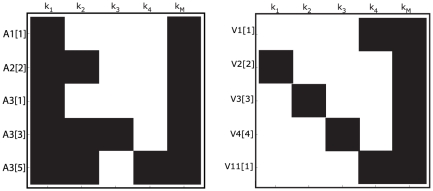
- Across six models, generating series plus tableaus was most advantageous; for the glycolysis-inspired pathway it concluded global identifiability with a unique solution for all parameters, whereas the Taylor series approach gave a rank-5 tableau and multiple solutions.
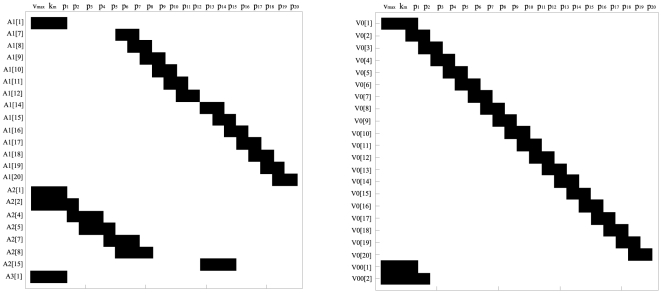
- The high-dimensional model (20 differential equations, 22 parameters, all states measured) was found structurally globally identifiable by the Taylor series approach in a few seconds and by the generating series approach; DAISY also reported structural global identifiability in prior work.
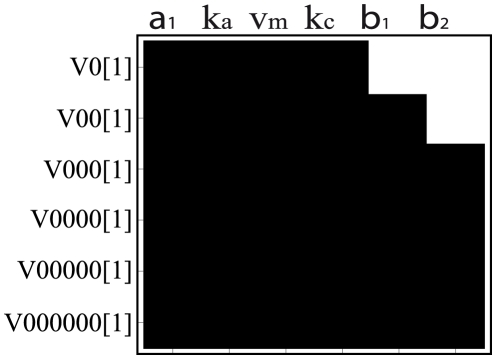
- For the pharmacokinetics model, Taylor/generating series tableaus had full rank, guaranteeing at least structural local identifiability even with one observable; DAISY found the six parameters structurally globally identifiable for the two-observable scenario.
- The Arabidopsis clock was not structurally globally identifiable under constant light, with a subset of parameters non-identifiable; pulse-wise stimulation and polynomial reformulation gave only partial results. For NFκB, generating series and reaction-network plus generating series concluded global/local identifiability of the parameters considered.
Methods
- Design: critical comparison of structural identifiability methods, including Taylor series, generating series, similarity transformation, differential algebra, direct test, implicit function theorem, and reaction-network-based analysis, with identifiability tableaus.
- Data/sample: six biological models of increasing size and complexity—Goodwin oscillator, pharmacokinetics model of receptor-mediated glucose oxidase uptake, glycolysis-inspired metabolic pathway, high-dimensional biochemical reaction model, Arabidopsis thaliana central clock, and NFκB signalling module.
- Analysis: symbolic computations using DAISY, GenSSI, MAPLE, MATHEMATICA, and MATLAB; methods were evaluated by range of applicability, computational complexity, and information provided.
Limitations
- Stated: no single method is amenable to every model; Taylor and generating series methods require an unknown number of derivatives; differential algebra and implicit function theorem struggle with low observable-to-parameter ratios and Michaelis-Menten/Hill kinetics; similarity transformation requires controllability/observability and can be computationally prohibitive; direct test applies only to uncontrolled/autonomous systems.
- Stated: the selected examples are small and medium-size models; apparent conflicting local/global conclusions can arise from initial conditions, symbolic solvability, and DAISY sometimes not using initial conditions.
- Evident from the text: several methods failed due to memory or computational errors, and some results were partial or inconclusive; the comparison is limited to the chosen six models and the specific software implementations used.
Model-written summary. Check it against the paper before relying on it.
Integrity signals
Registry
Cites
Statistics
Figures
Verification
Claims the paper makes
0 Valid · 3 Not valid · 21 Not checked · 115 Own results and interpretations
A result the paper states — it cites no source for it, so there is none to check. The quote shows it is in the paper.
In the paper
“The direct test method was also not applicable since the system is autonomous and controlled.”
§ Structural Identifiability of Systems Biology Models: A Critical Comparison of Methods > Results > Case study 3: Glycolysis inspired metabolic pathway
plainstates a cause- Asserted: passes — The authors put it forward as true.
- Checkable: passes — It can be checked against evidence.
- Load-bearing: unclear — It is unclear whether the paper’s conclusions depend on it.
- Based: passes — The paper gives a reason why it holds.
A result the paper reports from its own data — it cites no other source for it, so there is none to check. The quote shows it is in the paper.
In the paper
“Both differential algebra method implementations found the model to be globally identifiable (computation performed without the use of initial conditions).”
§ Structural Identifiability of Systems Biology Models: A Critical Comparison of Methods > Results > Case study 3: Glycolysis inspired metabolic pathway
plain- Asserted: passes — The authors put it forward as true.
- Checkable: passes — It can be checked against evidence.
- Load-bearing: unclear — It is unclear whether the paper’s conclusions depend on it.
- Based: passes — The paper gives a reason why it holds.
A result the paper reports from its own data — it cites no other source for it, so there is none to check. The quote shows it is in the paper.
In the paper
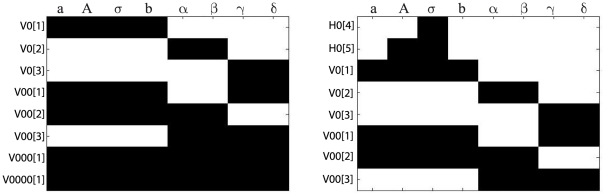
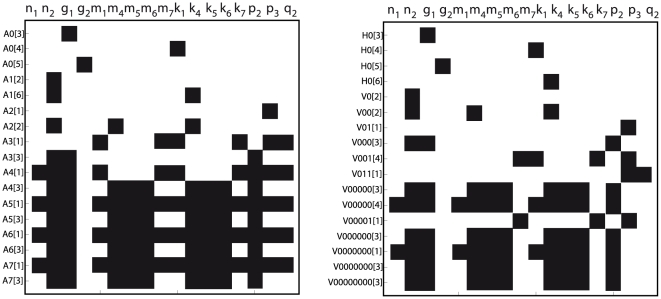
“In contrast, for the case of full observation the power series based methods ended up in a full rank tableau as shown in Figure 1.(a).”
§ Structural Identifiability of Systems Biology Models: A Critical Comparison of Methods > Results > Case study 1: Goodwin's model
plainstates a cause- Asserted: passes — The authors put it forward as true.
- Checkable: passes — It can be checked against evidence.
- Load-bearing: passes — The paper’s conclusions depend on it.
- Based: passes — The paper gives a reason why it holds.
A result the paper reports from its own data — it cites no other source for it, so there is none to check. The quote shows it is in the paper.
In the paper
“The similarity transformation approach could not be used for this example since the observability condition is not fulfilled.”
§ Structural Identifiability of Systems Biology Models: A Critical Comparison of Methods > Results > Case study 3: Glycolysis inspired metabolic pathway
plainstates a cause- Asserted: passes — The authors put it forward as true.
- Checkable: passes — It can be checked against evidence.
- Load-bearing: unclear — It is unclear whether the paper’s conclusions depend on it.
- Based: passes — The paper gives a reason why it holds.
A result the paper reports from its own data — it cites no other source for it, so there is none to check. The quote shows it is in the paper.
In the paper
“The computational cost was significantly lower as compared to the Taylor series approach.”
§ Structural Identifiability of Systems Biology Models: A Critical Comparison of Methods > Results > Case study 3: Glycolysis inspired metabolic pathway
plainSingle case- Asserted: passes — The authors put it forward as true.
- Checkable: passes — It can be checked against evidence.
- Load-bearing: unclear — It is unclear whether the paper’s conclusions depend on it.
- Based: passes — The paper gives a reason why it holds.
64 more claims
Create a free account to see all 139 claims and to verify the 22 references still open.
- Probably not a substantial claim. 29
- It may state two separate claims as one. 49
- The quote only partly states this claim. 2
Claims other papers make about this one
Each is checked against this paper’s own text: does it say what the citing paper says it does?
The cited source says what the claim attributes to it.
In the citing paper
“Fortunately, recent literature is correcting this (e.g. [129–140]).”
From Reverse engineering and identification in systems biology: strategies, perspectives and challenges (2014) · cites this paper as [138]
In the citing paper
“However, a priori methods are often limited to linear ODE systems or are impractical for models containing many parameters [14].”
From Joining forces of Bayesian and frequentist methodology: a study for inference in the presence of non-identifiability (2013) · cites this paper as [14]
Self-check
Percentages, sums and reported differences re-computed from the paper’s own numbers.
Each contradiction between two passages listed here was confirmed by an independent check.
Rated minor: it would not touch a result — a value no result rests on, a p-value that stays on the same side of the significance level, or a conflict that is clerical, resolved elsewhere in the paper, or outside its own findings.
In the paper
§ Structural Identifiability of Systems Biology Models: A Critical Comparison of Methods > Introduction
“the Goodwin oscillator model [32]”
§ Structural Identifiability of Systems Biology Models: A Critical Comparison of Methods > References
“32. Goodwin A Defibaugh D Weber L 1992 The vapor pressure of 1,1,1,2-tetrafluoroethane (r134a) and chlorodifluoromethane (r22). Int J Thermophys 13 837”
Citations
Cites
Nature Reviews Molecular Cell Biology
(2019) · Nature Reviews Molecular Cell Biology · doi:10.1038/41580.1471-0080 · Cited by 2,565
The IκB-NF-κB Signaling Module: Temporal Control and Selective Gene Activation
Hoffmann, A., Levchenko, A., Scott, M. L., & Baltimore, D. (2002) · Science · doi:10.1126/science.1071914 · Cited by 1,858
Failure to Regulate TNF-Induced NF-κB and Cell Death Responses in A20-Deficient Mice
Lee, E. G., Boone, D. L., Chai, S., Libby, S. L., Chien, M., Lodolce, J. P., & Ma, A. (2000) · Science · doi:10.1126/science.289.5488.2350 · Cited by 1,409 · cited 1×
“They used experimental data from previous works by Lee et al.”
MethodCell-signalling dynamics in time and space
Kholodenko, B. N. (2006) · Nature Reviews Molecular Cell Biology · doi:10.1038/nrm1838 · Cited by 1,347 · cited 1×
“[18] considered the analysis of different alternative models of a single phosphorylationdephosphorylation cycle in the MAPK cascade [19], by means of a differential algebra based approach.”
MethodDifferential Algebra and Algebraic Groups
Kolchin, E. R. (2012) · Cited by 1,277
Universally Sloppy Parameter Sensitivities in Systems Biology Models
Gutenkunst, R. N., Waterfall, J. J., Casey, F. P., Brown, K. S., Myers, C. R., & Sethna, J. P. (2007) · PLoS Computational Biology · doi:10.1371/journal.pcbi.0030189 · Cited by 1,261 · cited 1×
“This has been in fact the case in many examples found in the literature [4–8].”
ResultIEEE TRANSACTIONS ON AUTOMATIC CONTROL
Antsaklis, P. J., Kovács, E., Chong, E., Grizzle, J. W., Krstić, M., Spall, J. C., Amamoto, Y. Y., Arzelier, D., Astolfi, A., Braslavsky, J. H., et al. (2006) · Cited by 1,251
Identification of parametric models : from experimental data
Walter, É., & Pronzato, L. (1997) · Cited by 1,197
Computer methods and programs in biomedicine
(1985) · Computer Methods and Programs in Biomedicine · doi:10.1016/0169-2607(85)90039-2 · Cited by 1,151
Oscillatory behavior in enzymatic control processes
Goodwin, B. C. (1965) · Advances in Enzyme Regulation · doi:10.1016/0065-2571(65)90067-1 · Cited by 967
Research works printed but not linked: 1
- [43]Denis-Vidal L Joly-Blanchard G 1996 Identifiability of some nonlinear kinetics. Proceedings of the Third Workshop on Modelling of Chemical Reaction Systems, Heidelberg
Cited by
Items 201–300 of 446
Shousheng, Z., Verdière, N., Denis-Vidal, L., & Kateb, D. (2018) · Ecological Complexity · doi:10.1016/j.ecocom.2017.12.004 · Cited by 11
Structural Identifiability of Systems with Multiple Nonlinearities
Karabutov, N. N. (2021) · Contemporary Mathematics · doi:10.37256/cm.222021763 · Cited by 10
“A critical analysis of the approaches used to estimate the identifiability of biological models given in [7].”
BackgroundMethodInfluentialHellmann, S., Hempel, A.-J., Streif, S., & Weinrich, S. (2023) · International Conference on Process Control · doi:10.1109/pc58330.2023.10217587 · Cited by 10
Calvier, E. A. M., Nguyen, T. T., Johnson, T. N., Rostami‐Hodjegan, A., Tibboel, D., Krekels, E. H. J., & Knibbe, C. A. J. (2018) · Pharmaceutical Research · doi:10.1007/s11095-018-2487-1 · Cited by 10
Estimation of the Acute Myocardial Infarction Onset Time based on Time-Course Acquisitions
Procopio, A., Rosa, S. D., Covello, C., Merola, A., Sabatino, J., Luca, A. D., Liebetrau, C., Hamm, C. W., Indolfi, C., Amato, F., et al. (2020) · Annals of Biomedical Engineering · doi:10.1007/s10439-020-02568-z · Cited by 10
A birth–death model to understand bacterial antimicrobial heteroresistance from time-kill curves
Martínez‐López, N., Vilas, C., & Garcia, M. R. (2024) · Mathematical Biosciences · doi:10.1016/j.mbs.2024.109278 · Cited by 9
Stochastic models allow improved inference of microbiome interactions from time series data
Zapién-Campos, R., Bansept, F., & Traulsen, A. (2024) · PLoS Biology · doi:10.1371/journal.pbio.3002913 · Cited by 9
Dynamic Modeling of the Angiogenic Switch and Its Inhibition by Bevacizumab
Csercsik, D., & Kovács, L. (2019) · Complexity · doi:10.1155/2019/9079104 · Cited by 9
Abbiati, R. A., Pourdehnad, M., Carrancio, S., Pierce, D. W., Kasibhatla, S., McConnell, M. T., Trotter, M. W. B., Loos, R., Santini, C. C., & Ratushny, A. V. (2021) · The AAPS Journal · doi:10.1208/s12248-021-00623-8 · Cited by 8
Global Optimization Approach for Parameter Estimation in Stochastic Dynamic Models of Biosystems
Sequeiros, C., Otero‐Muras, I., Vázquez, C., & Banga, J. R. (2022) · IEEE Transactions on Computational Biology and Bioinformatics · doi:10.1109/tcbb.2022.3225675 · Cited by 10
“This issue has been widely studied for the case of deterministic dynamic systems [52], [53], but only recently has started to receive attention in the case of stochastic dynamics [54], [55], [56].”
BackgroundSelf-citationOn the estimability of the PV single‐diode model parameters
Zaharatos, B., Campanelli, M. B., & Tenorio, L. (2015) · Statistical Analysis and Data Mining The ASA Data Science Journal · doi:10.1002/sam.11286 · Cited by 9
“The model in Example 1 is an instance of the general claim that estimability implies local identifiability [20].”
BackgroundIdentifiability of linear compartmental models: the effect of moving inputs, outputs, and leaks
Gerberding, S., Obatake, N., & Shiu, A. (2020) · Linear and Multilinear Algebra · doi:10.1080/03081087.2020.1812497 · Cited by 8
Geometrical Frameworks in Identification Problem
Karabutov, N. N. (2021) · Intelligent Control and Automation · doi:10.4236/ica.2021.122002 · Cited by 12
“The structural identifiability of nonlinear dynamic systems reduced to the parametrical identifiability based on various approximation methods application [29] [30] [31] [32].”
MethodBrowning, A. P., Drovandi, C., Turner, I., Jenner, A. L., & Simpson, M. J. (2022) · PLoS Computational Biology · doi:10.1371/journal.pcbi.1010734 · Cited by 17
“Such identifiability analysis is well established for ordinary differential equation models [9, 10, 13], stochastic models [12, 14–16], and, recently, partial differential equation models [8, 17].”
Structural identifiability analyses of candidate models for in vitro Pitavastatin hepatic uptake
Grandjean, T. R. B., Chappell, M. J., Yates, J. W. T., & Evans, N. D. (2013) · Computer Methods and Programs in Biomedicine · doi:10.1016/j.cmpb.2013.06.013 · Cited by 13
“[8] O.”
BackgroundTalemi, S. R., Kollárovič, G., Lapytsko, A., & Schaber, J. (2015) · Scientific Reports · doi:10.1038/srep13540 · Cited by 10
Simpson, M. J., & Plank, M. J. (2025) · Journal of The Royal Society Interface · doi:10.1098/rsif.2025.0536 · Cited by 14
Structural identifiability and sensitivity
Iliadis, A. (2019) · Journal of Pharmacokinetics and Pharmacodynamics · doi:10.1007/s10928-019-09624-9 · Cited by 10
Structural Identifiability of Nonlinear Dynamic Systems under Uncertainty
Karabutov, N. N. (2020) · International Journal of Intelligent Systems and Applications · doi:10.5815/ijisa.2020.01.02 · Cited by 8
“The critical analysis of the approaches applied to the biological model identifiability estimation given in [11].”
MethodA plausible identifiable model of the canonical NF-κB signaling pathway
Jaruszewicz-Błońska, J., Kosiuk, I., Prus, W., & Lipniacki, T. (2023) · PLoS ONE · doi:10.1371/journal.pone.0286416 · Cited by 7
“Our approach is not automatic, but rather modeler driven and thus differs from the algorithmic methods tested previously on the same model [1], [7], [8] or its later variant [9].”
Achieving Occam’s razor: Deep learning for optimal model reduction
Antal, B. B., Chesebro, A. G., Strey, H. H., Mujica-Parodi, L. R., & Weistuch, C. (2024) · PLoS Computational Biology · doi:10.1371/journal.pcbi.1012283 · Cited by 13
“While the Fisher Information Matrix only characterizes linear interactions, other methods can also uncover nonlinear interactions [7, 12].”
BackgroundPlank, M. J., & Simpson, M. J. (2024) · Royal Society Open Science · doi:10.1098/rsos.240733 · Cited by 9
“%] in the number of calls required for the MLE.”
Bianconi, F., Antonini, C., Tomassoni, L., & Valigi, P. (2018) · IEEE Transactions on Control Systems Technology · doi:10.1109/tcst.2018.2844362 · Cited by 14
“To this purpose, identifiability analysis is usually combined with parameter estimation [17], [18].”
MethodA Priori Identifiability of Target-Mediated Drug Disposition Models and Approximations
Eudy, R. J., Riggs, M. M., & Gastonguay, M. R. (2015) · The AAPS Journal · doi:10.1208/s12248-015-9795-8 · Cited by 8
“This shortcoming of DAISY is well documented (3, 12).”
Dufresne, E., Harrington, H. A., & Raman, D. V. (2018) · Journal of Algebraic Statistics · doi:10.18409/jas.v9i1.64 · Cited by 17
“Indeed, there are various approaches to building what is called in the literature an exhaustive summary (see for example [33]).”
BackgroundTwo‐compartment modeling of tissue microcirculation revisited
Brix, G., Ravesh, M. S., & Griebel, J. (2017) · Medical Physics · doi:10.1002/mp.12196 · Cited by 9
Identification of parameters for large-scale kinetic models
Abdulla, U. G., & Poteau, R. (2020) · Journal of Computational Physics · doi:10.1016/j.jcp.2020.110026 · Cited by 9
Parameter Identification of the Droop Model using Optimal Experiment Design
Benavides, M., Telen, D., Lauwers, J., Logist, F., van Impe, J. F. M., & Wouwer, A. V. (2015) · IFAC-PapersOnLine · doi:10.1016/j.ifacol.2015.05.094 · Cited by 8
Structural Identifiability Analysis via Extended Observability and Decomposition
Villaverde, A. F., Barreiro, A., & Papachristodoulou, A. (2016) · IFAC-PapersOnLine · doi:10.1016/j.ifacol.2016.12.121 · Cited by 9
“in (Miao et al., 2011; Chiş et al., 2011b; Villaverde and Barreiro, 2016), have been proposed for assessing the structural identifiability of nonlinear dynamic models.”
BackgroundMethodInfluentialStructural and practical identifiability of within-host models of virus dynamics—A review
Tuncer, N., Martcheva, M., & Ciupe, S. M. (2025) · Current Opinion in Systems Biology · doi:10.1016/j.coisb.2025.100552 · Cited by 9
Wu, H. C., Zhao, Y., Zhang, C., Wu, J., & Lou, J. (2022) · Journal of Applied Analysis & Computation · doi:10.11948/20210300 · Cited by 9
The Structural Identifiability of a Humidity-Driven Epidemiological Model of Influenza Transmission
Zhang, C., Zhang, X., Bai, Y., Lau, E. H. Y., & Pei, S. (2022) · Viruses · doi:10.3390/v14122795 · Cited by 8
Joining and decomposing reaction networks
Gross, E. L., Harrington, H. A., Meshkat, N., & Shiu, A. (2020) · Journal of Mathematical Biology · doi:10.1007/s00285-020-01477-y · Cited by 33
“That is not to say that few identifiability analyses have been performed on reaction networks, only that such investigations used other techniques (Chis et al. 2011; Davidescu and Jørgensen 2008), focused on somewhat different questions, or both (Gross et al.”
MethodThe role of endoplasmic reticulum in in vivo cancer FDG kinetics
Sommariva, S., Scussolini, M., Cossu, V., Marini, C., Sambuceti, G., Caviglia, G., & Piana, M. (2021) · PLoS ONE · doi:10.1371/journal.pone.0252422 · Cited by 7
Lhamo, P., & Mahanty, B. (2022) · Biotechnology and Bioengineering · doi:10.1002/bit.28213 · Cited by 7
“Intrinsic structural nonidentifiability of correlated parameters on large scale cannot be resolved with additional or precise measurement (Chis et al., 2011).”
BackgroundAgyeman, B. T., Orouskhani, E., & Liu, J. (2022) · International Symposium on Advanced Control of Industrial Processes · doi:10.1109/adconip55568.2022.9894154 · Cited by 7
“for the unidentifiable parameters [10].”
van Noort, M., Ruppert, M., DeJongh, J., Marostica, E., Bosch, R., Mešić, E., & Snelder, N. (2024) · CPT Pharmacometrics & Systems Pharmacology · doi:10.1002/psp4.13148 · Cited by 7
“Earlier comparisons between identifiability methods 1,3 considered structural categorical identifiability, apart from LLP.”
MethodRuiz-Velazquez, E., Sánchez, O. D., Quiroz, G., & Pulido, G. O. (2018) · Kybernetika · doi:10.14736/kyb-2018-1-0110 · Cited by 10
“A critical issue of physiological models is the parametric identification both singlesubject models or a nominal model describing a study population [8].”
BackgroundSrinivasan, S., Cluett, W. R., & Mahadevan, R. (2019) · Bioinformatics · doi:10.1093/bioinformatics/btz445 · Cited by 8
Huffine, C. A., Wheeler, L. C., Wing, B. A., & Cameron, J. C. (2021) · Current Opinion in Microbiology · doi:10.1016/j.mib.2021.10.001 · Cited by 7
Structural and practical identifiability of contrast transport models for DCE-MRI
Conte, M., Woodall, R. T., Gutova, M., Chen, B. T., Shiroishi, M. S., Brown, C. E., Munson, J. M., & Rockne, R. C. (2024) · PLoS Computational Biology · doi:10.1371/journal.pcbi.1012106 · Cited by 7
Jaxkineticmodel: Neural ordinary differential equations inspired parameterization of kinetic models
van Lent, P., Bunkova, O., Magyar, B., Planken, L., Schmitz, J. P. J., & Abeel, T. (2025) · PLoS Computational Biology · doi:10.1371/journal.pcbi.1012733 · Cited by 8
“Our default implementation of the jaxkineticmodel training framework mitigates parameter fitting challenges caused by characteristics of biological systems [11–13], as well as solutions from the field of neural ODEs [15,27,38].”
Ta, S., Samavedham, L., Ray, A. K., & Liu, T. (2026) · Engineering Applications of Artificial Intelligence · doi:10.1016/j.engappai.2026.113808 · Cited by 6
Efficient Computation of All Distinct Realization Structures of Kinetic Systems
Tuza, Z. A., Ács, B., Szederkényi, G., & Allgöwer, F. (2016) · IFAC-PapersOnLine · doi:10.1016/j.ifacol.2016.12.125 · Cited by 5
A solution to the global identification problem in DSGE models
Kocięcki, A., & Kolasa, M. (2023) · Journal of Econometrics · doi:10.1016/j.jeconom.2023.105477 · Cited by 12
A mathematical model for the role of vaccination and treatment in measles transmission in Turkey
Işık, O. R., Tuncer, N., & Martcheva, M. (2024) · Journal of Computational and Applied Mathematics · doi:10.1016/j.cam.2024.116308 · Cited by 8
Aguirre-Zapata, E., Álvarez, H., Dagatti, C. V., di Sciascio, F. A., & Amicarelli, A. (2023) · Ecological Modelling · doi:10.1016/j.ecolmodel.2023.110407 · Cited by 6
Bürger, R., Chowell, G., Kröker, I., & Lara-Díaz, L. Y. (2023) · Journal of Biological Dynamics · doi:10.1080/17513758.2023.2256774 · Cited by 9
“The first involves the model and its structure, and the study can be centred on theoretical or computational techniques (e.g. [13, 16, 19, 25, 33, 39, 50, 57]), and the second involves the data (e.g. [22, 27, 29, 56, 57]).”
BackgroundResultReconstruction of promoter activity statistics from reporter protein population snapshot data
Eugenio Cinquemani, B. (2015) · IEEE Conference on Decision and Control (CDC) · doi:10.1109/cdc.2015.7402418 · Cited by 7
“This is different from but related with practical identifiability [3], [2], addressed in the next section.”
BackgroundOn Extreme Concentrations in Chemical Reaction Networks with Incomplete Measurements
Blanquero, R., Carrizosa, E., Chis, O., Esteban, N., Jiménez-Cordero, A., Rodríguez, J. F., & Sillero‐Denamiel, M. R. (2016) · Industrial & Engineering Chemistry Research · doi:10.1021/acs.iecr.6b00714 · Cited by 7
Self-citationExtending existing structural identifiability analysis methods to mixed-effects models
Janzén, D. L. I., Jirstrand, M., Chappell, M. J., & Evans, N. D. (2017) · Mathematical Biosciences · doi:10.1016/j.mbs.2017.10.009 · Cited by 8
“Additional important publications regarding structural identifiability include [10, 11, 12, 13, 14, 15].”
BackgroundBelkhatir, Z., Mechhoud, S., & Laleg‐Kirati, T. (2019) · Control Engineering Practice · doi:10.1016/j.conengprac.2019.05.017 · Cited by 6
Quantitative Kinetic Models from Intravital Microscopy: A Case Study Using Hepatic Transport
Tavakoli, M., Tsekouras, K., Day, R. N., Dunn, K. W., & Pressé, S. (2019) · The Journal of Physical Chemistry B · doi:10.1021/acs.jpcb.9b04729 · Cited by 9
A Priori Parameter Identifiability in Complex Reaction Networks
Varghese, A., Narasimhan, S., & Bhatt, N. (2018) · IFAC-PapersOnLine · doi:10.1016/j.ifacol.2018.09.162 · Cited by 6
On linear models and parameter identifiability in experimental biological systems
Lamberton, T. O., Condon, N. D., Stow, J. L., & Hamilton, N. (2014) · Journal of Theoretical Biology · doi:10.1016/j.jtbi.2014.05.028 · Cited by 5
“The structural identifiability problem (defined precisely below) is more fundamental than the practical identifiability problem, in that it represents a best-case scenario for any practical identifiability analysis, and also more analytically tractable, with well-defined approaches for linear (Bellman and Åstrom̈, 197…”
BackgroundMethodAnalysis-based parameter estimation of an in vitro transcription-translation system
Tuza, Z. A., Siegal‐Gaskins, D., Kim, J., & Szederkényi, G. (2015) · European Control Conference (ECC) · doi:10.1109/ecc.2015.7330760 · Cited by 5
“The existence and uniqueness of the solution defines the structurally identifiability of the model, see [4] for details.”
BackgroundMethodInfluentialWhite, C., Rottschäfer, V., & Bridge, L. (2023) · Journal of Pharmacokinetics and Pharmacodynamics · doi:10.1007/s10928-023-09870-y · Cited by 6
“It can also be shown that, for linear problems, the maximum number of coefficients needed to determine identifi-ability is defined as where n is the number of variables [13].”
BackgroundMethodInfluentialHaus, E. S., Drengstig, T., & Thorsen, K. (2023) · PLoS Computational Biology · doi:10.1371/journal.pcbi.1011398 · Cited by 5
“This can be seen in the Goodwin oscillator model [11, 63, 84], the βIG model [85–87], and in our own results.”
MethodResultMATHEMATICAL MODEL OF MEASLES IN TURKEY
Işık, O. R., Tuncer, N., & Martcheva, M. (2024) · Journal of Biological Systems · doi:10.1142/s0218339024500323 · Cited by 5
Generating synthetic signaling networks for in silico modeling studies
Xu, J. H., Wiley, H. S., & Sauro, H. M. (2020) · Journal of Theoretical Biology · doi:10.1016/j.jtbi.2024.111901 · Cited by 5
Modeling and control in physiology
Lassoued, A., & Boubaker, O. (2020) · Elsevier eBooks · doi:10.1016/b978-0-12-821350-6.00001-9 · Cited by 10
Structural Identifiability of Feedback Systems with Nonlinear Adulterating
Karabutov, N. N. (2022) · Contemporary Mathematics · doi:10.37256/cm.3220221258 · Cited by 5
“Approximation methods are applied for identifiability problem solution [4-10].”
BackgroundMethodLizarralde-Bejarano, D. P., Gulbudak, H., Kearfott, R. B., & Puerta-Yepes, M. E. (2022) · Applied Mathematical Modelling · doi:10.1016/j.apm.2022.07.006 · Cited by 7
Zhao, Y., Wu, H., Cheng, H., & Lou, J. (2023) · Communications in Nonlinear Science and Numerical Simulation · doi:10.1016/j.cnsns.2023.107501 · Cited by 5
Procopio, A., Rania, M., Zaffino, P., Cortese, N., Giofrè, F., Arturi, F., Segura‐Garcìa, C., & Cosentino, C. (2024) · Computer Methods and Programs in Biomedicine · doi:10.1016/j.cmpb.2024.108477 · Cited by 6
Carta, A., Chaves, M., & Gouzé, J. (2012) · Lecture notes in computer science · doi:10.1007/978-3-642-33636-2_8 · Cited by 7
“However, the structural identifiability analysis for non-linear models in systems biology is still a challenging question [6].”
BackgroundStructural identifiability of cyclic graphical models of biological networks with latent variables
Wang, Y., Lu, N., & Miao, H. (2016) · BMC Systems Biology · doi:10.1186/s12918-016-0287-y · Cited by 5
“For example, DAISY has been proposed for determining parameter identifiability of ODE models [48]; and the method of identifiability tableaus [49] is based on Jacobian matrix that involves partial derivatives, while our method is based on a system of polynomial equations and does not require the calculation of derivat…”
Lauwers, J., Nimmegeers, P., Logist, F., & van Impe, J. F. M. (2015) · IFAC-PapersOnLine · doi:10.1016/j.ifacol.2015.05.073 · Cited by 5
Bonvin, D. (2017) · MDPI eBooks · doi:10.3390/books978-3-03842-449-9 · Cited by 19
Toolkit for Reverse Engineering of Molecular Pathways via Parameter Identification
Streck, A. (2016) · Universitätsbibliothek der FU Berlin Hochschulschriftenstelle u. Dokumentenserver · doi:10.17169/refubium-9131 · Cited by 5
Computational modeling approaches in gonadotropin signaling
Ayoub, M. A., Yvinec, R., Crépieux, P., & Poupon, A. (2016) · Theriogenology · doi:10.1016/j.theriogenology.2016.04.015 · Cited by 6
StrikePy: nonlinear observability analysis of inputs, states, and parameters in Python
Rostro, D. R., & Villaverde, A. F. (2022) · Servizo de Publicacións da UDC eBooks · doi:10.17979/spudc.9788497498418.0430 · Cited by 7
Aguirre-Zapata, E., Garcia‐Tirado, J., Morales, H., di Sciascio, F. A., & Amicarelli, A. (2022) · Revista Iberoamericana de Automática e Informática Industrial RIAI · doi:10.4995/riai.2022.17746 · Cited by 4
Velluet, J., Noce, A. D., & Letort, V. (2023) · Plant Phenomics · doi:10.34133/plantphenomics.0133 · Cited by 6
“A more formal definition can be adapted from [34]: Definition 1: Let 0 ⊂ be a nonempty subset of initial conditions.”
BackgroundD’Angelo, N., & Adelfio, G. (2024) · Statistical Papers · doi:10.1007/s00362-024-01541-5 · Cited by 4
“(6) and (7) is π r 2 h as well.”
Szederkényi, G., Kocsis, D., Vághy, M. A., Czárán, D., Sasvári, P., Lengyel, M., Naszlady, M. B., Kreis, F., Antal, I., Csépányi‐Kömi, R., et al. (2024) · PLoS ONE · doi:10.1371/journal.pone.0299501 · Cited by 4
Salmaniw, Y., & Browning, A. P. (2025) · Journal of Mathematical Biology · doi:10.1007/s00285-025-02225-w · Cited by 11
“Recent decades have seen a proliferation of methodologies based on differential-algebra (Meshkat and Kuo CEz, DiStefano J. 2014), as well as Taylor series, generating series and Lie derivatives (Chis et al. 2011; Ligon et al. 2017), and similarity transforms (Vajda et al. 1989; Chis et al. 2011).”
InfluentialCombined Estimation and Optimal Control of Batch Membrane Processes
Jelemenský, M., Pakšiová, D., Paulen, R., Latifi, M. A., & Fikar, M. (2016) · Processes · doi:10.3390/pr4040043 · Cited by 5
“The most common methods for the identifiability test include: the direct test [22], the identifiability of the corresponding linearized system [22], the similarity transformation method [23,24], power series expansion [25], the generating series approach [26] and differential algebra [27].”
MethodFamilies of toric chemical reaction networks
Adamer, M. F., & Helmer, M. (2020) · Journal of Mathematical Chemistry · doi:10.1007/s10910-020-01162-x · Cited by 5
Mathematical modelling of nuclear medicine data
Piana, M., Caviglia, G., & Sommariva, S. (2020) · IEEE Mediterranean Electrotechnical Conference (MELECON) · doi:10.1109/melecon48756.2020.9140512 · Cited by 4
“, when fluxes between compartments are modelled by the Michaelis-Menten law; a comparison of currently available techniques can be found in [5].”
MethodMou, C., & Ju, W. (2022) · IEEE Transactions on Computational Biology and Bioinformatics · doi:10.1109/tcbb.2022.3156759 · Cited by 5
“In systems biology, the study on parametric biological systems includes model identifiability [36], [37], [38], [39], [40], where symbolic methods are also crucial, parameter estimation [41], [42], [43], and analysis of parameter sensitivities [44], [45], etc.”
BackgroundIn vitro PK/PD modeling of tyrosine kinase inhibitors in non‐small cell lung cancer cell lines
Wanika, L., Evans, N. D., Johnson, M. G., Tomkinson, H. K., & Chappell, M. J. (2024) · Clinical and Translational Science · doi:10.1111/cts.13714 · Cited by 3
“Both methods were used to overcome the issues with computational memory limitations and model complexity.”
MethodSimultaneous Pharmacokinetic Model for Rolofylline and both M1-trans and M1-cis Metabolites
Stroh, M., Hutmacher, M. M., Pang, J., Lutz, R., Magara, H., & Stone, J. A. (2013) · The AAPS Journal · doi:10.1208/s12248-012-9443-5 · Cited by 4
Modeling for Process Risk Assessment in Industrial Bioprocesses
Spann, R., Lantz, A. E., Gernaey, K. V., & Sin, G. (2018) · Elsevier eBooks · doi:10.1016/b978-0-12-409547-2.14356-2 · Cited by 4
Parvinian, B., Bighamian, R., Scully, C. G., Hahn, J., & Pathmanathan, P. (2021) · Frontiers in Physiology · doi:10.3389/fphys.2021.705222 · Cited by 5
“Global structural identifiability can be assessed using a variety of methods including the Laplace transform, similarity transformation, Taylor series, and state isomorphism approaches (Chis et al., 2011).”
Methodvon Haeseler, F., Rudolph, N., Findeisen, R., & Huber, H. J. (2018) · IFAC-PapersOnLine · doi:10.1016/j.ifacol.2018.09.298 · Cited by 4
“The latter term refers to the theoretical property whether or not a model including its parametrisation can be fully regenerated from the model input, the topology of the dynamical system and the experimental data (Chis et al., 2011; Chou and Voit, 2009).”
BackgroundA Novel Protocol for Model Calibration in Biological Wastewater Treatment
Zhu, A., Guo, J., Ni, B., Wang, S., Yang, Q. Y., & Peng, Y. (2016) · Apple Academic Press eBooks · doi:10.1201/b19902-4 · Cited by 4
On Parameter Interpretability of Phenomenological-Based Semiphysical ModelsPreprint
Lema-Pérez, L., Muñoz‐Tamayo, R., Garcia‐Tirado, J., & Álvarez, H. (2018) · bioRxiv (Cold Spring Harbor Laboratory) · doi:10.1101/446583 · Cited by 4
From big data to mechanistic insights: decoding plant complexity with models
Politsch, J. E., González-Delgado, A., & Wabnik, K. (2026) · Current Opinion in Biotechnology · doi:10.1016/j.copbio.2025.103428 · Cited by 3
Algorithm for globally identifiable reparametrizations of ODEs
Falkensteiner, S., Ovchinnikov, A., & Sendra, J. R. (2024) · Journal of Symbolic Computation · doi:10.1016/j.jsc.2024.102385 · Cited by 5
“Algorithms for checking local identifiability can, for instance, be found in [1, 2, 3].”
BackgroundHiremath, K. C., Atakishi, K., Lima, E. A. B. F., Farhat, M., Panthi, B., Langshaw, H., Shanker, M., Talpur, W., Thrower, S. L., Goldman, J., et al. (2025) · Philosophical Transactions of the Royal Society A Mathematical Physical and Engineering Sciences · doi:10.1098/rsta.2024.0212 · Cited by 3
“Assessing parameter identifiability is an important component of constructing and validating a family of mathematical models and understanding uncertainty in model parameters estimated under noisy conditions [67].”
Agyeman, B. T., Orouskhani, E., Naouri, M., Appels, W. M., Wolleben, M., Liu, J., & Shah, S. L. (2025) · Control Engineering Practice · doi:10.1016/j.conengprac.2025.106593 · Cited by 3
“Assessing parameter identifiability is essential for at least one primary reason: regardless of the data assimilation technique used, non-identifiable parameters can compromise the reliability of parameter estimates [16].”
Estimating HIV-1 Fitness Characteristics from Cross-Sectional Genotype Data
Gopalakrishnan, S., Montazeri, H., Menz, S., Beerenwinkel, N., & Huisinga, W. (2014) · PLoS Computational Biology · doi:10.1371/journal.pcbi.1003886 · Cited by 6
“In detailed mechanistic models with nonlinearities, parameter identifiability and sloppiness in estimation is a common concern [79,80].”
The autorepressor: A case study of the importance of model selection
Harris, A. W. K., Kelly, C. L., Steel, H., & Papachristodoulou, A. (2017) · IEEE Conference on Decision and Control (CDC) · doi:10.1109/cdc.2017.8263882 · Cited by 3
“6b), as well as fitting models to data and utilising structural identifiability methods [29] to assess which parameters can be ascertained from a given data set.”
MethodExperimental design for parameter estimation in steady-state linear models of metabolic networks
Frøysa, H. G., Skaug, H. J., & Alendal, G. (2019) · Mathematical Biosciences · doi:10.1016/j.mbs.2019.108291 · Cited by 3
Model Personalization in an Advanced Automated Insulin Delivery System: An In-Silico Exploration
Villa-Tamayo, M. F., C., J. L. D., Moscoso-Vásquez, M., Castillo, A., Garcia‐Tirado, J., Colmegna, P. H., & Breton, M. D. (2022) · International Conference on Systems and Control (ICSC) · doi:10.1109/icsc57768.2022.9993926 · Cited by 6
“Structural identifiability evaluates whether it is possible to obtain a unique solution for the unknown parameter set from available observables under the assumption of perfect experimental data [19].”
BackgroundMethodvan Noort, M., & Ruppert, M. (2024) · CPT Pharmacometrics & Systems Pharmacology · doi:10.1002/psp4.13147 · Cited by 2
Foliar Uptake Models for Biocides: Testing Structural and Practical Identifiability
Sangoi, E., Cattani, F., Padia, F. N., & Galvanin, F. (2024) · Computer-aided chemical engineering/Computer aided chemical engineering · doi:10.1016/b978-0-443-28824-1.50007-7 · Cited by 5
Han, Y., & Styczynski, M. P. (2024) · npj Systems Biology and Applications · doi:10.1038/s41540-024-00412-x · Cited by 7
Employing Observability Rank Conditions for Taking into Account Experimental Information a priori
Villaverde, A. F. (2025) · Bulletin of Mathematical Biology · doi:10.1007/s11538-025-01415-3 · Cited by 6
Metadata
- Authors
- Chis, O.-T., Banga, J. R., & Balsa-Canto, E.
- Affiliations
- Consejo Superior de Investigaciones Científicas (ES)
- ORCID
- Banga, Julio R.
- Venue
- PLoS ONE
- Publisher
- Public Library of Science (PLoS)
- Published
- 2011-11-22
- Volume
- 6
- Issue
- 11
- Pages
- e27755
- ISSN
- 1932-6203 (ISSN-L)
- PMC
- PMC3222653
- OpenAlex
- W2033783472
- Cited by
- 448
- References
- 64
- Citations by year
- 2026: 29 · 2025: 35 · 2024: 38 · 2023: 35 · 2022: 40 · 2021: 41 · 2020: 29 · 2019: 37 · 2018: 45 · 2017: 21 · 2016: 26 · 2015: 24 · 2014: 24 · 2013: 17 · 2012: 7
- FWCI
- 6.23
- Type
- journal article
- Language
- en
- Open access
- gold
- doi.org
- Locations
- PLoS ONE (publishedVersion, cc-by)
- PubMed Central (publishedVersion, cc-by)
- PubMed (publishedVersion)
- RePEc: Research Papers in Economics (submittedVersion)
- DIGITAL.CSIC (Spanish National Research Council (CSIC)) (submittedVersion)
- DOAJ (DOAJ: Directory of Open Access Journals) (submittedVersion, cc-by-sa)
- Funders
- Ministerio de Ciencia e Innovación
- Xunta de Galicia
- Topics
- Life Sciences › Biochemistry, Genetics and Molecular Biology › Molecular Biology › Gene Regulatory Network Analysis
- Physical Sciences › Engineering › Control and Systems Engineering › Control Systems and Identification
- Physical Sciences › Mathematics › Applied Mathematics › Statistical and numerical algorithms
- Keywords
- structural identifiability, systems biology models, parameter estimation, nonlinear dynamic model, generating series, model structure analysis, time series, in silico experimentation
- MeSH terms
- Glycolysis, Models, Biological, NF-kappa B, Arabidopsis, Nonlinear Dynamics, Systems Biology
About these checks
Registry, retraction, Cites and statistics results are computed, not judged, with one exception: a printed reference that no index lists is read once by a model before it counts as a citation error. Claims are extracted by a model and kept only when their quote appears verbatim in the text; each cited source is then checked, with a model’s help, for whether it says what the claim relies on. Those verdicts can be wrong — read the claim’s quote and the cited source before relying on one.
A language model drew the claims from the paper on 2026-10-05, under version 3 of the claim definition (model deepseek-v4.1-flash, prompt extract-v3).
A second model labelled each claim on 2026-10-05 (model jev-1.13-20260917, definition revision gold-guideline-v0.2).
Statistics and arithmetic are recomputed, not judged.
Confidence bands are shown only for fields calibrated on our annotated test set. None is calibrated yet, so no band is shown.
What counts as a claim ›How we measure confidence ›How we check this ›
Are you an author, or do you see a problem with this page? Request a review
Data sources
Bibliographic data: Semantic Scholar, OpenAlex, Crossref.
Contains information from the Semantic Scholar Academic Graph Datasets, made available under the ODC Attribution License (ODC-BY 1.0).
Semantic Scholar’s data is described in: Kinney, R., et al. (2023). The Semantic Scholar Open Data Platform. arXiv:2301.10140.
