

Reconstruction of Monocyte Transcriptional Regulatory Network Accompanies Monocytic Functions in Human Fibroblasts
Open accessThe DOI matches its Crossref record; 32 of the 32 references it cites were found in a registry or an index.
Abstract
Transcriptional regulatory networks (TRN) control the underlying mechanisms behind cellular functions and they are defined by a set of core transcription factors regulating cascades of peripheral genes. Here we report SPI1, CEBPA, MNDA and IRF8 as core transcription factors of monocyte TRN and demonstrate functional inductions of phagocytosis, inflammatory response and chemotaxis activities in human dermal fibroblasts. The Gene Ontology and KEGG pathway analyses also revealed notable representation of genes involved in immune response and endocytosis in fibroblasts. Moreover, monocyte TRN-inducers triggered multiple monocyte-specific genes based on the transcription factor motif response analysis and suggest that complex cellular TRNs are uniquely amenable to elicit cell-specific functions in unrelated cell types.
Overview
The claims and statistics of this paper haven’t been checked yet.
Free: it reads the open-access text and checks the first 5 claims that cite a source we can check. Create a free account to check every claim.
Integrity signals
Registry
Cites
Statistics
Figures
Verification
Claims the paper makes
The claims and statistics of this paper haven’t been checked yet.
Free: it reads the open-access text and checks the first 5 claims that cite a source we can check. Create a free account to check every claim.
Claims other papers make about this one
Each is checked against this paper’s own text: does it say what the citing paper says it does?
The cited source says what the claim attributes to it.
In the citing paper
“Since IRF8 and CEBPA have been implicated as key regulators of monocyte network, we specifically measured the expression changes after the knockdown (16,18,28,29).”
From Establishment of single-cell screening system for the rapid identification of transcriptional modulators involved in direct cell reprogramming (2012) · cites this paper as [18]
Self-check
Percentages, sums and reported differences re-computed from the paper’s own numbers.
The self-check needs the paper’s full text.
Citations
Cites
Systematic and integrative analysis of large gene lists using DAVID bioinformatics resources
Huang, D. W., Sherman, B. T., & Lempicki, R. A. (2009) · Nature Protocols · doi:10.1038/nprot.2008.211 · Cited by 35,890
Takahashi, K., & Yamanaka, S. (2006) · Cell · doi:10.1016/j.cell.2006.07.024 · Cited by 26,673 · cited 1×
“Numerous attempts to induce cell reprogramming have been reported in recent years [3,4,5,6,7,8].”
Induction of Pluripotent Stem Cells from Adult Human Fibroblasts by Defined Factors
Takahashi, K., Tanabe, K., Ohnuki, M., Narita, M., Ichisaka, T., Tomoda, K., & Yamanaka, S. (2007) · Cell · doi:10.1016/j.cell.2007.11.019 · Cited by 20,221
Exploring the full spectrum of macrophage activation
Mosser, D. M., & Edwards, J. P. (2008) · Nature Reviews Immunology · doi:10.1038/nri2448 · Cited by 9,144 · cited 1×
“Next we investigated the inflammatory response to bacterial lipopolysaccharide (LPS) as another functional characteristic of monocytes/macrophages [17].”
Direct conversion of fibroblasts to functional neurons by defined factors
Vierbuchen, T., Ostermeier, A., Pang, Z. P., Kokubu, Y., Südhof, T. C., & Wernig, M. (2010) · Nature · doi:10.1038/nature08797 · Cited by 3,017 · cited 1×
“Numerous attempts to induce cell reprogramming have been reported in recent years [3,4,5,6,7,8].”
Direct reprogramming of fibroblasts into functional cardiomyocytes by defined factors
Ieda, M., Fu, J.-D., Delgado-Olguin, P., Vedantham, V., Hayashi, Y., Bruneau, B. G., & Srivastava, D. (2010) · Cell · doi:10.1016/j.cell.2010.07.002 · Cited by 2,454 · cited 1×
“Numerous attempts to induce cell reprogramming have been reported in recent years [3,4,5,6,7,8].”
In vivo reprogramming of adult pancreatic exocrine cells to β-cells
Zhou, Q., Brown, J., Kanarek, A., Rajagopal, J., & Melton, D. A. (2008) · Nature · doi:10.1038/nature07314 · Cited by 2,010
The cation efflux transporter ZnT8 (Slc30A8) is a major autoantigen in human type 1 diabetes
Wenzlau, J. M., Juhl, K., Yu, L., Moua, O., Sarkar, S. A., Gottlieb, P., Rewers, M., Eisenbarth, G. S., Jensen, J., Davidson, H. W., et al. (2007) · Proceedings of the National Academy of Sciences · doi:10.1073/pnas.0705894104 · Cited by 1,014
Densely Interconnected Transcriptional Circuits Control Cell States in Human Hematopoiesis
Novershtern, N., Subramanian, A., Lawton, L. N., Mak, R. H., Haining, W. N., McConkey, M. E., Habib, N., Yosef, N., Chang, C. Y., Shay, T., et al. (2011) · Cell · doi:10.1016/j.cell.2011.01.004 · Cited by 942 · cited 2×
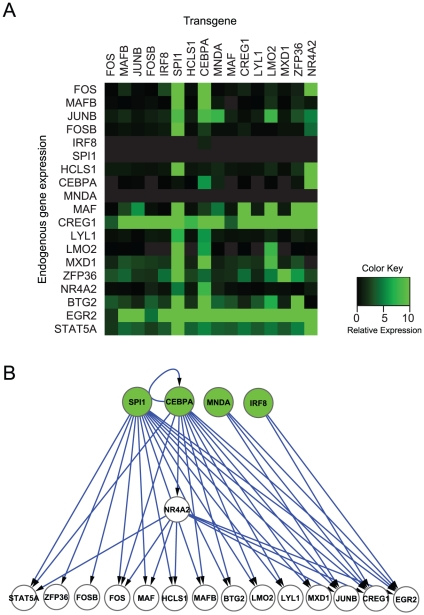
“While the SPI1 gene is known to be activated by an auto-regulatory feedback loop [27,29], the endogenous expression of SPI1 was not observed by exogenous transductions (FIB-4Fs and FIB-SPI1).”
An atlas of combinatorial transcriptional regulation in mouse and man
Ravasi, T., Suzuki, H., Cannistraci, C. V., Katayama, S., Bajic, V. B., Tan, K., Akalin, A., Schmeier, S., Kanamori-Katayama, M., Bertin, N., et al. (2010) · Cell · doi:10.1016/j.cell.2010.01.044 · Cited by 715 · cited 1×
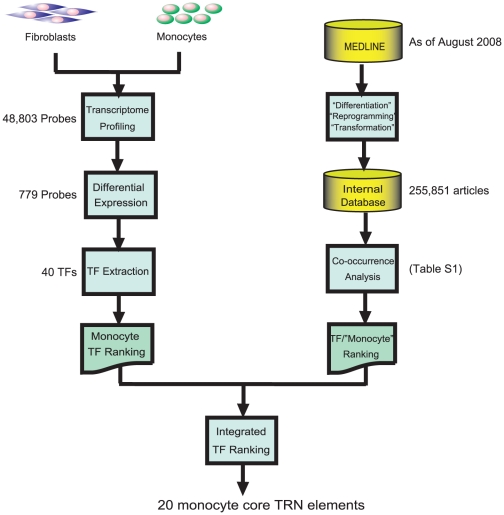
“Among the extracted abstracts, we searched for co-existence of the word ‘‘monocytes’’ against all functionally annotated TFs (Table S2) [14] and ranked the genes based on the highest number of cooccurrences (Table 1).”
Self-citation
Cited by
Gateways to the FANTOM5 promoter level mammalian expression atlas
Lizio, M., Harshbarger, J., Shimoji, H., Severin, J., Kasukawa, T., Sahin, S., Abugessaisa, I., Fukuda, S., Hori, F., Ishikawa-Kato, S., et al. (2015) · Genome Biology · doi:10.1186/s13059-014-0560-6 · Cited by 871
“On the right side, analysis examples at each step for someone who is interested in transcriptional regulation networks to implement monocytic function in fibroblasts (as in [78]) are shown.”
MethodSelf-citationISMARA: automated modeling of genomic signals as a democracy of regulatory motifs
Balwierz, P. J., Pachkov, M., Arnold, P., Gruber, A. J., Zavolan, M., & van Nimwegen, E. (2014) · Genome Research · doi:10.1101/gr.169508.113 · Cited by 309
“…and experimentally validated predicted regulatory circuitry in these systems (Summers et al. 2010; Aceto et al. 2012; Arner et al. 2012; Hasegawa et al. 2012; Pe´rez-Schindler et al. 2012; Suzuki et al. 2012; Eisele et al. 2013; Meier-Abt et al. 2013; Tiwari et al. 2013a,b; Vervoort et al. 2013).”
BackgroundParadigm shifts in genomics through the FANTOM projects
de Hoon, M., Shin, J. W., & Carninci, P. (2015) · Mammalian Genome · doi:10.1007/s00335-015-9593-8 · Cited by 101
“resource for future experiments, such as the expression of cDNAs for functional studies (Shin et al. 2012; Suzuki et al. 2012), structure determination of the proteins (Kasai et al.”
BackgroundMitochondrial biogenesis is transcriptionally repressed in lysosomal lipid storage diseases
Yambire, K. F., Fernández-Mosquera, L., Steinfeld, R., Mühle, C., Ikonen, E., Milošević, I., & Raimundo, N. (2019) · eLife · doi:10.7554/elife.39598 · Cited by 95
Suzuki, T., Shimizu, Y., Furuhata, E., Maeda, S., Kishima, M., Nishimura, H., Enomoto, S., Hayashizaki, Y., & Suzuki, H. (2017) · Blood Advances · doi:10.1182/bloodadvances.2017005710 · Cited by 87
“Lentiviral vector preparation and transduction were then performed 1700 SUZUKI et al 12 SEPTEMBER 2017 x VOLUME 1, NUMBER 20 as described previously.29 Following transfection, antibiotic selection was performed using 2 mg/mL puromycin or 20 mg/mL blasticidin for 1 week. qRT-PCR Quantitative reverse…”
BackgroundMethodInfluentialSelf-citationThe emerging role of human PYHIN proteins in innate immunity: Implications for health and disease
Connolly, D. J., & Bowie, A. (2014) · Biochemical Pharmacology · doi:10.1016/j.bcp.2014.08.031 · Cited by 84
“MNDA itself has also been proposed to act as a transcription factor in monocytes [18] and this is supported by a”
ResultMyeloid nuclear differentiation antigen, neutrophil apoptosis and sepsis
Milot, É., Fotouhi‐Ardakani, N., & Filep, J. G. (2012) · Frontiers in Immunology · doi:10.3389/fimmu.2012.00397 · Cited by 60
“Recently, MNDA has been proposed to be a transcription factor (Suzuki et al., 2012).”
BackgroundSuzuki, T., Maeda, S., Furuhata, E., Shimizu, Y., Nishimura, H., Kishima, M., & Suzuki, H. (2017) · Epigenetics & Chromatin · doi:10.1186/s13072-017-0169-6 · Cited by 48
“qRT-PCR was performed as previously described [53] to confirm mRNA expression levels.”
MethodInterferon-Responsive Genes Are Targeted during the Establishment of Human Cytomegalovirus Latency
Elder, E., Krishna, B. A., Williamson, J. C., Lim, E. Y., Poole, E. L., Sedikides, G. X., Wills, M. R., O’Connor, C. M., Lehner, P. J., & Sinclair, J. H. (2019) · mBio · doi:10.1128/mbio.02574-19 · Cited by 45
“cated in neutrophil cell death (75) and monocyte transcriptional networks (76).”
BackgroundTomaru, Y., Hasegawa, R., Suzuki, T., Sato, T., Kubosaki, A., Suzuki, M., Kawaji, H., Forrest, A. R. R., Hayashizaki, Y., FANTOM Consortium, et al. (2014) · Nucleic Acids Research · doi:10.1093/nar/gku567 · Cited by 39
Self-citationIdentification of ZNF395 as a novel modulator of adipogenesis
Hasegawa, R., Tomaru, Y., de Hoon, M., Suzuki, H., Hayashizaki, Y., & Shin, J. W. (2012) · Experimental Cell Research · doi:10.1016/j.yexcr.2012.11.003 · Cited by 43
Direct cell-fate conversion of somatic cells: Toward regenerative medicine and industries
Horisawa, K., & Suzuki, A. (2020) · Proceedings of the Japan Academy Series B · doi:10.2183/pjab.96.012 · Cited by 37
Innovative Medicine: Basic Research and Development
Nakao, K., Minato, N., & Üemoto, S. (2015) · Springer eBooks · doi:10.1007/978-4-431-55651-0 · Cited by 10
Preparation of Induced Pluripotent Stem Cells Using Human Peripheral Blood Monocytes
Isogai, S., Yamamoto, N., Hiramatsu, N., Gotô, Y., Hayashi, M., Kondo, M., & Imaizumi, K. (2018) · Cellular Reprogramming · doi:10.1089/cell.2018.0024 · Cited by 27
“In fact, generation of the cells possessing some functions similar to human monocytes from skin-derived human fibroblasts was successful (Suzuki et al., 2012).”
BackgroundEmerging Role of PYHIN Proteins as Antiviral Restriction Factors
Bosso, M., & Kirchhoff, F. (2020) · Viruses · doi:10.3390/v12121464 · Cited by 29
“Furthermore, MNDA itself has been proposed to directly regulate transcription in monocytes [24].”
BackgroundDistinct Patterns of Expression of Transcription Factors in Response to Interferonβ and Interferonλ1
Novatt, H., Theisen, T. C., Massie, T., Massie, T., Simonyan, V. V., Voskanian, A., Renn, L. A., & Rabin, R. L. (2016) · Journal of Interferon & Cytokine Research · doi:10.1089/jir.2016.0031 · Cited by 24
Abe, T., Nishimura, H., Sato, T., Suzuki, H., Ogawa, T., & Suzuki, T. (2020) · Biochemical and Biophysical Research Communications · doi:10.1016/j.bbrc.2020.06.161 · Cited by 22
Luisier, R., Unterberger, E. B., Goodman, J. I., Schwarz, M., Moggs, J. G., Terranova, R., & van Nimwegen, E. (2014) · Nucleic Acids Research · doi:10.1093/nar/gkt1415 · Cited by 18
[The pharmacokinetics and bioequivalence of various dosage forms of ambroxol].
Vergin, H., Bishop-Freudling, G. B., Miczka, M., Nitsche, V., Strobel, K., & Matzkies, F. K. (1985) · PubMed · Cited by 31
MNDA, a PYHIN factor involved in transcriptional regulation and apoptosis control in leukocytes
Bottardi, S., Layne, T., Ramòn, A. C., Quansah, N., Würtele, H., Affar, E. B., & Milot, É. (2024) · Frontiers in Immunology · doi:10.3389/fimmu.2024.1395035 · Cited by 19
Shin, J. W., Suzuki, T., Ninomiya, N., Kishima, M., Hasegawa, Y., Kubosaki, A., Yabukami, H., Hayashizaki, Y., & Suzuki, H. (2012) · Nucleic Acids Research · doi:10.1093/nar/gks732 · Cited by 12
“Since IRF8 and CEBPA have been implicated as key regulators of monocyte network, we specifically measured the expression changes after the knockdown (16,18,28,29).”
BackgroundMethodKim, N. Y., Back, J. H., Shin, J., Ji, M.-J., Lee, S. J., Park, Y. E., Park, H., Gu, M. B., Lee, J. E., & Kim, J. E. (2023) · Scientific Reports · doi:10.1038/s41598-023-30103-2 · Cited by 10
Miyajima, Y., Noguchi, S., Tanaka, Y., Li, J., Nishimura, H., Kishima, M., Lim, J., Furuhata, E., Suzuki, T., Kasukawa, T., et al. (2022) · Chromosome Research · doi:10.1007/s10577-022-09685-6 · Cited by 9
Li, Y., Zhang, C., Samad, A., Zheng, P., Li, Y., Chen, F., & Jin, T. (2023) · International Journal of Biological Macromolecules · doi:10.1016/j.ijbiomac.2023.125461 · Cited by 8
RUNX1 induces DNA replication independent active DNA demethylation at SPI1 regulatory regions
Goyal, S., Suzuki, T., Li, J., Maeda, S., Kishima, M., Nishimura, H., Shimizu, Y., & Suzuki, H. (2017) · BMC Molecular Biology · doi:10.1186/s12867-017-0087-y · Cited by 7
“The lentivirus for RUNX1 overexpression and its control MCS were prepared in a mixture of packaging constructs, pCMV-VSV-G-RSV-Rev and pCAG-HIVgp (provided by RIKEN BRC) in accordance with a previously reported protocol [19].”
BackgroundMethodARMADA: Using motif activity dynamics to infer gene regulatory networks from gene expression data
Pemberton-Ross, P. J., Pachkov, M. V., & van Nimwegen, E. (2015) · Methods · doi:10.1016/j.ymeth.2015.06.024 · Cited by 7
“As is well-known, such treatment will trigger an inflammatory response in HUVECs and we show how ARMADA infers interactions between key regulators of this response, including several direct interactions that are known in the literature, and several novel predictions.”
BackgroundSakata, K., Saito, T., Ohyanagi, H., Okumura, J., Ishige, K., Suzuki, H., Nakamura, T., & Komatsu, S. (2016) · Scientific Reports · doi:10.1038/srep35946 · Cited by 4
Asymmetric Regulation of Peripheral Genes by Two Transcriptional Regulatory Networks
Li, J., Suzuki, T., Nishimura, H., Kishima, M., Maeda, S., & Suzuki, H. (2016) · PLoS ONE · doi:10.1371/journal.pone.0160459 · Cited by 3
“All RT-PCR procedures have been previous described [25].”
BackgroundMethodResultAskovich, P. S., Ramsey, S. A., Diercks, A. H., Kennedy, K. A., Knijnenburg, T., & Aderem, A. A. (2017) · PLoS ONE · doi:10.1371/journal.pone.0184850 · Cited by 4
Cell-Based Regenerative Therapy for Liver Disease
Horisawa, K., & Suzuki, A. (2015) · Springer eBooks · doi:10.1007/978-4-431-55651-0_27 · Cited by 4
Direct reprogramming based on transcriptional regulatory network analysis
Suzuki, T., & Suzuki, H. (2014) · Inflammation and Regeneration · doi:10.2492/inflammregen.34.224 · Cited by 1
Comprehensive transcriptome mining of the direct conversion of mesodermal cells
Akbari, B., Wee, P., Yaqubi, M., & Mohammadnia, A. (2017) · Scientific Reports · doi:10.1038/s41598-017-10903-z · Cited by 1
Genome-Scale Technology Driven Advances to Research into Normal and Malignant Haematopoiesis
Göttgens, B. (2012) · Scientifica · doi:10.6064/2012/437956
Repositioning Monocyte TFRN into Fibroblasts
Suzuki, T., Shin, J. W., & Suzuki, H. (2014) · Methods in molecular biology · doi:10.1007/978-1-4939-0805-9_17
Innate immune memory in fibroblasts
Crowley, T. E. (2018) · University of Birmingham Institutional Research Archive (University of Birmingham) · Cited by 1
Takahashi, T., Gusev, O., & Hayashizaki, Y. (2018) · Juntendō Igaku/Juntendo igaku · doi:10.14789/jmj.2018.64.jmj18-wn01
Efficient Development of Platform Cell Lines Using CRISPR-Cas9 and Transcriptomics AnalysisPreprint
Kwon, A. T.-J., Mohri, K., Takizawa, S., Arakawa, T., Takahashi, M., Kaczkowski, B., Furuno, M., Suzuki, H., Tagami, S., Mukai, H., et al. (2020) · bioRxiv (Cold Spring Harbor Laboratory) · doi:10.1101/2020.09.16.299248
Kwon, A. T.-J., Mohri, K., Takizawa, S., Arakawa, T., Takahashi, M., Kaczkowski, B., Furuno, M., Suzuki, H., Tagami, S., Mukai, H., et al. (2021) · Journal of Biotechnology · doi:10.1016/j.jbiotec.2021.03.017
Qin, X., Sakamoto, Y., Wei, F., Nishimura, H., Nakanishi, Y., Maeda, S., & Suzuki, H. (2025) · Epigenetics & Chromatin · doi:10.1186/s13072-025-00655-w
“Lentivirus vectors for TF mutant expression were produced as previously described [24].”
PYHIN proteins: guardians or contributors to hepatitis B virus pathogenesis?
He, W.-Q., Li, M., Li, J.-F., & ZHANG, L.-T. (2026) · Frontiers in Immunology · doi:10.3389/fimmu.2026.1953996
“MNDA was found to be capable of regulating the transcriptional activity of monocytes (25).”
Xie, Y., Fu, B., Zhong, L., Wu, L., Li, H., Chang, X., & Liu, X. (2026) · Briefings in Bioinformatics · doi:10.1093/bib/bbag525
“SPI1 encodes an essential transcription factor that governs monocyte lineage commitment and differentiation [ 29].”
Metadata
- Authors
- Suzuki, T., Nakano-Ikegaya, M., Yabukami-Okuda, H., de Hoon, M., Severin, J., Saga-Hatano, S., Shin, J. W., Kubosaki, A., Simon, C., Hasegawa, Y., Hayashizaki, Y., & Suzuki, H.
- Affiliations
- RIKEN (JP)
- Corresponding author
- Suzuki, Harukazu
- Venue
- PLoS ONE
- Publisher
- Public Library of Science (PLoS)
- Published
- 2012-03-13
- Volume
- 7
- Issue
- 3
- Pages
- e33474
- ISSN
- 1932-6203 (ISSN-L)
- PMC
- PMC3302774
- OpenAlex
- W1987897013
- Cited by
- 41
- References
- 32
- Citations by year
- 2026: 2 · 2025: 1 · 2024: 1 · 2023: 2 · 2022: 1 · 2021: 1 · 2020: 4 · 2019: 2 · 2018: 3 · 2017: 5 · 2016: 3 · 2015: 5 · 2014: 6 · 2012: 4
- FWCI
- 1.93
- Type
- journal article
- Language
- en
- Open access
- gold
- doi.org
- Locations
- PLoS ONE (publishedVersion, cc-by)
- PubMed Central (publishedVersion, cc-by)
- PubMed (publishedVersion)
- DOAJ (DOAJ: Directory of Open Access Journals) (submittedVersion)
- Figshare (submittedVersion, cc-by)
- 日本分子生物学会年会プログラム・要旨集(Web)
- Funders
- Ministry of Education, Culture, Sports, Science and Technology
- National Institutes of Health
- RIKEN
- Topics
- Life Sciences › Biochemistry, Genetics and Molecular Biology › Molecular Biology › Gene Regulatory Network Analysis
- Life Sciences › Biochemistry, Genetics and Molecular Biology › Molecular Biology › Genomics and Chromatin Dynamics
- Life Sciences › Biochemistry, Genetics and Molecular Biology › Molecular Biology › Bioinformatics and Genomic Networks
- Keywords
- PU.1, CEBPA, MNDA, IRF8, human dermal fibroblasts, phagocytosis, inflammation, chemotaxis, endocytosis, immune response, cell type-specific gene regulation
- MeSH terms
- Chemotaxis, Fibroblasts, Flow Cytometry, Gene Expression Regulation, Genetic Vectors, Humans, Lipopolysaccharides, Monocytes, Phagocytosis, Skin, Transcription Factors, Lentivirus, DNA Primers, Reverse Transcriptase Polymerase Chain Reaction, Gene Expression Profiling, Microarray Analysis, Gene Regulatory Networks, Data Mining, Real-Time Polymerase Chain Reaction
About these checks
Registry, retraction, Cites and statistics results are computed, not judged, with one exception: a printed reference that no index lists is read once by a model before it counts as a citation error. Claims are extracted by a model and kept only when their quote appears verbatim in the text; each cited source is then checked, with a model’s help, for whether it says what the claim relies on. Those verdicts can be wrong — read the claim’s quote and the cited source before relying on one.
Statistics and arithmetic are recomputed, not judged.
Confidence bands are shown only for fields calibrated on our annotated test set. None is calibrated yet, so no band is shown.
What counts as a claim ›How we measure confidence ›How we check this ›
Are you an author, or do you see a problem with this page? Request a review
Data sources
Bibliographic data: Semantic Scholar, OpenAlex, Crossref.
Contains information from the Semantic Scholar Academic Graph Datasets, made available under the ODC Attribution License (ODC-BY 1.0).
Semantic Scholar’s data is described in: Kinney, R., et al. (2023). The Semantic Scholar Open Data Platform. arXiv:2301.10140.
