

Reconstruction of Monocyte Transcriptional Regulatory Network Accompanies Monocytic Functions in Human Fibroblasts
Open accessThe DOI matches its Crossref record; 32 of the 32 references it cites were found in a registry or an index.
Abstract
Transcriptional regulatory networks (TRN) control the underlying mechanisms behind cellular functions and they are defined by a set of core transcription factors regulating cascades of peripheral genes. Here we report SPI1, CEBPA, MNDA and IRF8 as core transcription factors of monocyte TRN and demonstrate functional inductions of phagocytosis, inflammatory response and chemotaxis activities in human dermal fibroblasts. The Gene Ontology and KEGG pathway analyses also revealed notable representation of genes involved in immune response and endocytosis in fibroblasts. Moreover, monocyte TRN-inducers triggered multiple monocyte-specific genes based on the transcription factor motif response analysis and suggest that complex cellular TRNs are uniquely amenable to elicit cell-specific functions in unrelated cell types.
Overview
The claims and statistics of this paper haven’t been checked yet.
Free: it reads the open-access text and checks the first 5 claims that cite a source we can check. Create a free account to check every claim.
Integrity signals
Registry
Cites
Statistics
Figures
Verification
Claims the paper makes
The claims and statistics of this paper haven’t been checked yet.
Free: it reads the open-access text and checks the first 5 claims that cite a source we can check. Create a free account to check every claim.
Claims other papers make about this one
Each is checked against this paper’s own text: does it say what the citing paper says it does?
The cited source says what the claim attributes to it.
In the citing paper
“Since IRF8 and CEBPA have been implicated as key regulators of monocyte network, we specifically measured the expression changes after the knockdown (16,18,28,29).”
From Establishment of single-cell screening system for the rapid identification of transcriptional modulators involved in direct cell reprogramming (2012) · cites this paper as [18]
Self-check
Percentages, sums and reported differences re-computed from the paper’s own numbers.
The self-check needs the paper’s full text.
Citations
Cites
Systematic and integrative analysis of large gene lists using DAVID bioinformatics resources
Huang, D. W., Sherman, B. T., & Lempicki, R. A. (2009) · Nature Protocols · doi:10.1038/nprot.2008.211 · Cited by 35,890
Takahashi, K., & Yamanaka, S. (2006) · Cell · doi:10.1016/j.cell.2006.07.024 · Cited by 26,673 · cited 1×
“Numerous attempts to induce cell reprogramming have been reported in recent years [3,4,5,6,7,8].”
Induction of Pluripotent Stem Cells from Adult Human Fibroblasts by Defined Factors
Takahashi, K., Tanabe, K., Ohnuki, M., Narita, M., Ichisaka, T., Tomoda, K., & Yamanaka, S. (2007) · Cell · doi:10.1016/j.cell.2007.11.019 · Cited by 20,221
Exploring the full spectrum of macrophage activation
Mosser, D. M., & Edwards, J. P. (2008) · Nature Reviews Immunology · doi:10.1038/nri2448 · Cited by 9,144 · cited 1×
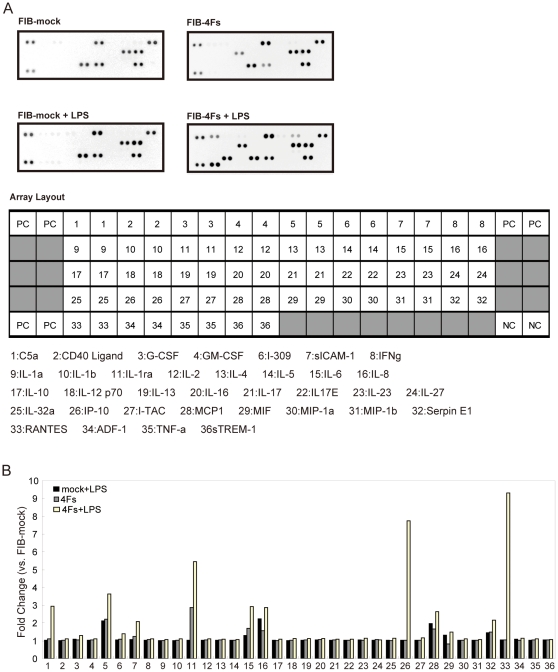
“Next we investigated the inflammatory response to bacterial lipopolysaccharide (LPS) as another functional characteristic of monocytes/macrophages [17].”
Direct conversion of fibroblasts to functional neurons by defined factors
Vierbuchen, T., Ostermeier, A., Pang, Z. P., Kokubu, Y., Südhof, T. C., & Wernig, M. (2010) · Nature · doi:10.1038/nature08797 · Cited by 3,017 · cited 1×
“Numerous attempts to induce cell reprogramming have been reported in recent years [3,4,5,6,7,8].”
Direct reprogramming of fibroblasts into functional cardiomyocytes by defined factors
Ieda, M., Fu, J.-D., Delgado-Olguin, P., Vedantham, V., Hayashi, Y., Bruneau, B. G., & Srivastava, D. (2010) · Cell · doi:10.1016/j.cell.2010.07.002 · Cited by 2,454 · cited 1×
“Numerous attempts to induce cell reprogramming have been reported in recent years [3,4,5,6,7,8].”
In vivo reprogramming of adult pancreatic exocrine cells to β-cells
Zhou, Q., Brown, J., Kanarek, A., Rajagopal, J., & Melton, D. A. (2008) · Nature · doi:10.1038/nature07314 · Cited by 2,010
The cation efflux transporter ZnT8 (Slc30A8) is a major autoantigen in human type 1 diabetes
Wenzlau, J. M., Juhl, K., Yu, L., Moua, O., Sarkar, S. A., Gottlieb, P., Rewers, M., Eisenbarth, G. S., Jensen, J., Davidson, H. W., et al. (2007) · Proceedings of the National Academy of Sciences · doi:10.1073/pnas.0705894104 · Cited by 1,014
Densely Interconnected Transcriptional Circuits Control Cell States in Human Hematopoiesis
Novershtern, N., Subramanian, A., Lawton, L. N., Mak, R. H., Haining, W. N., McConkey, M. E., Habib, N., Yosef, N., Chang, C. Y., Shay, T., et al. (2011) · Cell · doi:10.1016/j.cell.2011.01.004 · Cited by 942 · cited 2×
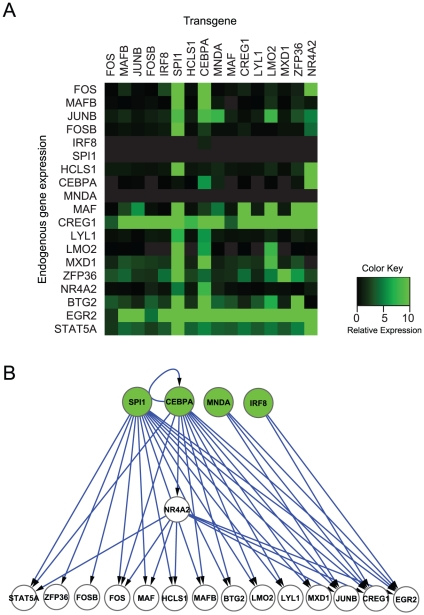
“While the SPI1 gene is known to be activated by an auto-regulatory feedback loop [27,29], the endogenous expression of SPI1 was not observed by exogenous transductions (FIB-4Fs and FIB-SPI1).”
An atlas of combinatorial transcriptional regulation in mouse and man
Ravasi, T., Suzuki, H., Cannistraci, C. V., Katayama, S., Bajic, V. B., Tan, K., Akalin, A., Schmeier, S., Kanamori-Katayama, M., Bertin, N., et al. (2010) · Cell · doi:10.1016/j.cell.2010.01.044 · Cited by 715 · cited 1×
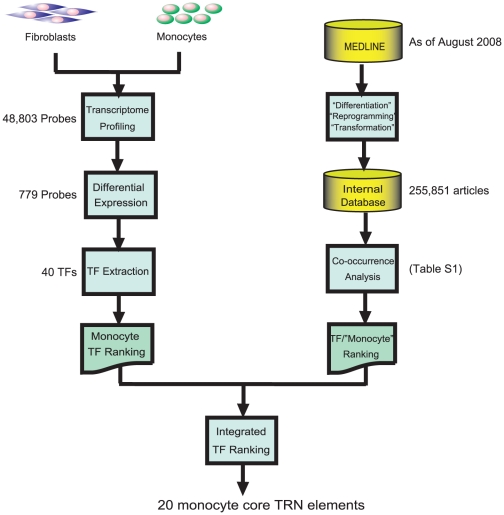
“Among the extracted abstracts, we searched for co-existence of the word ‘‘monocytes’’ against all functionally annotated TFs (Table S2) [14] and ranked the genes based on the highest number of cooccurrences (Table 1).”
Self-citationDirect conversion of human fibroblasts to multilineage blood progenitors
Szabo, E., Rampalli, S., Risueño, R. M., Schnerch, A., Mitchell, R., Fiebig-Comyn, A., Levadoux-Martin, M., & Bhatia, M. (2010) · Nature · doi:10.1038/nature09591 · Cited by 694 · cited 1×
“Numerous attempts to induce cell reprogramming have been reported in recent years [3,4,5,6,7,8].”
Cancer Immunotherapy by Dendritic Cells
Melief, C. J. M. (2008) · Immunity · doi:10.1016/j.immuni.2008.08.004 · Cited by 508 · cited 1×
“In the present study, in order to artificially reconstruct a cellular TRN in human fibroblasts, we adopted a monocyte system mainly due to several supporting evidence of monocyte TRN [1,11] and therapeutically applicable functions such as phagocytosis, inflammatory response and chemotaxis, which are critical for host…”
The FANTOM Consortium, & Riken Omics Science Center (2009) · Nature Genetics · doi:10.1038/ng.375 · Cited by 427 · cited 6×
“The motif activities were calculated as described previously [1] using position-weight matrices obtained from Swiss Regulon [31].”
MethodInfluentialPU.1 and C/EBPα/β convert fibroblasts into macrophage-like cells
Feng, R., Desbordes, S. C., Xie, H., Tillo, E. S., Pixley, F., Stanley, E. R., & Graf, T. (2008) · Proceedings of the National Academy of Sciences · doi:10.1073/pnas.0711961105 · Cited by 348
Reciprocal Regulation of Adipogenesis by Myc and C/EBPα
Freytag, S. O., & Geddes, T. J. (1992) · Science · doi:10.1126/science.256.5055.379 · Cited by 291
Rosa, A., Ballarino, M., Sorrentino, A., Sthandier, O., De Angelis, F. G., Marchioni, M., Masella, B., Guarini, A., Fatica, A., Peschle, C., et al. (2007) · Proceedings of the National Academy of Sciences · doi:10.1073/pnas.0706963104 · Cited by 285 · cited 1×
“Since SPI1 is a well-known master gene of monocytes [15] and our perturbation-matrix analysis also indicated a large-scale regulation by SPI1, we also transduced SPI1 alone into human fibroblasts (FIB-SPI1).”
Potential Autoregulation of Transcription Factor PU.1 by an Upstream Regulatory Element
Okuno, Y., Huang, G., Rosenbauer, F., Evans, E. K., Radomska, H. S., Iwasaki, H., Akashi, K., Moreau-Gachelin, F., Li, Y., Zhang, P., et al. (2005) · Molecular and Cellular Biology · doi:10.1128/mcb.25.7.2832-2845.2005 · Cited by 174 · cited 1×
“While the SPI1 gene is known to be activated by an auto-regulatory feedback loop [27,29], the endogenous expression of SPI1 was not observed by exogenous transductions (FIB-4Fs and FIB-SPI1).”
Lehtonen, A., Matikainen, S., Miettinen, M., & Julkunen, I. (2002) · Journal of Leukocyte Biology · doi:10.1189/jlb.71.3.511 · Cited by 151
SwissRegulon: a database of genome-wide annotations of regulatory sites
Pachkov, M., Erb, I., Molina, N., & van Nimwegen, E. (2007) · Nucleic Acids Research · doi:10.1093/nar/gkl857 · Cited by 151 · cited 2×
“Motif Activity Analysis The motif activities were calculated as described previously [1] using position-weight matrices obtained from Swiss Regulon [31].”
Kedzierska, K., Azzam, R., Ellery, P. J., Mak, J., Jaworowski, A., & Crowe, S. M. (2003) · Journal of Clinical Virology · doi:10.1016/s1386-6532(02)00123-3 · Cited by 139 · cited 1×
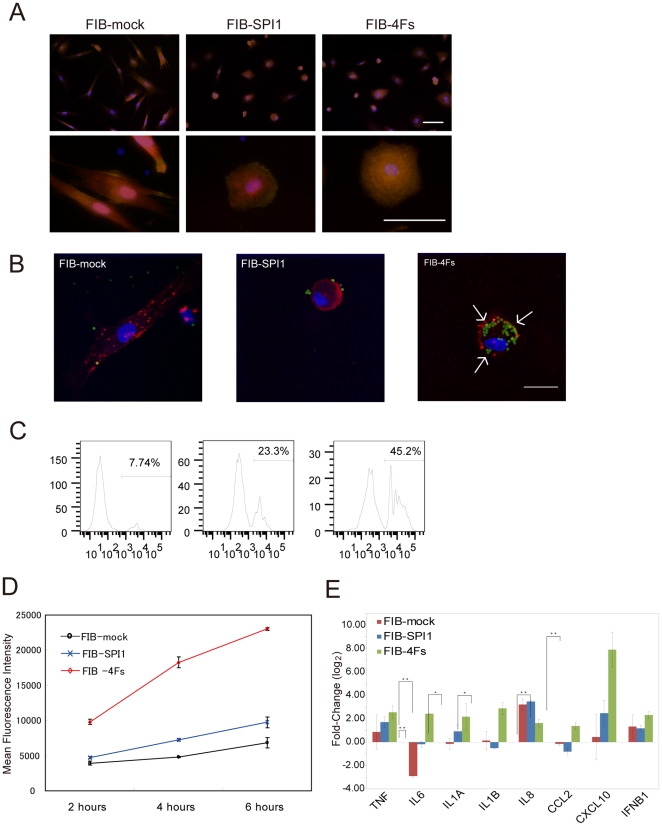
“Since phagocytosis has been implicated as one of the key functions of monocytes/macrophages [16], we cultured FIB-SPI1, FIB-4Fs and FIB-mock in the presence of 2.”
de Hoon, M., & Hayashizaki, Y. (2008) · BioTechniques · doi:10.2144/000112802 · Cited by 95 · cited 2×
“Utilizing two transcriptome analyses, sequencing-based CAGE [10] and microarray technologies, we characterized the dynamic regulatory activities of transcription factor binding sites and inferred the motif occupancy during a cellular differentiation.”
The contraction of collagen matrices by dermal fibroblasts
Allen, T., & Schor, S. L. (1983) · Journal of Ultrastructure Research · doi:10.1016/s0022-5320(83)90078-3 · Cited by 73 · cited 1×
“Fibroblasts are found in a variety of connective tissues and have the role to synthesize the extracellular matrix and collagen [18].”
Bhardwaj, N., Kim, P. M., & Gerstein, M. B. (2010) · Science Signaling · doi:10.1126/scisignal.2001014 · Cited by 68 · cited 2×
“Despite the intricate connectivity of regulatory networks, TRNs are known to form a chain-of-command hierarchy [13] where a core set of TFs drive the expressions of down-stream peripheral genes and act as key modulators to induce cell-specific functions.”
Steele, J. C., Rao, A., Marsden, J., Armstrong, C., Berhane, S., Billingham, L. J., Graham, N., Roberts, C., Ryan, G. B., Uppal, H., et al. (2011) · Gene Therapy · doi:10.1038/gt.2011.1 · Cited by 58 · cited 1×
“Macrophages remove foreign invader such as microorganisms or apoptotic cells and dendritic cells have been reported to be applied to cancer therapy as a ‘‘dendritic cell vaccine’’ [30].”
Finding regulatory elements and regulatory motifs: a general probabilistic framework
van Nimwegen, E. (2007) · BMC Bioinformatics · doi:10.1186/1471-2105-8-s6-s4 · Cited by 48 · cited 1×
“We searched for transcription factor binding site using the MotEvo algorithm [32] in the 2300 to +100 base pair region with respect to the 59 end of the Refseq transcript associated with each microarray probe, using a prior probability of 10(25).”
Sato, Y., Miyake, K., Kaneoka, H., & Iijima, S. (2006) · Journal of Biological Chemistry · doi:10.1074/jbc.m600852200 · Cited by 37
Forsberg, M., Carlén, M., Meletis, K., Yeung, M. S. Y., Barnabé-Heider, F., Persson, M. A. A., Aarum, J., & Frisén, J. (2010) · Proceedings of the National Academy of Sciences · doi:10.1073/pnas.1009412107 · Cited by 37 · cited 2×
“Interestingly, previous reports revealed that SPI1 and CEBPA could convert mouse fibroblasts into macrophage-like cells [25] and mouse neural stem cells to monocyte by SPI1 alone [26], confirming and supporting our gene selection strategy.”
Tomaru, Y., Nakanishi, M., Miura, H., Kimura, Y., Ohkawa, H., Ohta, Y., Hayashizaki, Y., & Suzuki, M. (2009) · Nucleic Acids Research · doi:10.1093/nar/gkn1028 · Cited by 35 · cited 2×
“In order to investigate the hierarchical structure of the broader 20-monocyte TRN-elements, we performed a lentivirus-based perturbation-matrix analysis [11].”
Arlein, W. J., Shearer, J. D., & Caldwell, M. D. (1998) · American Journal of Physiology-Regulatory, Integrative and Comparative Physiology · doi:10.1152/ajpregu.1998.275.4.r1041 · Cited by 32 · cited 1×
“However, depending on the tissue origin, fibroblasts can respond to LPS and/or possess phagocytosis activity [19,20].”
Kubosaki, A., Lindgren, G., Tagami, M., Simon, C., Tomaru, Y., Miura, H., Suzuki, T., Arner, E., Forrest, A. R. R., Irvine, K. M., et al. (2010) · Molecular Immunology · doi:10.1016/j.molimm.2010.05.289 · Cited by 29 · cited 1×
“In fact, our previous report suggested the combinatorial regulation of SPI1 and IRF8 were important factors during monocytic differentiation [28].”
Self-citationYamana, J., Santos, L., & Morand, E. F. (2008) · Cellular Immunology · doi:10.1016/j.cellimm.2008.09.003 · Cited by 20
Hybrid-Cell Vaccines for Cancer Immune Therapy
Trefzer, U., & Walden, P. (2003) · Molecular Biotechnology · doi:10.1385/mb:25:1:63 · Cited by 16 · cited 1×
“In contrast, cells reengineered to implement cell-specific function(s) would be of great value since rectifying a specific cellular function is often preferred compared to a complete replacement of impaired cells [9].”
Cited by
Gateways to the FANTOM5 promoter level mammalian expression atlas
Lizio, M., Harshbarger, J., Shimoji, H., Severin, J., Kasukawa, T., Sahin, S., Abugessaisa, I., Fukuda, S., Hori, F., Ishikawa-Kato, S., et al. (2015) · Genome Biology · doi:10.1186/s13059-014-0560-6 · Cited by 871
“On the right side, analysis examples at each step for someone who is interested in transcriptional regulation networks to implement monocytic function in fibroblasts (as in [78]) are shown.”
MethodSelf-citationISMARA: automated modeling of genomic signals as a democracy of regulatory motifs
Balwierz, P. J., Pachkov, M., Arnold, P., Gruber, A. J., Zavolan, M., & van Nimwegen, E. (2014) · Genome Research · doi:10.1101/gr.169508.113 · Cited by 309
“…and experimentally validated predicted regulatory circuitry in these systems (Summers et al. 2010; Aceto et al. 2012; Arner et al. 2012; Hasegawa et al. 2012; Pe´rez-Schindler et al. 2012; Suzuki et al. 2012; Eisele et al. 2013; Meier-Abt et al. 2013; Tiwari et al. 2013a,b; Vervoort et al. 2013).”
BackgroundParadigm shifts in genomics through the FANTOM projects
de Hoon, M., Shin, J. W., & Carninci, P. (2015) · Mammalian Genome · doi:10.1007/s00335-015-9593-8 · Cited by 101
“resource for future experiments, such as the expression of cDNAs for functional studies (Shin et al. 2012; Suzuki et al. 2012), structure determination of the proteins (Kasai et al.”
BackgroundMitochondrial biogenesis is transcriptionally repressed in lysosomal lipid storage diseases
Yambire, K. F., Fernández-Mosquera, L., Steinfeld, R., Mühle, C., Ikonen, E., Milošević, I., & Raimundo, N. (2019) · eLife · doi:10.7554/elife.39598 · Cited by 95
Suzuki, T., Shimizu, Y., Furuhata, E., Maeda, S., Kishima, M., Nishimura, H., Enomoto, S., Hayashizaki, Y., & Suzuki, H. (2017) · Blood Advances · doi:10.1182/bloodadvances.2017005710 · Cited by 87
“Lentiviral vector preparation and transduction were then performed 1700 SUZUKI et al 12 SEPTEMBER 2017 x VOLUME 1, NUMBER 20 as described previously.29 Following transfection, antibiotic selection was performed using 2 mg/mL puromycin or 20 mg/mL blasticidin for 1 week. qRT-PCR Quantitative reverse…”
BackgroundMethodInfluentialSelf-citation
Metadata
- Authors
- Suzuki, T., Nakano-Ikegaya, M., Yabukami-Okuda, H., de Hoon, M., Severin, J., Saga-Hatano, S., Shin, J. W., Kubosaki, A., Simon, C., Hasegawa, Y., Hayashizaki, Y., & Suzuki, H.
- Affiliations
- RIKEN (JP)
- Corresponding author
- Suzuki, Harukazu
- Venue
- PLoS ONE
- Publisher
- Public Library of Science (PLoS)
- Published
- 2012-03-13
- Volume
- 7
- Issue
- 3
- Pages
- e33474
- ISSN
- 1932-6203 (ISSN-L)
- PMC
- PMC3302774
- OpenAlex
- W1987897013
- Cited by
- 41
- References
- 32
- Citations by year
- 2026: 2 · 2025: 1 · 2024: 1 · 2023: 2 · 2022: 1 · 2021: 1 · 2020: 4 · 2019: 2 · 2018: 3 · 2017: 5 · 2016: 3 · 2015: 5 · 2014: 6 · 2012: 4
- FWCI
- 1.93
- Type
- journal article
- Language
- en
- Open access
- gold
- doi.org
- Locations
- PLoS ONE (publishedVersion, cc-by)
- PubMed Central (publishedVersion, cc-by)
- PubMed (publishedVersion)
- DOAJ (DOAJ: Directory of Open Access Journals) (submittedVersion)
- Figshare (submittedVersion, cc-by)
- 日本分子生物学会年会プログラム・要旨集(Web)
- Funders
- Ministry of Education, Culture, Sports, Science and Technology
- National Institutes of Health
- RIKEN
- Topics
- Life Sciences › Biochemistry, Genetics and Molecular Biology › Molecular Biology › Gene Regulatory Network Analysis
- Life Sciences › Biochemistry, Genetics and Molecular Biology › Molecular Biology › Genomics and Chromatin Dynamics
- Life Sciences › Biochemistry, Genetics and Molecular Biology › Molecular Biology › Bioinformatics and Genomic Networks
- Keywords
- PU.1, CEBPA, MNDA, IRF8, human dermal fibroblasts, phagocytosis, inflammation, chemotaxis, endocytosis, immune response, cell type-specific gene regulation
- MeSH terms
- Chemotaxis, Fibroblasts, Flow Cytometry, Gene Expression Regulation, Genetic Vectors, Humans, Lipopolysaccharides, Monocytes, Phagocytosis, Skin, Transcription Factors, Lentivirus, DNA Primers, Reverse Transcriptase Polymerase Chain Reaction, Gene Expression Profiling, Microarray Analysis, Gene Regulatory Networks, Data Mining, Real-Time Polymerase Chain Reaction
About these checks
Registry, retraction, Cites and statistics results are computed, not judged, with one exception: a printed reference that no index lists is read once by a model before it counts as a citation error. Claims are extracted by a model and kept only when their quote appears verbatim in the text; each cited source is then checked, with a model’s help, for whether it says what the claim relies on. Those verdicts can be wrong — read the claim’s quote and the cited source before relying on one.
Statistics and arithmetic are recomputed, not judged.
Confidence bands are shown only for fields calibrated on our annotated test set. None is calibrated yet, so no band is shown.
What counts as a claim ›How we measure confidence ›How we check this ›
Are you an author, or do you see a problem with this page? Request a review
Data sources
Bibliographic data: Semantic Scholar, OpenAlex, Crossref.
Contains information from the Semantic Scholar Academic Graph Datasets, made available under the ODC Attribution License (ODC-BY 1.0).
Semantic Scholar’s data is described in: Kinney, R., et al. (2023). The Semantic Scholar Open Data Platform. arXiv:2301.10140.
