

The DOI matches its Crossref record; 55 of the 55 references it cites were found in a registry or an index.
Diversity of Bifidobacteria within the Infant Gut Microbiota
Open accessAbstract
BACKGROUND: The human gastrointestinal tract (GIT) represents one of the most densely populated microbial ecosystems studied to date. Although this microbial consortium has been recognized to have a crucial impact on human health, its precise composition is still subject to intense investigation. Among the GIT microbiota, bifidobacteria represent an important commensal group, being among the first microbial colonizers of the gut. However, the prevalence and diversity of members of the genus Bifidobacterium in the infant intestinal microbiota has not yet been fully characterized, while some inconsistencies exist in literature regarding the abundance of this genus. METHODS/PRINCIPAL FINDINGS: In the current report, we assessed the complexity of the infant intestinal bifidobacterial population by analysis of pyrosequencing data of PCR amplicons derived from two hypervariable regions of the 16 S rRNA gene. Eleven faecal samples were collected from healthy infants of different geographical origins (Italy, Spain or Ireland), feeding type (breast milk or formula) and mode of delivery (vaginal or caesarean delivery), while in four cases, faecal samples of corresponding mothers were also analyzed. CONCLUSIONS: In contrast to several previously published culture-independent studies, our analysis revealed a predominance of bifidobacteria in the infant gut as well as a profile of co-occurrence of bifidobacterial species in the infant's intestine.
Overview
The claims and statistics of this paper haven’t been checked yet.
Run the check — free, no account needed. It reads the open-access text and checks the sources it cites.
Integrity signals
Registry
Cites
Statistics
Figures
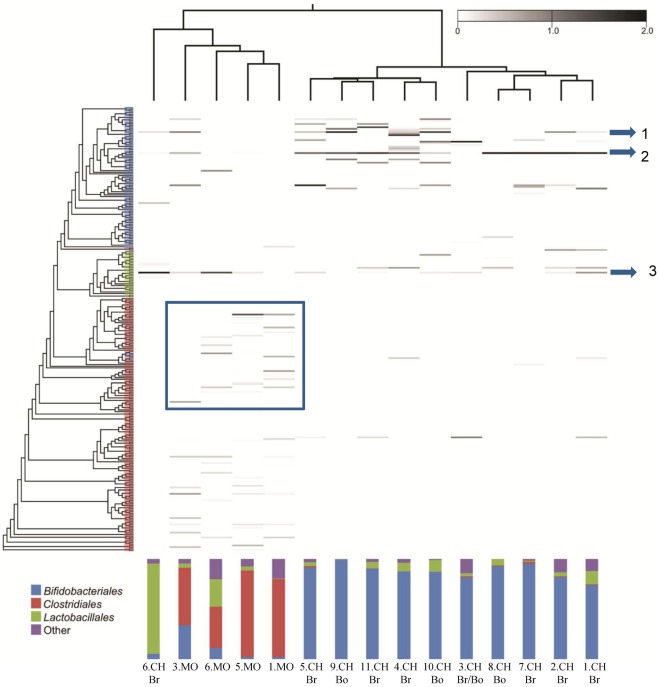
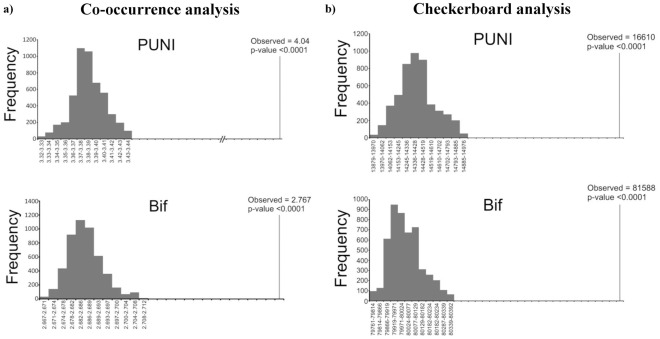
Verification
Claims the paper makes
The claims and statistics of this paper haven’t been checked yet.
Run the check — free, no account needed. It reads the open-access text and checks the sources it cites.
Claims other papers make about this one
Each is checked against this paper’s own text: does it say what the citing paper says it does?
The source backs part of the claim, not all of it — or backs it for a different population, condition or comparison.
In the citing paper
“PS infants showed an earlier and more robust colonisation of infant-associated Bifidobacterium species, particularly B. breve and B. longum subsp. infantis, compared to NPS infants51–53.”
From Impact of early life antibiotic and probiotic treatment on gut microbiome and resistome of very-low-birth-weight preterm infants. (2025) · cites this paper as [52]
Experimental — accuracy not yet measured
Self-check
Percentages, sums and reported differences re-computed from the paper’s own numbers.
The self-check needs the paper’s full text.
Citations
Cites
Cytoscape: A software Environment for integrated models of biomolecular interaction networks
Shannon, P., Markiel, A., Ozier, O., Baliga, N. S., Wang, J. T., Ramage, D., Amin, N., Schwikowski, B., & Ideker, T. (2003) · Genome Research · doi:10.1101/gr.1239303 · Cited by 51,888
QIIME allows analysis of high-throughput community sequencing data
Caporaso, J. G., Kuczynski, J., Stombaugh, J., Bittinger, K., Bushman, F. D., Costello, E. K., Fierer, N., Peña, A. G., Goodrich, J. K., Gordon, J. I., et al. (2010) · Nature Methods · doi:10.1038/nmeth.f.303 · Cited by 34,887 · cited 3×
“All reads were classified to the lowest possible taxonomic rank using QIIME and a reference dataset from the Ribosomal Database Project [31].”
MethodSearch and clustering orders of magnitude faster than BLAST
Edgar, R. C. (2010) · Bioinformatics · doi:10.1093/bioinformatics/btq461 · Cited by 21,098
An obesity-associated gut microbiome with increased capacity for energy harvest
Turnbaugh, P. J., Ley, R. E., Mahowald, M. A., Magrini, V., Mardis, E. R., & Gordon, J. I. (2006) · Nature · doi:10.1038/nature05414 · Cited by 12,444 · cited 1×
“Furthermore, microbial dysbiosis has been linked to several functional gut disorders, such as inflammatory bowel disease [4,5], irritable bowel syndrome [6], stomach cancer [7], mucosa-associated lymphoid tissue lymphoma [8], obesity [9,10] and necrotizing enterocolitis [11].”
BackgroundDiversity of the Human Intestinal Microbial Flora
Eckburg, P. B., Bik, E. M., Bernstein, C. N., Purdom, E., Dethlefsen, L., Sargent, M., Gill, S. R., Nelson, K. E., & Relman, D. A. (2005) · Science · doi:10.1126/science.1110591 · Cited by 7,913 · cited 2×
“2b), confirming previously published data on the fecal microbiota of adult subjects [13].”
BackgroundResultDietary Modulation of the Human Colonic Microbiota: Introducing the Concept of Prebiotics
Gibson, G. R., & Roberfroid, M. B. (1995) · Journal of Nutrition · doi:10.1093/jn/125.6.1401 · Cited by 7,659 · cited 1×
“infantis) are genetically adapted to utilize hostproduced glycans like mucins and human milk oligosaccharides [50–53].”
BackgroundHost-Bacterial Mutualism in the Human Intestine
Bäckhed, F., Ley, R. E., Sonnenburg, J. L., Peterson, D. A., & Gordon, J. I. (2005) · Science · doi:10.1126/science.1104816 · Cited by 5,277 · cited 1×
“. Studies employing murine models have highlighted the critical role played by the gut microbiota in the development of a properly functioning gastrointestinal tract”
BackgroundThe Ribosomal Database Project: improved alignments and new tools for rRNA analysis
Cole, J. R., Wang, Q., Cardenas, E., Fish, J., Chai, B., Farris, R. J., Kulam-Syed-Mohideen, A. S., McGarrell, D. M., Marsh, T. L., Garrity, G. M., et al. (2008) · Nucleic Acids Research · doi:10.1093/nar/gkn879 · Cited by 4,873 · cited 1×
“All reads were classified to the lowest possible taxonomic rank using QIIME and a reference dataset from the Ribosomal Database Project [31].”
MethodSokol, H., Pigneur, B., Watterlot, L., Lakhdari, O., Bermúdez-Humarán, L. G., Gratadoux, J.-J., Blugeon, S., Bridonneau, C., Furet, J.-P., Corthier, G., et al. (2008) · Proceedings of the National Academy of Sciences · doi:10.1073/pnas.0804812105 · Cited by 4,413 · cited 1×
“Furthermore, microbial dysbiosis has been linked to several functional gut disorders, such as inflammatory bowel disease [4,5], irritable bowel syndrome [6], stomach cancer [7], mucosa-associated lymphoid tissue lymphoma [8], obesity [9,10] and necrotizing enterocolitis [11].”
BackgroundHelicobacter pylori Infection and the Risk of Gastric Carcinoma
Parsonnet, J., FRIEDMAN, G. D., Vandersteen, D. P., Chang, Y., Vogelman∥, J. H., Orentreich∥, N., & Sibley, R. K. (1991) · New England Journal of Medicine · doi:10.1056/nejm199110173251603 · Cited by 3,893 · cited 1×
“Furthermore, microbial dysbiosis has been linked to several functional gut disorders, such as inflammatory bowel disease [4,5], irritable bowel syndrome [6], stomach cancer [7], mucosa-associated lymphoid tissue lymphoma [8], obesity [9,10] and necrotizing enterocolitis [11].”
Background
Research works printed but not linked: 1
- JM Diamond, 1975, Assembly of species community., Ecology and Evolution of Communities, eds Cody ML, Diamond JM (Harvard Univ Press, Cambridge, MA),, 342–444
Cited by
Sorted by citations
Milani, C., Duranti, S., Bottacini, F., Casey, E., Turroni, F., Mahony, J., Belzer, C., Delgado Palacio, S., Arboleya Montes, S., Mancabelli, L., et al. (2017) · Microbiology and Molecular Biology Reviews · doi:10.1128/mmbr.00036-17 · Cited by 1,950
“Bifidobacterium has been considered to represent the dominant bacterial genus in the breastfed infant gut microbiota (41, 269), but recent studies have also shown a high occurrence of enterobacteria in such an infant population.”
BackgroundResultSelf-citationRivière, A., Selak, M., Lantin, D., Leroy, F., & Vuyst, L. D. (2016) · Frontiers in Microbiology · doi:10.3389/fmicb.2016.00979 · Cited by 1,810
“In general, B. bifidum and B. longum are the dominant species in infants, whereas B. adolescentis and B. longum dominate the adult gut microbiota (Turroni et al., 2012).”
BackgroundBacteria as vitamin suppliers to their host: A gut microbiota perspective
LeBlanc, J. G., Milani, C., de Giori, G. S., Sesma, F., van Sinderen, D., & Ventura, M. (2013) · Current Opinion in Biotechnology · doi:10.1016/j.copbio.2012.08.005 · Cited by 1,613
Self-citationMicrobiota-mediated colonization resistance against intestinal pathogens
Buffie, C. G., & Pamer, E. G. (2013) · Nature reviews. Immunology · doi:10.1038/nri3535 · Cited by 1,564
Probiotics, gut microbiota, and their influence on host health and disease
Sánchez, B., Delgado, S., Blanco‐Míguez, A., Lourenço, A., Gueimonde, M., & Margolles, A. (2017) · Molecular Nutrition & Food Research · doi:10.1002/mnfr.201600240 · Cited by 1,104
“Therefore, since bifidobacteria populations are abundant in breast-fed infants, compared with those fed with infant formula, it is generally believed that the presence of bifidobacteria in the microbiota of infants is an indicator of good health [93, 94].”
BackgroundSelf-citation
Metadata
- Authors
- Turroni, F., Peano, C., Pass, D. A., Foroni, E., Severgnini, M., Claesson, M. J., Kerr, C., Hourihane, J., Murray, D., Fuligni, F., Gueimonde, M., Margolles, A., De Bellis, G., O’Toole, P. W., van Sinderen, D., Marchesi, J. R., & Ventura, M.
- Affiliations
- University of Parma (IT)
- National Research Council (IT)
- Cardiff University (GB)
- University College Cork (IE)
- Consejo Superior de Investigaciones Científicas (ES)
- Corresponding author
- Ventura, Marco
- ORCID
- Venue
- PLoS ONE
- Publisher
- Public Library of Science (PLoS)
- Published
- 2012-05-11
- Volume
- 7
- Issue
- 5
- Pages
- e36957
- ISSN
- 1932-6203 (ISSN-L)
- PMC
- PMC3350489
- OpenAlex
- W2048550695
- Cited by
- 647
- References
- 54
- Citations by year
- 2026: 17 · 2025: 32 · 2024: 45 · 2023: 36 · 2022: 49 · 2021: 57 · 2020: 71 · 2019: 29 · 2018: 46 · 2017: 56 · 2016: 52 · 2015: 50 · 2014: 48 · 2013: 41 · 2012: 17
- FWCI
- 20.04
- Type
- journal article
- Language
- en
- Open access
- gold
- doi.org
- Locations
- PLoS ONE (publishedVersion, cc-by)
- Europe PMC (PubMed Central) (publishedVersion, cc-by)
- PubMed Central (publishedVersion, cc-by)
- PubMed (publishedVersion)
- ORCA Online Research @Cardiff (Cardiff University) (acceptedVersion)
- DIGITAL.CSIC (Spanish National Research Council (CSIC)) (submittedVersion)
- DOAJ (DOAJ: Directory of Open Access Journals) (submittedVersion, cc-by-sa)
- Figshare (submittedVersion, cc-by)
- Funders
- Royal Society
- Irish Research Council for Science, Engineering and Technology
- Science Foundation Ireland (02/CE/B124, 07/CE/B1368)
- Ministero dell’Istruzione, dell’Università e della Ricerca
- Natural Environment Research Council (NBAF010005)
- Topics
- Life Sciences › Biochemistry, Genetics and Molecular Biology › Molecular Biology › Gut microbiota and health
- Health Sciences › Nursing › Nutrition and Dietetics › Infant Nutrition and Health
- Life Sciences › Agricultural and Biological Sciences › Food Science › Probiotics and Fermented Foods
- Keywords
- Bifidobacterium, infant gut microbiota, bacterial diversity, 16S rRNA gene, fecal microbiota, breastfeeding, bottle feeding, mode of delivery, vaginal delivery, cesarean section, maternal microbiota, species co-occurrence, gut commensal bacteria
- MeSH terms
- Base Sequence, Bifidobacterium, Feces, Female, Genes, Bacterial, Humans, Infant, Phylogeny, Pregnancy, RNA, Bacterial, RNA, Ribosomal, 16S, Genetic Variation, DNA Primers, Gastrointestinal Tract, Metagenome
About these checks
Registry, retraction, Cites and statistics results are computed, not judged, with one exception: a printed reference that no index lists is read once by a model before it counts as a citation error. Claims are extracted by a model and kept only when their quote appears verbatim in the text; each cited source is then checked, with a model’s help, for whether it says what the claim relies on. Those verdicts can be wrong — read the claim’s quote and the cited source before relying on one.
Statistics and arithmetic are recomputed, not judged.
Confidence bands are shown only for fields calibrated on our annotated test set. None is calibrated yet, so no band is shown.
What counts as a claim ›How we measure confidence ›How we check this ›
Are you an author, or do you see a problem with this page? Request a review
