

Innate Immune Dysfunctions in Aged Mice Facilitate the Systemic Dissemination of Methicillin-Resistant S. aureus
Open accessThe DOI matches its Crossref record; 39 of the 39 references it cites were found in a registry or an index.
Abstract
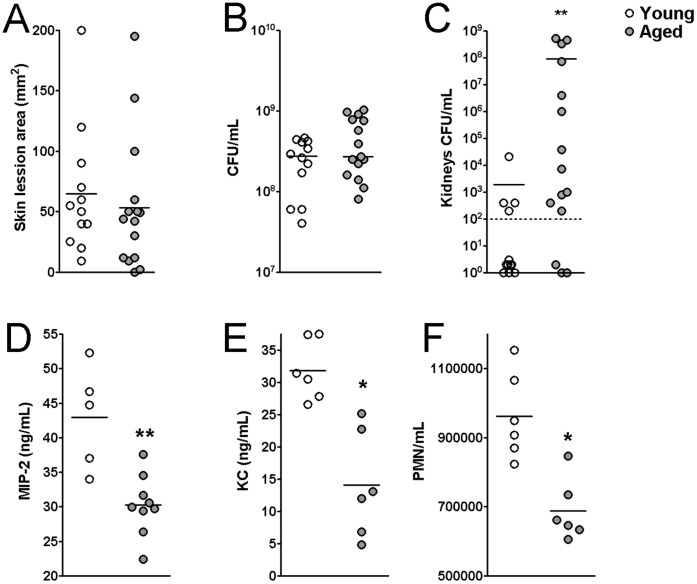
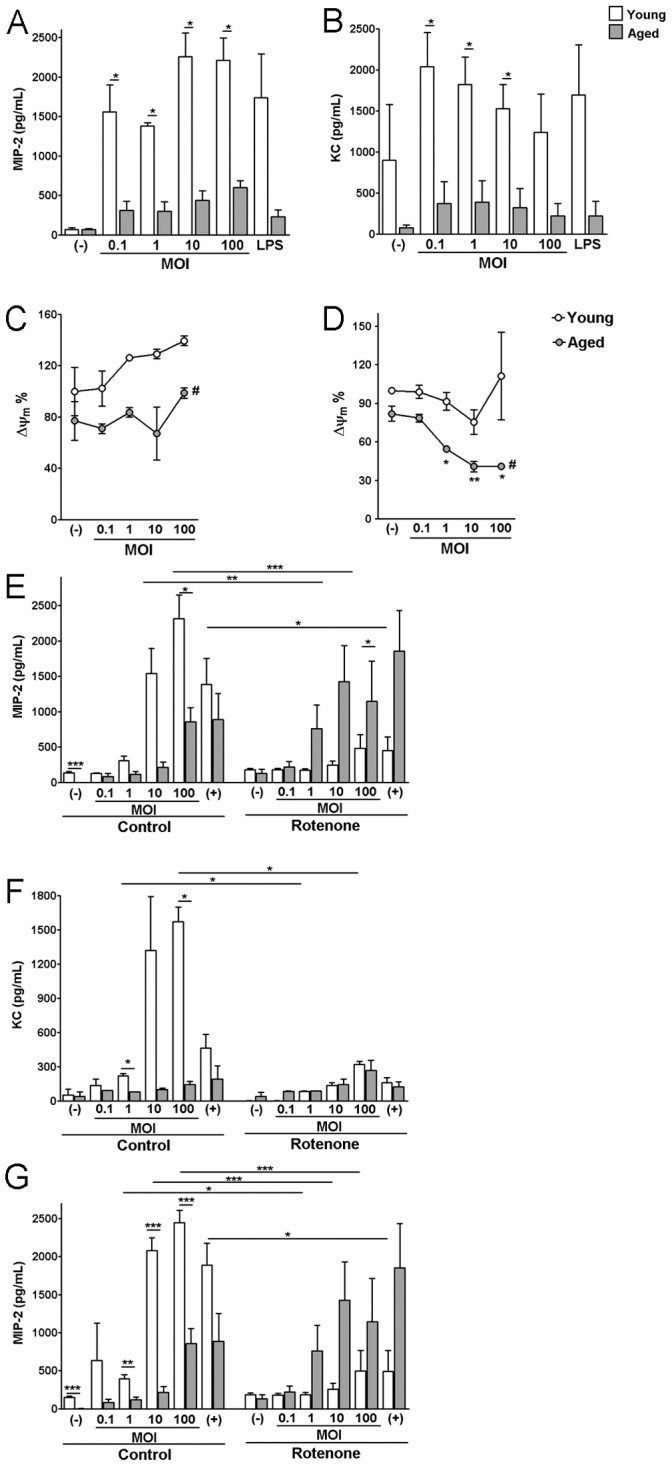
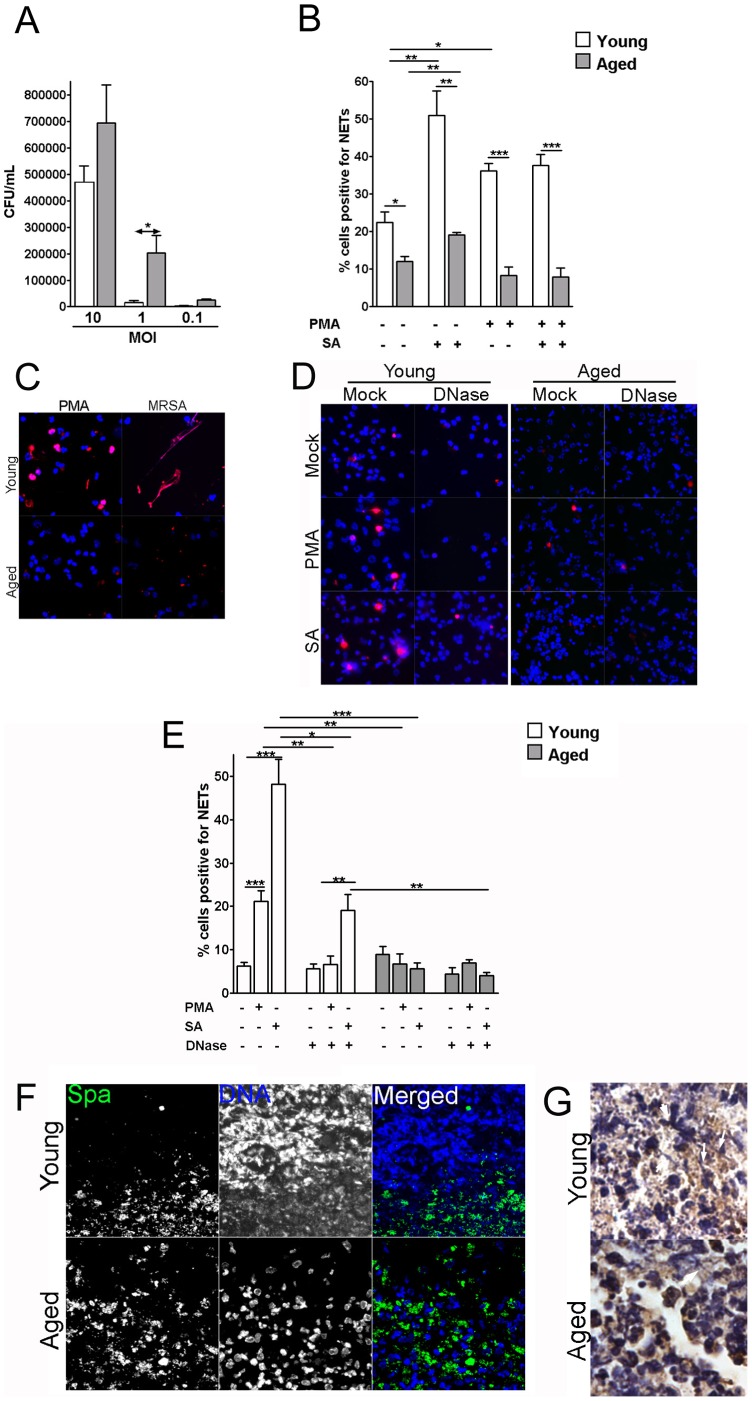
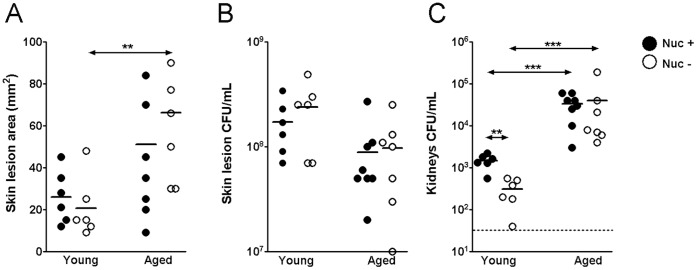
Elderly humans show increased susceptibility to invasive staphylococcal disease after skin and soft tissue infection. However, it is not understood how host immunity changes with aging, and how that predisposes to invasive disease. In a model of severe skin infection, we showed that aged mice (16- to 20-month-old) exhibit dramatic bacterial dissemination compared with young adult mice (2-month-old). Bacterial dissemination was associated with significant reductions of CXCL1 (KC), polymorphonuclear cells (PMNs), and extracellular DNA traps (NETs) at the infection site. PMNs and primary skin fibroblasts isolated from aged mice showed decreased secretion of CXCL2 (MIP-2) and KC in response to MRSA, and in vitro analyses of mitochondrial functions revealed that the mitochondrial electron transport chain complex I plays a significant role in induction of chemokines in the cells isolated from young but not old mice. Additionally, PMNs isolated from aged mice have reduced ability to form NETs and to kill MRSA. Expression of nuclease by S. aureus led to increased bacterial systemic dissemination in young but not old mice, suggesting that defective NETs formation in elderly mice permitted nuclease and non-nuclease expressing S. aureus to disseminate equally well. Overall, these findings suggest that gross impairment of both skin barrier function and innate immunity contributes to the propensity for MRSA to disseminate in aged mice. Furthermore, the study indicates that contribution of bacterial factors to pathogenicity may vary with host age.
Overview
The claims and statistics of this paper haven’t been checked yet.
Free: it reads the open-access text and checks the first 5 claims that cite a source we can check. Create a free account to check every claim.
Integrity signals
Registry
Cites
Statistics
Figures
Verification
Claims the paper makes
The claims and statistics of this paper haven’t been checked yet.
Free: it reads the open-access text and checks the first 5 claims that cite a source we can check. Create a free account to check every claim.
Claims other papers make about this one
Each is checked against this paper’s own text: does it say what the citing paper says it does?
In the citing paper
“in mice, neutrophils from aged animals also display a reduced capability to form neutrophil extracellular traps (NETs) in a model of severe skin infection by Staphylococcus aureus [43].”
From Aging of the immune system: Focus on inflammation and vaccination (2016) · cites this paper as [43]
Self-check
Percentages, sums and reported differences re-computed from the paper’s own numbers.
The self-check needs the paper’s full text.
Citations
Cites
Neutrophil Extracellular Traps Kill Bacteria
Brinkmann, V., Reichard, U., Goosmann, C., Fauler, B., Uhlemann, Y., Weiss, D. S., Weinrauch, Y., & Zychlinsky, A. (2004) · Science · doi:10.1126/science.1092385 · Cited by 10,268 · cited 3×
“invading organisms and prevents them from systemic dissemination [10].”
BackgroundDefective LPS Signaling in C3H/HeJ and C57BL/10ScCr Mice: Mutations in Tlr4 Gene
Poltorak, A., He, X., Smirnova, I., Liu, M.-Y., Huffel, C. V., Du, X., Birdwell, D., Alejos, E., Silva, M., Galanos, C., et al. (1998) · Science · doi:10.1126/science.282.5396.2085 · Cited by 7,631
Klevens, R. M. (2007) · JAMA · doi:10.1001/jama.298.15.1763 · Cited by 3,726 · cited 2×
“Age-dependent immune changes are likely to contribute to the increased incidence of severe infections [2], and based on epidemiologic studies, the elderly population is more prone to invasive MRSA disease [3].”
BackgroundExtracellular DNA traps promote thrombosis
Fuchs, T. A., Brill, A., Duerschmied, D., Schatzberg, D., Monestier, M., Myers, D. D., Wrobleski, S. K., Wakefield, T. W., Hartwig, J. H., & Wagner, D. D. (2010) · Proceedings of the National Academy of Sciences · doi:10.1073/pnas.1005743107 · Cited by 2,492 · cited 1×
“NETs were visualized using a modified established protocol [38].”
MethodPlatelet TLR4 activates neutrophil extracellular traps to ensnare bacteria in septic blood
Clark, S. R., Ma, A. C., Tavener, S. A., McDonald, B., Goodarzi, Z., Kelly, M. M., Patel, K. D., Chakrabarti, S., McAvoy, E., Sinclair, G. D., et al. (2007) · Nature Medicine · doi:10.1038/nm1565 · Cited by 2,309 · cited 2×
“clear cells (PMNs) form neutrophil extracellular DNA traps (NETs) containing DNA, histone, granule enzymes, and antimicrobial components [10,11,12].”
BackgroundCutting edge: impaired toll-like receptor expression and function in aging
Renshaw, M., Rockwell, J., Engleman, C., Gewirtz, A., Katz, J., & Sambhara, S. (2002) · The Journal of Immunology · doi:10.4049/jimmunol.169.9.4697 · Cited by 626 · cited 3×
“An in vitro study of murine peritoneal macrophages attributes the decreased level of inflammation in elderly to lower levels of Toll-like receptors (TLR) expression on cell surfaces [8], suggesting that innate immune activation decreases with aging.”
BackgroundResultInfluentialNuclease Expression by Staphylococcus aureus Facilitates Escape from Neutrophil Extracellular Traps
Berends, E. T. M., Horswill, A. R., Haste, N. M., Monestier, M., Nizet, V., & von Köckritz-Blickwede, M. (2010) · Journal of Innate Immunity · doi:10.1159/000319909 · Cited by 487 · cited 2×
“Prior studies have shown that nuclease expression by pathogens leads to destruction of NETs and facilitates systemic dissemination of the bacteria [13,24,25,26].”
BackgroundEffect of age on human neutrophil function
Wenisch, C., Patruta, S., Daxböck, F., Krause, R., & Hörl, W. (2000) · Journal of Leukocyte Biology · doi:10.1002/jlb.67.1.40 · Cited by 450 · cited 1×
“Prior studies have demonstrated that immune cells from elderly subjects, compared to cells isolated from young subjects, exhibit reduced chemotaxis, phagocytosis, and respiratory burst activity in response to bacterial infection [5,6,7].”
BackgroundInflammation and endothelial dysfunction during aging: role of NF-κB
Csiszar, A., Wang, M., Lakatta, E. G., & Ungvari, Z. (2008) · Journal of Applied Physiology · doi:10.1152/japplphysiol.90470.2008 · Cited by 441 · cited 1×
“Furthermore, decline in cellular and inflammatory responses has been shown to be associated with dysfunction of mitochondria in cells isolated from aged hosts [9].”
BackgroundDNase Sda1 provides selection pressure for a switch to invasive group A streptococcal infection
Walker, M. J., Hollands, A., Sanderson-Smith, M. L., Cole, J. N., Kirk, J. K., Henningham, A., McArthur, J. D., Dinkla, K., Aziz, R. K., Kansal, R. G., et al. (2007) · Nature Medicine · doi:10.1038/nm1612 · Cited by 426 · cited 3×
“Prior studies have shown that nuclease expression by pathogens leads to destruction of NETs and facilitates systemic dissemination of the bacteria [13,24,25,26].”
Background
Cited by
The twilight of immunity: emerging concepts in aging of the immune system
Nikolich-Žugich, J. (2018) · Nature Immunology · doi:10.1038/s41590-017-0006-x · Cited by 1,240
Age-dependent dysregulation of innate immunity
Shaw, A. C., Goldstein, D. R., & Montgomery, R. R. (2013) · Nature Reviews Immunology · doi:10.1038/nri3547 · Cited by 1,061
Aging of the immune system: Focus on inflammation and vaccination
Pinti, M., Appay, V., Campisi, J., Frasca, D., Fülöp, T., Sauce, D., Larbi, A., Weinberger, B., & Cossarizza, A. (2016) · European Journal of Immunology · doi:10.1002/eji.201546178 · Cited by 439
Neutrophil Extracellular Traps: The Biology of Chromatin Externalization
Sollberger, G., Tilley, D. O., & Zychlinsky, A. (2018) · Developmental Cell · doi:10.1016/j.devcel.2018.01.019 · Cited by 342
Sex, the aging immune system, and chronic disease
Gubbels Bupp, M. R. (2015) · Cellular Immunology · doi:10.1016/j.cellimm.2015.02.002 · Cited by 333
Hazeldine, J., Harris, P., Chapple, I. L., Grant, M., Greenwood, H., Livesey, A., Sapey, E., & Lord, J. M. (2014) · Aging Cell · doi:10.1111/acel.12222 · Cited by 292
“reported by older adults following skin and soft tissue infection (Tseng et al., 2012).”
BackgroundInfluentialAging, inflammation, immunity and periodontal disease
Ebersole, J. L., Graves, C. L., Gonzalez, O. A., Dawson, D., Morford, L. A., Huja, P. E., Hartsfield, J. K., Huja, S. S., Pandruvada, S., & Wallet, S. M. (2016) · Periodontology 2000 · doi:10.1111/prd.12135 · Cited by 278
“Similarly, neutrophil extracellular trap formation has been demonstrated to be decreased in aged mice, but it remains to be determined whether neutrophil extracellular traps are altered in aged humans (23, 181).”
The Confluence of Sex Hormones and Aging on Immunity
Gubbels Bupp, M. R., Potluri, T., Fink, A. L., & Klein, S. L. (2018) · Frontiers in Immunology · doi:10.3389/fimmu.2018.01269 · Cited by 277
Oh, S.-J., Lee, J. K., & Shin, O. S. (2019) · Immune Network · doi:10.4110/in.2019.19.e37 · Cited by 262
“In addition, neutrophils of the elderly produce fewer neutrophil extracellular traps (NET) that are comprised of nuclear components and granule proteins, and are able to bind and trap extracellular pathogens to defend against infections (45,46).”
BackgroundFrasca, D., Diaz, A., Romero, M., Garcia, D., & Blomberg, B. B. (2020) · Annual Review of Cell and Developmental Biology · doi:10.1146/annurev-cellbio-011620-034148 · Cited by 225
“T cells downregulate the expression of the CD28 molecule with age, and subsets of CD4+CD28− and CD8+CD28− T cells emerge (Vallejo 2005).”
BackgroundAsthma in the elderly and late‐onset adult asthma
Dunn, R. M., Busse, P. J., & Wechsler, M. E. (2018) · Allergy · doi:10.1111/all.13258 · Cited by 207
“With increasing age, neutrophil chemotaxis to the site of inflammation is reduced(44) and fewer NETs are produced.(45) Aged macrophages and neutrophils have reduced phagocytic capabilities.”
BackgroundMitochondrial DNA Released by Trauma Induces Neutrophil Extracellular Traps
Itagaki, K., Kaczmarek, E., Lee, Y. T., Tang, I. T., Isal, B., Adibnia, Y., Sandler, N., Grimm, M. J., Segal, B. H., Otterbein, L. E., et al. (2015) · PLOS ONE · doi:10.1371/journal.pone.0120549 · Cited by 192
“This could predispose to systemic bacterial infections like pneumonia, and it has been demonstrated that aged mice fail to form NETs in response to methicillin resistant Staphylococcus aureus (MRSA) infection [22].”
BackgroundHallmarks of aging and immunosenescence: Connecting the dots
Rodrigues, L. P., Teixeira, V. R., Alencar-Silva, T., Simonassi-Paiva, B., Pereira, R. W., Pogue, R., & Carvalho, J. L. (2021) · Cytokine & Growth Factor Reviews · doi:10.1016/j.cytogfr.2021.01.006 · Cited by 184
Immunosenescence, Inflammaging, and Frailty: Role of Myeloid Cells in Age-Related Diseases
Bleve, A., Motta, F., Durante, B., Pandolfo, C., Selmi, C., & Sica, A. (2022) · Clinical Reviews in Allergy & Immunology · doi:10.1007/s12016-021-08909-7 · Cited by 153
“aureus produced significantly lower amount of NETs [53].”
BackgroundInfluentialAging, inflammation and cancer
Bottazzi, B., Riboli, E., & Mantovani, A. (2018) · Seminars in Immunology · doi:10.1016/j.smim.2018.10.011 · Cited by 169
Painter, K. L., Krishna, A., Wigneshweraraj, S., & Edwards, A. M. (2014) · Trends in Microbiology · doi:10.1016/j.tim.2014.09.002 · Cited by 181
Innate immune responses in the ageing lung.
Boe, D. M., Boule, L. A., & Kovacs, E. J. (2016) · Clinical and Experimental Immunology · doi:10.1111/cei.12881 · Cited by 156
Frailty, aging, and periodontal disease: Basic biologic considerations
Clark, D. L., Kotronia, E., & Ramsay, S. E. (2021) · Periodontology 2000 · doi:10.1111/prd.12380 · Cited by 184
Vaccine review: “Staphyloccocus aureus vaccines: Problems and prospects”
Jansen, K. U., Girgenti, D., Scully, I. L., & Anderson, A. S. (2013) · Vaccine · doi:10.1016/j.vaccine.2013.04.002 · Cited by 169
“aureus infections [22,105,106].”
Paradoxical changes in innate immunity in aging: recent progress and new directions
Montgomery, R. R., & Shaw, A. C. (2015) · Journal of Leukocyte Biology · doi:10.1189/jlb.5mr0315-104r · Cited by 147
“models [10, 12]; notably, alterations in chemotaxis may result in impaired recruitment and delayed egress from sites of infection, resulting in impaired responses to pathogen as well as inappropriate persistence of chronic inflammation.”
BackgroundNeutrophils in aging and aging‐related pathologies
Avondt, K. V., Strecker, J., Tulotta, C., Minnerup, J., Schulz, C., & Soehnlein, O. (2022) · Immunological Reviews · doi:10.1111/imr.13153 · Cited by 166
Lu, R. J., Taylor, S., Contrepois, K., Kim, M., Bravo, J. I., Ellenberger, M., Sampathkumar, N. K., & Benayoun, B. A. (2021) · Nature Aging · doi:10.1038/s43587-021-00086-8 · Cited by 126
Immune aging in diabetes and its implications in wound healing
Moura, J., Madureira, P., Leal, E. C., Fonseca, A. C., & Carvalho, E. (2019) · Clinical Immunology · doi:10.1016/j.clim.2019.02.002 · Cited by 132
Wang, Y., Wang, W., Wang, N., Tall, A. R., & Tabas, I. (2017) · Arteriosclerosis, Thrombosis, and Vascular Biology · doi:10.1161/atvbaha.117.309580 · Cited by 108
Innate immunesenescence: underlying mechanisms and clinical relevance
Hazeldine, J., & Lord, J. M. (2015) · Biogerontology · doi:10.1007/s10522-014-9514-3 · Cited by 104
Autophagy and Immune Senescence
Zhang, H., Puleston, D. J., & Simon, A. K. (2016) · Trends in Molecular Medicine · doi:10.1016/j.molmed.2016.06.001 · Cited by 102
The Role of Staphylococcus Aureus Quorum Sensing in Cutaneous and Systemic Infections
Yamazaki, Y., Ito, T., Tamai, M., Nakagawa, S., & Nakamura, Y. (2024) · Inflammation and Regeneration · doi:10.1186/s41232-024-00323-8 · Cited by 99
“Although the functional Agr is likely crucial in infection, its importance may be substantially diminished in some situations, and Agr-defective strains may cause mortality through other virulence factors [123, 165–167].”
BackgroundAging‐related Atg5 defect impairs neutrophil extracellular traps formation
Xu, F., Zhang, C., Zou, Z., Fan, E., Chen, L., Li, Y., Billiar, T. R., Wilson, M. A., Shi, X., & Fan, J. (2017) · Immunology · doi:10.1111/imm.12740 · Cited by 98
Alcohol, aging, and innate immunity
Boulé, L. A., & Kovacs, E. J. (2017) · Journal of Leukocyte Biology · doi:10.1189/jlb.4ru1016-450r · Cited by 98
Age and Periodontal Health—Immunological View
Ebersole, J. L., Dawson, D. R., Emecen‐Huja, P., Pandruvada, S. N. M., Basu, A., Nguyen, L., Zhang, Y., & González, O. A. (2018) · Current Oral Health Reports · doi:10.1007/s40496-018-0202-2 · Cited by 93
Montoya, A., Cassone, M., & Mody, L. (2016) · Clinics in Geriatric Medicine · doi:10.1016/j.cger.2016.02.004 · Cited by 93
“fections, older adults are more likely to experience progression to systemic infection and sepsis once skin infections are present.(12) Corticosteroids and other sex hormones also play a role in mucosal and skin homeostasis, and differences in the healing ability of the skin, intestinal, gastric, and urogenital mucosa…”
ResultOrtmann, W., & Kolaczkowska, E. (2018) · Cell and Tissue Research · doi:10.1007/s00441-017-2751-4 · Cited by 80
“It was observed when the cells were first primed with TNF-α and then activated to form NETs with LPS or IL-8 (Hazeldine et al. 2014), stimulated with Pam3CSK4, a TLR2 ligand (Xu et al. 2017), S. aureus (Tseng et al. 2012) or mitochondrial DNA, a DAMP (Itagaki et al. 2015).”
BackgroundInfluentialSauce, D., Dong, Y., Campillo-Gimenez, L., Casulli, S., Bayard, C., Autran, B., Boddaert, J., Appay, V., & Elbim, C. (2016) · The Journals of Gerontology Series A · doi:10.1093/gerona/glw062 · Cited by 93
“Over the past few years, it has been demonstrated that PMN chemotaxis (11), phagocytosis (12,13), extracellular trap formation (14,15), and rescue from apoptosis induced by proinflammatory mediators (16–19) are altered with aging.”
BackgroundKwiecinski, J. M., Kratofil, R. M., Parlet, C. P., Surewaard, B. G. J., Kubes, P., & Horswill, A. R. (2021) · Cell Reports · doi:10.1016/j.celrep.2021.109462 · Cited by 76
“Thus, nuclease is responsible for S. aureus immune evasion in abscesses and the spread of bacteria from the infectious foci in skin (Berends et al., 2010; Thammavongsa et al., 2013; Tseng et al., 2012; Wang et al., 2020; Yipp et al., 2012).”
BackgroundAsthma Over the Age of 65: All's Well That Ends Well
Baptist, A. P., & Busse, P. J. (2018) · The Journal of Allergy and Clinical Immunology In Practice · doi:10.1016/j.jaip.2018.02.007 · Cited by 78
Kapétanovic, R., Bokil, N. J., & Sweet, M. J. (2015) · Ageing Research Reviews · doi:10.1016/j.arr.2015.02.005 · Cited by 76
Müller, S., Wolf, A. J., Iliev, I. D., Berg, B. L., Underhill, D. M., & Liu, G. Y. (2015) · Cell Host & Microbe · doi:10.1016/j.chom.2015.10.011 · Cited by 72
Self-citationExpanding roles of neutrophils in aging hosts
Tseng, C. W., & Liu, G. Y. (2014) · Current Opinion in Immunology · doi:10.1016/j.coi.2014.03.009 · Cited by 78
“aureus or PMA stimulation [17 ].”
BackgroundSelf-citationNeutrophils in community-acquired pneumonia: parallels in dysfunction at the extremes of age
Grudzinska, F. S., Brodlie, M., Scholefield, B. R., Jackson, T., Scott, A., THICKETT, D. R., & Sapey, E. (2019) · Thorax · doi:10.1136/thoraxjnl-2018-212826 · Cited by 77
Immune Cell Number, Phenotype, and Function in the Elderly with Sepsis
He, W., Xiao, K., Fang, M., & Xie, L. (2021) · Aging and Disease · doi:10.14336/ad.2020.0627 · Cited by 73
“Although the number of neutrophils is preserved well in elderly individuals, their chemotactic, phagocytic, and NET formation abilities are impaired with age [32, 33].”
BackgroundIbler, A. E., ElGhazaly, M., Naylor, K. L., Bulgakova, N. A., El‐Khamisy, S. F., & Humphreys, D. (2019) · Nature Communications · doi:10.1038/s41467-019-12064-1 · Cited by 65
Donkel, S. J., Wolters, F. J., Ikram, M. A., & de Maat, M. P. M. (2021) · PLoS ONE · doi:10.1371/journal.pone.0253698 · Cited by 68
“In mice, neutrophils from older mice exposed to methicillin-resistant Staphylococcus aureus, have lower levels of NETs than neutrophils isolated from young mice [9].”
BackgroundNETosis in Wound Healing: When Enough Is Enough
Sabbatini, M., Magnelli, V., & Renò, F. (2021) · Cells · doi:10.3390/cells10030494 · Cited by 68
Aging and Options to Halt Declining Immunity to Virus Infections
Palacios-Pedrero, M. Á., Osterhaus, A. D. M. E., Becker, T., Elbahesh, H., Rimmelzwaan, G. F., & Saletti, G. (2021) · Frontiers in Immunology · doi:10.3389/fimmu.2021.681449 · Cited by 61
Immunesenescence: A Predisposing Risk Factor for the Development of COVID-19?
Hazeldine, J., & Lord, J. M. (2020) · Frontiers in Immunology · doi:10.3389/fimmu.2020.573662 · Cited by 67
Older but Not Wiser: the Age-Driven Changes in Neutrophil Responses during Pulmonary Infections
Simmons, S. R., Bhalla, M., Herring, S. E., Tchalla, E. Y. I., & Ghanem, E. N. B. (2021) · Infection and Immunity · doi:10.1128/iai.00653-20 · Cited by 61
“aureus skin infections, blunted NETosis is linked to the spread of systemic infection in aged mice (91).”
BackgroundAging hampers neutrophil extracellular traps (NETs) efficacy
Sabbatini, M., Bona, E., Novello, G., Migliario, M., & Renò, F. (2022) · Aging Clinical and Experimental Research · doi:10.1007/s40520-022-02201-0 · Cited by 51
Kovacs, E. J., Boe, D. M., Boule, L. A., & Curtis, B. J. (2017) · Clinics in Geriatric Medicine · doi:10.1016/j.cger.2017.06.002 · Cited by 49
Immune Alterations with Aging: Mechanisms and Intervention Strategies
Yu, W., Yu, Y., Sun, S., Lu, C., Zhai, J., Lei, Y., Bai, F., Wang, R., & Chen, J. (2024) · Nutrients · doi:10.3390/nu16223830 · Cited by 61
“This reduction extends to decreased phagocytic and bactericidal activities, as observed in various aging models [12,13].”
Val, S., Poley, M., Brown, K. J., Choi, R., Jeong, S., Colberg-Poley, A., Rose, M. C., Panchapakesan, K., Devaney, J. C., Pérez‐Losada, M., et al. (2016) · PLoS ONE · doi:10.1371/journal.pone.0152865 · Cited by 53
“Aged mice skin cells, show a decreased ability to secrete Cxcl2 upon methacillin resistant S. Aureus (MRSA) challenge, (a murin IL8 functional homologue) with a parallel reduced ability for neutrophils from aged mice to form NETs kill MRSA[47].”
BackgroundBurczyk, G., Cichoń, I., & Kołaczkowska, E. (2022) · Frontiers in Immunology · doi:10.3389/fimmu.2022.864638 · Cited by 50
Neutrophil dynamics and inflammaging in acute ischemic stroke: A transcriptomic review
Bui, T. A., Jickling, G. C., & Winship, I. R. (2022) · Frontiers in Aging Neuroscience · doi:10.3389/fnagi.2022.1041333 · Cited by 46
“Neutrophils from older individuals release more neutrophil elastase and proteolytic enzymes, spontaneously produce NETs, ROS, and cytokines (e.g., TNF-α; Tseng et al., 2012; Hazeldine et al., 2014; Zhang et al., 2015), express high levels of extracellular matrix-degrading enzymes (e.”
BackgroundZinc deficiency as possible link between immunosenescence and age-related diseases
Schulz, M. T., & Rink, L. (2025) · Immunity & Ageing · doi:10.1186/s12979-025-00511-1 · Cited by 56
“Some studies suggest reduced NET formation in neutrophils from older individuals [164, 165], while other ones indicate an increase in NET production with age [166].”
Functional genomics of inflamm-aging and immunosenescence
Lu, R. J., Wang, E. K., & Benayoun, B. A. (2021) · Briefings in Functional Genomics · doi:10.1093/bfgp/elab009 · Cited by 47
“TNFa pre-incubation of human circulating blood monocytes [92] or thioglycolate-elicitation of mouse peritoneal neutrophils [91], which is known to mimic TNFa priming [98]), and the ‘naïve’ unprimed state has not yet been investigated.”
BackgroundInfluentialHazeldine, J., Lord, J. M., & Hampson, P. (2015) · Ageing Research Reviews · doi:10.1016/j.arr.2015.10.003 · Cited by 45
“…NET formation by neutrophils from young mice was approximately 2.5-fold higher than that of neutrophils from aged mice following treatment with either the diacylglycerol mimetic phorbol 12-myristate 13-acetate (PMA) or methicillin-resistant Staphylococcus aureus (S.aureus) (Tseng et al. 2012) .”
BackgroundInfluentialAging and Systemic Lupus Erythematosus - Immunosenescence and Beyond
van den Hoogen, L. L., Sims, G. P., van Roon, J. A. G., & Fritsch-Stork, R. D. E. (2015) · Current Aging Science · doi:10.2174/1874609808666150727111904 · Cited by 44
Periodontal disease as a model to study chronic inflammation in aging
Bertolini, M., & Clark, D. R. (2023) · GeroScience · doi:10.1007/s11357-023-00835-0 · Cited by 50
“In mouse models, higher invasion of bacterial pathogens was associated with increased age and decreased NET formation [115].”
Beacon, T. H., Su, R., Lakowski, T. M., Delcuve, G. P., & Davie, J. (2020) · IUBMB Life · doi:10.1002/iub.2379 · Cited by 45
Cellular Senescence in Immunity against Infections
Marrella, V., Facoetti, A., & Cassani, B. (2022) · International Journal of Molecular Sciences · doi:10.3390/ijms231911845 · Cited by 45
Age-Related Changes in Immunological and Physiological Responses Following Pulmonary Challenge
Miller, E. J., & Linge, H. M. (2017) · International Journal of Molecular Sciences · doi:10.3390/ijms18061294 · Cited by 37
“, suggest that impaired ability to form neutrophil extracellular traps (NETs) in aged mice limits the ability of confinement of a pulmonary infection to the lungs, and allows systemic dissemination and fulminant sepsis [35].”
BackgroundFactors Which Affect the Host Response to Biomaterials
Londoño, R., & Badylak, S. F. (2015) · Elsevier eBooks · doi:10.1016/b978-0-12-800196-7.00001-3 · Cited by 34
Counteracting Immunosenescence—Which Therapeutic Strategies Are Promising?
Hieber, C., Grabbe, S., & Bros, M. (2023) · Biomolecules · doi:10.3390/biom13071085 · Cited by 30
“CXCL2 serves to attract PMNs, thereby promoting a positive feedback loop [78].”
BackgroundCellular Mechanisms of Inflammaging and Periodontal Disease
Clark, D. L., Radaic, A., & Kapila, Y. L. (2022) · Frontiers in Dental Medicine · doi:10.3389/fdmed.2022.844865 · Cited by 30
The NET , the trap and the pathogen: neutrophil extracellular traps in cutaneous immunity
Stephan, A., & Fabri, M. (2015) · Experimental Dermatology · doi:10.1111/exd.12599 · Cited by 28
Innate immunity dysregulation in aging eye and therapeutic interventions
Das, S., Ahmad, Z., Suryawanshi, A. S., & Kumar, A. (2022) · Ageing Research Reviews · doi:10.1016/j.arr.2022.101768 · Cited by 25
Farheen, S., Agrawal, S., Zubair, S., Agrawal, A., Jamal, F., Altaf, I., Anwar, A. K., Umair, S. M., & Owais, M. (2021) · Frontiers in Aging · doi:10.3389/fragi.2021.748591 · Cited by 25
“TCR diversity was shown to be reduced with age utilizing the high-throughput illumina sequencing technology, revealing a substantial drop in the number of naive T cells, and TCR-beta diversity by the age of 40 (Tseng et al., 2012).”
BackgroundMethodSchädel, P., Troisi, F., Czapka, A., Gebert, N., Pace, S., Ori, A., & Werz, O. (2021) · The FASEB Journal · doi:10.1096/fj.202002684r · Cited by 22
Immune response to COVID-19 in older adults
Jergović, M., Coplen, C. P., Uhrlaub, J. L., & Nikolich‐Žugich, J. (2021) · The Journal of Heart and Lung Transplantation · doi:10.1016/j.healun.2021.04.017 · Cited by 21
Research progress on immune aging and its mechanisms affecting geriatric diseases
Yu, Y., & Zheng, S. (2019) · Aging Medicine · doi:10.1002/agm2.12089 · Cited by 16
Dysbiosis and diabetic foot ulcers: A metabolic perspective of Staphylococcus aureus infection
Liu, R., Feng, J., Ni, Y., Chen, K., Wang, Y., Zhang, T., Zhou, M., & Zhao, C. (2024) · Biomedicine & Pharmacotherapy · doi:10.1016/j.biopha.2024.117498 · Cited by 21
Metabolic dysregulation of trained immunity in immune aging and the impact of dietary patterns
Grigorescu, A., Riza, A., Streață, I., & Netea, M. G. (2025) · American Journal of Physiology-Cell Physiology · doi:10.1152/ajpcell.00153.2025 · Cited by 17
de Haro, N. Á., Van, A. P., Robb, C. T., Rossi, A. G., & Desbois, A. P. (2021) · Fish & Shellfish Immunology · doi:10.1016/j.fsi.2021.08.023 · Cited by 13
“…infection, neutrophils from older adults are less likely to form ETs [57], whilst Tseng et al. [58] reported ageing-associated impairment of ET release in mice both in vitro and in vivo , with the latter associated with marked bacteraemia in a model of Staphylococcus aureus infection [58].”
Taylor, M., & Rayner, J. O. (2023) · Viruses · doi:10.3390/v15091869 · Cited by 16
“In addition to fewer DCs, neutrophils exhibit impaired chemotactic ability, lower phagocytic capacity, and less NET formation as age increases [62,63].”
BackgroundUrzúa, U., Chacón, C., Norambuena, M., Lizama, L., Sarmiento, S., Asaki, E., Powell, J. I., & Ampuero, S. (2020) · Biomolecules · doi:10.3390/biom10010113 · Cited by 14
“The local CXCL1 and CXCL2 synthesis decrease with age, thus promoting infection spread in a mouse model of soft-tissue and skin infection [62].”
BackgroundVidal-Seguel, N., Cabrera, C., Ferrada, L., Artigas-Arias, M., Alegría-Molina, A., Sanhueza, S. A., Flores, A., Huard, N., SAPUNAR, J., Salazar, L. A., et al. (2023) · Experimental Gerontology · doi:10.1016/j.exger.2023.112280 · Cited by 11
“, 2022), a situation that has been attributed to a lower production of NETosis both in aged animals and in older people (Simon et al., 2015; Tseng et al., 2012).”
A novel Schistosoma japonicum endonuclease homologous to DNase II
Hou, N., Piao, X., Cai, P., Wu, C., Liu, S., Xiao, Y., & Chen, Q. (2015) · BMC Genomics · doi:10.1186/s12864-015-1319-5 · Cited by 11
“aureus has also been found to lead to increased bacterial dissemination in mice [12].”
BackgroundHost syndecan-1 promotes listeriosis by inhibiting intravascular neutrophil extracellular traps
Aquino, R. S., Hayashida, A., & Park, P. W. (2020) · PLoS Pathogens · doi:10.1371/journal.ppat.1008497 · Cited by 11
Age-dependent inflammatory response is altered in an ex vivo model of bacterial pneumonia
Sommer, C., Reamon-Buettner, S. M., Niehof, M., Hildebrand, C. B., Braun, A. C., Sewald, K., Dehmel, S., & Brandenberger, C. (2024) · Respiratory Research · doi:10.1186/s12931-023-02609-w · Cited by 12
“…it has been reported previously that neutrophils from aged mice have a reduced NET formation in response to the gram-positive bacterium S. aureus [48], we did not see age-dependent changes in NETs towards P. aeruginosa which might be due to different mechanisms of NET formation towards the…”
BackgroundImmunosenescence and Inflamm-Aging: Clinical Interventions and the Potential for Reversal of Aging
Kumar, S. J., Shukla, S., Kumar, S., & Mishra, P. (2024) · Cureus · doi:10.7759/cureus.53297 · Cited by 20
“Tseng et al., 2012 [16] The impaired ability of an elderly human host in the successful clearance of invading pathogens may contribute to the development of invasive methicillin-resistant S. aureus infection.”
BackgroundAging immunity: unraveling the complex nexus of diet, gut microbiome, and immune function
Babakhani, K., Kucinskas, A. L., Ye, X., Giles, E. D., & Sun, Y. (2025) · Immunometabolism · doi:10.1097/in9.0000000000000061 · Cited by 16
“This reduction in phagocytosis may be attributable to the impaired formation of neutrophil extracellular traps, which are crucial for capturing and neutralizing pathogens to prevent their spread [58–61] .”
Nikolich‐Žugich, J., & Davies, J. S. (2016) · Clinical & Experimental Immunology · doi:10.1111/cei.12920 · Cited by 11
Pacheco, V. B., Nery, G. C. L., Fernandes, L. L., Santana, T. V., Jiménez, M., Borges, L., Hatanaka, E., Braga, P. L. G., Monteiro, F. R., do Amaral, J. B., et al. (2022) · Oxidative Medicine and Cellular Longevity · doi:10.1155/2022/3725056 · Cited by 10
“Beyond this information, in vivo research shows that neutrophil extracellular trap (NET) formation is also impaired with age, which could represent higher susceptibility to invasive bacterial disease in older adults [4, 5].”
Regulatory RNAs in immunosenescence
Talepoor, A. G., & Doroudchi, M. (2024) · Immunity Inflammation and Disease · doi:10.1002/iid3.1209 · Cited by 9
Investigating population-level immunosenescence: From bench to bedside
Cunha, L. L., Valsecchi, V. A. D. S., & Ward, L. S. (2022) · Frontiers in Immunology · doi:10.3389/fimmu.2022.949928 · Cited by 8
“A decline in NET generation, degranulation and phagocytosis over time (69, 70) has been documented in both animal models (86) and humans (18).”
BackgroundRao, R., Verma, H., Gangwar, P., Yadav, A., Yadav, B., Patel, A., Kaur, S., Dhiman, M., & Mantha, A. K. (2025) · Molecular Neurobiology · doi:10.1007/s12035-025-05435-x · Cited by 6
“An aging body is more vulnerable to several types of inflammatory pathogenesis, which increases morbidity because of impaired immune function [168–170].”
Immune system and gut microbiota senescence in elderly IBD patients
Fantini, M. C., Onali, S., Gasbarrini, A., & Lopetuso, L. R. (2021) · Minerva Gastroenterology · doi:10.23736/s2724-5985.21.02934-x · Cited by 7
Age-Related Dysfunction in the Innate Immune Response to Lung Infections
Boe, D. M., Chen, M. M., & Kovacs, E. J. (2019) · Springer eBooks · doi:10.1007/978-3-319-99375-1_91 · Cited by 4
Prevalence of COVID-19 Among Older People with Type 2 Diabetes Mellitus: A Systematic Review
Junhai, G. R., Saha, H. R., & Sarkar, B. C. (2022) · International Journal of Science and Healthcare Research · doi:10.52403/ijshr.20220738 · Cited by 2
Neutrophil, Basophil, and Eosinophil Granulocyte Functions in the Elderly
Uciechowski, P., & Rink, L. (2019) · Springer eBooks · doi:10.1007/978-3-319-99375-1_22 · Cited by 3
Gonçalves, C. V., Galantini, M. P. L., Muniz, I. P. R., Lima, P. H. B., Ribeiro, I. S., de Oliveira, M. E. S., de Magalhães, C. O. L., Flores, M. E. S., de Oliveira, S. L., Guimarães, C. S., et al. (2025) · Advanced Biology · doi:10.1002/adbi.202500254 · Cited by 3
Collins, C. P., Dunai, C., Vick, L. V., Khuat, L. T., Merleev, A. A., Choi, E. A., Lam, J. H., Maverakis, E., Monjazeb, A. M., Longo, D. L., et al. (2026) · Frontiers in Immunology · doi:10.3389/fimmu.2026.1712726 · Cited by 2
“…as young as 12 months of age as their aged cohort, and others using as high as 24+ months, offering some challenges when interpreting what is translatable due to mouse-to-human age equivalencies (per The Jackson Lab, this would be an age range of approximately 40 – 80 years old in humans) (9 – 19).”
Innate Immunosenescence and Its Impact on Health in Old Age
Tariq, M. A., Hazeldine, J., & Lord, J. M. (2016) · Springer eBooks · doi:10.1007/978-3-319-43365-3_1 · Cited by 3
The Impact of Age on Neutrophil Extracellular Trap Formation
Hazeldine, J., & Lord, J. M. (2018) · Springer eBooks · doi:10.1007/978-3-319-64597-1_102-1 · Cited by 2
Clinical outcomes of clostridioides difficile infection in the very elderly
Kassem, S., Hijazi, N., Stein, N., Zaina, A., & Ganaim, M. (2024) · Internal and Emergency Medicine · doi:10.1007/s11739-024-03580-0 · Cited by 3
“In animal model of aging, neutrophil dysfunction was characterized by disrupted chemotaxis and phagocytosis even in the context of preserved cell count response to infection [21].”
BackgroundAbdullah, G. A., Walsh, J., Sellin, A., McLean, C., Akpan, A., Phelan, M. M., & Wright, H. L. (2026) · Clinical & Experimental Immunology · doi:10.1093/cei/uxag019 · Cited by 1
“This is in contrast to a previous study in neutrophils from aged mice showed significantly fewer NETs in response to S. aureus in vitro and in vivo [3].”
Neutrophil, Basophil, and Eosinophil Granulocyte Functions in the Elderly
Uciechowski, P., & Rink, L. (2017) · Springer eBooks · doi:10.1007/978-3-319-64597-1_22-1 · Cited by 5
The Impact of Age on Neutrophil Extracellular Trap Formation
Hazeldine, J., & Lord, J. M. (2019) · Springer eBooks · doi:10.1007/978-3-319-99375-1_102 · Cited by 1
Greenwood, H. L. (2014) · University of Birmingham Institutional Research Archive (University of Birmingham) · Cited by 1
Mechanisms underlying innate immunesenescence
Hazeldine, J. (2013) · University of Birmingham Institutional Research Archive (University of Birmingham)
Hanania, N. A., & Busse, P. J. (2015) · Springer eBooks · doi:10.1007/978-3-319-23246-1_14
Metadata
- Authors
- Tseng, C. W., Kyme, P. A., Arruda, A., Ramanujan, V. K., Tawackoli, W., & Liu, G. Y.
- Affiliations
- Cedars-Sinai Medical Center (US)
- Corresponding author
- Tseng, Ching Wen
- Liu, George Y.
- Venue
- PLoS ONE
- Publisher
- Public Library of Science (PLoS)
- Published
- 2012-07-26
- Volume
- 7
- Issue
- 7
- Pages
- e41454
- ISSN
- 1932-6203 (ISSN-L)
- PMC
- PMC3406035
- OpenAlex
- W2019107501
- Cited by
- 112
- References
- 39
- Citations by year
- 2026: 5 · 2025: 6 · 2024: 8 · 2023: 5 · 2022: 11 · 2021: 16 · 2020: 6 · 2019: 9 · 2018: 7 · 2017: 9 · 2016: 10 · 2015: 10 · 2014: 6 · 2013: 4
- FWCI
- 2.78
- Type
- journal article
- Language
- en
- Open access
- gold
- doi.org
- Locations
- PLoS ONE (publishedVersion, cc-by)
- Europe PMC (PubMed Central) (publishedVersion, cc-by)
- PubMed Central (publishedVersion, cc-by)
- PubMed (publishedVersion)
- DOAJ (DOAJ: Directory of Open Access Journals) (submittedVersion)
- Figshare (submittedVersion, cc-by)
- Funders
- Cedars-Sinai Medical Center
- Medical Research and Materiel Command
- Telemedicine and Advanced Technology Research Center
- Topics
- Life Sciences › Immunology and Microbiology › Immunology › Neutrophil, Myeloperoxidase and Oxidative Mechanisms
- Health Sciences › Medicine › Infectious Diseases › Antimicrobial Resistance in Staphylococcus
- Life Sciences › Immunology and Microbiology › Immunology › Immune Response and Inflammation
- Keywords
- methicillin-resistant Staphylococcus aureus, aging, innate immunity, systemic dissemination, skin and soft tissue infections, neutrophils, extracellular DNA traps, CXCL1, CXCL2, chemokine secretion, mitochondrial complex I, skin barrier function, host-pathogen interaction
- MeSH terms
- Aging, Animals, Deoxyribonucleases, Extracellular Space, Female, Immunity, Innate, Male, Neutrophils, Chemokines, Virulence Factors, Electron Transport Complex I, Mice, Methicillin-Resistant Staphylococcus aureus
About these checks
Registry, retraction, Cites and statistics results are computed, not judged, with one exception: a printed reference that no index lists is read once by a model before it counts as a citation error. Claims are extracted by a model and kept only when their quote appears verbatim in the text; each cited source is then checked, with a model’s help, for whether it says what the claim relies on. Those verdicts can be wrong — read the claim’s quote and the cited source before relying on one.
Statistics and arithmetic are recomputed, not judged.
Confidence bands are shown only for fields calibrated on our annotated test set. None is calibrated yet, so no band is shown.
What counts as a claim ›How we measure confidence ›How we check this ›
Are you an author, or do you see a problem with this page? Request a review
Data sources
Bibliographic data: Semantic Scholar, OpenAlex, Crossref.
Contains information from the Semantic Scholar Academic Graph Datasets, made available under the ODC Attribution License (ODC-BY 1.0).
Semantic Scholar’s data is described in: Kinney, R., et al. (2023). The Semantic Scholar Open Data Platform. arXiv:2301.10140.
