

The DOI matches its Crossref record; 45 of the 47 references it cites were found in a registry or an index.
Inhibitory Effect of mTOR Activator MHY1485 on Autophagy: Suppression of Lysosomal Fusion
Open accessAbstract
Autophagy is a major degradative process responsible for the disposal of cytoplasmic proteins and dysfunctional organelles via the lysosomal pathway. During the autophagic process, cells form double-membraned vesicles called autophagosomes that sequester disposable materials in the cytoplasm and finally fuse with lysosomes. In the present study, we investigated the inhibition of autophagy by a synthesized compound, MHY1485, in a culture system by using Ac2F rat hepatocytes. Autophagic flux was measured to evaluate the autophagic activity. Autophagosomes were visualized in Ac2F cells transfected with AdGFP-LC3 by live-cell confocal microscopy. In addition, activity of mTOR, a major regulatory protein of autophagy, was assessed by western blot and docking simulation using AutoDock 4.2. In the result, treatment with MHY1485 suppressed the basal autophagic flux, and this inhibitory effect was clearly confirmed in cells under starvation, a strong physiological inducer of autophagy. The levels of p62 and beclin-1 did not show significant change after treatment with MHY1485. Decreased co-localization of autophagosomes and lysosomes in confocal microscopic images revealed the inhibitory effect of MHY1485 on lysosomal fusion during starvation-induced autophagy. These effects of MHY1485 led to the accumulation of LC3II and enlargement of the autophagosomes in a dose- and time-dependent manner. Furthermore, MHY1485 induced mTOR activation and correspondingly showed a higher docking score than PP242, a well-known ATP-competitive mTOR inhibitor, in docking simulation. In conclusion, MHY1485 has an inhibitory effect on the autophagic process by inhibition of fusion between autophagosomes and lysosomes leading to the accumulation of LC3II protein and enlarged autophagosomes. MHY1485 also induces mTOR activity, providing a possibility for another regulatory mechanism of autophagy by the MHY compound. The significance of this study is the finding of a novel inhibitor of autophagy with an mTOR activating effect.
Overview
The claims and statistics of this paper haven’t been checked yet.
Run the check — free, no account needed. It reads the open-access text and checks the sources it cites.
Integrity signals
Registry
Cites
Statistics
Figures

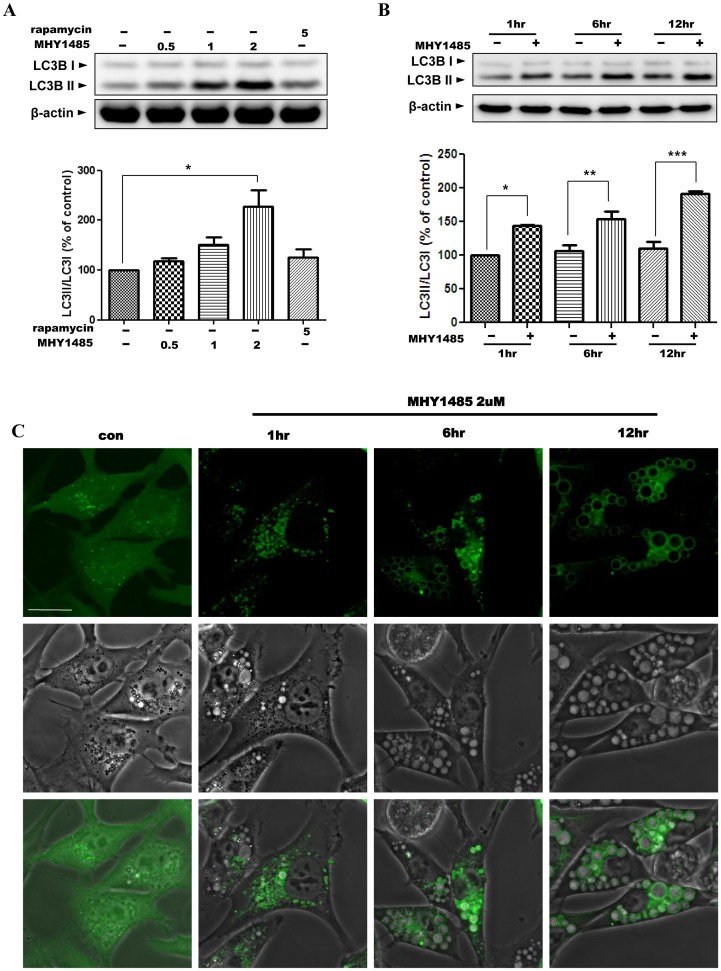
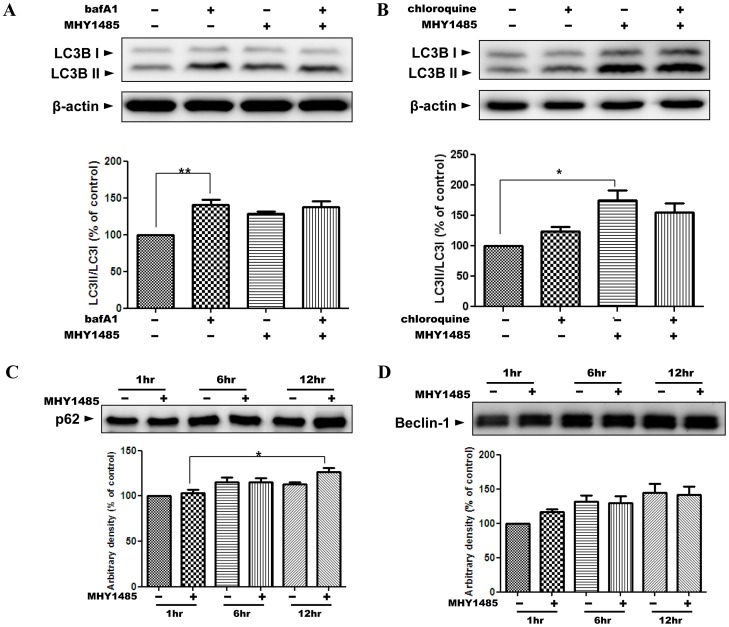
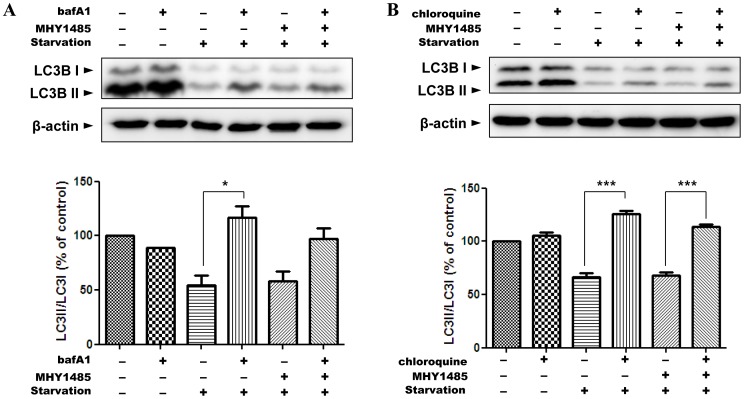
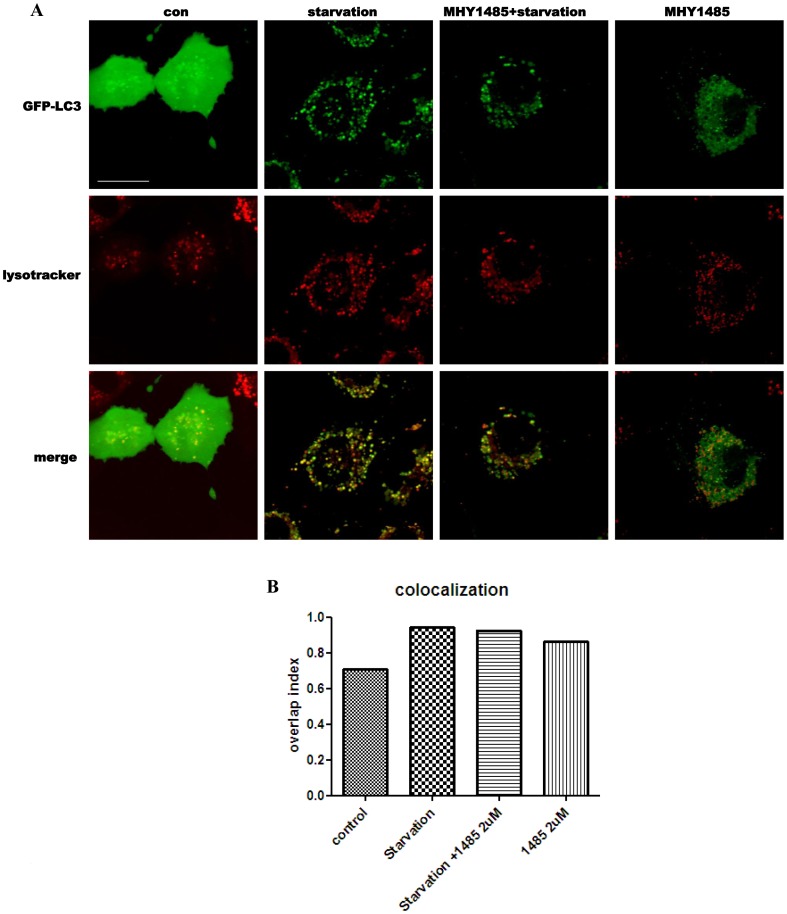
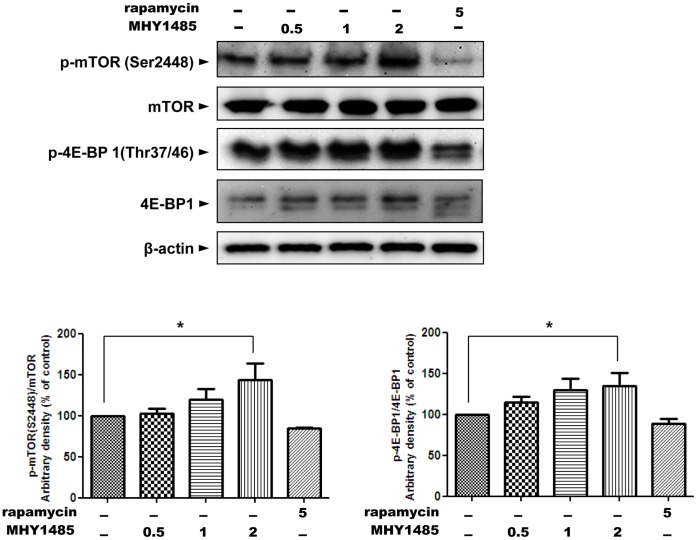
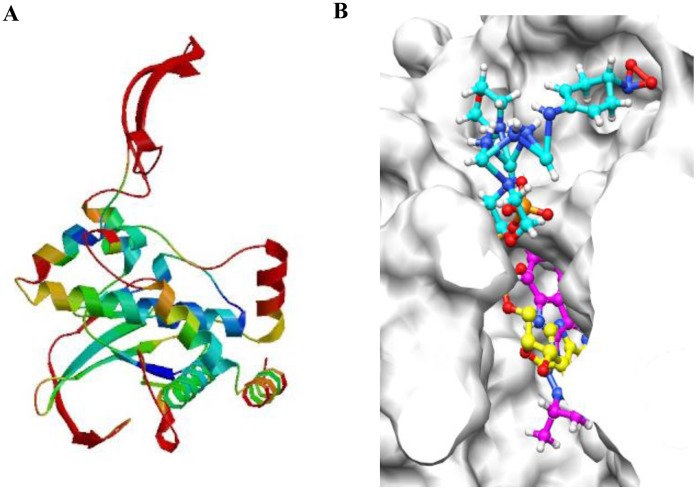
Verification
Claims the paper makes
The claims and statistics of this paper haven’t been checked yet.
Run the check — free, no account needed. It reads the open-access text and checks the sources it cites.
Claims other papers make about this one
Each is checked against this paper’s own text: does it say what the citing paper says it does?
The source backs part of the claim, not all of it — or backs it for a different population, condition or comparison.
In the citing paper
“There are also data showing mTORC1 signaling may disrupt autophagy, which in turn may affect mitochondrial remodeling (Choi et al., 2012).”
From Skeletal Muscle Ribosome and Mitochondrial Biogenesis in Response to Different Exercise Training Modalities (2021) · cites this paper as Choi et al., 2012
Experimental — accuracy not yet measured
Self-check
Percentages, sums and reported differences re-computed from the paper’s own numbers.
The self-check needs the paper’s full text.
Citations
Cites
The SWISS-MODEL workspace: a web-based environment for protein structure homology modelling
Arnold, K., Bordoli, L., Kopp, J., & Schwede, T. F. (2005) · Bioinformatics · doi:10.1093/bioinformatics/bti770 · Cited by 7,031
Methods in Mammalian Autophagy Research
Mizushima, N., Yoshimori, T., & Levine, B. (2010) · Cell · doi:10.1016/j.cell.2010.01.028 · Cited by 4,497
mTOR: from growth signal integration to cancer, diabetes and ageing
Zoncu, R., Efeyan, A., & Sabatini, D. M. (2011) · Nature Reviews Molecular Cell Biology · doi:10.1038/nrm3025 · Cited by 3,941
Regulation mechanisms and signaling pathways of autophagy
He, C., & Klionsky, D. J. (2009) · Annual Review of Genetics · doi:10.1146/annurev-genet-102808-114910 · Cited by 3,609
How to Interpret LC3 Immunoblotting
Mizushima, N., & Yoshimori, T. (2007) · Autophagy · doi:10.4161/auto.4600 · Cited by 2,595 · cited 1×
“[9], [10], [11].”
Sancak, Y., Bar-Peled, L., Zoncu, R., Markhard, A. L., Nada, S., & Sabatini, D. M. (2010) · Cell · doi:10.1016/j.cell.2010.02.024 · Cited by 2,464 · cited 1×
“The recent identification of mTOR localization at the lysosomal membrane when it is activated [41], [42] and the several reports that morpholino triazine analogs can easily bind mTOR [43], [44] led us to the question about the effect of MHY1485 on the activity of mTOR.”
BackgroundEaten alive: a history of macroautophagy
Yang, Z., & Klionsky, D. J. (2010) · Nature Cell Biology · doi:10.1038/ncb0910-814 · Cited by 2,155
Yoshimori, T., Yamamoto, A., Moriyama, Y., Futai, M., & Tashiro, Y. (1991) · Journal of Biological Chemistry · doi:10.1016/s0021-9258(19)47429-2 · Cited by 1,334
The Role of Autophagy in Cancer: Therapeutic Implications
Yang, Z. J., Chee, C. E., Huang, S., & Sinicrope, F. A. (2011) · Molecular Cancer Therapeutics · doi:10.1158/1535-7163.mct-11-0047 · Cited by 1,243
Active-Site Inhibitors of mTOR Target Rapamycin-Resistant Outputs of mTORC1 and mTORC2
Feldman, M. E., Apsel, B., Uotila, A., Loewith, R., Knight, Z. A., Ruggero, D., & Shokat, K. M. (2009) · PLoS Biology · doi:10.1371/journal.pbio.1000038 · Cited by 1,111
Aoki, H., Takada, Y., Kondo, S., Sawaya, R. A., Aggarwal, B. B., & Kondo, Y. (2007) · Molecular Pharmacology · doi:10.1124/mol.106.033167 · Cited by 523
Overview of macroautophagy regulation in mammalian cells
Mehrpour, M., Esclatine, A., Beau, I., & Codogno, P. (2010) · Cell Research · doi:10.1038/cr.2010.82 · Cited by 516
Autophagosome Formation and Molecular Mechanism of Autophagy
Tanida, I. (2010) · Antioxidants and Redox Signaling · doi:10.1089/ars.2010.3482 · Cited by 505
Inflammaging: disturbed interplay between autophagy and inflammasomes
Salminen, A., Kaarniranta, K., & Kauppinen, A. (2012) · Aging · doi:10.18632/aging.100444 · Cited by 453
Does bafilomycin A 1 block the fusion of autophagosomes with lysosomes?
Klionsky, D. J., Elazar, Z., Seglen, P. O., & Rubinsztein, D. C. (2008) · Autophagy · doi:10.4161/auto.6845 · Cited by 447
Katayama, M., Kawaguchi, T., Berger, M. S., & Pieper, R. O. (2006) · Cell Death and Differentiation · doi:10.1038/sj.cdd.4402030 · Cited by 360
Homology modeling, model and software evaluation: three related resources.
Rodríguez, R., Chinea, G., López, N., Pons, T., & Vriend, G. (1998) · Bioinformatics · doi:10.1093/bioinformatics/14.6.523 · Cited by 345
Role of autophagy in suppression of inflammation and cancer
White, E., Karp, C. M., Strohecker, A. M., Guo, Y., & Mathew, R. (2010) · Current Opinion in Cell Biology · doi:10.1016/j.ceb.2009.12.008 · Cited by 341
Dissecting the dynamic turnover of GFP-LC3 in the autolysosome
Ni, H.-M., Bockus, A., Wozniak, A. L., Jones, K., Weinman, S., Yin, X.-M., & Ding, W.-X. (2011) · Autophagy · doi:10.4161/auto.7.2.14181 · Cited by 318
Regulation of the aging process by autophagy.
Salminen, A., & Kaarniranta, K. (2009) · Trends in Molecular Medicine · doi:10.1016/j.molmed.2009.03.004 · Cited by 270
Autophagy Signaling Through Reactive Oxygen Species
Huang, J., Lam, G. Y., & Brumell, J. H. (2010) · Antioxidants and Redox Signaling · doi:10.1089/ars.2010.3554 · Cited by 228
Yoon, Y. H., Cho, K. S., Hwang, J. J., Lee, S.-J., Choi, J. A., & Koh, J.-Y. (2010) · Investigative Opthalmology & Visual Science · doi:10.1167/iovs.10-5278 · Cited by 219
Geng, Y., Kohli, L., Klocke, B. J., & Roth, K. A. (2010) · Neuro-Oncology · doi:10.1093/neuonc/nop048 · Cited by 217
The late stages of autophagy: how does the end begin?
Noda, T., Fujita, N., & Yoshimori, T. (2009) · Cell Death and Differentiation · doi:10.1038/cdd.2009.54 · Cited by 190
Bafilomycin A1 Inhibits Chloroquine-Induced Death of Cerebellar Granule Neurons
Shacka, J. J., Klocke, B. J., Shibata, M., Uchiyama, Y., Datta, G., Schmidt, R. E., & Roth, K. A. (2006) · Molecular Pharmacology · doi:10.1124/mol.105.018408 · Cited by 164
Measurement of Autophagy in Cells and Tissues
Tanida, I., & Waguri, S. (2010) · Methods in molecular biology · doi:10.1007/978-1-60761-756-3_13 · Cited by 162
Autophagy promotes necrosis in apoptosis-deficient cells in response to ER stress
Ullman, E., Fan, Y., Stawowczyk, M., Chen, H.-M., Yue, Z., & Zong, W.-X. (2008) · Cell Death & Differentiation · doi:10.1038/sj.cdd.4402234 · Cited by 161
mTORC1 signaling: what we still don't know
Wang, X., & Proud, C. G. (2010) · Journal of Molecular Cell Biology · doi:10.1093/jmcb/mjq038 · Cited by 150
Autophagy Suppresses Age-Dependent Ischemia and Reperfusion Injury in Livers of Mice
Wang, J., Ahn, I., Fischer, T. D., Byeon, J. I., Dunn, W. A., Behrns, K. E., Leeuwenburgh, C., & Kim, J. (2011) · Gastroenterology · doi:10.1053/j.gastro.2011.08.005 · Cited by 146
Self-citationAutophagy and bacterial infectious diseases
Yuk, J., Yoshimori, T., & Jo, E. (2012) · Experimental & Molecular Medicine · doi:10.3858/emm.2012.44.2.032 · Cited by 131
Syntheses of 2,4,6-trisubstituted triazines as antimalarial agents
Agarwal, A., Srivastava, K., Puri, S. K., & Chauhan, P. M. S. (2004) · Bioorganic & Medicinal Chemistry Letters · doi:10.1016/j.bmcl.2004.11.052 · Cited by 125
Chen, P. M., Gombart, Z. J., & Chen, J. W. (2011) · Cell & Bioscience · doi:10.1186/2045-3701-1-10 · Cited by 122
Inhibition of histone deacetylase1 induces autophagy
Oh, M., Choi, I.-K., & Kwon, H. J. (2008) · Biochemical and Biophysical Research Communications · doi:10.1016/j.bbrc.2008.03.019 · Cited by 97
Chapter 4 Assaying of Autophagic Protein Degradation
Bauvy, C., Meijer, A. J., & Codogno, P. (2009) · Methods in enzymology on CD-ROM/Methods in enzymology · doi:10.1016/s0076-6879(08)03604-5 · Cited by 79
Chloroquine enhances the cytotoxicity of topotecan by inhibiting autophagy in lung cancer cells
Wang, Y., Peng, R.-Q., Li, D., Ding, Y., Wu, X.-Q., Zeng, Y.-X., Zhu, X., & Zhang, X.-S. (2011) · 癌症:英文版 · doi:10.5732/cjc.011.10056 · Cited by 66
Lysosome positioning coordinates mTORC1 activity and autophagy
Poüs, C., & Codogno, P. (2011) · Nature Cell Biology · doi:10.1038/ncb0411-342 · Cited by 61
Ramser, B., Kokot, A., Metze, D., Weiß, N., Luger, T. A., & Böhm, M. (2009) · Journal of Investigative Dermatology · doi:10.1038/jid.2009.80 · Cited by 56
Zask, A., Verheijen, J. C., Richard, D. J., Kaplan, J. A., Curran, K. J., Toral‐Barza, L., Lucas, J., Hollander, I. J., & Yu, K. (2010) · Bioorganic & Medicinal Chemistry Letters · doi:10.1016/j.bmcl.2010.02.045 · Cited by 38
Activating Mutations in TOR Are in Similar Structures As Oncogenic Mutations in PI3KCα
Sturgill, T. W., & Hall, M. N. (2009) · ACS Chemical Biology · doi:10.1021/cb900193e · Cited by 34
Richard, D. J., Verheijen, J. C., Yu, K., & Zask, A. (2010) · Bioorganic & Medicinal Chemistry Letters · doi:10.1016/j.bmcl.2010.02.029 · Cited by 28
Control of autophagy with small molecules
Cho, Y. S., & Kwon, H. J. (2010) · Archives of Pharmacal Research · doi:10.1007/s12272-010-1201-6 · Cited by 13
Characteristics of weak base-induced vacuoles formed around individual acidic organelles
Hiruma, H., & Kawakami, T. (2011) · Folia Histochemica et Cytobiologica · doi:10.5603/fhc.2011.0038 · Cited by 7
Characteristics of weak base-induced vacuoles formed around individual acidic organelles
Kawakami, T., & Hiruma, H. (2011) · DOAJ (DOAJ: Directory of Open Access Journals) · doi:10.5603/4124 · Cited by 4
Kolmakov, K. A. (2008) · Journal of Heterocyclic Chemistry · doi:10.1002/jhet.5570450446 · Cited by 3
Research works printed but not linked: 1
- [21]Tanida I, Waguri S (2010) Measurement of autophagy in cells and tissues. Methods in molecular biology 648: 193– 214. 20700714
Cited by
Sorted by citations
The Short Chain Fatty Acid Butyrate Imprints an Antimicrobial Program in Macrophages
Schulthess, J., Pandey, S., Capitani, M., Rue-Albrecht, K. C., Arnold, I., Franchini, F., Chomka, A., Ilott, N. E., Johnston, D. G. W., Pires, E., et al. (2019) · Immunity · doi:10.1016/j.immuni.2018.12.018 · Cited by 1,037
New Insights Into the Role of mTOR Signaling in the Cardiovascular System
Sciarretta, S., Forte, M., Frati, G., & Sadoshima, J. (2018) · Circulation Research · doi:10.1161/circresaha.117.311147 · Cited by 497
Montagne, A., Nikolakopoulou, A. M., Zhao, Z., Sagare, A. P., Si, G., Lazic, D., Barnes, S. R., Daianu, M., Ramanathan, A., Go, A., et al. (2018) · Nature Medicine · doi:10.1038/nm.4482 · Cited by 344
RetractedIlekis, J. V., Tsilou, E. T., Fisher, S. J., Abrahams, V. M., Soares, M. J., Cross, J. C., Zamudio, S., Illsley, N. P., Myatt, L., Colvis, C. M., et al. (2016) · American Journal of Obstetrics and Gynecology · doi:10.1016/j.ajog.2016.03.001 · Cited by 298
Liu, B., Deng, X., Jiang, Q., Li, G., Zhang, J., Zhang, N., Xin, S., & Xu, K. (2020) · Biomedicine & Pharmacotherapy · doi:10.1016/j.biopha.2020.109895 · Cited by 205
Metadata
- Authors
- Choi, Y. J., Park, Y. J., Park, J. Y., Jeong, H. O., Kim, D. H., Ha, Y. M., Kim, J. M., Song, Y. M., Heo, H.-S., Yu, B. P., Chun, P., Moon, H. R., & Chung, H. Y.
- Affiliations
- Pusan National University (KR)
- Korea Research Institute of Bioscience and Biotechnology (KR)
- The University of Texas at San Antonio Health Science Center (US)
- Inje University (KR)
- Corresponding author
- Moon, Hyung Ryong
- Chung, Hae Young
- ORCID
- Venue
- PLoS ONE
- Publisher
- Public Library of Science (PLoS)
- Published
- 2012-08-22
- Volume
- 7
- Issue
- 8
- Pages
- e43418
- ISSN
- 1932-6203 (ISSN-L)
- PMC
- PMC3425474
- OpenAlex
- W1985820389
- Cited by
- 192
- References
- 47
- Citations by year
- 2026: 18 · 2025: 13 · 2024: 28 · 2023: 16 · 2022: 14 · 2021: 16 · 2020: 17 · 2019: 10 · 2018: 17 · 2017: 15 · 2016: 10 · 2015: 9 · 2014: 6 · 2013: 3
- FWCI
- 4.29
- Type
- journal article
- Language
- en
- Update notices
- correction (2013-01-29)
- Open access
- gold
- doi.org
- Locations
- PLoS ONE (publishedVersion, cc-by)
- PubMed Central (publishedVersion, cc-by)
- PubMed (publishedVersion)
- DOAJ (DOAJ: Directory of Open Access Journals) (submittedVersion, cc-by-sa)
- KRIBB Repository (submittedVersion)
- Funders
- National Research Foundation
- National Research Foundation of Korea (20090083538, No. 2009-0083538)
- Topics
- Life Sciences › Biochemistry, Genetics and Molecular Biology › Cell Biology › Autophagy in Disease and Therapy
- Life Sciences › Biochemistry, Genetics and Molecular Biology › Physiology › Calcium signaling and nucleotide metabolism
- Life Sciences › Biochemistry, Genetics and Molecular Biology › Molecular Biology › PI3K/AKT/mTOR signaling in cancer
- Keywords
- MHY1485, autophagy inhibition, mTOR activation, lysosome fusion, autophagosome-lysosome fusion, starvation-induced autophagy, autophagic flux, hepatocytes, p62, Beclin-1, mTOR inhibitors
- MeSH terms
- Animals, Autophagy, Liver, Lysosomes, Microtubule-Associated Proteins, Morpholines, Protein Conformation, Triazines, Vacuoles, Rats, TOR Serine-Threonine Kinases, Molecular Docking Simulation
About these checks
Registry, retraction, Cites and statistics results are computed, not judged, with one exception: a printed reference that no index lists is read once by a model before it counts as a citation error. Claims are extracted by a model and kept only when their quote appears verbatim in the text; each cited source is then checked, with a model’s help, for whether it says what the claim relies on. Those verdicts can be wrong — read the claim’s quote and the cited source before relying on one.
Statistics and arithmetic are recomputed, not judged.
Confidence bands are shown only for fields calibrated on our annotated test set. None is calibrated yet, so no band is shown.
What counts as a claim ›How we measure confidence ›How we check this ›
Are you an author, or do you see a problem with this page? Request a review
